Category Archives: Uncategorized

Cost No Object – Pegaso Z-102B

Former Alfa Romeo designer Wilfredo Ricart returned to his home town of Barcelona after the 1939 – 45 war and was offered a position as cheif technical manager with the Spanish automotive group ENASA which acquired the assets from the Spanish arm of Hispano-Suiza. ENASA sold trucks and buses under the Pegaso brand from 1946 and in 1951 entered the luxury sports car market.
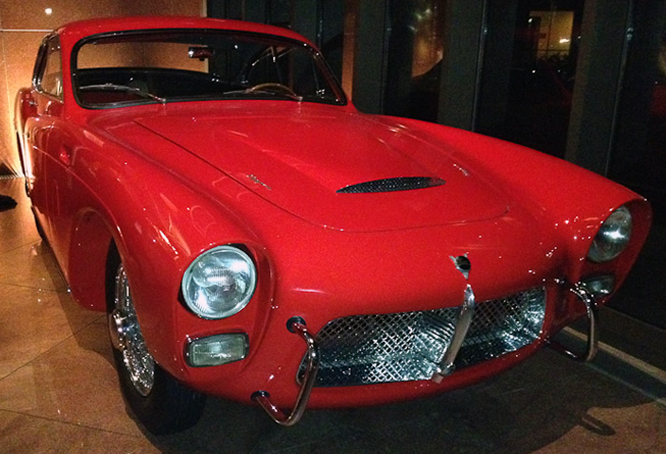
Pegaso Z-102B, Danville Concours d' Elegance

The Tipo Z-102B was launched in Coupé and Convertible forms. They were powered by double over head cam motors that produced between 175 and 360 hp depending on size and state of tune, twin superchargers were available with the 360 hp variant. Unusually the transaxle had the 5 speed gearbox mounted behind the differential.

In September 1953 Celso Fernández was recorded driving a smaller engined Z-102B with single supercharger at 151 mph over a measured flying kilometer in Belgium to become the worlds fastest production car, a record it held for just over a month until Norman Dewis reclaimed the record for Jaguar in October 1953 with a speed of 172 mph.
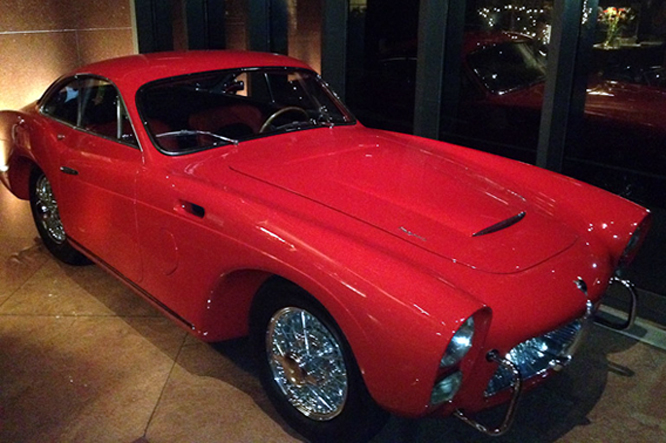
Pegaso Z-102B, Danville Concours d' Elegance

The Coupé seen in these photographs by Geoffrey Horton taken at last years Danville Concours d’Elegance is powered by a 250 hp 2.8 litre 171 cui normally aspirated motor and was one of a pair of show cars with aluminium body work by Saoutchick built in 1955.

In all just 86 Z-102B’s were built unprofitably on a cost no object basis until 1958, it is thought just 56 Tipo Z-102B’s still remain.

My thanks to Geoffrey Horton for sharing his photographs of today’s featured car.

Thanks for joining me on this “Cost No Object” edition of “Gettin’ a li’l psycho on tyres” I hope you will join me again tomorrow. Don’t forget to come back now !

Share

Last On Sunday – Singer 9 Special Speed

At the very first Le Mans 24 Hours race in 1923 Maurice Boutmy and France Jérôme Marcandanti covered 89 laps to finish 18th to become the first 1 litre / 61 cui normally aspirated car to finish the race in an Amilcar CV. Remarkably it was not until 1933 that Singer Competition Manager FS Barnes and Alf Langley were to finish the classic endurance race in a similar sized British built car a Singer 9 Sports which completed 140 laps came 13th and last overall and second in class 21 laps behind a French built Tracta driven by Félix Quinault and Pierre Padrault.

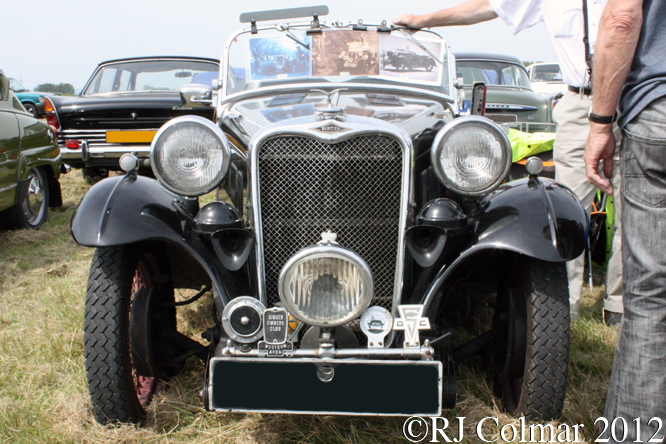
Singer 9 Special Speed, Summer Classics, Easter Compton

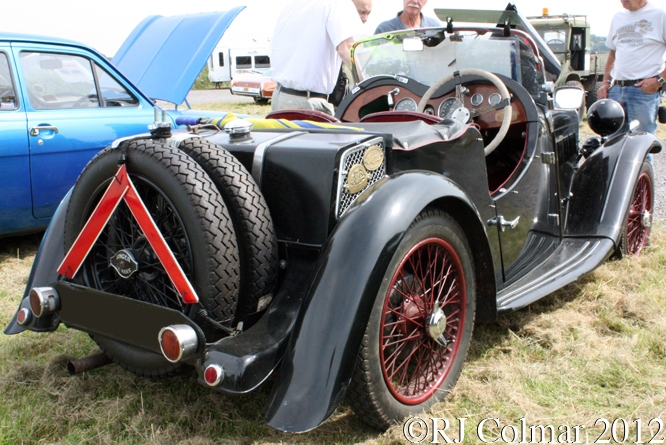
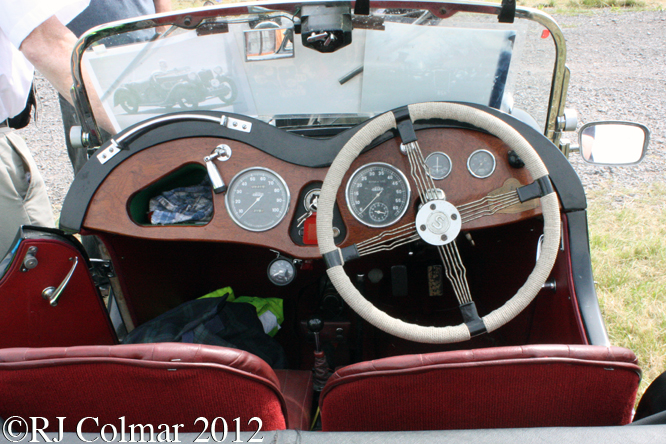
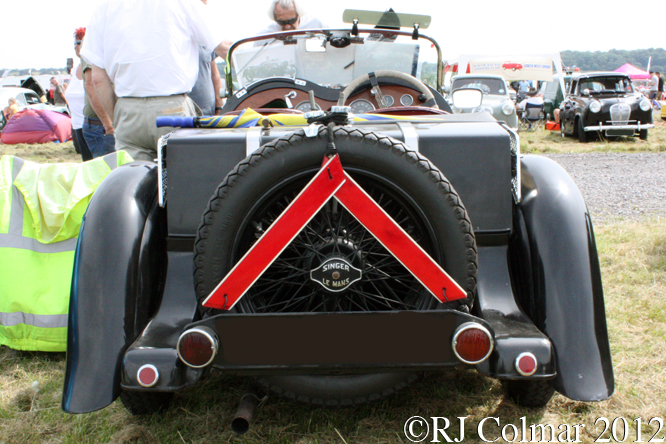
The achievement of simply finishing the 1933 Le Mans 24 Hour race at an average speed of 49.4 miles per hour was enough to encourage Singer to build a two seat version of the Singer 9 Sports, nominally the Singer 9 Sports was a 4 seater however the car used at Le Mans had a large fuel tank that occupied the space for the rear seats, called the Singer Le Mans. In 1934 Norman Black and J.R.H. Baker finish fifteenth overall 7th in class in a Singer Le Mans covering 163 laps.

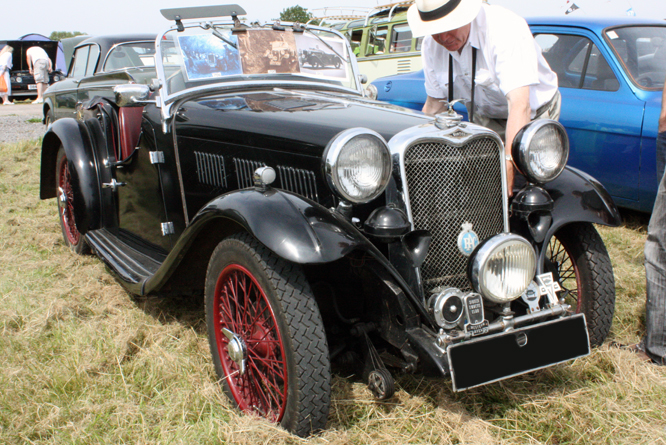
Singer 9 Special Speed, Summer Classics, Easter Compton

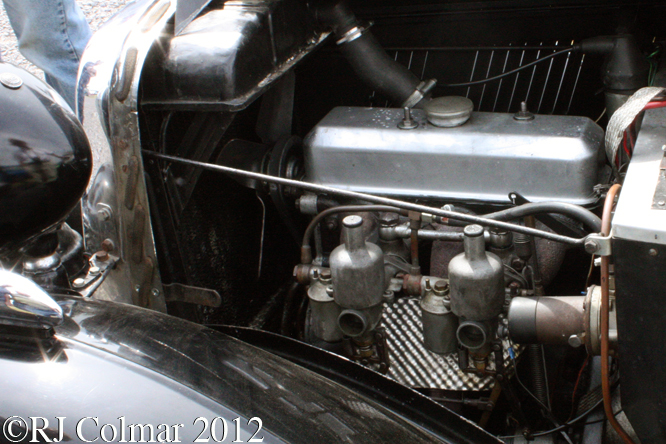
The popular Singer Le Mans is not to be confused with either the six cylinder 1 1/2 litre Singer Le Mans, or the four Singer Le Mans Replica’s built in 1939 which were out and out 2 seat racing cars. In 1935 a Special Speed version of the Singer Le Mans was introduced, distinguished by the running boards between the front and rear wings and it is this model that is seen here at last years Summer Classics Meeting at Easter Compton.

Singer 9 Special Speed, Summer Classics, Easter Compton

Power for the Singer Super Speed comes from a 38 hp 972 cc / 59 cui 4 cylinder overhead cam motor still running on a two bearing crank as did the Singer 8 I looked at last week.

Singer 9 Special Speed, Summer Classics, Easter Compton

This particular car was delivered in December 1935 to HD Acres who a few weeks later used it to compete on the Exeter Trials in January 1936. Acres car can be seen being helped out of a little difficulty on the Simms test by those very nice men from the Automobile Association on this link.

Singer 9 Special Speed, Summer Classics, Easter Compton

By 1939 this Singer 9 Special Speed had passed into the ownership of RJW Appleton who is known to have driven the car on the Lands End Trial the same year. RJW Appleton was responsible for building the Riley powered Maserati called the Appleton Special which achieved and 1100cc / 67 cui standing mile record of 91.3 mph in 1937.

Singer 9 Special Speed, Summer Classics, Easter Compton

The current owner of today’s featured car acquired it as a large box of ‘bits’ and has spent many years returning it to it’s present condition.

Thanks for joining me on this “Last On Sunday” edition of “Gettin’ a li’l psycho on tyres” I hope you will join me again tomorrow. Don’t forget to come back now !
Share

Bonus Built – Ford F1 1/2 Ton Pickup

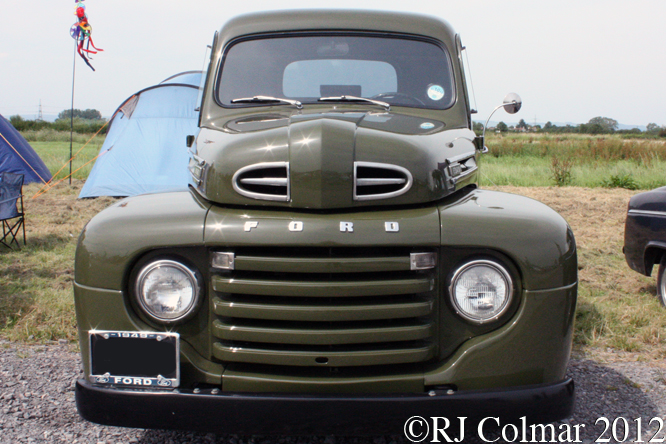
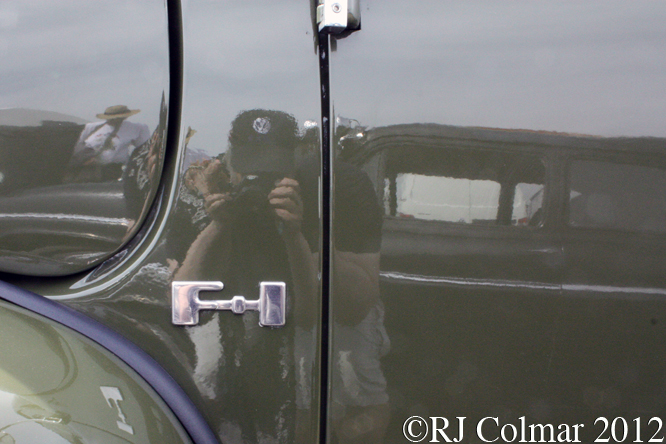
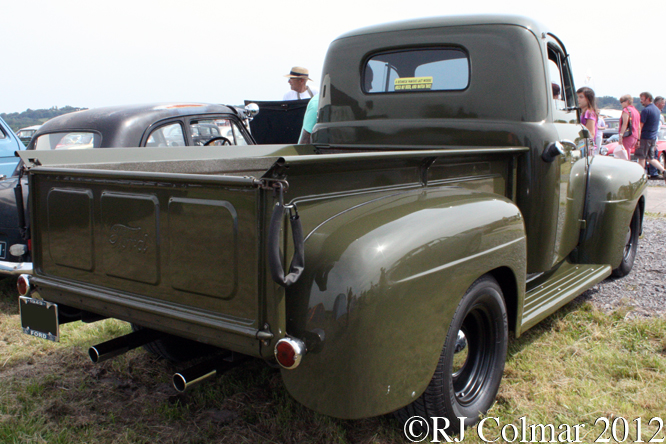
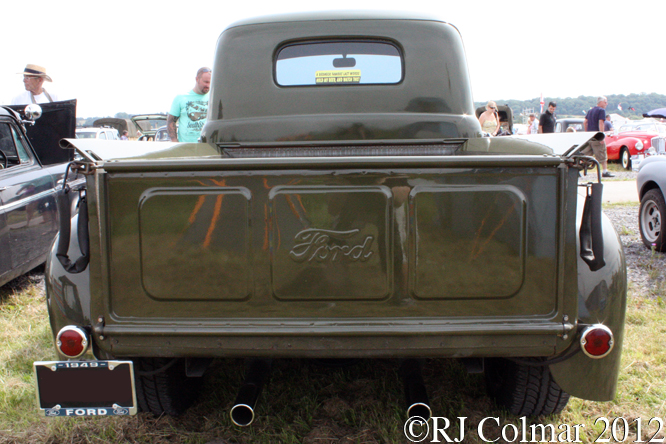
In 1948 Ford introduced the new F Series pickups that were built on dedicated, Bonus Built, pickup chassis rather than the hitherto strengthend car chassis.

Ford F1 Pickup, Summer Classics, Easter Compton

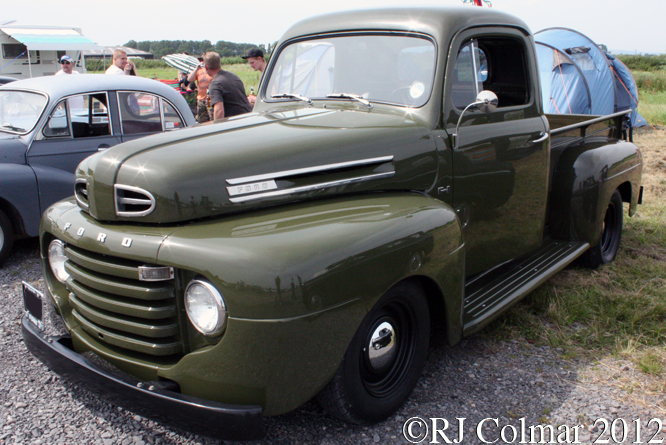
The F1 seen here is a 1949 F1 half ton pickup with a single piece windscreen / windshield and integrated in to the wings / fenders headlights.

Ford F1 Pickup, Summer Classics, Easter Compton

This one is fitted with the optional passenger side windscreen wiper, other options included foot plunger operated windscreen washer, passenger side sun visor and passenger side tail light !

Ford F1 Pickup, Summer Classics, Easter Compton

First Generation F1’s were powered either by a 95 hp flathead straight 6 or 100 hp flathead V8, the 4.2 litre / 256 cui quoted for today’s featured pick up suggests something more contemporary than a regular flathead might be lurking under the hood.

Ford F1 Pickup, Summer Classics, Easter Compton

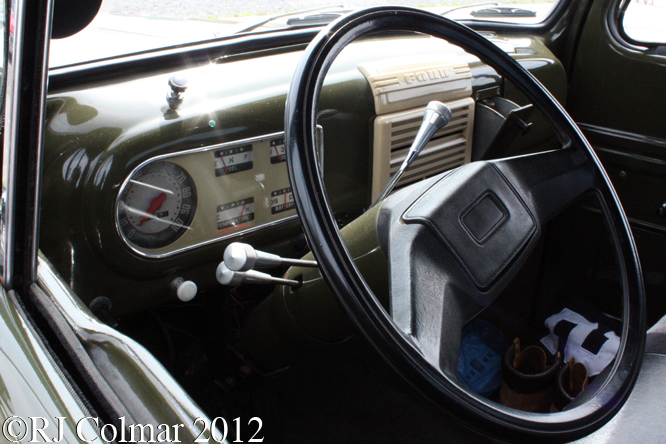
Three different transmissions were available for the First Generation F1, 3 speed light duty, 3 speed heavy duty or 4 speed.

Ford F1 Pickup, Summer Classics, Easter Compton

The F1 came with a 6 1/2 foot bed or 4 door panel body.

Ford F1 Pickup, Summer Classics, Easter Compton

First Generation F1’s were assembled at Dearborn and Highland Park MI, Edison NJ, Long Beach CA, Norfolk Assembley VI, St Paul MN, St Louis MO, and Hapeville GA. First Generation F1’s were face lifted in 1950 and remained in production until 1952.

Thanks for joining me on this “Bonus Built” edition of “Gettin’ a li’l psycho on tyres”, I hope you will join me again tomorrow. Don’t forget to come back now !

Share

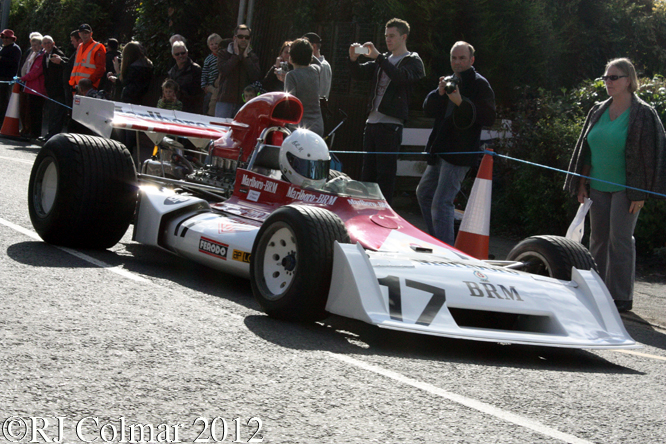
Fifty Fifty – BRM P160E # P160-07

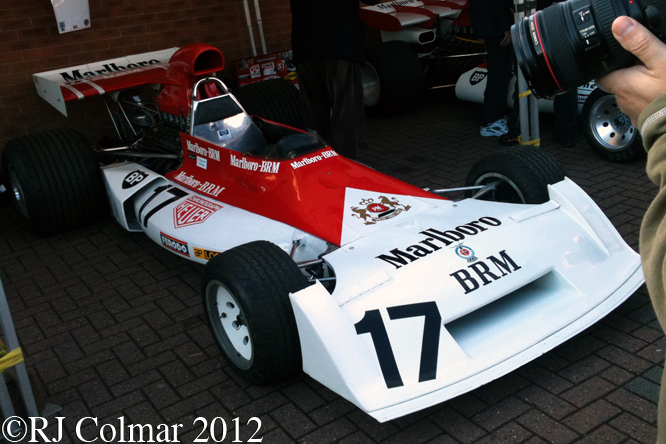
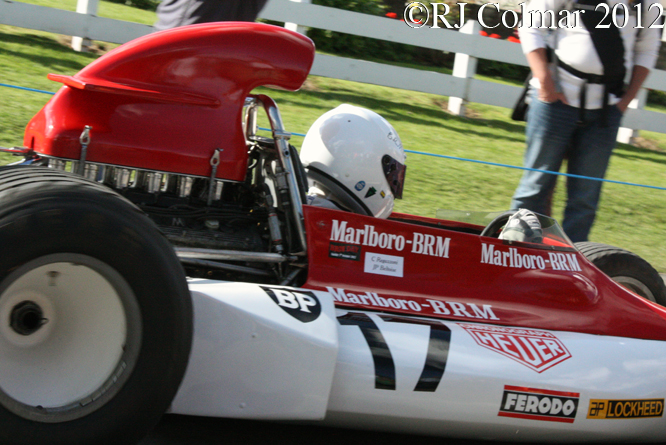
For 1972 BRM lost their Yardley sponsorship but managed to land an even bigger sponsor in the form of Philip Morris who were interested in stealing some of the lime light Players were basking in thanks to their “Gold Leaf” brand logo’s appearing on the championship winning Lotus cars of Graham Hill and Jochen Rindt in 1968 and 1970 respectively.

BRM P160 E, BRM Day, Bourne

In order to give Philip Morris’s Marlboro brand maximum exposure BRM determined it would enter every Grand Prix of the 1972 season with five 48 valve V12 powered cars of three different designs dating back to 1970 with a roster of eight different drivers. Some how Jean Pierre Beltoise managed to keep his head in the ensuing chaos and won the Monaco Grand Prix in a BRM P160 a design dating back to 1971 and the final non championship John Player Victory Trophy race of the season in the new for 1972 BRM P180. These two races would prove to be the last ever contemporary Formula One race victories for the team ever.

BRM P160 E, BRM Day, Bourne

For 1973 designer Tony Southgate left the chaos at BRM to start afresh with the new Shadow Team while BRM decided to downscale to a three car operation for a more or less regular trio of drivers, using an updated version of the BRM P160. Swiss driver Clay Regazzoni who was on what turned out to be a one year sabbatical from Ferrari and Frenchman Jean Pierre Beltoise BRM’s incumbent winner who was in the middle of a three year stint at British Racing Motors (BRM) were joined by a young Austrian upstart called Niki Lauda who decided that suicide was best avoided in favour of yet another bank loan for one last attempt at hitting the big time in Formula One.

BRM P160 E, BRM Day, Bourne

Clay Regazzoni made an immediate impact by winning pole for the first race of the 1973 season at the Argentinian Grand Prix but from there things went steadily down hill for the team particularly after they had locked out the first three starting positions for the 1973 Race of Champions at Brands Hatch with Beltoise and Lauda sharing the fastest lap of the race with the Lotus of Ronnie Peterson.

BRM P160 E, BRM Day, Bourne

At the very next race the non championship International Trophy held at Silverstone today’s featured chassis #P160-07 the first of four E specification chassis, appeared for the first time with Clay Regazzoni qualifying 8th and finishing a respectable 3rd. Clay drove the car on five more occasions failing to improve on 8th in qualifying and slipping no lower than 12th and finishing similarly.

BRM P160 E, BRM Day, Bourne

#P160-07 was not used for the British Grand Prix and when it reappeared at the 1973 Dutch Grand Prix Jean Pierre Beltoise was at the wheel. Beltoise qualified the car no better than ninth and no worse than 16th in 6 races netting two 5th place finishes and a season high 4th place finish at the Canadian Grand Prix from a 16th place start.

JP Beltoise drove #P160-07 on it’s last in period appearance at the 1973 US Grand Prix where the car finished 9th from a 14th place start after which the car was briefly fitted with a Westlake V12 for testing in 1974 again with Beltoise at the wheel. By now Regazzoni had signed to rejoin Ferrari and on his recommendation Ferrari signed Niki Lauda to join him and so the Austrian finally started repaying his bank loans on his way to becoming a triple World Champion.

Philip Morris moved their Marlboro sponsorship to McLaren in 1974 with whom they won the first of many championships with Emerson Fittipaldi at the wheel in the opening year of their thirty year partnership.

Tony Southgates new for 1973 Shadow DN1 design did not better his BRM P160 design the Shadow team finishing 8th at the seasons end, 3 points and one spot below BRM in the championship table.

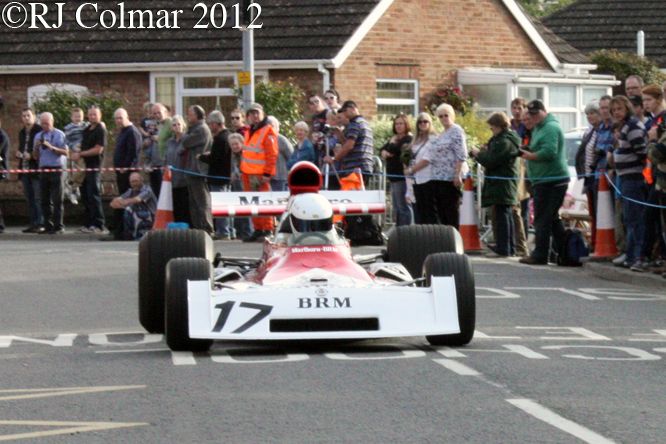
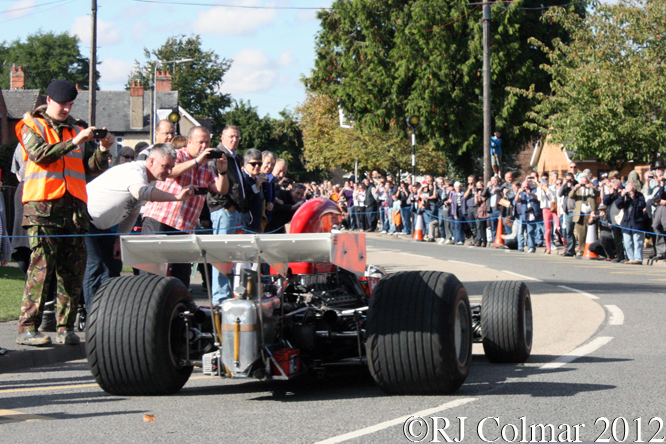
Today’s featured car was seen at last years BRM Day in it’s home town Bourne, Linconshire with J Burt at the wheel.

Thanks for joining me on this “Fifty Fifty” edition of “Gettin’ a li’l psycho on tyres” I hope you will join me again tomorrow. Don’t forget to come back now !
Share

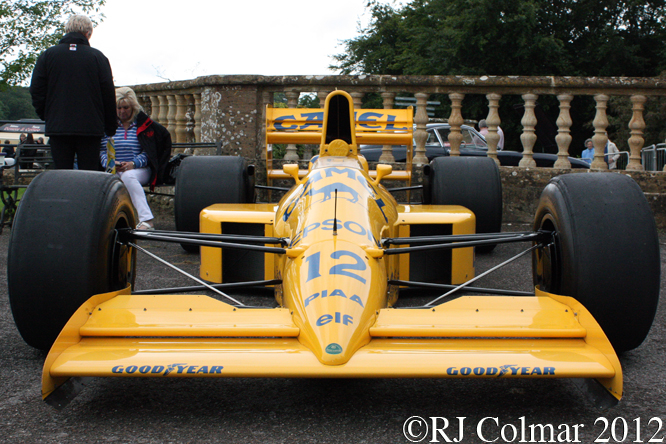
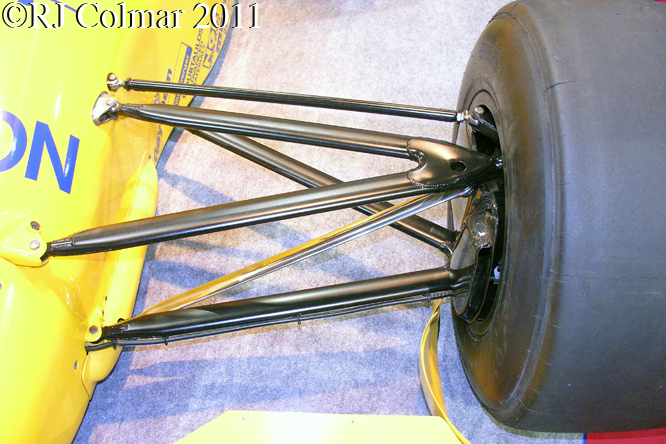
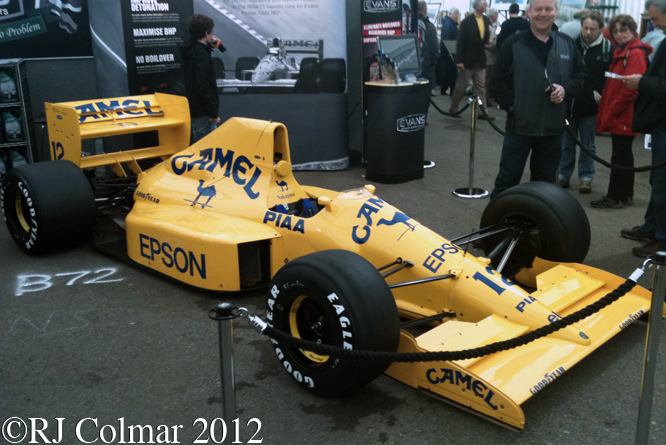
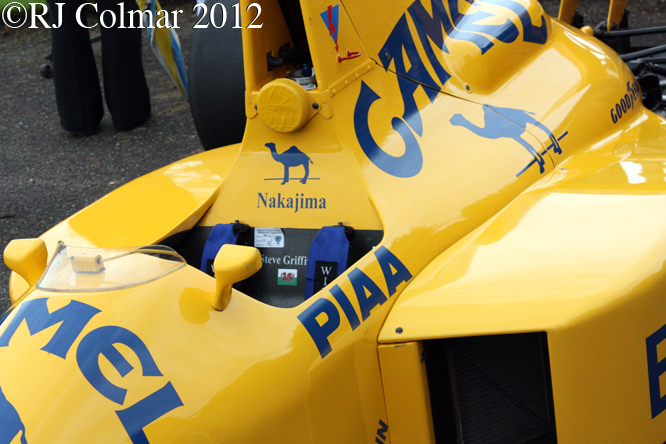
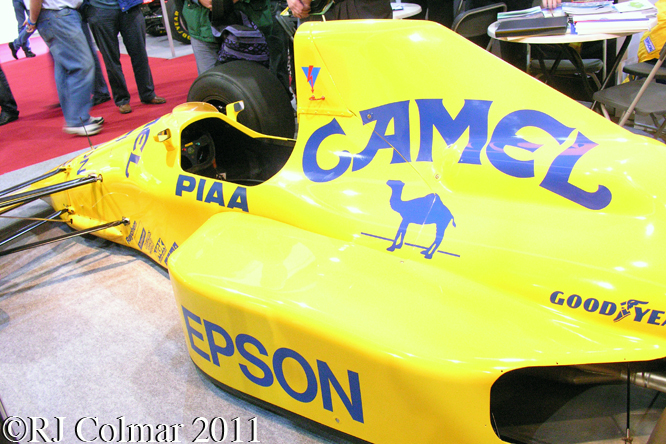
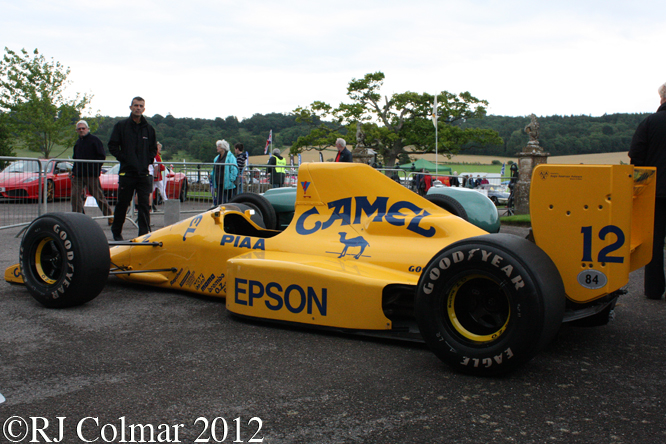
Satoru’s Fastest Lap – Lotus Judd 101

1989 saw the phenomenally expensive 1200 – 1500 hp 1.5 litres / 91.5 cui turbo charged engines that had first been seen in Formula One racing in 1977 and that had come to dominate the sport by 1983 finally outlawed in 1989. New regulations mandating 3.5 litre / 213 cui motors were introduced for the 1989 season but Honda who had come to dominate the last years of the turbo era were about to dominate the opening years of the new normally aspirated era with a V10 motor that was simply more reliable and more powerful than the opposition.

Lotus Judd 101, Classics at the Castle, Sherborne

Team Lotus were on the upper slopes of steep decline in 1989 neither Nelson Piquet or Satoru Nakajima had offered the dominant McLaren’s with whom they shared an engine supplier in 1988 much by way of competition, and Lotus finished a poor 4th behind Ferrari and Benetton when their motors should have been good enough to finish second behind McLaren.

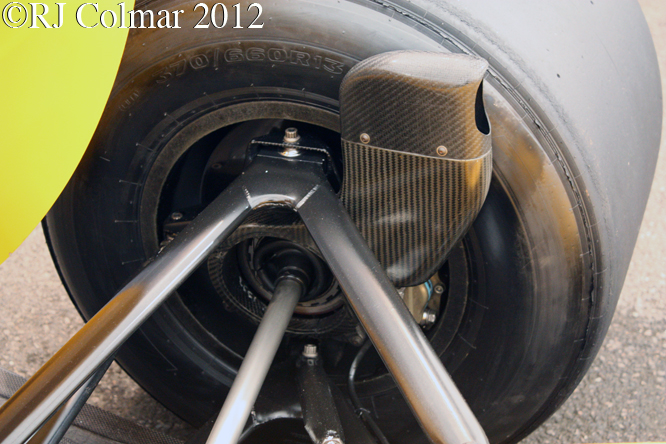
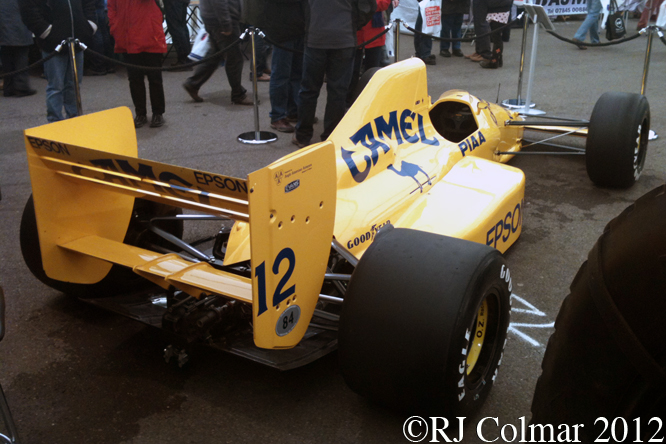
Lotus Judd 101, Race Retro, Stonleigh

For 1989 Lotus lost their Honda deal and ended up with Judd V8 CV spec motors while Judd’s preferred customer March was on EV spec motors.

Lotus Judd 101, Bristol Classic Car Show, Shepton Mallet

The 1989 Lotus 101 cars were designed by Frank Dernie a former Williams aerodynamicist Frank Dernie whom Nelson Piquet had persuaded to defect, though by the time Frank arrived much of the design had been completed by future short lived MWR, Micheal Waltrip Racing, design consultant Mike Coughlan.

Lotus Judd 101, Classics at the Castle, Sherborne

In order to save weight and seek aerodynamic advantage on their competitors the Lotus 101 cockpit was so narrow that Momo were commissioned to build ultra narrow steering wheels so that Nelson and Satoru did not scrape their knuckles on the cockpit sides.

Lotus Judd 101, Race Retro, Stonleigh

Lotus entered an agreement with Tickford to develop 5 valve per cylinder heads for their 2nd string Judd V8’s to make up some of the 125 hp the CV motors had on the most powerful Honda V10’s but the idea was eventually scrapped mid season.

Lotus Judd 101, Classics at the Castle, Sherborne

Team Lotus scored four seasons high 4th places 3 for Nelson and one for Satoru enough with two more points finishes for Nelson to secure 6th place for Team Lotus in the 1989 Championship.

Lotus Judd 101, Bristol Classic Car Show, Shepton Mallet

Possibly the most remarkable result for the team came at the season ends Australian Grand Prix in Adelaide where the race was run in monsoon conditions, only 8 of the 26 qualifiers were running at the races end and of them Satoru Nakajima came through from 23rd of the grid to finish 4th and final runner on the lead lap. In the process Satoru recorded the races fastest lap a feat he would never repeat.

Lotus Judd 101, Bristol Classic Car Show, Shepton Mallet

Although Lotus were running second string Judd CV engines they finished ahead, in championship points, of the other Judd users Brabham; March, and Euro Brun the latter who like Yamaha powered Zakspeed failed to even pre qualify for a single on of the seasons 16 races.

Thanks for joining me on this “Saturo’s Fastest Lap” edition of “Gettin’ a li’l psycho on tyres” I hope you will join me again tomorrow. Don’t forget to come back now !
Share

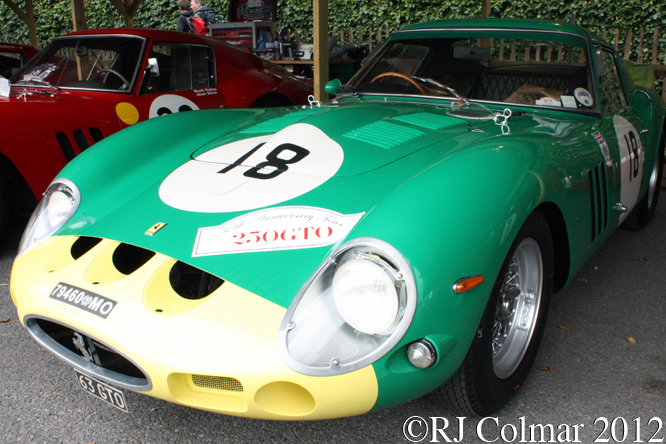
BP Green – Ferrari 250 GTO #3767GT

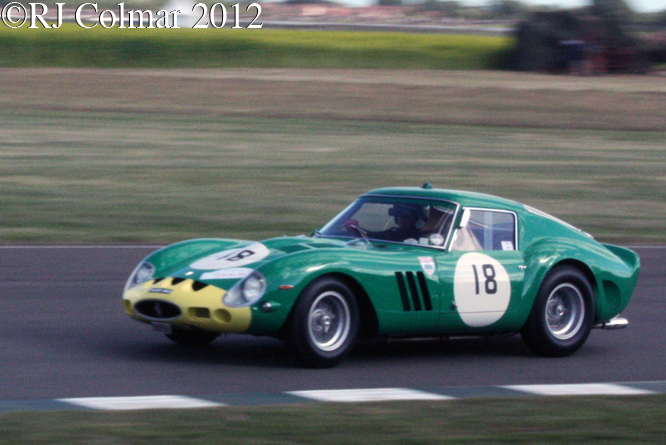
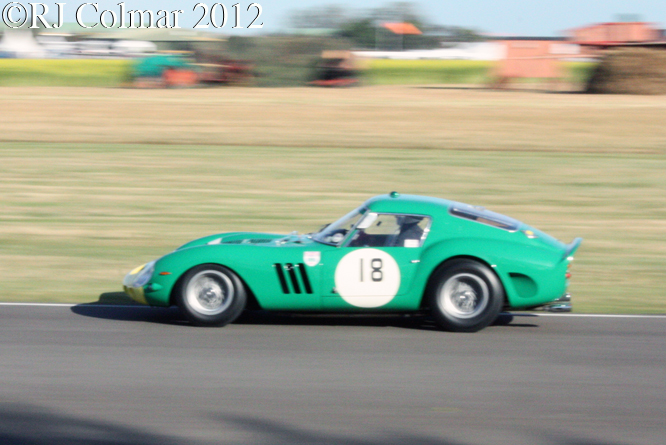
In July 1962 British racing driver David Piper took delivery of a British Petroleum (BP) Green right hand drive (RHD) Ferrari 250 GTO chassis #3767, Italian registration MO 79460 and raced it in Europe, Africa and the United States before selling it on to Ed Cantrell.

Ferrari 250 GTO, Goodwood Revival

Pipers best result with the car was an overall win in the Kyalami 9 hours with South African Bruce Johnstone, the following year David shared another Ferrari 250 GTO chassis #4491GT with South African Tony Maggs to win the Kyalami 9 Hours again in 1963.

Ferrari 250 GTO, Goodwood Revival

Ed Cantrell shared the driving #3767 with former owner Daivd Piper in the 1963 Sebring 12 Hours where they finished 14th overall and 5th in class. The continued to be raced through 1963 until the end of 1964 when Tom Fleming and Ray Heppenstall appear to have been entered to drive #3767 by the North American Racing Team in the Nassau Trophy Race where they finished 14th.

Ferrari 250 GTO, Goodwood Revival

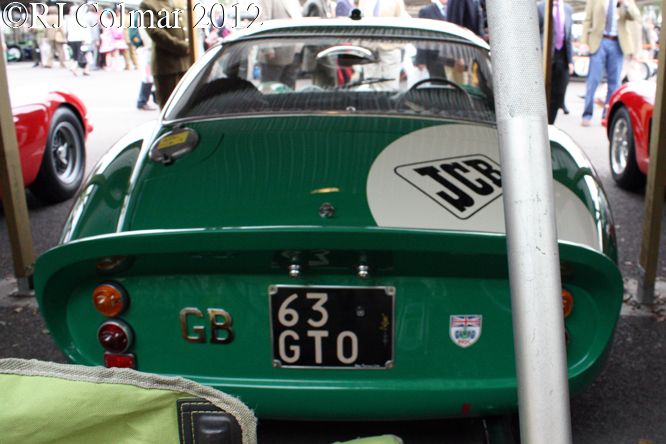
Ten years later Anthony Bamford acquired the car and it was given the British registration plate 63 GTO which remains legal to this day.

Ferrari 250 GTO, Goodwood Revival

#3767 is seen here at last years Goodwood Revival meeting where Joe Bamford and Alain de Cadenet, who owned the car prior to selling it to Anthony Bamford in 1974, shared the driving in the RAC TT celebration race in which they were unclassified.

Thanks for joining me on this “BP Green” edition of “Gettin’ a li’l psycho on tyres” I hope you will join me again tomorrow. Don’t forget to come back now !
Share

Faster Than A Ferrari – Cadillac Coupe de Ville

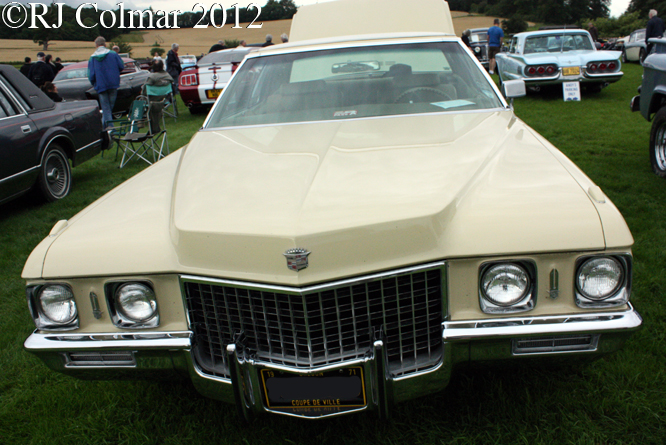
In 1971 Cadillac introduced the forth generation Coupe de Ville with hitherto record braking 62 inches of front shoulder room and 64 inches rear shoulder room. Novel features included windscreen wiper blades that were hidden from view belw the bonnet / hood line when not in use.

Cadillac Coupe de Ville, Classics at the Castle, Sherbourne

A 375 hp 7.7 litre / 472 cui V8, carried over from the third generation Coupe de Ville, with three speed automatic transmission powered the 4,900lb vehicle that measured 225.8 inches from stem to stern.

Cadillac Coupe de Ville, Classics at the Castle, Sherbourne

Legend has it that the third placed Cadillac Coupe de Ville of Ron Herisko in the 1971 Cannonball Run, by dint of traveling a further distance between New York City and Redondo Beach, California had manged to average 82 mph for the journey as against the 80 mph Dan Gurney and Brock Yates averaged in their Ferrari 365 GTB/4 Daytona. In 1972 Steve Behr, Bill Canfield and Fred Olds won the Cannonball out right driving a Cadillac Coupe de Ville.

Thanks for joining me on this “Faster Than A Ferrari” edition of “Gettin’ a li’l psycho on tyres” I hope you will join me again tomorrow. Don’t forget to come back now !
Share