Rolling Into Records – Howmet TX #2

In 1967 Philadelphian sports car racer Ray Heppenstall persuaded his friend Tom Fleming that a conventional sports car with an aircraft gas turbine engine might make a competitive racing car. Fleming, sales vice-president of Howmet a major suppliers of precision castings to the aircraft gas turbine industry, and Heppenstall in turn convinced the board of Howmet that such a program would be a great way to promote their business.

Two spaceframe chassis based on a Can Am design were built and fitted with Continental TS325-1 turboshaft motors that were donated from a batch of ten motors Continental had developed for a failed observation helicopter contract. The motors produced 330 hp and were given a 3 litre / 183 cui equivalency rating by the regulation governing FIA. In order to comply with the reverse gear regulations a separate electric motor drive was employed.
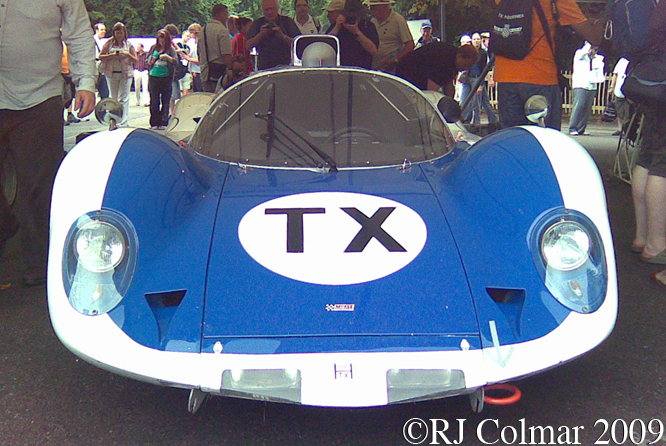
Howmet TX, Goodwood Festival Of Speed

Today’s featured car chassis #2 is the second of the two Howmet’s built with a slightly longer wheel base. The week after Ray had recorded the teams first victory and the first ever for a gas turbine powered car at Huntsville, Dick Thompson repeated the feat driving #2 at Marlboro winning the SCCA Preliminary then sharing the car with Ray to win the 300 mile feature race.

In July ’68 Ray and Dick shared chassis #2 again to come home third overall and first in class at the Watkins Glen 6 hour race behind a pair of 4.7 litre / 286 cui Ford GT40’s.
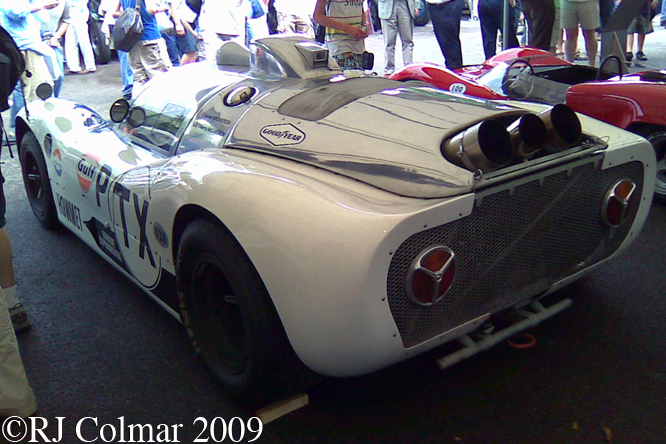
Howmet TX, Goodwood Festival Of Speed

Ray recorded a third place finish driving chassis #2 at Donnybrook in August ’68 before both Howmet’s were shipped to Europe for the Le Mans 24 Hours, which had been delayed until September from it’s usual June date by civil unrest and strikes involving 11,000,000 French workers.

#2 was the faster of the two Howmets in qualifying for the 24 hour endurance classic Dick and Ray qualifying 20th two seconds faster and four spots ahead of the sister machine driven by Hugh Dibley and Bob Tullis. In the race the cars were hampered on the corners because the single gear was designed to optimise performance on the 4 mile Mulsanne straight.

Dibley / Tullis were disqualified after a three hour pit stop to change a rear hub bearing for covering insufficient distance after seven hours, while #GTP2 had a faulty fuel control which restricted the cars top speed to just 100 mph. During the evening Dick lost control and rolled the car at the slightly banked Indianapolis corner.

Howmet TX, Goodwood Festival Of Speed

Note the rear lights sourced from the original iteration of the Ford Cortina, according to Bob Mckee other proprietary parts used to finish the Howmet included front indicators from a Ferrari, Porsche wipers, modified Triumph steering and Mustang door latches.

Howmet withdrew their support for the project after Le Mans having determined the disadvantages of throttle lag, running the car with a single gear, absence of engine braking and high fuel consumption were insurmountable issues for competitive entries in the long run.

Ray Heppenstall rebuilt #GTP2 with open spyder bodywork and in 1970 timed by IMSA officials recorded six World Records for standing starts over 1/4 mile, 1/2 km and 1 km distances in two weight divisions for vehicles upto and over 1000 kgs. Ray’s fastest speed of 167.97 mph was recorded in the lighter division over 1 km all set on a stretch of open road adjacent to Talladega Super Speedway !

With the motors returned to Continental Ray bought the worlds only gas turbine powered race winning cars for a nominal dollar from Howmet in 1971. Chuck Haynes had Bob McKee restore #2 back into Coupé form in 1996, it is now fitted with an Allison 250C18 turboshaft helicopter motor which is lighter but with a similar power output to the original.

My thanks to Pete Stowe for additional in formation on the Hownet’s regarding the records chassis numbers and a quote from Bob Mckee on the proprietary parts used.

Thanks for joining me on this “Rolling Into Records” edition of “Gettin’ a li’l psycho on tyres” I hope you will join me again tomorrow. Don’t forget to come back now !

PS Push to Pass Latest Formula One news and opinion today at Motorsports Unplugged

Share

Air-time – Cholmondeley Pageant Of Power

Cholmondeley Pageant Of Power takes place on the estate of the Marquess Of Cholmondeley, a descendent of Sir Robert Walpole the first British Prime Minister, against the back drop of his fine 19th century mock Gothic castle in Cheshire.

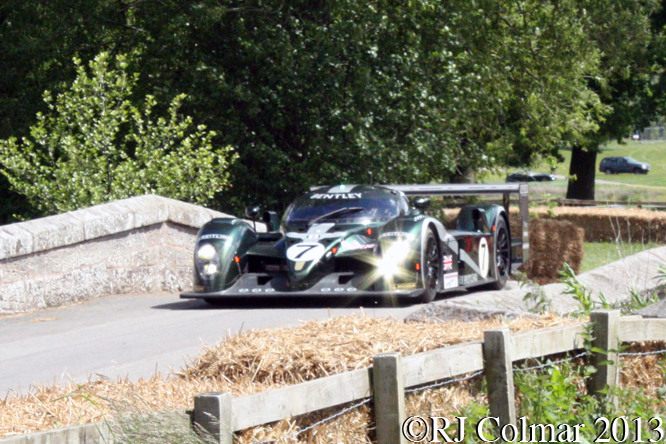
G Smith, Bentley Speed 8, Cholomondeley Pageant Of Power

The opportunity to get close to the Le Mans winning Bentley Speed 8, the subject of next Monday’s blog, seen above demonstrated by Guy Smith who drove this car to victory in 2003 is what initially attracted me to make the journey.

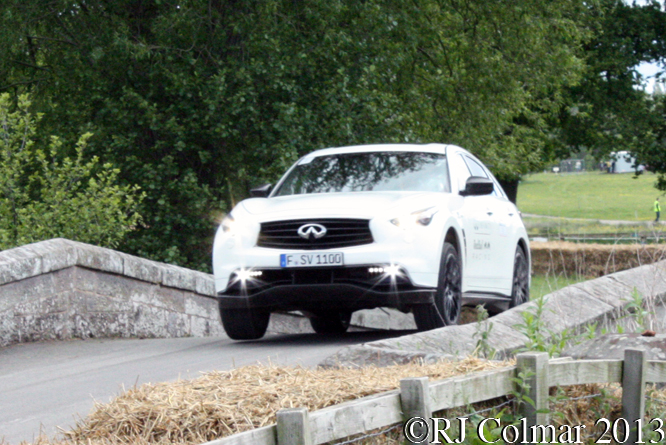
Kingston/Cropley, Infiniti FX Vettel, Cholomondeley Pageant Of Power

There were many attractions at the event on four wheels, two wheels, hovering and flying, but I spent the whole of Saturday morning transfixed by the sight of the participants in the sprint event getting air-time over the bridge close to the finish and it is that feature which I would like to share today. Above the Infiniti FX Vettel named after reigning three time world champion Sebastian Vettel was driven by Autocar journalists Lewis Kingston and Steve Cropley.

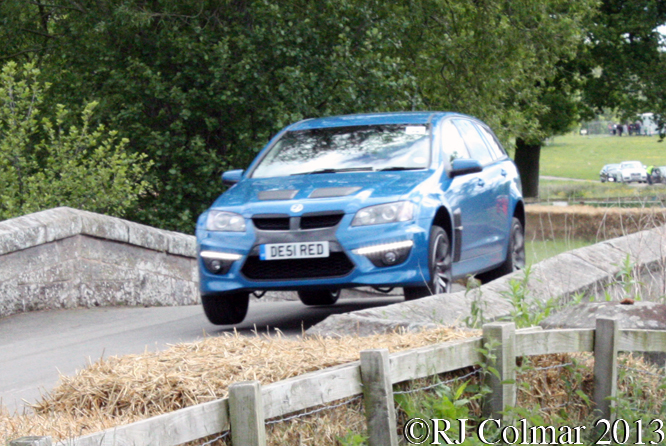
Cray/Cropley, Vauxhall VXR8 Tourer, Cholomondeley Pageant Of Power

Vauxhall Motors Director Martyn Cray shared this Corvette C6 powered Vauxhall VXR8 Tourer with Steve Cropley, the Tourer is based on the Holden Special Vehicles GTS.

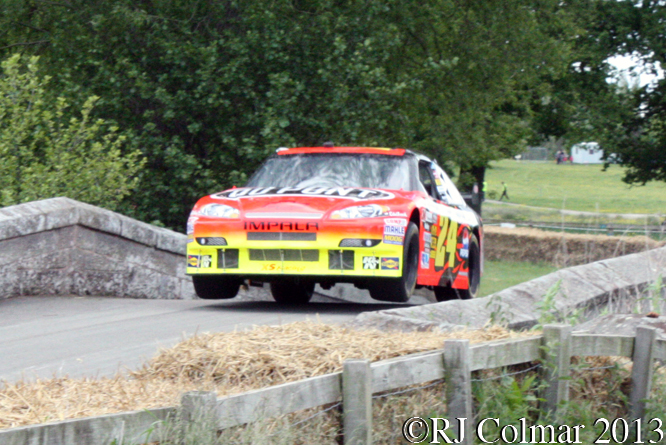
Strafford, COT, Chevrolet Impala SS, Cholomondeley Pageant Of Power

Last time I saw a Sprint Cup COT Chevrolet Impala SS was at Talladega four years ago this one appears to have once been part of the Stewart Haas Racing fleet run for Ryan Newman but has been repainted in the Hendrick Motorsports Dupont colours used by Jeff Gordon for owner driver Mick Strafford.

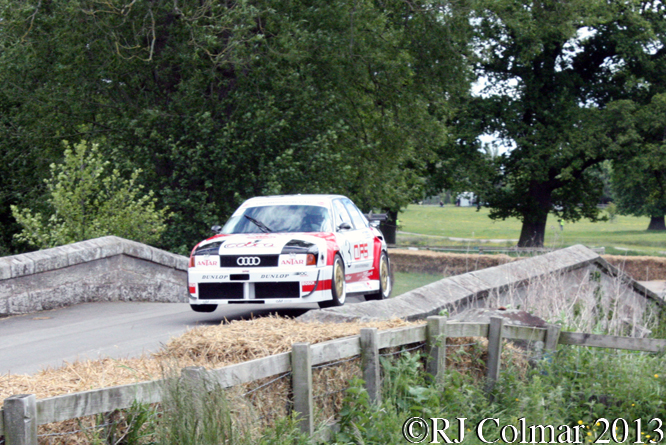
Van Nierop, Audi 80, Cholomondeley Pageant Of Power

In the early 1990’s Xavier Lapeyre ’90, Marc Sourd ’91 and Frank Biela ’92 won the French Supertourisme championships with all wheel drive Audi 80’s like the one driven above driven by Johannes Van Nierop.

Reid, Ford Mustang Mach 1, Cholomondeley Pageant Of Power

Glaswegian Anthony Reid, 1992 Japanese Formula Three open wheel champions and Saloon car ace and a regular Jaguar C-type competitor, is seen getting three wheels off the ground in a Ford Mustang Mach 1.

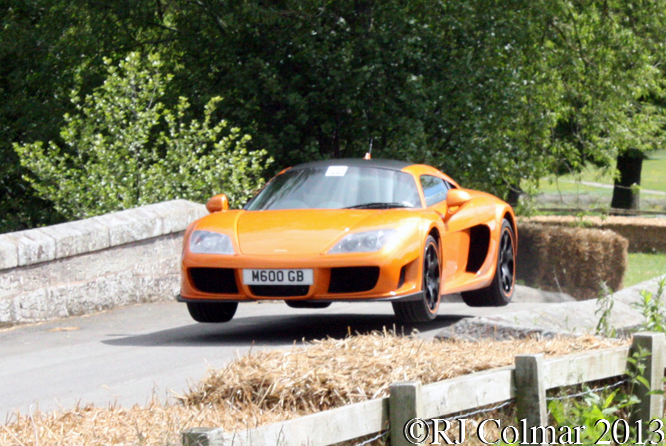
Boutwood, Nobel M600, Cholomondeley Pageant Of Power

Among the Supercars Peter Boutwood’s Noble M600 won the high jump award …

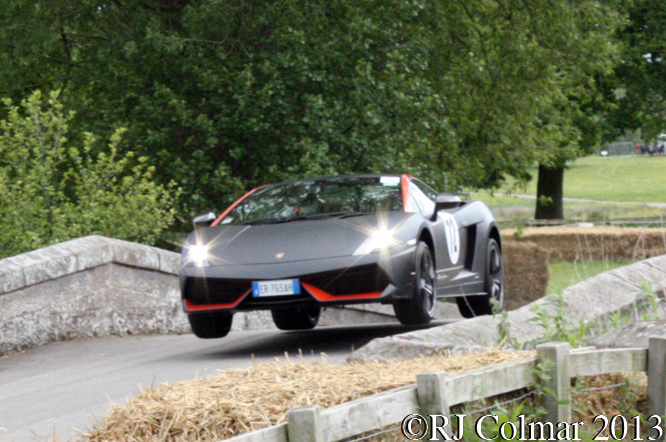
Marshall-Rowe, Lamborghini, LP570, Superleggera, Cholomondeley Pageant Of Power

from the Lamborghini LP570 Superleggera driven by Tim Marshall-Rowe.

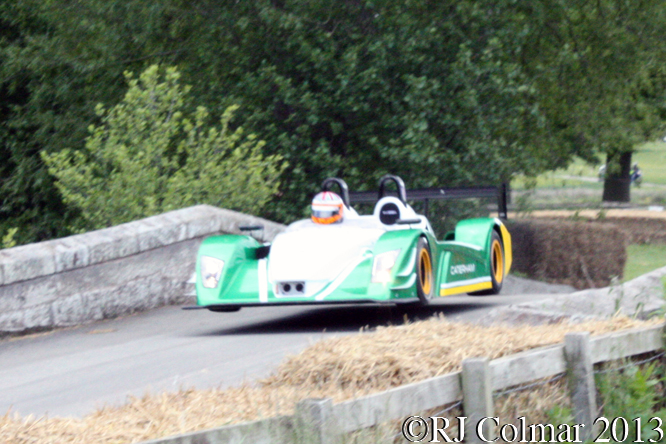
Mansell, Caterham SP/300.R, Cholomondeley Pageant Of Power

Scott Mansell was in the running for the high and long jump events in the Track Day class with the Caterham SP/300.R but …

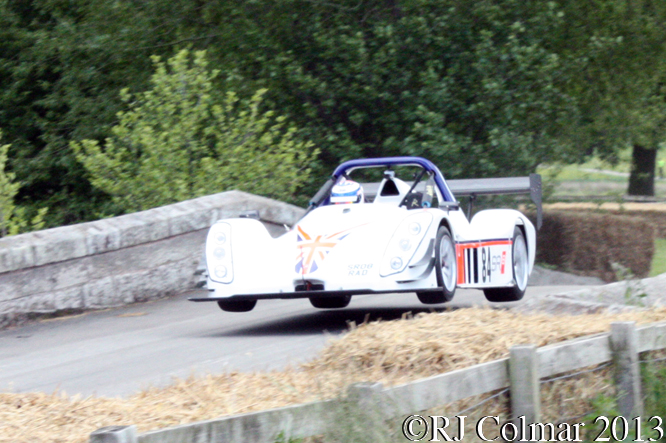
Robbie Kerr, Radical SR3 RS,  Cholomondeley Pageant Of Power

he could not quite match the best efforts of Robbie Kerr driving a Radical SR3 RS.

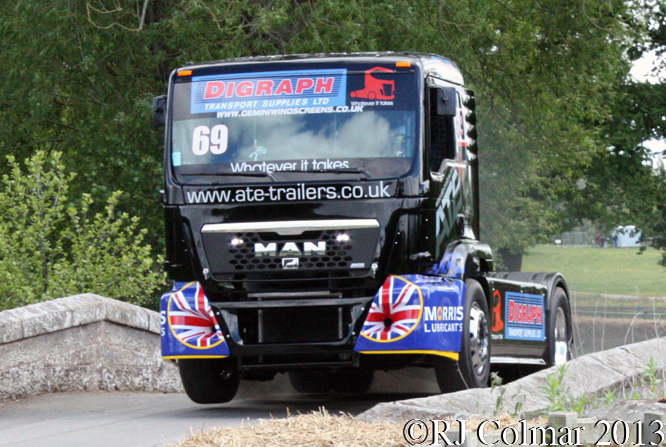
Jenkins, MAN TGX, Cholomondeley Pageant Of Power

Easily winner of the Golden Cojones award was 2011 Truck Champion “MAN in black” driver David Jenkins who manhandled his MAN TGX at terrifying speeds through the narrow lanes of Cholomondeley.

All in all the Pageant of Power was neither as corporate or as busy as Goodwood Festival of Speed which made for a great day out in the opulent surroundings of a country home in Cheshire.

My thanks to Alan Cox for identify Anthony Reid.

Thanks for joining me on this ‘Air-time’ edition of “Gettin’ a li’l psycho on tyres” I hope you will join me again tomorrow. Don’t forget to come back now !

Share

Acrylic Glass Bubble Top – Alpine A442 B #A442/3

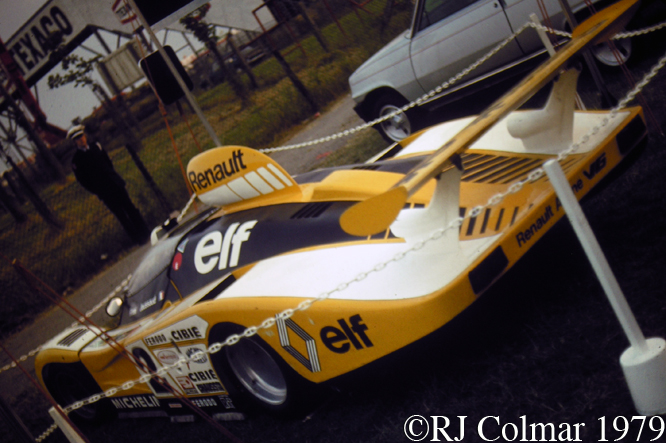
The Alpine A442 B was the penultimate evolution of Alpines 1970’s sports car program that first came to light in 1973 when Renault sponsored the development of the 2 litre / 122 cui Renault Gordini CH1 V6 that sat in the back of the Alpine A440 sports car driven by Jean Pierre Jabouille at Magney Cours.

The following season the second evolution A441 swept the 1974 European Sportscar Championship scoring 9 wins from 9 races with Jabouille, Alain Cudini, Gérard Larrousse, and eventual champion Alain Serpaggi all wining races. over the winter of 1974/75 one of the A441’s was fitted with a turbocharged version of the CH1 V6 that had been designed by François Castaing and Jean-Pierre Boudy.

Alpine A442 B, British Grand Prix, Silverstone

At the second round of the 1975 World Sports Car Championship the turbocharged A441 made it’s debut and with Jabouille and Larrouse at the wheel became the unfancied winner beating the normally aspirated 3 litre / 183 cui Alfa Romeo and turbo charged Porsche 908 to become the first turbocharged prototype to win a World Championship. For the remainder of the 1975 season the newer Alpine A442 evolution was used but it was no match for the Championship winning Alfa Romeo.

1n 1976 Alpine continued using developing the A442 in the World Sportscar Championship but it was completely overshadowed by the new turbocharged Porsche 936 which won all seven races leaving the A442 with three second places as the best results and a distant second in the championship a position which it shared with Osella. Le Mans which was not part of the championship saw Jabouille, Patrick Tambay and Jose Dolhem qualify on pole but the single A442 entered but it retired with engine failure before half distance leaving the Porsche 936 to claim the first of three Le Mans victories.

Alpine A442 B, British Grand Prix, Silverstone

Derek Bell and Jabouille were on pole for the 1977 Le Mans 24 hour race driving today’s featured chassis #A442/3 before it had been upgraded to B spec. However none of the four A442’s finished the race, which was won by the Porsche 936 #001 featured last week, but one of the Renault Gordini CH1 V6 turbo powered Mirages did finish a distant second 11 laps in arrears.

For 1978, by which time Renault and Alpine had been fully financially integrated, a new Alpine A443 had evolved with a longer wheel base, slightly larger motor and an acrylic glass bubble roof. Drivers Jabouille and Patrick Depailler had the roof, which added around 5 mph to the cars top speed, removed because they felt claustrophobic and there was too much heat building up inside the cockpit. Even so they still qualified fastest of the Alpines at Le Mans albeit on second place on the grid behind a works Porsche 936 chassis #003 which qualified with an average speed of 147 mph by Jackie ickx. 3rd on the grid was the monstrous Porsche 935/78 known as Moby Dick with another works Porsche 936 the ’77 winner #001 alongside.

Alpine A442 B, British Grand Prix, Silverstone

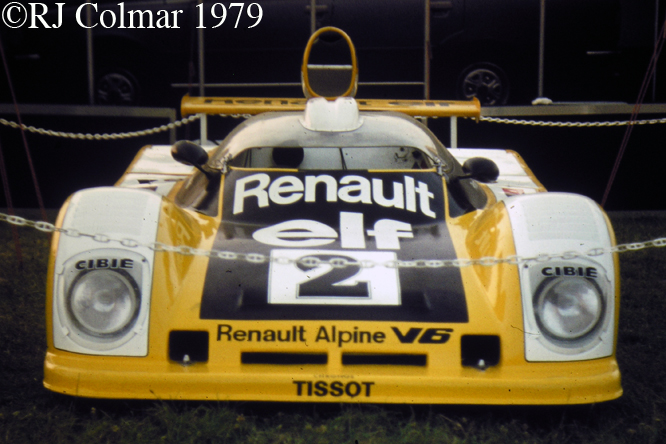
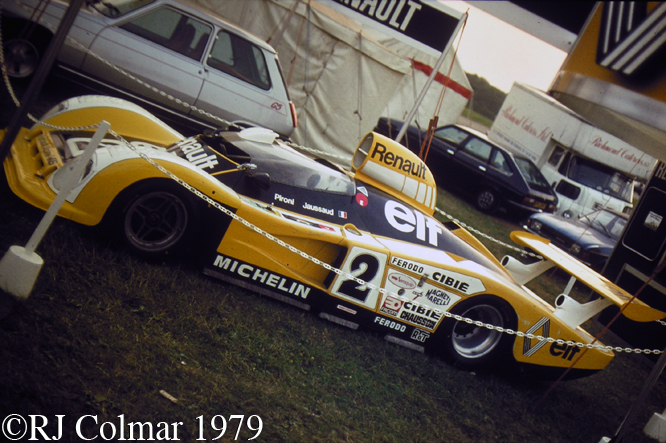
Todays featured car now in B spec running with an acrylic glass roof and the standard 2 litre / 122 cui turbocharged V6 motor was 5th on the grid at Le Mans with Didier Pironi and Jean-Pierre Jaussaud sharing the driving. The A443 of Jabouille and Depailler led much of the first half of the race interrupted by a set of unbalanced front wheels until it retired with a broken motor leaving Pironi and Jassaud to take over a commanding lead which it held to the end. Pironi passed out in the heat of the cockpit after he crossed the finish line.

Two of Porsche 936’s required gearbox rebuilds after which one of them crashed and the other chassis #001 came second ahead of the third placed 936 chassis #002 which required a turbocharger replacement while the 935 Moby Dick suffered from overheating and persistent oil leaks to come home 8th.

Having accomplished what they set out to achieve with the CH1 V6 program, along with two Formula Two open wheel championships in 1975 and 1976, Renault retired the Alpines from Sports car racing to concentrated all of it’s efforts on Formula One where it ran the first turbo charged Formula One car in 1977.

In 1979 Renault would become the first team to win a Formula One race with a turbo charged 1.5 litre 91.5 cui Renault Gordini EF1 motor at the French Grand Prix, which by coincidence was the race before the British Grand Prix where today’s photo’s were taken of #A442/3 in the paddock at Silverstone.

My thanks to Tim Murray for helping to identify the winning chassis of the 1975 Mugello 1000kms race which was widely reported to have been an Alpine A442 in contemporary journals like Motoring News but which contemporary photographs show the A441 development car.

Thanks for joining me on this “Acrylic Glass Bubble Top” edition of “Gettin’ a li’l psycho on tyres” I hope you will join me again tomorrow. Don’t forget to come back now.

Share

Cubic Inches – Bentley Speed Six #HM2689

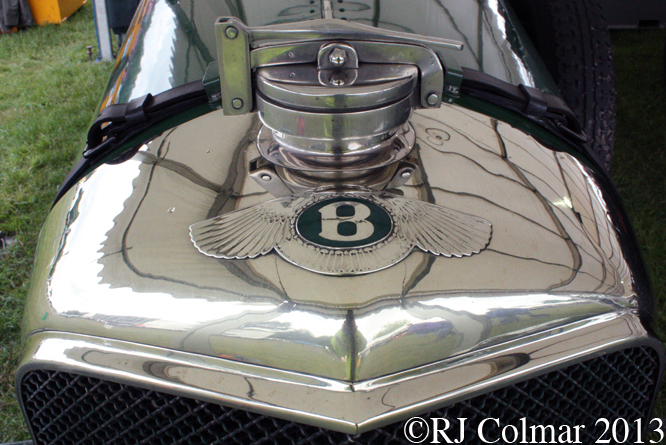
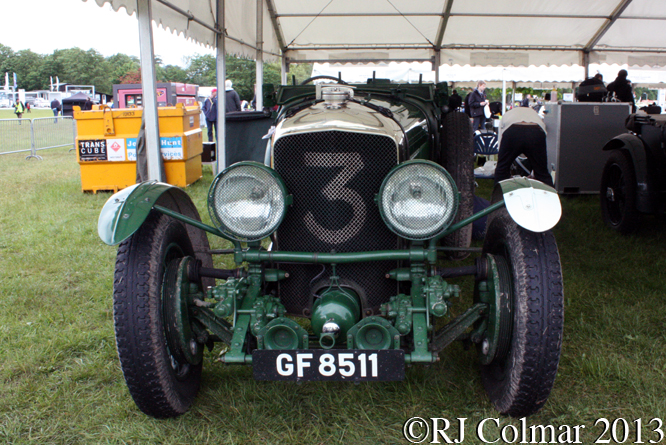
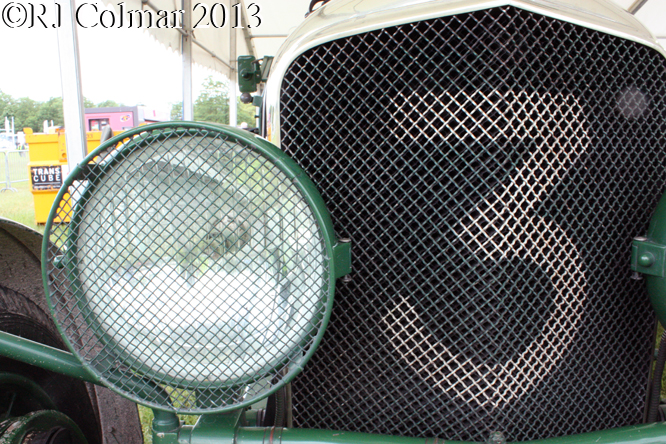
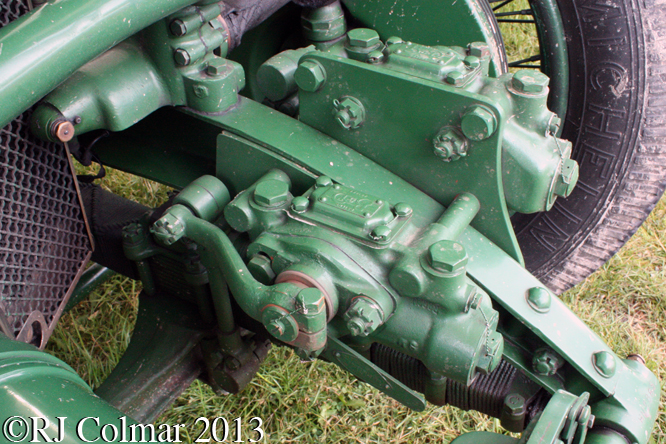
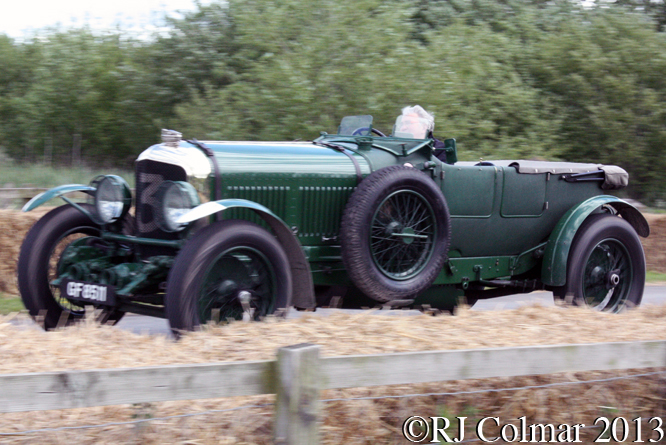
At the weekend I popped up to the Cholmondeley Pageant of Power where several Bentley’s were present that have taken part in Le Mans 24 hour races including today’s featured example chassis #HM2869 which was driven by Sammy Davis and Clive Dunfee in the 1930 race.

Bentley Speed Six, Cholomondeley Pageant Of Power

The Bentley Speed Six was the high performance version of the Bentley 6 1/2 litre first seen in 1926. The 6 1/2 litre was conceived to challenge the Rolls Royce Phantom as a preeminent limousine.

Bentley Speed Six, Cholomondeley Pageant Of Power

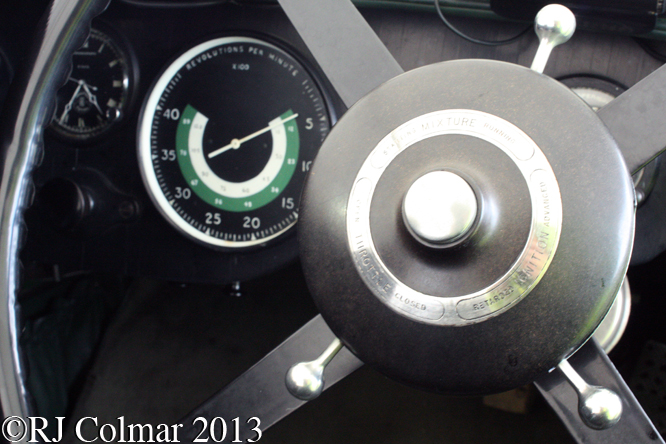
Launched in 1928 the Speed Six used the same 24 valve twin cam, twin spark 6,597 cc / 402.6 cui six cylinder motor as the Bentley 6 1/2 litre but tuned to give 160 – 180 hp, up from the standard 147 hp. This motor was considered the jewel in the crown of W.O. Bentley’s portfolio.

Bentley Speed Six, Cholomondeley Pageant Of Power

The Speed Six of Woolf Barnato “Old Number One” is one of a handful of cars to have won the Le Mans 24 hour race twice. In 1929 Barnato shared the driving with “Tim” Birkin leading home three Bentley 4 1/2 litre cars. The following year Baranto and Glen Kidston led home a Speed Six one-two finish with Frank Clement and Richard Watney at the wheel of the second placed car.

Bentley Speed Six, Cholomondeley Pageant Of Power

Driving a Mulliner Saloon bodied Speed Six Barnato also won a bet with his pals that he could arrive at his club in London faster than Le Train Bleu could cover the distance between Cannes on the French Riviera and the cross channel port of Calais in Northern France. With his secretary Dale Burn as relief driver he won the bet of £100 by four mins, but was heavily fined by French authorities for racing on public roads.

Bentley Speed Six, Cholomondeley Pageant Of Power

The Mulliner Saloon Speed Six with which Barnato won the bet is often incorrectly depicted and confused with a Gurney Nutting Sportsman Coupé Speed Six which Barnato named the Blue Train Special to commemorate his feat. The Mulliner Saloon body on the car Barnato and Burn drove the 570 miles from Cannes to London has recently been restored to the original chassis by it’s current owners Bruce and Jolene McCaw, who also own the Barnato’s Gurney Nutting Coupé.

Bentley Speed Six, Cholomondeley Pageant Of Power

Despite proving W.O’s maxim “that there is no substitute for cubic inches” over the 4 1/2 litre super charged Blower Bentley it is the faster but less reliable latter car that is the better known instantly recognisable “icon” of it’s day.

Clive Dunfee crashed #HM2689 out of the 1930 Le Mans 24 hours on laps 22, the month before Le Mans race Clive and Sammy drove the car car to a 2nd place finish in the Brooklands Double Twelve. “Tim” Birkin and Jack Barclay shared #HM2689 at the Brooklands Double Twelve in 1931 but retired with engine failure.

#HM2689 has been owned by Peter Neumark for the last twenty years and he assured me “it is not going anywhere” in the future when I spoke to him on Saturday.

Thanks for joining me on this “Cubic Inches” edition of “Gettin’ a li’l psycho on tyres” I hope you will join me again tomorrow when I’ll be looking at the 1978 Le Mans winner. Don’t forget to come back now !

Share

Musical Spares – Porsche 962C #006

The Porsche 962 was built in two specs, the original was the 1984 IMSA GTP spec which was a variation of the dominant Group C Porsche 956 sports car first seen in 1982. The 962 differed in two important aspects from it’s Group C cousin. First the 962 had a longer wheel base so that the drivers feet were behind the center line of the front axle and second IMSA mandated a single turbo while the Group C 956 ran more powerful twin turbo’s.

Porsche 962C, Le Mans, France

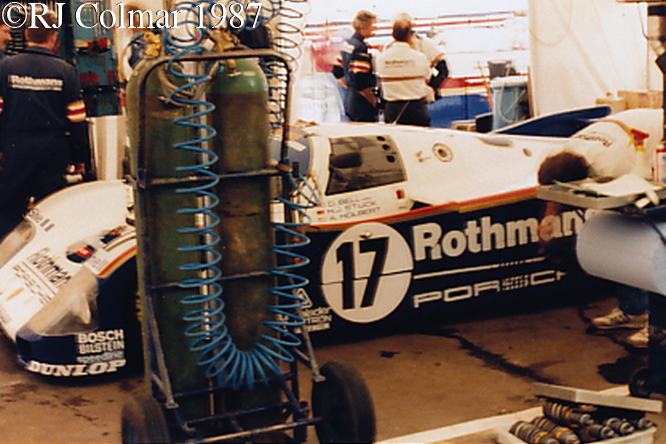
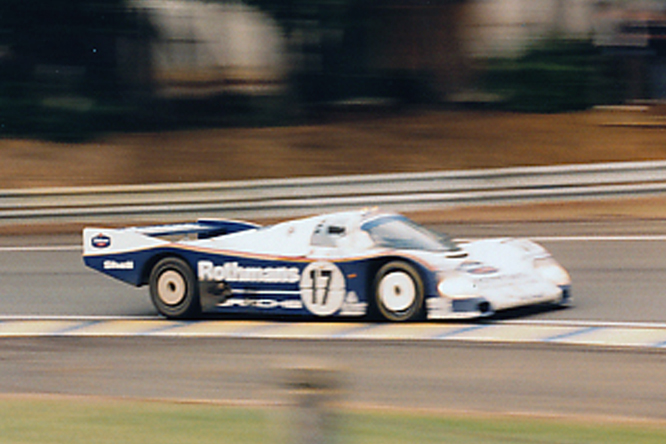
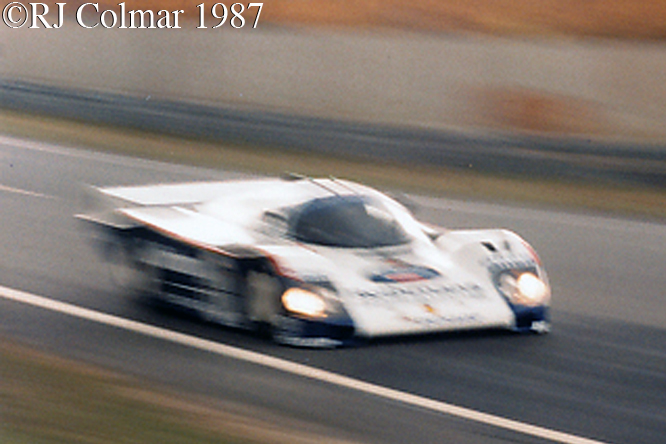
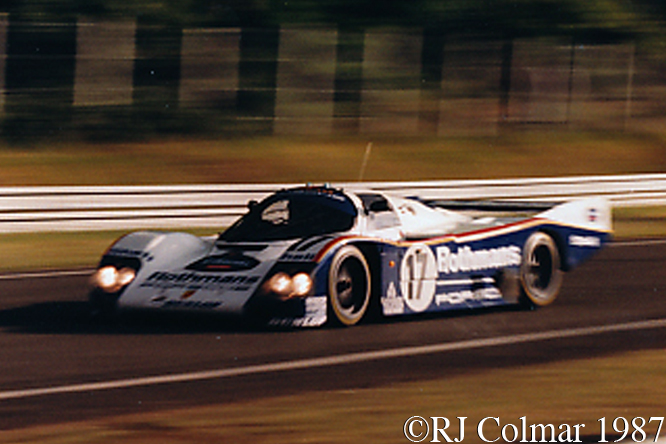
For 1986 the FIA mandated that Group C cars should follow the lead set by IMSA and have the drivers feet behind the the center line of the front axle line while making no changes to the engine regulations so the more powerful Porsche 962C came into being sweeping all before it much as the 956 and 956B had done. Derek Bell became the first driver to successfully defend his World Sports Car Drivers Championship won driving a 956B in ’85 and 962C in ’86. In 1986 Derek also won the Le Mans 24 hours for the forth time sharing his 962C with Hans Joachim Stuck and Al Holbert, Derek was also awarded the MBE for services to motorsport, a Royal honour which even Porsche AG noted on the door of Dereks #17 car as seen above at Le Mans in 1987.

Porsche 962C, Le Mans, France

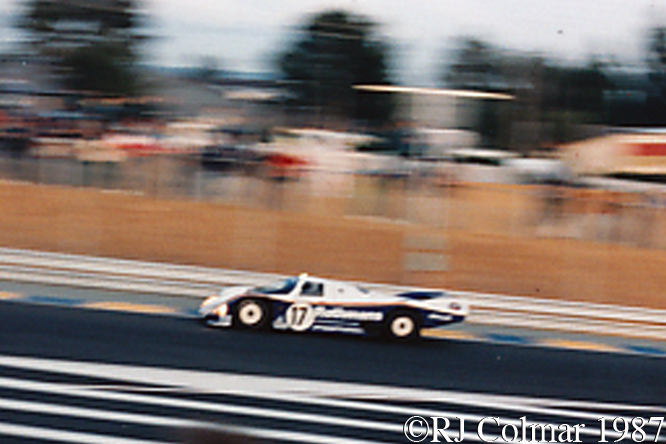
Going into Le Mans 1987 Derek Bell and Al Holbert were on a roll of three consecutive 24 hour race wins going back to Daytona ’86 where they shared an IMSA GTP 962 with Al Unser Jr. As mentioned above Bell and Holbert followed that up at Le Mans winning with Hans Stuck and made it a three peat of 24 hour victories at Daytona sharing Holberts Löwenbrau Porsche 962 with Unser Jr and Chip Robinson. Only a complete idiot would have bet against Bell, Stuck and Holbert claiming victory at Le Mans in 1987. The #17 chassis #006 seen in the rain above qualified 2nd on the grid by Hans Stuck next to the #18 chassis #008 which Bob Wollek qualified on pole.

Derek Bell, Hans Joachim Stuck, Le Mans, France

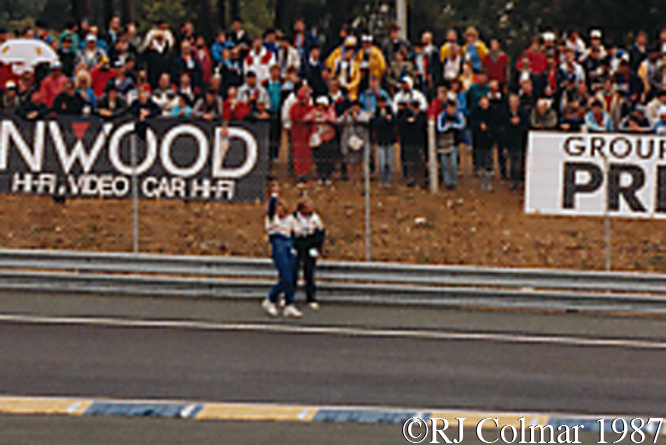
But the fourpeat of consecutive 24 hour victories very nearly did not happen, things started to go wrong for the works Porsche team a week before the race when Hans Stuck tested all the Le Mans cars at Porsche’s Weisach test facility. Stuck experienced a puncture while driving the car designated for his team mates Jochen Mass and Brilliant Bob Wollek. As a consequence Mass and Wollek were given the car designated as the race car for Stuck, Bell and Holbert chassis #008 while the ’86 winning trio took over the car designated for Vern Schuppan, Kees Nierop and Price Cobb chassis #006, today’s featured car, and the Schuppan, Nierop, Cobb combination were given the older chassis #002 which had been designated as a spare. Bell and Stuck are seen above returning from the new chicane an hour before the start of the race.

Porsche 962C, Le Mans, France

The next problem for the Porsche team occurred in practice when Price Cobb had an accident which wrote chassis #002 off during the first day of practice so that there were now only two works entered cars to challenge for the win, but as designer Norbert Singer observed ‘only one of them can win’. Schuppan, Nierop and Cobb all found rides in other cars.

Porsche 962C, Le Mans, France

An hour into the 1987 race it looked as if Jaguar who were at least 3 seconds slower than the lead Porsche in practice might pull off a remarkable win as they held first third and fifth. The Porsche cars were falling like a chain of domino’s with engine failures, something in the fuel was causing the latest in Bosch (ECU) electronic management systems to run the Porsche engines much too lean which resulted in engine failures for the pole sitting works car; 2 Joest Porsche 962C’s and a Kremer 962C.

Porsche 962C, Le Mans, France

Fortunately the #17 had managed to get into the pits to change to an older ECU before any permanent damage was done and 2nd placed Bell, Stuck and Holbert proceeded to pursue the lead Jaguar at break neck speed until midnight when it took the lead for the final time as the four 7 litre / 427 cui V12 Jaguar XJR 8LM’s started to fall by the wayside with a puncture, an accident, a cracked cylinder head and a missed gear change respectively.

Porsche 962C, Le Mans, France

The punctured #5 Jaguar driven by Win Percy had required an 80 minuet safety car period to clear up the debris in the dead of night as the Jaguar had been pitched at 200 mph into the barriers of the Mulasanne straight ripping off the gearbox and engine, Win Percy unlike his helmet was completely unscratched. The relentless pace at which the #17 Porsche had been chasing the Jaguars meant that Bell, Stuck and Holbert were way over their fuel allowance as the safety car period started but right back on schedule once the mess created by the Jaguar had been cleaned up.

By the end of the race Bell, Stuck and Holbert were 20 laps to the good; from the private Primagaz Competition 962C of Juergen Lässig, Pierre Yver and Bernard de Dryver; as they recorded their fifth, second and third Le Mans wins respectively, their second consecutively as a winning Le Mans trio and Bell and Holberts 4th consecutive 24 Hour race win. Porsche also recorded their seventh consecutive Le Mans win in 1987.

The following year things would not be so easy as Jaguar, who won the 1987 World Sports Car Championship and who’s driver Raul Bosel won the 1987 World Sports Car Drivers Championship took the fight even more convincingly to Porsche at Le Mans.

Chassis #006 was driven at Spa in 1986 by Jochen Mass and Bob Wollek on it’s debut where it was qualified third and finished 7th it’s only other race start was at Fuji where Holbert and Pescarolo started from 12th and retired with transmission problems. Prior to the Le Mans 24 hours #006 had primarily been used as a spare car at Jarama, Jerez, Monza and Silverstone in 1987. #006 was driven by Bob Wollek and Canadian Kees Nierop for the ’87 Le Mans test weekend where carrying the #17 it recorded the 2nd fastest time. After the 24 hour win in ’87 #006 returned to Le Mans in 1988 as a spare that was briefly used by Micheal Andretti in practice before it was retired for good.

Thanks for joining me on this “Musical Spares” edition of “Gettin’ a li’l psycho on tyres” I hope you will join me again tomorrow. Don’t forget to come back now !

Share

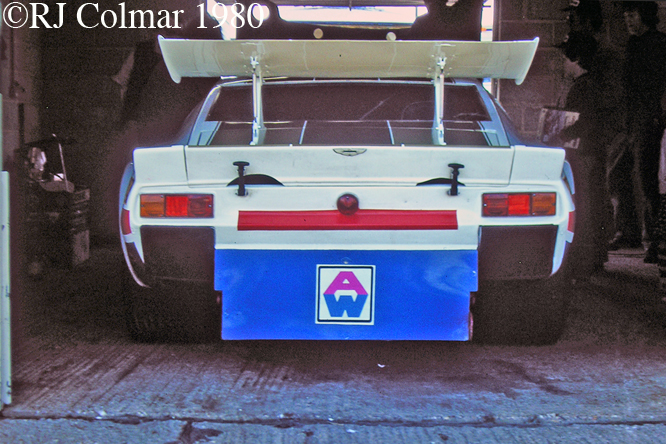
Muncher – Aston Martin V8 RHAM/1

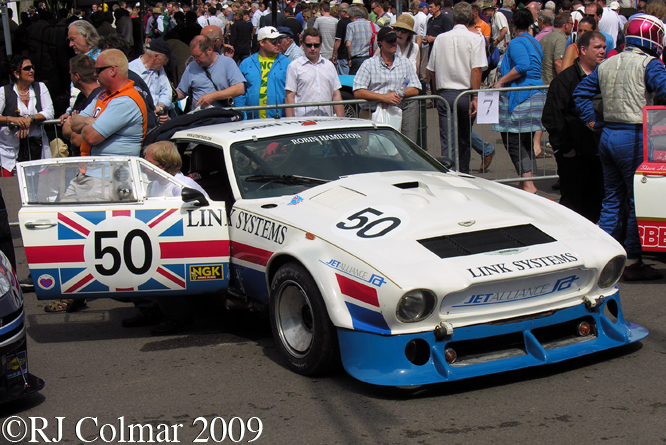
After completing and apprenticeship, with Rolls Royce, Robin Hamilton went into business with David Jack under the Robin Hamilton Motors banner as Aston Martin specialists. In 1974 Robin became only the second person to take to the tracks with a V8 powered production Aston Martin when he started racing his 1969 Aston Martin DBS V8 chassis number #DBSV8/10038/RC.

Aston Martin V8, Goodwood Festival of Speed

By 1977 the car had become so modified with little of the original 1969 chassis remaining Robin renumbered it RHAM/001 (Robin Hamilton Aston Martin) and had gathered sufficient funds to enter the Silverstone 6 hour race, where with fellow club racer David Preece the car qualified 15th but failed to complete sufficient laps to be classified after heat soak from the inboard rear brakes caused the differential oil seal to fail. Once the seal was replaced Hamilton and Preece continued at reduced pace to the finish.

A month later Robin took the his Aston Martin to Le Mans and qualified slowest in the GTP class but thanks to irregularities with another competitor Hamilton was informed he would be allowed to start 5 hours before the start of the race. Hamilton and Preece were joined by long time racer Mike Salmon in a run that included replacing cracked front brake pads with the teams only spares so that the car again had to run at reduced speed this time for 17 hours.

The gear lever came off in Mikes hands so he threw it out the window. The item was recovered by a marshal who apparently ran back to the pits with it so that it could be refitted. Other than that regular stops were required to patch up and top up the differential oil tank. The car, christened Muncher during the race for it’s capacity to destroy brakes was classified 17th overall 600 miles behind the wining Porsche 936/77 I looked at last Sunday.

Aston Martin V8, Silverstone 6 Hours

Lack of funds meant that Robin had to sit out international events in 1978 but he kept developing the car lowering the roof, loosing weight and fitting two turbo chargers to raise the horsepower from 520hp to 650hp which doubled the fuel consumption to 2.5mpg, until fuel injection brought the figure up to 4 mpg !

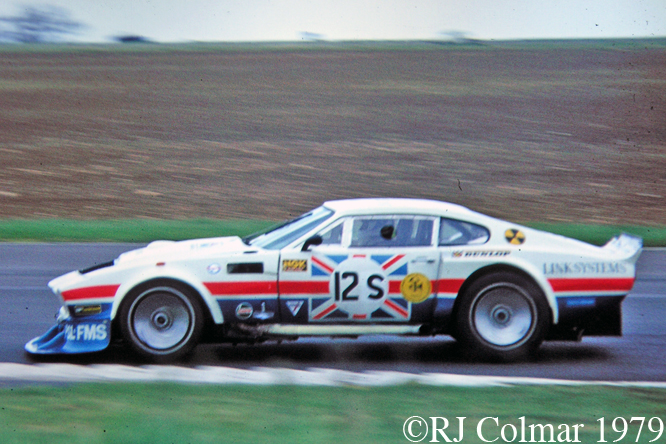
In 1979 Robin returned to the Silverstone 6 hours with David and none other than 1975 Le Mans winner Derek Bell to drive the much improved car as seen above. Lapping 5 seconds faster than on it’s first appearance in 1977 the Aston Martin qualified 11th and came home 13th with a list of problems that included brake fade, a blown tyre and a ‘small’ engine fire.

The car was prepared for the Le Mans 24 hours where it was lapping 7 seconds faster than in 1977 but only qualified for 55th place on the grid. The car lasted 21 laps before a holed piston melted broke a connecting rod causing retirement.

Aston Martin V8, Silverstone 6 Hours

In 1980 Robins Aston Martin V8 was wheeled out at the Silverstone 6 hours for a third time sharing the car with Derek Bell again the car was now three seconds slower than in 1980 and qualified 24th. The Aston retired from the race after 60 odd miles with rear hub failure.

80 10 14 Hamilton AM Astra 14sc

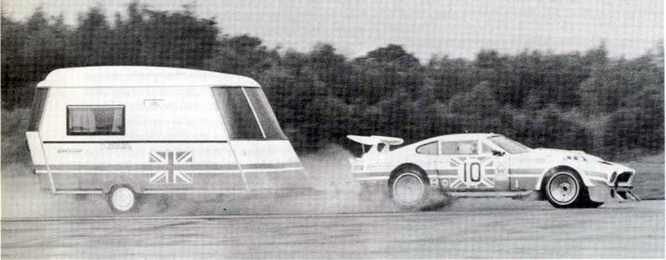
At the end of 1980 Muncher the Aston Martin claimed a World Land Speed Record, when Robin Hamilton towing a Astra 14 caravan with his car that had clocked over well 180 mph at Le Mans, achieved a two way average time of 124.91 mph raising the caravan towing record from 108 mph at Elvington Airfield on the 14th of October 1980.

Thanks for joining me on this “Muncher” edition of “Gettin’ a li’l psycho on tyres” I hope you will join me again tomorrow. Don’t forget to come back now !

Share

Fiberglass Body – Ferrari 250 LM #8165

This November sees the 50th anniversary of the unveiling of the Ferrari 250 LM which to date was the last Ferrari to cross the finishing line first at Le Mans in 1965.

Today’s featured car chassis #8165, the last 250 LM to be built, was sold new to Scuderia Filipentti and entered by them in the 1966 1000kms race at the Nurburgring for Willy Mairesse and Herbert Mueller who finished 9th.

Ferrari 250LM, Goodwood Revival

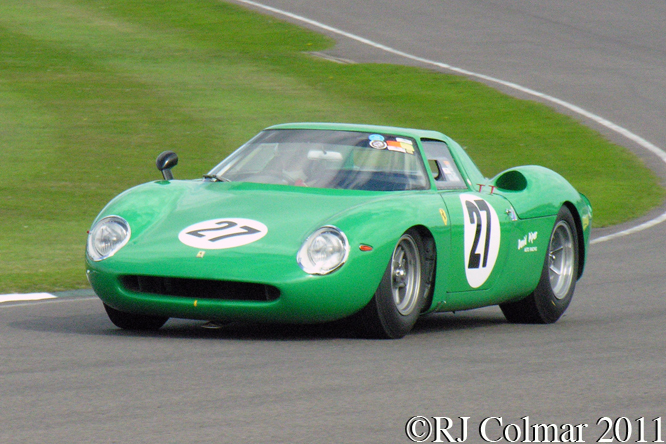
The car was then sold to David Piper and in June 1966 David fitted fiber glass body panels front and rear and painted #8165 BP Green. Subsequently David is known to have driven the car to victories at Brands Hatch, Oulton Park and the 1000kms Paris at Monthlery in 1966 sharing the car with Mike Parkes in the latter.

In 1967 David won at Silverstone and entered the #8165 for Hugh Dibley and Roy Pierpoint for the 1000kms at Brands Hatch where they finished 10th overall and first in class. At Monthlery Richard Attwood and Brian Redman came 6th overall and first in class.

Ferrari 250LM, Goodwood Revival

In 1968 Pedro Rodriguez joined Roy Pierpoint in #8165 for the 1000 kms at Brands Hatch where they finished 5th but only 3rd in class. #8165’s last ‘in period’ appearance was in the 1968 Le Mans 24 hours where Piper and Attwood qualified 28th and came through to a seventh place finish.

David Piper is seen driving #8165 in these photo’s in practice for the Whitsun Trophy at the Goodwood Revival a couple of years ago. David finished the race in 27th place.

My thanks to Athanase and Miurasv for clarifying the early ownership of this car over at FerrariChat.com.

Thanks for joining me on this “Fiberglass Body” edition of “Gettin’ a li’l psycho on tyres” I hope you will join me again tomorrow. Don’t forget to come back now !

Share