Baby Hemi – Peugeot EX4/L3

May used to be the month where US open wheel racing was centered entirely on the story coming out of Indianapolis Motor Speedway, this month the iZod Indy Car Series breaks with tradition and will also be visiting Sao Paolo on May 6th, however GALPOT will be dedicating the next 5 Americana Thursday Posts to The Greatest Spectacle in Racing in years long gone by thanks to Geoffrey Horton who over the last two years has sent me numerous photo’s of Indy Cars from the Concours d’Elegance scene in California.
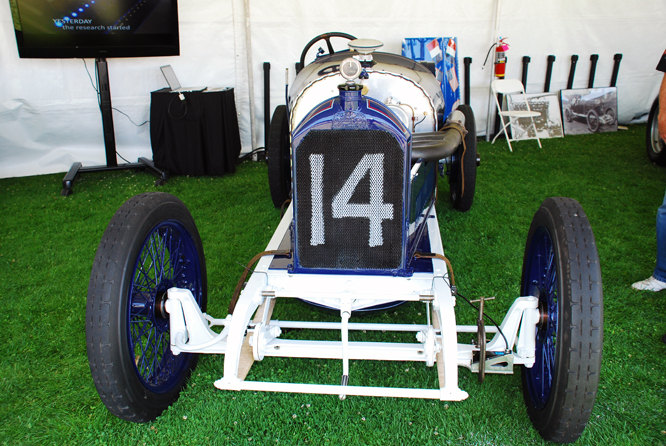
Peugeot EX4/L3, Palo Alto, 2011

This months five part potted history of the Indy 500 returns to 1914 when, as I found out two years ago, rookie René Thomas went to victory lane driving Delage Y, I forgot to mention René was accompanied by riding mechanic Robert Laly.

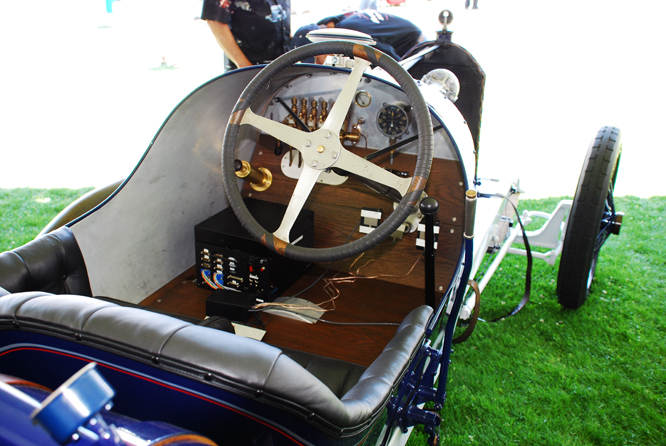
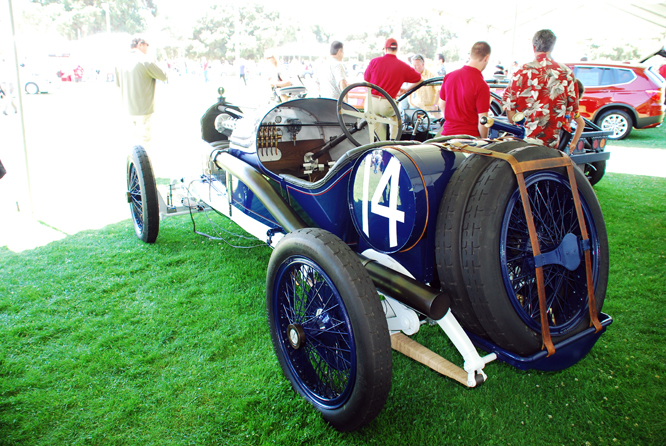
Today’s featured car the #14 Peugeot EX4/L3 was also entered in the 4th running of the Indy 500 for another rookie called Arthur Duray and US riding mechanician Henry Mattheys by Jacques Menier a member of the French Menier Chocolatier dynasty.
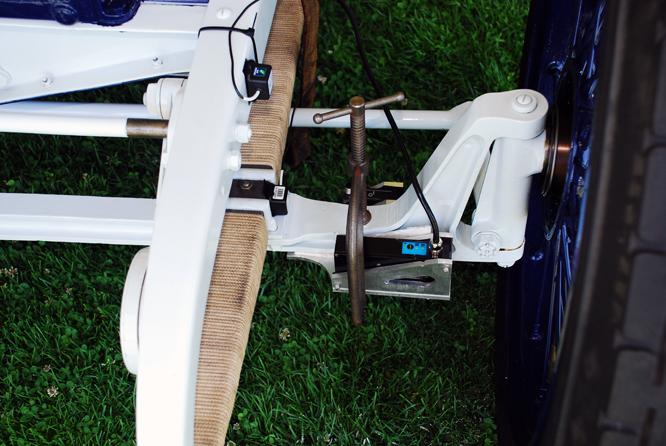
Peugeot EX4/L3, Palo Alto, 2011

In 1914 qualification for the 500 was slightly different procedure from what we are familiar with today, in the first two editions of the Indy 500 qualification was by date the entries were received providing a minimum speed had been achieved over a measure mile of the circuit in 1911 and a full flying lap in 1912. For 1913 and 14 with the arrival of foreign competitors a qualifying lap with a minimum speed was compulsory but the grid positions were determined by blind draw.
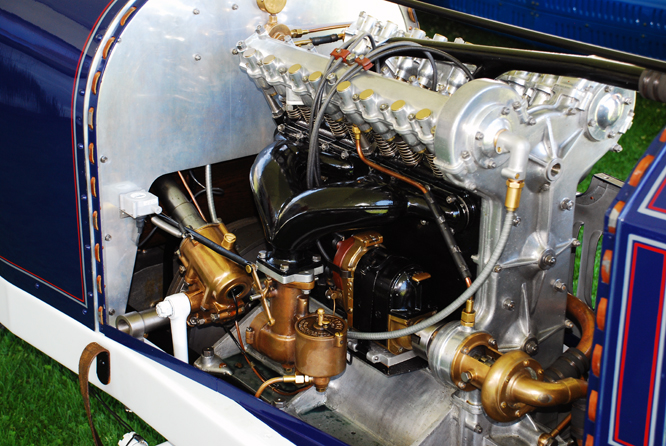
Peugeot EX/4 L3, Palo Alto, 2011

The Peugeot EX4/L3 that Jaques Menier bought featured an ‘L3’ 4 cylinder 3 litre / 183 cui version of the giant killing 7.6 litre / 463.78 L76 Motor that had successfully seen off the 15 litre / 915 cui FIAT’s in the 1912 French Grand Prix. Having proved with success the benefits of technical innovations that included twin gear driven overhead cams operating 4 valves per cylinder, which also featured the original hemi heads, designer Ernst Henry, aided by his driver engineers collectively known as “Les Charlatans”, proceeded to produce three further evolutions of of the motor with sizes of 5.6 litre / 341 cui, as used by Georges Boillot and riding mechanic Prévost to win their second consecutive French Grand Prix in 1913, 4.5 litre / 274 cui and the smallest of the family 3 litre / 183 cui L3 seen here.

For those interested in the minutiae of veteran era production methods there is a fascinating story regarding this particular motor whose block was found to have inconsistent longitudinal bore center lines on this thread on The Nostalgia Forum led by distinguished historian Doug Nye linked here.
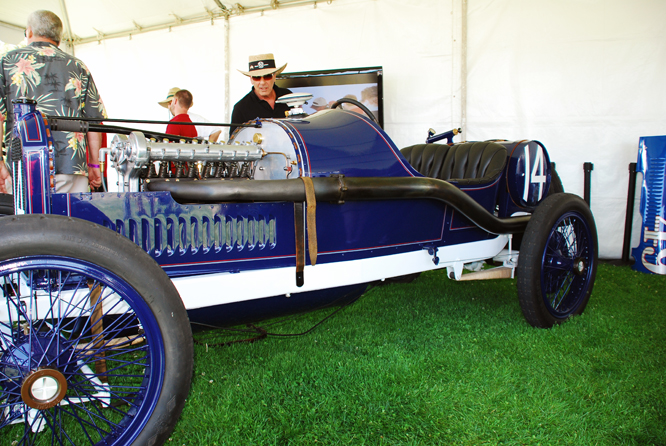
Peugeot EX4/L3, Palo Alto, 2011

Alongside the winning two car Delage team Arthur Duray faced two EX3/L56 powered Peugeots of Georges Boillot with a riding mechaninc M. Brevot who ‘might’ have been Boillot’s regular mechanic Prévost with 1913 rookie winners Jules Goux partnered by Emil Begin. Boillot set the fastest time in practice of 99.860 mph but the draw by ballot for grid slots saw Jean Chassagne’s Sunbeam start from pole.
Peugeot EX4/L3, Palo Alto, 2011

Boillot was in a comfortable position to win the 1914 Indy 500 until repeated tyre failures led to a 14th place finish while Goux in the second large Peugeot finished 4th with Duray coming home second to the Delage of René Thomas.
Peugeot EX4/L3, Palo Alto, 2011

Arthur Duray who set three land speed records between 1903 and 1904 carried on racing until the 1930’s for manufacturers that included Hispano-Suiza, Ariès, B.N.C and Amilcar. At the 1921 French Grand Prix he was a spectator when running in second place Albert Guyot’s riding mechanic got hit on the head by a rock, Guyot pulled his Duesenberg up in the pits and it became apparent that his mechanic was too dazed to continue. On seeing this Arthur Duray is said to have vaulted the spectator fence pushed the mechanic aside cranked the Dusenbergs motor to life and jumped into the mechanics seat alongside Guyot who went on to record a sixth place finish.

The aforementioned Mr Nye has kindly informed me courtesy of Scott George at the Collier Collection, current owners of the vehicle, that “After its Indy days there is some suggestion it (today’s featured car) returned to France, plus a parallel suggestion that it stayed in the US. Sold to Harry Harkness who ran it a little in the north-eastern area, then sold to Kaufman, himself a New York Peugeot agent and team owner. The engine might have been “swapped out” of the chassis at some stage. Car then found at Benny Brandfon’s yard for old race cars and exotics in NY…”

Esteemed Indy historian Michael Ferner has expanded on what may have become of the car while in the care of Peugeot Dealer Alphonse Kaufman “The (#14) Meunier/Duray car, on the other hand, is a possible candidate for having served as the basis for the 1916 “Peusun Special”, apparently a Peugeot chassis with a Sunbeam engine and a Delage radiator!” If today’s featured EX4/L3 did form part of the Peusun Special this may tie up with Doug’s suggestion that the engine “might have been ‘swapped out’.”

Michael suggests James O’Keefes forthcoming book ‘Peugeot Racing In America (pre-WW II)’ should be a worthwhile read on the subject.

Harry Miller who had maintained and rebuilt a Peugeot L series motor copied the basic twin over head cam 4 valves per cylinder hemi head architecture for his own Miller motors that would come to dominate the Indy 500 in the 1920’s and 1930’s which would in turn be succeeded by “Offy” engines that former Miller employee Fred Offenhauser developed having bought the rights to the Miller motors when Miller went bust. The Offenhausers would remain competitive in ultimate turbocharged form at Indy until the mid 1970’s.

Of the 900 odd blogs I have posted to date this has without question proved one of the more challenging and I hope I have given an accurate summary of our knowledge of the car to date, my thanks to Doug Nye, Michael Ferner and Tim Murray, at The Nostalgia Forum and Scott George at the Collier Collection for their contributions to my understanding of the fascinating history of today’s featured Peugeot EX4/L3. Finally thanks to Geoffrey Horton without whose photographs their would have been no Peugeot EX4/L3 to blog about.

Thanks for joining me on this “Baby Hemi” edition of “Gettin’ a li’l psycho on tyres” I hope you will join me again tomorrow. Don’t forget to come back now !

03/05/13 PS Geoffrey has informed me the electrical equipment attached to the front axle was a sensor connected to a computer seen in the cockpit by students of the Revs Programme at Stanford University to examine the Peugeot’s dynamics in motion.

Share

WMC Championship Hillclimb – Wiscombe Park

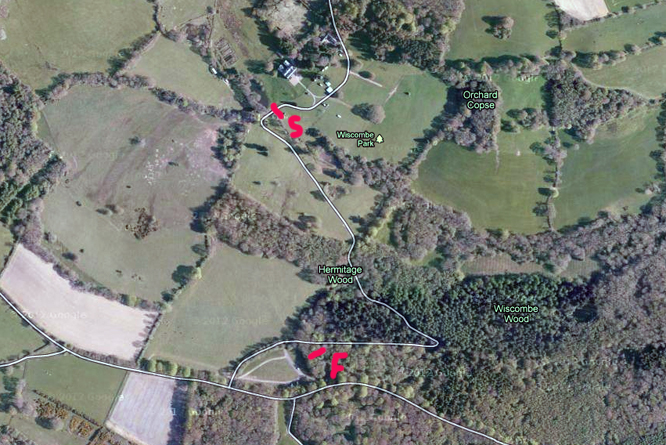
Shortly after dawn on Saturday morning I found myself cruising across the Somerset levels headed for Wiscombe Park in deepest Devon where the Woolbridge Motor Club was running a fully subscribed hillclimb where I found myself being assigned to the Esses 2 marshals post with two seasoned marshals from Melksham.

Wiscombe Park

The 1000 yard course at Wiscombe Park was first used in 1958 and the course record is currently held by Aylesbury’s Trevor Willis who recorded a time of 33.92 seconds in his OMS 25 Powertech in July last year.

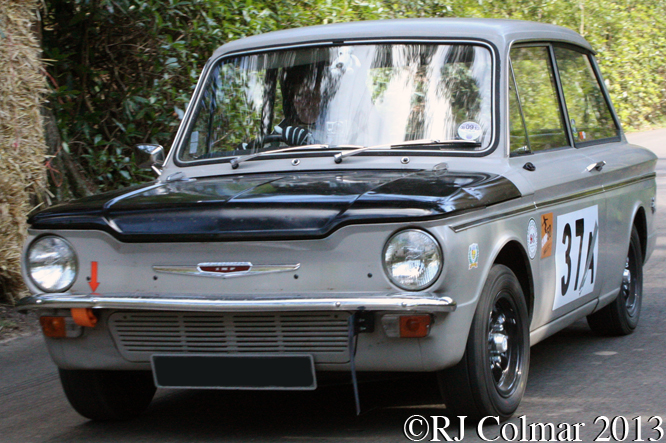
Howells, Hillman Super Imp, WMC. Wiscombe Park

The marshals post Esses 2 is situated on the outside of a sweeping corner and afforded a great view of the action as cars clipped a huge tree at the apex of the corner. All of today’s photo’s were taken as the vehicles returned from the top of the hill to the paddock. Jenny Howells shared this 1968 Hillman Super Imp with her husband Alex.

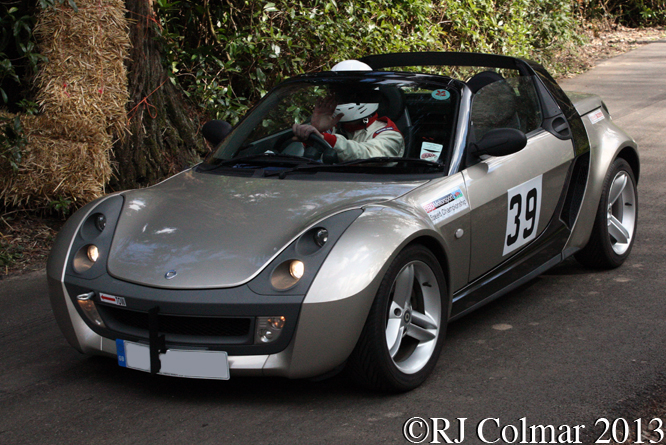
Hodson, Smart Roadster, WMC. Wiscombe Park

Running in the same Road going cars up to 1400 cc class and a little faster was Peter Hodson in his Smart Roadster Turbo.

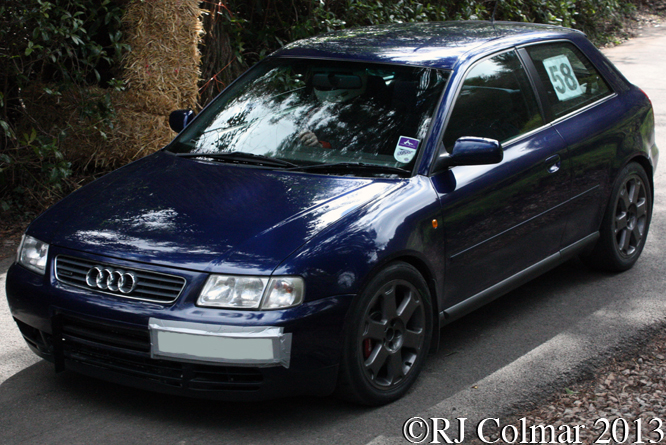
Wright, Audi A3 1.8T quattro, WMC. Wiscombe Park

Fastest in the over 1800 cc Road going class was the Audi A3 Turbo quattro of Anthony Wright who made a fastest run of 45.15 seconds around half a second faster than his nearest challenger.

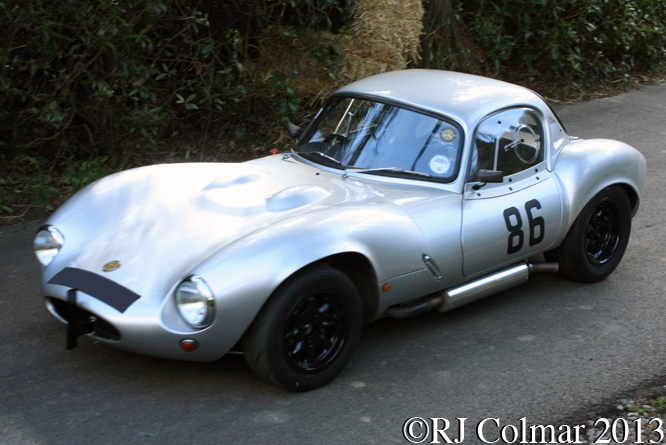
Coote, Ginetta G4, WMC. Wiscombe Park

Last time I saw Roger Coote’s Ginetta G4 in action was at the Great Western Sprint when it was freezing, what a difference a couple of weeks makes. On this occasion Roger finished third in the Specialist Production B2 class.

Conibear, Lotus 23B, WMC. Wiscombe Park

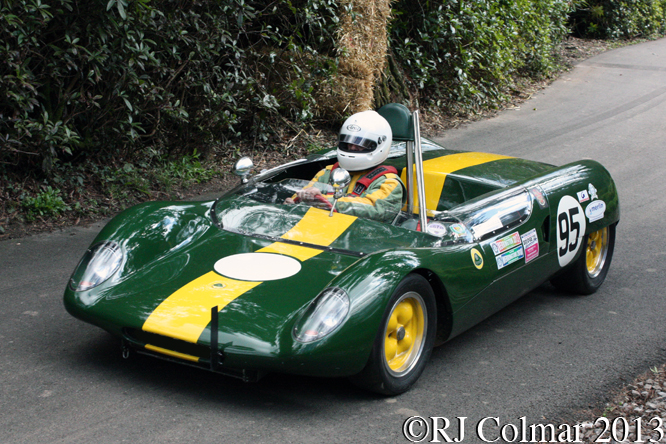
Cliff Conibear proved to be a model of consistency recording identical times of 45.96 seconds on both of his runs in his Lotus 23B, good enough for 5th in the Road going B3 class.

Hunt, BMW 2002 Touring, WMC. Wiscombe Park

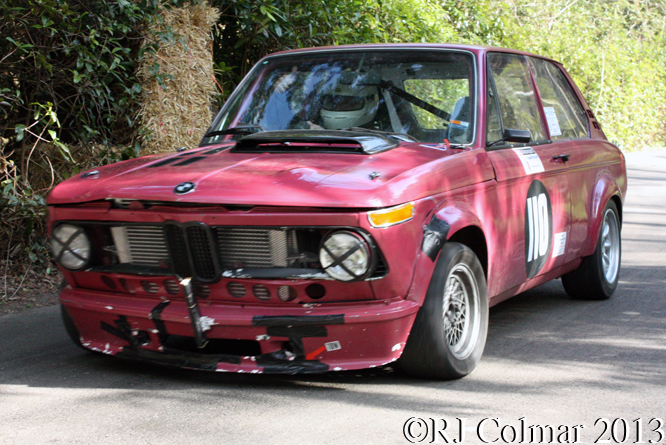
James Hunt’s BMW 2002 Touring shows signs of savaging the tree on the entry to The Gate on his second practice run, he made amends by finishing both of his timed runs recording fourth fastest time in the modified production C3 class.

Biggs, Kayne Special III, WMC. Wiscombe Park

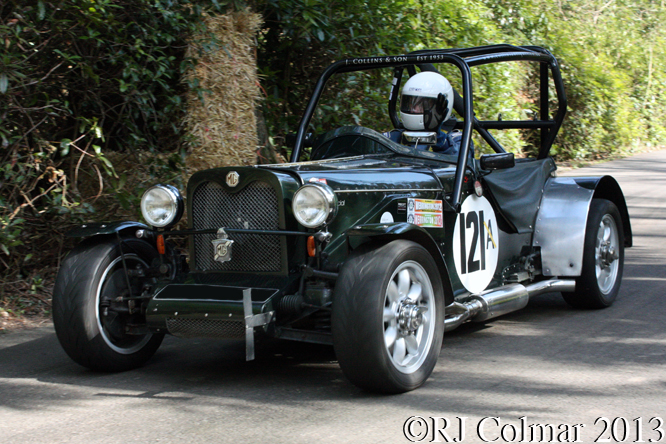
Another car that seems pop up frequently in my travels is John Biggs Kayne Special III which looked far happier at Wiscombe Park than it did at the Great Western Sprint when I saw it last. John who finished 3rd in the Sports Libre D2 class tells me he has tested the Rover V8 powered Kayne Special III at over 140 mph and looks forward to giving it a run in a race at Silverstone in the near future.

Fraser, Metro 6R4 DAM 4100, WMC. Wiscombe Park

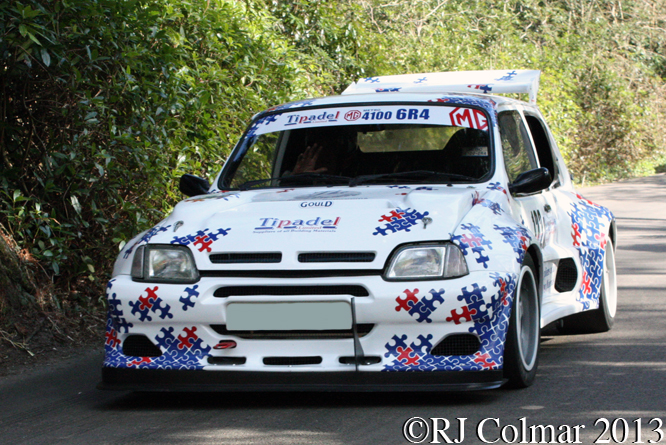
Competing in the same class as the Kayne Special as the Kayne Special were Andy Fraser and Tim Painter who shared this MG Metro 6R4 DAM 4100 which features a space frame chassis built by Dave Appleby Motorsport, the running gear from the steel shelled MG Metro 6R4 and a post 1995 Rover Metro style body. Andy seen at the wheel here proved faster than Tim and won the D2 class.

Moore, Ford Cortina GT, WMC. Wiscombe Park

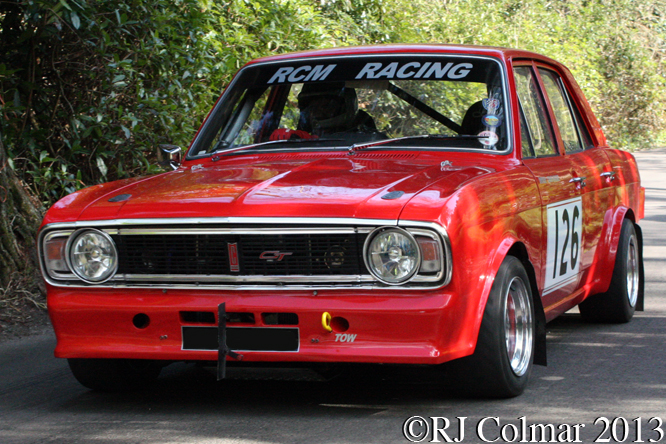
Craig Moore is on a mission to threepeat his Bridge Tyres & Wheels Wiscombe Park Hill Climb Championship wins in 2011 and 2012 with his 4 door Ford Cortina 1600 GT, being the first person to win back to back championships he is now looking to become the first man to win three championships in a row, he started his campaign with a second in the Rally Cars class D4 on Saturday.

Wadsworth, Lancia 037 Stradale, WMC. Wiscombe Park

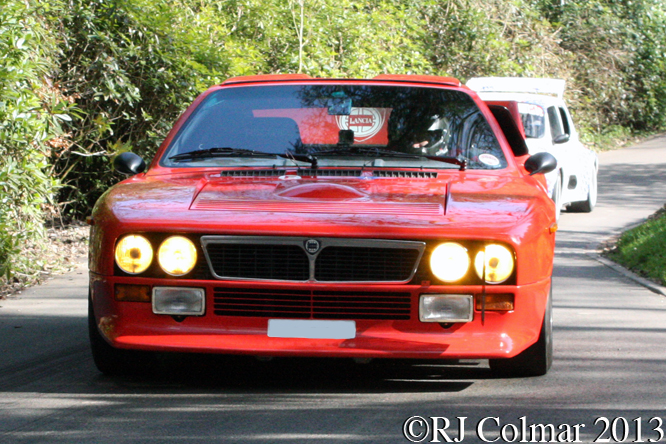
Like the MG Metro 6R4 the Lancia 037 Stradale was built for Group B rallying it would appear the Robert Wadsworth example is one of the 200 037 road cars built to meet the mandatory homologation requirements. Robert finished third in the Rally Car D4 class.

Hick, SEAT Altera, Freetrack TDI 4WD, WMC, Wiscombe Park

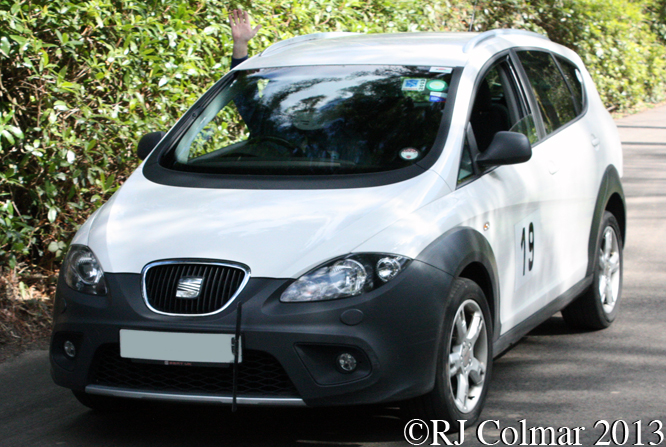
Gordon Hicks #19 was listed as a Megapin HC3 open wheeler but a check of the licence plate reveals that he was actually driving a SEAT Altera Freetrack TDI 4WD in the Road Going A3 class in which he finished with the ninth fastest time.

Broome, Cooper T65, WMC. Wiscombe Park

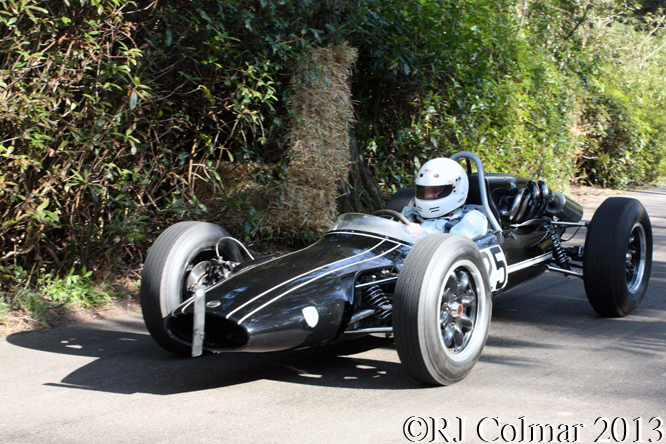
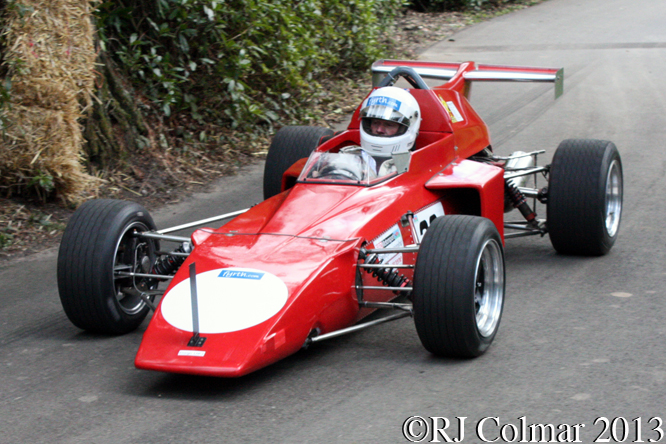
The Cooper T65 was designed to compete in the 1963 Formula Junior series against the Lotus 27. Reg Broome drove his car running with a 1598 cc / 96.7 cui motor recorded 7th fastest time in the E2 Racing cars class.

Crosse, Ensign LNF3, WMC. Wiscombe Park

Running a similar motor to the Coopper T65 Bristol’s Fyrth Crosse drove his early 1970’s Ensign LNF3 Formula 3 car to a fifth fastest time in the E2 class.

Steele, Martlet AS1, WMC, Wiscombe Park

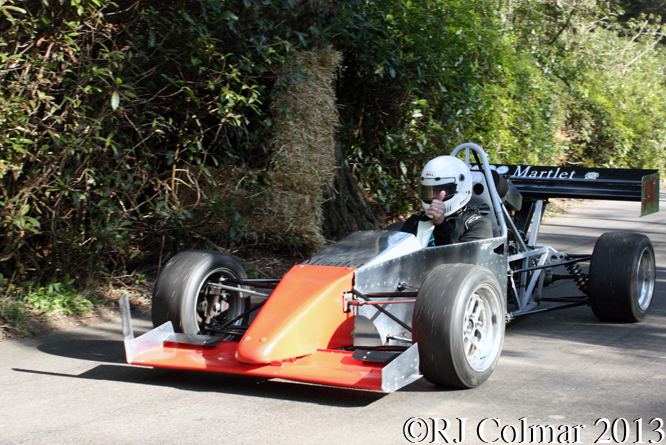
Maidenhead’s Adam Steele had a mishap at the entry to The Gate on his first timed run, despite spinning he avoided hitting anything and on his second timed run he recorded second fastest time of the day overall with his 1 litre / 61 cui Martlet AS1 running in the E1 racing car class.

Hollier, Pilbeam MP62, WMC, Wiscombe Park

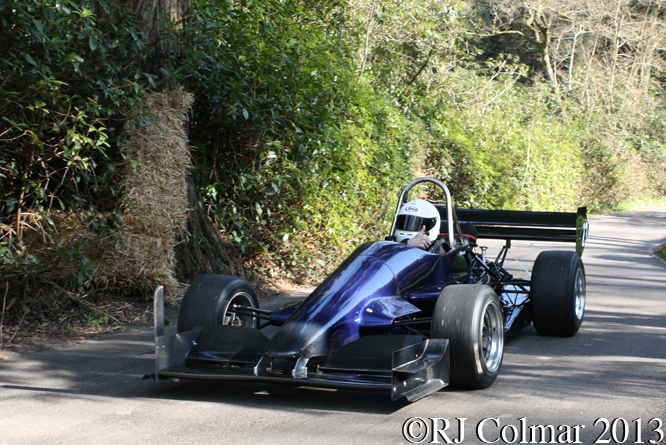
Fastest time of the day was 36.57 seconds recorded by Ed Hollier driving his Pilbeam MP62 in the E2 class.

After a fantastic days action it was time to drive home and prepare for a spot of competition myself the following day, full report next Wednesday.

Thanks for joining me on this “WMC Championship Hillclimb” edition of “Gettin’ a li’l psycho on tyres” I hope you will join me again tomorrow. Don’t forget to come back now !

Share

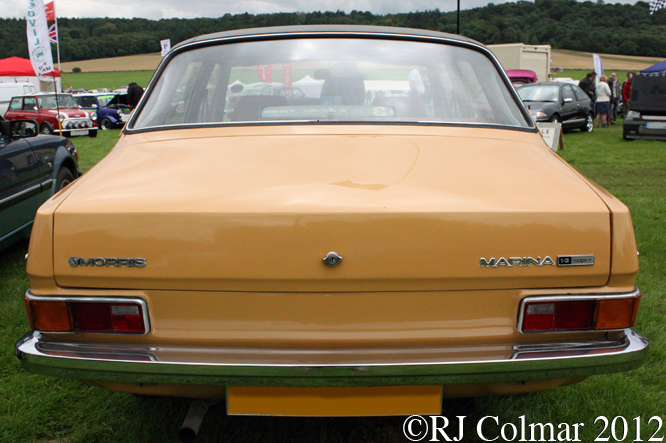
Nice Door Handles – Morris Marina ADO 28

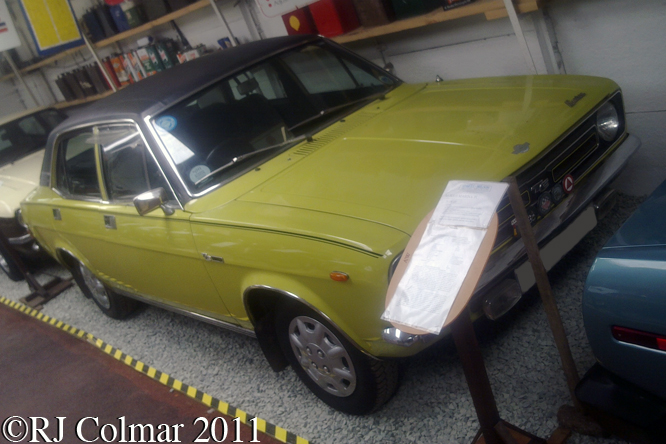
With the merger of Jaguar with British Motor Corporation in 1966 the new merger was renamed British Motor Holdings and after a further merger with Leyland commercial vehicles the corporation became known as British Leyland Motor Corporation in 1968. British Leyland as it was known decided that the Austin and Morris brands should be differentiated in the early 1970’s with Austin vehicles being based around the front wheel drive (FWD) concept pioneered by Ales Issignosis with models like the Mini, 1100 and 1800 series vehicles while Morris vehicles would be more traditional with front engines driving rear axles (RWD) as they had on the Morris Minor and Morris Oxford models.

Morris Marina, Bristol Classic Car Show, Shepton Mallet

The design of the Marina coded ADO 28 was started by Roy Haynes who’s CV included the design of the popular Mk II Ford Cortina, however a disagreement over a common floor pan to share between models as espoused by Roy led to him quitting and Triumph Designer Harry Webster finishing the job by which time the intended Macpherson strut front suspension had been abandoned in favour of Morris Minor style tortion bars and a new gearbox design was abandoned in favour of an existing item from the Triumph parts bin.
Morris Marina, Atwell Wilson Museum, Calne

All in all the development costs of the conservative RWD concept Marina ended up exceeding those of the more radical FWD Allegro which was developed to be Austin’s competitor in the small family car market. Production facilities at Cowley had to be upgraded which included some comedy as an overpass was built so that the motors could be sent from a plant on the opposite side of a municipal road to the assembly plant, no sooner had the overpass been completed than the municipality offered to sell the road which British Leyland did not think twice to accept.
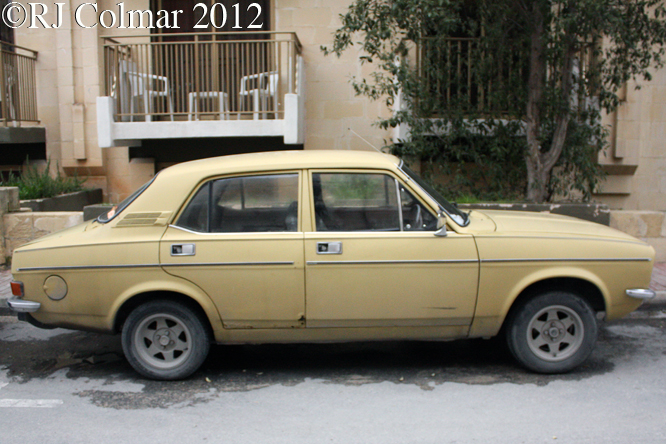
Morris Marina, Qwara, Malta

On a positive note the AMC Ambassador inspired vertical hinged door handles were a huge hit with Lotus founder Colin Chapman who specified them for use on the Lotus Elite, Eclat and Esprit models, Marina door handles were also adopted by Scimitar for the GTE shooting break while British Leyland used the same handles on the Triumph TR7/TR8, Austin Allegro and they eventually even found their way, finished in matt black, onto the Land Rover Discovery Series I.

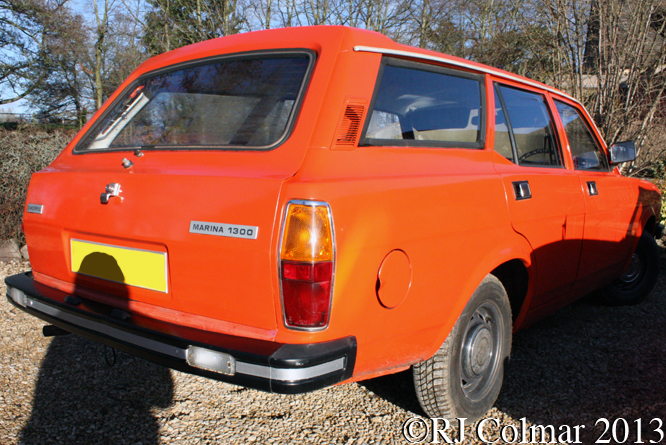
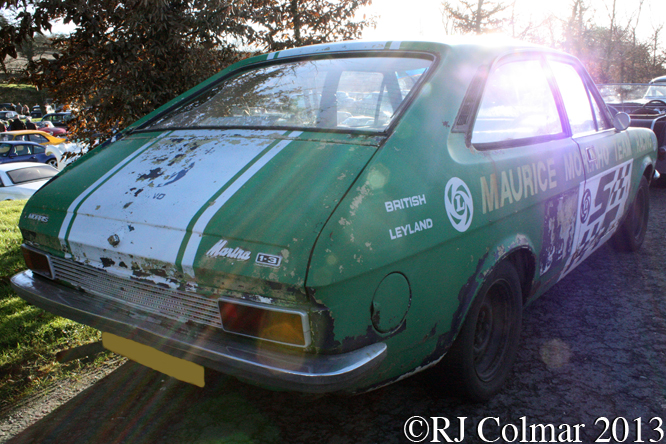
Morris Marina, Cotswolds Classic Car Club, Frogsmill, Andoversford

Marina cars were powered by a variety of motors most common of which for the UK market was a 57 hp 4 cylinder A series which did not do much for performance but kept the handling within safer limits than the heavier more powerful motors which promoted lane changing understeer / push which induced the odd brown trousers moment for some Marina pilots.

Morris Marina, Cotswolds Classic Car Club, Frogsmill, Andoversford

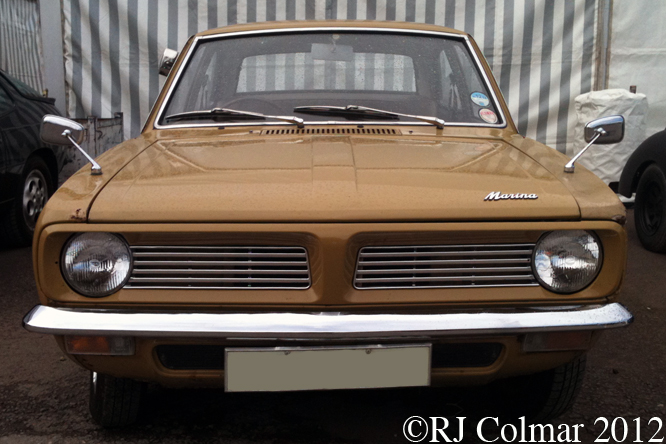
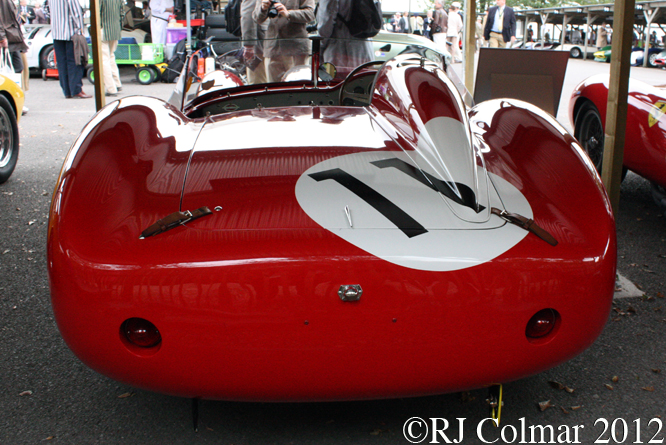
The Marinas seen here are in order top to bottom a ’72 Coupé at the Bristol Classic Car Show, Shepton Mallet, ’74 Twin Carburettor saloon sedan at the Atwell Wilson Museum, a Maltese 1500 saloon / sedan with after market alloy wheels and waist trim in Qwara, a ’79 Estate and ’72 Coupé both at the Cotswolds Classic Car Club meeting held at Frogsmill, Andoversford and below a saloon / sedan with an unusually straight rear bumper seen at last years Classics at the Castle, Sherborne.

Morris Marina, Classics at the Castle, Sherborne

Although much derided for almost every detail apart from the door handles the undemanding early 70’s British public lapped up Marina’s painted in tepid colours like Russet Brown, Harvest Gold, and Limeflower Green for the car to peak at second in the sales charts behind the Ford Cortina in 1973 and remain in the top 3 or 4 until 1980. Eventually over 897,000 Marina’s were sold in the UK of which 745 are thought to remain on British roads.

Thanks for joining me on this “Nice Door Handles” edition of “Gettin’ a li’l psycho on tyres” I hope you will join me again tomorrow. Don’t forget to come back now !

Share

3/4 Task Force – Chevrolet Apache 32

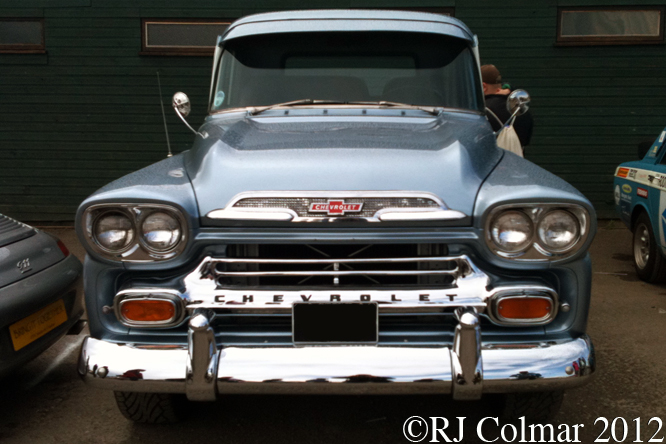
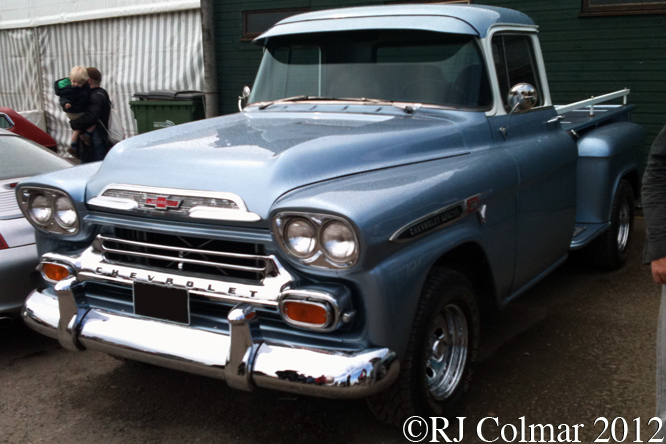
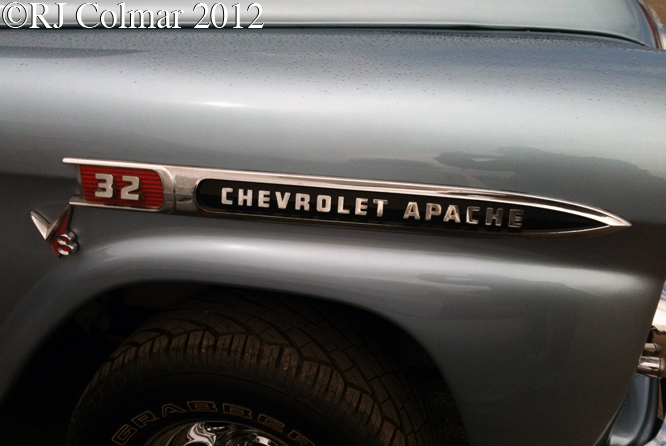
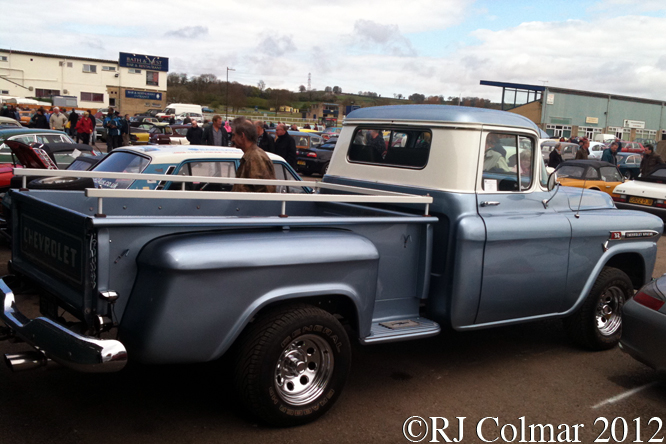
Today’s featured pickup is a 1959 Chevrolet Apache 32 Pick up.

Chevrolet Apache 32, Bristol Classic Car Show, Shepton Mallet

In most respects the Apache 32 Cab and motor options were similar to the Apache 31 Fleetside I looked at last week.

Chevrolet Apache 32, Bristol Classic Car Show, Shepton Mallet

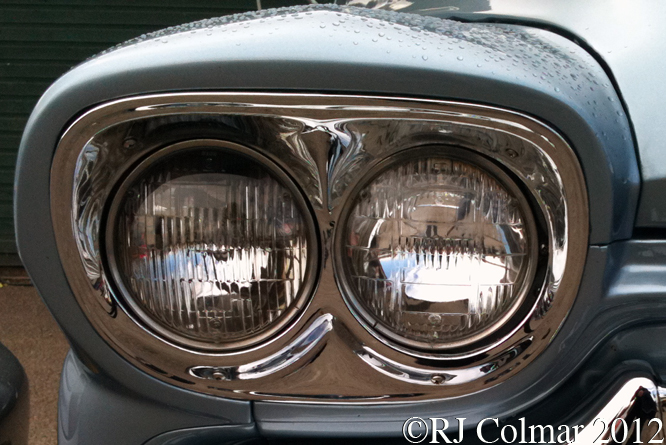
The ’58 and ’59 Apaches all shared twined front head lamps.

Chevrolet Apache 32, Bristol Classic Car Show, Shepton Mallet

This particular vehicle is registered with a non standard 3.5 litre 213 cui motor size, given that it is in the UK this may well be one of Britain’s popular all aluminium Rover V8’s that originated from Buick.

Chevrolet Apache 32, Bristol Classic Car Show, Shepton Mallet

The big difference between the Apache 31 and 32 is the wheel base 114 inches on the ’31’ and 123 inches on the ’32’ which also had heavier duty axles and springs to allow for a 3/4 ton load in the six and half foot long cargo box.

Chevrolet Apache 32, Bristol Classic Car Show, Shepton Mallet

353,509 Apache’s of all sizes were built in 1959 before they were replaced by the C/K series in 1960.

Thanks for joining me on this “3/4 Task Force” edition of “Gettin’ a li’l psycho on tyres”, I hope you will join me again tomorrow. Don’t forget to come back now !

Share

Testing The Beat – McLaren F1 GTR #10R

For several years before his untimely death Bruce McLaren toyed with the idea of building a road car once his racing operations had become firmly established. In 1970 he had a Can Am McLaren M6 fitted with a GT body that both he and Gordon Coppock had worked on to perfect. After Bruces death the directors of McLaren decided to shelve the road car project although to further copies of the M6GT were built by Trojan who were responsible for building McLaren’s customer racing cars.

Twenty years later McLaren designer Gordon Murray convinced Ron Dennis to back his concept for the ultimate road car which Peter Stevens was engaged to complete the exterior styling. The McLaren F1 road car was launched in 1992 and in 1998 it set road car speed records of 231 mph with the rev limiter switched on and 243 with the limiter switched off.

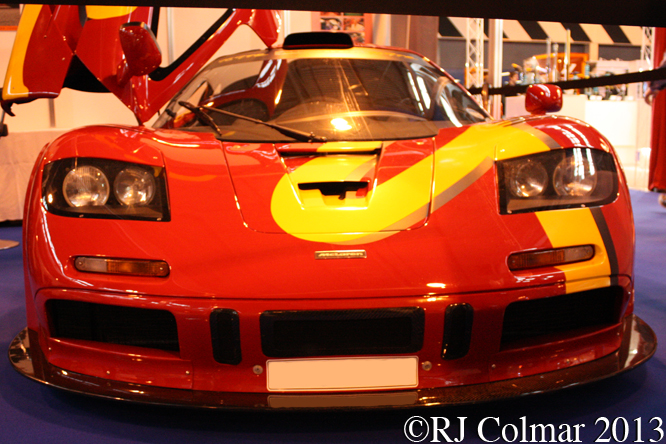
At around the same time as the launch of the F1 a movement for racing GT cars was gathering pace and for the 1995 Season McLaren built 9 F1 GTR variants the first of which #01R, modified road car chassis #019 was loaned to Lanzante Motorsport who entered Yannick Dalmas, Masanori Sekiya and JJ Lehto into the 1995 Le Mans 24 hours under the Kokusai Kaihatsu Racing banner and improbably won as a result of superior reliability over the much faster Courage Porsche C34 prototype driven by “Brilliant” Bob Wolleck, Eric Hélary and Mario Andretti. The race winners covered just 298 laps the last time a Le Mans 24 hours had been won with less than 300 laps completed was 1952 to when Hermann Lang and Fritz Reiss drove their Mercedes Benz 300SL to victory with 277 laps completed.

McLaren F1 GTR, Autosport International, NEC, Birmingham

For the 1996 season Mclaren built a further batch of nine cars with extended front and rear bodywork which was easier to remove than on the original ’95 F1 GTR, magnesium gearbox housing with stronger internals which resulted in a lighter car. Two of the ’95 Spec F1 GTR’s were similarly upgraded.

Today’s featured vehicle is the first of the ’96 F1 GTR’s chassis #10R which was used as a test development vehicle to replace the Le Mans winning #01R which had immediately been retired from competition for publicity purposes.

David Brabham used the car for a test session at Le Mans in 1996 where he recorded the 20th fastest time, but the car has never been raced.

When pop drummer Nick Mason bought #10R he had McLaren convert the car for road use as were several F1 GTR’s once their competition careers were over.

Mark Hales tested the 600hp BMW V12 powered #10R for Evo magazine and recorded a 0-60mph time of 3.2 seconds and a top speed of 240.1 mph.

In 1997 a further development of the F1 GTR featuring an even longer body, 10 examples of which were built. An over view of the racing results of the F1 GTR from 1995 to 2007 can be seen on this link.

Thanks for joining me on this “Testing The Beat” edition of “Gettin’ a li’l psycho on tyres”, I hope you will join me again tomorrow. Don’t forget to come back now !

Share

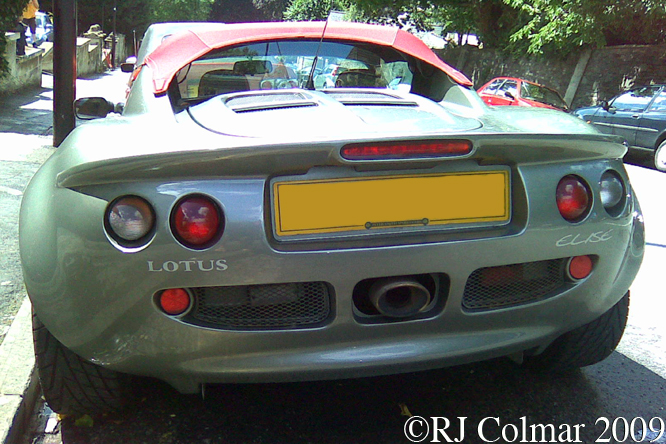
Romano’s Granddaughter – Lotus Elise Series I

In 1993 Lotus was purchased from GM by Romano Artioli chairman of the revived Bugatti manufacturer, and the following year the Type 111 was conceived by Julian Thompson with Richard Rackman and given the Elise name after Romano’s Granddaughter Elisa.

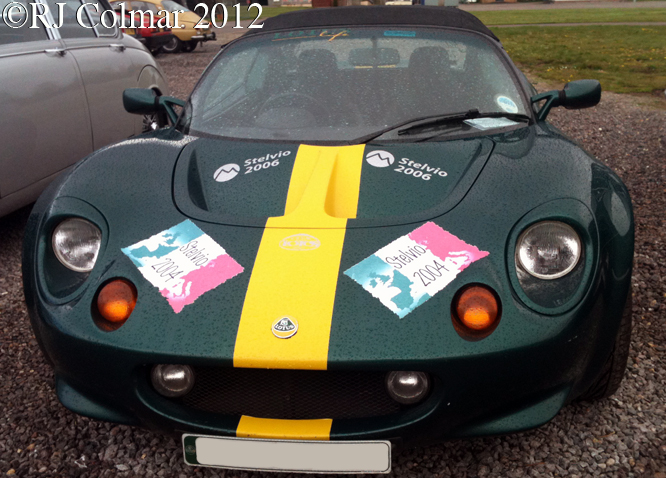
Lotus Elise Series 1, Bristol Classic Car Show, Shepton Mallet

The Series 1 Elise was launched in 1996 powered by a mid mounted 4 cylinder Rover K Series motor that produced just 118 hp, however thanks to the fiberglass body and bonded aluminium chassis the Elise only weighed 725 kg / 1,600 lbs so the car could accelerate from rest to 60 mph in just 5.8 seconds with a top speed of 124 mph.

Lotus Elise Series 1, Bristol Pegasus Motor Club, BAWA

Getting in and out of a Lotus Elise are probably the most difficult features of the car, the ergonomics are secondary to track day performance, but apart from that the Elise is said to be great fun to drive and economical to run thanks to the light weight and virtually non existent load capacity beside the passengers.

Lotus Elise Series 1, Bristol

In 1996 Romano had sold Lotus on to current owners Proton in order to fund the losses that had accumulated due to the insolvency of Bugatti.

Thanks to changes in crash sustainability regulations the Series 1 Elise was replaced in 2000 after more than 8600 had been built by the more sustainable and consequently slightly heavier Elise Series 2.

The top and bottom cars featured today are standard ’98 and ’97 1.8i models while the middle one is a later ’99 111S which came with variable valve timing 143 hp and a 130 mph top speed.

Thanks for joining me on this “Romano’s Granddaughter” edition of “Gettin’ a li’l psycho on tyres”, I hope you will join me again tomorrow. Don’t forget to come back now !

Share

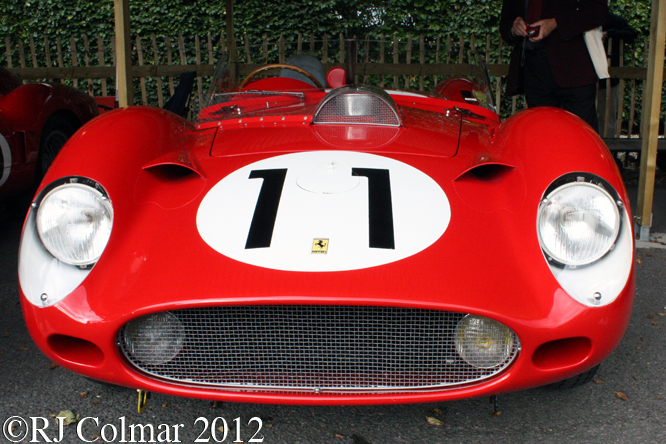
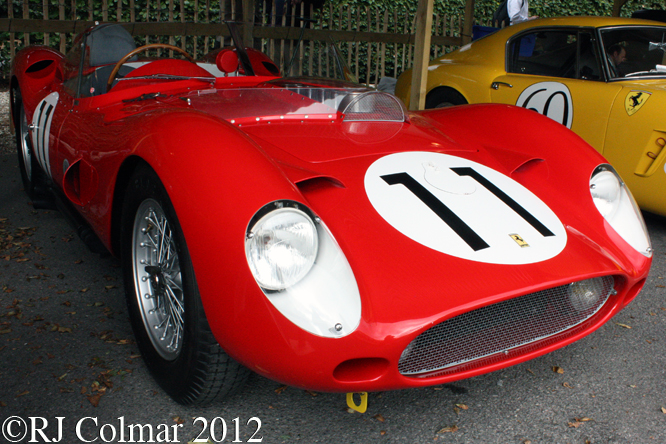
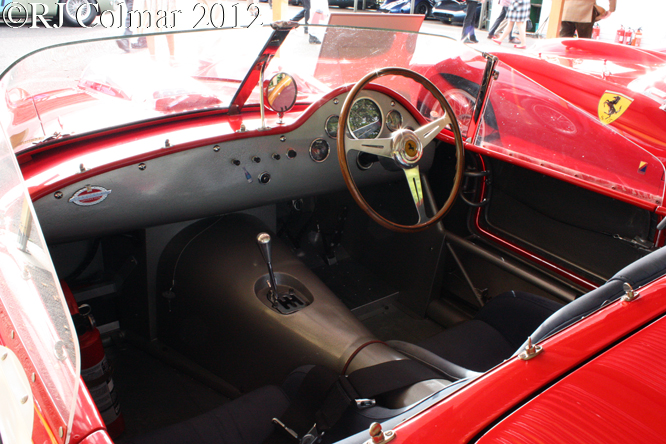
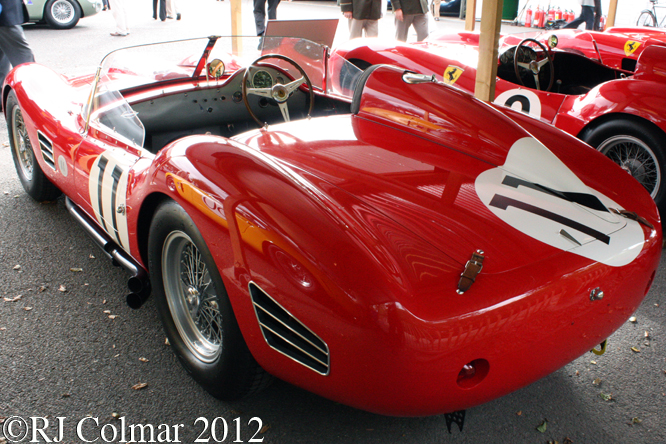
Biting The Hand – Ferrari 250 Testa Rossa 59/60 #0774

After attracting the attention of US Ferrari importer Luigi Chinetti in 1957 Dan Gurney found himself at the wheel of a North American Racing Team Ferrari 250 Testa Rossa, owned by Chinetti at Le Mans in 1958 and drove the car up to 5th place before handing over to his team mate Bruce Kessler who got caught up in someone elses accident before the car retired. That drive impressed Ferrari sufficiently to earn Dan a drive with the works Ferrari team.

Ferrari 250 TR, Goodwood Revival

For their 1959 Le Mans effort Ferrari built today’s featured Ferrari 250 TR chassis #0774 for Gurney to share with Jean Behra the car managed twice as many laps as Dan’s first attempt but still fell way short of a result.

Next time out Phil Hill and Olivier Gendebien drove the car at Goodwood in the TT Race where they also failed to score a result both the 1959 Le Mans and Goodwood TT had been won by Aston Martin in what turned out to be a championship winning season for them.

Ferrari 250 TR, Goodwood Revival

1960 would see a return of fortune for the Ferrari sports car team and chassis #0744 played an important role winning two championship races first Phil Hill and Cliff Alison won the 1000 kms at Buenos Aires and then Olivier Gendebien and Paul Frére won the Le Mans 24 hours scoring Ferrari’s third win in the Endurance Classic and helping Ferrari to their sixth World Sports Car title.

Ferrari 250 TR, Goodwood Revival

Between these successes #0774 was loaned to Chinetti’s NART team for Ritchie Ginther and Chuck Daigh to drive in the Sebring 12 hours but they failed to finish and after Le Mans the car was sold to Eleanor von Neumann who entered it for Phil Hill to drive in the 1960 LA Times Grand Prix at Riverside where he finished 7th overall.

Ferrari 250 TR, Goodwood Revival

In 1963 Tom O’Connor bought the car for his Rose Bud racing team which promptly stripped the motor out and fitted it to their Lotus 19 chassis 952 that featured here on GALPOT a couple of years ago.

Ferrari 250 TR, Goodwood Revival

Under the ownership of Paul Pappalardo #0774 was reunited with it’s original motor in the 1980’s and the car won two class Concours d’Elegance awards at Palm Beach and Pebble Beach in 1993.

Ferrari 250 TR, Goodwood Revival

In a twist of biting the hand that feeds irony Dan Gurney eventually won the 24 Hours of Le Mans in 1967 with co driver AJ Foyt driving for Ferrari’s sworn enemy Ford in a Mk IV.

After 26 years in Paul’s custody ownership of #0774 passed to Hong Kong sourcing and logistics magnate William E ‘Chip’ Connor who kindly took it to the 2012 Gooodwood Revival for the Tribute to Dan Gurney Parade.

Thanks for joining me on this “Biting The Hand” edition of “Gettin’ a li’l psycho on tyres”, I hope you will join me again tomorrow. Don’t for get to come back now !

Share