150 MPH ex POW – MG K3 #K3007

In 1933 today’s featured record breaking MG K3 chassis #K3007 was sold new with a two seater body to successful amateur racer Ron Horton who in 1932 had won a British Racing Drivers Club (BRDC) Gold Star, which would be the same as calling him British Motor Racing Champion in today’s terminology.
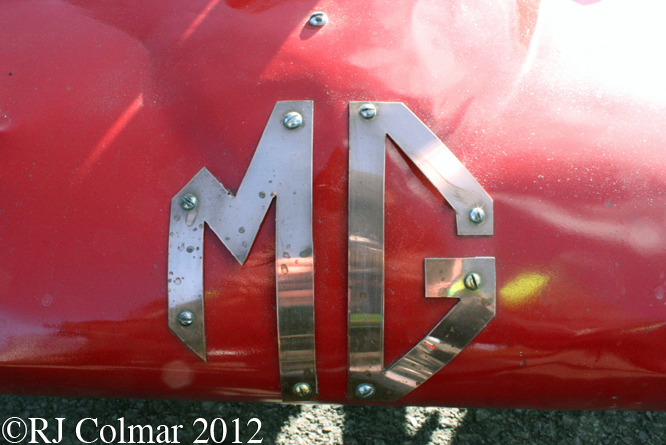
MG K3, Sunlight Textile Services Pegasus Sprint, Castle Combe

The car appears to have never been registered for road use but extensively raced and hill climbed. Driving K3007 in 1933 Horton set a 1100cc class Outer Circuit Record at Brooklands of 115.55 mph and class wins on the Shelsley Walsh Hill Climb.
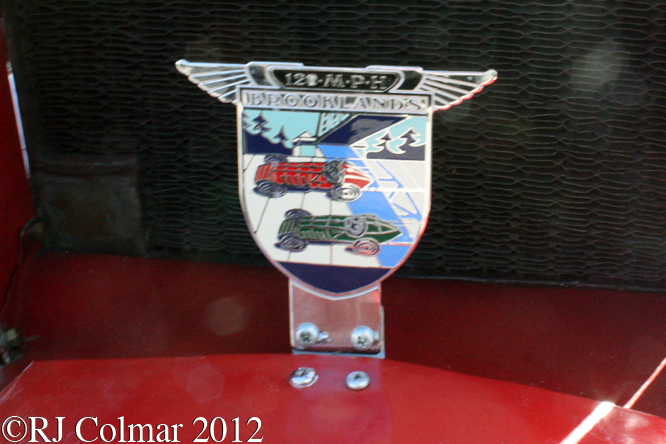
MG K3, Sunlight Textile Services Pegasus Sprint, Castle Combe

For 1934 Ron Horton had an offset single seat body manufactured by Jensen of West Bromwich and made numerous other upgrades. In March 1934 Ron set six international class records, four of which still stand as British class records, at Brooklands from 50 kms to Hour averaging 117 mph with a best lap average of over 119 mph. Unusually Ron received not only a customary letter of congratulation MG’s Cecil Kimber but also another from Lord Nuffield of Morris Motors Ltd who’s Overhead Cam Wolseley 6 Cylinder motors were supercharged and tuned by MG for use in the K3 model.
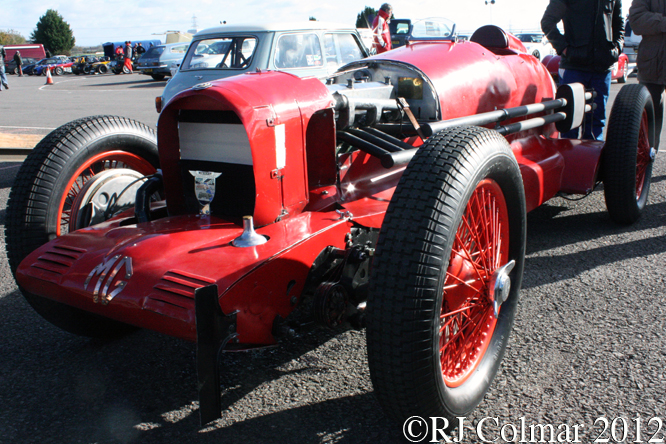
MG K3, Sunlight Textile Services Pegasus Sprint, Castle Combe

Later in 1934 Ron won a Brooklands Whitsun Meeting race at an average speed of over 110mph and set a new 123.88 mph lap record later the same day which earned him the first 120 mph badge given to the driver of a car fitted with 1100cc / 67 cui motor.
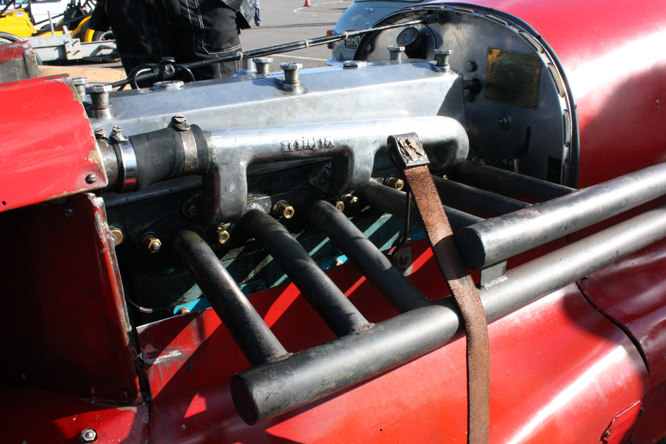
MG K3, Sunlight Textile Services Pegasus Sprint, Castle Combe

In 1935 Goldie Gardener acquired K3007 and had it continually updated, in 1937 he became the first driver to record a one way 150 mph average in an MG at the October Frankfurt Speed Week with a two way class record breaking average of over 148 mph timed over the flying kilometer and mile distances.
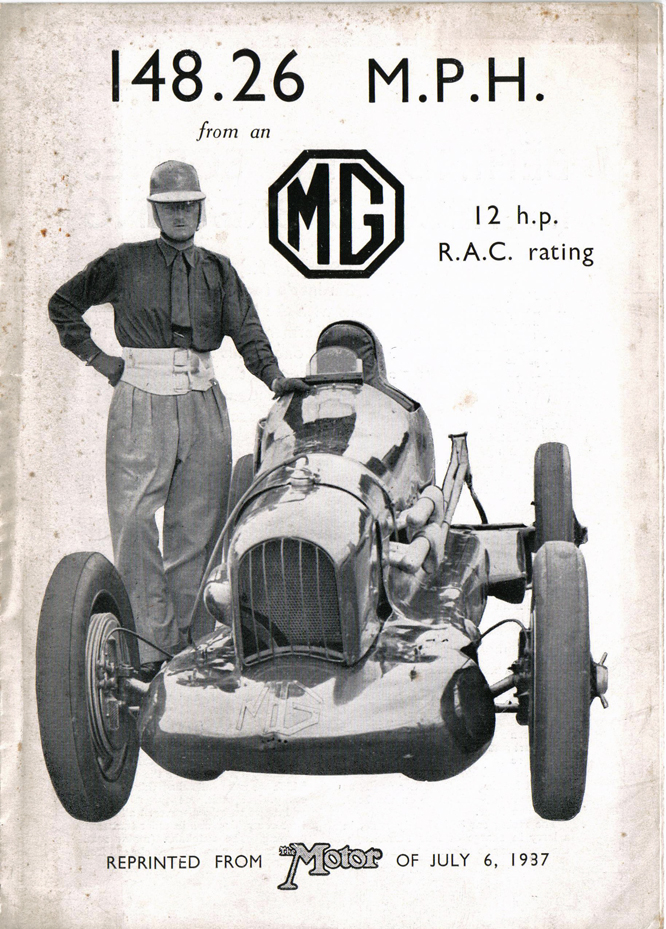
MG K3

In 1939 Gardener had the the motor taken out of #K3007 and fitted in to K3023/EX 135 which had a lower seat thanks to an offset gearbox and had been used by George Easton. Goldie set a 200 mph record with his new bolide. The chassis of K3007 along with the discarded motor from K3023/EX 135 ended up at the Abingdon MG factory and reassembled into a complete car with an ENV Crash gearbox from an MG K1 and sent to Singapore where a contemporary Mercedes Grand Prix single seater style body was fitted for it’s new owner Mic Jennings.
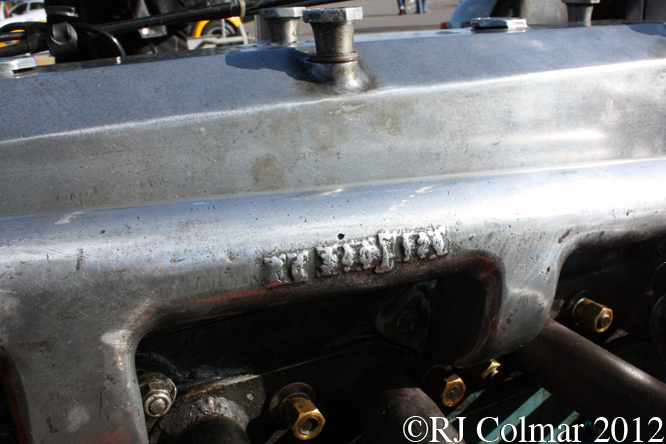
MG K3, Sunlight Textile Services Pegasus Sprint, Castle Combe

After recording fastest lap in the rain shortened 1940 Johore Grand Prix Jennings was forced to abandon K3007 at Singapore Docks while fleeing the incoming Japanese invasion. A Japanese Imperial Army Officer commandeered #K3007, after which it appears to have been liberated by MG racer Lim Peng Han who broke it up and kept in storage ‘for the duration’. Jennings was offered the car back after the war but declined. The original #K3007 motor was destroyed in a bombing raid during the ’39/’45 war.
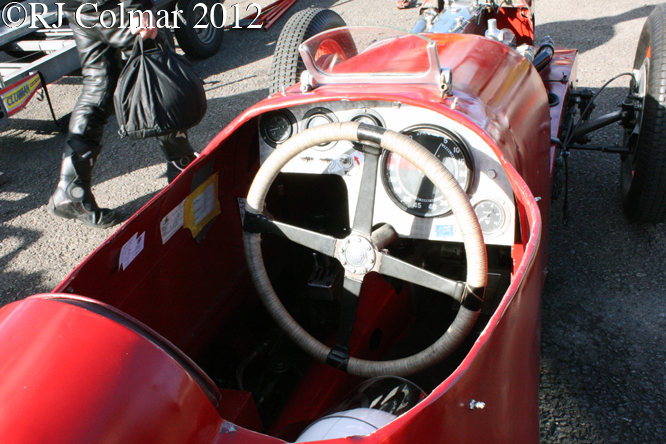
MG K3, Sunlight Textile Services Pegasus Sprint, Castle Combe

In 1969 MG J2 owner Mike Hawke was sent to Singapore with the Royal Navy and secured the very rusty ex K3023/EX 135 motor with a bottle of whiskey without any knowledge of it’s history. The motor had at one point been buried and then been kept at the bottom of the previous owners garden. It was only when Mike started to dismantle the engine that it’s identity became clear.
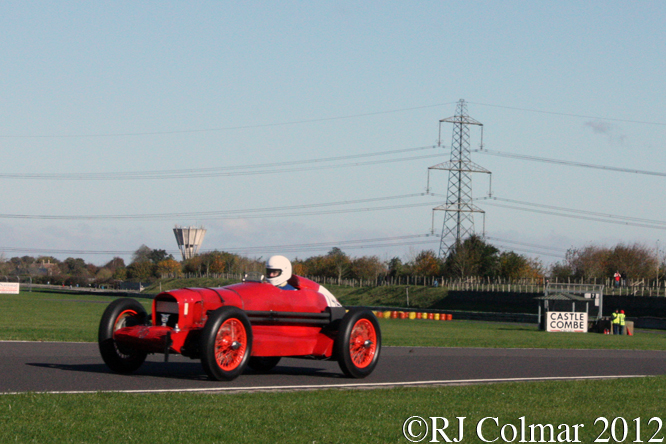
MG K3, Sunlight Textile Services Pegasus Sprint, Castle Combe

Having established the identity of his rusty motor Mike recovered the chassis which had the front cut off with the remains being used for a trailer, the ENV gearbox was discovered being used as a door stop at a veterinarian’s surgery.

After many adventures by 1985 Mike had salvaged enough bit’s and pieces to restore #K3007 to something approximating it’s 1934/37 single seat specification and the the car ran for the first time in just over 40 years under it’s own power and has since recorded 125 mph laps at Millbrook.

Mike says he considers himself fortunate to have discovered, recognised and put back together one of the worlds more historic MG’s.

My thanks to Jeremy Hawke for his time and patience retelling the story of the storied K3, found by his father, seen in today’s photographs at the recent Sunlight Textile Services Pegasus Sprint.

Happy Christmas and Best Wishes for the year ahead to all “Gettin’ a li’l psycho on tyres” readers and contributors !

Thanks for joining me on this “150 MPH ex POW” edition of “Gettin’ a li’l psycho on tyres” I hope you will join me again tomorrow when I’ll be looking at the first Formula One car that Peter Connew was involved with. Don’t forget to come back now !

Share

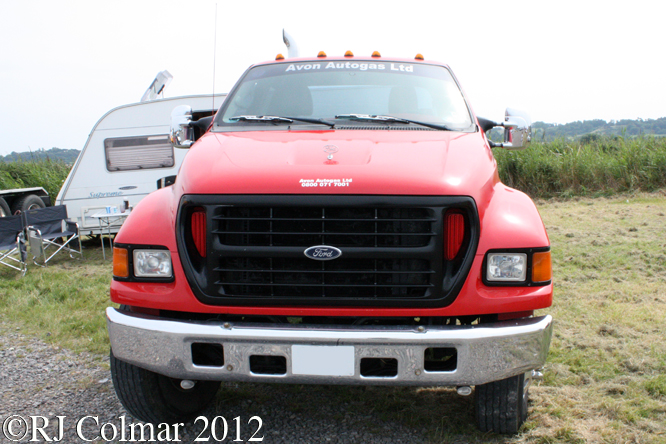
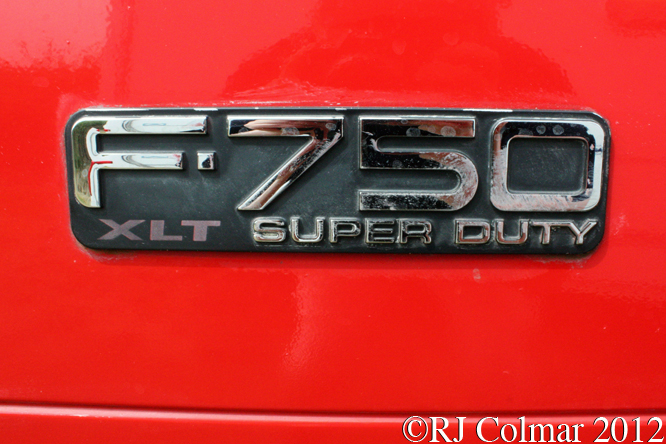
Santa’s Li’l Pick Up – Ford F-750 Super Duty XLT

Primarily aimed at businesses and municipalities the F-650/F-750 range replaced the F-600/F-700/F-800 range of vehicles that had been in production since 1980.

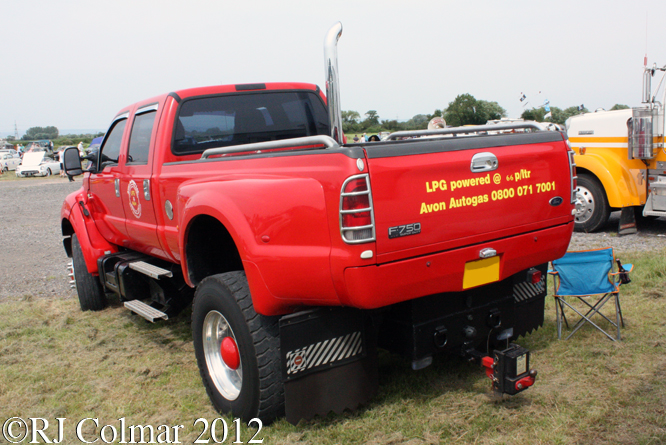
Ford F-750 Super Duty XLT, Summer Classics, Easter Compton

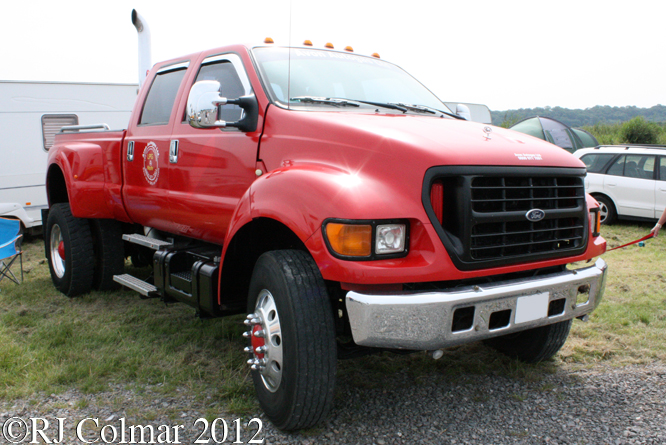
Today’s featured vehicle is a 2000 crew cab powered by a 185 hp 5.9 litre / 359 cui turbo diesel Cummins straight 6 and

Ford F-750 Super Duty XLT, Summer Classics, Easter Compton

6 speed automatic transmission, which might come in handy for Santa when he sets off on his annual nocturnal round the world odyssey.

Ford F-750 Super Duty XLT, Summer Classics, Easter Compton

F-650’s and F-750’s were manufactured in a joint venture with Navistar International and Blue Diamond Truck Company LLC at a Navistar factory in Escobedo, Mexico. F-650 production will move to Avin Lake Ohio in 2013.

Ford F-750 Super Duty XLT, Summer Classics, Easter Compton

The ladder chassis is an International ladder frame with an F series body on top.

Ford F-750 Super Duty XLT, Summer Classics, Easter Compton

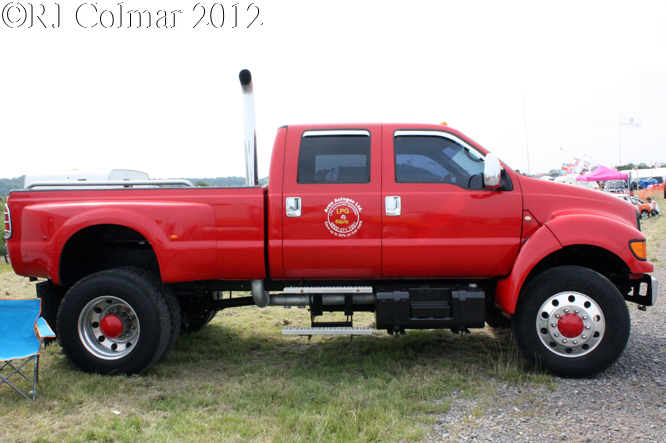
This model is fitted with disc brakes front and rear which have an anti lock braking system, ABS, fitted as standard. Is it me or are the pick up body rear wheel arches too small for the dually rear wheels ?

Ford F-750 Super Duty XLT, Summer Classics, Easter Compton

With a gross vehicle weight of 30,000 lbs and 20,000 lb load capacity there should be plenty of room for Santa’s surprises in the back and if he needs more space there is a substantial towing hitch, maybe Rudolf and his friends will get to take this evening off !

Wishing all GALPOT readers and contributors a Merry Christmans and best wishes for the New Year.

Thanks for joining me on this “Santa’s Li’l Pick Up” edition of “Gettin’ a li’l psycho on tyres” I hope you will join me again tomorrow. Don’t forget to come back now !
Share

Cu Ghost – Rolls Royce Brockman 40/50

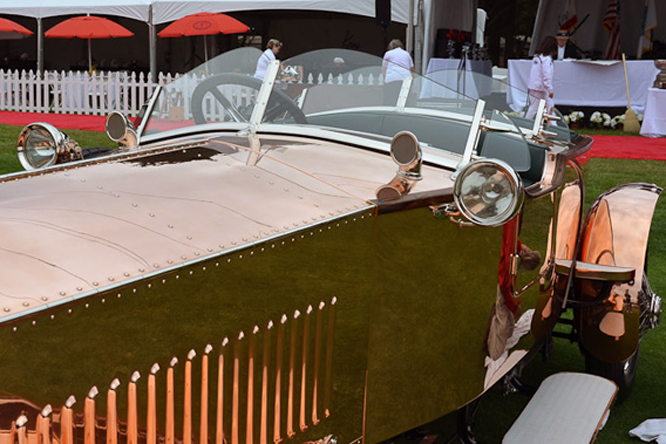
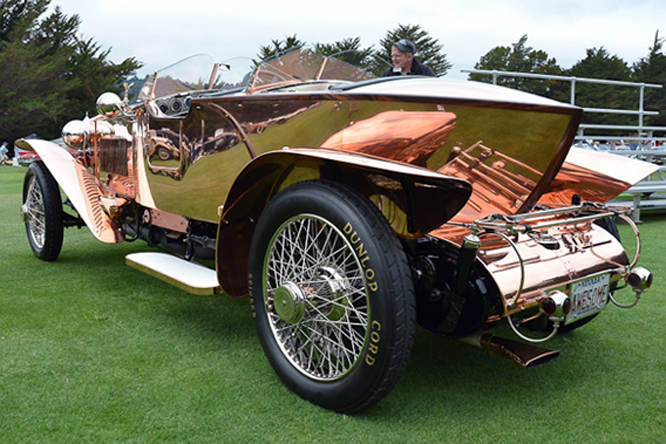
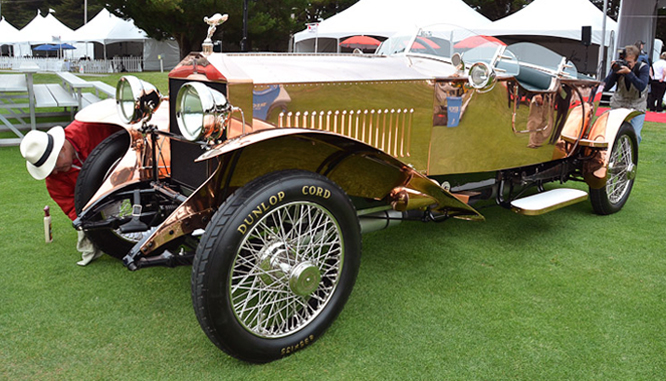
The Rolls Royce 40/50 launched in 1906, dubbed by Autocar the following year as “The best car in the world”, was only ever supplied as a chassis on to which a body would be individually crafted by an independent coach builders.

Rolls Royce Brockman 40/50, Hillsborough Concours d'Elegance

It is not known if, upon completion in Derby of today’s, today’s featured 1921 example was sent to a recommended Coachbuilder or straight to Dick Brockman and Company’s coach building works in Reading west of London.

Rolls Royce Brockman 40/50, Hillsborough Concours d'Elegance

The hand starter was merely a precaution on this chassis as electric lighting and starting was fitted to all 40/50’s from 1919 on.

Rolls Royce Brockman 40/50, Hillsborough Concours d'Elegance

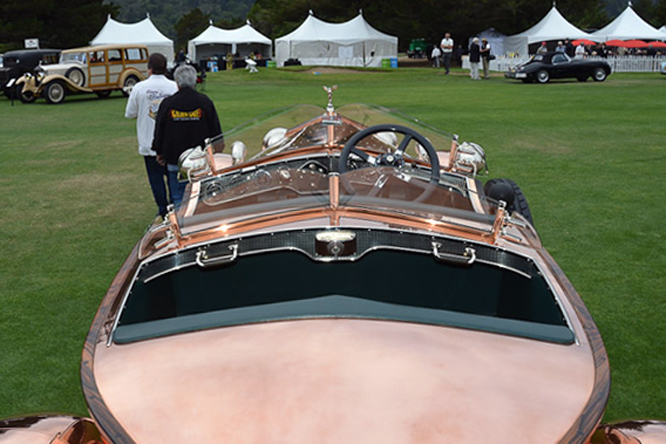
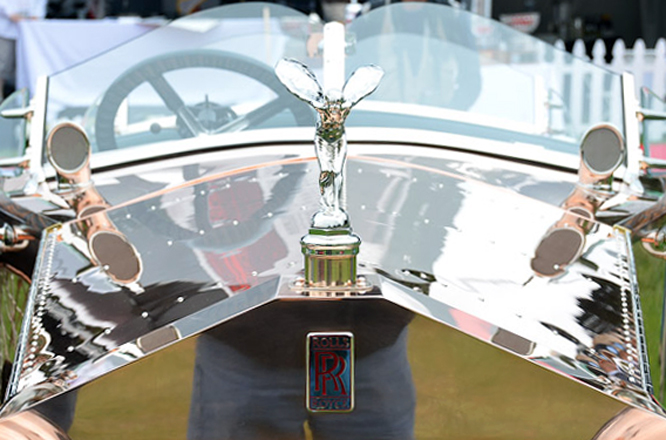
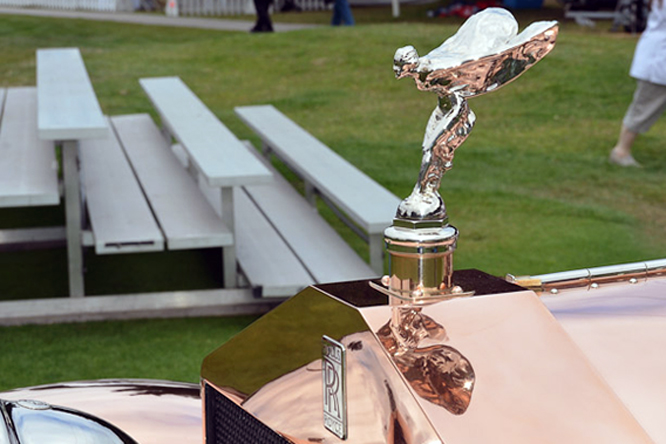
The Spirit of Ecstacy also known as “Ellie in her Nightie”, was originally sculpted by Charles Sykes and made of chrome alloy was not adopted as an option until 1911, by all accounts Henry Royce was not a fan of the mascot and only agreed to it being offered as an option to dissuade his customers from using less suitable ornamentation.

Rolls Royce Brockman 40/50, Hillsborough Concours d'Elegance

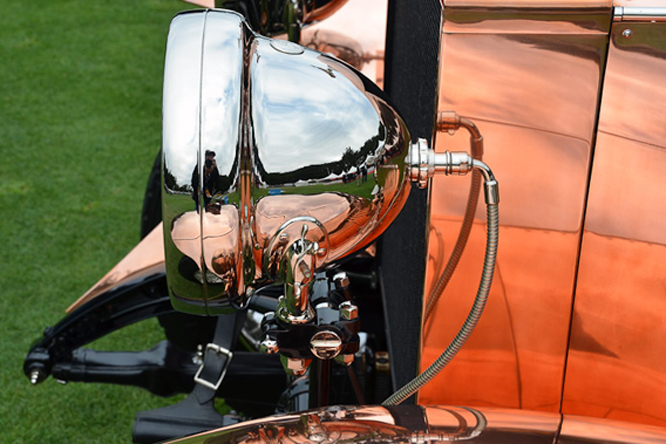
Up until 1915 shiny brass, and nickle fittings were quite common but after the Great 1914/18 War these items tended to be painted.

Rolls Royce Brockman 40/50, Hillsborough Concours d'Elegance

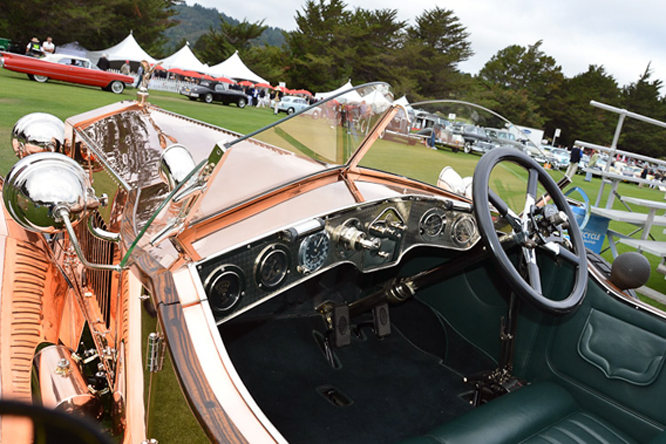
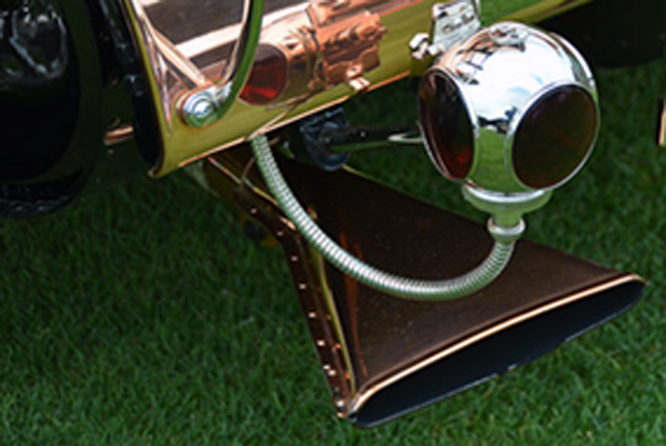
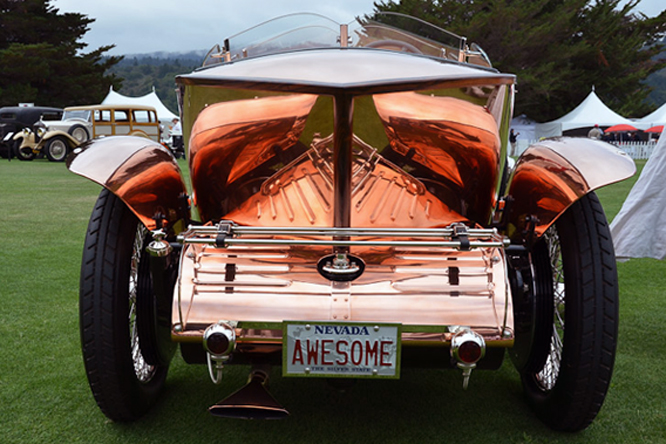
Using .065″ copper sheet Dick Brockman and Company appear to have manufactured the body of this vehicle without resorting to either welding or riveting which would have been common practice.

Rolls Royce Brockman 40/50, Hillsborough Concours d'Elegance

This car, photographed by Geoffrey Horton at Hillsborough Concours d’Elegance earlier this year, is powered by an 80 hp 7428 cc / 453 cui six cylinder motor connected to a 4 speed manual gearbox.

Rolls Royce Brockman 40/50, Hillsborough Concours d'Elegance

Restoration of the car included replacing the dash board, front and rear screens along with the rear cockpit.

Rolls Royce Brockman 40/50, Hillsborough Concours d'Elegance

Once the restoration was completed the car won the 1991 Concours d’Elegance at Pebble Beach.

Rolls Royce Brockman 40/50, Hillsborough Concours d'Elegance

Many of the fitting were supplied by the Restoration Supply Company, Reno who carried out the restoration.

Rolls Royce Brockman 40/50, Hillsborough Concours d'Elegance

Despite it’s age this vehicle apparently has no problem keeping up with today’s traffic at ‘modern speeds’ with the smooth and silent performance that established the reputation of Rolls Royce as the manufacturers of the finest cars in the world from the beginning.

Rolls Royce Brockman 40/50, Hillsborough Concours d'Elegance

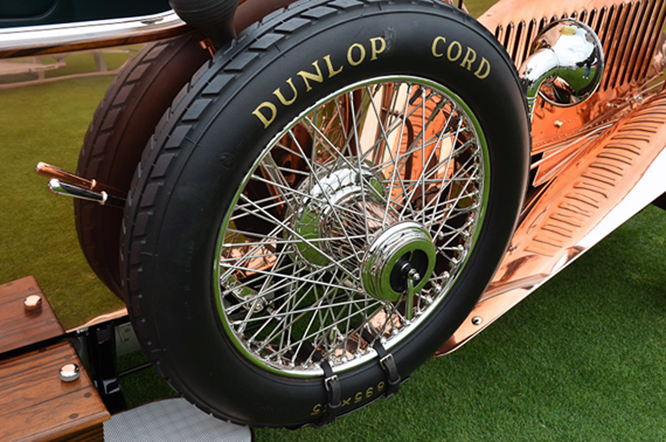
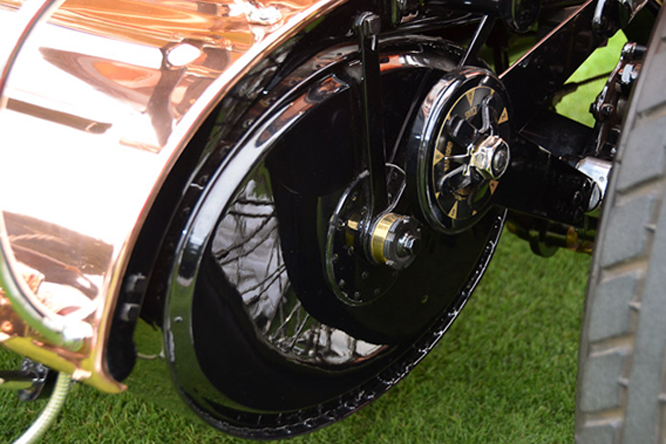
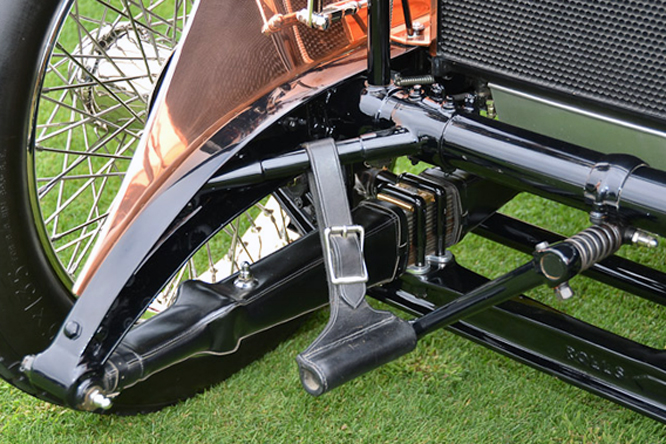
Friction dampers such as the one seen here were in common usage until the second half of the twentieth century when they were replaced with shock absorbing struts.

Rolls Royce Brockman 40/50, Hillsborough Concours d'Elegance

Opulent and refined this 40/50 represents the definition of what a hand crafted from nose to tail Rolls Royce should be, this car is regularly to be found in the National Automotive Museum in Reno.

Rolls Royce Brockman 40/50, Hillsborough Concours d'Elegance

Remarkably this is not the only copper bodied car by Dick Brockman and Company they were also responsible for building the body on a 1930 Rolls Royce Phantom II, Freestone & Wedd also built a copper bodied Rolls Royce on a pre owned 1937 Phantom III, other copper bodied cars include home made hand beaten 1920 Dodge now on view at the Southward Museum in Paraparaumu new Zealand. There are also two copper Cobra bodies one designed by Virgil M Exner in 1965 known as the Mercer Cobra, and the other a Kirkham Replica Cobra. Finally a supercharged rear engined Ford GT was fitted with a retro ’40’s copper hot rod body by Kirkham for the SEMA show in Las Vegas some years ago.

My thanks to Geoffrey Horton for sharing his photo’s of the Copper bodied Rolls Royce Brockman 40/50 copper Ghost.

Thanks for joining me on this “Cu Ghost” edition of “Gettin’ a li’l psycho on tyres” I hope you will join me again tomorrow. Don’t forget to come back now !
Share

Torrey Canyon – Lotus Ford T86

On March 18th 1967 Shipmaster Pastrengo Rugiati elected to take his charge the 974 ft Torrey Canyon carrying 120,000 tons of crude oil on a disastrous short cut between the Scilly Isles and the Cornish mainland on his way to Milford Haven and ended up causing the worlds largest ship wreck when the boat grounded on the Seven Stones Reef. As the consequent environmental disaster unfolded the ship was bombed sending it 98ft below and the oil spill was repeatedly bombed in a vain effort to keep the oil off the beached of England, France and surrounding islands.

In 1969 Peter Wright was working on the ground breaking BRM P142 which would have introduced aerodynamically induced ground effects to racing car design when John Surtees joined BRM and insisted on opting for a conservative approach and developing the existing BRM P138 and P139 chassis with which Big John scored a season best 3rd place driving the P 139 at the 1969 US Grand Prix before quitting BRM to start his own team.

Peter left BRM and some years later started work for Technocraft to develop a vacuum assisted resin injection composite process which was to be used for the manufacture of body shells for the Lotus Elite, Eclat and Esprit road cars and Colin Chapman’s boat companies.

After the failure of the Lotus 76 in 1975 Colin Chapman asked another ex BRM employee Tony Rudd, now group engineering director at Lotus, to re-think how a Formula One car might be made to make proper use of the front tyres.

Rudd drafted his former colleague Peter Wright in to run the wind tunnel “in his spare time” after his commitments at Technocraft. The fruit of this collaboration was the successful Lotus 78 and world championship winning Lotus 79.

Lotus Ford 86, Goodwood Festival of Speed

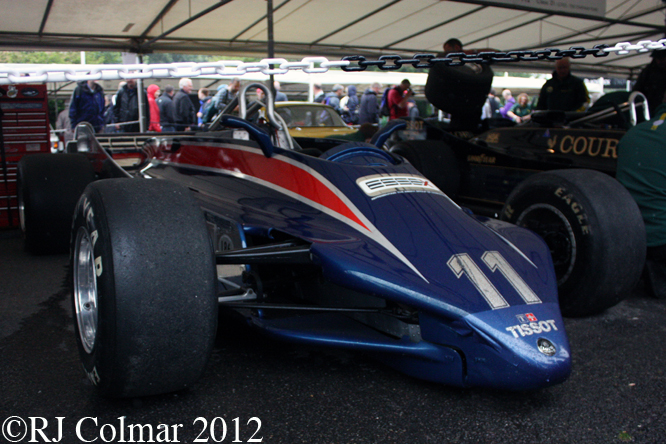
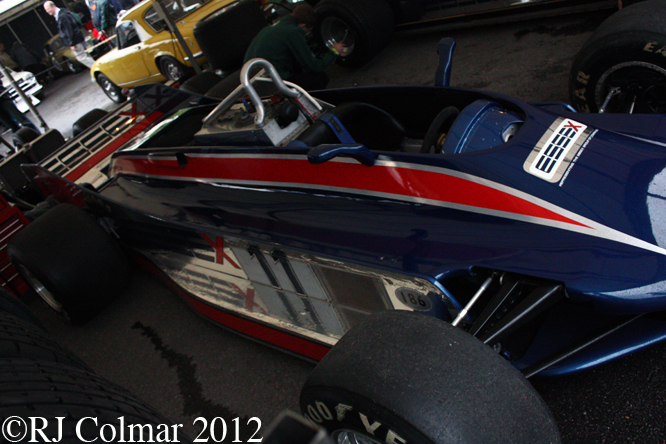
The team were not so lucky with the Lotus 80, from which they took a step back with the Lotus 81 before regrouping with their next innovation the twin chassis Lotus 86 seen here.

What Peter had found out was that the Lotus 80 and to a lesser extent the Lotus 81 were suffering from aero flutter causing the cars to porpoise as a result of having springs that were too soft for the aerodynamic loads being put through the wheels and suspension.

By having a twin chassis Peter hoped to use a conventional monocoque chassis in which the driver sat and a separate independently sprung ground effect chassis attached to the first at the outboard ends of the lower suspension. The suspension for the outer ground effect chassis was much stiffer than for the inner monocoque chassis and as a result in theory should not be quite so sensitive to flutter or likely to porpoise.

In order for the car to work not only would the science have to be proven but the rule book scrutinised to ensure the car remained legal. By having the outer ground effect chassis suspended from the bottom suspension links using very stiff rubber bump stops the criteria for having all parts of the car with an aerodynamic influence entirely sprung, was met.

To check the science the team took a 1980 Lotus 81 added a spacer between the engine and the fuel tank through which the central cross member of the outer chassis would pass, made provision for the front cross member of the outer chassis to pass under the driver legs and had had the third rear cross member of the outer chassis pass over the gearbox.

The weight of the outer chassis was kept low using the in house developed carbon fibre process that Peter had been developing for the Lotus road cars and Champman’s boats.

Lotus Ford 86, Goodwood Festival of Speed

Amid much secrecy the Lotus 86 was built and then taken to Jarama for a private test, thanks to the motors heavily revised oil pumps, that were required by the second chassis, a lot of oil was spilled, hence the Torrey Canyon nick name for the car.

Once the leaks had been fixed the Lotus 86 proved that the aerodynamic outer chassis worked providing plenty of down force while the inner monocoque chassis, in which the driver sat, remained free of the porpoising effect that made the car difficult to control.

Upon completion of the test the Lotus 86 which was never subsequently raced was put aside and work started on the Lotus 88 using the same principles.

Thanks for joining me on this “Torry Canyon” edition of “Gettin’ a li’l psycho on tyres” I hope you will join me again tomorrow for a look at an old Rolls Royce. Don’t forget to come back now !
Share

25th Anniversary Aero Airbag – Ford Mustang GT Convertible

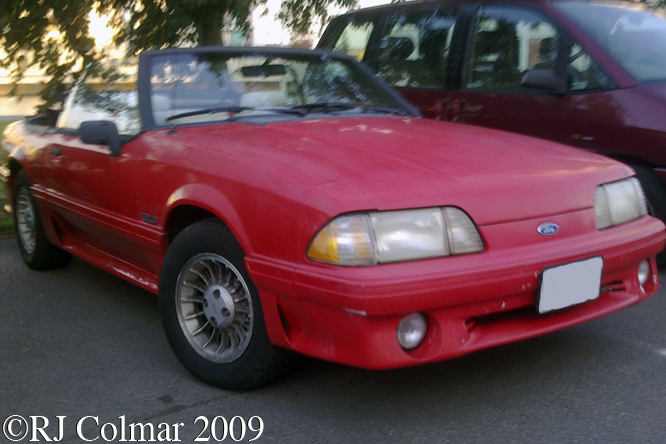
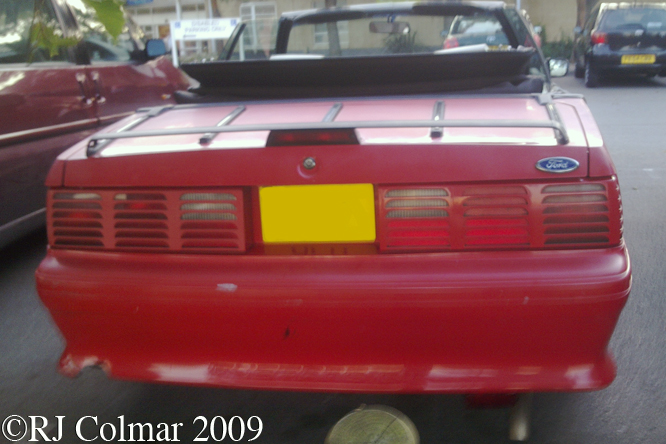
They say beauty is in the eye of the beholder and the few owners of third generation Mustangs, built from ’79 – ’93, that I have spoken too always rave about them, no matter that in some eyes they share the aesthetics with a family pack of lard with no knobs on, you either love these cars or hate them.

Ford Mustang GT Convertible, Portishead

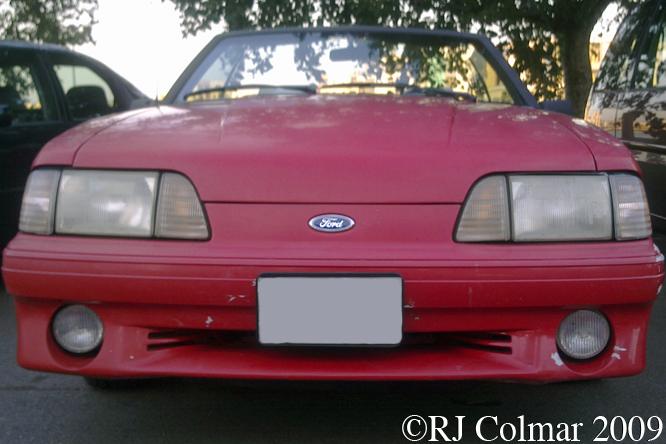
Based on the Ford’s mid size Fox platform, around which contemporary classics as the Ford Granada (US), LTD and Thunderbird, Mercury Cougar and Capri, Lincoln Versailles and Continental Mark VII were also built, the third generation Mustang GT is fitted with a 5 litre / 302 cui V8 produced 225 hp. In 1987 third generation Mustangs received an “aero” style face lift which replaced the earlier 4 eyes look.

Ford Mustang GT Convertible, Portishead

Handling was improved over the other vehicles built on the Fox platform with Fords Quadra Shock rear suspension though the handling still takes some getting used to and is best not sampled in the snow. For 1990 when today’s featured car was built drivers airbags became standard.

Ford Mustang GT Convertible, Portishead

A school friend of mine who used to work in the oil industry out in Houston Texas had one of these 25th Anniversary Mustangs from new and said that the cost of keeping it maintained aside, there was no car he has owned before or since that has given him so much pleasure as his Mustang GT being driven out of Houston on a balmy evening with the hood down and the air conditioning on.

Thanks for joining me on this 25th Anniversary Aero Airbag edition of “Gettin’ a li’l psycho on tyres”, I hope you will join me again tomorrow. Don’t forget to come back now !
Share

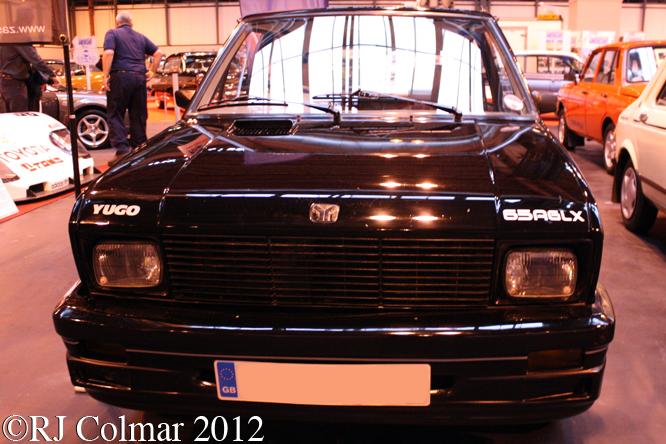
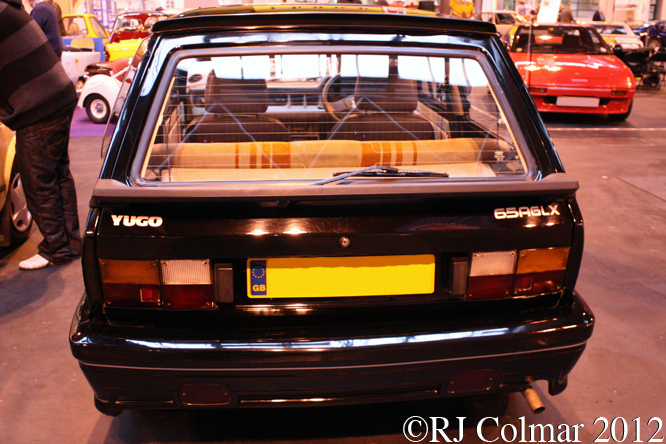
Fully Loaded Rare Breed – Zastava Type 102 / Yugo 65AGLX

Reading through the Zastava history on the zastava-yugo.co.uk website I was surprised to learn that just 83 of all Zastava/Yugo types remain registered on British roads,

Yugo 65AGLX, The Classic Motor Show, NEC, Birmingham

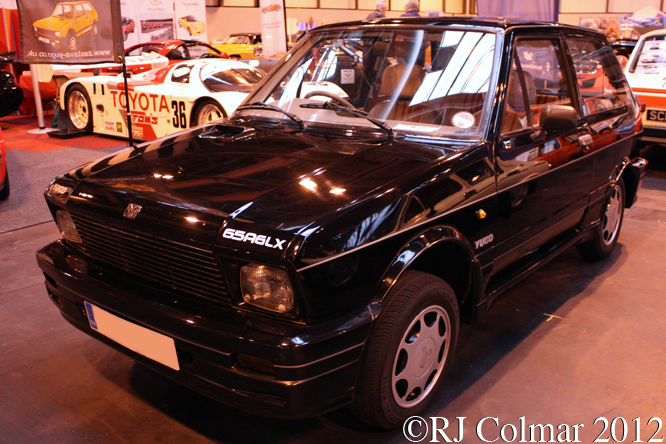
which makes today’s featured 1989 Yugo 65AGLX branded Zastava Type 102 a rare breed in Britain, if not it’s homeland and the area surrounding Serbia where it was built.

Yugo 65AGLX, The Classic Motor Show, NEC, Birmingham

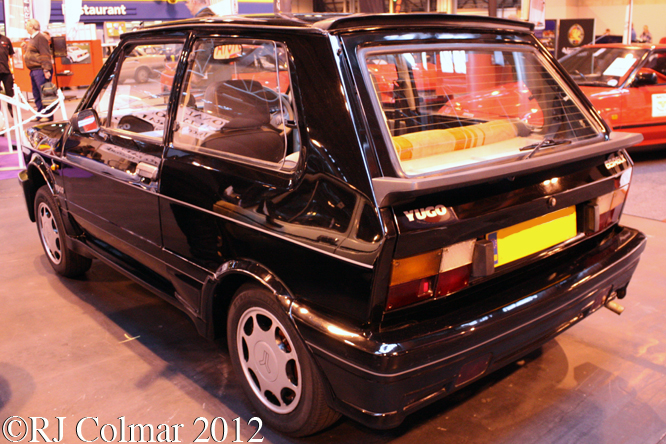
Today’s featured 1989 model, is the top of the UK range GLX fitted with a 1298 cc / 79 cui motor which could be ordered with either a 5 speed manual or Renault derived 3 speed automatic gearbox.

Yugo 65AGLX, The Classic Motor Show, NEC, Birmingham

In the USA where the 65AGLX was known as the GVX (GV = Great Value) along with the spoilers front and rear, side body kit and alloy wheels it was possible to order a GVX with a automatic electro-hydraulic folding/raising cabrio roof. US destined Yugo’s were apparently built on a separate production line manned by an elite staff who were paid a premium wage.

Yugo 65AGLX, The Classic Motor Show, NEC, Birmingham

Despite modest acceleration times of 0-60 mph in 13.5 seconds and a top speed of 85 mph, US spec, production of the Zastava Type 102 survived the violent dissolution of Yugoslavia, the factory at Kragujevac in Serbia survived a bombing, and did not end until 2008 with 794,428 examples built.

Thanks for joining me on this “Fully Loaded Rare Breed” edition of “Gettin’ a li’l psycho on tyres”, I hope you will join me again tomorrow. Don’t forget to come back now !
Share

Last British 2 Seat MG – MG TF

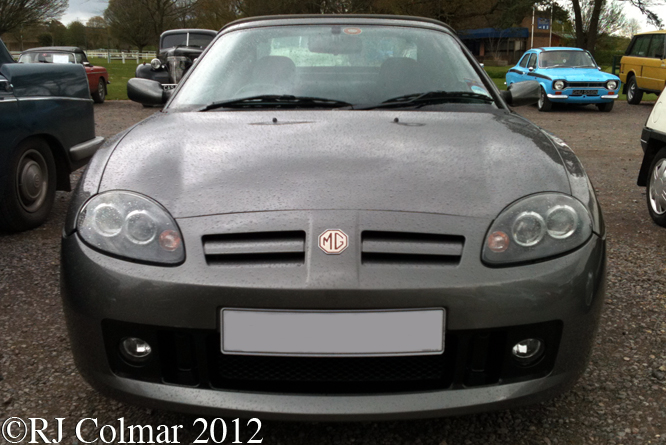
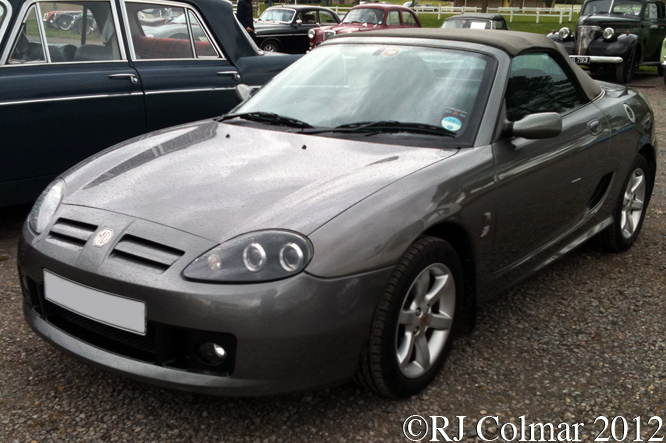
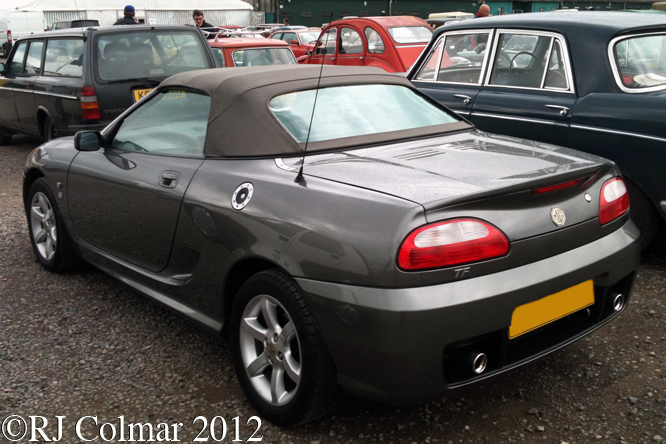
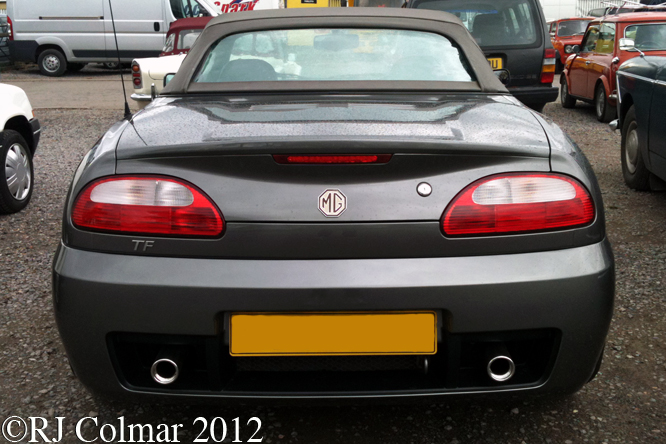
When MG Rover face lifted the mid engined MG F sports car in 2002 they gave it the same TF name as last seen on the 1955 MG TF Midget. Little did they know at the time that this would become the last new British 2 seat MG to reach market.

MG TF, Bristol Classic Car Show, Shepton Mallet

Many of the face lift details were carried over from the MG TF XPower 500 Concept Car first seen at Le Mans in 2001.

MG TF, Bristol Classic Car Show, Shepton Mallet

Despite it’s overall styling which dated back to 1995 the MG TF matched it’s rivals from Mazda (MX5) and Toyota (MR2) in handling, performance and held it’s own in the domestic sales league.

MG TF, Bristol Classic Car Show, Shepton Mallet

However the TF’s mid mounted Rover K series motor was subject to numerous head gasket failures until a new multi layered item was designed which cured this particular issue.

MG TF, Bristol Classic Car Show, Shepton Mallet

Production of MG TF’s ceased when Rover MG went bankrupt in 2005 but restarted in the UK from Chinese supplied Complete Kockdown Kits (CKD) in 2008 after new owners Nanjing had transferred all the TF production assets to China. 906 CKD TF’s were built before production ceased for good in 2011.

Thanks for this “Last British 2 Seat MG” edition of “Gettin’ a li’l psycho on tyres” I hope you will join me again tomorrow. Don’t forget to come back now !
Share