All or Nothing – Hispano-Suiza H6

Aged just 22 French Captain Georges Guynemer is reported as having downed 53 enemy planes before Hisano Suiza powered Spad XIII disappeared on the 11th of September 1917 for the final time somewhere north east of Ypres. The captain, who’s best known maxim was “Until one has given all, one has given nothing”, had already survived being shot down seven times, well before parachutes had become either reliable of issued to pilots. After the Great War of 1914/18 Hispano Suiza adopted the stork symbol of Alsace which Guynemer had painted on the side of his Spad as their radiator mascot.
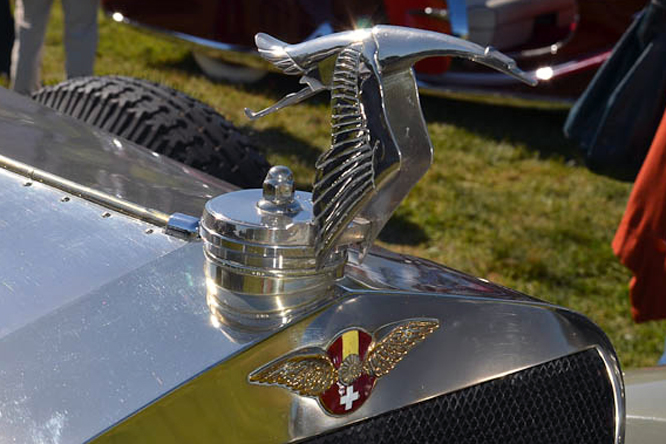
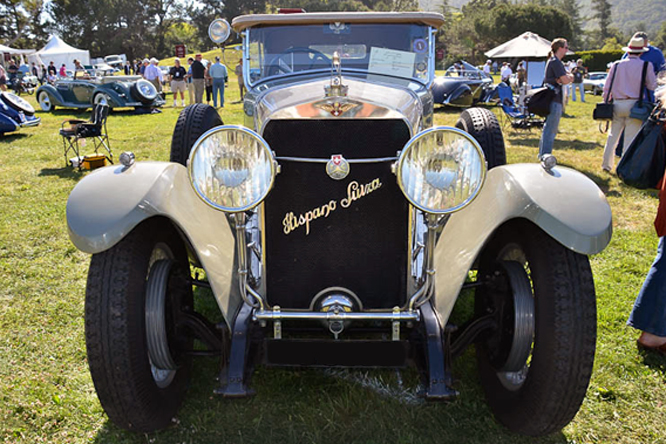
Huispano Suiza H6, Marin Sanoma Concours d’ Elegance

In 1919 Hispano Suiza designer Marc Birkigt brought his Type 41 to fruition which became known as the H6. Having been amongst the pioneers to develop shaft driven overhead cam shafts and amongst the innovators of joined up motor and gearbox housings with earlier models the H6 featured a 135 hp light alloy mono block six cylinder overhead cam motor that, although noisier than the competition in the form of the Rolls Royce 40/50 with it’s push rod operated side valve cast iron twin block straight 6 cylinder motor, produced a full 50 hp more than it’s contemporary from Derby England.
Huispano Suiza H6, Marin Sanoma Concours d’ Elegance

The H6 was not only more powerful than it’s contemporaries but it the first to adopt power assisted four wheel brakes as standard, leaving Rolls Royce, Lanchester and Napier with their unassisted two wheel brakes well behind when in the safety stakes. Indeed Rolls Royce were quick to acquire a license to replicate Birkigt’s power assisted four wheel braking system on their own models. Rolls Royce would continue to use the Hispano Suiza braking system until the introduction of disc brakes on it’s Silver Shadow model in 1965.
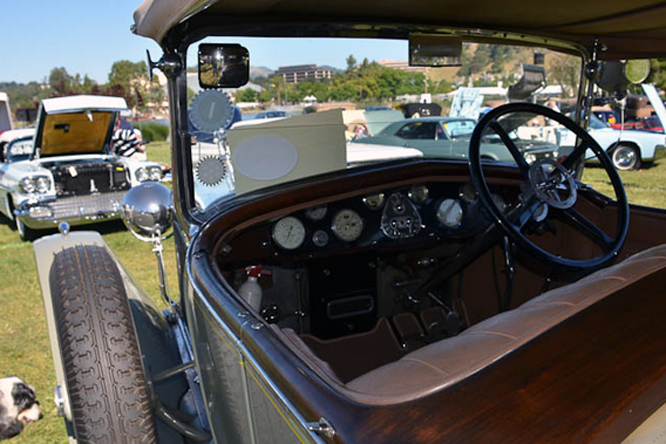
Huispano Suiza H6, Marin Sanoma Concours d’ Elegance

Hispano Suiza counted not only Royalty, including the King of Spain, and the nouveaux riche of Hollywood amongst it’s H6 clientele but also French alcohol heir, Spad XIII flying ace, athlete, inventor and race car driver André Dubonnet who entered his H6 in the 1921 Coupé Boillot sports car race run in Boulogne which he promptly won.
Huispano Suiza H6, Marin Sanoma Concours d’ Elegance

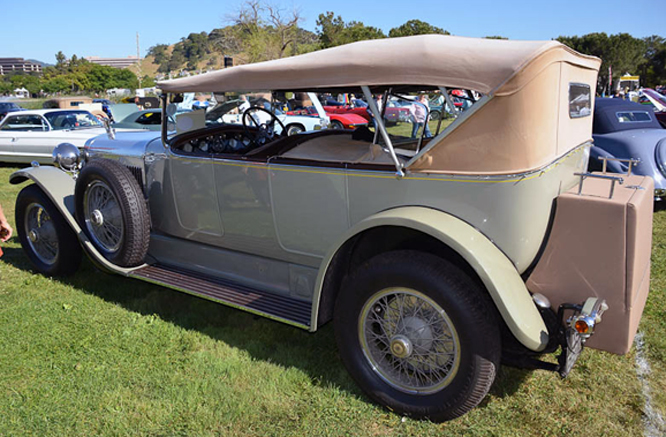
The 6,597cc / 403cui H6 like this 1925 example, which resided in the UK until 2000, gained a larger 8 litre / 488 cui H6B sibling in 1922 with the H6C series in 1924 using only the larger motor. In all 2,350 H6s of all types, including a unique 6 wheel H6 built for feature length film pioneer and director D.W.Griffith, are thought to have been built between 1919 and 1933.

My thanks to Geoffrey Horton for sharing his photographs taken at this years Marin Sanoma Concours d’Elegance.

Thanks for joining me on this “All or Nothing” edition of “Gettin a li’l psycho on tyres”, I hope you will join me again tomorrow. Don’t forget to come back now !

Share

Mario & Ronnie Show – Lotus Ford 79 #79/2 & #79/3

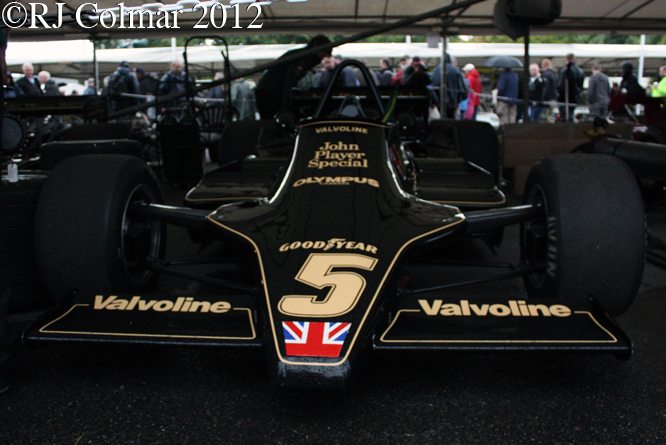
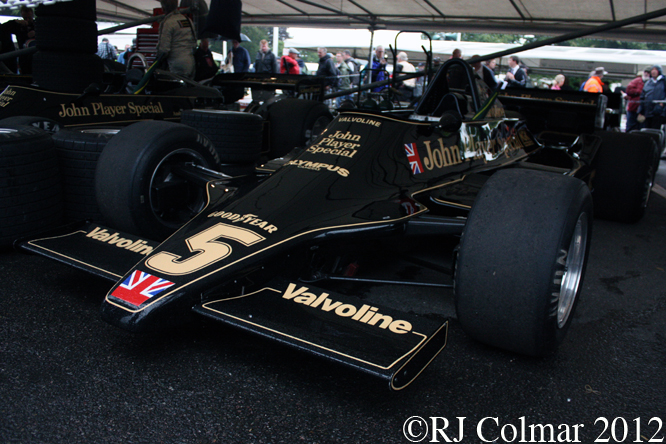
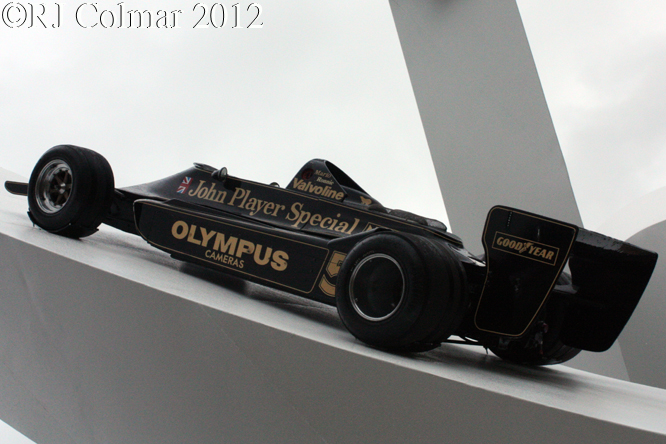
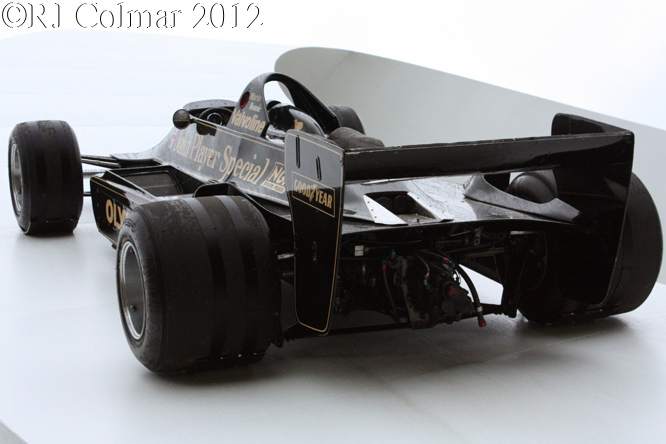
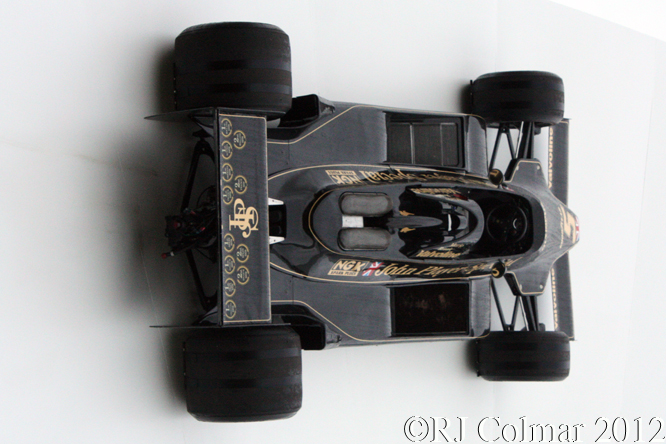
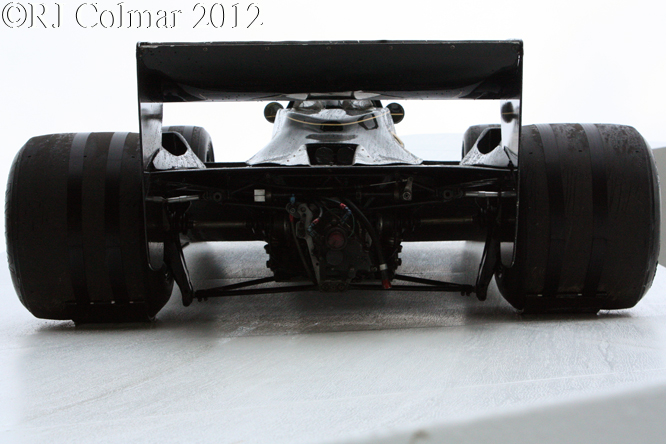
John Player Team Lotus hit the track running in 1978 with Mario Andretti winning the opening race of the season in Argentina and his team mate Ronnie Peterson winning the third race of the season after a thrilling last couple of laps in South Africa. Both of these victories were achieved with the previous seasons Lotus Ford 78 ‘wing car design’ for 1978 Colin Chapman and his engineers came up with something even more refined in the shape of today’s featured car the ‘ground effect’ Lotus Ford 79.

Lotus Ford 79, Goodwood, Festival of Speed

The Mario Andretti first raced a Lotus 79 in the non championship International Trophy race at Silverstone a race well remembered because the front row qualifiers Ronnie Peterson and Niki Lauda both spun of on the warm up lap leaving Andretti and James Hunt to start at the front of the grid despite qualifying 3rd and 4th. Andretti only lasted two laps before he spun out with Hunt spinning out one lap earlier at the same spot.

Lotus Ford 79, Goodwood, Festival of Speed

However for the Belgium Grand Prix there were no mistakes Mario qualified on pole and won, driving I believe from Ronnie who started 7th in the older Lotus Ford 78. At the Spanish Grand Prix Mario was I believe given the #79/3 seen above while Ronnie took over Mario’s Belgium winning #79/2 seen below. Mario qualified on pole and Ronnie 2nd and that is how the Spanish Grand Prix finished.

Lotus Ford 79, Goodwood, Festival of Speed

Mario retired from the Swedish Grand Prix after qualifying on pole leaving Ronnie to finish 3rd behind the controversial Brabham fan cars of Lauda and Watson. Bernie Ecclestone chose to withdraw the Brabham BT46 fan cars after just one race. At the following French Grand Prix Mario qualified 2nd and Ronnie 5th, however they finished 1st and 2nd respectively for the 3rd time in the 1978 season.

Lotus Ford 79, Goodwood, Festival of Speed

For the British Grand Prix it was Ronnie and pole and Mario next to him but both cars retired. In Germany Mario qualified on pole with Ronnie sat next to him on the grid and by now unsurprisingly that is how they finished the race. In Austria Ronnie was again on pole with Mario starting second however Mario retired leaving Ronnie to take an unchallenged win which would prove to be his last.

Lotus Ford 79, Goodwood, Festival of Speed

At the Dutch Grand Prix Mario qualified on pole in #79/3 with Ronnie beside him in #79/2 and the pair duly took their fifth and final 1-2 result of the season. This would prove to be Mario’s last Grand Prix win and indeed the last for any American driver and Ronnie’s last ever finish too. Ronnie crashed #79/2 during practice for the Italian GP and started the race from fifth in an older Lotus 78 while Andretti started from pole in the latest #79/4. Ronnie was involved in a start line accident which broke his legs, unfortunately during the night bone marrow from his injuries got into his blood stream and he died the following morning. The race was restarted and a subdued Mario finished sixth which was enough to claim the championship, but in truth Mario was far more concerned for Ronnie with whom he had been good friends since there time as team mates driving Ferrari sports cars in the early 1970’s. Ronnie for the second time in his career finished second in the World Drivers Championship.

Lotus Ford 79, Goodwood, Festival of Speed

The success of the Lotus 79 was largely due to what was happening to the airflow beneath the bodywork, by building the monocoque just wide enough to hold the driver with fuel tank behind him and the motor behind that, Colin Chapman and his engineers Peter Wright, Geoff Aldridge, Martin Ogilvie and Tony Rudd used the side pods to create venturi by using a low wide neck at the front entrance to the side pods and tall wide exit, with side skirts sealing airflow under the car. When the car was moving air was guided into a partial vacuum created between the venturi side pods under surface and the surface of the road and this had the effect of sucking the car to road which allowed the car to negotiate corners at higher speeds than their competitors, most of whom had still not got to grips with the wing car aerodynamics advanced by the previous years Lotus 78.

For the last two races of the 1979 season perennial Formula One under achiever Jean Pierre Jarrier joined Mario in the team Mario qualified on pole in the USA with J-PJ 8th but neither car finished in the US Grand Prix. The final race of the season was held in Canada where Mario could only qualify 9th and Jean Pierre sat on pole. During the race Jean Pierre looked set for a win until he retired with an oil leak.

Mario finished tenth. The Lotus 79’s were set to be replaced by even more radical Lotus 80’s in 1979 but everything did not go to plan and so the 79’s were pressed into service again for most of the season but were out classed by their competitors who were getting to grips with ground effects aerodynamics.

A little post script courtesy Barry Boor, Mario Andretti was invited to drive the inauguration lap of the next home of the United States Grand Prix at Circuit of the America’s on October 21st, the car he drove was naturally a Lotus Ford 79 with which he won his world Championship, you can see how he got on in this linked youtube clip.

Thanks for joining me on this “Mario & Ronnie Show” edition of “Gettin’ a li’l psycho on tyres, I hope you will join me again tomorrow. Don’t forget to come back now !
Share

No Side Vent Windows – Ferrari 250 GT Pininfarina Series I Cabriolet

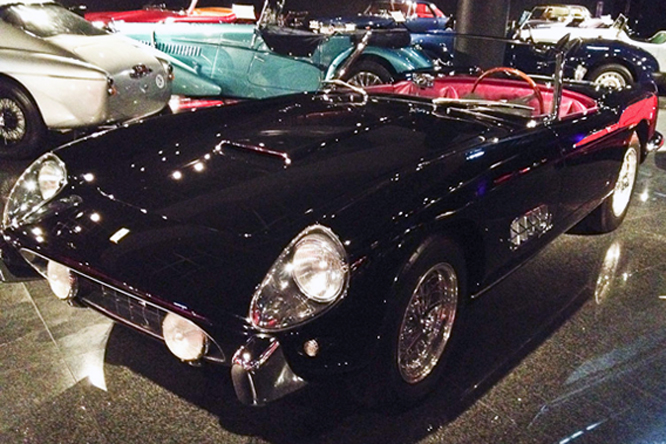
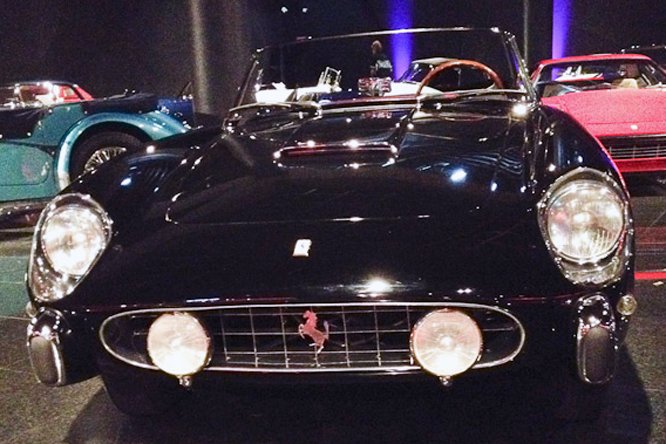
In 1957 Ferrari launched the Ferrari 250 GT Pininfarina Series 1 Cabriolet with a list price if $14,950 over $3,000 more than the Ferrari 250 GT California Spyder.

Ferrari 250 GT Pininfarina Series 1 Cabriolet, Danville Concours d'Elegance

The 250 GT Pininfarina Series 1 Cabriolet was better appointed with more sound proofing and more comfortable than the shorter wheel base 250 GT California Spyder.

Ferrari 250 GT Pininfarina Series 1 Cabriolet, Danville Concours d'Elegance

This car is on of just six Ferrari 250 GT Pininfarina Series 1 Cabriolets to have the fender vents that were a feature of the California Spyder. To tell a Ferrari 250 GT Pininfarina Series I Cabriolet apart from a Ferrari 250 GT Pininfarina Series II Cabriolet one only has to look to see if either of the long wheel base cars has side vent windows, the 42 Series I cars did not have them while the 200 Series II cars did have them fitted.

My thanks to Geoffrey Horton for sharing his photo’s taken at Danville Concours d’Elegance.

Thanks for joining me on this “No Side Vent Windows” edition of “Gettin’ a li’l psycho on tyres” I hope you will join me again tomorrow. Don’t forget to come back now !
Share

From the Good Guys In White Hats – Dodge Charger

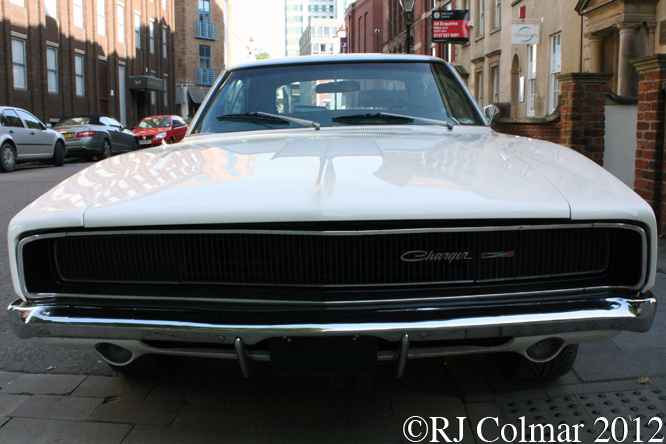
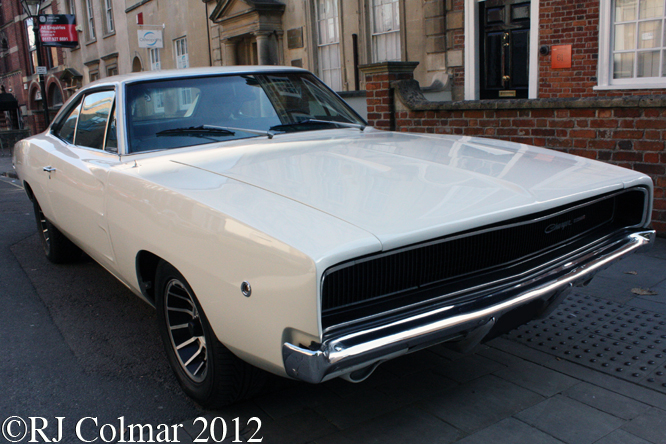
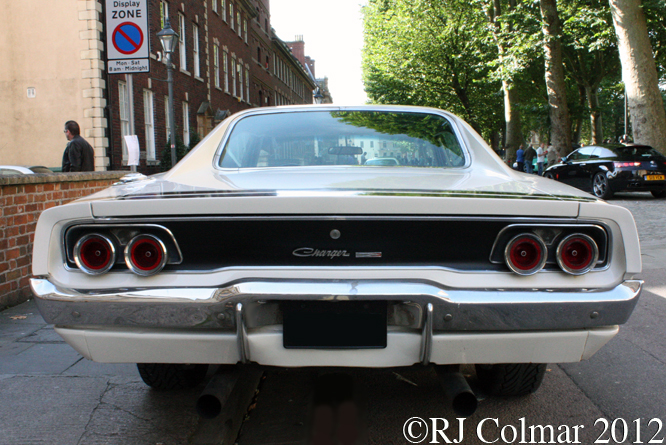
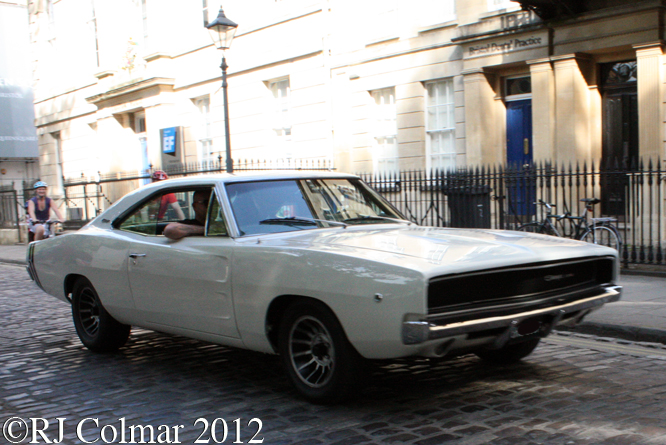
The second generation Dodge Charger was launched in 1968 with a commercial cartoon urging customers to visit “those great Dodge boys they’re the good guys in white hats.”

Dodge Charger, Avenue Drivers Club, Bristol

The new body was designed by a team that included Richard Sias who was responsible for the overall profile.

Dodge Charger, Avenue Drivers Club, Bristol

Engine options included a standard 5.2 litre / 318 cui V8 a 3.7 litre / 225 cui straight six, a 7 litre / 426 cui Hemi or a 7.2 litre / 440 cui Magnum was available for the top of the range R/T versions. This particular car appears to be powered by a 6.3 litre V8 which was available with either 290 hp 2 barrel carburetor or 330 hp 4 barrel carburetor variations.

Dodge Charger, Avenue Drivers Club, Bristol

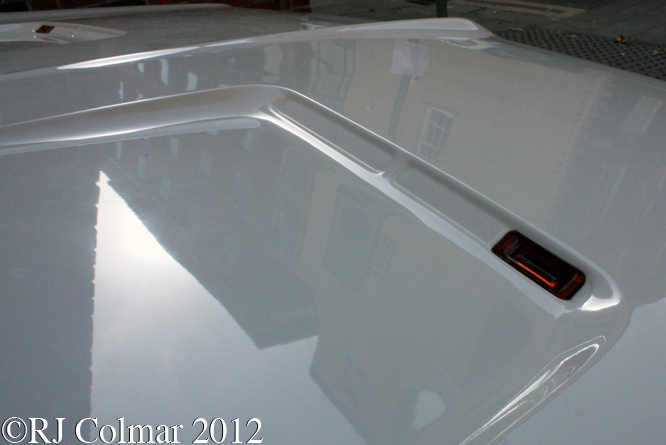
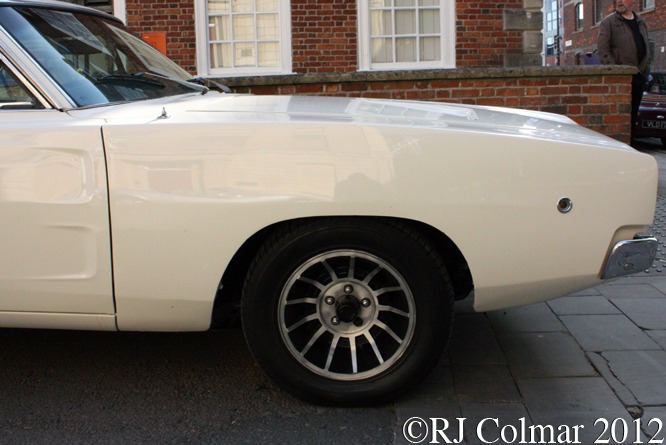
The dual scallops on the bonnet / hood

Dodge Charger, Avenue Drivers Club, Bristol

and front doors added to the performance “Lets stir things up a bit” appearance of the car despite there complete non mechanical or aerodynamic functionality.

Dodge Charger, Avenue Drivers Club, Bristol

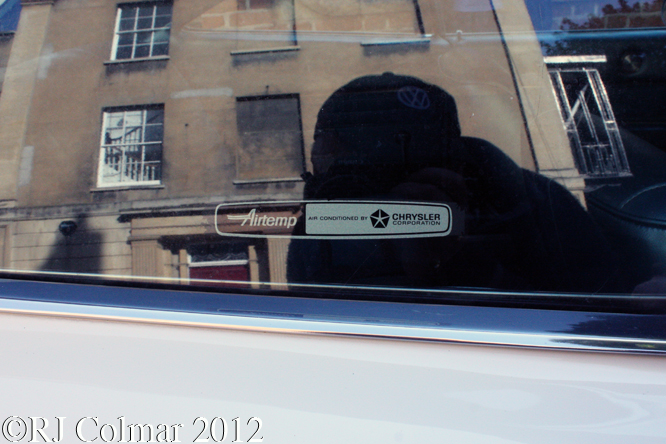
Among the options for the Charger was air conditioning, cruise control, electric door locks, tachometer, rear window demister, and a wood-grain steering wheel.

Dodge Charger, Avenue Drivers Club, Bristol

Safety options included head restraints for the front seats, lap belts for center seat passengers, shoulder belts front and rear and a padded steering wheel.

Dodge Charger, Avenue Drivers Club, Bristol

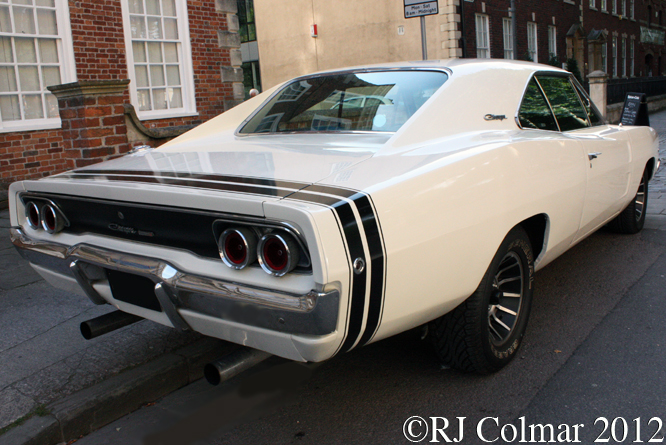
The integrated rear spoiler mimicking aerodynamic devices seen on Can Am and sports car racers of the period further enhanced the competition bred appearance of the Charger, the paired round rear lights were added at the suggestion of Styling Vice President, Elwood P. Engel.

Dodge Charger, Avenue Drivers Club, Bristol

Around 96,100 Chargers were built in the 1968 model year, 75% of which were fitted with factory option Vinyl roofs. 17,000 top of the range R/T Chargers were built of which just 500 were fitted with the fabled 426 Hemi.

Dodge Charger, Avenue Drivers Club, Bristol

The ’68 Charger, which share the same platform with the Dodge Coronet, is probably most famous for it’s movie appearance in Bullitt, which features a couple of hit men in a black Charger R/T dualing for tarmac with Steve McQueen driving his green Mustang GT. By all accounts the R/T was the superior machine.

Thanks for joining me on this “From the Good Guys In White Hats” edition of “Gettin’ a li’l psycho on tyres”, I hope you’ll join me again for Ferrari Friday tomorrow. Don’t forget to come back now !
Share

Wolly Bulli – Volkswagen Type 2 (T2)

In the Autumn turn of 1982 twenty odd college class mates and I made our way from the Untied Kingdom to Paderborn University for the first half of the third year of our European Business Studies course. I overslept on the train and ended up a hundred kilometers further east than intended in Kassel having missed my stop, but I digress.

VW Type 2 (T2) Kombi, Paderborn, Germany

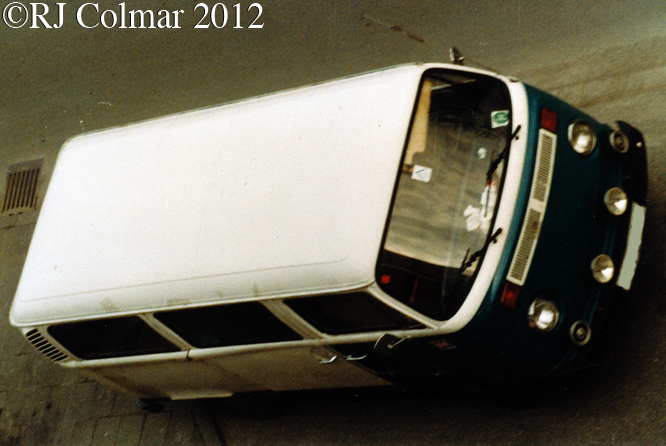
Once in Paderborn we soon made friends with our fellow German students some of whom had banded funds together to buy a late bay VW Type 2 (T2b) Kombi seen above, in Germany these vehicles are known locally as “Bulli”. The Type T2 (T2) was first seen in 1967, it was wider and longer than it predecessor the Type 2 (T1) which I looked at last week. The motor was slightly larger starting at 47 hp wich increased to 70 hp by the mid 1970’s, but the real improvements were in low end torque which helped this heavy vehicle keep pace with the rest of the traffic.

VW Type 2 (T2) Kombi, Paderborn, Germany

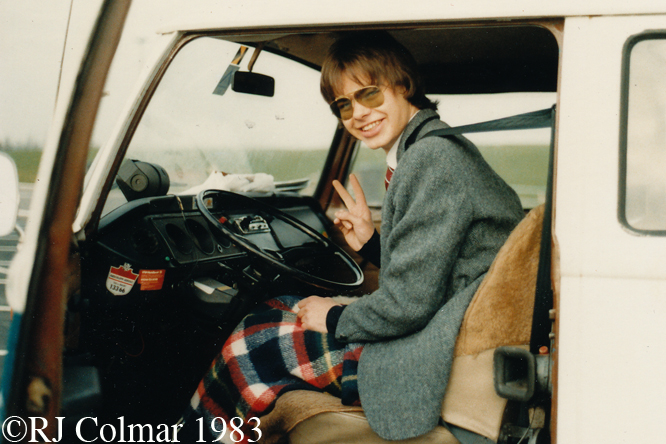
Above I can be seen sitting at the wheel of my friends Type 2 wrapped in a blanket in the middle of February as I was about to return from Wolsburg where I had a placement at Volkswagen to Paderborn. To reduce the intake of exhaust fumes, because the heat exchangers were breaking up, the heating pipes were blocked up and the windows were kept open hence the blanket was necessary to keep warm in the well ventilated unheated bus.

Type 2s went through three distinctive body developments from ’67 to ’71 the early bay T2a was characterised by low front indicators and rear light clusters inherited from the Type 2 (T1), from ’71 to the early 1990’s the late bay Type 2 (T2b) is characterised by high front indicators and larger vertical oblong rear light clusters. By the early 1990’s production in Mexico and Brazil moved to the Type 2 (T2c) which has a raised roof and the latest models now built only in Brazil have duel fuel water cooled engines which run on petrol or ethanol.

Type 2 (T2) Camper, Shakespeare County Raceway

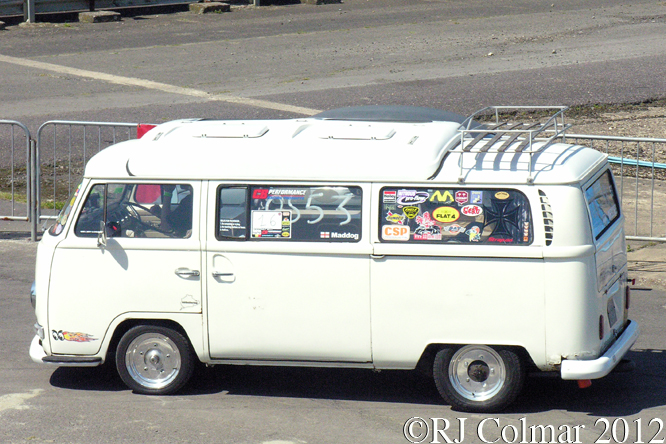
Chris Maddog Antell’s VW Type 2 camper van seen above at Shalespeare County Raceway is an early bay Type 2 (T2a) with low front indicators and small rounded rear light clusters he runs it with a 2276 cc / 138 cui motor of yet to be determined origin, if you know please do not hesitate to chime in below.

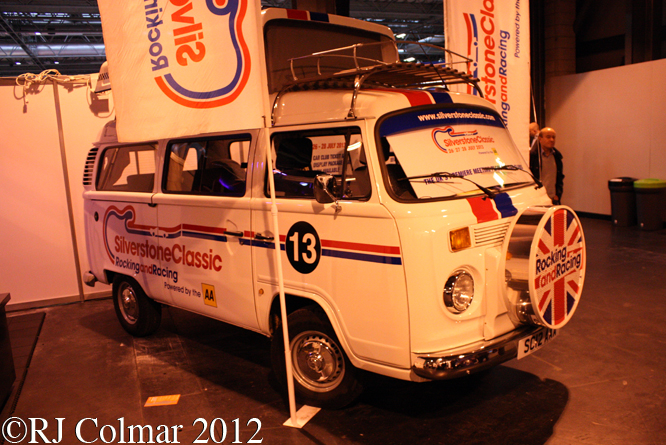
Volkswagen Type 2 (T2c), The Classic Motor Show, NEC, Birmingham

The Type 2 (T2c) as seen above at The Classic Motor Show is still in production in Brazil a couple of years ago they were being manufactured at a rate of 100 a day, some of these vehicles can be seen in Europe where they are often used as camper vans. The latest news courtesy of mariner at The Nostalgia Forum is that Type 2 (T2c) production is planned to come to a halt in Brazil next year.

Thanks for joining me on this “Wolly Bulli” edition of “Gettin’ a li’l psycho on tyres”. I hope you will join me again tomorrow. Don’t forget to come back now !
Share

Twin Carburetor ADO16 – MG 1300 MkII

In 1962 at the same time as the launch of the, rather conventional, MG B the British Motor Corporation (BMC) launched a revolutionary new car the Morris 1100 which was technically like a grown up version of the Mini first seen in 1959 featuring a transverse front mounted engine driving the front wheels through a transverse mounted gearbox. This allowed for the monocoque body to sit low to the ground compared to its conventional contemporaries which need a prop (propeller) shaft to run from the gearbox at the front to the rear axle.

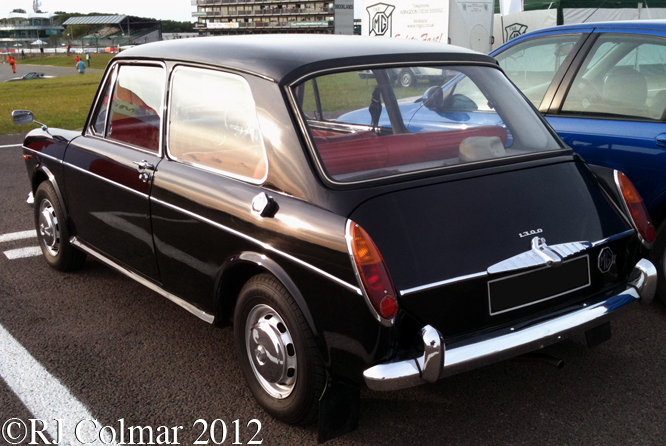
MG 1300 Mk II, Silverstone Classic

Like the Mini the Morris 1100, which had carried the code ADO16 through it’s development, was designed by Alec Issigonis and would become one of Britain’s consistently best sellers through the 1960’s until the more conventional Ford’s began to make an impact thanks to overwhelming competition success on the race track which translated into sexy marketing campaigns. The body work for the ADO16 was styled by BMCs Italian styling house of choice Pininfarina and was available eventually in two and four door variations.

MG 1300 Mk II, Silverstone Classic

BMC also launched badge engineered 1100’s in Austin, Wolseley, Riley, van den Plas and 55 hp twin carburetor MG variants, in the UK market, before offering larger 1275 cc / 77.8 cui variations which in twin carburetor MG form produced 70 hp. In 1962 soon after the launch of the MG 1100 Alan Foster and Andrew Hedges drove a R.W.Jacobs entered MG 1100 to a 12th place overall and 1st in the 1300 cc class in the 1962 The Motor 6 Hours held at Brands Hatch beating a Ford Anglia in class that finished on the same lap.

MG 1300 Mk II, Silverstone Classic

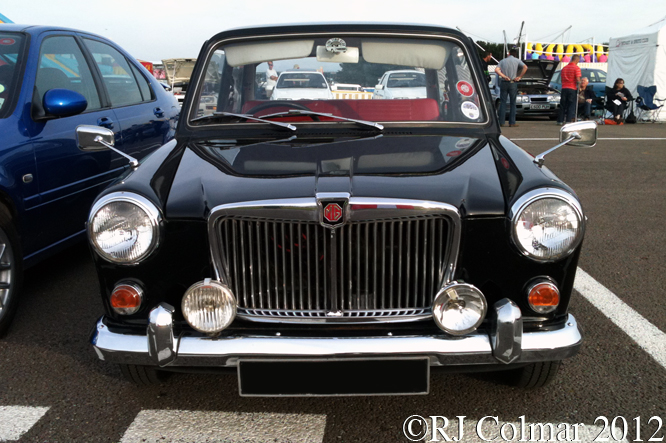
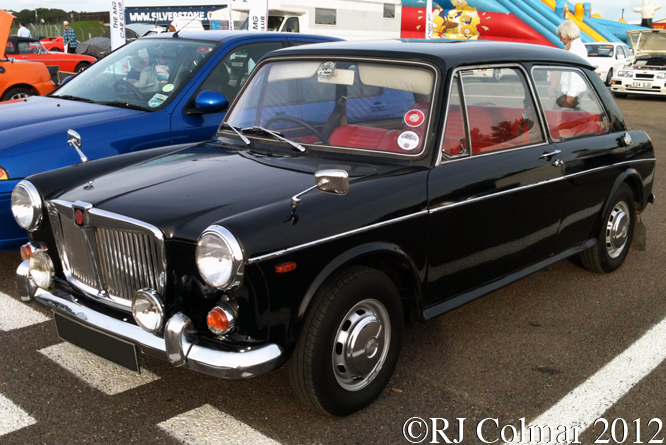
Mk II versions of all the ADO16’s were introduced in 1968 with the rounded rear light clusters and ventilated steel wheels as seen on the 1968 MG 1300 MkII above which also has a walnut dash housing additional revolution counter, water temperature and oil pressure gauges. The leather bound 3 spoke steering wheel completed the sporty look.

MG 1300 Mk II, Silverstone Classic

The options list for all ADO 16’s included reclining seats and heated rear window. MG ADO16’s were replaced in 1971 by Austin and Morris GT variations using the same twin carburetor, MG, motors. In all 26,240 MG variants of the ADO16 were built between 1962 and 1971. One curious thing about the ADO16 when looking at it with the benefit of several decades of hindsight, they never made one with a hatchback only a small boot / trunk. I guess success in this instance bred what would become terminal complacency.

My thanks to Roger Lund, Rod Hunt, Michael Hickey, Ray Bell, Rob Kayemod, David ‘Red Bill Racing’ Coulthard and Frank de Jong at The Nostalgia Forum for their observations regarding the R.W.Jacobs MG 1100.

Thanks for joining me on this “Twin Carburetor ADO16” edition of “Gettin’ a li’l psycho on tyres” I hope you will join me again tomorrow when I’ll be looking at a VW Microbus which I used back in my college days. Don’t forget to come back now !
Share

Bangles Pick Up – FIAT Coupé (Type 175) 20v Turbo

After working on the Opel Junior Concept vehicle Chris Bangle moved to Centro Stile FIAT where he designed the body for, today’s featured, FIAT Coupé which was launched in 1993 after which Chris moved on to become one of the most talked about designers, in the last twenty years, at BMW.

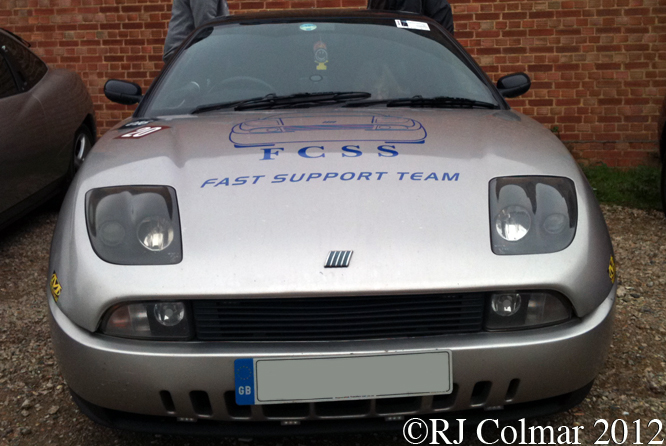
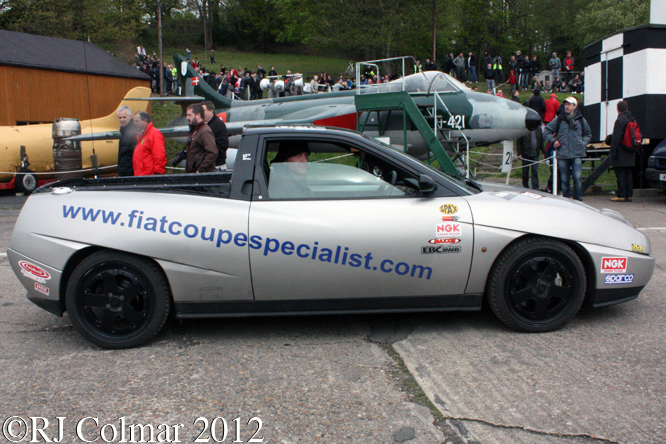
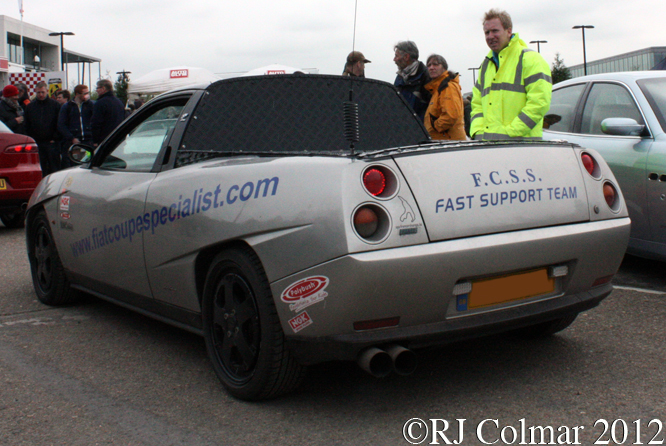
FIAT Coupé 20v Turbo Pick Up, Auto Italia, Brooklands

The FIAT Coupé was originally powered by a turbo charged and normally aspirated variations of the 4 cylinder Twin Cam motor used in the Lancia Delta Integrale. By 1998 when todays featured car was built 5 cylinder turbocharged 20 valve engines had been introduced, the turbocharged variant on this car would have given over 200 hp a top speed of 155 mph and a rest to 62 mph time of 6.5 seconds.

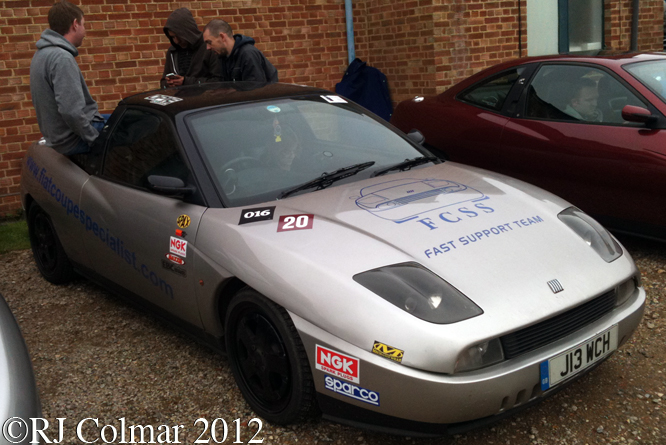
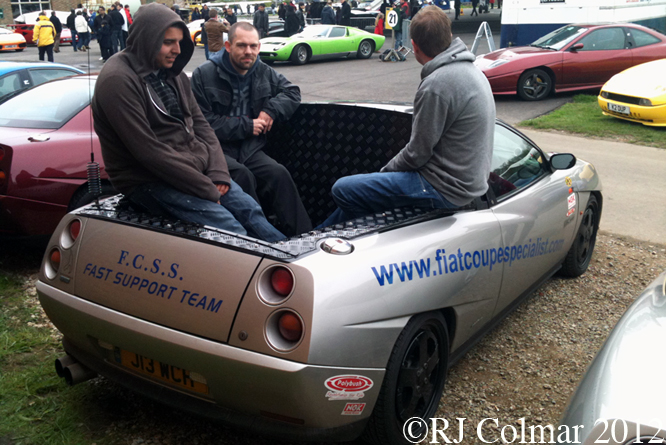
FIAT Coupé 20v Turbo Pick Up, Auto Italia, Brooklands

Pininfarina was responsible for the design of the for the original Coupé interior which like the motors would receive numerous upgrades between 1993 and 2000 when production was terminated.

FIAT Coupé 20v Turbo Pick Up, Auto Italia, Brooklands

This appears to be an early 1998 car characterised by the non colour coordinated sill panels below the doors, the absence of red Brembo brake calipers indicates that it is unlikely to be one of the limited edition LE models.

FIAT Coupé 20v Turbo Pick Up, Auto Italia, Brooklands

While FCSS (Fiat Coupe Service Specialist) were responsible for converting this car which had a damaged roof, in the space of a week, this is by no means the only Chris Bangle design to become a pick up.

FIAT Coupé 20v Turbo Pick Up, Auto Italia, Brooklands

On April 1st last year BMW revealed a one off Bangle originated E93 BMW M3 Pick Up, complete with removable roof, towing hitch and a claimed 186 mph capability making it faster than even the legendary Australian HSV Maloo !

Thanks for joining me on this “Bangles Pick Up” edition of “Gettin’ a li’l psycho on tyres” I hope you will join me again tomorrow when I’ll be looking at a MG badge engineered variation of what was Britain’s top selling car much of the 1960’s. Don’t forget to come back now !
Share