The Sunlight Textile Services – Pegasus Sprint

Last Saturday I had another 6am start, but this time not to go and spectate at an event but to act as a marshall for the The Sunlight Textile Services Pegasus Sprint run by the Bristol Pegasus Motor Club. Despite a healthy breakfast which included melon, tangerine, kiwi and a banana by the time I got through signing on I was ready to wolf down a traditional Full English Heart Attack in the Castle Combe Canteen. Even with long johns double layer trousers, three fleeces and a coat I was going to get cold under the cloudless skies with temperatures peaking at 8 degress C but with the wind chill factor making it feel like 9 below zero.

Lotus MG Mk 6, Bristol Pegasus MC Sprint, Castle Combe

In between my second breakfast and the marshalls briefing I managed to snap Jack Taylors 1954 Lotus MG Mk VI this car is chassis #6-18 in theory the 24th Lotus ever built, it’s powered by an MG XPAG motor and appears to have a one off body, quite possibly by Williams and Pritchard though I have yet to confirm that.
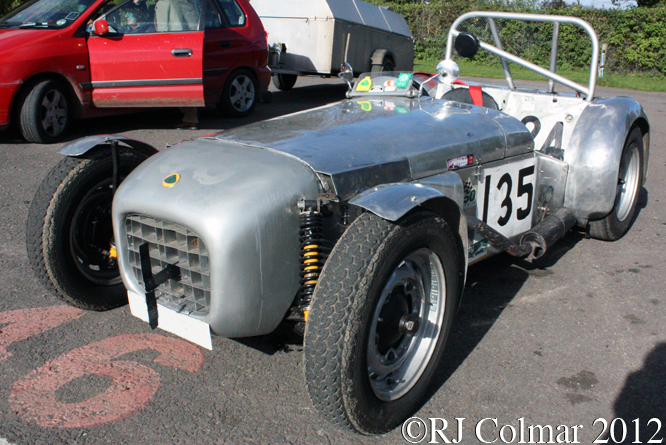
Lotus Mk 6, Bristol Pegasus MC Sprint, Castle Combe

Wondering around the pits during the half hour lunch break I managed to take a few more photo’s including John Marshall’s Lotus Mk VI, followers of my blogs at the much missed Rowdy.com, and I know there are one or two of you, will remember me originally mis recognising this car as a Lotus 7. Many mis recognitions since I have found out it was also originally supplied with an MG motor and gearbox which has since been swapped for a Ford 100E motor and Triumph gearbox. In John’s hands this car has won at least 54 trophy’s most no bigger than egg cups.
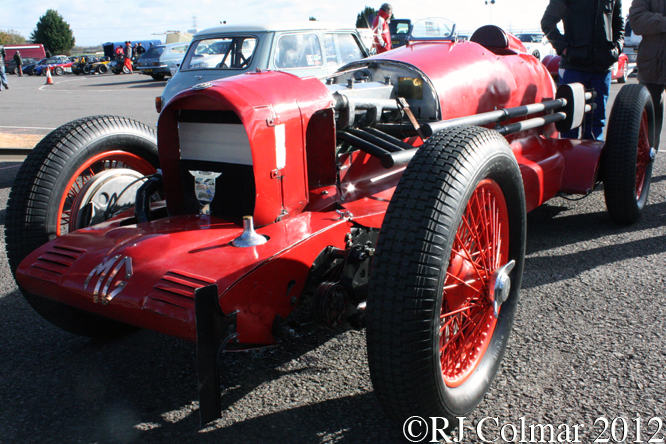
MK K3, Bristol Pegasus MC Sprint, Castle Combe

Perhaps the most extraordinary car and for my money cor of the day was Jeremy Hawkes 1933 MG K3, built as on offset single seater to compete at Brooklands where like the 24 litre “Napier Railton” it holds a record in perpetuity, for vehicles up 1100 cc / 67.126 cui having recorded laps in excess of 120 mph.
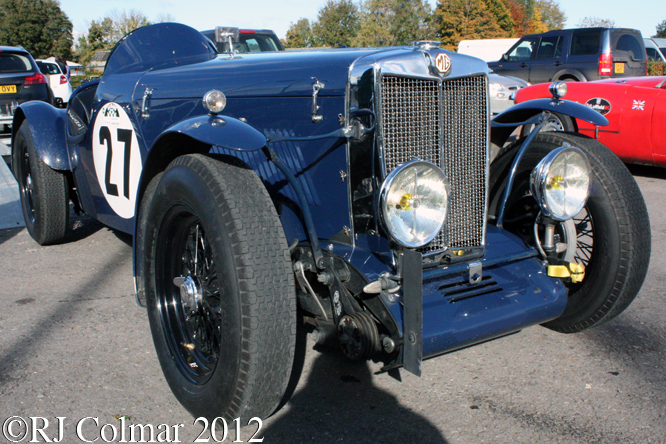
MG TA Midget, Bristol Pegasus MC Sprint, Castle Combe

Anthony Smith brought his 1937 MG TA along to compete in the production road going A2 class.
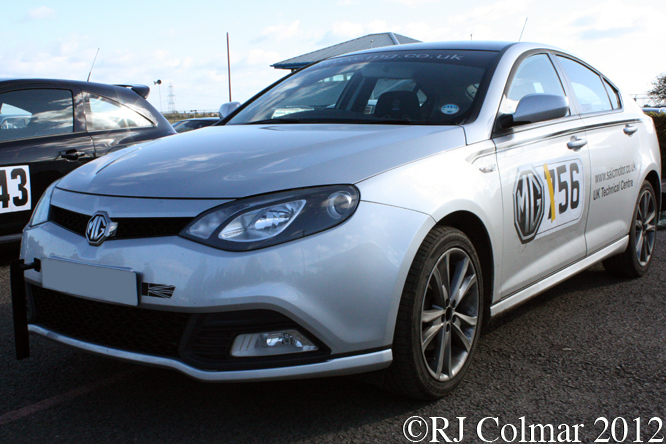
MG A Coupé, Bristol Pegasus MC Sprint, Castle Combe

This was only the second occasion on which I have ever seen a contemporary MG A Coupé this one was driven by Martin Wollacot in Class A2.
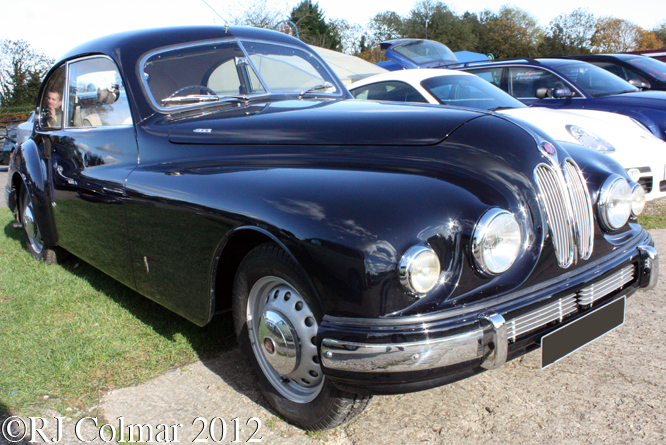
Bristol 403, Bristol Pegasus MC Sprint, Castle Combe

Regular readers might recognise this Bristol 403, which was not competing from the first Coffee Croissant and Cars blog I posted back in April.
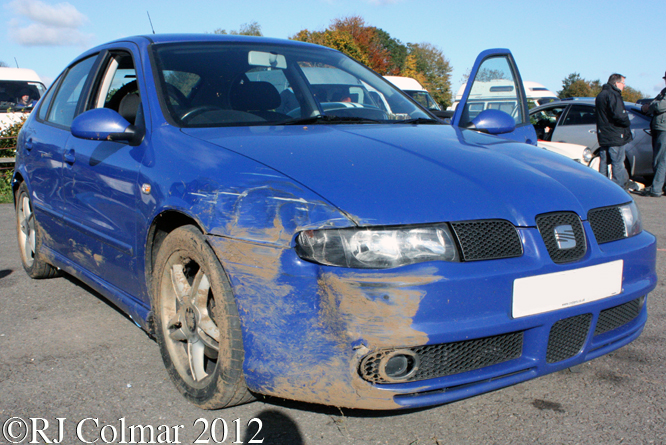
SEAT Leon Tdi, Bristol Pegasus MC Sprint, Castle Combe

SEAT’s León Cupra R (Typ 1M) was voted 7th best hatch back of all time in a poll conducted by Autocar in 2010, four years after production had switched to the newer Typ 1P. This 2004 Tdi Cupra R shows signs of how tricky the conditions were forcing the brothers who competed with it to go home after the practice sessions were completed to repair the damage which was incurred some where between Avon Rise and Quarry Corner during the second practice runs.
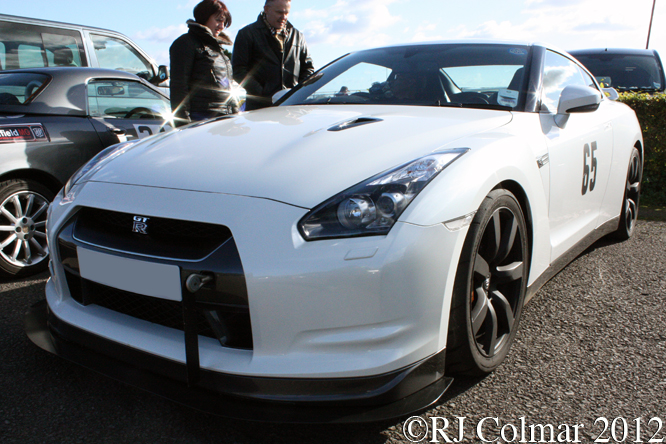
Nissan GTR R35, Bristol Pegasus MC Sprint, Castle Combe

Richard Girling was running his 1st generation 2009 all wheel drive Nissan GTR R35 in the most powerful A4 road going series production class, his car left the factory with 478 hp and a conservative 193 mph capability matched by a rest to 60 mph of 3.2 seconds. Needless to say the car looked quick on the track.
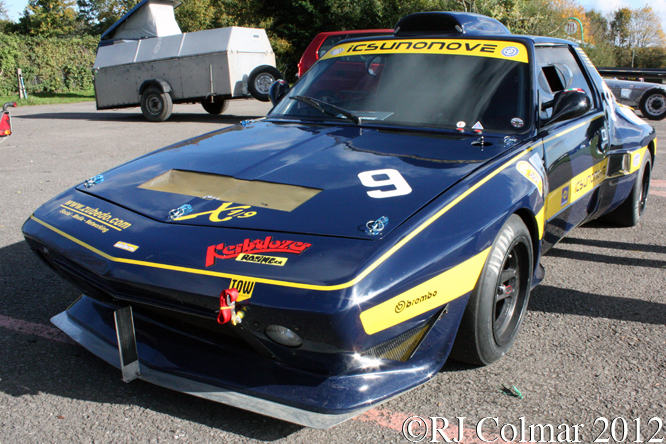
FIAT X1/9, Bristol Pegasus MC Sprint, Castle Combe

Micheal Kason was running his 2 litre / 122 cui FIAT X1/9 in the modified limited prodiction class C3, notice it sits on slick tyres which would not have been easy to heat up in the prevailing conditions.
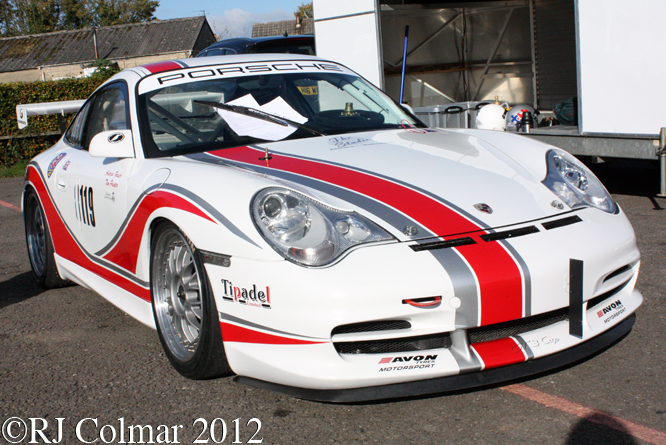
Porsche 911 GT3, Bristol Pegasus MC Sprint, Castle Combe

Running in the largest C4 modified production class were Andrew Fraser and Tim Painter in this 2004 Porsche (996) 911 GT3. This car is for sale at £37,500, if you would like Andrew and Tim’s phone numbers send me an e-mail and I’ll gladly forward the details, usual disclaimers apply.
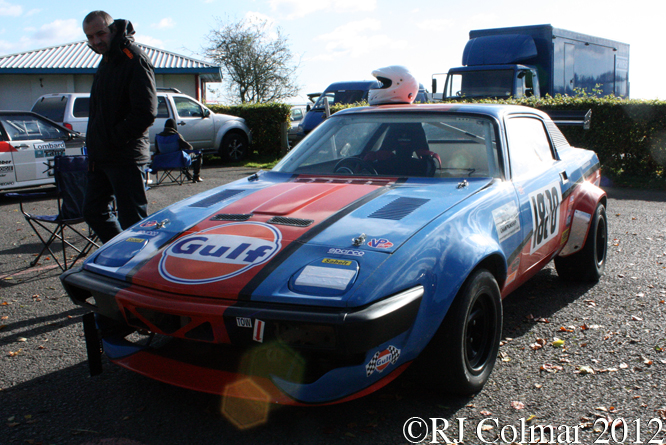
Triumph TR7 V8, Bristol Pegasus MC Sprint, Castle Combe

Last runners of the day were David Hardcastle and Simon Allaby who were competing in the Revington TR / TR Register Sprint & Hillclimb Championship.
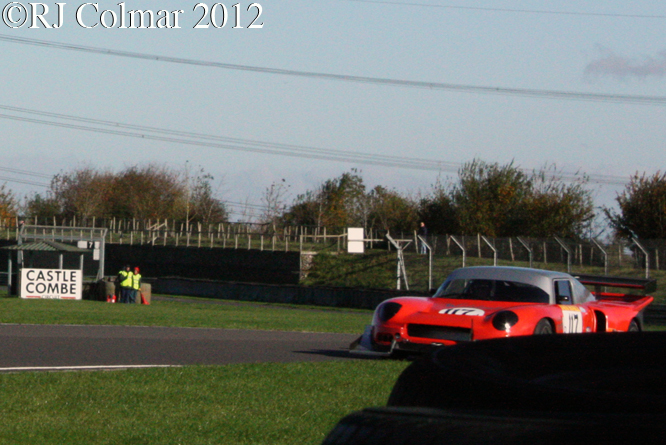
Darrian T98-GTR, Bristol Pegasus MC Sprint, Castle Combe

I did not manage to get many photographs of the on track action but while taking a break from marshaling duties I did get a photo of Ian Hall’s 5.2 litre / Darrian T98 GTR which set fastest time of the day by nearly ten seconds.

Thanks to a combination of few too many thrills and spills with short hours of sunlight competitors only got one timed run in before the event started to get too far behind schedule for everyone to get a second time in. Out at Tower we were great full for the hour or so this spared us standing in the delightful sunshine but freezing wind.

Thanks for joining me on this “The Sunlight Textile Services – Pegasus Sprint” edition of “Gettin’ a li’l psycho on tyres”, I hope you will join me tomorrow. Don’t forget to come back now !

Share

Improving The Breed ? – Lotus Elite Type 75

A couple of weeks ago I went to a Q&A session hosted by the voice of British motor sport Murray Walker with Formula One designers Frank Dernie and Niel Oatley, one of the questions was about the carry over of Formula One technology to road car production and both vigorously nodded in the negative. However that does not mean if you win on Sunday you will not sell on Monday anymore than winning on Sunday will guarantee selling on Monday either. If there is any benefit to manufacturers racing on Sunday it is in the commodity of Brand awareness. Similarly by the 1970’s road car manufacturers like Lotus and Ferrari had found that road car manufacture was never going to meet all the expenses of racing in the sports top table, though Enzo Ferrari did his best to keep the toothpaste manufacturers off his cars for as long as possible while Colin Chapman bit the commercial sponsorship bullet at the earliest opportunity in 1968.

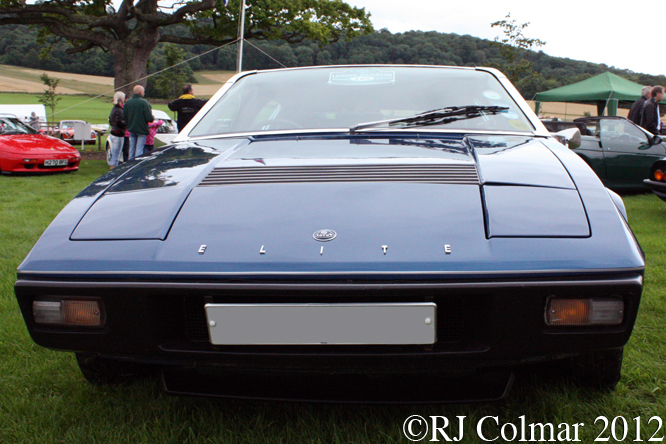
Lotus Elite Type 75, Classics at the Castle, Sherbourne

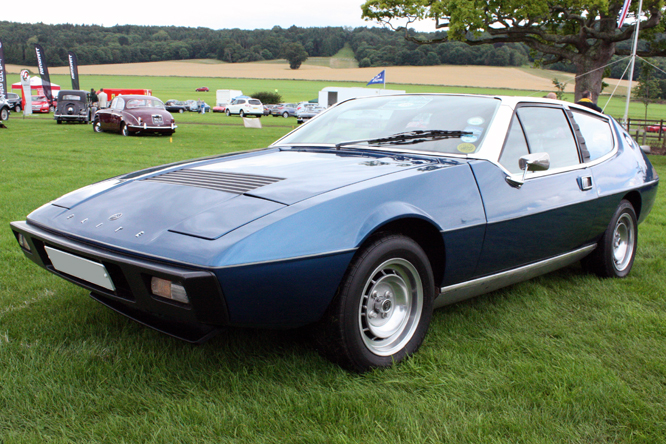
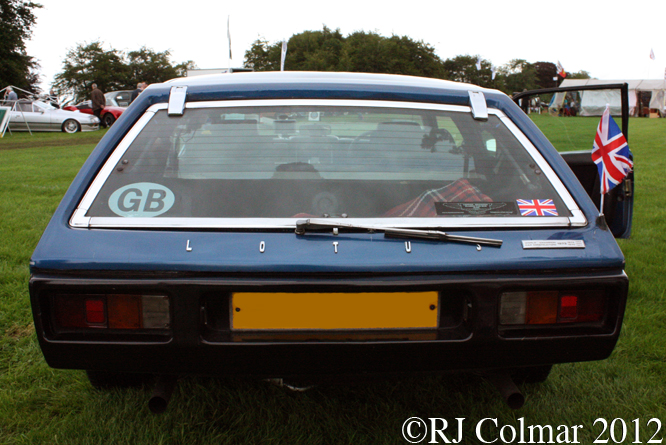
Either way in 1974 Lotus launched it’s new 2+2 Lotus Elite, it is not recorded how or if Ronnie Peterson’s three wins in the ageing Lotus 72 during 1974 aided sales or not. The 907 aluminium bloc motor for the new car was partly developed on the track by the noisy 1969 Lotus 62 sports car which I looked at a couple of months ago.

Lotus Elite Type 75, Classics at the Castle, Sherbourne

The chassis of the Type 75 Elite was the latest development of the back bone type first seen in the Lotus Elan in 1962 with independent suspension front and rear.

Lotus Elite Type 75, Classics at the Castle, Sherbourne

The only time I have come close to speaking to Mario Andretti was in 1979 while I was ambling along from the pits at Silverstone to the campsite on a beautiful summers evening with a large crowd of people during the 1979 British Grand Prix meeting. Behind me I felt something touch my leg, when I looked round to see what it was there was a blue Lotus Elite and at the wheel was none other than reigning World Champion Mario Andretti at the wheel, I was speechless as I stood aside to let him pass.

Lotus Elite Type 75, Classics at the Castle, Sherbourne

The Lotus Elite Type 75 was phased out in 1982 with 2,820 units built. A second variation, Elite Type 83, was built between 1980 and 1983 with just 153 units built. It is thought that less than 100 Elite type 75’s like this 1976 example are to be found on British roads today.

Thanks for joining me on this “Improving The Breed ?” edition of “Gettin’ a li’l psycho on tyres” I hope you will join me again tomorrow. Don’t forget to come back now !
Share

Will The Real #0404MD Please Stand Up – Ferrari 500 Mondial Spyder #0434MD

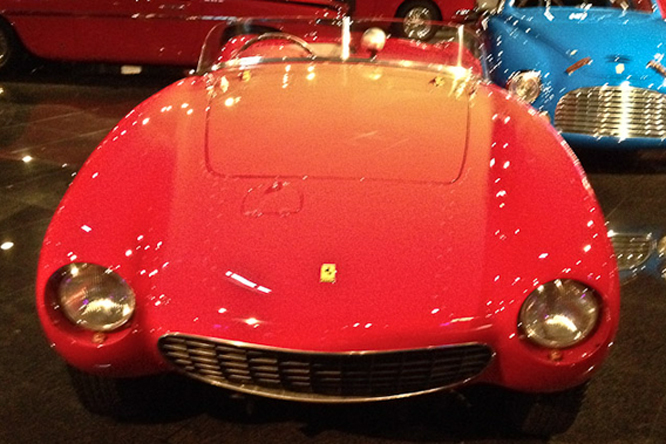
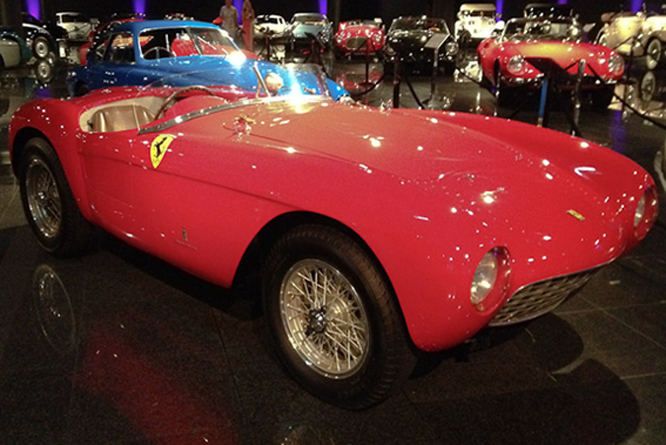
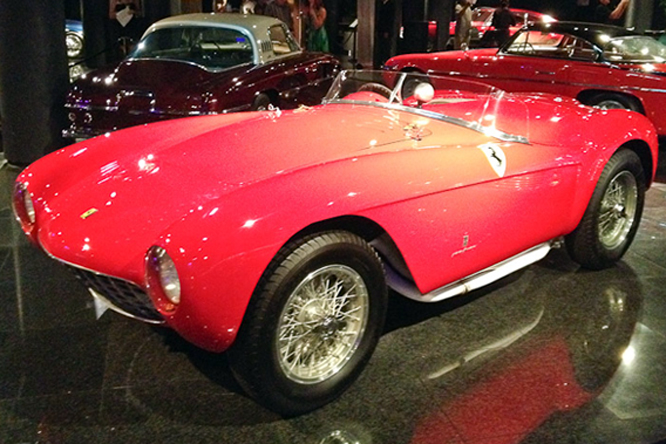
In 1954 Pininfarina is thought to have built Spyder bodies for 12 Ferrari 500 Mondial chassis. Sounds simple enough but it would appear there are in fact 13 chassis numbers ascribed to the type.

Ferrari 500 Modial PF Spyder, Danville Concours D'Elegance

It turns out that the problem car for historians is the very first one #0404MD, some sources believe that this car was renumbered to #0434 after completion and before delivery to Dutchman Herman Roosdorp, while other less credible souces believe #0404MD was rebodied by Scaglietti.

Ferrari 500 Modial PF Spyder, Danville Concours D'Elegance

What ever the truth the reasons why a car should be either renumbered or rebodied twixt completion and delivery appear to be lost in the mists of time and no car is known to exist with the #0404 MD identity today. Remember to give the new identity would mean renumbering chassis plates, chassis and engine block which is not the work of a moment and would require considerable effort. I believe the 500 Mondial PF Spyder seen in Geoffrey Horton’s photographs is #0434MD primarily on the flimsy evidence that this RHD has just a single silver/chrome central mounted mirror, a distinctive white exhaust and is known to have been seen in the Danville area. If you know better, please do not hesitate to chime in below.

Ferrari 500 Modial PF Spyder, Danville Concours D'Elegance

If my ID is correct and wether or not the car is the renumbered #0404MD, #0434MD was believed to have been raced by Herman Roosdorp, Dries van der Lof and Joke (?) Maasland exclusively at Zandvoort between 1954 and 1956 with all three drivers securing at least one class win.

The car was restored by Edwin Niles in 1978 and you can see some photo’s of the restoration on this link.

More about 500 Mondial PF Spyders can be found on this earlier GALPOT post.

My thanks to Geoffrey Horton for today’s photographs taken at Danville Concours d’Elegance.

Thanks of joining me on this “Will The Real #0404MD Please Stand Up” edition of “Gettin’ a li’l psycho on tyres” I hope you will join me again tomorrow when I’ll be looking at a cool Lotus road car. Don’t forget to come back now !

Share

Action Economy Lean Breed – Dodge Dart

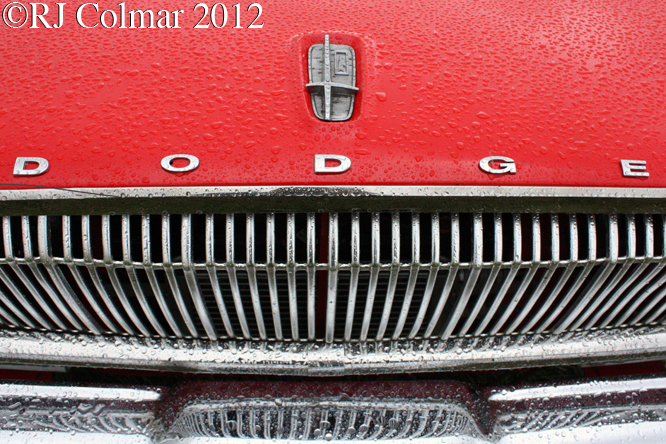
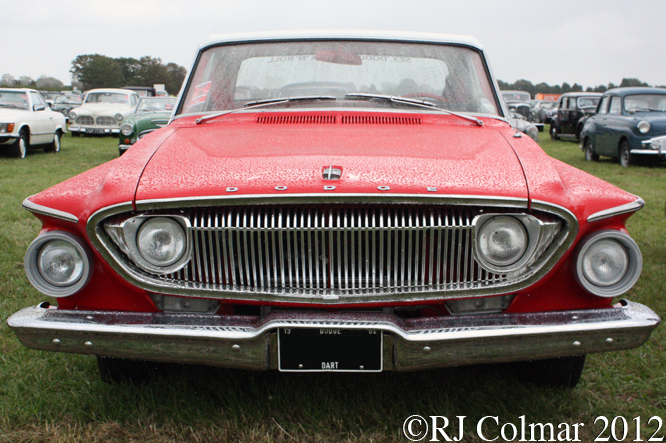
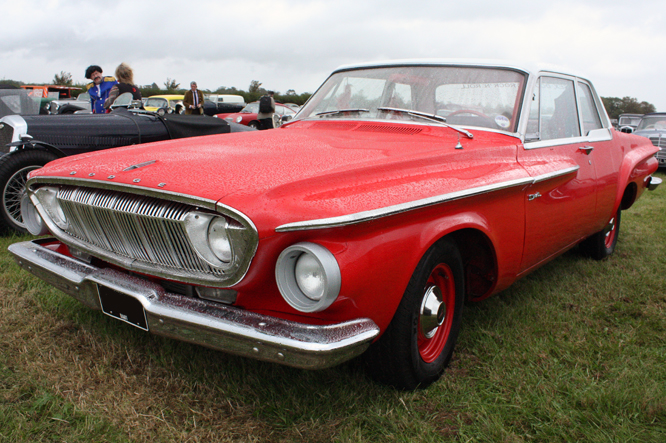
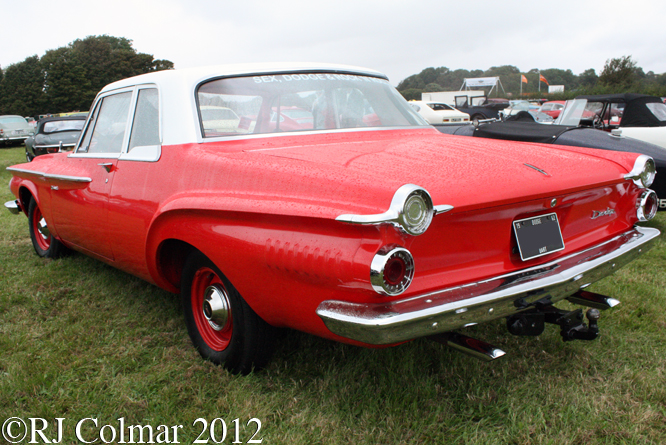
I have always thought the 1962 Dodge Dart looked like an amalgamation of two separate designs the middle top half and

Dodge Dart, Goodwood Revival

lower outer half not quite matching but somehow blending at the broken chrome line on the front and rear wings.

Dodge Dart, Goodwood Revival

The design philosophy behind the Dart was based on a comedic misinterpretation by Chrysler executives of an over heard conversation between Chevrolet executives who were talking about the compact Chevrolet Nova, but which Chrysler executives thought was about downsized large cars like the Impala. As a result of this misunderstanding the second generation Dart became an intermediate and inadvertently left Dodge with nothing to compete with in the full size market segment at the start of the 1962 model year.

Dodge Dart, Goodwood Revival

Launched in 1962 with strap lines that included “First of the action economy cars” and “Come in and drive the new lean breed of Dodge” the range included 2 and four door Sedan and Hardtop models along with a two door convertible.

Dodge Dart, Goodwood Revival

The B platform unibody rode on “Torsion-Aire” torsion bar front suspension and could be ordered with motors ranging from a 3.7 litre / 225 cui inclined straight six to a 6.8 litre / 213 cui V8, the car featured here appears to be registered as having a 7.2 litre / 439 cui motor, a big block 440 Magnum dating from somewhere between 1966 and 1978.

Dodge Dart, Goodwood Revival

With it’s light weight and good handling the ’62 Dart fitted with the 415hp 6.8 litre / 413 cui “Ramcharger” V8 proved a popular record braking drag racer.

Dodge Dart, Goodwood Revival

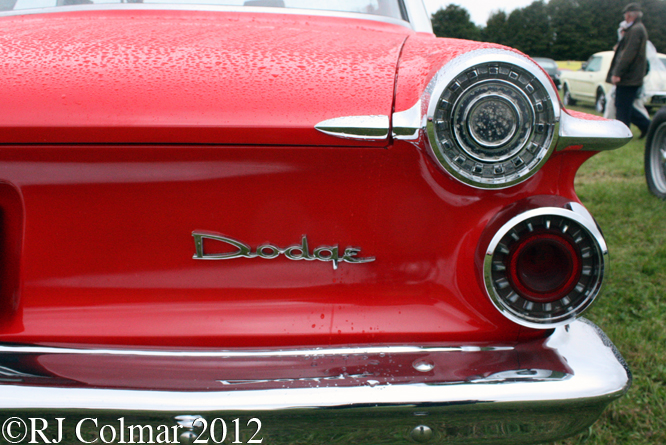
The B platform remained in production with slight modifications until 1981 while the ’62 Dart body was wholly replaced with no carry over at all by the third generation Dart in 1963.

Thanks for joining me on this “Action Economy Lean Breed” edition of “Gettin’ a li’l psycho on tyres” I hope you will join me again tomorrow for Ferrari Friday. Don’t forget to come back now !

Share

Ben’s Bus – Volkswagen Type 2 (T1)

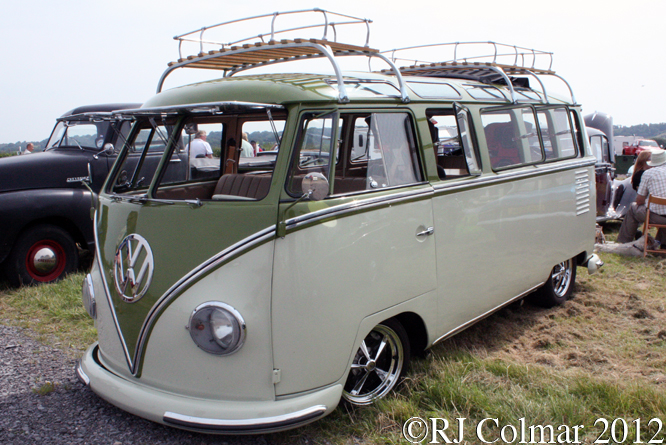
In 1946 production of the VW Beetle was in full swing at maximum capacity at the Wolfsburg plant when Dutch importer Ben Pon paid the factory a visit and observed an improvised parts transporter which he recognised could be vastly improved upon with a new vehicle using a stock Beetle Type 1 chassis pan. Pons first doodles of his proposed vehicle were dated 1947 and two and a half years later the first type 2 rolled off the production line.

VW Type 2 Transporter, Goodwood Revival

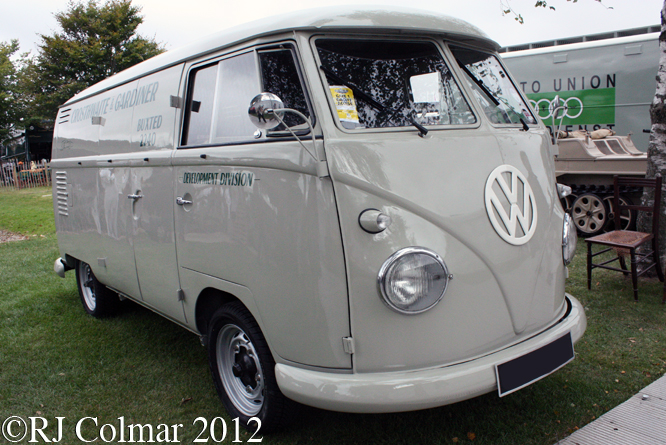
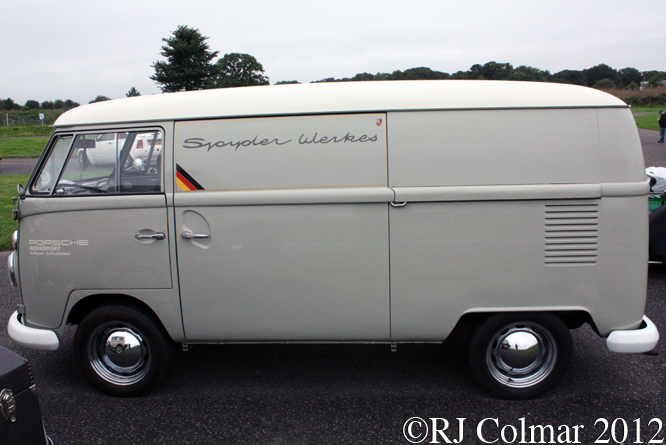
The split windscreen was not part of Ben’s original design but was incorporated to improve the aerodynamic efficiency after wind tunnel testing showed marked improvements of the split screen at the University of Braunschweig. The original Type 2 with just 25 hp were rated to carry 1,500 lbs / 690 kgs. Above is a 1959 Type 2 with hinged rear door used by leading historic race car restoration specialists Crosthwaite & Gardiner who pride themselves on manufacturing everything from a Bugatti nut to an entire Auto Union Grand Prix car.

VW Type 2 Camper, Summer Classics, Easter Compton

It was not long before the versatility of the Type 2 began to shine through with, panel vans, 2 and four seat pickups, buses, campers being offered while 3rd parties converted Type 2’s to run on railway tracks and a myriad of other applications. It was not long before Type 2s were manufactured in a new dedicated plant in Hannover.

VW Type 2 Transporter, Goodwood Revival

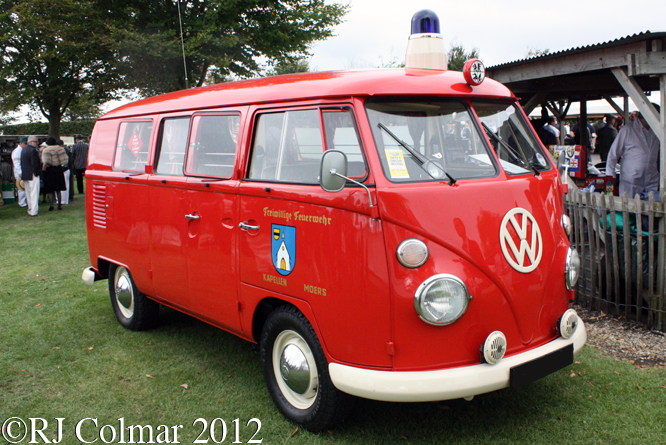
The Type 2’s underwent continuous development by 1967 a larger motor was producing 54 hp and the load capacity had increased to 1000 kgs / 2,205 lbs. production of the Type 2 (T1) ceased in Germany in 1967 but continued in Brazil until 1975. Above is a 1964 Type 2 Transporter that appears to have served the Kapellen Stadt Moers volunteer fire brigade in North Rhine Westfalen. Like all today’s featured Type 2s it’s a left hooker which goes to show just how popular these vehicles still are in the UK.

VW Type 2 Transporter, Rare Breeds, Haynes International Motor Museum

The period from 1947 to 1991 is often referred to as the era of the Cold War between the Western Allies and East Bloc, a period punctuated by tensions in which mutually assured nuclear destruction reared it’s head as a possibility from time to time. What I did not realise was that the Western Allies were not in a particularly harmonious economic relationship at the time.

Each member nation was keen to preserve it’s own industries from the predatory monopolism of it’s neighbours and alleged friends. This culminated in 1963, soon after the Cuban missile crises, in the Germans and French placing restrictive tariffs on imported US chicken, in return to protect it’s automotive industry the US placed restrictive tariffs on Type 2s, designating them as commercial vehicles, which cut US sales by two thirds at a stroke. These tariffs are still in place today and Ford who these tariffs were to aimed at protecting among others has resorted to importing vehicles built in Europe which comply with passenger vehicle ordinances and then taking them to a warehouse in Baltimore for the passenger vehicle compliant items to be stripped and shredded turning said vehicles to commercial applications.

Above is a 1966 Type 2 which unusually has sliding rear doors on both sides, this vehicle served the Fire services at Zurich Airport and then a small Swiss village before being returned to it’s original colours and converted for use as a race car tow and support vehicle. With the introduction of the Transporter (T4) in 1990 all previous Transporter/Kombi’s/Buses were retrospectively given T1 to T3 identities so original iteration Type 2’s built between 1950 and 1975 became Type 2 (T1), 2nd iteration Type 2s with larger bodies built from 1968 to present became Type 2 (T2) and third iteration wedge shape Type 2s became Type 2 (T3) also known as T25.

Thanks for joining me on this “Ben’s Bus” edition of “Gettin’ a li’l psycho on tyres” I hope you will join me again tomorrow. Don’t forget to come back now !

Share

Steel Wheels, 12 Volt Electrics and LHD – MG TD Midget

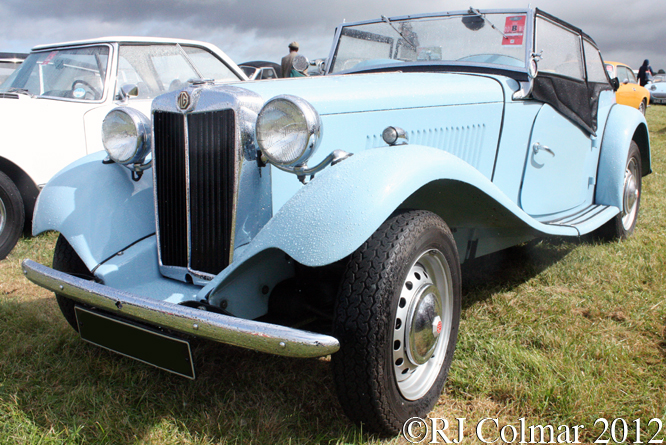
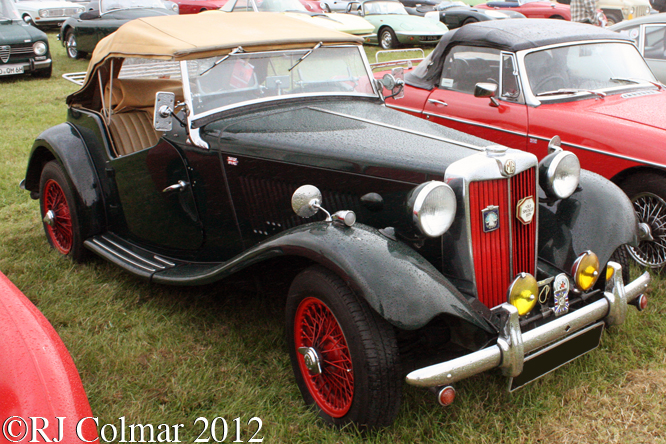
For 1950 MG introduced it’s TD Mideget which inherited the drive train and body style from the MG TC Midget along with the chassis and independent coil spring suspension from the MG Y Type saloon along with 12 volt electrics and steel wheels.

MG TD, Goodwood Revival

Also introduced with the MG TD were bumpers, note the TD above is not fitted with the standard over riders. As a concession to the Midget’s largest market the USA the cars were also available with Left Hand Drive as was a MK II version of the TD with a higher compression engine and two fuel pumps which would have been wasted in the UK thanks to ongoing rationing of low 72 octane fuel. Of the 30,000 MG TD’s built up until 1953 over 23,000 went to the United States.

MG TD, Goodwood Revival

A small cross section of race winners driving MG TD’s in 1950 includes, John von Neumann (USA), Ken Shipside (GB) and Larry Whiting (USA). TD’s like that driven by Bill Watkins were raced until 1960’s, Buddy Orr was winning races in his TD as late as 1961.

Thanks for joining me on this “Steel Wheels, 12 Volt Electrics and LHD” edition of “Gettin’ a li’l psycho on tyres” I hope you will join me again tomorrow. Don’t forget to come back now !
Share

Bugs In Malta – Mtahleb Hillclimb & Mdina Grand Prix

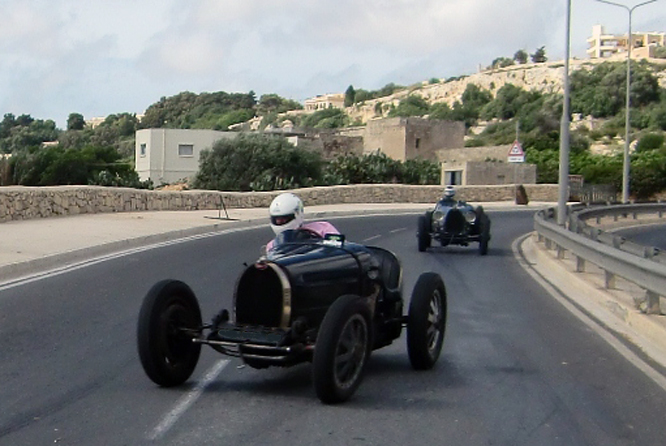
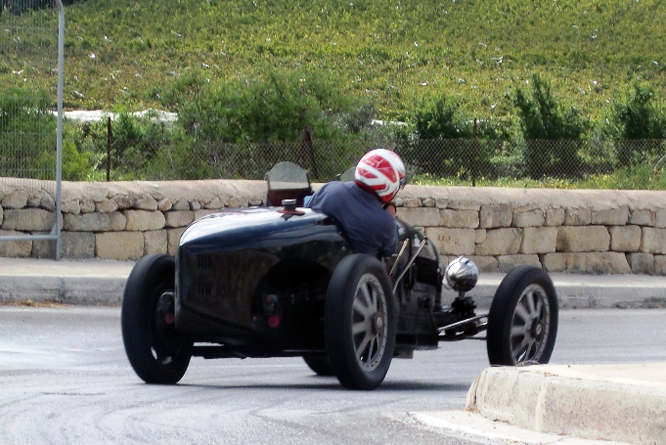
A couple of weeks ago Barry Boor found himself at the Mtahleb Hillclimb & Mdina Grand Prix, in between his marshaling duties he managed to take a few photographs of the Bugatti’s which visited Malta to take part in the events and has kindly agreed to share them with us.

Bugatti T35B R, Mtahleb Hill Climb, Malta

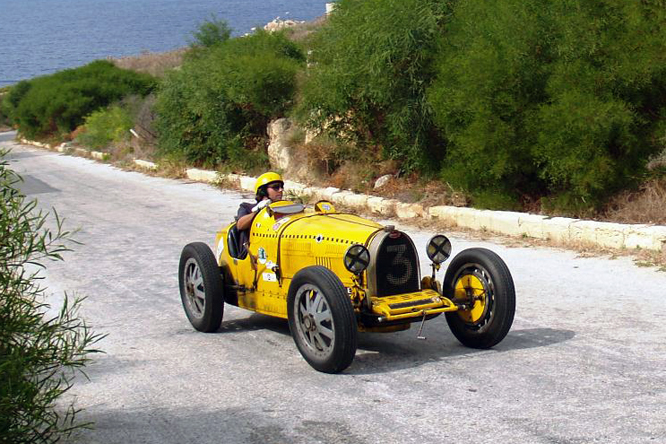
Genuine Bugatti Type 35’s are extremely hard to come by, even Nick Mason’s example is a bitza made up from an assortment of parts from various cars into a complete vehicle, so it is no surprise to find that according to the best information I have available all the cars captured by Barry are replica’s like Gregory Ramouna’s Type 35B R, seen here on the Mtahleb hillclimb, which appears to have been built in 1998.

Bugatti T35 R, Mtahleb Hillclimb, Malta

Type 35’s were first seen at the Grand Prix of Lyon in August 1924 powered by a 2 litre / 122 cui straight 8 motor. Novel features of the car included the alloy spoked wheels and hollow front axle which all saved unsprung weight to the benefit of the cars handling. Above is a Type 35 R with a 2 litre motor unlike the type 35B which has a 2.3 litre / 140 cui supercharged motor.

Bugatti T51 R, Mtahleb Hillclimb, Malta

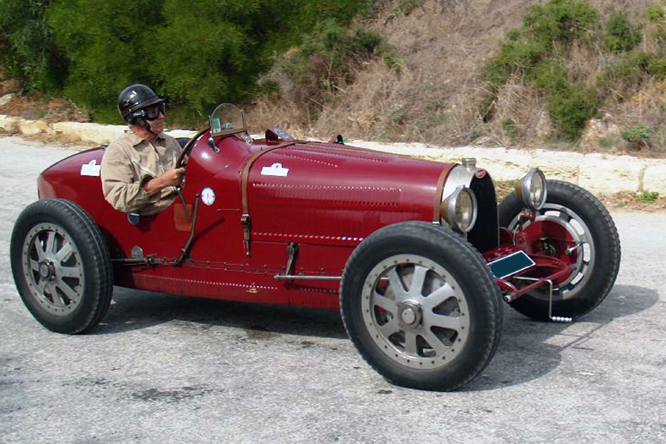
The Type 35’s were very successful allegedly clocking up to 14 wins a week with the Likes of “Williams” and Louis Chiron leading the way in major Grand Prix. The Type 35’s were replaced by the Type 51’s in 1931 but with only 160 hp from their supercharged motors the Type 51’s were soon to be overpowered by the government sponsored Auto Union and Mercedes Team’s. Above is the Type 51 R of Phillipe Brebant.

Bugatti T35B R, Mdina Grand Prix, Malta

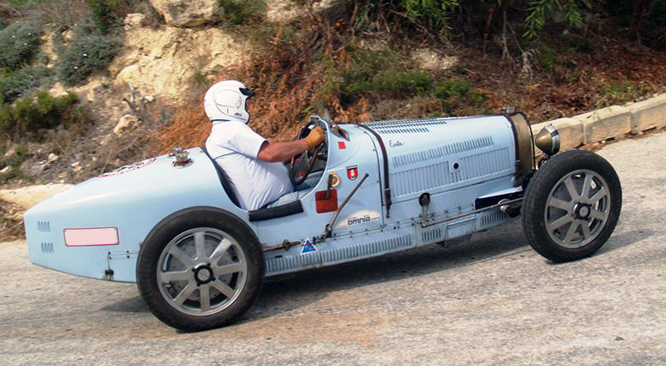
Type 35’s and 51’s are very difficult to tell apart externally and even the experts can disagree, to show how difficult this is the Mdina Grand Prix entry list tells us that JM Laffonts car above is a 1931 Type 35B while the Bugatti builder site tells us that his car carrying the same registration is a Type 51 from the now defunct Blaydon Engineering, further more the car is listed on yet another Bugatti Builders post as a Type 35B R. If the truth on the identity of this car were to be decided by popular vote Type 35B R would win with two votes. Though in my humble opinion the car we are looking at is either a Type 35 or 35B because if it was a Type 51 it ought to have an easily discernible  second fuel filler behind the passenger seat what ever the vintage.

Bugatti Type 35 R, Mdina Grand Prix, Malta

One rough and ready way to tell a Type 35 from a Type 51 is to look at the rear fuel filler behind the seats, if there is one it’s most likely a Type 35.

Bugatti T35 R, Mdina Grand Prix, Malta

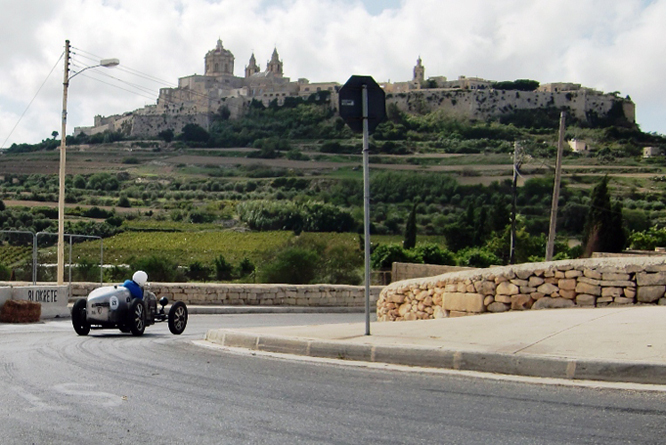
Barry was told the reason many of these vehicles, like this 2007 replica Type 35B about to head on up the hill towards the walled citadel of Mdina, appear with so much patina is to keep the value down in the eyes of the taxman.

My thanks to Barry for sharing this fascinating in sight into Maltese Motorsport.

Thanks for joining me on this “Bugs in Malta” edition of “Gettin’ a li’l psycho on tyres”, I hope you will join me again tomorrow. Don’t forget to come back now !
Share