Bella Bella – Auto Italia Brooklands

Last Saturday I was privileged to find my self at Brooklands for the Auto Italia Italian Car Day where a substantial group of enthusiasts gathered to celebrate all things Italian except perhaps the weather and the food.
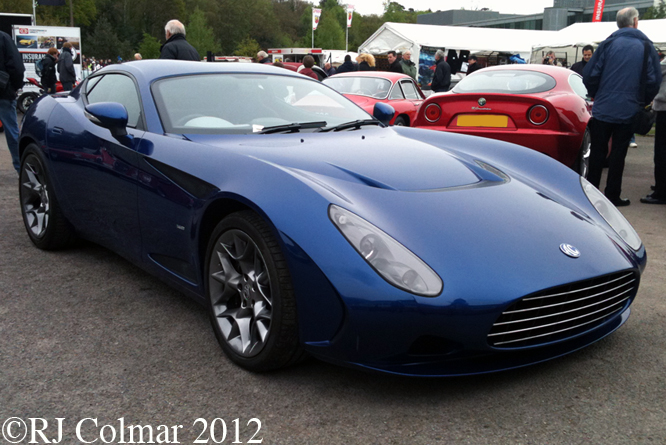
AC Zagato 378 GT, Auto Italia Brooklands

Focused under the new Chairmanship of former Deputy Supreme Allied Commander of NATO Europe General Sir Jeremy Mackenzie, GCB, OBE, DL, AC Cars launched the AC Zagato 378 GT at Geneva in March with plans to build the car in factory where Noble cars used to be built and for them to be sold initially in Europe. After the 1950’s AC Ace Bristol Zagato and 1960’s AC Fura the 434 hp Chevy powered 378 GT, seen above, becomes AC’s third collaboration with Zagato.
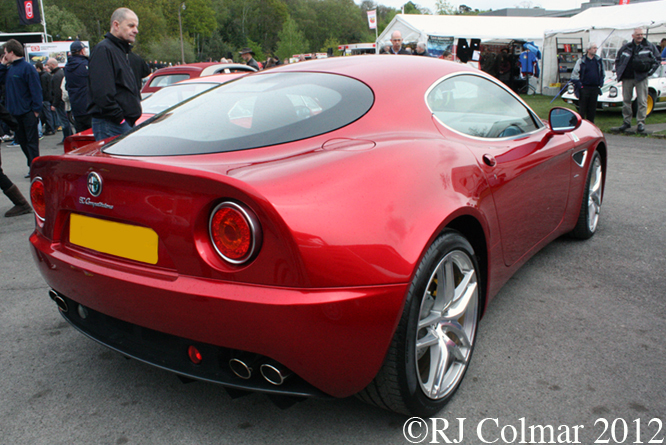
ALFA Romeo 8C Competizione, Auto Italia Brooklands

Despite having first been seen in Frankfurt a decade ago the ALFA Romeo 8C Competizione looks as fresh to day as it did then, this is only the second of the 500 Coupés built I have ever seen.
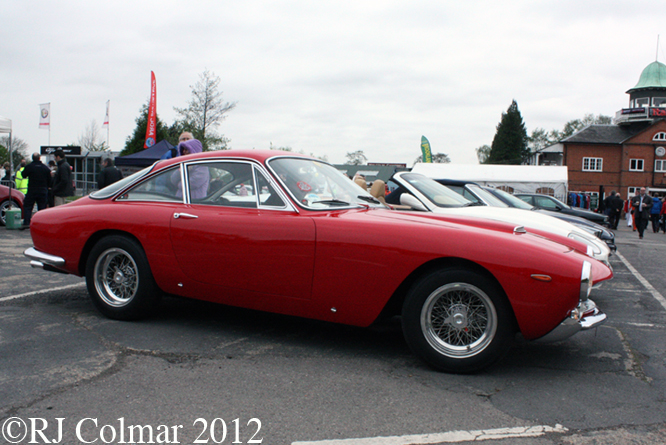
Ferrari 250 GT Lusso, Auto Italia Brooklands

I featured a Ferrari 250 GT Lusso a couple weeks ago seeing one in red on Saturday convinced me this is the colour to go for.
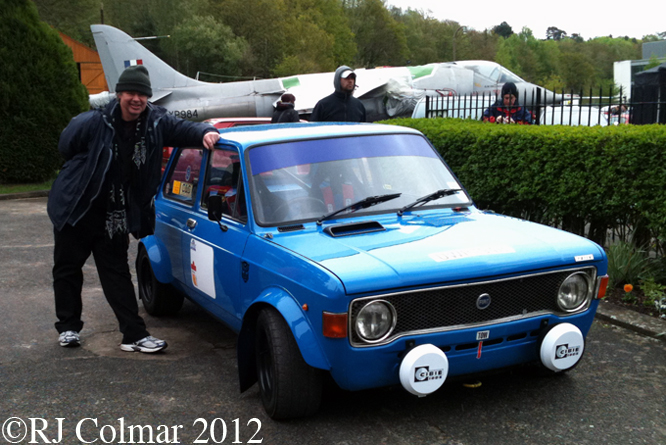
FIAT 128 Rallye, Auto Italia, Brooklands

There were many interesting FIAT’s on display the first of two to really grab my attention was this FIAT 128 Rallye, my first very first car was a slightly lesser FIAT 128 1100.
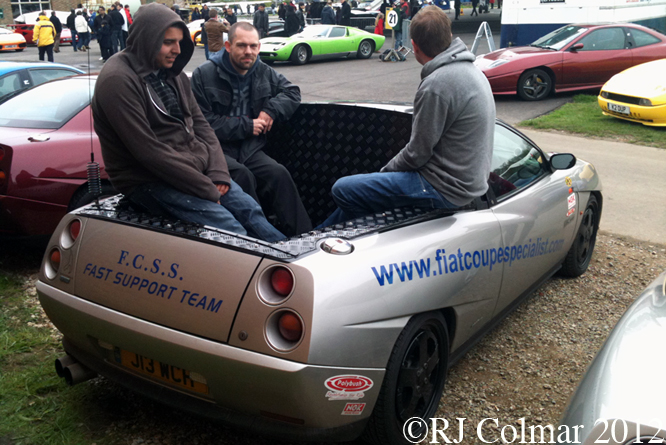
FIAT Coupé Pick Up, Auto Italia Brooklands

The second FIAT to really grab my attention was this FIAT Coupé Pickup, which the lads sitting in the back had spent all week converting just in time for the show ! While not the absolute fastest Pickup on the planet the 20V Turbo motor powering it should easily make this a 150 mph vehicle.
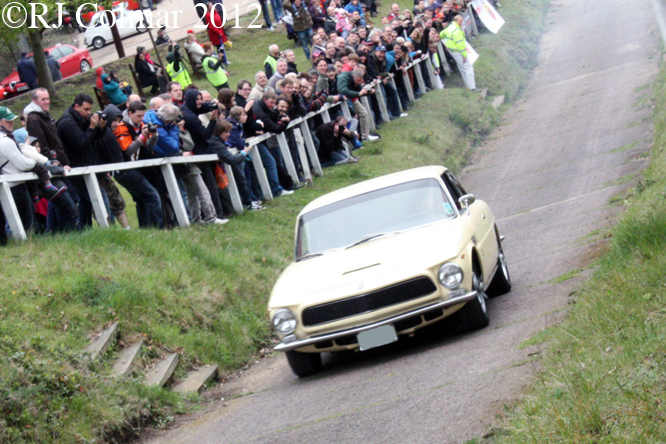
Iso Rivolta IR 300

Smoking it’s tyres, courtesy of it’s Chevy V8, all the way to the 1 in 4 gradient of the famous Brooklands Hill was this 1960’s Bertone designed Iso Rivolta IR 300. First time I recall seeing such a car.
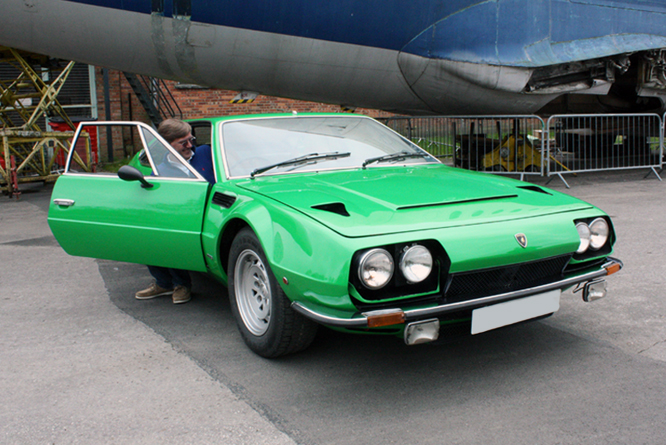
Lamborghini Jarama S, Auto Italia Brooklands

Cool as cucumber I’d never seen a Lamborghini Jarama S before either given that only 152 of them had ever been built perhaps this was not surprising, what was surprising is that the covers that partially conceal the headlights do not pop up but fold down to reveal the head lights when required, the proud owner has just finished fixing the electric motors that make this possible.
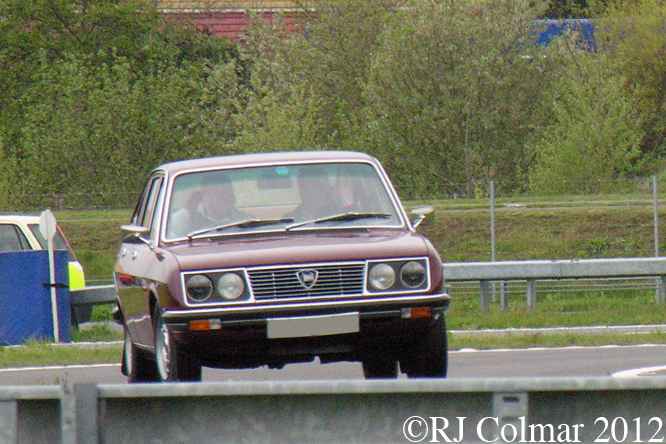
Lancia Beta, Auto Italia Brooklands

During the course of the morning many of the cars present were driven at a moderate pace for demonstration laps on the adjacent Mercedes Benz world test track which was lined four or more deep along the accessible half of the circuit. Above a 40 year old Lancia Beta is put through it’s paces.
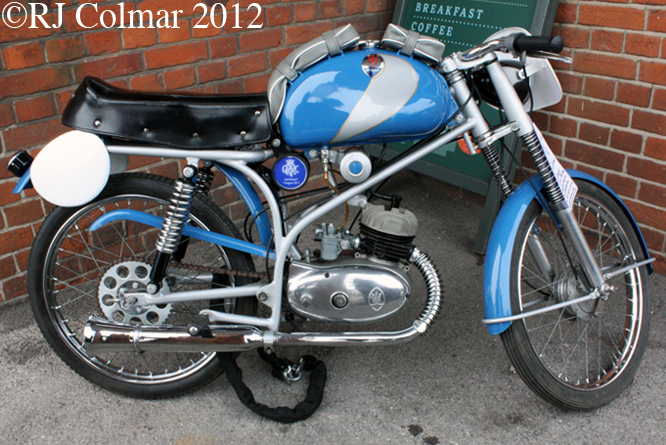
Maserati 50/T2/SS, Auto Italia Brooklands

A ‘you could have knocked me down with a feather’ moment came when I saw the badge on this 50cc mottoette, Maserati who the expletive puts Maserati badges on the petrol / gas tank of a moped I asked myself, Wiki informs me that the heir to part of the Orsi family fortune Ida Orsi who inherited the electrical components manufacturing division of Fabbrica Candele Accumulatori Maserati S.p.A. and promptly bought the Italmoto company of Bologna and moved it lock stock and barrel and began manufacturing motorcylces in 1956 the company which sold it’s motorcycles with the Maserati brand name and trident trade mark developed a 50 cc / 3 cui range of mopeds which included one aimed at the male market another at the female market and a third like the 1959 50/T2/SS seen above for sports enthusiasts. These 2.3 hp trident branded novelties sell for UK £ 5,000 at auction.
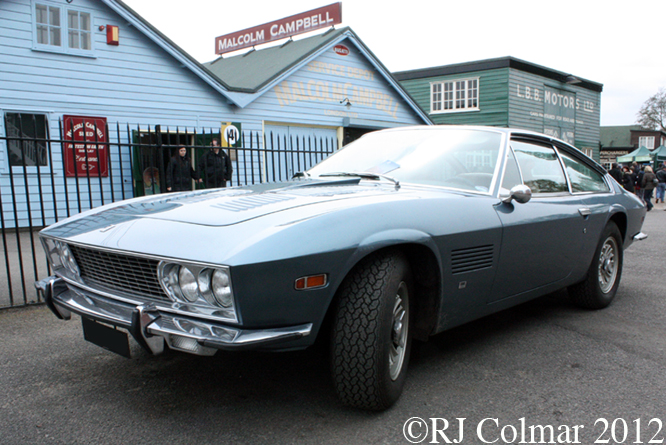
Monteverdi 375L, Auto Italia Brooklands

Above is probably only the second Montiverdi I have ever seen this 1972 High Speed 375L is powered by a 7.2 litre 440 cui 400 hp Chrysler Magnum motor much like the contemporary Jenson Interceptor and Bristol 412. The 375L was originally designed and the body manufactured by Fura but after a dispute in 1969 design and production of the bodies moved to Carozzeria Fissore in Italy with the chassis construction and final assembly taking place in Basel, Switzerland.
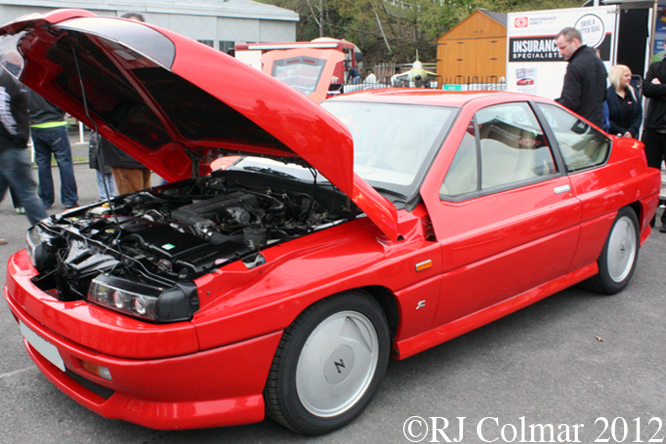
Nissan Autech Stelvio Zagato, Auto Italia Brooklands

I’d never heard of a Nissan Zagato Autech Stelvio much less the Nissan F31 Leopard upon which it is based, power comes from a twin turbo V6 which was found in the ZX300, this hand made car, the bulges in the bonnet / hood house the rear view mirrors. By all accounts 200 of these ¥ 18,000,000 (Japanese ¥en Eighteen Million) / £ 139,0000 / US$ 225,000 machines were built in 1989.

Thanks for joining me on this ‘Bella Bella’ edition of “Gettin’ a li’l psycho on tyres”, I hope you will join me again tomorrow, when I’ll be reviewing last Sundays racing at Castle Combe. Don’t forget to come back now !

Share

Electronic Clutch & Four Pedals – Lotus Ford 76 #76/1 (JPS 9)

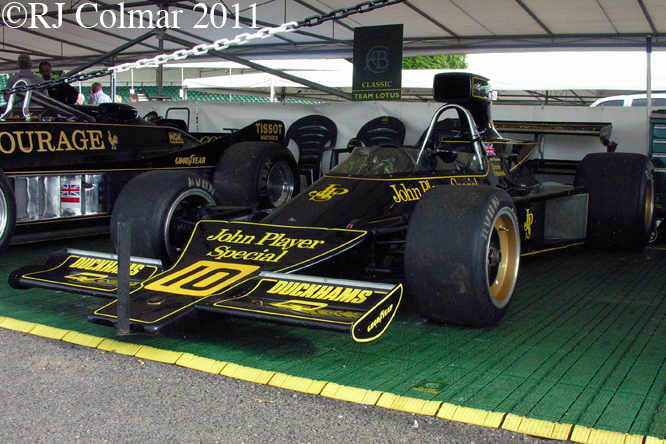
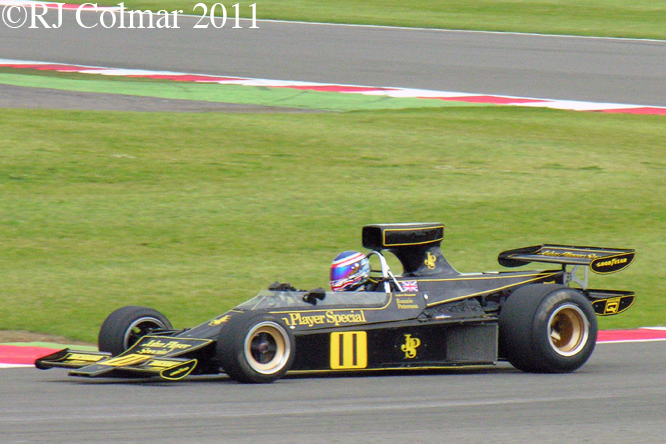
I remember when I first set eyes on the publicity photo’s of the Lotus 76, my reaction was an instant WOW ! The two team cars which had been completed a little late were to replace the venerable Lotus 72 and be driven by Ronnie Peterson and Jacky Ickx in the 1974 season starting at the South African Grand Prix.

The new car was intended to be slimmer and lighter than the Lotus 72 which had helped Jochen Rindt and Emerson Fittipaldi to win World Drivers Championships in 1970 and 1972 and helped Lotus secure the World Constructors Championship in 1970, ’72 and ’73.

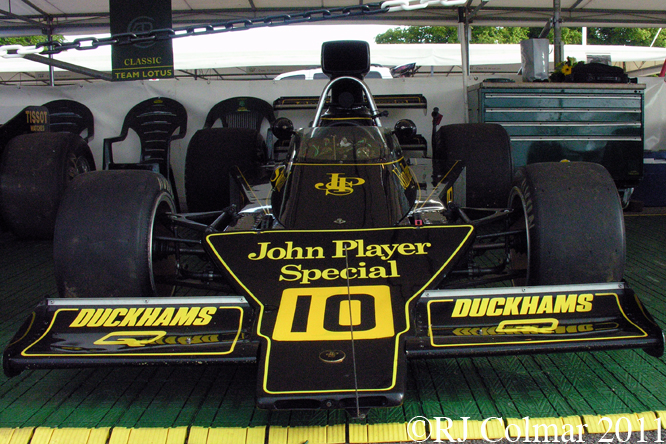
Lotus 76, Goodwood FoS

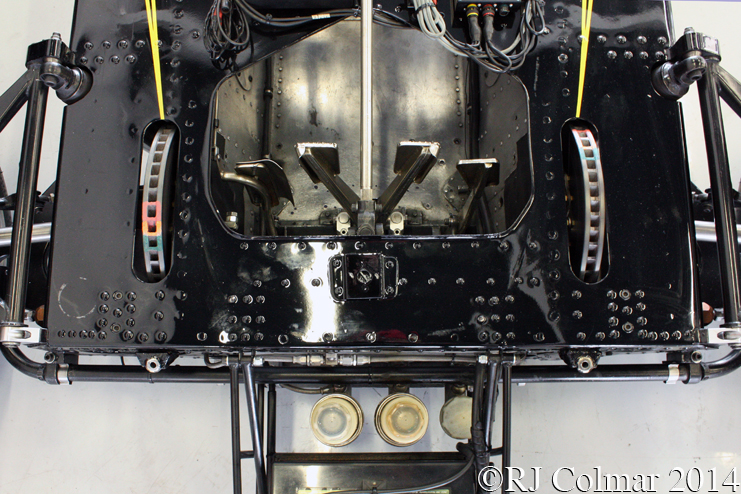
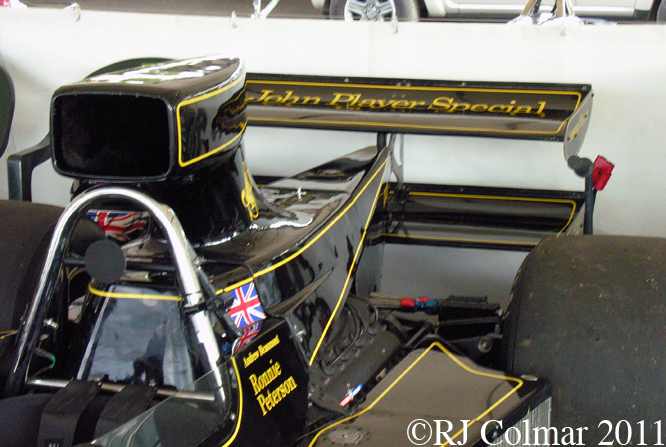
Innovations on the car included an electronic clutch operated by a button on the gear stick, except when starting from rest for smoother gear changes. Two brake pedals were fitted either side of the steering column operating a single split leaver to encourage left foot breaking to minimise the upset of the balance of the car when approaching corners and two thin, for the period, rear wings mounted one above the other.

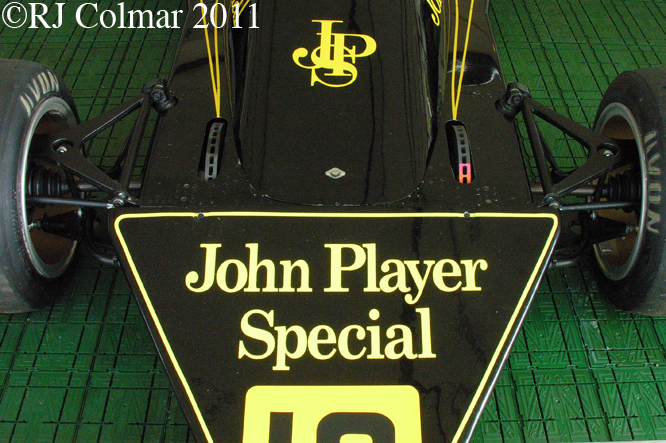
Much to the consternation of the press and Lotus fans Colin Chapman sold the naming rights to the Lotus 76 which for the 1974 season was to be known as a John Player Special the chassis number of the car seen here at Goodwood was referred to as JPS 9 though the chassis was unofficially referred to in the press and by enthusiasts as 76/1.

Lotus 76, Silverstone Classic

A pattern of retirements set in at the South African GP which was to repeat itself until by the Monaco Grand Prix Lotus Team had decided to revive the Lotus 72 which Ronnie Peterson promptly drove to the first of 3 against the odds victories during the season.

Development of Lotus 76 was split between the ageing Lotus 72 during 1974, to generate more down force larger front wings and the larger rear wing of the Lotus 72 were fitted to the Lotus 76 which appeared in Belgium.

Lotus 76, Goodwood FoS

With the 76 having been observed to be popping wheelies after additional down force had been added the front nose cone was then replaced with a cut down version from the Lotus 72, the radiators moved from ahead of the rear wheels to behind the front wheels and horizontal boards were added along the top of chassis between the front and rear wheels as seen in this linked photo of 76/2 (JPS 10) at the 1974 British GP.

By now the 76 was being taken to races purely in case of an emergency and during practice of the 1974 German Grand Prix such such an emergency arose after Ronnie Peterson crashed Lotus 72/8. The team had no option but to press the by now overweight and unloved 76 back into service and did so by grafting the rear suspension engine and gearbox from the wrecked 72 onto the back of 76/2 (JPS 10). With the car now looking more like it’s predecessor Lotus 72 than a Lotus 76 Ronnie Peterson recorded the 76’s only finish with a forth place on the toughest circuit on the calender !

Lotus 76, Goodwood FoS

After confusion about Mario Andretti starting from 3rd place in the 1974 US Grand Prix, in his Parnelli, third Lotus driver Tim Schenken took the flag of the 1974 US Grand Prix only to be disqualified for being outside the top 26 qualifiers as Andretti had managed to get his car onto the grid, ironically only to be also disqualified for a push start away from the line ! This was Schenken’s and the Lotus 76 last Grand Prix start.

However this was not quite the end of the Lotus 76 story, Colin Chapman was a long time member of a motor club in North London and after a little badgering for ‘something a bit quick’ from fellow long time member, David Render, who participated in Sprints and Hillclimbs, Colin relented and told his friend to turn up at the Lotus factory at Hethel with a trailer.

Lotus 76, Goodwood FoS

When David turned up at Hethel early in 1976 he saw this huge black car with twin wings and asked who is this for ? He was quite surprised to learn that it was intended for him !

David drove what is believed to be 76/2 (JPS 10), in original lightweight form, for 2 years and among many victories won the 1976 Brighton Speed Trials when the event was run over a standing kilometer 0.6 miles and clocked a time of 18.77 seconds reaching a 118 mph as he crossed the line.

Lotus 76, Goodwood FoS

At a recent talk, David gave to the Bristol Pegasus Motor Club, he related how on finding the car suffered from terrible understeer / push he added a lump of lead, taken from his old Allard trials car, beneath the nose cone of the 76 and that solved the problem, though he never told Colin ‘Added Lightness’ Chapman what he had done.

The car featured in today’s post 76/1 (JPS 9) seen at Goodwood Festival of Speed and at the 2011 Silverstone Classic belongs to Andrew Beaumont. According to Classic Team Lotus during the first of two races at the 2011 Silverstone Classic meeting Andrew’s double rear wing got savaged, but it did not have much detriment to the performance of the car and he finished 22nd.

John Barnard eventually perfected a semi automatic electronic clutch and gearshift mechanism with a steering wheel mounted paddle shift for the 1989 Ferrari 640 which won first time out at the Brazilian GP in the hands of Nigel Mansell. This system is now de riguer in almost all top line racing cars.

My thanks to MCS, Gregor Marshall, and Tim Murray on the Lotus 76 thread at The Nostlgia Thread who helped identify a Lotus 76 at the Abbaye de Stavelot Museum as the possible home of the second Lotus 76 chassis #76/2 (JPS10).

Thanks for joining me on this ‘Electronic Clutch & Four Pedals’ edition of ‘Gettin’ a li’l psycho on tyres’ I hope you will join me again tomorrow when I’ll be looking at last weekend’s Auto Italia Day at Brooklands. Don’t forget to come back now !
Share

Easy Handler – Ford Gran Torino

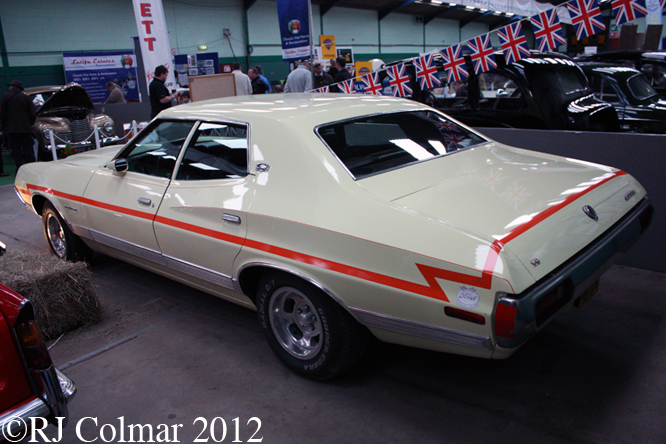
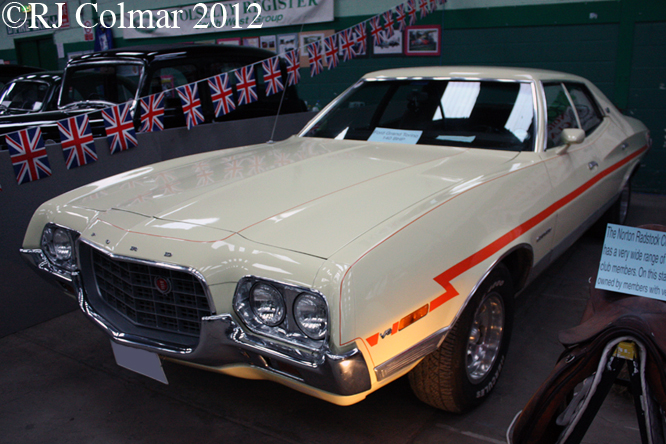
For 1972 Ford stepped back in time and revived the separate chassis frame and body technique to build the Torino and Gran Torino models that were made both wider and heavier in Ford’s relentless pursuit of a comfortable quiet ride, ‘easy handling‘ and not forgetting a good profit.

Ford Gran Torino, Bristol Classic Car Show

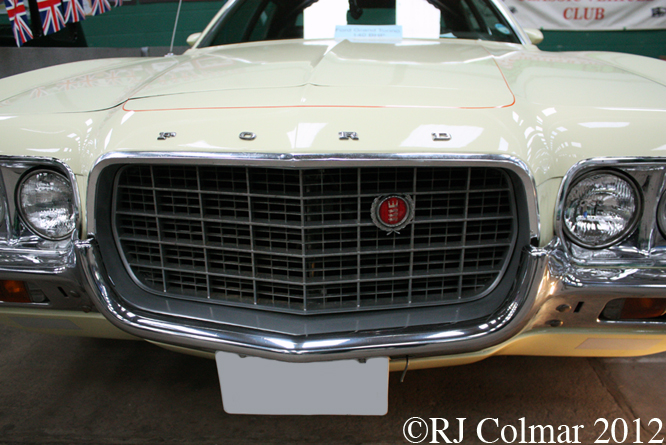
Behind the basking shark like mouth of this particular Gran Torino sits a mid range 5.8 litre / 351 cui Windsor or Cleveland V8.

Ford Gran Torino, Bristol Classic Car Show

The Torino’s improved ride was said in Ford’s publicity to be down to the ‘computer tuned’ suspension and was well received in contemporary press reports.

Ford Gran Torino, Bristol Classic Car Show

Styling of the ’72 was typical for the period long bonnet / hood, short boot / deck. The two and four door models were built on 114″ and 118″ frames respectively, allowing Ford to make significant savings in interchangeable body panels.

Ford Gran Torino, Bristol Classic Car Show

In a nod to advances in braking technology that had been widely available in Europe for five or six years the Torino along with its Mercury Montego twin became the first US mid size vehicle to have front disc brakes fitted as standard. It’s hard to imagine FIAT, the Italian automobile manufacturer, naming a model ‘Great Detroit’ after the USA’s great motor city but it is probably best not to tempt fate.

Ford Gran Torino, Bristol Classic Car Show

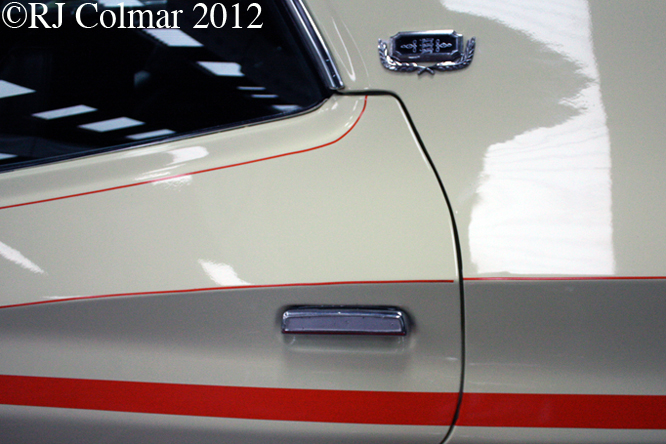
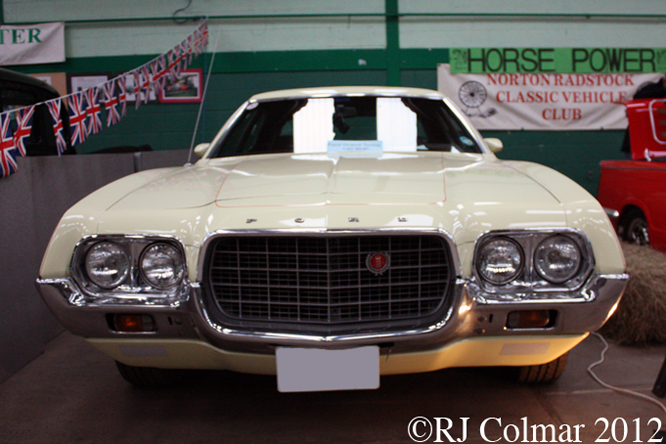
Recessed door handles were a new safety feature for the ’72 Torino models. The vehicle seen in these images at the Bristol Classic Car Show belongs to a member of the Norton Radstock Classic Vehicle Club.

Ford Gran Torino, Bristol Classic Car Show

The success of the 9 model ’72 Torino range can be judged by nearly 500,000 sales that for the first time since 1964 allowed Ford to eclipse the Chevrolet Chevelle to claim top spot in the mid size market segment. It was probably not by accident that Clint Eastwood chose a ’72 Gran Torino as an analogous model for his 2008 film of the same name to chart the decline of public civility in Detroit.

Thanks for joining me on this ‘Easy Handler’ edition of “Gettin’ a li’l psycho on tyres” I hope you will join me tomorrow. Don’t forget to come back now !
Share

A New Peak – Ford Cortina Mk III

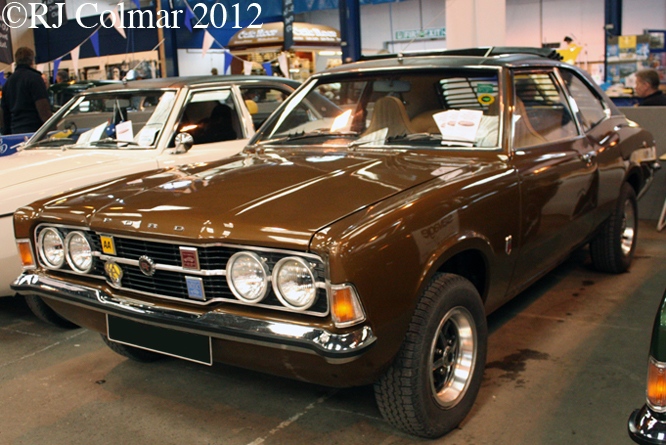
Barry Gill talking in a Ford promotional video claimed Ford had brought motoring to a new peak when they launched the Cortina MK III in 1970 and sales would prove that the claim was not without substance in the minds of the paying public.

Ford Cortina Mk III XL, Bristol Classic Car Show

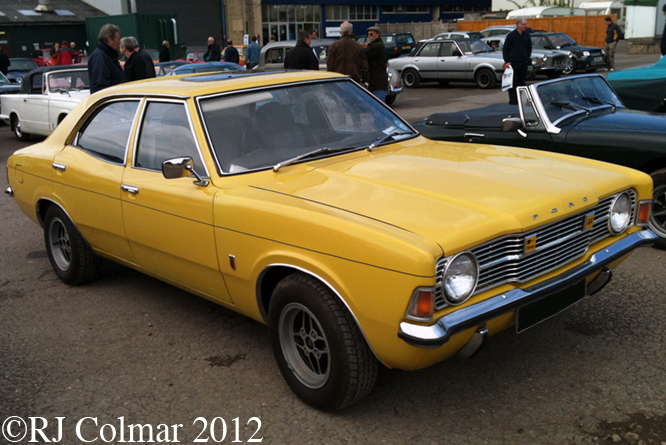
The new car with late 60’s wide hip US Ford Torino influenced styling was several inches wider and lower than the million plus selling Ford Cortina Mk II.

Ford Cortina Mk III GT, Bristol Classic Car Show

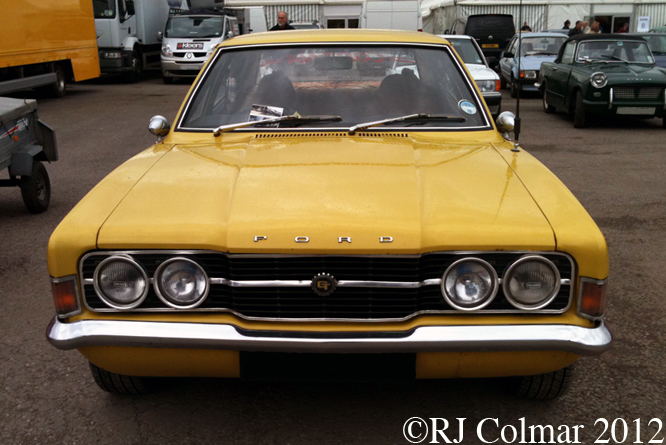
As with the Cortina Mk II there was a plethora of different models L and XL models featured a pair of head lights while the GT, GXL variations featured twined pairs of headlights and Rostyle wheels as seen in the photo below. The XL model in the top photo appears to have a set of out of period RS wheels.

Ford Cortina Mk III GT, Bristol Classic Car Show

The Peak Performer came in 2 door, 4 door and 5 door estate versions while specialists like Crayford would be more than turn a Saloon / Sedan into a convertible. In South Africa a pickup ‘P100’ variation of the Mk III Cortina was also built.

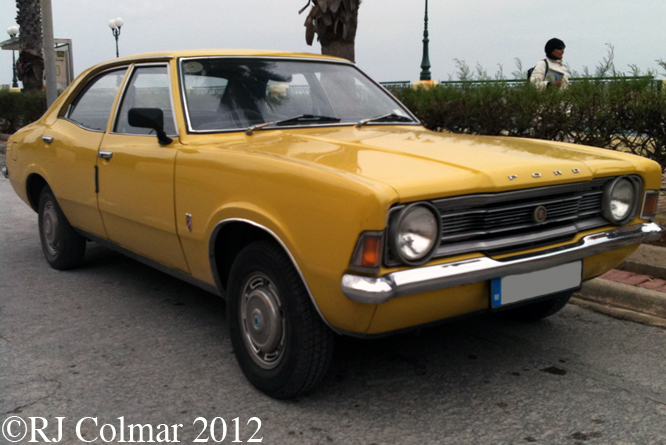
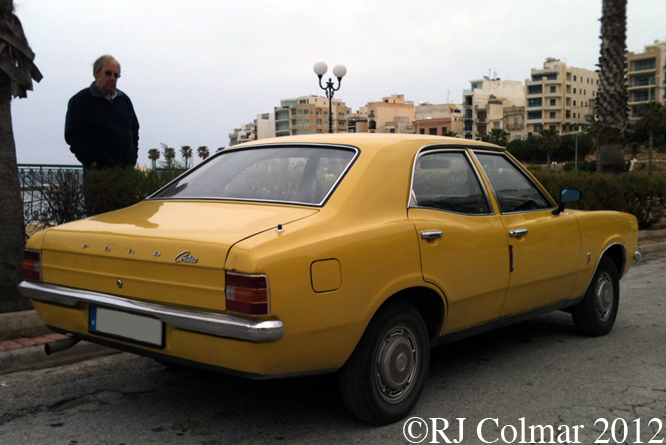
Ford Cortina 1300, Qwara, Malta

In late 1973 the Cortina recieved a mild face lift known as the TD, the Cortina (TD) 1300 above seen in Malta is almost indistinguishable from the XL at the top of the post the GT and 2000E which replaced the GXL featured square headlights in place of the twined pairs of head lights of the original Mk III.

Ford Cortina 1300, Qwara, Malta

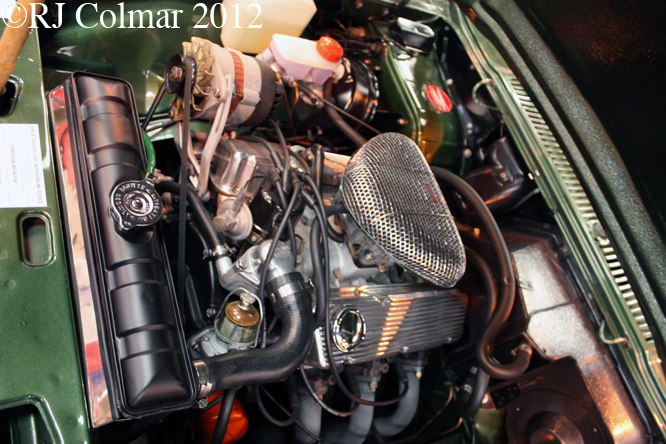
In the UK 4 cylinder overhead valve Kent and single overhead cam Pinto engines from 1.3 litre / 79 cui to 2 litres / 122 cui were available dependent on the different trim specifications.

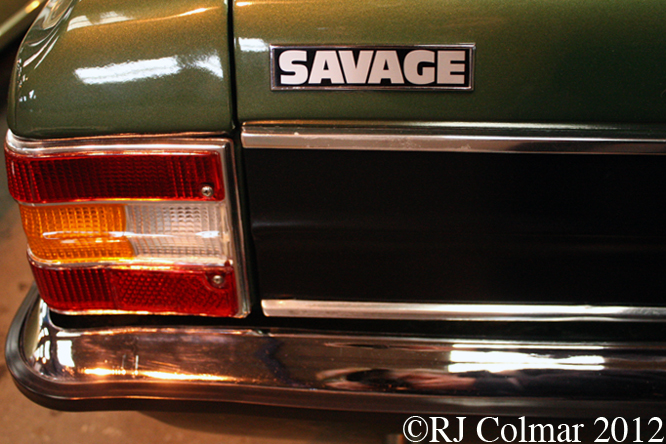
Uren Ford Cortina Mk III Savage, Bristol Classic Car Show

Despite the Peak Performance tag Mk III Cortina’s were never intended for competition although Radio Presenter Noel Edmonds gained a fair amount of publicity for driving one in production saloon car races and Ford did organise a celebrity series called the BAE Trident trophy when the Mk III was launched with participants including Formula One champions Graham Hill and John Surtees along with British Rally ace Roger Clark. Those in the UK wanting larger motors had to turn to Jeff Uren who fitted Essex 144 hp 3 litre V6 motors which could be specified with Westlake cylinder heads giving 190 hp or additionally with Tecalemit fuel injection under an impressively ventilated bonnet / hood to give 218 hp and a zero to 60 mph time of 7 road burning seconds.

Uren Ford Cortina Mk III Savage, Bristol Classic Car Show

Those living in Australia could order their Cortina’s with a factory fitted straight six Ford (Australian) Falcon 4.1 litre / 250 cui motor while in South Africa a Essex V6 versions of the Mk III Cortina were built with the top of the range 3 litre / 183 cui carrying a Perana badge. Like the Mk II Cortina sales of the Mk III Cortina reached well over a million by the time production ceased in 1976.

Thanks for joining me on this ‘A New Peak’ edition of “Gettin’ a li’l psycho on tyres” I hope you will join me again tomorrow when I shall be looking at Ford Torino a US contemporary of the Mk III Cortina. Don’t forget to come back now !
09 05 12 PS I did not know it at the time of the original post but a Ford Cortina features in a car chase in the 2011 Robert De Niro action movie ‘Killer Elite‘.

Share

Patent Monocoque – Killeen K1

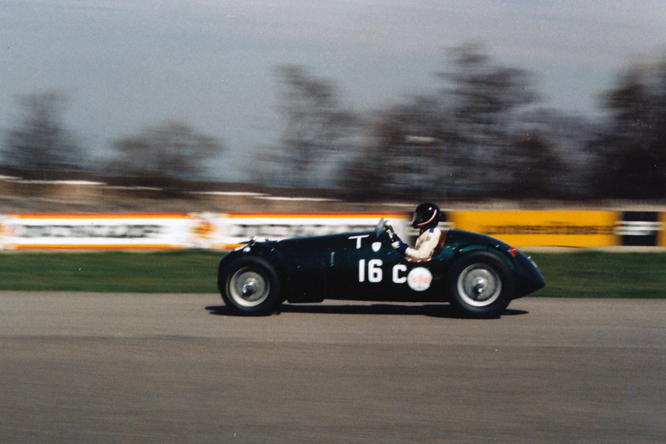
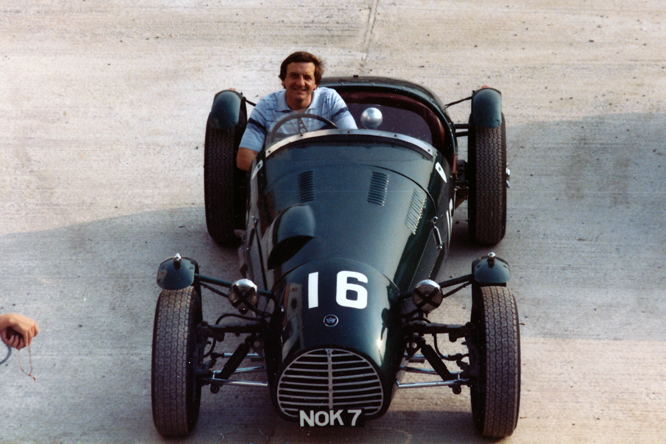
Over the last couple of weeks I have been looking at the three MG powered Kayne Specials built by Colin Cooper, today’s extraordinary Killeen K1 is an MG powered special of which from 1979 to 1985 Colin became the seventh owner.

Killeen K1, Donington Park

The Killen K1 was the brain child of Tom Killeen who during World War 2 was serving on an RAF base, on the island of Malta, now the site of the Maltese national football stadium, where he was impressed by the rugged strength and easy maintenance of the Supermarine Spitfire aircraft which operated there.

In 1950 Tom designed the Killeen K1 using a similar monocoque construction technique to that used in the Spitfire, using three equally spaced steel ‘hoops’ around which Tom attached Hiduminium alloy sheets to end up with a structure that was lighter and more rigid than the traditional ladder or space frame type chassis that were prevalent at the time. This type of monocoque construction which was by no means the first time it had been used in a racing car, that honour is thought to belong to the 1915 Cornelian Indy Car, the K1 just predates the semi monocoque D-Type Jaguar of 1954 and preempted the Lotus 25 by a full decade.

Tom Killeen took out a patent on his design in 1952 and proceeded to build the car with independent front suspension and de Dion rear and an stage two MG XPAG for his friend Jack Newton who subsequently raced the K1 in 1953. In 1954 Tom acquired a special motor for the K1, from John Thornely of MG, that had been built for the 1954 MG EX-179 speed record project. Colin found that this motor featured a separated cylinder head cooling system that was sealed at the top of the engine block.

Killeen K1, Donington Park

Tom Killeen who is known to have worked for Jensen’s from at least 1947 to 1965 is known to have designed at least 19 vehicles including motorcycles all built or to have been built with monocoque structure.

More detailed information and photographs on the Killeen K1, which now resides in New Zealand, and the work of Tom Killeen can be found on Bob Allans’ Killeen dedicated website linked here.

My thanks to Colin Cooper, who is seen at the wheel of the Killeen K1 at Donington above, for sharing some of the stories behind the cars he has owned and built and to Bob Allan who helped me get in touch with Colin.

Thanks for joining me on this ‘Patent Monocoque’ edition of ‘Gettin’ a li’l psycho on tyres’, I hope you will join me again tomorrow. Don’t forget to come back now !
Share

Blingin’, Slamin’, Surfin’ ‘n’ Driftin’ – Spring Performance Car Action Day Castle Combe

A week ago on Saturday immediately after the Bristol Italian Auto Moto Festival I proceeded to Castle Combe thanks to David Roots who gave me a couple of tickets to go to the Performance Car Action Day.

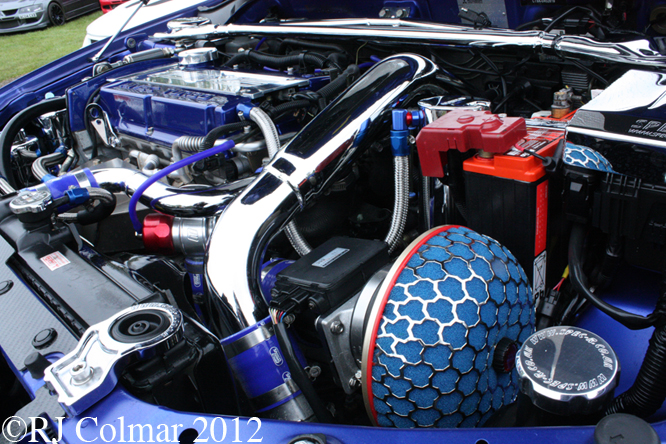
Mitsubishi EVO, Castle Combe, SPCAD

On arrival aft Castle Combe I couldn’t help but notice a lot of bling on an otherwise cold and rainy day dry and shiny metal work stands out like a sore thumb as can be seen from the Mitsubishi Evo above.

VW Golf Driver, Castle Combe, SPCAD

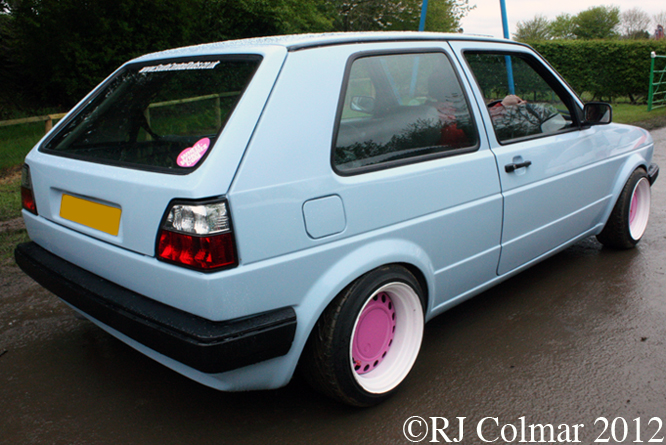
Slammers, car with lowered suspension like the 1989 Volkswagen Golf Driver above were picking their way carefully through the mud,

Peugeot, 206 GTI, HDI, Castle Combe, SPCAD

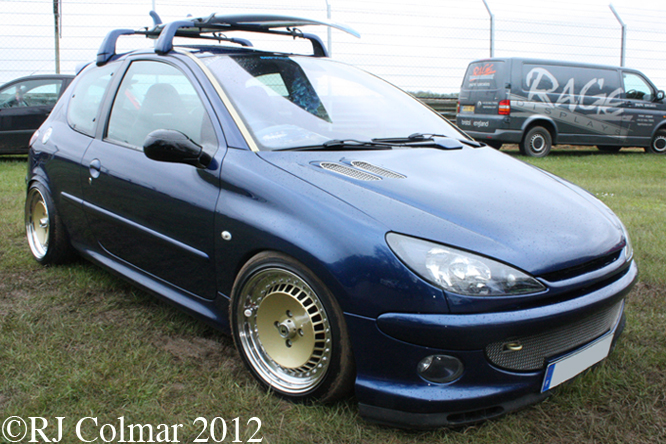
while the surfers had to be the only ones dreaming of a wetter environment than that experienced at Castle Combe last weekend. Note the F, denoting France on the European Union Style number plate, on the 2005 Peugeot 206 GTi above, an odd choice for a car registered in, and that may well have been at Ryton, in the United Kingdom.

Nissan Skyline, Castle Combe, SPCAD

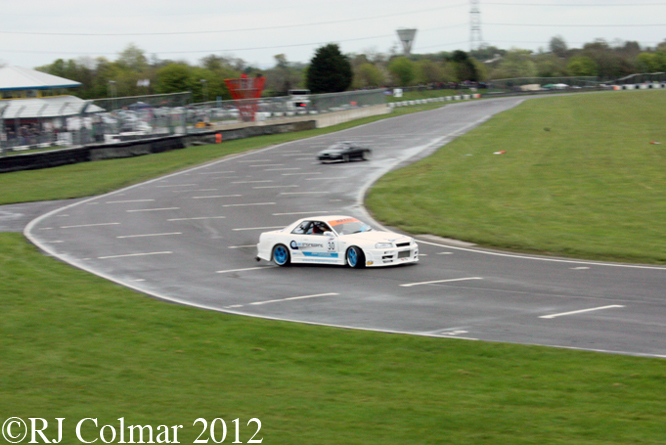
I have kept an open mind on drifting, never having seen it in person before last Saturday, until then I had the feeling drifting was akin to sheer hooliganism but with some entertainment value. Saturdays demonstrations of varying degrees of skill included a hand full of cars like the Nissan Skylines above running the wrong way round part of the Castle Combe track. With temperatures barely above freezing the entertainment value of the drifting demonstration was significantly diminished by the absence of smoking tyres which are usually associated with the ‘sport’.

HSV Maloo,Castle Combe, SPCAD

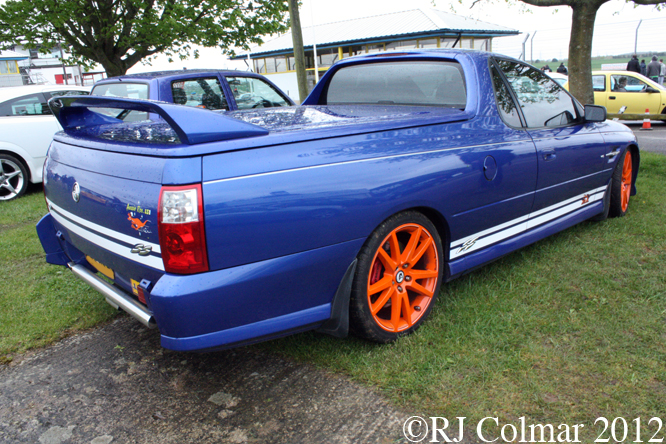
Further delights to be found in the car included vehicles of antipodean GM descent inclding this 2004 HSV Maloo.

Vauxhall Carlton Club, Castle Combe, SPCAD

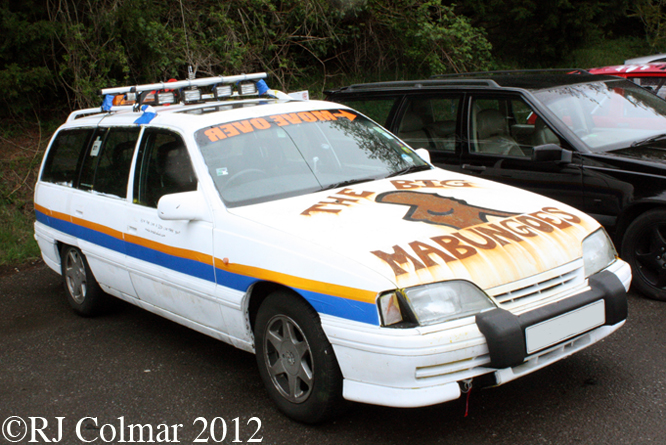
Back in the day when I worked in the motor trade I used to delight in taking on near worthless cars and seeing how far I could drive them. My best effort was to drive 10,000 miles in a £50 Volvo, the legend on the door of this 1993 Vauxhall Carlton Club Estate asks “How far can a £250 car take you ?” and points readers in the direction www.streetsafari.com worth a visit if you have ever had an inkling to take part in a banger rally. Something I have filled away in my to do before I die list.

Mazda MX5 Le Mans Special, Castle Combe, SPCAD

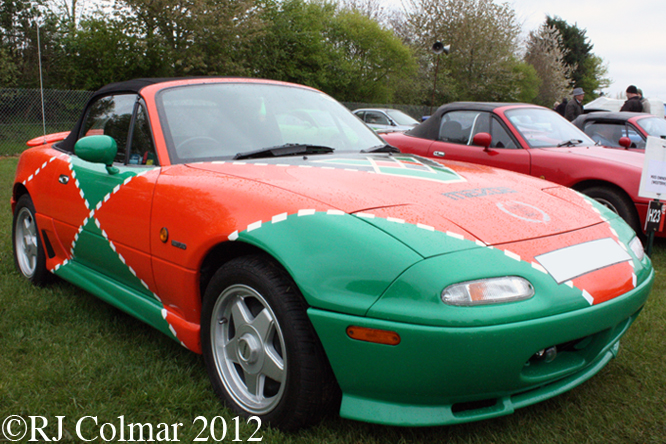
The 1991 Mazda MX5 Le Mans Special above celebrates what was probably the nosiest victory, certainly the noisiest I have ever witnessed, at Le Mans in 1991 by the Wankel rotary powered Mazda 787B driven by Volker Weidler, Johnny Herbert and Bertrand Gachot.

Ford Transit 100D SWB, Castle Combe, SPCAD

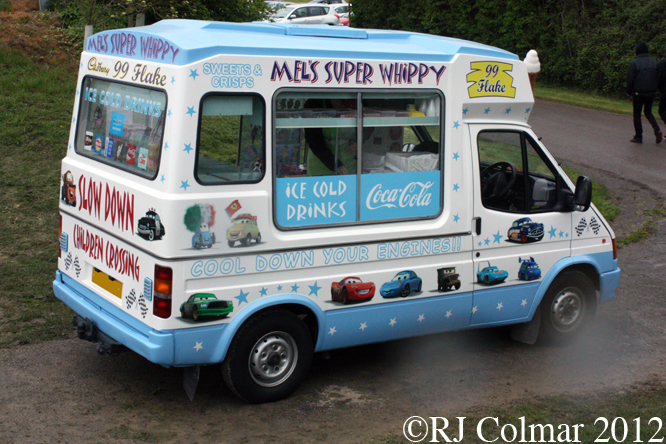
Sadly there were not many in need of engines needing their engines cooled down last Sunday but this Cars themed 1993 Ford Transit D 100 SWB ice cream van was a nice touch.

Ford Cougar, Castle Combe, SPCAD

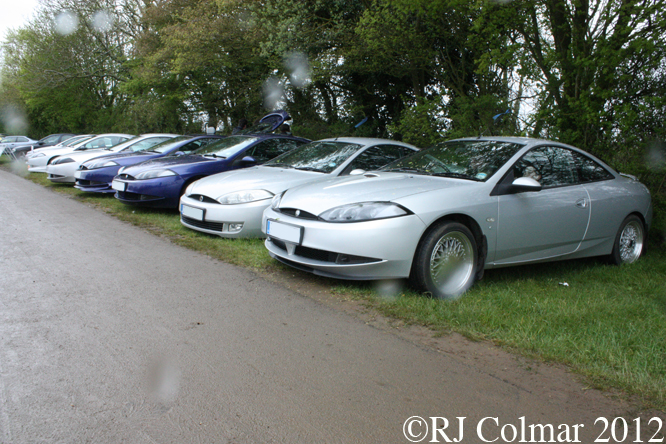
Among the 111 cars clubs present at Castle Combe was the Ford Cougar Owners Club, several with cars displaying Mercury brand badges as these New Edge styled cars were marketed in the USA. Was it really 14 years ago that Denis Hopper appeared in the Cougar television advertisement seems like only yesterday ?

Skoda, Castle Combe, SPCAD

Another club with a large number of members present was Briskoda.net the Bristol based Skoda Forum and Community, could be handy folks to know when I get round to participating in a banger rally if there are any £100 Skoda’s left.

Subaru Impreza Sport AWD, Castle Combe, SPCAD

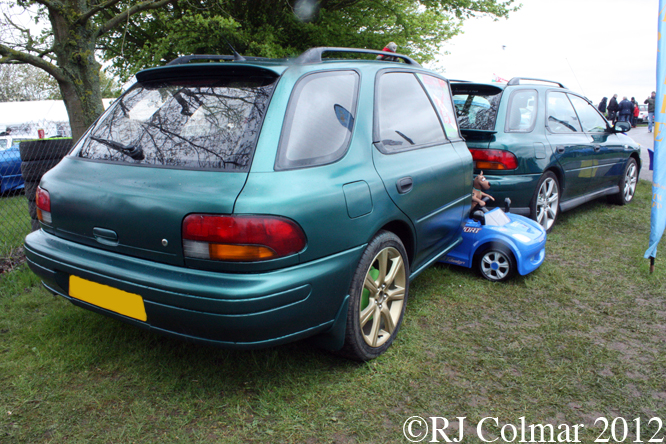
Ampng the predictable masses of Subaru’s one might expect to see at a Performance Car Action Day, this Impreza Sport AWD combo really caught my attention, I wonder how difficult it would be to add drive to the trailer wheels ?

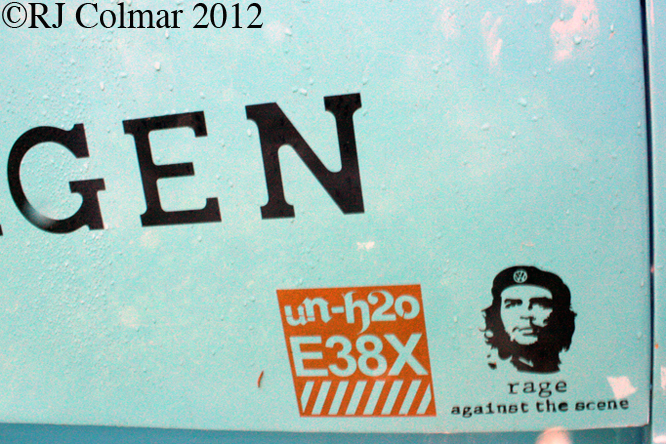
Rage Against The Scene, Castle Combe, SPCAD

I left the Spring Performance Car Action Day with a head full of ideas as to how I might personalise my recently acquired Golf Estate.

My thanks to David Roots for passing on the tickets so that I could attend the Spring Performance Action Day at Castle Combe.

Thanks for joining me on this “Blingin’, Slamin’ ‘n’ Drifting” edition of “Gettin’ a li’l psycho on tyres”, I hope you will join me again tomorrow when I’ll be looking at an early monocoque racing car. Don’t forget to come back now !
Share