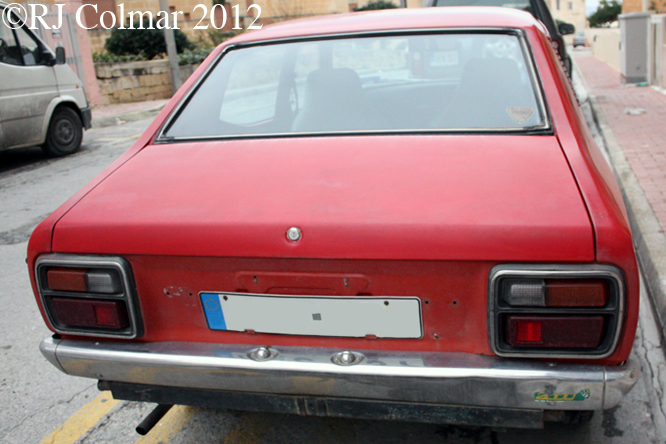
Here Comes The Sun (Slight Reprise) – Datsun 120A F-II

It is hard to believe that it is 30 years since Datsun’s parent company Nissan started to phase out the use of the Datsun brand name from global markets at an estimated cost in the USA alone of some US$500.

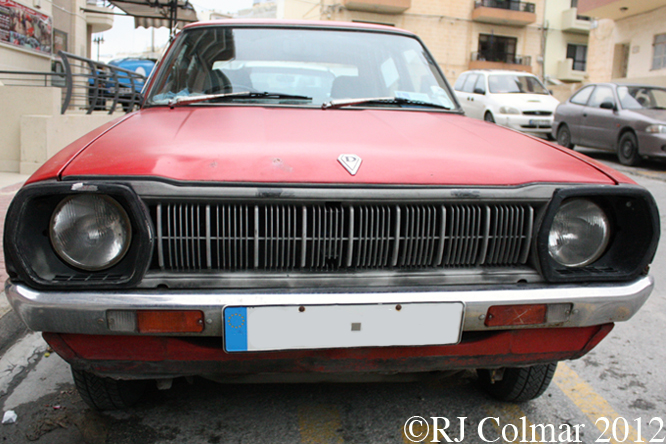
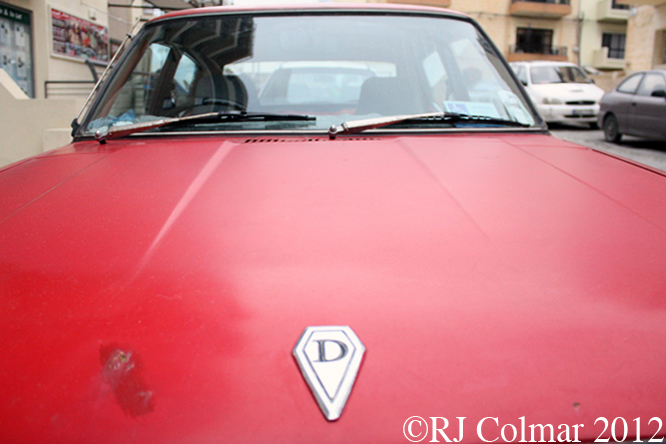
Nissan 120A - FII

So it was a surprise to learn that Nissan are to reactivate the brand for base models that will capture markets in India, Russia and Indonesia from 2014 in an effort to win an 8% global market share.

Nissan 120A - FII

The Datsun name is a derivative of the Datson model that was marketed in 1931 by the DAT Jidosha & Co.,Ltd, a name born in 1925 out of three financial backers of the Kaishinsha Motorcar Co (1918) and it earlier incarnation Kaishinsha Motor Car Works (1911) founded by Masujiro Hashimoto called Kenjiro Den, Rokuro Aoyama and Meitaro Takeuchi .

Nissan 120A - FII

At the time the company sold two models the larger DAT and smaller Datson, son translates as son in Japanese. Because son also means ‘disadvantage’ in Japanese the name was later changed to Datsun in 1932. Following a couple of mergers Datsun was taken over in by Nihon, Sangyo Co., Ltd 1934 who changed the corporate name of the manufacturer but continued to use the Datsun brand name particularly in export markets.

Nissan 120A - FII

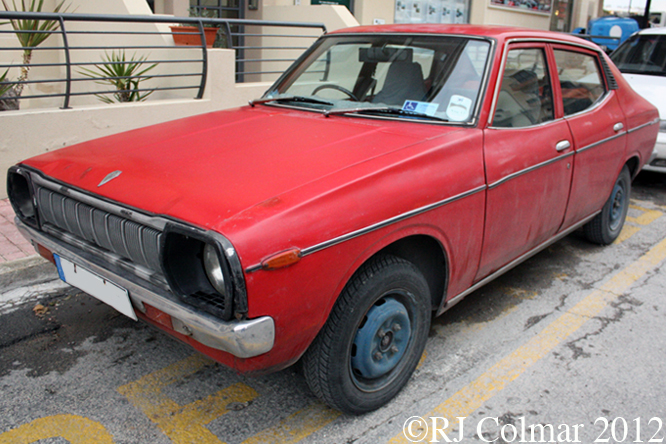
The second generation 120A F-II was known in Japan as the Cherry and marketed through ‘Nissan Cherry Shop’ Dealerships.

Nissan 120A - FII

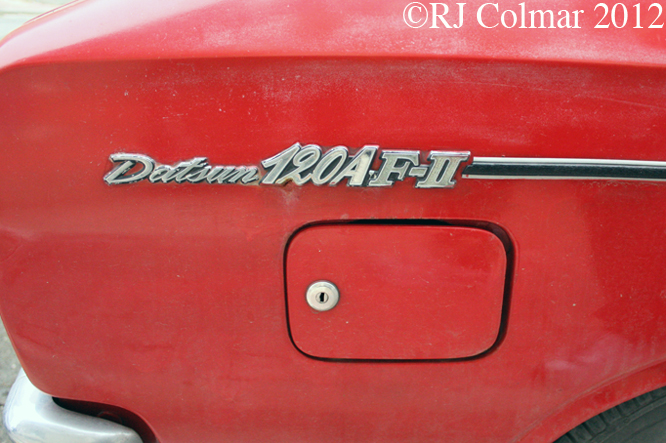
120A F-II refers to the A12 4 cylinder motor with a capacity of 1,171 cc 71 cui, a smaller version 100A was also produced, production of the 100A continued in New Zealand until 1980.

Nissan 120A - FII

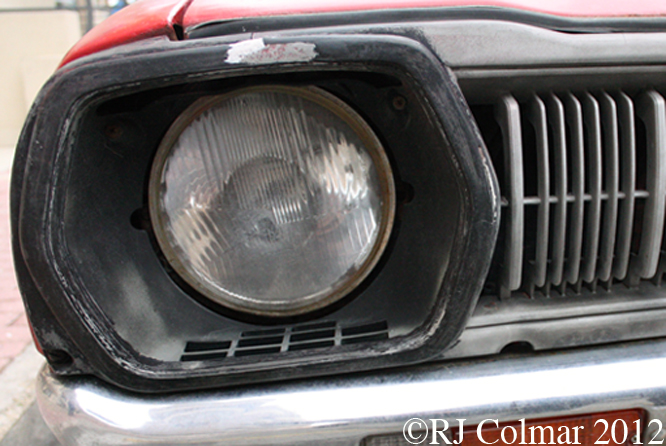
While the styling of the 120A F-II was a tad wayward by contemporary European standards the reliability of the 100A & 120A meant that by the time they hit the scrap yards they usually had much higher mileages than the better looking European models of the time. The 100A and 120A F-II models were in production from 1974 to 1977.

Share

Under Australian Influence – Lotus 41

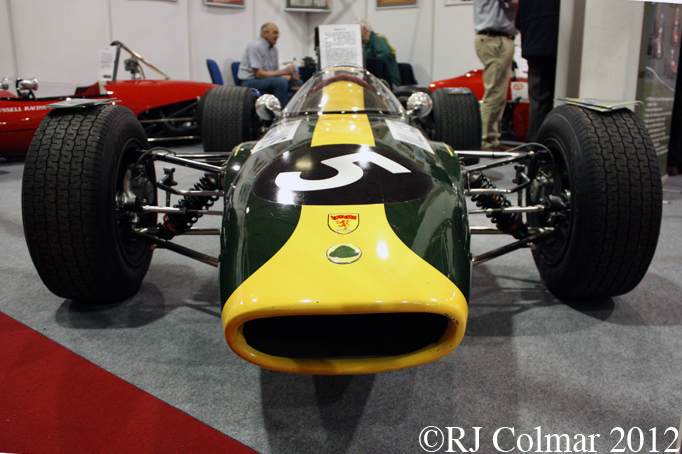
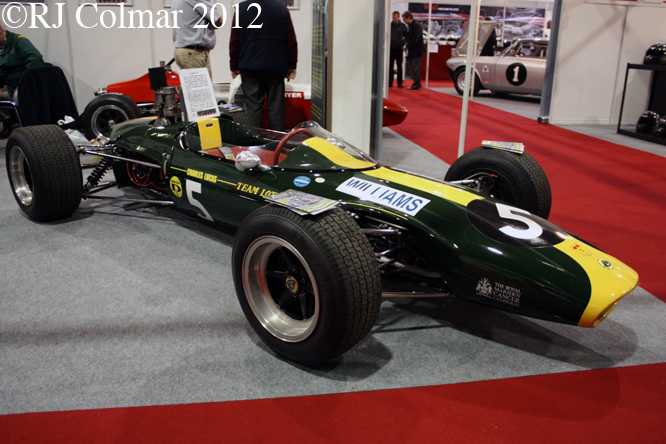
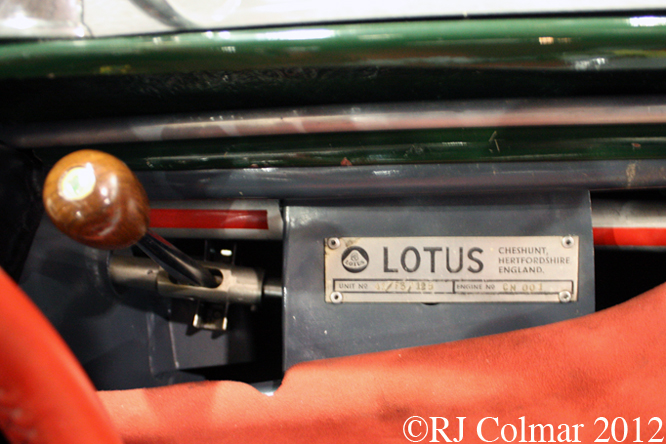
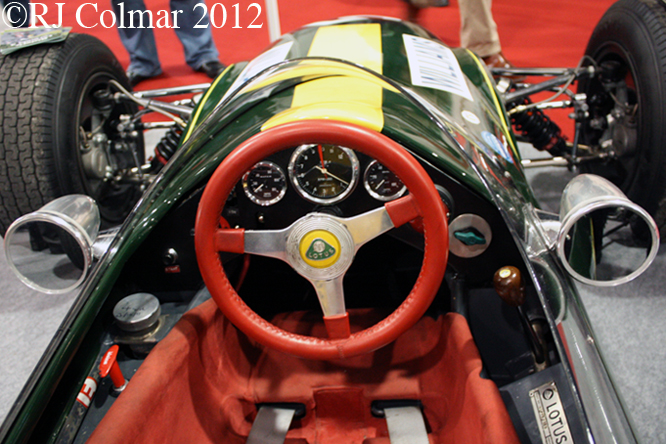
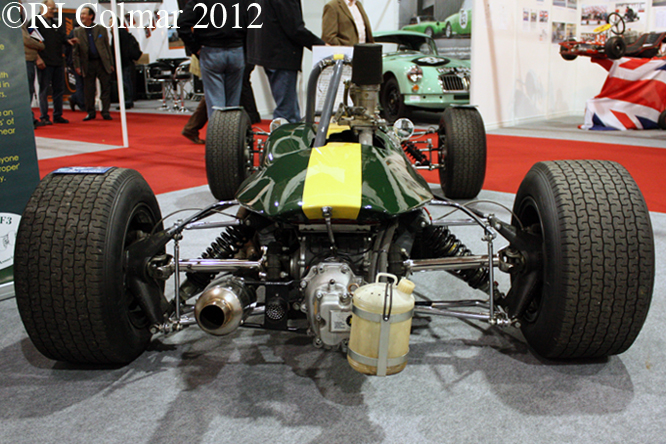
The Lotus 41 was designed and built to meet the second and third tier European open wheel Formula’s 2 and 3 along with the US Formula B regulations for the 1966 to 1968 seasons.

Lotus 41, Race Retro

Designed by Australian John Joyce assisted by Dave Baldwin the Type 41 featured a space frame constructed from welded steel tubes with stressed steel plates around the foot well, instrument panel and rear bulkhead. Steel was chosen in favour of lighter aluminium to ensure the car met the minimum weight limit requirements stipulated by the Formula regulations for which the car was built.

Lotus 41, Race Retro

Brewery heir Piers Courage driving a works backed Lotus 41, for the same Lucas Engineering team that was involved with the Martin V8 powered Lotus 35 I looked at a couple of weeks ago, won the French Craven ‘A’ Formula 3 series.

Lotus 41, Race Retro

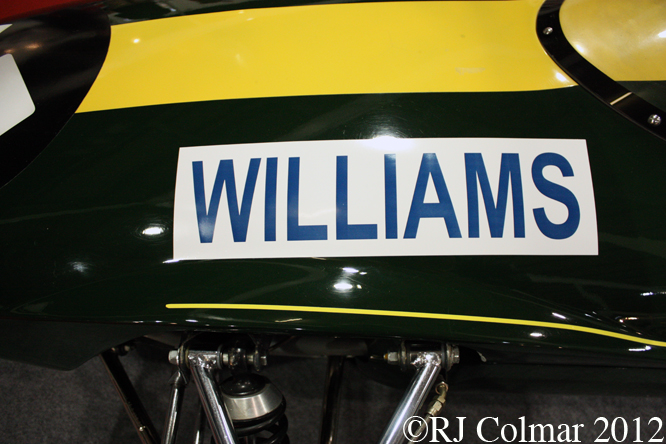
Back in 1966 drivers names were mandated on the sides of open wheel Formula cars to help spectators identify the drivers, the name ‘Williams’ seen here refers not to the Piers Courages team mate and driver of the camera car in Steve McQueens film Le Mans Jonathon Williams, but to Dr Gareth Williams, owner of today’s featured car.

Lotus 41, Race Retro

Dr Williams car chassis 41/F3/12b, seen here at Race Retro, is known to have been used competitively by Swiss driver Jean Blanc in 1966 and ’67 and passed through the hands of four further owners before being restored in 1993.

Lotus 41, Race Retro

History records, Courages success in France not with standing, that the Lotus 41 was out classed by the more numerous Brabham 18A designed by another Australian Ron Tauranac. After returning to Australia in 1968 John Joyce founded Bowin Designs Pty where he built a string of successful cars that dominated the 1970’s Australian Formula Ford scene.

Lotus 41, Race Retro

Sixty One Lotus 41’s are thought to have been built some were still running in much modified form in the early 1970’s Formula B regulations complete with additional bodywork and wings like the one seen in the thread on The Nostalgia Forum linked here.

Thanks for joining me on this ‘Under Australian Influence’ edition of ‘Gettin’ a li’l psycho on tyres’, I hope you will join me again tomorrow. Don’t forget to come back now !

Share

Static Show Car – Ferrari F310

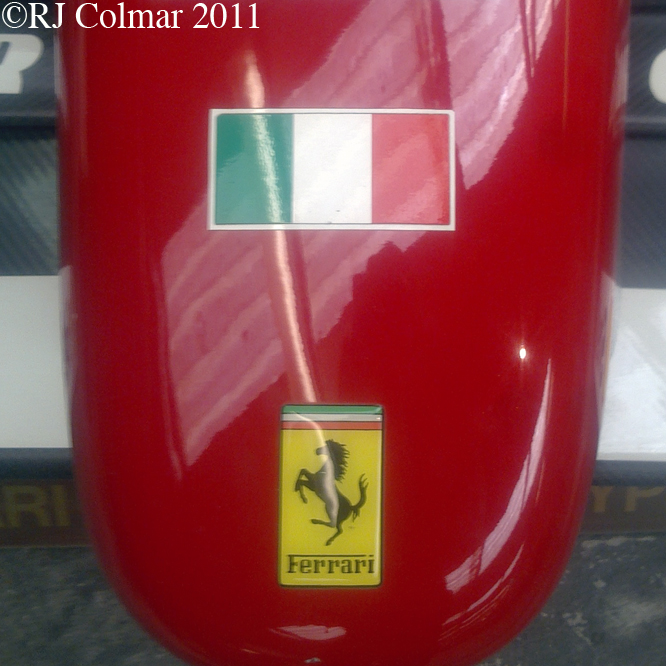
Coming off two championship wins with Benetton in 1994 powered by Ford and 1995 powered by Renault Micheal Schumacher named his price, allegedly of the order of $30 million per year, and joined Ferrari in order to take up the challenge of attempting to become the first driver to win the World Drivers Championship in a Ferrari since Jody Scheckter in 1979.

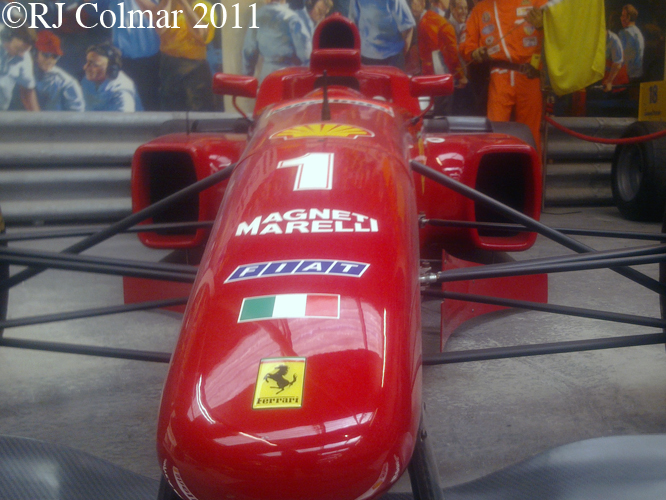
Ferrari F310, Haynes IMM

John Barnard who’s designs include the Indy 500 winning Chaparral 2K and Grand Prix Winning McLaren MP4/1 and subsequent championship winning McLarens was responsible of the design of the F310 with which Schumacher was to win races in in 1996 and challenge for the championship in 1997.

Ferrari F310, Haynes IMM

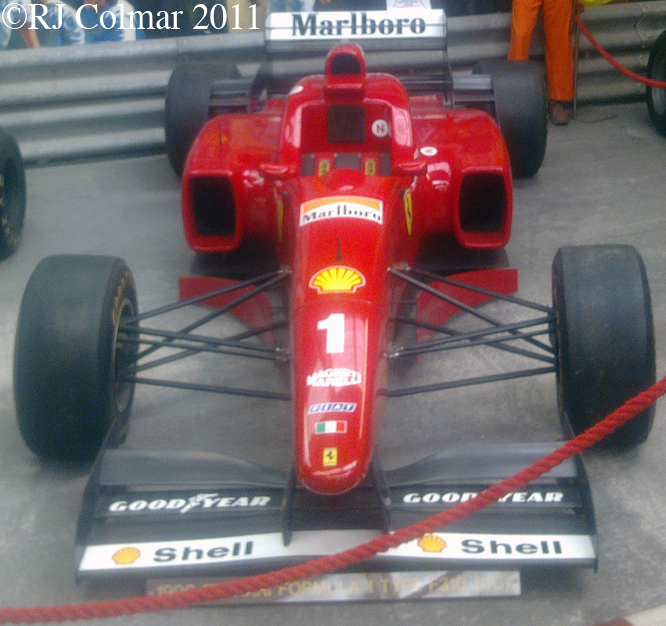
The original version of the F310 featured the only low nose in the field …

Ferrari F310, Haynes IMM

but by the half way mark a high nose as pioneered by Dr Harvey Postlethwaite and Jean-Claude Migeot at Tyrrell in 1990 was permanently adopted by the Ferrari Team in order to maximize the use of airflow beneath the car to the advantage of the cars handling. It is curious that Jean-Claude Migeot did not introduce the feature during his spell at Ferrari in 1992.

Ferrari F310, Haynes IMM

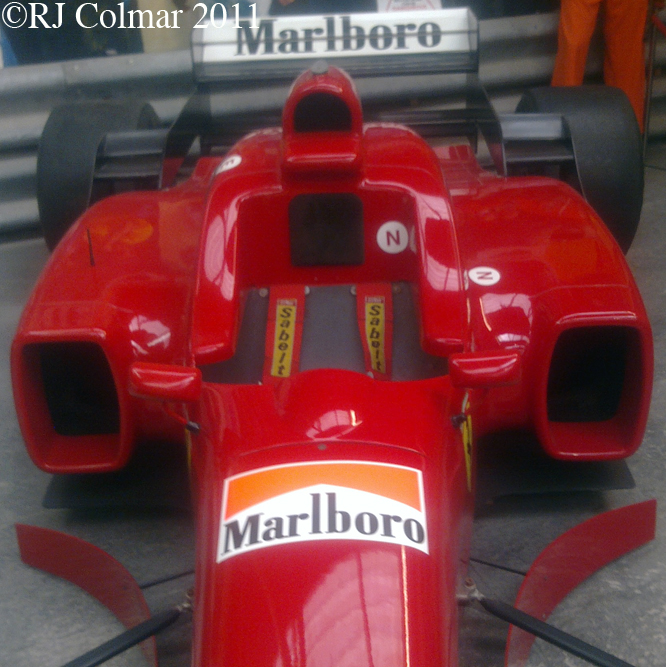
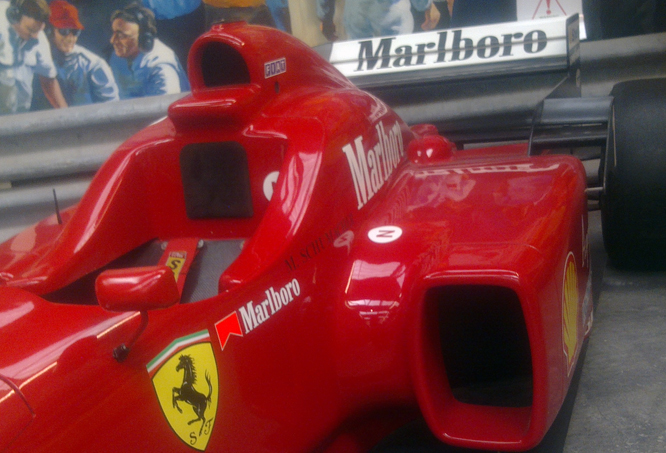
The design if the F310’s side pods with a separate…

Ferrari F310, Haynes IMM

‘floor’ beneath harks back to the Ferrari F92A a design that proved so recalcitrant that it led to designers Jean-Claude Migeot and Steve Nichols replacement by John Barnard !

Ferrari F310, Haynes IMM

The F310 was the first Ferrari to feature a 3 litre / 183 cui V10 motor, although this static show car seen at the Haynes International Motor Museum probably does not even have a mock engine, again following pioneers Renault and Honda who had opted for this unusual yet successful layout in 1989. Reliability was an issue for these V10 motors though that did not stop Micheal winning 3 races in 1996 and challenging, albeit controversially, for the championship with the F310B in 1997.

Thanks for joining me on this ‘Static Show Car’ edition of ‘Gettin’ a li’l psycho on tyres’ I hope you will join me again tomorrow when I’ll be looking at a Lotus 41. Don’t forget to come back now !

Share

Hot Business – Ford Business Coupé

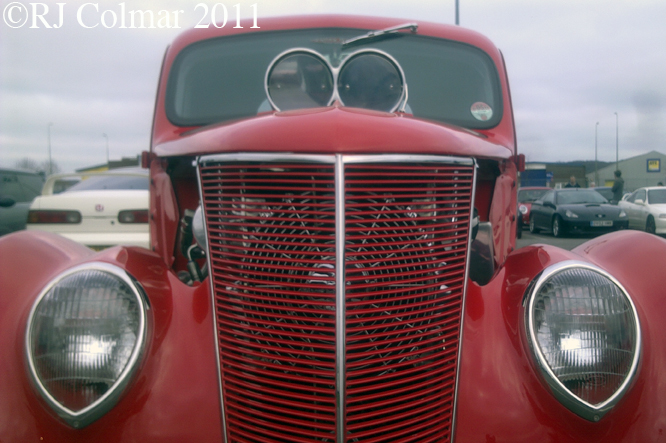
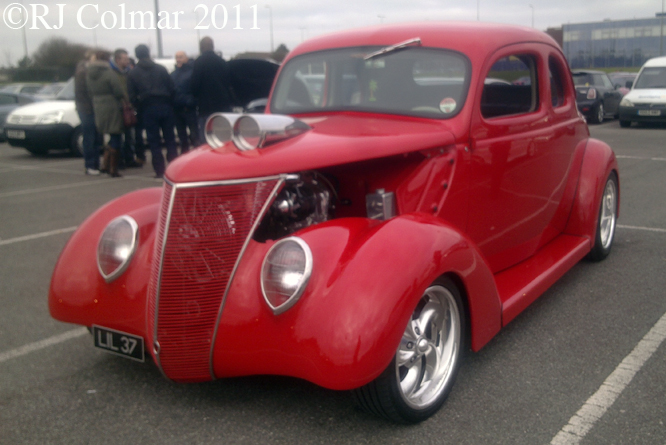
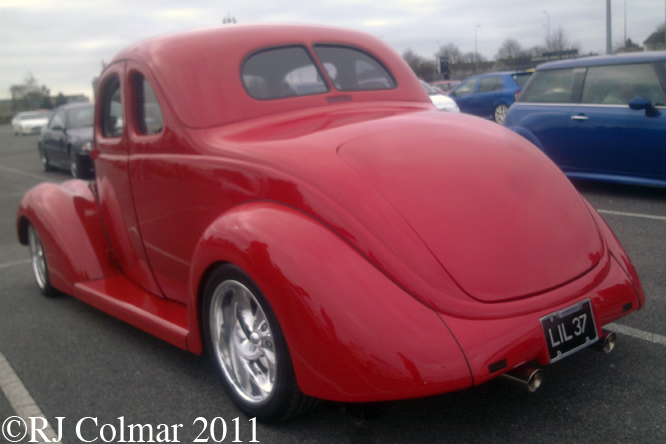
Even after an interest in motoring that goes back over 40 years every once in a while I learn about a Ford model I have never heard of before, such is the case with the 1937 Ford Business featured today which I mistook for a De Luxe.

Ford Business Coupé, BMW Plant

It turns out the Business was a base model range to introduced in 1937 that replaced the Model B and stayed in production only until 1940.

Ford Business Coupé, BMW Plant

Many of the features apart from the V shape grill of the Business were shared with the Standard and De Luxe models.

Ford Business Coupé, BMW Plant

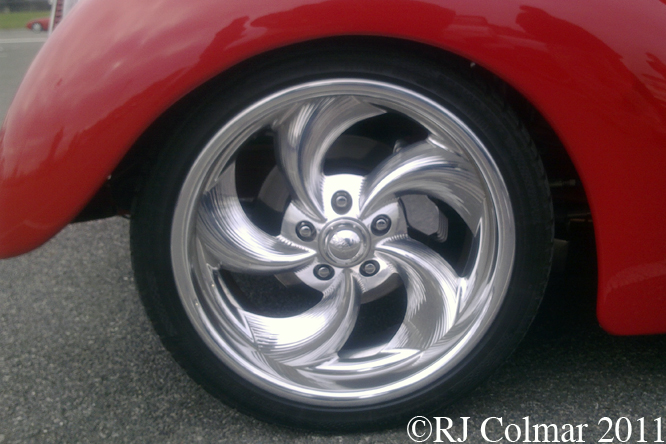
The Business Coupé seen here would have originally been fitted with cable operated drum brakes.

Ford Business Coupé, BMW Plant

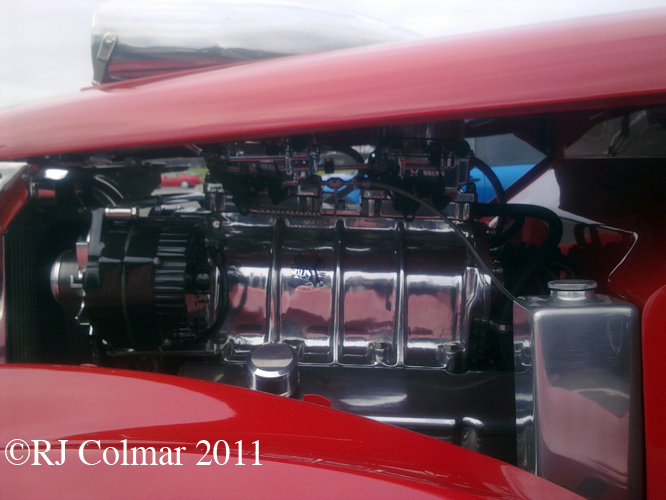
Engine options were either 60 hp 2.2 liter / 136 cui or 80 hp 3.6 liter / 221 cui V8’s, the one seen here is listed as fitted with non standard a 5 liter / 305 cui.

Ford Business Coupé, BMW Plant

The Business was available in Sedan, 8 seat station wagon, Coupé and Convertible versions.

Thanks for joining me on on this ‘Pleasure Business’ edition of ‘Gettin’ a li’l psycho on tyres’, I hope you will join me for Ferrari Friday tomorrow. Don’t forget to come back now !

Share

Genk Cosworth Part 2 – Ford Sierra RS Cosworth 4×4

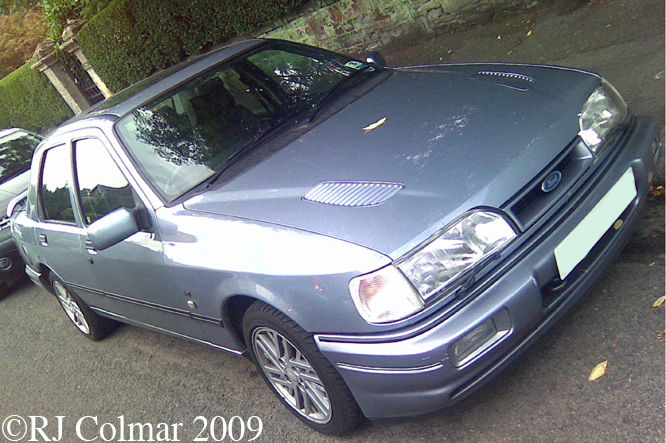
The forth and final incarnation of the Sierra Cosworth was built to overcome the short comings of 2wd in Rally competition which since the introduction of the Audi Quattro in 1980 had became dominated by four wheel drive machines. 12,250 of the Sierra RS Cosworth 4×4’s were built in Genk, Belgium.

Sierra RS Cosworth 4×4

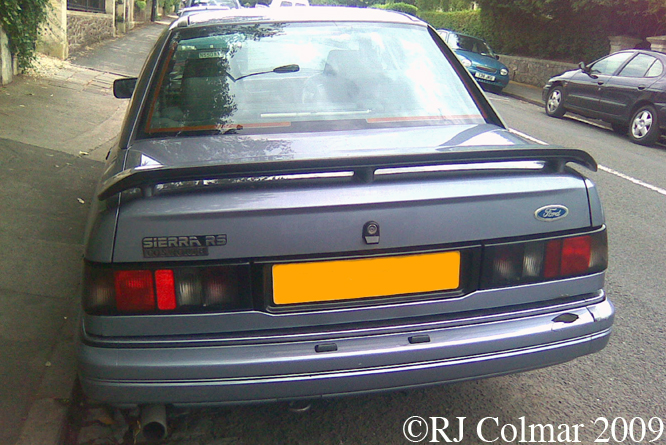
The Cosworth 4×4 was timed to coincide with a minor facelift to the Sierra range in 1990, powered by either 224 hp Cosworth YBG with catalytic converter or YBJ motors, without the converter, coupled to a Ferguson patented all wheel drive transmission. The road going variant is distinguished by the return of the bonnet louvre’s seen on the first two RS Cosworth variants and discreet 4×4 badges on the front wings. Note also the return of the Sierra RS Cosworth name to the boot / trunk lid as on the original 3 door version.

Sierra RS Cosworth 4×4

Unfortunately due to it’s size compared to the competition which included the pint size Lancia Delta & Mazda 323 hatchbacks and Toyota Celica Coupé, all with four wheel drive, none of the four Sierra RS Cosworth variations ever won a World Championship Rally, though Francois Delecour managed a couple of 3rds in Monte Carlo and Spain driving the Cosworth 4×4 in 1991..

Thanks for joining me on this ‘Genk Cosworth Part 2’ edition of ‘Gettin’ a li’l psycho on tyres’, I hope you will join me again tomorrow. Don’t forget to come back now !

Share

Norma Ann Sykes – MG B Mark III

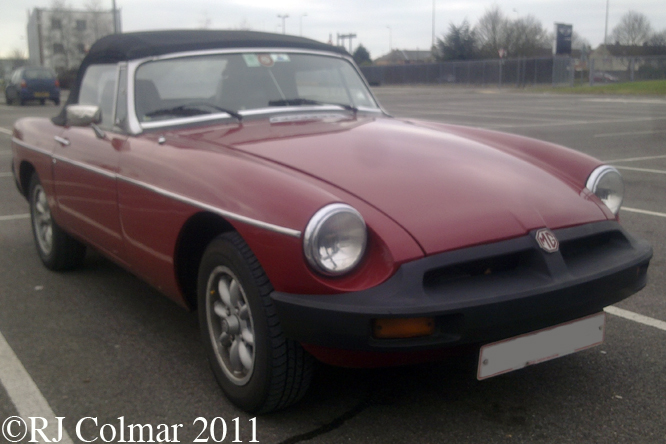
For 1974 US federal regulations mandated low impact bumpers which led to some seriously non collectible vehicles being built like the Volvo 240, aand US spec Jenson Healey, FIAT X1/9, MG B and MG Midget.

MG B, BMW Plant

The Mark III MG B was introduced in 1972 with the biggest benefit being a new and improved heater for the occupants.

MG B, BMW Plant

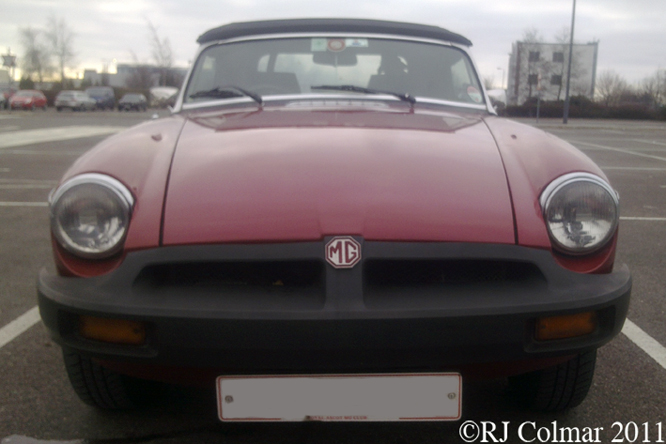
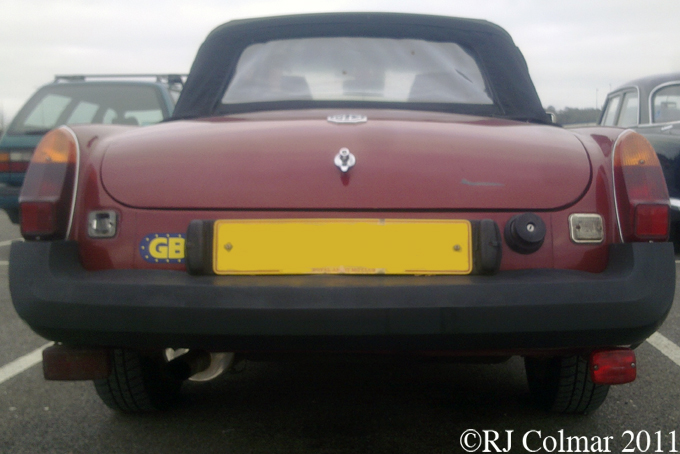
In 1974 chrome bumpers were replaced with steel reinforced rubber items that formed part of the restyled nose at the front. Apparently in MG circles these bumpers are referred to as ‘Sabrinas’ a name derived from a well endowed British model Norma Ann Sykes who was better known as Sabrina in her acting career which started with a small role in the 1955 film Stock Car.

MG B, BMW Plant

To complete the transformation from cool low slung roadster to the dork car look US Federal regulations mandated a minimum height for head lights and so the MG like many other sports car manufacturers that decided to simply raise the ride height of their cars rather than start with new designs or heavily restyled versions to meet the regulations.

MG B, BMW Plant

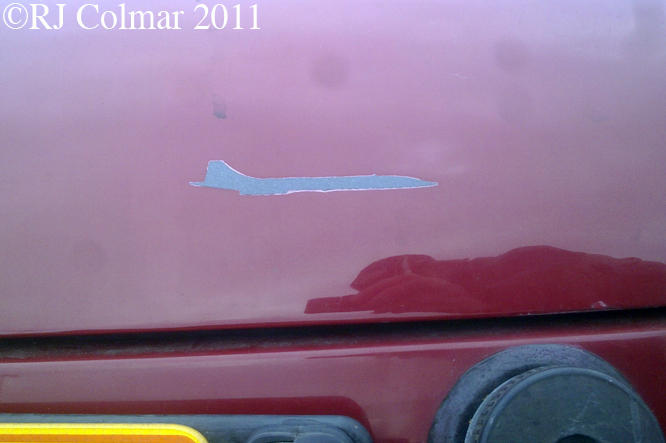
Like Concorde sports cars as they had been known were effectively ruled out of the market in the USA, manufacturers did not seriously look at the Sports Car market again until the late 1980’s and early 1990’s and since then the minimum ride headlight regulations have been dropped.

MG B, BMW Plant

MG B manufacture came to an end in 1980 and MG did not replace it until 1992 when 2000 limited edition MG B like R8’s were manufactured.

Thanks for joining me on this ‘Norma Ann Sykes’ edition of ‘Gettin’ a li’l psycho on tyres’, I hope you will join me again tomorrow. Don’t forget to come back now !

Share

Head Over Heels – Malta Classic Car Collection

The Malta Classic Car Collection, in the north east town of Qawara, don’t pronounce the Q, was founded by property developer Carol Galea who found his genetic pattern contained a deep rooted head over heels passion for cars which he has admired, driven raced and collected.
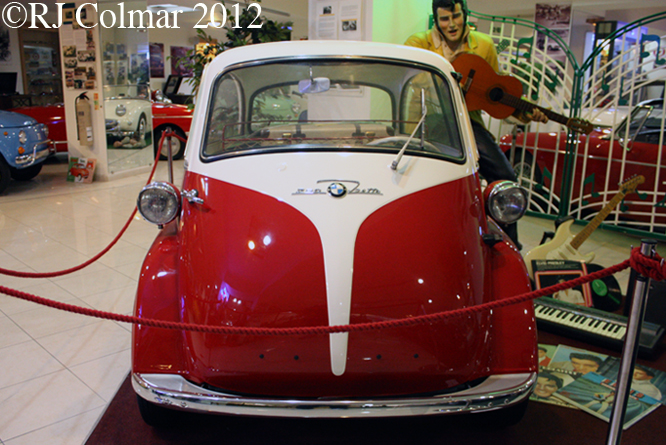
BMW 250 Isetta, Malta Cassic Car Collection

The impressive split level museum houses a cosmopolitan collection of vehicles including this 1957 BMW 250 Isetta bubble car a forerunner of the contemporary Smart Cars, the brainchild of Renzo Rivolta who was behind the Iso Grifo Super 7 I looked at some months ago.
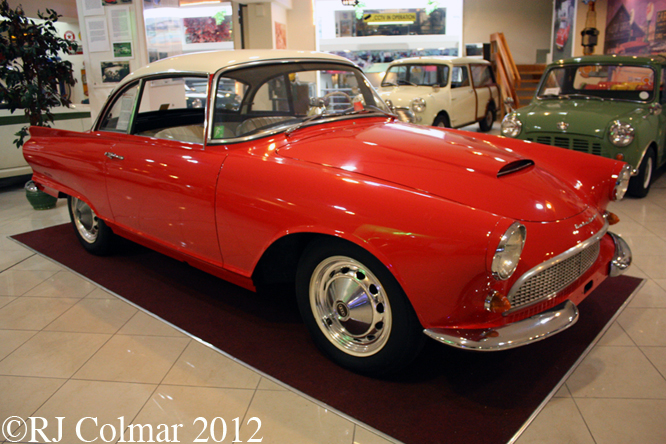
Auto Union 1000 Sp, Malta Cassic Car Collection

Built by the Stuttgart coachbuilders Baur on the 2 stroke Auto Union 1000 chassis the 55hp Auto Union 1000 Sp was launced in 1958. Known in the German Press as “baby Thunderbird” 6,640 of these 2 door Coupés were built when production ceased in 1965 by which time ownership of Auto Union had been transferred from Mercedes Benz to Volkswagen.
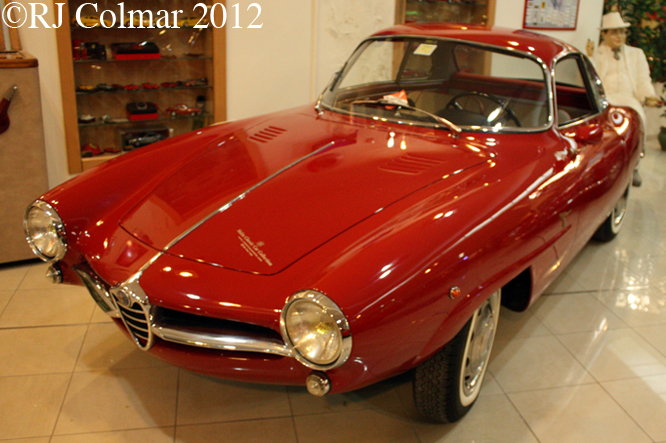
ALFA Romeo Giuleitta Sprint Speciale, Malta Cassic Car Collection

Although forst seen in 1957 the ALFA Romeo Giuleitta Sprint Speciale was only in production from 1959 to 1966. With a 112hp double overhead cam motor and a drag co-efficient of just 0.28, same as a C6 Corvette the ALFA Romeo Giuleitta Sprint Speciale provided stiff competition for the Porsche 356.
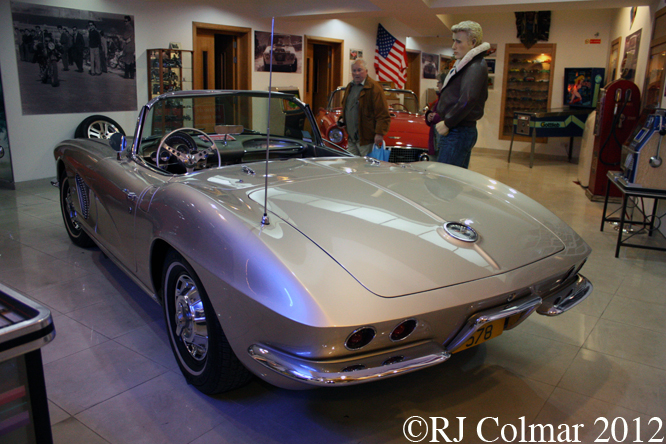
Chevrolet Corvette, Malta Cassic Car Collection

The classic four taillight arrangement on this Chevrolet Corvette C1 were first seen in the 1961 – 1962 models and have featured on Corvette’s ever since up to and including the present day. The single colour paint scheme suggests this might be a 1962 model.
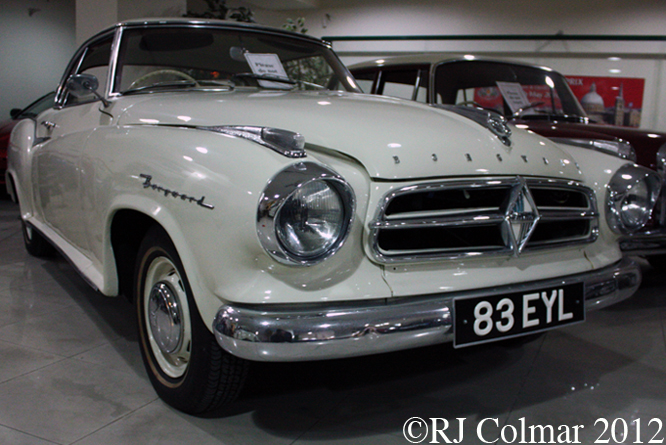
Borgward Isebella Coupé, Malta Cassic Car Collection

Another vehicle in the collection coincidentally launched in 1957 is the Borgward Isabella Coupé built in Bremen Germany. Unfortunately despite the success of the whole Isabella range Borgward went bankrupt when the German economy dipped in the early 1960’s.
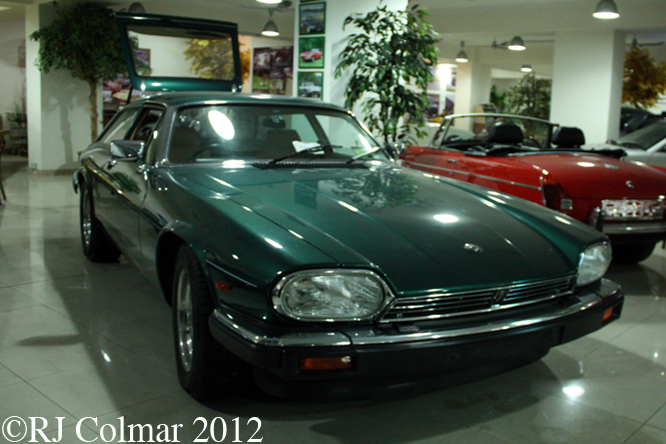
Jaguar XJS Eventer, Malta Cassic Car Collection

Based on the lumpy but loveable Jaguar XJS coupé the vehicle above is one of 67 shooting brake conversions by Lynx known as the Eventer built during the mid 1980’s. IMHO the Eventers looks exceed the standard XJS by some considerable margin.
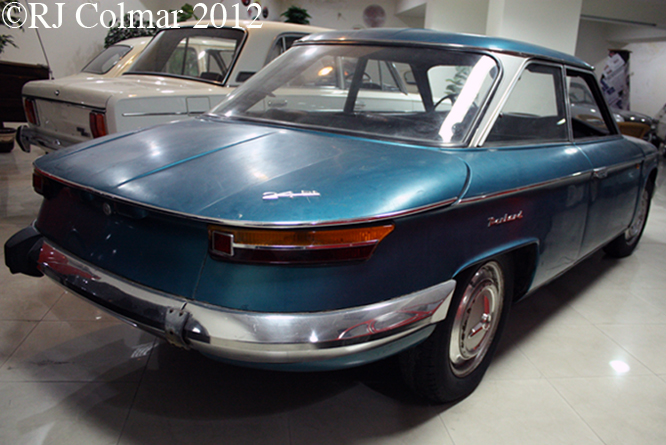
Panhard 24 bt, Malta Cassic Car Collection

The name Panhard goes back in the motoring world to the late 1880’s, Citroen acquired a 25% stake in the company in 1955 since when Panhard production appears to have been phased out in order to avoid competition with Citroen’s products and in order to increase production facilities for Citroen’s product lines. The Panhard 24 bt manufactured between 1964 and 1967 is a 2 door five seater powered by an horizontally opposed air cooled twin cylinder motor. Unfortunately with Citroen refusing to countenance the development of a four door model Panhard’s days as a motor car manufacturer were numbered, the company still exists as a military vehicle manufacturer.
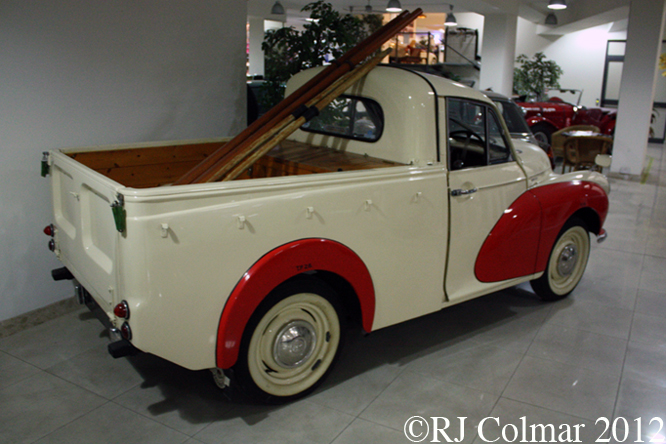
Morris Minor 1000 Pickup, Malta Cassic Car Collection

Among the pick up’s in the collection is this cool Morris Minor 1000 which is fitted with a load space bedecked in varnished wood !
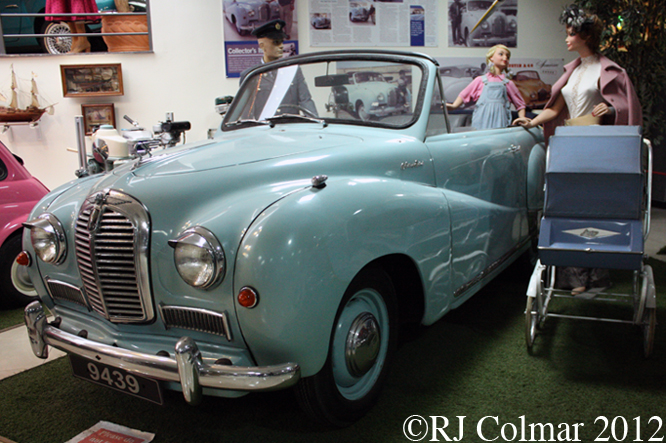
Austin A40 Somerset Coupé, Malta Cassic Car Collection

I am not sure why Austin’s marketing department took a liberal interpretation of the word coupé which usually applies to a hard top vehicle when they named the 42 hp Austin Somerset Coupé, which is actually a convertible, but 7,243 of them were manufactured between 1952 and 1954 by Carbodies, better known these days as the manufacturer of London Cabs. This particular car is said to have been used by HRH The Queen of England during her visit to Malta during a Coronation visit in 1952.
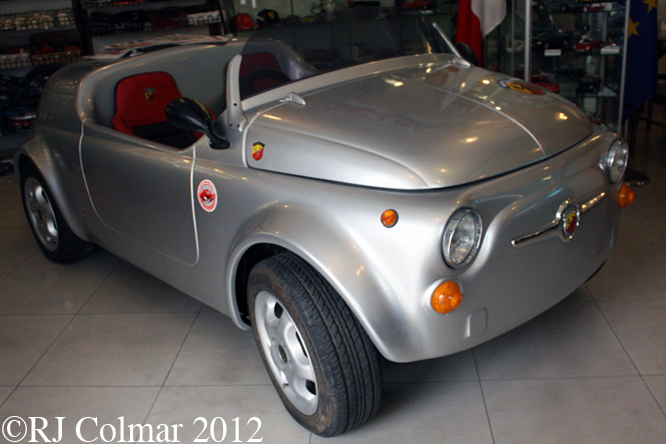
Fiat 500 Roadster, Malta Cassic Car Collection

Finally in foyer the fun roadster above looks like an original FIAT 500 but is actually based on much later FIAT 126 mechanical components from the late 1970’s and early 1980’s.

If you find your self in Malta I’d highly recommend paying the Malta Classic Car Collection a visit.

My thanks to Barry Boor who’s hospitality made this blog possible.

Thanks for joining me on this Head Over Heels edition of ‘Gettin’ a li’l psycho on tyres’ I hope you will join me again tomorrow. Don’t forget to come back now !

Share