Meica Red 908 – Bertone X1/9

Marcello Gandini working for the Bertone studio is credited with designing the FIAT X1/9 which was based on the futuristic boat inspired Autobianchi A112 Runabout of 1969.

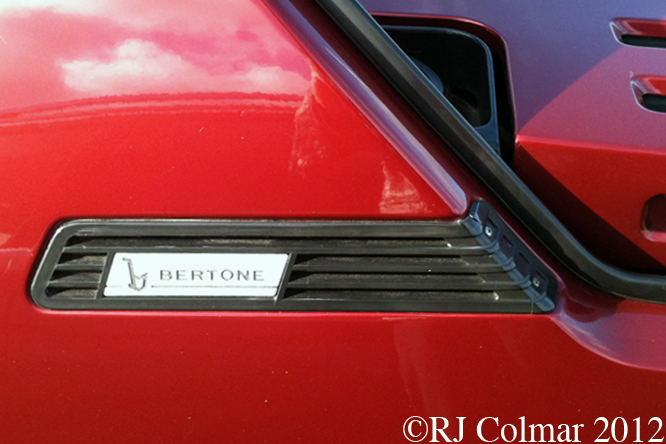
Bertone X 1/9, Race Retro

FIAT launched the X 1/9 in 1972 with Bertone responsible for building the monocoque body at it’s Torino factory and FIAT’s Lingotto factory responsible for the final assembly.

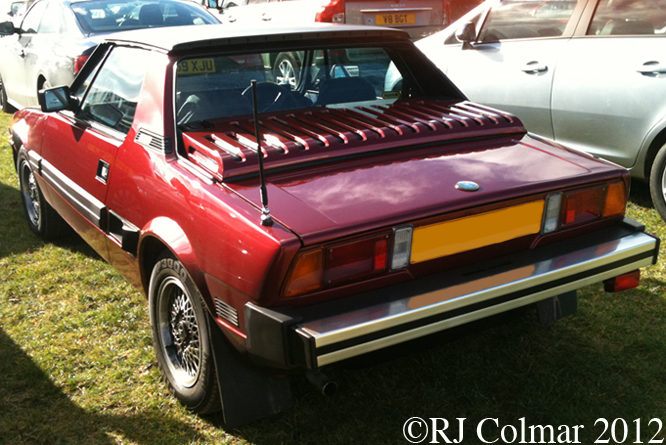
Bertone X 1/9, Race Retro

With 140,500 units produced unto 1982, FIAT handed over the final assembly responsibilities and marketing for the X 1/9 to Bertone in 1982. Bertone continued to develop the X 1/9 applying rust protection and revised seating to accommodate taller driver. 19,500 X 1/9’s were manufactured with Bertone badges.

Bertone X 1/9, Race Retro

The X 1/9 featured a rear mounted 4 cylinder transverse motor and transmission taken from the 1970 European Car of the Year Award wining front wheel drive FIAT 128 featuring and iron block and alloy head with a single overhead camshaft.

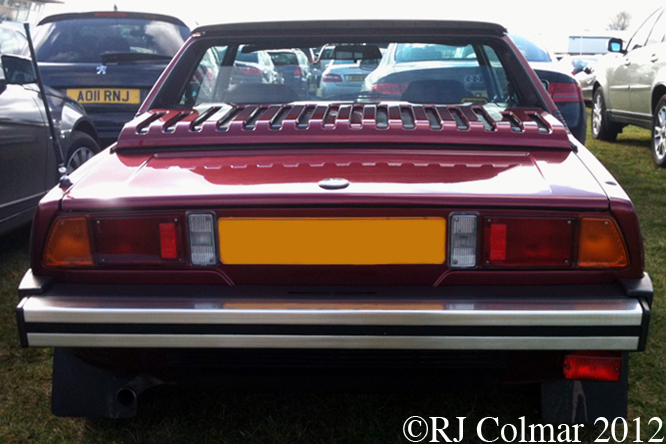
Bertone X 1/9, Race Retro

This 1989 example would appear to be painted Meica Red 908 a paint code borrowed form the Volvo colour palate which was used on the rare Volvo 780 Coupé which was also built by Bertone at the same time.

Bertone X 1/9, Race Retro

The longitudinally compact transverse mid engine and transmission layout not only gave the car excellent handling characteristics but also luggage space under the bonnet hood in the front and in the boot / trunk behind the engine.

Thanks for joining me on this ‘Meica Red 908’ edition of ‘Gettin’ a li’l psycho on tyres’, I hope you will join me again tomorrow. Don’t forget to come back now !

Share

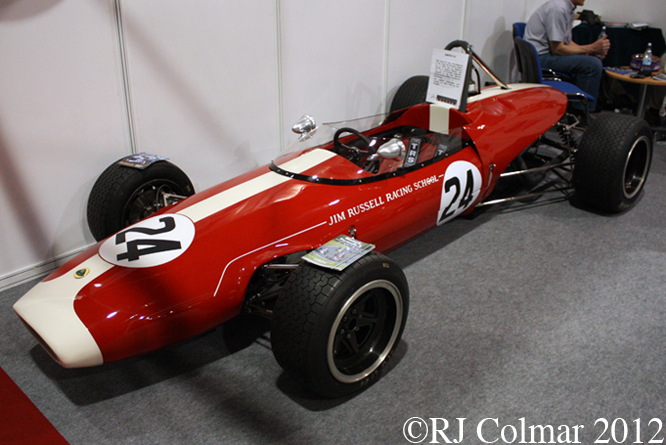
Open Wheel Trainer – Lotus 31 Ford

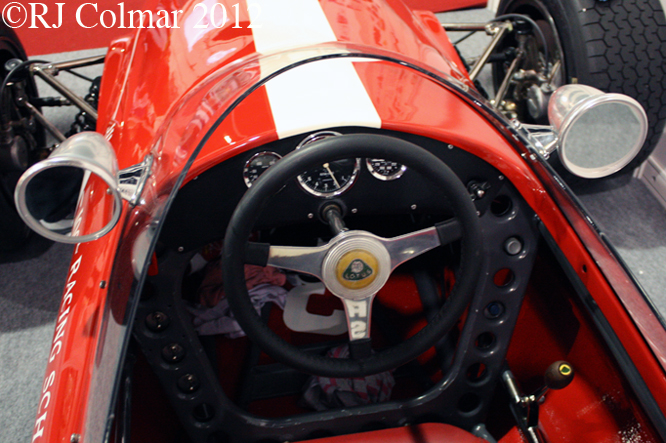
The Lotus 31 was built to comply with the new for 1964 Formula 3 regulations which replaced the previous Formula Junior.

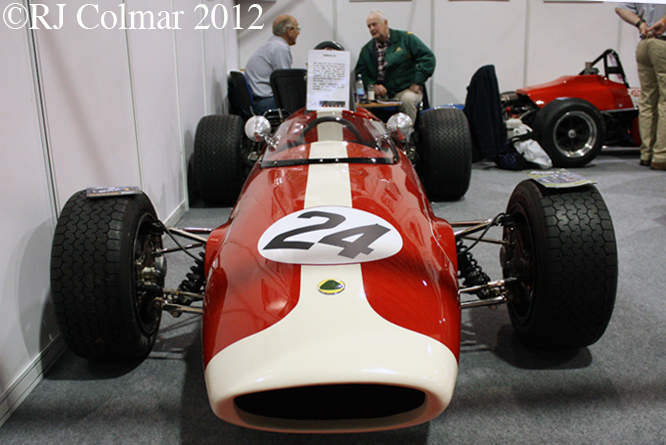
Lotus 31 Ford, Race Retro

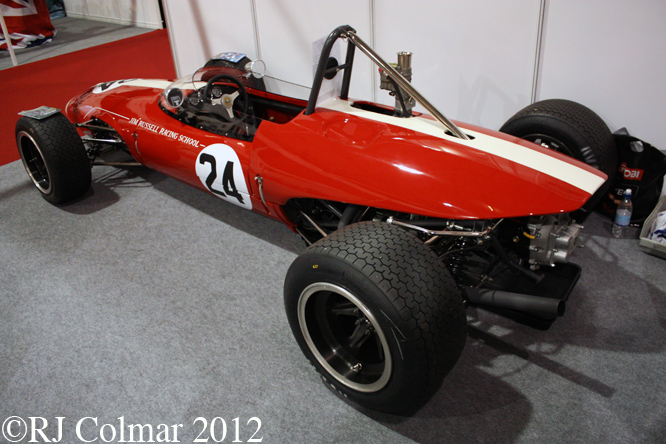
Featuring a space frame chassis similar to the Lotus 22 the 31 was outclassed by new Formula 3 cars built with monocoque chassis, disappointingly only 12 Lotus 31’s were built in 1964/65.

Lotus 31 Ford, Race Retro

However the simple construction and low price meant the Lotus 31’s were ideal training cars and in 1966 19 Lotus 31’s were built with the chassis numbers starting 22-F3-.

Lotus 31 Ford, Race Retro

Motor Racing Stables at Brands Hatch and Jim Russell Racing Drivers School at Snetterton, took delivery of four and five of these cars respectively.

Lotus 31 Ford, Race Retro

Power for the Lotus 31 came from a 997 cc 60.8 cui Ford Cosworth tuned Ford 109E motor that gave 97 hp at 8000 rpm. Andrew Thorpe’s ex- JRRDS school seen here at Race Retro was restored by Jon Waggitt.

Thanks for joining me on this ‘Open Wheel Trainer’ edition of ‘Getting’ a li’l psycho on tyres’, I hope you will join me again tomorrow. Don’t forget to come back now !

Share

On Luck – Ferrari 312 #0007

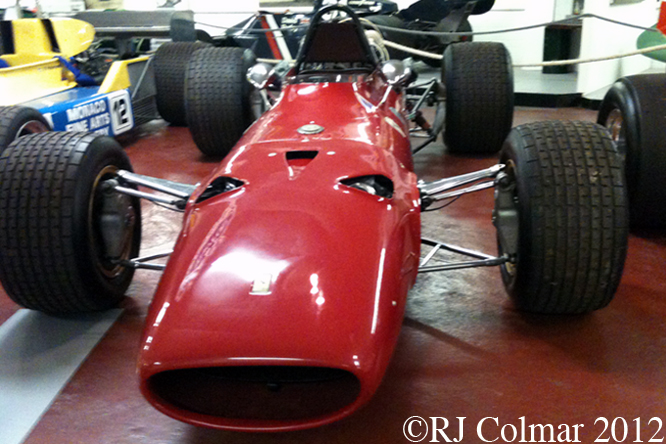
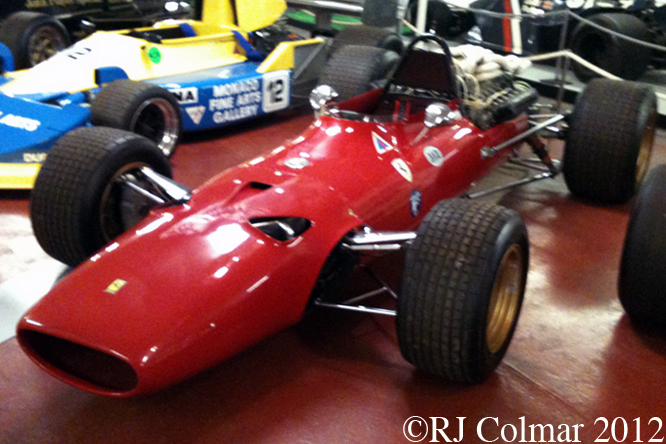
With the introduction of the 3 litre / 183 cui Formula One regulations in 1966 Ferrari not only found themselves unprepared they were also desperately underfunded in part due to Enzo’s withdrawal from a deal with Ford and in part because Ferrari had to spend a lot of money on his sports car programme to try in vane to stop a Ford steamroller from whipping him off the Le Mans scoreboard.

Ferrari 312/67, Donington Grand Prix Collection

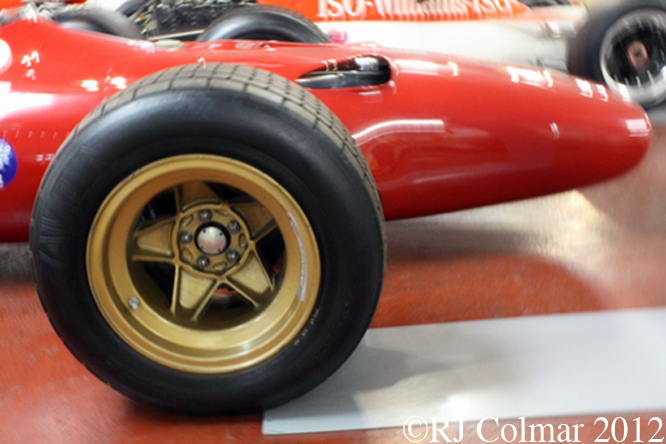
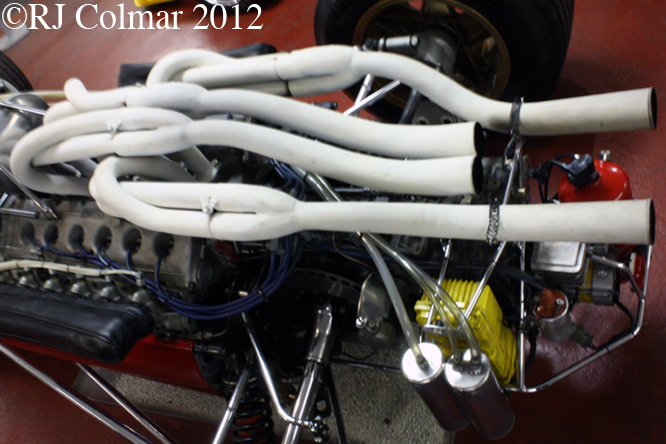
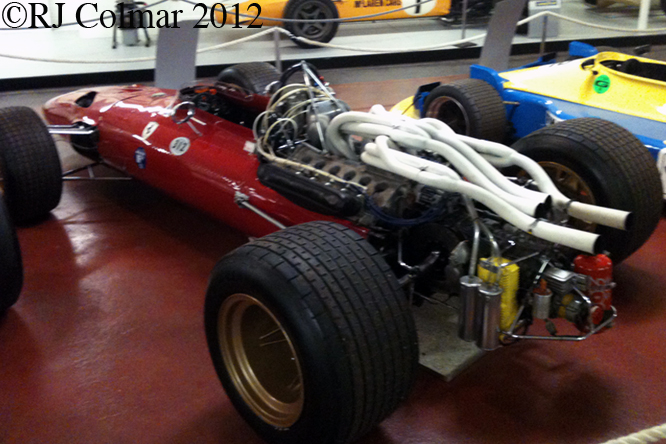
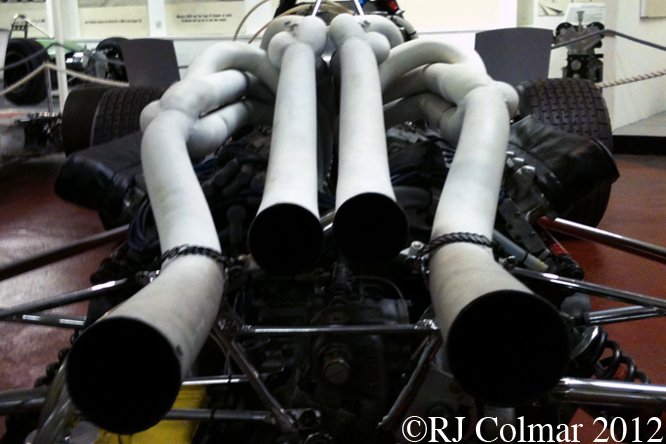
In order to maintain a presence in Formula One under the new 3 litre rules a 24 valve 3.3 litre 201 cui V12 design from the Ferrari 275P2 sports car programme was modified to the meet lower 3 litre / 183 cui engine capacity regulations and installed into the first of a long line of Grand Prix Ferrari’s designed by Mauro Forghieri.

Ferrari 312/67, Donington Grand Prix Collection

Despite the heavy old sports car engine in the back Ferrari were one of the few teams to have an engine of the correct size when the 1966 season got under way many teams were giving away between 45 cui and 90 cui in engine capacity just to make the grid.

Ferrari 312/67, Donington Grand Prix Collection

1964 World Champion John Surtees started and 1966 as Ferrari’s team leader but he fell out with Ferrari’s management after winning the Belgian Grand Prix and before starting the Le Mans 24 hours, however Ferrari still finished the season a respectable 2nd in the Constructors Championship thanks to a win in Italy and a couple of second place finishes, beating John Surtees new Cooper Maserati team by a single point despite missing a couple of races.

Ferrari 312/67, Donington Grand Prix Collection

For 1967 the 1966 cars were improved and chassis 0007, seen here recently at the Donington Grand Prix collection, was the last of 4 new Grand Prix cars Ferrari built in 1967, Chris Amon was hired to drive alongside Lorenzo Bandini, at Monaco Bandini qualified 2nd but an fiery accident during the race proved fatal and Chris Amon could only manage a string of four seasons best 3rd place finishes on the way to fifth in the championship for himself and his team, before taking over chassis #0007 towards the end of the season.

Ferrari 312/67, Donington Grand Prix Collection

In 1968 0007 was used again by Chris Amon and he won pole positions in Belgium and Holland with it but the season was a disaster for the driver who only succeeded in cementing his reputation as the unluckiest driver in Grand Prix racing with a seasons best 2nd place finish, in a newer ’68 spec 312, and a string of 7 retirements from 11 starts.

Ferrari 312/67, Donington Grand Prix Collection

1966 Le Mans winner, with Bruce McLaren in a Ford, Chris Amon never did win a Grand Prix despite starting 5 of his 108 Grand Prix from pole position, he has always maintained that he was lucky simply to have survived what is generally considered to have been the most dangerous period in racing, a point starkly backed up by the stat that 8 of the 24 starters in the 1963 Belgian Grand Prix where Chris made his debut did not see out the decade thanks to accidents at the wheel of racing cars.

Ferrari 312/67, Donington Grand Prix Collection

The last person to drive 0007 in period was future sports car giant Derek Bell who started the non Championship Gold Cup and championship United States Grand Prix in this chassis but did not finish either event.

Thanks for joining me on the ‘On Luck’ edition of ‘Gettin’ a li’l psycho on tyres’, I hope you will join me again tomorrow. Don’t forget to come back now !

Share

Personal Luxury – Ford Thunderbird Continental

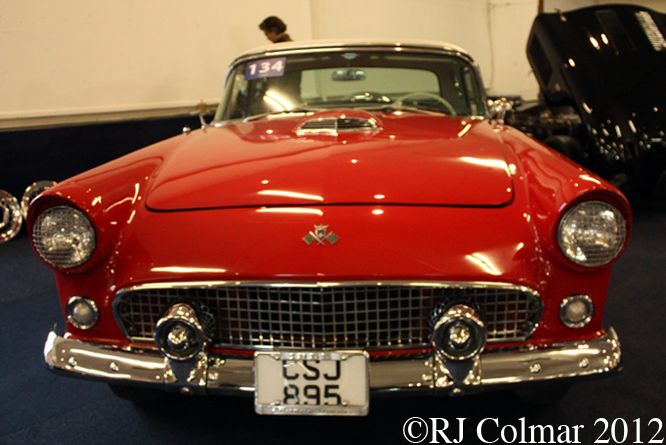
Following the announcement of the Chevrolet Corvette sports car in 1953, Ford responded by developing the Ford Thunderbird which was differentiated from the Corvette by it’s emphasis on luxury and comfort over performance.

Ford Thunderbird, Race Retro

Former GM Executive Lewis D. Crusoe and Ford Stylist George Walker found inspiration for the Thunderbird design from a sports car they saw in Paris. They worked with Ford Designer Frank Hershey on the two seater.

Ford Thunderbird, Race Retro

Ford Stylist Alden Gibberson was given a Saks suit complete with 2nd pair of trousers as his reward for coming up with the Thunderbird name which was first seen in public at the Detroit Motor Show in early 1954 and went in to production for the 1955 model year.

Ford Thunderbird, Race Retro

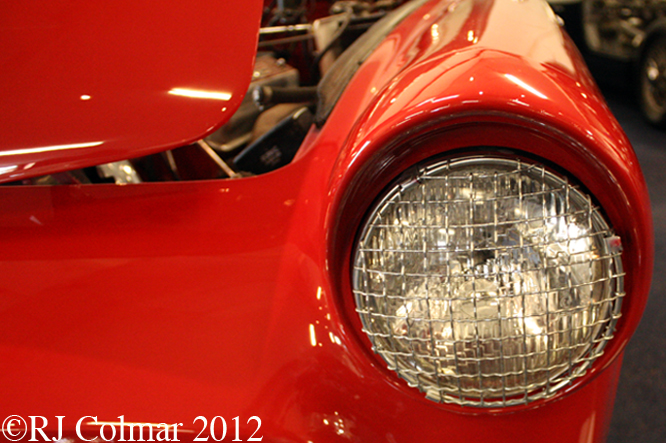
Despite many competition features like the stone guard grill over covering the front head lights the original Thunderbird was not intended for competition use.

Ford Thunderbird, Race Retro

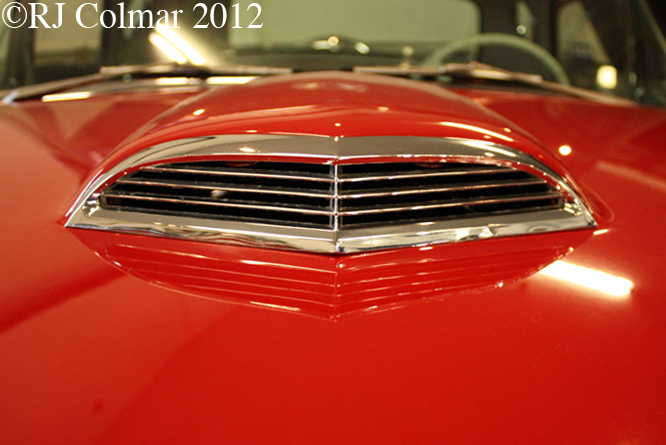
The intake on the bonnet / hood is just for show, as was the 150 mph speedometer fitted to the first series Thunderbirds which had a top speed of around 100mph.

Ford Thunderbird, Race Retro

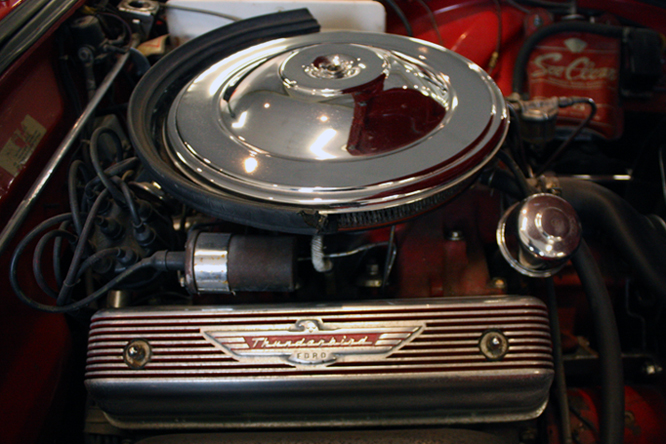
The distinctive Thunderbird rocker covers belie the fact that the 190 hp 4.8 litre / 292 cui Y block V8 was sourced from Fords Mercury division.

Ford Thunderbird, Race Retro

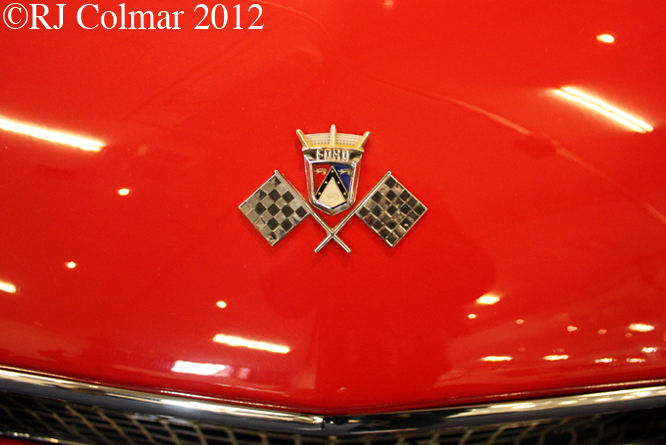
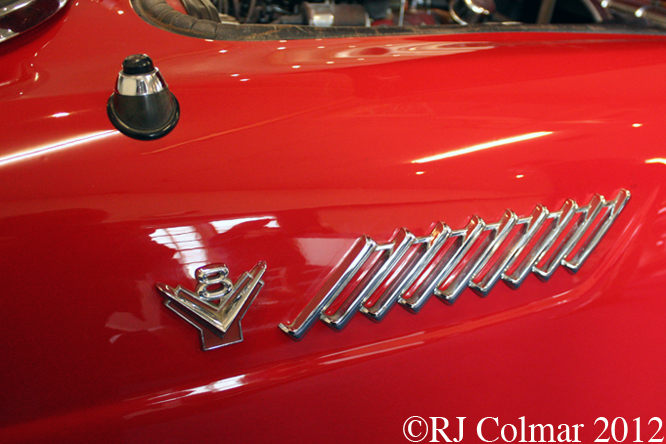
The detailing is typical of 1950’s dream cars note the V8 badge incorporates the Y which denotes the engine type.

Ford Thunderbird, Race Retro

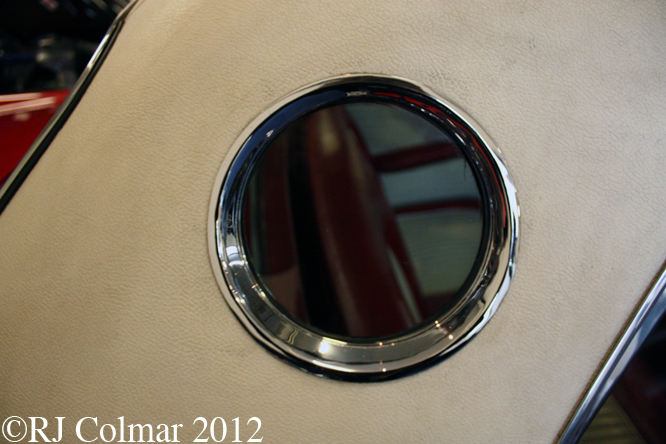
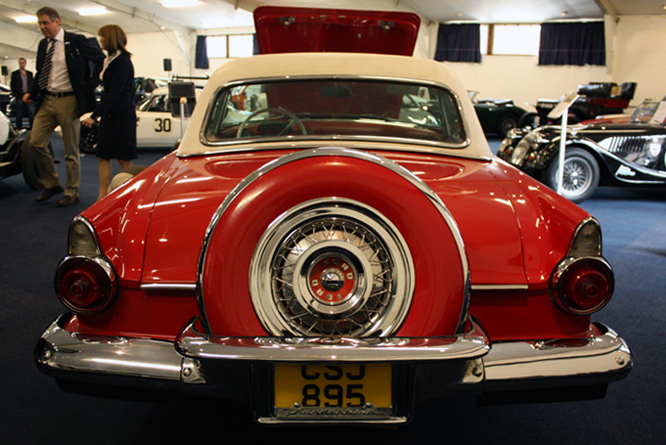
As I understand it the removable glass fiber hard top was part of the Continental option package …

Ford Thunderbird, Race Retro

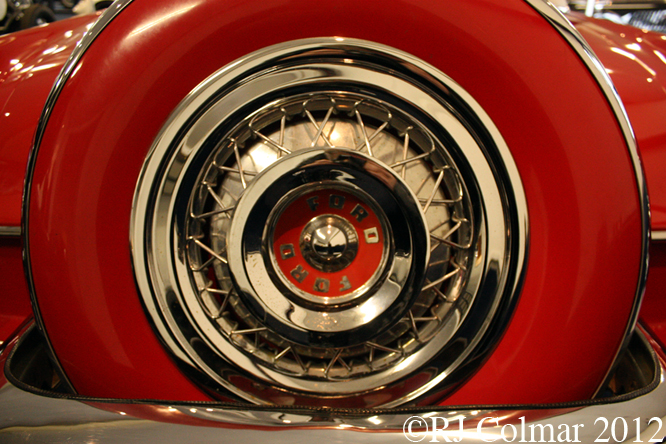
as was the bumper mounted spare wheel.

Ford Thunderbird, Race Retro

The first series Thunderbird out sold it’s Corvette competitor 20 fold with over 16,000 unit’s produced in the first year of production.

Thanks for joining me on this ‘Personal Luxury’ Edition of Gettin’ a li’l psycho on tyres’, I hope you will join me again tomorrow. Don’t forget to come back now !

Share

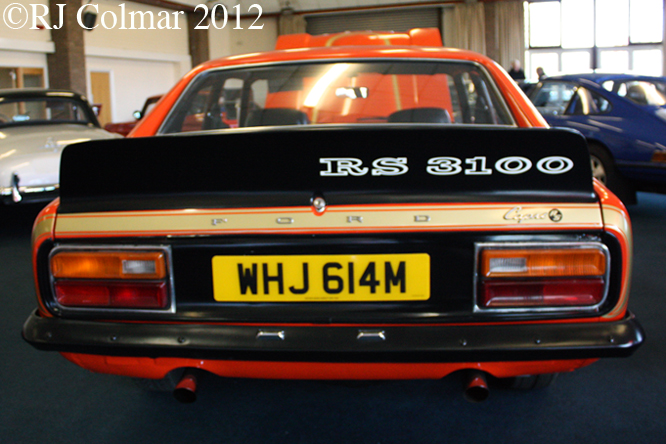
Colonists Return – Ford Capri RS3100

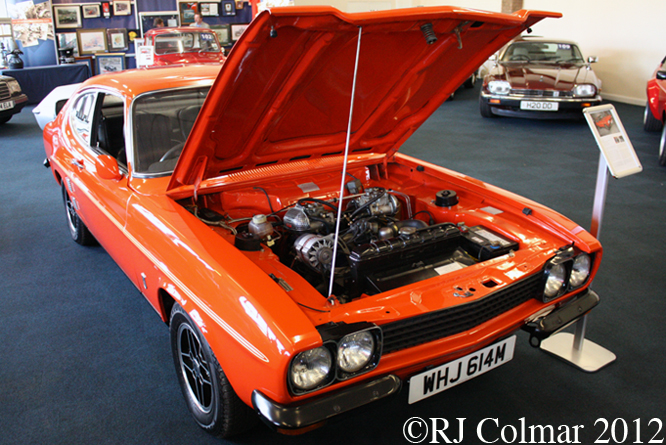
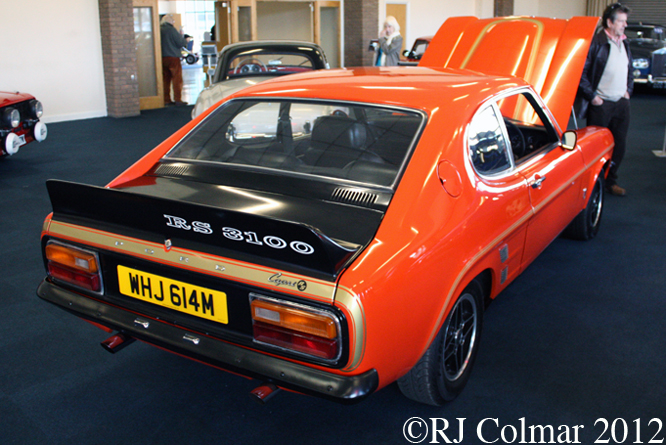
The Ford Capri RS3100 was a road going performance limited edition of the the MK I (facelift) Ford Capri launched in December 1973 just two months before the new MK II Capri.

Ford Capri RS3100, Race, Retro

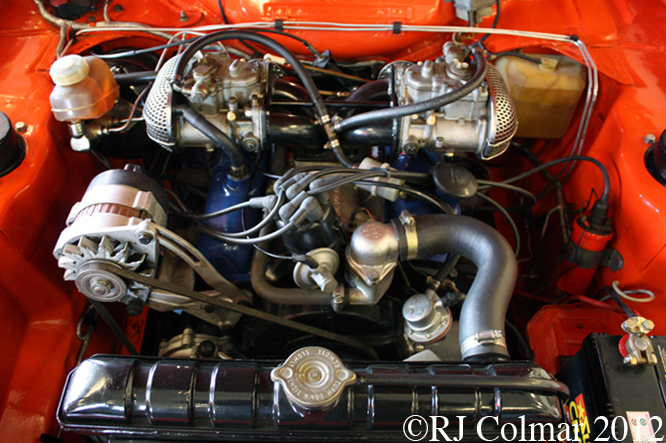
125mph performance was facilitated by a 148 hp 3090 cc / 186 cui overbored Essex V6 motor distinguished on 249 of 250 RS3100’s built with blue painted rocker covers.

Ford Capri RS3100, Race, Retro

This particular motor is described as having been rebuilt by Australian Bo Seaton with an upgraded steel crank shaft and balanced pistons, high lift cams, ported heads and twin side draft carburettors to take the power up to 190 hp.

Ford Capri RS3100, Race, Retro

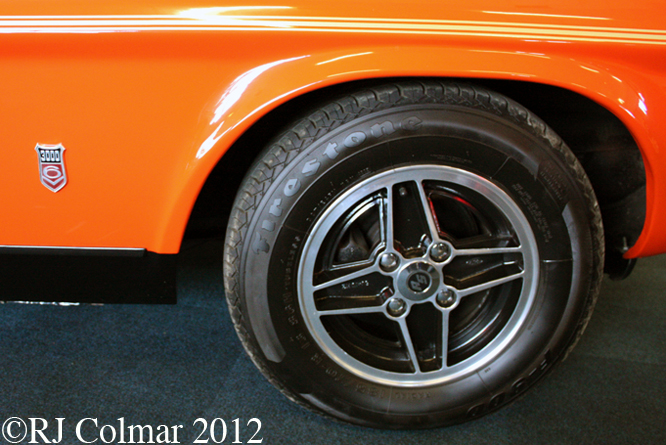
The RS3100 was available in seven colours all came fitted with triple gold go faster strips and the four spoke 6 x 13 RS road wheels.

Ford Capri RS3100, Race, Retro

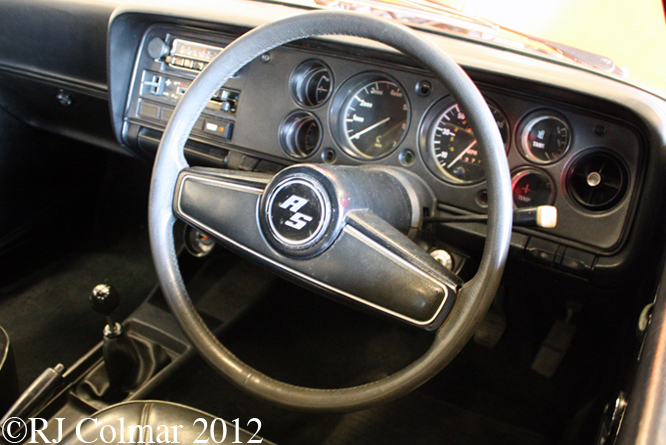
The interiors were not uniform with differences in seat belts, instrumentation and gear knobs, the black PVC seats and headlining were however common to all 250 RS3100’s.

Ford Capri RS3100, Race, Retro

This Sebring Red example, seen at Silverstone Auctions at last weekends Race Retro, is one of 50 that were exported to Australia between June and July in 1974, when it became apparent that a combination of fuel crises and the introduction of the new body MKII Capri was adversely affecting predicted UK sales.

Ford Capri RS3100, Race, Retro

This particular car is said to have clocked up 100,000 miles before returning to the UK in 2010. It is believed that just 46 of the 250 Ford Capri RS3100’s built have survived.

Thanks for joining me on this Colonists Return edition of ‘Gettin’ a li’l psycho on tyres’, I hope you will join me again tomorrow. Don’t forget to come back now !

Share

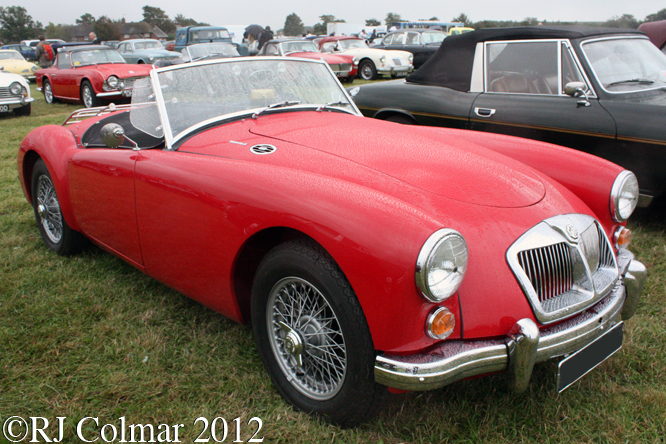
NASCAR Contender ? – MG MGA 1600 Mk II

Launched in 1960 the MGA 1600 MK II was the last of the MG A series cars to enter production. From the front the 1600 MkII wasdistinguishable from the original MGA 1600 by the bottom of the radiator grill with the bars either side of the central grill bar dropping away more radically on the later model.

MG A 1600 MK II, Goodwood Revival

There were many changes under the bonnet / hood that included a larger 1622 cc / 98.9 cui 90 hp 4 cylinder motor up from 1588cc / 96.9 cui which combined with larger valves and reworked combustion chambers in the cylinder brought the power up from 78 hp to 90 hp.

The new motor combined with new rear axle ratio’s improved the cars top speed to 102 mph, thought the acceleration from rest to 60 mph was slightly slower than than the model it replaced at 13.7 secs, as was the fuel consumption which dropped to 22.3 mpg imperial.

The is no truth in the internet rumour that Spencer Tracey backed his Dodge into an MGA at the Drive In in the film ‘Guess who is coming to dinner’, it was a hopped up hi boy. Among the films the MGA did have bit parts in was “Fast Lady”, blink and you might miss it in the linked trailer.

There is also speculation on the internet that Smokey Cook may have driven an MGA at Bowman-Gray Stadium in 1963 to record the last start by a foreign manufacturer in a NASCAR race until the arrival of Toyota in the 21st Century. No pictorial evidence has been found of what type of MG Smokey drove that day, though at least one photo has been found of Fred Harb driving a TD at Bowman fitted with a small block Chevy V8 allegedly picked up with a transmission for just $150 from a junk yard. It seems most likely that this is the type of “hobby stock class” grid filler from the tracks regular series rather than a specially prepared for NASCAR MGA. If you know different and have either documents or photographs to prove what kind of MG Smokey Cook drove at Bowman in 1963 please chime in below.

Like the MGA Twin Cam and 1600 De Luxe the 1600 MkII and MkII De Luxe had disc brakes all round with competition center lock wheels an optional extra. Between 1960 and 1962 MGA production tailed off with just 8,719 of these Mk II vehicles being built. Total MGA production between 1955 and 1962 reached 101,081 making it the all time best selling sports car of the day. Amazingly all but 5000 of the total MGA production run remained in the country of origin.

Thanks for joining me on this “NASCAR Contender ?” edition of ‘Gettin’ a li’l psycho on tyres’. I hope you will join me again tomorrow. Don’t forget to come back now !

16 09 12 Errata :- it has come to my attention that the original set of photo’s posted with this blog were of the earlier MG 1600 not the MkII with the distinctive grill now seen above at the 2012 Goodwood Revival. Apologies for any confusion.

Share

Firing Up 2012 – Race Retro

Thanks to my membership of the Bristol Pegasus Motor Club I enjoyed my second trip to Race Retro over the past weekend.
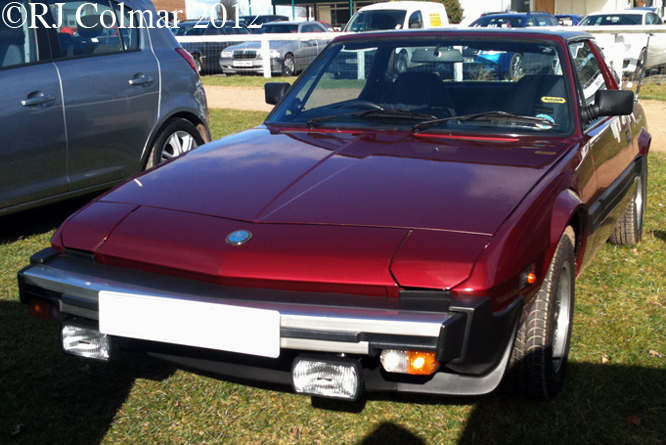
Bertone X1/9

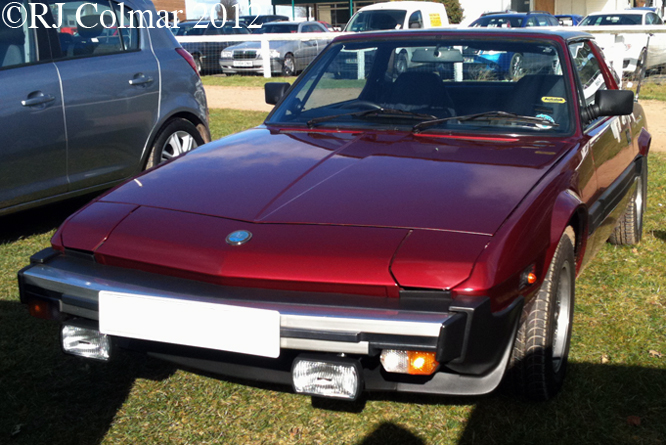
Just like last year I had trouble getting out of the car park thanks to the fabulous collection of sports cars fellow enthusiasts had brought out for a spin in the glorious sunshine. This Bertone X1/9 particularly caught my eye, I spent many years lusting after an X1/9 when I left school. I eventually ended up with a slightly more practical , cheaper to insure FIAT 128, I’ll be taking a closer look at the X1/9 on Sunday.
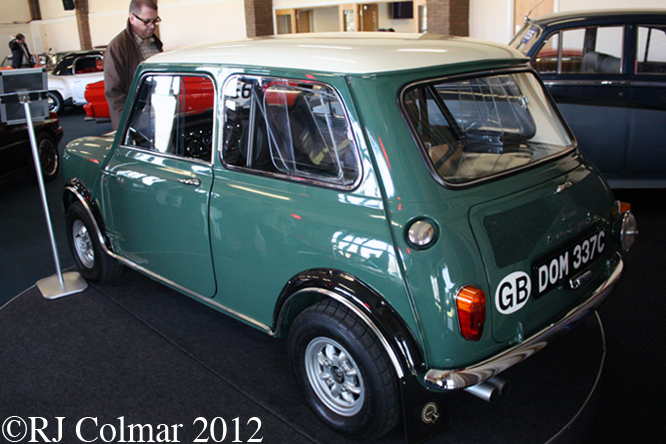
Twini Cooper S, Race Retro

Silverstone Auctions have taken the place of H&H Auctions as Race Retro’s Auctioneer partners, among the unusual gems scheduled to go under the hammer was this Twini Austin Cooper S a replica of two experimental works cars originally built in 1963 that raced in the Targa Florio. This replica was built on a 1965 chassis with two Cooper S motors, gearboxes and disc brakes all round.
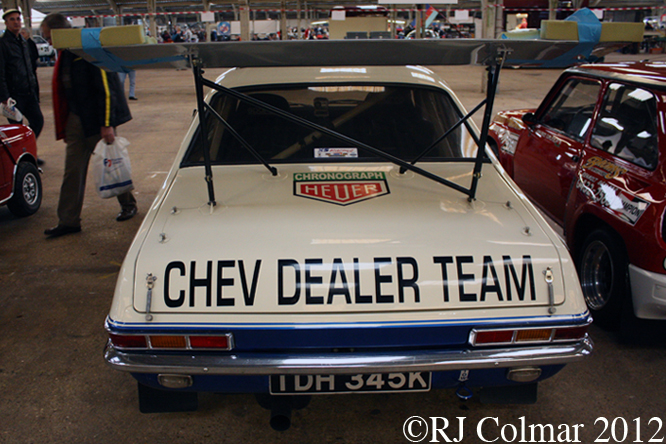
Chevrolet Can Am, Race Retro

In the Rally shed it was nice to see the replica South African Chevrolet Firenza CanAm now fitted with a huge rear wing reminiscent of Formula 1 & Can Am cars in 1968 and as used in the original Chev Dealer Team car in 1974.
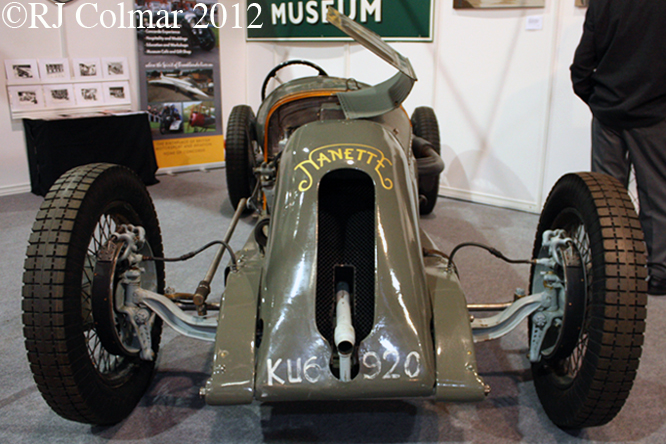
Nanette, Race Retro

Nanette seen above on the Brooklands stand was a special built by Felix Scriven in 1925, it was originally fitted with an unreliable Sage motor, which contributed to this car originally being called, Mother Goose until a 4 cylinder Hooker motor that originated from the Marlborough Thomas special and which could be configured as either a 1.5 litre / 92 cui or 1.75 litre / 107 cue motor according to which of two crankshafts was used.
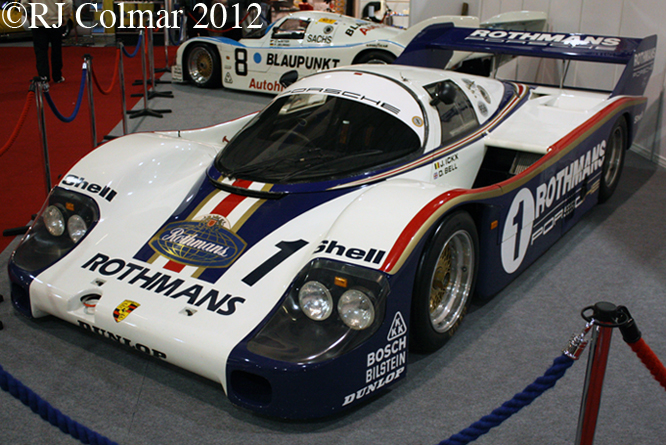
Porsche 956, Race Retro

Among the anniversaries being celebrated at Race Retro was the 30th anniversary of the Porsche 956 which evolved into the 956B and 962 and 962 C series that dominated Le Mans, the Daytona 24 hours, Group C and IMSA from 1982 until 1987. The #1 above appears to be a 956 with distinctive 1982 paintwork while the #8 in the background carries the 1988 bodywork of the 962 C commonly carried by chassis #116.
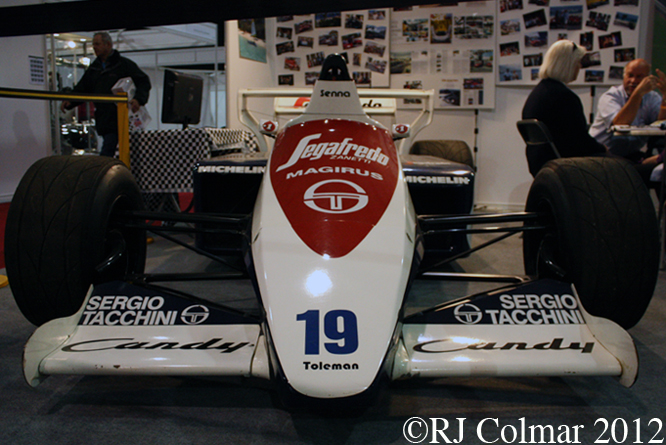
Toleman TG 184, Race Retro

The multiple award winning success of “Senna” the documentary on the Brazilian Triple World Champion has focused interest in his cars, the Toleman TG184 was of the type that Senna drove once his team had secured a supply of Michelin tyres after the first two races of Senna’s 1984 rookie F1 season.
BRM P57, Race Retro

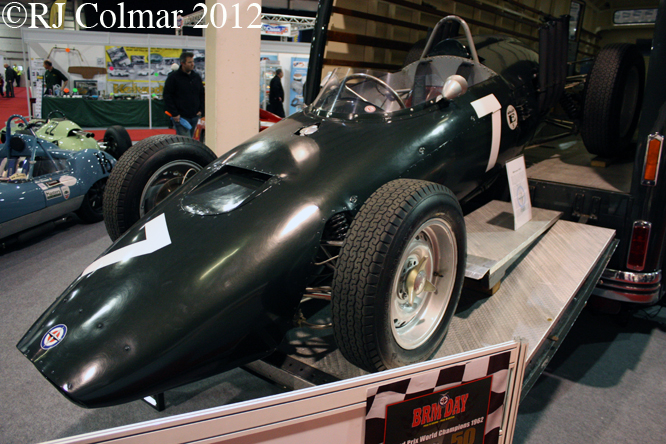
The town of Bourne in Lincolnshire will be celebrating the 50th anniversary of BRM’s World Championship year on October 7th. Graham won the championship driving a BRM P57 with a BRM V8 similar to the #7 in the photo above, though after all these years BRM are probably still at least as well remembered for building a supercharged 1.5 litre 92 cui V16 in 1949 and possibly the most complex racing motor of all time the 3 litre / 183 cui H16, which is said to make so much noise the first time it was opened up in anger every one in the pits at Riems dived for cover as it came down the start finish straight for the first time ! I’ve made it a mission to try and hear the H16 in action this year and hope to be at BRM Day at Bourne in October.
Riley Ulster Imp, Race Retro

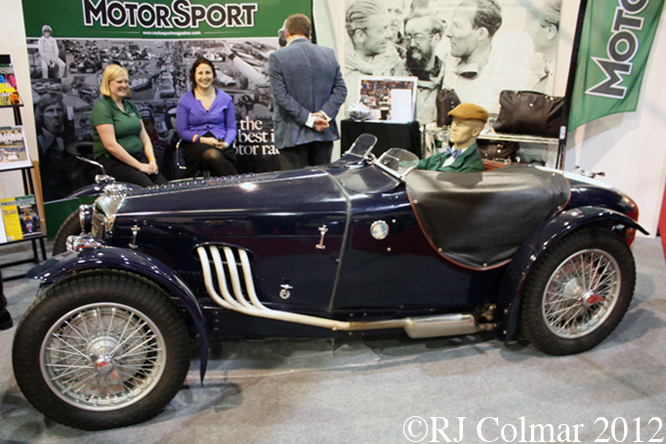
Finally on a personal note it is 40 years since I bought my first copy of Motor Sport, the December 1972 edition was packed with the details of the 1972 Canadian and US Grand Prix’s which Jackie Stewart won in anticipation of an extremely successful final 1973 season. On the Motor Sport stand above is the 1934 Riley Ulster Imp in which after a successful post WW2 competition history the car was acquired by Leslie Hawthorn the proprietor of the Tourist Trophy Garage in Farnham who gave it to his son Mike who raced this car on his competition debut at the Brighton Speed Trials where he won his class and drove it in his first race which ‘The Farnham Flyer’ also won on his way to becoming the first ten British World Champions.

I’ll be posting more blogs featuring vehicles seen at Race Retro 2012 in the coming days and weeks, starting tomorrow with an unusual MG-B.

Thanks for joining me on this ‘Firing Up 2012’ edition of ‘Gettin’ a li’l psycho on tyres’ I hope you will join me again tomorrow. Don’t forget to come back now !
Share