Surprising Sunday Spin – Škoda Estelle 130 L

The Skoda name can be traced back to an Austro – Hungarian, based in what is now the Czech Republic, arms manufacturer established in 1859, the story of their involvement in the automotive dates back to 1924.
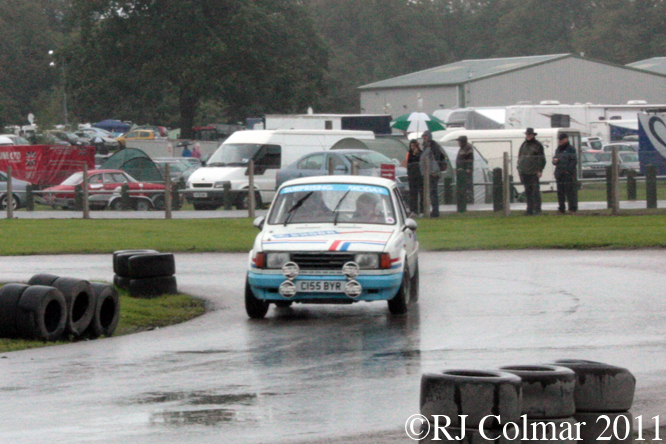
Skoda Estelle 130 L, Oulton Park,

In 1895 after a disappointingly arrogant correspondence with German cycle manufacturer Seidel and Naumann, regarding the repair of his bicycle, the Czech bookseller Václav Klement opened a cycle repair shop in Mladá Boleslav now in the Czech Republic in partnership with apprenticed locksmith Václav Laurin who had established a bicycle manufacturing business in Turnov a year earlier.
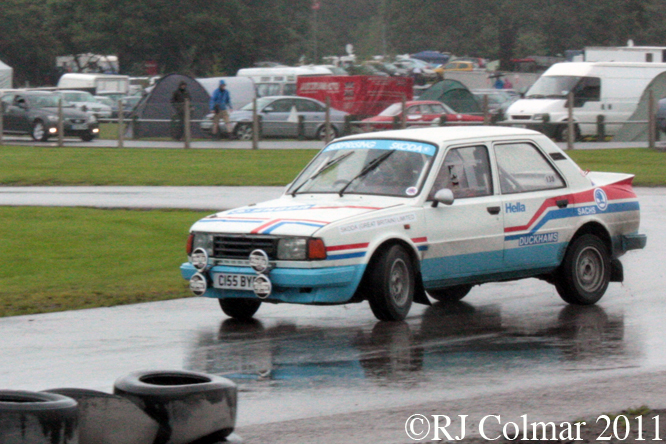
Skoda Estelle 130 L, Oulton Park,

By 1899 the Klement – Laurin had developed the Slavia motorcycle which they started exporting the following year, by 1905 they had started manufacturing 4 wheeled motor vehicles. In 1924 Klement – Laurin which by now had further diversified into trucks was taken over by Skoda.
Skoda Estelle 130 L, Oulton Park,

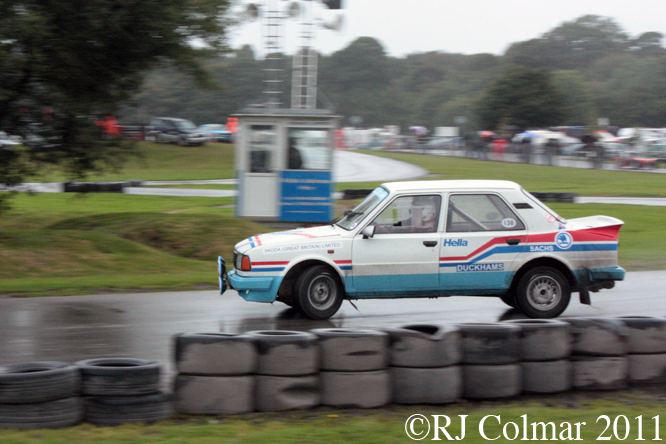
The Skoda Estelle 130 was introduced in 1984 as a replacement to the 120 and earlier 105 models which dated back to the 1970’s and 1960’s respectively.
Skoda Estelle 130 L, Oulton Park,

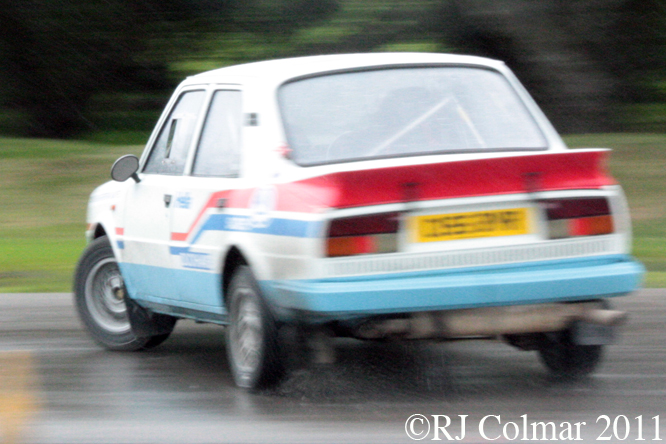
Three 130 models were originally available in the UK when the 130 series was launched here in March 1985. The 130 L and LSE 4 door models and a 2 door Rapid Coupé for which there was also an aftermarket Cabriolet conversion.
Skoda Estelle 130 L, Oulton Park,

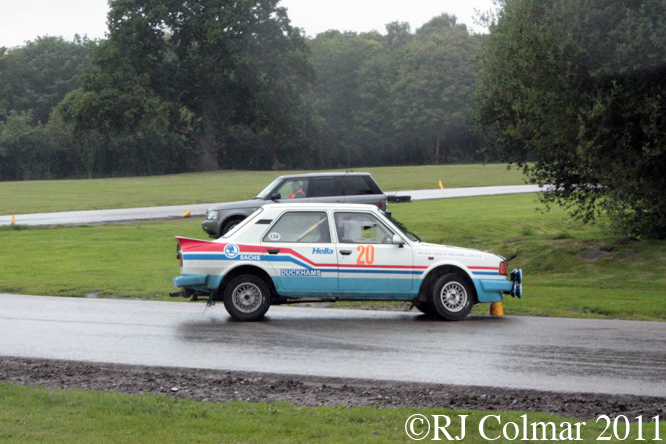
The dated engineering led to the handling of the rear engined 58 hp 130 L being variously described as wayward, fun and even ‘like a Porsche’ meaning tail happy as ably demonstrated here at Oulton Park last year.
Skoda Estelle 130 L, Oulton Park,

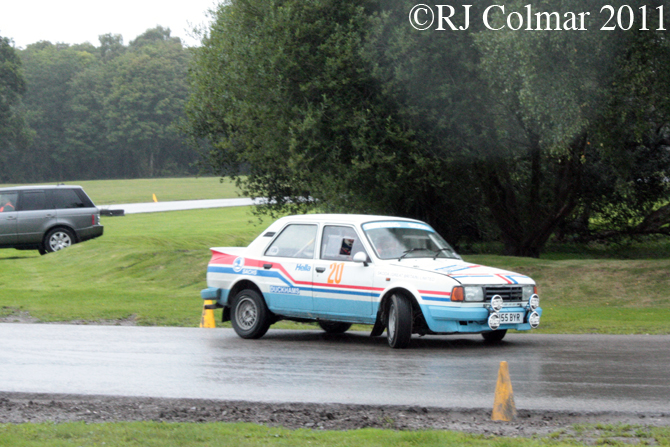
Despite disparaging jokes like ‘Why does a Skoda have a heated rear screen ? To keep your hands warm when you push’ the Skoda team managed 17 class wins on the RAC Rally from the 1970’s into the 1970’s. I was not able to find out who the driver of the 1985 replica Group A model above is, one wag suggested that he had so much trouble keeping in on the road he might not want to be identified.
Skoda Estelle 130L, Snetterton

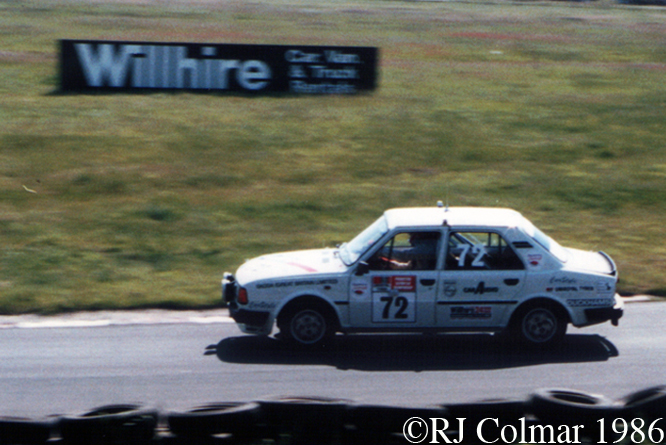
In 1986 Skoda (GB) Ltd entered the Estelle 130 L above for Bill Taylor, Andrew Woolley, Jeff Williams, Bill Hunt in the Willhire 24 hour production car race it ran absolutely faultlessly, from memory stopping only for routine driver changes and fuel, to finish fourth in class D, many laps behind the highly fancied and more powerful and Vauxhall Nova’s.

My thanks to Tony Gallagher for their his help trying to identify the driver of the first car and to Tim Murray for his help with the results for the second.

Thanks for joining me in this ‘Surprising Sunday Spin’ edition of ‘Gettin’ a li’l psycho on tyres’ I hope you will join me again tomorrow. Don’t forget to come back now !

Share

Hot V8 – Lotus 35 Martin #35/F/21

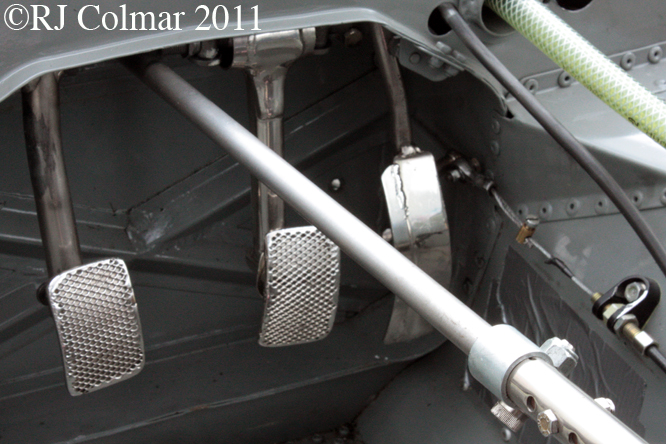
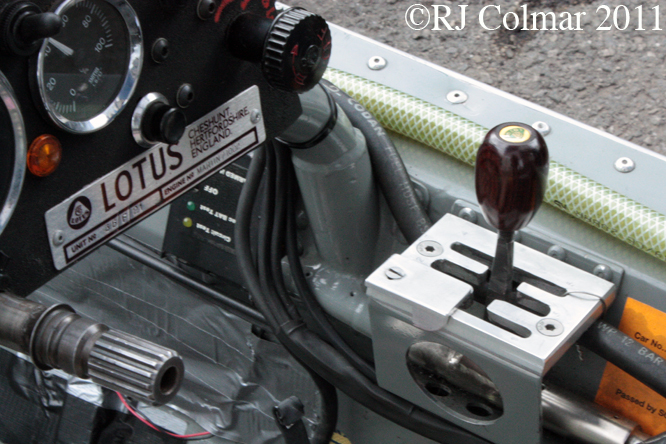
The Lotus 35 was built for the 1965 season to compete in the second and third tier Formula 2, Formula 3 and Antipodean Tasman series fitted with motors 1 litre / 61 cui to 2.5 litre / 152 cui. 22 of these cars were built and fitted with a variety of 4 cylinder motors, chassis #18 apparently was even fitted with a 4.7 litre / 289 cui V8 and driven to a Formula A class victory at Willow Springs by Vernon Shields in 1968.

Lotus 35 Martin, Oulton Park

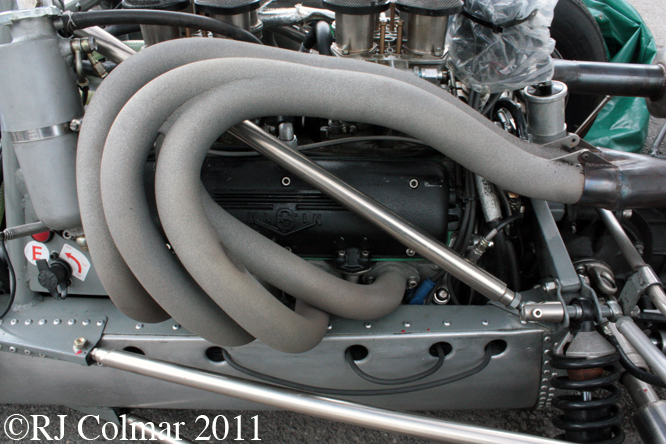
In 1966 new Formula One regulations came into effect allowing engine sizes up to 3 litres / 183 cui doubling the capacity of the previous regulations which had been in effect since 1961. Few teams were prepared for the new reglulations many teams resorted to using interim 2 litre / 122 cui motors until larger units like the Ford Cosworth DFV became more widely available in 1968. Former MG engineer turned engine tuner Ted Martin who had built heads for Ford based Formula Junior motors and a series of three valve heads for Ford motors used in Saloon car racing designed an unusually compact lightweight all aluminium V8 dry sump competition motor for the new Formula One regulations while working for GM in Canada in the early 1960’s.

Lotus 35 Martin, Oulton Park

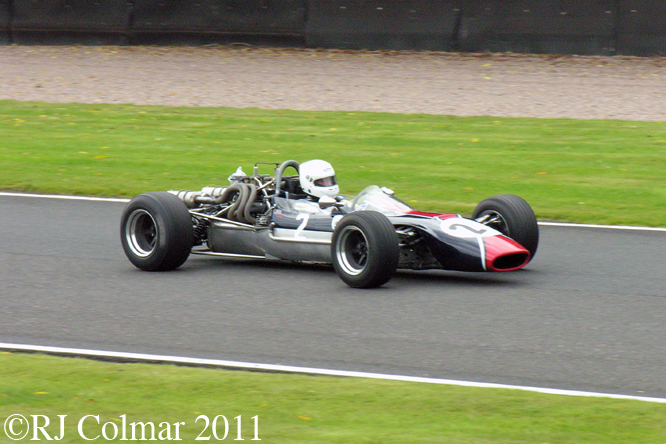
Upon returning to the UK, having built his engine, Ted Martin asked his customer racing car entrant Charles Lucas if he could fit his new 3 litre V8 motor into a slightly damaged Lotus 35, chassis number 35/F/19, similar to the one seen here at Oulton Park which belongs to Allan Rennie, that the Lucas team had been running in South America for Piers Courage.

Lotus 35 Martin, Oulton Park

Roy Pike first drove the Lotus Martin, also known as the Lucas Martin at the time, prepared by Roy Thomas in a Formula Libre race at Mallory Park on Boxing Day 1966 and recorded a 3rd place in what proved to be the cars only competitive event. After the 295 hp car had impressed Dan Gurney, by matching his Eagle for top speed at Goodwood, Piers Courage qualified the Lotus Martin 14th for the Race of Champions at Brands Hatch in 1967 but a rocker bent while the engine was being warmed up before the race forcing a DNS.

Lotus 35 Martin, Oulton Park

A further test at Snetterton would be the cars last outing, after dusting Jackie Stewart driving an H16 powered BRM, Piers missed his breaking point and sent the car into the wall with the subsequent fire writing off the car. Piers Courage appears to have been unhurt in the incident but Charles Lucas called it a day and concentrated on building Titan racing cars from then on. Three more Martin V8 powered Formula Once cars were built by motor factor dealer AJ Pearce, during the week before their first event the unattended Pearce transporter burnt to the ground destroying two Pearce Martins, along with a Cooper Ferrari, before they ever turned a wheel in competition.

Lotus 35 Martin, Oulton Park

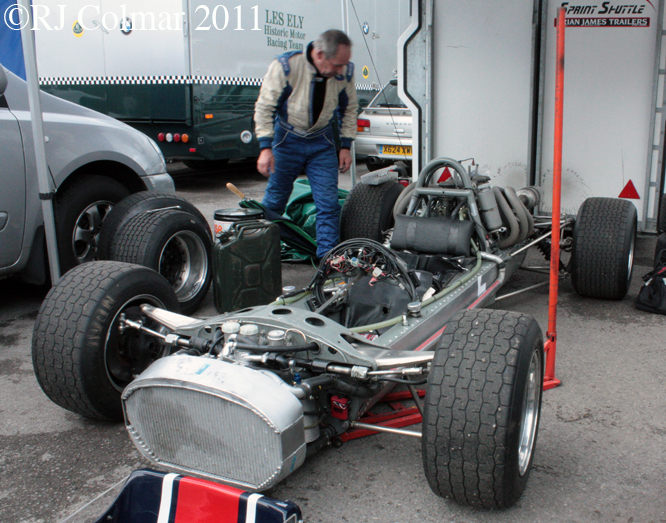
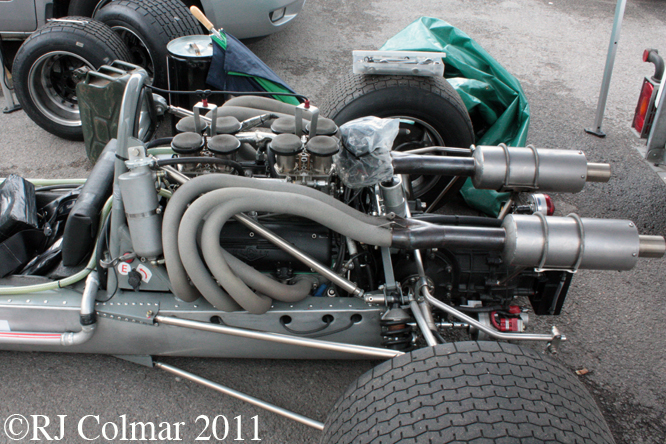
Allan Rennie started his recreation of the Lotus Martin after finding one of the V8’s under a dust sheet in a workshop in Horsham in 2003. The process of turning the motor into a runner involved spending a year getting a pair of cylinder heads up to scratch, preparing a new pair of cylinder blocks acquired from Ted Martins workshop, selecting the best four pairs of forked and blade rods from over 40 used ones, machining big end shells to match the rods, manufacturing a new set of pistons, the cylinder head volumes turned out to vary and to over come this each has a different thickness head gasket to balance the compression ratio, and machining new rocker shafts. Note the holes in the double skin chassis required for the removal of the spark plugs.

Lotus 35 Martin, Oulton Park

Two years after finding the motor Allan acquired the Lotus 35 chassis #35/F/21 and since 2003 Allan reckons he has spent over 5000 hours and enough money to buy a ready to go Ford Cosworth DFV powered Formula One racing car stripping everything down to the last rivet making all the necessary repairs using all of the usable original materials to put the engine and chassis back to together.

Allan’s five years of hard graft was rewarded with a debut win on 31st May 2009 in the Snetterton Guards Trophy meeting, despite ‘dire’ handling, possibly a result of a motor with 3 times the cui than originally intended, Allan found himself in the right place at the right time when the two leaders retired.

My thanks to Allan who’s Lotus 35 Martin website gives further first hand details and to Macca and everyone who posted information on The Nostalgia Forum Martin Engines thread.

Thanks for joining me on this ‘Hot V8’ edition of ‘Gettin a li’l psycho on tyres’, I hope you will join me again tomorrow. Don’t forget to come back now !
Share

Annus Horribilis – Ferrari 312 T5 #044 & #045

After winning the 1979 World Championship with the cobbled to together Ferrari T4 I looked at last week Ferrari made a decision to change direction, in view of the fact that the recently discovered ground effects which manipulated air passing under the car to create aerodynamic down force with little cost in favored vehicles with narrow motors. During the 1979 season Ferrari had run with the 180 degree V12 the widest motor in the field and were also running the only transverse gearbox which further compromised the aerodynamics.

Ferrari T5, Brands Hatch

Ferrari took the decision to build a V6 turbocharged motor but it would not be ready until the 1981 season so in the interim they scaled down the bodywork of the Ferrari T5 in order to try and improve straight line speed which had been lacking in the T4 and also made a narrower version of the 180 degree V12 which had dire consequences on hitherto rock solid reliability. Jody Scheckter, who by his own admission had already achieved his goal in 1979 and decided to retire at the end of 1980 had a simply dire year trying to defend his championship scoring just two points in Long Beach and failing to even qualify for his last but one Grand Prix in Canada completely.

Ferrari T5, Brands Hatch

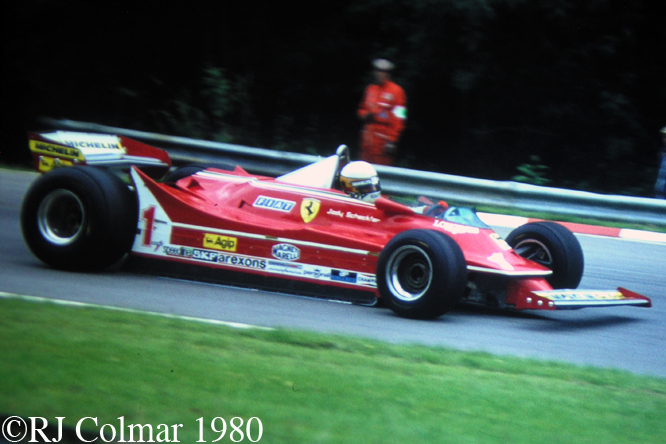
The #1 seen in both photo’s above during practice for the 1980 British Grand Prix is chassis #044 which was mostly taken to races as a spare car in the 1980 season both Jody Scheckter and Gilles Villeneuve raced the car with Gilles scoring the chassis best finish a 5th place in Canada.

Ferrari T5, Brands Hatch

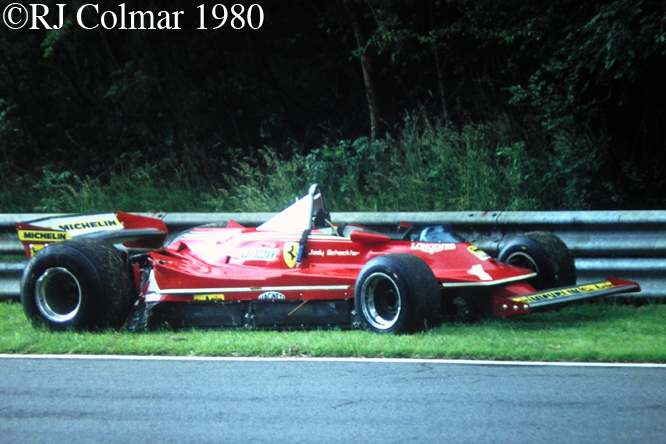
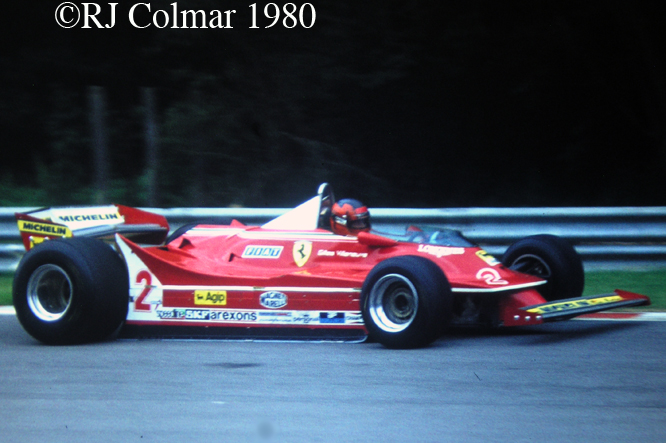
Gilles Villeneuve managed to score a total of six points in 1980, the eight points total scored by Ferrari equaled a tenth place finish in the Championship, an all time low scoring only on point more in 14 races than in the 11 race in 1969 season when they finished 6th in the championship. The chassis above is #045 in which Gilles scored a best 5th place in Monaco and a further 6th place in Belgium. At the 1980 Canadian GP Gilles Villeneuve took the first attempt to start in #045 above but was involved in a first corner meleé which eliminated seven cars from the race. He then jumped in to chassis #044, which Jody crashed at during practice for the British Grand Prix, see middle photo and came home 5th.

Thanks for joining me on the ‘Annus Horribilis’ edition of ‘Gettin’ a li’l psycho on tyres’, I hope you will join me again tomorrow. Don’t forget to come back now !
Share

Hot Diggity Dog, Terraplane K Special Convertible

Today’s post features an on going restoration by Wayne who you may remember restored the Terraplane Six Cab Pickup Express that I featured a couple of weeks ago.

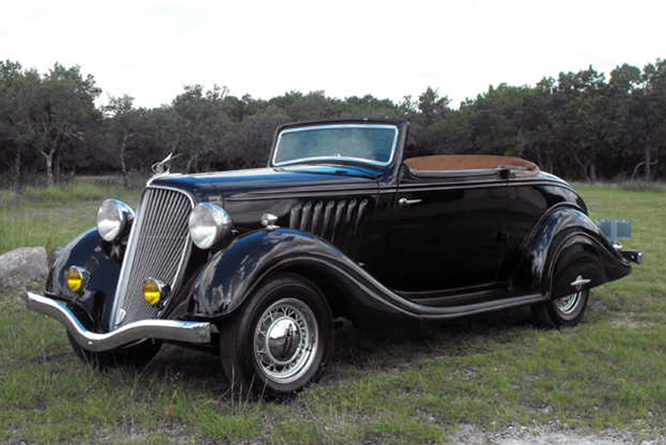
Terraplane K Special convertible coupe

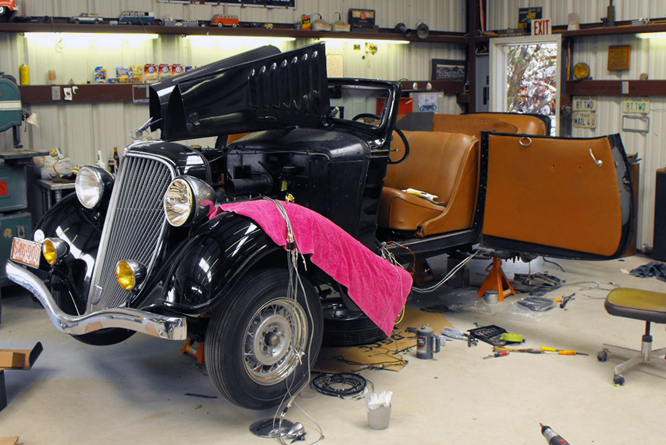
Wayne tracked this never wrecked or rusted car, built in 1934 with just 50,000 miles on the clock, for 25 years before he got the opportunity to purchase it two years ago. A new reproduction wiring harness is being installed with a 12 volt alternator built inside a generator case to keep the stock look so that Wayne can both see the road and be visible when using his pride and joy on the road as intended, he has no plans to turn this car into a trailer queen or a supercharged hemi powered hot rod.

Terraplane K Special convertible coupe

The car is fitted with an original recently refurbished 80 hp 3474 cc / 212 cui flat head six cylinder motor and original smooth oil filled original cork clutch and transmission. Wayne has purchased low back axle gear ratio’s manufactured by The Railton Owners Club in the UK for more comfortable touring.

Terraplane K Special convertible coupe

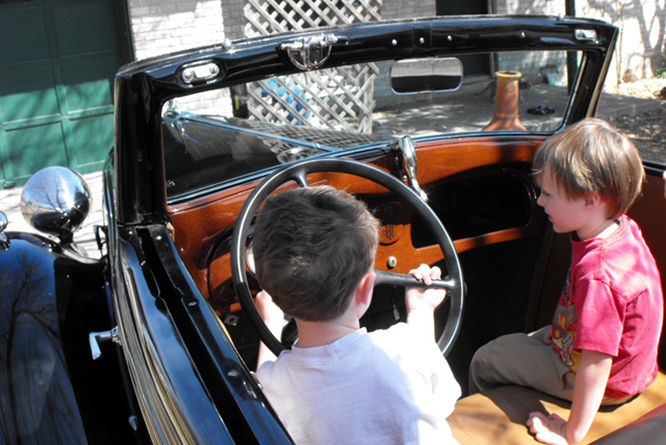
Since acquiring the car Wayne has taken it apart, and fitted factory optional 16 inch wheels with black wall tyres, and has plans to fit a new correct black fabric hood and replace the heavy duty vinyl seat upholstery with leather using the correct stitching patterns.

Terraplane K Special convertible coupe

When Wayne bought the car it had red pinstripes which have all been removed and replaced by wheat ones ones laid by an old school friend known professionally as “Old Bob Sign”.

Terraplane K Special convertible coupe

The ’34 Special K sits on a chassis with a 112″ wheel base, weighs 2590 lbs, with a no cost option independent ‘Axle-Flex’ suspension, cost US$ 695 when new. This is one of just 20,000 ’34 Special K Terraplanes, all bodies, built and one of less than 10 original Detroit built ’34 Special K Convertibles known to still exist.

Terraplane K Special convertible coupe

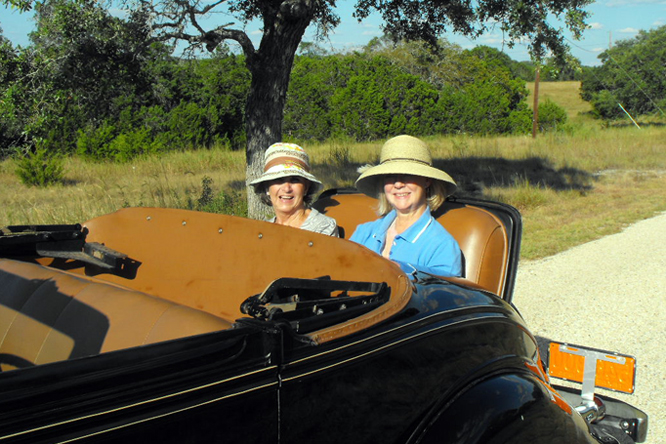
As can be seen from the faces of Wayne’s lady Sandra on the left and her friend Mary Barbra after their first ever ride sitting in the dickie / rumble seat, this is one fun automobile even when only taken for a quick spin around the ranch. Here is wishing Wayne many happy hours motoring and keeping the Robert Johnson’s Terraplane Blues at bay.

My thanks to Wayne Graefen for his photo’s and sharing the story of this rare remarkable survivor.

Thanks for joining me on this ‘Hot Diggity Dog’ edition of ‘Gettin’ a li’l psycho on tyres’, I hope you’ll join me for Ferrari Friday tomorrow. Don’t forget to come back now !
Share

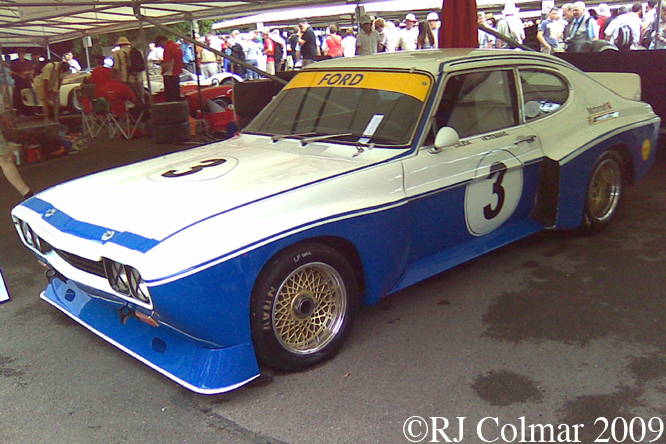
Niki’s Ford – Ford Capri RS 3100

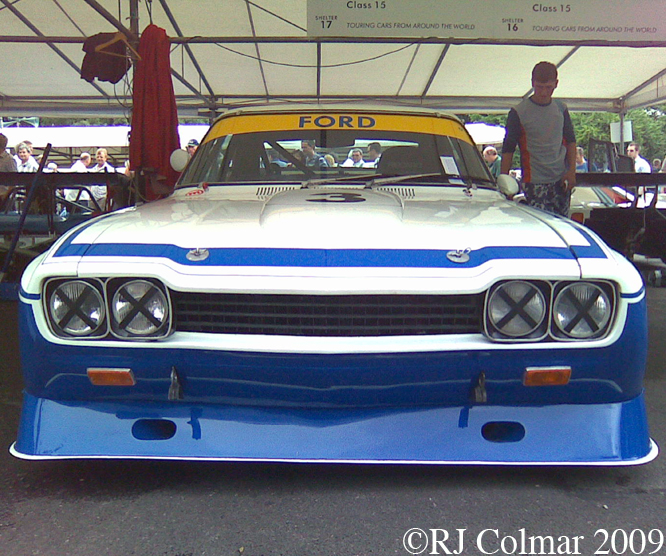
With apologies to my Rowdy friends who will have read much of this before, I hope you will agree that there is good reason for reposting this blog today. The Ford Capri RS 3100 was the final 1974 racing evolution of the Mk1 Ford Capri that was launched in 1969. It is thought that four RS3100’s were built by the Ford Competitions department in Cologne, Germany.

Ford Capri RS3100, Goodwood FoS

The racing debut of the RS3100 appears to have been by the Harry Theodoracopoulos team in the the 1974 Atlanta Six Hours where Harry and team mate Horst Kwech qualified 32nd but are not recorded as finishing the race.

A week later Ford’s Cologne factory team entered two RS3100’s at the Nurburgring Eifelrennen in Germany, where one time German NASCAR racer, ‘dega 1971, Rolf Stommelen & Toine Hezemans scored a one, two in the German Touring car championship.

Ford Capri RS3100, Goodwood FoS

Power comes from a 440 hp Cosworth developed GAA quad cam 24 valve V6 motor, a similar type was also used in European Formula 5000 races with some success. To improve engine bat aerodynamics and weight distribution the radiators were mounted ahead of the rear wheels.

Despite it’s high state of tune the RS3100 was generally outclassed by the BMW CSL ‘Batmobiles’ much as it’s predecessors the Capri RS 2600 and Capri RS had been in 1973.

Ford Capri RS3100, Goodwood FoS

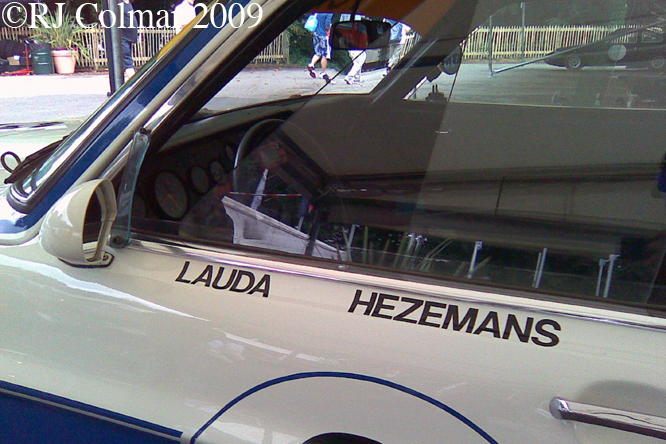
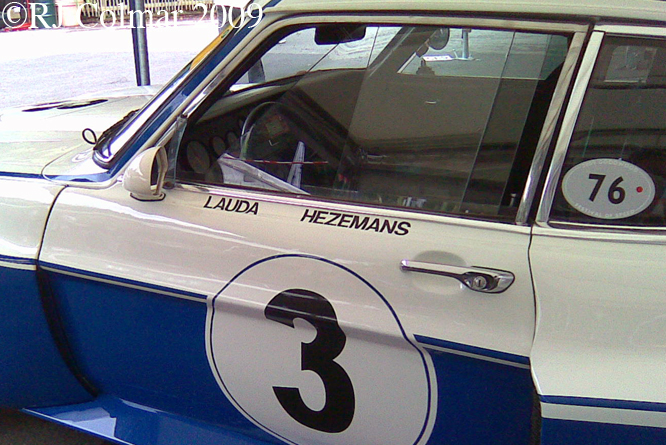
This vehicle appear’s painted up at Goodwood as the #3 Niki Lauda used at the two Norisring races on the 15th of September 1974 where he finished 6th and 20th.

Toine Hezemans was Lauda’s team mate that day in the #4 entry who in a symmetrical reversal of fortunes came in 16th in the first race and 2nd in the second race.

Ford Capri RS3100, Goodwood FoS

Not sure how Niki Lauda who was in the first year of a Ferrari contract was allowed to race for the work’s Ford team given that just a decade earlier Enzo Ferrari and Ford had spectacularly fallen out over a deal in which Ferrari was supposed to sell out to Ford. These days it is extremely rare for a contracted Formula One driver to be allowed to race in any other category.

Ford Capri RS3100, Goodwood FoS

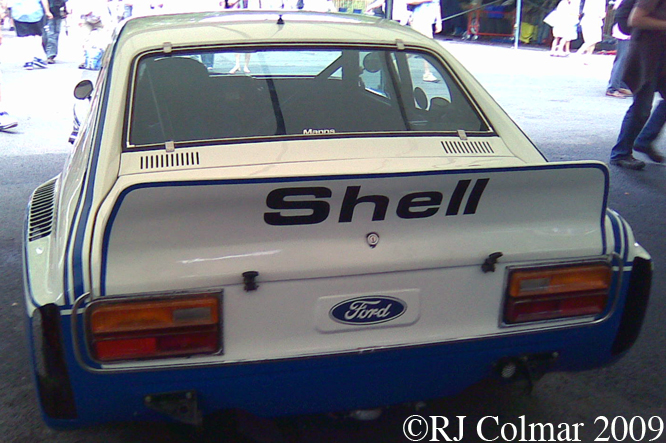
The RS 3100 differed visibly from it smaller engined Capri RS 2600 and Capri RS brethren with the addition of this large Gurney flap on the back.

I hope you will join me in wishing one of my all time hero’s Niki Lauda a very Happy Birthday.

Thanks for joining me on the Birthday Boy edition of ‘Gettin’ a li’l psycho on tyres’, I hope you will join me again tomorrow don’t forget to come back now !

Share

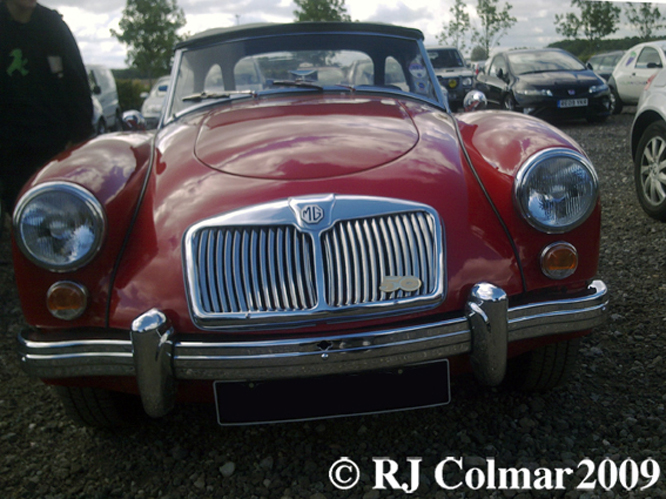
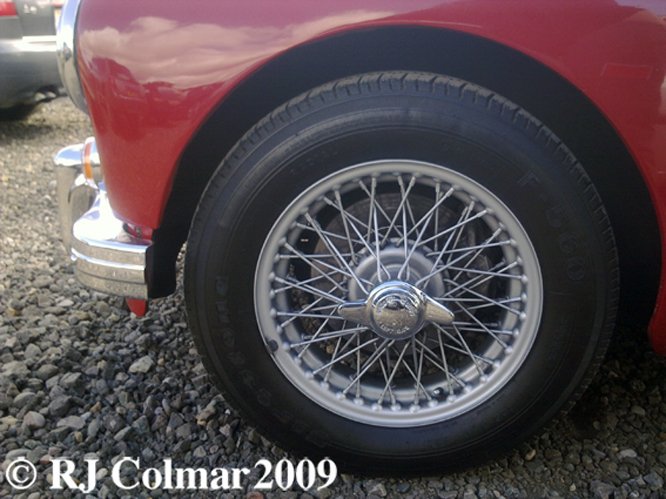
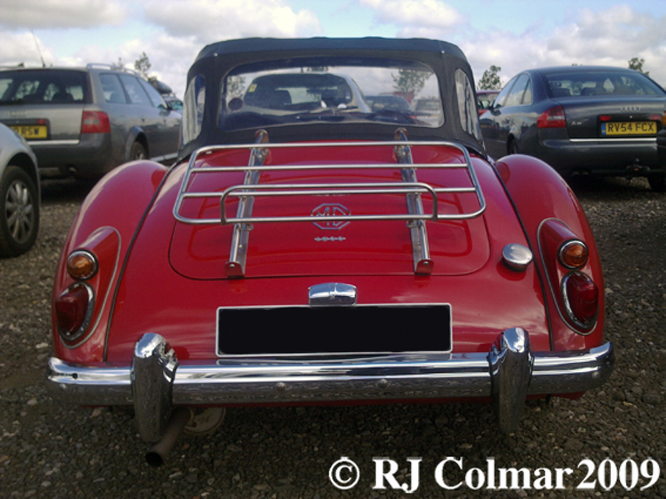
Almost Always True – MG MGA 1600

The story of the MGA sarts with an MG TD special chassis #EX172 registration UMG400 which despite it’s works experimental chassis number was built for privateer George Philips to race at Le Mans in 1951, the car featured a low slung body desgined by Syd Evener, the body was so low that a special wide chassis had to be built to accommodate the driver between the chassis rails rather than above them as had been the case with all of the MG T series cars.

MG MGA, Silverstone

#EX172 was a public relations success, though it only lasted three hours of the 24 hour race for which it was designed. Due to the rationalisation going on in the British Motor Corporation, a conglomerate which MG became a part of in 1952, MGA production was stalled for two years while resources were put into launching the Austin Healey 100/4.

MG MGA, Silverstone

The MGA finally came to market in 1955 fitted with a 58 hp motor, in 1958 a 108 hp twin cam version became available which had to be detuned to 100hp after problems manifested themselves with the high compression motor.

MG MGA, Silverstone

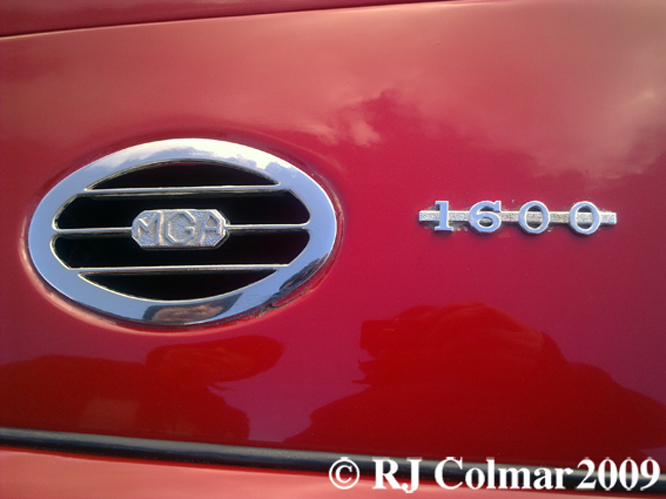
The 1600 MGA was launched in 1959 with a 78 hp version of the BMC ‘B’ motor, disc brakes on the front. One of these £940 models was tested with a rest to 60 mph time of 13.3 seconds, top speed of 96 mph and 29.7 mpg (imperial).

MG MGA, Silverstone

This 1960 model is one of 31,501 manufactured between 1959 and 1960. Elvis Presley fans may recognise this car as similar to the one used in the film Blue Hawaii in which he sings the Weisman and Wise number ‘Almost Always True‘.

Thanks for joining me on this ‘Almost Always True’ edition of ‘Gettin’ a li’l psycho on tyres’, I hope you will join me again, tomorrow. Don’t forget to come back now !
Share

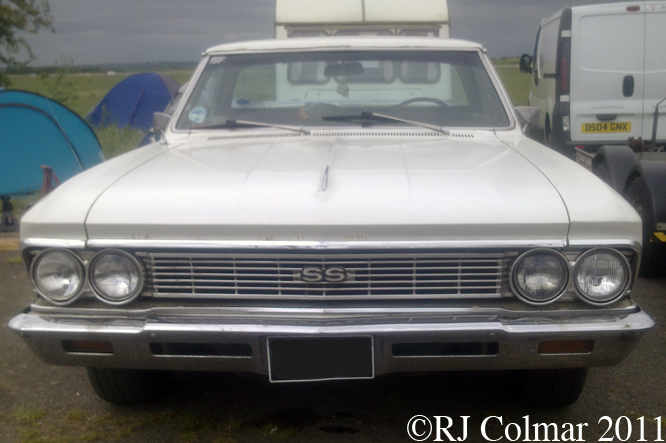
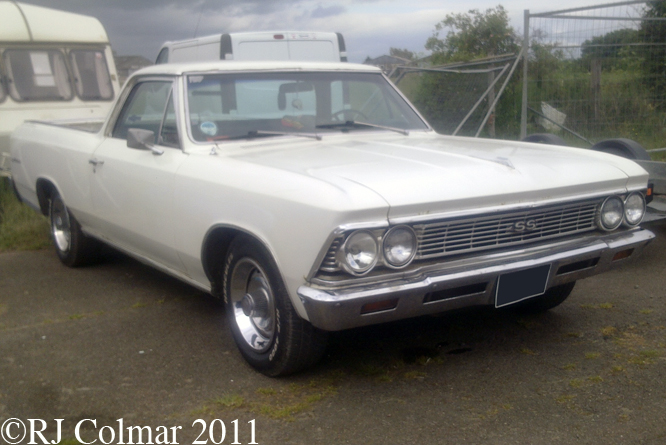
A Down Right Pleasure To Work With – Chevrolet El Camino

The second generation Chevrolet El Camino was launched in 1964 four year years after the first generation El Camino had stopped being manufactured entirely.

Chevrolet El Camino, Shakespeare County Raceway

Second generation El Camino’s are identical to the contemporary Chevrolet Chevelle’s from the B post forward with the panels being updated every year from 1964 to 1967.

Chevrolet El Camino, Shakespeare County Raceway

The 1966 model was advertised as the model that was ‘a down right pleasure to work with‘ while offering the ‘appearance, performance and comfort of a passenger car’, which was offered with a choice of 15 ‘magic mirror acrylic colours with prices starting at around US $2,500.

Chevrolet El Camino, Shakespeare County Raceway

With 26 power train options from a range of two six cylinders and five V8’s going all the way up to a new 6.5 litre / 396 cui V8 capable of covering a quarter mile in the mid to low 14’s performance could be matched to the needs of the building site or farm all the way to the drag strip.

Chevrolet El Camino, Shakespeare County Raceway

The example seen here at Shakespeare County Raceway is fitted with a 5.3 litre / 327 cui motor which in the 1965 El Camino was capable of a low 15 second quarter mile reaching 90 mph at the line.

Chevrolet El Camino, Shakespeare County Raceway

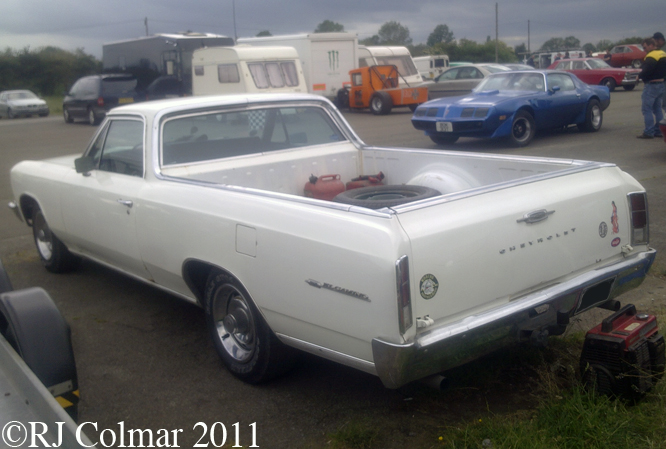
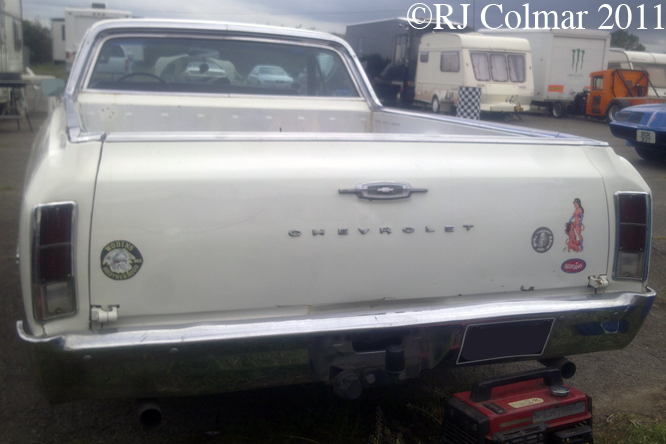
The six foot pick up box was rated to carry up to 1000lbs loads on the all coil spring suspension. It is thought around 35,000 1966 El Camino’s were manufactured.

Thanks for joining me on this ‘A Down Right Pleasure To Work With’ edition of ‘Gettin’ a li’l psycho on tyres’ I hope you will join me tomorrow when I’ll be looking at a MG TF. Don’t forget to come back now !
Share