Targeting Ferrari – Honda NSX (Refresh)

The Honda NSX was designed to show case Honda’s Formula One World Championship winning technology in a super car that was as practical a proposition on the road as a Honda Civic. In order to achieve that goal Honda aimed at making a game changing car that was both better than the Ferrari 328 and 348 models and significantly cheaper.
Honda NSX, Piston Heads, BMW Factory

The design team for the New Sportscar – eXperimental (NSX) was led by Chief Designer Nicholas Zander and Executive Chief Engineer Shigeru Uehara who allegedly studied an F-16 Fighter for idea’s to incorporate into the new vehicle. Formula One drivers Saturo Nakajima and Ayrton Senna contributed to the design process along with Indy 500 winner Bobby Rahal. It was at Senna’s insistance that the all aluminium chassis was made stiffer than was originally conceived.
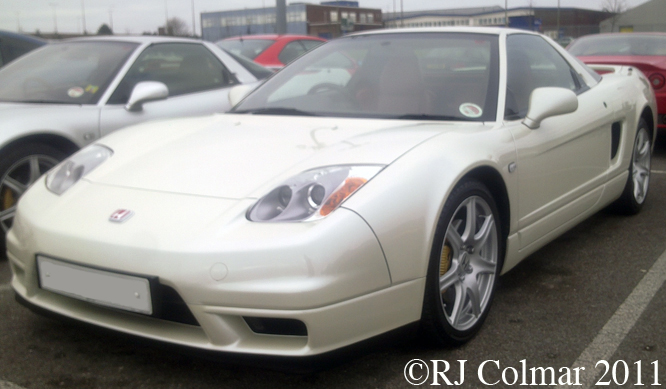
Honda NSX, Piston Heads, BMW Factory

The NSX, each one built by a hand picked team with a minimum of ten years experience, was launched in 1990 to much acclaim with a transversely mounted 2997 cc / 181 cui V6 motor that produced 270 hp good for propelling the NSX to 60 mph from rest in 5.02 seconds and a quarter mile time of 13.47 seconds.
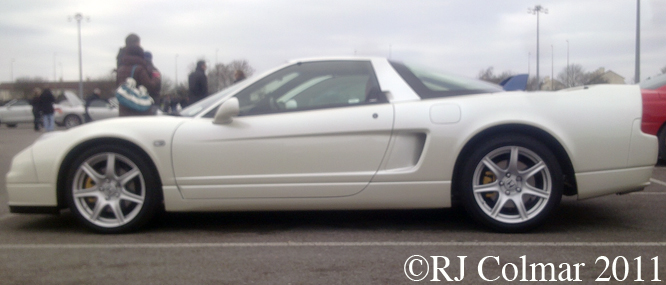
Honda NSX, Piston Heads, BMW Factory

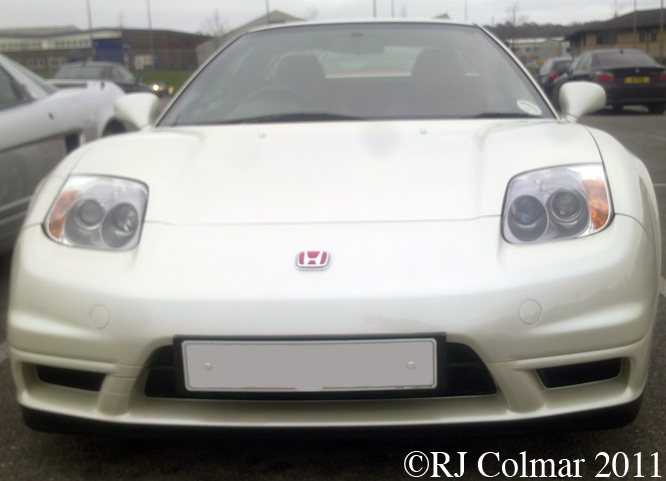
Twelve years after it’s launch and upgraded version the NSX was launched in 2002 now powered by a 3197 cc / 194 cui V6 motor which produced 290 horsepower that lowered the quarter mile time to 13.3 seconds. The revised edition as seen here is externally easily differentiated by the absence of the pop-up lights which were mandatory at the time of the vehicles launch to gain access to the US Market.
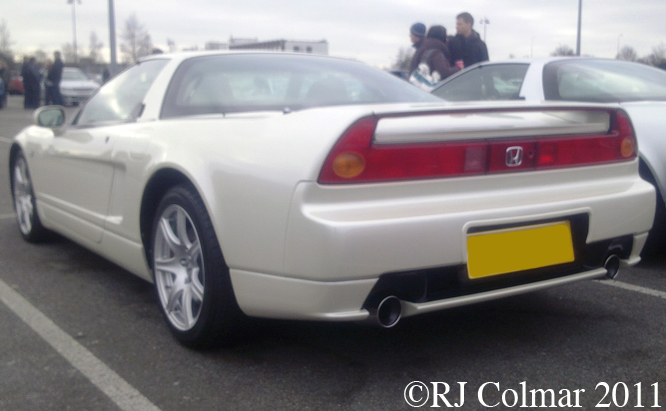
Honda NSX, Piston Heads, BMW Factory

Production of the NSX ceased in 2005. Gordon Murray who designed the 1992 McLaren F1 and owned an NSX for 7 years is quoted from a Japanese interview as saying of this game changing car “The moment I drove the NSX, all the benchmark cars—Ferrari, Porsche, Lamborghini—I had been using as references in the development of my car vanished from my mind. Of course the car we would create, the McLaren F1, needed to be faster than the NSX, but the NSX’s ride quality and handling would become our new design target.”

Thanks for joining me on this ‘Targeting Ferrari’ edition of ‘Gettin’ a li’l psycho on tyres’ I hope you will join me again tomorrow. Don’t forget to come back now !

Share

Quad Cam – Lotus Ford 34 #34/3

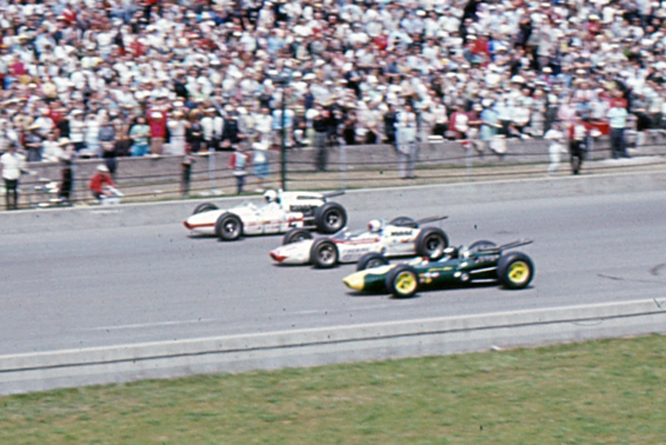
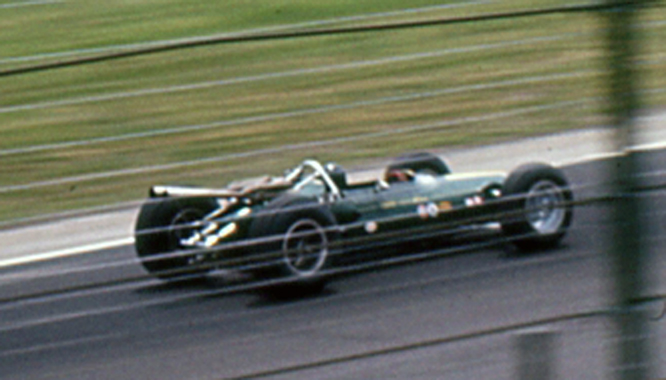
In 1964 Team Lotus returned to Indianapolis for a second crack at the 500 with the new Lotus 34 and the same driving squad, Clark and Gurney, as 1963.

Lotus 34, Indy 500, Ed Arnaudin

This time Jim Clark started from pole as seen above with Bobby Marshman driving Jim’s 1963 Lotus 29 and Rodger Ward in the fastest of the new rear engined space frame Watson Ford, the only Ford running methanol that day, on the outside of the front row. Following the tragic accident on the opening lap of the 1964 500 Jim completed only eight more laps than early front runner Bobby Marshman before a tyre issue damaged his suspension which caused his retirement on lap 47 after the race was restarted. Team mate Dan Gurney starting from the outside of row two completed 110 laps before Dunlop tire issues also caused his retirement.

Lotus 34, Indy 500, Ed Arnaudin

The Lotus 34 featured a similar monocoque chassis to the Lotus 29 but the 4195 cc / 255cui stock block Ford motor was fitted with new twin overhead cam heads and Hilbron fuel injection which boosted the power up to 425 hp. This particular car is chassis 34/3 which ended up with Clark’s 1963 rival Parnelli Jones who drove it two a second place finish behind Jim Clarks Lotus 38 in 1965. Parnelli still owns the car today, which is kept at his Museum the Parnelli Racing Collection at Torrence, CA, restored to 1964 spec as seen in Ed Arnaudin’s photo’s

My thanks to Steve Arnaudin for kindly sending me his late Dad Ed’s photo’s and to B Squared for patiently answering my questions about this car and Sisyphus for helping to confirm the identification over at The Nostalgia Forum.

Thanks for joining me on this ‘Quad Cam’ edition of ‘Gettin’ a li’l psycho on tyres’ I hope you will join me again tomorrow. Don’t forget to come back now !
Share

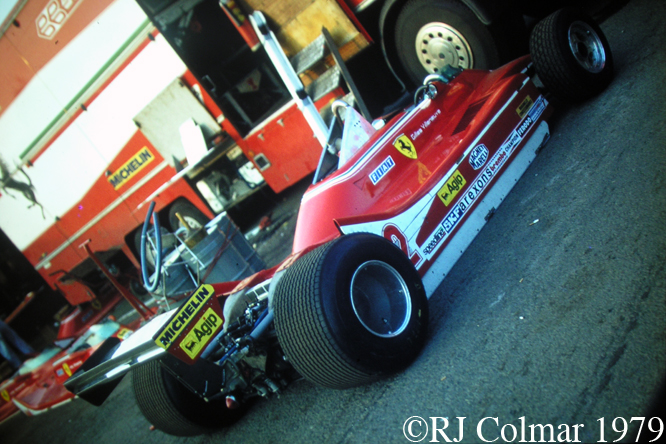
Driving For Italy – Ferrari 312 T4 #040 & #038

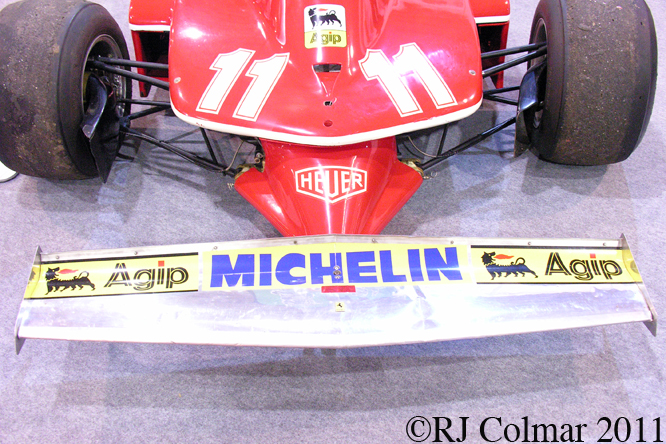
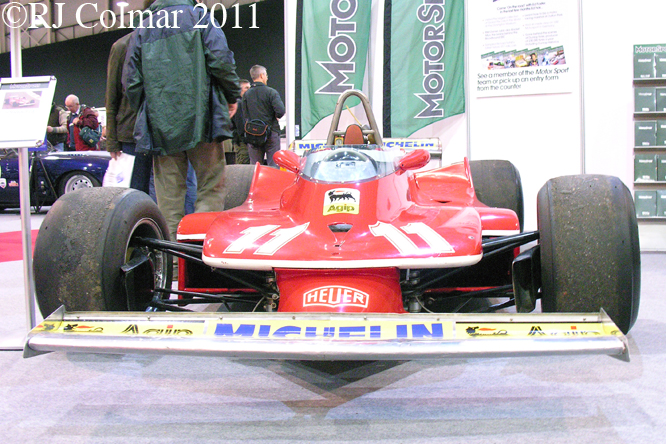
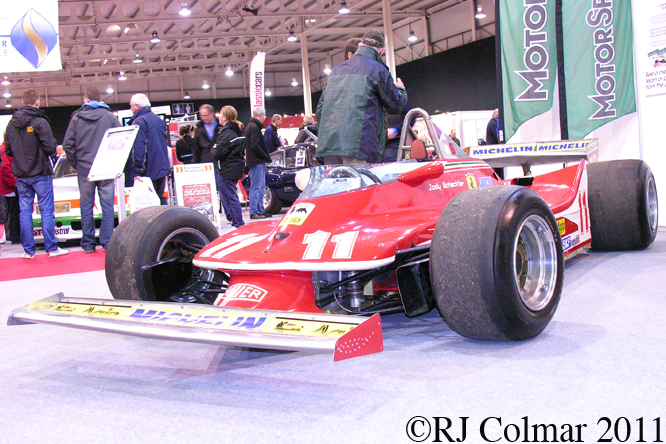
The 1979 season was one of two halves in the first half the french Ligier team came out of nowhere with a fast car that took three wins from the first five races, Ferrari then muscled in with four race wins from five races and Renault scored what would turn out to be a one off win at the half way mark and the second half of the season was dominated by the Williams team who scored 5 wins in the last seven races with the Ferrari drivers Jody Scheckter and Gilles Villeneuve picking up the pieces and each scoring a win. Jody through his better consistency beat Gilles to the 1979 World Championship.

Ferrari T4, Race Retro

The car that Jody and Gilles used in 1979 was the Ferrari 312 T4 an improvised ground effect design by Mauro Forghieri that was compromised by the powerful 180 degree 3 litre / 183 cui V12 motor that got in the way of the under body aerodynamics that were an essential element for giving the car improved aerodynamic grip and cornering adhesion.

Ferrari T4, Race Retro

By their own admission early season runaway leaders Ligier had no idea why their car was working so well in Argentina and Brazil, and when a slight change was made to the material specifications of their ground effects design they had no idea why it continued to work so badly. Meantime Ferrari had just the right balance of mechanical power and reliability coupled with just enough aerodynamic grip to capitalize on Ligiers misfortune and first Gilles, in South Africa then Long Beach and then Jody, in Belgium then Monaco, took two wins a peace interrupted by third and final win for the Ligier driven by Patrick Depailler in Spain.

Ferrari T4, Race Retro

During the second half of the season Frank Williams team after many seasons operating out of a GPO telephone box on a shoe string budget finally juggled all the balls in the right order and came up trumps with a clean design that once it had become reliable was the class of the field for the second half of 1979 with five wins from seven races in Britain, Germany, Austria, Holland & Canada . Only Jody and Gilles spoiled the Williams party Scheckter securing the drivers championship with a win in Italy to become the first, and so far only South African Drivers World Champion. Jody, who once observed that when he was racing for Ferrari he was driving for Italy, took all three of his championship wins driving chassis #040 seen above at last years Race Retro.

Ferrari T4, Silverstone

Gilles Villeneuve came second in the 1979 championship his season being primarily remembered for one of the all time great dices in the history of Grand Prix when he pulled off an amazing second place finish racing wheel to wheel over several laps with third place Rene Arnoux in the French GP at Dijon.

Gilles chassis #038 seen above in the pits at Silverstone, where the Ferrari’s were uncharacteristically completely out classed, is known to have been driven to second place finishes by Scheckter in South Africa and Long Beach and a third second pace finish with Villeneuve at the wheel in the 1979 Italian GP.

It would be 21 long years before another Ferrari driver would win a World Championship though as we shall see in the coming weeks Ferrari did manage to win a couple of constructors championships in the 1980’s.

If your into organic food Jody Scheckter today runs an organic farm produce from which can be ordered from www.laverstokepark.co.uk

Thanks for joining me on this ‘Driving for Italy’ edition of ‘Gettin’ a li’l psycho on tyres’

Share

Exclusive Muscle – Chrysler 300L

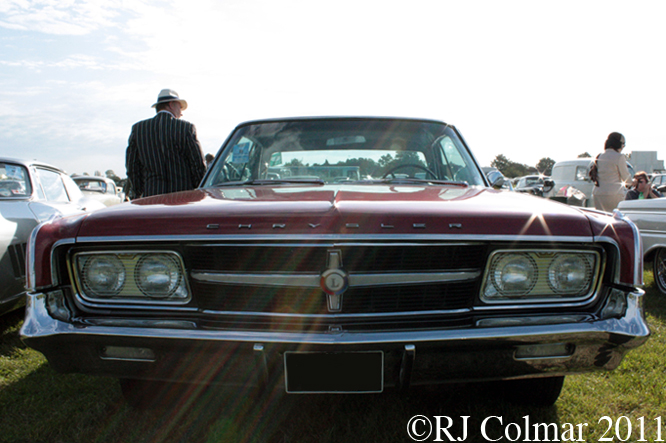
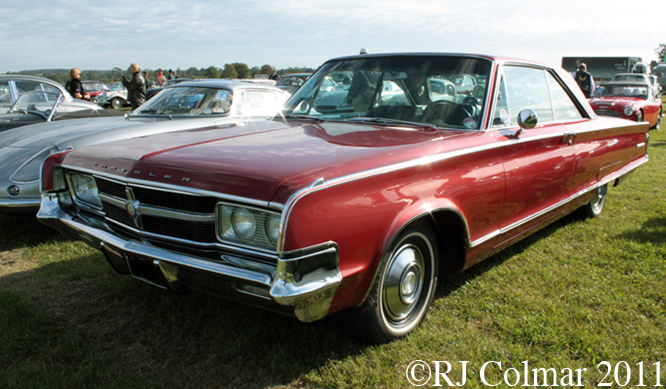
The Chrysler 300 ‘letter series’ was introduced in 1955 initially as an exclusive range for 300 hp 2 door coupés. Every year from 1955 to 1965 a new 300 model was introduced with a new suffix designtion.

Chrysler 300L, Goodwood Revival

With the introduction of the 300C in 1957 power was up to 375hp which could be ordered in hard top and soft top versions. The following year a 300D recorded a top speed of over 156 mph during the speed weeks at Bonneville Salt Flats.

Chrysler 300L, Goodwood Revival

Up to 1959 the 300 letter series vehicles had been powered by ‘Hemi’ motors that had grown to 6.4 litres / 392 cui. From 1959 onwards 6.8 litre 413 cui Golden Lion motors were used with wedge heads

Chrysler 300L, Goodwood Revival

For 1960 the 300’s ditched the separate chassis and body building technique in favour of unibody construction. 1963 was the last of the 300 letter series to be designed by Virgil Exner and his team, just 400 300J’s all hard tops were built.

Chrysler 300L, Goodwood Revival

For 1964 over a thousand dollars was trimmed from the base line price of the 300K by making leather seats extra cost optional and down rating the base engine to 360 hp with the 380 hp still available as an extra cost option and sales rocketed to 3022 coupés and 625 convertibles.

Chrysler 300L, Goodwood Revival

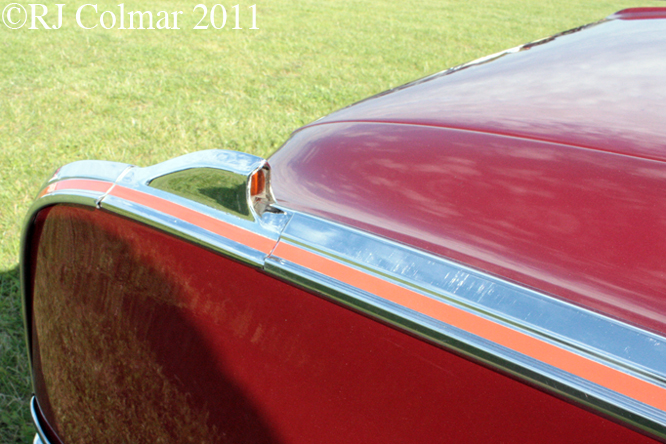
The 1965 300L featured today was designed under the leadership of Elwood Engel, it would be the last of the uninterrupted 300 letter series vehicles, powered only by the 360 hp version of the Golden Lion motor. 2405 coupés and 440 convertibles were sold.

The 300 letter series have become extremely sort after models, the high power motors mark them as forerunners of the 1960’s muscle cars and the low build numbers means that the rarest models can fetch prices in the range of US$500,000.

Thanks for joining me on this Exclusive Muscle edition of ‘Gettin’ a li’l psycho on tyres’, I hope you will join me again tomorrow. Don’t forget to come back now !
Share

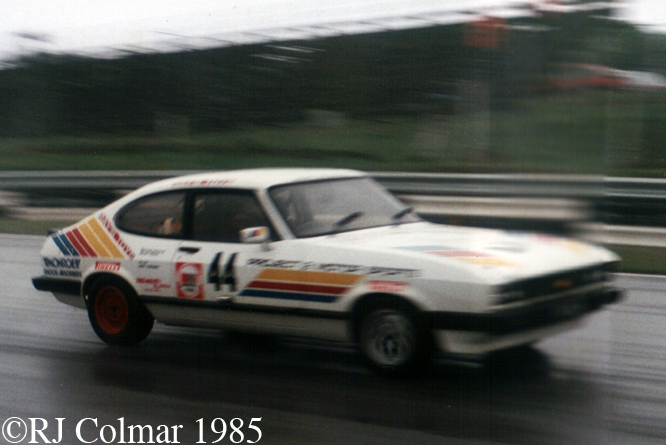
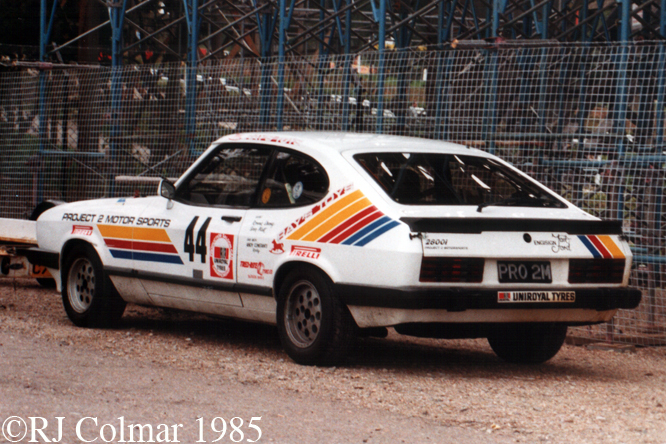
Brazilian Spec ? – #44 Rays Toys Ford Capri 2.8i

During the summer of 1985 I had a temporary job sorting out magazine orders from libraries, all day long I was sat around a desk processing them with half a dozen co workers in Nottingham. Somewhere along the last week of May I got a message from my school friend Sven inviting me to join his pit crew for the Willhire 24 hour race at Snetterton. I managed to get the necessary time off work and so, belatedly, began my first hands on experience in motor racing.

Ford Capri 2.8i, Brand Hatch

My job was to keep the windscreen clean and keep the fuel tank full, the first bit was easy the second involved carrying two jerry cans full of fuel accross the entire length of the pit area, but such was my youth it really did not matter ! As I remember Sven, Ronnie and third driver Tony had a fairly trouble free race aside from a few fuel vaporization issues on a scorching hot weekened, to come in 19th place a mere 120 laps behind the leaders who drove a similar Ford Capri 2.8i. After the race I was both severely sun burned and deliriously exhausted I remember nothing about work the following week at all !

Ford Capri 2.8i, Brand Hatch

A couple of weeks later I got another call from Sven, as I did on many subsequent weekends that summer, so I found my self hitch hiking to meet Sven on Friday nights and then going off to the races on the Saturday for most rounds of the Uniroyal Production Car Championship, I didn’t have to do much at the shorter events as Ronnie’s Project 2 Motorsports had two mechanics in attendance so I’d do the time keeping.

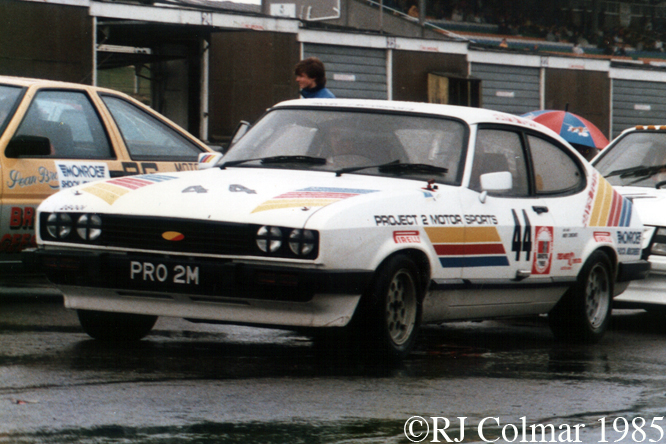
The photo’s seen here were taken at Brands Hatch on a particularly miserable day in July, the only thing that kept me conscious was copious quantities of hot tea with tons of sugar, I suspect I might have been under dressed for the weather. Despite being the time keeper I have no recollection of exactly where Sven started or finished the race, I just remember being glad when it was all over and the car was packed up and ready to go with me in the relative warmth of the back of the towing van.

Ford Capri 2.8i, Brand Hatch

The #44 Rays Toys Ford Capri 2.8i was prepared to conform to Production Saloon Car Rules which meant that the car was fitted with a roll cage, kept all the interior trim, was fitted with road legal Yokohama tyres but strangely, for a production series, was allowed a free exhaust system, the 2800 cc 170 cui V6 motor, driving through an early 2.8i standard four speed gearbox, was in all respects a carefully assembled standard unit which Ronnie for reasons best known to himself always referred to as ‘Brazilian Spec’.

Thanks for joining me on this ‘Brazilian Spec’ edition of ‘Gettin’ a li’l psycho on tyres’, I hope you will join me again tomorrow. Don’t forget to come back now !
Share

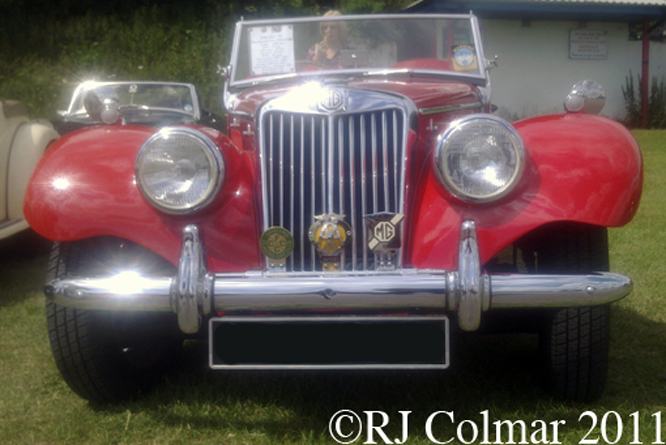
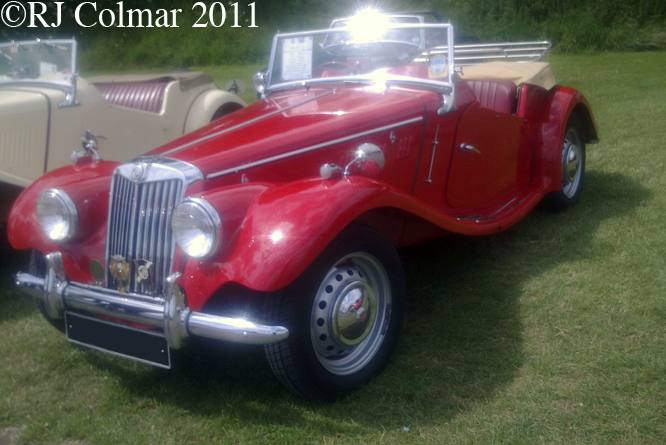
T for 2 – MG TF

Following the demise of the MG PB in 1936 MG launched the 2 seater MG TA as it’s replacement the same year.

MG TF, Castle Combe, C&SCAD

3000 TA’s were up until 1939 when the TA was replaced by the TB of which just 379 were built prior to the requirements of the War Office taking precedence of the MG manufacturing facilities.

MG TF, Castle Combe, C&SCAD

After the war with the huge demand for vehicles world wide the MG TC came into it’s own with 10,000 examples built from 1945 to 1950, when the TD, which started to break away from the look of the older models with it’s relatively small 15″ steel road wheels and chrome bumpers, was launched. 30,000 of these phenomenal export earners were built with 23,488 of them going to the USA and just 1,656 remaining for UK showrooms !

MG TF, Castle Combe, C&SCAD

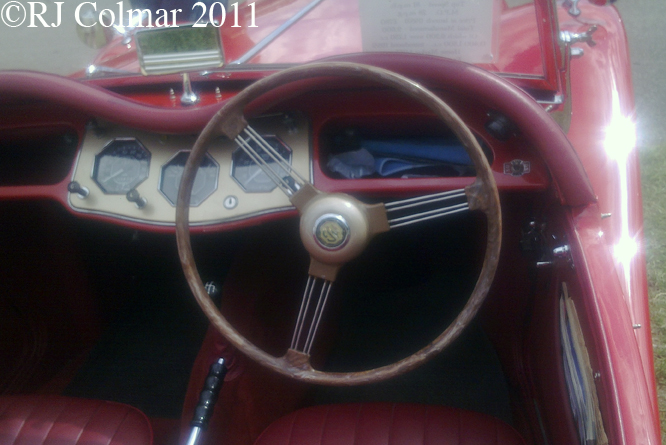
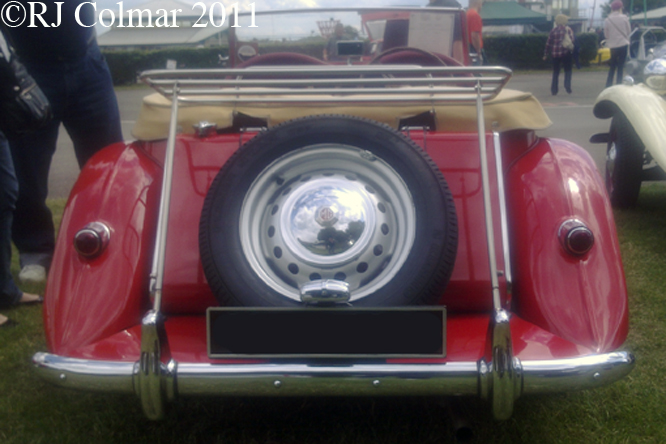
The TF as seen in todays photos at Castle Combe during last years Classic & Sportscar Action day was launched 1953 featuring headlights integrated with the front wings, for the first time in the T series. This 1954 model was fitted with a 1250 cc 76 cui motor with 56 hp which would take the car from rest to 60 mph in 18.9 secs and on to a top speed of 81 mph and return 28 mpg.

MG TF, Castle Combe, C&SCAD

Over three years 9600 TF’s were manufactured of which all but 1057 were exported. Eagle eyed GALPOT readers with a solid state hard drive may recall the Replica Prize Winning Brazilian Avalone 11 was fashioned after the MG TF.

Thanks for joining me on this ‘T for 2’ edition of ‘Gettin’ a li’l psycho on tyres’, wishing all GALPOT contributors & readers a romantic Valentines Day, I hope you will join me again tomorrow. Don’t forget to come back now !
Share

Armless Fun – Ford P100

The origins of the car based Ford P100 pick up lie in South Africa where the first P100’s were built using the front half of a 2 door Ford Cortina Mk 3 and a ladder chassis for the rear in 1971.

Armless Fun, Ford P100, Silverstone Classic

Similar vehicles followed with the front half of 4 door Ford Cortina Mk’s 4 and 5 from 1977 and 1980 respectively, with export of the model to Europe beginning in 1982.

Armless Fun, Ford P100, Silverstone Classic

In 1988 with the withdrawal of Ford from South Africa a new P100, designed by Ford of N
Britain such as the one featured today, with the front half of the 4 door Ford Sierra shell was built in Portugal and offered with either a heavy duty 205 block 2 liter / 122 cui Pinto or 1,8 liter / 109 cui turbo diesel motors.

Armless Fun, Ford P100, Silverstone Classic

The running gear for the P100 came from the parts pins of the Ford Granada saloon sedan and Ford Transit Van models and the pick up was given a 1000 kg / 2200 lbs load capacity.

Armless Fun, Ford P100, Silverstone Classic

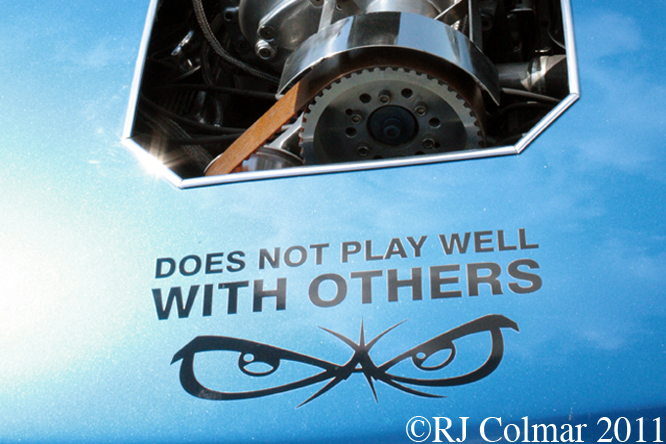
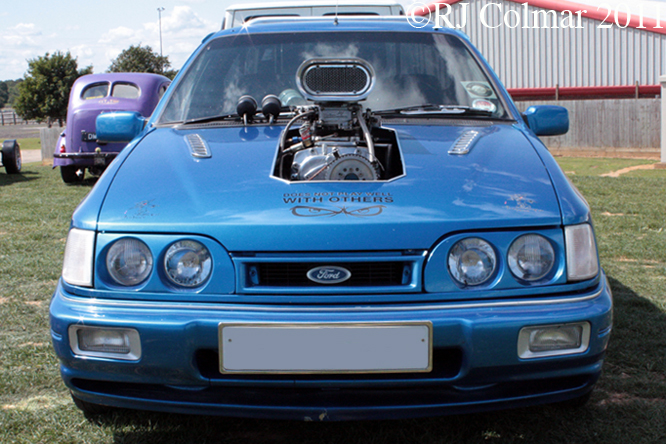
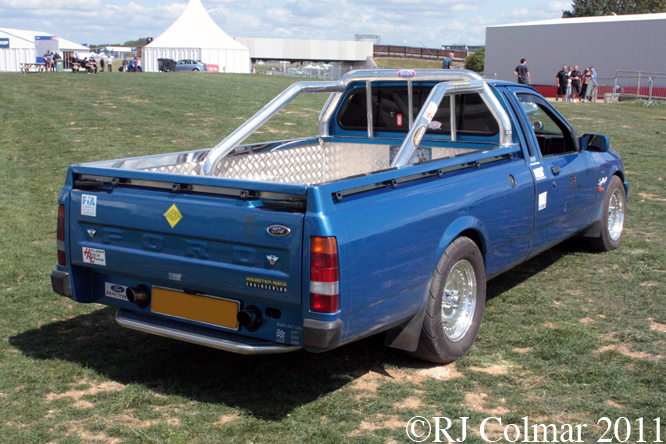
With so much of the P100 being based on a car it does not cost an arm and a leg to run a modified one with lots of competition parts, Armless Fun has front panels below the bonnet hood that come from the Ford performance ‘RS’ catalog including the aggressive twin head light units.

Armless Fun, Ford P100, Silverstone Classic

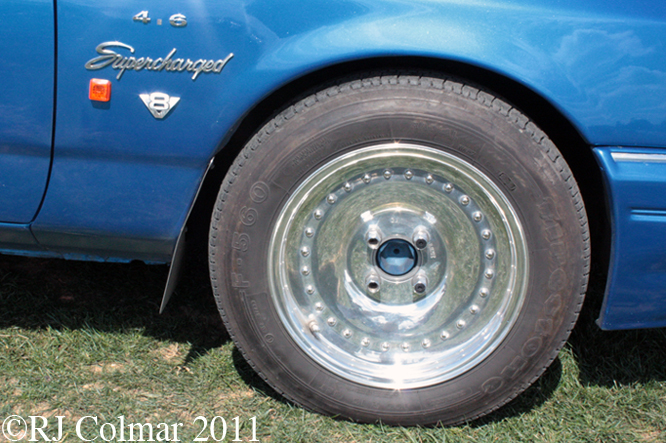
Armless Fun seen here at last years Silverstone Classic goes further than most in the modification stakes having a supercharged 4.6 liter / 280 cui Rover V8 derived motor under the bonnet / hood providing just enough power to make Armless Fun UK Burnout Champion from 2007 – 2010.

Thanks for joining me on this ‘Armless Fun’ edition of ‘Gettin’ a li’l psycho on tyres’ I hope you will join me again tomorrow when I’ll be looking at a vintage MG. Don’t forget to come back now !
Share