Foot Warmer – TVR 400 SE

The story of the TVR 400SE begins with Oliver Winterbottom who, after designing the wedge shaped Lotus Eclat and second generation Lotus Elite models launched 1974, was responsible for designing the wedge shaped TVR Tasmin launched in 1980.
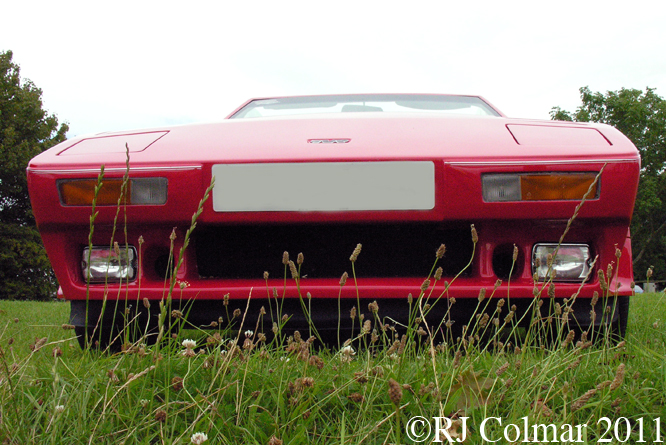
TVR 400 SE, Castle Combe

Over the years the Tasmin which was originally available with 2 litre / 122 cui or 2.8 litre / 170 cui Ford sourced motors grew into a second incarnation with a 3.5 litre / 215 cui V8 that traces it’s history back through the Rover 3.5 litre Coupé to the aluminium V8 Buick 215 designed by Joe Turley for Buick Oldmobile and Pontiac vehicles launched in 1961.
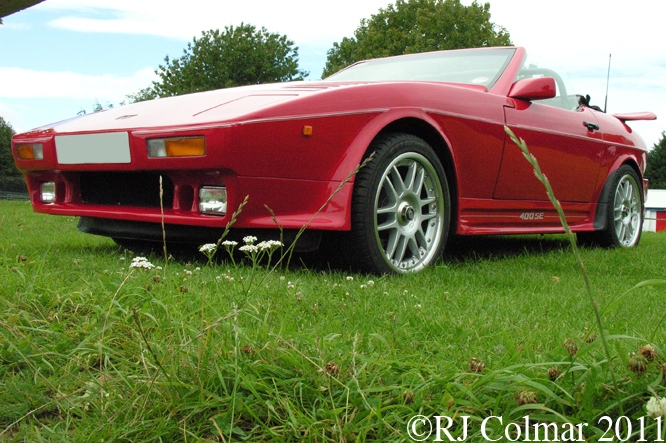
TVR 400 SE, Castle Combe

Launched in 1983 the TVR Tasmin 350i which became the plain TVR 350i in 1984 had a 190 hp and a 130 mph capability. With it’s Rover power the 350i became marketable in the middle east where there was, and is, a resistance to anything associated with Ford due to it’s dealings with Israel. In 1984 a 390 SE engine package was offered to 350i customers with a blueprinted version of the V8 motor with 3905 cc / 238 cui cylinder capacity, high lift cam shaft large valves and Cosworth machined pistons which brought the power up to 275 hp.
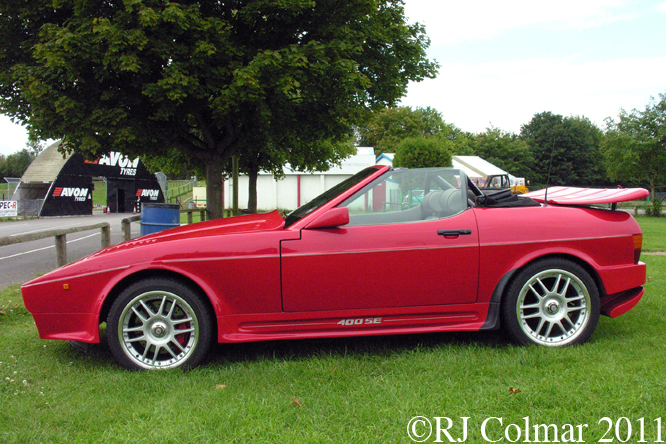
TVR 400 SE, Castle Combe

In 1986 further improvements offered 300 hp from the 420 SE spec which could be ordered with a lighter and slightly more rounded 420 SEAC spec body. For 1988 introduced the 3948 cc / 240 cui 400 SE which offered marginal performance improvements over the 390 SE and used the Series 2 390 SE body with asymmetrical near side louvers in the bonnet and a slightly more tidy nose as seen on the example above.
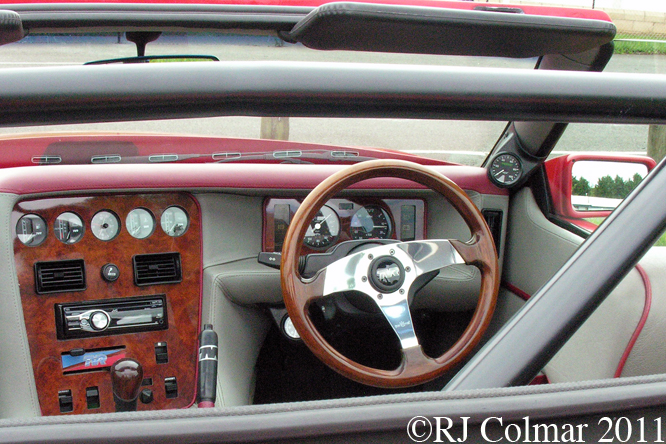
TVR 400 SE, Castle Combe

With the increase in engine size and output from 100 – 160 hp for the Tasmin models to 275 hp for the 400 SE seen here the transmission tunnel was increased in size to accommodate ever larger transmissions required to cope with the extra horsepower and so the foot wells have decreased in size. The extra heat generated by the more powerful motors allegedly also means occupants feet are more exposed to heat soak than was the case in the original Tasmin.
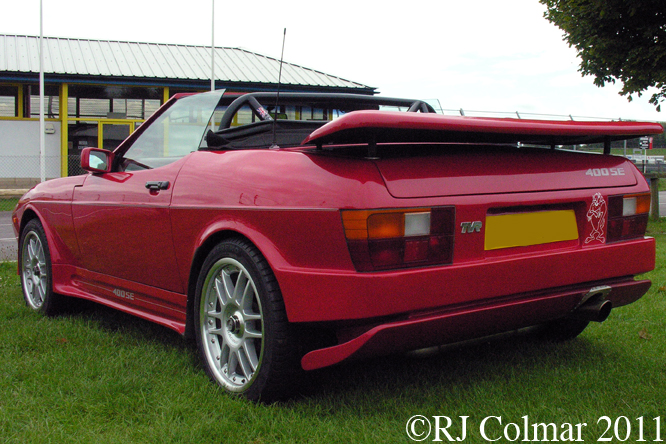
TVR 400 SE, Castle Combe

Equipped with 8J x 15 inch wheels and ventilated disc brakes the 400 SE could reach 60 mph from rest in 5.6 seconds or 100 mph in 14.8 seconds and max out at 145 mph. In 1989 a final version of the TVR Wedge was introduced the 320 hp 450 SE good for 150 mph.
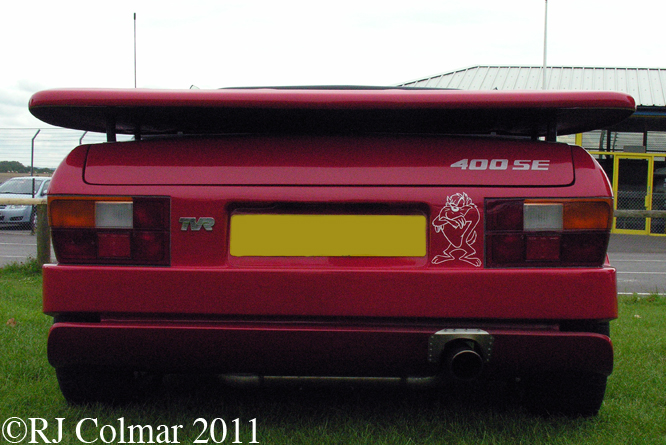
TVR 400 SE, Castle Combe

The rear deck spoiler on this 400 SE appears to have been sourced from the ’86-’88 420 SEAC which had up to 20% of its body panels made from light weight kevlar. The 400SE is renowned for making a phenomenal noise and exhilarating acceleration.

Thanks for joining me on this ‘Foot Warmer’ edition of ‘Gettin’ a li’l psycho on tyres’ I hope you will join me again tomorrow. Don’t forget to come back now !

Share

Pushing The Backbone – Lotus 30

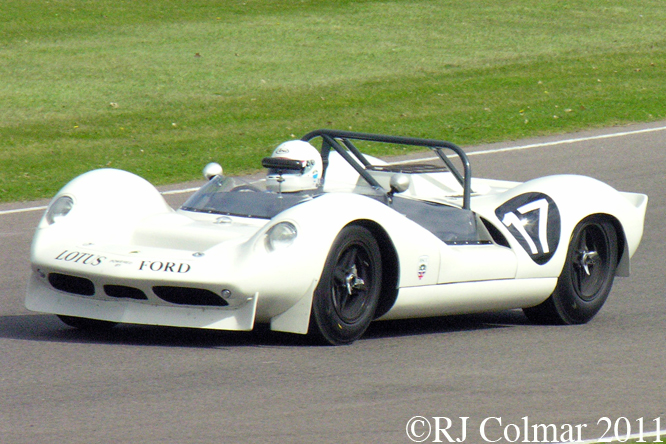
Allegedly Colin Chapman was a little upset about losing the contract to develop the Ford GT40 to Lola and set out to build a sports racing car in 1964 that would show Ford that they had made the wrong choice.

Colin’s idea was to use a back bone chassis similar to the one used in his successful Lotus Elan but stronger to accommodate a 4.7 litre / 286 cui Ford Fairlane motor in the rear. It is said that Colin stubbornly over ruled his designer Len Terry when the latter advised against such an idea and went ahead and built the car with a sleek curvacious body measuring just 26.5″ high.

Lotus 30 #30-L-12, Dyrham Park

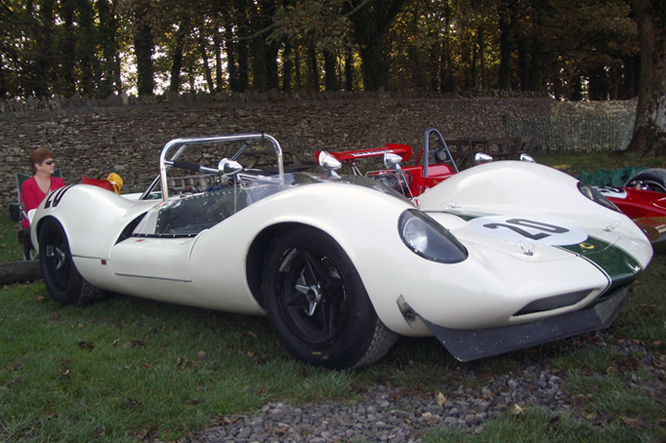
Photo Courtesy of Tim Murray above, shows Andrew Bradshaw’s Lotus 30 at Dyrham Park.

The original Lotus 30 clothed in a fibre glass body that made regular maintenance exceedingly difficult weighed less than 700 kgs / 1600 lbs and had 350 hp which was transmitted to the ground by 13″ wheels and was stopped by solid disc brakes all round. Unfortunately while the car won a few races, notably in the hands of Jim Clark the chassis, as predicted by Len Terry proved insufficiently strong which resulted in the backbone flexing, and on at least one occasion a chassis is recorded as having snapped in half. It is thought 18 Lotus 30’s were built with an additional 2 replacement chassis being supplied for damaged cars.

Lotus 30, Goodwood Revival

Matthew Watts example seen here at last years Goodwood Revival has been fitted with an interpretation of the period body modifications developed by JCB research to over come overheating problems caused by the spare wheel, required by the Group 7 rules, being placed behind the radiator in the nose.

For 1965 the model was updated; with a stronger chassis backbone, spoilers, larger wheels and ventilated disc brakes, was built, though not solving all of the problems 9 examples of the S2 were built and sold. Towards the end of 1965 Colin Chapman uprated this chassis again calling the new model the Lotus 40, dubbed by Richie Ginther as ‘like the Lotus 30 but with ten extra problems’ but the three Lotus 40 chassis were no match for the Group 7 cars produced by either Lola or McLaren.

Despite the lack of success against the Lola’s and McLarens the Lotus 30 was still being raced in British club events until the early 1970’s by John Markey.

My thanks to Lotus30.com for the chassis information Woulter Melisson at Ultimatecarpage.com and Martin Krejci at racingsportscars.com for additional information and results. Thanks also to Graham Gauld, pete53, Roger Lund, Tony Gallagher and Ted Walker at The Nostalgia Forum for additional information regarding today’s featured vehicle.

Thanks for joining me on this ‘Pushing The Backbone’ edition of ‘Gettin’ a li’l psycho on tyres’, I hope you will join me again tomorrow. Don’t forget to come back now !
PS I hope you will join me in wishing best wishes to GALPOT Concours d’Elegance Correspondent and Birthday Boy Geoffrey Horton ! 🙂

Share

Allez ! Allez ! Allez ! Gilles ! – Ferrari 312 T3 #034

Regular readers who go back to my days posting stories about cars at rowdy.com may remember seeing today’s photo’s before, however since my original post is long lost to the infosphere and I have found out a little more about this particular car I will ask your indulgence a second time.

Ferrari 312 T3, Goodwood FoS

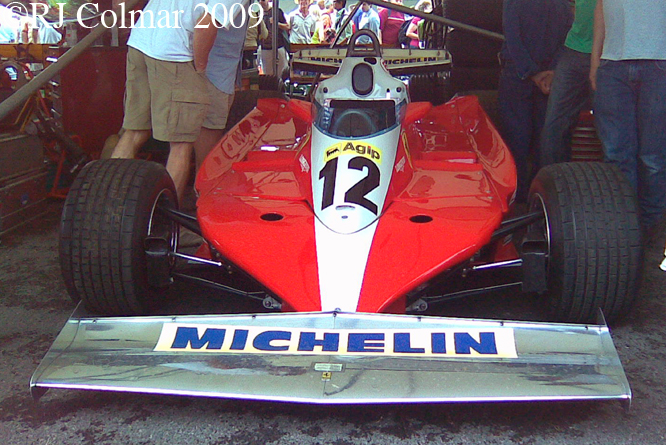
The Ferrari 312 T3 was the third evolution of the Ferrari Grand Prix cars built to Formula One regulations with a 3 liter / 183 cui 180 degree V12 motor and transverse gearbox built for the 1978 World Drivers and Constructors Championships which had been won for a second time in 1977 by Niki Lauda who moved onto the Brabham Team for ’78. Argentinian Carlos Reutemann and Canadian young gun Gilles Villeneuve were to drive for the Ferrari team in 1978 and despite the car being completely outclassed by the revolutionary Lotus 79 ground effects car the superior reliability of the Ferrari 312 T3 managed to secure second place in the Constructors Championship for Ferrari picking up 4 wins to the eight scored by the Lotus team.

Ferrari 312 T3, Goodwood FoS

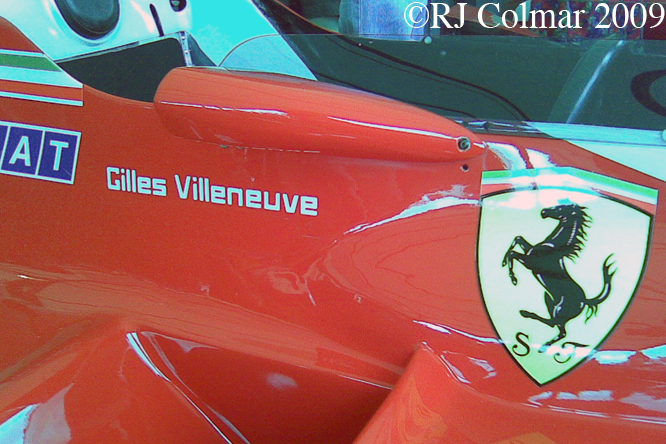
This particular car, chassis #034, was used exclusively by Gilles Villeneuve in 1978 and for one race in 1979, the most important of which was the 1978 Canadian Grand Prix which marked Gilles first Grand Prix victory. This car was acquired by Mr N.Mason in the mid 1980’s and has been a regular guest at the Goodwood Festival of Speed, where the car is seen here, ever since.

Thanks for joining me on this ‘Allez ! Allez ! Allez ! Gilles !’ edition of ‘Gettin’ a li’l psycho on tyres’, I hope you will join me again tomorrow. Don’t forget to come back now !
Share

Fan Re Engagement – 2013 Ford Fusion Cup Car

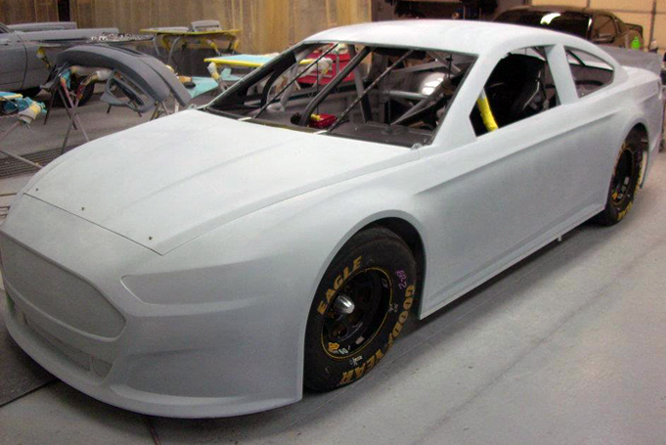
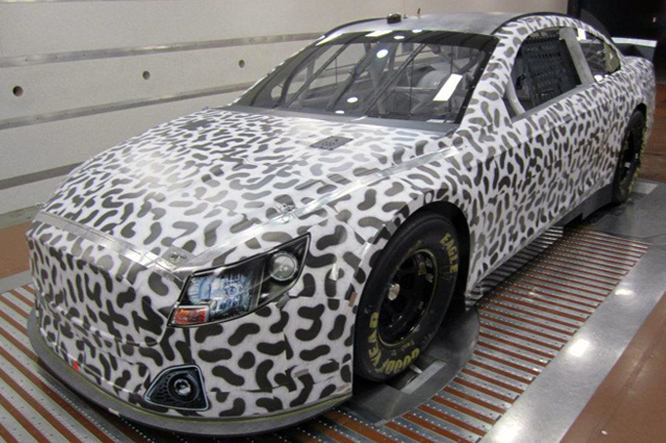
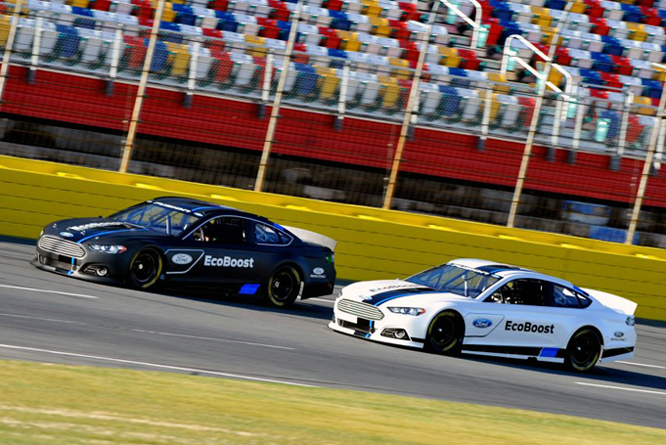
Ford launched it’s second generation 2013 Fusion range at the Detroit Motor Show in January, a range that has all the style of an Aston Martin but at a fraction of the price. During the NASCAR media week Ford gave the world a preview of their challenger for the 2013 NASCAR season which looks very much closer match to the 2013 road cars than does any of the recent COT (Car Of Tomorrow) NASCAR vehicles.

2013 Ford Fusion Cup Car

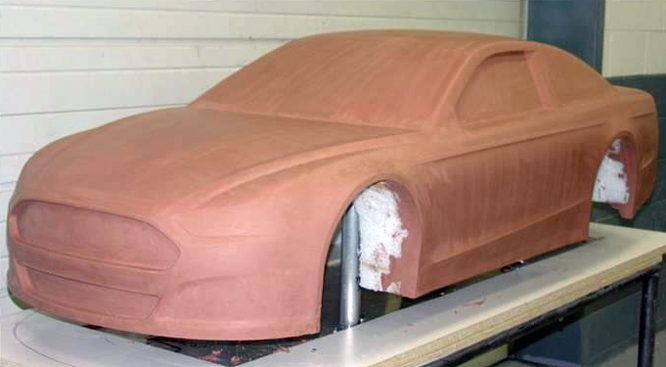
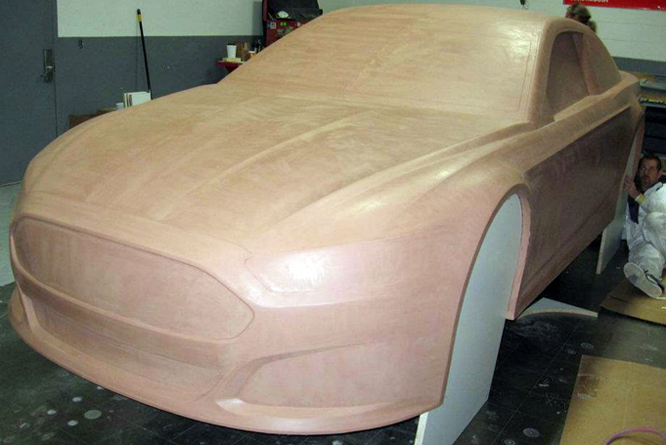
Right from the start of the new 2013 Fusion NASCAR project Ford Racing Director is quoted as saying “We wanted Fusion to be the car that helped return ‘stock car’ to NASCAR.” Above a clay scale model is still the starting point for translating all new concepts into working vehicles.

2013 Ford Fusion Cup Car

Allison observed that “…there is just something natural about seeing race cars that look like cars in (fans) driveways.” Once complete the scale model is then 3D scanned and translated into full size contour drawings.

2013 Ford Fusion Cup Car

The 2013 Fusion program is a strong nod back to the ‘Strictly Stock’ roots upon which Bill France built the NASCAR name. From the contour drawings a full size scale clay mock up is produced.

2013 Ford Fusion Cup Car

Ford Design Centre staff led by Garen Nicoghosian and aerodynamicist Bernie Marcus spent a year on the design and development of the 2013 Fusion Cup Car.

2013 Ford Fusion Cup Car

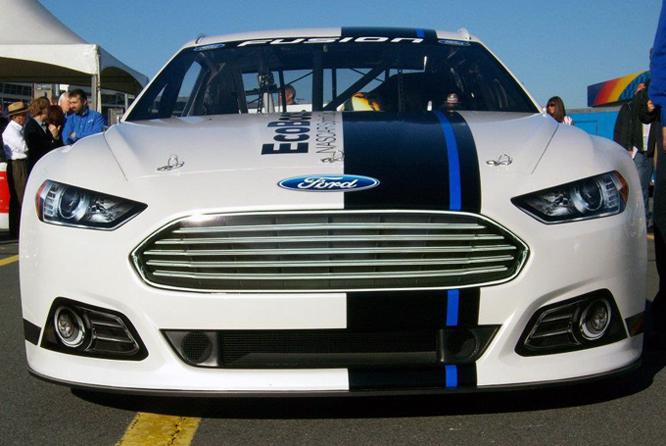
The design team had three objectives, to make sure the overall proportions of the car matched the road going Fusion, to make sure the brand and design cues were visible from the side profile and to give the front end instantly identifiable as a Ford, with the distinctive road going 2013 Fusion grill.

2013 Ford Fusion Cup Car

This is the third time that Ford have launched a new model simultaneously with it’s NASCAR variant the first was in 1968 when the fast back Torino was launched and the second in 2006 when the first generation Fusion was launched.

2013 Ford Fusion Cup Car

With it’s unquestionably aggressive stance the 2013 Cup Fusion as Nicoghosian suggests “exudes performance” and “reflects the nimbleness, agility and eagerness of the 2013 Fusion production range.

2013 Ford Fusion Cup Car

Ford will be hoping history repeats it’s self after the launch of Fastback Torino David Pearson took back to back Cup championships, then known as the Grand National Championshps, in 1968 and 1969.

All photo’s courtesy Ford Motor Company.

Thanks for joining me on this ‘Fan Re Engagement’ edition of ‘Gettin’ a li’l psycho on tyres’, I hope you will join me again tomorrow. Don’t forget to come back now !
PS Last May I posted a blog about Lexie’s Challenge, I’m thrilled to hear that Lexie’s Challenge raised US$ 2372 worth of gift cards for the children’s group homes supported by the Kyle Busch Foundation. I am sure you will want to join me in congratulating Lexie on her tremendous achievement.

For 2012 Lexie is upping the stakes by donating US$ 18 for every cup win Kyle Busch records AND US$ 5 for every victory a Kyle Busch Motorsports car records regardless of driver or series. For further details see this Lexie’s drive for kids link and join the challenge !

Share

Brenda’s Makeover, Ford Escort Mk II Estate 1300 Base

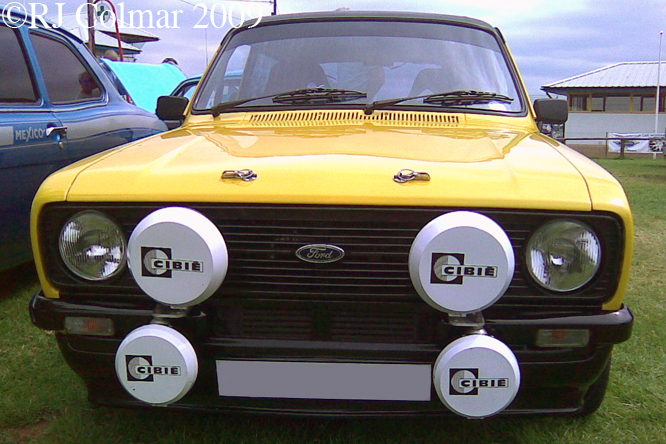
The original Ford Escort was designed by Ford of Britain, it’s Mk II replacement, based on the original platform power trains and running gear, was designed in a collaboration between Ford of Britain and Ford of Germany under the code name Brenda.

Ford Escort 1300L, Castle Combe

The straight edged slab sided Mk II was launched in January 1975 in two and four door plus estate forms which came with equipment and trim level variations known as Base, Popular, L, GL, Ghia, Sport, RS Mexico and RS 2000. with 4 cylinder engines from 1 litre / 61 cui (Italian Tax Exempt Model only) to 2 litre / 122 cui which was used in the RS 2000 models fitted with the overhead cam Pinto motor. There was also a very successful competition version the 2 door RS 1800 which was fitted with the twin cam Cosworth BDA motor. 400 RS 1800 should have been built to meet the competition regulations that applied at the time but it is thought only around 50 RS1800’s were built for road use.

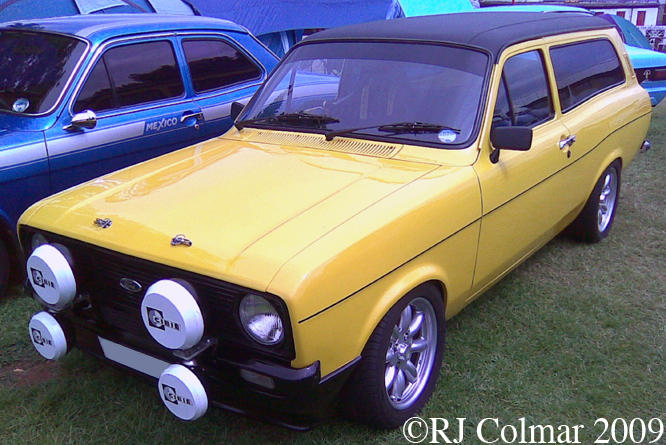
Ford Escort 1300L, Castle Combe

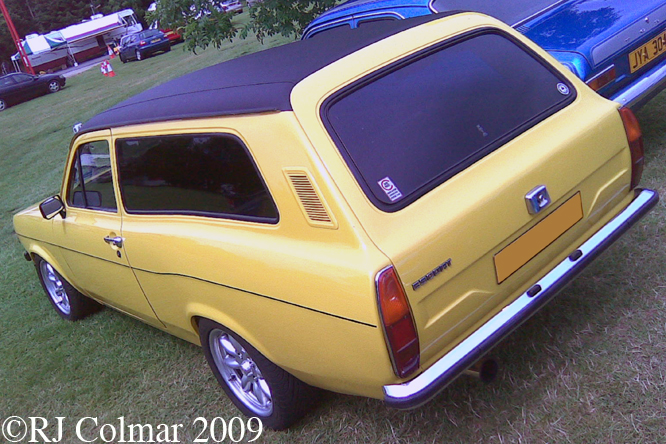
The Estate version of the Mk II Escort had the new square front grafted onto the original coke bottle styled Estate rear end from the A pillar back one cannot tell the Mk I and Mk II apart. This particular car is a Base model, probably the only variation still supplied with the large round head lights apart from the commercial van, all the other had then ‘modern’ square head lights. This particular car has non standard 1/4 front bumpers, vinyl roof and Minilite wheels along with a 2 litre / 122 cui motor.

Ford Escort 1300L, Castle Combe

My parents bought a brand new Diamond White Mk II Escort Estate 1.3 GL in 1977 and though I did not get to drive it much I had a number of adventures in it, with the fold down rear seat a mattress and sleeping bag it made a comfortable alternative to sleeping in a tent, even though it was a complete non starter when it came to a traffic light showdown.

The Mk II Escort along with the contemporary Ford Cortina and Fiesta models locked out the top three in the UK sales charts during most of it’s production run up until 1980.

Thanks for joining me on this ‘Brenda’s Makeover’ edition of ‘Gettin’ a li’l psycho on tyres’, I hope you will join me again tomorrow. Don’t forget to come back now !
Share

Hire Car – MG Bellevue Special

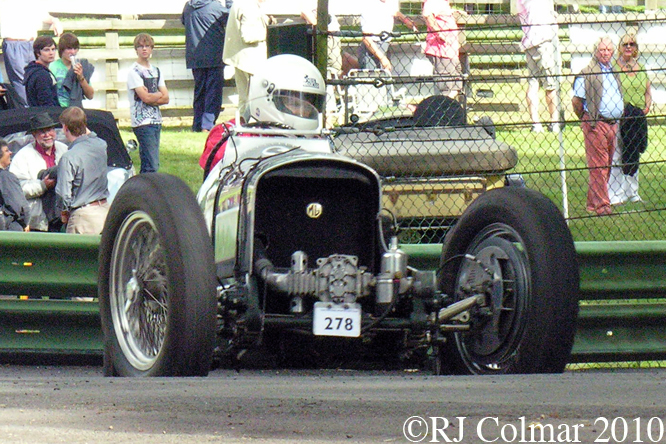
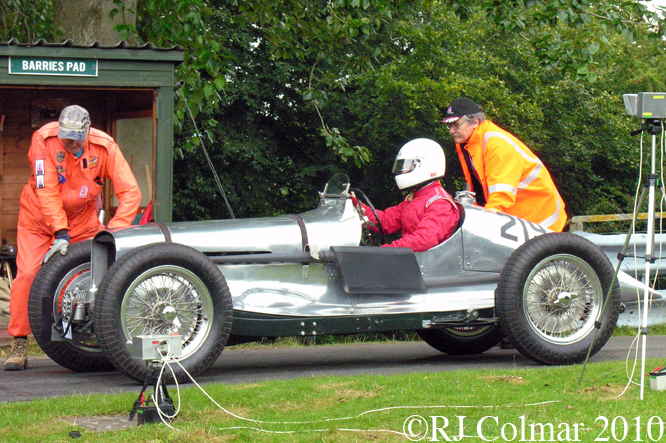
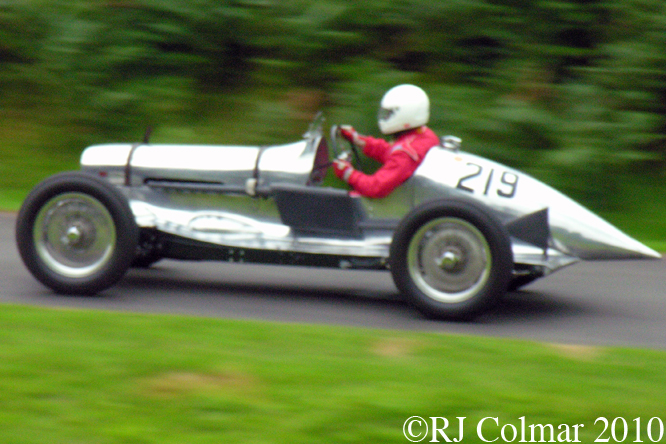
The MG Bellevue Special appears to have started life as one of the 745 MG N series sports cars built from 1934 to 1936. The first NA series chassis around which this particular vehicle was built was originally supplied with a twin carburetor 56 hp six cylinder motor upgraded from the Wolseley Hornet.

MG Bellevue Special, Prescott

In two seater guise this car was prepared by Walter ‘Wilkie’ Wilkinson of Bellevue Garages in Wandsworth London as a racing hire car for use at Brooklands in the 1935/36 seasons.

MG Bellevue Special, Loton Park

In 1937 Walter converted the car into an ‘offset’ single seater using earlier MG K-Type axles, brakes and wheels and the sleek aluminium body along with a rack of six Amal carburetors. The six carburetors were later replaced with a supercharger.

MG Bellevue Special, Loton Park

Wilke Wilkinson, a founder member of the British Racing Mechanics Club, went on to prepare the Le Mans Winning ‘D-Type’ Jaguars of Eccurie Eccose in 1956 & 57 and moved on to work with the BRM Grand Prix team where Graham Hill and Jackie Stewart were the drivers in residence. This car seen driven by Ian Baxter at Prescott and Luton Park has recently been sold, the asking price was £175,000.

Thanks for joining me on this ‘Hire Car’ edition of ‘Gettin’ a li’l psycho on tyres, I hope you will join me again tomorrow. Don’t forget to come back now !

Share

Hudson Commercial – Terraplane Six Cab Pickup Express

A couple of weeks ago I was ferreting around for answers to questions I had about the Hudson Super Six Special I featured a couple of weeks ago, on the Hudson Forum, when much to my delight surprise I found out that Hudson had marketed a pick up truck under the Terraplane brand between 1932 and 1939.

Terraplane Pick Up, Wayne Grafen

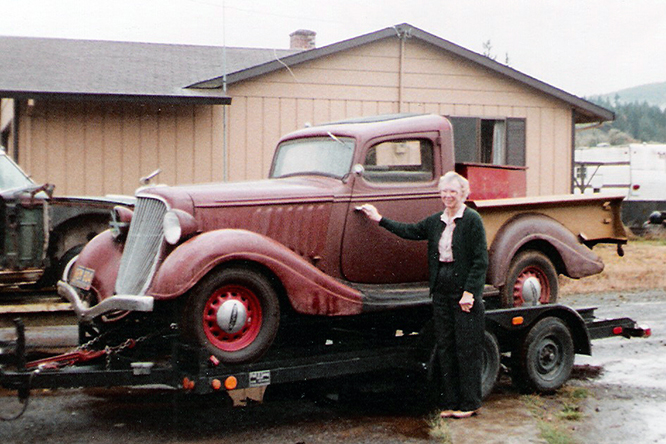
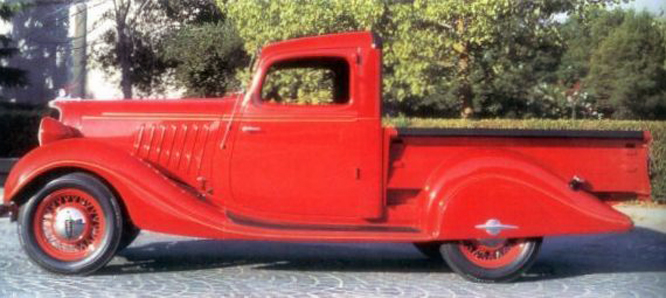
Wayne Graefen found this example with the standard Detwiler pick up body in McMinnville, Portland Oregon belonging to Hudson collector Mr Robert (Bob) Harbaugh in 1985 and purchased it taking the photo above with Mrs Harbaugh standing in front of the traillored pick up.

Terraplane Pick Up, Wayne Grafen

Over the next 18 months Wayne took all the paint off replaced a wooden door hinge pillar and procured some missing parts before painting the truck and getting the bumper bars rechromed. Wayne then sold the truck to his business partner Press Kale who over the following two years had the stock flat head 212 cui 6 cylinder motor and 3 speed manual transmission rebuilt.

Terraplane Pick Up, Wayne Grafen

Press did a deal with Coker Tire Co. who used the Terraplane Pick Up on their SEMA stand in Las Vegas in exchange for some white wall tyres. Wayne tells me that the 1/2 ton truck is still 100% stock including the vintage 6 volt electrical system and the cable operated mechanical brakes.

Alex Burr at the Hudson Forum reckons around 1281 commercial Terraplanes were shipped of all types including pick ups, vans, and bare commercial chassis which were shipped to body shops for full custom bodies.

My thanks to Wayne Graefen for sharing the Terraplanes story & photographs and to Alex Burr for the production volumes of the Terraplane commercial vehicles.

Thanks for joining me on this Hudson Commercial edition of ‘Gettin’ a li’l psycho on tyres’ I hope you will join me again tomorrow for a look at a vintage racing MG. Don’t forget to come back now !
Share