For A Few £’s More – Jensen S-V8

After the owner of WJ Smiths & Sons a body works passed away in 1934 two employees, the brothers Richard and Alan Jensen bought the assets and founded Jensen as a coachbuilding firm. Building customised bodies for proprietary chassis supplied by Morris, Singer, Standard and Wolseley. One of their early commissions was for a car based on a Ford V8 for Hollywood legend Clark Gable, this highly acclaimed car facilitated a deal with Ford to produce a limited edition of Jensen Fords.

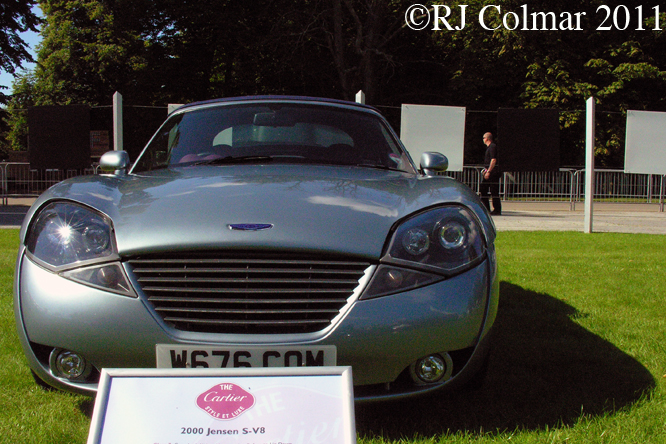
Jensen S-V8, Goodwood Festival of Speed

The following year Jensen launched the Jensen S type also powered by a Ford V8. Jensen diversified into light commercial vehicles marketed under the JNSN brand and during the war were engaged to make tank turrets and specialised vehicles, ambulances and fire engines.

Jensen S-V8, Goodwood Festival of Speed

After the 2nd World War Jensen produced the Jen Tug light truck for hauling trailers around goods yards and won a number of contracts to produce bodies for among others the military all wheel drive Austin Gipsy, the Austin A40 Sports, Austin-Healey 100, Volvo P1800 and Sunbeam Tiger.

Jensen S-V8, Goodwood Festival of Speed

Concurrently Jensen built an Austin parts bin based Interceptor, and fibreglass bodied 541 Coupé. Perhaps their best known model is the Chrysler powered Interceptor introduced in 1966 with a steel body designed by Carrozzeria Touring and built by Vignale.

Jensen S-V8, Goodwood Festival of Speed

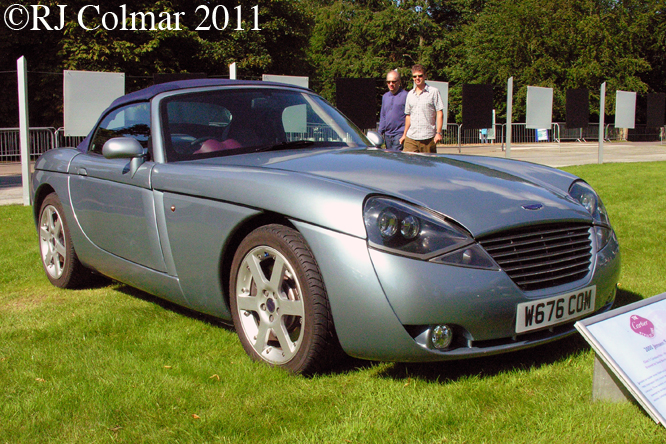
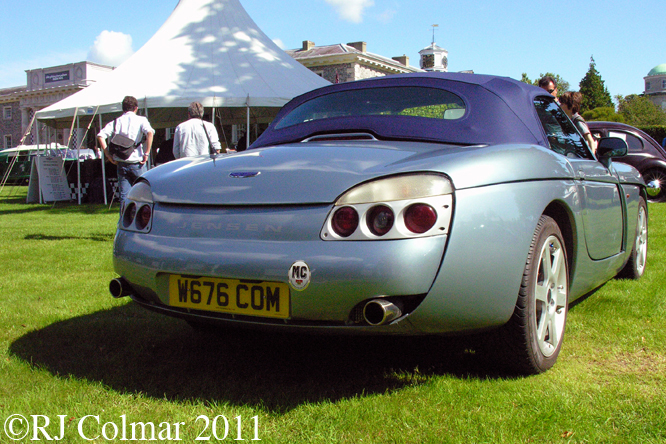
The Interceptor remained in production until the company folded in 1976, several attempts were made to revive production one resulting in 11 MK4 Interceptors being built. In 1998 the Ford Mustang Cobra V8 powered aluminium bodied Jensen S-V8, harking back to the 50’s and 60’s 541 and CV8 models was shown to the public and 300 orders were taken to build the car at a new £9 million facility at Speke in Liverpool.

Jensen S-V8, Goodwood Festival of Speed

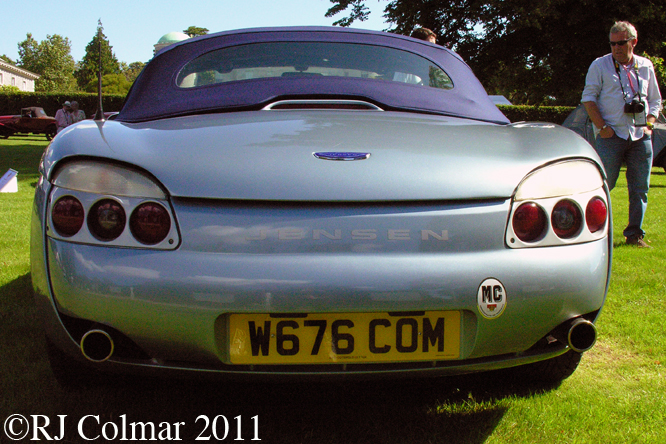
Unfortunately quality problems including the manufacture of the aluminium body panels slowed the expected production rate and only 20 vehicles were produced, including the one seen here at Goodwood Festival of Speed, before the company again went under in 2002. The Oselli company purchased a licence to complete a further 12 cars, all with heavier easier to manufacture steel bodies, and retained the parts from a further 6 vehicles for spares.

Since production of the 20 original £40,000 cars has ceased at an average unit cost to investors of £450,000 it has been claimed that Jensen went under for the want of just £500,000 to see them through.

Thanks for joining me on this underfunded edition of ‘Gettin’ a lil’ psycho on tyres’ I hope you will join me again tomorrow. Don’t forget to come back now !

Share

Awaiting TLC #3 – Lotus Mark 6

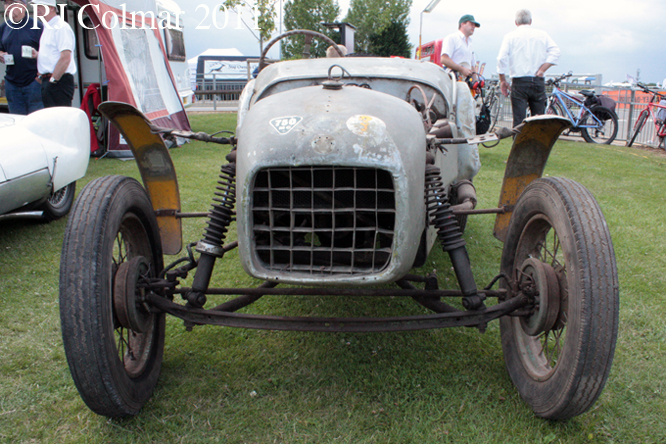
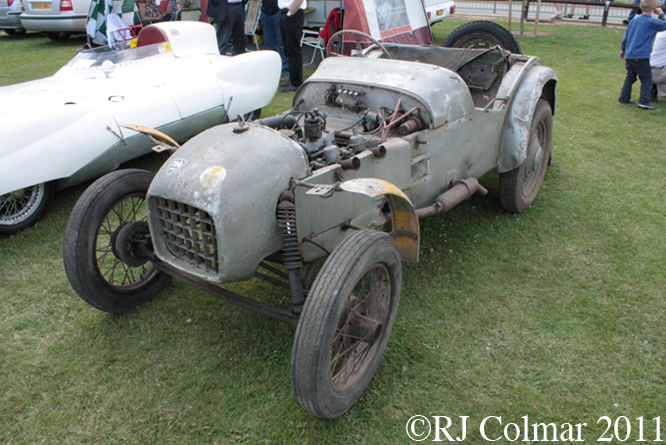
Third in my occasional series of blogs about cars in need of tender loving care is this uniquely ungainly looking Lotus Mark 6 seen earlier this year at the Silverstone Classic.

Lotus XI, Silverstone Classic

The Lotus Mark 6 was the first Lotus design to go into to production and it was sold in kit form saving purchasers a small fortune in new car taxes. The reason this particular vehicle is both unique and ungainly is because it is the only Lotus Mark 6 built as a mud plugging trials car requiring more ground clearance than either the road going or track racing versions.

Lotus VI, Silverstone Classic

The chassis and Williams and Pritchard built body was originally supplied to Mr Horace Sinclair Sweeney in 1953 at a cost of £110. Once Mr Sweeney had finished installing the engine and running gear he entered and won the London Motor Club’s Annecy Spring Sporting Trial on the 7th of June 1953.

Lotus VI, Silverstone Classic

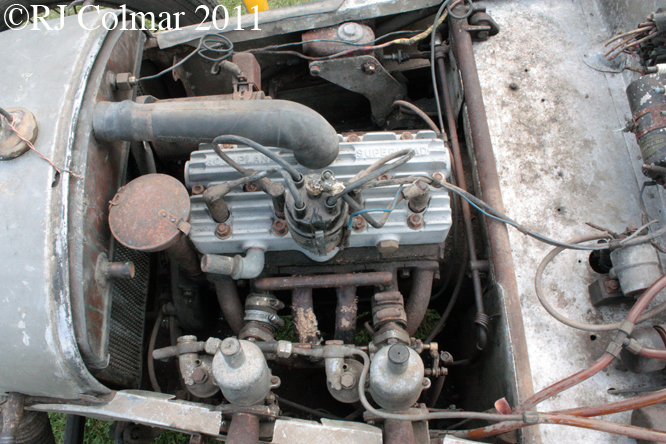
The motor is an Aquaplane tuned 1172 cc / 71.5 cui side valve E93A unit sourced originally from a Ford 10 built in the 1930’s.

Lotus VI, Silverstone Classic

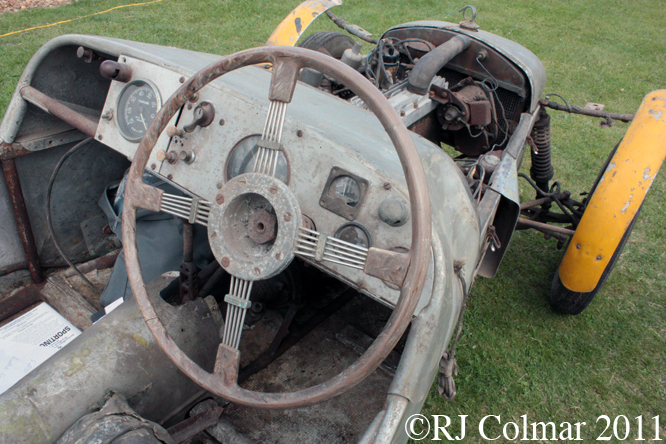
In 1954 Mr Arthur Hay acquired this Mark 6 and over the next ten years won three Motor Cycling Club (MCC) Triple awards for completing the Exeter, Lands End and Edinburgh trials unpenalised in three separate calendar years. Since then car has remained in the Hay family, but unused since 1964.

Lotus VI, Silverstone Classic

The current owner hopes to restore the car to working order and use it for sporting trials as originally intended by Mr Sweeney.

Thanks for joining me on this mud plugging edition of ‘Gettin’ a li’l psycho on tyres, I hope you will join me again tomorrow when I shall be looking at a Jensen. Don’t forget to come back now !

Share

Goodwood RAC TT Celebration – Ferraris

The RAC TT or International Tourist Trophy is a more or less annual award given to the winners of a selected motor race. It was first awarded in 1905 making it the longest lasting trophy in Motorsport. Among the many venues that hosted the RAC TT is Goodwood which ran TT races from 1958 to 1964. Below are 9 of the 10 Ferrari’s that took part in the Revival Celebration TT practice sessions a couple of weeks ago.
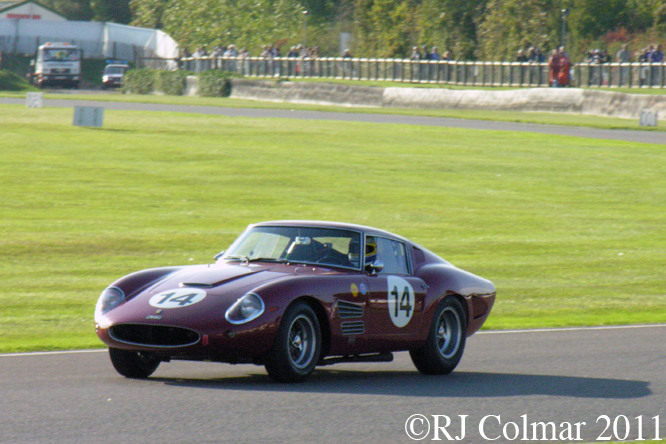
Ferrari 250 GT Drogo, Goodwood Revival

The #14 Ferrari 250 GT Drogo started life as a 250 GT SWB (Short Wheel Base) Competizione chassis #2445GT in 1961, it was supplied to Garages Francorchamps in Belgium and is known to have won at least seven European races in the hands of Robert Crevits in the 1961 and ’62 seasons. At Le Mans in 1962 Robert Darville crashed the car and it was subsequently sent to Piero Drogo in Modena where the current bodywork was fitted. Apparently James Coburn briefly owned this car in 1964. Dutchman David Hart shared the #14 with 2006 RAC TT winner Michael Bartels at Goodwood.
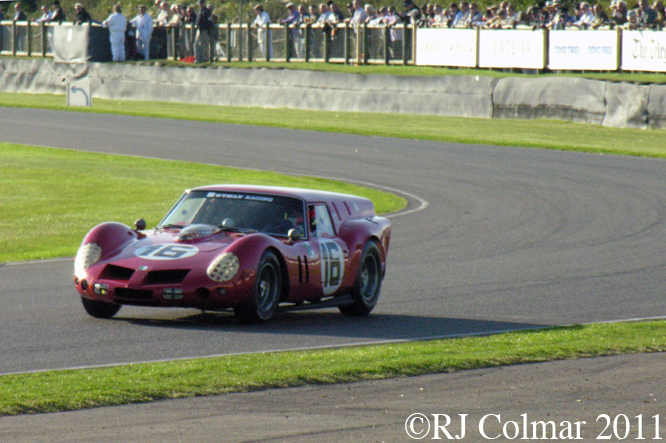
Ferrari 250 GT SWB Beadvan, Goodwood Revival

Readers from Rowdy.com may remember my blog on the Ferrari 250 GT SWB Breadvan, I’ll repost the whole blog here if I find myself getting short of Ferraris to write about, chassis #2819 is a bastard in so much as it also started life as a 1961 250 GT SWB, but Count di Misurata had his car upgraded by Giotto Bizzarrini, the man responsible for designing both the Ferrari 250 GT SWB and the later 250 GTO. The ‘Breadvan’ was driven at Goodwood by Nicholas Minassian and Max Werner.
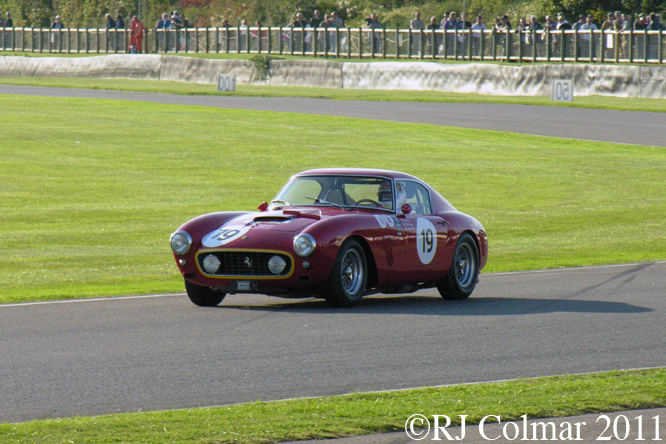
Ferrari 250 GT SWB, Goodwood Revival

One of my all time heroes Art Merzario shared the #19 250 GT SWB/C with Kilian Koenig. This 1960 model chassis #1811GT was another car originally supplied to Garages Francorchamps and in the hands of Robert Crevits won 3 races outright in the 1961 season.
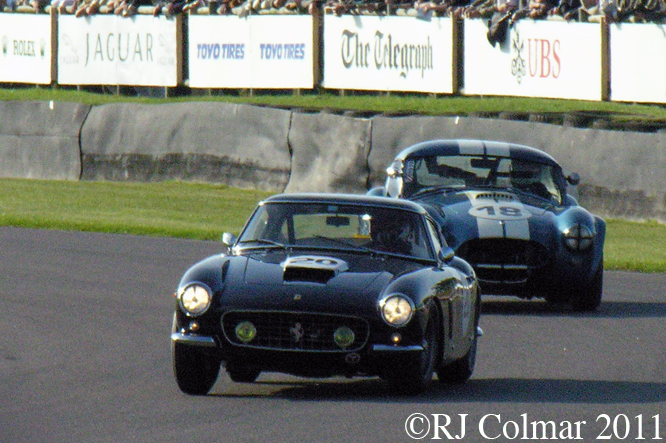
Ferrari 250 GT SWB, Goodwood Revival

Conrad Ulrich shared his #20 250 GT SWB chassis #3107GT with Frank Stippler at Goodwood. This chassis was originally supplied to M. Auregli in Italy and has no race history, that I can discern, until the current owner acquired it in 1999.
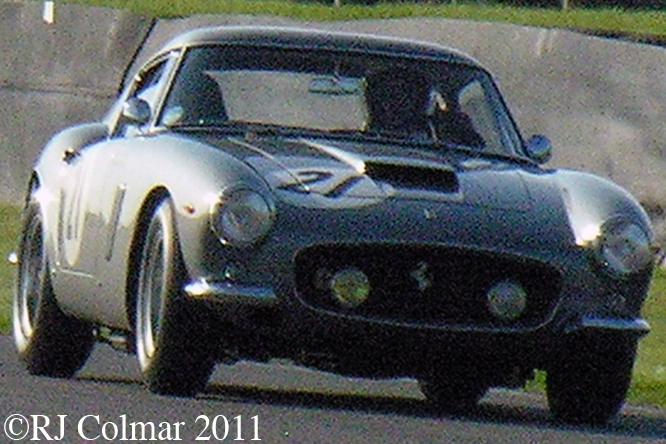
Ferrari 250 GT SWB Competizione, Goodwood Revival

This light weight 1961 250GT SWB Compitizione was originally entered by the North American Racing Team in the Paris 1000 kms for the Mexican Rodriguez brothers who won on the cars debut race. Subsequently it was sold to Doug Thiem in the USA who succesfully campaigned this chassis #3005GT in 1962. The #21 car now belongs to Lukas Hueni who shared it with Carlo Voegele at Goodwood.
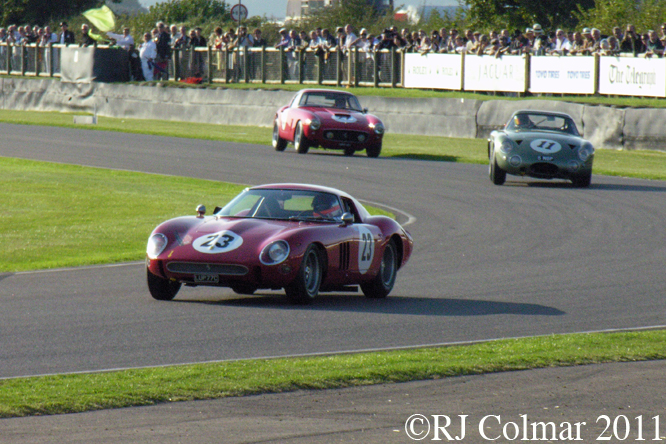
Ferrari 250 GTO, Goodwood Revival

Gregory Whitten’s #23 250 GTO chassis #3413 was originally used as a spare car and tested by Graham Hill and engineer Mauro ‘Fury’ Fogheri on the Targa Florio in 1962, later that year #3413 was acquired by Edoardo Lualdi who scored numerous overall and class wins hillclimbing with it. In 1963 Gianni Bulgari raced it scoring a class win on the Targa and an overall win at Monza. In 1964 the car was fitted with ’64 GTO bodywork at the Ferrari factory for new owner Corrado Ferlaino who promptly took another class win on the Targa and at least two more hillclimb class wins. In 1967 Jack Le Fort acquired #3413 for £6000 /@ US$ 15,000 after several further changes of ownership Gregory Whitten acquired it in 2000 for US$ 7 million ! Greg shared his car with 6 time Le Mans winner Derek ‘Dinger’ Bell at Goodwood.
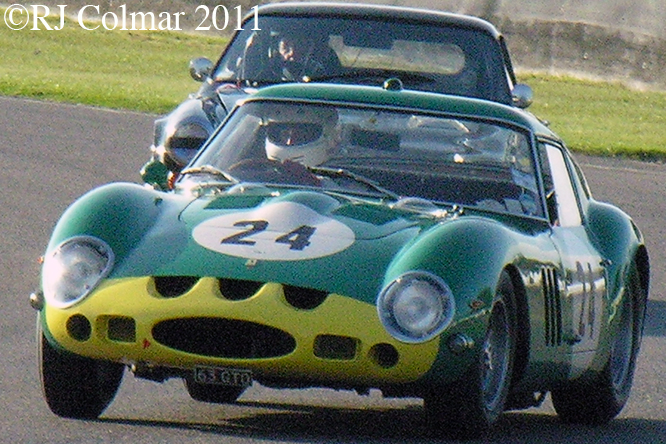
Ferrari 250 GTO, Goodwood Revival

The #24 Ferrari 250 GTO chassis #3767GT was raced with the #8 by original owner David Piper to 5th place in the 1962 Tourist Trophy at Goodwood. David won races in Angola and South Africa with this car in 1962. In 1963 David shared the car at Sebring with the cars next owner Ed Cantrell who clocked up further class wins with the car through to the end of 1964. Since 1974 #3767 has been the property of heavy plant magnet Anthony Bamford at Goodwood his son Jo shared the drivng duties with Alain de Cadenet.
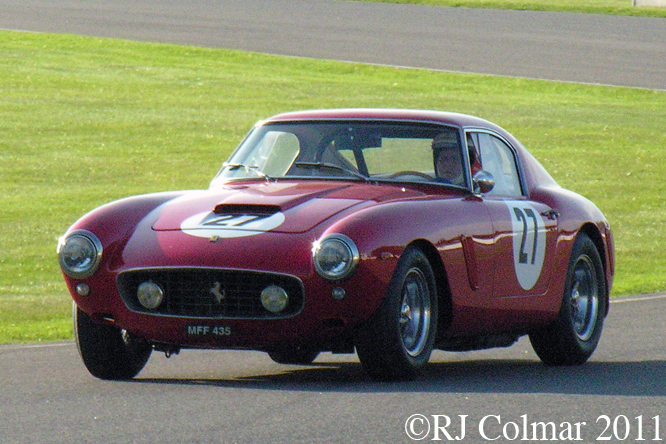
Ferrari 250 GT SWB Berlinetta , Goodwood Revival

Jose Albuquerque, of Portugal brought his 250GT Compitizione to Goodwood and shared it with Barrie Williams. Chassis #2159GT was originally supplied to Garage Montchoisy, Geneva, CH and Gérard Spinedi won on his debut in the 1000m sprint at Cern, Spinedi scored numerous overall and class victories in races, rallies and on the hills up to 1964. Mr Albuquerque has been the custodian of this car since 2001.
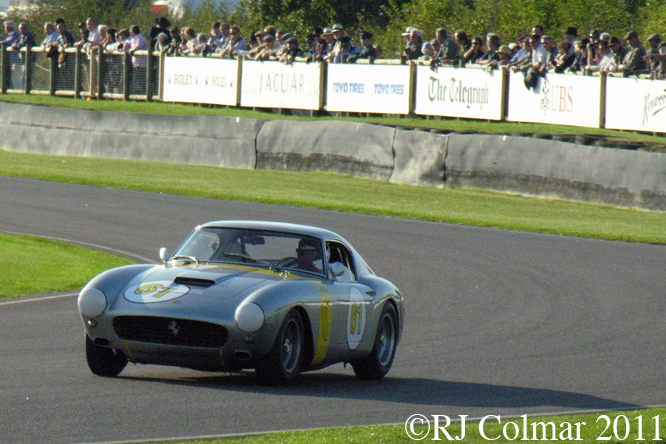
Ferrari 250 GT SWB Berlinetta , Goodwood Revival

Finally Garage Francochamps appears to have acquired this 1960 steel bodied 250GT SWB Berlinetta chassis #2069GT from Baron de Fierlant in 1962, apart from a 2nd place in the 1962 Ardenne hillclimb with Robert Crevits at the wheel, the car has no discernable competition history until the turn of this century when Vincent Gáye acquired it. Vincent was sharing #2060GT with former national hillclimb champion David Franklin in the RAC TT celebration.

My thanks to PauloSF at Ferrari Chat for his contribution to todays blog.

Thanks for joining me on this RAC TT edition of ‘Gettin a lil’ psycho on tyres’, I hope you will join me again tomorrow. Don’t forget to come back now !

SOT Thanks to a strong alignment of favourable planets I’ll be attending the Bill Boddy Tribute Day at Bill’s spiritual home Brooklands tomorrow, if I had not picked up a copy of Motor Sport, edited by Bill Boddy, in January 1973 I’d never have been bitten by the passion I still have 38 years later for all things motoring.
Share

Killed By A Pony – Ford Falcon Sprint V8

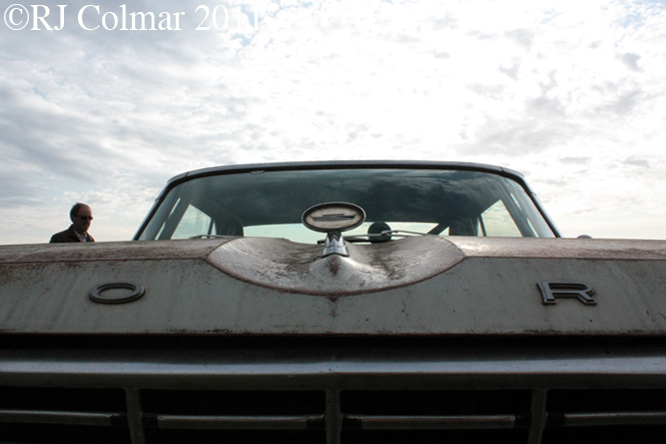
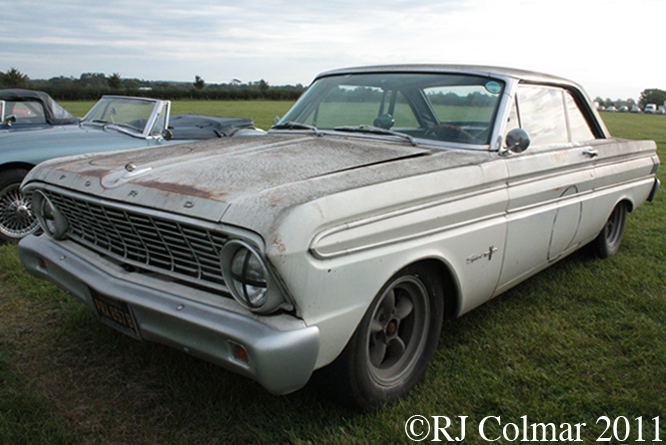
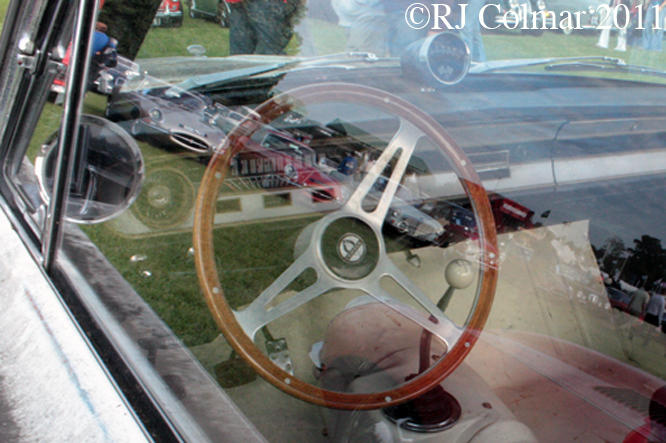
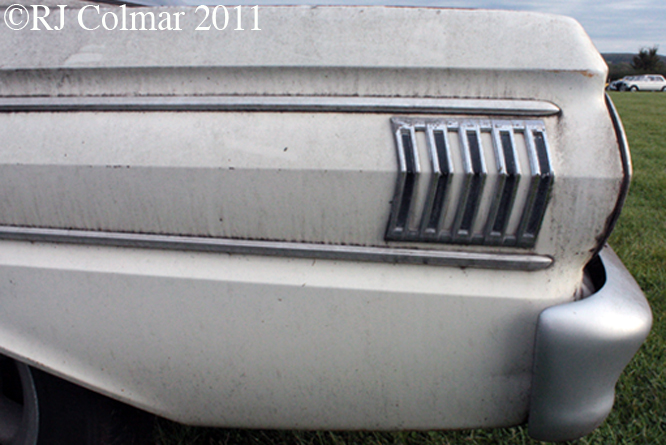
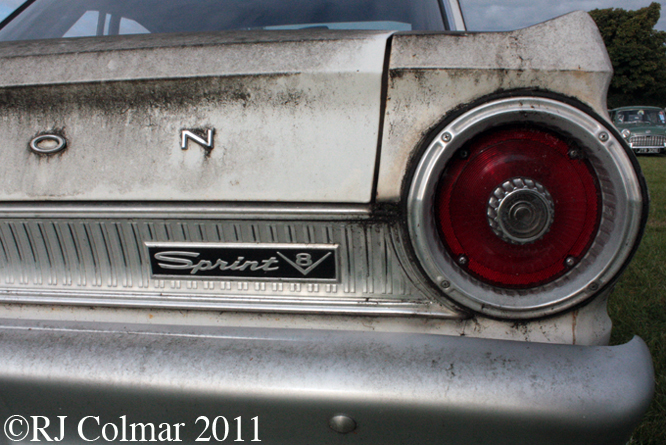
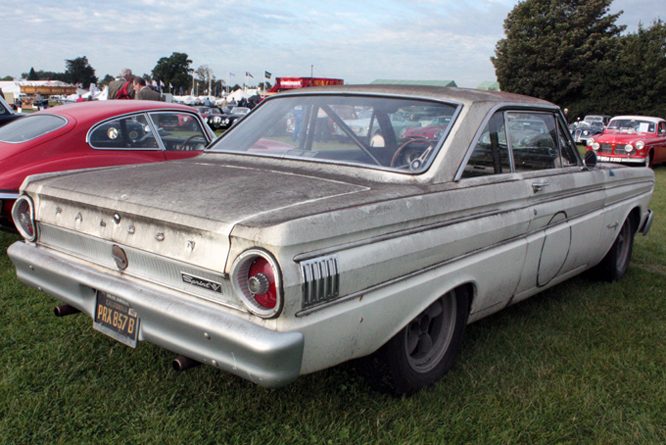
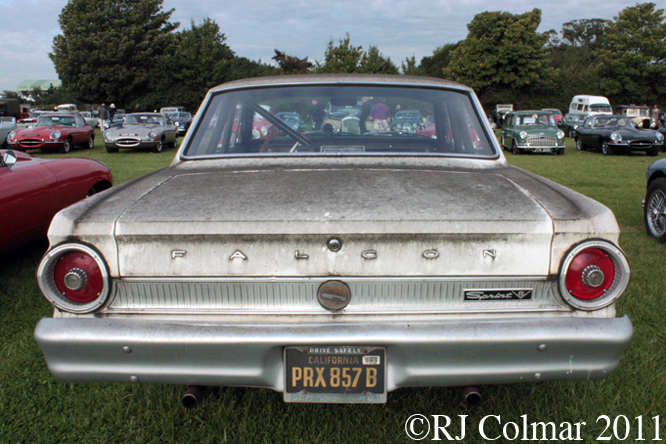
The stand out car in the Goodwood car park last week was this Ford Falcon Sprint V8, there is something about the unmolested patina of old racing cars I simply find irresistible, something all to easy to underestimate that speaks of both achievement and subsequent precarious survival.

Ford Falcon Sprint V8, Goodwood Revival

There are four strands to Ford Falcon history, the US built cars such as the one seen here which were in production from 1960 until 1970, the Argentinian built Falcons in production from 1962 to 1991, the Australian built Falcons which have been in production since 1960 and the US built Falcon ‘E series’ 8 seat vans built from 1961 to 1967.

Ford Falcon Sprint V8, Goodwood Revival

Allegedly Edsel Ford first came up with the Falcon name for the design of a luxury car in 1935, he felt the name did not quite fit and renamed the car Mercury which was launched as a luxury brand in 1938.

Ford Falcon Sprint V8, Goodwood Revival

The Ford Falcon was launched in 1960, like the contemporary Chevrolet Corvair, Chrysler / Plymouth Valiant, Studebaker Lark and AMC Rambler, the design evolved from market research which identified that many US families were in the market for a smaller than full size second vehicle primarily to be driven by women. The first generation Falcons were in production from 1960 -1963.

Ford Falcon Sprint V8, Goodwood Revival

The second generation Falcon was redesigned in 1964 and aimed at a more youthful market. Falcons were available in two door, 4 door, sedan, 2 door coupé like this 1964 model, 2 door convertible, 2 door coupé utility and 3 or 5 door station wagon forms.

Ford Falcon Sprint V8, Goodwood Revival

Six engine options were available from 2.4 litre / 144 cui in line sixes through to 4.9 litre / 302 cui Windsor V8’s along with 4 transmission options 2 speed (ford o matic) auto, 3 speed auto and 3 or 4 speed manual.

Ford Falcon Sprint V8, Goodwood Revival

Despite over a million sales in the first two years of the first generation Falcon, second series Falcon sales tanked thanks in no small part to another vehicle in the Ford range that was based on the second generation Falcon but aimed at an even more youthful market known as the Ford Mustang which was launched in April 1964.

Ford Falcon Sprint V8, Goodwood Revival

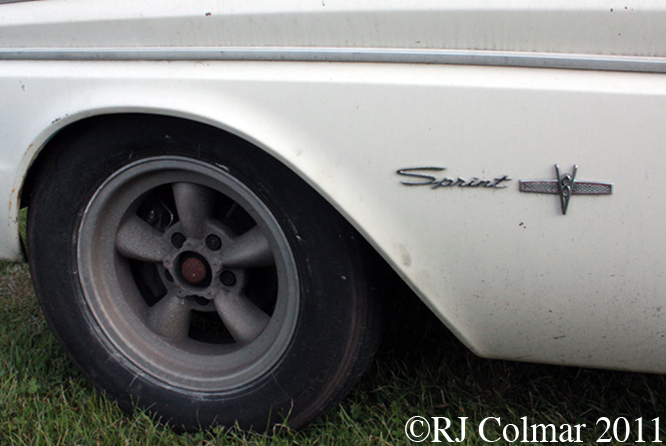
To try and keep sales up the Sprint V8 with 4.7 litre / 289 cui, as seen here, and later even 4.9 litre / 302 cui variations were introduced but the slightly more expensive Mustang with the same power trains was the car everyone wanted.

Ford Falcon Sprint V8, Goodwood Revival

The secrets of this particular cars past remain hidden to me for now, a signature above the lighter on the dash looks like that of two time British Saloon car champion Jack Sears. I have not been able to find any evidence Jack drove such a car after winning the 1963 British Saloon Car Championship driving a Ford Cortina GT, a Lotus Cortina and a Ford Galaxy 500.

Thanks for joining me on this Sprint V8 edition of ‘Gettin’ a lil psycho on tyres’ I hope you will join me again tomorrow. Don’t forget to come back now !

Share

Worth Getting Up At Dawn For – Volvo 480ES

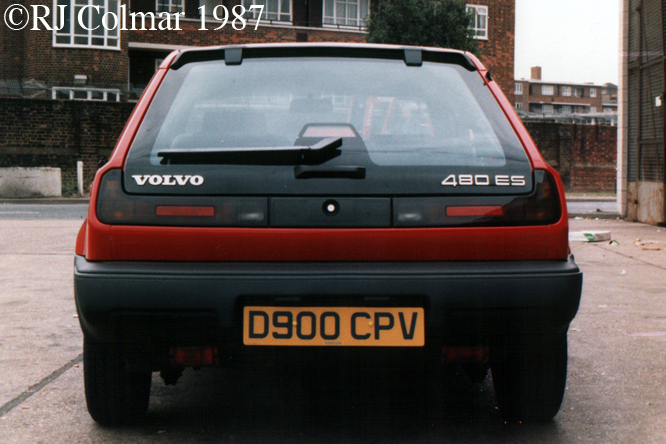
One day in April 1987 I spent the day at Donington Park where Volvo Concessionaires officially introduced the ’87 model range to members of it’s dealer network. This was the first opportunity many of us would have to drive the much anticipated Volvo 480ES.

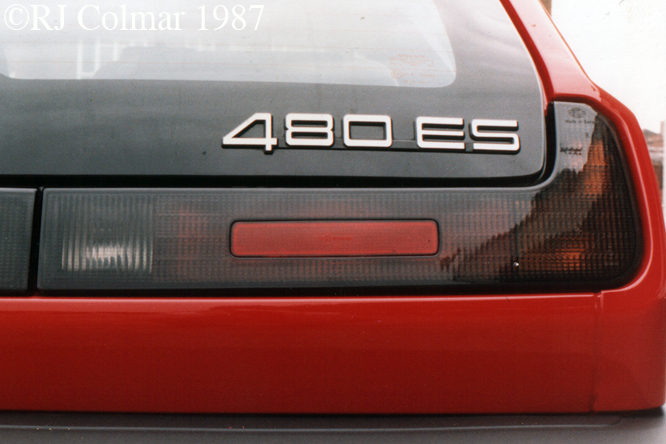
Volvo 480 ES, New Covent Garden

Unlike Volvo’s previous coupé the P1800 which was based on an existing Amazon platform, the 480 was a completely fresh front wheel drive design by Robert Koch, John de Vries and interior by Corien Pompe. The 480 platform would then later be used for the 440 hatchback and 460 saloon variants.

Volvo 480 ES, New Covent Garden

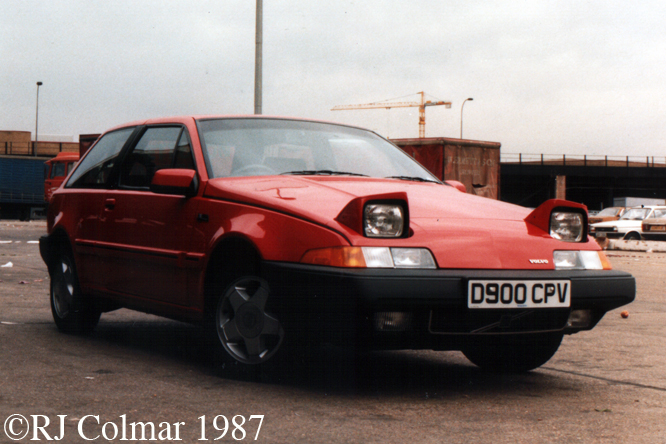
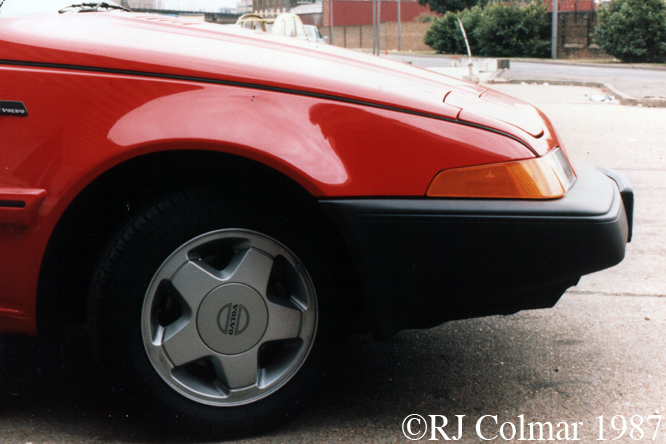
The car bristled with idea’s new to Volvo including a Porsche tuned transverse 90 hp engine and front wheel drive, engine management by Electronic Control Unit, digital dash instrumentation, and a Lotus tuned suspension that gave the car staggering road holding.

Volvo 480 ES, New Covent Garden

By the time the car was launched the pop up head lights were not strictly necessary as the European Laws that had required them to meet a minimum head light height had been repealed, however this change in the law came so late the design remained unchanged.

Volvo 480 ES, New Covent Garden

During the course of the day I had the opportunity of driving the car around the Donington Park Circuit with a racing instructor at my side and I simply could not drive the car anything like fast enough to explore it’s road holding potential, it went every where I wanted it to go safely regardless of the speed I was doing.

Volvo 480 ES, New Covent Garden

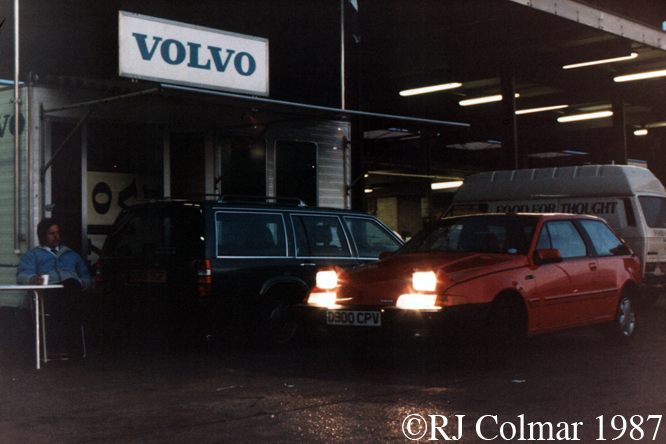
Some weeks later I was given the 480 ES, seen here, for a week in exchange for getting up at some improbably early hour to go and drum up some business at New Covent Garden Fruit Vegetable Market in Central London.

From 1986 to 1995 80,463 Volvo 480 ES, Turbo and 2 litre / 122 cui variants were manufactured at the former DAF works at Born in the Netherlands.

Thanks for joining me on this New Covent Garden edition of ‘Gettin’ a lil’ psycho on tyres’ I hope you will join me again tomorrow. Don’t forget to come back now !

Share

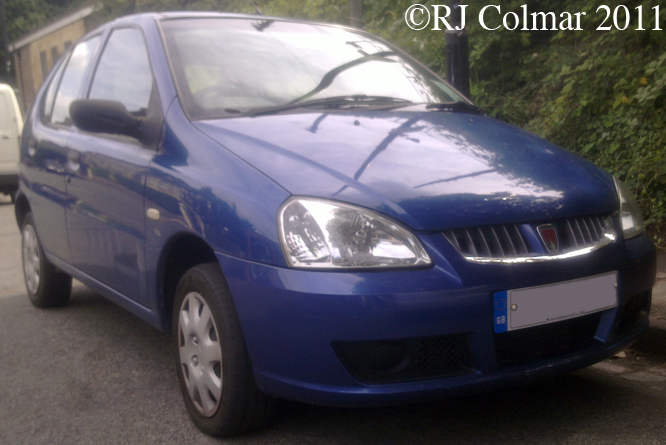
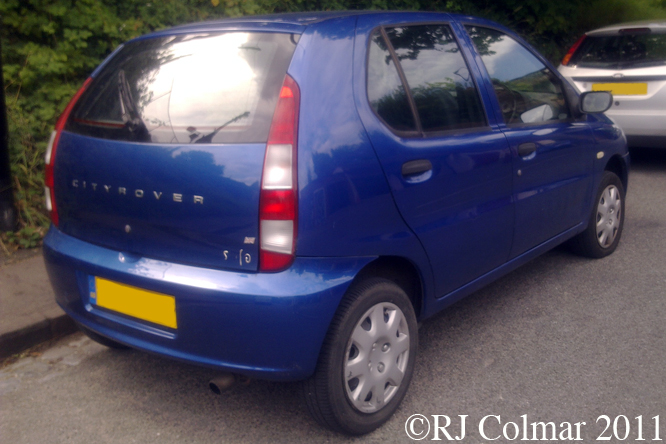
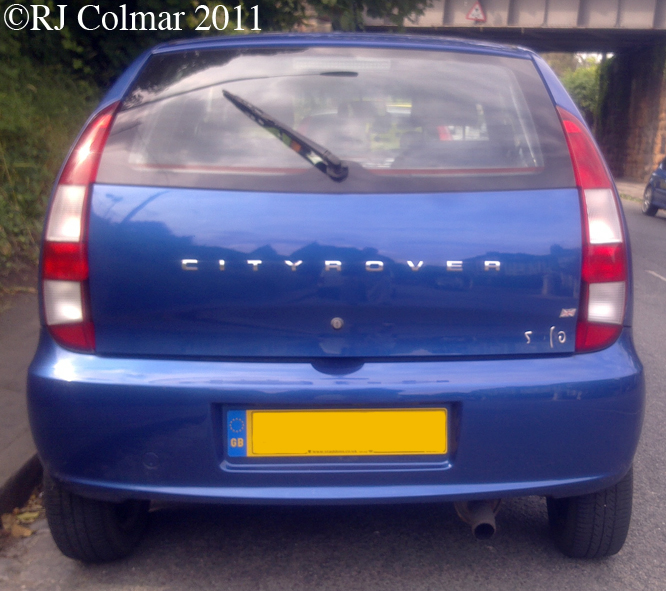
A Passage From India – Rover CityRover

In 2000 BMW gave up on it’s attempt to revive the Rover Group after six years and sold most of the assets packaged as the MG Rover Group to the Phoenix consortium. At this point all models, bar one the ’75’, in the MG Rover groups portfolio were around five years old and Phoenix determined that their first new car would be aimed at the city car market segment that had once been an almost exclusive preserve of the Mini, a product of earlier incarnations of the MG Rover Group.

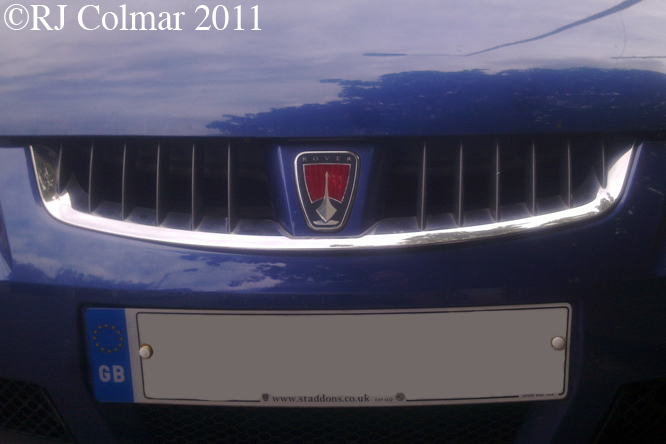
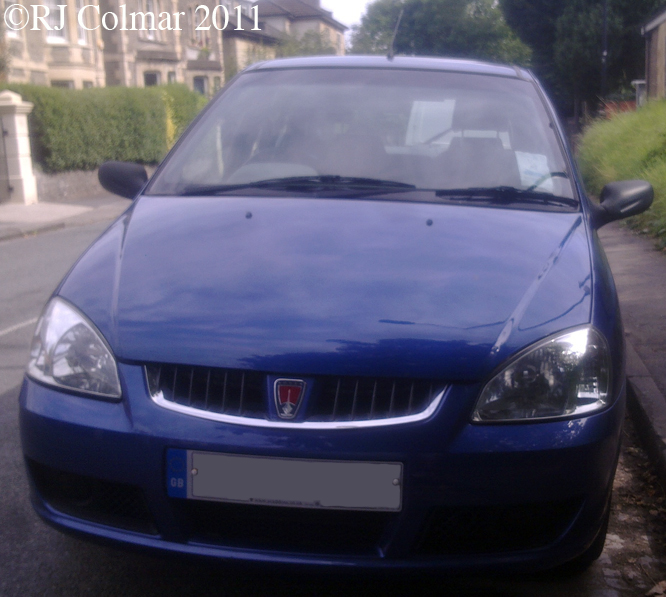
CityRover Solo

MG Rover Group did not have any research and development assets so they looked for a partner that would be offered a stake in the group in return for a new car. A deal was done with Indian manufacturers TATA who would build a version of the first ever completely indigenous Indian passenger car the Indica.

CityRover Solo

The design criteria for the Indica were that it would be the size of a Maruti Zen, similar to the Suzuki Cervo Mode, the internal dimensions of the Hindustan Ambasador, a cast off from a previous in carnation of the MG Rover Group that is still in production who’s design heritage can be traced back to the Morris Oxford of 1948, the price of a Maruti 800, another Suzuki related product, and the running cost of a diesel.

CityRover Solo

The design work was carried out by I.D.E.A. in Italy and after a false start with some quality issues the TATA Indicia, launched in 1998, with a Peugeot derived motor proved to be a big hit on the Indian sub continent. Despite the absence of a development budget, apart from the badging, alterations made to the Indicia to suit the needs of European motoring included an upgraded engine to produce 84 hp and exceed more stringent emissions regulations, increase in road wheel size from 13 to 14 inches and corresponding alteration of gear ratio’s, stiffer front and rear spring rates, lowered suspension and increased gearing for the steering.
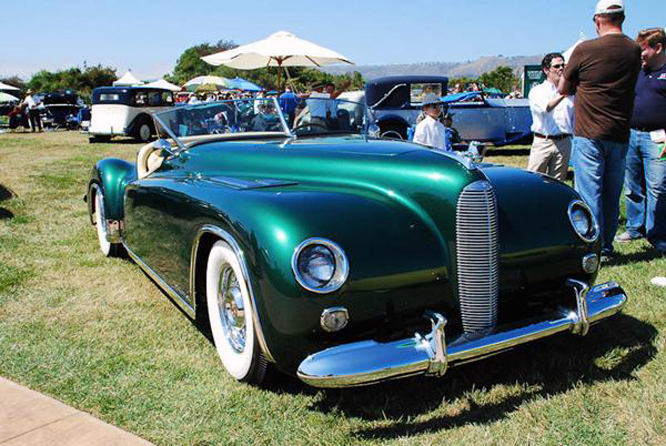
CityRover Solo

Production of the Rover CityRover began in Pune India in 2003 but the cars launch was marred by questions over the MG Rover Groups finances and by the newly crowned 2004 European Car of the year the FIAT Panda which was a game changing generation ahead of the CityRover and cheaper too.

CityRover Solo

While the CityRover was praised for it’s performance and handling it was let down by interior quality, lack of equipment and above all headlining city car market segment price. In July 2005 MG Rover was liquidated with the loss of 6,000 jobs in the company and a further 25,000 jobs in related suppliers companies. Nanjing acquired the assets of the MG Rover Group.

Around 6000 CityRovers, such as the base Solo model seen here, were sold in it’s first year and a further 1200 Mk2 versions were sold through non franchised dealers after the MG Rover Groups liquidation.

Thanks for joining me on this ‘CityRover’ edition of getting a lil’ psycho on tyres’. I hope you will join me again tomorrow when I’ll be looking at a Coupé built in The Netherlands. Don’t forget to come back now !

Share

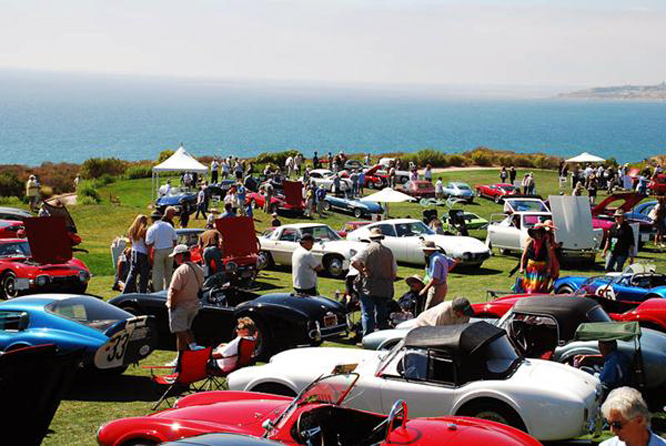
So You Think You Know Your Sports Cars – Palos Verdes C d’ E

Thanks to photo’s sent by Geoffrey Horton, I am pleased to bring you another dose of California sunshine from the Palos Verdes Concours d’ Elegance held last weekend.

Palos Verdes Concours

About the most difficult vehicle to identify in this over view is the Mazda Como Sport unless like me you have wasted a little time playing Grand Turismo 4. Easiest vehicle to identify for regular GALPOT readers should be Geoffrey’s Jaguar XK140 FHC, which was up against a Mercedes Gullwing this time out. Shocking to me was that Geoffrey sent me photo’s of five vehicles who’s manufacturers I had never heard of.

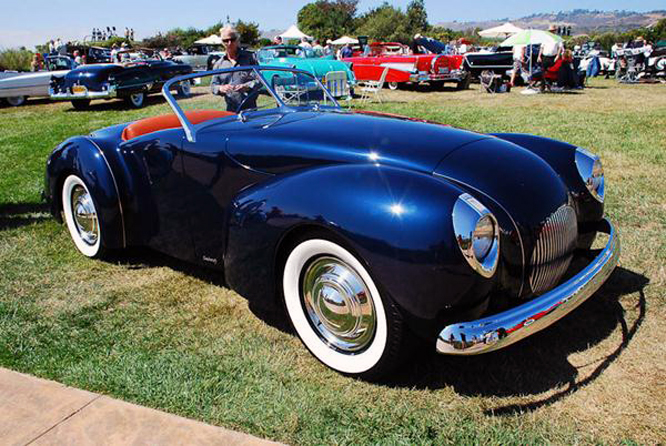
Coachcraft 'Yankie Doodle' Roadster, Palos Verdes

Oldest of the five was this 1940 Coachcraft ‘Yanke Doodle’ Roadster, a one off with a chassis frame built from Hudson Essex and Ford models by 17 year old Seward Allan with a body by Coachcraft of West Hollywood and modifications by Frank Kurtis.

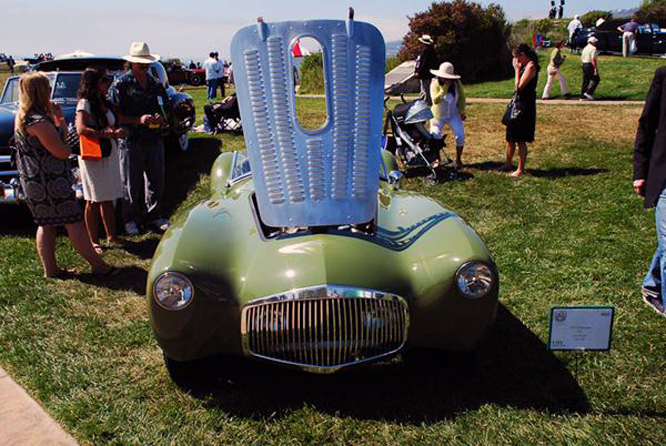
Maverick Sportster, Palos Verdes

My favourite of the five is this this 1952 Maverick Sportster, a 210 lbs boat tail fibre glass body built by Sterling Gladwin sitting on top of a Flathead Cadillac powered LaSalle chassis. This particular vehicle appears to be the prototype which is recognisable by the absence of any doors.

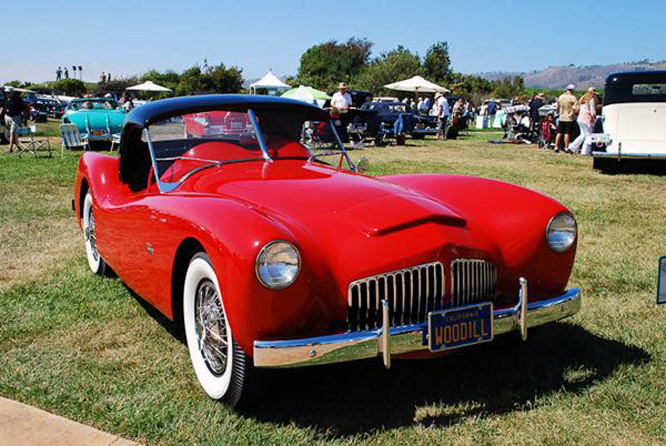
Woodhill Wildfire, Palos Verdes

Next up we have a car of the type that starred in the reckless and thrilling film ‘Johnny Dark’ namely a Woodhill Wild Fire built by California Dodge dealer Robert ‘Woody’ Woodhill, who dreamed of owning a Jaguar XK120 and ended up building two fibre glass specials. With Willys running gear and tailor made Glasspar bodies, Woodhill was unsuccessful at selling his sportscar to Kaiser, owner of Willy’s, and after modifying his car to run with Ford running gear he then built similar Buick and Cadillac examples. Again failing to gain manufacturer support Woodhill settled for building his sports cars with Ford running gear and selling then as kit cars that could be assembled in 14 hours, famously demonstrating a 4 hour build on TV.

Glasspar G2, Palos Verdes

The company that started the glass fibre revolution in US sports car production appears to be Glasspar a company specialising in building fibre glass fibre boats who built a, Bill Tritt designed, special, the Brooks Boxer, for USAF Major Ken Brooks. The mould for the Brooks Boxer was then used to produce the Glasspar G2 of the type seen here. A modified version of the G2 body was supplied to Robert Woodhill for his Wild Fire kits.

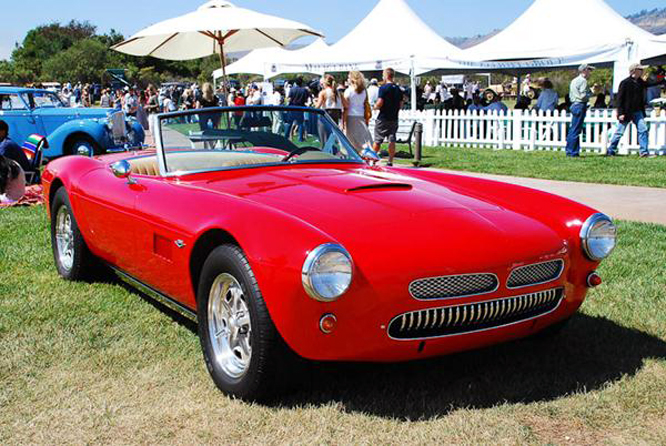
Hirsch Roadster, Palos Verdes

Finally the fibre glass body vehicle above is known as a 1960 Hirsch Roadster, sources on the internet suspect the date since the car is described as having Fiero steering, Datsun 280Z rear axle, and a 1966 289 Ford V8 connected to a similarly sourced 5 speed transmission. The owner believes the cars roots lie in a business that failed to get off the ground in Orange County. If you know anything about the Hirsch or indeed about any of the cars above please do not hesitate to either leave a message or get in touch be e-mail, my address is on the bottom of the page.

My thanks again to Geoffrey Horton for sharing his photographs from Palos Verdes.

Thanks for joining me on this glass fibre edition of ‘Gettin’ a lil’ psycho on tyres’, I hope you will join me again tomorrow when I’ll be looking at a Rover. Don’t forget to come back now !

Share