RIP JP B – Peugeot 309 Gti Turbo Cup

Born on April 26th 1937 Jean Pierre Beltoise was part of a cohort of French drivers that emerged in the 1960’s that included Johnny Servous Gavin, Gerrard Larrousse, Henri Pescarolo and brother in law Francois Cevert.

JP B’s started racing motor cycles winning 11 national titles in three years, he raced Motor Morini, Kreider and Bultaco machines in a handful of world championship events from 1962 to 1964 finishing a best 3rd on a 50 cc Kreider in the 1964 French Grand Prix.

In 1963 Jean Pierre started racing Djet sports cars for René Bonnet. After Bonnet sold out to Matra he raced a succession of Formula 3 and Formula 2 Matra open wheelers with sufficient success that led to his Grand Prix debut in the 1966 German Grand Prix with a Formula 2 Matra in which he finished 8th overall and first in the Formula 2 class.

In 1968 JP B was contracted to drive for the French Matra Sports team but did not race a proper Formula One Spec car until the Spanish Grand Prix when he was drafted in to drive Jackie Stewart’s Cosworth powered Matra MS10 for Ken Tyrrell’s Matra International team.

At Monaco he raced the Matra V12 powered Matra MS 11 for the first time but retired with broken suspension, at the Dutch GP he finished a season high second behind Stewart.

Matra Sport withdrew form F1 at the end of 1968 to focus their efforts on getting Ken Tyrrells Matra International Team Matra MS80 cars for Jackie Stewart, JP-B was drafted in as Jackie’s team mate and again finished a season high second this time in France.

Ken Tyrrell and Matra parted way’s after winning the 1969 World Championships and Matra got it’s V12 programme back on track with JP B and Henri Pescarolo in the drivers seats JP B scored two season high thirds to Henri’s one. The following season JP B remained on the Matra team with Chris Amon but the results were disappointing.

For 1972 JP B signed to drive for BRM for which an over ambitious programme was being funded by Marlboro. At the 1972 Monaco Grand Prix Jean Pierre won his only Grand Prix generally reckoned to have been one of the more difficult races thanks to the atrocious conditions.

Note the scuff mark the BRM’s nose in the linked photo this came about after contact with Ronnie Peterson’s March which was baulking his while being lapped.

This race would be the last formula one championship win for a BRM and at the end of the season Jean Pierre won the non championship John Player victory race at Brands Hatch driving a BRM P180 which would be the last win for the BRM team.

Jean Pierre continued driving for BRM in 1973 during which he finished a season high 4th in Canada with the by now ancient BRM P160 and in 1974 during which he scored a great second place finish on the debut of the P201 in South Africa.

Out of a Formula One drive for 1975 Jean Pierre was in the running for a drive with the new Ligier team for 1976 and tested the Matra V12 powered JS5 before it was decided to hand the car over to 1975 Formula 2 champion Jacques Laffite.

Alongside his open wheel racing Jean Pierre continued racing sports cars winning races in 5 litre, 3 litre and 2 litre classes though most, seven, were wins with the 3 litre / 183 cui Matra’s which included the 1970 Tour de France sharing driving with Patrick Depailler and with FIA President Jean Todt doing the navigating.

After winning the sports car World Championship twice in 1973 and 1974 Matra withdrew from racing a Jean Pierre continued racing Ligier and Rondeau built sports cars at Le Mans, but he never improved on his career best 1969 4th place finish with Piers Courage in the endurance classic.

JP B won two French Saloon car championships driving BMW’s in 1976 and 1977 before proving his versatility, despite restricted arm movement that was the result of a sports car accident in the 1960’s, by winning the 1979 French Rallycross Championship driving an Alpine A310.
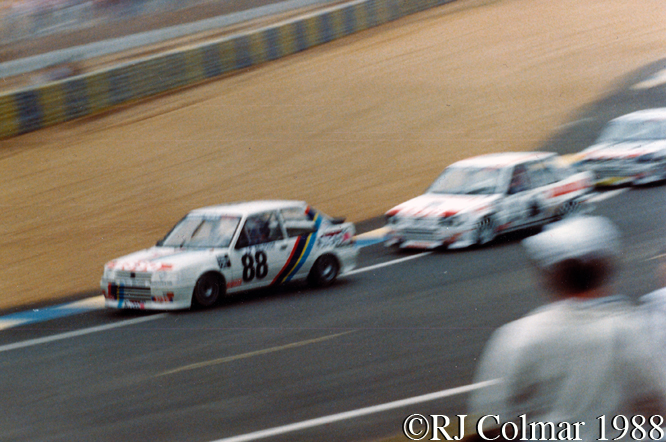
Peugeot Gti Turbo, JP Beltoise, Le Mans,

Into the 1980’s JP B continued racing Peugeot 505 Turbo’s, a V6 Talbot Tagora and in 1988 he was racing in the Peugeot 309 Gti Turbo Cup series, above Jean Pierre is seen driving the #88 309 to victory in the support race to the Le Mans 24 Hours.

Jean Pierre passed away on the 5th of January aged 77.

Condolences to his family and friends RIP JP B.

Thanks for joining me on this “RIP JP B” edition of “Gettin’ a li’l psycho on tyres” I hope you will join me again tomorrow when I’ll be visiting Autosport International. Don’t forget to come back now !

Share

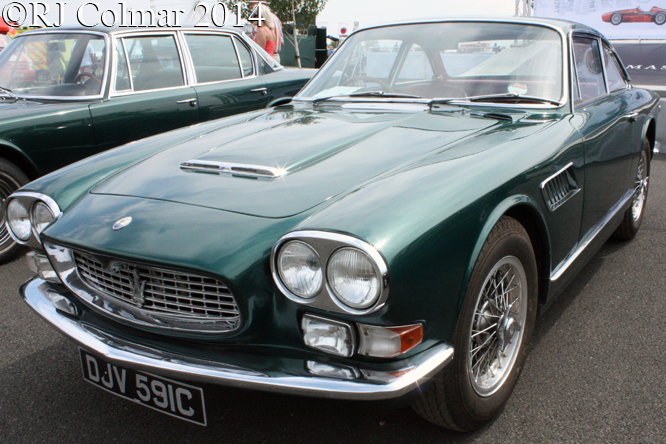
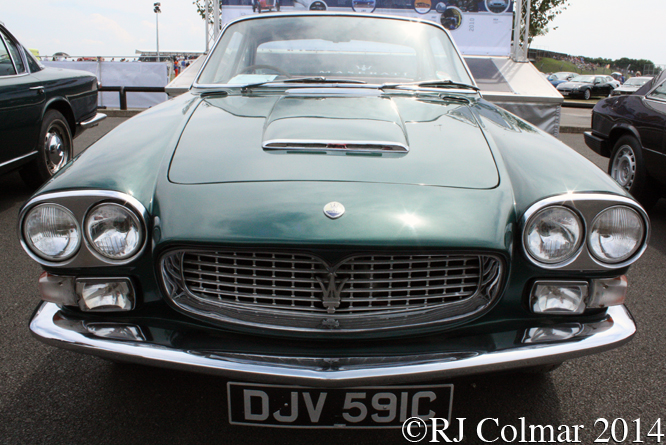
Tipo AM 101/10 – Maserati Sebring Series II

Introduced in 1965 the Maserati Sebring Series II, Tipo AM 101/10, featured a host of minor detail changes from the 348 Sebring Series Is produced from 1962.

Maserati Sebring Series II, Silverstone Classic,

From the front the head lights were now paired in chrome clusters, and a more cumbersome design was introduced for the front indicators and side lights.

Maserati Sebring Series II, Silverstone Classic,

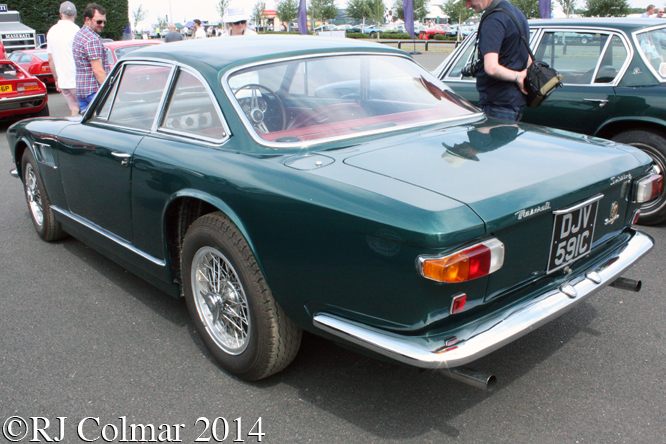
From the side the engine bay vents were raised with more elaborate detailing and a chrome strip was run between the wheel arches.

Maserati Sebring Series II, Silverstone Classic,

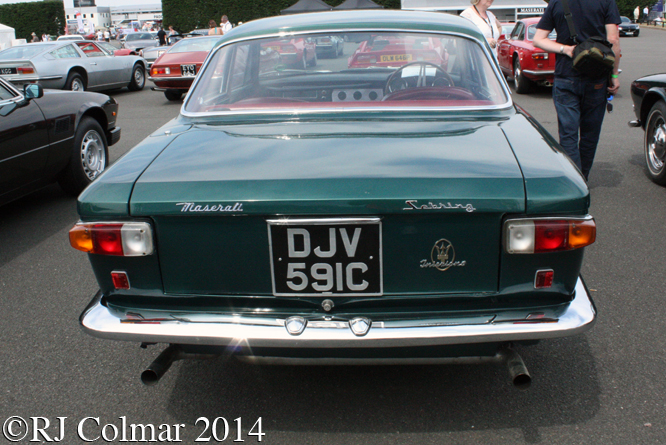
The rear bumper was simplified and the taillights were now horizontally aligned.

Maserati Sebring Series II, Silverstone Classic,

245 Sebring Series IIs were built up until 1968 and today’s featured car seen at Silverstone Classic last year is one of just seven right hand drive models built.

Thanks for joining me on this “Tipo AM 101/10” edition of “Gettin’ a li’l psycho on tyres” I hope you will join me again tomorrow for a short appreciation of the life and times of Jean Pierre Beltoise. Don’t forget to come back now !
Share

150.87 mph / 242.80 kph – Sunbeam V12

These day’s if one had just £500 to spare it would probably not be too difficult to scan a few classified car ads and find a car that was still capable of reaching 150 mph.

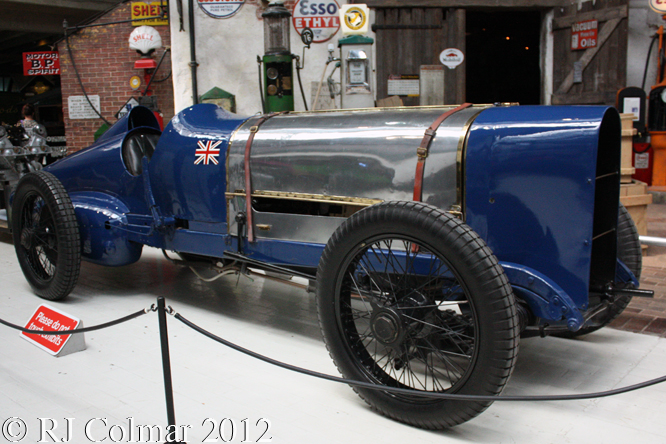
Sunbeam V12, National Motor Museum, Beaulieu

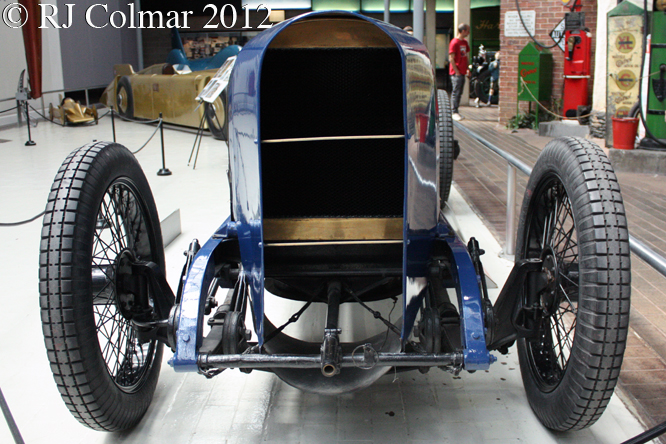
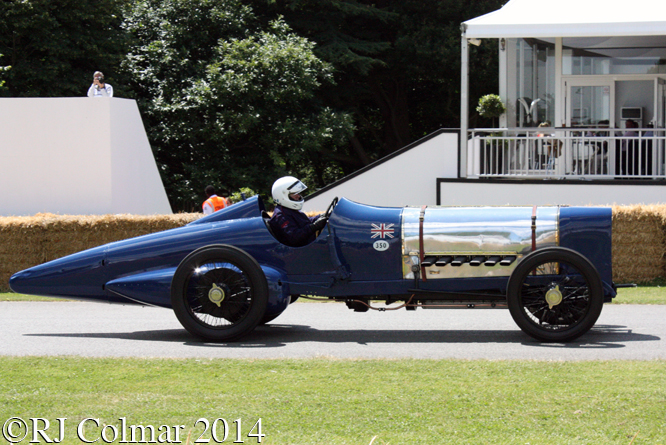
When Sunbeam’s chief engineer and racing team manager Louis Coatalen conceived today’s featured Sunbeam V12 in 1920 the World Land Speed Record stood at 124.09mph / 199.70kph set by Lydston Hornsted driving a 200hp Benz at Brooklands in June 1914.

Sunbeam V12, National Motor Museum, Beaulieu

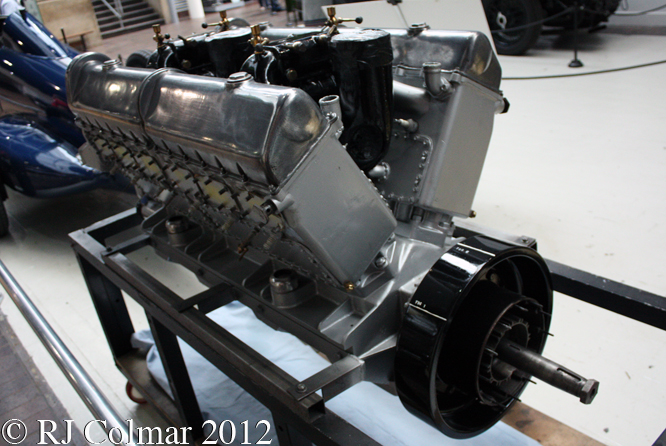
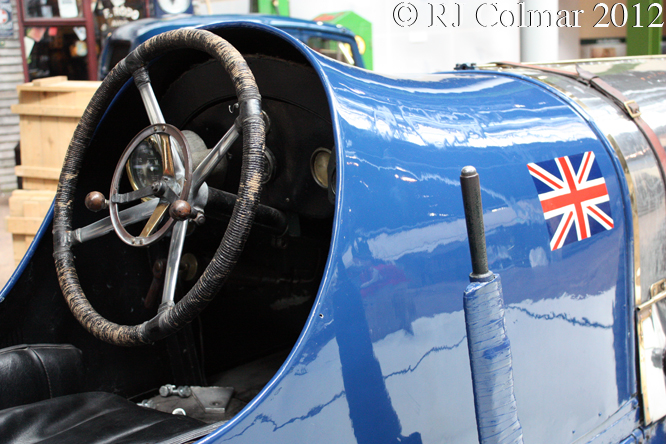
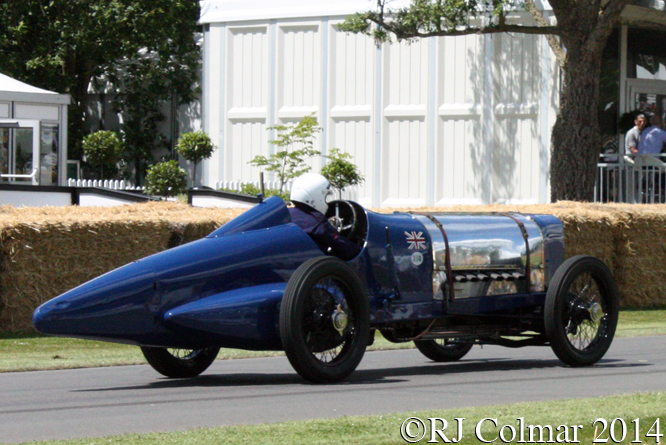
Louis’s idea was to fit a 350 hp 18.3 litre / 1116 cui V12 Sunbeam Manitou V12 aero engine in to a chassis and clad the vehicle in the most aerodynamically slippery shape that could be devised.

Sunbeam V12, National Motor Museum, Beaulieu

Harry Hawker was given the task of driving the Sunbeam V12 at two Brooklands race meetings in 1920, but the car suffered from damage after a tyre blew on the Whitsun Weekend and then could not start after the engine stalled in August, but René Thomas drove the car to a new 108 mph course record on the Gaillon Hill Climb in France.

Sunbeam V12, Doug Hill, Goodwood Festival of Speed

In 1921 Kenelm Lee Guinness drove the car at Brooklands recording a top speed of 140 mph and an average lap speed of 116 mph at the Autumn meeting, the following year Kenelm set a one way flying kilometer record of 133 mph, but this was never recognised as a World Land Speed record for which the speed is determined by the average of two runs in opposite directions.

Sunbeam V12, National Motor Museum, Beaulieu

Malcolm Campbell borrowed the Sunbeam V12 to compete in the 1923 Saltburn Speed Trials and recorded a one way run of 138 mph which was enough to convince him that he should purchase the car for further Land Speed Record attempts in 1924.

Sunbeam V12, National Motor Museum, Beaulieu

After Ernest Eldridge raised the official Land Speed Record to just over 145 mph aboard the FIAT Mephistopheles, a vehicle I shall be looking at next week, in June 1924 at in Arpajon in France, Malcolm took his now blue and silver, previously green and silver, Sunbeam to the Pendine Sands in September 1924 and recorded a two way average speed of just over 146 mph for his and the Sunbeams first World Land Speed Record.

In July 1925 the combination returned to Pendine Sands and raised the World Land Speed Record to 150.87 mph / 242.80 kph a record that stood for just under a year when a car that I shall be looking at in two weeks took the record up to 170 mph.

Thanks for joining me on this “150.87 mph / 242.80 kph” edition of “Gettin’ a li’l psycho on tyres” I hope you will join me again for Maserati Monday tomorrow. Don’t forget to come back now !
Share

Paperboy’s Shooting Brake – Rolls Royce Twenty

A ‘brake’ is a large body-less carriage frame used for training horses, use of the term expanded to include any large wagon designed for country use.

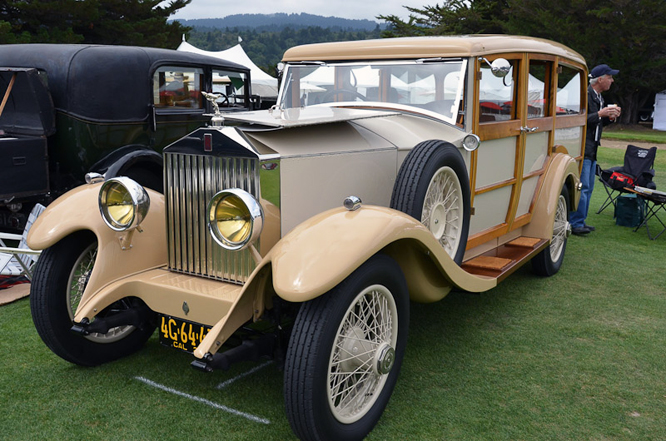
With the advent of the motor car the term shooting brake was applied to any custom built body, often with only two front doors, fitted to a luxury car that was designed for use by hunters and sportsmen who required a large carrying area.

Rolls Royce Twenty, Hillsborough Concours d'Elegance,

In 1872 Frederick Henry Royce’s school day’s were over after just one year when his father died and he had to take a paper round and a job delivering telegrams aged just nine.

By 1929 the company founded by Frederick, better known as Henry, with Charles Rolls was winding up production of the Rolls Royce Twenty of the type featured today in anticipation of the 20/25 model launched later the same year.

Rolls Royce Twenty, Hillsborough Concours d'Elegance,

The Rolls Royce Twenty was the companies ‘small’ car designed for owner drivers, though inevitably plenty were sold to owners with chauffeurs.

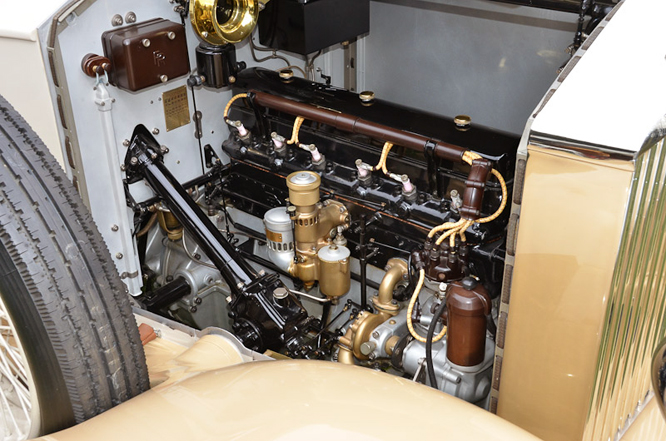
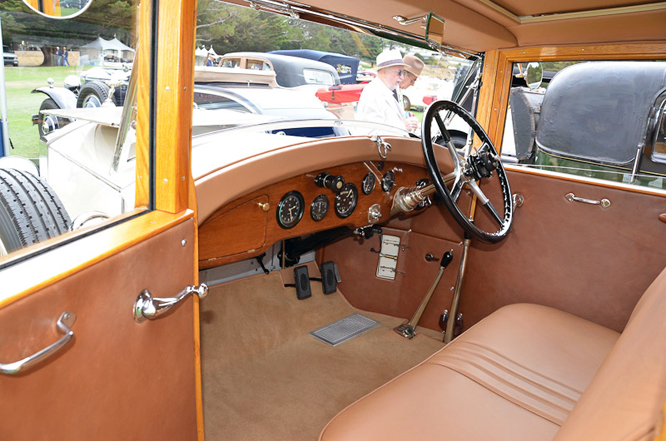
The Twenties mono block 6 cylinder 3127cc / 190 cui motor on the early models was fitted to a three speed gearbox with central gear change while later models like the one featured today had a four speed gearbox with right hand gear stick.

Rolls Royce Twenty, Hillsborough Concours d'Elegance,

Four wheel brakes with a servo did not become available on the Twenty model until 1925, the radiator grill on early models were also fitted with horizontal slats.

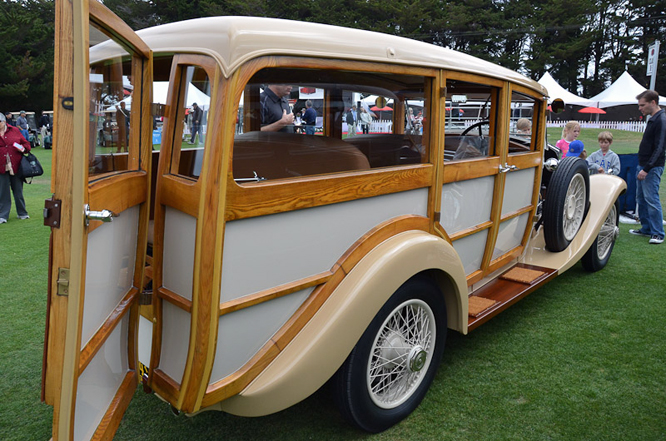
At this time all Rolls Royces were supplied as powered chassis without bodywork which was fitted to the bespoke requirements of customers by independent coach builders, at the time of writing it is not known who built the Woody Shooting Brake body seen here.

Rolls Royce Twenty, Hillsborough Concours d'Elegance,

By 1967 today’s featured Rolls Royce Twenty Shooting Brake was the property of the Hopper family resident at 16 Caledonia Place in Clifton Village Bristol.

Every morning the Hopper’s son Edwin used to drive the Royce down the road to the newspaper agents, Bridge Stores, opposite the Avon Gorge Hotel where he would pick up the newspapers he was to deliver on the other side of Clifton Suspension to the residents of Abbots Leigh.

After finishing his paper round Edwin would drive back across the Clifton Suspension Bridge, designed by Ismbard Kingdom Brunel, and pick up his sister, who had delivered papers on her own round in Clifton Village by foot and drive the car one and a half miles to Ashton Park School which they were both attending.

Amazingly there is a silent black and white film documenting Edwin’s routine, seen above, the newspaper shop is now a branch of the Mayfair Residential Sales and Lettings agents and the bridge tolls are now collected by machines, but other wise the area shown in the film is remarkably unchanged.

Rolls Royce Twenty, Hillsborough Concours d'Elegance,

This Twenty known by it’s current owner as ‘Gen’ was acquired in 1978 with it’s original tool kit and owners manual and was ground up restored between 2000 and 2008.

My thanks to Geoffrey Horton for sharing these photo’s taken at Hillsborough Concours d’Elegance a couple of years ago.

Thanks for joining me on this “Paperboy’s Shooting Brake” edition of “Gettin’ a li’l psycho on tyres” I hope you will join me again tomorrow when I’ll be looking at a 350hp 1920 land speed record car. Don’t forget to come back now !
Share

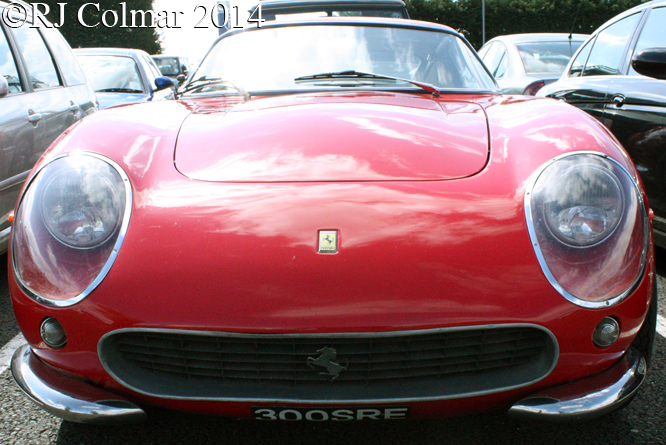
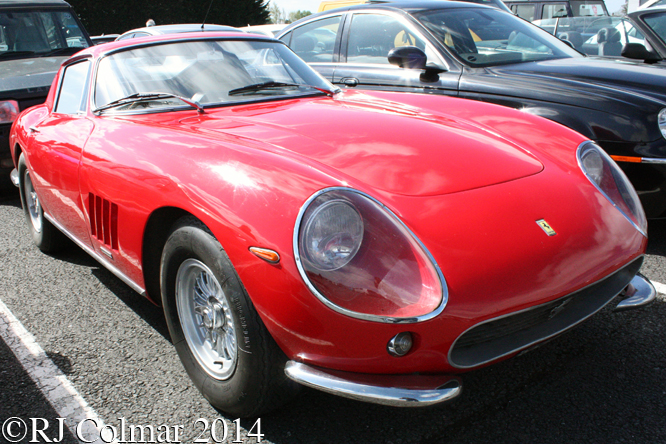
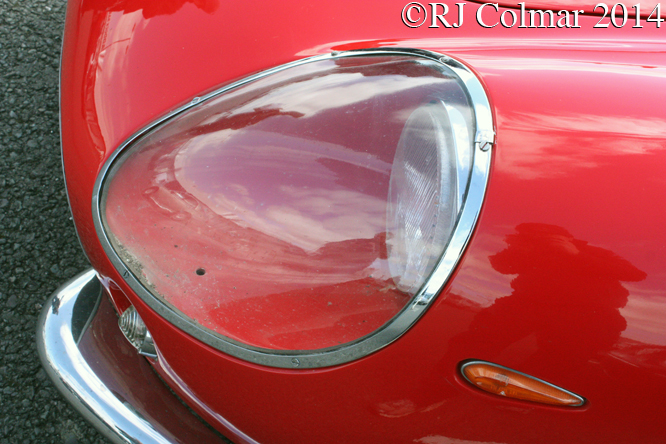
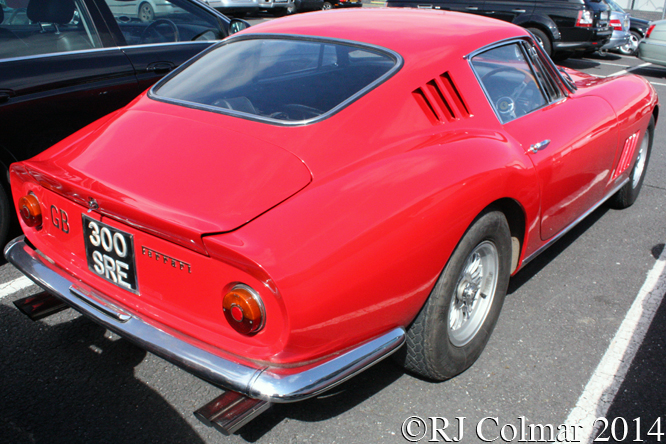
Six Carb Option – Ferrari 275 GTB #07597

Today’s featured Ferrari 275 GTB chassis #07597 was delivered to Maranello Concessionaires, GB in 1965.

Ferrari 275 GTB, VSCC, Spring Start, Silverstone

This right drive car was delivered with the 6 x 40 Weber DCN/3 carburetor option fitted to the motor which produces around 280 hp, six carburetors were only fitted as standard to the later 300hp 4 cam 275 GTB/4.

Ferrari 275 GTB, VSCC, Spring Start, Silverstone

Like the 275 GTB I looked at last week this one is fitted with a short nose body built by Scaglietti

Ferrari 275 GTB, VSCC, Spring Start, Silverstone

The history I have been able to find on this car, seen at last years VSCC Spring Start meeting at Silverstone, beyond the delivery details are brief, in 1980 it is believed to have belonged to someone known only as “Bridges” in the UK.

Ferrari 275 GTB, VSCC, Spring Start, Silverstone

#07597 was also seen at the Brooklands Auto Italia International Weekend, in July 1996.

Thanks for joining me on this “Six Carb Option” edition of “Gettin’ a li’l psycho tyres” I hope you will join me again tomorrow when I be looking at a newspaper boys Rolls Royce. Don’t forget to come back now !
Share

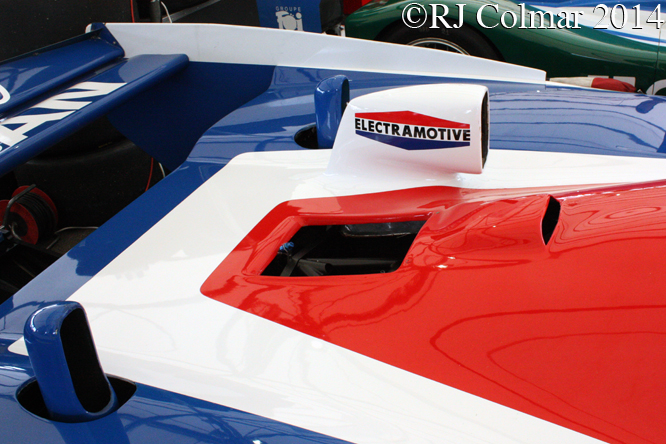
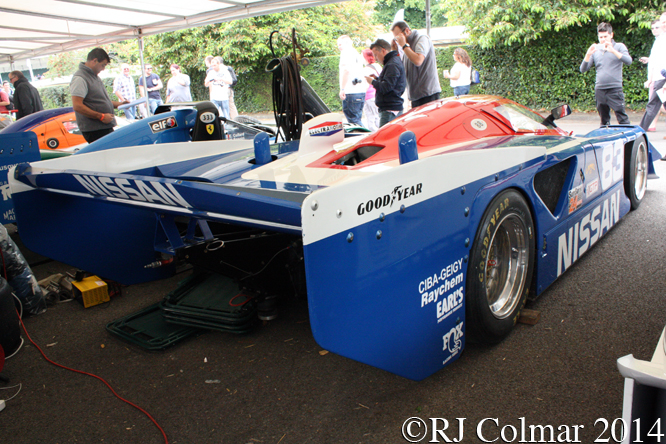
IMSA King Elvis – Nissan GTP ZX-Turbo #88-01

According to the results available to me Don Devendorf a “scientist” at the Hughes Aircraft Corporation was campaigning a Triumph Spitfire and then Mueller Fabricators Triumph GT6 in the GP and EP SCCA classes with some success from 1968 to 1970.

By 1978 Don had founded Electramotive Engineering of California with John Knepp to prepare and successfully race a succession of Datsun’s.

Nissan GTP ZX-Turbo, Goodwood Festival of Speed,

Starting with a IMSA GTU Class 240Z before moving onto GTU Class 280ZX and GTO Class 280ZX turbo models up until 1984.

In 1985 Nissan decided to drop the Datsun brand in favour of Nissan and entered into a partnership with Electramotive to field cars in the top GTP class of the IMSA series.

Nissan GTP ZX-Turbo, Goodwood Festival of Speed,

From 1985 Electramotive used Lola chassis similar to the Lola T710 chassis used by General Motors Corvette GTP team but adapted to take the Electramotive tuned turbocharged Nissan VG30 V6.

Initially the Nissan variant of the Lola T710 was known as the T810 in 1985, but for 1986 and 1987 the cars were known as Nissan GTP ZX-turbo’s with Lola T710 chassis numbers.

Nissan GTP ZX-Turbo, Goodwood Festival of Speed,

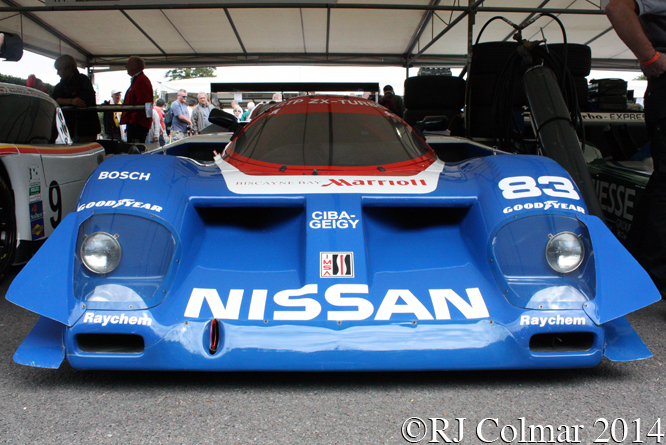
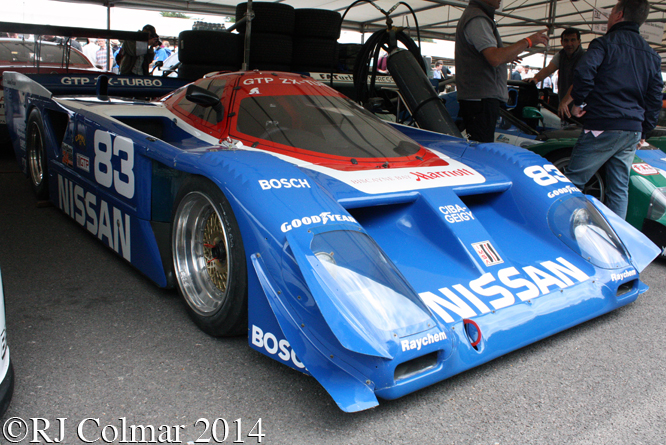
The Nissan Lola chassis carried bodywork devised by Yoshi Suzuka which was easily distinguished from the Hendricks Motorsports GTP Corvette body by the large front intakes mounted below the windscreen.

By 1987 the GTP ZX Turbo had been developed into one of the faster cars on the IMSA GTP circuit scoring 5 pole positions and one win with Geoff Brabham and Elliot Forbes-Robinson sharing the victory spoils at Miami.

Nissan GTP ZX-Turbo, Goodwood Festival of Speed,

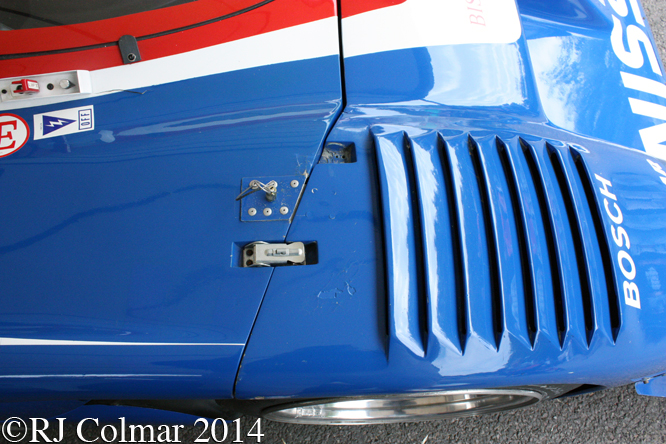
For 1988 Electramotive commissioned Trevor Harris to design the chassis for today’s featured car, #88-01 built by Jim Chapman’s JC Prototypes, using the same Electromotive alloy block motor and running gear as the ’87 GTP ZX-Turbo and similar Yoshi Suzuka designed bodywork.

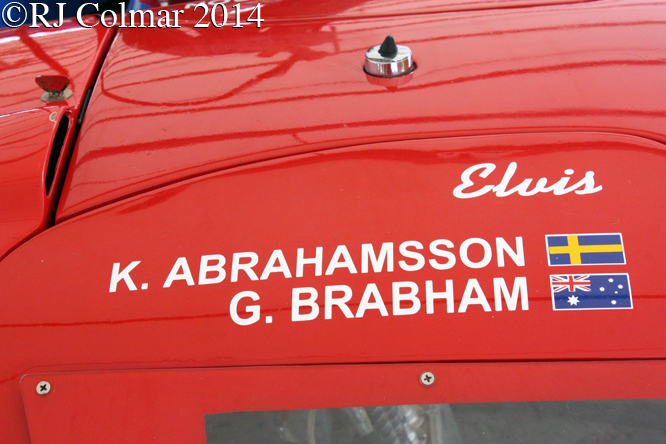
After gifting the two endurance events at Daytona and Sebring to the new Castrol sponsored Jaguar team, by not entering them. Geoff Brabham won nine of the remaining events, with a season high streak of 8 consecutive wins to secure the 1988 drivers and team championships for the Electramotive team.

Nissan GTP ZX-Turbo, Goodwood Festival of Speed,

Chassis #88-01 was known as the King of the IMSA circuit and given the nickname Elvis, much of the success of the car was due to an electronically controlled turbocharger waste gate devised by John Knepp.

Four of Geoff’s wins were with John Moreton acting as co driver, they also scored a fifth non championship win together at Tampa in November 1988 and one more with Tom Gloy sharing the driving duties at Mid Ohio.

Nissan GTP ZX-Turbo, Goodwood Festival of Speed,

Surprisingly in 1989 Geoff Brabham drove #88-01 to a further seven victories to secure a second drivers title and team title for the Electramotive team, this included securing pole with Arie Luyendyk, Chip Robinson and Michael Roe for the Daytona 24 Hours where they failed to finish and winning the 1989 Sebring 12 Hours with Chip and Arie sharing the driving.

During the 1989 season Geoff and Chip shared #88-01 with team founder Don Devendorf to win at Miami and Atlanta and shared another two victories as a driving pair.

Nissan GTP ZX-Turbo, Goodwood Festival of Speed,

In 1990 Don sold Electramotive to Nissan and the team became Nissan Performance Technology Inc, NPTI. Elvis was wheeled out for it’s third and final season of competition and scored three more wins, including a second win at Sebring where Derek Daly and Bob Earl shared the driving. Derek and Geoff shared the driving to secure the chassis final two wins at West Palm Beach and Road Atlanta.

In all from 1988 Elvis made 32 starts, 16 from pole, finished 26 of those races and won 20 of them. Geoff went on to secure the 1990 IMSA GTP championship using a new twin turbo V6 NTP 90 chassis and the 1991 championship with a combination of a twin turbo V8 Nissan R90CK, twin turbo V6 NTP 90 and NTP 91 chassis.

Thanks for joining me on this IMSA King Elvis edition of “Gettin’ a li’l psycho on tyres” I hope you will join me again for Ferrari Friday tomorrow. Don’t forget to come back now !
Share

No Angel – Tom Bower

A couple of weeks ago a friend gave me a copy of No Angel, a biography billed as “The Secret Life of Bernie Ecclestone” by Tom Bower.

No Angel Tom Bower

As a fan of Formula One who has grown up as Bernie Ecclestone evolved from emerging team owner of the Brabham team into Formula One’s self styled de facto benevolent dictator I found this an extremely engaging book.

The book covers Bernie’s humble beginnings in Suffolk, his days trading toys in the school playground in Dartford to becoming a prominent member of the not so well heeled post war London motor trade.

The Ecclestones were not ones for celebrating anything and Bernie’s sharp mind soon focused on little else except making money through motorbikes, cars, property development and private aircraft.

His unique selling point appears to be ability to sum up the value of anything and everything in an instant and make an offer that was always advantageous to himself.

He became involved in motor racing at Brands Hatch racing Formula 500’s with some success before retiring from the sport after a couple of accidents.

Bernie returned to the sport to manage the career of Stuart Lewis Evans but left the sport after Stuart died from burns sustained from an accident in the 1958 Moroccan Grand Prix.

Through his friendship with Roy Slvadori Bernie became acquainted with a young firebrand named Jochen Rindt and their love of gambling and deal making led Bernie to manage Jochen’s career right up until his death at Monza in 1970.

In 1972 Ron Tauranac accepted Bernie’s offer of £100,000 for the Brabham Formula One team and in 1974 the team started winning Formula One races again and by 1988 when Bernie sold the team for $5 million the team had supplied Nelson Piquet with championship winning cars in 1981 and 1983.

From 1972 on, with the agreement of his fellow competitors Bernie also took on an ever greater part of the deal making that went on to secure start money and prize money for the British Formula One teams.

Soon Bernie was determining which races would be part of the World Drivers and Constructors Championships while securing the increasingly valuable TV rights and profits.

All this extra activity led to many arguments with fellow team owners, race organisers and of course the authorities posing in blazers who liked to think they were in charge.

Tom Bowers book tells of several offers Bernie made to both the Formula One teams and even the sports governing body to invest in their own future which were repeatedly turned down which Bernie took as a signal to take an ever deeper cut of the profits particularly from the TV rights and fees race promoters pay to secure an event on the championship calendar.

Bernie certainly does not come across as an angel backing all comers until it is time to see the green backs, dumping anyone who does not meet his exacting demands like a lead balloon, but through it all he does come across as extremely passionate about the sport even though by the time any one race has ended he is already on his way to the next.

I spent a couple of weeks over the Christmas break reading the book and I’d recommend No Angel to anyone who has an interest in motor sport or making money, unfortunately my interest has only ever been in the former.

Thanks for joining me on this “No Angel” edition of “Gettin’ a li’l psycho on tyres” I hope you will join me again tomorrow when I’ll be looking at a car called “Elvis”. Don’t forget to come back now.

Share