Dutch Rattle Free Coachwork – Delahaye 135M Pennock Cabriolet

Four years after Emile Delahaye founded Delahaye to manufacture automobiles in France, P.J. Pennock & Sons founded Carrosseriefabriek P.J. Pennock & Zonen in the Netherlands in 1898.

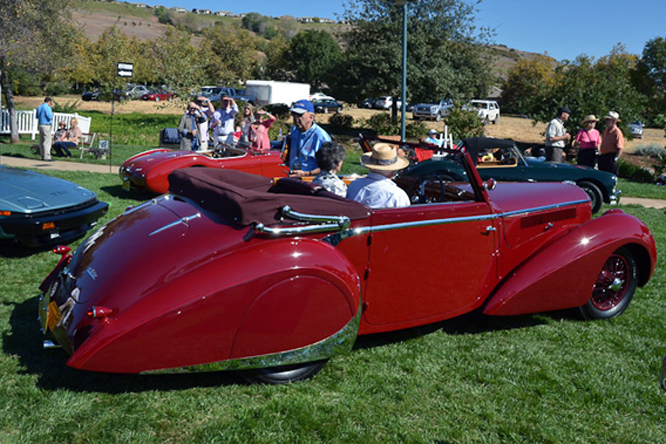
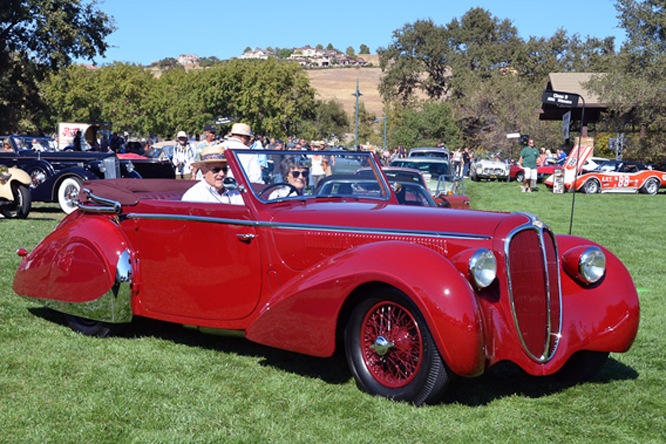
Delahaye 135M, Pennock Cabriolet, Niello Concours at Serrano

In 1935 Delahaye built the first 135 Competition models which featured low chassis with independent front suspension and conventional solid rear axle which were competitive in events as the Monte Carlo Rally and the Le Mans 24 Hours.

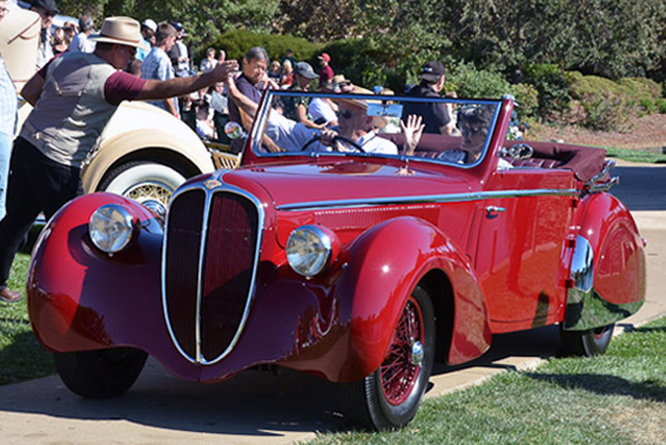
Delahaye 135M, Pennock Cabriolet, Niello Concours at Serrano

After war the Delahaye 135 returned to production with the six cylinder motor now producing 130 hp in M spec, as before the war Delahaye customers had no choice but to send their Delhaye chassis coach builders as Delahaye had no in house coach building facilities.

Delahaye 135M, Pennock Cabriolet, Niello Concours at Serrano

The chassis of this particular 1947 Cabriolet was sent to Carrosseriefabriek P.J. Pennock & Zonen who had eliminated rattling body work by using a bare minimum of woodwork framing and by welding their creations direct to the customers chassis.

My thanks to Geoffrey Horton for sharing today’s photographs taken at Niello Concours at Serrano a couple of years ago.

Thanks for joining me on this “Dutch Rattle Free Coachwork” edition of “Gettin’ a li’l psycho on tyres” I hope you will join me again for Coffee, Croissant & Cars tomorrow. Don’t forget to come back now !

Share

’55 Gold Cup Winner – Maserati 250F #2515

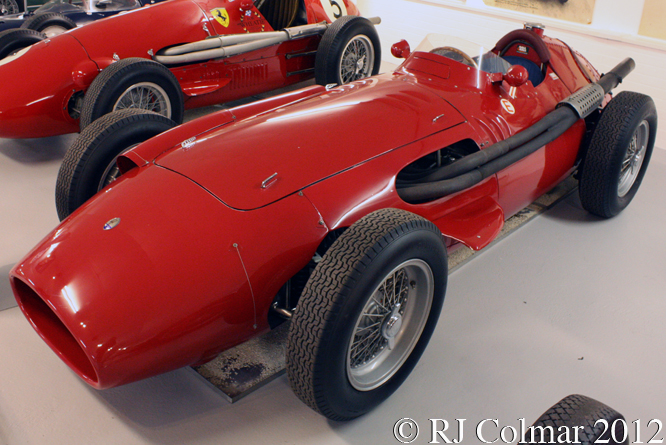
Today’s featured Maserati 250F chassis #2515 made it’s debut for the works team in the 1955 Argentinian GP where it retired with engine failure after Sergio Mantovani, Jean Behra and Luigi Musso had completed 54 of the scheduled 96 laps.

Roberto Mieres, Peter Collins, Stirling Moss and Carroll Shelby all drove #2515 in 1955 with Stirling Moss recording the best result with a win in the non Championship Gold Cup at Oulton Park.

Maserati 250F, Donington Grand Prix Collection

Francisco Landi and Gerino Gerini shared the car in the 1956 Argentine Grand Prix to score a season high 4th. After Francisco finished 7th in the Brazilian Grand Prix ownership of #2515 appears to have been passed over to Scuderia Guastalla in Italy.

Gerino and Umberto Maglioli drove the car on two occasions each over the remainder of the 1956 season with Gerino’s 5th place finish in Syracusse being the best result.

Ottorino Volonterio acquired the car after it had been rebodied for the 1957 season and it was entered in three events with the best, only, finish being 11th in the Italian Grand Prix where Ottorino shared the driving with André Simon.

André Testut failed to qualify the car for the 1958 Monaco Grand Prix, as he would his own 250F #2521 in the same event the following season.

From June to September 1958 #2515 was entered in four events by Scuderia Centro Sud with Maurice Trintignant finishing seventh in the Belgian Grand Prix at Spa.

Gerino drove in the remaining three recording a best 6th place finish at Caen. Hans Hermann drove #2515, now entered by Joakim Bonnier, in the 1958 Italian Grand Prix from which he retired with a valve issue.

In 1959 Fritz d’Orey retired #2515, now entered by Scuderia Centro Sud again, from the British Grand Prix. The final known appearance of #2515 was in the 1959 Italian Grand Prix where Giulio Cabianca driving for Ottorino Volonterio finished 15th.

Tom Wheatcroft bought #2515 in 1965 and it is seen in this picture in the Donington Grand Prix Collection which he founded.

Thanks for joining me on this “Gold Cup Winner” edition of “Gettin’ a li’l psycho on tyres” I hope you will join me again tomorrow when I’ll be looking at a Delahaye. Don’t forget to come back now !

Share

Spare Smallman Embassy – Lola T370 #HU3

At the end of his relatively unsuccessful, season high 9th place finish in Belgium, 1973 season at the wheel of his privately entered Embassy Shadow DN1, Graham Hill hooked up with Lola, who’s car he had driven to win the 1966 Indy 500, for a two car attack on the 1974 World Drivers Championship.

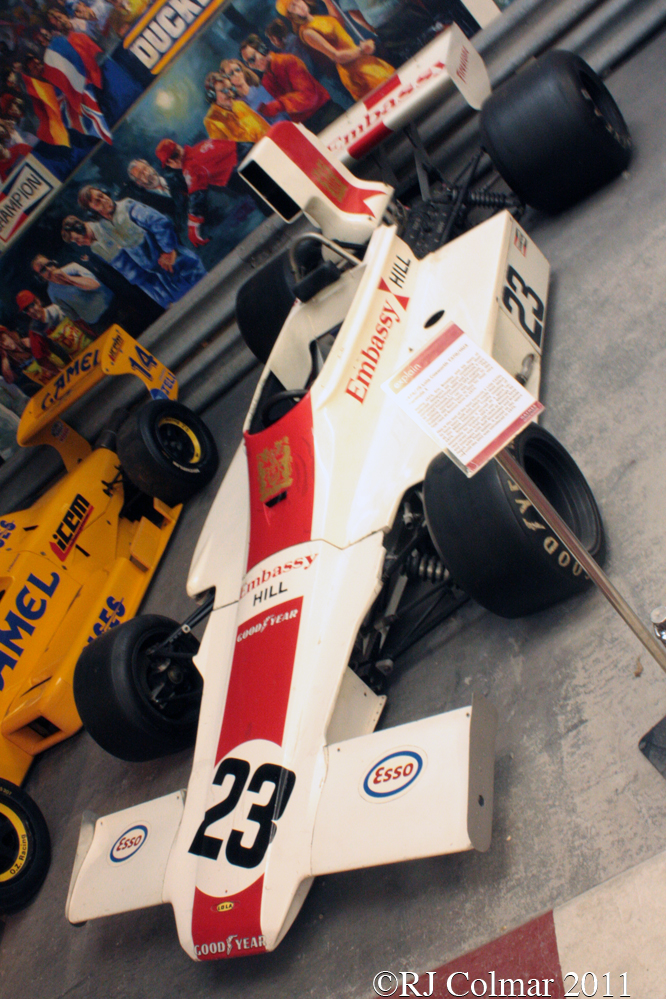
Lola T370, Haynes International Motor Museum

Embassy sponsored the building of the Lola T370 which was designed by Andy Smallman. Unlike Lola T330 and T332 Formula A/5000 cars with rear mounted side radiators the T370 had the radiators mounted directly behind the front wheels, as would appear on Lola 1975 T400 Formula A/5000 car.

The most remarkable thing about the T370 when it first appeared was the outsize tall airbox which gave the car the appearance of a sail boat, much larger than the one seen in today’s photo as can be seen in this link.

Graham’s efforts with the T370 were rewarded by a 6th place finish in the Swedish Grand Prix, but apart from that the over weight if reliable T370 was not particularly competitive as drivers of the second car; Guy Edwards, Rolf Stommelen, Peter Gethin and Vern Schuppan found out.

Guy Edwards scored a best 7th behind his team mate in the 1974 Swedish Grand Prix and German Rolf Stommelen repeated the feat in the 1975 South African Grand Prix.

Today’s featured chassis HU3, seen at the Haynes International Motor Museum, first appeared as a spare car at the 1974 Spanish Grand Prix a role it remained in for 11 of the 14 events to which it was taken.

The car was first raced by Peter Gethin in the 1974 British Grand Prix where he qualified 21st on the grid but retired with a puncture. Rolf Stommelen then drove the car in the 1975 Argentine and Brazilian Grand Prix where he started 19th and 23rd on the grid respectively and finished 13th and 14th respectively.

HU3’s final appearance was again with Rolf at the wheel during practice for the 1975 Italian Grand Prix at Monza.

The T370 was superseded by a single T371 chassis in 1975 but as it dawned on Graham it was time to retire he decided to follow the lead of 3 time World Champion Jack Brabham and 2 time race winner Bruce McLaren to become a Formula One constructor.

Thanks for joining me on this “Spare Smallman Embassy” edition of “Gettin’ a li’l psycho on tyres” I hope you will join me again tomorrow for Maserati Monday. Don’t forget to come back now !

Share

Teen Designed Body – Jaguar XK120 Special

Phil Hill’s brother in law, Los Angles based Architect Don Parkinson is known to have raced a Fraser Nash at least once in 1949 before buying an Jaguar XK120 for the 1950 season.

Don is known to have raced the XK120 on at least four occasions, winning at Carrell Speedway in February 1951 before hitting a tree and rolling the car during practice for an event at Pebble Beach in May 1951.

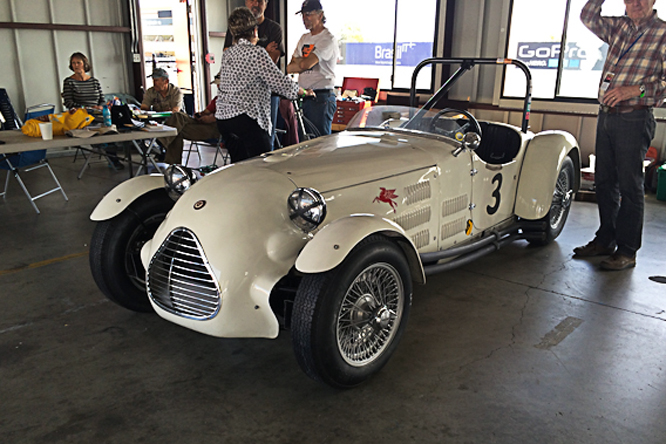
Jaguar XK120 Special, Sonoma Historics

Unharmed and undeterred by the mishap Don had the car rebuilt as a special enlisting International Motors Hollywood mechanic Jim Thrall to move the motor back 12 inches in the chassis and offset it by 4 inches.

Teenager Robert Cumberford is credited for the design of the specials body which was crafted from aluminium by Marvin Faw, under supervision of Phil Hill.

In October 1951 Don drove his Special to a class win at Reno first time out and then recorded an outright win at Palm Springs the following week.

Don raced the car on at least eight occasions until May 1953 never finishing below 5th place before apparently retiring from the sport.

My thanks to Geoffrey Horton for sharing his photograph of the car seen at the Sonoma Historics meeting earlier this year.

Thanks for joining me on this “Teen Designed Body” edition of “Gettin’ a li’l psycho on tyres” I hope you will join me again tomorrow when I’ll be looking at a Shadow. Don’t forget to come back now !

Share

Arise Sir John ? Pt 2 – Ferrari 158 Spec

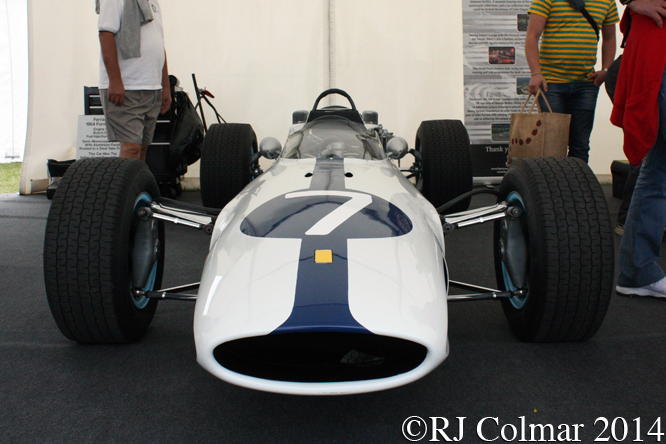
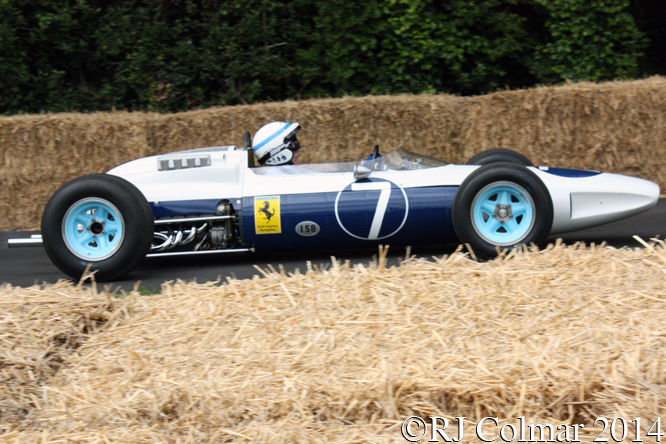
After winning the 1964 Italian Grand Prix John Surtees was just four points behind World Championship leader Graham Hill and two points behind Jim Clark in the Championship standings.

Ferrari 158 R, Goodwood Festival of Speed

Enzo Ferrari in a fit of pique announced that he would not be entering his Ferrari’s in the last two rounds of the world championship because the Italian Automobile Club and international racing authority the FIA had been unable to accommodate the Ferrari 250 LM and later 275 LM as a GT car because insufficient numbers had been built.

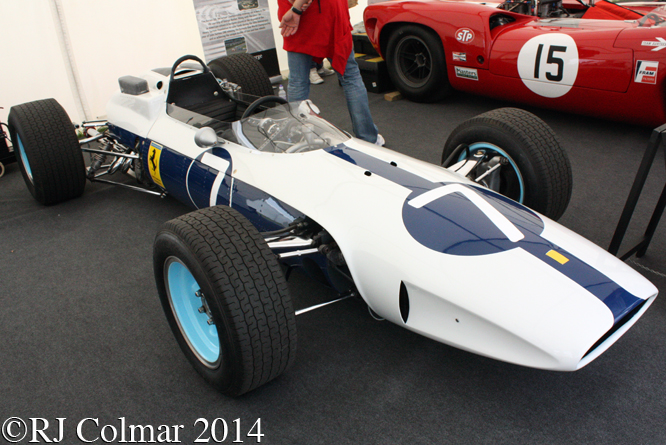
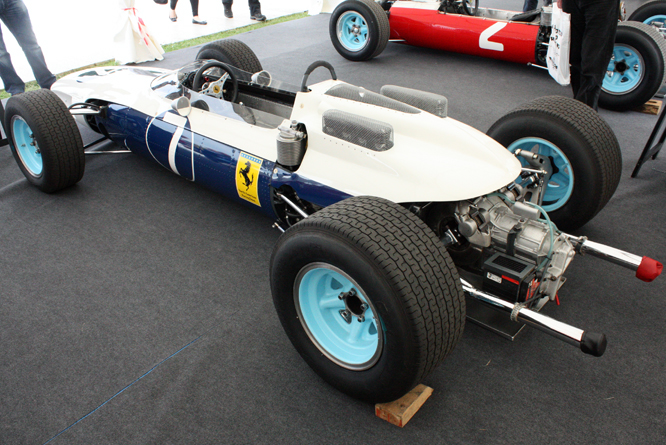
Ferrari 158 R, Goodwood Festival of Speed

Instead, for the 1964 US and Mexican Grand Prix, Enzo had the 158’s painted White and Blue, the colours of the North American Racing Team, NART, who entered the cars on Ferrari’s behalf.

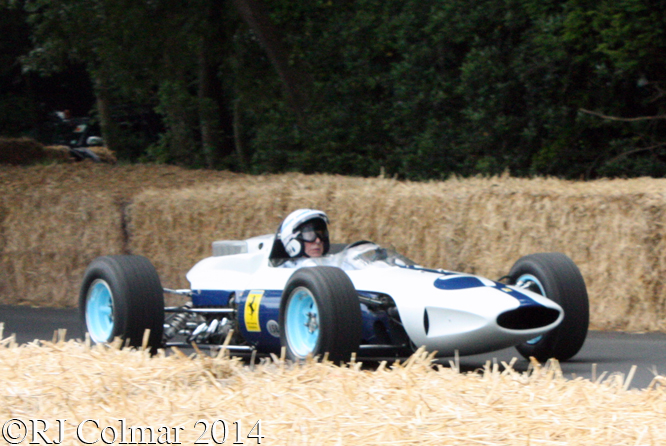
Ferrari 158 R, John Surtees,Goodwood Festival of Speed

John Surtees finished second to Graham Hill in the ’64 US Grand Prix and was now five points behind Graham in the standings. Because only the best six points from a maximum of ten counted toward the championship Graham dropped two points.

Ferrari 158 R, John Surtees, Goodwood Festival of Speed

At the Mexican Grand Prix John Surtees again finished second while his championship rivals Jim Clark and Graham Hill failed to score points so that John clinched the 1964 Drivers Championship by a single point while Ferrari clinched the Construtors championship by three points from BRM.

Ferrari 158 R, Goodwood Festival of Speed

Today’s chassis is described as having an original engine that was part of the ’64 Mexican GP original gearbox and running gear and as being “rebuilt under the watchful gaze” of Ferrari’s ’64 Cheif Mechanic Guilio Borsari.

There is a petition to get John Surtees the knighthood he so richly deserves for being the only man to win World Championships on two wheels and four, if you would like to sign FOLLOW THIS LINK.

Thanks for joining me on this “Arise Sir John ? Pt 2” edition of “Gettin’ a li’l psychoontyres” I hope you will join me again tomorrow when I’ll be looking at a Jaguar Special. Don’t forget to come back now !

Share

NASCAR’s Oldest Survivor – #87 Oldsmobile Rocket 88

As another NASCAR season winds up I thought it would be fun to look at some survivors from the series glorious past.

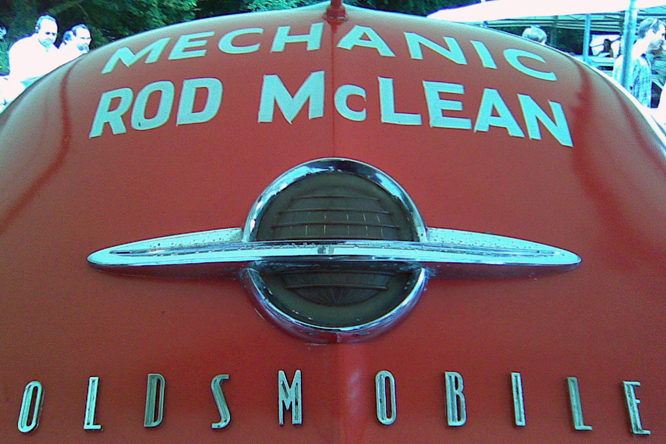
Oldsmobile Rocket 88, Goodwood Festival of Speed,

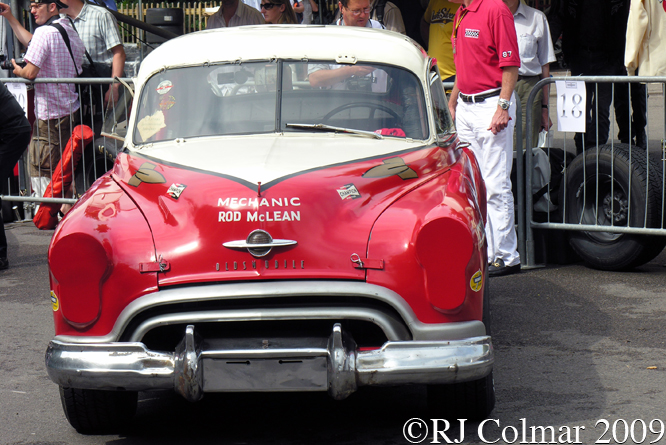
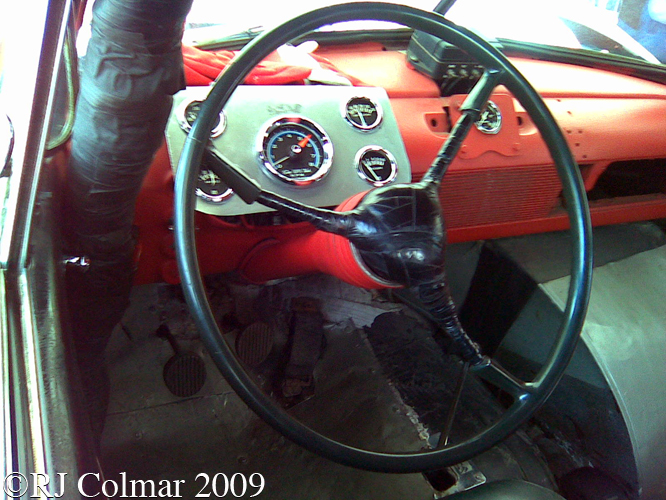
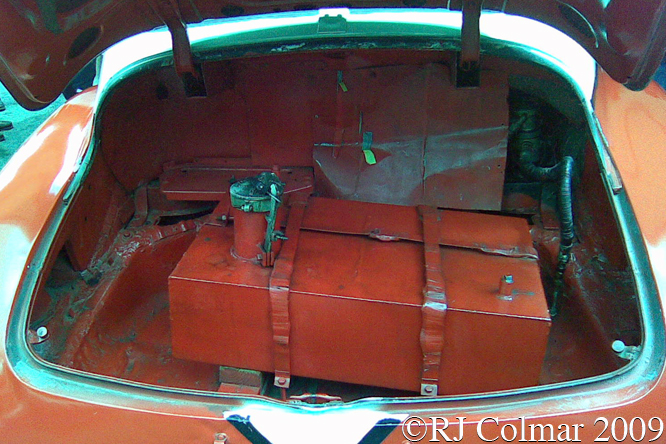
Today’s featured #87 Oldsmobile Rocket 88 is believed to be the oldest existing ‘original’ NASCAR racing vehicle,
the 1949 model is distinguishable by it’s split front screen.

Oldsmobile Rocket 88, Goodwood Festival of Speed,

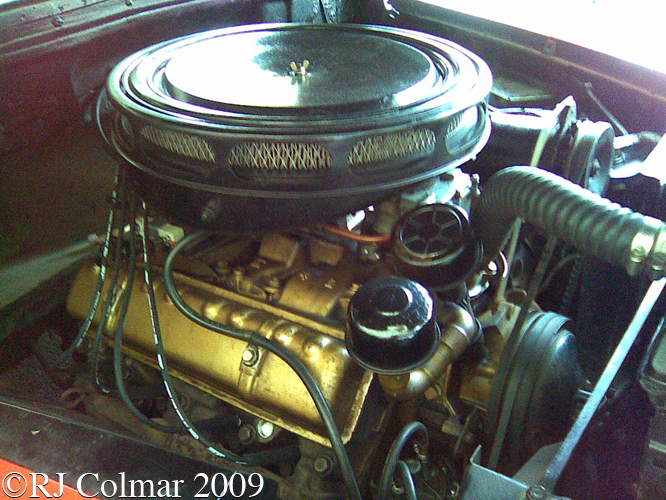
The Rocket V8 303 cui engine makes the car a true ancestor of the light body/chassis big engine “muscle car’. This motor, produced in Lancing, Michigan, was the first post war overhead valve V8 from General Motors and remained in production in the 303 size until 1953, the 1949 version of this engine produced 135 horse power, against the contemporary flat head Ford V8 which produced just 100 hp.

Oldsmobile Rocket 88, Goodwood Festival of Speed,

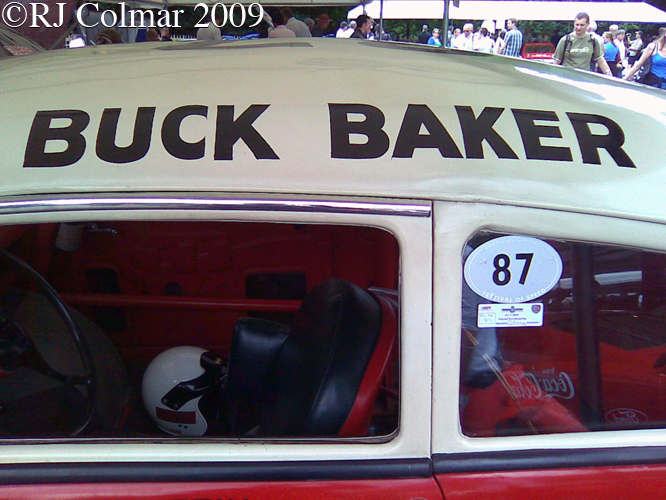
Oldsmobile Rocket 88’s won half of the first 60 NASCAR Late Model races between 1949 and 1950. Buck Baker first drove the #87 Oldsmobile at Darlington on Sept 4th, 1950 coming in 69th (of 75 !) after qualifying 28th.

Oldsmobile Rocket 88, Goodwood Festival of Speed,

Elzie Wylie (Buck) Baker 1919 – 2002 took part in his first race at Greenville, SC blew a tyre and posted a DNF, he entered the first two NASCAR races in 1949 in the #87 Kaiser.
His first of 49 NASCAR wins came at Columbia on April 12th 1952 driving the #89 Hudson.

Oldsmobile Rocket 88, Goodwood Festival of Speed,

Bucks greatest achievement was wining titles in 1956 driving Ford, Chrysler and Dodge models and again in 1957 driving the #87 Chevy, he did not run full (56 race) schedules in either year, but still became the first winner of consecutive NASCAR titles.

Oldsmobile Rocket 88, Goodwood Festival of Speed,

His last win was recorded at Darlington driving the #3 Dodge in 1964 Buck retired in 1976 on October 10th at Charlotte after he came in 24th from a 38th place start in the #59 Chevrolet.

In 1980 Buck founded the Buck Baker Racing school which list graduates, Jeff Gordon and Tony Stewart who between them have won seven Cup Titles.

Apart from Buck drivers of this particular Oldsmobile in the Sportsman / Modified division from 1951 to 1961 include, Gene Darragh, Paul Goldsmith, Darel Dieringer and Lee Petty who raced the vehicle at Daytona International Speedway, along way from its first race on dirt track at Charlotte.

Thanks for joining me on this “NASCAR’s Oldest Survivor” Edition of “Gettin’ a li’l psychoontyres” I hope you will join me again tomorrow. Don’t forget to come back now !

Share

Neville’s e-bay Find – DOHC Jaguar V12

A couple of years after retiring the works Jaguar Racing Team, from front line competition in 1955, Sir William Lyons and Chief Enginner William Heynes discussed building a team of 3 mid engined “G-type” models and returning to Le Mans the scene of five Jaguar victories with their XK 120 C, C-Type and D-Type models.
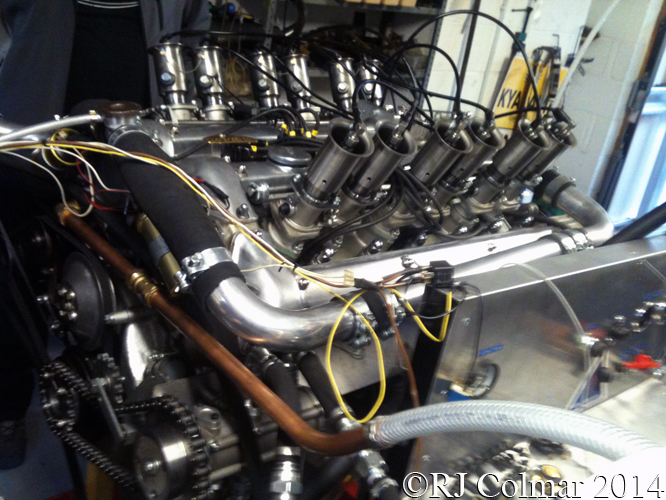
Jaguar DOHC V12,

In 1963, according to Jaguar records, the board of directors agreed to progress the first Jaguar V12 motor with a view to returning to Le Mans in 1965.
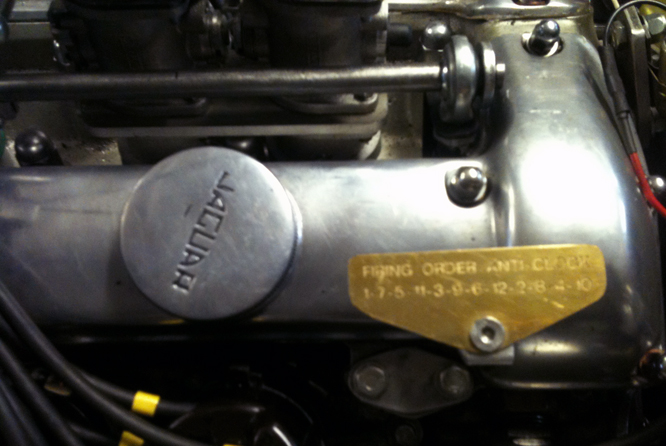
Jaguar DOHC V12

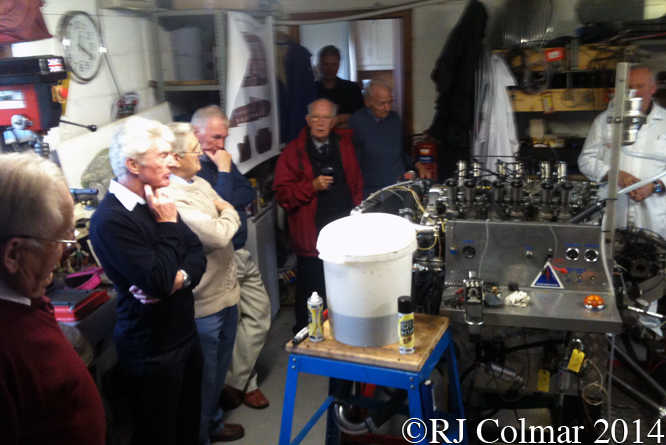
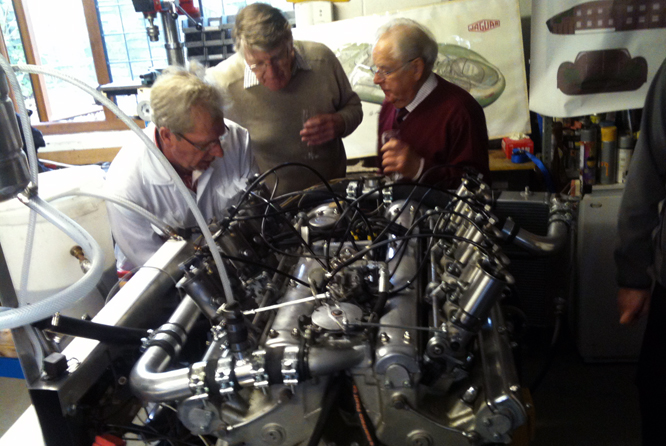
The first of two 5 litre / 302 cui double overhead cam (DOHC) V12’s, essentially 2 x 6 cylinder XK blocks sharing a common crank, ran for the first time in July 1964, it was started by the same Jim Eastwick that is seen at the control panel in today’s blog.
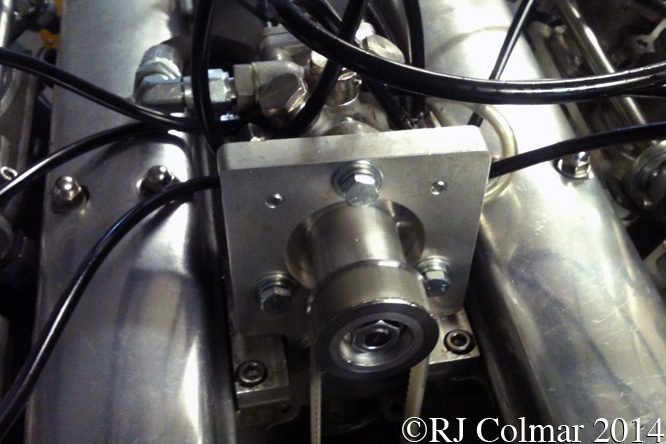
Jaguar DOHC V12

A number of factor’s including the planning for the production of the XJ6, launched in 1968, and a shortage of cash which led to the merger of Jaguar into British Motor Corporation which became British Motor Holdings in December 1966 meant the XJ13 project saw just one prototype completed in May 1966, but nothing was done with it until the following year.
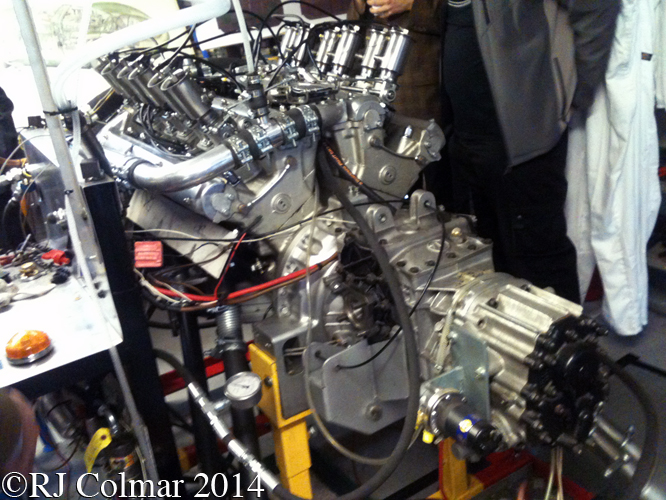
Jaguar DOHC V12

At some point the second DOHC V12, today’s featured motor, was run in a prototype Mk 10 Jaguar and by 1969 it was run for the last time by the works for comparison emissions tests with a single overhead cam (SOHC) V12 that would go into production for the V12 E-type, XJ12 Saloon / Sedan, XJ 12C, Daimler Sovereign equivalents and XJ-S Coupé.
Jaguar DOHC V12

Today’s featured motor was then tidied up for a career on Jaguars exhibition stands at motor show’s in the UK and abroad, complete with chrome flywheel, it would appear that in the early to mid 1970’s it got left behind by the Jaguar works, by now part of the British Leyland empire in Germany.

http://youtu.be/TVLp-I9M8ss

Four years ago Jaguar enthusiast and racer Neville Swale was thinking about building a replica Jaguar XJ13 when a fellow racer who had similar idea’s but insufficient funds Richard Woods from the Avro Shacketon Preservation Trust told Neville about today’s featured motor which appeared on the German e-bay sight.
Jaguar DOHC V12

Neville knew he had to have it and as he boarded a train a few hours before the end of the auction he put in a bid by mobile phone and promptly lost reception.

Some hours later still on the train Nevilles reception returned and he was surprised to learn he won the auction and one of the rarest Jaguar motors ever built.

When he got the motor home from Stuttgart Neville determined not just to build a replica but a tool room replica XJ13 as close to the original 1966 version, sans big wheels and flared arches, as humanly possible.

I’ll cover the build of the car in future edition, but over the last 4 years Neville has converted the motor back to dry sump lubrication and built up a new fuel injection to replace that which was missing when he bought the motor.

Last week I was lucky enough to attend the first start of this motor in 45 years and the video shows the start and shut down.

At the end of the film Jonathan Heynes a former Jaguar apprentice who worked on the XJ 13 and son of the late Chief Enginner William Heynes who oversaw the development and build of DOHC V12 is seen shaking the hand of Jim Eastwick. Apologies for bad sound on the film.

My thanks to Neville and his wife Lizzie for making me feel so welcome during the start up proceedings. You can see more of Nevilles work on the project on his Building the Legend website linked here.

Thanks for joining me on this “Neville’s e-bay Find” edition of “Gettin’ a li’l psycho on tyres” I hope you will join me again tomorrow when I’ll be taking a look at what is believed to be the oldest surviving stock car to take part in a NASCAR event. Don’t forget to come back now !

5/11/14 Correction this text originally stated Peter Crespin alerted Neville to the presence of the motor on e-bay it was in fact Richard Woods from the Avro Shacketon Preservation Trust who informed Neville. Apologies for any confusion.
Share