Tag Archives: Art

Worth Getting Up At Dawn For – Volvo 480ES

One day in April 1987 I spent the day at Donington Park where Volvo Concessionaires officially introduced the ’87 model range to members of it’s dealer network. This was the first opportunity many of us would have to drive the much anticipated Volvo 480ES.

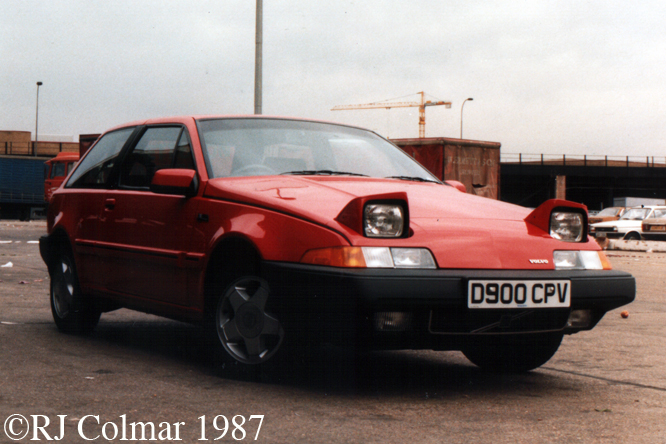
Volvo 480 ES, New Covent Garden

Unlike Volvo’s previous coupé the P1800 which was based on an existing Amazon platform, the 480 was a completely fresh front wheel drive design by Robert Koch, John de Vries and interior by Corien Pompe. The 480 platform would then later be used for the 440 hatchback and 460 saloon variants.

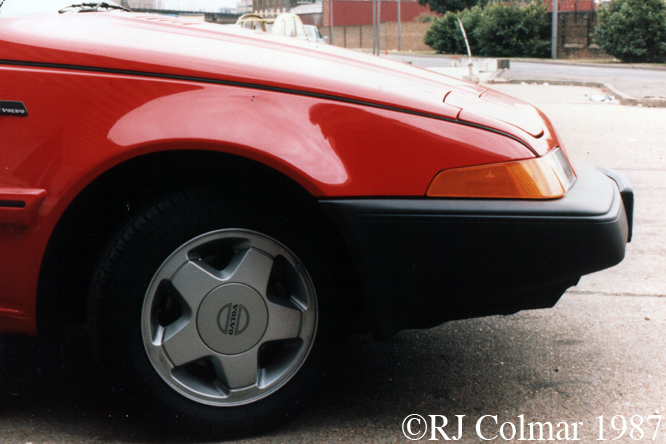
Volvo 480 ES, New Covent Garden

The car bristled with idea’s new to Volvo including a Porsche tuned transverse 90 hp engine and front wheel drive, engine management by Electronic Control Unit, digital dash instrumentation, and a Lotus tuned suspension that gave the car staggering road holding.

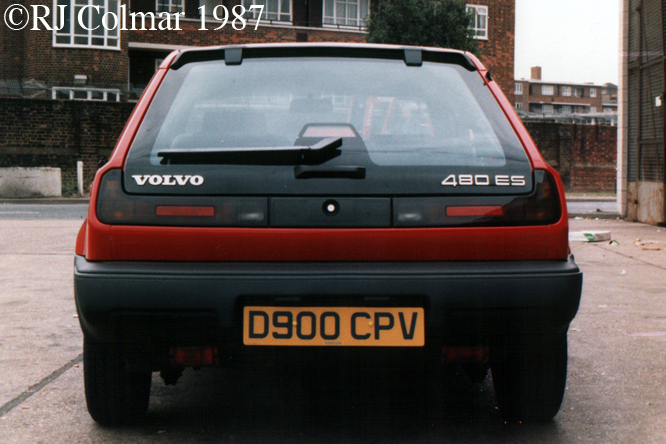
Volvo 480 ES, New Covent Garden

By the time the car was launched the pop up head lights were not strictly necessary as the European Laws that had required them to meet a minimum head light height had been repealed, however this change in the law came so late the design remained unchanged.

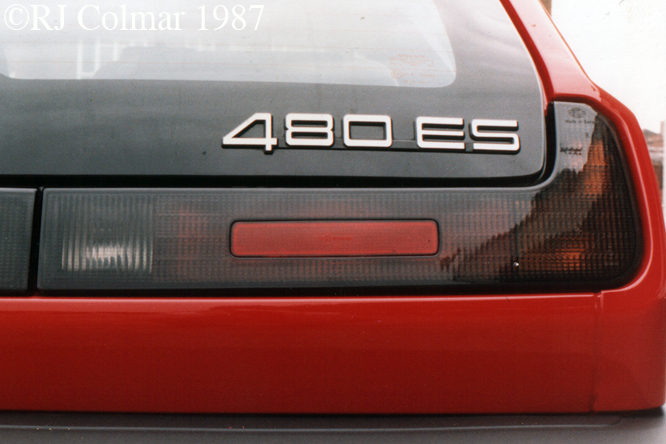
Volvo 480 ES, New Covent Garden

During the course of the day I had the opportunity of driving the car around the Donington Park Circuit with a racing instructor at my side and I simply could not drive the car anything like fast enough to explore it’s road holding potential, it went every where I wanted it to go safely regardless of the speed I was doing.

Volvo 480 ES, New Covent Garden

Some weeks later I was given the 480 ES, seen here, for a week in exchange for getting up at some improbably early hour to go and drum up some business at New Covent Garden Fruit Vegetable Market in Central London.

From 1986 to 1995 80,463 Volvo 480 ES, Turbo and 2 litre / 122 cui variants were manufactured at the former DAF works at Born in the Netherlands.

Thanks for joining me on this New Covent Garden edition of ‘Gettin’ a lil’ psycho on tyres’ I hope you will join me again tomorrow. Don’t forget to come back now !

Share

A Passage From India – Rover CityRover

In 2000 BMW gave up on it’s attempt to revive the Rover Group after six years and sold most of the assets packaged as the MG Rover Group to the Phoenix consortium. At this point all models, bar one the ’75’, in the MG Rover groups portfolio were around five years old and Phoenix determined that their first new car would be aimed at the city car market segment that had once been an almost exclusive preserve of the Mini, a product of earlier incarnations of the MG Rover Group.

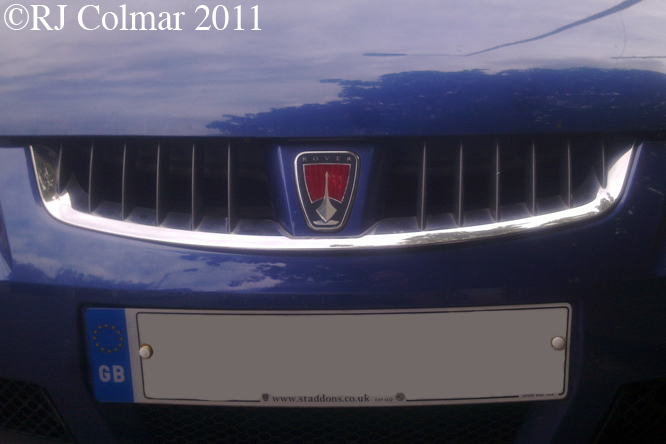
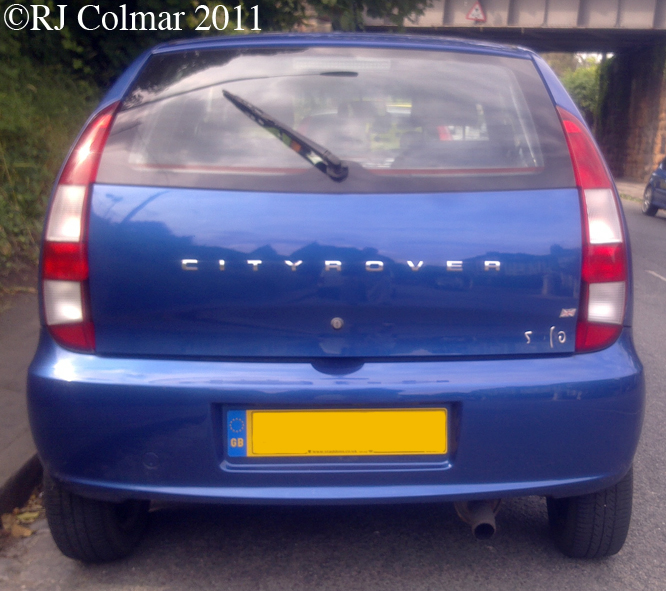
CityRover Solo

MG Rover Group did not have any research and development assets so they looked for a partner that would be offered a stake in the group in return for a new car. A deal was done with Indian manufacturers TATA who would build a version of the first ever completely indigenous Indian passenger car the Indica.

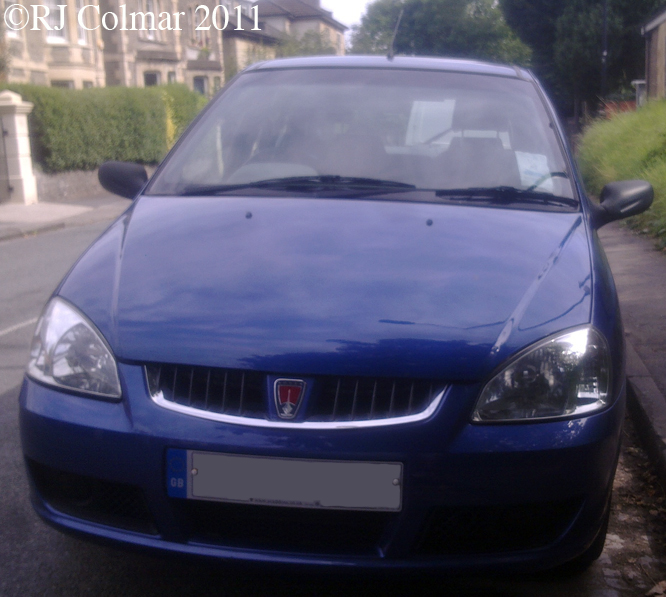
CityRover Solo

The design criteria for the Indica were that it would be the size of a Maruti Zen, similar to the Suzuki Cervo Mode, the internal dimensions of the Hindustan Ambasador, a cast off from a previous in carnation of the MG Rover Group that is still in production who’s design heritage can be traced back to the Morris Oxford of 1948, the price of a Maruti 800, another Suzuki related product, and the running cost of a diesel.

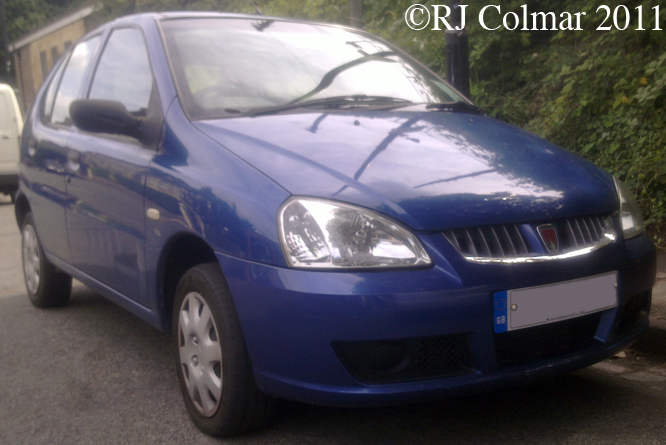
CityRover Solo

The design work was carried out by I.D.E.A. in Italy and after a false start with some quality issues the TATA Indicia, launched in 1998, with a Peugeot derived motor proved to be a big hit on the Indian sub continent. Despite the absence of a development budget, apart from the badging, alterations made to the Indicia to suit the needs of European motoring included an upgraded engine to produce 84 hp and exceed more stringent emissions regulations, increase in road wheel size from 13 to 14 inches and corresponding alteration of gear ratio’s, stiffer front and rear spring rates, lowered suspension and increased gearing for the steering.

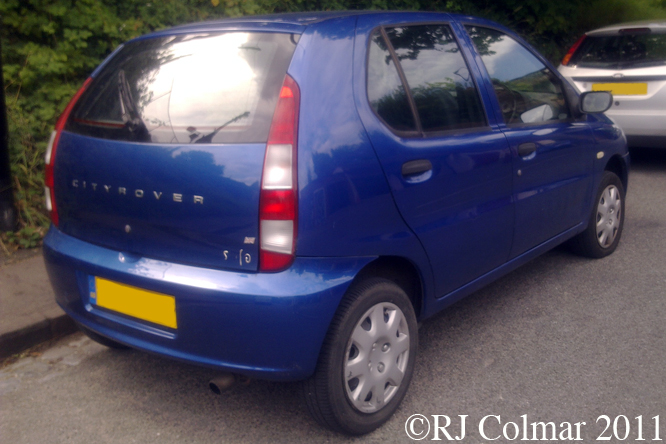
CityRover Solo

Production of the Rover CityRover began in Pune India in 2003 but the cars launch was marred by questions over the MG Rover Groups finances and by the newly crowned 2004 European Car of the year the FIAT Panda which was a game changing generation ahead of the CityRover and cheaper too.

CityRover Solo

While the CityRover was praised for it’s performance and handling it was let down by interior quality, lack of equipment and above all headlining city car market segment price. In July 2005 MG Rover was liquidated with the loss of 6,000 jobs in the company and a further 25,000 jobs in related suppliers companies. Nanjing acquired the assets of the MG Rover Group.

Around 6000 CityRovers, such as the base Solo model seen here, were sold in it’s first year and a further 1200 Mk2 versions were sold through non franchised dealers after the MG Rover Groups liquidation.

Thanks for joining me on this ‘CityRover’ edition of getting a lil’ psycho on tyres’. I hope you will join me again tomorrow when I’ll be looking at a Coupé built in The Netherlands. Don’t forget to come back now !

Share

So You Think You Know Your Sports Cars – Palos Verdes C d’ E

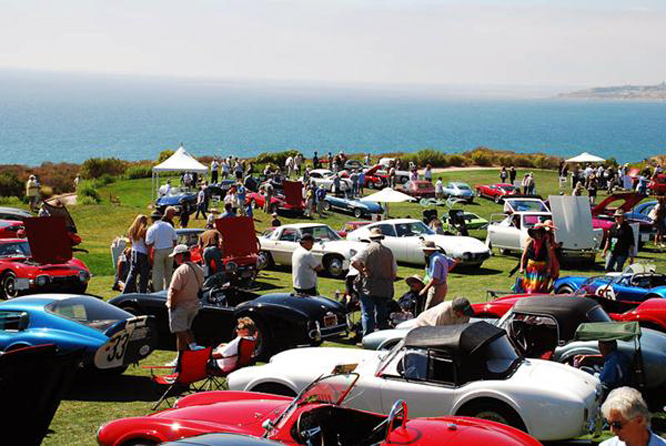
Thanks to photo’s sent by Geoffrey Horton, I am pleased to bring you another dose of California sunshine from the Palos Verdes Concours d’ Elegance held last weekend.

Palos Verdes Concours

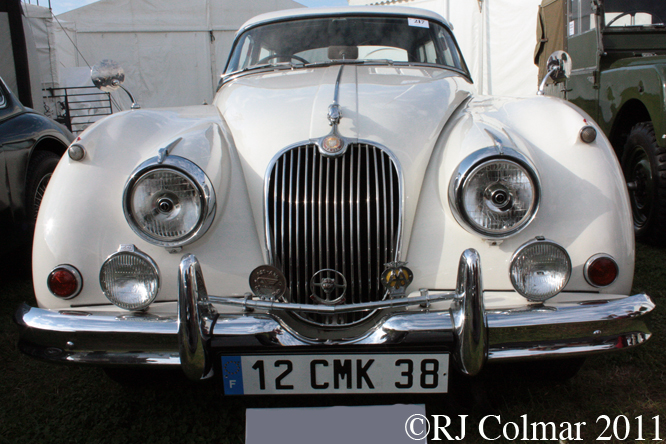
About the most difficult vehicle to identify in this over view is the Mazda Como Sport unless like me you have wasted a little time playing Grand Turismo 4. Easiest vehicle to identify for regular GALPOT readers should be Geoffrey’s Jaguar XK140 FHC, which was up against a Mercedes Gullwing this time out. Shocking to me was that Geoffrey sent me photo’s of five vehicles who’s manufacturers I had never heard of.

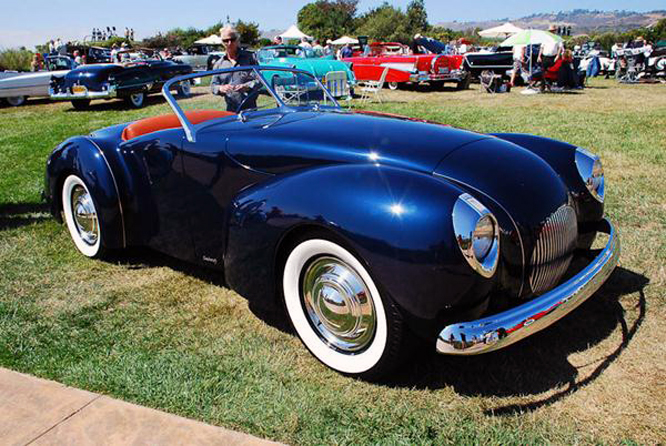
Coachcraft 'Yankie Doodle' Roadster, Palos Verdes

Oldest of the five was this 1940 Coachcraft ‘Yanke Doodle’ Roadster, a one off with a chassis frame built from Hudson Essex and Ford models by 17 year old Seward Allan with a body by Coachcraft of West Hollywood and modifications by Frank Kurtis.

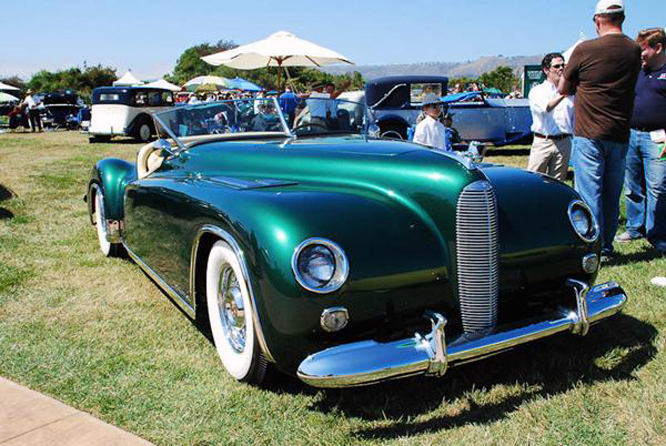
Maverick Sportster, Palos Verdes

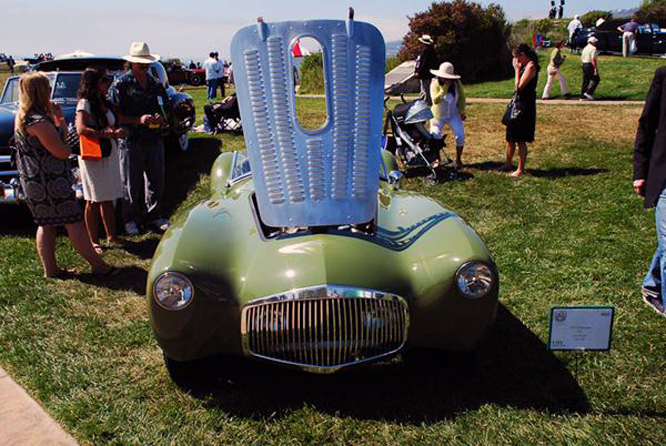
My favourite of the five is this this 1952 Maverick Sportster, a 210 lbs boat tail fibre glass body built by Sterling Gladwin sitting on top of a Flathead Cadillac powered LaSalle chassis. This particular vehicle appears to be the prototype which is recognisable by the absence of any doors.

Woodhill Wildfire, Palos Verdes

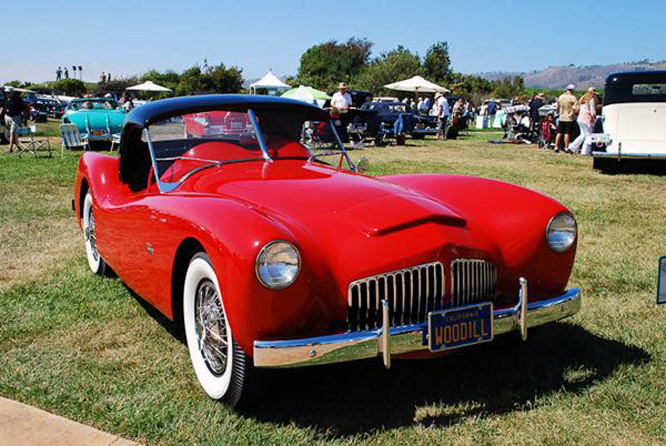
Next up we have a car of the type that starred in the reckless and thrilling film ‘Johnny Dark’ namely a Woodhill Wild Fire built by California Dodge dealer Robert ‘Woody’ Woodhill, who dreamed of owning a Jaguar XK120 and ended up building two fibre glass specials. With Willys running gear and tailor made Glasspar bodies, Woodhill was unsuccessful at selling his sportscar to Kaiser, owner of Willy’s, and after modifying his car to run with Ford running gear he then built similar Buick and Cadillac examples. Again failing to gain manufacturer support Woodhill settled for building his sports cars with Ford running gear and selling then as kit cars that could be assembled in 14 hours, famously demonstrating a 4 hour build on TV.

Glasspar G2, Palos Verdes

The company that started the glass fibre revolution in US sports car production appears to be Glasspar a company specialising in building fibre glass fibre boats who built a, Bill Tritt designed, special, the Brooks Boxer, for USAF Major Ken Brooks. The mould for the Brooks Boxer was then used to produce the Glasspar G2 of the type seen here. A modified version of the G2 body was supplied to Robert Woodhill for his Wild Fire kits.

Hirsch Roadster, Palos Verdes

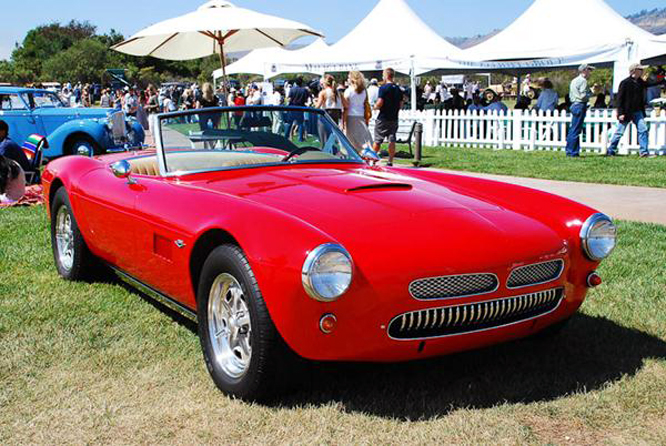
Finally the fibre glass body vehicle above is known as a 1960 Hirsch Roadster, sources on the internet suspect the date since the car is described as having Fiero steering, Datsun 280Z rear axle, and a 1966 289 Ford V8 connected to a similarly sourced 5 speed transmission. The owner believes the cars roots lie in a business that failed to get off the ground in Orange County. If you know anything about the Hirsch or indeed about any of the cars above please do not hesitate to either leave a message or get in touch be e-mail, my address is on the bottom of the page.

My thanks again to Geoffrey Horton for sharing his photographs from Palos Verdes.

Thanks for joining me on this glass fibre edition of ‘Gettin’ a lil’ psycho on tyres’, I hope you will join me again tomorrow when I’ll be looking at a Rover. Don’t forget to come back now !

Share

Goodwood Revival #7 Jaguar Foxbat

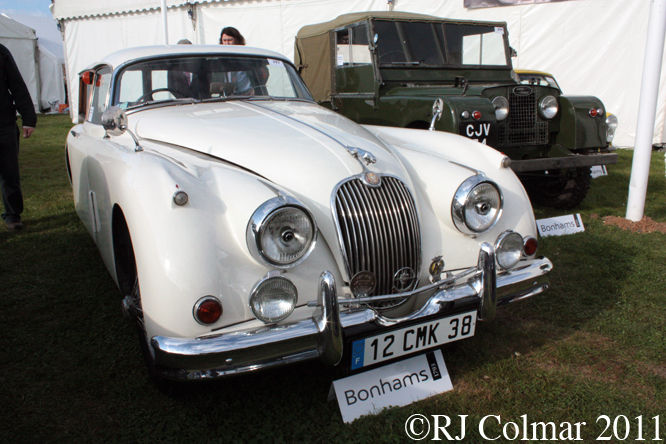
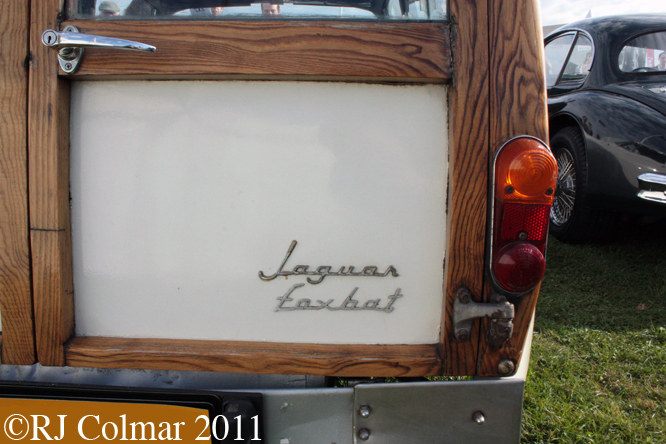
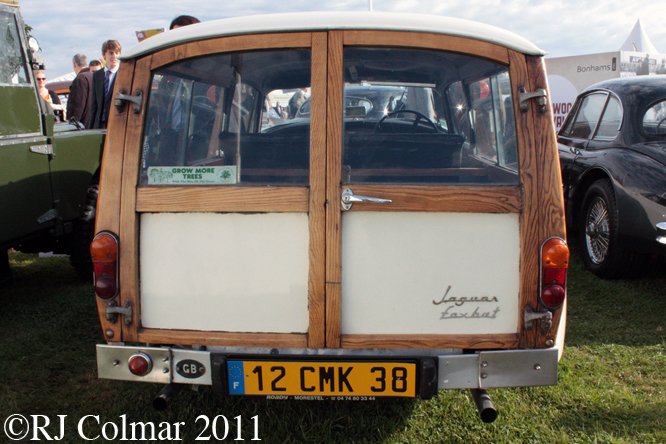
In the last of this series of blogs about the Goodwood Revival, today we are looking at a unique Jaguar XK150.

Jaguar XK 150 Foxbat, Goodwood, Revival

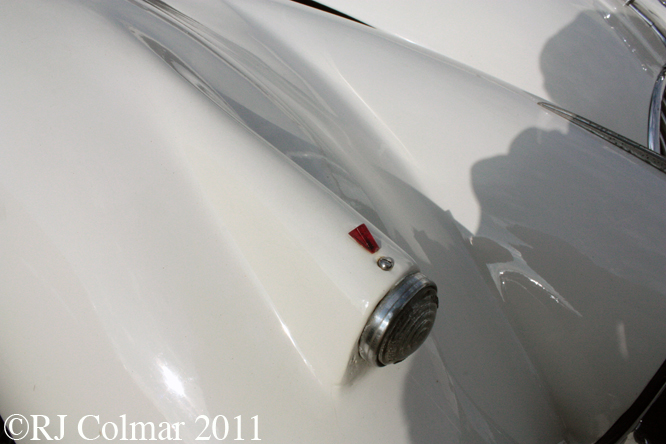
The XK150 was launched in 1957, updating the XK140 with a one piece windscreen, higher wing line over thinner doors and wider bonnet.

Jaguar XK 150 Foxbat, Goodwood, Revival

The XK150 was powered by the same 3.4 litre double overhead cam iron block straight 6 motor which was available with a standard 180 hp or with an SE spec 210 hp featuring a modified cylinder head.

Jaguar XK 150 Foxbat, Goodwood, Revival

Initially the XK150 was slower than the XK140 until the introduction of a 250 hp ‘S’ motor featuring triple carburetors and straight ported cylinder head.

Jaguar XK 150 Foxbat, Goodwood, Revival

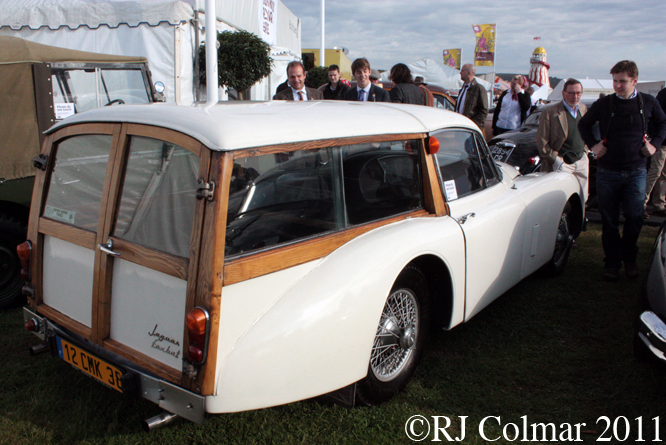
Legend has it that this 1959 car belonged to an industrial chemist in Swindon called Geoffrey Stevens in the mid 1970’s. Mr & Mrs Stevens wanted a car that could carry their two Labradors.

Jaguar XK 150 Foxbat, Goodwood, Revival

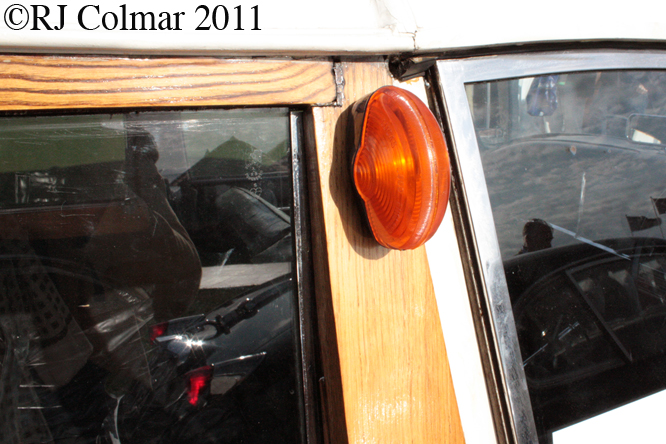
Over a period of two years from 1975 to 1977 Mr Stevens set about restoring his rusty XK150 and grafting the back of a Morris Minor Traveller onto the back of his car turning it into a shooting break, with enough space to carry his dogs.

Jaguar XK 150 Foxbat, Goodwood, Revival

The rear lights come from a Mini Traveller, apparently the badges on the boot were hand cut by my Stevens.

Jaguar XK 150 Foxbat, Goodwood, Revival

The Foxbat came up for auction at Goodwood with an estimated value of £30,000 – £35,000, surprisingly it did not find a buyer.

Thanks for joining me on this Foxbat edition of ‘Gettin’ a lil’ psycho on tyres’ I hope you will join me tomorrow when I’ll be looking at some of the vehicles that took part in last weekends Palos Verdes Concours, if you think you know your motorcars you might be surprised at some of these most of which I had not heard of until Geoffrey Horton sent me his photo’s. Don’t forget to come back now !

Share

Goodwood Revival #6 – Dress Code

The Goodwood Revival is probably the nations largest annual period dress party covering the years from when Goodwood operated as a second world war airbase to 1966 when the race track around the airfield closed to regular competition.

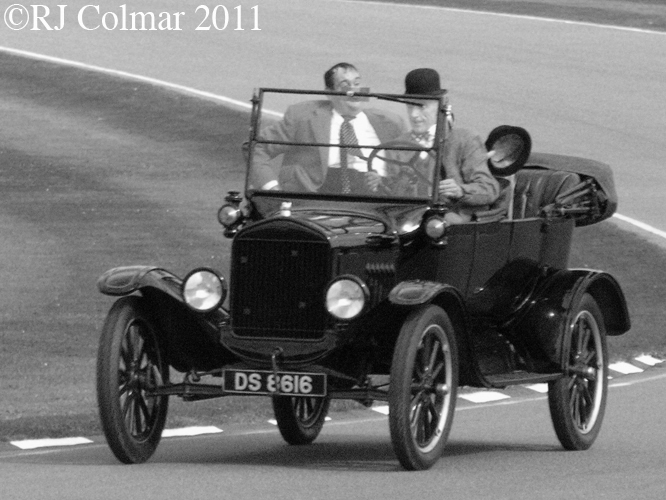
Ford Model T, Goodwood Revival

This year Ford of Britain was celebrating it’s centenary at Goodwood so the period dress on view went right back to 1911. Above Laurel & Hardy look alikes demonstrate a left hand drive 1924 Model T.

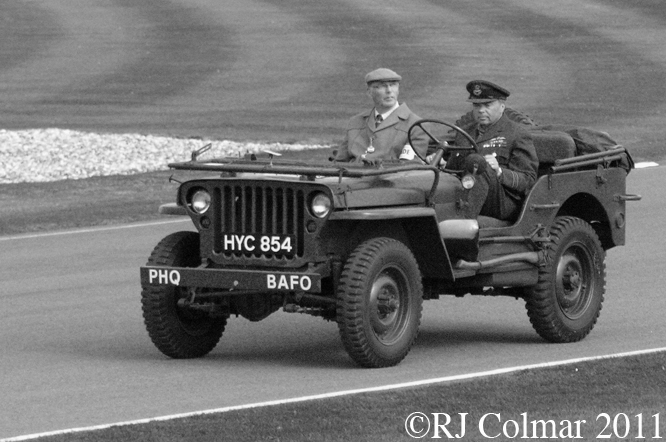
Ford Model T, Goodwood Revival

Willys Jeeps were built under licence by Ford of Britain during WW2, note this is also a left hand drive, presumably because it was foreseen that most of these vehicles would be required for the invasion of Europe. This particular vehicle appeared in the blue as used on airfields by the Royal Airforce and the driver is attired in a Royal Air Force officers uniform.

Land Girls, Goodwood Revival

These two ladies dressed up as land girls part of a huge civilian Women’s Land Army who replaced the male agricultural work force that had gone to war. Typically Land Girls wore somewhat unbecoming if practical trousers in place of skirts and dresses.

Austin Healey, Goodwood Revival

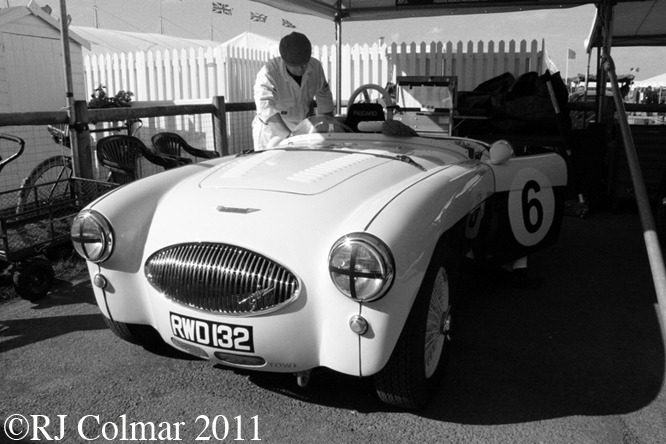
Moving into the paddock and forward a decade team mechanics are requested to wear period dress in the Goodwood Revival paddock, anyone visiting the pit area is also requested to dress in period. Above a mechanic tends Peter Thorntons 1955 Austin Healey 100 S.

Sir Stirling Moss, Mercedes 300 SLR, Goodwood Revival

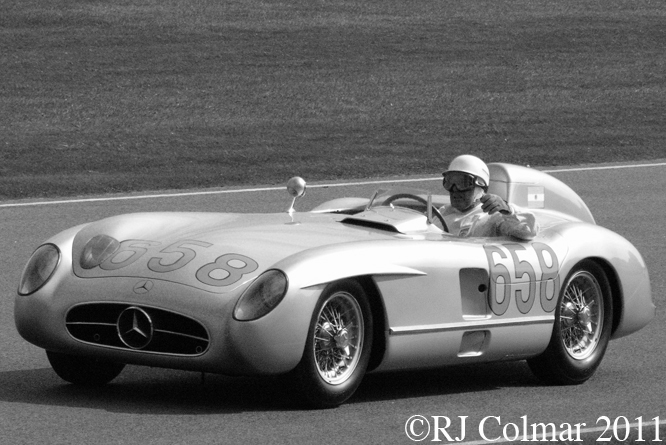
Recently retired from competitive driving Sir Stirling Moss came close to loosing his life at Goodwood in 1962 after an accident that effectively ended his top level career. Stirling is seen here on a demonstration run in perhaps the ultimate Goodwood period accessory a Mercedes Benz 300 SLR raced solo by his team mate Juan Manuel Fangio in the 1955 Mille Miglia to 2nd place 22 minuets behind Moss and Dennis Jenkinson in the #722 300 SLR.

Citroen H Van & DS, Goodwood Revival

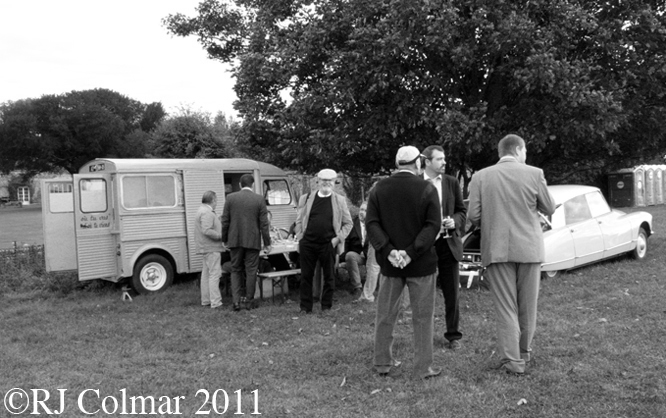
Competitors and spectators from far and wide come to the Goodwood Revival here a party from France who came with a splendid 1950’s Citroen H Van and Citroen DS enjoy breakfast before the racing gets under way.

Goodwood Revival

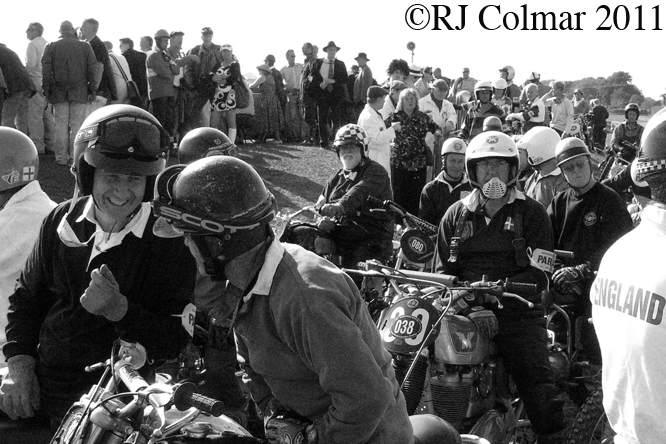
Throughout the three day Revival a scramble event was run for bikes dating from 1957 to 1966. Here the riders in period outfits are waiting to be let loose on a full lap of the racing circuit.

Ford Popular F2 Stock Car, Goodwood Revival

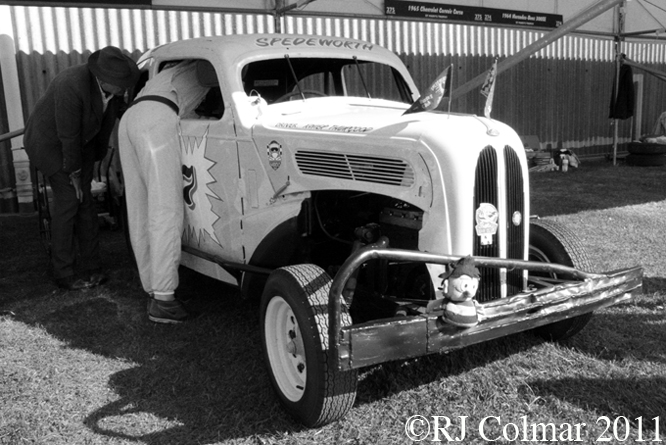
The Ford Popular 103E was in production from 1953 to 1959 by which time early models such as this 1953 model were to be found on the F2 Stock Car circuit. Note the owners period brogue shoes, suit and trilby. Hard to believe this photo was taken last week.

Fiat 600 Multipla, Goodwood Revival

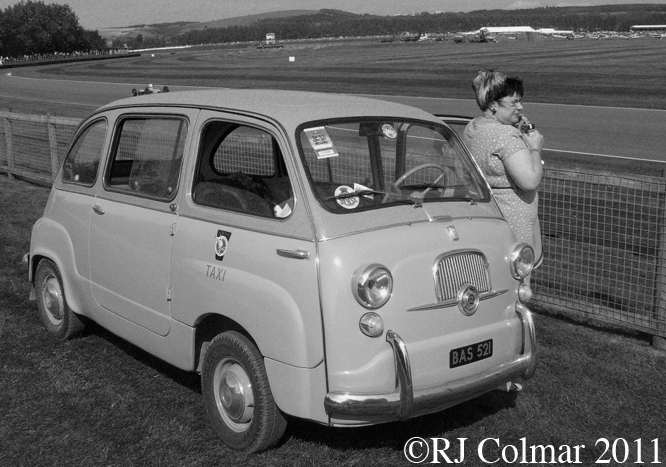
This Left Hand Drive Goodwood Revival Transport Corps Fiat 600 Multipla was built in 1961, when tested in 1956 the 6 seat Multipla was found to be capable of reaching 50 mph from rest in 43 seconds and having a top speed of 57.1 mph. The driver of this taxi wears a patterned dress that matches the lime green colour of the lower half of the vehicle.

Hillman Minx Convertible, Goodwood Revival

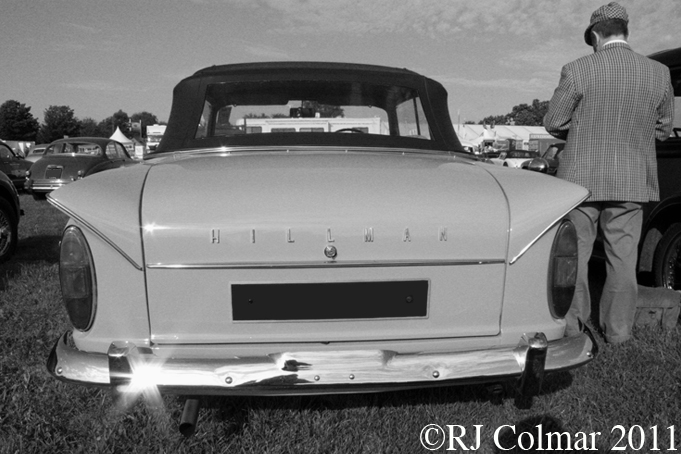
The gentleman to the right of this Hillman Super Minx convertible wears an outfit typical of many Goodwood Revival spectators, check sports jacket though his flat hat has deer stalker ear flaps.

Ford Triple D Tractor, Goodwood Revival

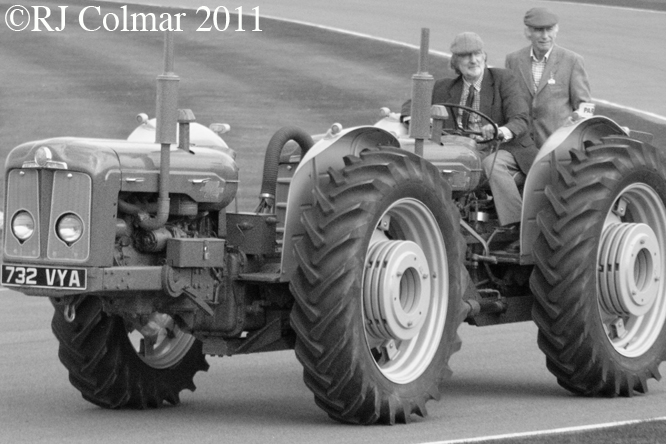
Goodwood is set in a rural area of West Sussex, the ultimate period farming accessory for the Revival has to be the Ford Triple D, Doe Dual Drive, tractor built in 1963. Invented by George Pryor who wanted a more powerful tractor than any of those available to him, he came up with the idea of taking two Fordson tractors and attaching them together with an articulated coupling that with the aid of hydraulic rams could steer the vehicle through a 90 degree turn. This is a latter 130 hp model manufactured by Ernest Doe & Sons using two Ford F5000 tractors. The main draw back of the vehicle was that it was too powerful for most of the existing implements so stronger implements had to also be manufactured by Ernst Doe & Sons. Around 300 of these vehicles were sold in the UK and USA, recently a 1962 Triple D fetched a staggering £61,000 at auction.

Glam Cab Ford Cortina, Goodwood Revival

Carry on Films were a low budget saucey national institution in 1960’s Britain, featuring fairly simple plots of everyday people such as Doctors, Nurses, Policeman, Sailors and such, in 1963 the ‘Carry On’ team, which included a regular cast from one film to the next, released Carry On Cabby a tail of rival cab companies operated by a married couple. 48 years later at Goodwood this period Glam Cab Ford Cortina and its drivers look like they have come straight off set.

Ford Corsair, Goodwood Revival

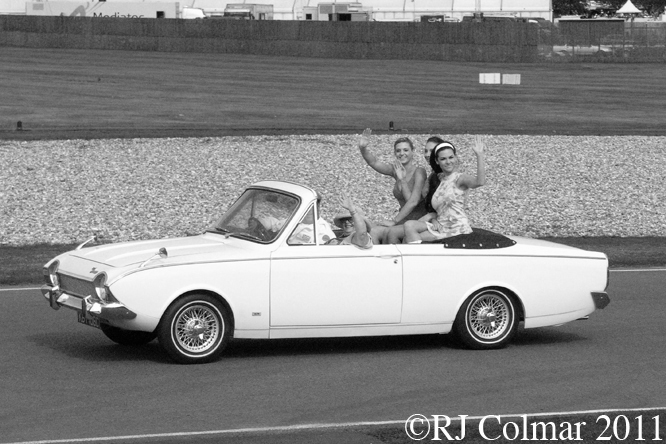
In the 50’s & 60’s if one wanted a convertible or estate / station wagon variant of a Ford one would usually have to take it to a coachworks like Crayford to have the work done, as was the case with this 1963 Ford Corsair, at the time this Corsair was built Mini skirts and boots were all the rage, I remember my English Teacher wearing an outfit like this at my London primary school in 1966 and she was the talk of the school for being so ‘with it’.

Gerhard Berger. Ford Cobra, Goodwood Revival

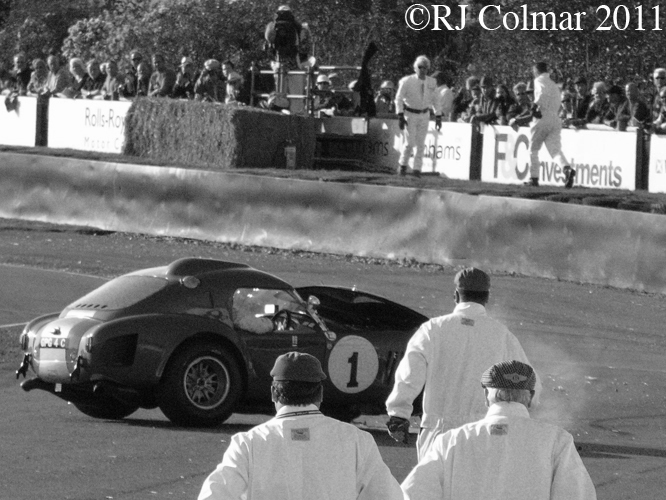
Even the track marshals working along the start / finish straight, seen here rushing to the aid of Gerhard Berger, get into period dress for the Goodwood Revival.

Goodwood Revival

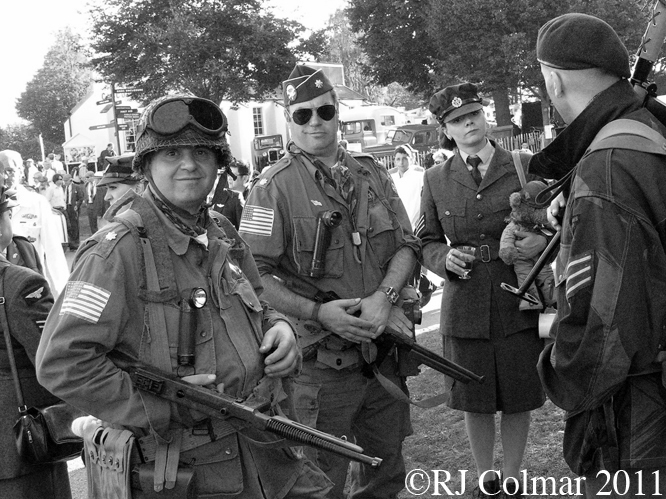
There was a pot puri of military dress code on display at this years Revival covering Allied forces from WW2 through to Vietnam. Here two US personal fraternise with a British Army Sargeant and a Women’s Auxiliary Air Force Sargeant.

Goodwood Revival

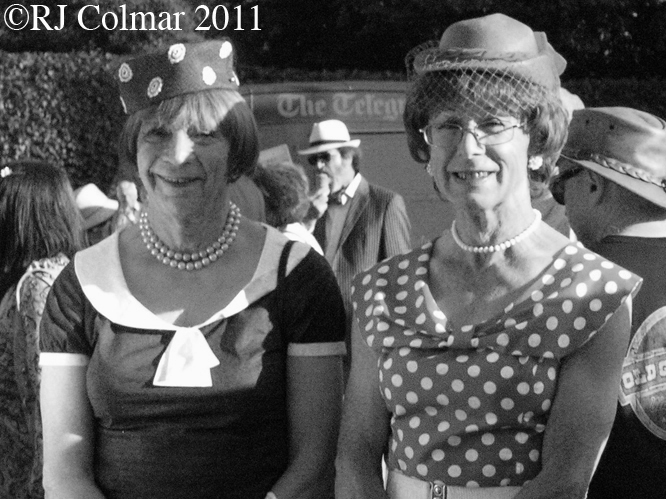
Among the bravest spectators in period costume at an otherwise testosterone fueled Goodwood were these two cross dressers,

Goodwood Revival

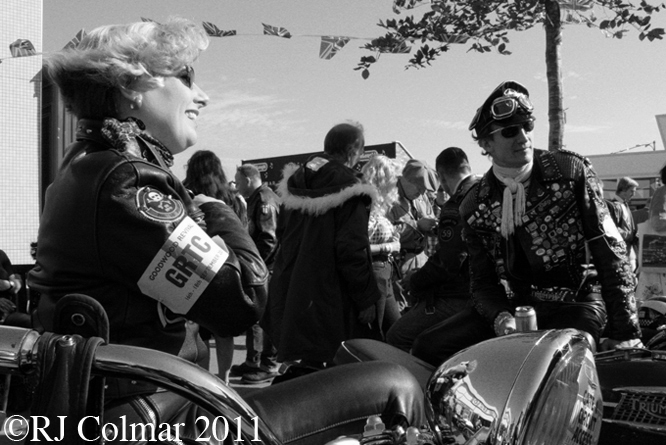
while these two bikers were amongst those enjoying an equally wild side of dress code, note the fur lined parker of the ‘Mod’ in the back ground, back in the day ‘Mods’ and ‘Bikers’ were at each others throats as immortalised in the film Quadrophenia.

Goodwood Revival

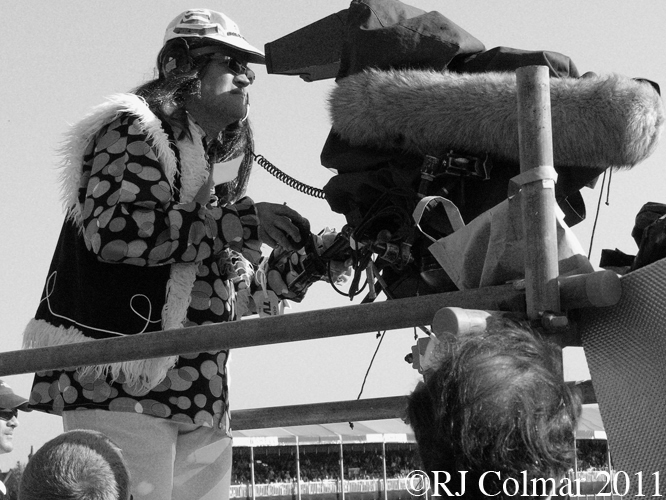
Finally bringing us to the end of the racing era at Goodwood in 1966 this cameraman epitomises the effect the Beatles Sgt Peppers Album had on fashions when it was released on the 1st of June 1966 one month and one day before the Goodwood circuit closed gates for thirty two years.

Thanks for joining me on this Goodwood Dress Code edition of ‘Gettin’ a lil’ psycho on tyres’, I hope you’ll join me again tomorrow when I’ll be looking at an unusual woody that was up for auction at the Bonham’s revival sale. Don’t forget to come back now !

Share

Goodwood Revival #5 – Ferrari Open Wheel

Last Friday I managed to get photo’s of many of the Ferrari’s on track and just the one off track at Goodwood. In order to break these photo’s down into manageable blogs today I’ll be looking at five of the single seaters present at last weeks Revival meeting.

Ferrari 500/625, Goodwood Revival

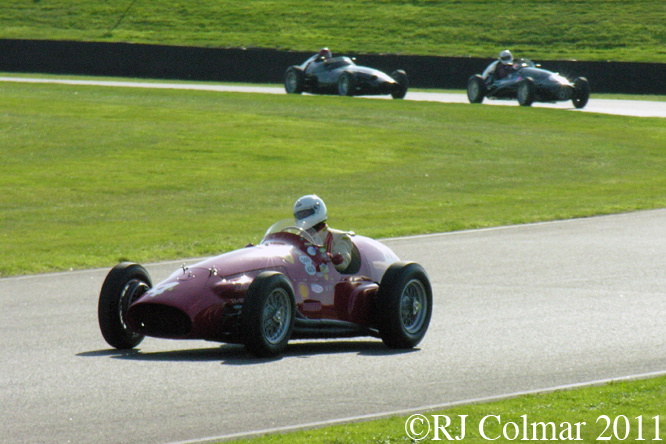
Oldest of the open wheelers present was this 1952 Ferrari 500/625 chassis #0482, this type started life as a 2 litre / 122 cui Formula 2 vehicle for the 1952 and 1953 World Championship seasons and was then upgraded for the 1954 season to 2.5 litre / 153 cui for the 1954 World Championship which was run to new Formula One regulations. I am not entirely sure what the exact history of this particular chassis is.

Lancia Ferrari D50A (Replica), Goodwood Revival

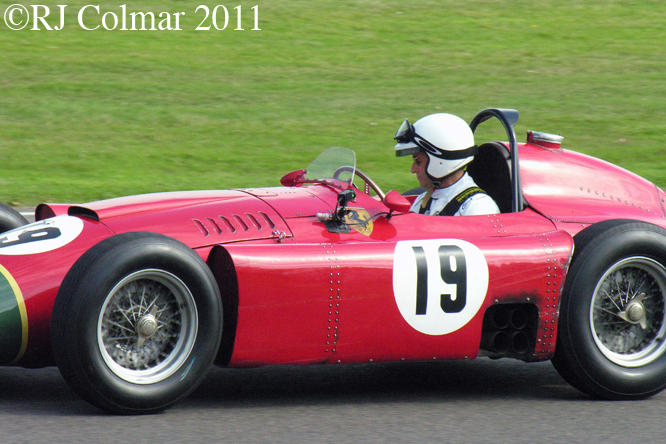
So far as I can tell this Lancia Ferrari is a recreation of the 1956 D50a type, as used by Juan Manuel Fangio to win his forth World Championship in 1956. This particular car, built by Jm Stokes who has manufactured six such vehicles, has Alain de Cadenet operating the loud pedal of the throaty V8, by some considerable margin making the best sound of the day on the track.

Ferrari Dino 246 (Replica), Goodwood Revival

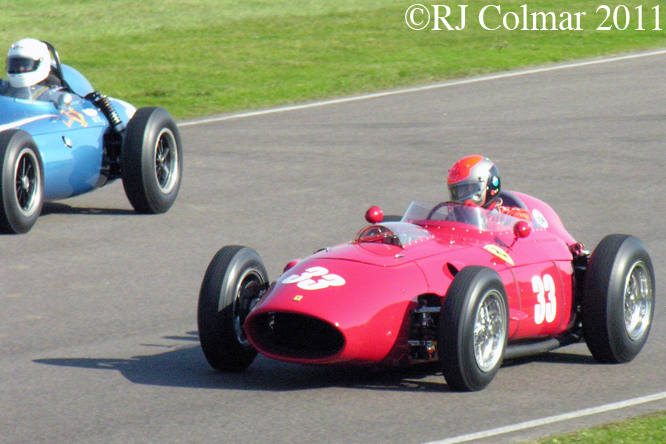
This V6 powered 1959 #33 Ferrari Dino 246 owned by Ian Wade and driven by Rick Hall is also a recreation,

Ferrari Dino 246, Goodwood Revival

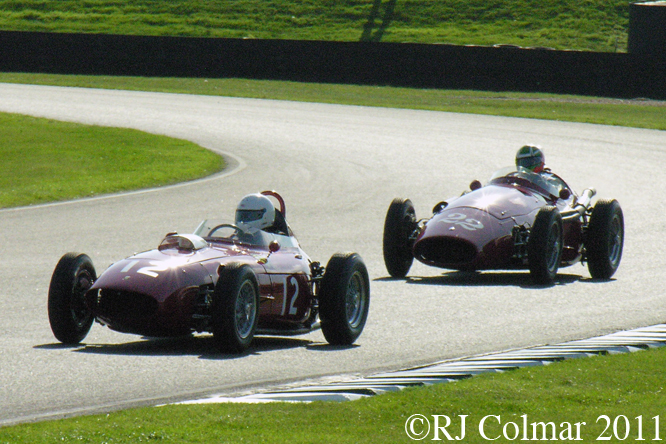
while the #12 1960 Dino seen here driven by Tony Smith is genuine with a history. The chassis number was originally #0007 Phil Hill led a Ferrari 1-2-3 victory at the 1960 Italian Grand Prix with this car. This was Phil’s first ever Grand Prix win and the last ever recorded for a Formula One car with a front mounted motor. Genesis and Metallica manager
Tony Smith can be seen talking about and driving this car on this link.

Ferrari Dino 156 (Replica), Goodwood Revival

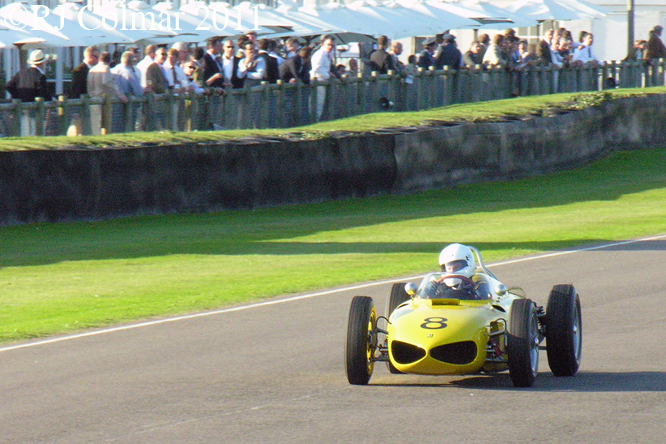
Finally the 1961 Ferrari 156 #0002R, above with Jan Biekens at the wheel, is a recreation of the type of vehicle that Phil Hill drove to become the first American World Drives Champion. This car is a recreation, again by Jim Stokes, of 156 chassis #0002, with a 65 degree V6, as used by Oliver Geneblen to finish 4th in the 1961 Belgian GP, Geneblen’s car was painted yellow in deference to the Equipe Nationale Belge team which entered him into the race.

Thanks for joining me on this open wheel edition of ‘Gettin’ a lil’ psycho on tyres’ I hope you will join me again tomorrow when I’ll be taking a look at some of the fashion that graced the Goodwood last weekend. Don’t forget to come back now !

Share

Goodwood Revival #4 – North Americana

Among the many fascinating things to see at the Goodwood Revival last weekend was a fine collection of vehicles and a few drivers from the North American continent here is a small selection of highlights.
Ford Galaxie 500, Goodwood Revival

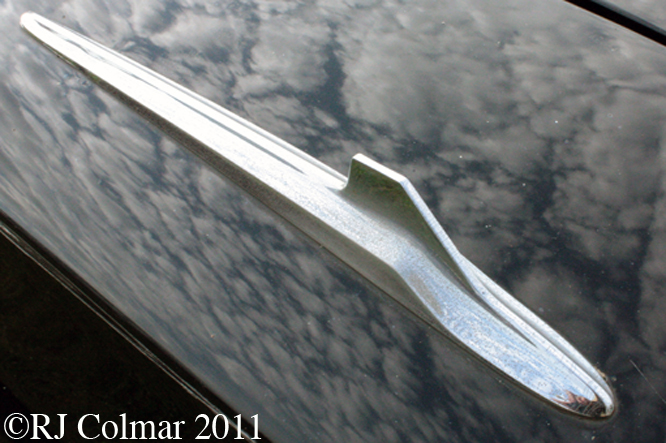
I imagine this front wing / fender trim on a 1964 Ford Galaxie 500 serves a double purpose aiding drivers positioning of the car in a tight maneuver.
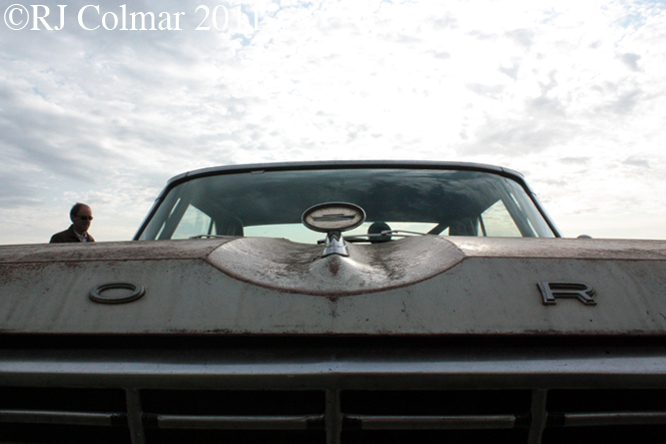
Ford Falcon Sprint V8, Goodwood Revival

My vote for Car of the Car Park at Goodwood was this 1964 Falcon Sprint V8 which looks like it has been neglected for a decade or two, more pix of this car next week.
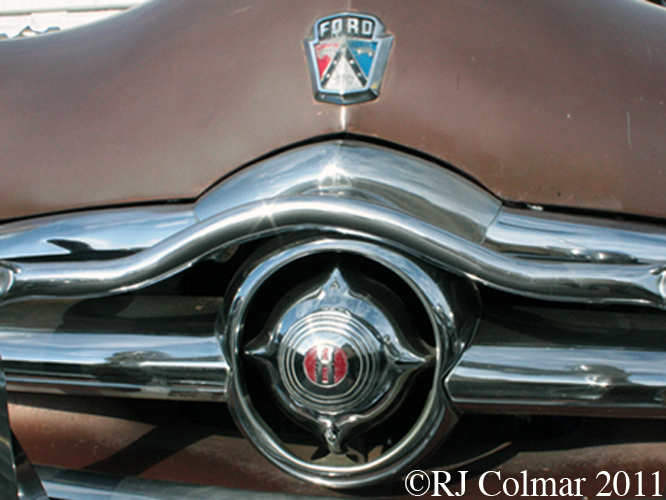
Ford V8 Custom Deluxe Woodie, Goodwood Revival

Bonhams offered a fine selection of vehicles at their auction including this 1950 Ford V8 Custom Deluxe ‘Woodie’ Station Wagon Chassis no. BOEG164430, which was imported to the UK in 2009, the vehicle does not appear to have found a new owner.
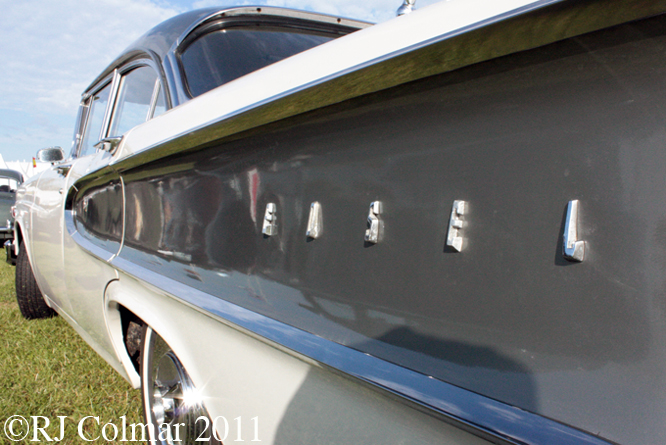
Ford Edsel, Goodwood Revival

I have not seen an Edsel before, this 1958 model brought home just how colossal a beast an Edsel really is, well suited to the open spaces of North America but a bit like a duck out of water on Englands winding narrow lanes.
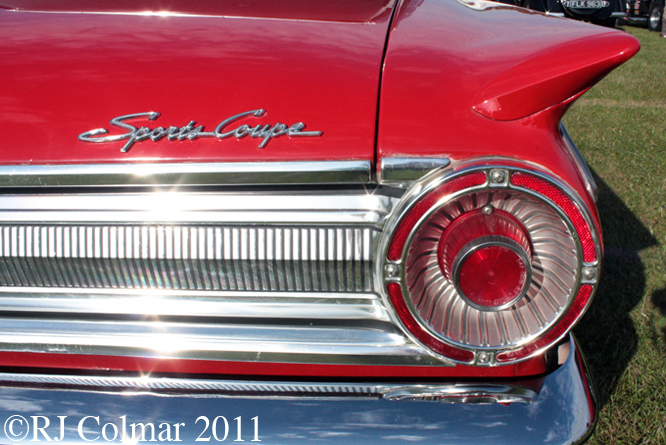
Ford Fairlaine 500 Sports Coupé, Goodwood Revival

When I was younger I remember being bewildered by the attention to detail of the bright work on some of the 1960’s land yachts, who could fail to be impressed by the jet age rear light cluster of a 1963 Ford Fairlane 500 Sports Coupe.
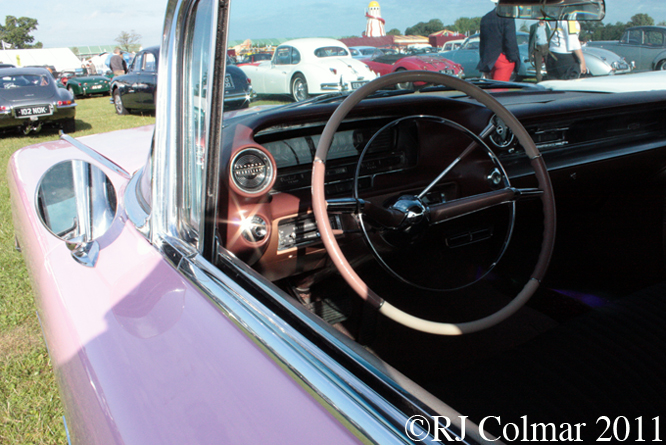
Cadillac 6200 Sedan Flat Top, Goodwood Revival

Probably in the running for the largest vehicle in the Goodwood Classic car park was this 1959 Cadillac 6200 Sedan Flat Top, quite simply an awesome automobile, I can just imagine the Chuck Berry hits pouring out of the radio.
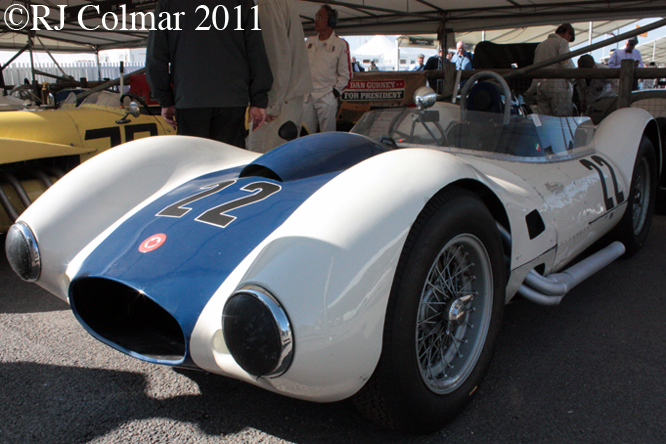
Sadler Chevrolet Mk 3, Goodwood Revival

One of several vehicles built in Canada racing at the Revival was this 1958 Sadler Chevrolet Mk3, I am not sure if this was a one off but counting amongst the drivers of a vehicle of this type were Bob Said father of sometime NASCAR racer Boris Said and Eddie Sachs.
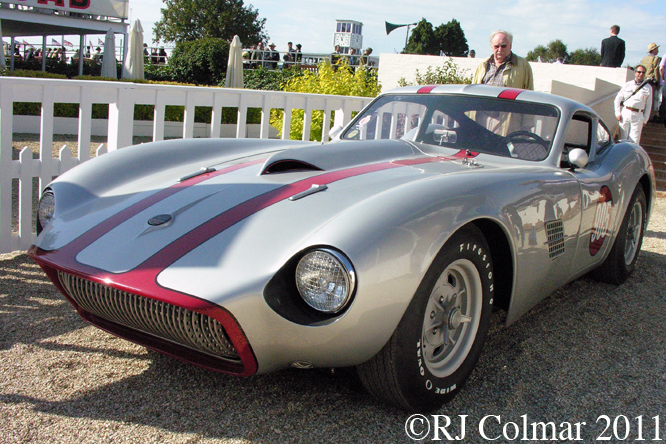
Kellison J6, Goodwood Revival

This 1962 Kellison J6 drew an instant Wow ! reaction when I saw it lurking behind the start grandstand, another vehicle I had not heard of before, Kellison kit cars were the brainchild of Korean Airforce Vet Jim Kellison, this one based on a Corvette C1 chassis. These cars could be fitted with any US proprietary V8 and drive train. The #905 was used on factory Kellison’s at Bonneville where a best speed of 186 mph was recorded in one of these simple but effective devices.
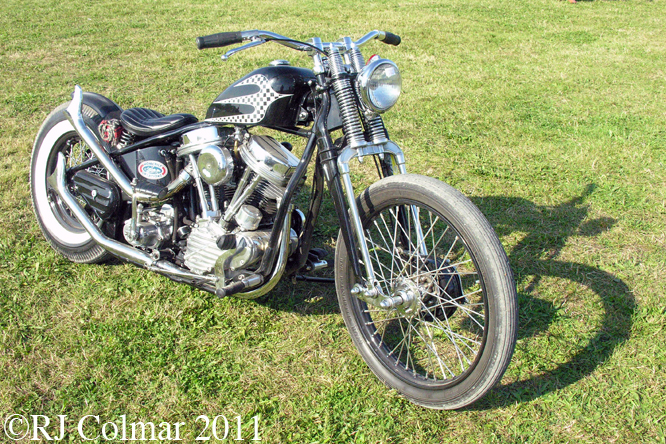
Harley Davidson, Goodwood Revival

I am not really a motor cycle man and if I was I’d go for a café racer like the Triton, but this Harley Davidson looks topically cool with its checkered flame tank, rather like the gargantuan Edsel and Caddy 6200 Series probably not the most suitable of machines for the conditions usually found in West Sussex.
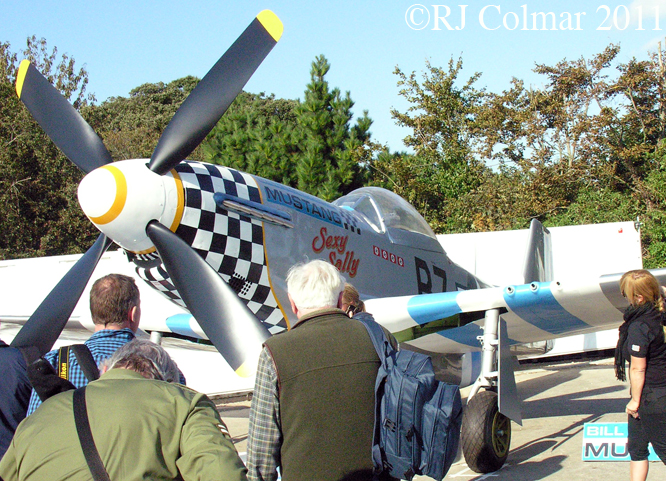
Mustang P51 (Replica), Goodwood Revival

Of all of the WW2 era aeroplanes none says speed quite like the P51 Mustang with its Rolls Royce Merlin V12 motor built under license by Packard. I am not entirely sure if this is an airworthy airframe or just for show but it looked the business surrounded by a B-17 and a host of similarly powered Spitfires.
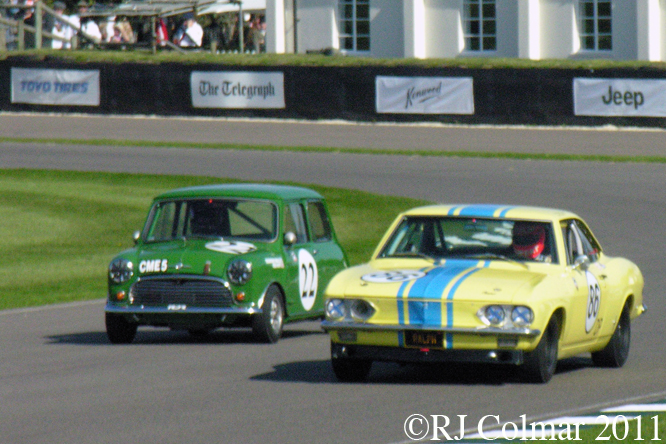
Chevrolet Corvair, Goodwood Revival

Last time I recall seeing the distinctive red helmet of Rupert Keegan was when he drove the #16 Ultramar Newsweek Lola T610 in 1982. After an ill feted attempt to run in CART with the Machinist Union team in the mid 1980’s the 1979 British Formula One Champion, note not a world title but a national one, completely disappeared from my radar until I saw him driving the #85 1965 Chevrolet Corvair Corsa belonging to Bruce Chapman.
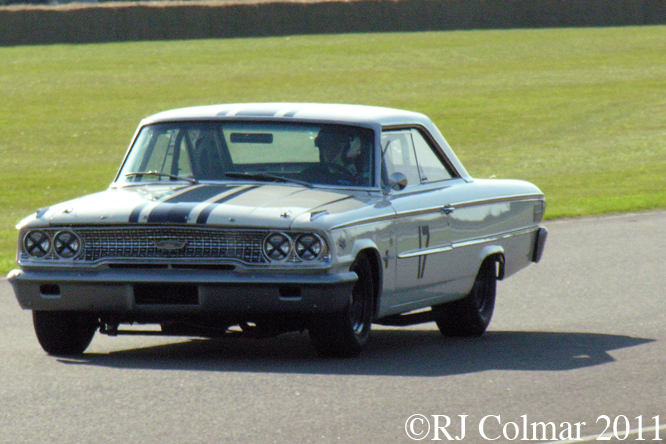
Ford Galaxie 500, Goodwood Revival

In the same race as the Corvair was the #17 1963 Ford Galaxie 500 pedalled by Kiwi two time winner of the world touring car cup Paul Radisich and owner, seen at the wheel here, Jim Woodley.
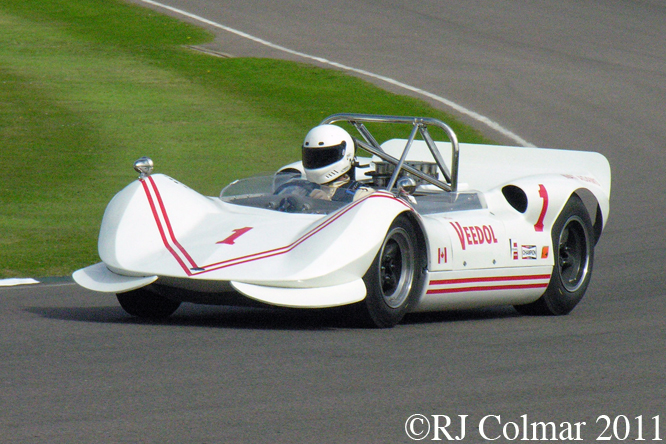
Chinook Chevrolet Mk 2, Goodwood Revival

Another vehicle coming from Canada was the 1966 Chinook Chevrolet Mk 2. Built in Toronto by Hungarian Canadian George Frejer. The car is seen here in the hands of rapid F5000 exponent Jay Esterer who won the Whitsun Trophy on Sunday.
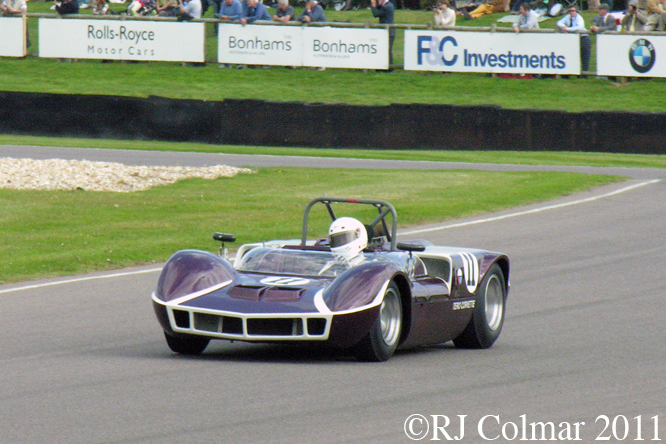
Hamill Chevrolet SR3, Goodwood Revival

Ed Hamill appears to have built two Hamill Chevrolet SR3‘s one for himself that started with an Oldsmobile motor and a second one for the Tero Corvette Team for Hamills workshop neighbour Roy Kumnick to drive in 1966. So far as I can tell this is the Roy Kumnick car, now driven by Chris Chiles, which if I am correct features a rounded steel tube frame as opposed to the square steel tube frame Hamill used to build his own SR3.
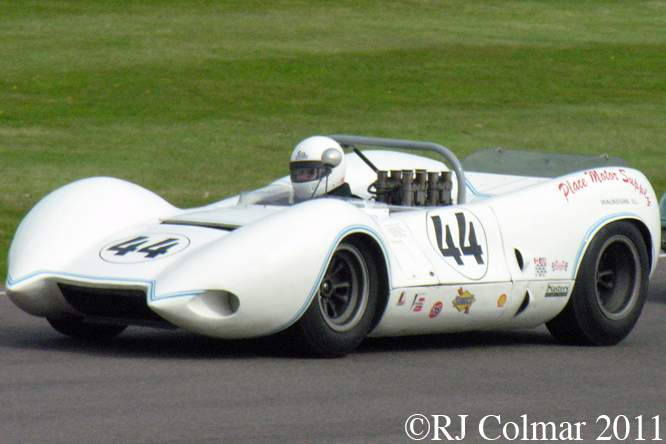
Wolverine Chevrolet LD65, Goodwood Revival

George Anderson was responsible for the design of this 1965 Wolverine Chevrolet LD65 and it was built by Lee Dykstra who went on to achieve much with the Bob Tullis Group 44 Jaguar programme and in the CART Indycar Series. The Wolverine was driven by Jerry Hanson in the 1966 Can Am series, third owner Frank Opalka had the car painted white in 1968 as it is seen here being driven by Mogens Christensen.
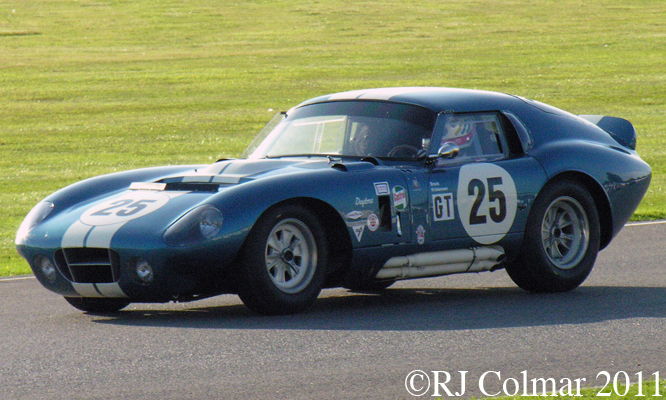
Shelby American Cobra Daytona Coupé, Goodwood Revival

Capable of 186 mph, with a body designed by Peter Brock, the 1964 Shelby American Cobra Daytona Coupé CSX 2300 entered by Daniella Ellerbrock for 1999 Indy 500 winner Kenny Brack and 8 time Le Mans Winner Tom Kristensen, seen at the wheel here, was the second of the five cars finished by Carrozzeria Gransport in Modena. This car le
ased from Alan Mann Racing first appeared painted white with red & blue stipes driven by Bob Bondurant and Jochen Neerpach later to become head of competition at Ford, BMW and Mercedes. The car was repainted in Guards blue when it returned to Alan Mann Racing.
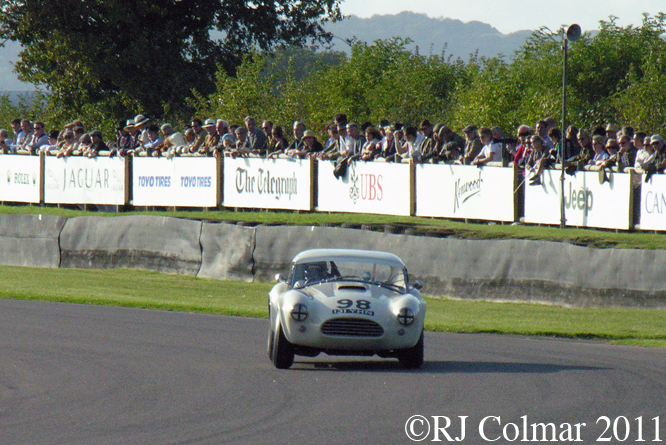
AC 289, Goodwood Revival

The 1964 #98 AC 289 is the English built variant of the ‘Cobra’, a name that belonged to Shelby before he sold it on to Ford. This one was driven by Kevin Kivlochan and 1998 Indy 500 winner Eddie Cheever. Edit 22/09 Bill P has informed me Kevin’s car is chassis #COB6008, which was originally supplied to Bruce Ropener owner of the Croft Circuit in North East England.
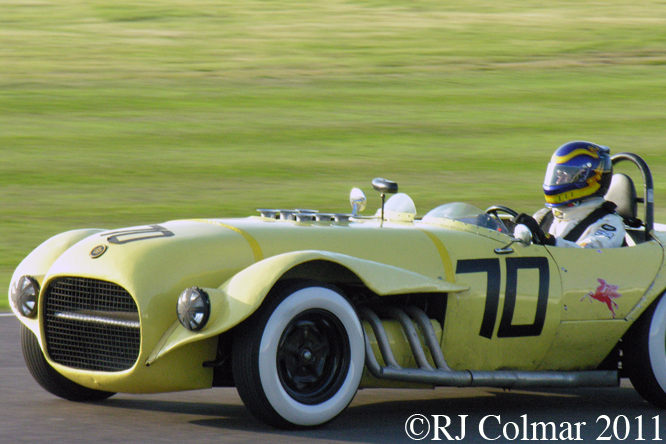
Balchowski-Buick, Ol' Yeller II, Goodwood Revival

Taking it’s model name from a weepy Hollywood film about a stray mongrel 1959 Balchowsky-Buick Ol’ Yeller II this vehicle is also a mongrel with a Studebacker Champion solid rear end, Buick V8, Buick aluminium drum brakes and a Morris Minor steering rack and white wall tyres more commonly found on station wagons. Max Balchowsky chose all these items for the car drawing on his experience with previous race cars and hotrods. When it held together this inexpensive, $1452.76, sports car driven by the like of Max himself, Dan Gurney, Bob Drake, Bob Bondurant, Carrol Shelby and Jerry Entin, could hold it’s own against Ferrari’s.
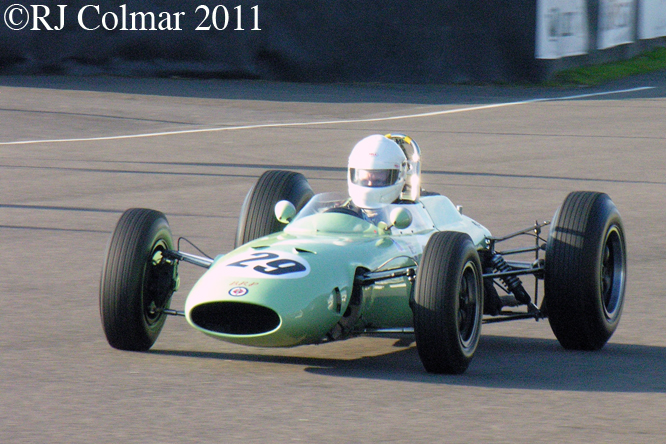
BRP - BRM, Goodwood Revival

My final piece of North Americana is a replica of a 1964 BRP-BRM a British design, faithfully replicated in New Zealand, currently owned and driven by Kurt DelBene who I understand has a day job in Silicon Valley. Great to see someone out racing with one of the more obscure British Formula One manufacturers, helps me to believe that one day I will see the Connew back on it’s wheels and driven with vigour.

My thanks to Tony ‘Giraffe’ Gallagher, Doug Nye, Paul Parker, Jerry Entin, and bill p at The Nostalgia Forum for their valuable contributions to today’s blog.

Thanks for joining me for this North Americana edition of ‘Gettin’ a lil’ psycho on tyres’ I hope you will join me tomorrow for an over view of some of the Ferrari’s at Goodwood last weekend. Don’t forget to come back now !
Share