Tag Archives: Bristol

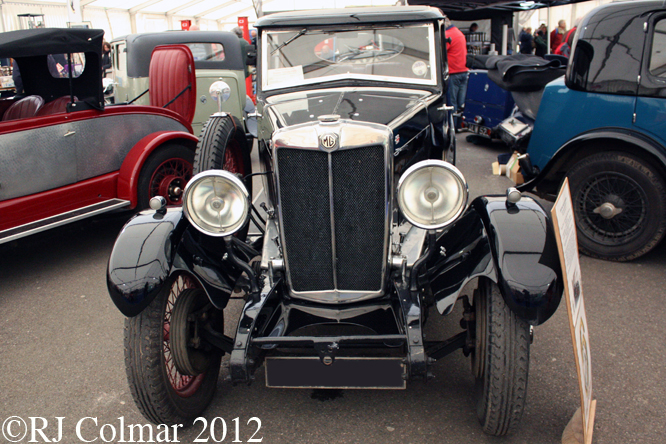
Continental Tourer – MG 18/80 Six Saloonette Mk I

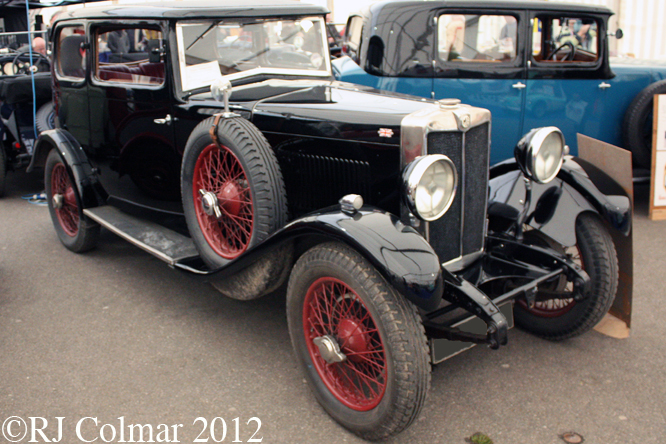
Today’s featured MG 18/80 Six was through University Motors of, the then very fashionable, Park Lane, London W1 in 1931 for £625 painted black and cream.

MG 18/80 Six Salonette MkI, Bristol Classic Car Show

Technically this car is similar to the Tigress bodied 18/80 featured a couple of weeks ago with a 2468cc / 150 cui six cylinder motor that gives an 80 mph potential.

MG 18/80 Six Salonette MkI, Bristol Classic Car Show

The history of this particular car is unknown between its original sale and the 1960’s when it resurfaced several times as it changed ownership. Since it’s restoration in the 1970’s it has been used for touring in the UK and on the Continent.

Thanks for joining me on this “Continental Tourer” edition of “Gettin’ a li’l psycho on tyres”, I hope you will loin me tomorrow when I’ll be looking at a classic Messerschmitt. Don’t forget to get to come back now !

Share

Coffee, Croissant & Cars – Avenue Drivers Club

Last Sunday I had a lie in thanks to the Avenue Drivers Club meeting taking place just a stones throw from GALPOT Towers. As I wended my way down to Queens Square a few throaty exhausts wafted across the relatively still morning air and cranked up my anticipation for what I might find.
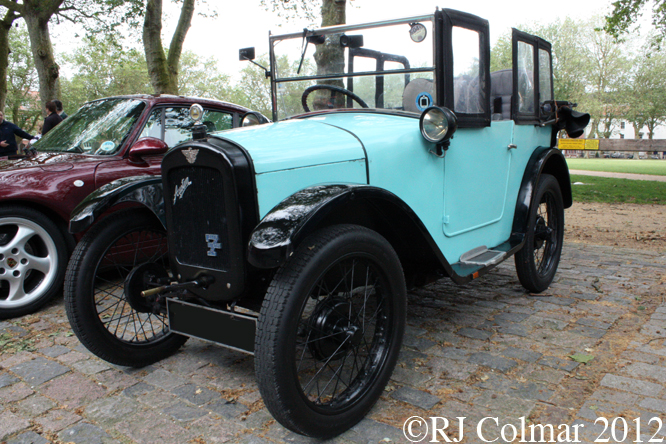
Austin Seven, Avenue Drivers Club, Queens Square, Bristol

Among the vintage vehicles that turned up was this 1927 Austin Seven complete with child seats for the two young ‘uns that came along.
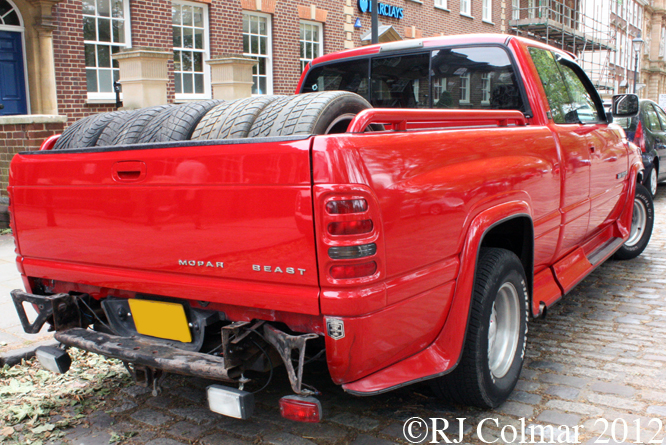
Dodge Ram 1500 Magnum, Avenue Drivers Club, Queens Square, Bristol

Possibly the largest vehicle present was this Mopar Beast a 1995 Dodge Ram 1500 V8 Magnum, a badge on the side of the cab suggested that it had passed through Regency Conversions of Fort Worth, Texas, exactly what they might have done to it I cannot say.
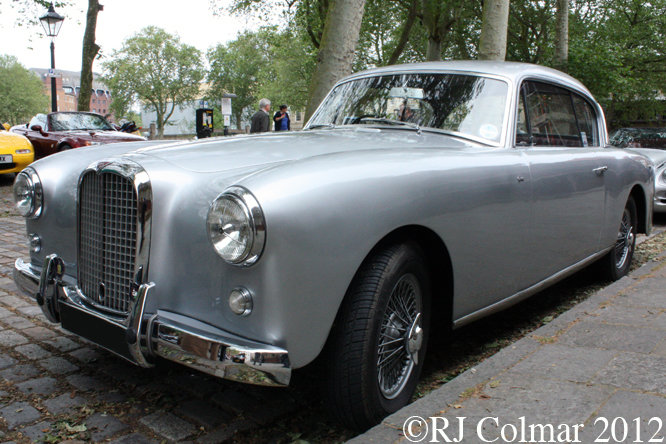
Alvis TC 108G, Avenue Drivers Club, Queens Square, Bristol

Another of the larger vehicles present was this 1958 Alvis TC 108G one of just 37 with elegant Graber styled bodywork.
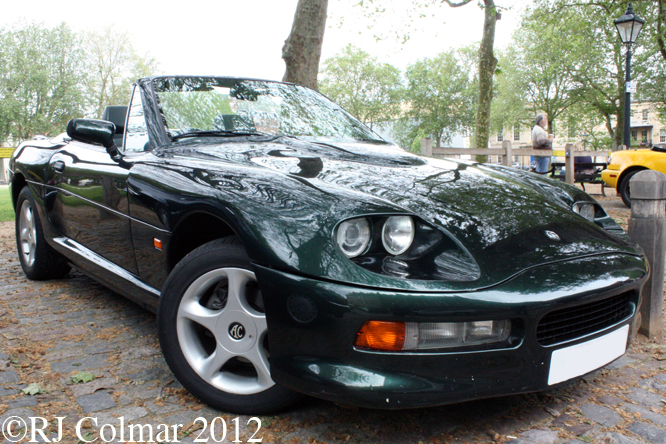
AC Ace, Avenue Drivers Club, Queens Square, Bristol

When I first saw the car above, I paid no attention to the number plate and thought it was a 3rd Generation Camaro or even a Firebird. A closer inspection revealed it to be a 1995 AC Ace built in the UK and powered by a 5 litre / 302 cui quad cam Ford V8.
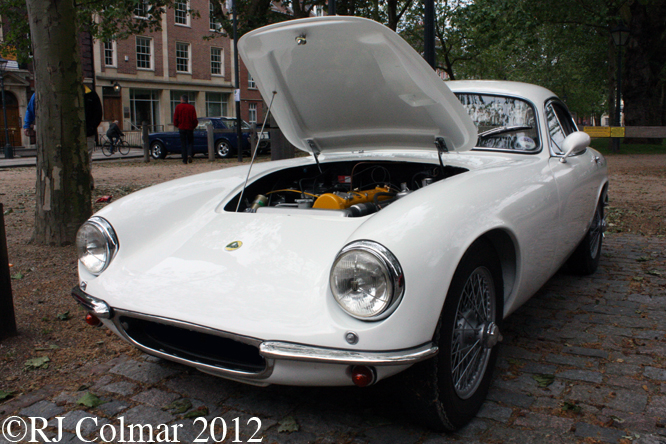
Lotus Elite, Avenue Drivers Club, Queens Square, Bristol

Now in far better condition than it was when it left the factory is this 1962 Lotus Elite, resplendent with the yellow cam cover of it Coventry Climax motor peeking through the bonnet. With a little luck I may be able to get some photo’s of a couple of Lotus models missing from my Saturday Lotus blogs courtesy of the owner of this car.
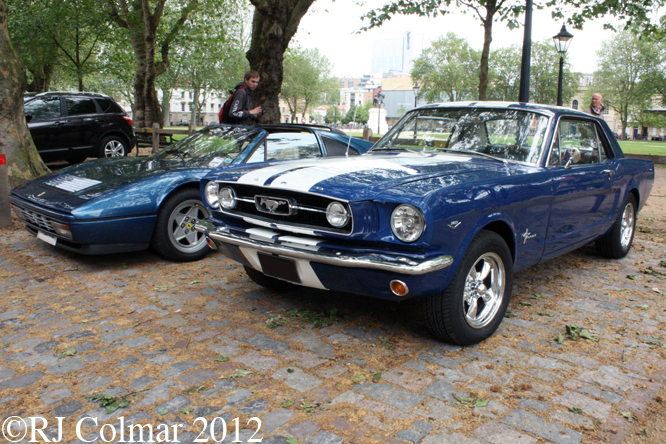
Ford Mustang, Ferrari 328 GTS, Avenue Drivers Club, Queens Square, Bristol

Continuing the theme of contrast this mid sixties 4.7 lire / 289 cui Ford Mustang and 1988 Ferrari 328 GTS present alternative approaches to performance motoring.
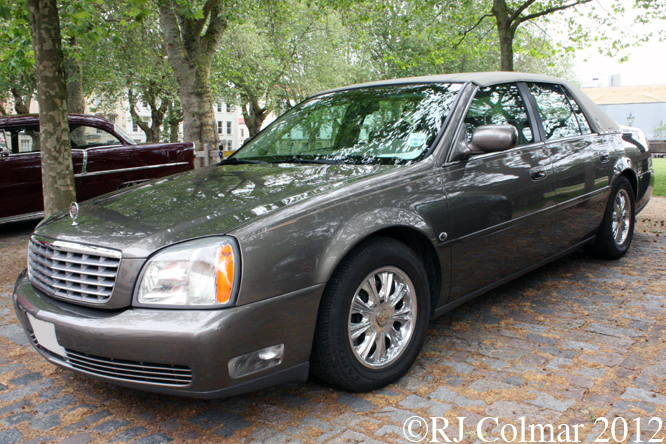
Cadillac Deville, Avenue Drivers Club, Queens Square, Bristol

Strangest vehicle of the day award goes to this 2003 Cadillac De Ville, looks like a soft top but is actually a simulated soft top, the logic of which somehow completely escapes me, if you know or can fathom the reasoning for this option please do not hesitate to chime in below.
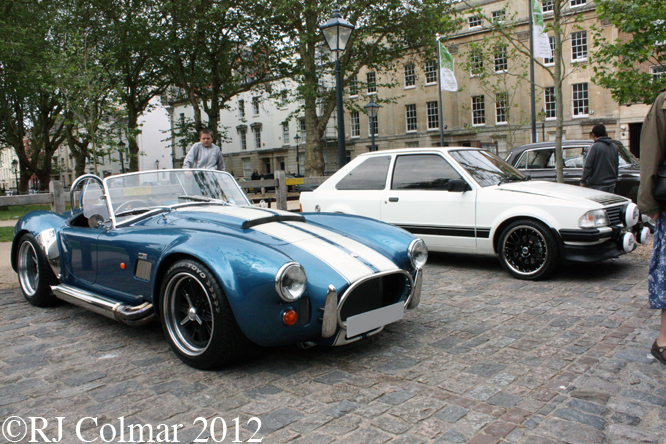
DAX, Ford Escort 1600i, Avenue Drivers Club, Queens Square, Bristol

This DAX and 1983 Ford Escort RS 1600i present further contrasting performance options, the DAX is probably the newer of the two vehicles. You could have used some of the chrome/polished steel features in the engine bay of the RS1600i to straighten your hair !
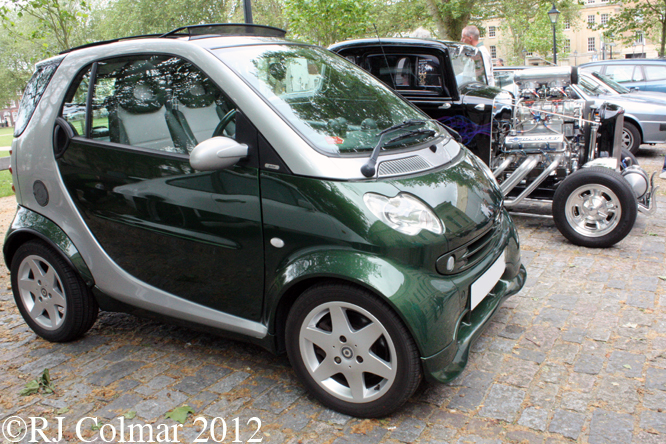
Smart, Ford / Chevrolet, Avenue Drivers Club, Queens Square, Bristol

Perhaps the biggest contrast of the day was provided by this 2003 SMART and the Chevrolet aluminium block powered Ford hot rod which with the supercharger boost turned right down easily produces over 600 horsepower making the Chevy powered Ford easily the most powerful car present.
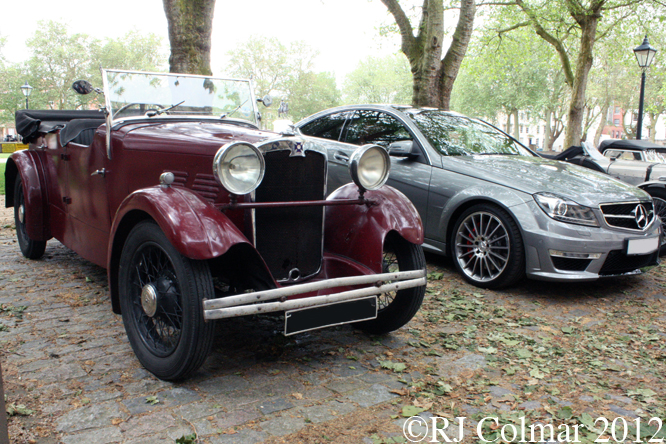
Crossley 10, Mercedes Benz C63 AMG EDITION 125, Avenue Drivers Club, Queens Square, Bristol

I don’t recall ever seeing a Crossley, not to be confused with Crosley, before nor a Mercedes Benz C63 AMG Edition 125 which is 80 years younger than the 1932 Crossley 10 standing next to it.
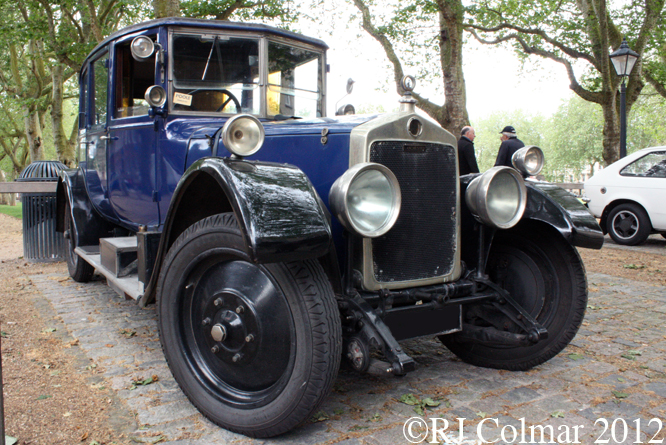
Lanchester, Avenue Drivers Club, Queens Square, Bristol

While the Crossley bore some impressive patina my Patina of the Day award went to this 1924 Lanchester 23 a two ton vehicle which was more powerful and cheaper than the equivalent Rolls Royce of it’s day, was and possibly still is capable of 70 mph and has a city friendly 44′ turning circle.
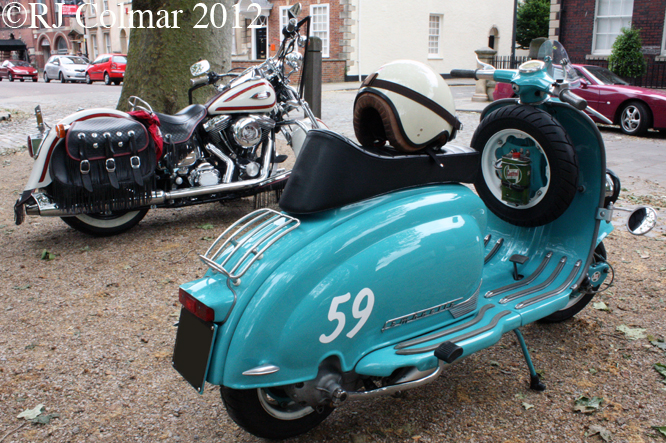
Lambretta, Harley Davidson, Avenue Drivers Club, Queens Square, Bristol

I saw only two two wheeled vehicles and again they could not have been more different a 1959 Vespa and a far more recent, I’ll stop short of saying modern, Harley Davidson with all the trimmings.

Should you find yourself in Bristol on the second Sunday of the month I really cannot recommend a visit to Queens Square around 9 am for Coffee, Croissant and Cars highly enough. As everyone was preparing to leave David Roots kindly offered me a lift home in his Alfa Romeo 4C Special which made the perfect end to a morning of strong contrasts.

Thanks for joining me on this “Coffee, Croissant & Cars” edition of “Gettin’ a li’l psycho on tyres” I hope you will join me again tomorrow. Don’t forget to come back now !

Share

Thirty Year Restoration – Lotus Mark 6 #JZ 7890

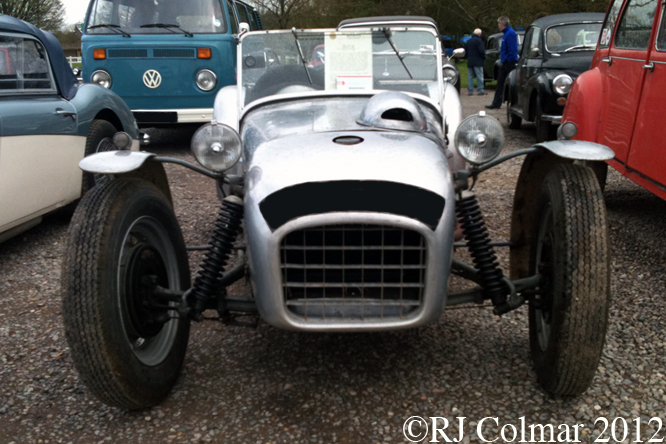
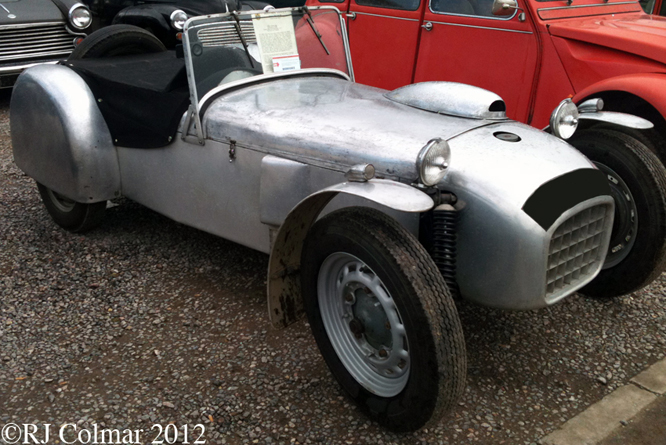
The Lotus Mark 6 represented Colin Chapman’s first attempt at building a vehicle which customers could purchase in kit form.

Lotus VI, Bristol Classic Car Show

Chassis #JZ 7890 was one of the first eight built, therefore one of the first 13 Lotus cars ever built. The car was originally assembled with a 4 cylinder Ford Consul motor and Austin Gearbox by Patrick Stevens for owner Denis Wilkins. Wilkins competed in the car at numerous events in England during 1953 and in 1954 took the car to Ireland where he shared it with Ian Titterington. It’s best result that I could find is a third place at Kirkistown in an Open Handicap Final in June 1954 with Wilkins at the wheel. In 1955 the car returned to England and competed in the hands of George Pitt, Rodney Bloor and Ken Coffey before being sold, in 1963, to an owner in Bristol who intended to fit a six cylinder motor from a Ford Zephyr.

Lotus Mark 6, Bristol Classic Car Show

Despite the original engine and gearbox being stripped out and sold on the conversion was never completed and the current owner bought the engineless remains in 1976 and then spent thirty years piecing it together with another Ford Consul engine and an MG TC gearbox. A couple of months after returning it to the road in 2006 he drove it to Le Mans in France.

Lotus VI, Bristol Classic Car Show

110 Lotus Mark 6 kits were eventually sold, including a one off trials version, scoring many competition victories and establishing Lotus as a specialist vehicle manufacturer.

Thanks for joining me on this “Thirty Year Restoration” edition of “Gettin’ a li’l psycho on tyres”, I hope you will join me for a Drag edition tomorrow. Don’t forget to come back now !
Share

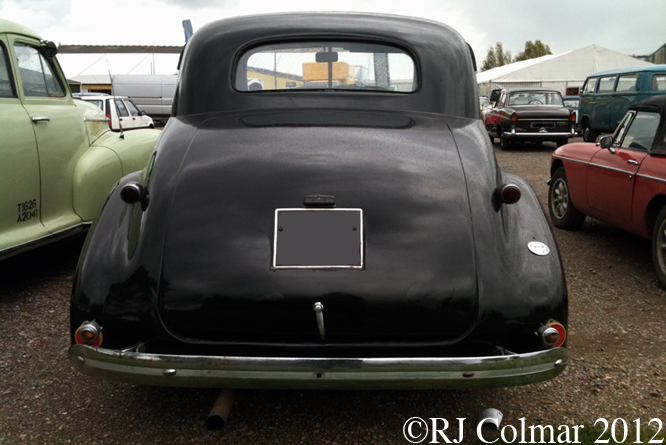
“Tender At Heart” – Ford V8 30 Saloon

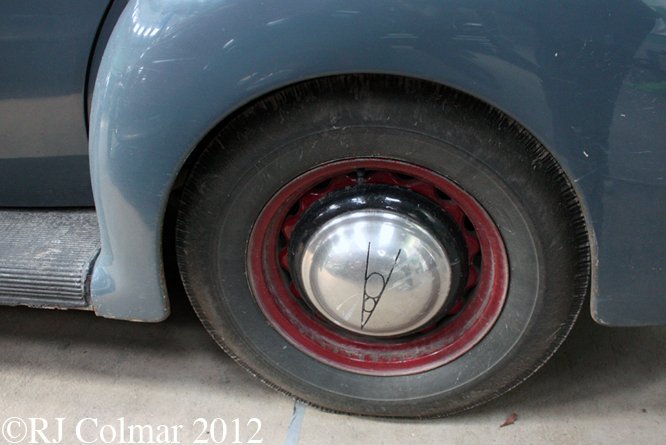
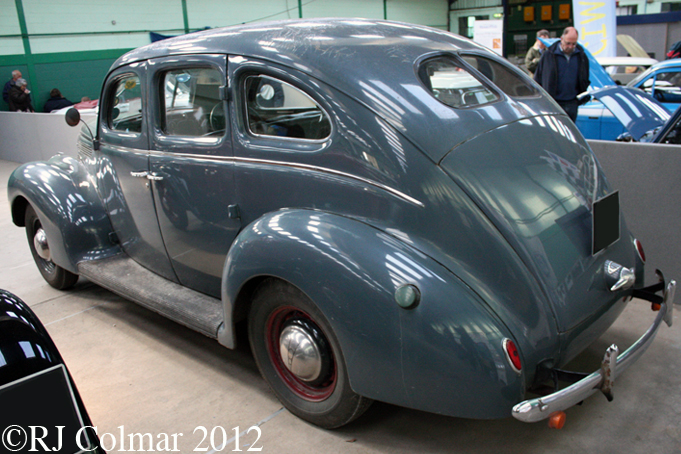
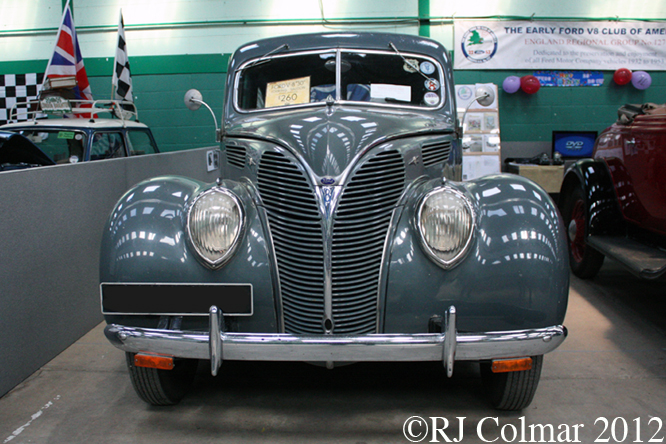
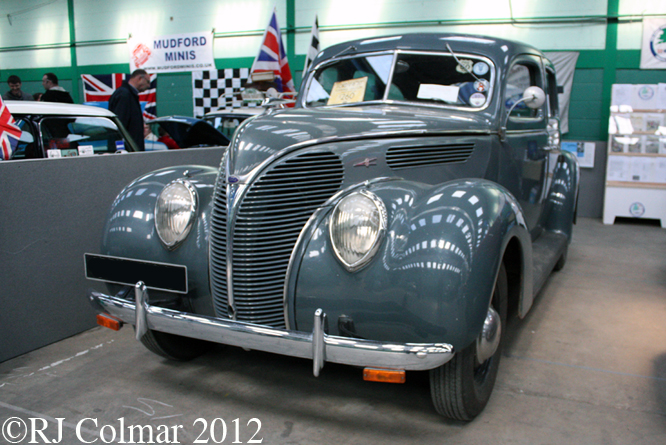
The 1938 Ford V8 30 Saloon appears to be a 1938 Ford de Luxe Sedan built for the British market complete with right hand drive.

Ford V8 30 Saloon, Bristol Classic Car Show

Like the Deluxe the V8 30 was powered by a ‘flathead’ V8 with either 60hp or 85hp options.

Ford V8 30 Saloon, Bristol Classic Car Show

New for 1938 was the distinctive heart shaped grill which is easily distinguished from the V shape grill of the 1937 models.

Ford V8 30 Saloon, Bristol Classic Car Show

The remaining panels were identical to the earlier 1937 models, not even a new dash with recessed controls for safety could do much to stimulate sales. After the 1939/45 war the British built Ford V8 30 updated and given a brief new lease of life in the UK, marketed as the Ford Pilot.

Ford V8 30 Saloon, Bristol Classic Car Show

In September 1939 Lenham, in Kent, Auxiliary Fire Station had a budget of £60 to acquire a Fire Tender and a Mr Hulland managed to acquire a Ford V8 30 hp Saloon for £30 and spent the remainder on having it converted. The depreciation from the new value of the vehicle at £230 in 1938 showing how desperate the times were at the commencement of the 1939/45 war.

Thanks for joining me on this “Tender At Heart” edition of “Gettin’ a li’l psycho on tyres”, I hope you will join me again tomorrow. Don’t forget to come back now !

Share

5900 Miles To Fame And Fortune – Chevrolet Master 85 Coupé

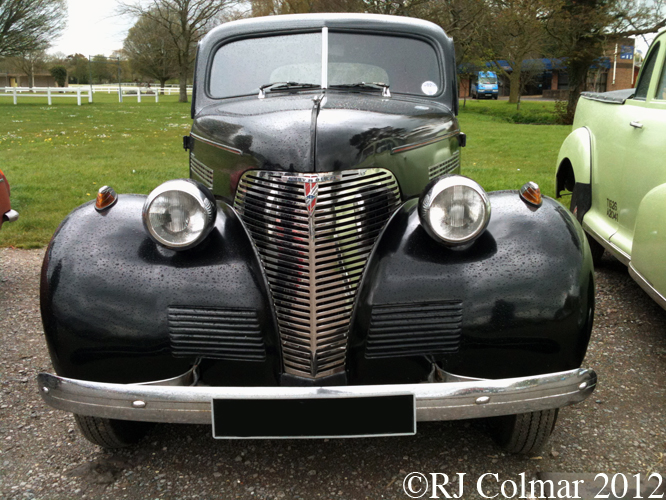
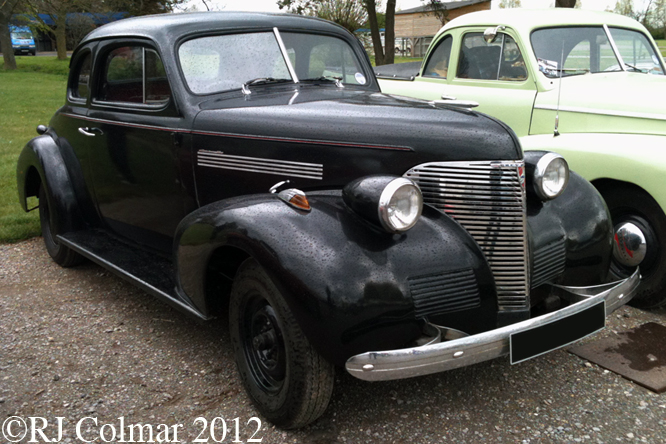
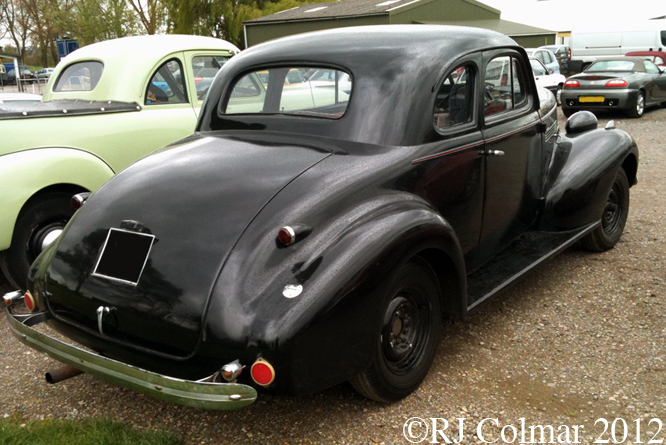
The origins of the Chevrolet Master 85 Coupé can be traced back to 1928 when Chevrolet started to switch from building four cylinder motors to six cylinder motors.

Chevrolet Master 85 Coupé, Bristol Classic Car Show

The introduction of this innovation played to Chevrolet’s advantage as coincidentally Fords experienced a downturn in fortunes as it belatedly switched production from the Model T to the Model A.

Chevrolet Master 85 Coupé, Bristol Classic Car Show

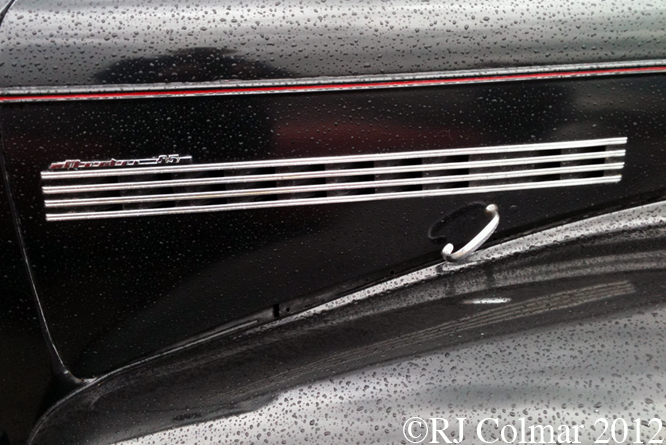
In 1933 the Master series was introduced as an above base (Standard) range of vehicles and in 1937 this series received an 85 hp 3.5 litre / 216 cui six cylinder motor from which the marketing department added the 85 to the Master Series name.

Chevrolet Master 85 Coupé, Bristol Classic Car Show

A ‘tiptoe-matic’ diaphragm spring clutch aided smooth changes between the three forward gears in the gearbox.

Chevrolet Master 85 Coupé, Bristol Classic Car Show

In 1939 the sealed Dubonnet inspired ‘Knee Action’ independent front suspension was abandoned in favour of coil springs and wishbones.

Chevrolet Master 85 Coupé, Bristol Classic Car Show

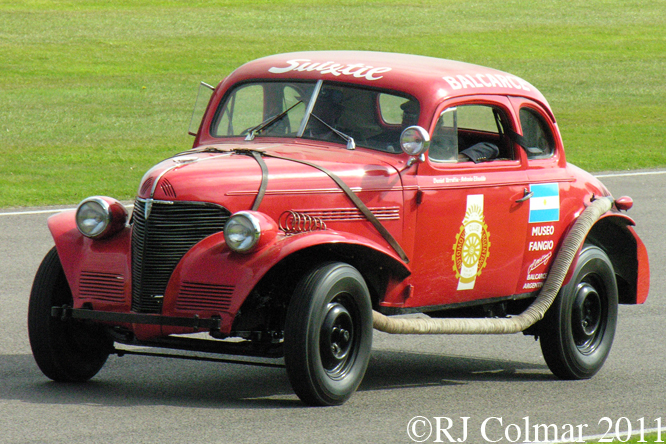
In 1940 a little known 29 year old Argentinian Juan Manuel Fangio, who had started making a name for himself racing a Ford Model A, and his friends modified a Chevrolet Master 85 Coupé for the demands of a 5900 mile race from Buenos Aires, Argentina to Lima, Peru and back.

Chevrolet Master 85 Coupé, Goodwood Revival

Juan managed to average 53.5 miles per hour on some of the worlds roughest roads traversing some of the worlds most isolated regions to win the race. He backed up the performance with back to back Turismo Carretera Series championship wins in 1940 and 1941 which was enough to secure backing from the Argentinian government in 1948 for a trip to Europe that would herald the arrival of the worlds first 5 time World Champion.

The copper pipe clearly seen on the wing / fender of Juan’s Master 85 above acts as an oil cooler.

Thanks for joining me on this ‘5900 miles to Fame And Fortune edition of “Gettin’ a li’l psycho on tyres”, I hope you will join me again tomorrow when GALPOT will feature a Ferrari 458. Don’t forget to come back now !
Share

Silver Plated Steering Wheel Boss – MG 18/80 Mk II Prototype

In 1928 MG moved away from it’s original remit of giving Morris Bullnose products wider appeal which culminated in the MG 14/40 and started to manufacture it’s own chassis and engine blocks.

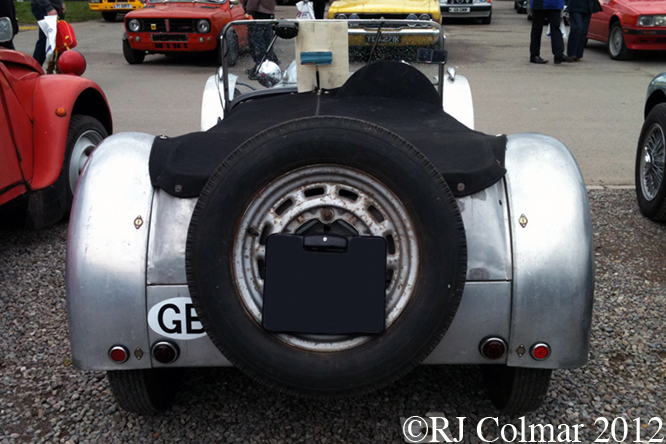
MG 18/80 Mk II Prototype, Bristol Classic Car Show

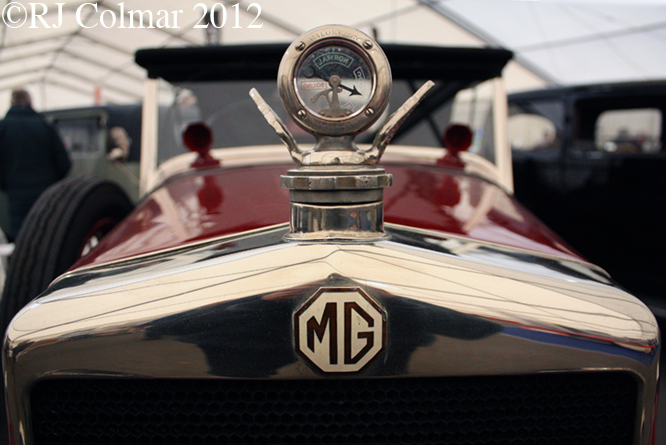
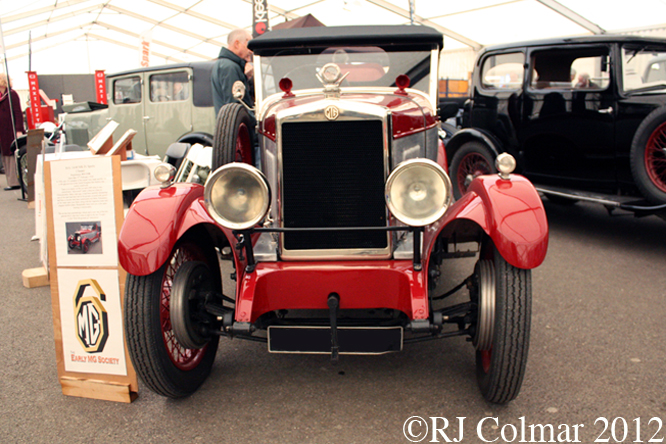
The new 18/80 model featured both a unique MG chassis and engine block both of which had been developed from lessons learned from a Morris Light Six Saloon that never went into production. The new distinctive radiator design would be maintained all the way through to the T Series.

MG 18/80 Mk II Prototype, Bristol Classic Car Show

The 18/80 also featured unique to MG front and rear axles with Rudge Whitworth centre lock wheels an either tourer or saloon body styles.

MG 18/80 Mk II Prototype, Bristol Classic Car Show

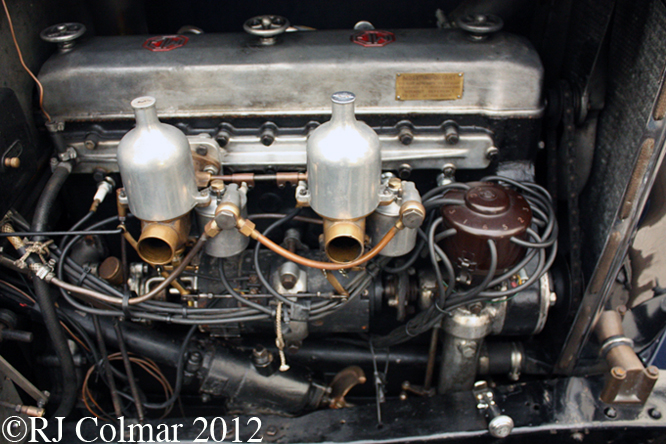
The twin carburetor six cylinder motor featured a four bearing crankshaft with a Duplex chain, see behind the radiator on the right, which drives the camshaft, distributor, water pump, oil pump and dynamo. The MG 80 hp rated six gave the 18/80 enough power to reach 100 mph. The motor seen here has been upgraded with a MK III cylinder head and ignition and drives through a Rover SD1 clutch in place of the original cork in oil unit.

MG 18/80 Mk II Prototype, Bristol Classic Car Show

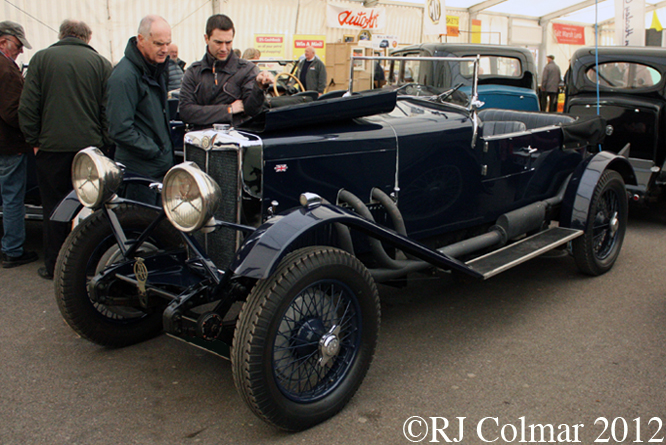
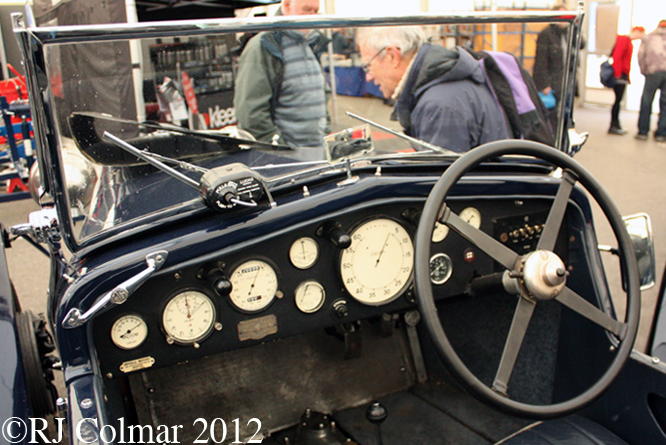
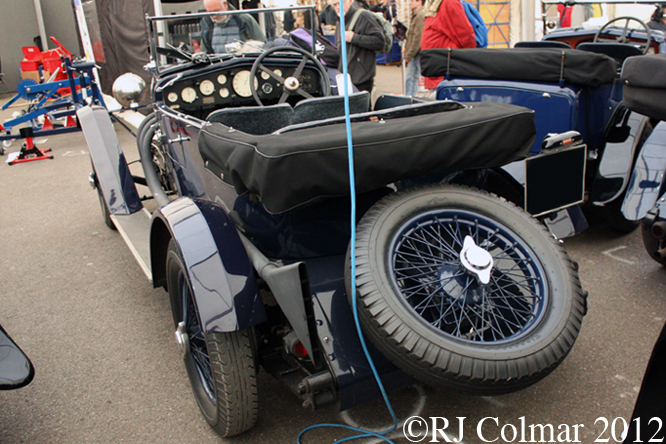
The 1929 chassis of the vehicle featured today was originally built as a prototype for the MK II saloon in 1929 however by the early 80’s the body was in such a poor state that it was replaced with a Mk III 18/100 ‘Tigress’ style body. Note the unique silver plated steering wheel boss from the original Mk II Prototype has been retained, but the dash and instrumentation are from a Mk III Tigress.

MG 18/80 Mk II Prototype, Bristol Classic Car Show

As a result of underwhelming track performance, only five ready to race Mk III ‘Tigress’ vehicles, styled after the contemporary Bentley competion models, were built in period.

Thanks for joining me on this “Silver Plated Steering Wheel Boss” edition of “Gettin’ a li’l psycho on tyres” I hope you will join me again tomorrow when I’ll be featuring a Techno DAF. Don’t forget to come back now !
Share

Buried And Covered In Concrete – MG 14/40 MK IV Sports

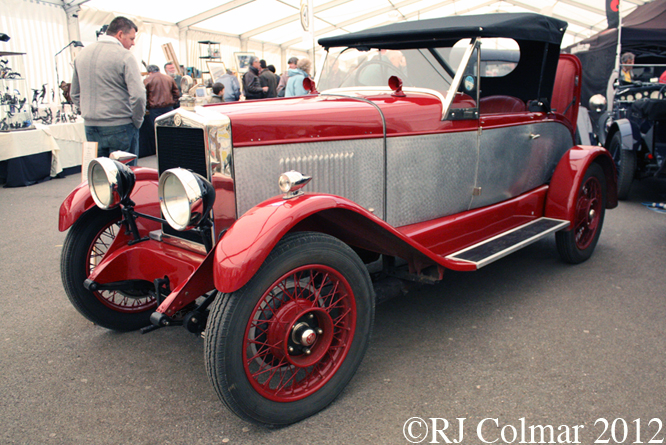
Towards 1927 production of MG’s moved to a new factory in Edmund Road, Oxford and production of the MG 14/40 MK IV commenced, with MG Car Company becoming a legal entity in 1928.

MG 14/40 Mk IV Sports, Bristol Classic Car Show

14/40’s were built around bare Morris Oxford chassis, unlike earlier MG’s that were built from completed frames that were striped and rebuilt to MG specifications, as the MG 14/28 had been but were now given MG chassis numbers, MG badges and motors, optimistically, estimated to produce 40hp.

MG 14/40 Mk IV Sports, Bristol Classic Car Show

MG publicity at the 1928, London, Motor Show mentions Land Speed Record Breaker Malcolm Campbell as an owner of a 14/40, a model which was struggling to sell at the time in part due to the age of the Oxford chassis and side valve motor underpinning the car.

MG 14/40 Mk IV Sports, Bristol Classic Car Show

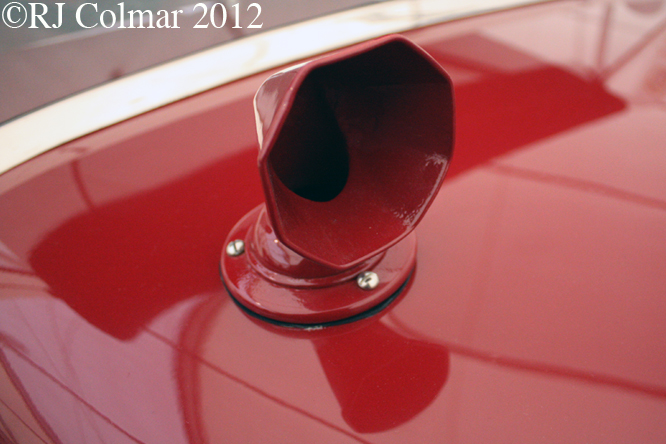
MG founder Cecil Kimber went to great lengths to differentiate his cars from their Morris inheritance before fitting MG bodies, his alleged obsession with octagons is said to have been frequently overdone.

MG 14/40 Mk IV Sports, Bristol Classic Car Show

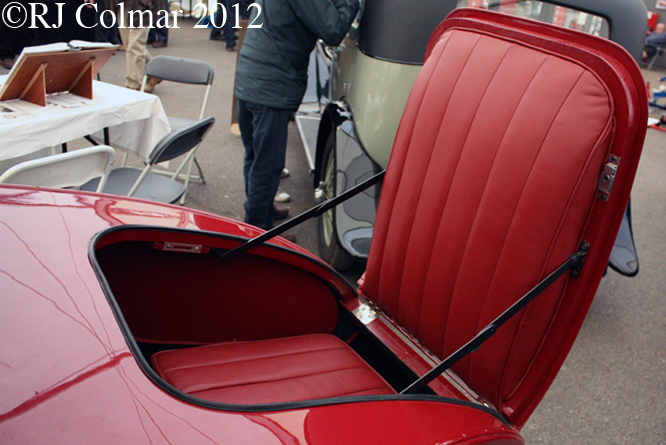
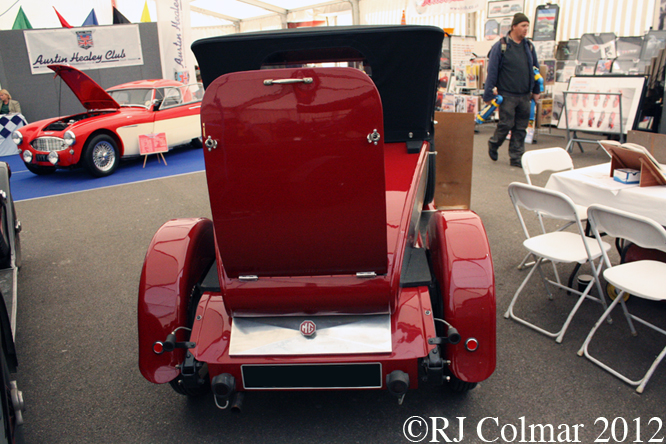
This Mk IV Sports is one of 135 such vehicles built in 1928 and the only survivor in the UK of a total of just four that are known to exist.

MG 14/40 Mk IV Sports, Bristol Classic Car Show

The winner of Best Vintage Car award at the Bristol Classic Car Show, where it is seen in these photo’s, has no history prior to 1999 when it was found beneath a ripped up concrete base of a shed in Gloucestershire.

MG 14/40 Mk IV Sports, Bristol Classic Car Show

The disassembled car was found carefully preserved beneath a further layer of gravel complete with it’s guarantee plate and original number plates apparently ready for it’s ground up restoration.

Thanks for joining me in this ‘Buried And Covered In Concrete’ edition of “Gettin’ a li’l psycho on tyres’ I hope you will join me again tomorrow when I’ll be going Dutch with a Daf. Don’t forget to come back now !
Share