Tag Archives: Buick

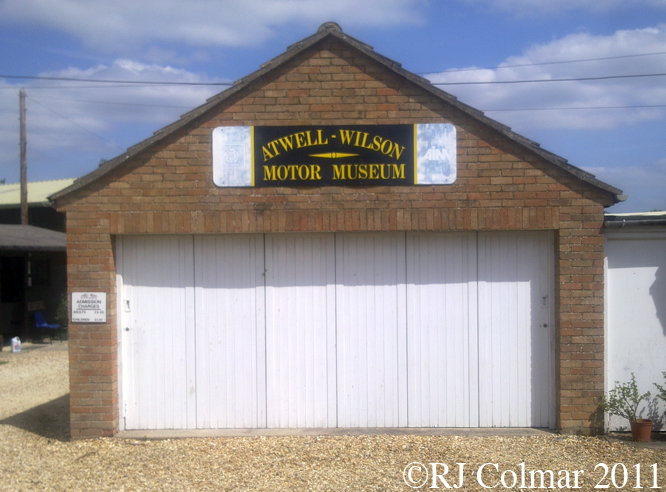
Off The M4 – Atwell Wilson Motor Museum

For several years now every month I have been making a trip up to London to go and see my folks, on the way back no matter what time of day I frequently find myself in a traffic jam some where around J18 on the M4 which could add anything up to an hour on my normal 2 hour journey time.

Atwell Wilson Motor Museum, Calne

About 18 months ago forewarned, by a big new electric message board on the M4, of an impending jam between Junction 18 and 20 I took a detour and followed the A338 from Junction 14 down to Upper Eddington and then followed the A4 west to Bristol.

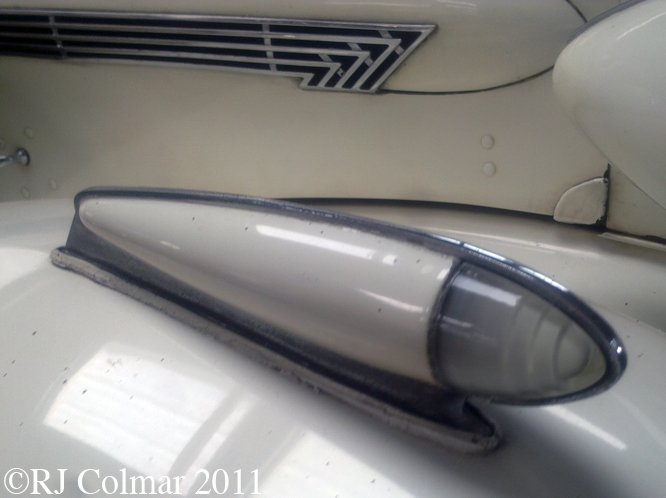
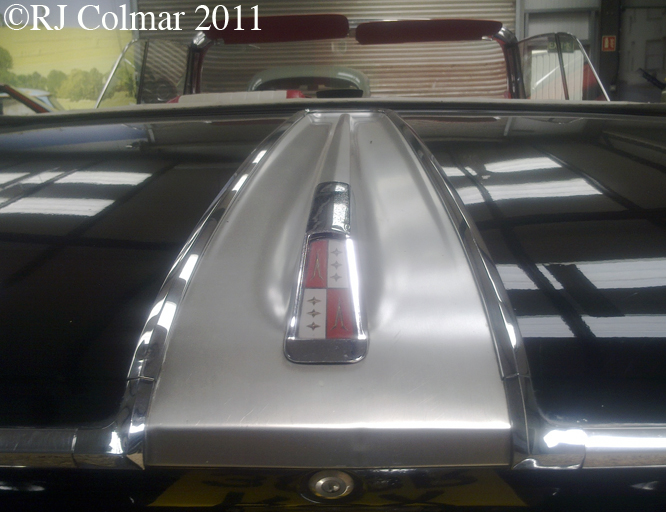
Buick, Atwell Wilson Motor Museum, Calne

Going through Calne I passed a sign for a Motor Museum, 18 months later with a little time on my hands I managed to follow the sign about a mile down Stockley Lane and on the left I found the Atwell Wilson Motor Museum.

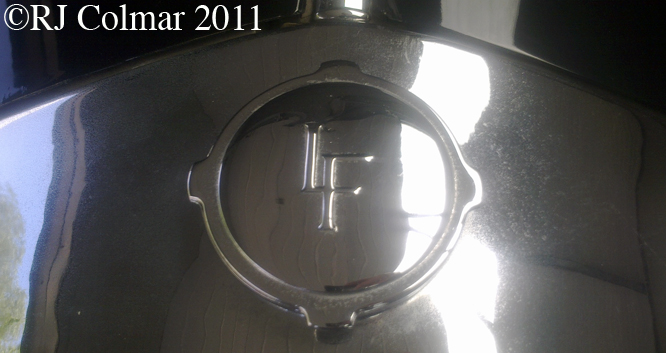
Lea Francis, Atwell Wilson Motor Museum, Calne

Entrance is an unbelievably low Β£5 and within were over 100 2, 3, 4 wheeled vehicles, and one soon to depart 6 wheel World War 2 AEC RAF Refuelling Tanker.

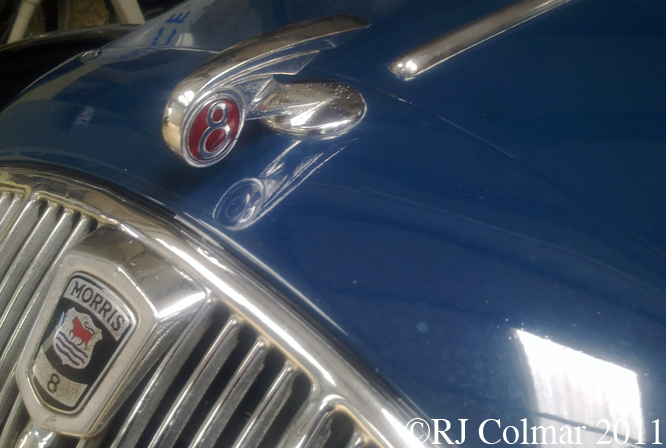
Morris 8, Atwell Wilson Motor Museum, Calne

The collection can broadly be divided into vintage and classic mass production vehicles with a particularly interesting collection of Limousines both British and American which are available at very reasonable rates for wedding hire.

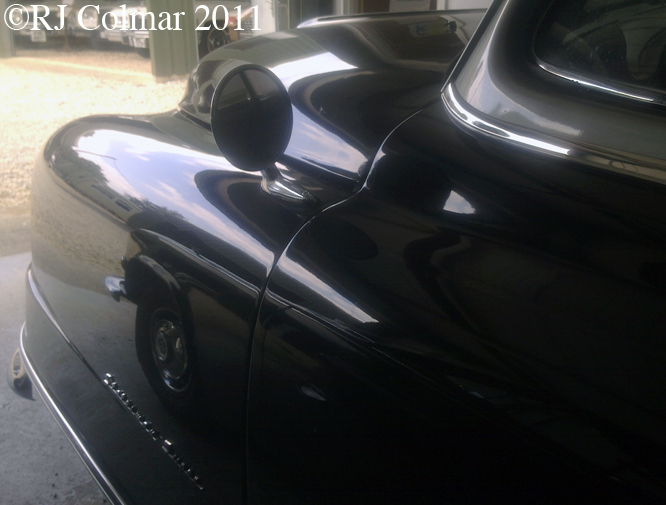
Nash Statesman Super, Atwell Wilson Motor Museum, Calne

The Atwell Wilson Museum was founded by Richard and Hasel Atwell, who lived in Wiltshire all of their lives, in 1962 they started collecting vehicles with a local connection and maintaining them in a road worthy condition. Richard passed away last year, the Museum that has grown out of the collection is run by 15 volunteers.

Plymouth Fury, Atwell Wilson Motor Museum, Calne

On the weekend of July 9th and 10th the museum will be hosting a classic car weekend, if you have a classic car, or even if you don’t but would like to attend call 01249 813119 or e-mail enquiries@atwellwilson.org.uk for details. I shall look forward to attending on one of the two days.

Thanks for popping by today’s Atwell – Wilson edition of ‘Gettin’ a lil’ psycho on tyres’, I hope you will join me again tomorrow for a closer look at the Atwell – Wilsons 1962 Plymouth Fury. Don’t for get to come back now !

Share

Stock Block – Thompson Buick/Chevrolet

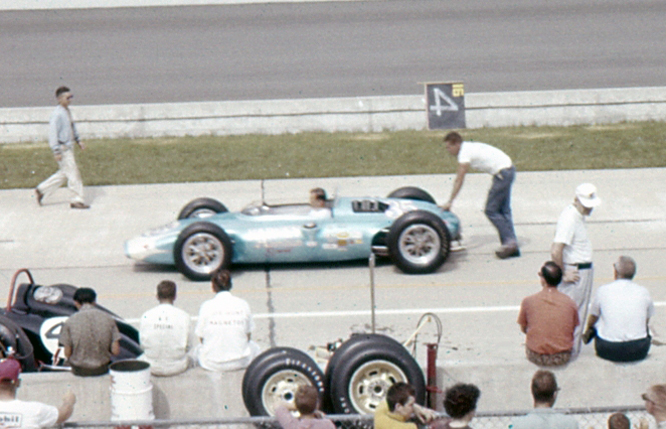
In 1961 legendary American speed king Mickey Thompson employed british Dolphin Engineering designer John Crosthwaite to design and build three challengers for the 1962 Indianapolis 500.

Aided by Fritz Voigt and his crew the challengers were transformed from blank sheet of paper into drawings and three complete cars in just 120 days.

Indy62 002s

(Photo by Ed Arnaudin)

Dan Gurney, possibly seen sitting in the vehicle above, had a lot riding on the 1962 Indy 500, at his own expense he invited Colin Chapman the genius behind Lotus Cars over to see the 1962 Indy 500 with a view to getting a deal done for Lotus to hook up with Ford and himself for a proper shot at the 500 in 1963.

Whatever else happened in 1962 Dan had to look good. Dan had originally agreed to drive the gas turbine powered #52 John Zink Trackburner, however the characteristics of the power plant did not sit comfortably with Dan who was racing on an oval for the first time, so he switched to drive Mickey Thompsons all aluminium Buick V8 stock block powered #34 Thompson instead.

Dan made a wise move, qualifying 8th and retiring with a seized rear end in 20th, the move looked doubly good for Dan when one of two drivers who drove the #52 John Zink Trackburner after Dan had left, veteran Bill Cheesbourg, followed Dan and drove the #35 Harvey Aluminium Special also a Thompson – Buick.

Cheesbourg like the previous incumbent Chuck Daigh failed to qualify the #35.

A third #33 Thompson Buick, belonging to Jim Kimberly, who the year earlier had owned and run the Kimberly Cooper Climax, was driven by Porky Rachwitz, Jack Fairman who both failed to qualify.

Indy63 001s

(Photo by Ed Arnaudin)

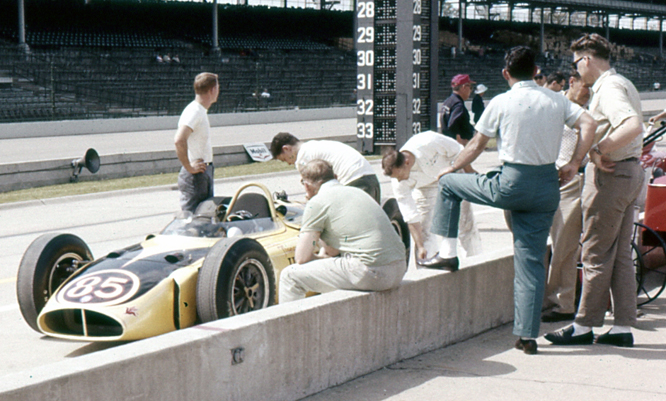
For 1963 Thompson took four cars to Indianapolis all now powered by Chevrolet stock blocks, the # 85 shown here with, possibly Micky Thompson standing on the extreme right behind the pit wall, is one of the original 1962 cars, driven in 1963 by Bill Cheesbourg until he wrecked the car in practice before qualifying had even started.

Cheesbourg who seems to have made a career out of driving novel designs at Indy failed to qualify a conventional #27 Watson for the race in 1963 while the #85 is not recorded as having taken any further part in the ’63 race after it was wrecked.

My thanks to Steve Arnaudin who kindly scanned his Dad’s photo’s for me to share and to Tom, FB84, Michael, Jim, EB, Amphicar, Tim and Tom G over at TNF who have helped me identify the cars and stories attached to them.

Hope you have enjoyed today’s Stock Block edition of ‘Gettin’ a lil psyco on tyres’ and that you will join me again tomorrow. Don’t forget to come back now !

Share

Myth & Skullduggery- 16b Marquette Buick

Today ‘Gettin’ a lil’ psycho on tyres’ will be starting a month long celebration of the 100th Anniversary of the first running of the Indianapolis 500.

Apart from tomorrow’s post, and the four Ferrari Friday posts, all blogs up until and including May the 29th will be about the Indy 500.

Combining Ed Arnaudin‘s and my own collection of photographs I hope to take you through a marginally less than random history of this extraordinary event.
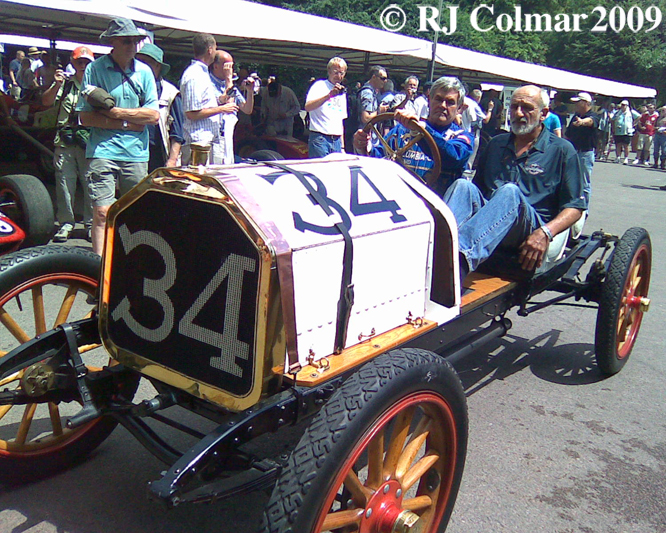
Image340sc

When I started reading up on this car a few hours ago all I knew about it was that according to the 2009 Goodwood Festival of Speed Guide was that it was a 4.8 litre 4 cylinder 293 cui Buick “thought to be the actual Buick that won the first race at Indy, driven by Louis Chevrolet on the four lap, 10 mile race”.

However I only had to check with the Wheels, Winter / Spring 1998 Journal of the National Automotive History Collection published by the Detroit Public Library to find that the winner of the first race at Indianapolis on Aug 19th was now well known automotive engineer Louis Schwitzer driving a four cylinder 212 cui Stoddard Dayton in a two lap 5 mile race.

Louis Schwitzer would become famous for designing the 1911 inaugural Indy 500 race winning engine for Marmon and later still for designing a variety of automotive pumps used in a wide variety of civil and military applications along with superchargers and latterly turbochargers as used by the, subject of a future blog in this series, 1952 Cummins Diesel.

Thanks to Gerry Godin’s ‘Buick City‘ blog I found the 16b Marquette Buick model name for today’s featured vehicle a wonderful photo of this vehicle on the Indy start line dated 1910 can also be seen on the blog.

Once armed with the model name I found out something about the myth of Buick winning the first automobile race at Indy dating back to at least the September – October 2002 Vol. 66, NO. 5 edition of Antique Automobile (Official Publication of the Antique Automobile Club of America, INC.) and the truth about some of the history of the #34 16b. Marquette Buick in an article by Terry B. Dunham which starts on page 29.

Terry asserts in paragraph 2 on page 43 of his article entitled ‘Something Wicked This Way Comes’ “The first races run at the Indianapolis Motor Speedway were held August 19th, 20th and 21st 1909, some two years before the first 500. Buick entered and won two of the three events, including the first race ever held at the track.”

Why Terry’s account in his otherwise excellent article should be at variance with the Journal of the National Automotive History Collection I cannot imagine but I believe the Journal of the National Automotive History Collection has got the story correct about Schweitzer winning the first automobile race at Indianapolis in 1909. May be someday Mr Dunham will chime in below. [EDIT See Post Script below]

So having cleared up a few myths here is what I do know about the 16b Marquette Buick seen here driven by 4 time Indianapolis 500 winner Al Unser Snr.

The origins of the 16b Marquette Buick can be traced to an accident in the 1908 Savannah Grand Prix which befell Fritz Erle after a tire on his, otherwise superior, overhead valve 11.7 litre 716 cui Benz threw a thread which knocked the unfortunate Erle unconscious causing him to loose control of the car which ended upside down on the side of the track.

This misfortune was all the opportunity Buick designer Walter Marr, who’s Buick stood no chance against the superior handling and power of the FIAT’s and Benz vehicles in Savanah that day, needed to inspect the superior suspension design of the Benz while it was upturned and commit the detail to memory.

Later Marr directed a Buick photographer to take photographs of the dismantled overhead valve Benz engine that was stripped down inside the Benz camp while it was left unattended. You can see photographs of this skullduggery on page 37 of Mr Dunham’s article.

Marr used this information to build three hot rods one of them, the one in the photograph, with a 5.2 litre / 318 cui 4 cylinder overhead valve racing engine and all three with chassis built by the Marquette Motor Company, part of the General Motors conglomerate.

These three hot rods were variously called regular model Buick 30 and then regular Buick 16 Roadster while they were actually ‘illegal’ racing specials with non production engines and chassis taking part in races designed for ‘stock’ vehicles.

The vehicle in the photograph above, entered as a Buick 30, is credited as the one driven by Louis Chevrolet to the most important of Buicks 166 (one hundred and sixty six) race victories during the 1909 season in The Cobe Trophy.

The race of attrition, held at Crown Point over 395 miles was won when Chevrolet running on only three cylinders thanks to a broken valve snatched a 65 second victory from a Locomobile which had been delayed by half an hour by magneto problems and beat an otherwise apparently healthy Knox.

By May 1910 the AAA got wise to the loose ways of Buick model naming policy and excluded the three Buick specials for not being ‘stock’ production vehicles.

An interesting foot note to the question of who won the first auto race at Indianapolis in 1909 is that in 1911 Louis Chevrolet turned up with a Marquette Buick for the first Indy 500 without a proper entry, despite being told to ‘sandbag’ go only as fast as necessary to qualify (around 75 mph) Louis foolishly went round at 93 mph.

The organisers of the race agreed to let Louis start on condition the owners of the other teams unanimously agreed to sign a waiver. Having blown every one into the weeds in qualifying three teams declined to sign one of them was Marmon who’s engine designer was Louis Schwitzer and who’s car went on to win the very first Indy 500, I wonder if there is some inter state rivalry between Indiana and Michigan afoot to explain the discrepancy in the answer as to who won the very first auto race at Indianapolis? [EDIT Turns out there is not see postscript]

My thanks to everyone mentioned in this blog for their contributions.

Hope you have enjoyed today’s extended history lesson edition of ‘Gettin’ a lil’ psycho on tyres’ and that you’ll join me and a very smart young lady tomorrow for a Birthday celebration. Don’t for get to come back now !

01 05 11 PS the mystery over who won the first race on the opening day at Indianapolis has been resolved thanks to Tim Murray at The Nostalgia Forum :-

Louis Schwitzer won the very first five mile race at Indianapolis aboard his Stoddart-Dayton.
A Buick was driven to victory in the 3rd 5 mile race.
Bob Burnham won the very first 250 mile ‘FEATURE’ race aboard his Buick !

Share

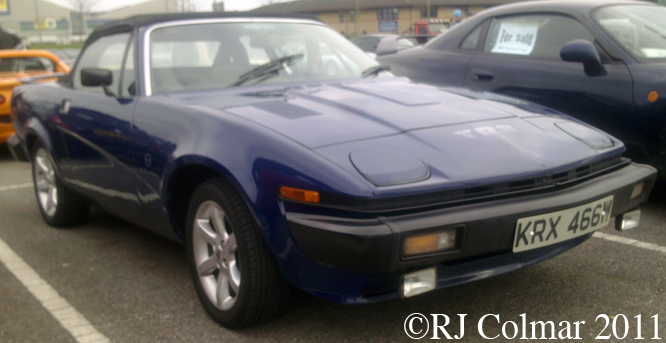
English Corvette – TR7 V8

01 Image2107sc

The prototype V8 powered Triumph TR7 variant was produced as early as 1972. The performance of the model led to these vehicles being dubbed English Corvettes in some circles.

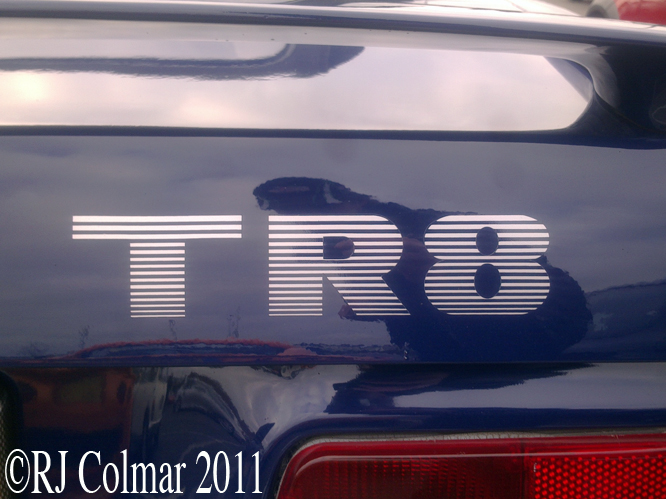
02 Image2108sc

The Triumph TR8 Coupe was in production from 1978 to 1980 the TR8 Drophead was designed by Michelotti and introduced in 1980 continuing in production until 1982.

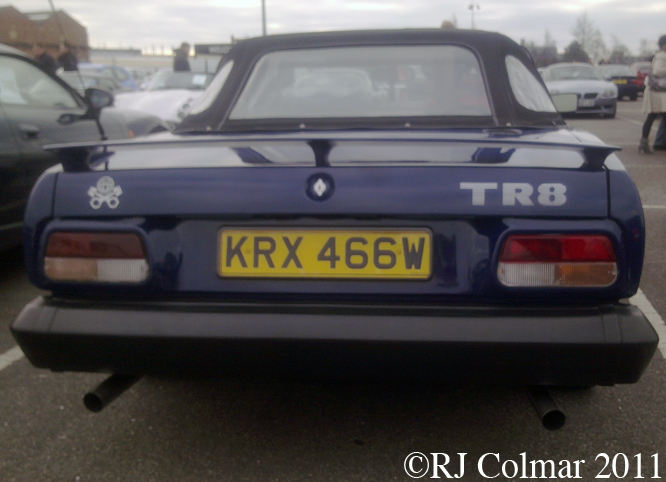
03 Image2106sc

As a result of poor labour relations and the inherent industrial action it is thought that only 400 TR8 Coupes were built along with an estimated 2400 Dropheads, the majority of which were sold in the United States and Canada.

04 Image2105sc

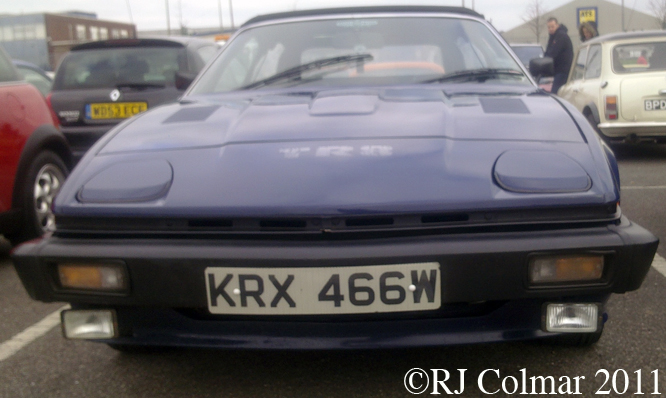
In other countries outside North America some TR7 owners upgraded their cars with variations of the all alloy Buick / Rover 3528cc / 215 cui V8. From the best records available to me this appears to be one such upgraded car.

My thanks to the Pistonhead who brought this TR7 V8 along to the Sunday Service at the BMW plant back in January.

Slightly off topic, why is it the only time ‘my’ driver ‘Happy’ Harvick wins a cup race I am too busy too catch it ?

Congratulations to Kevin, who is misquoted to give this blog it’s name, and the #29 Richard Childress Team πŸ™‚

Hope you have enjoyed today’s English Corvette edition of ‘Gettin’ a lil’ psycho on tyres’ and that you will join me again tomorrow. Don’t forget to come back now!

Share

Nailhead Power – Kurtis Buick 500X #3

Today’s photograph by Carlyle Blackwell was purchased by Ed Arnaudin back in the 1950’s.

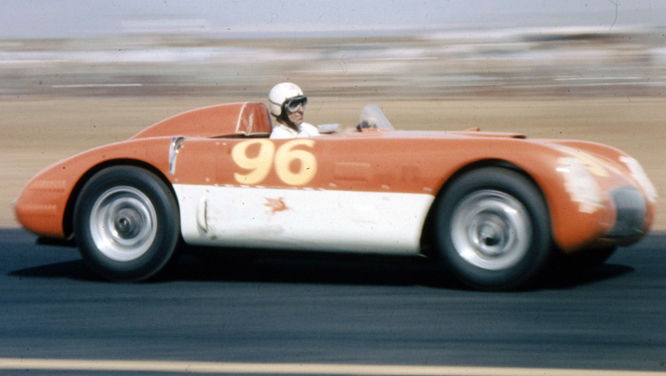
Kurtis Buick 500X, San Diego, Carlyle Blackwell

Photo Carlyle Blackwell, Publised Courtesy Blackwell Archive, for sales enquiry’s please e-mail infoATpsychoontyres.co.uk and your contact details will be forwarded to the Blackwell Archive.

Bill Murphy’s #96 Kurtis Buick 500X seen in this photo, probably at San Diego in July 1956 where Bill won two races, is thought to be the 3rd of 12 500X chassis designed by Kurtis – Kraft who were well known for building successful open wheelers for the Indianapolis 500.

With a 96″ wheelbase the 4120 chrome moly tube chassis of this model featured 4 bar torsion suspension and was a variation of the KK500C Indianapolis car covered in a hand formed aluminium body secured with Dzus fasteners.

The Kurtis was powered by a 5276 cc / 322 cui nailhead Buick V8 which is said to have produced between 300 (Bill Murphy) and 400 hp (Carol Shelby), this engine featured Hilbron fuel injection and was connected to a Jaguar 4 speed gearbox with the aid of Zidar adaptors.

The car was raced successfully by Bill Murphy from August 1955 to September 1957 during which time he scored 9 overall wins and 18 class wins. Murphy’s employee from his Buick Dealership the Indy Car driver Sam Hanks was asked to shake the car down before races and then acted as engineer and crew chief for Bill during the races.

This car is said to have sat on Bill Murphy’s lot until 1979 and resumed it’s winning ways in 1980, since then this vehicle has appeared at Pebble Beach, Murphy never took risks on the track and the car is thought to have survived to the present day in original condition with no more than a fresh lick of paint.

Bill Murphy born in Alaska, was a successful UCLA dropout who built a huge car dealership empire which included Desoto-Plymouth and what from 1962 – 1965 was known as the worlds largest Buick dealership in Culver City.

Bill who was over 40 years old when he raced the Kurtis, which thought was capable of over reaching speeds 180 mph, business partner Shelby reckoned that Bills Kurtis was more powerful than any contemporary Ferrari or Maserati.

My thanks to Ed and Steve Arnaudin for forwarding Carlyle Blackwells photograph and to R Shelby and Coneptcarz for details about Bill and the 500X.

Hope you have enjoyed today’s ‘nailhead’ edition of ‘Gettin’ a lil psycho on tyres’ and that you will join me again tomorrow. Don’t forget to come back now !

28 07 12 PS My thanks to Pamela Blackwell who has kindly retrospectively given me permission to post the photo’s her father took.

Share

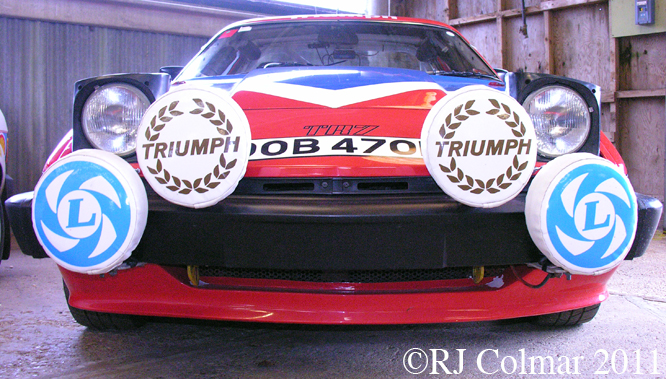
Replica Rallysprint – Triumph TR7

01 DSCN0175sc

The Triumph TR7 was manufactured from 1974 to 1981.

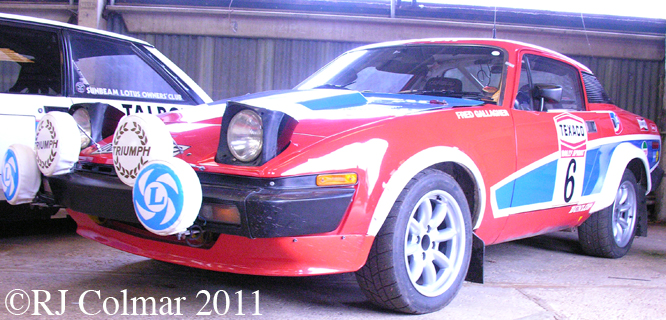
02 DSCN0176sc

Works competition versions of the TR7 run by British Leyland from 1976 to 1978 were initially powered by the Dolomite Sprint 16 valve engine and later switched to the ubiquitous (in the UK) aluminium Buick derived Rover V8.

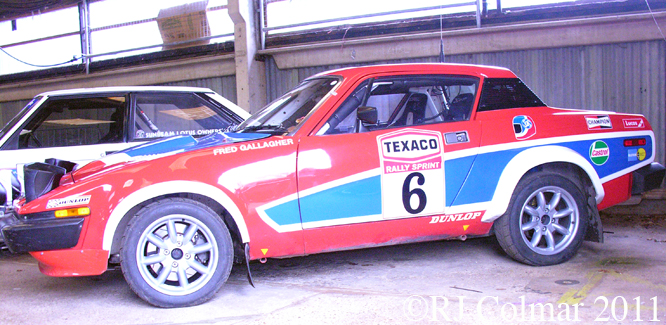
03 DSCN0177sc

This is vehicle has replica paintwork of a Triumph works rally car registered OOM512M which was used in the 1978 Texaco Rally Sprint a staged for TV event run at at Esgair Dafydd, in Wales, won by Per Eklund in a later Triumph TR7 with Tony Pond coming second in the #6.

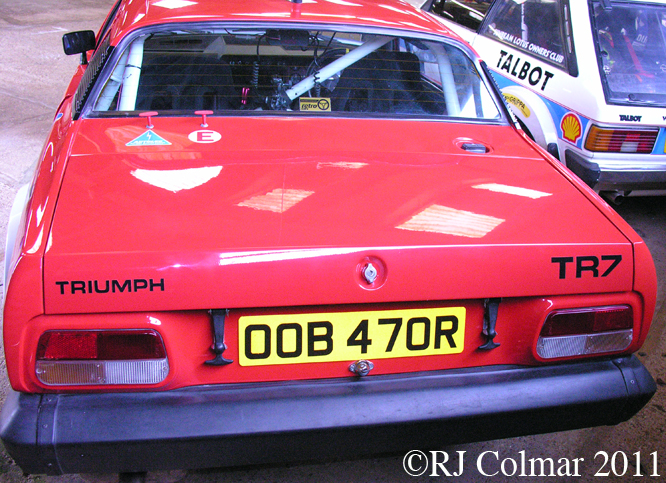
04 DSCN0178sc

If the registration plates on this particular are original then this TR7 was first registered in Birmingham in 1976 and it is fitted with the later Rover V8 engine according to the records made available to me.

My thanks to Tim Murray and RS2000 at The Nostalgia Forum for their help identifying the event in which OOM512M ran.

Hope you have enjoyed todays Rallysprint edition of ‘Gettin’ a lil’ psycho on tyres’ and that you will join me again tomorrow. Don’t forget to come back now !

Share