Tag Archives: Car

Celebrity Car – Ferrari 550 Maranello GTS

The 200 mph front engine rear gearbox 550 Maranello road model was introduced in 1996 with a 485 hp 5474 cc / 334 cui 4 valve quad cam V12 motor that could take the GT car from zero to 62 mph in 4.5 secs.
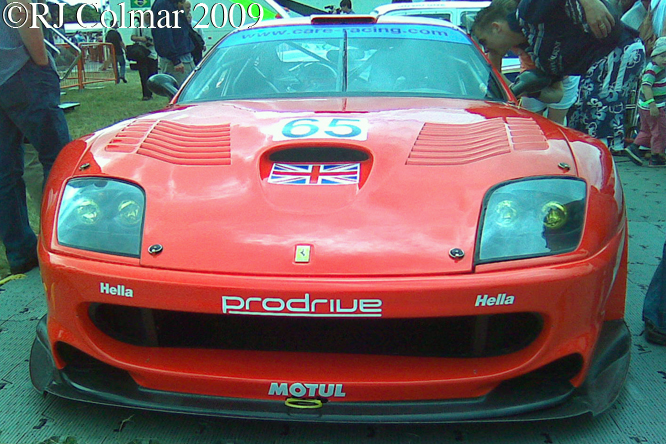
Ferrari 550 Maranello GTS, Goodwood Festival of Speed

Prodrive prepared a batch of 20 550 Maranello GTS’s for racing in Europe and the States where they were regular winners in the GT/GTS class in 2001.
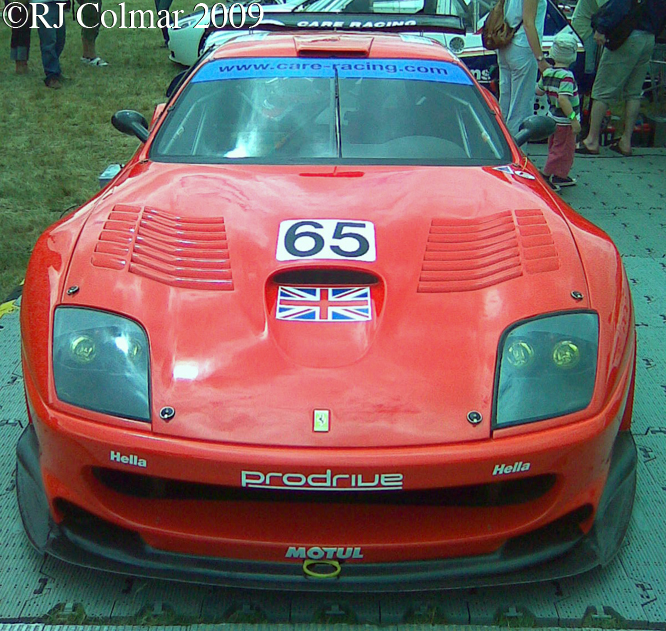
Ferrari 550 Maranello GTS, Goodwood Festival of Speed

In 2003 another Prodrive 550 Maranello GTS beat the Corvettes by 10 laps at the Le Mans 24 hour race coming home 10th overall.
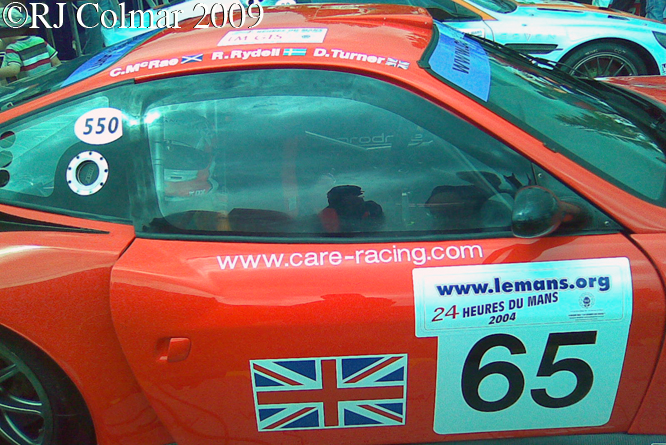
Ferrari 550 Maranello GTS, Goodwood Festival of Speed

This chassis has taken part in at least 42 Races in the GT/GTS class for at least four different teams from 2002 to 2006 it has never recorded an out right win but has scored several class wins.

In 2004 this chassis (Prodrive 03) driven by Darren Turner, Rickard Rydell and Colin McRae came in 9th overall at Le Mans but was beaten by two Corvettes which finished 16 and 5 laps ahead respectively.
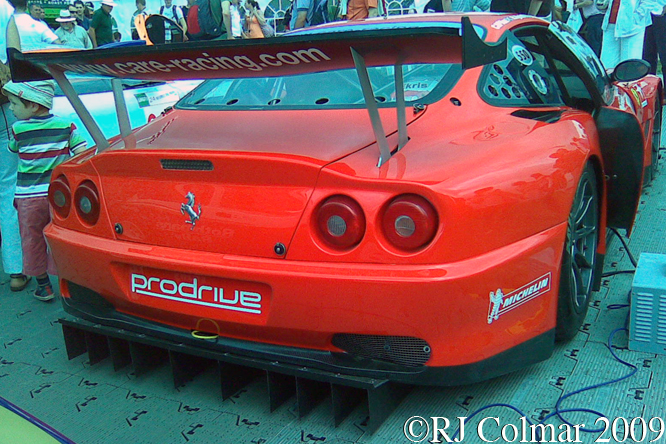
Ferrari 550 Maranello GTS, Goodwood Festival of Speed

Today’s featured Celebrity Car has been driven by a number of well known drivers including Colin McRae former World Rally Champion, Rickard Rydell former British Touring Car Champion, Alain Menu former British Touring Car Champion, Luc Alphand former World Cup Skiing Champion and Dakar winner, David Brabham, former Japanese GT Champion and Le Mans winner 2009, Jan Magnussen, former Danish Touring Car Champion, Danica Patrick queen of IRL and NASCAR, Darren Manning IRL driver, Christophe Bouchut 1993 Le Mans Winner, and one of my former racing instructors Tim Sugden former British and Asia Pacific GT Champion.

Thanks for joining me on today’s “Celebrity Car” edition of “Gettin’ a li’l psycho on tyres”, I hope you will join me again tomorrow, when I’ll be looking at a Formula One Lotus. Don’t forget to come back now !

Share

Heavy Weight Luxury – Ford Mustang Hardtop

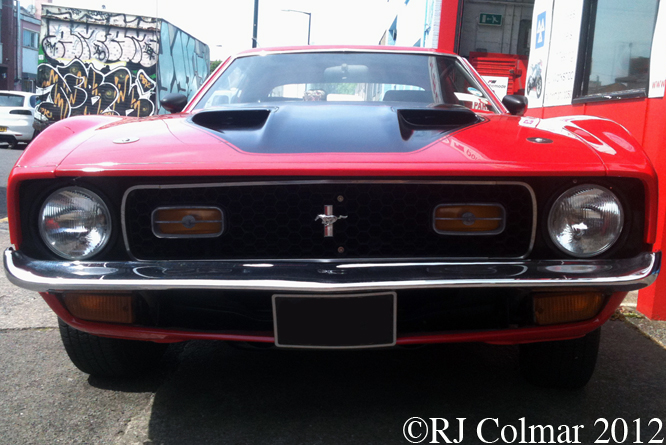
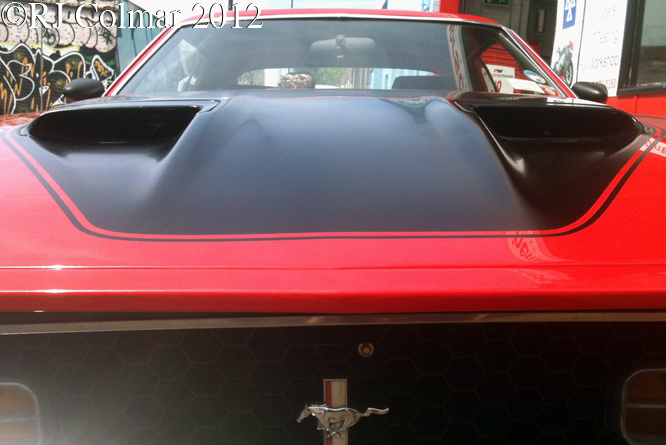
Within three years of it’s introduction sales of Ford’s “secretarial” pony car the Mustang had peaked at over 600,000 units per year and there after they fell sharply to level out at the 120,000 annual sales level.

Ford Mustang Hardtop, Bristol

For 1971 the Mustang grew in every dimension except height and gained 800 lbs, under the watchful eye Ford Design Product Manager Semon “Bunkie” Knudsen during his 19 month tenure in between jobs at General Motors and White Motor (Truck) Company. Knudsen is credited with pursuing luxury over the youth and performance culture at which the original Mustang had been targeted.

Ford Mustang Hardtop, Bristol

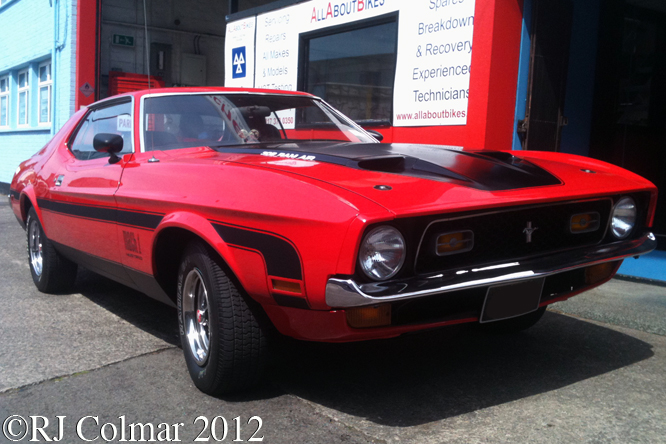
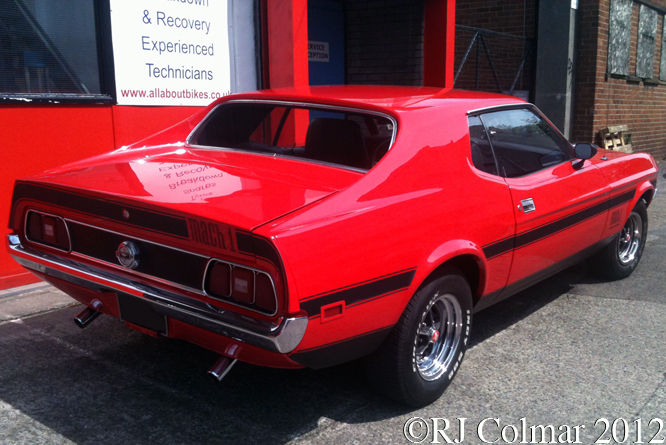
The ’71 Mustangs like the example seen here were 3 inches wider in both body and front and rear wheel tracks which when combined with the inherited height of the original made for a cramped cockpit.

Ford Mustang Hardtop, Bristol

However while the responsibility for the largest and heaviest Mustang of all time was the responsibility of Semon “Bunkie” Knudsen he was merely following the escalation derby that ended up with “option overkill” which saw $2500 vehicles loaded with options that doubled the value and profits of all of the contemporary vehicle manufacturers.

Ford Mustang Hardtop, Bristol

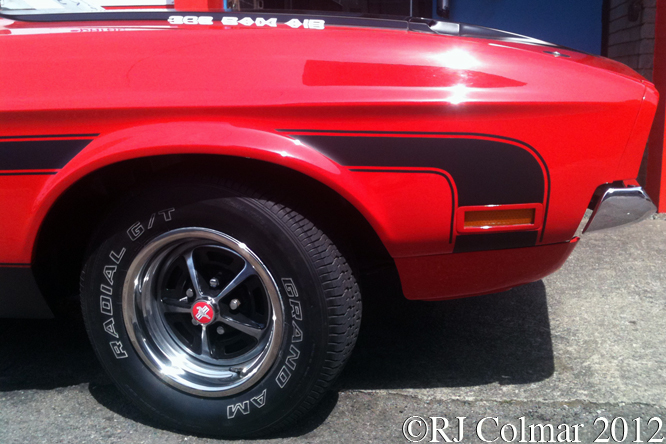
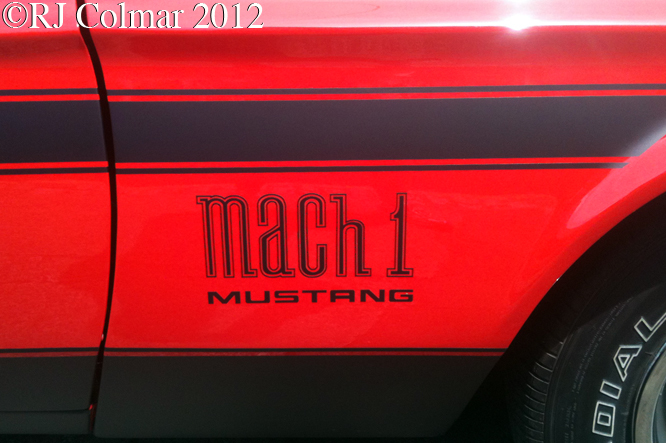
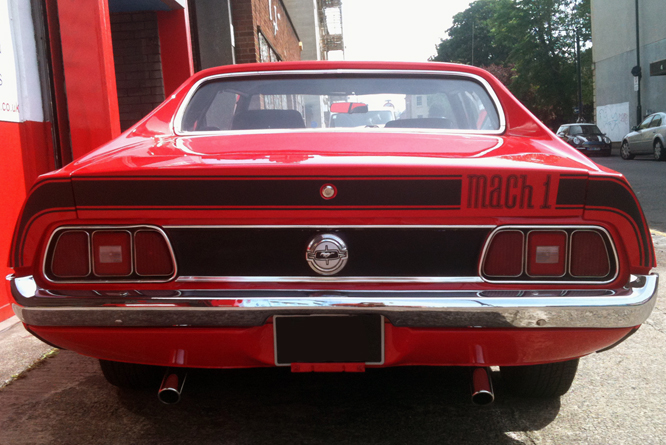
The Mustang Mach 1 performance option included the hockey stick stripes and Magnum 500 wheels, an all time favorite original equipment option.

Ford Mustang Hardtop, Bristol

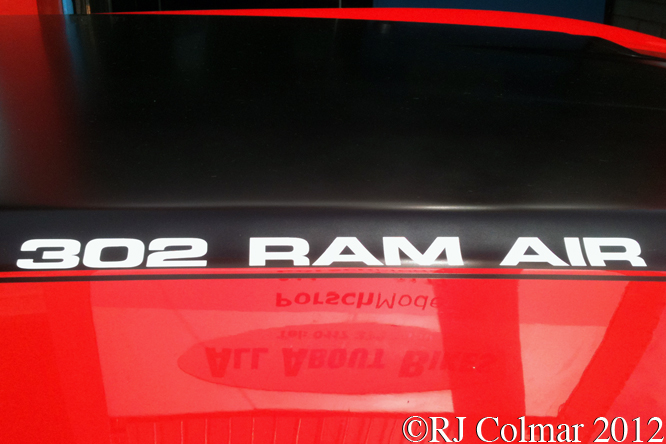
Part of the justification for the increase in size and weight of the ’71 Mustang was the 7 litre 375 hp Big block Super Cobra Jet 429 cui motor option which could easily be fitted into the engine bay without the costly modifications that had come about from stuffing mid size cars with full size motors, an activity that can be traced back at least as far as the 1964 Pontiac GTO and was dropped on Mustangs from 1972 on. The 5 litre / 302 cui Windsor V8 on this car would produce between 190 and 210 hp depending on the carburetor option chosen.

Ford Mustang Hardtop, Bristol

The Mach 1 name first appeared on a concept Levacar, which offered a Jetsons vision of the future, in 1960. The Mach 1 name first appeared on Mustangs built for the 1969 model year.

Ford Mustang Hardtop, Bristol

Several sources I have read while preparing today’s blog have emphasised that the Mach 1 package was only offered on sportsroof models.

Ford Mustang Hardtop, Bristol

There was a Sports Coupé version of the hard top offered in the Spring of 1971 which included the hockey stick stripes and a black roof without the Mach 1 lettering of which only 500 are thought to have been manufactured.

It is thought that 1971 Mustang sales figures broke down to 83,000 hard tops, 60,000 fastbacks and just 6000 convertibles.

Thanks for joining me on this Ford Mustang Hard Top edition of “Gettin’ a li’l psycho on tyres”, I hope you will join me again tomorrow for a celebrity edition of Ferrari Friday. Don’t forget to come back now !
Share

Cu Ghost – Rolls Royce Brockman 40/50

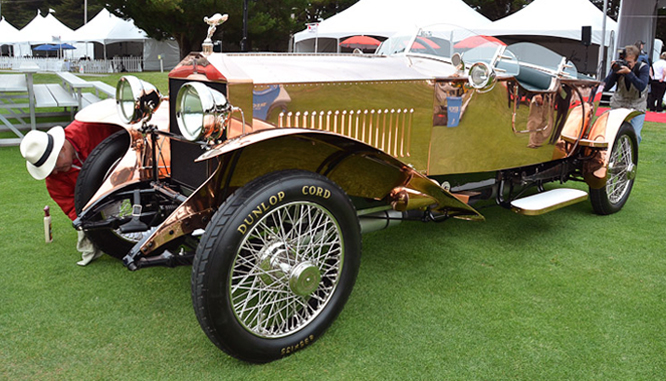
The Rolls Royce 40/50 launched in 1906, dubbed by Autocar the following year as “The best car in the world”, was only ever supplied as a chassis on to which a body would be individually crafted by an independent coach builders.

Rolls Royce Brockman 40/50, Hillsborough Concours d'Elegance

It is not known if, upon completion in Derby of today’s, today’s featured 1921 example was sent to a recommended Coachbuilder or straight to Dick Brockman and Company’s coach building works in Reading west of London.

Rolls Royce Brockman 40/50, Hillsborough Concours d'Elegance

The hand starter was merely a precaution on this chassis as electric lighting and starting was fitted to all 40/50’s from 1919 on.

Rolls Royce Brockman 40/50, Hillsborough Concours d'Elegance

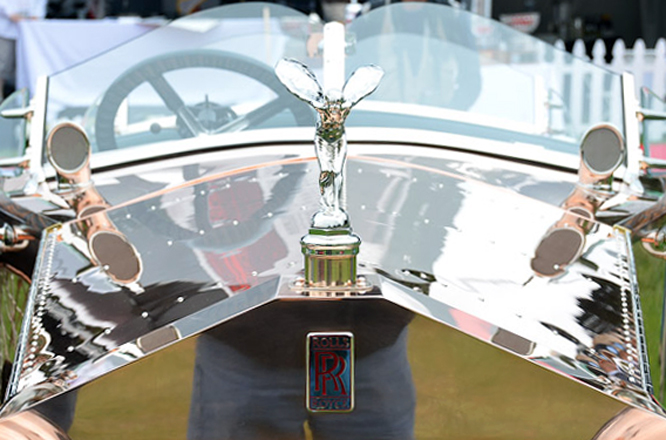
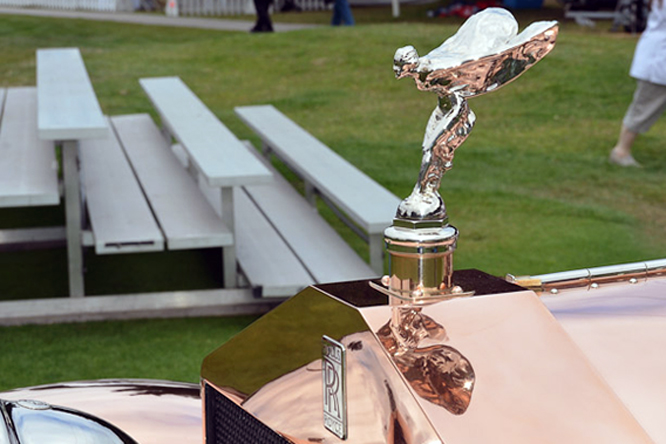
The Spirit of Ecstacy also known as “Ellie in her Nightie”, was originally sculpted by Charles Sykes and made of chrome alloy was not adopted as an option until 1911, by all accounts Henry Royce was not a fan of the mascot and only agreed to it being offered as an option to dissuade his customers from using less suitable ornamentation.

Rolls Royce Brockman 40/50, Hillsborough Concours d'Elegance

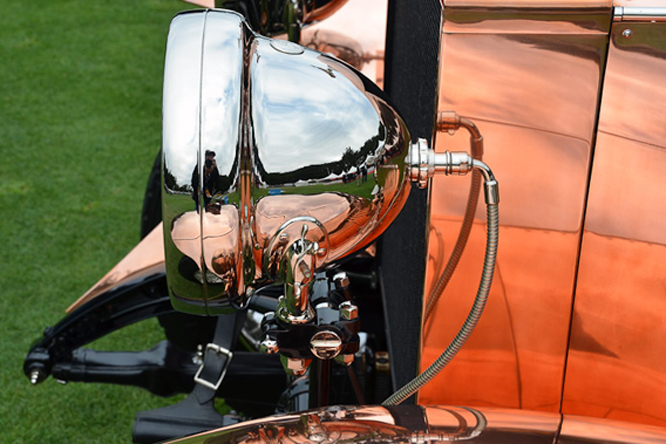
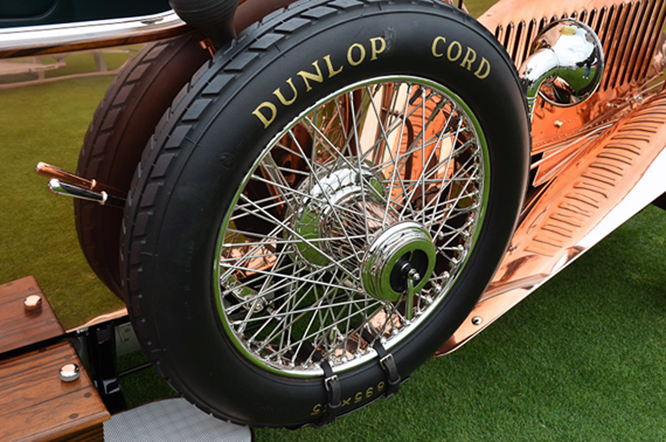
Up until 1915 shiny brass, and nickle fittings were quite common but after the Great 1914/18 War these items tended to be painted.

Rolls Royce Brockman 40/50, Hillsborough Concours d'Elegance

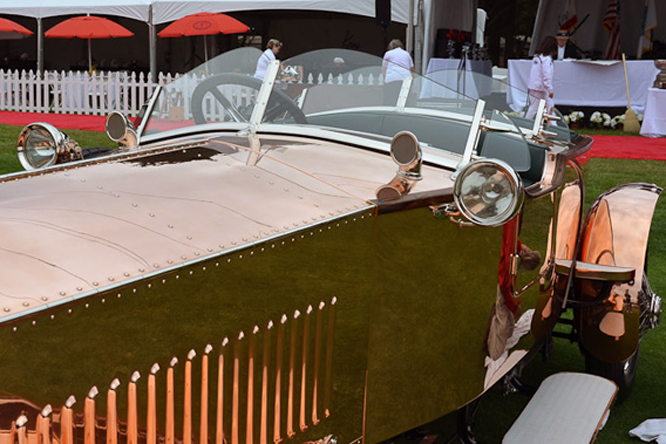
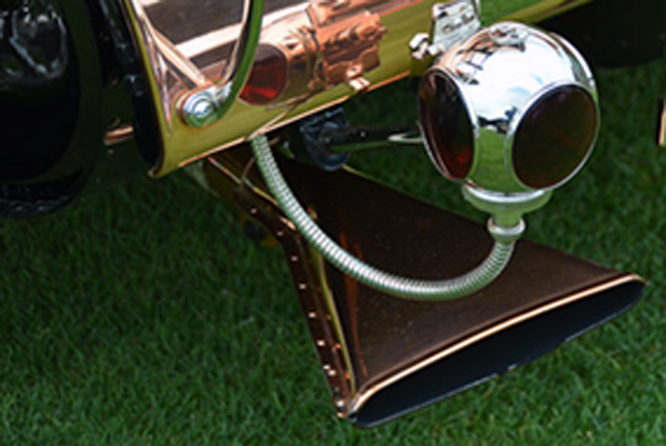
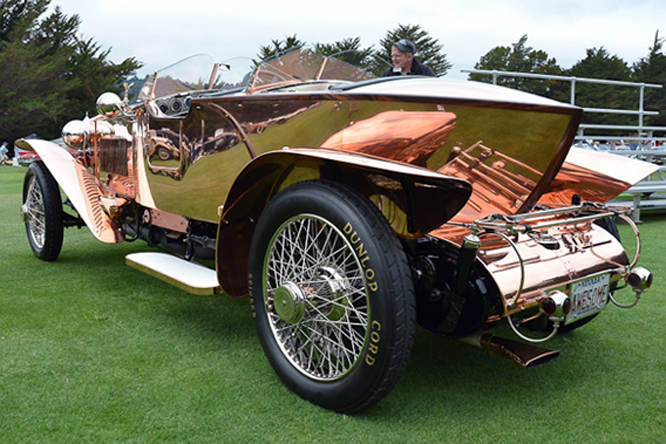
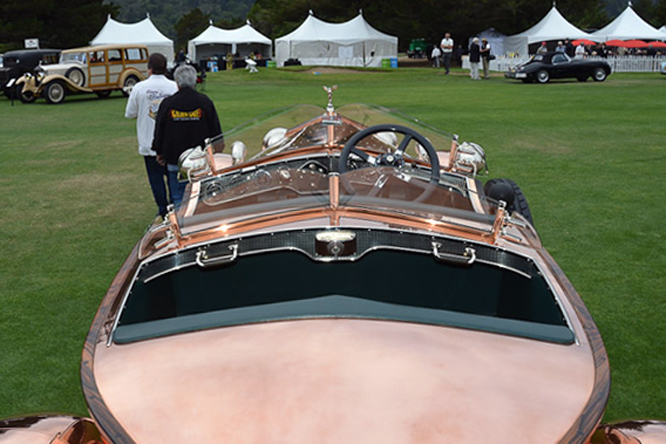
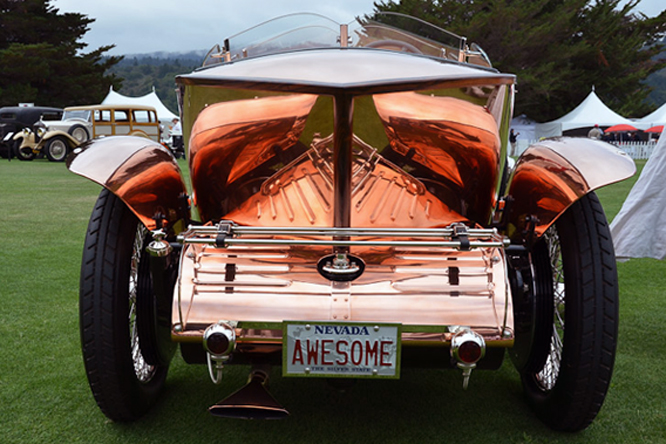
Using .065″ copper sheet Dick Brockman and Company appear to have manufactured the body of this vehicle without resorting to either welding or riveting which would have been common practice.

Rolls Royce Brockman 40/50, Hillsborough Concours d'Elegance

This car, photographed by Geoffrey Horton at Hillsborough Concours d’Elegance earlier this year, is powered by an 80 hp 7428 cc / 453 cui six cylinder motor connected to a 4 speed manual gearbox.

Rolls Royce Brockman 40/50, Hillsborough Concours d'Elegance

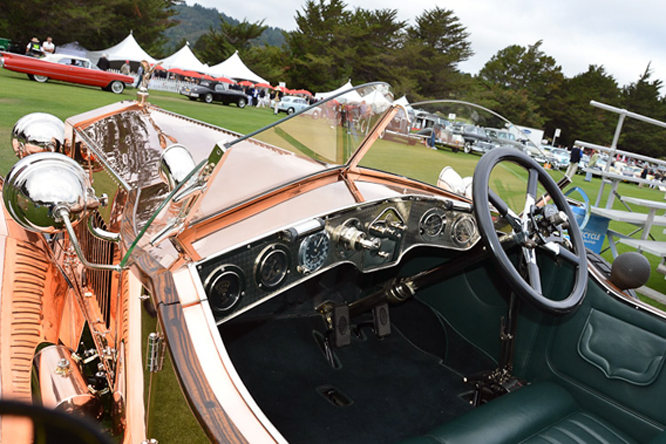
Restoration of the car included replacing the dash board, front and rear screens along with the rear cockpit.

Rolls Royce Brockman 40/50, Hillsborough Concours d'Elegance

Once the restoration was completed the car won the 1991 Concours d’Elegance at Pebble Beach.

Rolls Royce Brockman 40/50, Hillsborough Concours d'Elegance

Many of the fitting were supplied by the Restoration Supply Company, Reno who carried out the restoration.

Rolls Royce Brockman 40/50, Hillsborough Concours d'Elegance

Despite it’s age this vehicle apparently has no problem keeping up with today’s traffic at ‘modern speeds’ with the smooth and silent performance that established the reputation of Rolls Royce as the manufacturers of the finest cars in the world from the beginning.

Rolls Royce Brockman 40/50, Hillsborough Concours d'Elegance

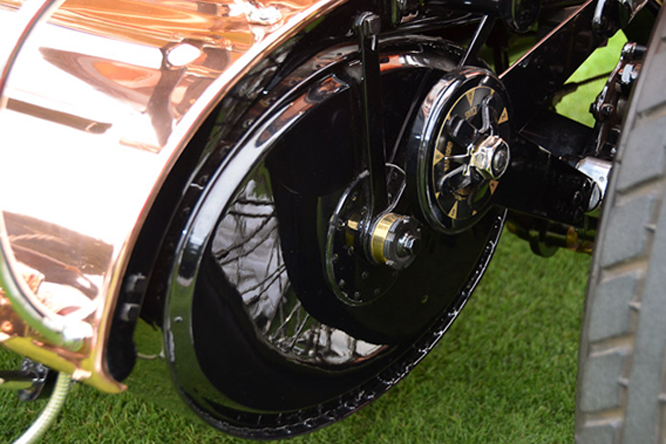
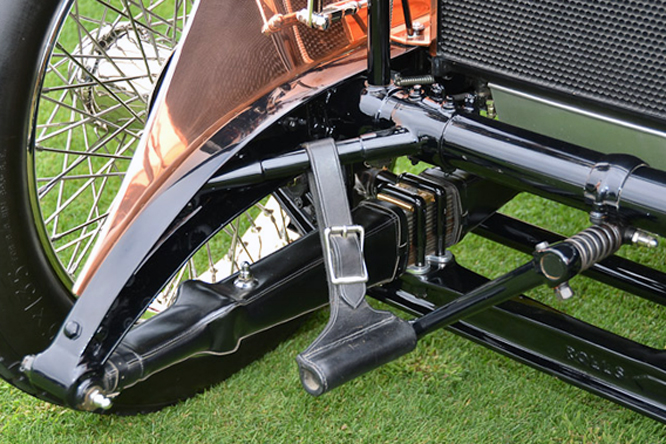
Friction dampers such as the one seen here were in common usage until the second half of the twentieth century when they were replaced with shock absorbing struts.

Rolls Royce Brockman 40/50, Hillsborough Concours d'Elegance

Opulent and refined this 40/50 represents the definition of what a hand crafted from nose to tail Rolls Royce should be, this car is regularly to be found in the National Automotive Museum in Reno.

Rolls Royce Brockman 40/50, Hillsborough Concours d'Elegance

Remarkably this is not the only copper bodied car by Dick Brockman and Company they were also responsible for building the body on a 1930 Rolls Royce Phantom II, Freestone & Wedd also built a copper bodied Rolls Royce on a pre owned 1937 Phantom III, other copper bodied cars include home made hand beaten 1920 Dodge now on view at the Southward Museum in Paraparaumu new Zealand. There are also two copper Cobra bodies one designed by Virgil M Exner in 1965 known as the Mercer Cobra, and the other a Kirkham Replica Cobra. Finally a supercharged rear engined Ford GT was fitted with a retro ’40’s copper hot rod body by Kirkham for the SEMA show in Las Vegas some years ago.

My thanks to Geoffrey Horton for sharing his photo’s of the Copper bodied Rolls Royce Brockman 40/50 copper Ghost.

Thanks for joining me on this “Cu Ghost” edition of “Gettin’ a li’l psycho on tyres” I hope you will join me again tomorrow. Don’t forget to come back now !
Share

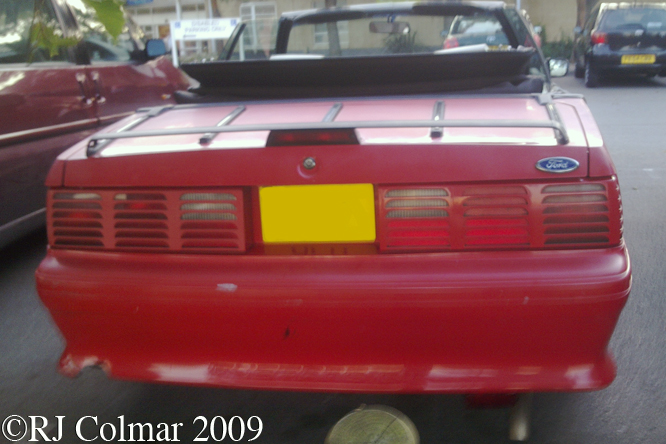
25th Anniversary Aero Airbag – Ford Mustang GT Convertible

They say beauty is in the eye of the beholder and the few owners of third generation Mustangs, built from ’79 – ’93, that I have spoken too always rave about them, no matter that in some eyes they share the aesthetics with a family pack of lard with no knobs on, you either love these cars or hate them.

Ford Mustang GT Convertible, Portishead

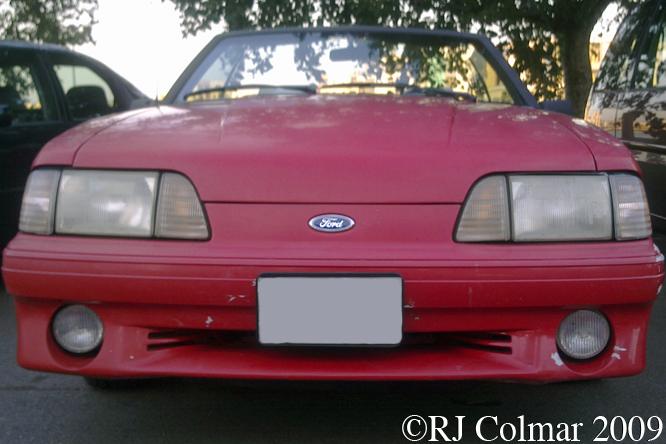
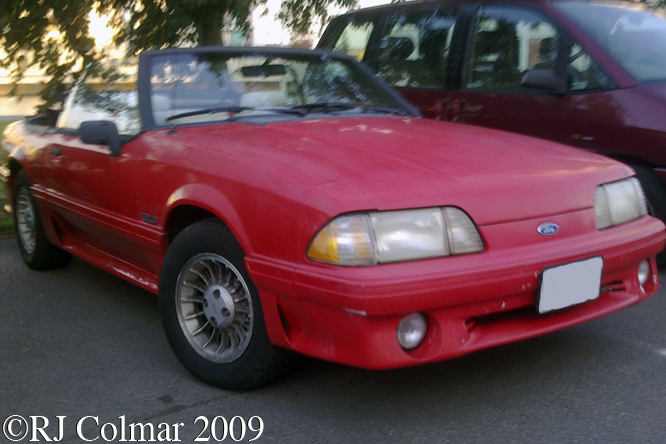
Based on the Ford’s mid size Fox platform, around which contemporary classics as the Ford Granada (US), LTD and Thunderbird, Mercury Cougar and Capri, Lincoln Versailles and Continental Mark VII were also built, the third generation Mustang GT is fitted with a 5 litre / 302 cui V8 produced 225 hp. In 1987 third generation Mustangs received an “aero” style face lift which replaced the earlier 4 eyes look.

Ford Mustang GT Convertible, Portishead

Handling was improved over the other vehicles built on the Fox platform with Fords Quadra Shock rear suspension though the handling still takes some getting used to and is best not sampled in the snow. For 1990 when today’s featured car was built drivers airbags became standard.

Ford Mustang GT Convertible, Portishead

A school friend of mine who used to work in the oil industry out in Houston Texas had one of these 25th Anniversary Mustangs from new and said that the cost of keeping it maintained aside, there was no car he has owned before or since that has given him so much pleasure as his Mustang GT being driven out of Houston on a balmy evening with the hood down and the air conditioning on.

Thanks for joining me on this 25th Anniversary Aero Airbag edition of “Gettin’ a li’l psycho on tyres”, I hope you will join me again tomorrow. Don’t forget to come back now !
Share

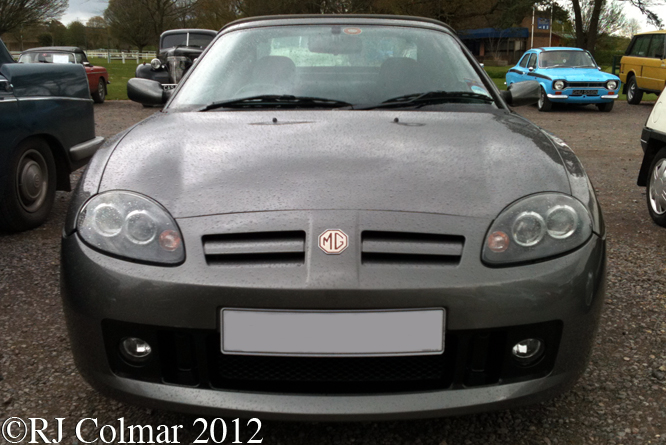
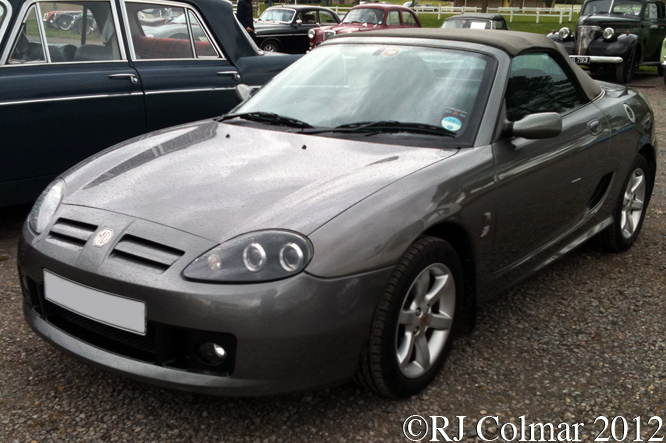
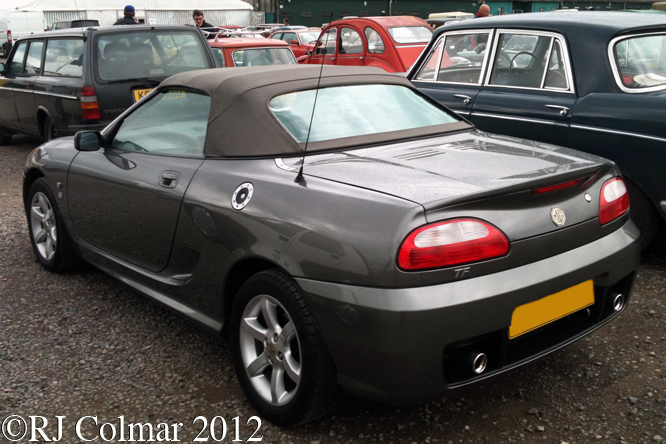
Last British 2 Seat MG – MG TF

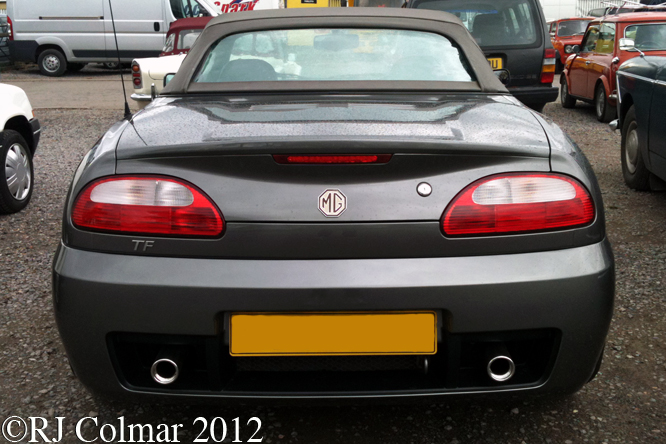
When MG Rover face lifted the mid engined MG F sports car in 2002 they gave it the same TF name as last seen on the 1955 MG TF Midget. Little did they know at the time that this would become the last new British 2 seat MG to reach market.

MG TF, Bristol Classic Car Show, Shepton Mallet

Many of the face lift details were carried over from the MG TF XPower 500 Concept Car first seen at Le Mans in 2001.

MG TF, Bristol Classic Car Show, Shepton Mallet

Despite it’s overall styling which dated back to 1995 the MG TF matched it’s rivals from Mazda (MX5) and Toyota (MR2) in handling, performance and held it’s own in the domestic sales league.

MG TF, Bristol Classic Car Show, Shepton Mallet

However the TF’s mid mounted Rover K series motor was subject to numerous head gasket failures until a new multi layered item was designed which cured this particular issue.

MG TF, Bristol Classic Car Show, Shepton Mallet

Production of MG TF’s ceased when Rover MG went bankrupt in 2005 but restarted in the UK from Chinese supplied Complete Kockdown Kits (CKD) in 2008 after new owners Nanjing had transferred all the TF production assets to China. 906 CKD TF’s were built before production ceased for good in 2011.

Thanks for this “Last British 2 Seat MG” edition of “Gettin’ a li’l psycho on tyres” I hope you will join me again tomorrow. Don’t forget to come back now !
Share

Not A Bolt On – Lotus Turbo Esprit Type 82

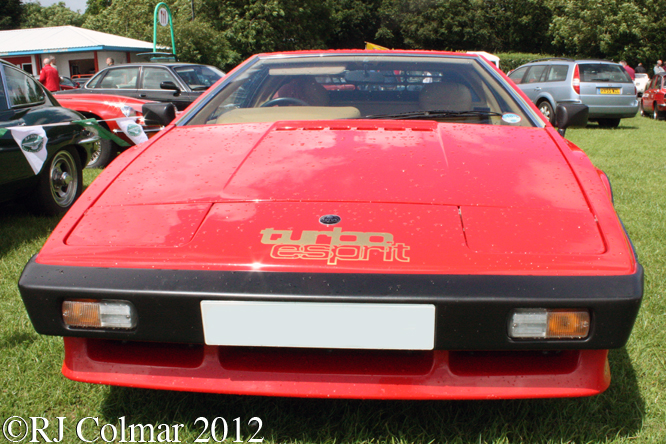
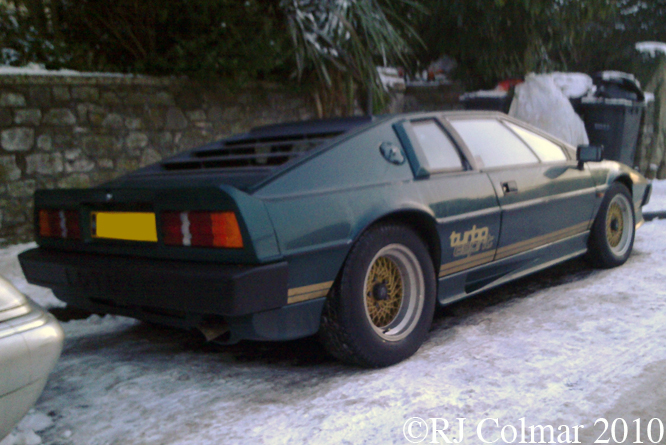
In 1979 Monaco based oil traders Essex Petrolium joined Martini as sponsors of the Team Lotus Formula One team, something that Martini were not too thrilled with as they decided not to pursue there sponsorship for a second year. For 1980 Essex became the teams primary sponsor which carried over into Lotus production car operations with the launch, at the Royal Albert Hall, of the Lotus Turbo Esprit as a limited edition Lotus Essex Turbo Esprit of which just 100 were built in 1980 and 1981.

Lotus Turbo Esprit, Classic and Sports Car Action Day , Castle Combe

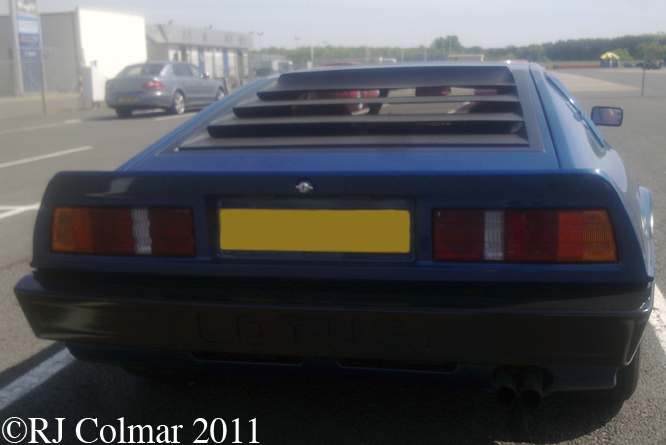
Unlike the single carburetor bolt on turbo that Lotus dealers Bell & Colvill had been offering customers since 1978 the official Lotus Turbo Esprit was a substantial upgrade of the normally aspirated Lotus Esprit Type 79, which included a new chassis with a wider engine bay, new front suspension derived from the latest Lotus Elite, new rear suspension and a new 210 hp type 910 development of the 4 cylinder Type 907 motor with twin carburetors and Garrett T3 Turbocharger.

Lotus Turbo Esprit, Silverstone Classic

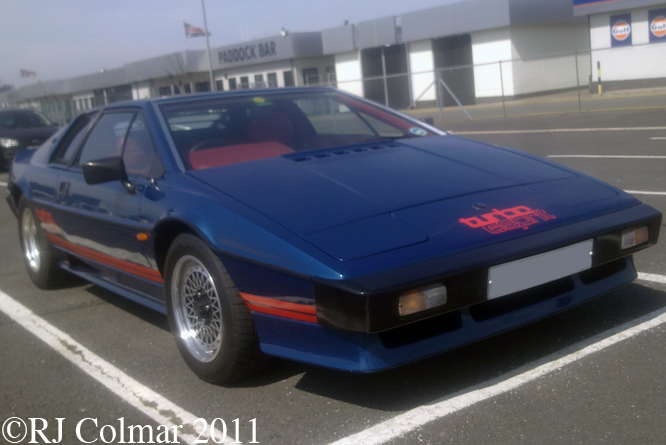
After the production run of 100 Lotus Essex Turbo Esprit’s had been completed a variation of the originals blue red and silver colour scheme was offered with red leather interior like the one seen above in the Paddock at Silverstone which features rare three piece Compomotive wheels as used by James Bond in the 1981 film “For Your Eyes Only“.

Lotus Turbo Esprit, Classic and Sports Car Action Day , Castle Combe

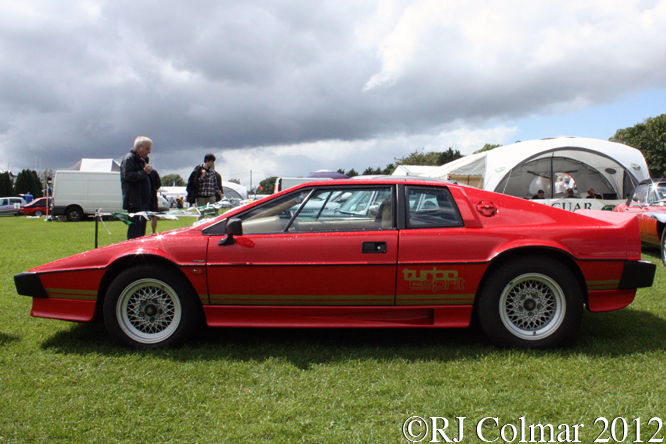
Most Turbo Esprit’s were supplied with one piece BBS wheels. The Turbo Esprit body work is differentiated from earlier Giorgetto Giugiaro designed Esprit body by the addition of a front below the bumper spoiler and side “skirts” with NACA air ducts for the engine bay.

Lotus Turbo Esprit, Bristol

The significance of the wider engine bay of the Turbo Esprit’s new chassis would not become clear until the launch of the V8 Esprit which although initially developed alongside it’s turbo sibling did not come to market until 1996 having been delayed by numerous other projects including Colin Chapman’s involvement with De Lorean.

Lotus Turbo Esprit, Silverstone Classic

Although well received by the press the Turbo Esprit failed to gain a substantial foot hold anticipated in the USA and the 846 examples built between 1980 and 1984 marked the beginning of a steady decline in the fortunes of Lotus Cars.

Thanks for joining me on this “Not A Bolt On” edition of “Gettin’ a li’l psycho on tyres” I hope you will join me again tomorrow. Don’t forget to come back now !
Share

Rare Spyder – Ferrari 365 California Spyder #9985

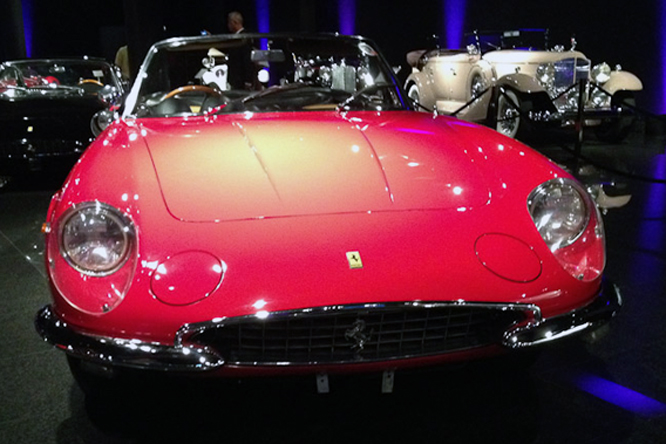
At the 1966 Geneva Motor Show Ferrari revealed two new models the Ferrari 330 GTC and today’s featured car, thanks to Geoffrey Horton’s photographs, the Ferrari 365 California Spyder of which just 14 would be built.

Ferrari 365 California, Danville Concours d'Elegance

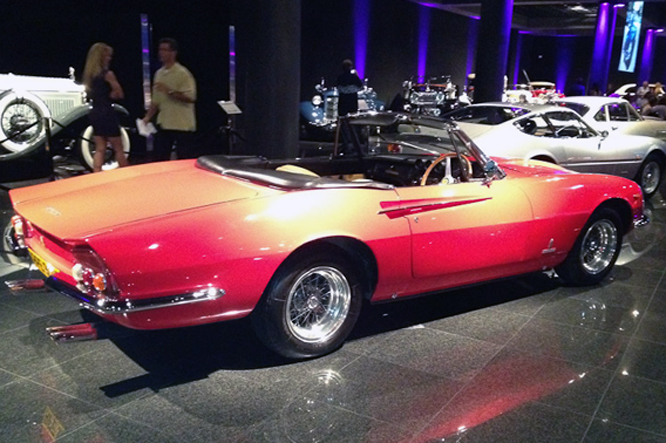
The 365 California Spyder is fitted with a 320 hp 4.4 litre / 268 cui V12 which is fitted to a 5 speed synchromesh gearbox and is covered by Pininfarina coachwork which features a split front bumper as first seen on the 500 Superfast Coupé and rear vents behind the front doors which would become a feature of the mid-engined Dino 246.

Ferrari 365 California, Danville Concours d'Elegance

Being equipped with Right Hand Drive this car is easy to identify as chassis #9985, the 10 th of the 14 built and the only one to be so equipped. The expired rear UK plate RPE 909 E which was registered to Mark Tippets when he owned the car in 1986 is also a bit of a give away.

#9985 was sold to Paul Kay in June 1967 painted Blue Sera with a biege interior over the next two years the car had 3 further owners with the registration changing from “NJD 8E”, “L11” to “MNV258E” before Mark Tippets ownership. Since then the car was seen with the number “2UAE” from July 1986 to July 1990, a number still available to the owner if the car ever returns to the UK.

The car was first painted red during a restoration carried out in Florida between 1983 and 1985.

My thanks to Geoffrey Horton for his photographs of this rare and magnificent vehicle.

Thanks for joining me on this “Rare Spyder” edition of “Gettin’ a li’l psycho on tyres” I hope you will join me again tomorrow. Don’t forget to come back now !
Share