Tag Archives: Car

From the Good Guys In White Hats – Dodge Charger

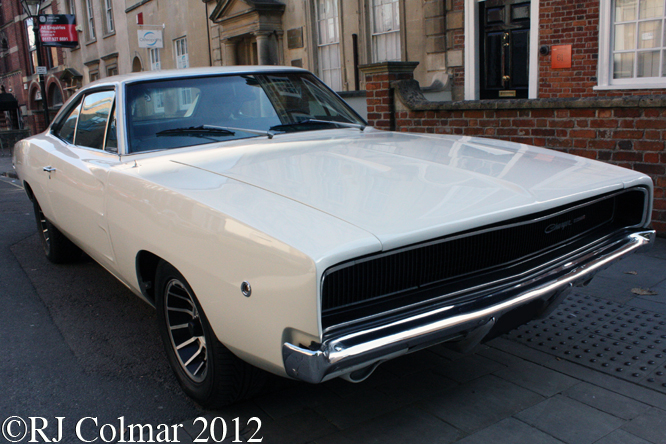
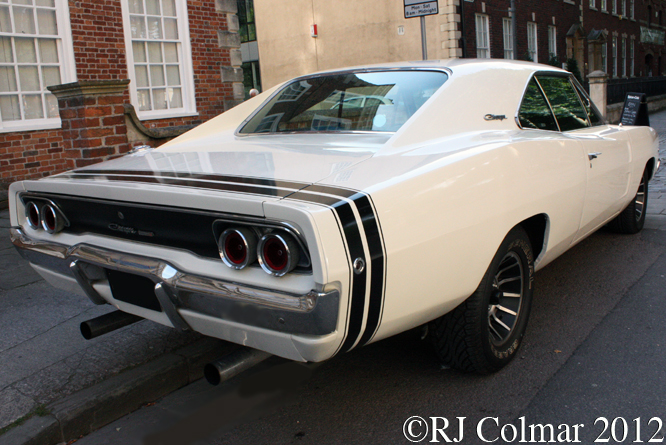
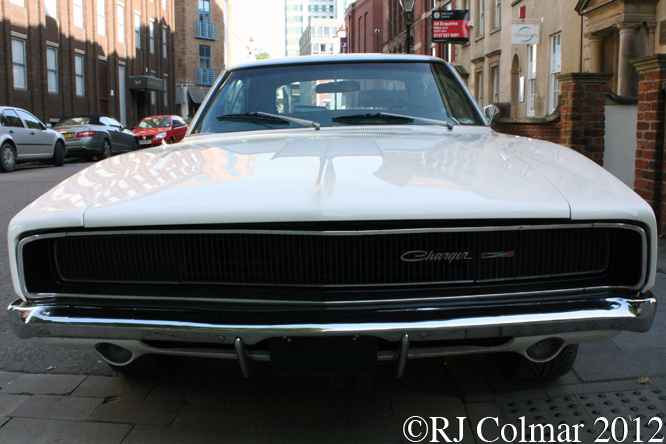
The second generation Dodge Charger was launched in 1968 with a commercial cartoon urging customers to visit “those great Dodge boys they’re the good guys in white hats.”

Dodge Charger, Avenue Drivers Club, Bristol

The new body was designed by a team that included Richard Sias who was responsible for the overall profile.

Dodge Charger, Avenue Drivers Club, Bristol

Engine options included a standard 5.2 litre / 318 cui V8 a 3.7 litre / 225 cui straight six, a 7 litre / 426 cui Hemi or a 7.2 litre / 440 cui Magnum was available for the top of the range R/T versions. This particular car appears to be powered by a 6.3 litre V8 which was available with either 290 hp 2 barrel carburetor or 330 hp 4 barrel carburetor variations.

Dodge Charger, Avenue Drivers Club, Bristol

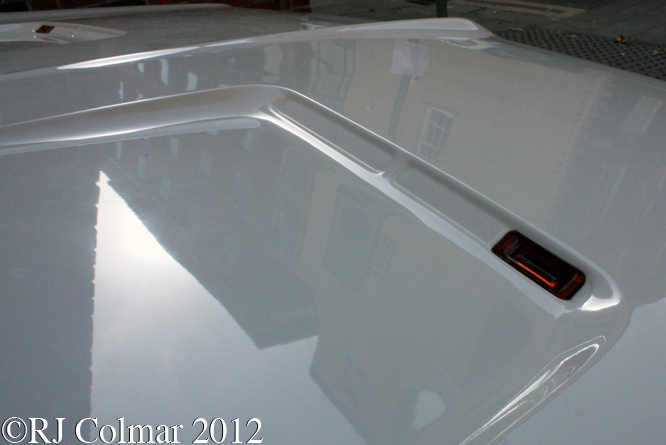
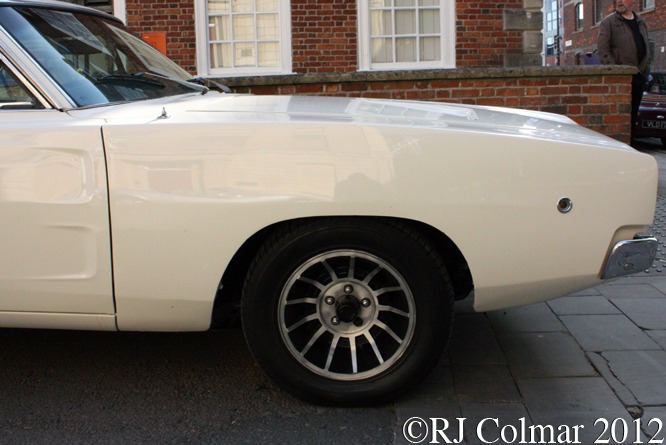
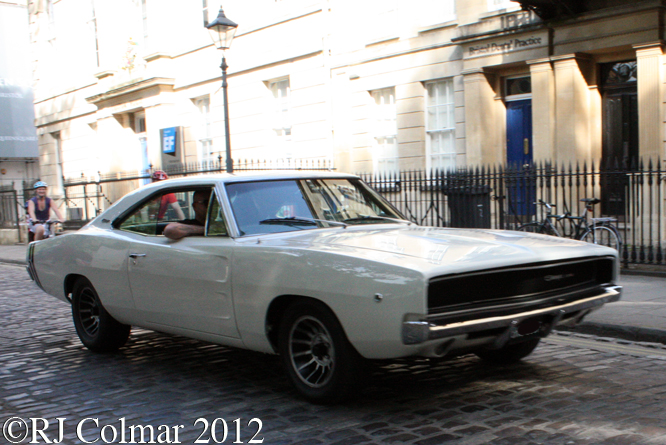
The dual scallops on the bonnet / hood

Dodge Charger, Avenue Drivers Club, Bristol

and front doors added to the performance “Lets stir things up a bit” appearance of the car despite there complete non mechanical or aerodynamic functionality.

Dodge Charger, Avenue Drivers Club, Bristol

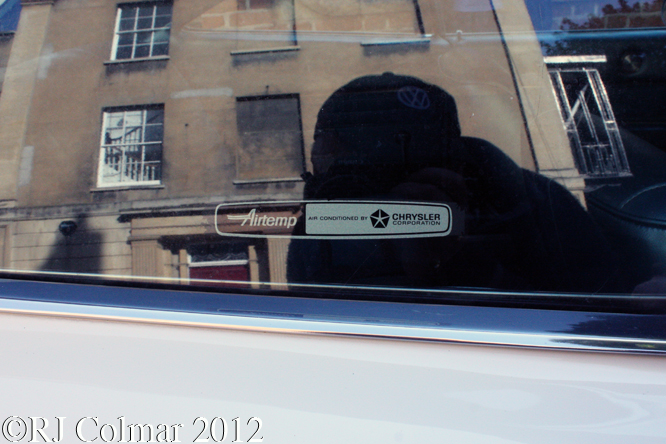
Among the options for the Charger was air conditioning, cruise control, electric door locks, tachometer, rear window demister, and a wood-grain steering wheel.

Dodge Charger, Avenue Drivers Club, Bristol

Safety options included head restraints for the front seats, lap belts for center seat passengers, shoulder belts front and rear and a padded steering wheel.

Dodge Charger, Avenue Drivers Club, Bristol

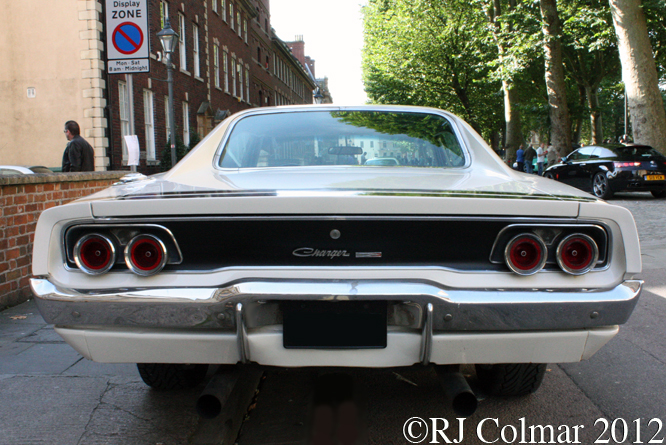
The integrated rear spoiler mimicking aerodynamic devices seen on Can Am and sports car racers of the period further enhanced the competition bred appearance of the Charger, the paired round rear lights were added at the suggestion of Styling Vice President, Elwood P. Engel.

Dodge Charger, Avenue Drivers Club, Bristol

Around 96,100 Chargers were built in the 1968 model year, 75% of which were fitted with factory option Vinyl roofs. 17,000 top of the range R/T Chargers were built of which just 500 were fitted with the fabled 426 Hemi.

Dodge Charger, Avenue Drivers Club, Bristol

The ’68 Charger, which share the same platform with the Dodge Coronet, is probably most famous for it’s movie appearance in Bullitt, which features a couple of hit men in a black Charger R/T dualing for tarmac with Steve McQueen driving his green Mustang GT. By all accounts the R/T was the superior machine.

Thanks for joining me on this “From the Good Guys In White Hats” edition of “Gettin’ a li’l psycho on tyres”, I hope you’ll join me again for Ferrari Friday tomorrow. Don’t forget to come back now !

Share

Improving The Breed ? – Lotus Elite Type 75

A couple of weeks ago I went to a Q&A session hosted by the voice of British motor sport Murray Walker with Formula One designers Frank Dernie and Niel Oatley, one of the questions was about the carry over of Formula One technology to road car production and both vigorously nodded in the negative. However that does not mean if you win on Sunday you will not sell on Monday anymore than winning on Sunday will guarantee selling on Monday either. If there is any benefit to manufacturers racing on Sunday it is in the commodity of Brand awareness. Similarly by the 1970’s road car manufacturers like Lotus and Ferrari had found that road car manufacture was never going to meet all the expenses of racing in the sports top table, though Enzo Ferrari did his best to keep the toothpaste manufacturers off his cars for as long as possible while Colin Chapman bit the commercial sponsorship bullet at the earliest opportunity in 1968.

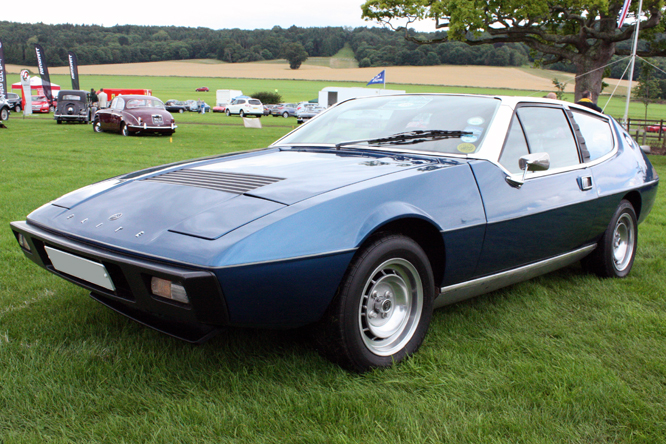
Lotus Elite Type 75, Classics at the Castle, Sherbourne

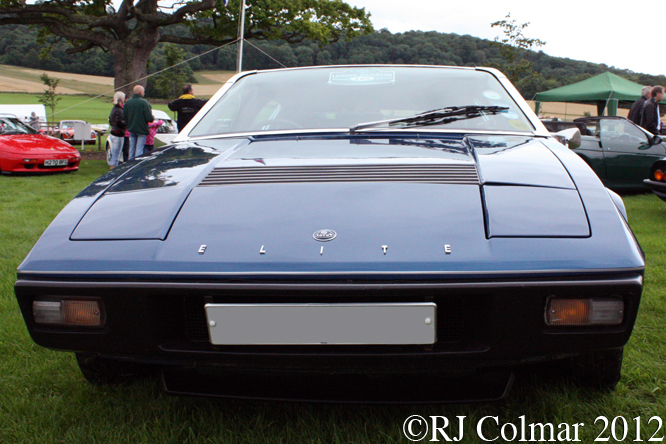
Either way in 1974 Lotus launched it’s new 2+2 Lotus Elite, it is not recorded how or if Ronnie Peterson’s three wins in the ageing Lotus 72 during 1974 aided sales or not. The 907 aluminium bloc motor for the new car was partly developed on the track by the noisy 1969 Lotus 62 sports car which I looked at a couple of months ago.

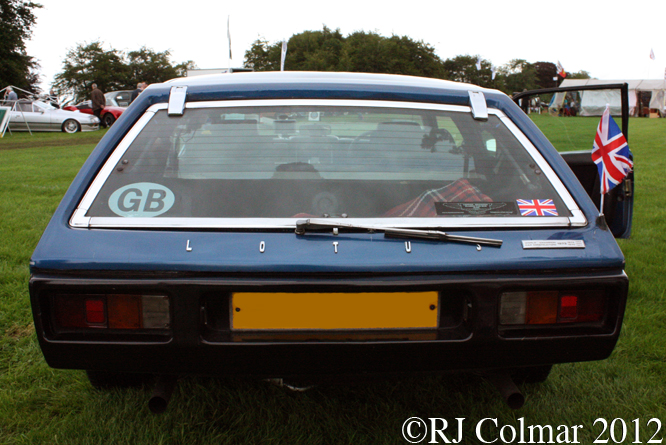
Lotus Elite Type 75, Classics at the Castle, Sherbourne

The chassis of the Type 75 Elite was the latest development of the back bone type first seen in the Lotus Elan in 1962 with independent suspension front and rear.

Lotus Elite Type 75, Classics at the Castle, Sherbourne

The only time I have come close to speaking to Mario Andretti was in 1979 while I was ambling along from the pits at Silverstone to the campsite on a beautiful summers evening with a large crowd of people during the 1979 British Grand Prix meeting. Behind me I felt something touch my leg, when I looked round to see what it was there was a blue Lotus Elite and at the wheel was none other than reigning World Champion Mario Andretti at the wheel, I was speechless as I stood aside to let him pass.

Lotus Elite Type 75, Classics at the Castle, Sherbourne

The Lotus Elite Type 75 was phased out in 1982 with 2,820 units built. A second variation, Elite Type 83, was built between 1980 and 1983 with just 153 units built. It is thought that less than 100 Elite type 75’s like this 1976 example are to be found on British roads today.

Thanks for joining me on this “Improving The Breed ?” edition of “Gettin’ a li’l psycho on tyres” I hope you will join me again tomorrow. Don’t forget to come back now !

Share

Action Economy Lean Breed – Dodge Dart

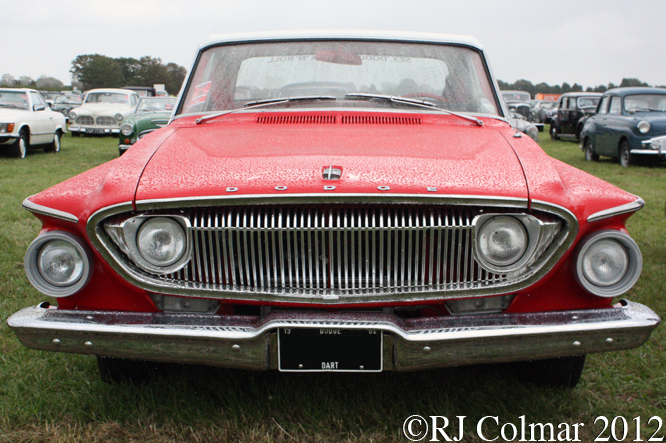
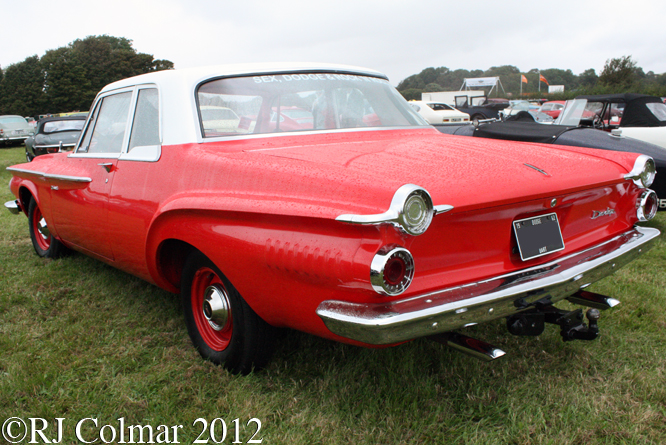
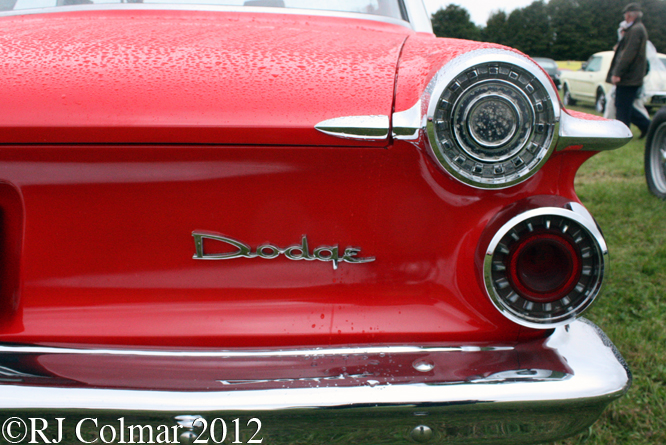
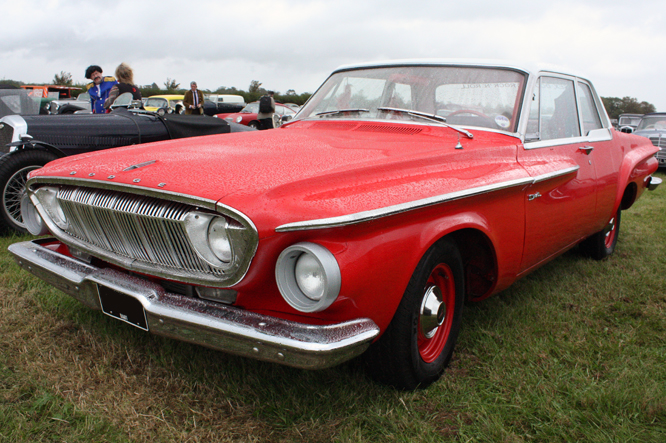
I have always thought the 1962 Dodge Dart looked like an amalgamation of two separate designs the middle top half and

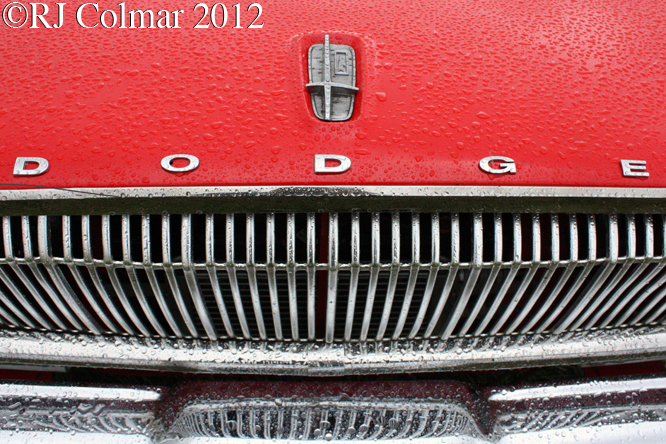
Dodge Dart, Goodwood Revival

lower outer half not quite matching but somehow blending at the broken chrome line on the front and rear wings.

Dodge Dart, Goodwood Revival

The design philosophy behind the Dart was based on a comedic misinterpretation by Chrysler executives of an over heard conversation between Chevrolet executives who were talking about the compact Chevrolet Nova, but which Chrysler executives thought was about downsized large cars like the Impala. As a result of this misunderstanding the second generation Dart became an intermediate and inadvertently left Dodge with nothing to compete with in the full size market segment at the start of the 1962 model year.

Dodge Dart, Goodwood Revival

Launched in 1962 with strap lines that included “First of the action economy cars” and “Come in and drive the new lean breed of Dodge” the range included 2 and four door Sedan and Hardtop models along with a two door convertible.

Dodge Dart, Goodwood Revival

The B platform unibody rode on “Torsion-Aire” torsion bar front suspension and could be ordered with motors ranging from a 3.7 litre / 225 cui inclined straight six to a 6.8 litre / 213 cui V8, the car featured here appears to be registered as having a 7.2 litre / 439 cui motor, a big block 440 Magnum dating from somewhere between 1966 and 1978.

Dodge Dart, Goodwood Revival

With it’s light weight and good handling the ’62 Dart fitted with the 415hp 6.8 litre / 413 cui “Ramcharger” V8 proved a popular record braking drag racer.

Dodge Dart, Goodwood Revival

The B platform remained in production with slight modifications until 1981 while the ’62 Dart body was wholly replaced with no carry over at all by the third generation Dart in 1963.

Thanks for joining me on this “Action Economy Lean Breed” edition of “Gettin’ a li’l psycho on tyres” I hope you will join me again tomorrow for Ferrari Friday. Don’t forget to come back now !

Share

Ronnie’s Rocket – Lotus Ford 72 E

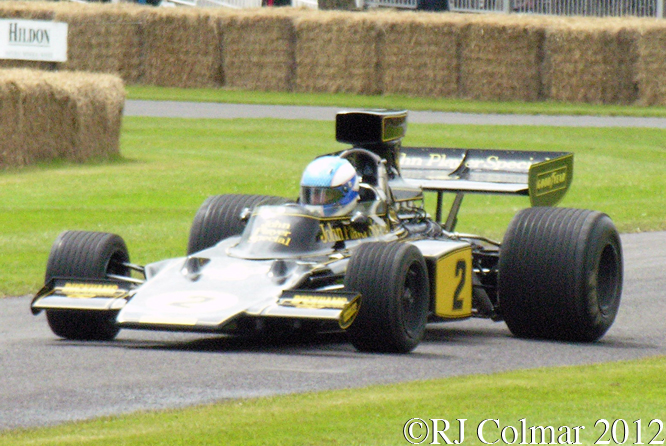
Lotus went into the 1973 Formula One Championship season as World Champion Constructors with reigning World Drivers Champion Emerson Fittipaldi being joined by a new team mate 1971 Championship runner up Ronnie Peterson.
Lotus 72 E, Goodwood Festival of Speed

The team started the season with the same Lotus 72 D model as they had used through out 1972 albeit now running on Goodyear tyres in place of the previous seasons Firestones. Emerson started the season well with 2 wins and a 3rd place from his first 3 starts while Ronnie had only two retirements and an 11th place finish to show from the same three races.
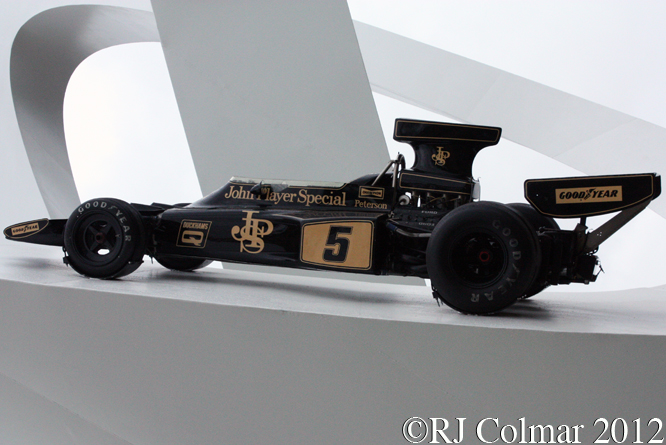
Lotus 72 E, Goodwood Festival of Speed

At the non championship Race of Championship the Lotus 72 D were brought up to E specification which included mounting the rear wing above the oil tank further back from the rear wheels and a wider track for the wheels front and rear. I well remember seeing both of the new cars spectacularly bottoming out on their debut at Brands Hatch as they approached the fearsome off camber and steep drop to Paddock Bend sending a shower of sparks from under the cars.
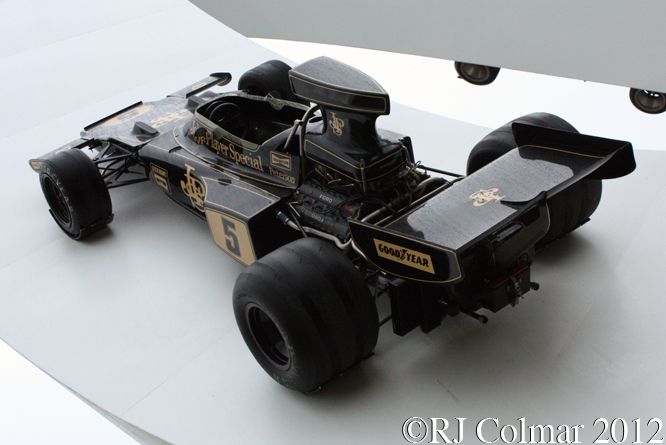
Lotus 72 E, Goodwood Festival of Speed

Both cars retired from the Race of Champions but Emerson won the 1973 Spanish Grand Prix, his last in a Lotus, before scoring three further second place finishes and a third on his way to a distant 2nd place championship finish behind Jackie Stewart and his Tyrrell Ford 006 who had clocked up five wins and two seconds on his way to his third and final title.
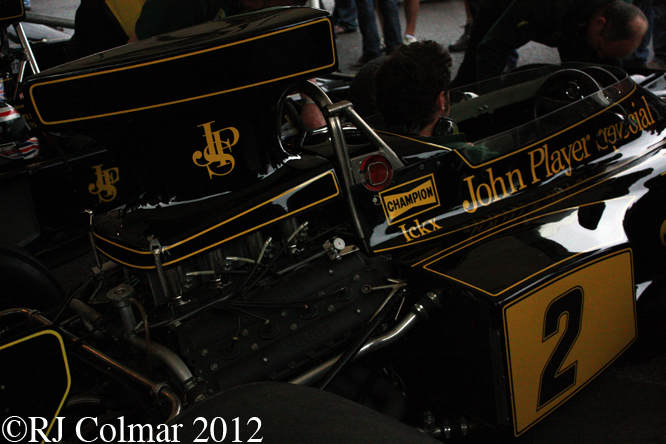
Lotus 72 E, Goodwood Festival of Speed

Ronnie meanwhile scored his first four Grand Prix wins and two second place finishes on his way to third in the championship title, helping Lotus win their second consecutive constructors championship. For 1974 Jackie Stewart retired, Emerson moved to McLaren to drive the M23, based very much on the principles of the Lotus 72, and Ronnie was joined at Lotus by Belgian Jacky Ickx.
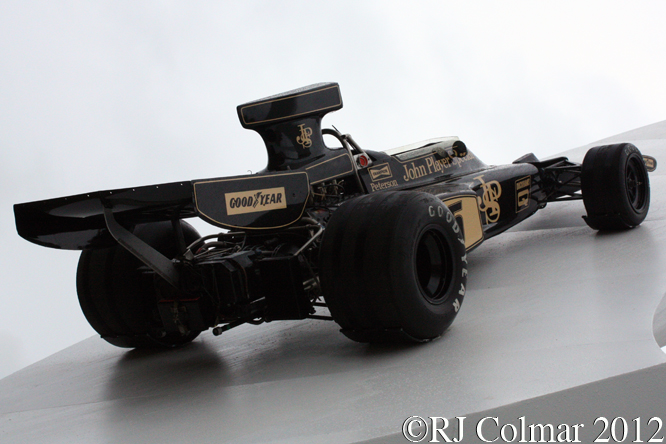
Lotus 72 E, Goodwood Festival of Speed

Lotus started the 1974 season with the 72 E for the first two championship races and then Ickx used a 72E at the non championship Race of Champions and won after pulling off a brilliant overtaking move on Niki Lauda in his Ferrari 312 B3 going into Paddock Bend right in front of my nose. If all had gone to plan this would have been the last ever race for the Lotus 72 which had been introduced in 1970.
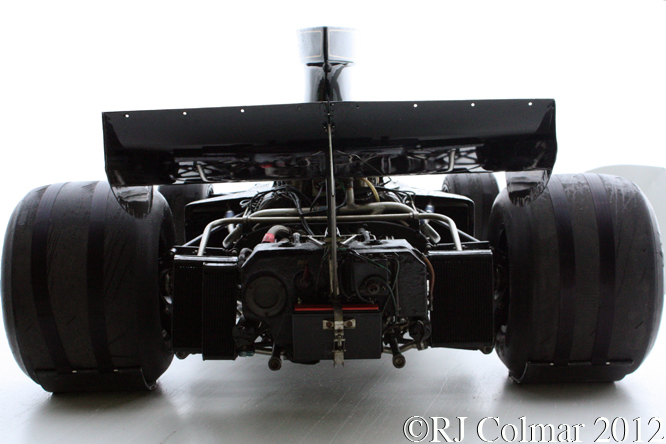
Lotus 72 E, Goodwood Festival of Speed

The Lotus 76 was first raced in the 1976 South African Grand Prix where neither car finished, Ronnie qualified his 76 at the non championship International Trophy at Silverstone and again at the Spanish Grand Prix but getting the car to finish proved impossible and so the Lotus 72 E’s were wheeled out again for the 1974 Monaco Grand Prix where Ronnie won from third on the grid, Ronnie added to more victories to the Lotus 72 E’s tally during the season to finish a distant fifth in the Championship which was won by his former team mate Emerson Fittipaldi in his Lotus 72 copy the McLaren M23.

For 1975 the Lotus 72 E’s were wheeled out again as the Lotus 76 had been abandoned as a failure, it would take a full twelve months for Lotus to build a new challenger such was the lack of financial resources and Lotus commitment to road car and sundry other projects. Ronnie gamely struggled on scoring just three points paying finishes while Jacky Ickx quit the team before the seasons end having scored a single second place finish.

I believe the two cars seen here both belong to Classic Team Lotus with the #2 most likely being a replacement chassis for the wrecked Lotus 72/R5 driven by Emerson Fittipaldi in C spec to victory in the 1970 US Grand Prix and last used in E spec by Brian Henton in the 1975 US Grand Prix.

The #5 appears to be #72/R9 built new for the 1975 season and used exclusively by Ronnie Peterson who scored a best third place finish in the non championship 1975 Race of Champions at Brands Hatch, and three further points paying finishes including a 5th place finish in the 1975 United States Grand Prix which would be the cars final appearance.

Fans of the Lotus 72 in the UK will be interested to know that there will be a 24 min documentary on the story behind the Lotus 72 on Motors TV in December, keep your eye out for it in the schedule. The films director Gary Crichter will also be releasing a full 90 min version with 60 mons of extra’s of the film on dvd in the near future. Keep your eye out on the www.lotus72dvd.com website for further announcements.

Thanks for joining me on this “Ronnie’s Rocket” edition of “Gettin’ a li’l psycho on tyres” I hope you will join me again tomorrow, don’t forget to come back now !
Share

Needs Must – Ferrari 375 America Vignale Coupé #0327AL

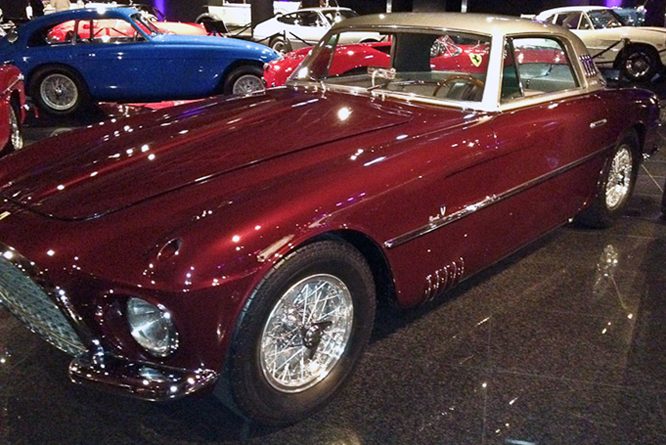
Never wildly keen on selling road cars Enzo Ferrari was persuaded to build a few, which not only helped him defray the costs of developing new technology for his racing programme but also satisfied a demand for his products at near exclusive prices.

Ferrari 375 America Coupé, Danville Concours d'Elegance

The 1953 375 America was his second series of road cars following the 342 America of which only twenty three were built. The 375 was powered by a 300 hp 4522 cc / 275 cui long block V12 similar to that used in the 4.5 litre V12 Ferrari 375 Formula One Car and slightly longer Ferrari 375 Indy Car.

Ferrari 375 America Coupé, Danville Concours d'Elegance

Only 11 Ferrari 375 America’s were built, with a 12th one being converted from 250 Europa spec to 375 America spec by the Ferrari factory in 1955. Regular readers may remember that a Pininfarina bodied 375 America chassis #0319AL was the subject of a GALPOT blog in May last year.

Ferrari 375 America Coupé, Danville Concours d'Elegance

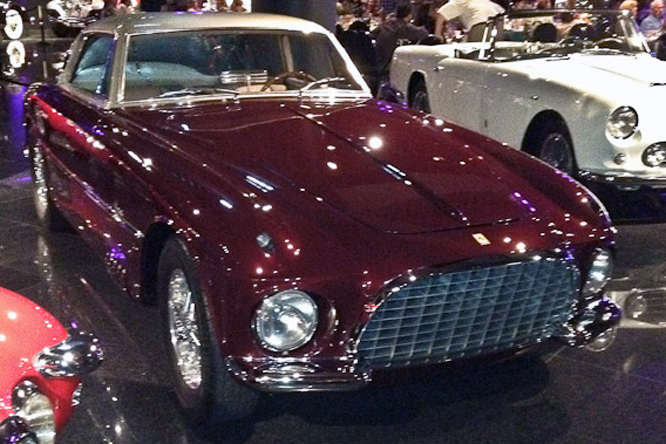
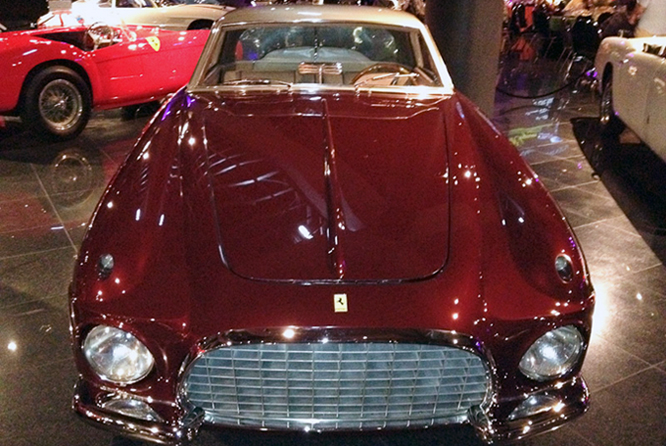
This particular chassis #0372AL is one of just three cars built with Vignale bodies, each of the Vignale bodies has unique features making this one easy to recognise, due to it’s low bumper and recessed headlights, as the second of the three built. This car was displayed at the Geneva and New York automotive shows in 1954 and then sold to Robert C. Wilke, of Milwaukee, WI, USA – President of Leader Cards Inc.

Thanks for joining me on this “Needs Must” edition of “Gettin a li’l psycho on tyres”. I hope you will join me again tomorrow when I’ll be looking at a Lotus 72E. Don’t forget to come back now !
Share

Finest, Fiercest Yet – Chevrolet Corvette C1

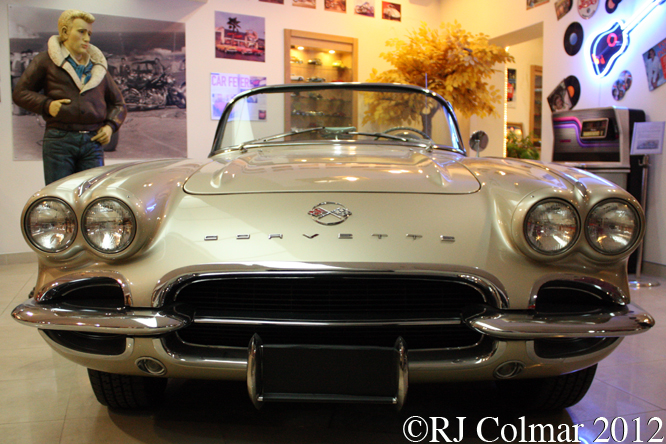
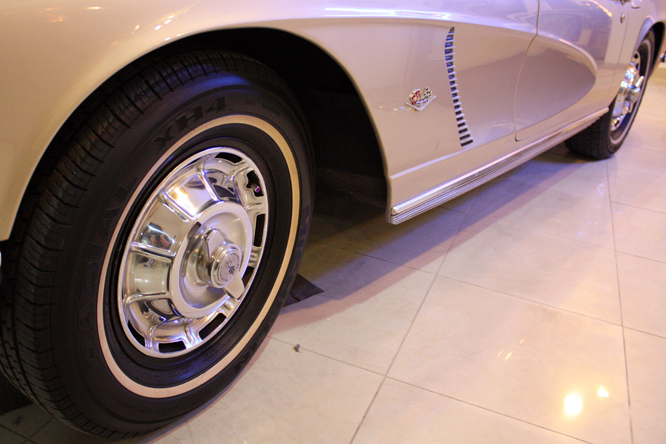
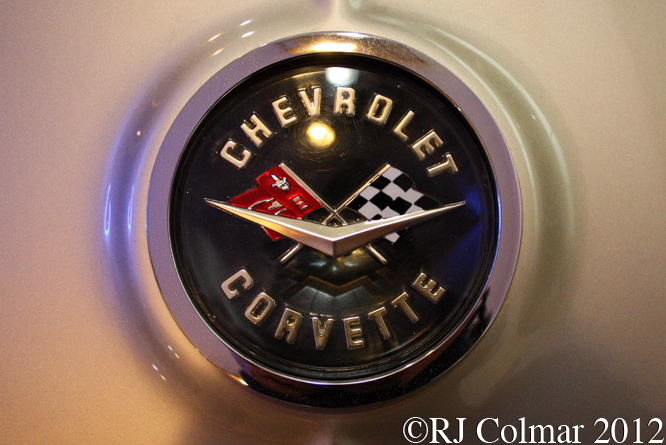
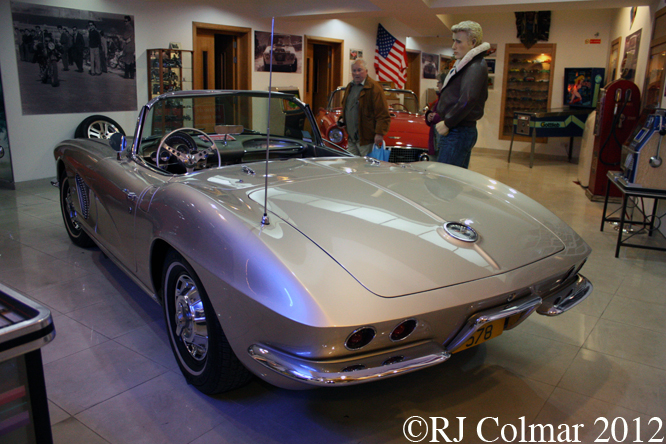
The 1962 Chevrolet Corvette, like this one seen in the Malta Classic Car Collection in Qwara was the last of four variations known collectively as the C1 models and was advertised with the strap line ” Finest, Fiercest Yet – ’62 Corvette by Chevrolet“.

Chevrolet Corvette C1, Malta Classic Car Collection, Qwara

The front end styling was similar to that first seen in 1958 with four head lights, however the trade mark baroque tooth grill which had been a feature of Corvettes since their inception in 1953 was removed in 1961.

Chevrolet Corvette C1, Malta Classic Car Collection, Qwara

The engine displacement was increased from 4.6 litres / 283 cui to 5.4 litres / 327 cui which gave from 250 hp to 340 dependent of the carburetors and lifters specified or 360 hp when fitted with fuel injection. Two tone paintwork was no longer an option in 1962.

Chevrolet Corvette C1, Malta Classic Car Collection, Qwara

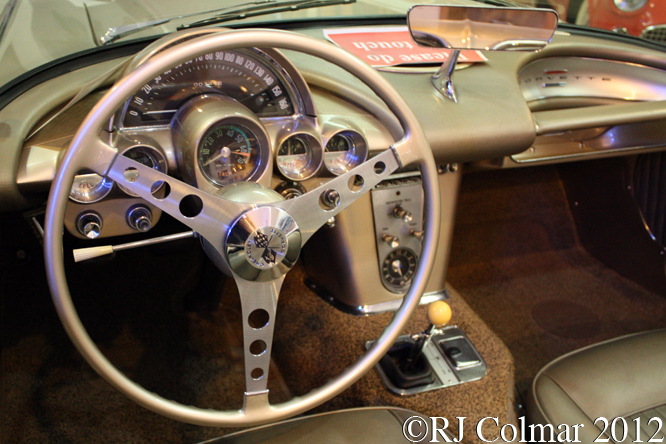
The instrumentation of the ’62 ‘vette remained largely unchanged from 1959 when the engine revolution counter first appeared in the centre of the drivers view below the outsize speedometer.

Chevrolet Corvette C1, Malta Classic Car Collection, Qwara

Among the rosta of winners driving ’62 Corvettes out on the race track were Dick Thompson, Delmo Thompson, Joe Freitas , Dave MacDonald, Everett Hatch, Mack Yates, Bob Moore, Dan McMahnon, Tom Robinson, Don Meline, Bob Paul, Joe Weiter, Jerry Grant, David Stanley, Martin Krinner, Paul Reinhart, Norman Namerow, Ralph Salyer, Nate Karras, Scott Briley, Mike Gammino, Lew Draper, Bob Brown, Roy Kumnick, Red Faris, Jim Collipriest, Roy Tuerke, Hank Mergner, John McVeigh and Mike Stephens.

Chevrolet Corvette C1, Malta Classic Car Collection, Qwara

The 120 mph 250 hp ’62 Corvette seen here was restored over a period of three years and has won numerous awards at classic car shows.

Thanks for joining me on this “Finest, Fiercest Yet” edition of “Gettin’ a li’l psycho on tyres” I hope you will join me again, for Ferrari Friday, tomorrow. Don’t for get to come back now !
Share

10,000 RHD’s Only – MG TC Midget

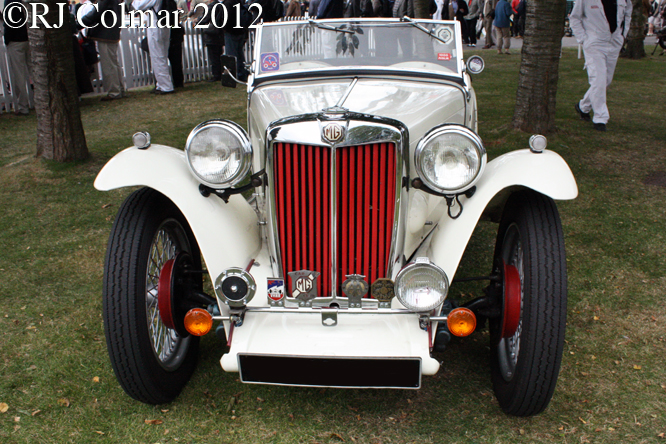
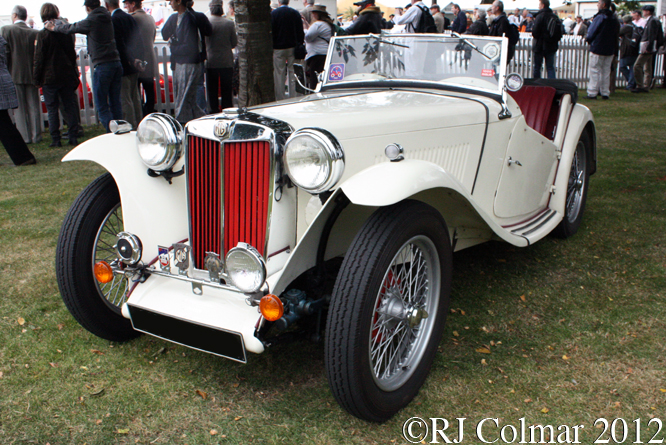
A development of the pre-war 1939 MG TB, of which only 379 were built, the MG TC was launched in 1945. and experienced comparatively huge popularity thanks to large numbers of US service men who served in the UK during the 1939 – ’45 war who fell for the cute li’l pre war MG’s that were still in evidence on the roads during the hostilities.

MG TC, Goodwood Revival

The MG TC experienced comparatively huge popularity thanks to large numbers of US service men who served in the UK during the 1939 – ’45 war who fell for the cute li’l pre war MG’s that were still in evidence on the roads during the hostilities.

MG TC, Goodwood Revival

Powered by a high compression version of the M TB 1250 cc / 76 cui 4 cylinder motor which produced 54 hp in standard trim, the motors could be supplied in different states of tune for specific, competition, purposes.

MG TC, Goodwood Revival

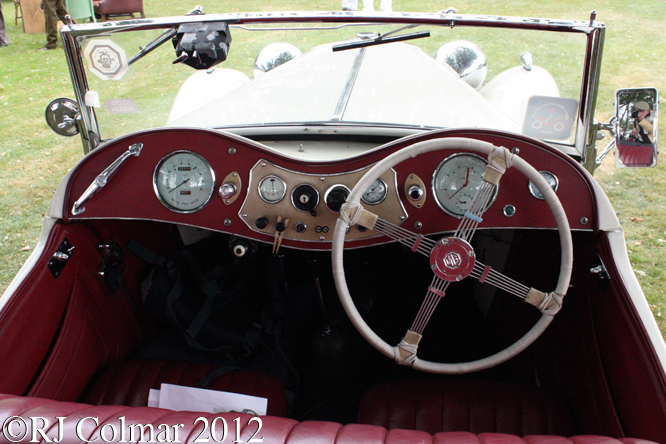
The TC’s cockpit was wider than that of the TB and featured a tachometer mounted directly in front of the driver, particularly useful for competition purposes.

MG TC, Goodwood Revival

TC’s were raced extensively in Europe, Australasia and North America recording many outright and class wins, both Carroll Shelby and Phil Hill raced and won driving MG TC’s, in their early careers, on their way to becoming stars on the world motorsports stage. Bill Bradley is known to have won his, HP, Class in an SCCA sanctioned event at Opelousas as late as July 1963.

MG TC, Goodwood Revival

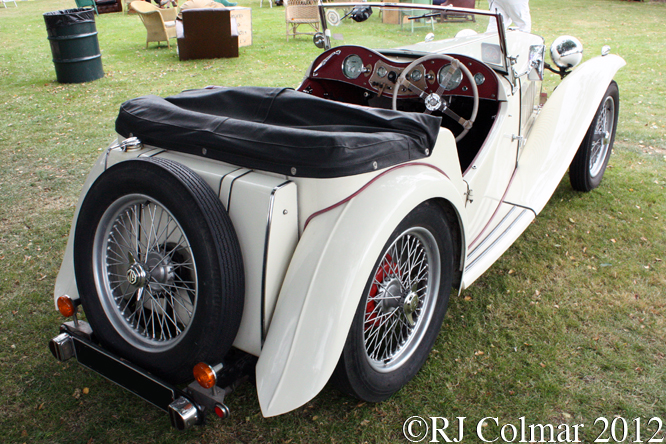
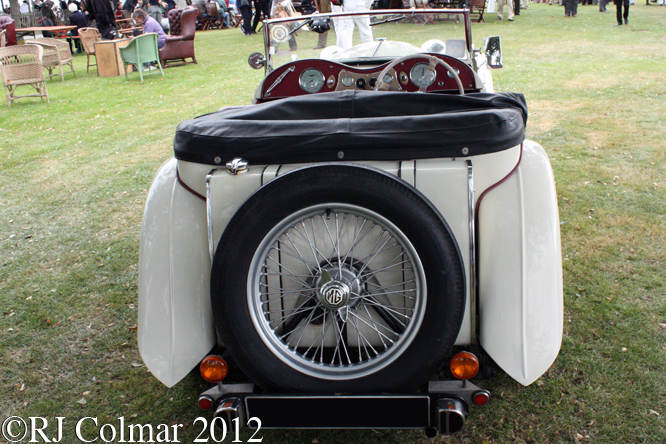
All of 10,000 MG TC’s built between 1945 and 1949 were right hand drive, despite most of them being exported to Left Hand Drive countries particularly the United States.

Share