Tag Archives: Car

Testing The Beat – McLaren F1 GTR #10R

For several years before his untimely death Bruce McLaren toyed with the idea of building a road car once his racing operations had become firmly established. In 1970 he had a Can Am McLaren M6 fitted with a GT body that both he and Gordon Coppock had worked on to perfect. After Bruces death the directors of McLaren decided to shelve the road car project although to further copies of the M6GT were built by Trojan who were responsible for building McLaren’s customer racing cars.

Twenty years later McLaren designer Gordon Murray convinced Ron Dennis to back his concept for the ultimate road car which Peter Stevens was engaged to complete the exterior styling. The McLaren F1 road car was launched in 1992 and in 1998 it set road car speed records of 231 mph with the rev limiter switched on and 243 with the limiter switched off.

At around the same time as the launch of the F1 a movement for racing GT cars was gathering pace and for the 1995 Season McLaren built 9 F1 GTR variants the first of which #01R, modified road car chassis #019 was loaned to Lanzante Motorsport who entered Yannick Dalmas, Masanori Sekiya and JJ Lehto into the 1995 Le Mans 24 hours under the Kokusai Kaihatsu Racing banner and improbably won as a result of superior reliability over the much faster Courage Porsche C34 prototype driven by “Brilliant” Bob Wolleck, Eric Hélary and Mario Andretti. The race winners covered just 298 laps the last time a Le Mans 24 hours had been won with less than 300 laps completed was 1952 to when Hermann Lang and Fritz Reiss drove their Mercedes Benz 300SL to victory with 277 laps completed.

McLaren F1 GTR, Autosport International, NEC, Birmingham

For the 1996 season Mclaren built a further batch of nine cars with extended front and rear bodywork which was easier to remove than on the original ’95 F1 GTR, magnesium gearbox housing with stronger internals which resulted in a lighter car. Two of the ’95 Spec F1 GTR’s were similarly upgraded.

Today’s featured vehicle is the first of the ’96 F1 GTR’s chassis #10R which was used as a test development vehicle to replace the Le Mans winning #01R which had immediately been retired from competition for publicity purposes.

David Brabham used the car for a test session at Le Mans in 1996 where he recorded the 20th fastest time, but the car has never been raced.

When pop drummer Nick Mason bought #10R he had McLaren convert the car for road use as were several F1 GTR’s once their competition careers were over.

Mark Hales tested the 600hp BMW V12 powered #10R for Evo magazine and recorded a 0-60mph time of 3.2 seconds and a top speed of 240.1 mph.

In 1997 a further development of the F1 GTR featuring an even longer body, 10 examples of which were built. An over view of the racing results of the F1 GTR from 1995 to 2007 can be seen on this link.

Thanks for joining me on this “Testing The Beat” edition of “Gettin’ a li’l psycho on tyres”, I hope you will join me again tomorrow. Don’t forget to come back now !

Share

Romano’s Granddaughter – Lotus Elise Series I

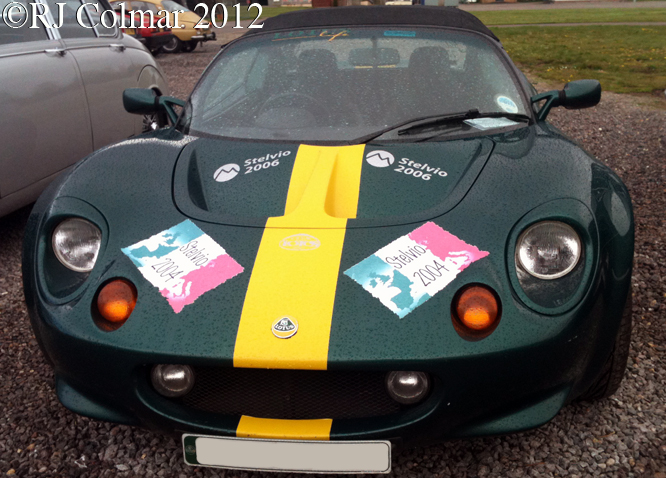
In 1993 Lotus was purchased from GM by Romano Artioli chairman of the revived Bugatti manufacturer, and the following year the Type 111 was conceived by Julian Thompson with Richard Rackman and given the Elise name after Romano’s Granddaughter Elisa.

Lotus Elise Series 1, Bristol Classic Car Show, Shepton Mallet

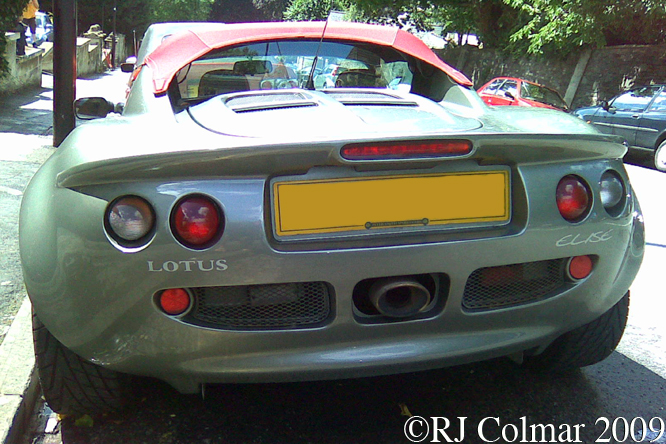
The Series 1 Elise was launched in 1996 powered by a mid mounted 4 cylinder Rover K Series motor that produced just 118 hp, however thanks to the fiberglass body and bonded aluminium chassis the Elise only weighed 725 kg / 1,600 lbs so the car could accelerate from rest to 60 mph in just 5.8 seconds with a top speed of 124 mph.

Lotus Elise Series 1, Bristol Pegasus Motor Club, BAWA

Getting in and out of a Lotus Elise are probably the most difficult features of the car, the ergonomics are secondary to track day performance, but apart from that the Elise is said to be great fun to drive and economical to run thanks to the light weight and virtually non existent load capacity beside the passengers.

Lotus Elise Series 1, Bristol

In 1996 Romano had sold Lotus on to current owners Proton in order to fund the losses that had accumulated due to the insolvency of Bugatti.

Thanks to changes in crash sustainability regulations the Series 1 Elise was replaced in 2000 after more than 8600 had been built by the more sustainable and consequently slightly heavier Elise Series 2.

The top and bottom cars featured today are standard ’98 and ’97 1.8i models while the middle one is a later ’99 111S which came with variable valve timing 143 hp and a 130 mph top speed.

Thanks for joining me on this “Romano’s Granddaughter” edition of “Gettin’ a li’l psycho on tyres”, I hope you will join me again tomorrow. Don’t forget to come back now !

Share

More Power Bigger Drums – Morris Oxford II

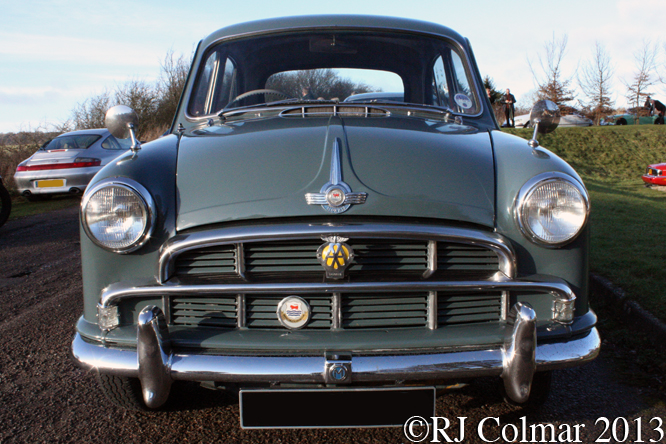
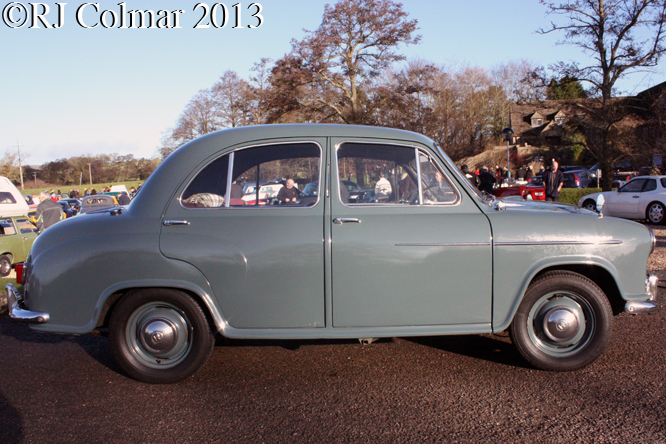
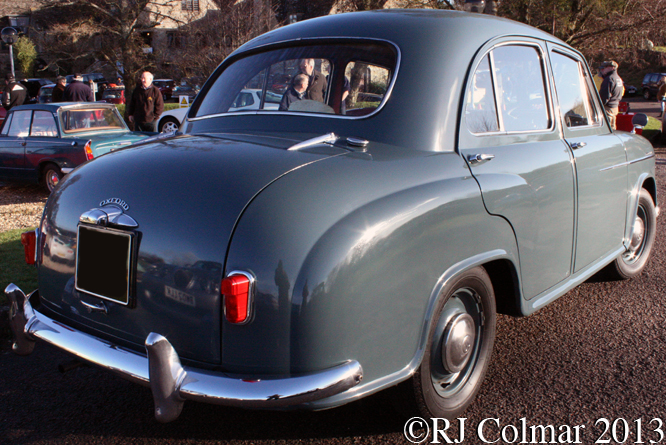
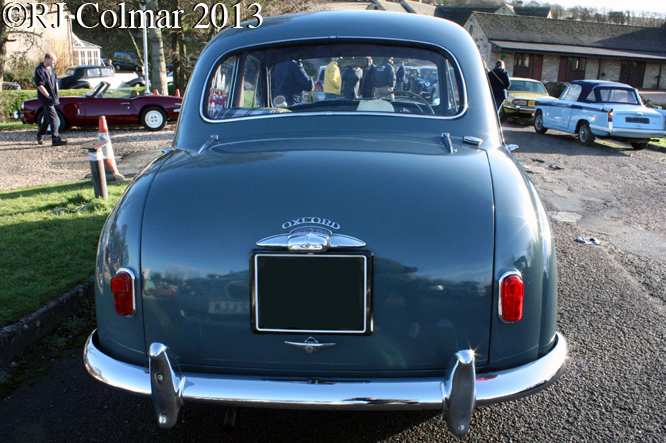
For 1948 Alex Issigonis designed the Morris Oxford to compliment the smaller Morris Minor is the Morris model mix, the Oxford MO boasted a 40.5 hp 4 cylinder side valve motor inherited from the prewar Morris 10 which it replaced, unitary body construction, torsion bar front suspension and hydraulically activated 8 inch drum brakes with which to bring the 72 mph vehicle to rest.

Morris Oxford II, Cotswold Classic Car Club, Frogsmill, Andoversford

In 1952 Morris merged with it’s great rival Austin with William Morris, now Lord Nuffield, becoming the British Motor Corporation’s first Chairman, thanks to the merger Morris was able to ditch it’s antiquated motors for those from the Austin range.

Morris Oxford II, Cotswold Classic Car Club, Frogsmill, Andoversford

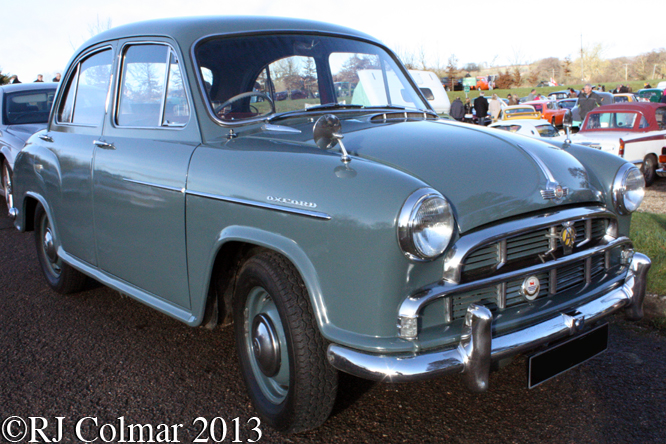
As a consequence the Morris Oxford II first seen in 1954 was powered by a 50 hp Austin designed 4 cylinder over head valve B series motor which increased the top speed to 74 mph better acceleration and better fuel consumption 28 mpg up from 26 mpg of the Oxford MO.

Morris Oxford II, Cotswold Classic Car Club, Frogsmill, Andoversford

The column shift 1955 Oxford II, seen here earlier this year as the Cotswold Classic Car Club Meeting held at Frogsmill Andoversford, was equipped with 9 inch hydraulic brakes to cope with the increase in performance and came with a heater as standard.

Morris Oxford II, Cotswold Classic Car Club, Frogsmill, Andoversford

The Oxford II was available in 4 door saloon / sedan or 2 door Traveller Estate / Station wagon variants, the former of which would live on as the Hindustan Landmaster built under licence until 1958 in India.

Morris Oxford II, Cotswold Classic Car Club, Frogsmill, Andoversford

From 1954 87,342 Oxford II’s were built at plants in the UK and Australia until 1956 when the model was replaced by the Morris Oxford III.

Thanks for joining me on this “More Power Bigger Brakes” edition of “Gettin’ a li’l psycho on tyres”, I hope you will join me again tomorrow. Don’t forget to come back now !

Share

Project Sport 500 – Lotus Esprit Sport 350 No.26

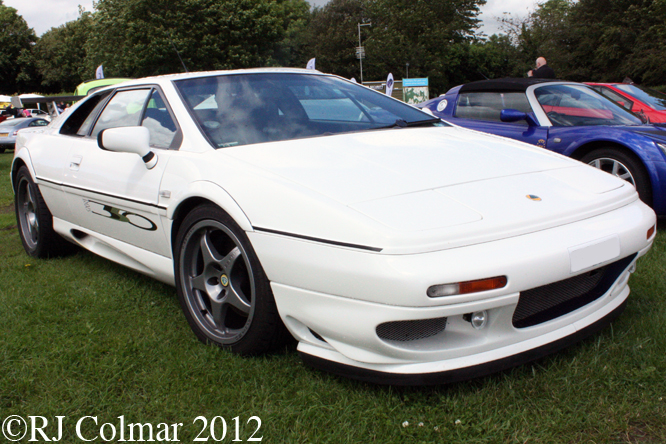
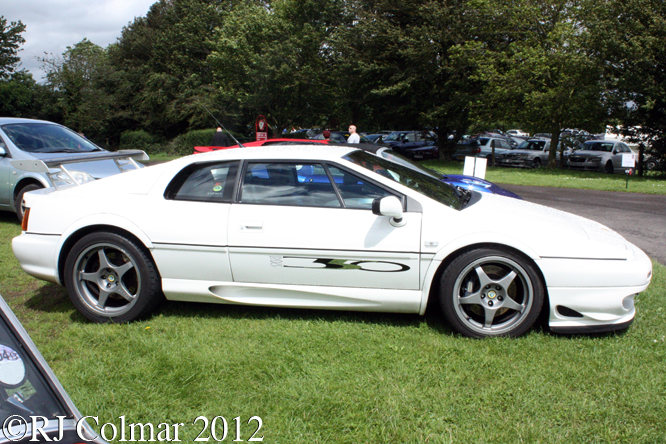
When the Lotus Type 82 Esprit Turbo was introduced in April 1981 it had a new chassis which was built to accommodate a V8 or the hitherto ubiquitous 4 cylinder type 907/910 motors. It was not until two complete body restyles later that the V8 type 918 would finally see the light of day in the back of a Julian Thompson styled Esprit in 1996.

Lotus Esprit, Sport 350, Classic and Sports Car Action Day, Castle Combe

The Julian Thompson styled Esprit replaced the Peter Stevenson styled Esprit in 1993 alongside the new body came a redesigned interior and for the first time on an Esprit power steering.

Lotus Esprit, Sport 350, Classic and Sports Car Action Day, Castle Combe

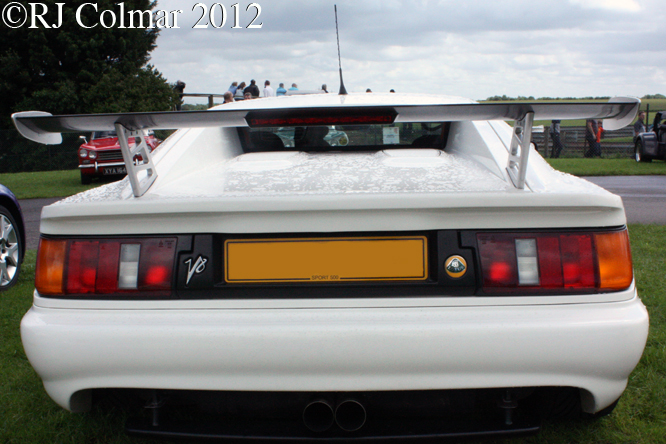
The twin turbocharged all aluminium 918 V8 Esprits were restricted to 350 hp which was deemed the most that the Renault derived transmission and drive train could handle. In 1998 V8 Esprits were built to either luxury SE or sporty GT specification.

Lotus Esprit, Sport 350, Classic and Sports Car Action Day, Castle Combe

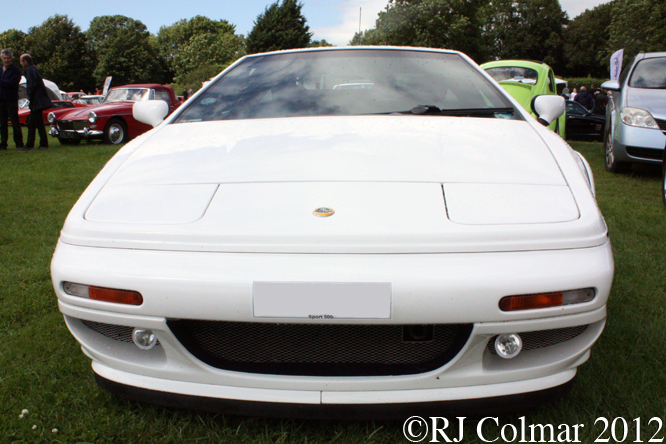
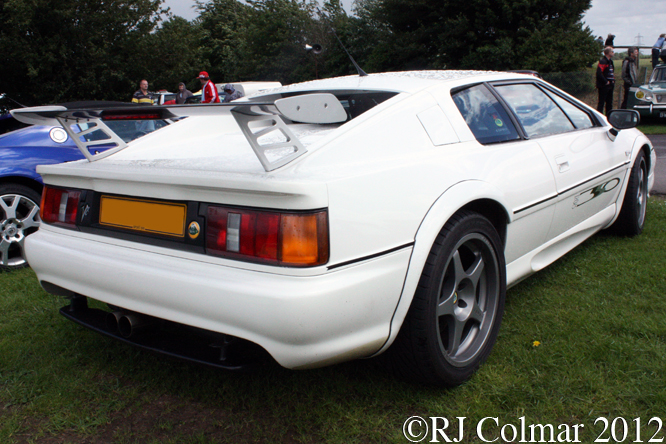
The ultimate incarnation of the Esprit was the Sport 350, such as the one seen here during last years Classic and Sports Car Action Day at Castle Combe. These models were built with AP racing brakes, stiffer suspension, revised electronic control unit (ECU) for the motor and a carbon fibre rear wing mounted on aluminium uprights. With 350 hp these cars can reach 100 mph from rest in just under 10 seconds.

Lotus Esprit, Sport 350, Classic and Sports Car Action Day, Castle Combe

Only 55 of an intended production run of 50 Esprit Sport 350’s were built between 1999 and 2001, all bar 48 of them were painted silver, four were black, two white and one ice blue.
Lotus Esprit, Sport 350, Classic and Sports Car Action Day, Castle Combe

Rob the owner of Sport 350 No.26, also known as Project Sport 500, has upgraded this particular vehicle to produce 500 hp and “run right past 60 mph in (the) first of it’s six gears”. You can see some of the work Rob has undertaken to achieve this performance on this linked page.

Only 15 Sport 350’s remain in the UK according to Rob one of them is a right off in a salvage yard.

My thanks to Rob for his help with today’s post.

Thanks for joining me on this “Project Sport 500” edition of “Gettin’ a li’l psycho on tyres”, I hope you will join me again tomorrow. Don’t forget to come back now !

Share

Four Pot Revisited – Ferrari 860 Monza #0604M

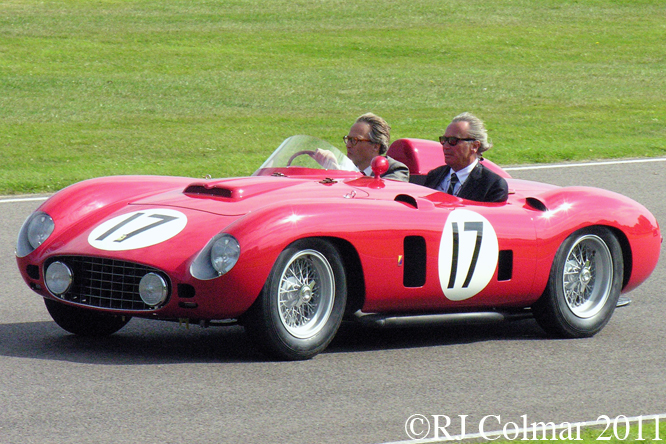
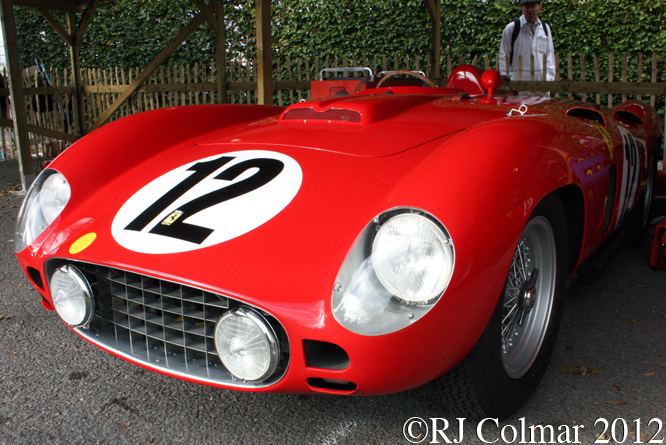
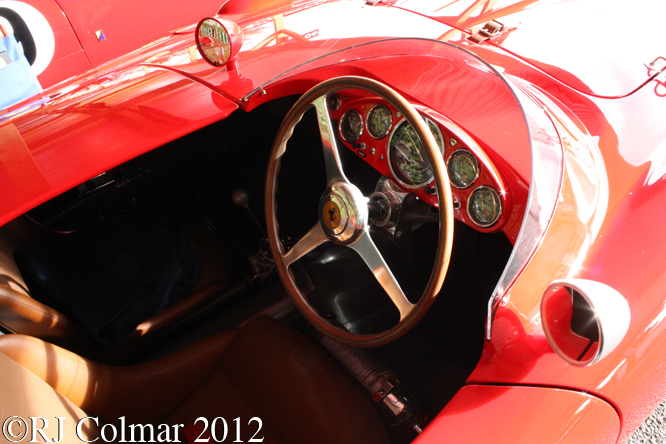
A couple of years ago Steve Arnaudin sent me a photo of todays featured 1956 Ferrari 860 Monza, chassis #0604, purchased by his father from the Californian photographer and racing driver Carlyle Blackwell. I wrote a blog which summarised the 1956 World Sports Car Championship which is linked here.

Ferrari 860 Monza. Goodwood Revival

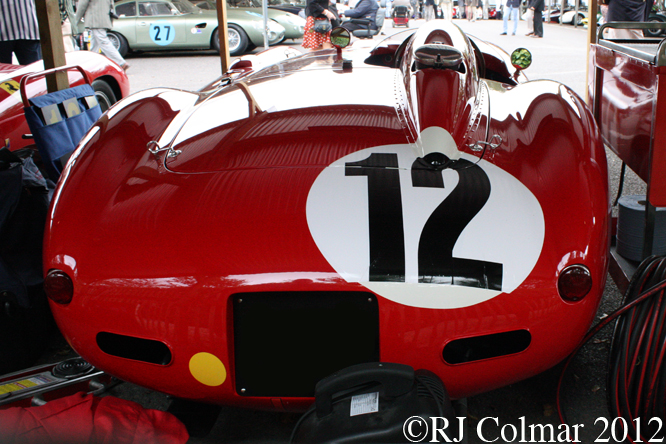
Today’s blog will focus on the story of this particular chassis which is seen above with Lord March at the wheel in the Juan Manuel Fangio Celebration parade at the Goodwood Revival in 2011. The car is seen above carrying the same #17 as when Fangio and Eugenio Castellotti drove it to a debut victory in the Sebring 12 Hours Race in March 1956.

Ferrari 860 Monza. Goodwood Revival

#0604M was subsequently sold to Californian John von Neuman and the following month he entered it for Phil Hill to drive at Pebble Beech where he finished second overall and first in class behind Carrol Shelby who was driving 1955 Ferrari 750 Monza #0510M.

Ferrari 860 Monza. Goodwood Revival

John Von Neuman took over the driving duties in #0604M for the rest of the 1956 season and through 1957 until he put Ritchie Ginther in the car at Laguna Secca at the end of 1957 and at Riverside at the beginning of 1958. Ginther scored a class win and 5th overall first time out and 2nd overall at Riverside. Up to that point von Neumans best results had been a couple of 2nd place finishes in ’56

Ferrari 860 Monza. Goodwood Revival

Jerry Barker bought the car for the 1959 season and on every occasion it finished it was either 1st or 2nd driven by Lew Florence, Barker took the wheel at the Maryhill Lops Hillclimb and also won setting a new record.

Ferrari 860 Monza. Goodwood Revival

Charles Caverns was the owner of 0604M in 1960 and he also recorded a win in the Novice Race at Shelton in April 1960 which is the car last recorded contemporary race appearance.

Ferrari 860 Monza. Goodwood Revival

Amongst the owners of #0604M since 1960 was Jean Sage former Sporting Director of the Renault Formula One team from it’s inception in 1977 and eventual, temporary closure, in 1987. Not long before the top photo was taken #0604M was bought by the current owner a DJ by the name of Chris Evans.

Ferrari 860 Monza. Goodwood Revival

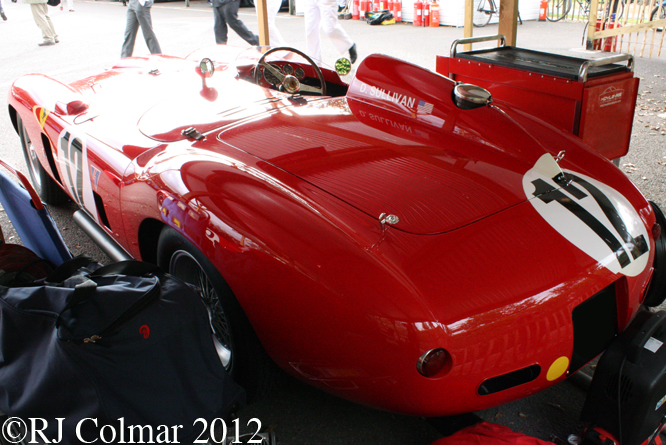
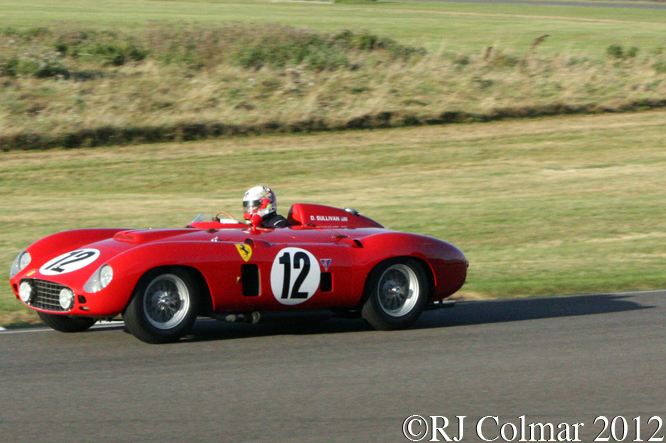
At last years Goodwood Revival meeting Danny Sullivan became the fifth Grand Prix driver to sit at the wheel, after Fangio, Castellotti Hill and Ginther, and only Indy 500 winner to race the car powered by a Lampredi designed 4 cylinder motor. He qualified 15th for the Sussex Trophy Race but did not finish.

Thanks for joining me one this ‘Four Pot Revisited’ edition of “Gettin’ a li’l psycho on tyres”, I hope you will join me again tomorrow. Don’t forget to come back now !

Share

Howards Day – Castle Combe Easter Monday

Easter Monday’s meeting at Castle Combe was dedicated to the memory of Howard Strawford who died on February 23rd leaving a huge void for not only his family and friends but also the greater Motorsport community in South West England.
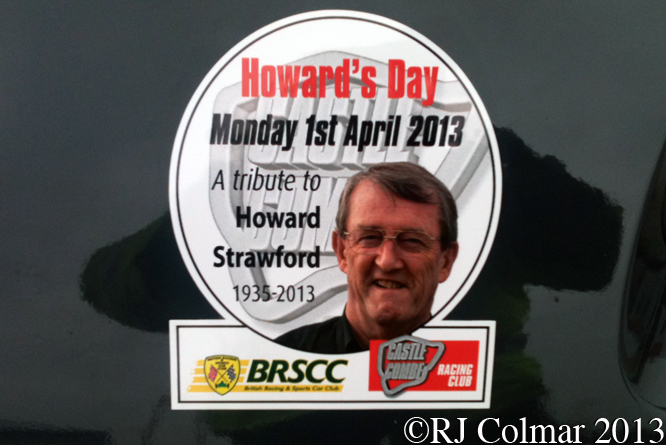
Howards Day, Castle Combe

Howards legacy is the Castle Combe Circuit as it stands today which he saved from closure in the 1970’s after managing to secure the support of former World Champion James Hunt. By 1981 Howard had gained permanent planning permission to operate the track as a motor sports venue and engaged in a programme of continual improvements to the tracks facilities which have been to the benefit of both national and club motor sport. Belated condolences to Howards family and friends.
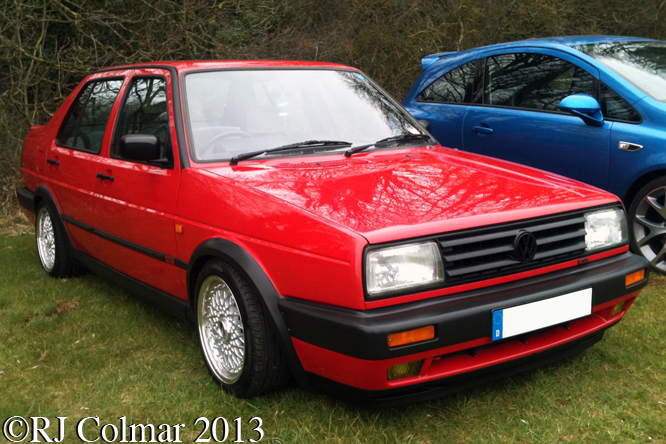
Volkswagen Jetta GTi, Howards Day, Castle Combe

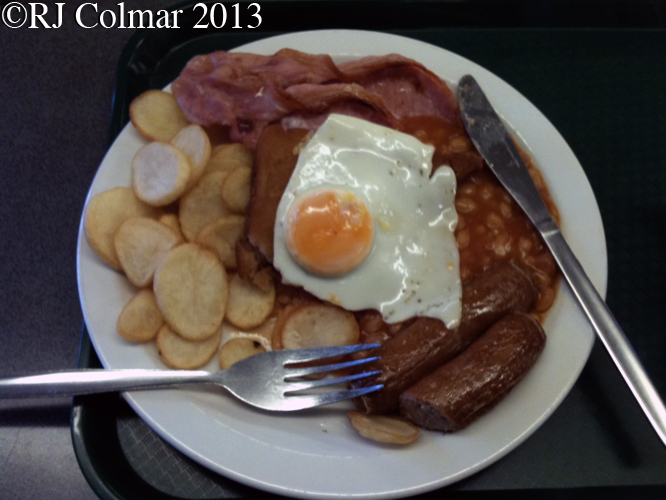
When I got to the circuit I headed straight for Tavern Club House where I had agreed to meet Ted the day before at Thruxton and enjoyed my second Big Boys Breakfast in 8 days. Afterwards Ted and I went for a stroll around the circuit when we stumbled across this immaculate 1989 VW Jetta GTi.
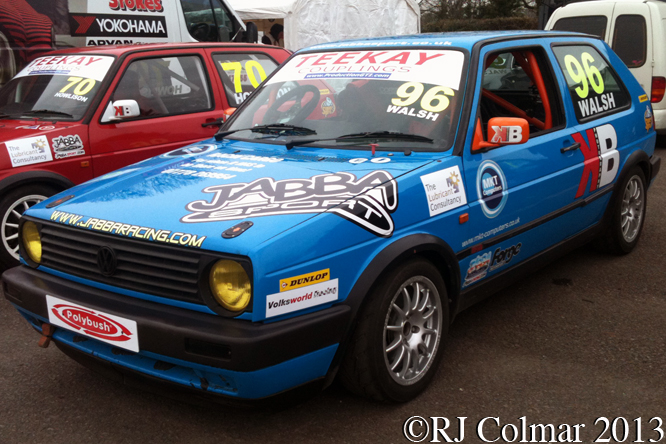
Volkswagen Golf GTi, Howards Day, Castle Combe

As we walked round the track the wind picked up and it got sufficiently cold for Ted to decide to head for the warmth of his dark room while I wondered around the paddock where I stumbled across Martyn Walsh’s VW Golf GTi which qualified 9th for the first of the two BRSCC Teekay Couplings Production GTi Championship races and finished 7th in the first race and went one better in the second GTi race finishing 6th.
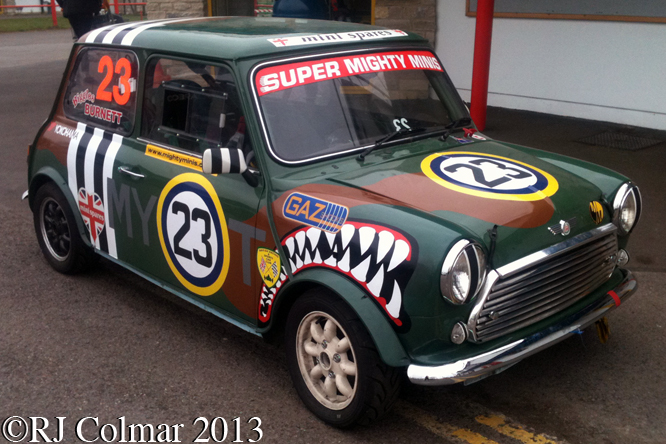
Super Mighty Mini, Howards Day, Castle Combe

Mini’s were in abundance at Castle Combe with races for the 60 hp Mighty Mini’s and 90 hp Super Mighty Mini’s the #23 MerlinPoweredMini.com of Mark Burnett runs in the more powerful Super Mini class however on this occasion it appears he traveled from Guildford in vain having failed to set a qualifying time he recorded a did not finish (DNF) with zero laps completed in Race 1 and did not take the start in Race 2.
Vauxhall Astra, Howards Day, Castle Combe

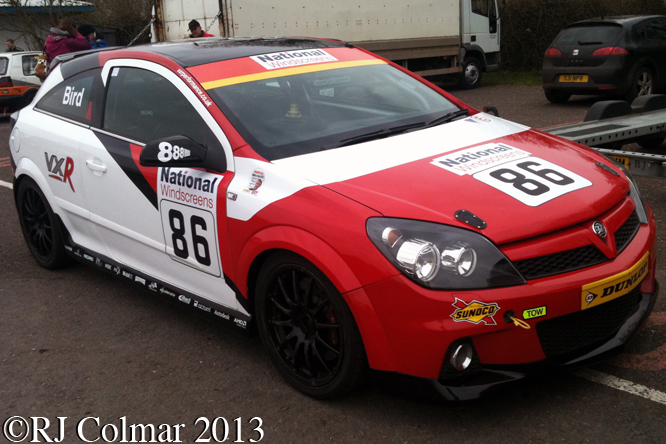
The Castle Combe Saloon Car Championship in Association with National Windscreens has some new entires this season including the #86 Vauxhall Astra of Kevin Bird who used to campaign a BMW 130i in this series. Kevin qualified 10th and finished 7th in the single race for the series.
Reynard FF84, Howards Day, Castle Combe

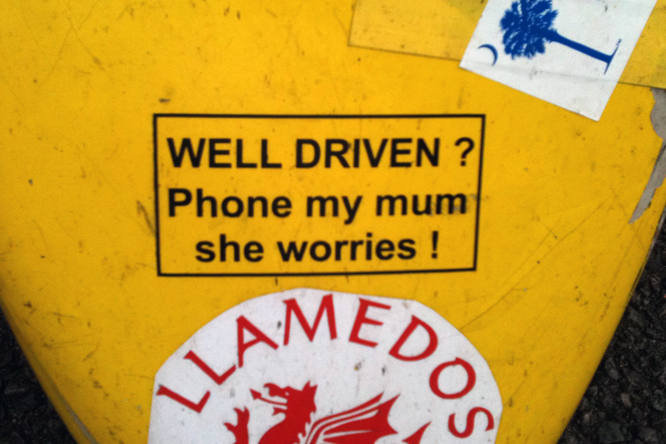
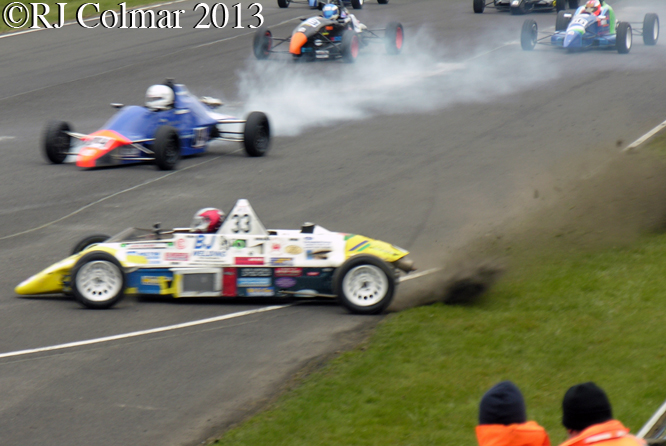
There appeared to be more stickers on Juiceie Bruceie’s BJ Welders Real Steel 4×4 / Llaemdos Racing Reynard FF84 than fibre glass, but as we shall see there was only one little incident Juiceie’s Mum might have had to worry about in the Formula Ford race for which he qualified a respectable 18th ahead of four newer vehicles.
Chevrolet LS3, Howards Day, Castle Combe

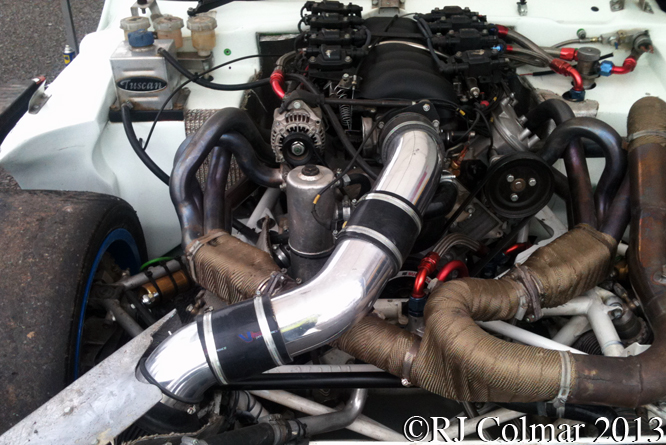
Perry Waddams used the prodigious horsepower of his Chevrolet LS3 motor to power his #77 Crowthorne.com TVR Tuscan to 12th on the grid and an 8th place finish in the Castle Combe, Sports & GT Championship supported by Siliconehoses.com.
BRSCC Mazda MX-5 SuperCup, Howards Day, Castle Combe

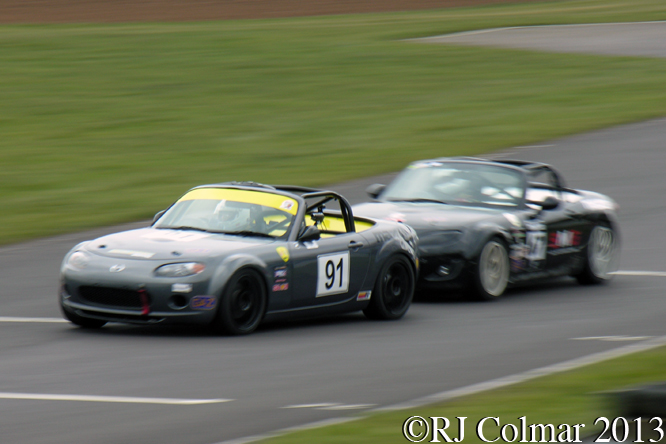
The first race in the 11 race programme only had 7 starters but it only takes two cars to make a race and Matthew Davies in the #91 Mazda MX5 Mk3 and Andrew Clarkson in the #67 Team SMG / Clarkson Electrical MX5 Mk 3 both wanted to win the first BRSCC Mazda MX5 SuperCup race of the day. Clarkson eventually won by less than a second from pole but only after at least 5 changes in the lead up to lap ten of the 15 lap race.
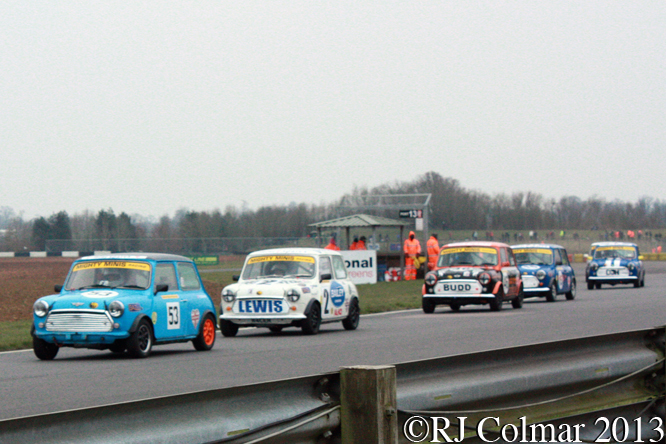
BRSCC, Mighty Minis Championship, Howards Day, Castle Combe

Jonathan Lewis driving the #2 Mighty Mini won the first BRSCC Mighty Mini Race from pole and is recorded as having led all but one lap however the race lead changed many more times particularly with Damien Harrington in the #53 Mini seen above leading on Westway leading into the final Camp Corner where Lewis was always ready and able to steal the lead back again. The winning margin was just .106 seconds after 13 laps.
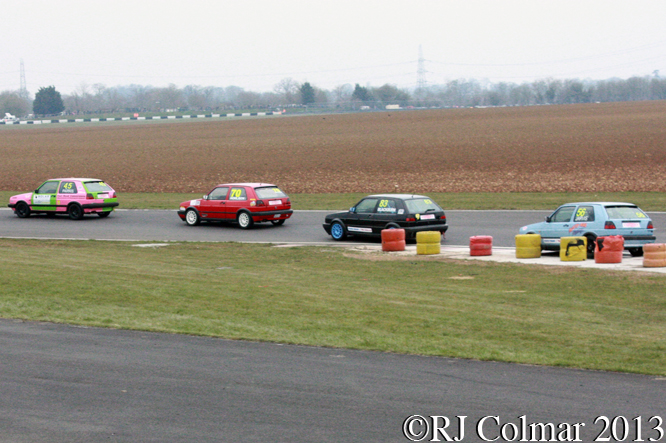
BRSCC, Teekay Couplings, Production GTi Championship, Howards Day, Castle Combe

Simon Hill in his evil handling GTi provided the only opposition to pole sitter Lewis Hopkins in the BRSCC Teekay Couplings Production GTi Championship race, Lewis won the 11 lap contest by over 5 seconds. Further down the field #45 David Parris is seen in 10th place before retiring on lap 6 being chased through Bobbies chicane by #70 James Howlison, #83 Paul Blackburn and #56 Nick Jarvis who finished the 11 lap race in 9th, 10th and 11th places respectively.
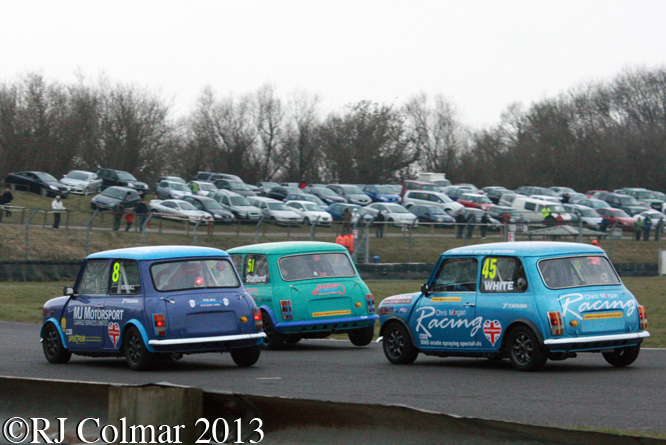
BRSCC, Super Mighty Minis Championship, Howards Day, Castle Combe

Next up was Race 1 for the Super Mighty Mini’s, Peter Trevett was swallowed up by the grid at the start and eventually finished fifth but it was Elliot Stafford who led by over a second until lap 6 when the pressure started to mount from Jamie White, Patrick Ford and Scott Kendall. #51 Elliot, who held on to win by less than a quarter of a second, is seen raising a rear wheel above as #8 Scott Kendall and #45 Jamie White try and find a way past going into Tower Corner.
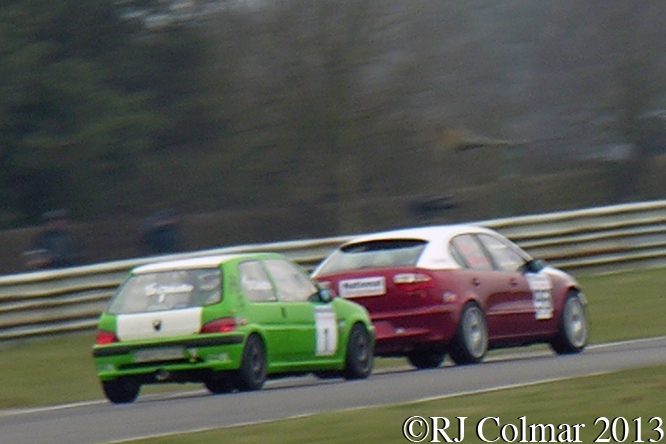
National Windscreens, Castle Combe Saloon Car Championship, Howards Day, Castle Combe

With the temperature in the tropical 3 degrees above freezing zone a great race looked in prospect from the Castle Combe Saloon Car Championship in Association with National Windscreens race, even though Mark Wyatt in his Vauxhall Astra had qualified nearly 2 seconds ahead of anyone else. William di Cluadio made a race of it and led lap one in his green championship winning W-A-S Racing Peugeot 106 GTi but Mark was back in charge until lap 6 when he retired at Quarry. di Claudio led again until lap 10 when he finally succumbed to the superior power of Rob Ballards Chippenham Conversions / Interceptor Racing SEAT Leon 20v Turbo. Rob is seen above having just over taken William out of Old Paddock on his way to a 1.5 second victory.
StartLine, Castle Combe, Formula Ford 1600 Championship, Howards Day, Castle Combe

Steven Jensen started his 2013 Castle Combe Formula Ford 1600 Championship supported by StartLine with a convincing victory from pole, his only challenger was Roger Orgee who retired his #3 Van Diemen on lap 6. However down the field there was plenty of excitement, the aforementioned Juiceie Bruceie got his Reynard FF84 off to a brilliant start rising from 18th on the grid to 10th at the end of lap 1 before he appeared to out brake himself going into the Esses, Juiceie recovered and finished an eventual 16th one lap down.
BRSCC Mazda MX-5 SuperCup, Howards Day, Castle Combe

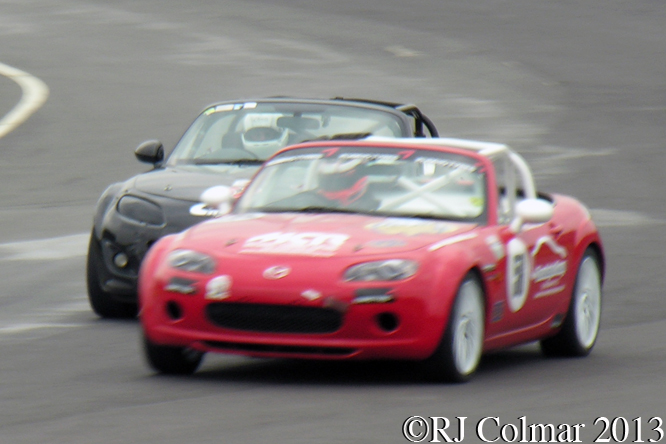
The second Mazda MX5 SuperCup race was won by Matthew Davies by six seconds from Andrew Clarkson in the #67 Mazda, who temporarily gave his second place up Mike Comber coming out of Quarry in the #58 MX5 as seen above. Mike could not make the pass stick over the remainder of the lap and settled for his second third place finish of the day.
Micheal Kason, Fiat X1/9, Howards Day, Castle Combe

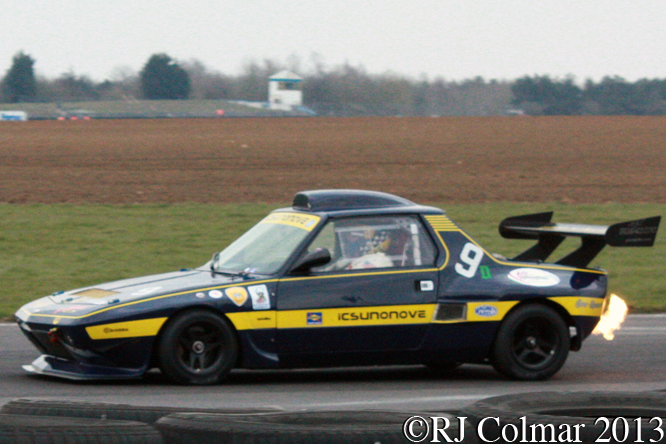
The Castle Combe Sports and GT Championship supported by Siliconhoses.com race did not live up to the expectations of a battle between the leading Radicals of pole sitter Josh Smith fellow front row starter Andrew Shanley and second row starters Manhal Allos and Simon Tilling, Tilling retired out on the circuit on lap 2 which required the safety car to neutralise the field on lap 6 and in the ensuing chaos Andrew Shanley was handed a one lap lead as a result of the wrong car being picked up as the leader. Still former drag racer Michael Kason’s Zubedo.com Dallara Fiat X1/9 provided plenty of flame spitting entertainment as it headed for a 16th place finish, which kept me occupied for the remainder of the race.
BRSCC, Mighty Minis Championship, Howards Day, Castle Combe

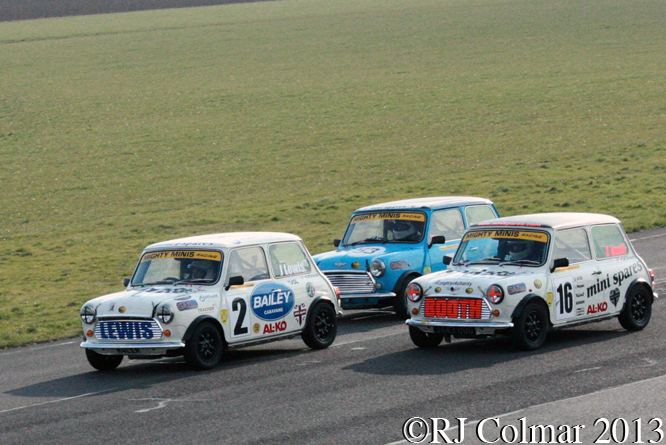
With 8 races down and 3 more to go the 60 hp Mighty Minis came out for their second run and it was a real barnstormer with Jonathan Lewis, teenager Zack Booth, Pole sitter Damien Harrington and Charlie Budd all leading at least one lap by never more than half a second. In the end Harrington pulled of a last lap last corner maneuver at the last corner Camp that stuck all the way to the finish line to win his second race of the day by .108 secs. Above #2 Jonathan Lewis, who finished 2nd, #16 Zack Booth, who finished 3rd and eventual winner #53 Damien dispute every inch of tarmac on the run up to Avon Rise midway through the race.
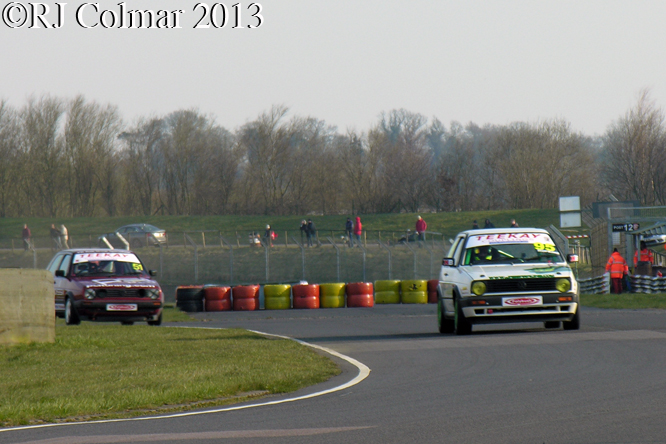
BRSCC, Teekay Couplings, Production GTi Championship, Howards Day, Castle Combe

For a while it looked like Simon Hill had got on top of his handling demons which were much in evidence in the first Production GTi race but after just two laps the red #51 GTi had to concede to the faster white #95 of Lewis Hopkins who became the second two time winner of the day.
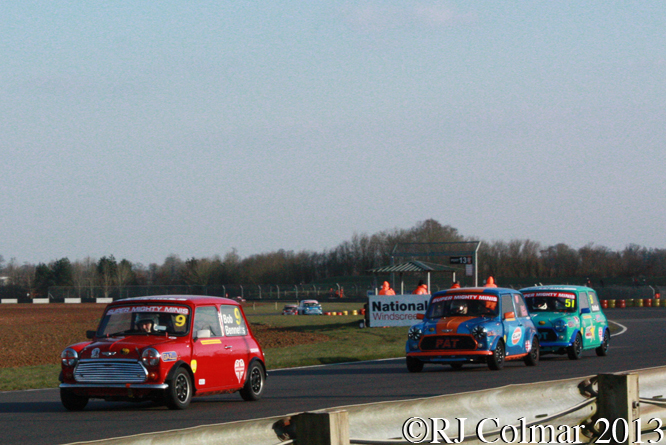
BRSCC, Super Mighty Minis Championship, Howards Day, Castle Combe

The Super Mighty Mini’s concluded the meeting with their second run and their was no going home early and guessing the result, above with two laps to go Bob Bennets, who would finish 3rd leads on lap 12, on lap 13 is was the turn of #77 Patrick Ford who finished 2nd to lead and at Camp Corner on the final lap Elliot Stafford nailed his exit perfectly to become the second two time winner of the day.

As a tribute to Castle Combes much missed savior Howard Strawford the day had served as a poignant reminder to all that Howard had done for motor sport and the wonderful legacy and high standards that those of us who remain will have to live up to.

Thanks for joining me on this ‘Howards Day’ edition of “Gettin’ a li’l psycho on tyres” I hope you will join me again tomorrow, don’t forget to come back now !

21/04/13 PS My thanks to Castle Combe historian Pete Stowe for pointing out various spelling errors in drivers names, apologies to all concerned.
Share

Racing Transformer – McLaren Elva Mark I #M1A-20-15

In 1952 aged just 14 years old Bruce McLaren entered his first competition driving event a hillclimb in New Zealand with an Austin A7 Ulster which hois Dad Les had restored. by 1957 he was driving a Cooper Climax which he also modified sufficiently to become runnner up in the 1957 and 1958 New Zealand Formula 2 series.

By the end of 1958 Bruce made his Grand Prix debut in the German Grand Prix driving a works Formula 2 Cooper Climax where he finished fifth but was not awarded any World Championship points which were only awarded to drivers of Formula One cars. Bruce stayed with Cooper for seven years becoming the then youngest Grand Prix winner aged just 22 in the 1959 US Grand Prix at which his team mate Jack Brabham won his clinched his World Championship.

In 1963 Bruce founded Bruce McLaren Motor Racing Ltd and his first car was the Zerex Special a car that had been transformed from a 1.5 litre / 91.5 cui Cooper Climax single seater Formula one car to a two seater sports car powered by an Oldsmobile V8 featuring a tube frame of Bruces own devising, the rechassisied car painted garden gate green was distinguished by eight stub exhausts angled to the rear, won first time out at Mosport in Canada in 1964 and again at Brands Hatch the same year. This car was last seen in Venezuela at the end of the 20th Century.

For 1964 Bruce built 3 Oldsmobible powered M1A sports racing cars which were the first first to bear his name, of which the first Bruce raced, the second was used for testing and the third was a show car. Bruce entered into an agreement with Trojan who were also owners of Elva Cars to build a production run of customer M1A’s under license for the 1965 season.

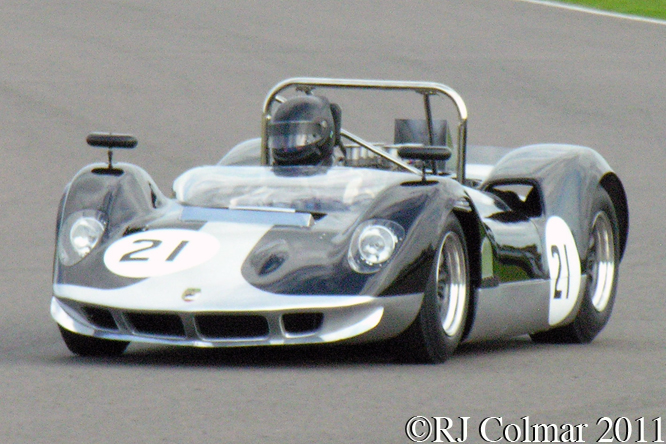
McLaren Elva Mark I, Goodwood Revival

Today’s featured car is one of the 24 M1A’s built under license and was marketed in the USA as the McLaren Elva Mark 1 which could be fitted with Chevrolet, Ford or Oldsmobile V8’s. This particular chassis #M1A-20-15 was originally supplied to Joe Starkey who is recorded as having won seven events in McLaren Elva Mark 1 chassis in 1965 and 1966, although at the time of writing these achievements have not been specifically ascribed to the chassis featured today. If you believe this car is the one Joe won those races in, as seen winning at Green Valley in 1966 in this linked photo by Jerry Melton please do not hesitate to chime in below.

In 1968 having failed to attract much interest in it’s 3 litre / 183 cui Formula A open wheel series the SCCA opened up it’s premier category to 5 litre / 302 cui stock block motors which over the ensuing 6 years proved extremely popular in the US, UK South Africa and particularly Australia where the F5000 series, as Formula A was known outside the USA, remained a premier category until 1982.

For the new 5 litre / 302 cui regulations Joe Starkey had his M1A transformed into an offset single seater open wheel car running a 500 cc / 30 cui undersized Oldsmobile motor. Starkey’s McLaren in open wheel form can be seen in this grainy linked photo. Joe was not alone converting a McLaren 2 seater into an open wheeler for Formula A.

Since the featured photograph of the car restored to it’s original closed wheel form was taken, with current owner John Bladon driving at Goodwood, the large chrome safety cage has been replaced with a black one of more modest proportions in time for a winter trip to Australia.

I’ll be celebrating McLaren’s first 50 years by featuring 3 more McLarens on Sunday’s for the rest of April.

My thanks to owner John Bladon, David McKinney and RA Historian from The Nostalgia Forum for their help identifying today’s featured car.

Thanks for joining me on this “Racing Transformer” edition of “Gettin’ a li’l psycho on tyres” I hope you will join me again tomorrow. Don’t forget to come back now !

Share