Tag Archives: Castle

T for 2 – MG TF

Following the demise of the MG PB in 1936 MG launched the 2 seater MG TA as it’s replacement the same year.
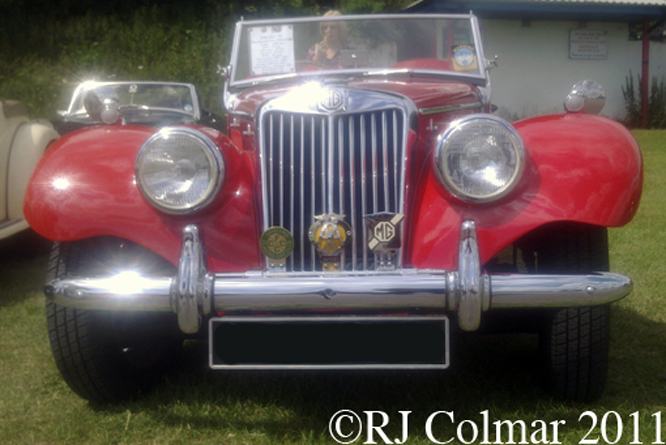
MG TF, Castle Combe, C&SCAD

3000 TA’s were up until 1939 when the TA was replaced by the TB of which just 379 were built prior to the requirements of the War Office taking precedence of the MG manufacturing facilities.
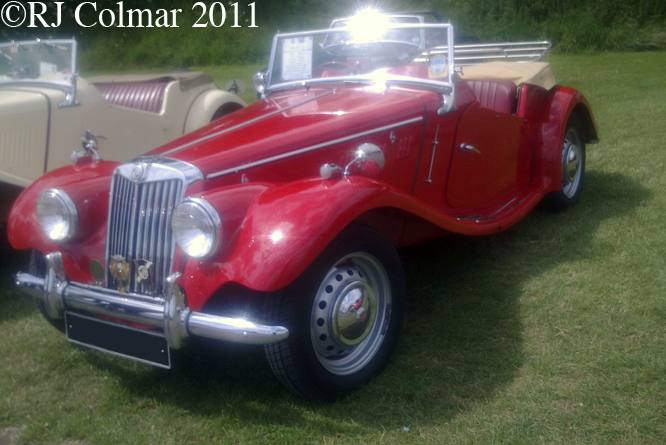
MG TF, Castle Combe, C&SCAD

After the war with the huge demand for vehicles world wide the MG TC came into it’s own with 10,000 examples built from 1945 to 1950, when the TD, which started to break away from the look of the older models with it’s relatively small 15″ steel road wheels and chrome bumpers, was launched. 30,000 of these phenomenal export earners were built with 23,488 of them going to the USA and just 1,656 remaining for UK showrooms !
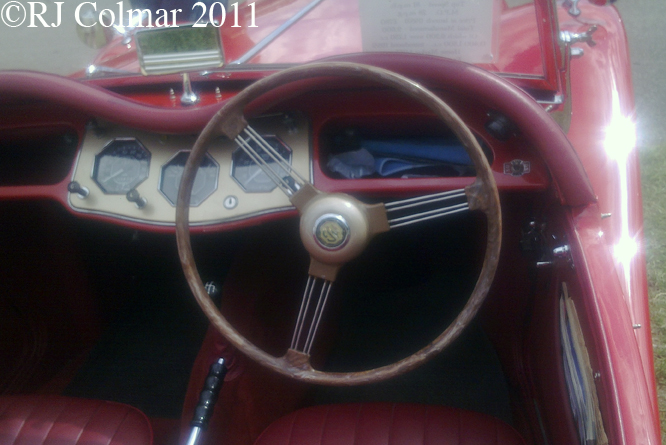
MG TF, Castle Combe, C&SCAD

The TF as seen in todays photos at Castle Combe during last years Classic & Sportscar Action day was launched 1953 featuring headlights integrated with the front wings, for the first time in the T series. This 1954 model was fitted with a 1250 cc 76 cui motor with 56 hp which would take the car from rest to 60 mph in 18.9 secs and on to a top speed of 81 mph and return 28 mpg.
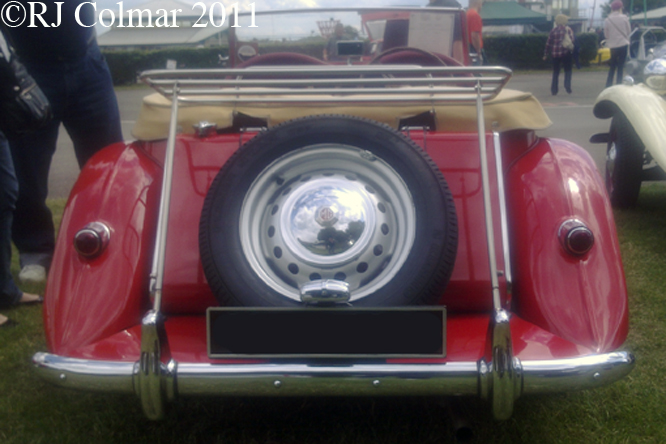
MG TF, Castle Combe, C&SCAD

Over three years 9600 TF’s were manufactured of which all but 1057 were exported. Eagle eyed GALPOT readers with a solid state hard drive may recall the Replica Prize Winning Brazilian Avalone 11 was fashioned after the MG TF.

Thanks for joining me on this ‘T for 2’ edition of ‘Gettin’ a li’l psycho on tyres’, wishing all GALPOT contributors & readers a romantic Valentines Day, I hope you will join me again tomorrow. Don’t forget to come back now !

Share

Foot Warmer – TVR 400 SE

The story of the TVR 400SE begins with Oliver Winterbottom who, after designing the wedge shaped Lotus Eclat and second generation Lotus Elite models launched 1974, was responsible for designing the wedge shaped TVR Tasmin launched in 1980.

TVR 400 SE, Castle Combe

Over the years the Tasmin which was originally available with 2 litre / 122 cui or 2.8 litre / 170 cui Ford sourced motors grew into a second incarnation with a 3.5 litre / 215 cui V8 that traces it’s history back through the Rover 3.5 litre Coupé to the aluminium V8 Buick 215 designed by Joe Turley for Buick Oldmobile and Pontiac vehicles launched in 1961.

TVR 400 SE, Castle Combe

Launched in 1983 the TVR Tasmin 350i which became the plain TVR 350i in 1984 had a 190 hp and a 130 mph capability. With it’s Rover power the 350i became marketable in the middle east where there was, and is, a resistance to anything associated with Ford due to it’s dealings with Israel. In 1984 a 390 SE engine package was offered to 350i customers with a blueprinted version of the V8 motor with 3905 cc / 238 cui cylinder capacity, high lift cam shaft large valves and Cosworth machined pistons which brought the power up to 275 hp.

TVR 400 SE, Castle Combe

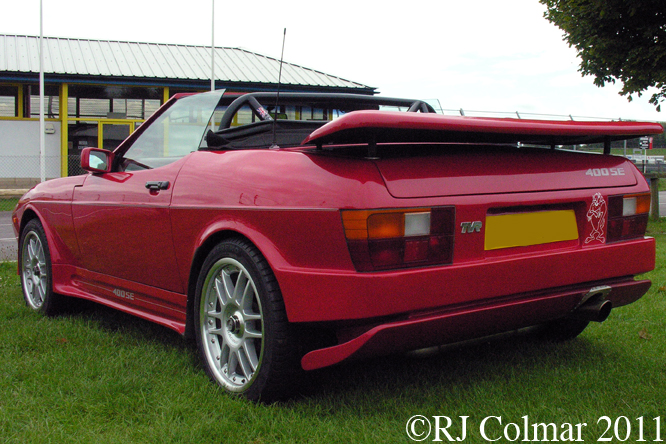
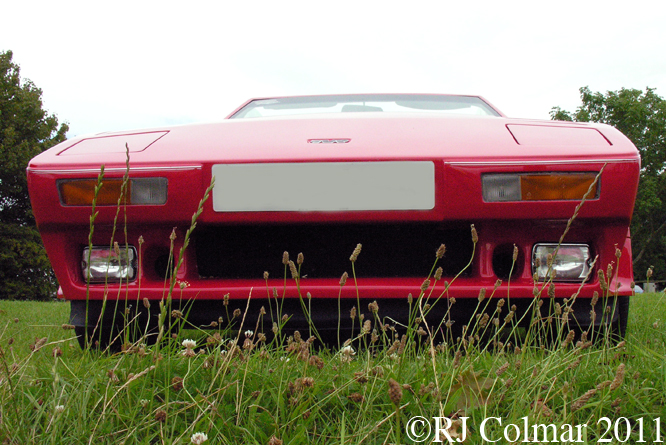
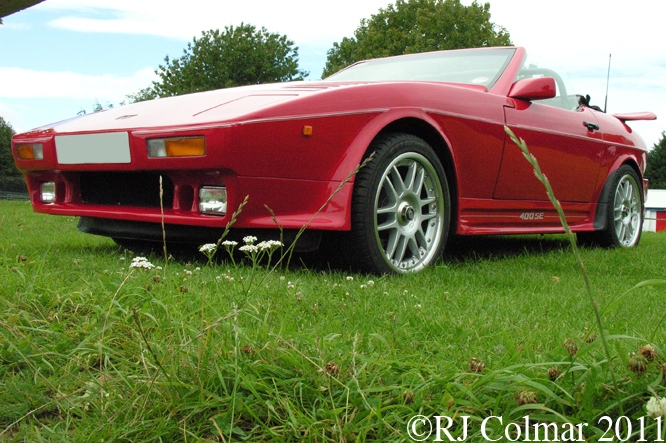
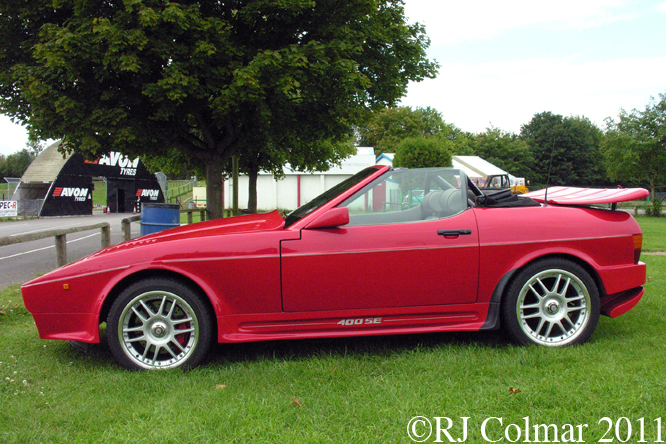
In 1986 further improvements offered 300 hp from the 420 SE spec which could be ordered with a lighter and slightly more rounded 420 SEAC spec body. For 1988 introduced the 3948 cc / 240 cui 400 SE which offered marginal performance improvements over the 390 SE and used the Series 2 390 SE body with asymmetrical near side louvers in the bonnet and a slightly more tidy nose as seen on the example above.

TVR 400 SE, Castle Combe

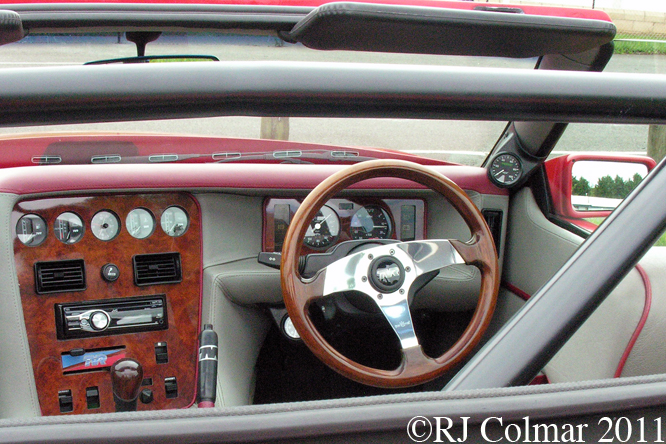
With the increase in engine size and output from 100 – 160 hp for the Tasmin models to 275 hp for the 400 SE seen here the transmission tunnel was increased in size to accommodate ever larger transmissions required to cope with the extra horsepower and so the foot wells have decreased in size. The extra heat generated by the more powerful motors allegedly also means occupants feet are more exposed to heat soak than was the case in the original Tasmin.

TVR 400 SE, Castle Combe

Equipped with 8J x 15 inch wheels and ventilated disc brakes the 400 SE could reach 60 mph from rest in 5.6 seconds or 100 mph in 14.8 seconds and max out at 145 mph. In 1989 a final version of the TVR Wedge was introduced the 320 hp 450 SE good for 150 mph.

TVR 400 SE, Castle Combe

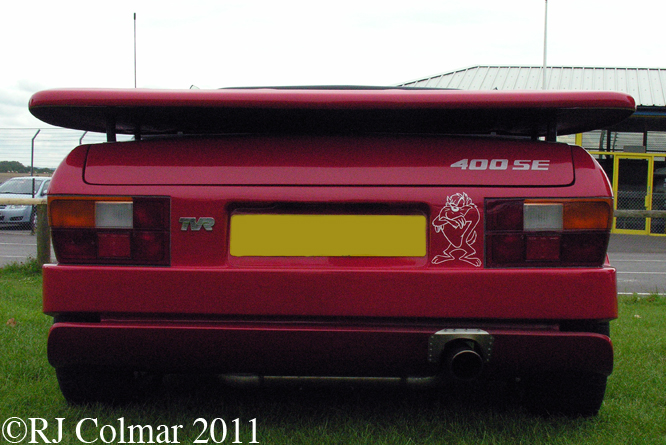
The rear deck spoiler on this 400 SE appears to have been sourced from the ’86-’88 420 SEAC which had up to 20% of its body panels made from light weight kevlar. The 400SE is renowned for making a phenomenal noise and exhilarating acceleration.

Thanks for joining me on this ‘Foot Warmer’ edition of ‘Gettin’ a li’l psycho on tyres’ I hope you will join me again tomorrow. Don’t forget to come back now !
Share

Brenda’s Makeover, Ford Escort Mk II Estate 1300 Base

The original Ford Escort was designed by Ford of Britain, it’s Mk II replacement, based on the original platform power trains and running gear, was designed in a collaboration between Ford of Britain and Ford of Germany under the code name Brenda.

Ford Escort 1300L, Castle Combe

The straight edged slab sided Mk II was launched in January 1975 in two and four door plus estate forms which came with equipment and trim level variations known as Base, Popular, L, GL, Ghia, Sport, RS Mexico and RS 2000. with 4 cylinder engines from 1 litre / 61 cui (Italian Tax Exempt Model only) to 2 litre / 122 cui which was used in the RS 2000 models fitted with the overhead cam Pinto motor. There was also a very successful competition version the 2 door RS 1800 which was fitted with the twin cam Cosworth BDA motor. 400 RS 1800 should have been built to meet the competition regulations that applied at the time but it is thought only around 50 RS1800’s were built for road use.

Ford Escort 1300L, Castle Combe

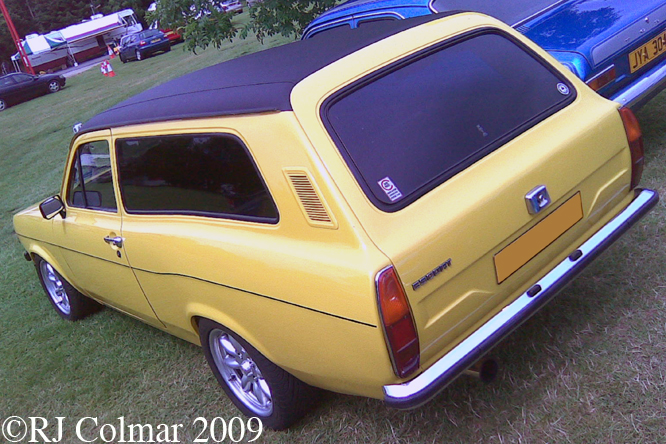
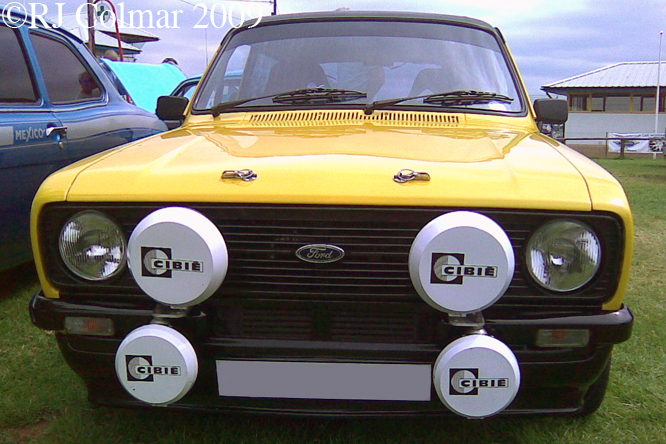
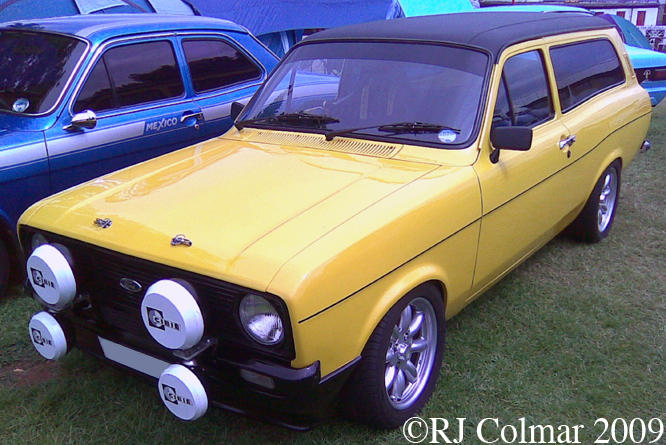
The Estate version of the Mk II Escort had the new square front grafted onto the original coke bottle styled Estate rear end from the A pillar back one cannot tell the Mk I and Mk II apart. This particular car is a Base model, probably the only variation still supplied with the large round head lights apart from the commercial van, all the other had then ‘modern’ square head lights. This particular car has non standard 1/4 front bumpers, vinyl roof and Minilite wheels along with a 2 litre / 122 cui motor.

Ford Escort 1300L, Castle Combe

My parents bought a brand new Diamond White Mk II Escort Estate 1.3 GL in 1977 and though I did not get to drive it much I had a number of adventures in it, with the fold down rear seat a mattress and sleeping bag it made a comfortable alternative to sleeping in a tent, even though it was a complete non starter when it came to a traffic light showdown.

The Mk II Escort along with the contemporary Ford Cortina and Fiesta models locked out the top three in the UK sales charts during most of it’s production run up until 1980.

Thanks for joining me on this ‘Brenda’s Makeover’ edition of ‘Gettin’ a li’l psycho on tyres’, I hope you will join me again tomorrow. Don’t forget to come back now !
Share

Dominating Réunion – Alpine A110 1600S

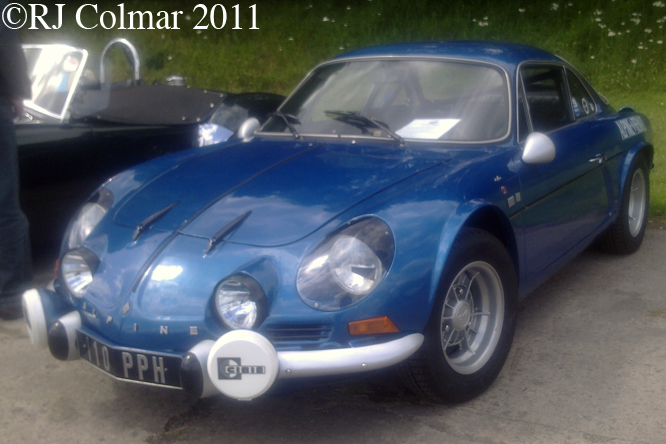
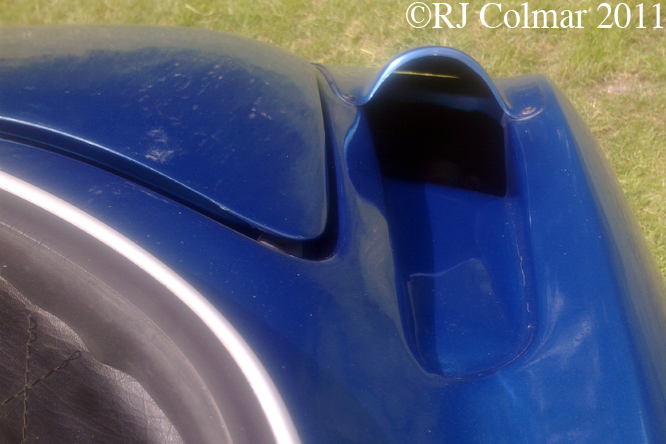
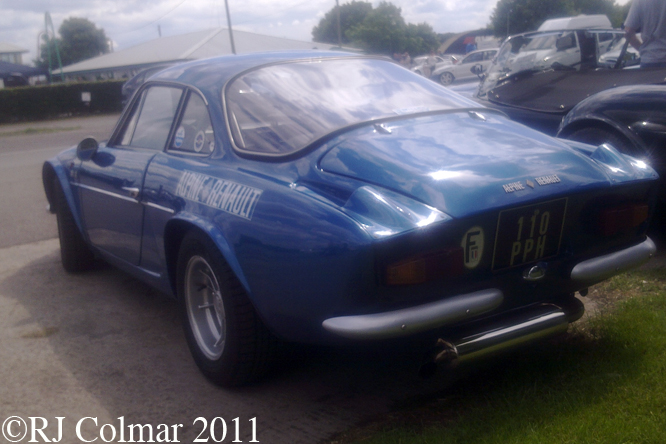
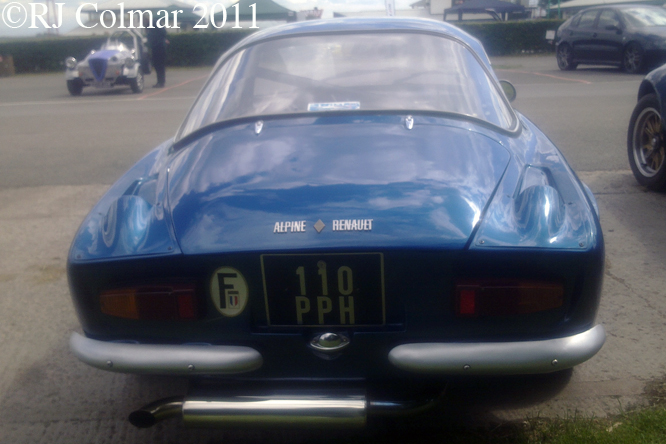
Jean Rédélé’s rear engined Alpine A110 “Berlinette” launched in 1961 was an evolution of the A108. Distinguishing features include proprietary Renault R8 running gear in place of the Renault Dauphin running gear of the A108 and a larger tail for the fiberglass body to accommodate the larger R8 derived motors.

Alpine Renault, A110, 1600S, Castle Combe C&SCAD

The cars were manufactured at the Dieppe factory, which today operates under the the Renault Sport banner, with further cars being assembled in Mexico under the name Dinalpin and perhaps most unlikely of all from 1967 to 1969 in Bulgaria under the name ‘Bulgaralpine‘.

Alpine Renault, A110, 1600S, Castle Combe C&SCAD

Over the years of production up to 1977 the choice of straight 4 cylinder engine sizes ranged from 95 hp 1.1 liters / 67 cui through to 125 hp 1.6 liters / 97 cui, the latter giving the a top speed of 130 mph and zero to 60 mph in 7 seconds.

Alpine Renault, A110, 1600S, Castle Combe C&SCAD

With these sorts of performance figures the vehicle was a shoe in for a successful competition career in particular on tarmac rallies, Jean Vinatier won the French National Rally title in 1969 in an A110 and both Ove Anderson (1971) and Jean-Claude Andruet (1973) won the Monte Carlo Rally in A110’s the latter victory contributing to Alpine Renault, rebranded after Renault’s 1970 buy out, winning the first World Rally Championship in 1973.

Alpine Renault, A110, 1600S, Castle Combe C&SCAD

The A110 cars also have a successful track racing history in Europe and the United State still winning its class in races as late as 1980.

During the course of finding out about the A110 I have found several inaccuracies one that the A110 was inspired by Colin Chapmans Lotus Elan, this is not true the A110 preceded the announcement of the Elan by 1 year. Also I have seen the A110 mentioned in connection with the Brazilian assembled Willys Interlagos, the Interlagos built from 1962 to 1966 and most successfully raced by Wilson Fittipaldi, brother of twice world champion and Indy 500 winner Emerson, was based on the A110’s predecessor the A108.

Alpine Renault, A110, 1600S, Castle Combe C&SCAD

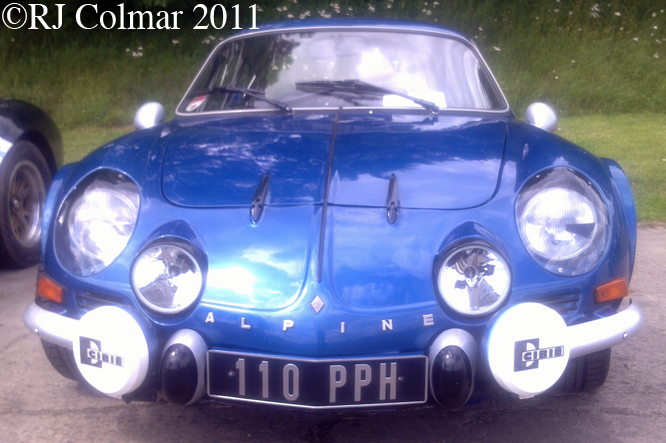
This particular vehicle seen at Castle Combe Classic and Sport Car Action Day was originally exported to Renault St Denis, Il de La Réunion out in the Indian Ocean between islands of Madagascar and Mauritius, in 1973. It immediately made an impact sweeping Réunion’s two biggest events the ‘Mille Kilometers‘ and ‘Tour de la Réunion‘ from 1973 to 1975. The car was acquired by it’s current owner in 1991.

Thanks for joining me on this ‘Dominating Réunion’ edition of ‘Gettin’ a li’l psycho on tyres’ I hope you’ll join me again. Don’t forget to come back now !
Share

Quintessential British Sports Car – MG J2

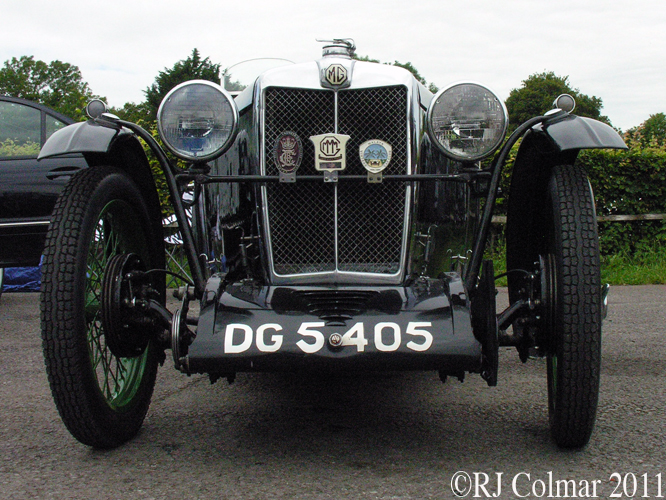
The MG J series produced from 1932 to 1934 came in 4 distinct models the J1 a 2 door 4 seat open or closed sports car with a 847 cc / 51 cui motor, J2 a two seater open only version, as seen in todays blog, of the J1, J3 similar to a J3 but with a 750 cc / 45 cui supercharged motor and the J4 a pure racing version of the J3 with a 72 hp supercharged motor.

MG J2, Castle Combe, Wessex Sprint

The 1932 J2 is easily distinguishable by the front cycle style mud guards which in 1933 were replaced with front mudguards joined by running boards to the rear wings a feature that was to remain with all subsequent MG sports cars all the way through to the TF model which was manufactured until 1955.

MG J2, Castle Combe, Wessex Sprint

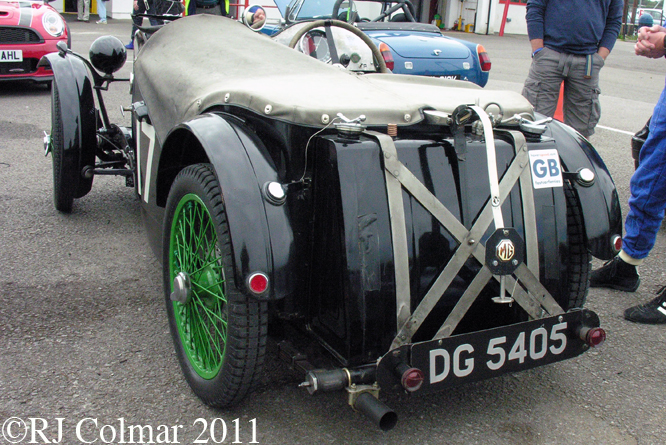
The 36 hp motor, was similar to that used in the earlier M-Type looked at last week, featuring a cross flow cylinder head and twin SU carburetors but only a two bearing crankshaft which had a limited life at maximum rpm. The Castrol GTX oil breather catch tank is a relatively recent requirement for competition.

MG J2, Castle Combe, Wessex Sprint

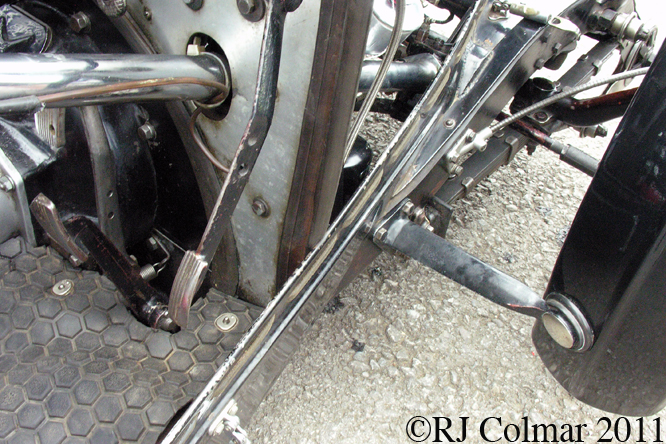
Lifting the side opening bonnet panels of the J2 reveals the four speed gearbox and foot wells. The steering column operates Marles steering gear and the drivers side front brake cable can be seen emerging from the chassis rail above.

MG J2, Castle Combe, Wessex Sprint

The two humped dash scuttle of the J Series would turn out to be another trade mark MG feature that was continually carried forward over twenty years to the 1955 MG TF. Note the how the potential crankshaft saving engine revolution counter dominates the dash board instrumentation.

MG J2, Castle Combe, Wessex Sprint

Just over 2000 J2’s were built out numbering the combined total of all the other J series MG’s by more than 2 to 1, this particular example, seen at last years Wessex Sprint, was acquired by Mike Hawke for £85 in October 1953, the car cost just short of £200 new in 1932.

Mike is known to have campaigned this car successfully at both Castle Combe and Silverstone before passing the car on to his son Jeremy who won his class at Castle Combe on the day these photo’s were taken.

Thanks for joining me on this Quintessential British Sports Car edition of ‘Gettin’ a lil psycho on tyres’ I hope you will join me tomorrow when I’ll be featuring a hot version of “The car you always promised yourself. Don’t forget to come back now !
Share

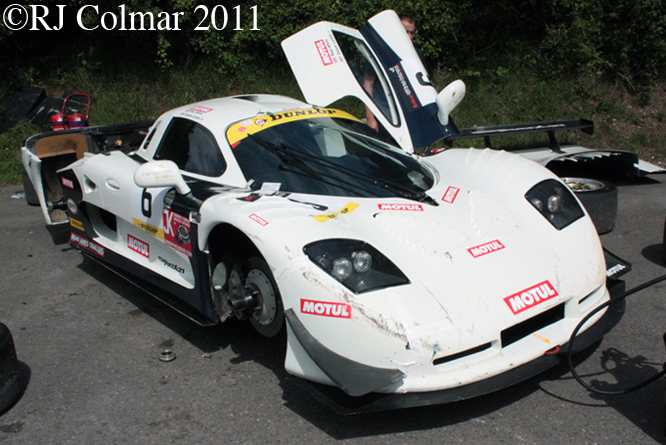
Racing Dispensation – Mosler MT900 GT3

Warren Mosler has been at the fore front of automotive production technology ever since he launched the curiously proportioned Consulier GTP in 1985 a car that lays claim to being the worlds first carbon fiber and Kevler bodied vehicle to go into production.

Mosler GT3, Strata 21, Paul White, Calum Lockie, Castle Combe

After around 100 Consuliers had been produced Consulier Industries founded by Mosler spun off it’s automotive division and renamed it Mosler Automotive who produced a further Consulier GTP based vehicles up until 2000 when Mosler Automotive turned it’s attentions to the Mosler MT 900 wwich was designed by Rod Trenne who counts work on the Corvette C5 among his credits.

Mosler GT3, Strata 21, Paul White, Calum Lockie, Castle Combe

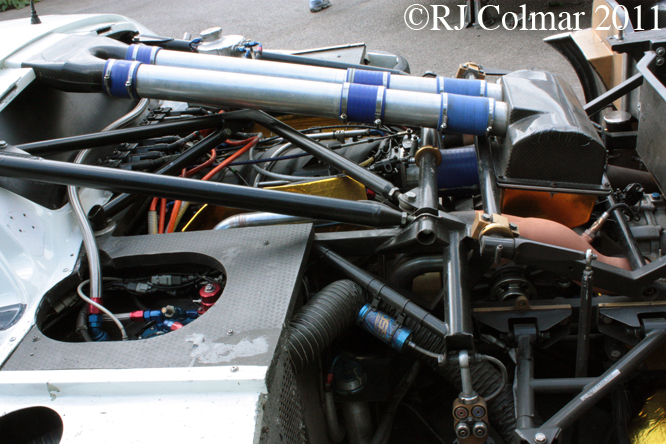
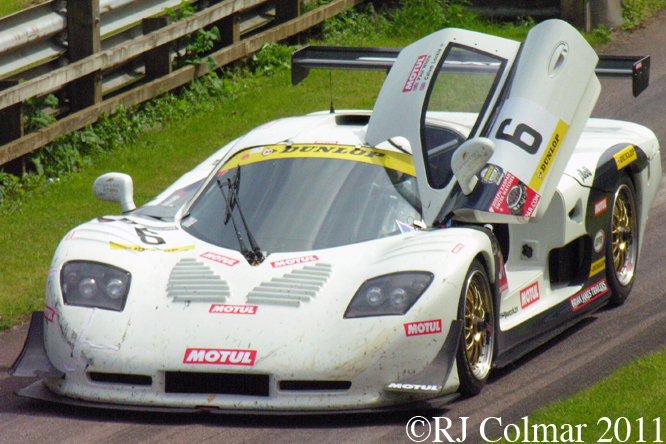
Like the Consulier and low volume Mosler Intruder and Raptor models that followed, the MT900 has a Kevlar body covering a carbon fiber skinned aluminium honeycombe composite monocoque made with bonded laser cut panels.

Mosler GT3, Strata 21, Paul White, Calum Lockie, Castle Combe

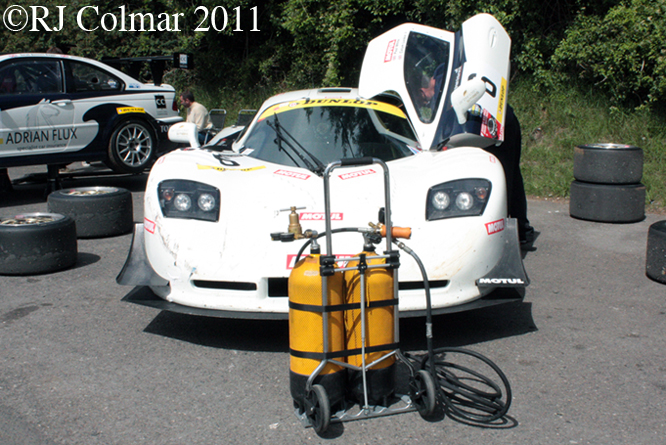
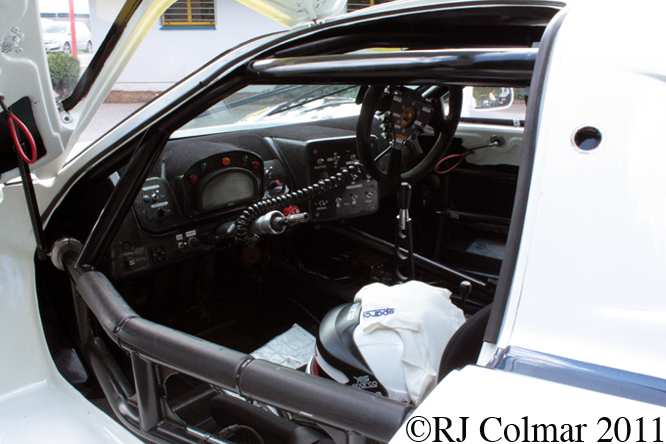
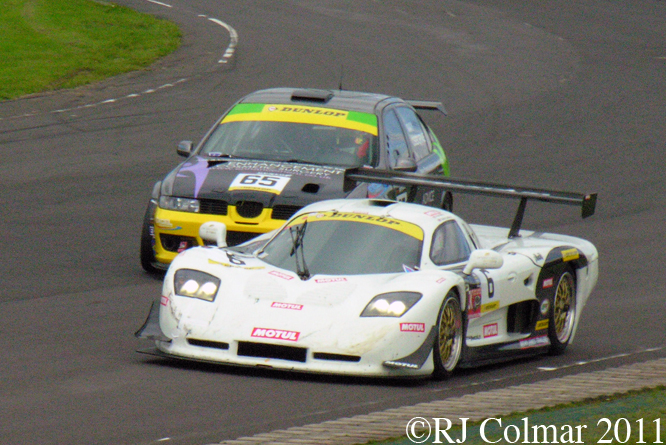
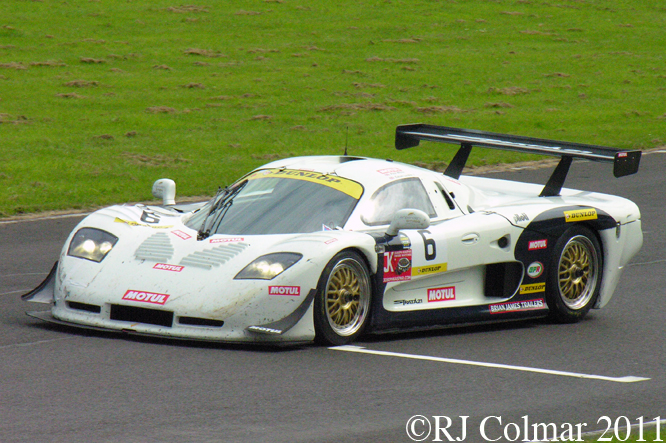
It is thought that only the prototype MT900 road car was ever produced, in 2001, however it is estimated that 11 MT900R versions were produced for GT2 racing with further GT3 versions like the Strata 21 team car seen here at Castle Combe. The only problem is that GT3 requires a certain number of cars to be built to qualify as a production racing car and this number has never been met, so that the car only races with special dispensation in GT3 spec in the UK, Belgium, Spain and Australia.

Mosler GT3, Strata 21, Paul White, Calum Lockie, Castle Combe

The MT900 GT3 is fitted with a dry sumped all alluminium Corvette LS7 motor with titanium valves and connecting rods tuned to give around 520 hp for events lasting between 2 and 24 hours, though 580 hp is available for short periods at higher less enduring rpm.

Mosler GT3, Strata 21, Paul White, Calum Lockie, Castle Combe

Despite only running with special dispensation of the 52 events the MT900 GT3 version is known to have participated in it had scored 13 wins and 2 class victories between 2007 and 2011.

Mosler GT3, Strata 21, Paul White, Calum Lockie, Castle Combe

Dave Sheard and Steve Scott are responsible for preparing the Strata 21 Mosler MT900 GT 3 for the Britcar Championship with owner Paul White sharing the driving with hired hand Calum Lockie.

Mosler GT3, Strata 21, Paul White, Calum Lockie, Castle Combe

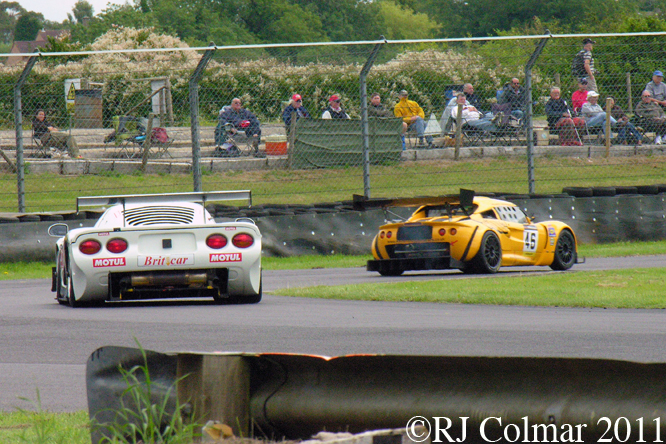
After an unspecified mishap during qualifying at Castle Combe Calum Lockie started the 2 hour Britcar race from the back of the grid and with Paul White taking over for the second half of the race the #6 came in 4th overall.

Mosler GT3, Strata 21, Paul White, Calum Lockie, Castle Combe

By the seasons end White and Lockie were crowned Britcar Class 1 Champions having beaten Spanish rivals Javier Morcillo and Manuel Cintrano in the older Azteca Motorsport MT900 GT3.

Hope you have enjoyed this Racing Dispensation edition of ‘Gettin’ a li’l psycho on tyres’ and that you will join me again tomorrow for Ferrari Friday. Don’t forget to come back now !
Share

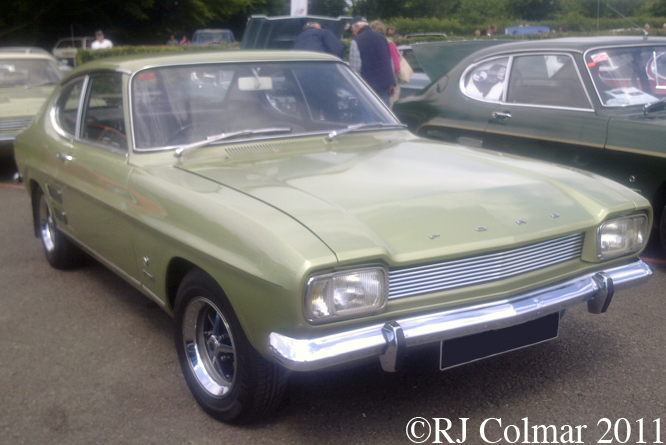
The Car You Always Promised Yourself – Ford Capri 1600 L

The concept of the ‘pony car’ is generally agreed to have been formulated by Ford when it popped a sports car body onto saloon / sedan running gear of the Ford Falcon and called the result the Ford Mustang.

Ford Capri 1600 L, C&SC Action Day Castle Combe

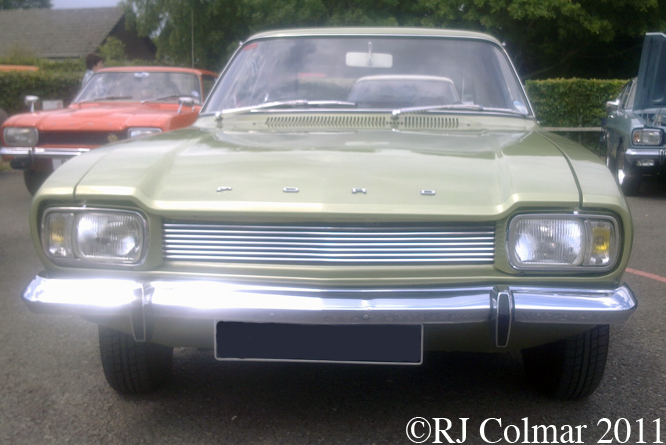
By 1969 Ford in Europe emulated their US cousins by plonking a cool coupé body on the running gear of the evergreen Ford Cortina Mk2 Saloon / Sedan and marketing it as the “Car You Always Promised Yourself“.

Ford Capri 1600 L, C&SC Action Day Castle Combe

And for many people it really was over 1 million of the Mk1 versions were sold between 1969 and 1974 with a range of engines from 1.3 litres / 79 cui to eventually 3.1 litres 189 cui with an extremely limited edition homologation racing special having a 24 valve 3.4 litre / 207 cui motor fitted.

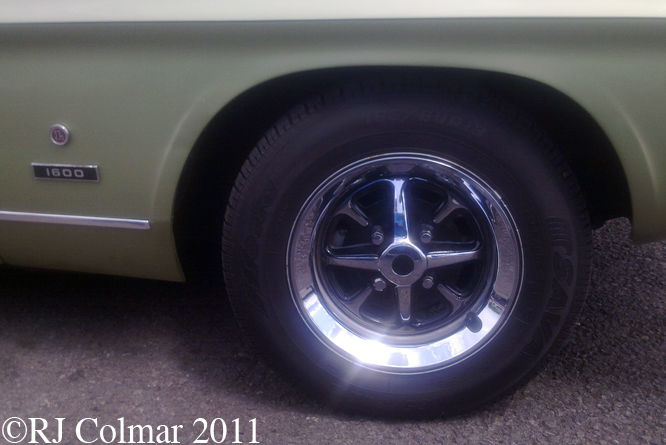
Ford Capri 1600 L, C&SC Action Day Castle Combe

The Rostyle steel wheels on this example were identical to those found on the Cortina 1600E and usually fitted to the XL Capri variants, this 1969 1600 L fitted with 4 cylinder ‘Kent’ motor normally would have far more utilitarian steel wheels fitted with hub caps when it left the factory.

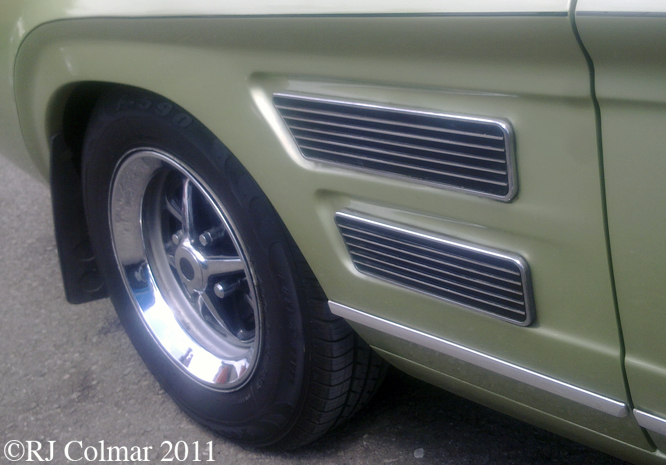
Ford Capri 1600 L, C&SC Action Day Castle Combe

The intakes ahead of the rear wheels are dummies, just like those on the original 1964 Ford Mustang which inspired much of the design philosophy of the Capri.

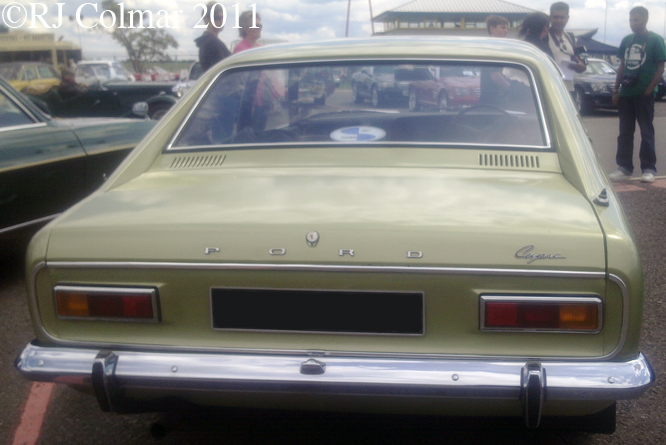
Ford Capri 1600 L, C&SC Action Day Castle Combe

The Capri Mk 1 was sold without the Ford Badges in the United States by Lincoln – Mercury Dealers and was marketed as the ‘Sexy European‘ perhaps reflecting the popularity of this model among the stereo typical hedonist ‘Medallian Men’ of Europe.

Thanks for joining me on this ‘Sexy European’ edition of ‘Gettin’ a li’l psycho on tyres’, I hope you’ll join me again tomorrow when I will be looking at a rare contemporary American GT racing car. Don’t forget to come back now

Share