Tag Archives: Chapman

Leased Winner – Lotus 18

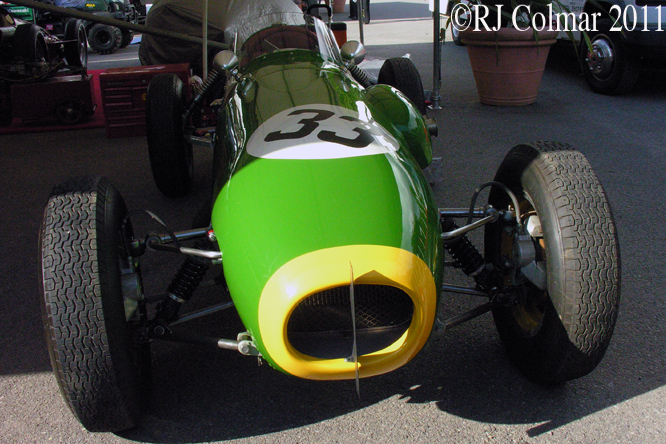
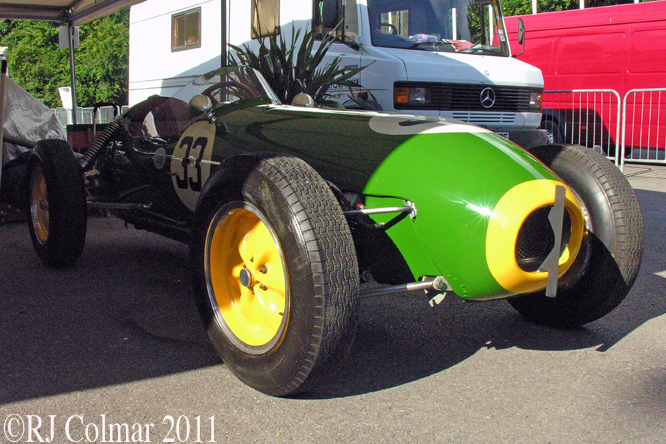
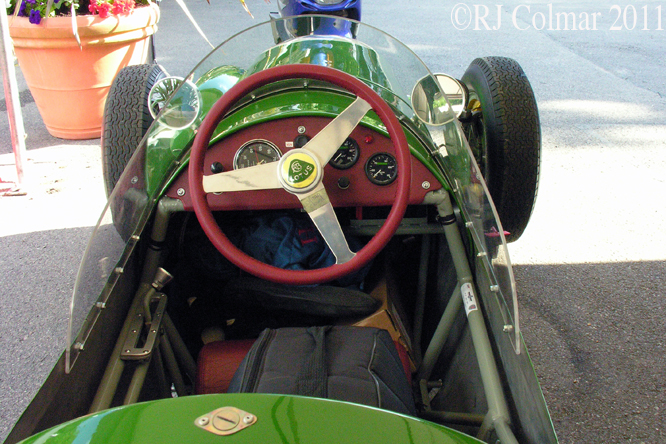
Following the lead set by Cooper Cars winners of the 1959 World Manufacturers Championship for Formula One cars Colin Chapman took the rear engine plunge and built the Lotus 18 open wheeler that could be entered with the correct engine spec in to either Formula Junior, Two or One races.

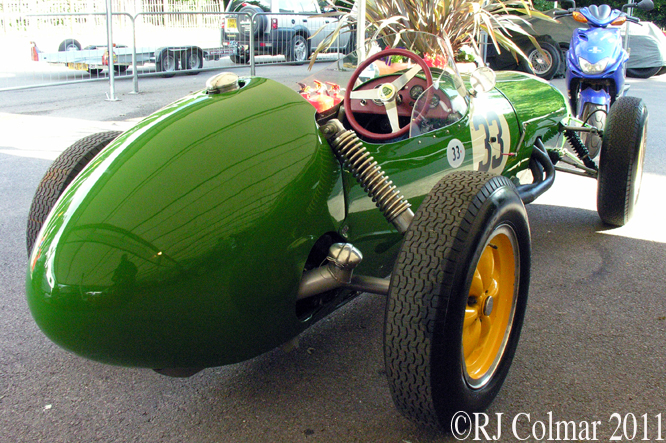
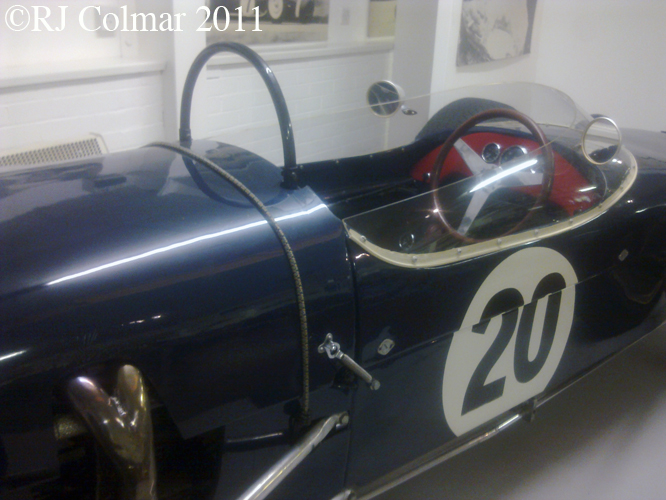
Lotus 18, Donington Museum

Rob Walker, heir to the whiskey family of the same name, leased a Lotus 18 with a Coventry Climax motor for Stirling Moss to drive in the 1960 Grand Prix season. On the cars debut, in Monaco, Stirling qualified on pole and eventually won the race, giving Lotus their first Formula One victory after both Jo Bonnier in a BRM and Jack Brabham driving a Cooper Cliax had spent time leading the intermittently wet race.
http://www.youtube.com/watch?v=0yH9fiJX1_s

An accident at Spa interrupted Stirling’s 1960 season but he bounced back with a win at the season ending US Grand Prix again driving this Lotus 18 for entrant Rob Walker. The following season a smaller Coventry Climax motor was fitted to this chassis, seen here at Donington Park Museum, as required by the new regulations for the 1961 season.
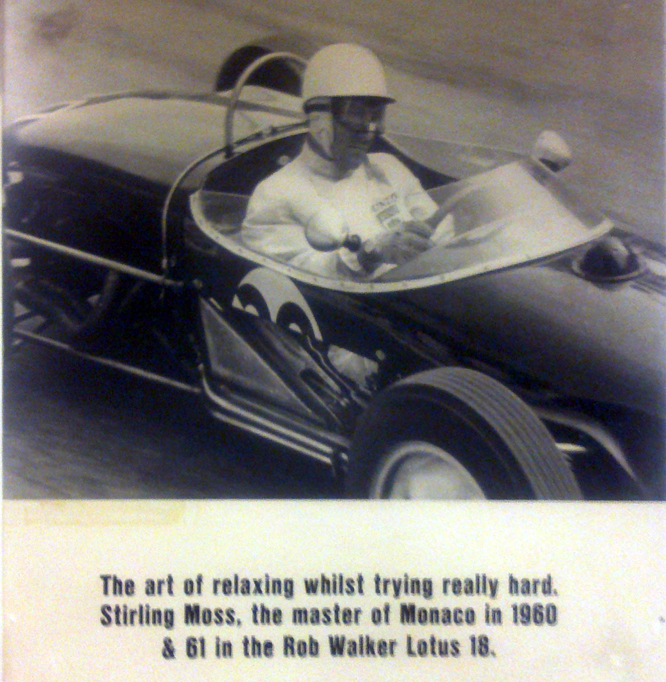
Stirling Moss, Lotus 18, Monaco 1961

(Copyright holder unknown image will be removed or credited upon request)

Amazingly Stirling Moss managed to not only win pole at Monaco in 1961 ahead of three more powerful shark nose Ferrari’s but then, after dicing with Richie Ginther in his Ferrari, proceeded to win the race, a then record setting third Monaco Grand Prix victory.
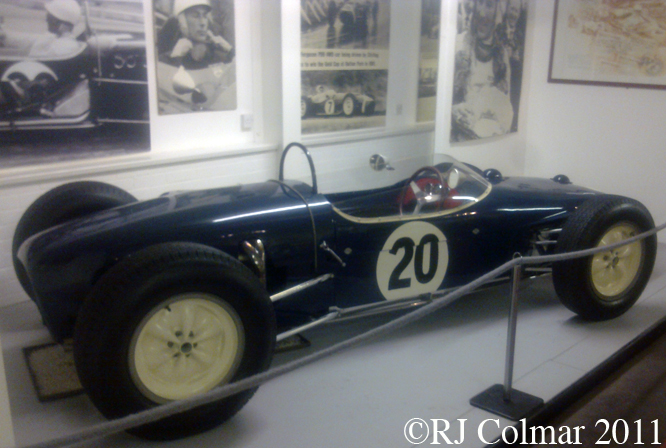
Lotus 18, Donington Museum

Later in the season Stirling Moss would take his final Formula One victory driving the Lotus 18, fitted with newer Lotus 21 bodywork, at the German GP at the Nurburgring. At the start of the 1962 season Moss was lucky to escape with his life from a career ending accident at Goodwood before the Grand Prix season got under way.

Thanks for joining me on this Stirling Moss edition, of ‘Gettin’ a li’l psycho on tyres’, I hope you will join me again tomorrow. Don’t forget to come back now !

Share

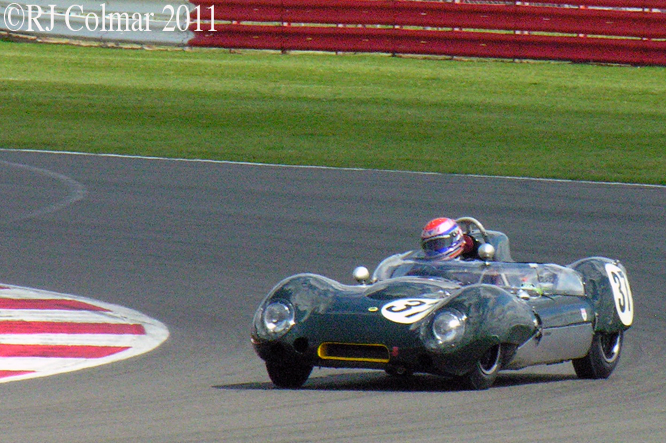
Low Rider – Lotus 15

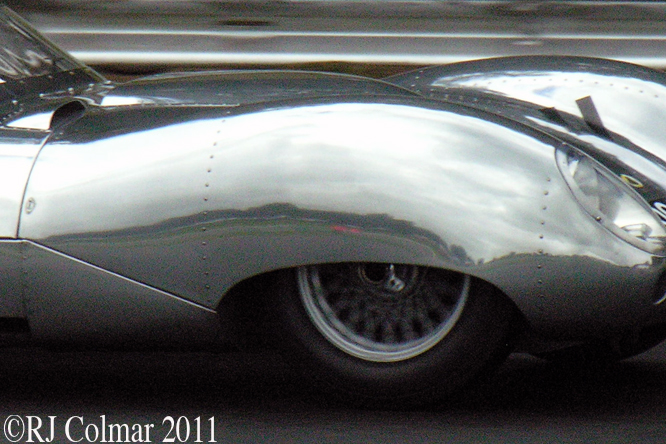
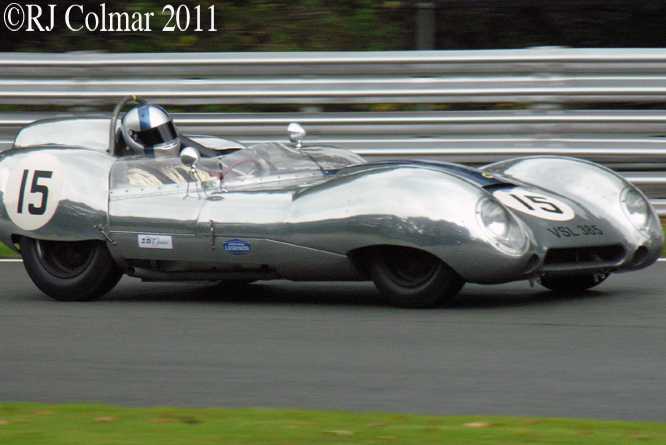
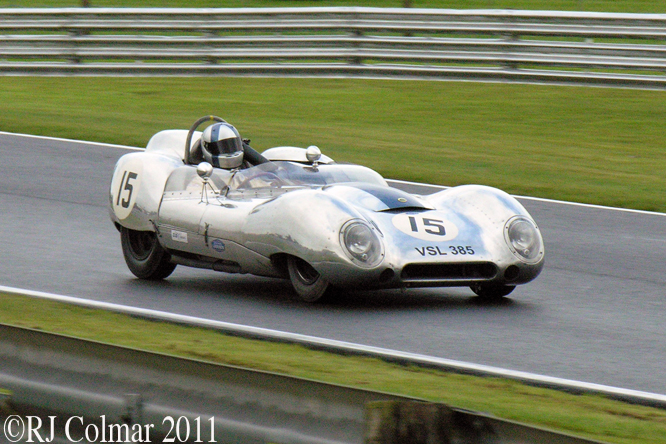
The Lotus 15 was built to accept larger motors than had been possible with the hitherto very successful Lotus XI.

Lotus 15

Built to take 4 cylinder Coventry Climax motors of between 1.5 litres / 92 cui and 2.5 litres / 153 cui the Lotus 15 stood just 24″ tall. The #37 built in 1958 seen at Silverstone above of Philip Walker and Danny Wright is powered by a 2 litre / 122 cui motor.

Ewan McIntyre, Lotus 15, Oulton Park, 2011

In order to lower the centre of gravity and improve the aerodynamics and handling the Coventry Climax 4 cylinder motors were 17 degrees off horizontal, one degree more than the 1958 Epperly Belond Exhaust Special that won the Indy 500 in 1958 and 1959, under the Williams and Pritchard designed and created aluminium skin.

Ewan McIntyre, Lotus 15, Oulton Park, 2011

The combination of slippery shape and good handling allowed Graham Hill to record 5th best time in practice at Le Mans in 1958 with a 2 litre Lotus 15 ahead of numerous 3 litre cars entered in the race.

Ewan McIntyre, Lotus 15, Oulton Park, 2011

However the Lotus 15 was hampered by unreliability Hill managed only three laps at Le Mans in 1958 before he had to retire with head gasket failure. It has been suggested that the Lotus 15 suffered a lack of development and attention to detail due to Colin Chapmans efforts to get his open wheel programme under way, along with development of the Lotus Elite road car. However the fact that three distinct variations of the 15 were built between 1958 and 1960 suggests this might not have been the case.

Ewan, McIntyre, Lotus 15, Oulton Park, 2011

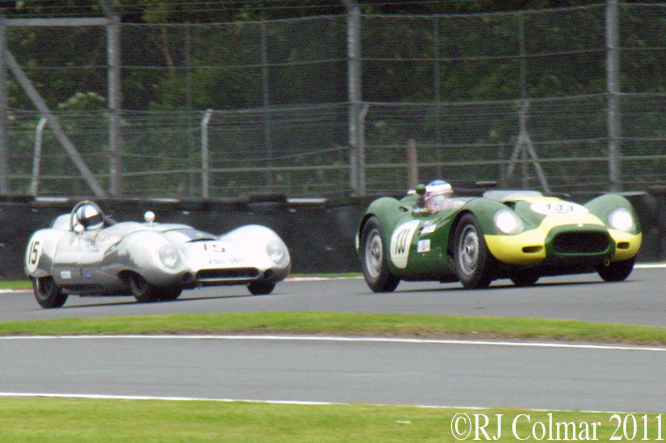
The Lotus 15 was not as successful as the Lotus XI and only 27 were built. Despite the lack of success today examples of the Lotus 15 like the the #15 of Ewan McIntyre seen chasing the #133 3.8 litre / 231 cui Lister Jaguar of Jon Minshaw and Martin Stretton at Oulton Park above are still capable of punching well above their weight in Historic events.

Thanks for joining me on today’s edition of ‘Gettin’ a li’l psycho on tyres’, I hope you will join me again tomorrow. Don’t forget to come back now !
Share

You can’t go wrong with a Bristol under the bonnet #2 – Lotus X

The Lotus X was a variant of the Lotus marks VIII and IX, built in 1955 to accommodate a larger engine than its siblings.

Lotus X - Silverstone Classic

Using essentially a strengthened chassis the Lotus X carried a 6 cylinder 2 litre /122 cui Bristol engine as used by Lotus competitors Cooper and Lister.

Only 6 or 7 Lotus Mk X’s are thought to have been built and some of them raced with Turner or Coventry Climax motors instead of the Bristol as used by Team Lotus.

The Lotus X was driven to victories in both Europe and the United States. This particular Bristol engined example is seen at the recent Silverstone Classic with Nick Adams at the wheel. Nick and Co Driver Adrian Hall drove this car to three straight victories in 2008 and were awarded the Woodcote Cup.

Thanks for joining me on this Britol Powered edition of “Gettin’ a li’l psycho on tyres’, I hope you will join me again tomorrow. Don’t forget to come back now !
Share

Wobbly Web Wheels – Lotus 12

Despite only being fitted with mock up engine and all new rear transaxle made of wood the Lotus 12 with a chassis made of Reynolds 531 tubing looked sensational to the select members of the press lucky enough to it in the stable block at the back of a hotel in Hornsey in October 1956.

Lotus 12

Lotus 12, Goodwood Festival of Speed, June 2011

The space frame chassis had independent wishbone suspension on the front and was to be powered by a 4 cylinder Coventry Climax motor built to meet the then second tier Formula 2 regulations. The gearbox mounted to the rear transaxle was to feature a sequential shift as used on motor cycles.

Lotus 12

Lotus 12, Goodwood Festival of Speed, June 2011

Typical of designer Colin Chapmans maxim to add lightness the magnesium ‘wobbly web’ wheels, inspired by a design Colin had seen on a US military aircraft, were fitted with six wheel nuts instead of the more common central knock off nut because Formula 2 races did not, as a general rule, require pit stops to change tyres and the six small wheel nuts weighed less than the one knock off nut.

Lotus 12

Lotus 12, Goodwood Festival of Speed, 2011

Colin Chapmans first foray into open wheel racing under his own Lotus banner while innovative was not as successful in 1957 as had been the Vanwall for which Colin had designed the chassis, but this did not prevent him from fitting the 12 with an oversize version of the Formula 2 Coventry Climax engine and running two examples at the Monaco Grand Prix in 1958 for Graham Hill and a second F2 spec car for Cliff Allinson to mark Lotus first entry into the top Formula One tier of the sport.

Lotus 12

Lotus 12, Goodwood Festival of Speed, 2011

The first two Lotus 12’s featured de Dion suspension but Chapman refined his design by fitting his own version of the Macpherson struts fitted with universal joints that became known as the Chapman strut, a system also used on the Lotus Elise. In Formula One races the Lotus 12 scored some promising sixth place finishies and a remarkable 4th place in Belgium but the most important Colin Chapman was now playing on the big stage where he would leave an indelible mark right up until his untimely demise im 1982.

Thanks for joining me on this Wobbly Web edition of ‘Gettin’ a li’l psycho on tyres’ I hope you will join me again tomorrow when we will be looking at a big cat. Don’t forget to come back now !

Share

Designed By An Accountant #2 – Lotus Elite

After he had finished with his Lotus VI PGP182 complete with a body of his own design Peter Kirwan Taylor purchased one of the last Doretti sports cars and ‘took the back off’ and turned it into a Coupé too meet his needs.

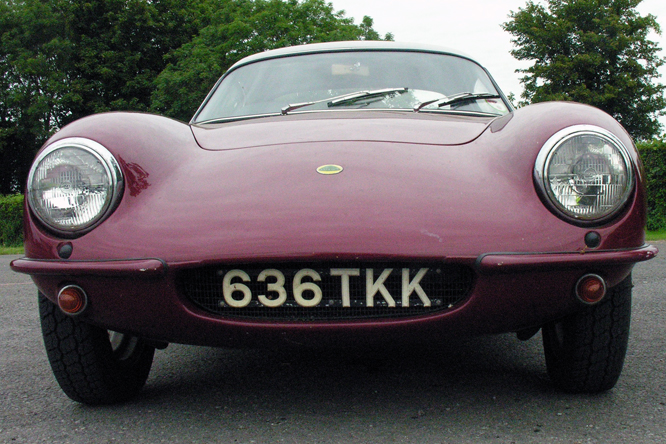
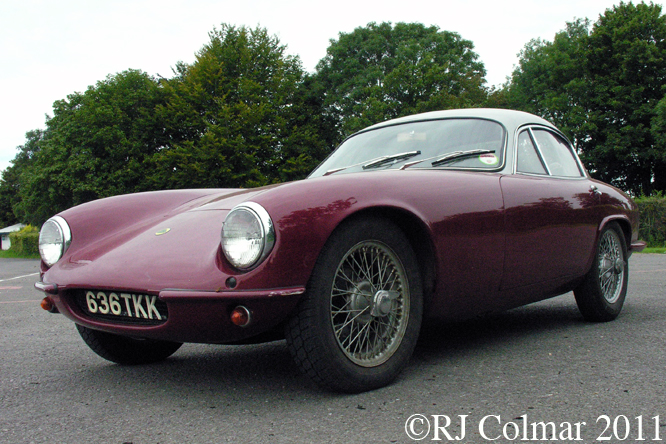
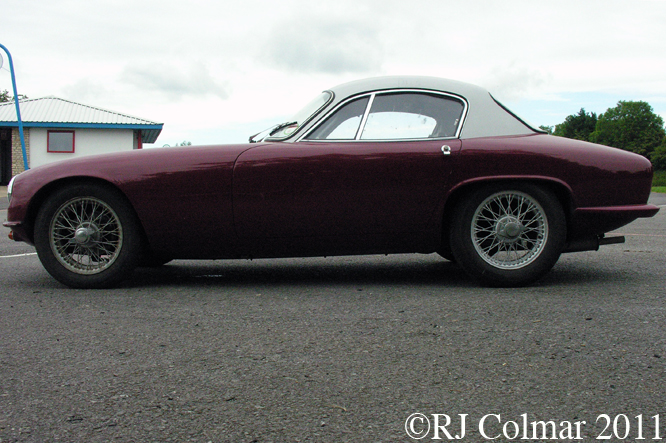
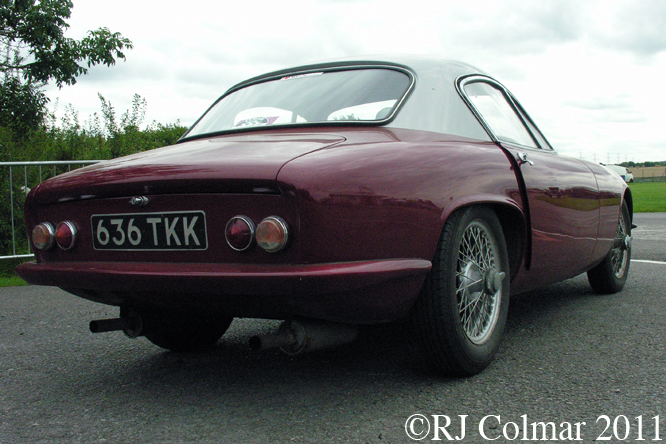
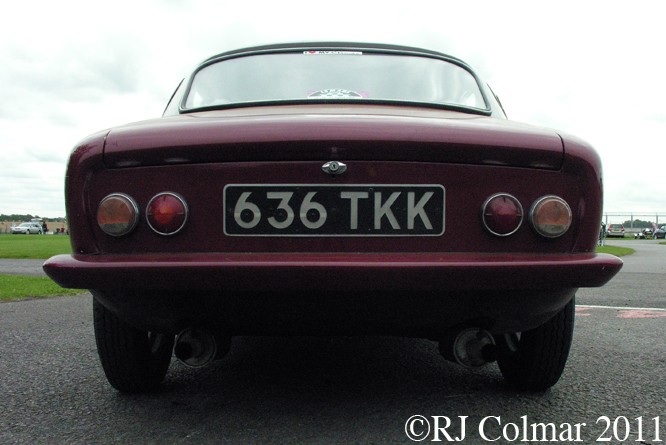
Lotus Elite, Castle Combe

A couple of years later he was talking to Peter Lumsden and Paul Fletcher who planned on compete at Le Mans in 1956 with a Lotus XI and he suggested that they might fair better with a Coupé body. Peter K-T put the idea to Colin Chapman who responded that they would be better starting with a fresh design from scratch with the idea of designing of designing a car that would be competitive on the race track and be a viable proposition for ‘driving to the office’.

Lotus Elite, Castle Combe

As on his special bodied Lotus VI Peter again opted for designing a car with a high waist line but now with an integral roof influenced by the design of his Doretti Coupé, the design was finalised in collaboration with Frank Costin, who not only had developed a special bodied Lotus Mark VIII but was also an aerodynamicist at the aircraft manufacturer de Havilland where Peter coincidentally was also working in his day time capacity as an accountant.

Lotus Elite, Castle Combe

The uncluttered design has a drag coefficient of just 0.29 that compares favourably with vehicles being designed and manufactured today. The Elite, as the new Mark 14 became known, features a glass fibre monocoque with a steel sub frame to carry the engine and front suspension. Power came from a 75 hp Coventry Climax four cylinder engine which was inclined to lower the bonnet / hood line.

Lotus Elite, Castle Combe

On the track the Elite was a huge success with six class wins scored at Le Mans, two of them including winning the Index of Thermal Efficiency, former ESPN commentator David Hobbs fitted his with a special 4 speed automatic gearbox took 15 wins from 18 starts during 1961 and ’62 and in the Antipodes Leo Geoghegan won the 1960 Australian GT championship also driving an Elite.

Lotus Elite, Castle Combe

This particular well known example, seen here at Castle Combe, was first registered in 1962 and now belongs to a fellow member of the Bristol Pegasus Motor Club who restored it after it had been lying in bits for 20 years.

Thanks for joining me on this second accountants edition of ‘Gettin’ a li’l psycho on tyres’ I hope you will join me again tomorrow when I’ll be looking at an award winning orange movie star. Don’t forget to come back now !

Share

Designed By An Accountant #1 – Lotus VI #34

In 1942 Peter Kirwan-Taylor was 12 when he returned to England after a temporary evacuation to North America. He accompanied his step father Charles Loraine Hill, a director of Lagonda Cars, on trips to visit Lagonda and Westland the aircraft manufacturer where his interest in design took hold.

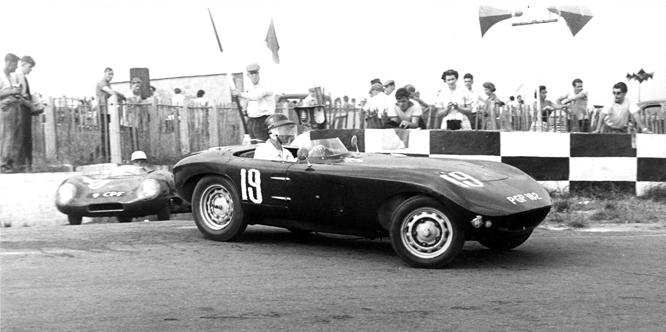
After a military career, during which he was member of the British Sking team, Peter settled down to follow his fathers footsteps and trained as an accountant. On the April 13th 1954 in between his 3 nights a week studies Peter found time to purchase and build a new Lotus VI, chassis #34, and decided to design his own body for it.

He provided Williams & Pritchard with the drawings and a claymodel which featured a high crease line and because of the suspension set up when the body was mounted to the chassis the car accidentally had a futuristic wedge appearance due the forward sloping aspect of the crease line.

Peter raced the car several times and as his family and career in finance took off he sold PGP 182 after two years.

Peter Kirwan Taylor, Lotus VI, Brands Hatch

Peter Kirwan Taylor in his #19 Lotus VI at Brands Hatch Undated,

Photo Beaulieu National Motor Museum

The exact details of the ownership of PGP 182 from 1956 to 1963 are not recorded however as can be seen on this link we do know Peter’s car made an appearance at Silverstone in June 1957 in the hands of Tony Wilson-Spratt. (See postscript below)

Thomas Kikaldy owned PGP 182 from 1963 to 1969 and he removed the unique body and sold it to an Italian restaurant owner in London and it has not been seen in public since.

In 1983 Len Pritchard, who produced the panels for the original Lotus VI kits, fabricated new panels for PGP 182 in the style of original Lotus VI’s with which the car, seen on this link 4th from right, is fitted today.

Peter Ross of the Historic Lotus Register informs me that the whereabouts of the drawings for Peter Kirwan Taylors bodywork are known and his one off body work could be recreated if some one desired.

As we shall see next Saturday Peter Kirwan-Taylor’s friendship with Lotus founder Colin Chapman grew from the time he purchased PGP 182 and he would design another Lotus which made a larger mark on the Lotus Cars story.

My thanks to Paul Rochdale of The Nostalgia Forum for first identifying PGP 182 as a Lotus VI to Peter Ross from the Historic Lotus Register for details about Peter Kirwan-Taylor and PGP 182 and to Ted Walker aka Ferret Fotographics for permission to use today’s photograph.

Thanks for joining me on this accountants edition of ‘Gettin a li’l psycho on tyres’ I hope you will join me again tomorrow. Don’t forget to come back now !
10/10/11 POSTSCRIPT. Peter Ross of the Historic Lotus Register has kindly sent a few comments about this blog it would appear the photograph in the link is of Ian Duncan at the wheel and the photographer was Tony Wilson Spratt.

Peter also informs me that an article ‘The Story of the Kirwan-Taylor bodied Lotus VI’ appeared in the Historic Lotus magazine issue #64 which can be ordered through the HLR website linked here.

Share

Colin’s Eleven – Lotus XI

Today’s photographs by Ed Arnaudin conclude our coverage of Race 1 at Thompson, CT on July 20th 1958 with a look at the winning Lotus XI of Floyd Aaskov.

Approximately 270 Lotus XI’s were produced from 1956 to 1958 including the Series 2, often unofficially referred to as the XIII. the Lotus Eleven Register believes around 200 have survived.

The XI could be built to accept a variety of engines most like Floyd Aaskov’s seen here were fitted with a 4 cylinder 1098 cc /67 cui Coventry Climax engine. Like the Lotus IX we looked at yesterday the bodywork was penned by Frank Costain and crafted by Lotus neighbours in Hornsey, Williams & Pritchard.

It is believed the Lotus XI model was driven to over 148 victories in 1956, additionally Stirling Moss set a class G closed circuit lap record at Monza of over 143 mph in a 67 cui XI with a special cockpit fairing and Peter Jopp and Reg Bicknell took class G honours and 7th overall at Le Mans although the boss, Colin Chapman, driving the larger engine Class E XI having survived a miserably wet night was disappointed to retire while running second in the 1500 cc 91.5 cui class to a Porsche with engine failure.

Legend has it that the XI was so close to Colin Chapman’s affections that early Lotus road models were given names evocative of the number Eleven,hence the Elite, Elise, Elan.

Floyd Aaskov, in the #12 Lotus XI seen taking the starting flag in second place here is known to have raced from at least 1957 to 1968, records indicate he may have started racing in a ’57 Mercedes 300 SL which seems a tad fanciful though no doubt stranger things have happened. Running competitively in the GM class Lotus XI until 1962 he then moved on to the pre Can Am USRRC series with larger sports cars. Records indicate Floyds last season was 1968 when he drove a Camaro in the Trans Am series, this may not be the complete picture on his career, if you know different please chime in below !

The cars I and others have been able to discern on the grid thus far are :-

Row 1 #15 R Nerney, Abarth 207A Spider, #12 Floyd Aaskov, Lotus X1
Row 2 #92 Nick Fallone Jomar MK 2 #28 Ray Saidel, Jomar
Row 3 #113 Paul Bleustein, Cooper, #26 Len Bastrup, Lotus IX
Row 4 # ????? #27 P Sagan, Fiat Abarth 750 GT Zagato
Row 5 #95 J Iglehart, Nardi MD4 Spyder #46 J Mull D B Panhard # ?????? #?????

Interestingly one source has a #150 Lotus XI anchoring the entry list for this meeting scheduled to be driven by one and only ‘Walter Cronkite‘.

Thanks as always to Ed and Steve Arnaudin for the fascinating photographs, to Terry O’Neil for the results to everyone on the Fuzzy Longshot Identity thread at TNF including Vitesse2 and raceanouncer2003 for their contributions. I believe that is the way it was.

Hope you have enjoyed today’s eleventh hour edition of ‘Gettin’ a lil’ psycho on tyres’ and that you’ll join me again tomorrow for a look at a seriously old timer at Bridgehampton in 1957. Don’t forget to come back now !
Share