Tag Archives: Classic

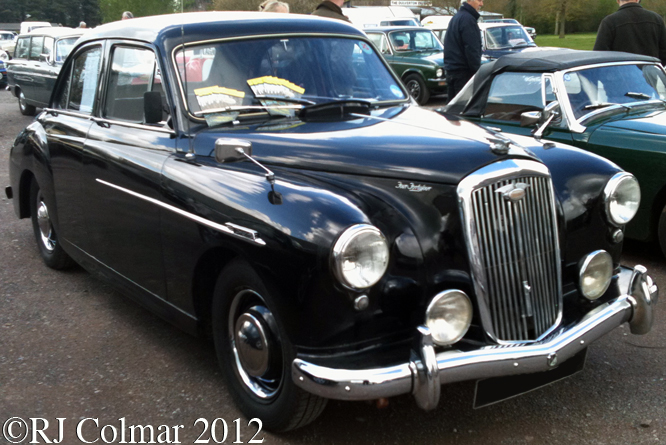
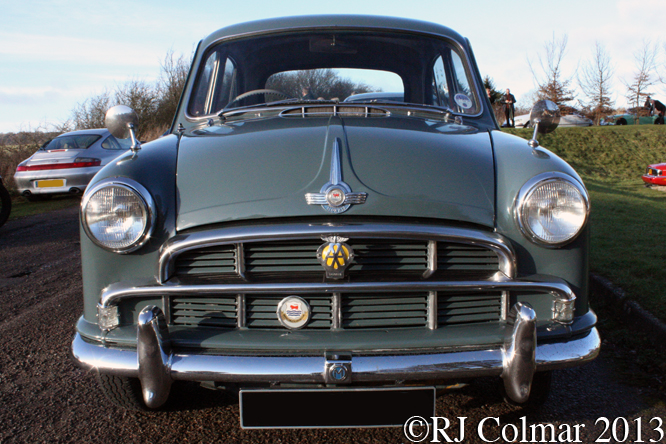
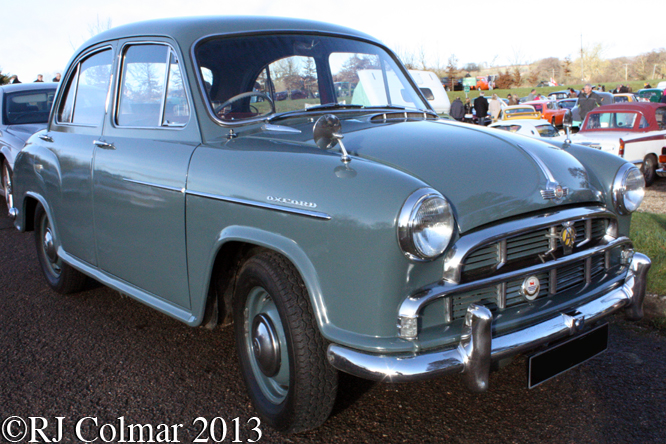
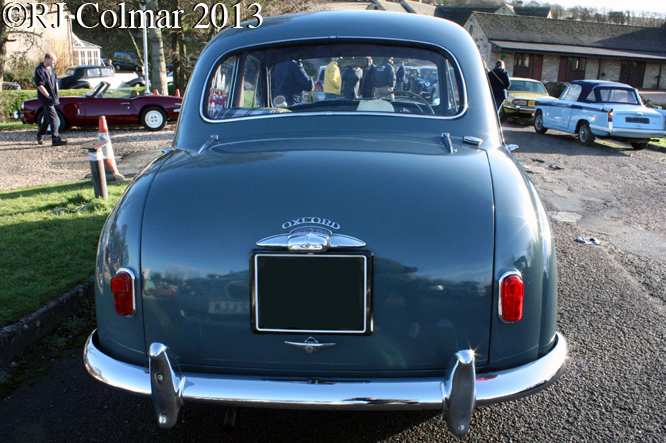
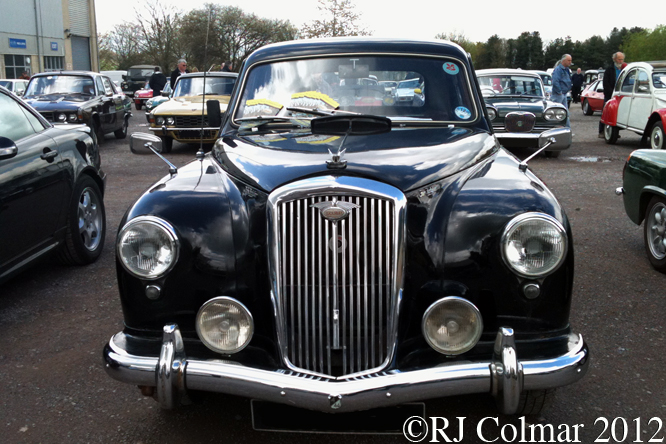
Palmers Parts Bin – Wolseley 4/44

After designing the MG Y Type the 1939 – 1945 hostilities saw Gerald Palmer engaged in war work that included designing medical equipment for the front line the development of a two stroke motor and the production of de Havilland Tiger Moth flying training aircraft.

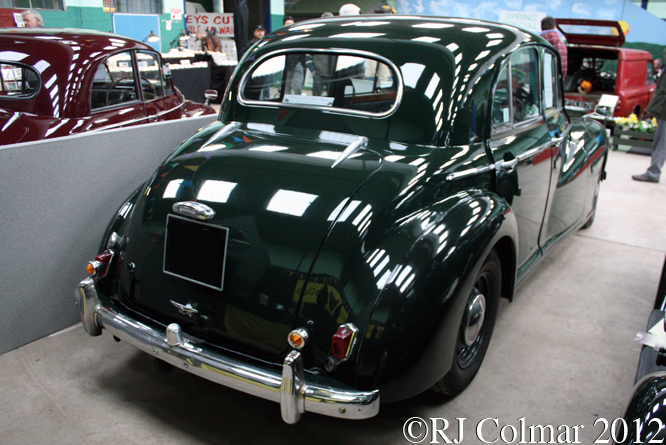
Wolseley 4/44, Bristol Classic Car Show, Shepton Mallet,

After the war Palmer was employed by Jowett to design what became the Jowett Javelin and in 1949 Palmer rejoined the Nuffield Organisation to design the Wolseley 4/44, MG ZA, the replacement for the MG Y type, and the Riley Pathfinder all three of which shared unique combinations of parts from the Nuffield Organisations parts bins.

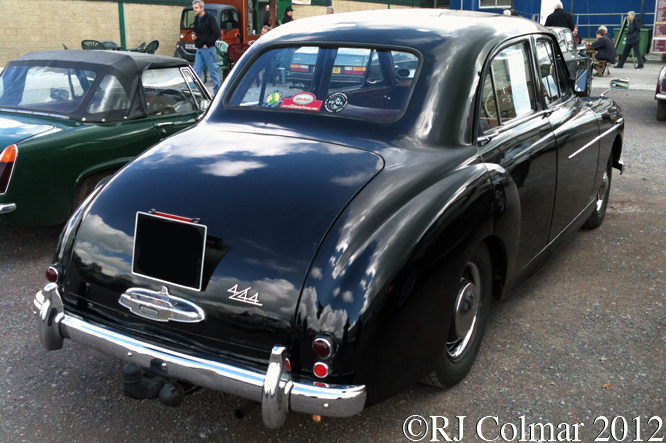
Wolseley 4/44, Bristol Classic Car Show, Shepton Mallet,

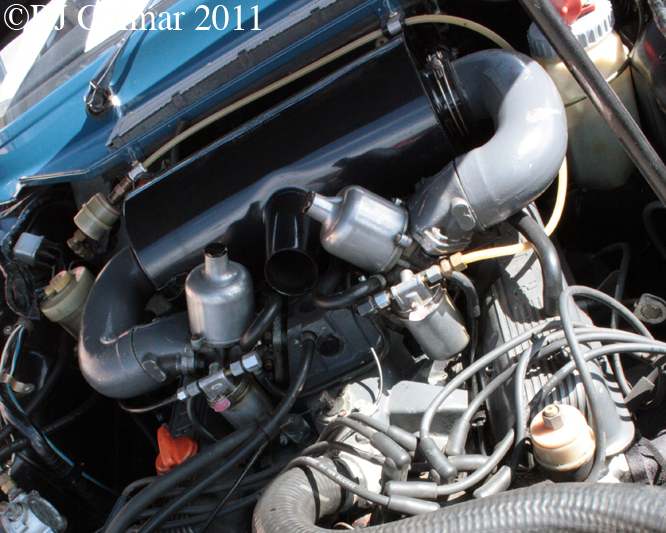
Of the three new models launched in 1953, now under the merged with Austin British Motor Corporation (BMC) banner the Wolseley 4/44 was the least powerful being fitted with a detuned 46 hp single carburettor 4 cylinder XPAG motor first seen seen on the MG TB Type Midget dating back to 1939 and on the TC, TD, and least powerful of the TF models.

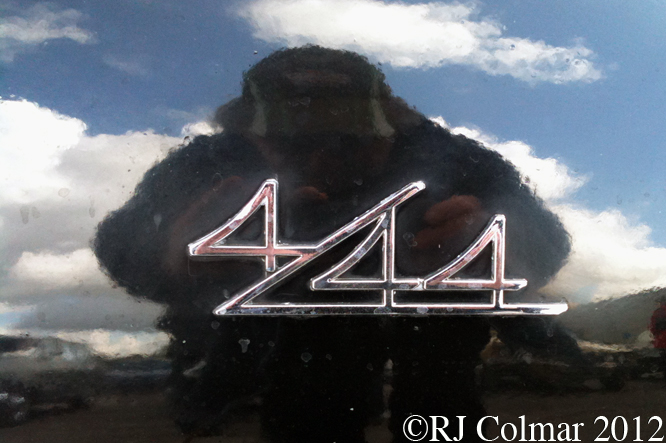
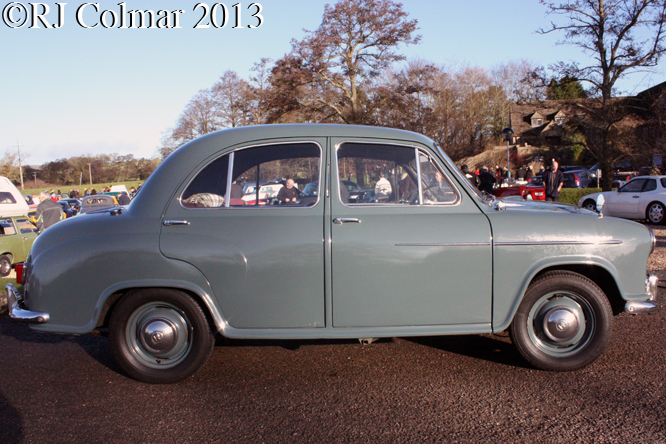
Wolseley 4/44, Bristol Classic Car Show, Shepton Mallet,

Fitted with modern rack and pinion steering, snuggle friendly 4 speed column change gearboxes the up market pretensions of the car were reaffirmed by leather seats and walnut veneer trim.

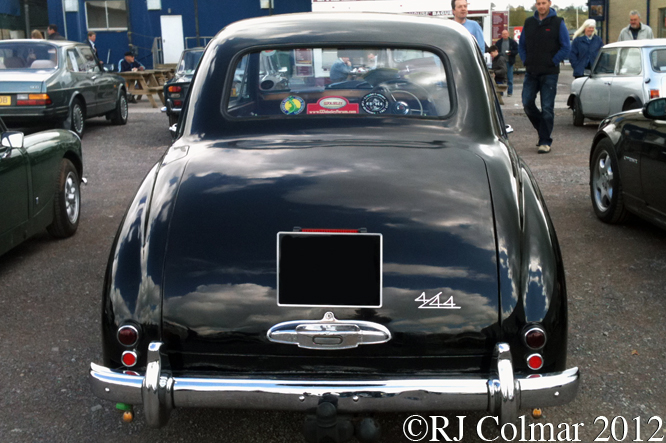
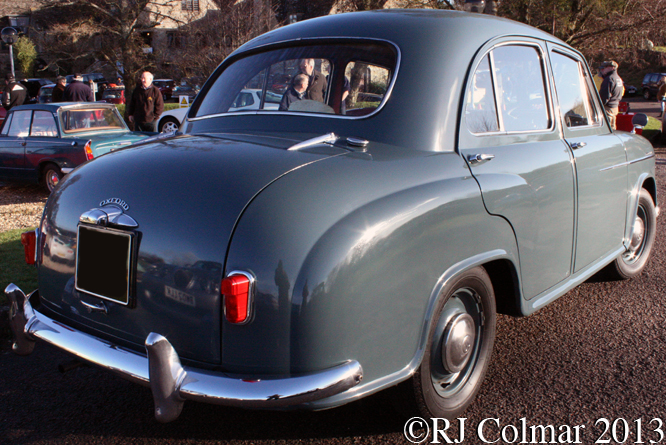
Wolseley 4/44, Bristol Classic Car Show, Shepton Mallet,

With the absence of a motorway network the 4/44’s top speed of 73 mph was matched by a rest to 60 mph time of 29.9 seconds which might be described as adequate.

Wolseley 4/44, Bristol Classic Car Show, Shepton Mallet,

Note that indicators were by door post mounted semaphore with only left hand drive models having indicators built into the rear light clusters.

29,845 Wolseley 4/44’s were built between 1953 and 1956 when the model was replaced by the similar 15/50.

Thanks for joining me on this “Palmers Parts Bin” edition of “Gettin a li’l psycho on tyres” I hope you will join me again tomorrow. Don’t forget to come back now !

Share

Rowing Minor – Morris Minor Pick Up

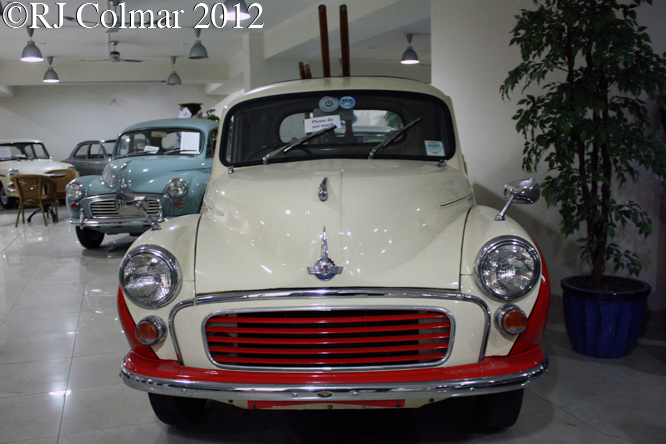
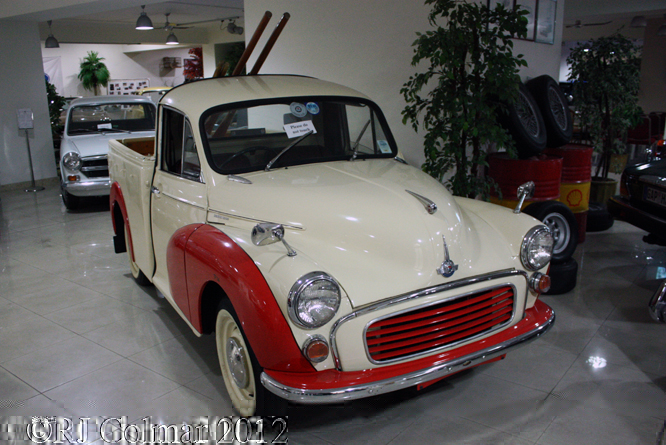
Morris Minor Pick Ups were manufactured between 1953 and 1971.

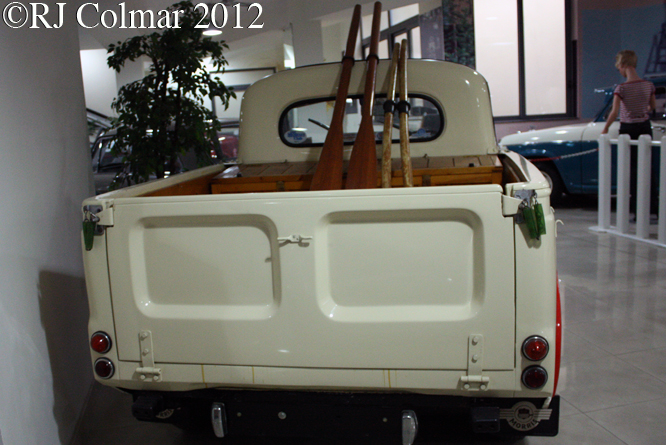
Morris Minor Pick Up, Malta Classic Car Museum, Qwara

Like the Minor Van, Minor Pick Ups feature a separate chassis on which to mount the body panels unlike the Morris Minor passenger vehicles which had a unitary / monocoque body construction.

Morris Minor Pick Up, Malta Classic Car Museum, Qwara

The single piece windscreen and large indicator side light cluster point to this model seen at the Malta Classic Car Museum in Qwara being built post 1961.

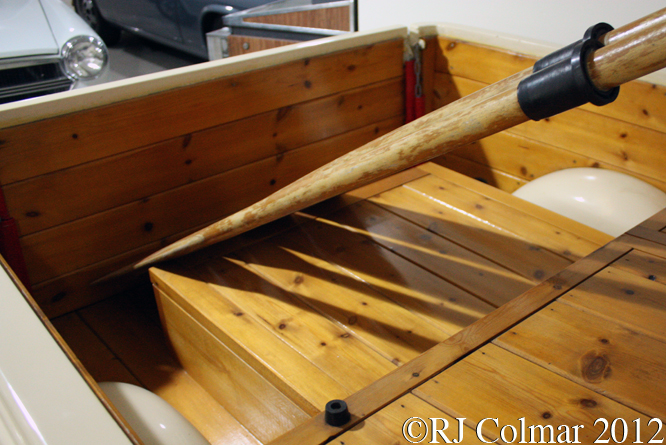
Morris Minor Pick Up, Malta Classic Car Museum, Qwara

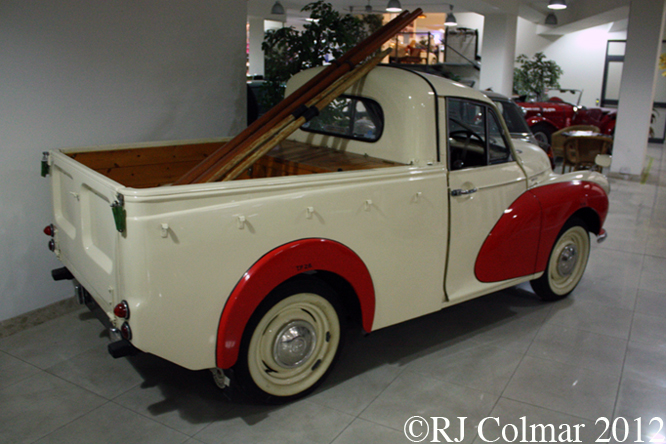
The varnished wood paneling in the rear along with the oars are a give away that this vehicle was probably used by on of the seven rowing clubs that take part in Malta’s annual Victory Day Regatta which can be traced back to 1822.

Morris Minor Pick Up, Malta Classic Car Museum, Qwara

If you know which club this vehicle used to belong to please do not be afraid to chip in below.

Morris Minor Pick Up, Malta Classic Car Museum, Qwara

Morris Minors were imported to Malta new and used, there was a small industry built around rebodying vehicles to suit Maltese needs which included Morris Minor Pick Ups fitted larger pick up boxes than the original as seen in this link featuring a Maltese bodied Minor Pickup being rescued from a field.

Thanks for joining me on this “Rowing Minor” edition of “Gettin’ a li’l psycho on tyres” I hope you will join me again tomorrow. Don’t forget to come back now !

Share

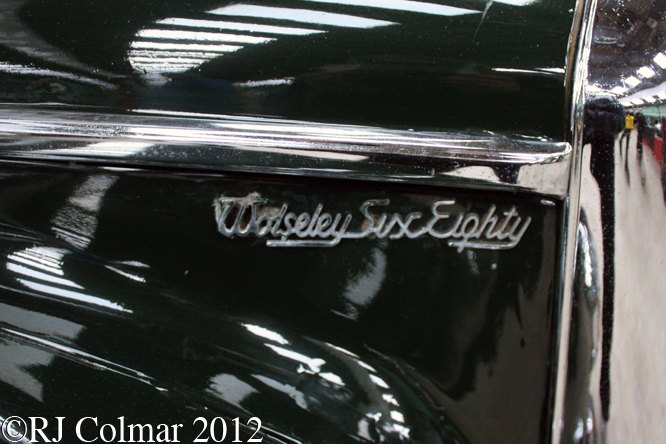
Cops Car – Wolseley Six Eighty

The Wolseley 6/80 was introduced in 1948 as an up market verison of the Morris Six MS both of which also shared the same body work from the front windscreen back with the Morris Oxford MO.

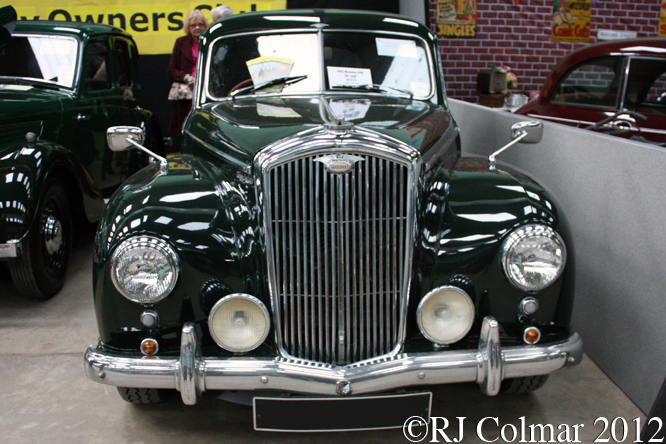
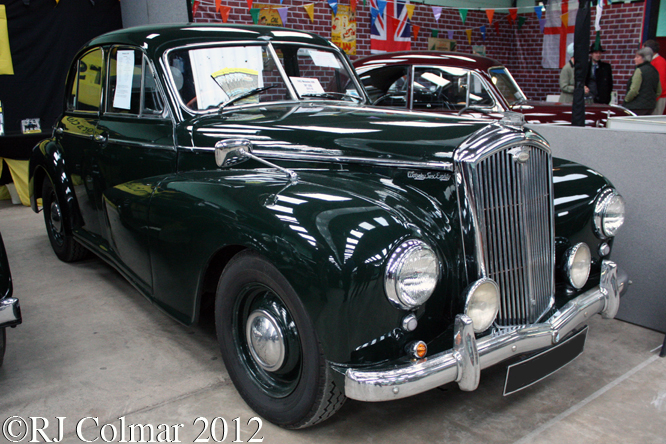
Wolseley 6/80, Bristol Classic Car Show, Shepton Mallet

The Six Eighty like it’s Six MS sibling is powered by a 72hp overhead cam straight six motor which gave the car a tested top speed of 85 mph in ideal conditions.

Wolseley 6/80, Bristol Classic Car Show, Shepton Mallet

Due to export priorities the Six Eighty was a rare car on British roads in period. Wolseley Six Eighties became well known as the favoured mode of Transport of the men in blue in no small part thanks to the rapidly expanding medium of television for which shows including The Invisible Man and films like Gideon’s Day, The Naked Truth and Town on Trial, all made in 1957.

Wolseley 6/80, Bristol Classic Car Show, Shepton Mallet

The 6/80 came fitted with a heater, rear window blind and twin roof lights for rear seat passengers.

Wolseley 6/80, Bristol Classic Car Show, Shepton Mallet

Twice as many 6/80’s were built as Morris Six MS between 1948 and 1954 with the final total thought to be 25,281.

Thanks for joining me on this “Cops Car” edition of “Gettin’ a li’l psycho on tyres” I hope you will join me again tomorrow. Don’t forget to come back now !

Share

3/4 Task Force – Chevrolet Apache 32

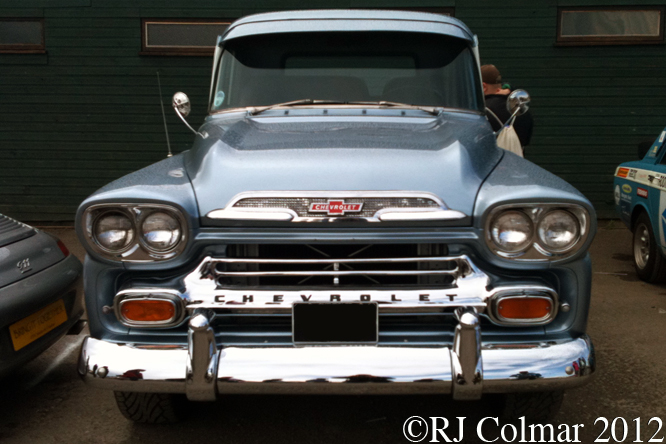
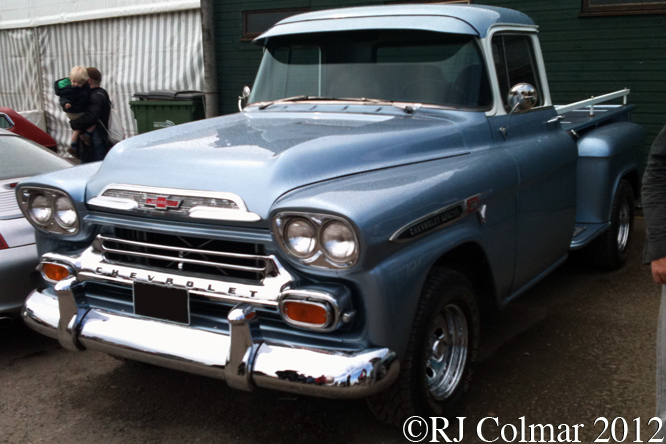
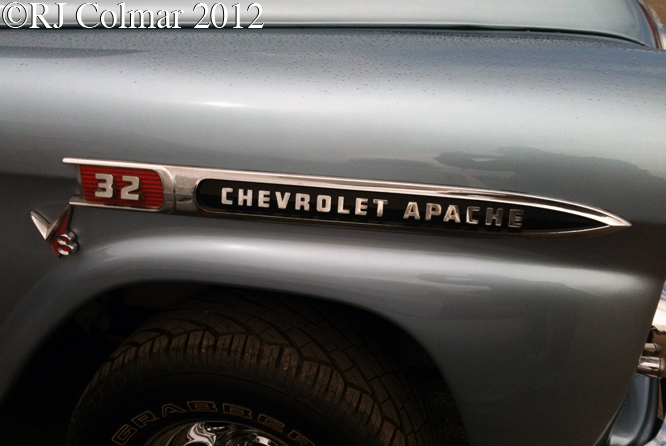
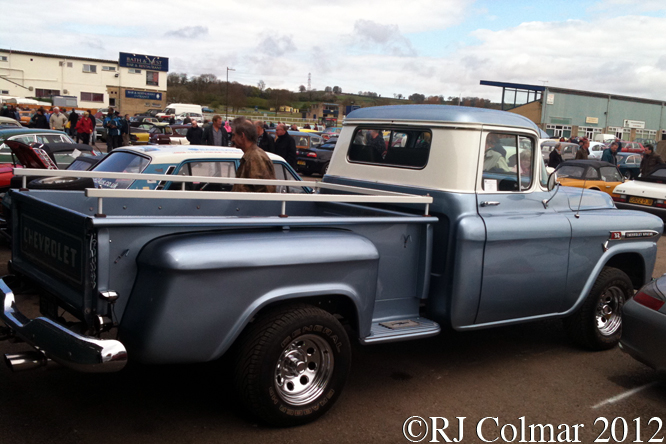
Today’s featured pickup is a 1959 Chevrolet Apache 32 Pick up.

Chevrolet Apache 32, Bristol Classic Car Show, Shepton Mallet

In most respects the Apache 32 Cab and motor options were similar to the Apache 31 Fleetside I looked at last week.

Chevrolet Apache 32, Bristol Classic Car Show, Shepton Mallet

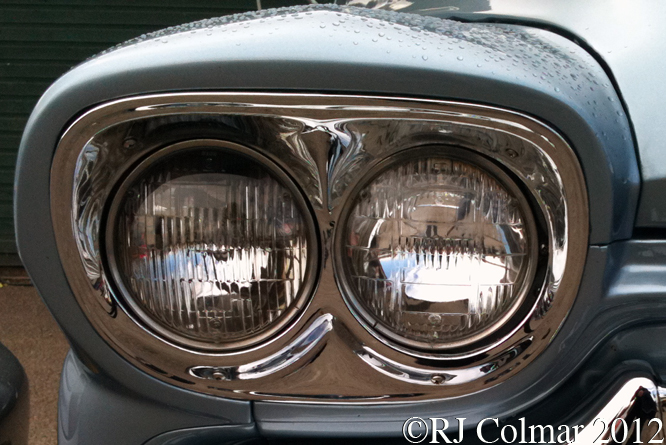
The ’58 and ’59 Apaches all shared twined front head lamps.

Chevrolet Apache 32, Bristol Classic Car Show, Shepton Mallet

This particular vehicle is registered with a non standard 3.5 litre 213 cui motor size, given that it is in the UK this may well be one of Britain’s popular all aluminium Rover V8’s that originated from Buick.

Chevrolet Apache 32, Bristol Classic Car Show, Shepton Mallet

The big difference between the Apache 31 and 32 is the wheel base 114 inches on the ’31’ and 123 inches on the ’32’ which also had heavier duty axles and springs to allow for a 3/4 ton load in the six and half foot long cargo box.

Chevrolet Apache 32, Bristol Classic Car Show, Shepton Mallet

353,509 Apache’s of all sizes were built in 1959 before they were replaced by the C/K series in 1960.

Thanks for joining me on this “3/4 Task Force” edition of “Gettin’ a li’l psycho on tyres”, I hope you will join me again tomorrow. Don’t forget to come back now !

Share

Romano’s Granddaughter – Lotus Elise Series I

In 1993 Lotus was purchased from GM by Romano Artioli chairman of the revived Bugatti manufacturer, and the following year the Type 111 was conceived by Julian Thompson with Richard Rackman and given the Elise name after Romano’s Granddaughter Elisa.

Lotus Elise Series 1, Bristol Classic Car Show, Shepton Mallet

The Series 1 Elise was launched in 1996 powered by a mid mounted 4 cylinder Rover K Series motor that produced just 118 hp, however thanks to the fiberglass body and bonded aluminium chassis the Elise only weighed 725 kg / 1,600 lbs so the car could accelerate from rest to 60 mph in just 5.8 seconds with a top speed of 124 mph.

Lotus Elise Series 1, Bristol Pegasus Motor Club, BAWA

Getting in and out of a Lotus Elise are probably the most difficult features of the car, the ergonomics are secondary to track day performance, but apart from that the Elise is said to be great fun to drive and economical to run thanks to the light weight and virtually non existent load capacity beside the passengers.

Lotus Elise Series 1, Bristol

In 1996 Romano had sold Lotus on to current owners Proton in order to fund the losses that had accumulated due to the insolvency of Bugatti.

Thanks to changes in crash sustainability regulations the Series 1 Elise was replaced in 2000 after more than 8600 had been built by the more sustainable and consequently slightly heavier Elise Series 2.

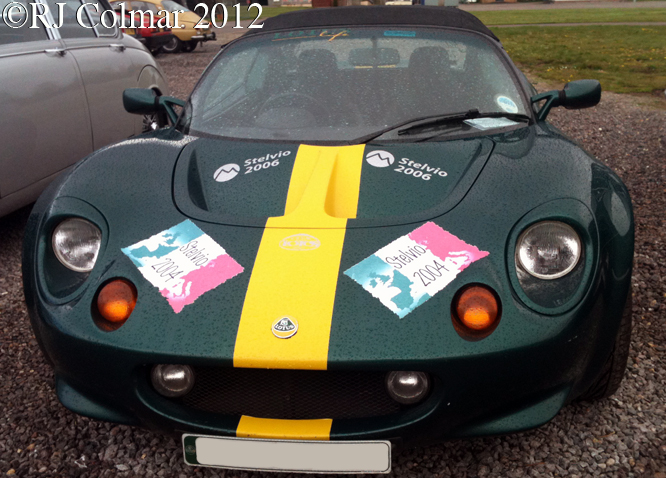
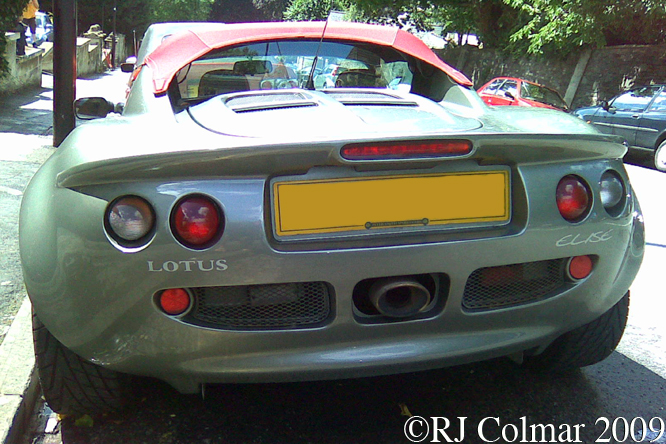
The top and bottom cars featured today are standard ’98 and ’97 1.8i models while the middle one is a later ’99 111S which came with variable valve timing 143 hp and a 130 mph top speed.

Thanks for joining me on this “Romano’s Granddaughter” edition of “Gettin’ a li’l psycho on tyres”, I hope you will join me again tomorrow. Don’t forget to come back now !

Share

More Power Bigger Drums – Morris Oxford II

For 1948 Alex Issigonis designed the Morris Oxford to compliment the smaller Morris Minor is the Morris model mix, the Oxford MO boasted a 40.5 hp 4 cylinder side valve motor inherited from the prewar Morris 10 which it replaced, unitary body construction, torsion bar front suspension and hydraulically activated 8 inch drum brakes with which to bring the 72 mph vehicle to rest.

Morris Oxford II, Cotswold Classic Car Club, Frogsmill, Andoversford

In 1952 Morris merged with it’s great rival Austin with William Morris, now Lord Nuffield, becoming the British Motor Corporation’s first Chairman, thanks to the merger Morris was able to ditch it’s antiquated motors for those from the Austin range.

Morris Oxford II, Cotswold Classic Car Club, Frogsmill, Andoversford

As a consequence the Morris Oxford II first seen in 1954 was powered by a 50 hp Austin designed 4 cylinder over head valve B series motor which increased the top speed to 74 mph better acceleration and better fuel consumption 28 mpg up from 26 mpg of the Oxford MO.

Morris Oxford II, Cotswold Classic Car Club, Frogsmill, Andoversford

The column shift 1955 Oxford II, seen here earlier this year as the Cotswold Classic Car Club Meeting held at Frogsmill Andoversford, was equipped with 9 inch hydraulic brakes to cope with the increase in performance and came with a heater as standard.

Morris Oxford II, Cotswold Classic Car Club, Frogsmill, Andoversford

The Oxford II was available in 4 door saloon / sedan or 2 door Traveller Estate / Station wagon variants, the former of which would live on as the Hindustan Landmaster built under licence until 1958 in India.

Morris Oxford II, Cotswold Classic Car Club, Frogsmill, Andoversford

From 1954 87,342 Oxford II’s were built at plants in the UK and Australia until 1956 when the model was replaced by the Morris Oxford III.

Thanks for joining me on this “More Power Bigger Brakes” edition of “Gettin’ a li’l psycho on tyres”, I hope you will join me again tomorrow. Don’t forget to come back now !

Share

The Green Batmobile – Ensign Cosworth N173 #MN01

1973 was the year in which my interest for motor racing and particularly Grand Prix motor racing ramped up from excited enthusiast to bordering, and some might say well exceeding, obsessive.

I thought it would be fun for the five Sundays in March to share the 40th anniversary of my passion for international motor racing with you by looking at five Grand Prix cars that took part in the 1973 season.
Ensign Ford N173, Silverstone Classic

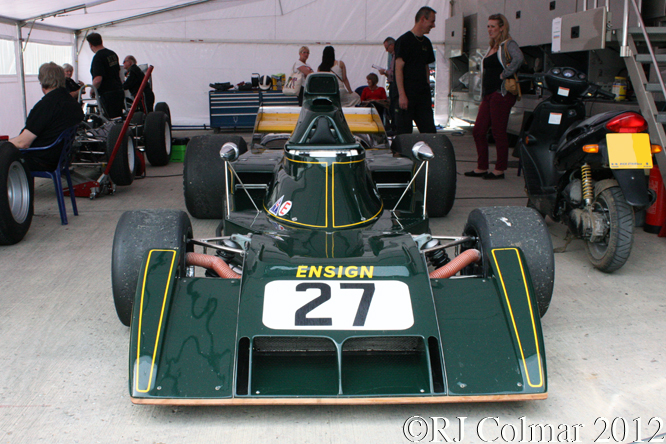
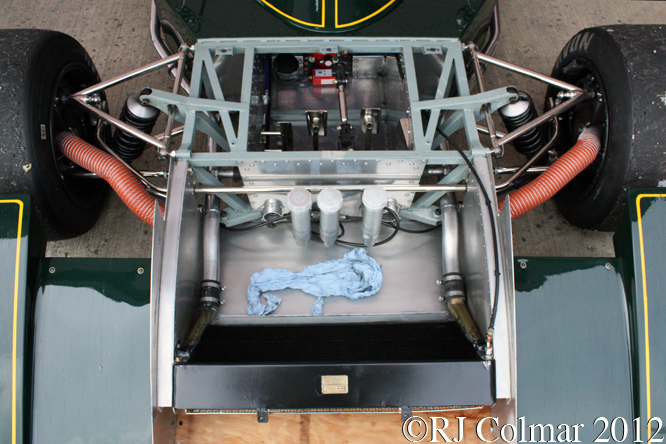
The first car in this series of five Sunday blogs is the Ensign N173, it did not appear until 1973 French Grand Prix half way through the season, but I remember the first time I set eye’s on a picture of it printed in a copy of Motorsport I had an extremely affirmative WOW ! Looks like a green Batmobile, reaction to both it’s shape and colour scheme which was unspoiled by any concessions to commercial considerations quite simply because the team had no sponsor.
Ensign Ford N173, Silverstone Classic

Morris ‘Mo’ Nunn had progressed as far as the works Lotus Formula 3 team by 1969 when he decided his future lay not in the driving seat but as a manufacturer of racing cars. He started building his first car to the third tier Formula 3 regulations in his immaculately prepared garage behind his house in Walsall.

By 1971 the Ensign was up and running and Bev Bond won a race, with the space frame chassis car that featured Lotus 59/69 front up rights and Brabham magnesium rear uprights, fourth time out at Brands Hatch.
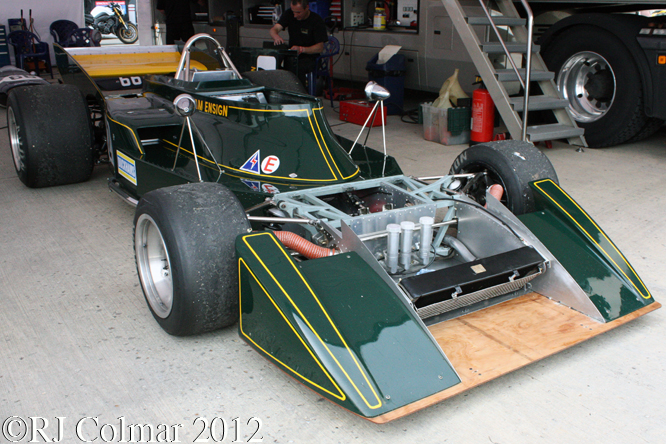
Ensign Ford N173, Silverstone Classic

In 1972 Rikky von Opel, son of rocket car pioneer Fritz von Opel and grandson of Opel car manufacturer Adam Opel joined Mo Nunn’s Formula 3 team and together they won the 1972 Lombard North British Formula 3 Championship.

Encouraged by this success “Mo” and Rikky decided to take the step up into Formula One together, despite the fact that they had no commercial backer.
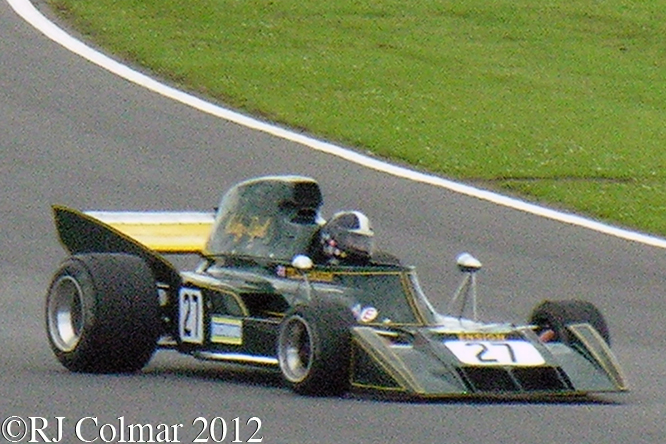
Ensign Ford N173, Silverstone Classic

The Ensign N173 was a typical garagiste’s vehicle of the period, built around a monocoque powered by a Ford Cosworth DFV driving the rear wheels through a 5 speed Hewland gearbox.

By qualifying 25th, last but one, for the 1973 French Grand Prix and finishing 15th Rikky von Opel became the first driver from Lichtenstein to take part in a Grand Prix. He is still the only driver from the principality, population less than 40,000, to take part in a Grand Prix.
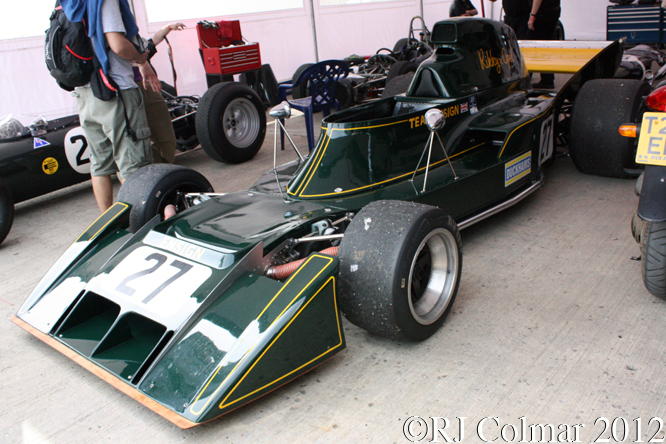
Ensign Ford N173, Silverstone Classic

At the following British Grand Prix Rikky qualified 21st and finished 13th which was to be the highlight of Ensign’s 1973 season.

Reliability would become an increasing factor in the teams lack of performance over the remaining season, a seasons best 14th place qualification for the 1973 Dutch Grand Prix came to naught when the car did not start the race due to suspension damage.
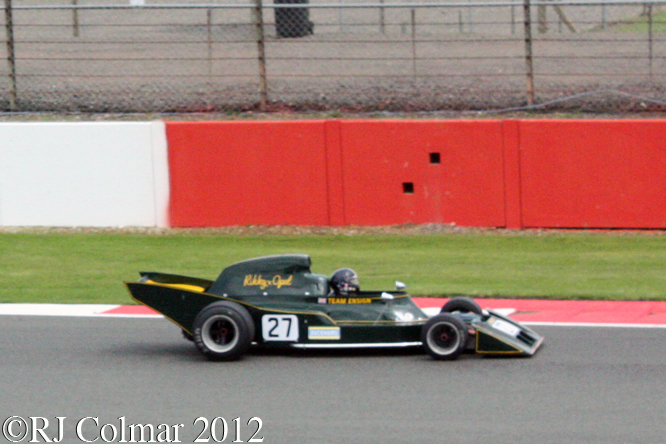
Ensign Ford N173, Silverstone Classic

Rikky persevered with the Ensign team into 1974, but after two failures to start due to uncompetitiveness and handling issues he switched to the second works Brabham car which netted him two career best 9th place finishes in Sweden and Holland.

A couple of failures to qualify in Monaco and France was enough to bring Rikky’s Grand Prix career to an end on the anniversary of his first season at the top table of the sport.
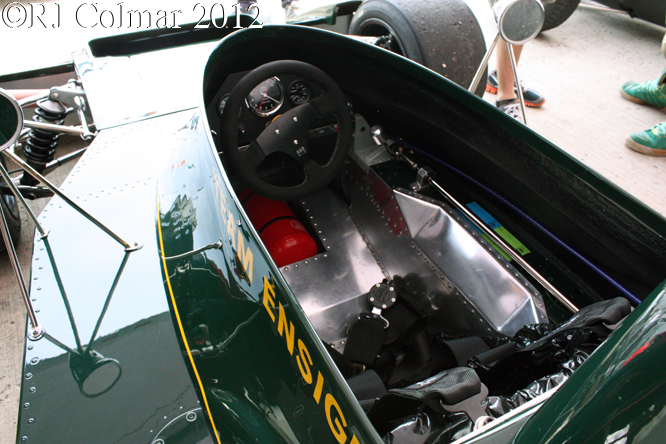
Ensign Ford N173, Silverstone Classic

The car seen here was used primarily as a back up car in 1974, Vern Schuppan raced the car in the 1974 Swedish Grand Prix, but was disqualified for having started unofficially from 26th place on the grid having completed 77 laps and finished 12th.

Mike Wilds attempted in vane to qualify MN01 for the Austrian, Italian and Canadian Grand Prix before finally qualifying 22nd for the 1974 United States Grand Prix where he completed 50 of the scheduled 59 laps to record an unclassified finish in a car that was much modified from it’s original appearance.
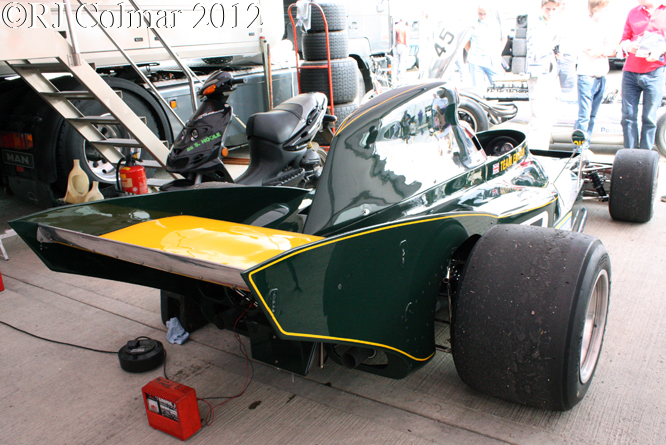
Ensign Ford N173, Silverstone Classic

Mo Nunn continued in Formula One mostly as an at best underfunded single car team until 1982.

1972 Le Mans winner Gils Van Lennep scored the Ensign team’s first point at the German Grand Prix in 1975 and the teams best finish was recorded by Marc Surer who finished 4th and was credited with the fastest lap in the 1981 Brazilian Grand Prix.
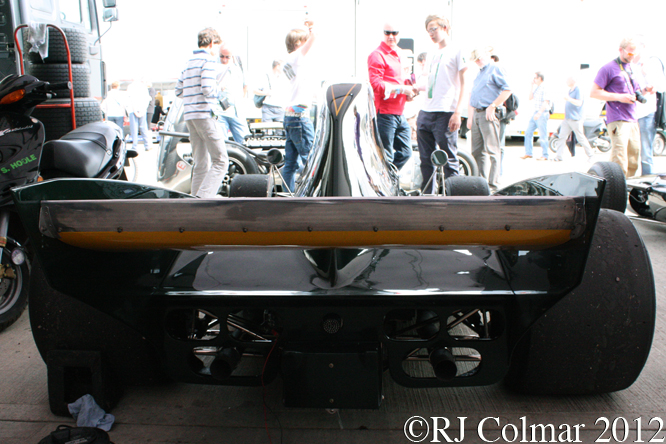
Ensign Ford N173, Silverstone Classic

Among the many drivers that drove Ensign cars in Grand Prix were Le Mans winners Vern Schuppan, Chris Amon and Jacky Ickx, Ferrari refugee Clay Regazzoni, USAC/Cart winner Danny Ongias and future World Champion Nelson Piquet was given his Formula One debut at the 1978 German Grand Prix where he qualified 22nd and retired after 31 laps.

After his team was sold to Teddy Theodore “Mo” moved to the United States where he was chief engineer for Alex Zinardi and Juan Pablo Montoya at Chip Ganassi Racing when they dominated the CART championship from 1997 to 1999 and the Indy 500 in 2000. After a spell running his own IRL cars with varying degrees of success Mo Nunn returned to Ganassi as a technical adviser in 2004.

Thanks for joining me on this “The Green Batmobile” edition of “Gettin’ a li’l psychoontyres” I hope you will join me again tomorrow. Don’t forget to come back now !
Share