Tag Archives: Colmar

Kiwi Body ? – Buckler Mk 90

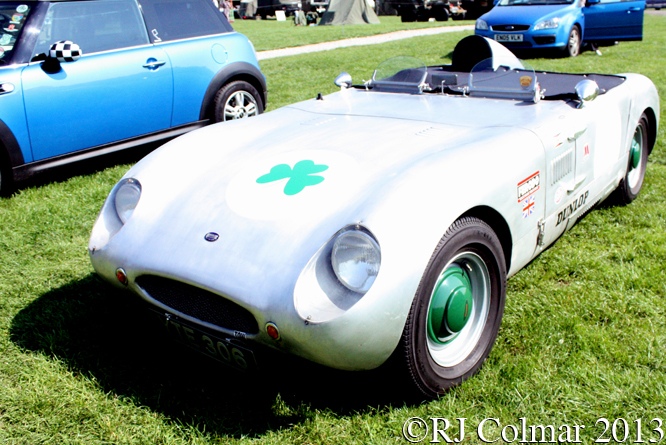
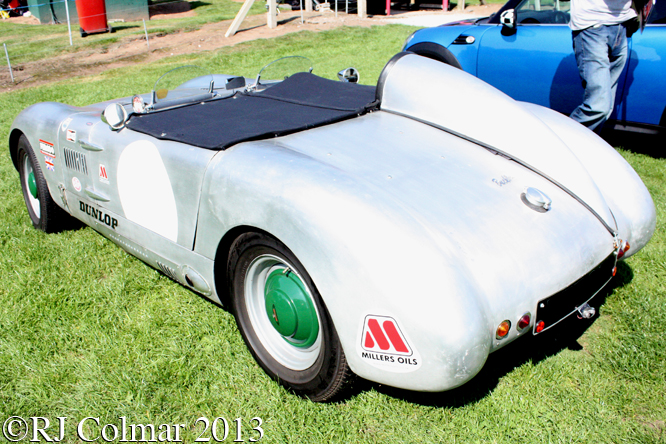
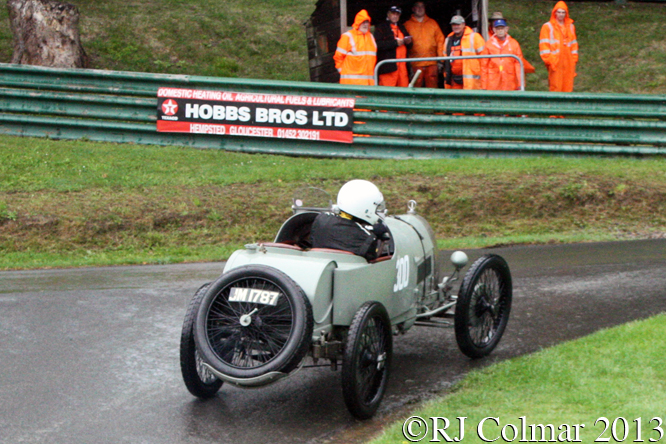
From 1953 to at least 1959 a number of Buckler Mk 90’s were manufactured.

Buckler Mk 90, Gold Cup, Oulton Park

From the Buckler Register it would appear all were fitted with 1172 cc / 71 cui Ford side valve motors as fitted to numerous Fords including the contemporaneous Ford 100E Prefects and Anglia’s.

Buckler Mk 90, Gold Cup, Oulton Park

Elsewhere it would appear the body of the Mk 90 was designed by New Zealander Ferris de Joux, although I suspect Ferris may have designed a fiber glass body for at least one Buckler raced in New Zealand, most of the known Buckler Mk 90’s, including the 1956 example featured to day seen at Oulton Park, were fitted with aluminium bodies which leads me to question de Joux’s involvement with the Mk 90 bodies seen in the UK.

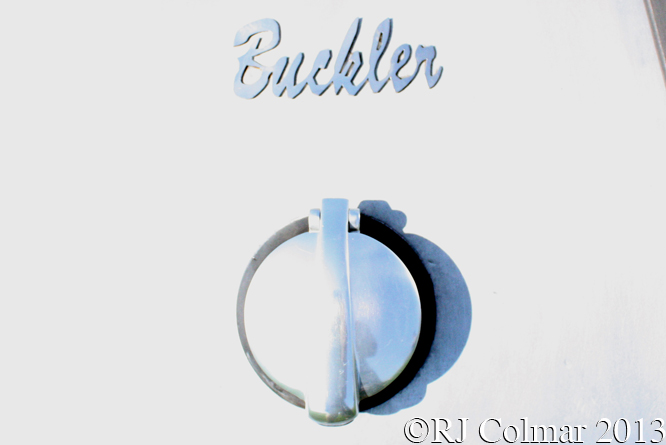
Buckler Mk 90, Gold Cup, Oulton Park

If you know that de Joux’s design made it beyond New Zealand for the UK aluminium bodied cars please do not hesitate to chime in below.

Buckler Mk 90, Gold Cup, Oulton Park

Of the seven races known to racingsportscars in which Buckler Mk 90’s were driven, two of them were won by a Mk 90 with N. Grier-Rees at the wheel including the 1957 Silverstone Relay Race.

Thanks for joining me on this “Kiwi Body ?” edition of “Gettin’ a li’l psycho on tyres” I hope you will join me again tomorrow when I’ll be looking at a . Don’t forget to come back now !

Share

Son In Law’s Tip – Ferrari Testa Rossa Replica

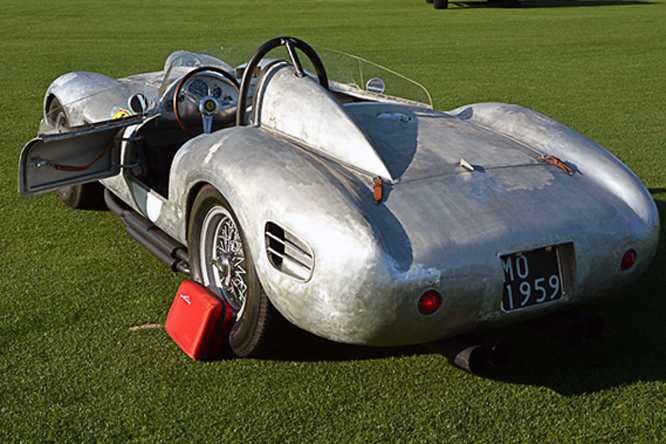
One day Ferrari enthusiast Peter Giacobbi got a tip from his son in law that there was a huge warehouse in Colico di Piano near Como, Italy, that was full of car parts.

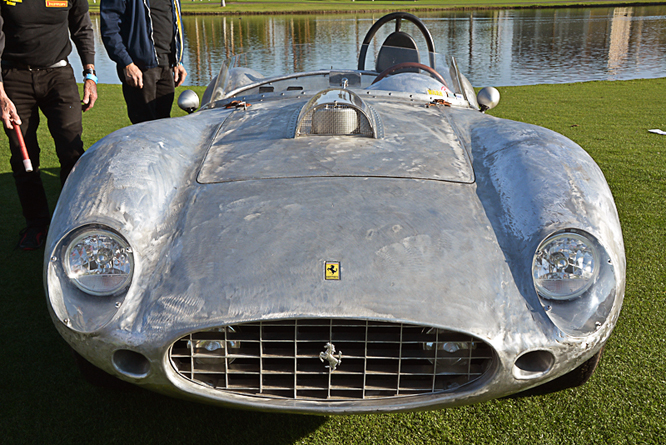
Ferrari, Testa Rossa, Replica, Desert Classic Concours d'Elegance

When Peter followed the lead up he found the body for today’s featured car in the rafters. Peter shipped the body to Orange County California where he enlisted Dan McLeod of Anaheim to help him build a replica of his favourite car the 1959 Ferrari Testa Rossa.

Ferrari, Testa Rossa, Replica, Desert Classic Concours d'Elegance

Peter’s Replica uses Ferrari 330 front suspension, a 4.4 litre / 268 cui V12 from a Ferrari 365 and a rear end from a Ferrari 400i

Ferrari, Testa Rossa, Replica, Desert Classic Concours d'Elegance

Since finishing his Testa Rossa Peter has shown it at numerous Concours events where it’s unfinished patina has been well received by the public.

My thanks to Geoffrey Horton for sharing today’s photographs taken at last month’s Desert Classic, Concours d’Elegance.

Thanks for joining me on this “Son In Law’s Tip” edition of “Gettin’ a li’l psycho on tyres” I hope you will join me again tomorrow when I’ll be looking a Buckler. Don’t forget to come back now !

Share

8 Cylinders 24 Valves – Bugatti Type 30

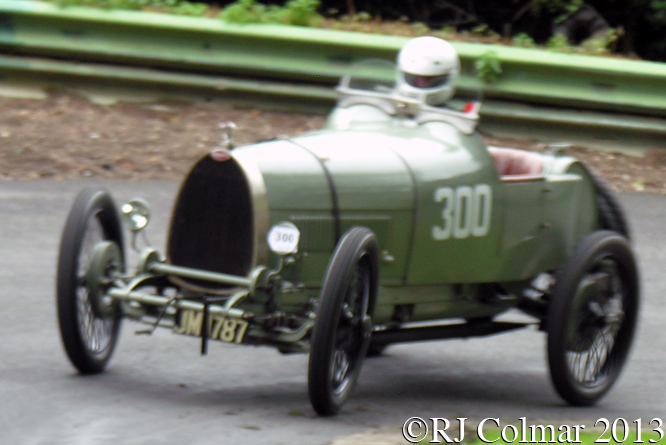
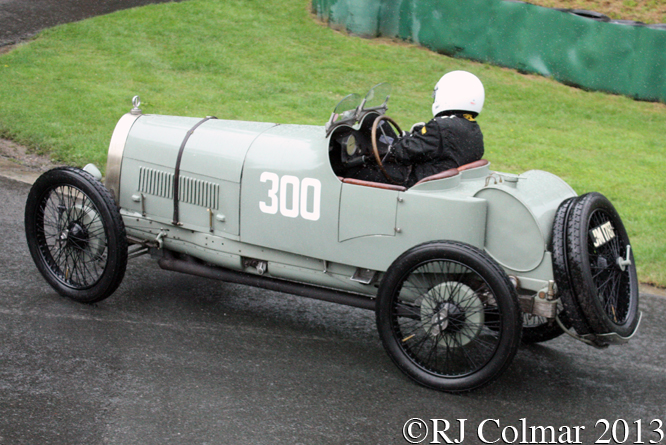
Late in 1922 until 1926 Ettore Bugatti offered the 2 litre / 122 cui Type 30

Bugatti T30, Huntley, VSCC, Prescott

The Type 30 was however not all new the horseshoe radiator was carried over from the later Type 13/22/23 Voiturette Brescia models…

Bugatti T30, Huntley, VSCC, Prescott

as was the chassis which was available with 100.4″ or 112.2″ wheelbase and “occasionally” with a 94.5″ wheelbase option, ie the same options as for the earlier models.

Bugatti T30, Huntley, VSCC, Prescott

The front brakes on the early Type 30’s built between 1922 were hydraulic operated but from 1924 to ’26 they were cable operated as were the rear brakes on all Type 30’s.

Bugatti T30, Huntley, VSCC, Prescott

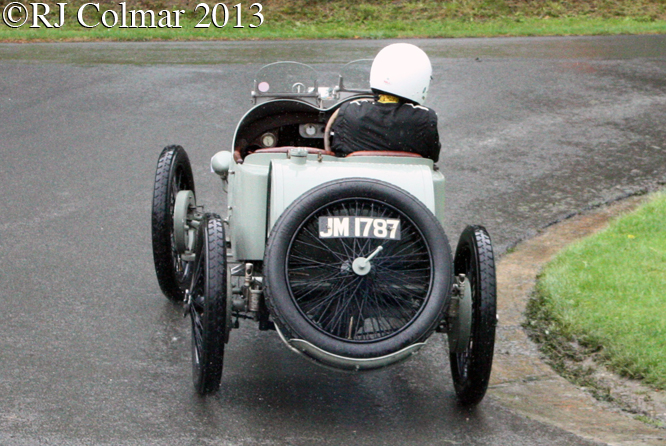
It is believed around 600 Type 30’s were built, the recently restored example seen here at last years VSCC Prescott meeting, driven by Douglas Huntley, was originally built in 1925.

Thanks for joining me on this “8 Cylinders 24 Valves” edition of “Gettin’ a li’l psycho on tyres” I hope you will join me again tomorrow when I’ll be looking at Red Bull’s 2013 season. Don’t forget to come back now !

Share

Identity Crisis What Identity Crisis ? – Maserati 250F #2522/16/23/26

Welcome to the second edition of Maserati Monday, today’s featured Maserati 250F chassis #2522 was built as a works car for the 1956 season. So far so good, it was raced twice in Argentina at the beginning of the season by Stirling Moss carrying the older #2516 identity finishing a best 2nd in the second non championship race.

Back in Europe the #2522 appears to have been raced with it’s correct #2522 identity until August 1956. During this period Stirling won the Glover Trophy at Goodwood and followed that up with a win in the 1956 Monaco Grand Prix.

Cesare Perdisa was given #2522 to drive in Belgian Grand Prix, while Stirling Moss driving another 250F took an early lead in the race only to lose it to a slow starting Fangio driving a Ferrari on lap 5. On lap ten Moss lost a rear wheel and ended up running back to the pits where he took over #2522 from Cesare and went on to finish 3rd behind the two Ferrari of Collins and Paul Frère.

In the French Grand Prix Cesare and Stirling ended up sharing #2522 again finishing 5th. In the British Grand Prix Stirling drove #2522 to a solo 8th place finish and in Germany #2522 now driven by Umberto Maglioli retired with steering problems which reoccurred in the Italian Grand Prix after Maglioli had handed over #2522, now running with the #2523 identity, to Jean Behra.
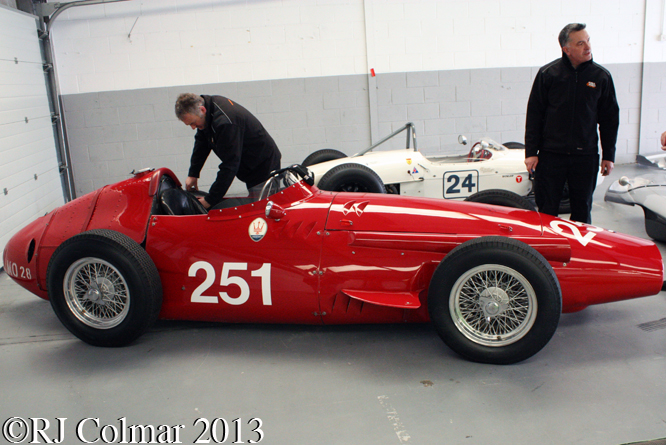
Maserati 250F, HGPCA Test Day, Silverstone

Over the winter #2522 with the #2523 identity was fitted with a V12 motor in place of the original straight six, the car was run in practice in the non championship race at Siracusa and again by non other than El Maestro Fangio in the practice for the 1957 Monaco Grand Prix, but the V12 was never raced.

Argentinian all round sportsman Carlos Menditeguy drove #2522/16/23 refitted with a six cylinder motor in the non championship 1957 Grand Prix de Reims where he qualified 9th and retired with a gearbox issue. For the non championship GP di Pescara and championship 1957 Italian GP Fangio was assigned #2522/16/23 but he only drove it in practice.

On the 13th April 1958 Maria-Teresa de Filippis made her Formula one debut driving #2522/16/23 in the non championship GP di Siracusa and finished 5th, a month later she was not so lucky failing to qualify for the Monaco Grand Prix driving the same car. Carrol Shelby was the last person recorded as having driven #2522/16/23 in period he qualified 17th and retired after just 1 lap with handling issues and ended up taking over Masten Gregory’s 250F and recording a shared 4th place finish one lap down, a performance for which he was not awarded any world championship points. #2522/16/23 then passed into the hands of Scuderia Centro Sud.

Towards the end of 1958 chassis #2522/16/23 was given the identity it carries to this day namely #2526 and passed through the hands of Keith Campbell, Richard Bergel, Lord Angus Clydesdale, Earl of Strathmore, Bobby Bell and it’s current owner Peter Heuberger for whom the car is seen prepared in the pits at last years HGPCA Test day at Silverstone last year.

To keep you on your toes David McKinney records that the identity #2522 was also used for the original chassis #2507 now owned by Jose Albuquerque which as you know I looked at last week !

With thanks to David McKinney and his book Maserati 250F which was kindly lent to me by Tim Murray.

Thanks for joining me on this “Identity Crisis What Identity Crisis ?” edition of “Gettin’ a li’l psycho on tyres” I hope you’ll join me tomorrow when I’ll be looking at a vintage Bugatti. Don’t forget to come back now !

PS It is with great sadness that I have learned that David McKinney passed away a couple of weeks ago. It was my privilege to meet David on a couple of occasions and for GALPOT to have benefited from his knowledge which he never hesitated to share on many more going back to the blogs earliest days.

I am sure you will join me in sending sincerest condolences to Davids family and many friends. RIP David the man who knew “lots of things“.
Share

Son Of Lobster Claw – Trojan Cosworth T103 #T103/1

After the successes of the 1973 Trojan T101 Formula 5000 car, particularly in the hands of Jody Schekter in the USA, the company Chairman Peter Agg asked Ron Tauranac to design an all new car for 1974 which would be suitable for F5000, the T102, and Formula 1, the T103 although the Chevy V8 in the former would not be able to be fitted as a fully stressed member as the Ford Cosworth DFV used to power the latter.

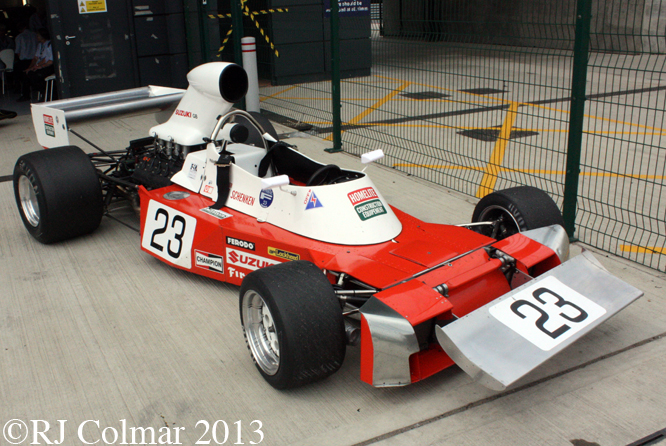
Trojan Cosworth T103, Silverstone Classic, Silverstone

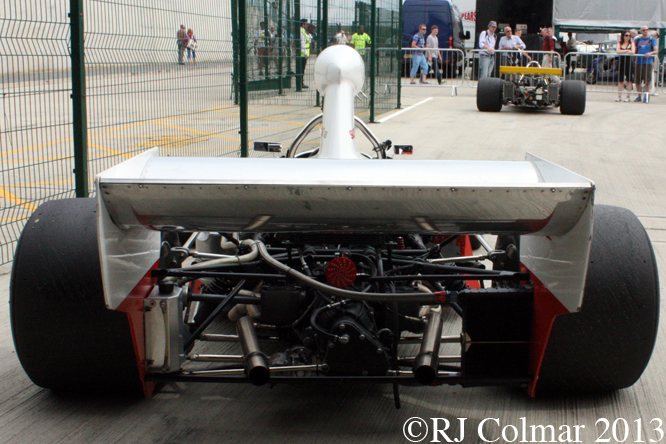
Both the T102 and T103, seen above at last years Silverstone Classic, bore a strong resemblance to the Brabham BT34 Lobster Claw formula one car which Ron designed for the 1971 season.

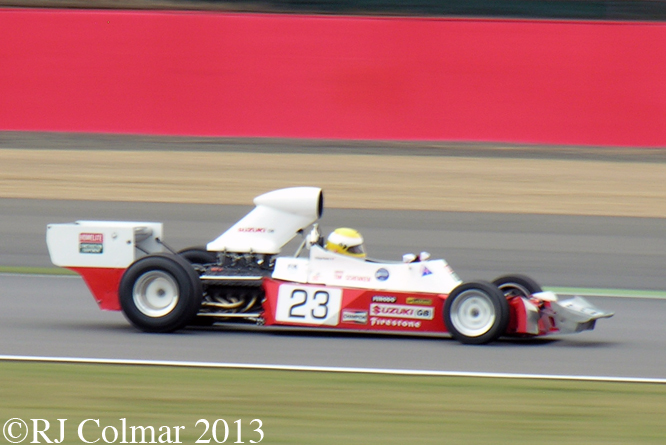
Trojan Cosworth T103, Bonny, Silverstone Classic, Silverstone

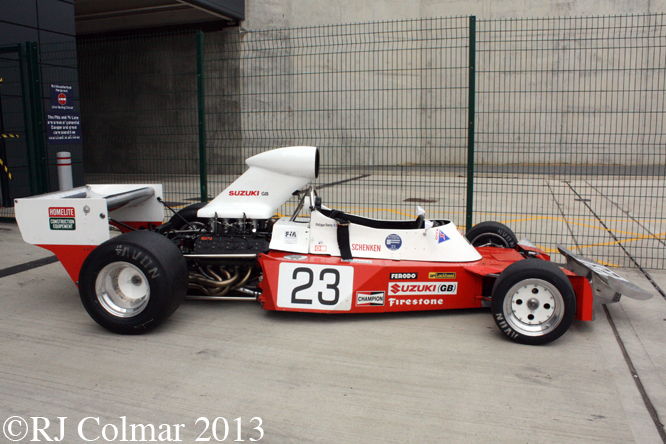
Powered by the, as good as, ubiquitous Ford Cosworth DFV with an equally, as good as, ubiquitous Hewland DG300 gearbox the T103 attracted a minimum of sponsorship from Suzuki GB and Australian Tim Schenken was signed up to drive the car.

Trojan Cosworth T103, Silverstone Classic, Silverstone

Like the Amon Cosworth AF101 I looked at last week the Trojan T103 made it’s debut at the 1974 Spanish Grand Prix where Tim qualified 25th, 2 spots behind Amon, but stayed in the race for 54 more laps than Chris before spinning off on oil on lap 76, eight laps early, to be classified 14th.

Trojan Cosworth T103, Silverstone Classic, Silverstone

At the Belgian Grand Prix Tim brought the car home 10th and at Monaco Tim qualified 24th on the 25 car grid only to be involved in an incident that removed seven cars from the race on the opening lap. The team was refused an entry for the Swedish Grand Prix, failed to qualify for the Dutch Grand Prix, missed the French Grand Prix and turned up at the British Grand Prix with a new cockpit surround and Ferrari 312 B3 style single piece front wing.

Trojan Cosworth T103, Silverstone Classic, Silverstone

Tim qualified 25th for the British Grand Prix but but was sidelined with a suspension problem on lap 6. Tim and the Trojan proved unequal to the task of qualifying for the German Grand Prix at the Nurburgring, but bounced back by qualifying 19th in Austria where he finished a season equal high 10th. The cars final appearance before the money ran out was at the Italian Grand Prix where Tim qualified 20th and completed 15 laps before the gearbox cried enough.

That was pretty much the end of Trojan too, a company that founded in 1914 survived as a manufacturer in it’s own right until the the 1960’s when it started manufacturing first Heinkel bubble cars, then Elva sports racing cars and later McLaren Sports and open wheel racing cars under licence and then manufacturing a hand full of open wheelers of it’s own devising. The company was not dissolved until 2013.

Tim Schenken’s final Grand Prix appearance came in the 1974 US Grand Prix where he failed to qualify the unloved Lotus 76 27th but took to the grid when it looked like Mario Andretti’s Parnelli would not start but eventually turned up late grid to take his rightful place. Tim took the start only to be disqualified.

Tim eventually hooked up with Howden Ganley to found Tiga a successful company making racing cars for the junior open wheel and sportscar classes. A Tiga chassis tub was started for a Formula One car but it was never finished. Tiga would also become a successful Group C2 and IMSA Lights manufacturer.

The T103 is seen being driven by owner Phillipe Bonny at last years Silverstone Classic above.

Thanks for joining me on this “Son of Lobster Claw” edition of “Gettin’ a li’l psycho on tyres”, I hope you will join me again tomorrow for Maserati Monday. Don’t for get to come back now !

Share

Supercharged 100E – Buckler MK 6

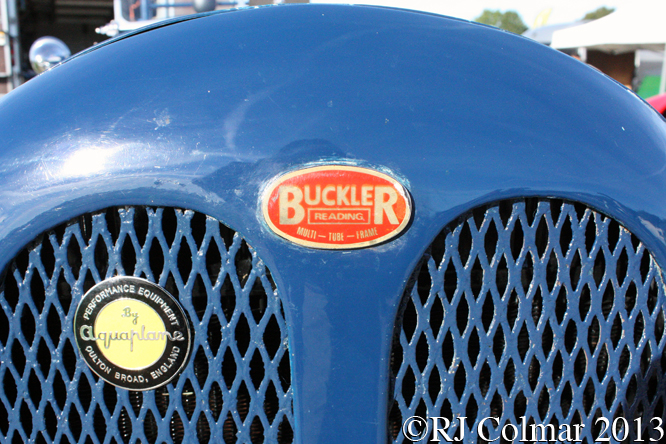
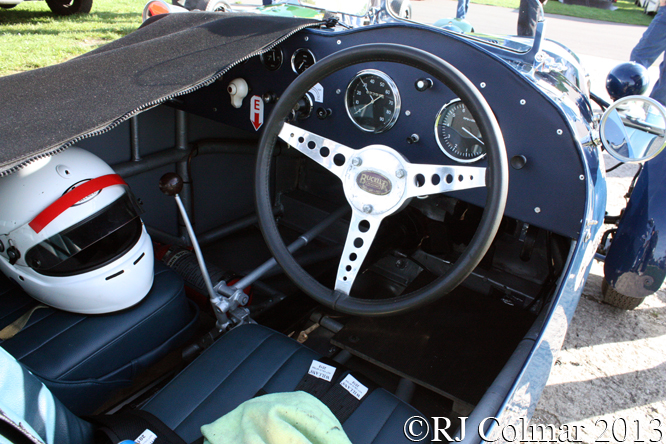
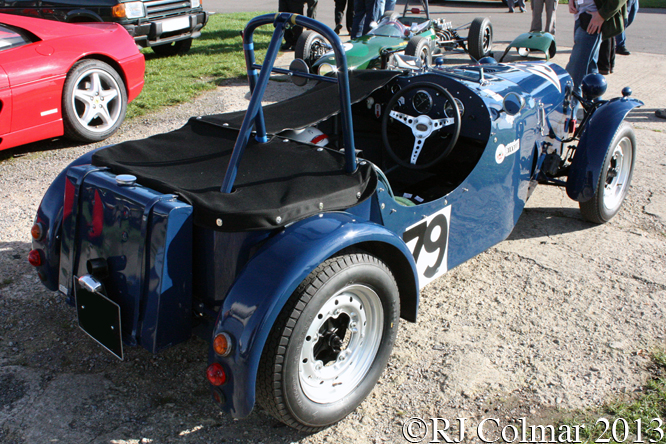
With the sales success of his Buckler MK 5 the earliest example of which was manufactured in 1949 Derek Buckler expanded his range by offering a longer wheel base Buckler Mk 6 in 1953 which could be ordered either as a turn key or car sales tax saving self build model.

Bucker MK 6, Autumn Classic, Castle Combe

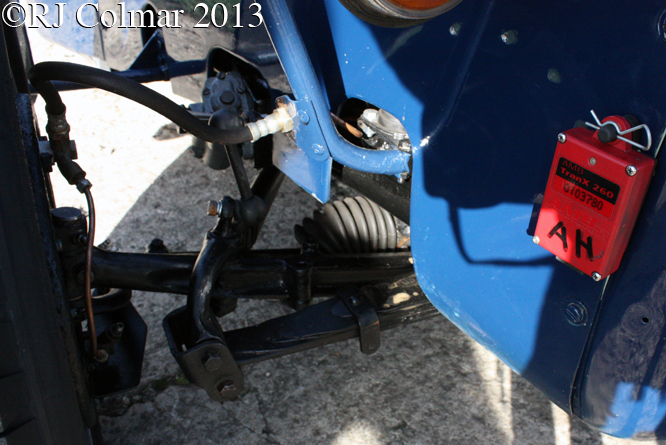
In kit form complete with tubular frame chassis, supports and fittings, independent front suspension, radiator, petrol tank, remote gear change, special steering and silencer for less than £200 to which could be added the cost of a motor, gearbox, rear axle and wheels which would typically come out of a wrecked donor Ford, along with the price of a home made body.

Bucker MK 6, Autumn Classic, Castle Combe

The earliest known owner of today’s featured 1953 Buckler MK 6 is believed to have been M Bendall who fitted a motor from a Ford 100E Prefect/Anglia a model first seen in 1953.

Bucker MK 6, Autumn Classic, Castle Combe

At some point the power of the motor in the vehicle as seen today was boosted with the aid of a supercharger.

Bucker MK 6, Autumn Classic, Castle Combe

Stan Hibberd owned the car in 1972 and drove it to the, now at least 200 year old, ciderhouse Coronation Tap in Clifton, Bristol for the the first meeting of the Buckler Register.

Bucker MK 6, Autumn Classic, Castle Combe

Although Stan remembered the meeting and the cider, served in half pints, many years later he did not remember any Bucklers being present although contemporary reports are to the contrary.

Bucker MK 6, Autumn Classic, Castle Combe

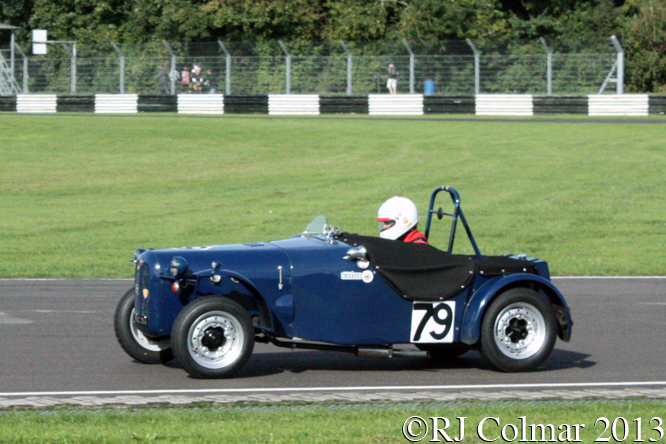
Stan’s grandson Andrew drove the car at last years Castle Combe Autumn Classic meeting, unfortunately a problem during qualifying meant Andrew did not take the start.

Thanks for joining me on this “Supercharged 100E” edition of “Gettin’ a li’l psycho on tyres” I hope you will join me again tomorrow when I’ll be looking at another one off Formula One car from 1974. Don’t forget to come back now.

Share

DB Six – Dodge Brothers Senior Six Opera Coupé

Five years after the Dodge Brothers, Horace and John, died unexpectedly due to unrelated causes their widows sold the company to Dillon, Read & Co in, up to the time, the largest ever cash transaction involving some US$ 146 million. At the end of 1925 Dillon, Read & Co also acquired a majority in Graham Inc and the three Graham brothers worked for Dodge Brothers until 1927 when Dodge introduced it’s first 3.6 litre / 244 cui six cylinder models.

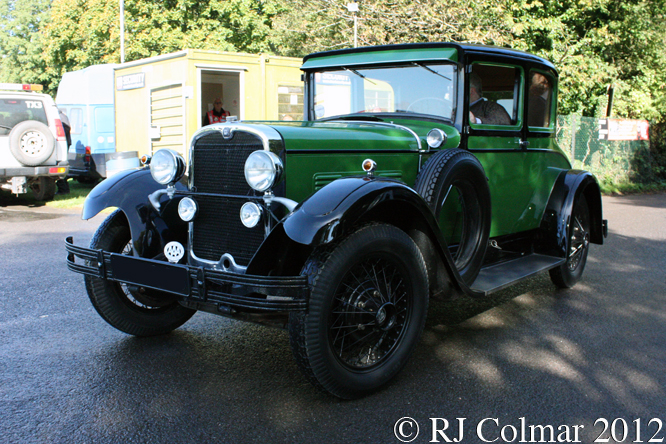
Dodge Brothers, Senior Six Opera Coupe, VSCC, Castle Combe

The L head six produced 60 hp and complemented the 40 hp Fast four in the Dodge range which was loosing market share falling from second largest manufacturer in 1920 to 7th place by 1927 prior to Chrysler’s acquisition of Dodge Brothers in 1928.

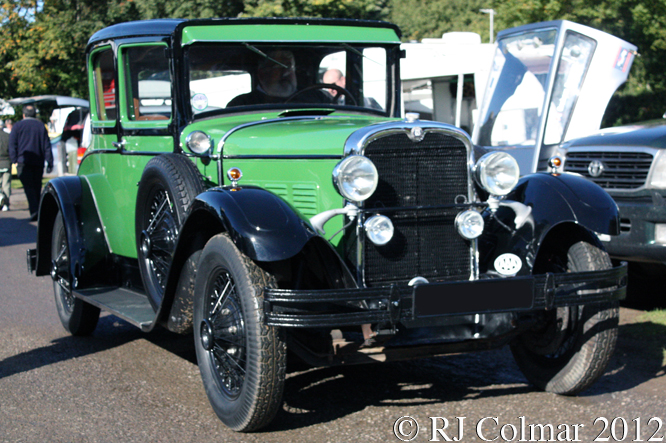
Dodge Brothers, Senior Six Opera Coupe, VSCC, Castle Combe

Identifying the exact age of today’s Senior Six Opera Coupé, seen at Castle Combe a couple of years ago, has proved extremely difficult officially it’s listed as a 1929 model however I have only been able to match it to models with the distinctive horizontal bonnet / hood vents dated 1927 and 1928.

If you know the exact years the horizontal vent Sixes were in production please do not hesitate to chime in below.

Thanks for joining me on this “DB Six” edition of “Gettin’ a li’l psycho on tyres” I hope you will join me again tomorrow. Don’t forget to come back now !

Share