Tag Archives: Colmar

Motorised Goat – Farmobil

A couple of months ago I started clearing some stuff out through my e-bay account, including a collection of French Adverts from a magazine called Connaissance des arts.
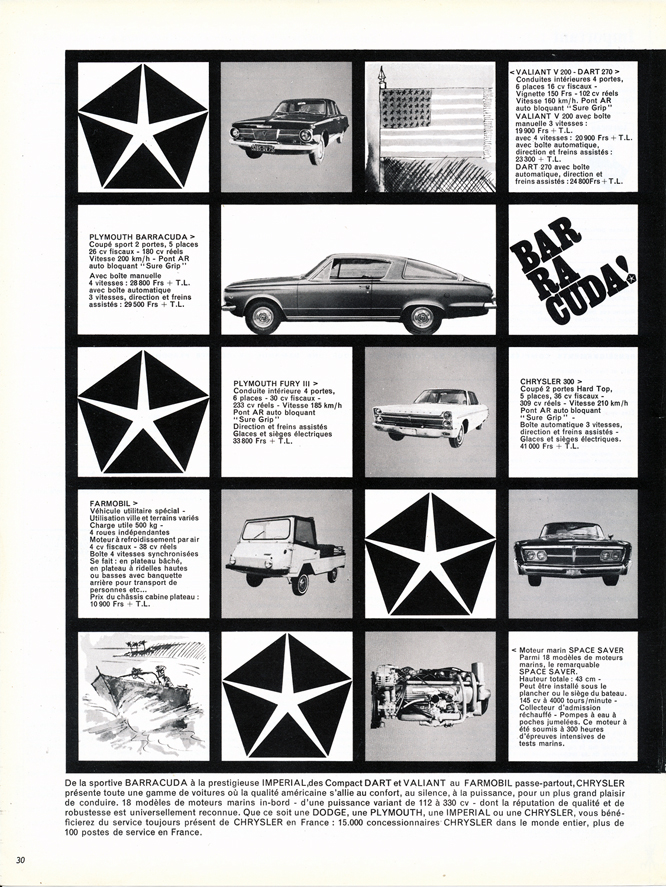
Chrysler, Advertisement, Connaissance des arts

One item that really triggered my curiosity was featured on the undated Chrysler ad above was the cute l’il utility vehicle referred to as the Farmobil below.
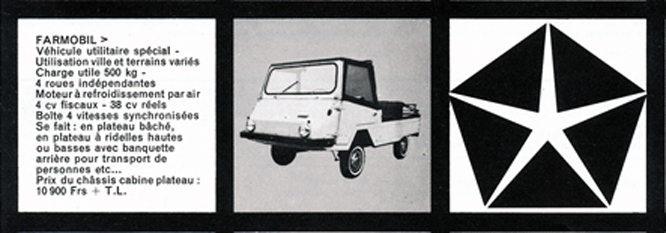
Farmobile Chrysler, Advertisement, Connaissance des arts

Last thing I imagined was that this item would sell to a Farmobil owner…. living in Perth Australia !
Mark Bird owner of today’s featured Farmobil kindly sent me some photo’s of his vehicle and some information about it to share.
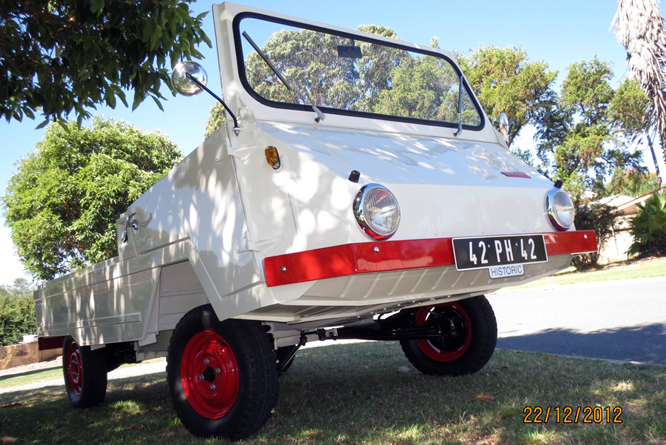
Farmobile

The Farmobil story begins in a small town on the southern border of Germany with Switzerland in Gottmadingen where the former Fahr factory occupied 4,000 employees in the production of agricultural machinery and equipment with metal castings a speciality.
Farmobile

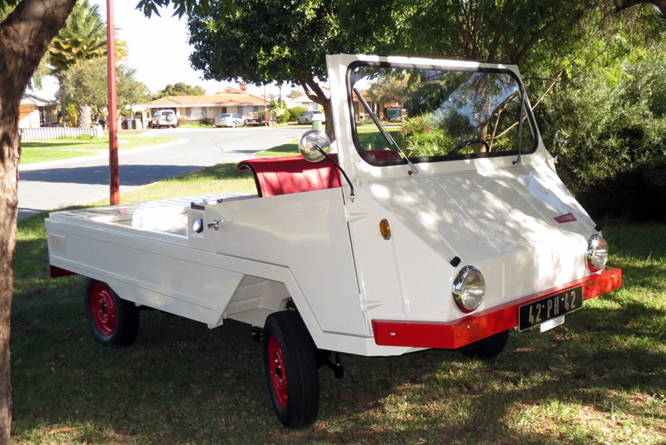
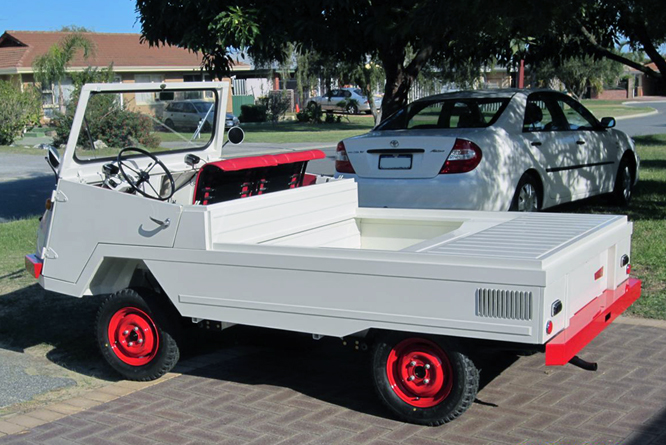
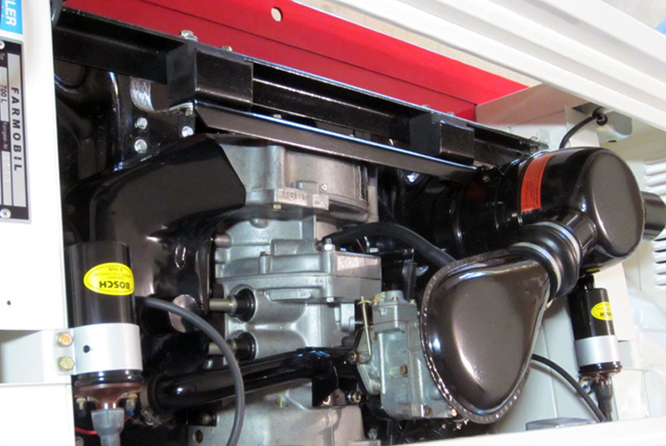
One of the products they designed in co operation with BMW is the Farmobil a light utility truck with all round independent suspension and a drive train including, 4 speed synchromesh gearbox, 2 cylinder BMW 700 cc / 42.7 cui motor, stick shift, brakes and wheels lifted more or less straight out of a BMW 700 LS.
Farmobile

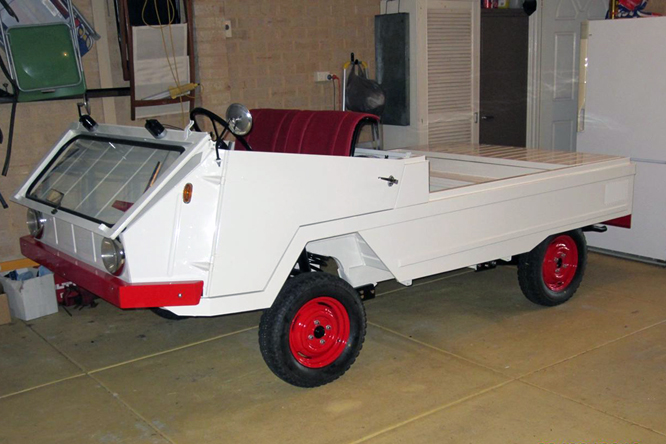
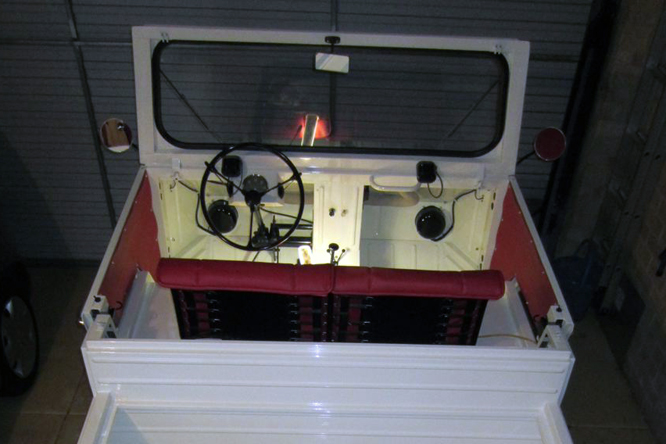
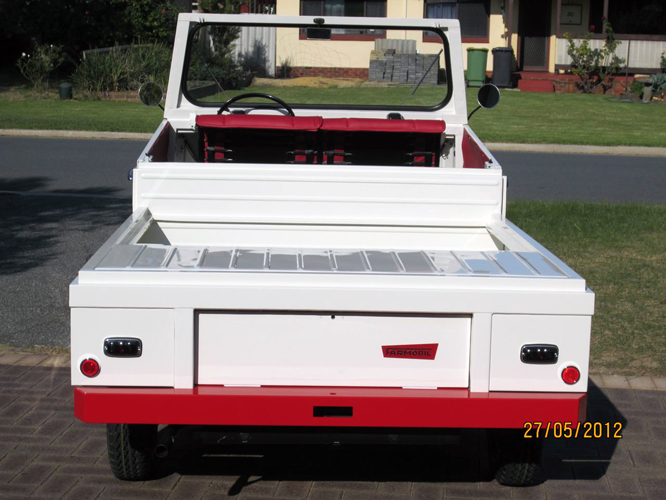
To maximise flexibility the windscreen could be folded down and the doors removed and for inclement weather the Farmobil was provided with a canvass roof, it had a power take off for farm implements and could even be converted into a six seat passenger vehicle.

Farmobile

The 32 hp air cooled horizontally opposed motor was originally developed for BMW motorcycles, but this is not the same single cylinder unit as used in the BMW Isetta bubble car or R60 flat twin as used in the BMW 600 Bubble Car.

Assembley of Farmobils was put out to tender which was won by Greek low volume manufacturer Peter Kondorgouris who founded Farco to build the Farmobil in Thessalonika, Greece, from 1962 to 1966.
Farmobile

During this time Chrysler was looking for away into the European markets and acquired Farco as a first step towards establishing a European base. However shortly after the acquisition Ford sold it’s share in the French Simca concern and Chrysler bought it giving them an entrance into the French and German markets while the Farmobil manufactured in Greece, outside the European Economic Union (EEC) at the time, attracted prohibitive taxes.
Farmobile

In Greece, where the Farmobil was never officially distributed, it was known as the ‘motorised goat’. Chrysler distributed it through it’s network within the EEC however by 1966 production came to an end after efforts to move production to Rotterdam, and the UK where two vehicles fitted with Hillman Imp motors from the Rootes Group, soon to become part of the Chrysler empire all failed to secure a future for the versatile machine of which just under 1000 were built between 1962 and 1966.
Farmobile

Mark, a member of the “Special Interest Vehicle Association” (SIVA) found his 1966 example needing a full restoration in France in 1999 and took it back to Australia where he spent 12 years locating all the correct parts to restore it back to the as new showroom condition seen here.
Farmobile

He says that “It is a completely unknown vehicle in Australia so it’s a bit difficult to share it with others” outside the the Special Interest Vehicles Association whose members own a diverse range of vehicles including Hino Contessa, Messerschmitt KR 200 & 201, NSU Prinz and Ro80, Autobianchi Bianchina, Trojan 200, Nissan S-Cargo, Honda s600″s , Coupe 7″s & 9″s as well as N360 and TN360 to name a few.

My thanks to Mark for sharing today’s photographs of his stout little Farmobile about which he contributed to a fuller description which can be seen on the allpar.com website linked here.

Thanks for joining me on this “Mechanised Goat” edition of “Gettin’ a li’l psycho on tyres” I hope you’ll join me again tomorrow for a few of the many stories behind the oldest Bugatti in Britain. Don’t forget to come back now !

18/02/14 Errata in the original post of this blog I incorrectly spelled Farmobil, it has no ‘e’ and stated; that the Farmobil’s transmission was a Porsche design which it was not, that the motor was shared with the BMW Isetta Bubble car which was also incorrect.

Apologies for the confusion and thanks to Mark Bird for pointing out the inaccuracies. Mark also tells me that the Farmobil is not to be confused with the similar but completely unrelated Steyer Puch Haflinger made in Austria.

Share

Turbo Mopar Under The Hood – Bristol Brigand

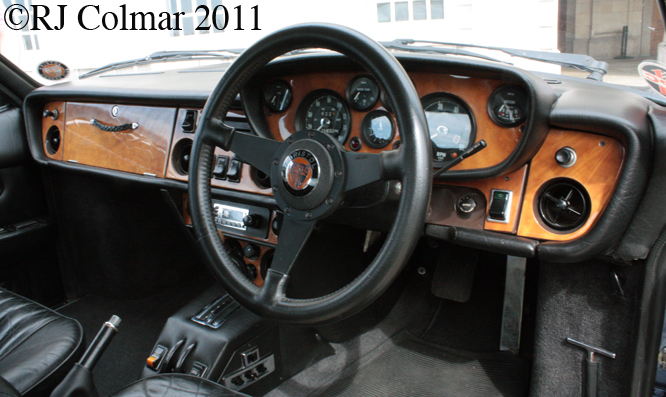
By the early 1980’s the temporary austerity enforced on the global economy by the oil crisis ten years earlier was giving way to a new era of prosperity that would be characterised in the immortalisation of Gordon Gecko in “Wall Street“.

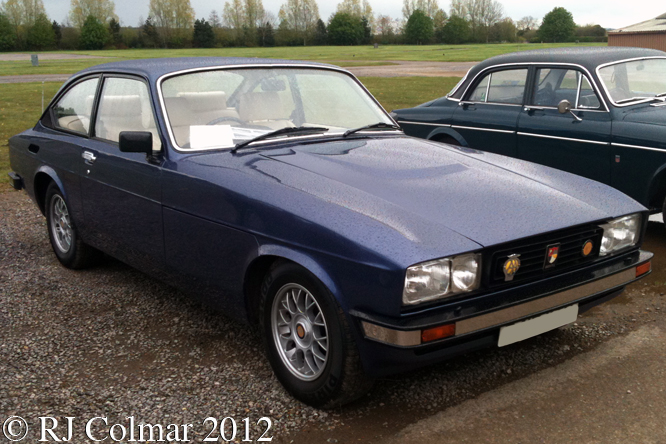
Bristol Brigand, Bristol Classic Car Show, Shepton Mallet

Likewise in the motor trade cars were becoming seemingly exponentially faster thanks to widespread use of turbochargers which had the benefit of boosting horsepower of small motors without the cost of having to develop new large motors, additionally turbochargers could give executives a powerful model with a small motor typically 2 litres / 122 cui without the tax liabilities and inefficiencies of a 3 litre model.

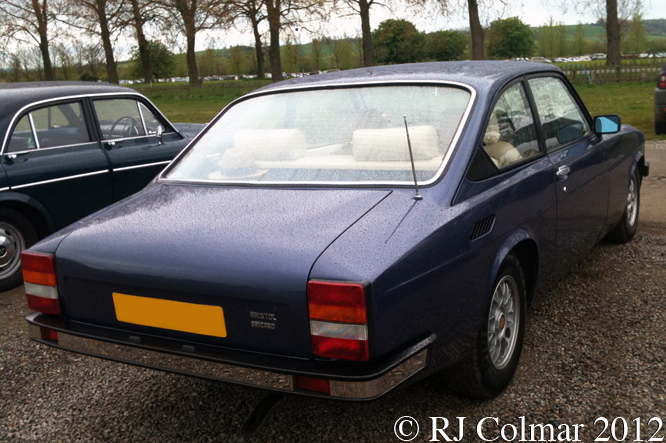
Bristol Brigand, Bristol Classic Car Show, Shepton Mallet

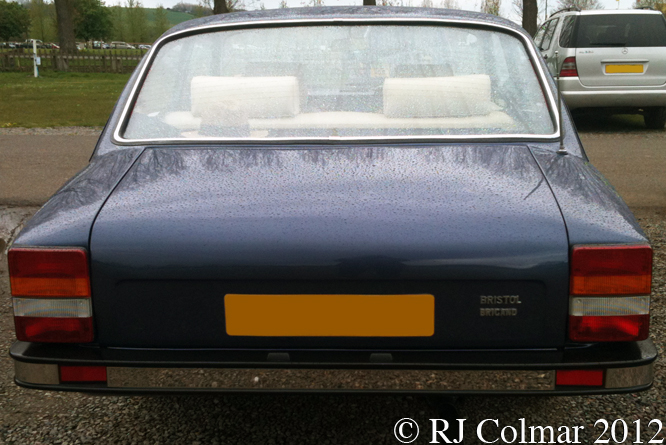
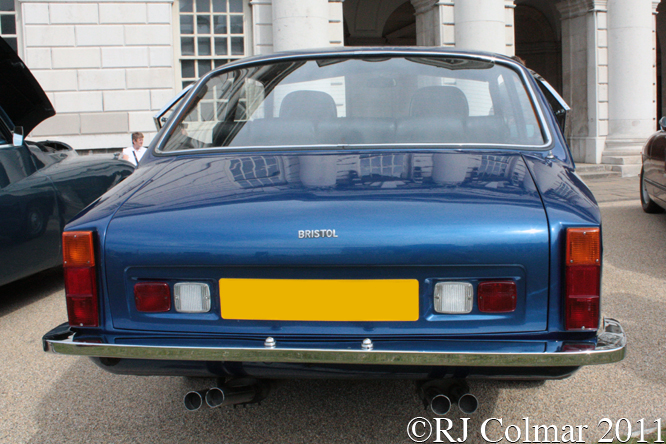
Many manufacturers like Lotus naturally made sure everybody new your car was fitted with a turbocharger, though later a more discrete approach was introduced by some like Volvo. Amongst the Créme de la Créme unsurprisingly Bristol chose to take the more discreet approach with the turbocharged variant of it’s 603 model which was differentiated from it’s less powerful brethren by; standard alloy wheels, a visually inconsequential power bulge in the bonnet / hood and the “Brigand” name on the boot / trunk lid.

Bristol Brigand, Bristol Classic Car Show, Shepton Mallet

The series 3 603’s introduced in 1982 were among the first to be given names used by Bristol’s early owners the Bristol Aeroplane Company, the normally aspirated 603 Series 3 is known as the Britannia after a turbo prop airliner with the Brigand named after a ground attack bomber. The Brigand equipped with a 5.9 litre / 360 cui Chrysler V8 and a Rotormaster Turbocharger was said to be capable of reaching 60 mph from rest in 6.1 seconds and a top speed of 150 mph.

Bristol Brigand, Bristol Classic Car Show, Shepton Mallet

Brigands like today’s 1985 example, seen at the Bristol Classic Motor Show at Shepton Mallet a couple of years ago, were manufactured from 1982 to 1994 with minor exterior revisions, no production numbers for these cars was ever released some believe there may be 16 left while How Many Left.com shows only an extremely conservative 2 as taxed for use in the UK !

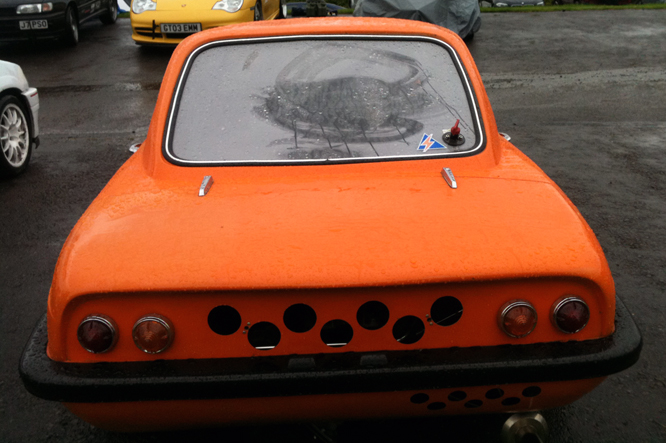
If you think the tail lights look familiar that probably show’s that at some point in your life you have sat behind a Bedford Commercial CF2 van.

Thanks for joining me on this “Turbo Mopar Under The Hood” edition of “Gettin’ a li’l psycho on tyres” I hope you will join me again tomorrow when I’ll be looking at an agricultural BMW powered Mopar. Don’t forget to come back now !

Share

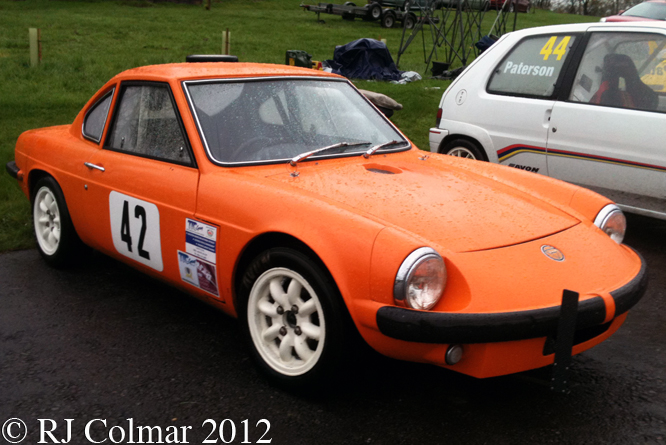
No Enthusiast Should Miss – Ginetta G.15 Coupé

For trade stand No. 157 at the Earls Court Motor Show in 1967 Ginetta prepared a vehicle that they said “No enthusiast should miss”, the new Ginetta G.15 was billed as being capable of 100 mph and achieving 40 mpg with ‘fantastic’ road holding and all for the low price of just £849 in kit form.

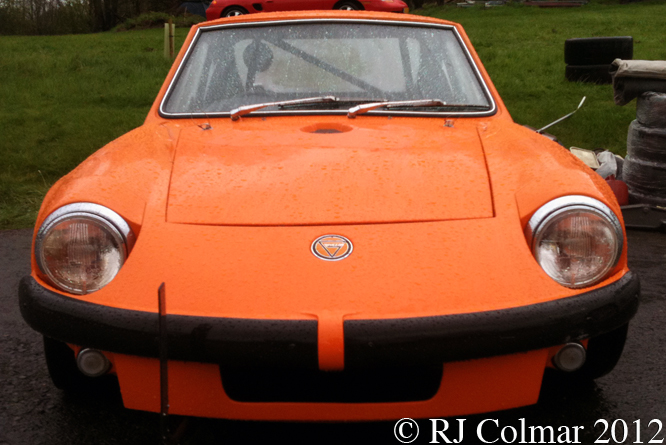
Ginetta G15, Prescott

However Ginetta had over sold them selves since they had not sorted out their supply chain out sufficiently to start production until 1968. However once they got going according to Ginetta’s engineer Ivor Walkett “we could not build them fast enough” for a while Ginetta moved into a new factory to cope with the demand which eventually was just short of 800 units.

Ginetta G15, Prescott

Built around a steel space frame with glass fibre pannels the G.15 used proprietary Triumph Spitfire front suspension and like the later Clan proprietary rear mounted engine and suspension from the Hillman Imp. Ginetta also had the car type approved for turn key sales.

Ginetta G15, Russell, Prescott

The G.15 was a big hit on the tracks and hills, Chrysler engineer Brian Tavender used his in sprints with is own specially prepared motor and gearbox, until an accident at Castle Combe in 1975 Barry Wood was successful running a works backed car in the modified sportscar (Modsport) class while 3 years after production had ended in 1974 David Beams became 1977 Production Sports (Prodsports) Champion with his G.15. Two years later Alison Davis repeated the Prodsports feat to become the first woman to win an overall circuit racing championship.

Ginetta G15, Prescott

The end of G.15 production in 1974 was brought about by the usual suspects for the period, dreaded Value Added Tax (VAT), a three day working week due to fuel shortages, with the additional threat of the end of supply of the Hillman Imp motor. Several G.15s were built for the US market with Volkswagen motors and Ginetta considered using a Skoda motor to replace the Hillman unit before cutting their losses and calling it a day for the model. Subsequently Ginetta moved back to their original factory.

Today’s featured G.15 belonging to Andrew Russell was seen at Prescott a couple of years ago.

Thanks for joining me on this “No Enthusiast Should Miss” edition of “Gettin’ a li’l psycho on tyres”, I hope you will join me tomorrow when I’ll be looking at an early turbocharged Bristol. Don’t forget to come back now !

Share

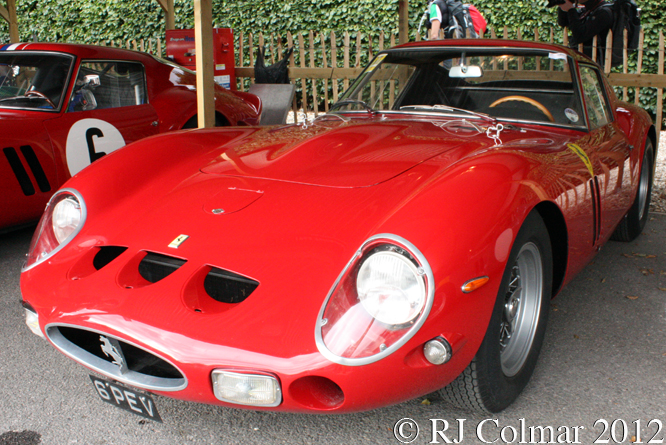
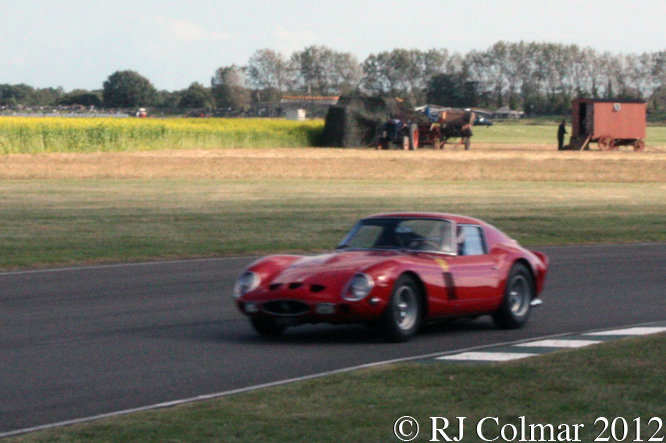
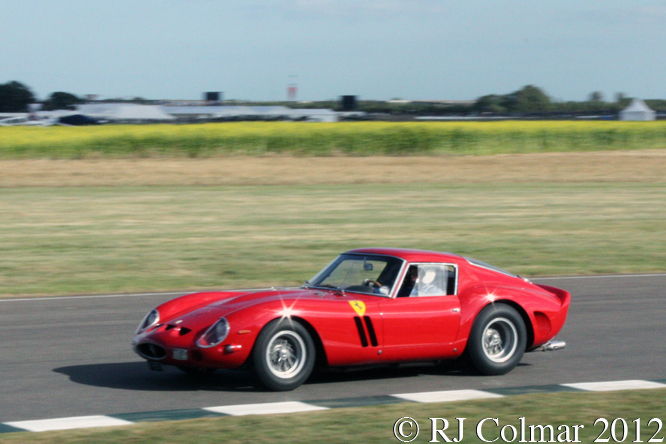
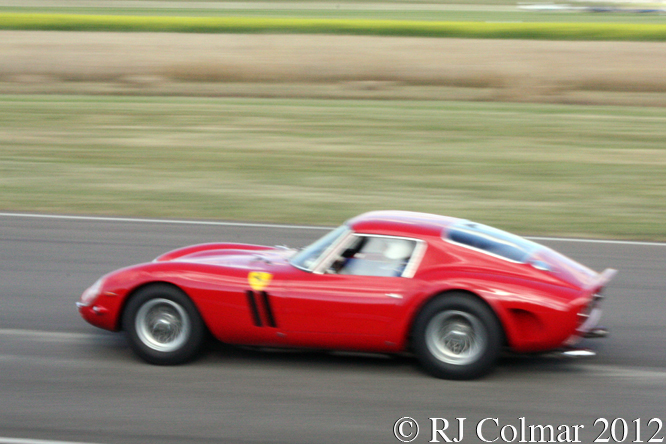
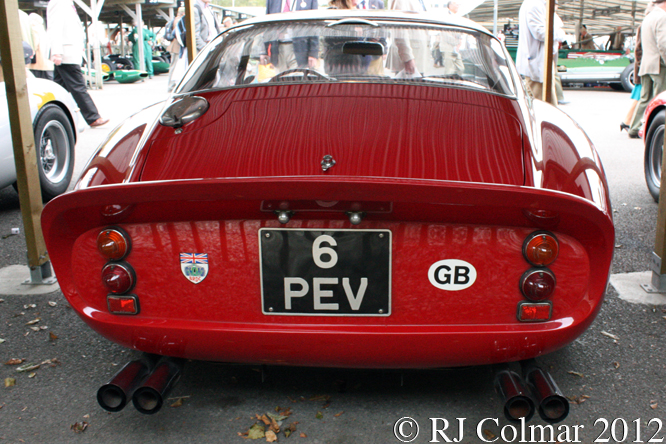
Hermann’s GTO – Ferrari 250 GTO #4115GT

In 1961 23 year old Hermann Cordes visited the Porsche factory with the intention of buying a couple of Porsche’s to race but found the atmoshpere less than friendly and left with out spending so much as a phennig. On his way home the dissapointed would be racing driver went to Frankfurt where serendipidously the Frankfurt Motor Show was happening.

At the show Hermann spoted a light blue Ferrari 250 GT SWB Berlinetta similar, so he thought, to the vehicle that had won it class in the 1000kms at the Nurburgring earlier in the year and purchased it along with a Ferrari 250 GTE 2+2 for a little more than the price of four of the Porsche’s he had set out to buy.

Ferrari 250 GTO, Goodwood Revival

According to legend on the 15th of April 1962 Hermann inadvertently parked his Ferrari 250 GT SWB in the competitors car park at the Eberbach hillclimb and before he knew it the steel bodied car had been given a racing number and Hermann a provisional competition licence and his career got underway. A couple ofweeks later he raced the car at Achum where he finished 3rd.

On the 1st of May Hermann’s 250 GT SWB came into contact with a deer on a public road and the SWB ended up backed into a tree an insurance write off. Hermann escaped more or less unharmed and with the insurance money ordered today’s featured Ferrari 250 GTO chassis #4115GT, which turned out to be the only 250 GTO ever sold new to a German customer.

Ferrari 250 GTO, Vestey, Goodwood Revival

While he was waiting for delivery of #4115GT and before going down to Maranello and then Scalietti’s factory on Modena verify it’s existence and identity, Hermann took the bumpers off his 250 GTE and competed with that. In December 1962 Hermann took delivery of the Grigio metallic 250 GTO chassis #4115GT, before selling his 250 GTE in February 1963 to Guenter Seifert.

In 1963 Hermann competed with #4115GT in the hills and on the track winning his class on the Bad Neuenahr hillclimb and winning overall in a GT race at Hockenheim. Hermann’s last recorded race was at Avus where he finished 2nd.

Ferrari 250 GTO, Vestey, Goodwood Revival

In 1964 Manfred Ramminger bought the car, to which Hermann had added black, gold and red stripes. Manfred shared #4115GT with Herbert Schander at the Nurburgring 1000kms where they finished 20th overall and 5th in class, and driving 4115GT solo Manfred won at Mainz Finthen and Avus before selling the car on to Werner Lindermann for the 1965 season.

Werner won a GT race at the Nurburgring before returning with the previous owner Manfred for the 1000kms where they came home 23rd overall, but this time second in class. Werner then drove 4115GT to it’s second victory at Avus, a second victory at Mainz Finthen and a win at Trier. At the end of 1965 Werner offered the #4115GT, now painted signal red, for sale at around half of it’s original cost.

Ferrari 250 GTO, Vestey, Goodwood Revival

H. P. Burkhardt of Switzerland bought the car in 1966 and in 1967 it was driven Peter Ettmueller to a final class victory on the Ollon-Villars hillclimb. In 1972 #4115GT moved to the UK under the ownership of T.A. Bob Roberts who had it displayed in the Midland Motor Museum, Stanmore Hall, GB.

Present owner Paul Vesty, now Sir, bought #4115GT in 1981 and he is seen demonstrating the car during the 250 GTO 50th Anniversary Tour at Goodwood Revival in 2012.

Ferrari 250 GTO, Goodwood Revival

My thanks to Michael “Tuboscocca” at The Nostalgia Forum directing me to an article by Gregor Schulz that appeared in Old Timer markt regarding Herman Cordes in April 2006.

Thanks for joining me on this “Hermann’s GTO” edition of “Gettin’ a li’l psycho on tyres” I hope you will join me again tomorrow when I’ll be looking at a Ginetta no enthusiast should miss. Don’t forget to come back now !

Share

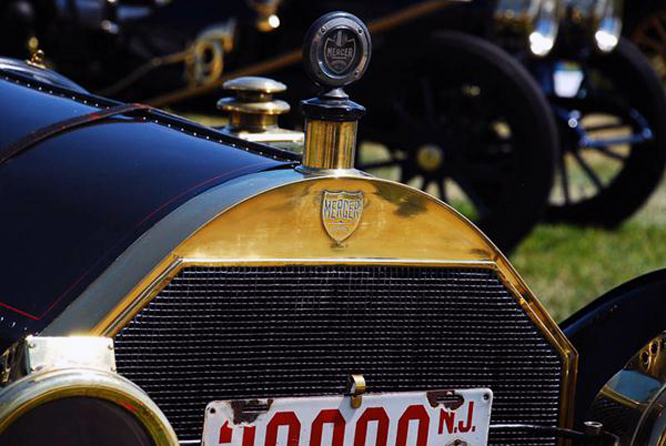
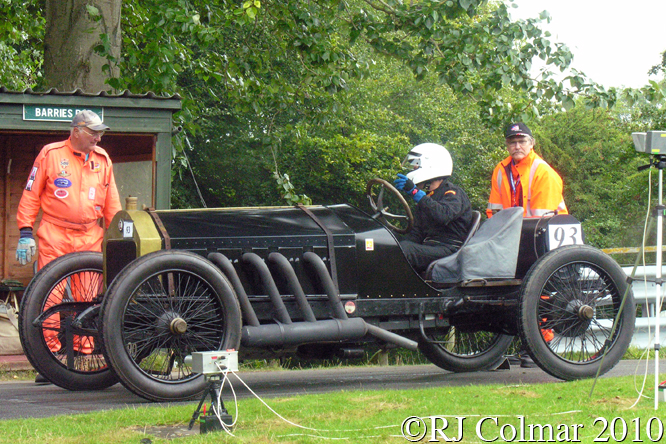
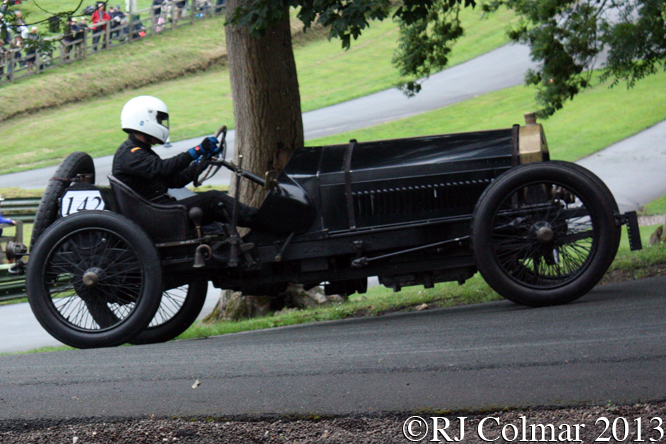
“55 hp at 1,650 rpm” – Mercer Type 35 Series J Raceabout #996

Today’s story begins with John A. Roebling who designed the Brooklyn Bridge amongst many others. John had a son Ferdinand Roebling who together with his cousin John’s nephew Washington A. Roebling II and Kuser Borthers John L, Frederick and Antony, tycoons from the world of banking, bottling and brewing bought out a vehicle manufacturing business from Washington’s friend William Walter in a foreclosure sale in 1909.

Mercer Type 35 J, Palo Verdes, Concours d'Elegance

The new investors renamed the company Mercer after Mercer County, New Jersey where the factory had been located since 1906 in a former brewery owned by the Kusers. They set about building a vehicle which would establish the brand in competition and the result was the 1910 Type 35 J Raceabout.

Mercer Type 35 J, Palo Verdes, Concours d'Elegance

Powered by a 4 cylinder 4.8 litre / 293 cui motor producing 55 hp at 1,650 rpm the Type 35 Series J was designed to safely and consistently be driven at over 70 mph. With a top speed of over 90 mph a Type 53 Series J won five out of the six events into which it was entered in 1911, only missing out to the Marmon Wasp in the inaugural Indy 500.

Mercer Type 35 J, Palo Verdes, Concours d'Elegance

The history of today’s featured 1913 Type 35 Series J chassis #996 goes back to 1935 when founder of the VMCCA and founder director of the Wolfden Antique Auto Museum of Southborough, MA, Mr. Cameron Bradley, bought the car from a used car dealer for $100.

Mercer Type 35J, Palo Verdes, Concours d'Elegance

In 1977 Mr Bradley sold 996 on to present owners Ken and Sharon Gooding, parents of the Gooding and Co Auction House President David Gooding.

My thanks to Geoffrey Horton who took these photographs a couple of years ago at the Palo Verdes Concours d’Elegance.

Thanks for joining me on this “55 hp at 1,650 rpm” edition of “Gettin’ a li’l psycho on tyres” I hope you will join me again tomorrow for Ferrari Friday. Don’t forget to come back now !

Share

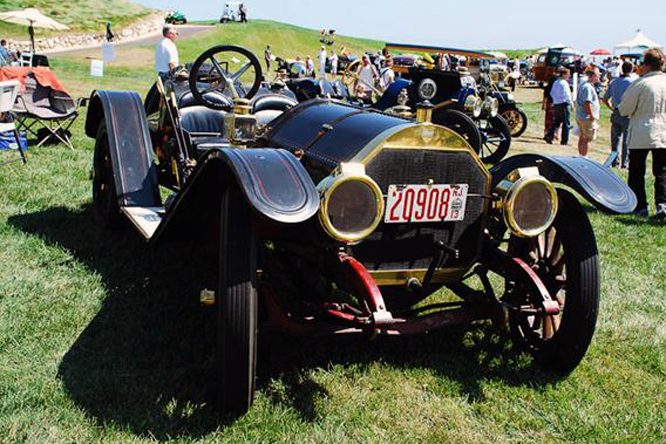
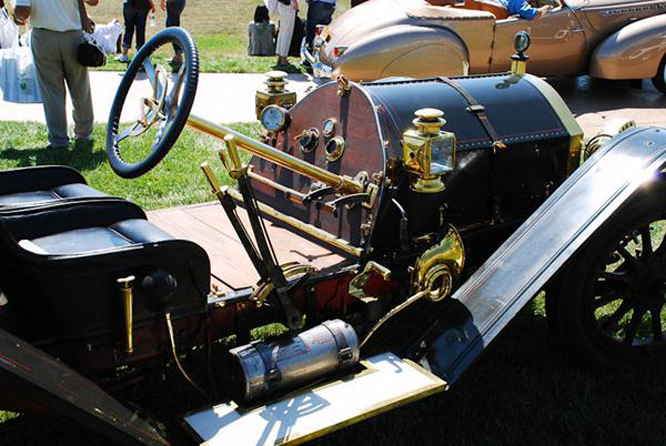
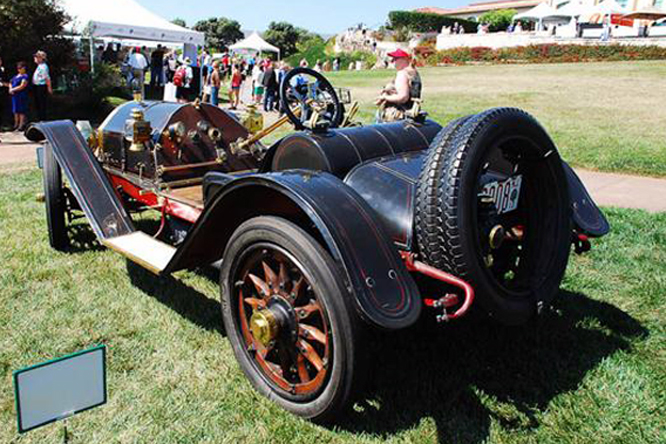
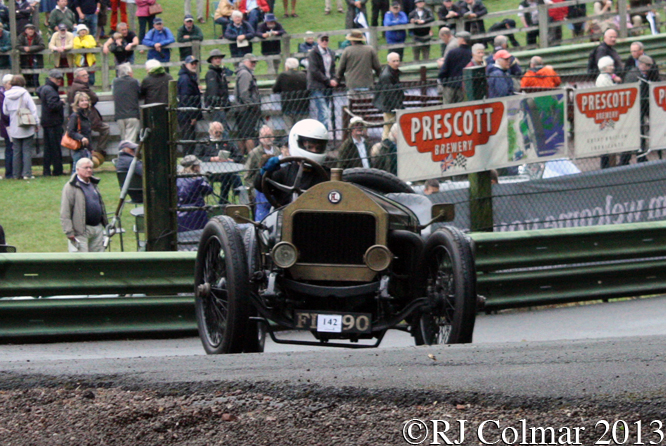
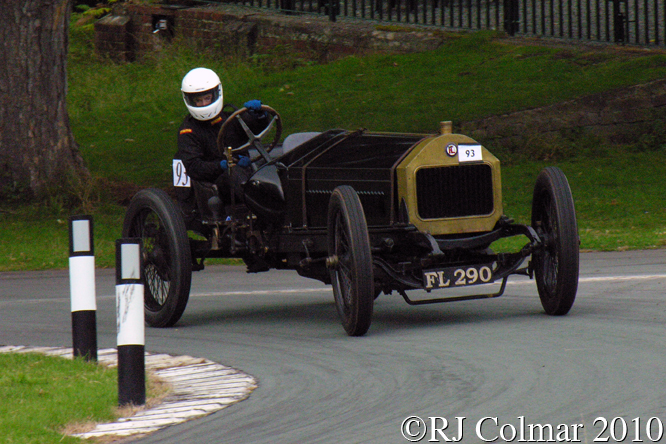
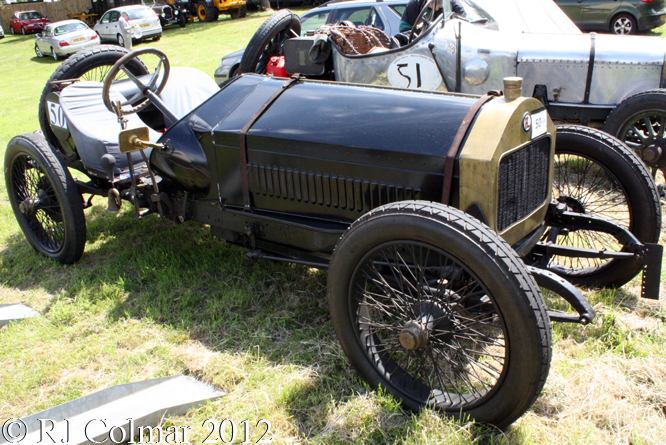
Floreat Lindum – F.L. Automobiles of Paris Sports

Over the last few years I have come across Ron Birkett’s F.L. Sports several times and yesterday it was time to bite the bullet and find out what an F.L. Sports was.

After several hours I came up with not a lot, to be precise plenty of photo’s of today’s featured car, mention of a 1911 F.L. Torpédo that was auctioned so long ago in France there are no longer any photos of it on the web and two adverts the first from June 1912 and another depicting a 1909 12 hp 4 cylinder model that might have some relevance to the subject of this blog.

F.L. Sports, Brooklands Double Twelve

If there is an F.L. Owners club they are keeping a very low web profile. It would appear that the F.L. story begins with an organisation called Compagnie Française de Moteurs à Gaz which for 20 years manufactured stationary Otto 4 stroke motors perfected and designed by Nikolaus Otto and his partner Eugen Langen.

Between 1900 and 1914 Compagnie Française de Moteurs à Gaz got involved in the manufacture of motor cars through a company called Societé Générale des Voitures Automobiles Otto of Paris which were branded Otto, not to be confused with a brand of the same name manufactured in Philadelphia from 1909 to 1912.

F.L. Sports, Birkett, Prescott

A Mr de la Frennaye came across an engineer called M Serex who had designed a simple yet reliable machine and de la Frennaye negotiated a licence for Societé Générale des Voitures Automobiles Otto of Paris to manufacture it.

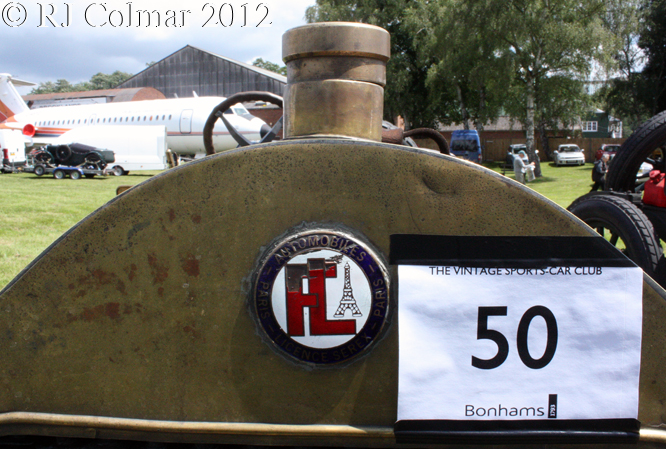
To differentiate the Serex designed car from the Ottos, which appear to have gone out of production by 1909, Societé Générale des Voitures Automobiles Otto of Paris invented a new brand F.L. Automobiles of Paris, F.L. being a phonetic spelling eff ell of Eiffe, as in the Parisian Tower, a symbol of technological progress which appears on the F.L. badge.

F.L. Sports, Birkett, Prescott

From at least 1908 F.L. manufactured vehicles with 2.4 litre / 146 cui 4 cylinder motors and from 1912 3.6 litre / 219 cui 6 cylinder motors that were fitted to vehicles with Landaulet, Double Phaeton, Coupe de Ville, Roadster bodies.

It would appear Mr de la Frennaye had good connections with Russia so it is possible some of these vehicles may have been sold there. Production of the F.L. marque came to a halt in 1914 with the onset of the 1914-18 Great War.

F.L. Sports, Brooklands Double Twelve

Today’s featured car was originally sold in 1909 and still bearing it’s original licnece plate number was sold to a lady in County Galway she sold it in 1914 and records of its 2nd and 3rd keepers in Ireland are known up until 1919.

When the chassis of today’s car was discovered in Nottinghamshire in 1998 it emerged that the English F.L. Agents RM Wright & Co of Lincoln sold F.L. vehicles with a different badge RM Wright & Co Licence Serex appeared around the out side, the FL letters within, but the Eiffel Tower illustration replaced by one of Lincoln Cathedral, and the Latin words “Floreat Lindum”, Flower Of Lincoln, appeared above and below the overlapping FL letters.

F.L. Sports, Brooklands Double Twelve

Starting with a bare chassis and no motor Ron Birkett has built the car up into a two seater runabout which was completed and put back on the road with it’s original licence plate number in 2001.

This vehicle is officially listed with a 3 litre / 183 cui motor, a size which I have not otherwise heard about in connection with the Marque and given that the chassis was found sans motor in 1998 it is possible the motor is of a similar period but different make. If you can put me out of my misery please do not hesitate to chip in below.

F.L. Sports, Birkett, Prescott

Since starting this article it has emerged that a further circa 1908 F.L. fitted with a four seat tonneau body was known to reside in Australia in 1998. With no known production figures and just three examples known to have survived there may be a simple reason why the F.L. Owners Club keeps such a low profile.

F.L. Sports, Birkett, Prescott

My thanks to TNFer’s Tim Murray, Steven Lines and Udo Leischner for additional information about the Marque and to Udo again for finding this linked period photo of an FL 12/16hp.

Thanks for joining me on this “Floreat Lindum” edition of “Gettin’ a li’l psycho on tyres” I hope you’ll join me tomorrow when I’ll be looking at Force India’s 2013 season. Don’t forget to come back now !

Share

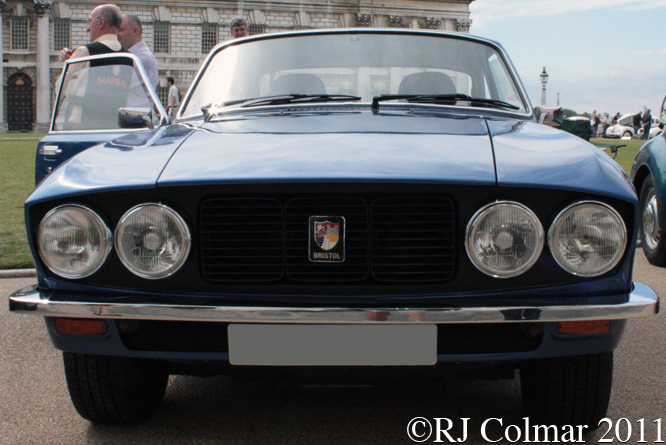
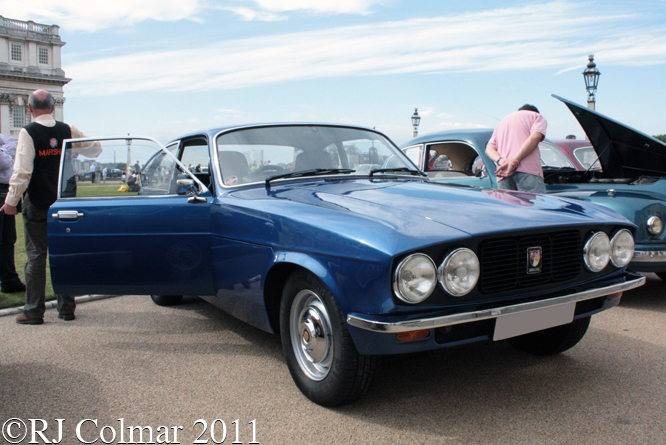
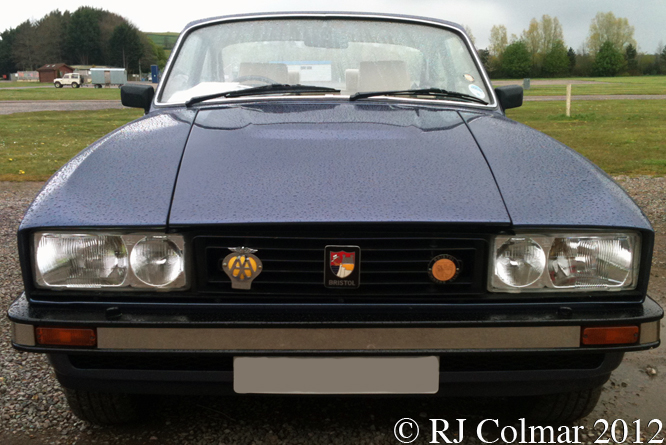
Unparalleld Vision – Bristol 603 E

When Bristol replaced it’s faithful 411 models in 1976 it came out with all guns blazing launching the Targa topped 412 and today’s featured model the 603 which owed little to it’s older sister apart from a familial face with four round head lights.

Bristol 603 E, Bristol Concours d'Elegance, Greenwich

The 603 was launched in E and S form’s, the E like the 1977 example seen here was supplied with a 145 hp 5.2 litre / 318 cui Chrysler V8 while the S was fitted with the 170 hp 5.8 litre / 360 cui motor.

Bristol 603 E, Bristol Concours d'Elegance, Greenwich

Since it left the factory today’s featured car has been fitted with a stroked 360 Mopar to bring it up to 375 hp 6.6 litre / 408 cui spec. An Edelbrock carburetor and special inlet manifolds helping to more than double the cars original horsepower numbers.

Bristol 603 E, Bristol Concours d'Elegance, Greenwich

The official rest to 60 mph time for the more powerful S variant was a sprightly, for 1976, 7.6s with a 1/4 mile time of 18.2 seconds, one would imagine with double the horsepower these numbers would take a significant dive.

Bristol 603 E, Bristol Concours d'Elegance, Greenwich

The 603 is noted for it’s slim window pillars which offered unparalleled vision, and yet this did not give the car in anyway an overly futuristic glass house look, the 603 was very much of it’s time and it’s variants remained in production until the one off Blenheim S4 was built in 2009.

Thanks for joining me on this “Unparalleled View” edition of “Gettin’ a li’l psycho on tyres” I hope you will join me again tomorrow when I’ll be looking at an agricultural pick up. Don’t forget to come back now !

Tony Crook RIP.

It was with sadness that the motoring fraternity learned of the death of Tony Crook earlier this week.

Tony had a long and successful racing career which included driving two Bristol powered cars in the 1952 and 1953 British Grand Prix, run to Formula 2 regulations.

Tony went on to become an agent and later the sole agent for Bristol Cars in which he took a 40% stake when Bristol Cars became independent of it’s parent the Bristol Aeroplane Company in 1960.

In 1973 Tony bought out Bristol Cars founder Sir George White to become sole proprietor and distributor of Bristol Cars until 1997, when he sold a 50% stake to Toby Silverton which became 100% in 2001.

Tony continued working for Bristol until 2007.

We offer sincerest condolences to Mr Crooks family and friends.

Share