Tag Archives: Colmar

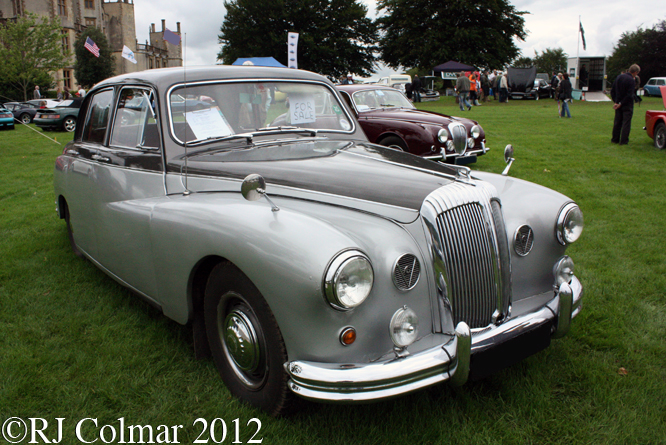
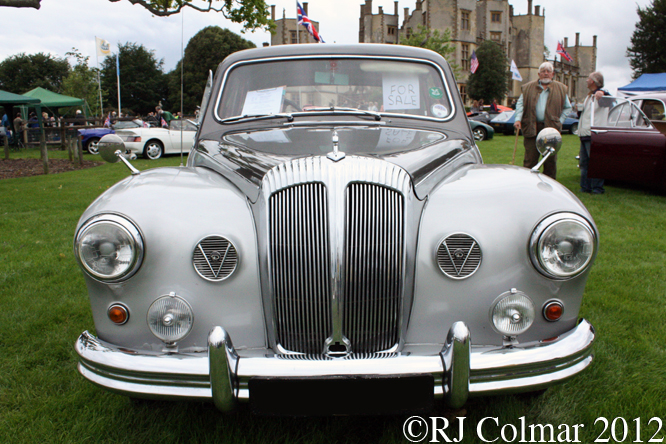
Jewel In The Crown – Daimler Majestic Major DQ450

In 1958 Daimler introduced it Majestic saloon with a six cylinder engine, three speed Borg Warner automatic transmission, power steering, and the first use of vacuum servo assisted disc brakes on a saloon car. However the by now antiquated separate chassis and bodywork construction meant that for all the cutting edge technology the car did not perform to the highest order.

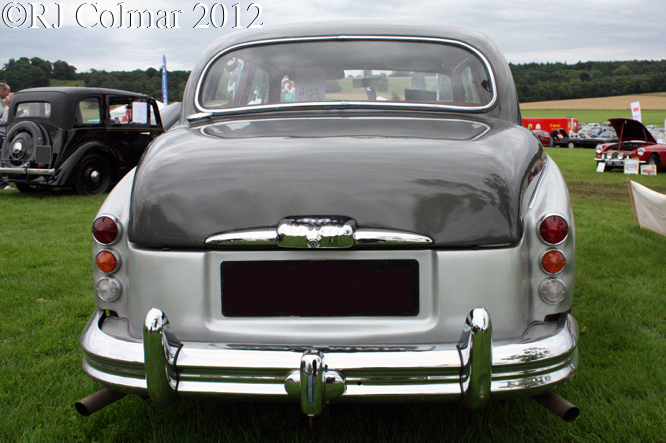
Daimler Majestic Major, Classics at the Castle, Sherbourne

In 1959 Daimler announced an addition to the range in the form of the Majestic Major which featured a 220 hp version Edward Turners V8 that first saw the light of day in the Daimler SP250 earlier in 1959 and a larger boot / trunk area than the standard Majestic.

Daimler Majestic Major, Classics at the Castle, Sherbourne

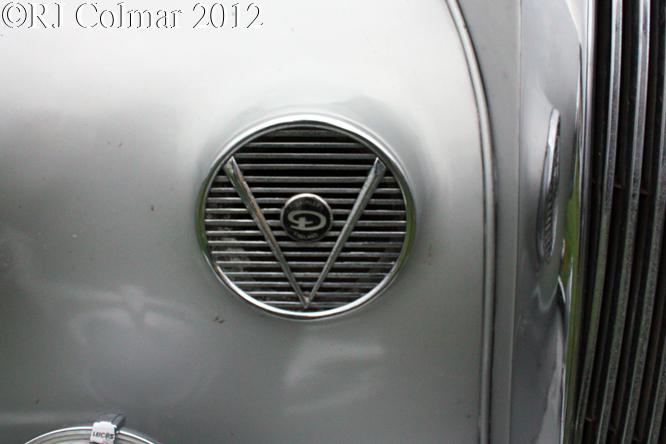
The new motor raised the top speed from 112 mph to a for the time sizzling 120 mph plus, there was no maximum speed restriction in force at the time, and acceleration from rest to 60 mph was achieved in just 9.7 seconds. Note the V in the air intake chrome trim differentiates a Majestic from a Majestic Major.

Daimler Majestic Major, Classics at the Castle, Sherbourne

In 1960 Jaguar took over Daimler and Jaguar founder William Lyons had one of the Majestic Major compact V8’s fitted to a forthcoming Jaguar Mk X and his ego was dissapointed to discover that the Daimler powered Mark X raised the cars top speed from 120 mph to 130 mph. Most might have turned this to their advantage but Sir William Lyons decided to let the jewel in the crown of the Jaguar Daimler empire wither away over the next nine years.

Daimler Majestic Major, Classics at the Castle, Sherbourne

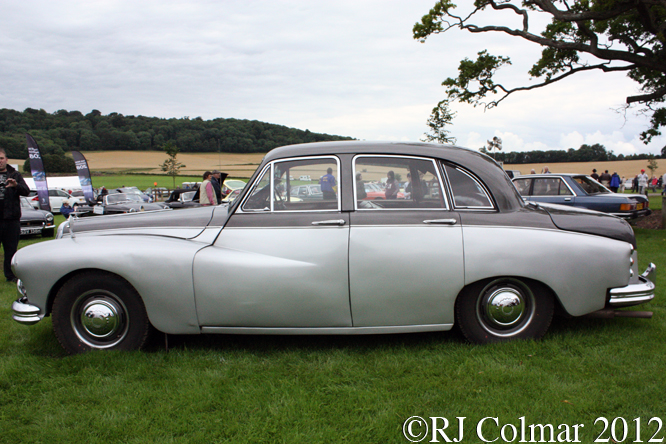
Like it’s lesser Majestic sibling the Majestic Major was equipped with disc brakes on all four wheels, it also had a 42′ turning circle, power steering was initially only optional.

Daimler Majestic Major, Classics at the Castle, Sherbourne

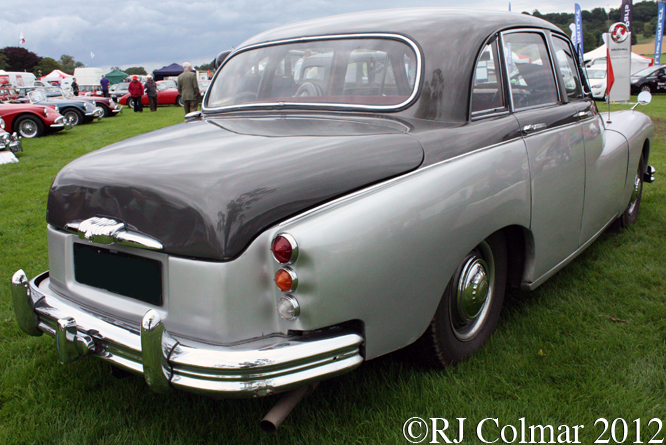
The Majestic Major bodies were built by hand by Carbodies with old school cellulose paints covering the zinc phosphate protected steel panels which were supplied by Park Sheet Metal. The zinc phosphate protection proved to be less successful than anticipated.

Daimler Majestic Major, Classics at the Castle, Sherbourne

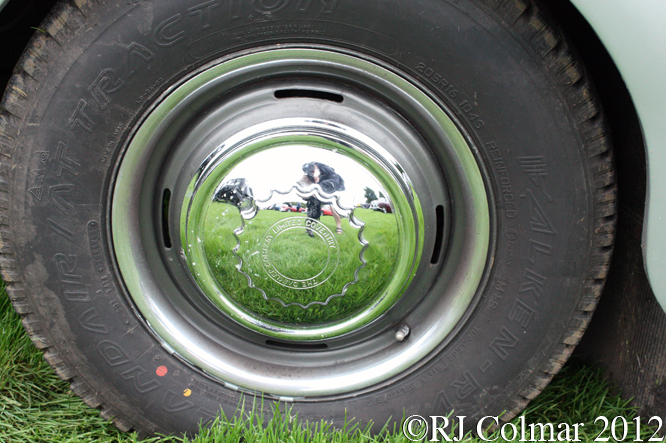
According to the owner of the model seen here at last years Classics at the Castle in Sherbourne in the Owners Manual specifies three different tyre pressures for normal motoring, over 90 mph and (unrestricted) Autobahn.

Daimler Majestic Major, Classics at the Castle, Sherbourne

Between 1960 and 1968 1187 Daimler Majestic Majors are thought to have been manufactured of which 30 are thought to still exist outside private collections and museums.

Thanks for joining me on this “Jewel In The Crown” edition of “Gettin’ a li’l psycho on tyres”, I hope you will join me again tomorrow. Don’t for get to come back now !

Share

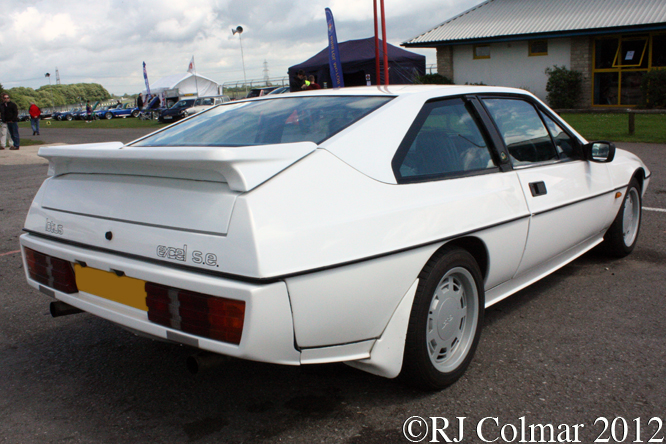
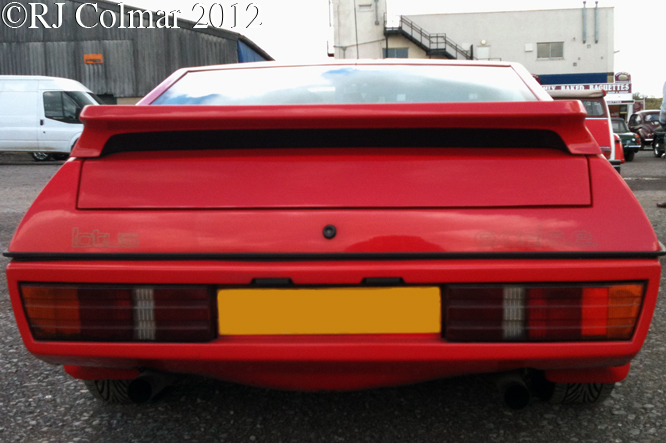
Cruise Control & Central Locking – Lotus Type 89 Excel s.e.

Last Saturday I looked at the prototype 1982 Lotus Excel today I’m looking at a couple of Lotus Excel s.e. models built with in months of each other.

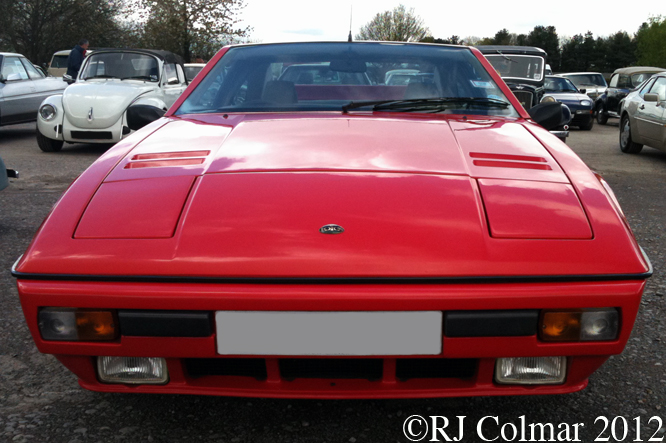
Lotus Excel s. e., Bristol Classic Car Show, Shepton Mallet

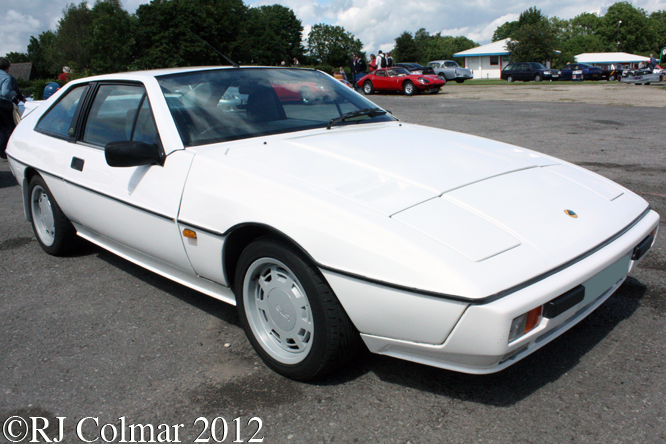
Between 1982 and 1987 numerous modifications were carried out which included the introduction of a louvred bonnet with body shell coloured bumpers and rear spoiler in 1984.

Lotus Excel s. e., Family Clubs Day, Castle Combe

In 1985 the wider wheel arch profiles, larger boot aperture, VDO intrumentation, front fog lights were introduced with a 15 inch road wheel option were introduced.

Lotus Excel s. e., Bristol Classic Car Show, Shepton Mallet

For 1986 the s.e. option with raised engine compression and an adjustable steering column was announced.

Lotus Excel s. e., Family Clubs Day, Castle Combe

The S A Automatic option was launched for the 1987 model year with cruise control, central locking.

Lotus Excel s. e., Bristol Classic Car Show, Shepton Mallet

Of the 400 plus Excels known to be in the UK, only one was ever built to US specification, more than half are no longer on the road.

Thanks for joining me on this “Cruise Control & Central Locking” edition of “Gettin’ a li’l psycho on tyres”, I hope you will join me again tomorrow. Don’t forget to come back now !

Share

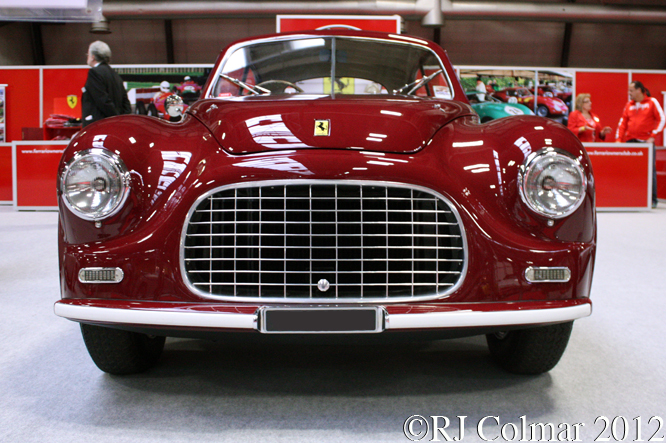
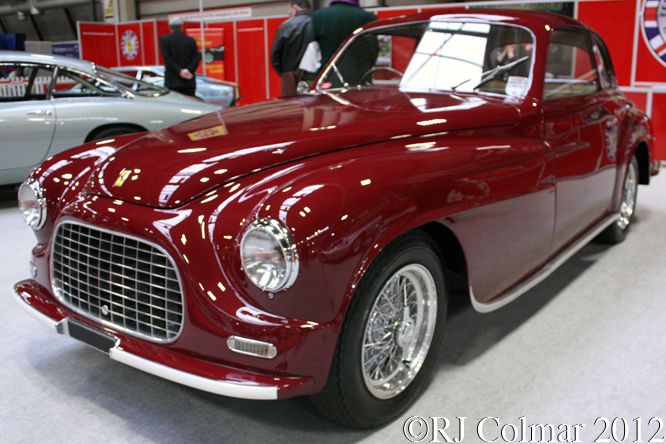
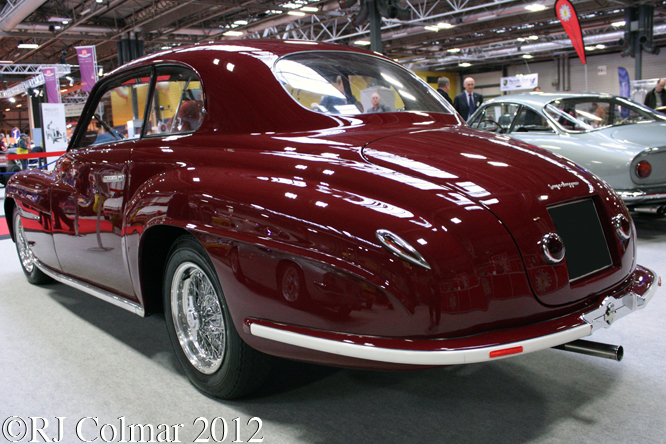
First Ferrari Road Car – Ferrari 166 Inter Coupé Touring Superleggera #017S

At the Turin Motor Show in 1948 Ferrari presented two new models to the world, the 166 Barchetta sports racer and the 166 Inter Coupé which sits on a longer wheelbase. Both vehicles are powered by Gioacchino Colombo designed two litre / 122 cui all aluminium V12’s.

Ferrari 166  Inter Touring Coupé, Classic Motor Show, NEC, Birmingham

The car seen here carries the chassis number 017S, like all Ferrari’s at the time even numbers were saved for the works team racing cars while odd numbers were designated to cars intended for customers to buy.

Ferrari 166  Inter Touring Coupé, Classic Motor Show, NEC, Birmingham

This Right Hand Drive car appears to have been sold new to the Cerana brothers of Milan in 1949 where it remained until 1958 before finding new owners in Switzerland where the car remained until the turn of the Millenium when the car moved to the Nehterlands before finding an owner in the UK in 2009.

Ferrari 166  Inter Touring Coupé, Classic Motor Show, NEC, Birmingham

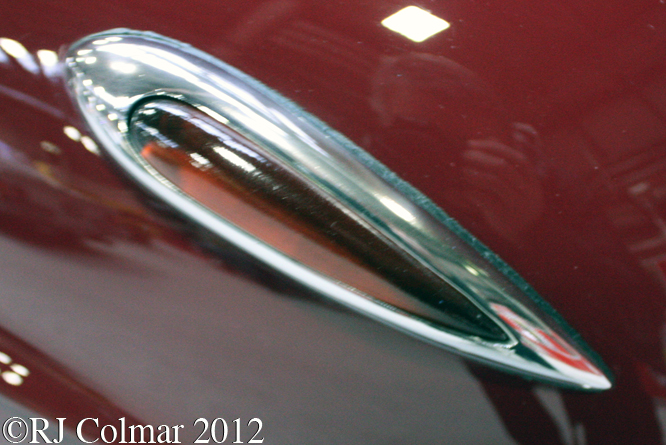
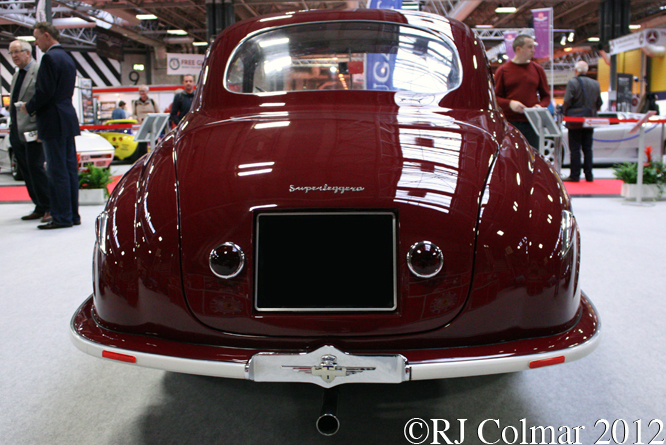
The most popular coachwork supplier for the 166 Inter Coupé appears to have been Touring who built the aluminium body panels for the car seen here with their usual Superleggera structure of tubes in support.

Ferrari 166  Inter Touring Coupé, Classic Motor Show, NEC, Birmingham

With 110 hp the 166 Inter Coupé could reach a top speed of 105 mph.

Ferrari 166  Inter Touring Coupé, Classic Motor Show, NEC, Birmingham

The 166 Inter Coupé represented Ferrari’s first series road cars and in all 37 were built between 1948 and 1951.

Thanks for joining me on this “First Ferrari Road Car” edition of “Gettin’ a li’l psycho on tyres” I hope you will join me again tomorrow. Don’t forget to come back now !

Share

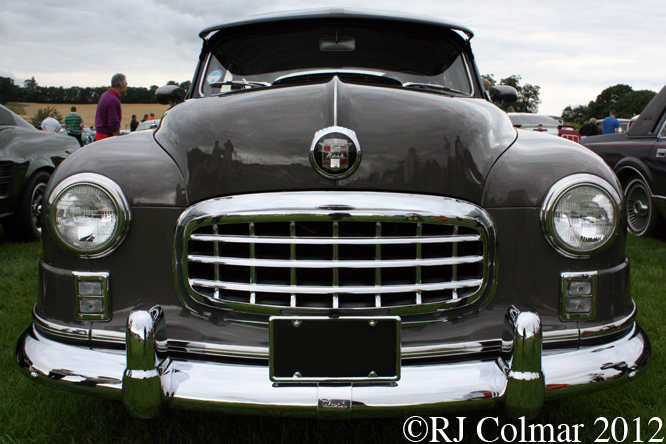
Hydra-matic – Nash Airflyte Ambassador

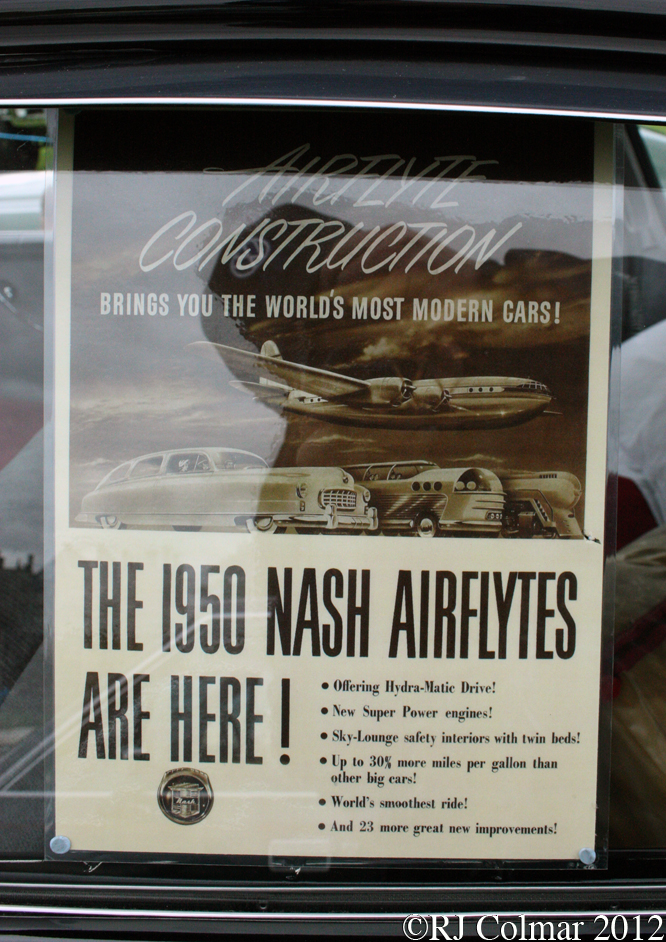
The 1950 Nash Airflytes offered 23 detail improvements of the short wheel base 600 and long wheel base Ambassador models.

Nash Airflyte Ambassador, Classics at the Castle, Sherbourne

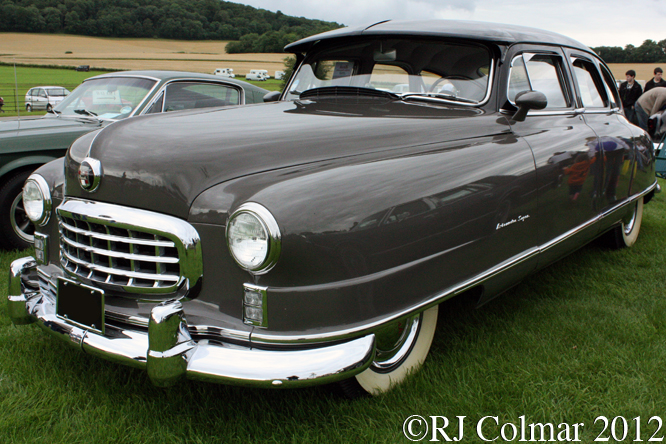
The Ambassador seen here is powered by a 115 hp 3.8 litre / 231 cui overhead valve straight 6 motor, 3hp more powerful than the 1949 model and more fuel efficient, according to the manufacturer.

Nash Airflyte Ambassador, Classics at the Castle, Sherbourne

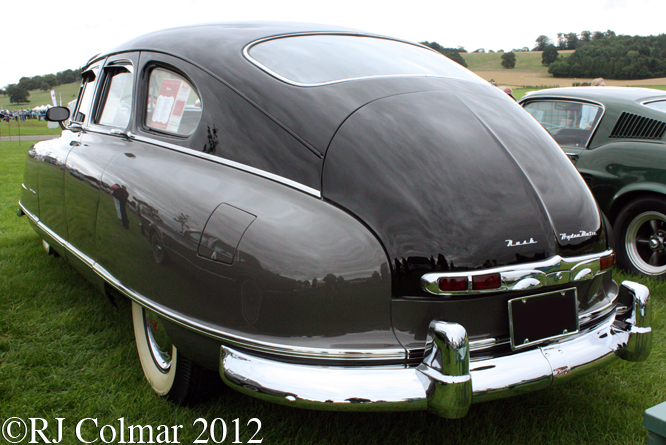
The Airflyte body, first seen in 1949, was developed in a wind tunnel by Nils Wahlberg. The design was so cutting edge it was considered alarming by some.

Nash Airflyte Ambassador, Classics at the Castle, Sherbourne

The closed front wings / fenders benefited aerodynamic efficiency at the cost of a larger turning circle than it’s competitors.

Nash Airflyte Ambassador, Classics at the Castle, Sherbourne

New options included aircraft style reclining front seats and seat belts for the “Super Lounge” interior, the latter a first for US built cars.

Nash Airflyte Ambassador, Classics at the Castle, Sherbourne

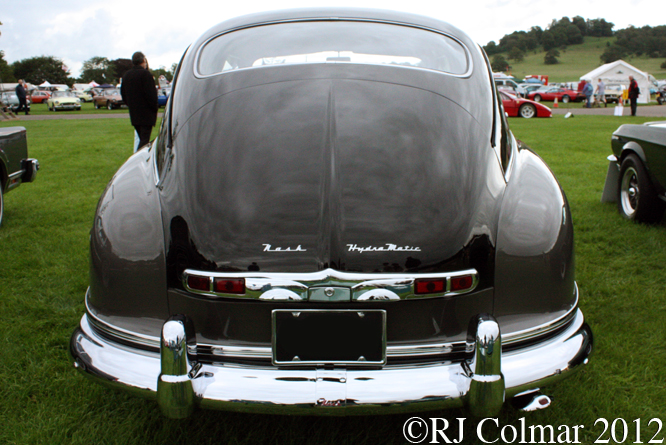
The top of the range 1950 Ambassador models also offered Hrydra-matic transmission which was developed by General Motors, which contributed to the cars legendary comfortably smooth ride and annual sales of over 130,000 in 1950.

Thanks for joining me on this “Hydra-matic” edition of “Gettin’ a li’l psycho on tyres” I hope you will join me again tomorrow. Don’t forget to come back now !

Share

Sinsational – Autosport International

A couple of weeks Ted Walker kindly invited me to the Autosport International a racing car show held at the National Exhibition Centre in Birmingham.
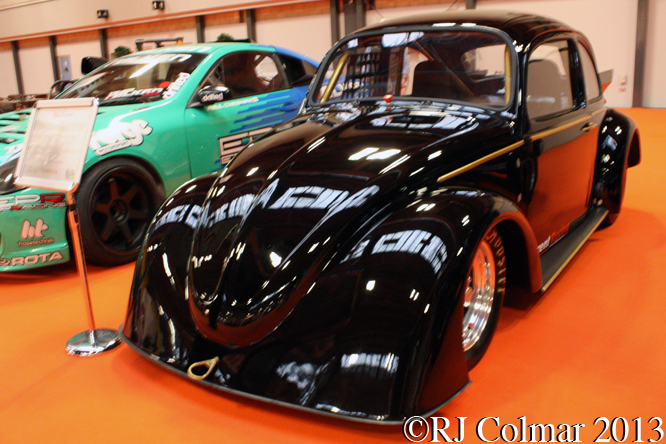
Black Current, Autosport International, NEC, Birmingham

Looking into the back of this Beetle it became immediately obvious something was missing in the form of a motor, it turns out the Black Current.III is an electric drag racing car run by Current Racing with sponsorship from AmTecs Ltd is powered by two 9″ in-line electric motors good enough to have reached a personal best of 9.51 on the 1/4 mile with a top speed of 135 mph.
Austin Healey Sebring Sprite, Autosport International, NEC, Birmingham

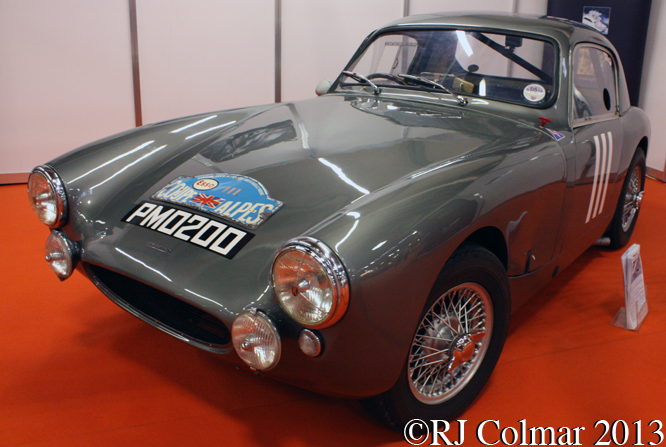
Above on the Manufacturing Resources Centre stand, more than ably manned by Roger Onions, was one of six Williams & Pritchard bodied Austin Healey Sebring Sprite’s John Sprinzel ordered in 1960. PMO200 is the sister 1961 Sebring team car to S221 which I looked at a couple of years ago. This car finished 15th in the 12 Hour classic with Joe Bazzutta and Glen Carlson at the wheel having been driven to 5th place in the Sebring 4 hour race the previous day. The car was also driven on the 1962 Monte Carlo Rally before passing through my host Ted Walker’s hands in the 1970’s.
Ford Escort Mk 2, Autosport International, NEC, Birmingham

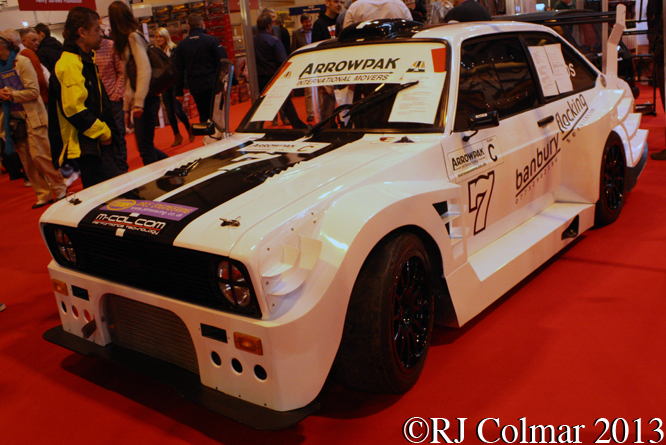
Mick Gregory can probably lay claim to building the worlds most heavily modified Ford Escort Mk 2, having started this project 6 years ago with an everyday 35 year old Ford Escort Mk 2 road car, modifications include a super charged Duratec engine good for 450 horsepower, an Elite six speed sequential gearbox, a Subaru rear axle and extensive use of carbon fibre in the body work, this car can be yours for just £90k.
Peugeot 206 WRC, Autosport International, NEC, Birmingham

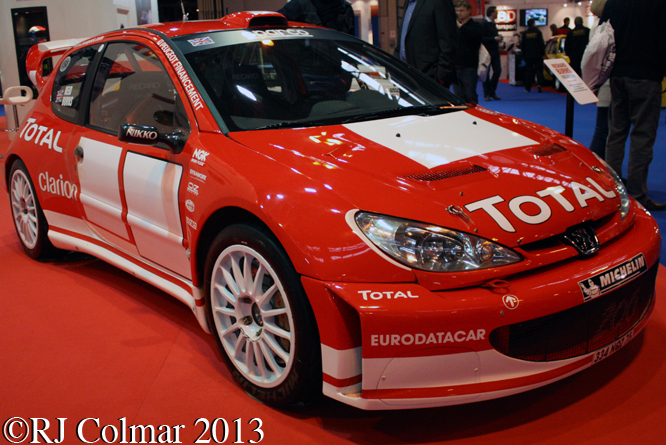
Ten years ago 2001 World Rally Champion Richard Burns was leading the 2003 World Rally Championship driving a Peugeot 206 WRC like the one seen above when he was diagnosed with a brain tumor after blacking out on his way to the season finale Wales Rally GB. Richard was destined never to drive a car in competition again succumbing to the malignant tumor on November 25th 2005.
Mini Cooper Works, Autosport International, NEC, Birmingham

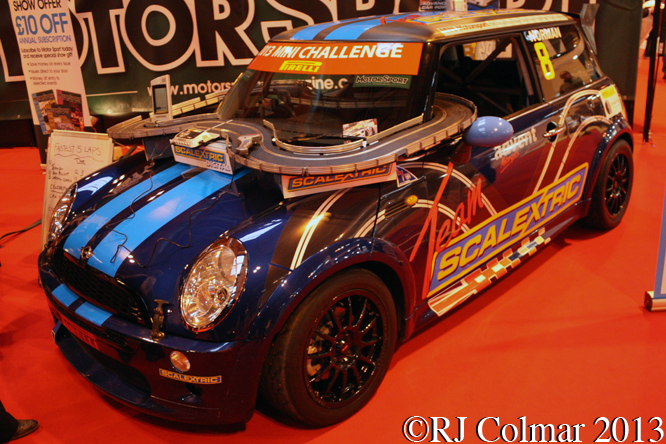
On the Motorsport stand Adrian Norman’s MINI Challenge Club championship car made and interesting back drop for his sponsors Scalextric product. Embarrassingly my five laps at the controls of the electric racer were a whole 3 seconds of the pace.
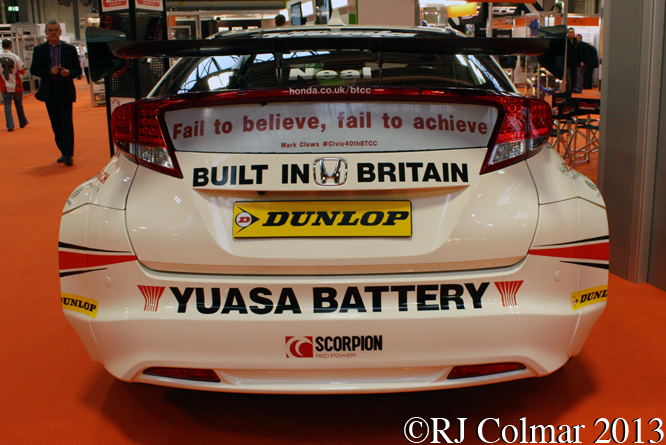
Honda Civic, Autosport International, NEC, Birmingham

I looked at the MG6 GT BTCC challenger a couple of weeks ago this is one of the Honda Civics run by the British Touring Car Championship winning Yuasa Honda team which took both drivers and constructors titles in 2012.
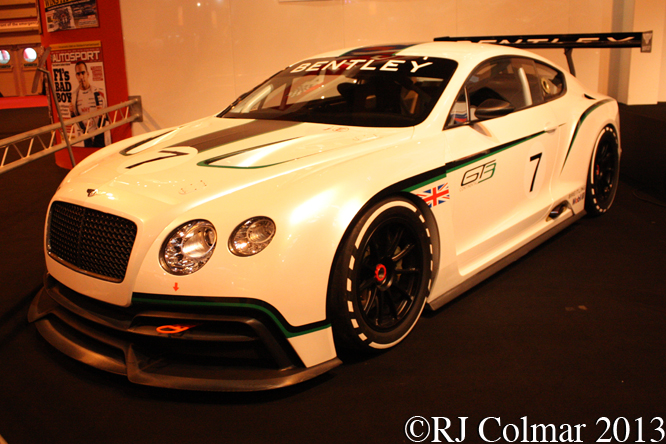
Bentley GT3 Concept, Autosport International, NEC, Birmingham

The Bentley GT3 Concept car was announced at the end of 2012 and is undergoing development by erstwhile works backed Ford Rally Team preparation experts M-Sport in anticipation of hitting the tracks in 2014.
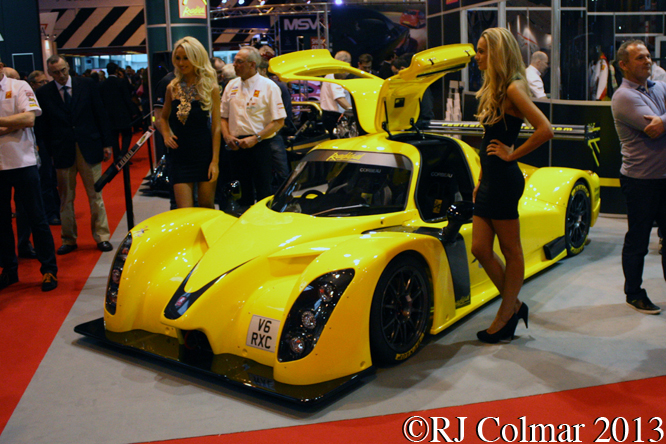
Radical RXC, Autosport International, NEC, Birmingham

By all accounts Radical holds the title for manufacturing the fastest production car to lap the fabled Nordschleife on the Nurburgring, at Autosport International they launched their latest model the Radical RXC which should be able to go faster still. Powered by a 280 hp Ford V6 and weighing 900 kgs the RXC has a zero to 62mph time of 2.8 seconds and a top speed of 175 mph.
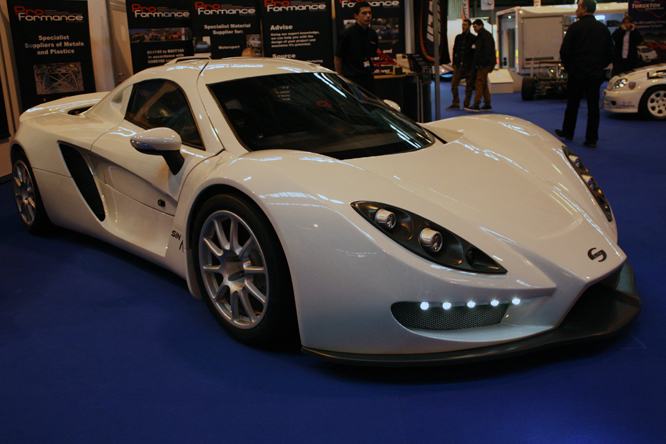
Sin 01, Autosport International, NEC, Birmingham

Another Sinsational new car launched at the Autosport International in a similar vain to the Radical was the Sin 01 a product of a joint venture between Pro Formance Metals in the UK and Sin Car GmbH in Germany, the Sin 01 will be offered in competition and street legal versions.
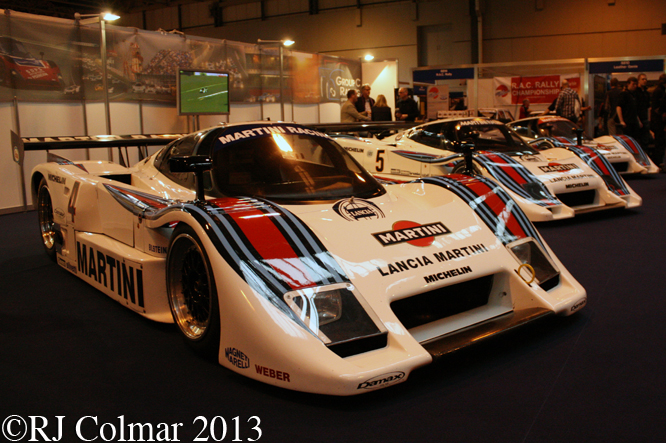
Lancia LC2/85, Autosport International, NEC, Birmingham

Amongst the sports racing cars present where no less than three 1985 Lancia LC2/85 Group C racers.
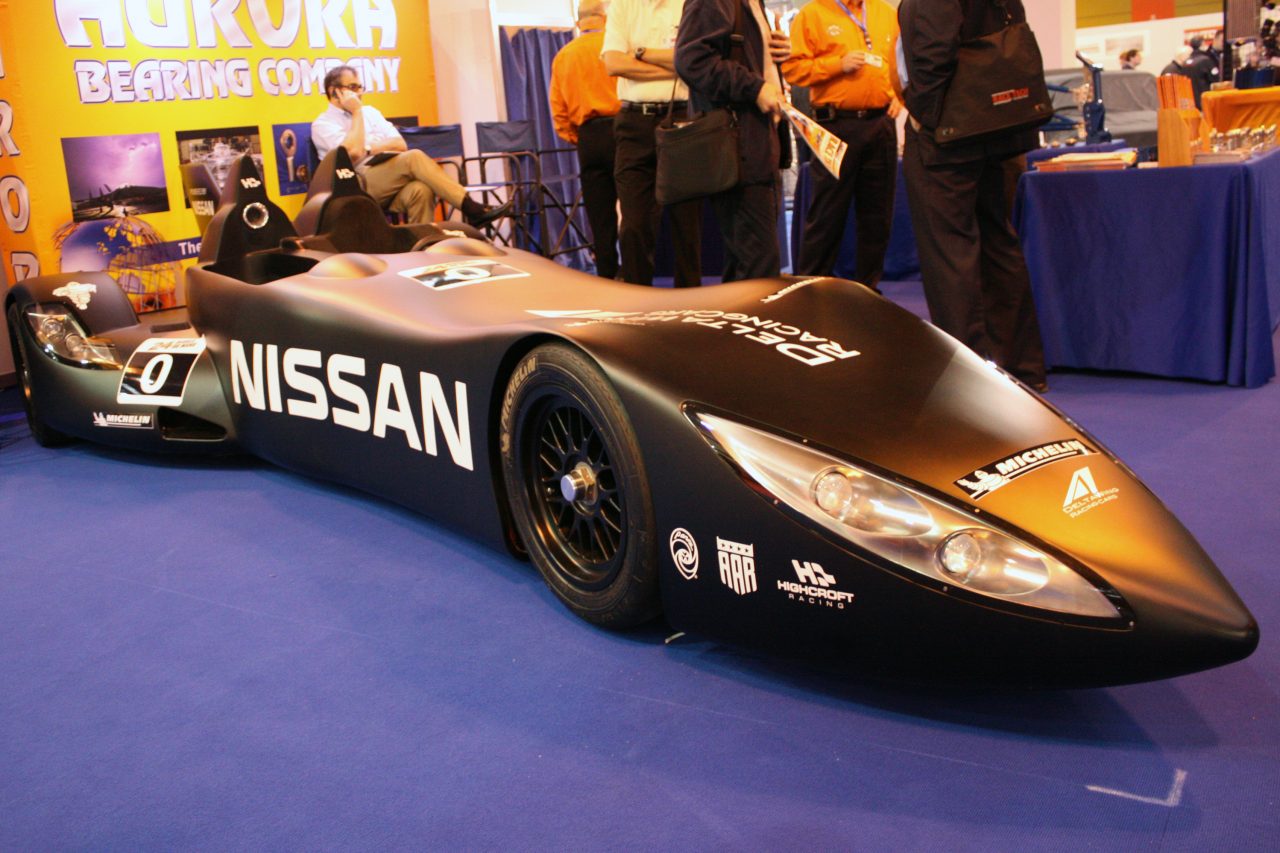
Nissan Deltawing, Autosport International, NEC, Birmingham

There was also a mock up of the 2012 Nissan DeltaWing Le Mans car which started like as a concept for an Indianapolis 500 racer.
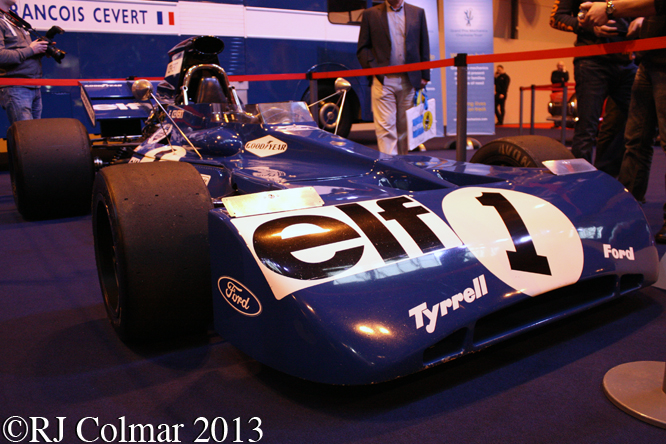
Tyrrell 003, Autosport International, NEC, Birmingham

Open wheel racing as might be expected was extremely well represented at the show, above Sir Jackie Stewarts Tyrrell 003 a car built for the 1971 World Championship season which won first time out at the 1971 Spanish Grand Prix and with five further Grand Prix wins in the same car Jackie won his second world championship. In 1972 Sir Jackie won two more races with 003 but it was outclassed by the resurgent Lotus 72 and eventually superseded by the Tyrrell 005 and 006 designs. From 16 starts chassis 003 seen here won 8 Grand Prix in 1971 and 1972.
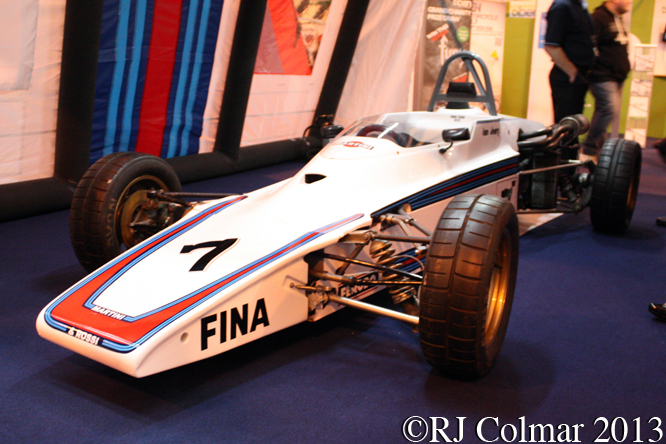
Lola T340, Autosport International, NEC, Birmingham

Moving down a few rungs and forward to 1973 this Martini liveried Lola T340 Formula Ford car caught my attention, not sure one ever raced in these colours back in the day, but if you know different by all means chime in below.
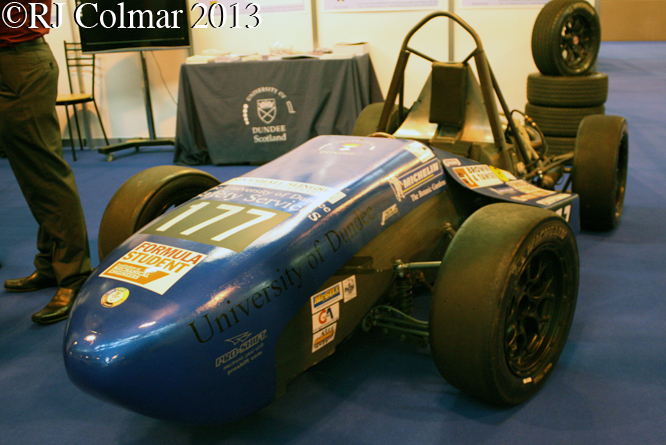
UDM, Autosport International, NEC, Birmingham

Britains universities have long been a breeding ground for engineering talent that keeps motorsport fed with engineers at all levels on every continent. There is even a competition between the universities to build the best competition vehicles the UDM above is powered by a 600 cc motorbike engine and was designed by engineering students from Dundee University to compete in the iMechE Formula Student series.
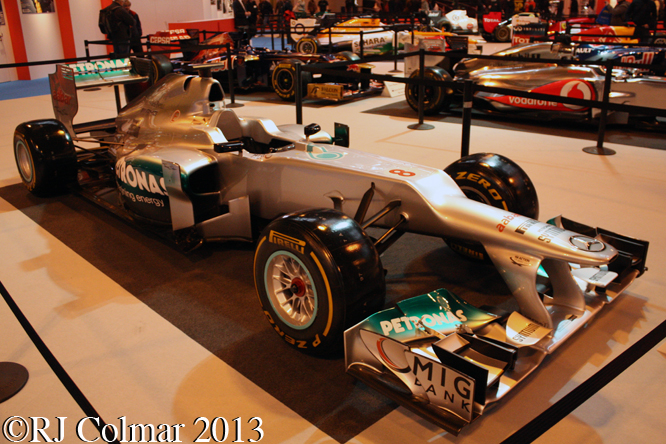
Mercedes F1 W03, Autosport International, NEC, Birmingham

Finally there was half a grid of Formula One cars present, one from each manufacturer except the now sadly defunct HRT team, of them all the Mercedes F1 W03 particularly caught my attention with it’s disjointed nose and hideously complex front wing. Mercedes scored a single Grand Prix win in China this year with Nico Rosberg at the wheel.

My thanks to Ted Walker at Ferret Fotographics for kindly inviting me along to this year’s Autosport International.

Thanks for joining me on this “Sinsational” edition of “Gettin’ a li’l psycho on tyres” I hope you will join me again tomorrow. Don’t forget to come back now !
Share

Hands Up ! – MG KN Univesity Motors Speed Model Magnette #KN 0440

Every once in a while I learn something quite shocking, namely how easy it is to deceive myself into thinking I know something only to find with hind sight that I know nothing at all. Today I am sticking both hands up high in the air and admitting I was wrong, quite wrong and I hope you will accept my humble apologies for any confusion caused.

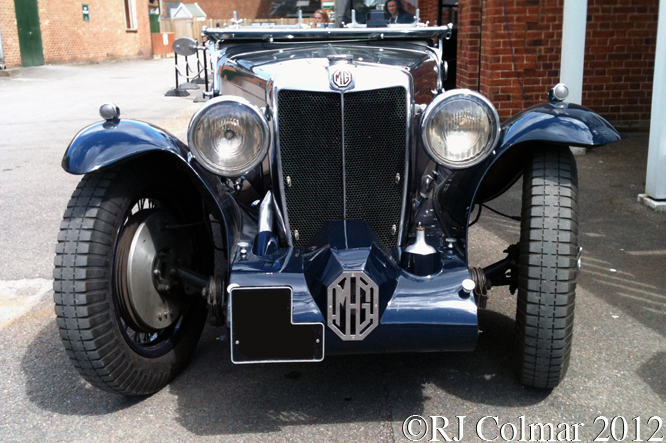
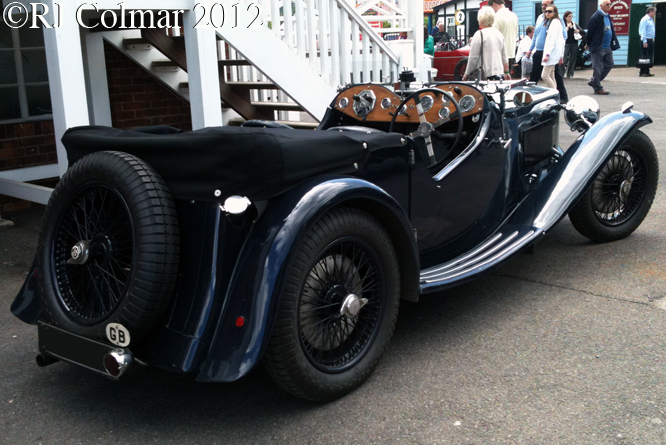
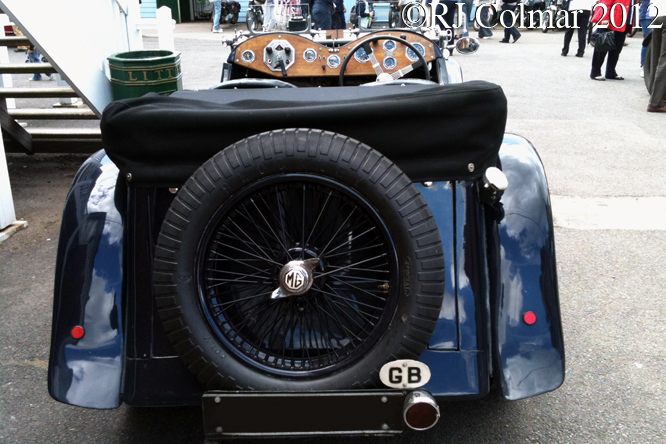
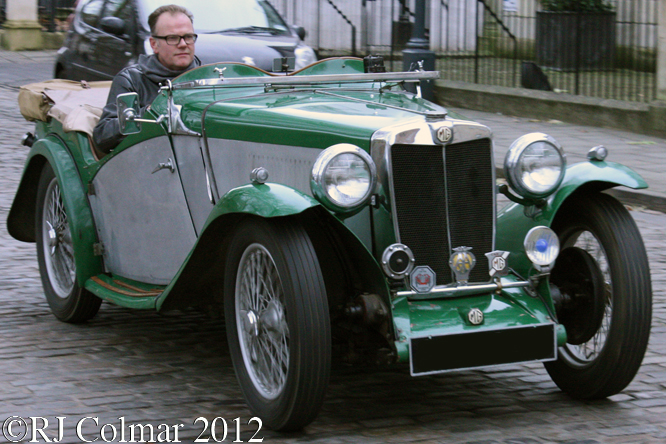
MG KN University Motors Speed Model, Brooklands Double Twelve

The instance occurred a couple of days ago when I was trying to identify some MG’s I found that a vehicle I thought was a K Type was actually an Type NA, then to my horror I found out that a Type NA that I wrote a blog about some months ago turns out to be one of 200 type KN’s and a University Motors Speed Model Magnette to boot, that is the car I am featuring today which I incorrectly identified in a September blog as a Type NA.

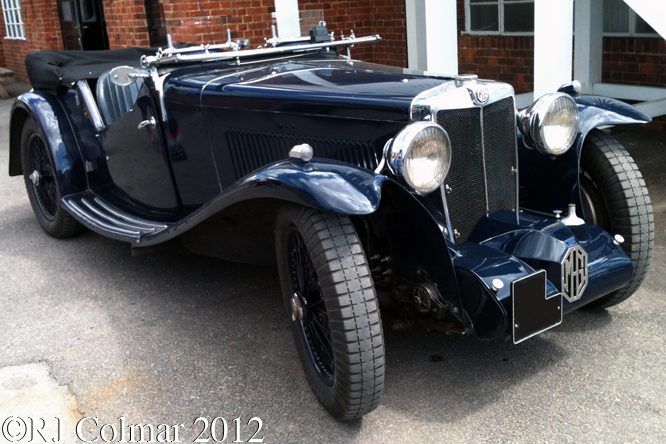
MG KN University Motors Speed Model, Brooklands Double Twelve

The MG KN was a factory built car featuring a K type saloon body and chassis but with a larger 1271 cc motor from the later MG N type.

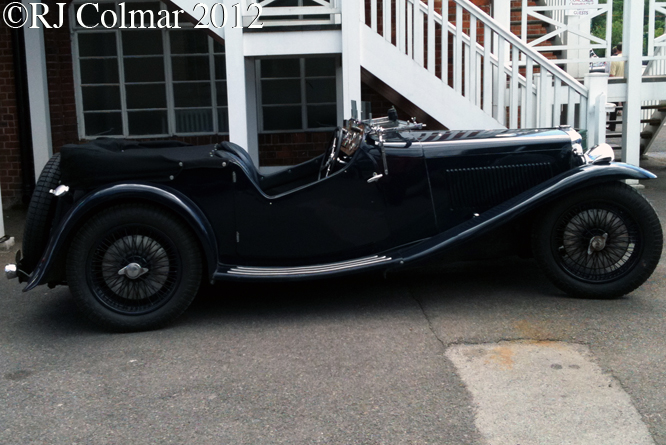
MG KN University Motors Speed Model, Brooklands Double Twelve

Today’s featured car which was seen at Brooklands last year is a variation of the factory built saloon featuring the K type chassis and K1 4 seat tourer body.

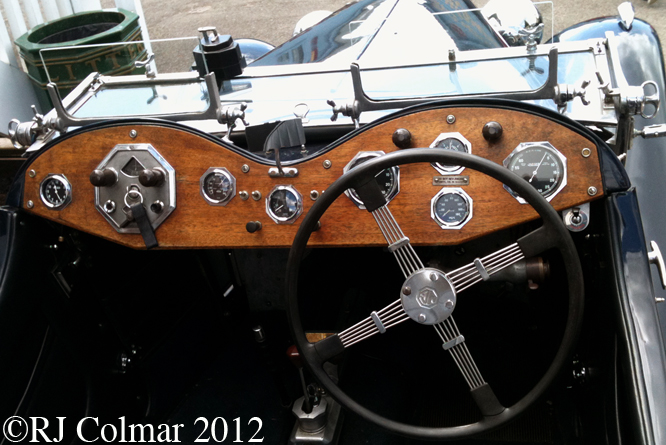
MG KN University Motors Speed Model, Brooklands Double Twelve

These cars were assembled and sold by Univesity Motors, the main dealer in South East England as the University Motors Speed Model Magnette.

MG KN University Motors Speed Model, Brooklands Double Twelve

The enlarged motor aside there are few differences between the original K1 tourer and the University Motors Speed Model Magnette apart from the headlight mountings and some interior trim details.

MG KN University Motors Speed Model, Brooklands Double Twelve

In all 171 K1 saloon and four seat tourers were built while 201 KN Saloon’s and University Motors Speed Model Magnettes were built between 1934 and 1936.

Apologies again for any confusion caused.

Thanks for joining me on this “Hands Up” edition of “Gettin a li’l psycho on tyres” I hope you will join me again tomorrow. Don’t forget to come back now !

Share

Forty Inches Tall But Not A Ford – Elva GT 160 #70/GT/3

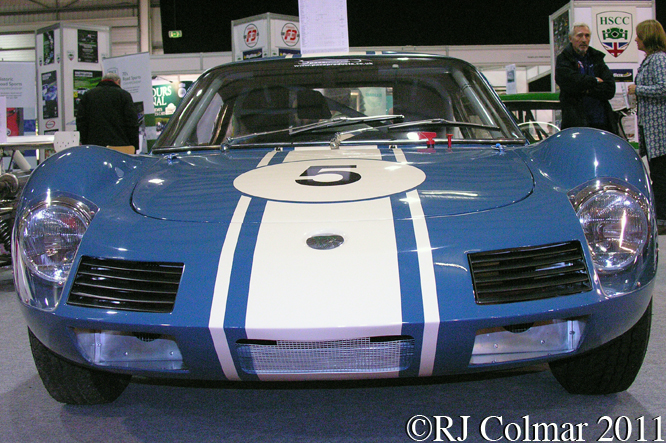
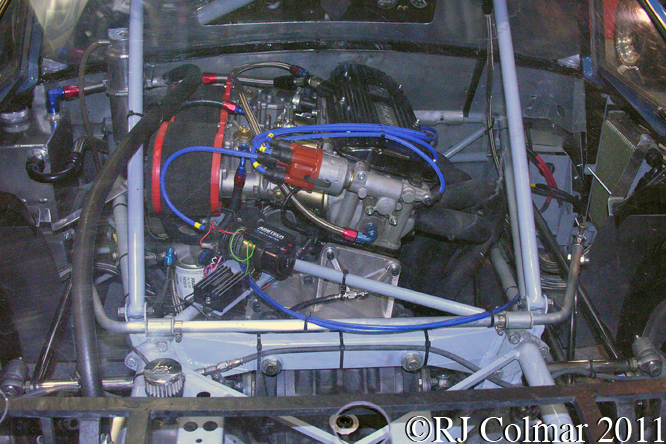
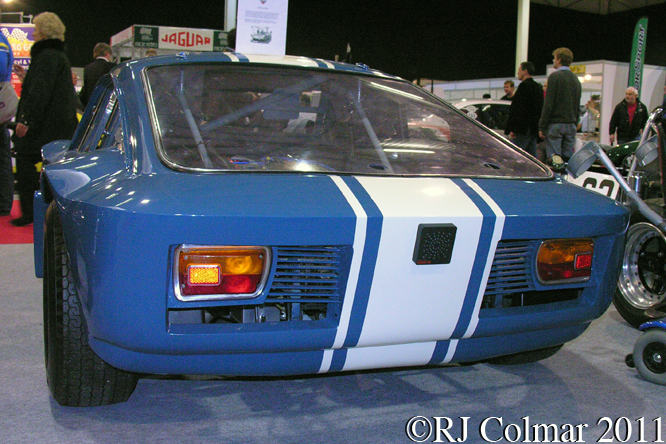
For 1964 a plan was hatched for Elva to build 100 2 litre / 122 cui GT cars capable of 160 mph, after the unexpected death of David Ogle, who had originally intended to design the car, Trevor Fiore was commissioned to design the bodywork which ended up with a roof line just 40 inches off the ground much like the Ford GT40 announced the same year.

Elva GT160, Race Retro, Stoneleigh

The two GT 160’s displayed at the London Racing Car Show and Turin Motor show caused a sensation, but even before either car had turned a wheel in anger there were many problems, the GT 160 did not have sufficient ground clearance to meet the regulations and the cars were well over the targeted weight of 600 kgs.

Elva GT160, Race Retro, Stoneleigh

Additionally the aluminium bodies manufactured by Fissore in Italy attracted an unexpected 15% tax railing the cost of manufacture and sales price, furthermore Elva was in the process of being swallowed up by Trojan who at the same time were doing a deal with Bruce McLaren to manufacture McLaren sports racing cars for customers.

Elva GT160, Race Retro, Stoneleigh

So the GT 160 was eventually shelved after just three cars had been completed, all of which still exist today, two them being seen in historic racing circles including what I believe to be the third and final BMW powered chassis featured today which was seen at Race Retro a couple of years ago.

Elva GT160, Race Retro, Stoneleigh

In 1965 Sir Richard Wrottesley raced the first GT 160 chassis as a prototype at the Le Mans test weekend, the Nurburgring 1000 kms and Le Mans 24 hours.

Elva GT160, Race Retro, Stoneleigh

Sir Richard recorded the cars only finish, 17th place, in the Le Mans test and though the car was not a strong competitor against its intended Porsche 904 and ALFA Romeo TZ rivals in the GT class it did record a top speed of 165 mph on the Mulsanne Straight at Le Mans.

Thanks for joining me on this “Forty Inches High But Not A Ford” edition of “Gettin’ a li’l psycho on tyres” I hope you will join me again tomorrow. Don’t forget to come back now !
Share