Tag Archives: Colmar

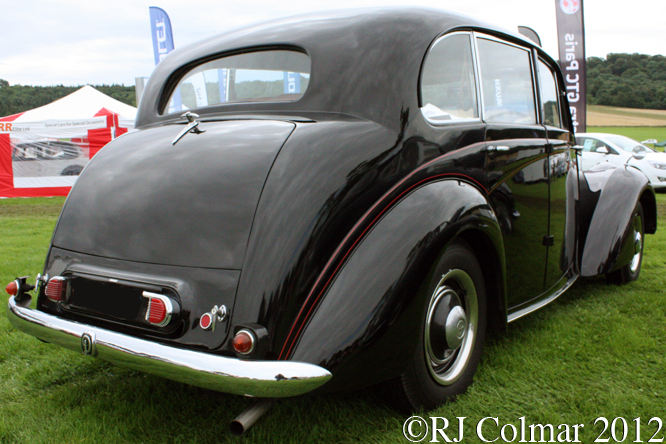
Built In Jacking – Daimler Consort

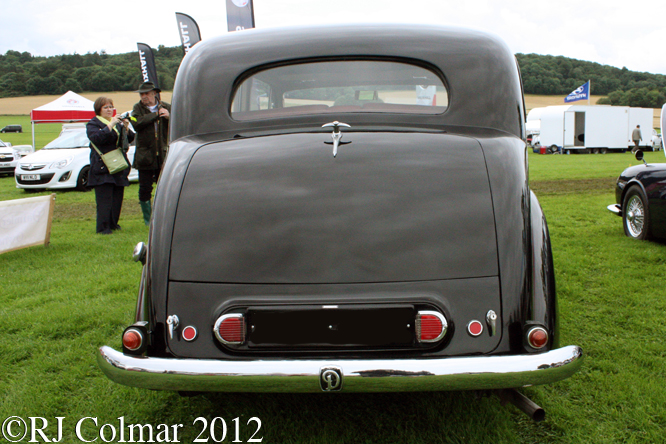
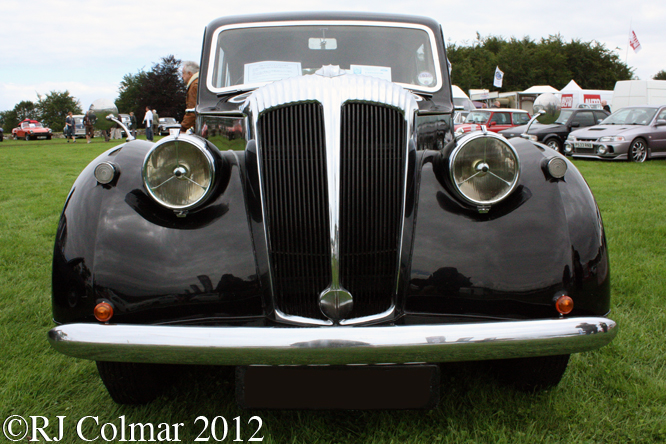
The ancestry of today’s featured 1950 Daimler Consort can be traced back to Daimler New Fifteen first seen in 1937 which was powered by a 2166 cc / 132 cui six cylinder pushrod motor with overhead valves.

Daimler Consort, Classics at the Castle, Sherbourne

In 1939 the engine was enlarged to 2,522 cc / 153 cui and the model was renamed Daimler Eighteen, also known as the DB/18. The ’39/’45 war interrupted production but the 2.5 litre motor along Daimler Fluid Flywheel and Wilson pre selector box were used as part of the drive train for the Daimler “Dingo” Scout Car built during the hostilities.

Daimler Consort, Classics at the Castle, Sherbourne

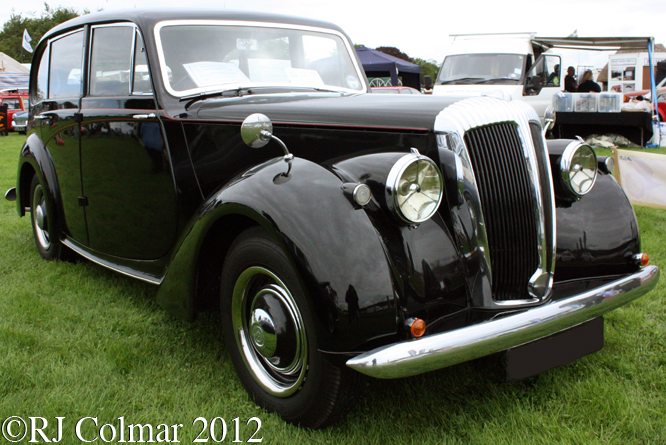
With the cessation of hostilities production of the Daimler Eighteen resumed and in 1948 an upgraded version with wing integrated head lights and hydraulic front brakes was introduced as the Daimler Consort which was aimed primarily at the US market.

Daimler Consort, Classics at the Castle, Sherbourne

A further upgrade in 1950 saw improved ground clearance thanks to the replacement of the hitherto worm drive to the rear axle with a more conventional hypoid bevel drive to the rear wheels. In keeping with a car of this weight the car has built in jacking to facilitate the replacement of the wheels in the event of a puncture.

Daimler Consort, Classics at the Castle, Sherbourne

The car seen here at last years Classic at the Castle in Sherbourne has only clocked up 46,000 miles, and is absolutely standard apart from additional repeating indicator lights which were not available in 1950. 4250 Consorts were built from 1948 to 1953.

Thanks for joining me on this “Built In Jacking” edition of “Gettin’ a li’l psycho on tyres”, I hope you will join me again tomorrow. Don’t forget to come back now.

Share

Excel Protoype – Lotus Eclat/Excel Type 84/89 #1144

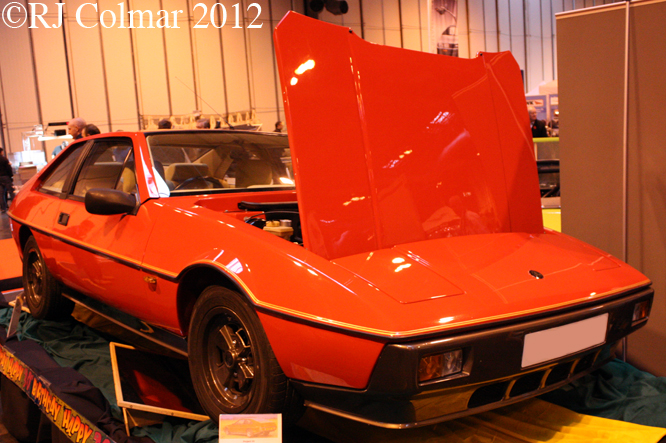
The Lotus Eclat, Type 76 but not to be confused with the Lotus Ford 76 Grand Prix car, was a fastback version of the Lotus Elite, Type 75 shooting brake, first seen in 1975 sharing the same back bone chassis and motor and running gear as the Type 75 Lotus Elite.

Lotus Eclat Excel, Classic Motor Show, NEC, Birmingham

The Eclat was updated in 1980 known as the Eclat S2 the updated car was given the Type 84 designation. 1757 original sepcification Eclats were built between 1975 and 1982 and a further 223 Eclat S2’s were built between 1980 and 1982.

Lotus Eclat Excel, Classic Motor Show, NEC, Birmingham

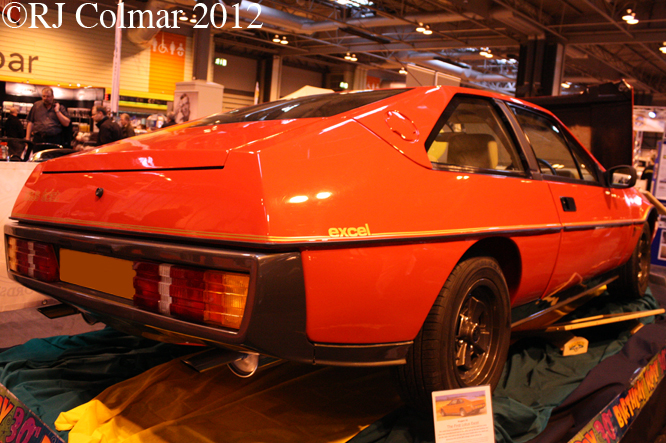
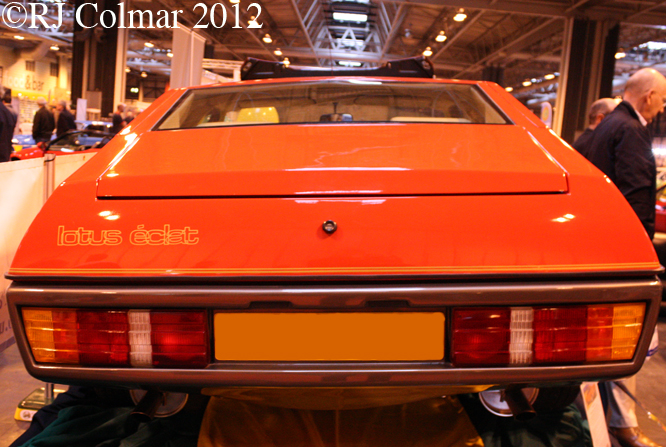
In 1982 Lotus renamed the Eclat as the Excel with further upgrades and designated the Excel as Type 89. The car seen here is registered in the log book as a Lotus Eclat, a Type 84, but has all the signs of being the prototype Excel, a type 89 which was also known by the M55 code name at the Lotus factory.

Lotus Eclat Excel, Classic Motor Show, NEC, Birmingham

Amongst the prototype clues are a cut and shut gearbox with the then new Toyota sourced gearbox welded onto the older original type bell housing, M55 marks on the body panels indicating the car was the first off the jig, not to mention the Excel badging on the sides and Eclat badging on the rear of the car. The car was probably registered as an Eclat prior to the necessary type approval being received for the later Excel.

Lotus Eclat Excel, Classic Motor Show, NEC, Birmingham

354 Excel’s were manufactured between 1982 and 1984 when production was discontinued. The current owner of this prototype Excel, Brian Swankie, bought the car at the NEC Classic Motor Show in Birmingham several years ago and has been restoring it ever since.

Thanks for joining me on this “Excel Prototype” edition of “Gettin’ a li’l psycho on tyres” I hope you will join me again tomorrow. Don’t forget to come back now !

Share

Field Filler – Ferrari 512 S #1006

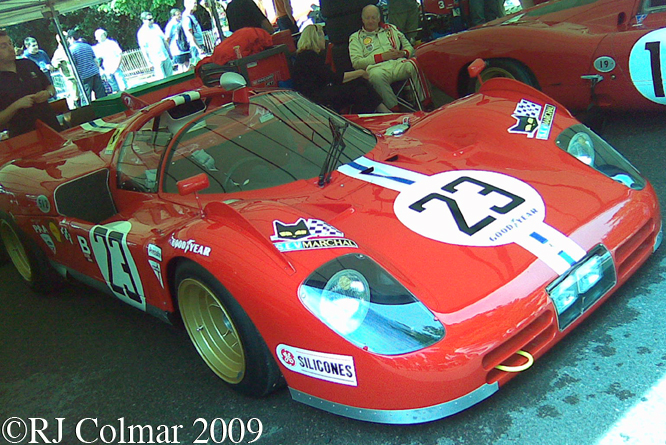
17 Ferrari 512 S’s and parts for 8 others were built in late 1969 in response to the 25 917’s Porsche had built in early 1969 in order to be allowed to race in the World Sports Car Championship which allowed up to 5 litre / 305 cui engines. These rules were introduced so that a few old Ford GT 40’s could continue racing, it was never imagined that Porsche and then Ferrari would build 25 cars each to take part in the series which was intended to be for new 3 litre / 183 cui cars like the Ferrari 312P and Porsche 908.

Unlike Porsche who planned on using private works supported teams to run and develop the 917’s on it’s behalf, Ferrari planned on using a single works team to build and develop the 512 S, supplying the rest of the 512 S models to private entrants to whom Ferrari gave little by way of support effectively treating it’s privateer teams as little more than field fillers.

Ferrari 512 S, Goodwood Festival of Speed

Ferrari had to sell his road car operation to FIAT in order finance the production to the 512 S model, and as it turned out Porsche’s private partners had snapped up most of the best drivers.

Nonetheless Ferrari took the fight to Porsche with a single championship victory at the 1970 Sebring 12 hours courtesy of Mario Andretti, Nino Vaccarella and Ignazio Guinti driving a 512 S who beat Peter Revson and actor Steve McQueen in their Porsche 908 after Mario famously drove the last 90 mins of the race and chased down an exhausted Peter Revson in what Mario once described as the race of his life.

For most of the rest of the 1970 season the Ferrari 512 S was out classed every where, except at the non championship race run at Kyalami in South Africa, by the Porsche 917’s, particularly those of the JW Automotive team. Ferrari had difficulty selling all of it’s 512 S models, where as Porsche had to build a second run of 25 917’s to meet demand.

Ferrari 512 S, Goodwood Festival of Speed

This 512 S spyder, chassis #1006, was developed in order to save 25 kgs by the factory and sold to Luigi Chinetti’s N.A.R.T. team. Ronnie Buchnum and Tony Adamowicz drove it into second place at the 1971 24 hours of Daytona.

#1006 had to have both front and rear bodywork replaced during the course of the race, the body work is as it appeared on #1006 when it started the 1971 Daytona 24 hours with aerodynamic lips on the nose, which were not on the second nose fitted when it finished the race.

Thanks for joining me on this “Field Filler” edition of “Gettin a li’l psycho on tyres” I hope you will join me again tomorrow for a look at a one off Formula One Lotus that never raced. Don’t forget to come back now.

Share

Vote Johnny – ’29 Ford Model A Pick Up

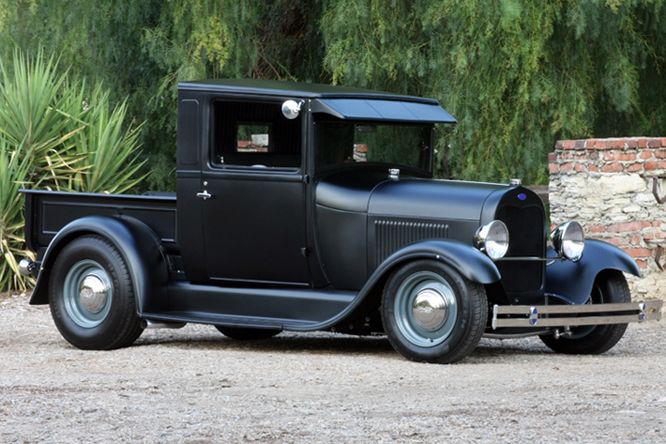
A couple of weeks I befriended one of Gary L Wales neighbours Johnny Martinez on Facebook, turns out Johnny like Gary is accustomed to winning the odd motor show prize.

Ford Model A, Johnny Martinez

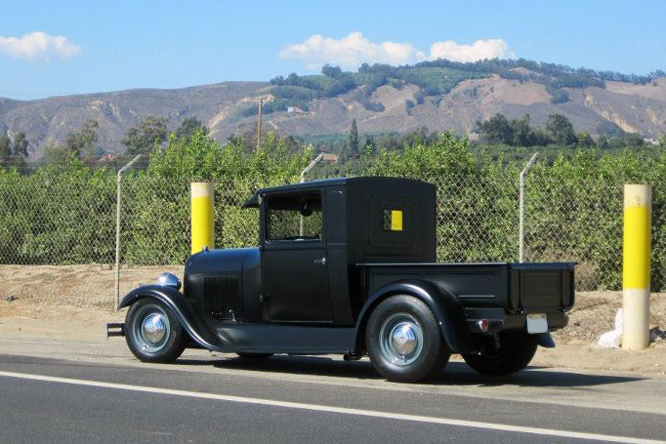
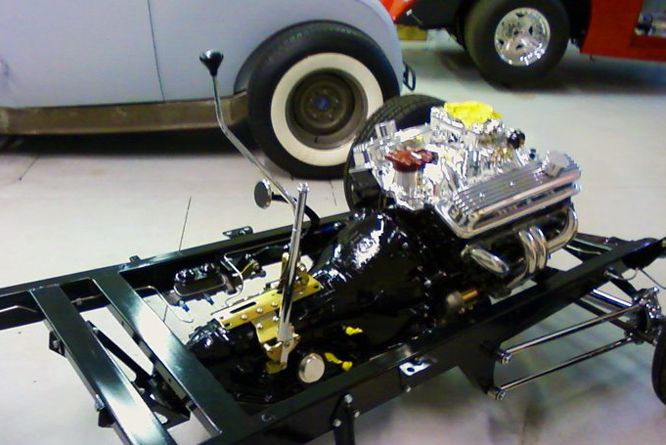
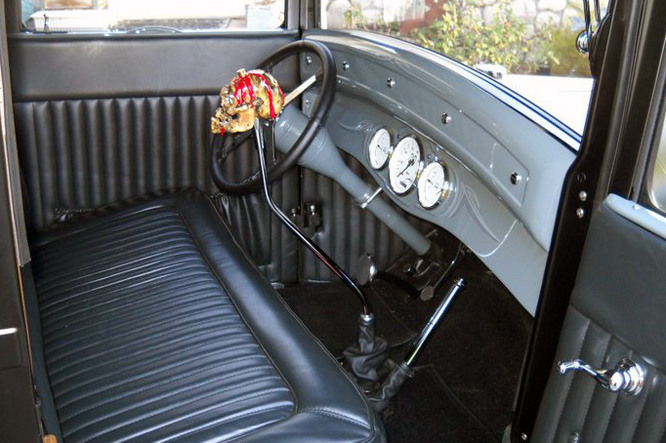
Johnny built his ’29 Ford Model A pick up from a TCI chassis with a Currie rear end, small block Chevrolet motor and 4 speed transmission with overdrive 20 years ago.

Ford Model A, Johnny Martinez

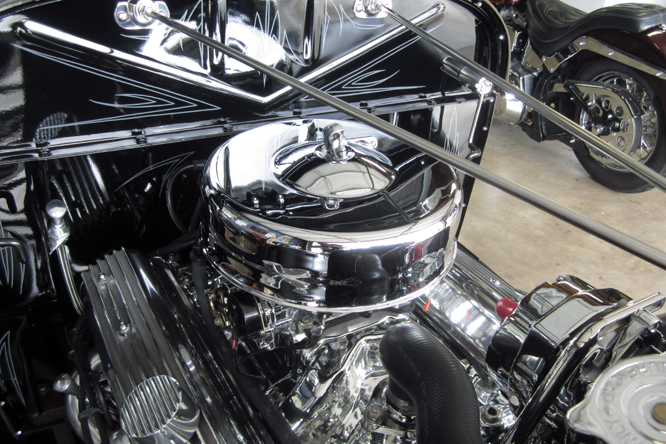
The immaculate small block is “kickin’ about 385 hp”.

Ford Model A, Johnny Martinez

Johnny’s Ford is equipped with disc brakes and the steering uses a Chevrolet Vega steering box.

Ford Model A, Johnny Martinez

Notice below that the door only has two hinges, that’s because Johnny lowered the roof three inches and dispensed with the top hinge.

Ford Model A, Johnny Martinez

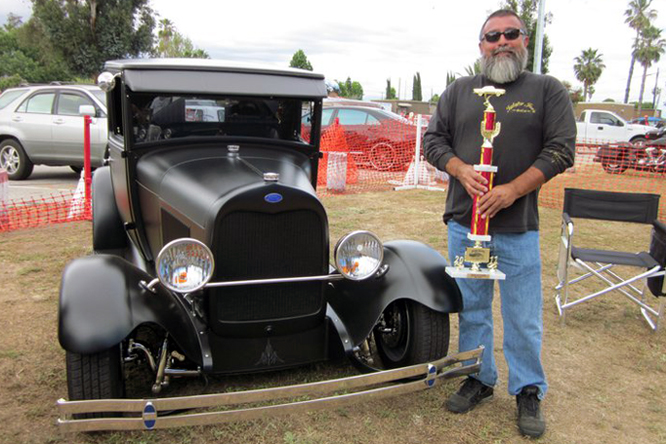
Over the last 28 months Johnny’s ’29 Ford has won 27 awards below Johnny is seen with the Big Red Machine Bike and Car Show award he won in 2011. Here is a link to a clip from the show which comes with a parental advisory on the sound track.

Ford Model A, Johnny Martinez

Johnny is prepping his hot pick up for this years Grand National Roadster Show “The Grand Daddy of Them All” held in Panoma next weekend. Meantime you can vote for Johnnies pick up in the Gold Eagle “Cool Ride Of The Month” contest which has seen Johnny running neck and neck for the lead for over a week now.

CLICK ON THIS LINK and click “John’s 1929 Ford Model A” to vote, your daily participation until the end of the month will be much appreciated.

My thanks to Johnny for sharing his photo’s and story and wishing him the best of British at the Grand National Roadster Show and in the Gold Eagle “Cool Ride Of The Month” competitions.

Thanks for joining me on this “Vote Johnny” edition of “Gettin’ a li’l psycho on tyres” I hope you will join me for Ferrari Friday tomorrow. Don’t forget to come back now !

Share

Chased By A Panda – Exeter Trial 2013

A couple of months ago I was offered the opportunity to navigate a unique Parsons Trials car on the Exeter Trial by owner Alan “Spence” Spencer. After Alan kindly agreed to make a few modifications so that I could sit in the car properly by raising the seat and adding four inch screen to afford some protection from the on coming wind I agreed to join him and had been looking forward to the experience ever since.
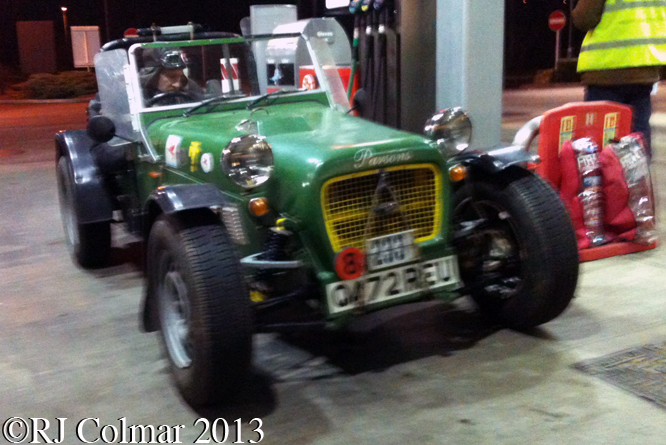
Parsons, Exeter Trial, Cirencester

Alan is seen above strapping himself into the Parsons at the first rendezvous Burford Services, Cirencester where we joined 39 other motor cars at close to midnight. The Exeter Trial was first run on Boxing Day 1910 by the Motorcycle Club from London to Exeter and back. As the roads got better so the trials went off road to maintain some degree of challenge for those taking part. The first part of the 2013 Exeter Trial was a regularity run over an 88 mile prescribed route to the Haynes International Motor Museum with an easy target time of 2 hours, mercifully I had prepared my wardrobe well and was comfortably warm sitting in the Ford Kent powered Parsons despite being exposed to the elements.
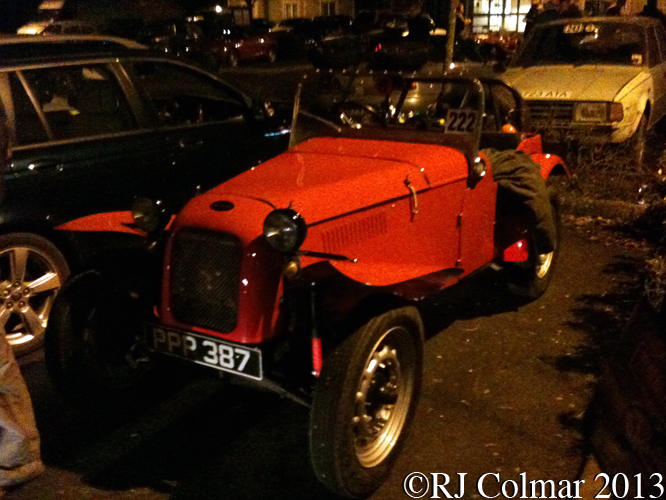
Gregory, Exeter Trial, Cirencester

Among assorted Skoda’s, VW Beetles and an Mazda MX5 with an urban paint job starting from Cirencester was this rare #222 Gregory trials car driven by Josh Moss and Chris Ferin. At the Haynes motor museum there was a compulsory two hour break during which I enjoyed a hearty Full English Heart Attack breakfast and a 1/2 hour flat on my back to ease the inevitable stiffness that occurs after sitting in a confined space for 2 hours in ambient temperatures a couple of degrees above freezing.
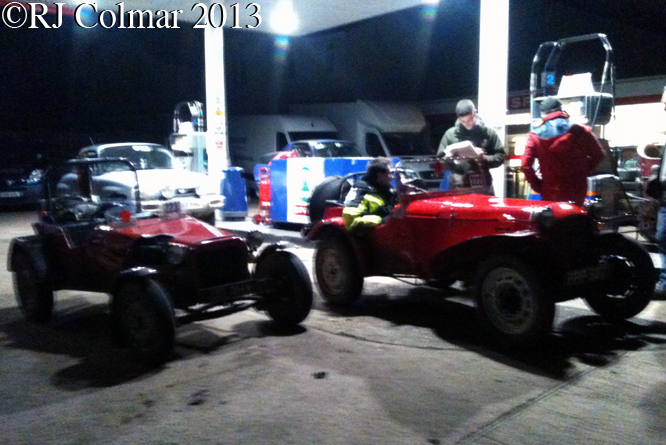
Ford Special, Exeter Trial, Cirencester

Above the #223 Ford Special of Alex Wheeler and Tony Underhill is parked up alongside the #222 Gregory and ahead of a couple of Suzuki X-90’s that were also taking part at the Musbury Garage checkpoint.

After a very quick observed stopping and reversing test at Haynes we headed for the first off road trial at Windwhistle Hill, by now I had a good grip on the abbreviations used in the route notes which Spence had thoughtfully copied and mounted onto a neat illuminated roller box as used by bomber command navigators in WW2 and by Denis Jenkinson to help Stirling Moss to victory in the 1955 Mille Miglia. In the pitch black of the night from the navigators seat of the Parsons at five in the morning the Windwhistle Hill observed section appeared to take place on a very wet and rutted and rocky forestry track, getting down to the start of the time section it was almost as much fun as roaring back up to the top for a clean run which included a compulsory stop and restart halfway up.
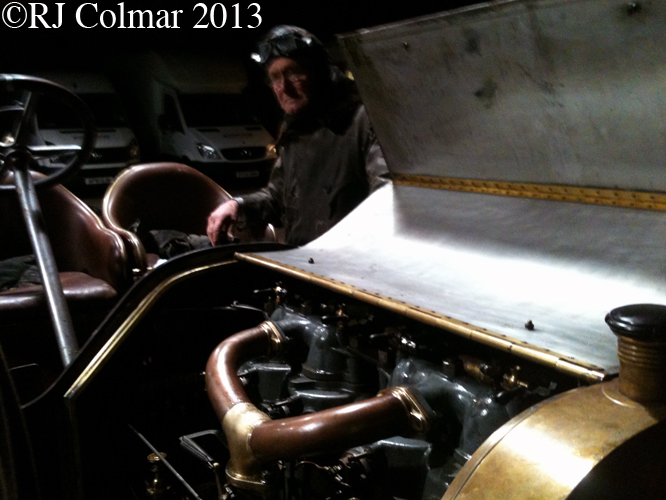
Mercedes Simplex, Exeter Trial, Musbury Garage

From Windwhistle Hill we proceeded 5 miles to the next observed section Underdown II following the magnificent chain driven 1903 Mercedes 60 hp Simplex of Ben and Roger Collings with a burbling 4 cylinder 9.235 litre / 563 cui motor which was being guided by chain drive aficionado Duncan Pittaway and Ant Lucas in a raucous TVR V8S. The Mercedes needed a guide on account of the fact that nominal navigator 70 year old Roger Collings, seen above, was fully occupied holding on to two handles to stay in his completely exposed seat.
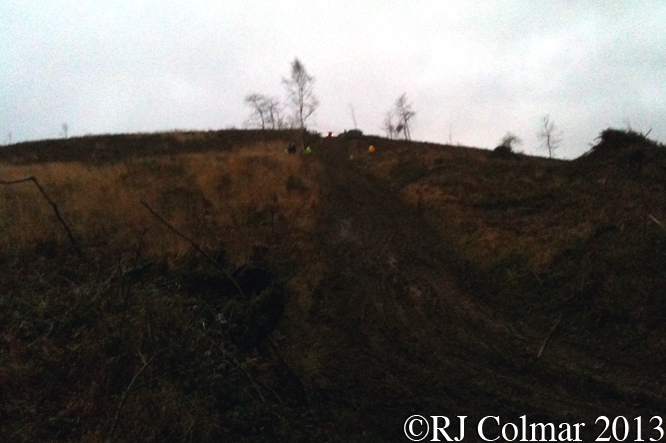
Volkswagen Beetle, Normans Hump, Exeter Trial

Above the #238 Volkswagen Beetle of Nicola Butcher completes a clean run of Norman’s Hump.

After another clean run up Underdown II we headed for the Musbury Garage check point, as we were running ahead of scheduled time Spence pulled over for a quick cat nap before we pulled into the Garage to get our route card signed. Day light was appearing as we reached observed Section 3 known as Norman’s Hump where there was a long queue of competitors waiting.
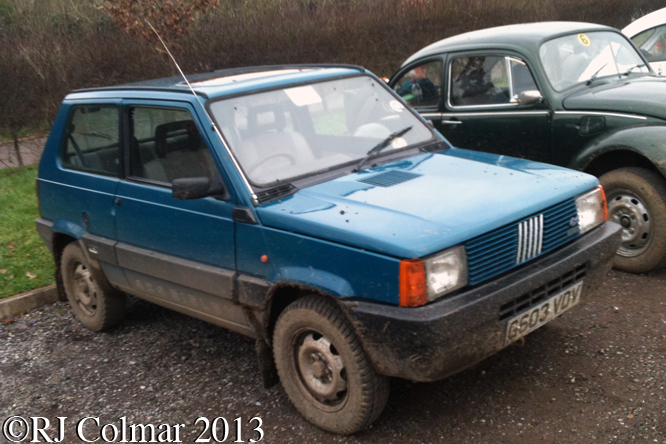
FIAT Panda Sisley, Crealy Park, Exeter Trial

We began to feel like we were on a roll as we cleaned Norman’s Hump and the following observed sections Waterloo, Strets, Core Hill and Bulverton Steep which were all on wet surfaces thanks to the yule tide deluge that had ceased earlier in the week. Over the last few morning sections we were running last on the road with the course closing FIAT Panda 4×4, seen above, on our tail.
Parsons, Crealy Park, Exeter Trial

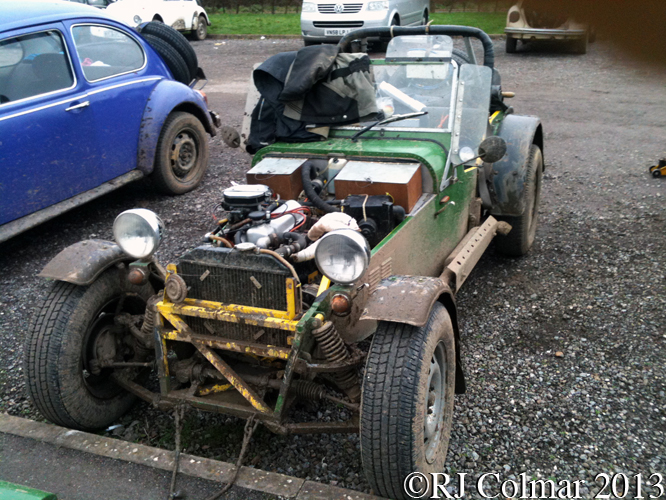
This was not helped by the fact that Spence used an electric pump to inflate his tyres after each section which lost us time, unfortunately the Parsons, seen above at Crealy Park, is not really big enough to carry a time saving gas bottle as many other competitors did. For most of the observed sections we were running between 10 and 15 psi on the rear tyres for extra grip, too low a pressure to be running on the road sections to be safe.
Allard M Special, Crealy Park, Exeter Trial

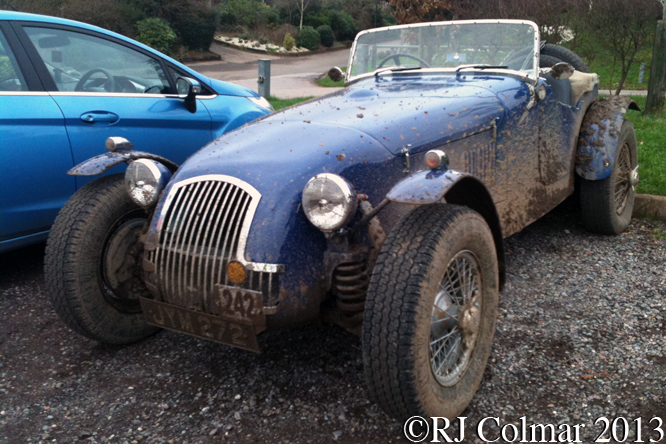
Just after 10 we arrived at the Crealy Park time control where Spence borrowed Duncans jack to swap the rear wheels over because the tyres on both sides had slipped on the rims, he also checked over the levels which were all fine during the one hour compulsory stop while I took a few snaps of some of the other vehicles taking part including the #242 Allard M Type Special of William Holt and Martyn Wyatt above. After a brunch, chicken and fried rice with satay sauce that I bought at our local take away just before setting off from Bristol, we headed into the sunshine towards afternoon sections starting with Tillerton Steep.
Marlin Roadster, Crealy Park, Exeter Trial

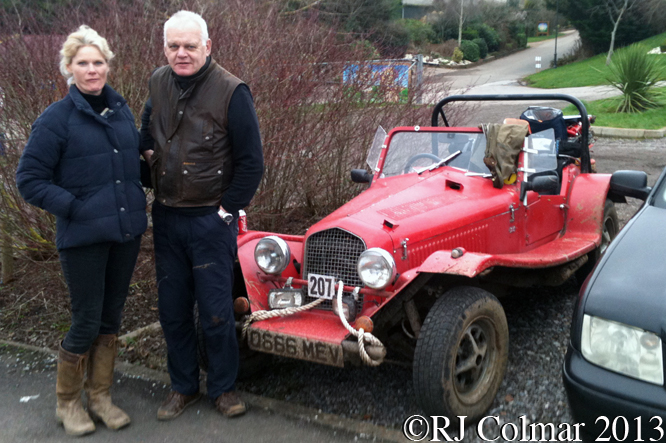
Above Chris Hickling and Wendy Bayless from Falmouth are seen in front of their #207 Marlin which suffered a puncture on Norman’s Hump.

If the morning had proved to be ecstatic with clean runs then Tillerton Steep began a run of drip fed cruel agony as there was a restart on a large slab of wet rock which offered absolutely zero traction. We had failed our first test though we managed to get up the remainder of the course on our second attempt.
BMW 2002, Tillerton Steep, Exeter Trial

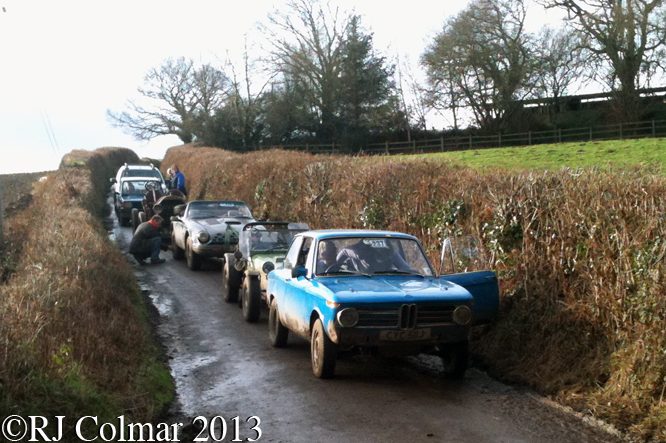
Above the Edna Perryman climbs into the back seat, of the #237 BMW 2002 while Colin awaits to cross the ford prior to their run up Tillerton Steep. Note the course closing Panda behind the Mercedes.

We then followed the Mercedes Simplex to Fingle Hill which we cleaned, with slightly raised spirits we continued the short distance to Wooston Steep behind the 1903 Mercedes Simplex which pulled an awesome handbrake turn to line up for the gates that marked the entrance to the path that led to the observed section. Wooston Steep which had two finishes according to class, being in the toughest class 8 we had to make a run past a left fork up to the top, unfortunately we got caught in the ruts which turned left and lost too much momentum to complete the test. The Exeter Trial is about completing ‘cleaning’ all the sections if one completes all sections no more than ten mins behind schedule one is awarded a Gold medal, if one fails one section but completes all the rest within 20 mins of the target time one earns a silver and a bronze is awarded if all bar two sections are completed within 30 mins of the target time.
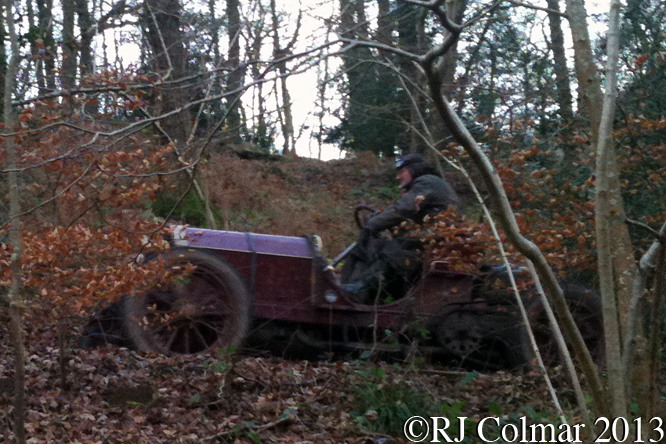
Mercedes Simplex, Fingle Hill, Exeter Trial

Above Ben Collings blasts up Fingle Hill while Roger hangs on to the 1903 Mercedes Simplex as best he can.

After a third observed Autotest at Wooston Steep it was off to Ilsington Parish Hall for another compulsory hour break during which I enjoyed some decaffinated coffee and some lovely cake. Next it was off round the corner to Simms a long wait ensued as many cars failed to get to the top after the restart. We eventually blasted up the first part of the hill but could not manage the second and ended up being carefully guided, who almost manhandled the car back to the corner so that we could reverse down the remainder of the course. Our shot at a medal was over and dissappointed we headed for Tipley Hill where another long queue awaited us. By now it was getting dark and colder again and since we were no longer in with a chance to win a medal we elected to skip Tipley Hill and headed for the final section Slippery Sam a cross between a rock garden and a bomb hole of a hill, again we flew up the first part but needed two attempts to clear the restart after which we flew around the last couple of corners bouncing over ground that would be an easy test for a four wheel drive but was a thriller in the tiny Parsons.
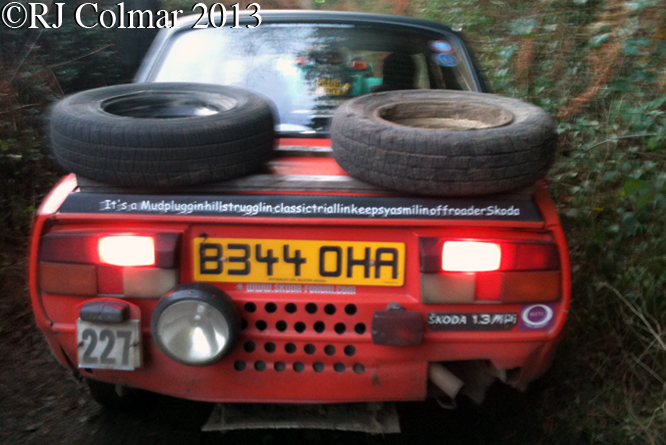
Skoda Estelle, Simms, Exeter Trial

Above part of discipline of the Exeter Trial is having the patience to sit in long queues in narrow lanes, above the #227 Skoda Estelle of Ben & Rosin Giles awaits it’s turn to get to the start of Simms.

We then headed to the Trecarn Hotel Babbacombe where exhausted we handed in our time card for the final time, glad to be in one piece, and that it had neither snowed or rained during the exhilarating 19 hour 250 mile drive. After a shower we joined many of the competing crews for dinner where tails of triumphs and failure were exchanged. I eventually crashed out feeling like I was still moving !

My thanks to Alan Spencer for taking me along on the Exeter Trial in his little Parsons which will be the subject of a future blog, thanks also to all the marshalls and organisers who put the time and effort in to making the event happen, I hope the opportunity to participate comes round again in the not too distant future.

Thanks for joining me on this “Chased By A Panda” edition of “Gettin’ a li’l psycho on tyres” I hope you will join me again tomorrow. Don’t forget to come back now !

Share

Next Generation – MG6 GT

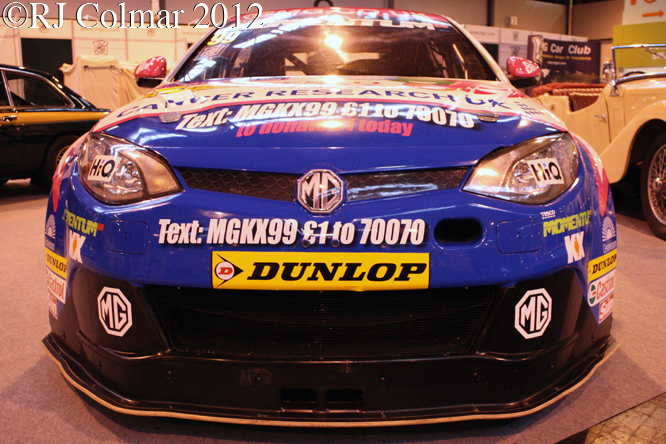
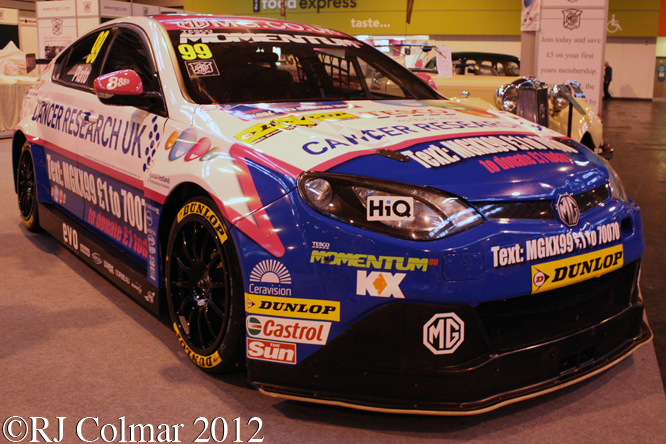
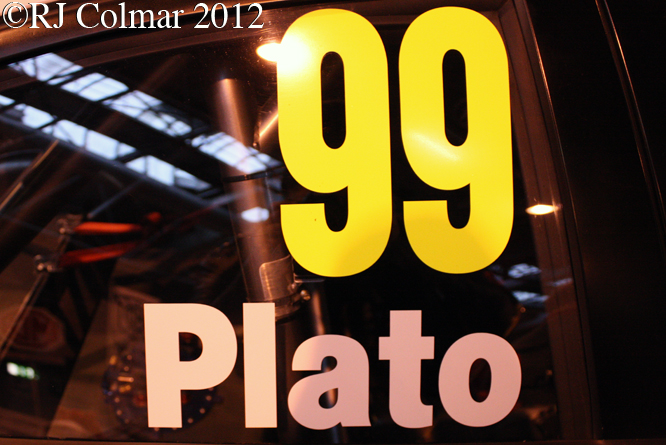
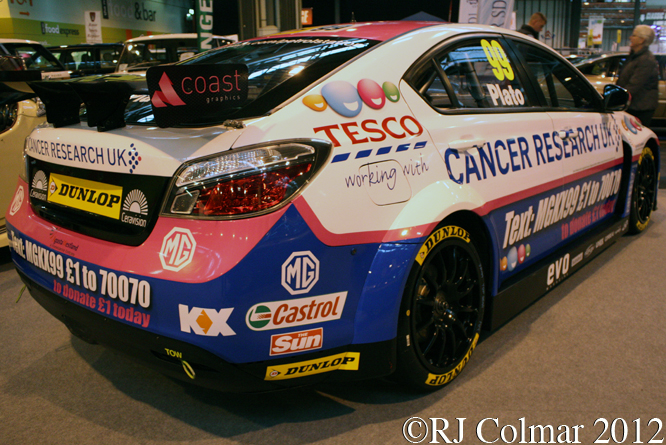
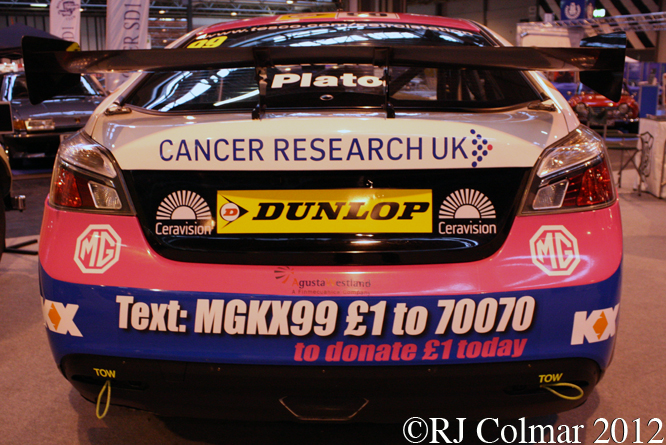
The British Touring Car Championship (BTCC) dates back to 1958 when Jack Sears won the first contest, then known as the British Saloon Car Championship in an unlikely Austin A105 Westminster. Last year 2 time champion Jason Plato brought his MG6 GT featured here home in third place in the now Chinese owned MG Marque’s return to the Championship.

MG6 GT, Classic Motor Show, NEC, Birmingham

Plato’s team Triple 8 Motorsport which runs under the MG KX Momentum team banner was one of just two teams running with works support the other was the Championship winning Honda Yuasa Racing Team which clinched the top two championship spots with Gordon Shedden snatching the 2012 title from 2011 champion Matt Neal running Civic bodies.

MG6 GT, Classic Motor Show, NEC, Birmingham

All of the runners in the 2012 BTCC were running with the Next Generation Touring Car (NGTC) motor, a turbocharged crate motor that produces around 300 hp, depending on the performance of a particular team this can be increased or decreased by the series organisers TOCA to even out the playing field.

MG6 GT, Classic Motor Show, NEC, Birmingham

The cars all run with standard spec 6 speed sequential gearboxes, racing clutches, front subframe incorporating the the suspension, transmission and motor, rear suspension, turbo inter cooler and aerodynamic aids front and rear.

MG6 GT, Classic Motor Show, NEC, Birmingham

Jason Plato started racing in karts and progressed through Formula Ford, Formula Renault and Formula Three open wheelers before winning the 1996 Renault Spider championship, he then manged to land a drive in the works Renault Touring Car team which was run by Frank Williams, he moved to Vauxhall, run by Triple 8 Motorsport, in 2000 an won his first BTCC title in 2001. Since then he has won more BTCC races than any other driver with stints at SEAT 2004 – 2008 and Chevrolet 2009 to 2011 winning the BTCC title for a second time in 2010.

MG6 GT, Classic Motor Show, NEC, Birmingham

The BTCC series comprises ten weekends racing at different tracks starting at the Brands Hatch Indy Circuit and finishing at the Brands Hatch Grand Prix Circuit, each meeting comprises three races, qualifying for the first is by timed practice while the top ten finishers are reversed on the grid for the second race and pole for the third is determined from from between 6th and 10th place finishers in the second race by lucky dip with 1st to 5th finishers from the second race going to the back of the grid ! Jason won 6 of the thirty qualifying races last season on his way to third in the championship.

MG6 GT, Classic Motor Show, NEC, Birmingham

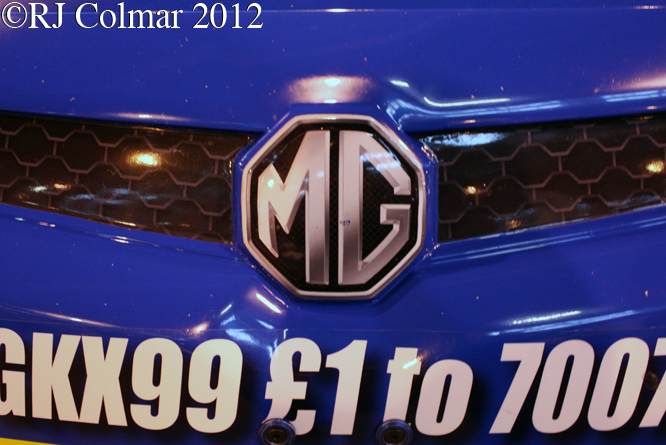
To celebrate their successful return to the BTCC MG recently launched a fully loaded with go faster equipment and graphics MG6 BTCC Special Edition.

For 2013 MG and Honda will be joined by privateers running Chevrolet Cruze, Toyota Avensis, BMW 125i, Ford Focus ST, Audi A4, Vauxhall Insignia VXR-R, Volkswagen Passat CC, and Proton Persona bodies. 1st meeting of the season will be at Brands Hatch on the 31st of March.

Thanks for joining me on this “Next Generation” edition of “Gettin’ a li’l psycho on tyres” I hope you will join me again tomorrow. Don’t forget to come back now !
Share

Awaiting TLC #4 – Elva Porsche Mk VII

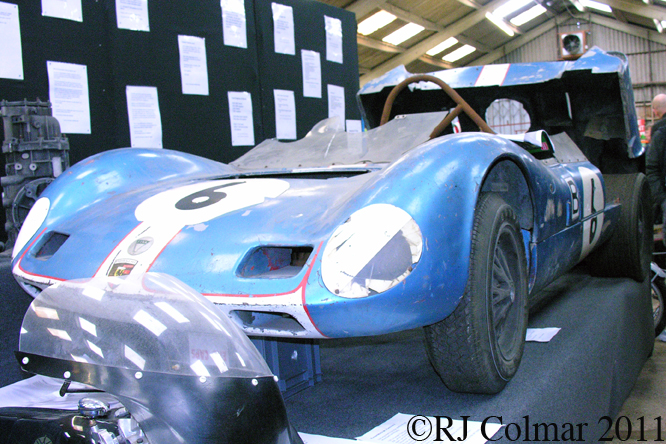
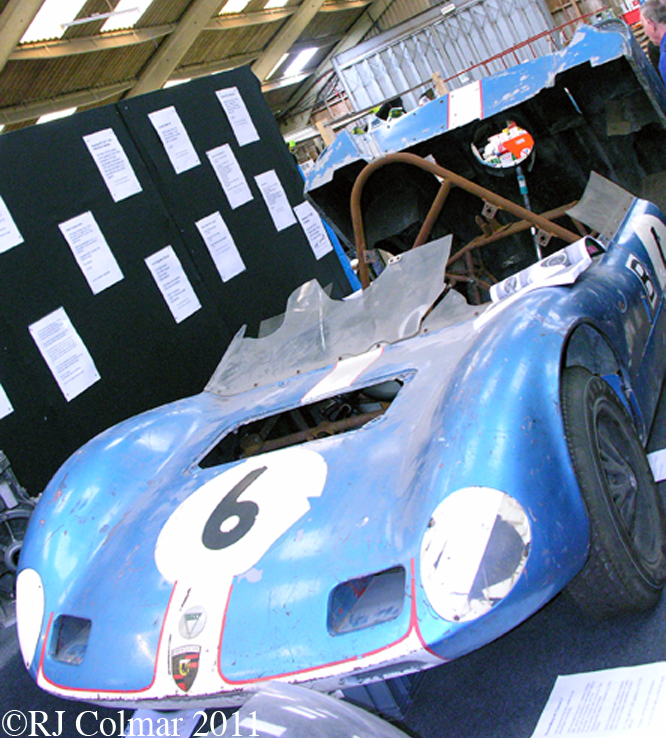
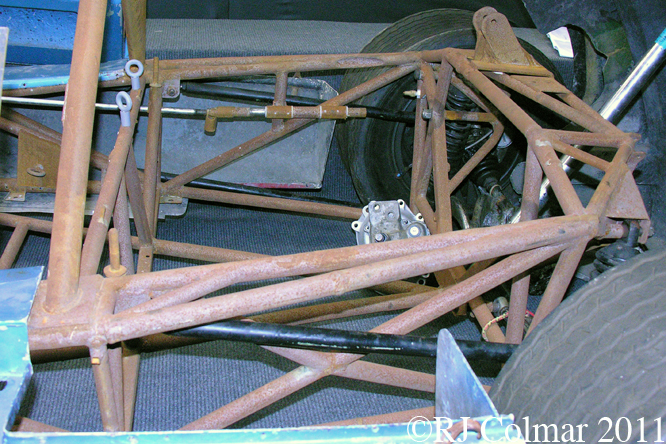
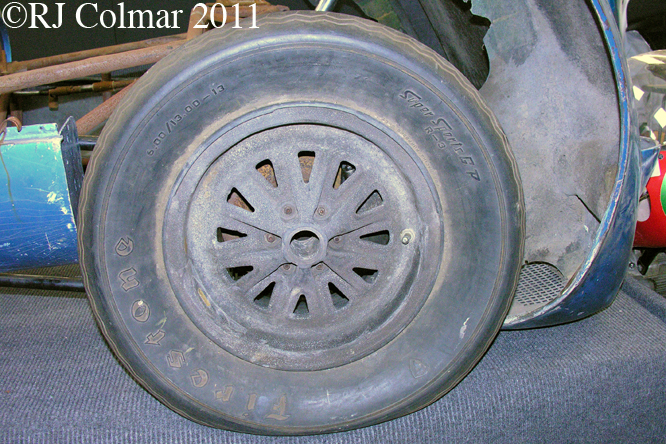
A couple of years ago I came across this old Elva Porsche Mk VII in need of TLC at Race Retro.

Elva Porsche Mk VII, Race Retro

Despite being a British company Elva had a much better reputation in the United States than in the UK because their cars was raced by privateers against privateers while in the UK Elva cars tended to be raced by privateers against works supported teams particularly from Lotus.

Elva Porsche Mk VII, Race Retro

Elva’s founder Frank Nichols is said to have favoured selling his creations over racing them, letting his customers do the talking for his products on the track.

Elva Porsche Mk VII, Race Retro

Unusually in the absence of having a suitable model for sports car racing of their own Porsche supplied Elva with engines which were particularly favoured by Elva’s US customers, Porsche were even involoved in setting up the design of the Porsche powered Mk VII’s sending Porsche employee Herbert Linge to help with the motor installation.

Elva Porsche Mk VII, Race Retro

Porsche even bought two of the 19 Elva Porsche Mk VII’s for their own use and Herbert Müller used one fitted with a 2 litre / 122 cui flat 8 to secure second place in the 1963 European Hillclimb Championship.

Elva Porsche Mk VII, Race Retro

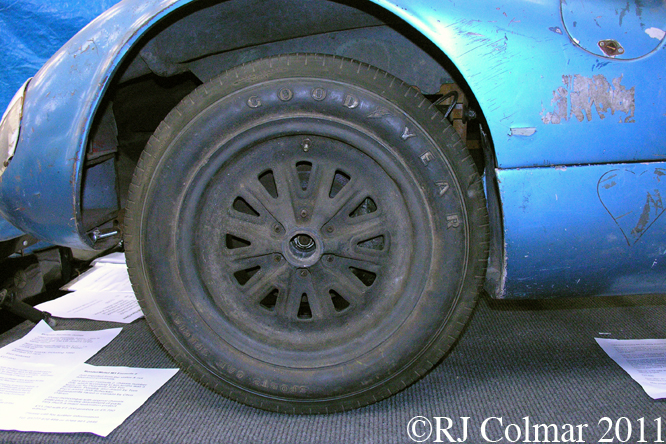
The vendor of this particular car claimed that it was originally sent to the United States with a quad cam 4 cylinder Porsche motor which was latter replaced by a 6 cylinder Porsche motor that drove the rear wheels through a 5 speed gearbox.

It is two years since this car appeared in urgent need of TLC at Race Retro and I shall look forward to seeing if this car reappears in restored form again in the near future.

Thanks for joining me on this “Awaiting TLC #4” edition of “Gettin a li’l psycho on tyres”, I hope you will join me again tomorrow. Don’t forget to come back now !
Share