Tag Archives: Colmar

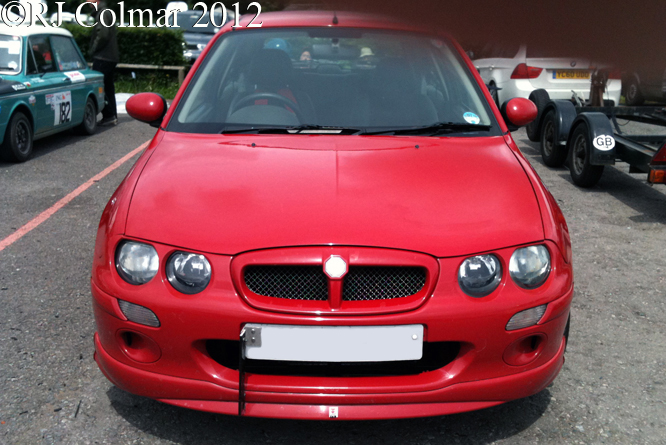
Hot Rover #1 – MG ZR 105

When BMWdivested itself of the Rover Group in 2000 the new Rover-MG Group set about producing hot versions of its Rover 25, 45 and 75 models for sale with MG badges.

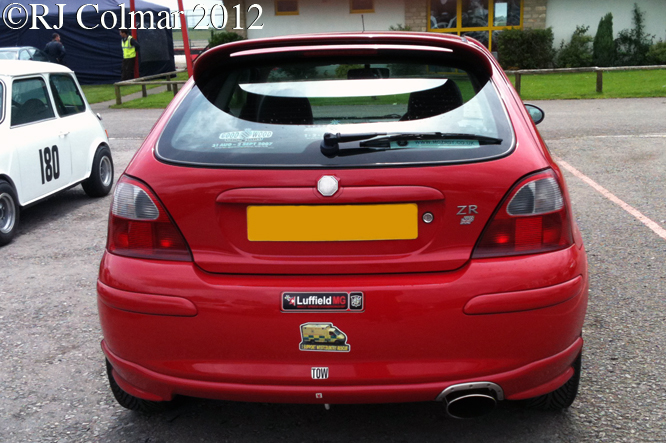
MG ZR, Dick Mayo Sprint, Castle Combe

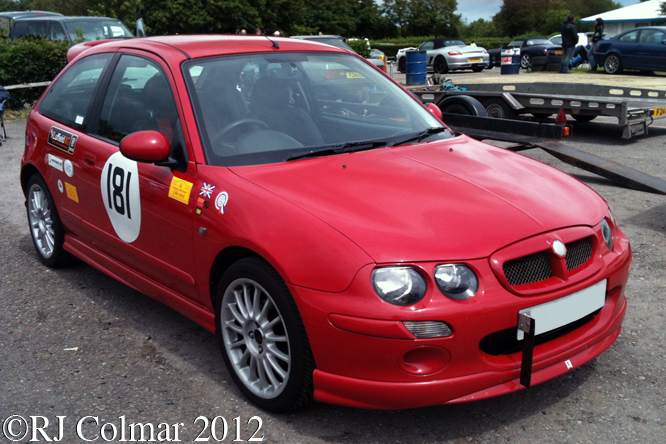
The MG ZR which was based on the Rover 25 was the cheapest and most popular of the new MG’s launched in 2001.

MG ZR, Dick Mayo Sprint, Castle Combe

With a range of motors with outputs from 102 to 159 hp with two diesel options to cater for a variety of performance demands.

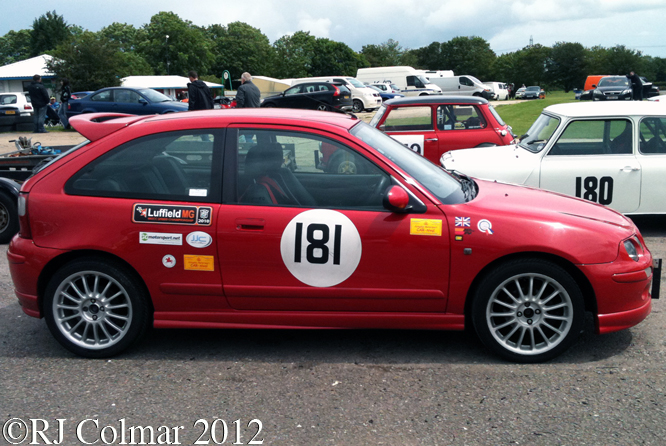
MG ZR, Dick Mayo Sprint, Castle Combe

Andrew Till’s base 105 model seen here at the Dick Mayo Sprint earlier this year is capable of reaching 60 mph from rest in 9.7 seconds with a top speed of 111 mph.

MG ZR, Dick Mayo Sprint, Castle Combe

Suspension improvements and braking improvements were tailored to engine performance improving handling and grip while maintaining comfort.

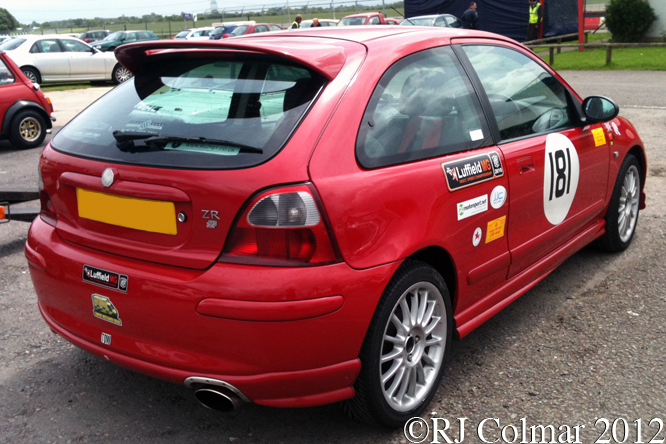
MG ZR, Dick Mayo Sprint, Castle Combe

Unusually an MG Express van version of the MG ZR was also offered, only 317 of these were built making them very collectable.

MG ZR, Dick Mayo Sprint, Castle Combe

In all 74,136 ZRs were built between 2001 and 2005, excluding the 317 Express Vans, when Rover went bankrupt. Subsequently a MG ZR / Rover 25 Streetwise inspired MG3 SW was built by SAIC in thier Pukou, Nanjing facility appeared for the Chinese market only in 2008 which is still in production.

Thanks for joining me on this “Hot Rover #1″ edition of Gettin’ a li’l psycho on tyres” I hope you will join me again tomorrow for a thanks giving day edition tomorrow. Don’t forget to come back now !

Share

Dentists Body Art – Huispano Suiza K6 Convertible

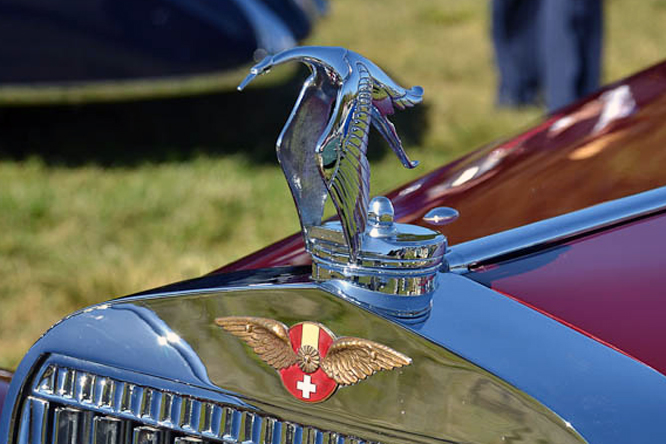
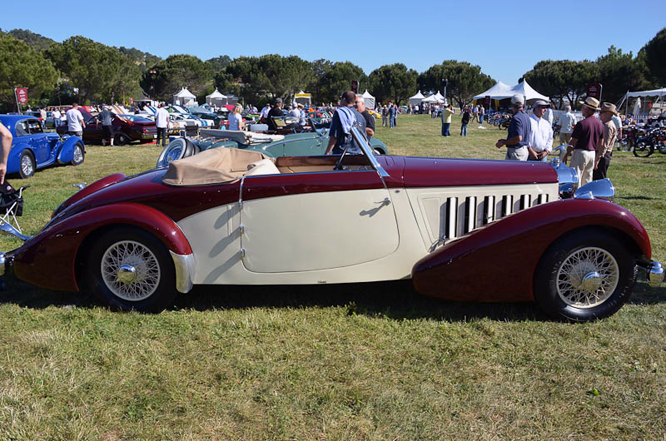
Marc Birkigt’s K6 design, which replaced the earlier Ballot/Junior model first saw the light of day in 1934.

Huispano Suiza, Marin Sanoma, Concours d'Elegance

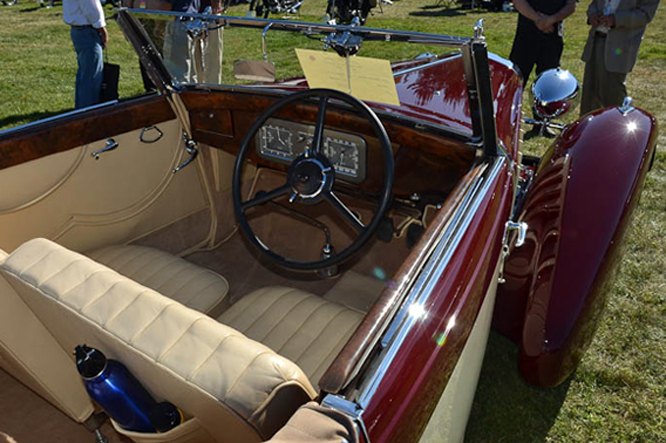
Offered to fill the market segment below the exclusive J12 model the K6 featured a new 120 hp straight six motor with overhead pushrod operated valves which followed Rolls Royce practice in the pursuit of silence when in motion.

Huispano Suiza, Marin Sanoma, Concours d'Elegance

Depending on the body work which varied in weight and aerodynamic efficiency from one coach builder to the next a K6 could reach a speed over 85 mph.

Huispano Suiza, Marin Sanoma, Concours d'Elegance

Following the trend set by the Huispano Suiza H6 the K6 was fitted with four wheel cable operated brakes with servo assistance as licensed to Rolls Royce.

Huispano Suiza, Marin Sanoma, Concours d'Elegance

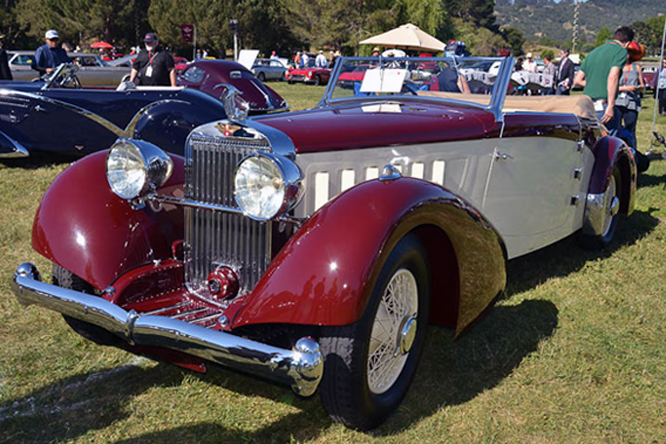
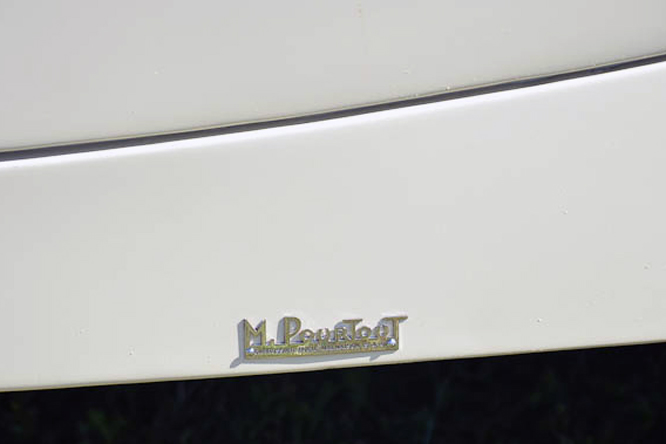
Carrosserie Pourtout is one of a number of coachbuilders who built bodies for clients what ever chassis they bought. The company is probably best known for it’s the revolutionary Eclipse retractable hard top roof and a class winning Le Mans entry, the company ceased operating as a design business in the 1990’s but is still involved in body shop repairs.

Huispano Suiza, Marin Sanoma, Concours d'Elegance

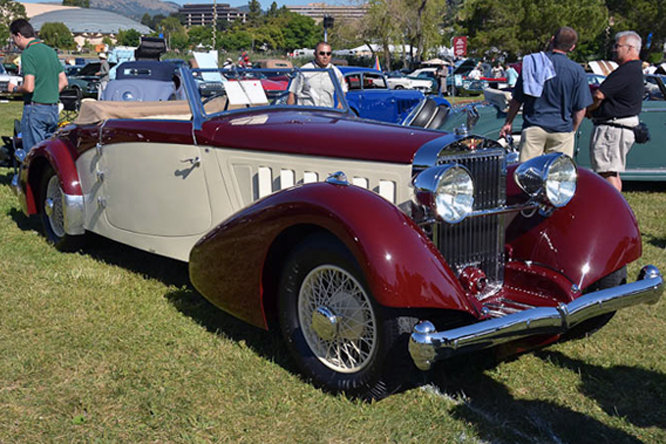
It seems most likely that the lines for the coachwork of this 1936 Huispano Suiza K6 Convertible were drawn by former dentist turned designer Georges Paulin who started working for Carrosserie Pourtout in 1933 and remained with the company until he was executed by occupying German forces for his allegiance with the French Resistance and British Intelligence in 1942.

Huispano Suiza, Marin Sanoma, Concours d'Elegance

The K6 could be built for owners to drive with a shorter wheel base or for a chauffer to drive with a longer wheel base.

My thanks to Geoffrey Horton for sharing his photographs which were taken earlier this year at the Marin Sanoma Concours d’Elegance meeting.

Thanks for joining me on this “Dentists Body Art” edition of ‘Gettin a li’l psycho on tyres” I hope you will join me again tomorrow. Don’t forget to come back now !

Share

Definetly Not The Right One – Lotus Ford 80 #R1

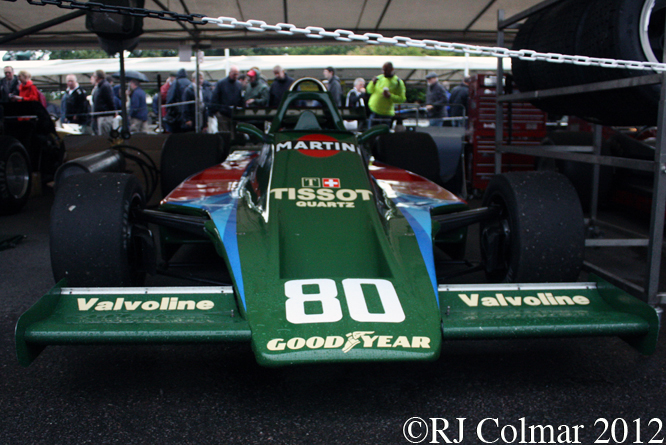
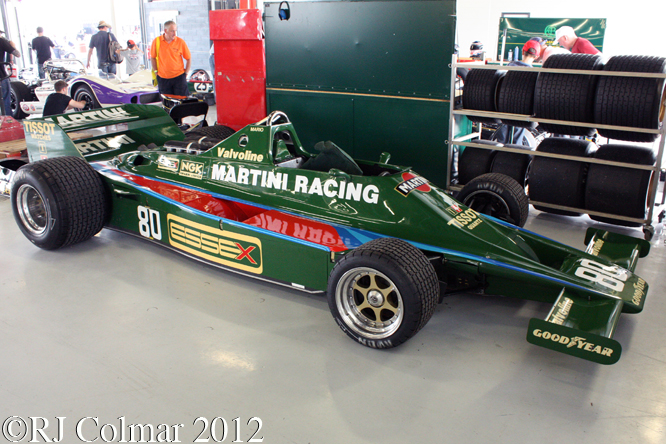
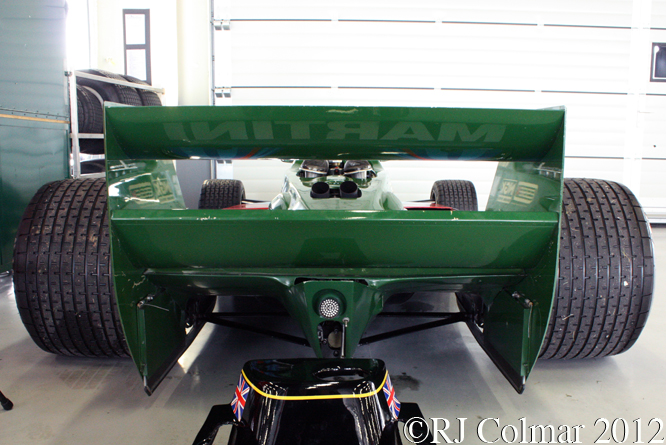
Colin Chapman described the Lotus Ford 80 at it’s launch in the Kentagon at Brands Hatch in 1979 as the best looking Lotus he had ever built. Reigning World Champion Mario Andretti said it would make the Lotus Ford 79 with which he won the 1978 World Championship look like a London Bus.

Lotus Ford 80, Goodwood Festival of Speed

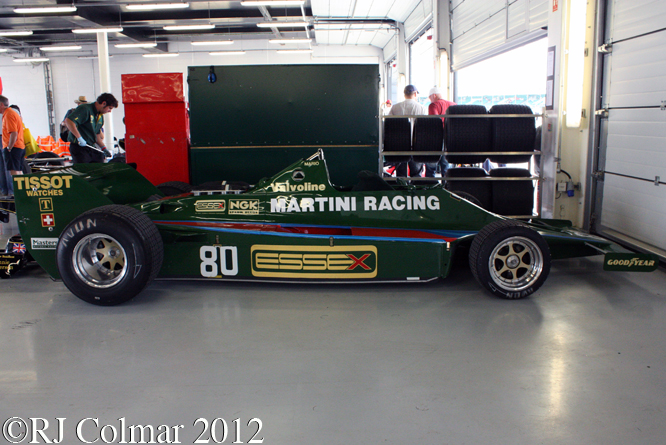
Unfortunately the car with the revolutionary venturi under the nose and a second under the rest of the body and with out the usual wings front and rear proved to be a bit of a handful with unpredictable handling once it started running on the track and it was only a matter of time before Colin Chapman and his engineers were removing the skirts that sealed the airflow beneath the nose and fitting conventional front wings to aid the aerodynamic poise and balance of the car.

Lotus Ford 80, Silverstone Classic

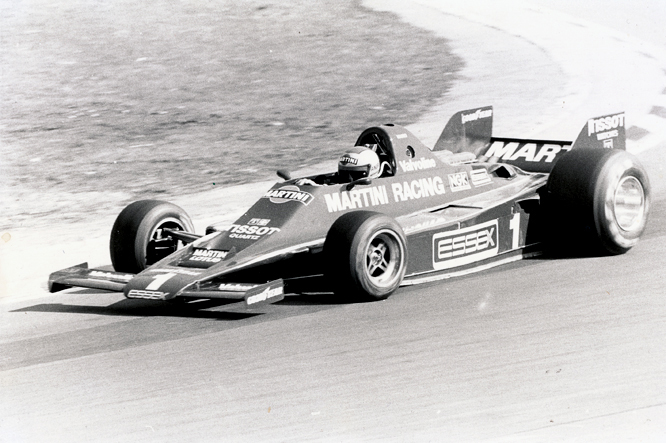
The whole point of the design was to make the Lotus 80 faster down the straights than the Lotus 79 by not having any wings fitted at all. However all was not lost at Brands Hatch, as seen in Sven Platts photo below, the car was only used as a spare, but in the next race the Spanish Grand Prix Mario Andretti qualified a respectable forth behind the two hitherto dominant Ligiers that were the most effective copies of the previous seasons Lotus 79 and the more powerful Ferrari 312 T4 of Gilles Villeneuve.

Lotus Ford 80, Race of Chapions, Brands Hatch

Patrick Depaillier won the Spanish Grand Prix in his Ligier from Carlos Reutemann, in the Lotus Teams older Lotus 79, who finished ahead of Mario in the Lotus 80. The Spanish Grand Prix turned out to be the highlight of the Lotus 80’s short life, at Monaco Mario could only qualify 13th and at the French GP where a heavily revised second Lotus 80 was tested Mario qualified 12th but he retired with suspension and brake issues from each of these races respectively.

Lotus Ford 80, Silverstone Classic

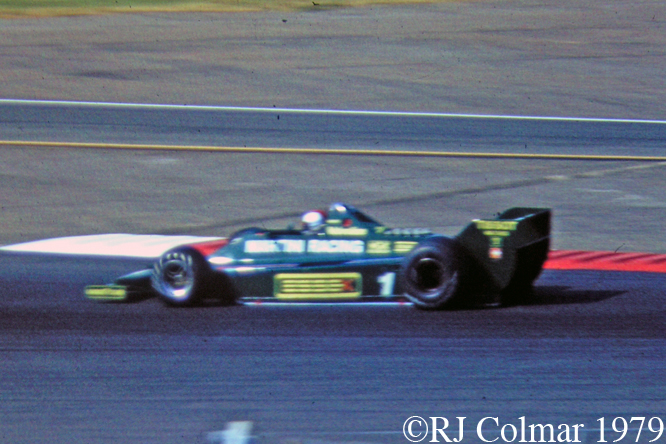
The final appearance of the Lotus 80 was at the British Grand Prix at Silvestone where I took the photograph below. Mario practised in the car but decided he was better off with his year old Lotus 79 which by now was swamped by new designs which emulated it and the more powerful, ultimately 1979 championship winning, Ferrari T4s.

Lotus Ford 80, British Grand Prix, Silverstone

I believe these photographs all show the same chassis namely Lotus Ford 80 R1 which today appears to be owned by Manfredo Rossi a member of the Martini Rossi family that sponsored team Lotus in 1979.

Lotus Ford 80, Silverstone Classic

Thanks for joining me on this “Definitely Not The Right One” edition of ‘Gettin’ a li’l psycho on tyres’ I hope you will join me again tomorrow. Don’t forget to come back now !

Share

60 Years In Formula One – Ferrari F60

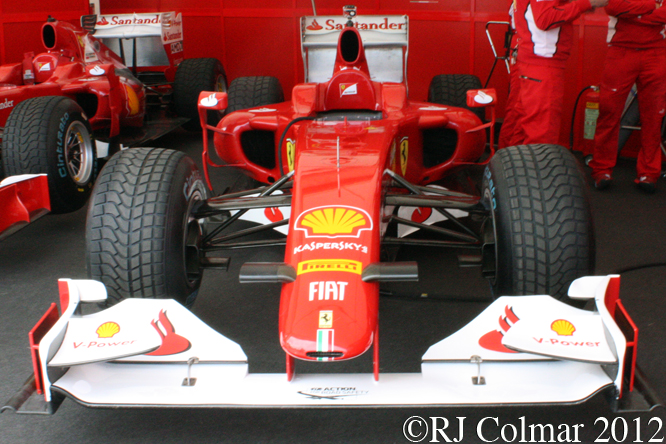
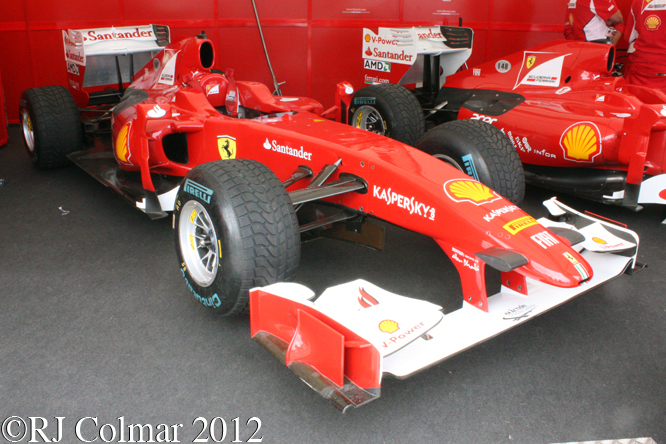
2009 marked the 60th season of Ferrari’s participation in Formula One and to mark the fact they gave there 55th Formula challenger the F60 name. After winning the Championship in 2007 with Kimi Räikkönen in and Massa and Räikkönen finishing 2nd and 3rd in the championship in 2008 hopes were high the the F60 would return Ferrari back to the top of the pecking order in 2009 but they were to be disappointed.

Ferrari F60, Goodwood Festival of Speed

The F60 was simply not reliable enough or fast enough to compete with the wonder car from the fledgling Brawn GP team that was being run on the money that would have made most of it’s employees redundant from former owners Honda had the brave Mr Brawn not stepped in to try and save the team and workforce. Red Bull were also proving a difficult combination to beat with Adrain Newey in the design office and Sebastian Vettel learning his trade behind the wheel at a scintilating pace.

Ferrari F60, Goodwood Festival of Speed

Even with the supposed advantage of a Kinetic Energy Recovery System (KERS) which only Ferrari and McLaren pursued with any commitment while other teams carried ballast in the absence of such systems Ferrari only managed one win all year when Kimi Räikkönen won the Belgian Grand Prix after a certain newcomer called Romain Grosjean knocked championship leader Jenson Button out an accident which also stopped the progress of Lewis Hamilton on the opening lap.

The win would be Räikkönens last for Ferrari as the team elected to buy Kimi out of his contract for a staggering US$15 million over two years so that they could get Fernando Alonso out of the blemished Renault Team for 2010.

Kimi went rallying in 2010 and 2011 without much success and put in a couple of appearances in the NASCAR Camping World Trucks Series and Nationwide Series driving Perky Jerky Toyota’s prepared by Kyle Busch Motorsport last year.

This season Kimi returned to Formula One full time with the Genii team, the remains of the disgraced Renault team that Alonso left in 2009 which now operates under license as the Lotus F1 team. Last time out in Abu Dhabi Kimi won a thrilling race and so should be in good form for the return of the US Grand Prix to the World Championship Calender in Austin Texas this weekend.

Note that in 2009 all the Formula One teams were running Bridgestone Tyres not with the Pirelli’s seen here and that Santander did not become a Ferrari sponsor until 2010 when Fernando Alonso arrived to drive for the team.

Thanks for joining me on this “60 Years In Formula One” edition of “Getting a li’l psycho on tyres” I hope you will join me again tomorrow when I’ll be looking at the 1979 Formula One challenger from Team Lotus. Don’t forget to come back now !

Share

Tomorrow Or The End Of Time – Dodge Challenger R/T 440 Magnum

The first piece of music to make the hair on the back of my neck stand on end was by James Marshall Hendrix, some time in 1967 I was home alone during the day time so it was probably during the Easter holidays, I was messing about with some extremely uncomfortable ex military bakerlite head phones when the announcer on the radio told us that coming next would be Jimi Hendrix latest hit “Purple Haze”. I unplugged and took off the headphones and turned up the volume control of the radiogram a little in anticipation of something interesting happening.
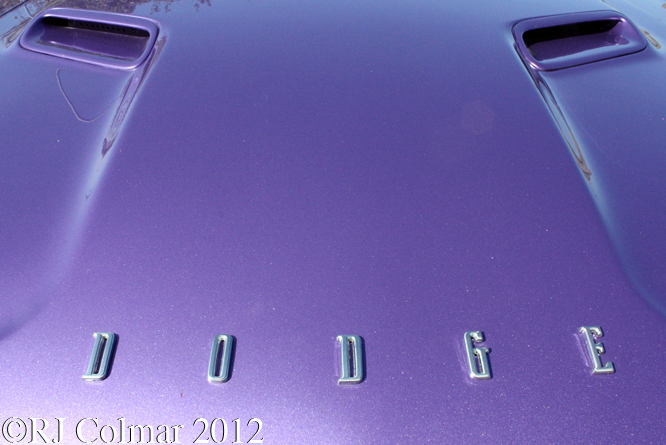
Dodge Challenger R/T 440 Magnum, Yanks and Gary’s 34th Picnic, Shakespeare County Raceway

By the time the opening riff blurted out I reached out and did something I had never done before, I maxed out the volume ! By the end of the song I was certainly tuned in and turned on to the Jimi Hendrix Experience even though I had no idea what it was, except it felt really good and I had a new found love for the colour purple and a curiosity for the line “Is this tomorrow or just the end of time ?”
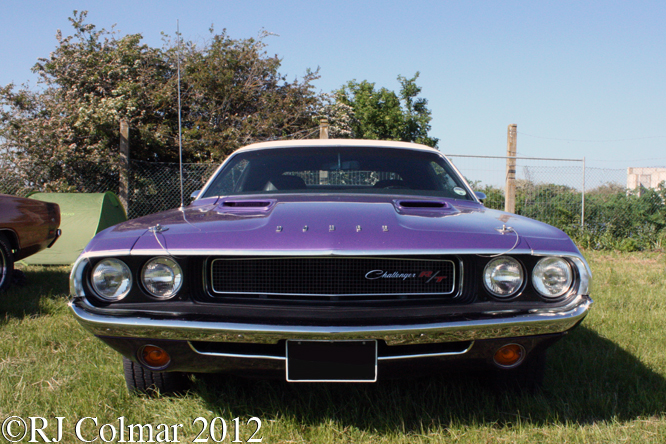
Dodge Challenger R/T 440 Magnum, Yanks and Gary’s 34th Picnic, Shakespeare County Raceway

This Tomorrow Or The End Of Time theme is revisited in the 1971 flash back road movie “Vanishing Point” which begins with an all American anti hero Kowolski driving a white 1970 Dodge Challenger R/T 440 Magnum pulling back from a 90 mph impact with a couple of Catepillar bulldozers, that serve as a makeshift police roadblock and vanishing into thin air, before retelling the story of how Kowolski got to the point of staring tomorrow or the end of time in the face.
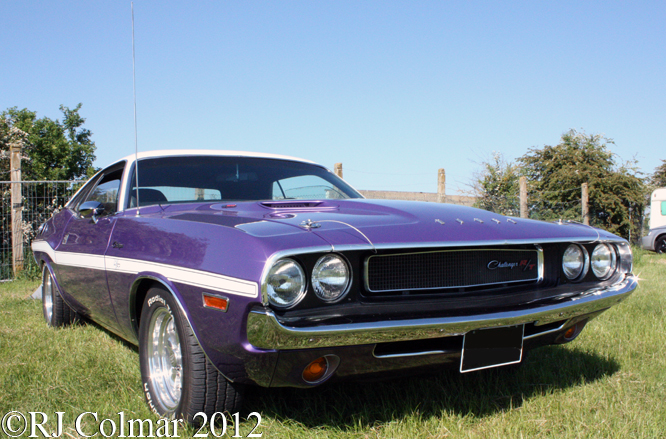
Dodge Challenger R/T 440 Magnum, Yanks and Gary’s 34th Picnic, Shakespeare County Raceway

While reading up on the history of the Challenger I was interested to learn that the very first Challenger was actually a limited edition two door body called the Dodge Silver Challenger that was only available in in silver and came fully loaded with premium white wall tyres, full wheel covers, electric windscreen wipers, luxury fabric interior and deep pile carpets through out.
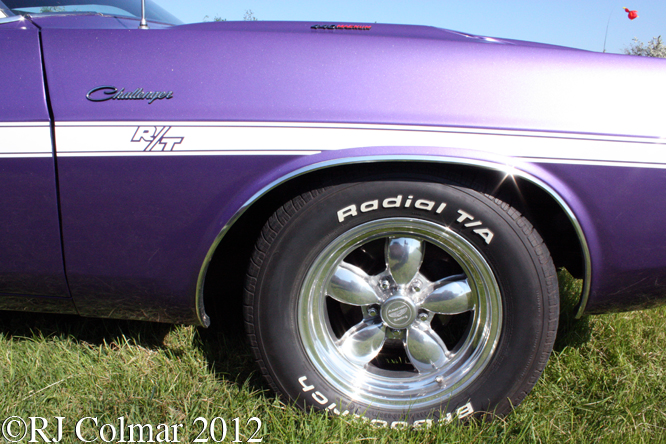
Dodge Challenger R/T 440 Magnum, Yanks and Gary’s 34th Picnic, Shakespeare County Raceway

For 1970 Carl Cameron came up with the exterior design for the second generation Challenger, like the Plum Crazy FC-7 1970 example seen here at Shakespeare County Raceway earlier this year. Chrysler had determined that the similar but shorter Plymouth Barracuda should belatedly compete with the Mustang and Camaro and the Dodge Challenger should compete with the Mercury Cougar and Pontiac Firebird in the pony car market.
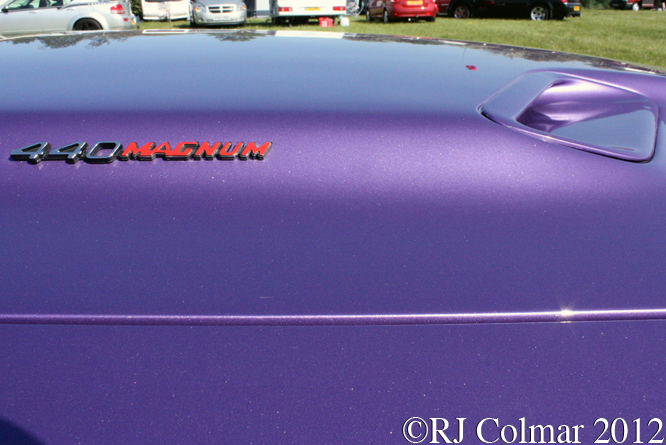
Dodge Challenger R/T 440 Magnum, Yanks and Gary’s 34th Picnic, Shakespeare County Raceway

Of the engine options available to Challenger customers there were two 440 cui / 7.2 litre Magnum options one 375 hp with a single four barrel carburetor and one 395 hp with three x two barrel carburetors known as the six pack. The car seen here appears to be the 375 hp option as distinguished by the air scoop which on the more powerful six pack models sits on top of the carburetor intakes in the center of the bonnet hood.
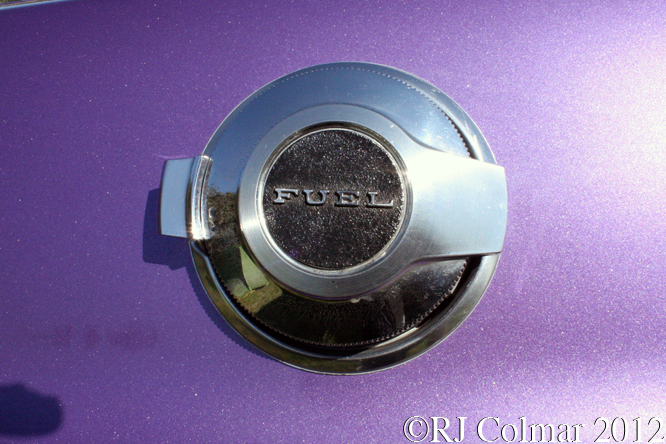
Dodge Challenger R/T 440 Magnum, Yanks and Gary’s 34th Picnic, Shakespeare County Raceway

Because of low sales volumes of the larger engine Challengers they have become extremely collectable, especially if the engine and chassis numbers match the original factory records. Within the pony car segment this late arrival did well to sell 76,935 copies in 1970 after which sales plummeted to less than 30,000 a year until the model was discontinued in 1974.
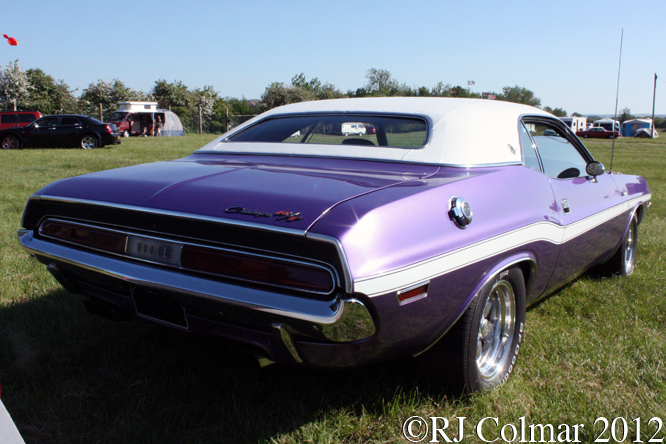
Dodge Challenger R/T 440 Magnum, Yanks and Gary’s 34th Picnic, Shakespeare County Raceway

Attractive though the Mustangs and Camaros are for my money the Challenger is the most desirable of all the muscle pony cars, there is something about it’s lines that are simply a little less fussy, a little smoother and more refined that look a bit further forward than all the others seen on pony cars in my humble opinion.
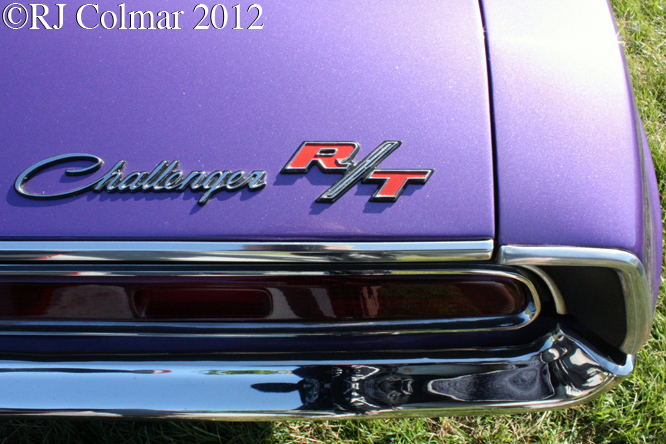
Dodge Challenger R/T 440 Magnum, Yanks and Gary’s 34th Picnic, Shakespeare County Raceway

The Challenger R/T with the 440 Magnum as seen here and in the original 1971 version of Vanishing point was capable of covering a quarter mile in 13.8 seconds by which time it would be touching 102 mph, the 440 Magnum was only listed for the 1970 model year though it was available as a special order in 1971.
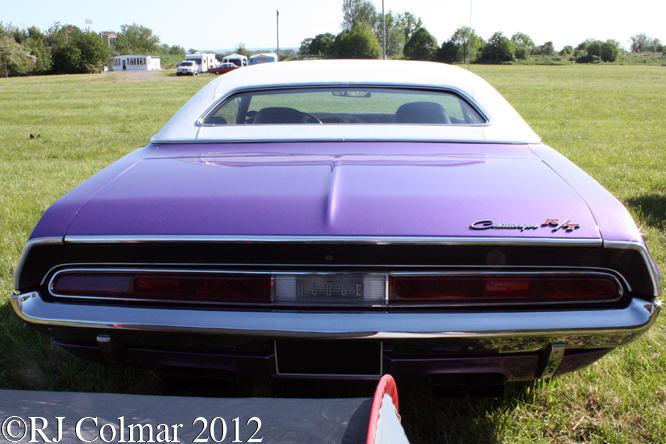
Dodge Challenger R/T 440 Magnum, Yanks and Gary’s 34th Picnic, Shakespeare County Raceway

When Kowolski approached the point of no return at the end of Vanishing Point he had a choice to turn back and see what the tomorrow would bring or to keep going further and faster into oblivion, giving up the struggle of life, forgetting not to let a few bad moments spoil a bunch of good ones and disappear into the end of time. I guess if you don’t know what happened next you’ll just have to see the film for your self to find out.

Thanks for joining me on this “Tomorrow Or The End Of Time” edition of “Gettin’ a li’l psycho on tyres” I hope you’ll join me for Ferrari Friday tomorrow. Don’t forget to come back now.

Share

Last Rear Engined Dubs – Volkswagen Type 2 (T3)

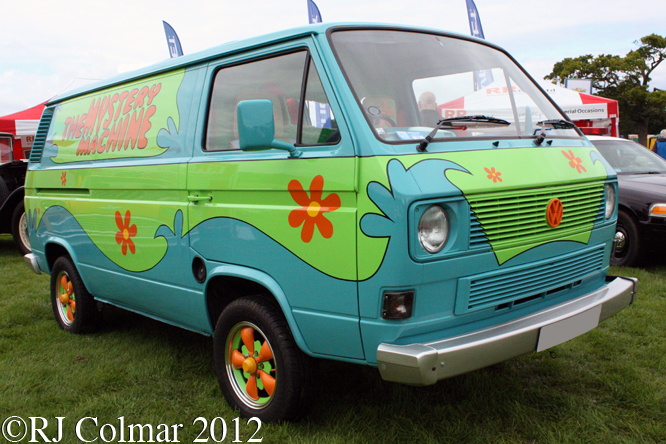
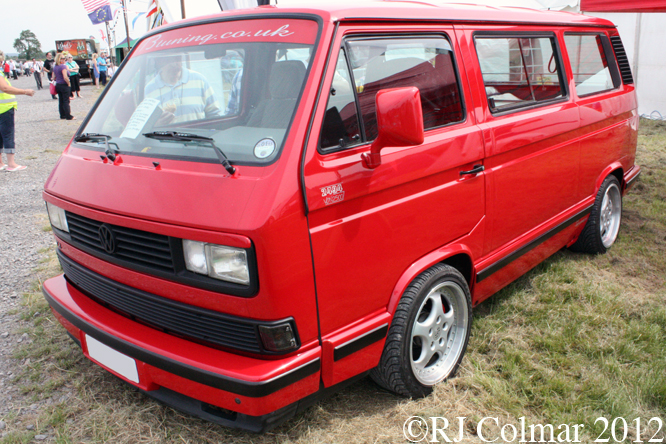
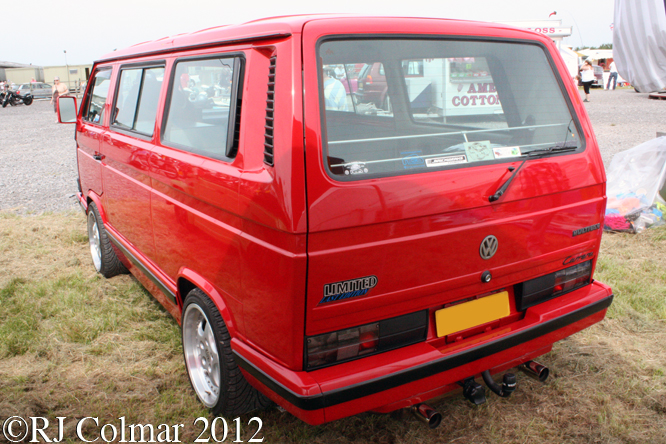
The Type 2 (T3) was the last all new rear engined design from Volkswagen who’s reputation had been founded on the rear engined Beetle stretching back to 1945. By 1979 the water cooled Golf was already rewritting Volkswagen history when the Type 2 (T3) with it’s distinctive squared features appeared on the market.

Volkswagen Type 2 (T3), Classics at the Castle, Sherbourne

The Scooby Doo Mystery Machine above belongs to RRElite Ltd and has been kitted out with customised ‘Scooby Doo’ seats for six passengers, flat panel TV screens for the DVD player, state of the art sound system and LED ambient lighting. Of course ‘Scooby Snacks’ can be ordered when hiring this vehicle.

Volkswagen Type 2 (T3), Summer Classics, Easter Compton

German production of the Type 2 (T3) came to a halt in 1992, above is #2494 of the Last Limited Edition of which 2500 were produced in Hannover. This vehicle now boasts a handy 230 hp Subaru flat six motor coupled to a Porsche gearbox and fitted with Porsche brakes to keep it under control.

Volkswagen Type 2 (T3), Summer Classics, Easter Compton

Variations of the Type 2 (T3) include one fitted with a Porsche Carrera motor to support the Porsche 959 Paris Dakar entry, and a water cooled fuel injected alloy six cylinder version which started as a Volkswagen Project but was completed by the German Tuning Firm Oettinger known as the WBX6.

In 1990 production of Type 2 (T3)’s started in South Africa, these were powered by the famous Volkswagen Audi Group fuel injected 5 cylinder Audi motors. The last South African Type 2 (T3) rolled off the assembley line in 2002.

Back in 1992 my then girlfriend and I acquired a 1983 vintage Type 2 (T3) that had served as a builders van and had been fully insulated and paneled inside. We bought it for £950 with one years MOT and tax drove it over 12,000 miles in a year and had so much fun with it we never had time to take a photo and sold it one year later for £1200 with no MOT or Tax and an exhaust that needed repair !

Thanks for joining me on this “Last Rear Engined Dub” edition of “Gettin’ a li’l psycho on tyres” I hope you will join me again tomorrow when the blog will be going purple for Americana Thursday. Don’t forget to come back now !

Share

Second Coming ? – MG Maestro 1600

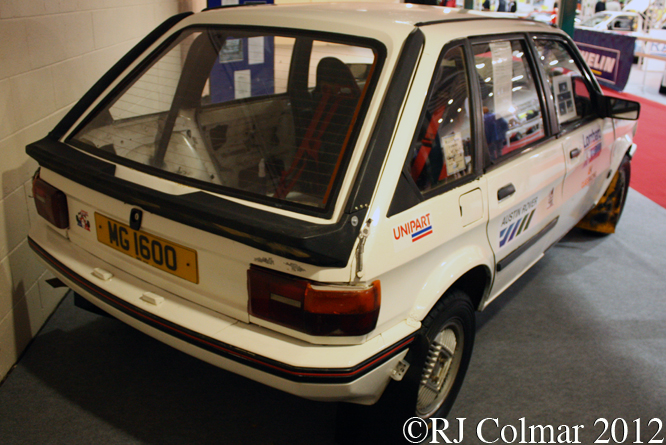
Advertisers excelled them selves in 1983 when they were tasked with coming up with a strap line for the hot version of British Leyland’s Austin Maestro which was to be badged as an MG, they proclaimed the MG Maestro 1600 was “Born To Perform Miracles“.

MG Maestro 1600, Race Retro, Stoneliegh

Of course depending on your belief system it would be very easy see how such brazenness was bound to disappoint after all even if you believe in miracles it is a bit much to expect a metal box on four wheels and an internal combustion engine to perform works which are usually the preserve of the the son of the big man with a big white beard dressed in a white robe.

MG Maestro 1600, Race Retro, Stoneliegh

However the basic Maestro was comfortable and especially roomy, compared to trend setting VW Golf, Vauxhall Astra and Ford Escort against which it was competing in the market, however the Austin Maxi derived R series motor was prone to hot start issues, premature crankshaft failures and the VW Golf size wheel bearings proved unequal to the task of carrying the larger heavier Maestro which led to further failures, all of which was compounded by the British Leyland managements legendary difficulties in getting it’s work force to achieve the kind of build quality that was taken for granted by some of it’s competitors.

MG Maestro 1600, Race Retro, Stoneliegh

The MG Maestro 1600 had a further problem added to those of it’s lesser Austin Maestro bretheren in the form of the twin Webber carburetors which boosted the power to 110 hp but which proved difficult for dealership technicians to tune. Unsurprisingly the MG Maestro 1600, as seen here, fell well short of miracle performing expectations and was only in production for the 1983/84 model year when it was replaced by the 2.0 EFi which was much better placed to out perform it’s rivals.

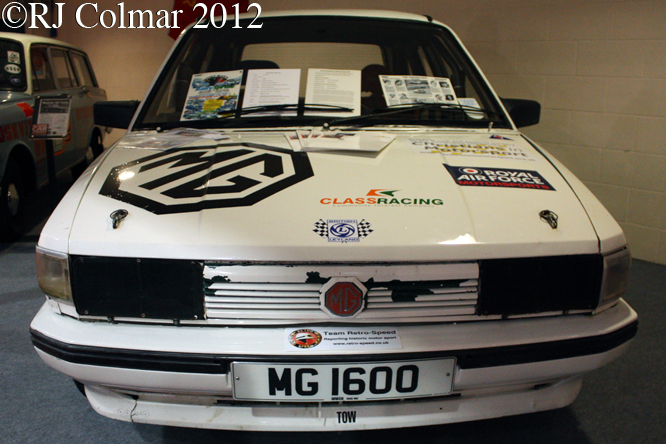
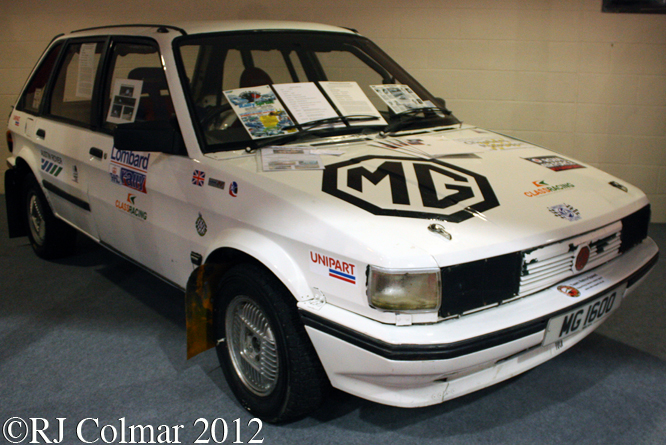
This particular vehicle is one of eight cars prepared for the 1983 Rally Sprint race. Rally Sprint was a multi disciplinary event for four Grand Prix drivers and four Rally drivers which comprised a rally stage in which competitors used identical Rover SD1s, an autotest using identical MG Metros and a race for identical MG Maestro 1600s.

Tony Pond drove this car in the race, it was the only white car in the race so is easy to identify, Pond finished third in the race with a severely savaged passenger door just about hanging on. Tony who had been Rally Sprint Champion in 1980/81 and 1982 lost his title after a thrilling race to a young man who had yet to win his first Grand Prix namely future world champion Nigel Mansell.

Thanks for joining me on this “Second Coming ?” edition of “Getting a li’l psycho on tyres” I hope you will join me again tomorrow. Don’t forget to come back now !

Share