Tag Archives: Colmar

Full Throttle – Enzo Ferrari

Before commencing production of the Enzo in 2003, Ferrari contacted a select list of previous F40 and F50 owners inviting them to purchase one of the 349 limited production run vehicles. All of the cars costing US $659,330 were thus sold in advance.
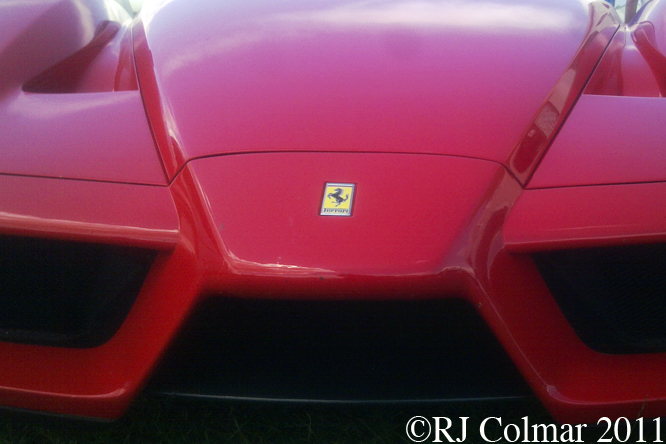
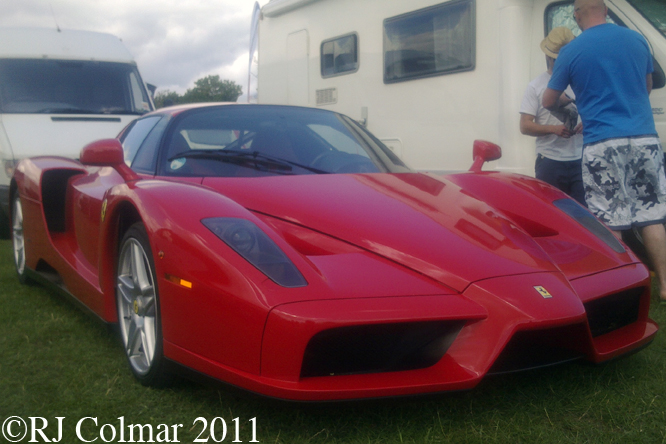
Ferrari Enzo, Goodwood Festival of Speed

Designed by former lead designer at Pininfarina Ken Okuyama the Enzo can generate 775 kgs / 1709 lbs of downforce at 186 mph to aid handling. The design seems to have split opinion as to it’s attractiveness between those who believe form should follow function and those who believe in higher aesthetic values.
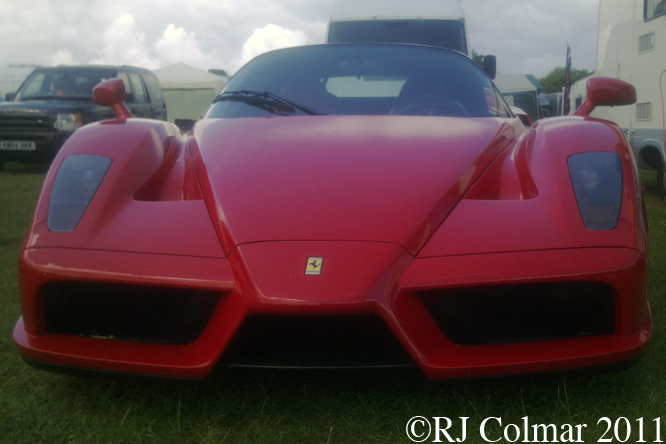
Ferrari Enzo, Goodwood Festival of Speed

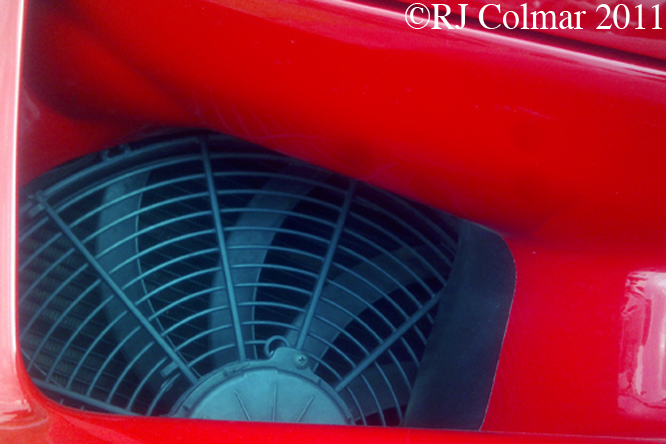
Dripping with technology from it’s Formula One programme the Enzo carries a carbon fiber body and technologies banned from Formula One like active aerodynamics, which have recently been reinstated to the top echelon of the sport, and traction control.
Ferrari Enzo, Goodwood Festival of Speed

Before it’s launch at the Paris Motor Show a bikini clad Demi Moore stepped into the show car on a California beech for a scene in “Charlie’s Angels Full Throttle“.
Ferrari Enzo, Goodwood Festival of Speed

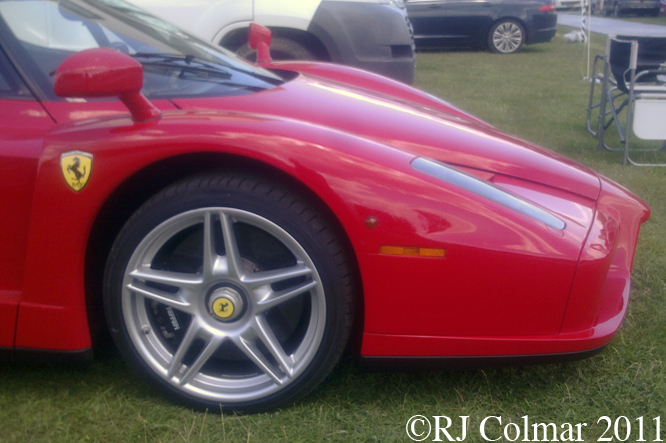
The brakes all round are manufactured from a Carbon fiber reinforced Silicon Carbide (C/SiC) ceramic composite, another carry over from the Ferrari racing programme.
Ferrari Enzo, Goodwood Festival of Speed

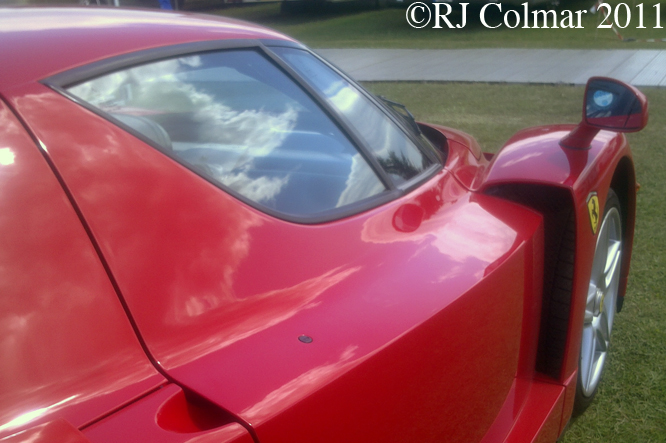
Such was the demand from customers not originally invited to own an Enzo that a further 50 were made for sale and a 400th was donated to the Vatican for a charity auction at Sotherby’s where it fetched a cool US$1.1 million, which is the kind of price one would expect to pay for one today if one became available.
Ferrari Enzo, Goodwood Festival of Speed

Inside the cockpit gears are shifted using an electrohydraulic shift transmission operated by paddles on the steering wheel with LED lights advising drivers when to shift, another transfer of technology from Ferrari’s racing programme.
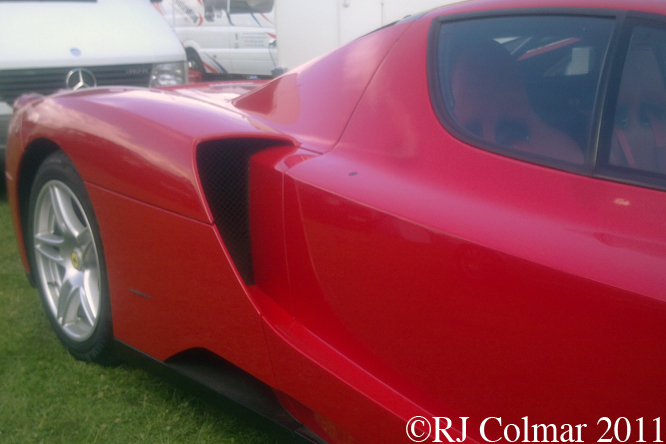
Ferrari Enzo, Goodwood Festival of Speed

The Enzo’s front to rear weight distribution was designed to be 43.9 / 56.1 % again to optimise the handling at speed.
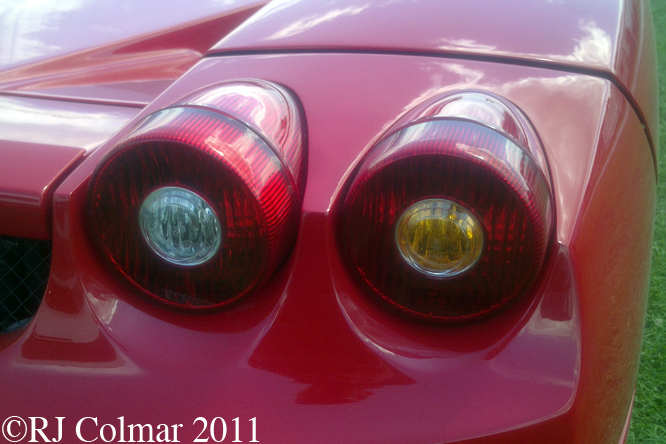
Ferrari Enzo, Goodwood Festival of Speed

Capable of reaching 60 mph in a lightening 3.14 secs and 100 mph in 6.6 secs and covering the quartermile in 11 seconds the Enzo highest speed ever recorded in an Enzo is 221 mph and has been timed around the Nurburgring Nordschliefe at 7m 25.21 secs with a broken electronic damper. Interestingly the F430 Scuderia has since equalled the Enzo’s lap times at Fiorano, Ferrari’s in house test circuit.
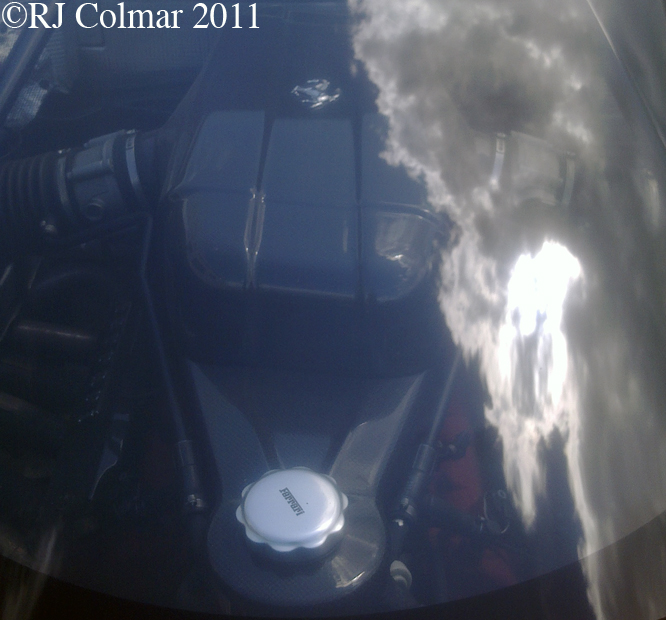
Ferrari Enzo, Goodwood Festival of Speed

The jewel in the crown of the Enzo is the 651 hp 65 degree V12 which shares the same basic architecture as the contemporary V8’s used by both Ferrari and Maserati.
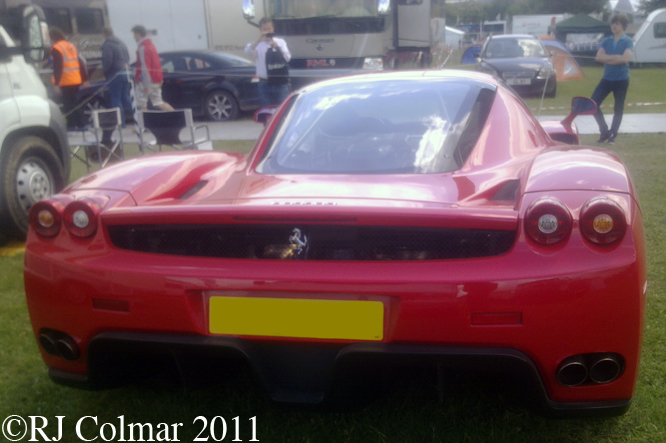
Ferrari Enzo, Goodwood Festival of Speed

Three pre production Enzo’s were disguised as to look like Ferrari 348’s, the third of which raised $195,500 in the same auction as the 400th Enzo. The Enzo was used as the basis for a number of other models including the FXX, FXX Evoluzione and one off P4/5 by Pinninfarina carrying Ferrari badges, along with the Maserati MC 12, MC 12 Corsa and one off Maserati Birdcage 75th concept car.

Thanks for joining me on this “Full Throttle” edition of “Gettin’ a li’l psycho on tyres” I hope you will join me again tomorrow when I will be looking at a Lotus 47. Don’t forget to come back now !

Share

Full Size Wheels – Shadow Mk III

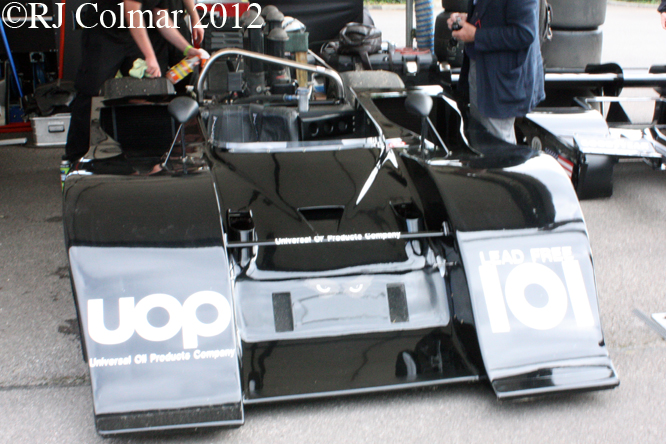
As we saw last week Shadow owner Don Nichols had a thing about keeping the frontal area of his Can Am challengers to a minimum by using under sized wheels. For the 1972 season Shadow Mk II designer Peter Bryant convinced Don it would be better to build a car with bigger wheels in order to gain an increase in cornering performance that would be the result of the improved suspension geometry bigger wheels would afford.

Shadow Mk III, Goodwood Festival of Speed

Two Shadow Mark III’s were built two using the Shadow Mk II chassis tubs raced in 1971 and a third Mk II chassis tub was built and appears to have remained unraced in either 1971 or 1972. Confusingly that third unraced chassis tub, has been built into the only car now in the 1971 Shadow Mk II spec which I looked at last week.

Shadow Mk III, Goodwood Festival of Speed

Aside from the larger wheels and improved suspension geometry which required new suspension pickup points, the Mk III had mid mounted radiators which replaced the single front mounted radiator of the Mk II. A variety of different front aerodynamic appendages were tried on the front of the Mk III as the season progressed suggesting that moving the weight of the radiators back may not have done any favours to the front end handling of the car.

Shadow Mk III, Goodwood Festival of Speed

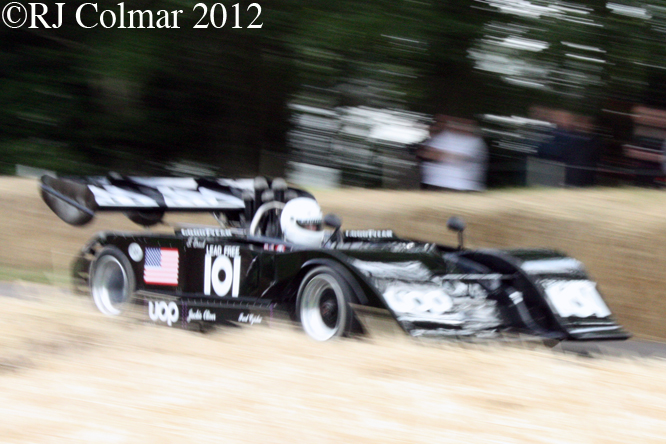
Jackie Oliver was again retained as the teams primary driver and he proved capable of competing with the other Chevrolet powered Can Am challengers in qualifying, only failing to qualify inside the top 10 on one occasion, however by 1972 Porsche has significantly raised the bar with a pair of Penske entered RC Cola Porsche 917’s. Reliability was still not Shadow’s strong suit and Jackie managed only a single second and third place finish during the season. Joining Jackie as team mates during the year were Brazilian Carlos Pacé, who managed a 4th place at his third and final run in the car at Edmonton, and NASCAR winner Donnie Allison.

Shadow Mk III, Goodwood Festival of Speed

In fact Donnie only ended up doing some qualifying laps in the final race of the season at Riverside, seen on this link wearing the red helmet, before having to hand his car over to Jackie Oliver who had attempted to qualify his own car, that had been fitted with a turbocharged Chevrolet big block, before it blew a piston.

Shadow Mk III, Goodwood Festival of Speed

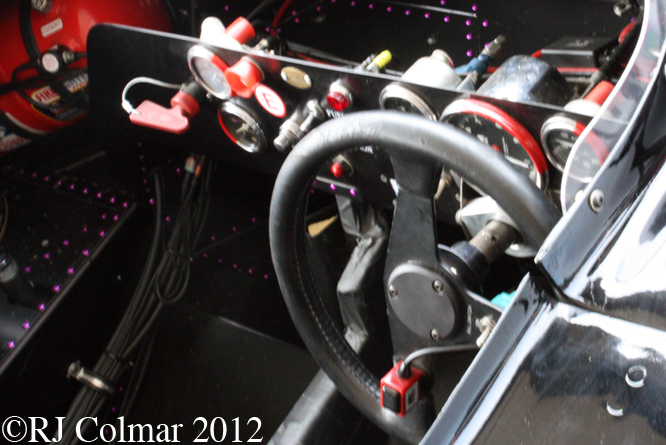
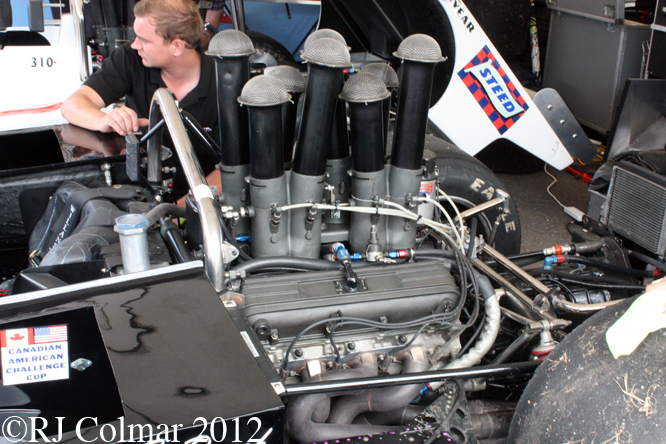
Today’s featured car, which I believe is built around the first Shadow Mk II chassis tub, is owned by Fred Cziska and seen here at Goodwood Festival of Speed with Scott Dmek at the wheel.

Thanks for joining me on this “Full Size Wheels” edition of “Gettin’ a li’l psycho on tyres”, I hope you will join me again for Ferrari Friday tomorrow. Don’t forget to come back now !
Share

The Love Boat – Citroén Ami 8 Estate

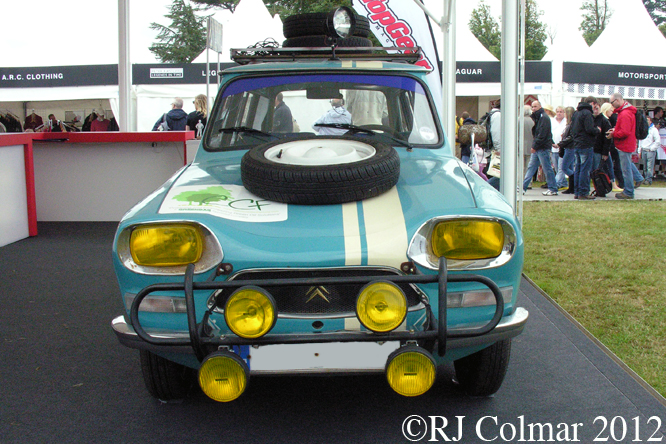
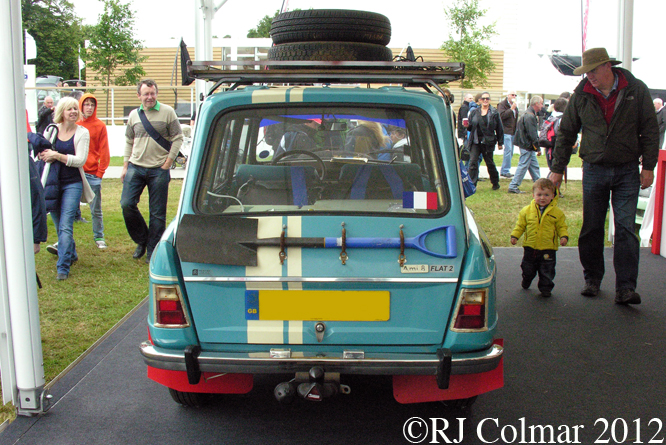
Today’s Continental Curiosity is yet another 2 cylinder from France. Based on the chassis and upgraded mechanical running gear of the utilitarian Citroén 2CV the slightly less utilitarian and rustic Ami was launched in the Spring of 1961 with the more powerful 22 hp flat 2 motor that was an option only on the 2CV which it was eventually intended to replace.

Citroén Ami 8, Goodwood Festival of Speed

Despite poor initial sales due to it’s lack of refinements after a series of upgrades which included rear sliding windows and an increase to 32 hp for the two cylinder models sales eventually overtook those of the 2CV and the Ami topped the sales charts in France for several years.

Citroén Ami 8, Goodwood Festival of Speed

There was a more powerful 4 cylinder Ami Super which was described as a ‘Q car par excellence’ by one British Magazine, however French Tax regulations combined with it’s utilitarian underpinnings did not result in significant additional sales of the Ami Super. A further prototype Ami M35 Coupé series was also built in limited numbers for preferential customers powered by a single rotary Comotor Wankel engine.

Citroén Ami 8, Goodwood Festival of Speed

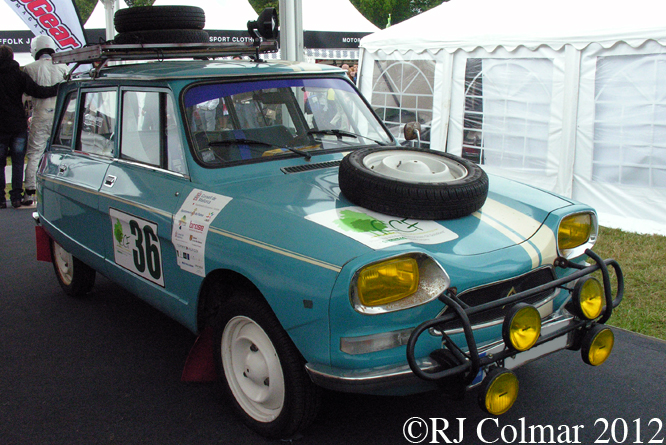
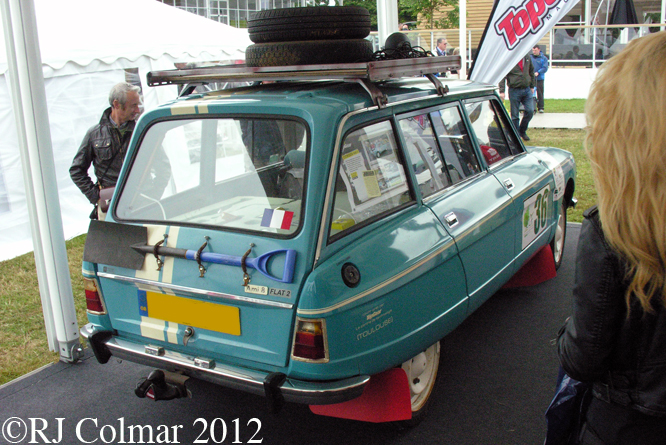
This particular 1976 Ami seen at Goodwood Festival of Speed nick named “The Love Boat” was acquired by present owner and Top Gear presenter James May, who allegedly ‘competed’ in a Majorcan Classic Rally with glamour model Madison Welch in the co drivers seat.

Citroén Ami 8, Goodwood Festival of Speed

Production of the Ami spread from France to Spain and Argentina, with Complete Knock Down kits also assembled in Africa and Chile with world wide sales topping 1.8 million when production came to an end in 1978. The Citroén 2CV, on which the Ami was based and which the Ami was intended to replace, continued in production until 1990.

Thanks for joining me on this “The Love Boat” edition of “Gettin’ a li’l psycho on tyres”, I hope you will join me again tomorrow. Don’t forget to come back now !
Share

Worlds Oldest MG – MG 14/28 Super Sports

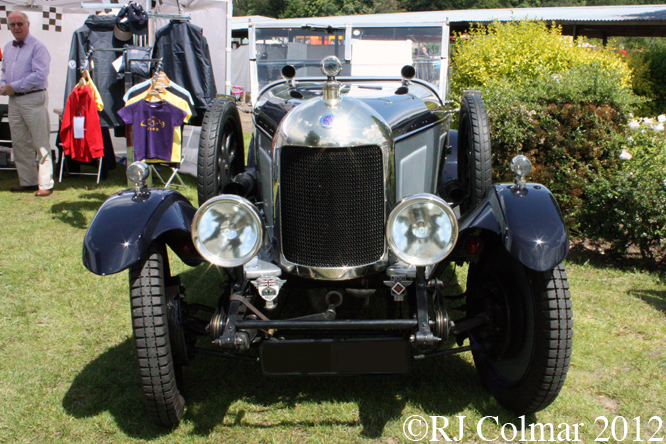
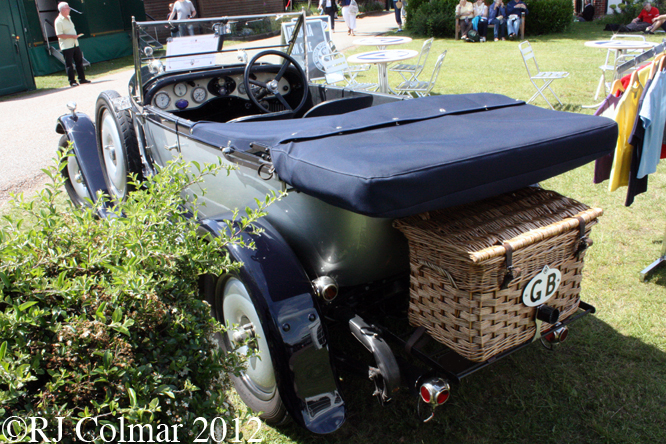
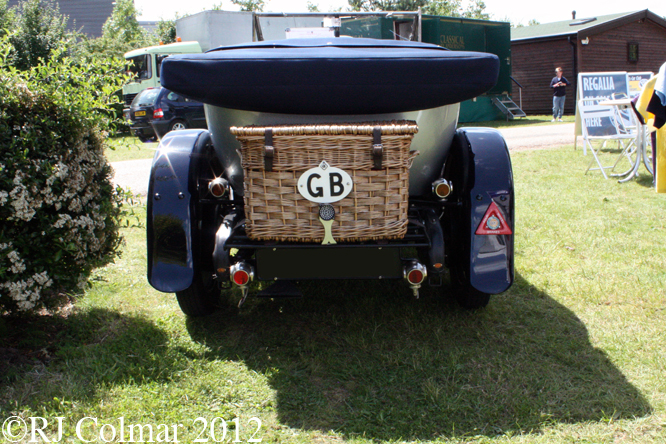
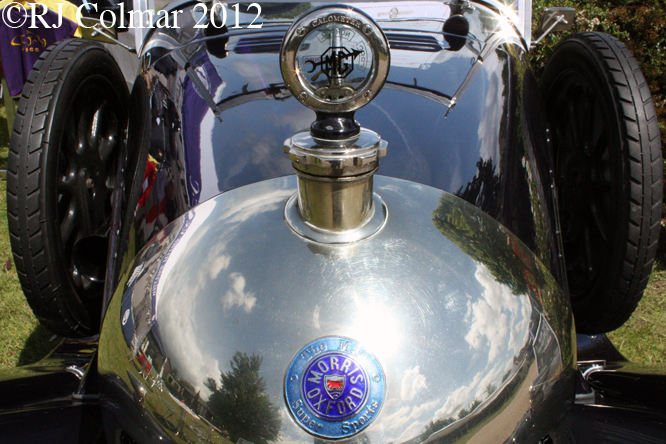
Built on January 8th 1925 today’s MG 14/28 Super Sports, seen here at the recent Brooklands Double 12 meeting is the oldest known survivor of the MG Marque.

MG 14/28 Super Sports, Brooklands Double Twelve

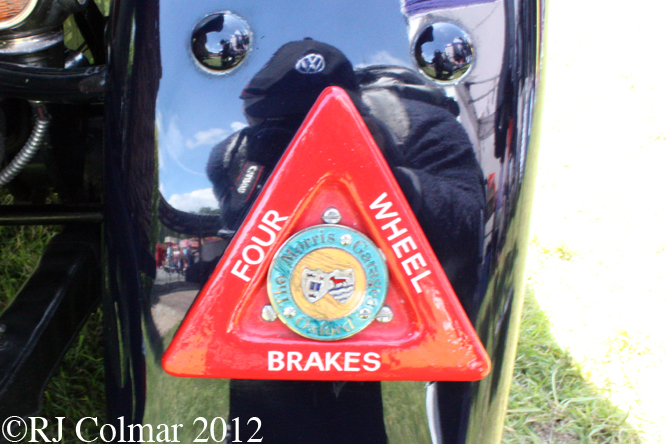
The very first 14/28 Super Sports were built to enhance the image of the Morris Bullnose at Morris Garages, from which the marque would eventually take it’s initials in 1928, at Alfred Lane, Oxford.

MG 14/28 Super Sports, Brooklands Double Twelve

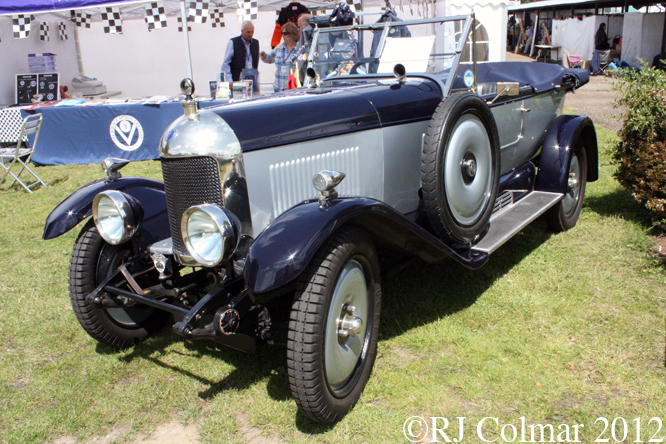
When production started in 1924 Morris supplied Oxford “Bull Nose” chassis, the engines were mildly tuned at Morris Garages and fitted with aluminium bodies.

MG 14/28 Super Sports, Brooklands Double Twelve

These aluminium bodies were finished with two tone paint schemes.

MG 14/28 Super Sports, Brooklands Double Twelve

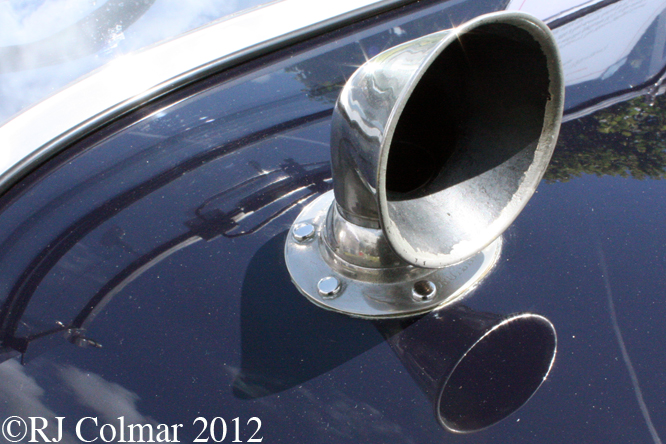
Many early MG’s featured these ventilation ducts which featured an octagonal inlet on later models.

MG 14/28 Super Sports, Brooklands Double Twelve

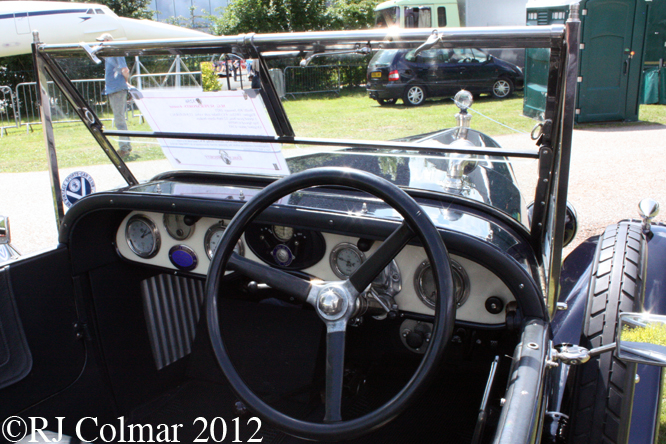
Like wise the instruments would be set in octagonal recesses on many later models.

MG 14/28 Super Sports, Brooklands Double Twelve

In 1926 the Super Sport would be offered with a fabric body option when the distinctive Morris Bullnose radiator was replaced by a flat one.

MG 14/28 Super Sports, Brooklands Double Twelve

This particular car was converted into a hay mower during the Second World War and was discovered in a dilapidated condition in 1990 by the present owner.

MG 14/28 Super Sports, Brooklands Double Twelve

The 14/28 which cost £395 when new and was capable of 65 mph was replaced by the MG 14/40 also built on a Morris chassis with a tuned Morris motor in 1928.

Thanks for joining me on this “World’s Oldest MG” edition of “Gettin’ a li’l psycho on tyres”, I hope you will join me again tomorrow. Don’t forget to come back now !
Share

Coffee, Croissant & Cars – Avenue Drivers Club

Last Sunday I went to my third meeting with the Avenue Drivers Club meeting which took place just a stones throw from GALPOT Towers in Queens Square.

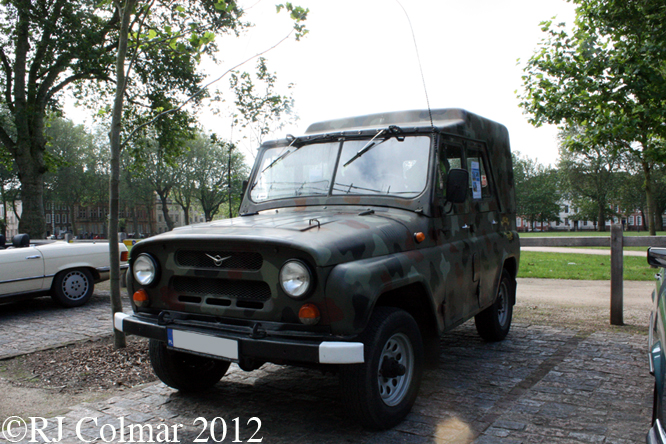
UAZ, Avenue Drivers Club, Bristol

While I have heard of and seen a few Soviet Built UAZ’s in my travels to foreign climbs but this is the first one I have dared to see up close let alone photograph. I am not sure of it’s age but I am guessing it was originally supplied for military service which would make the model either a UAZ 469 or more likely a post 1985 UAZ 31512, these vehicles had a great reputation for reliability until first the factory started using cheaper materials for construction and then counterfeit spare parts flooded the market.

Ford 8 hp, Avenue Drivers Club, Bristol

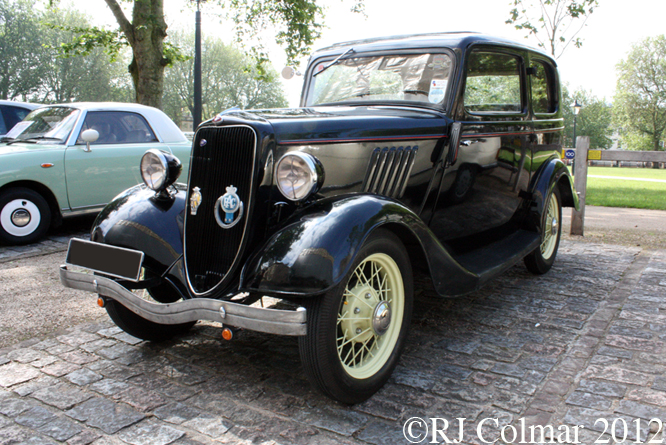
Among the many vintage vehicles present was this ‘long rad’ 1935 Model Y Ford one of around 1300 survivors of the of 170,000 built between 1933 and 1937.

Nissan Figaro, Avenue Drivers Club, Bristol

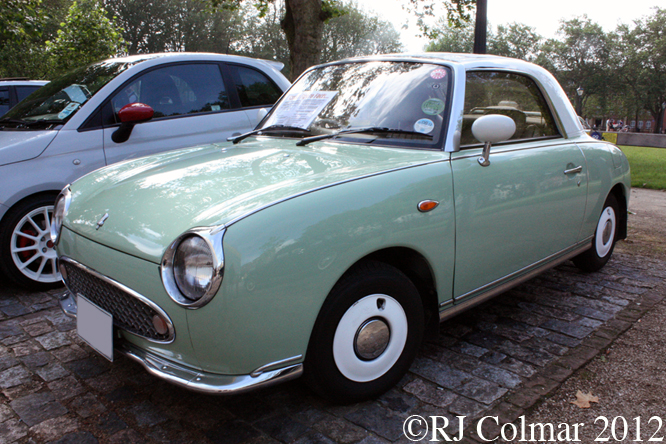
Present at many of the show’s and meetings I have been to this summer has been this 1991 Nissan Figaro a retro styled vehicle that takes it’s design queue’s from the seven iterations of the Datsun Sports / Fairlady roadsters produced between 1959 and 1970.

Chevrolet Corvette, Avenue Drivers Club, Bristol

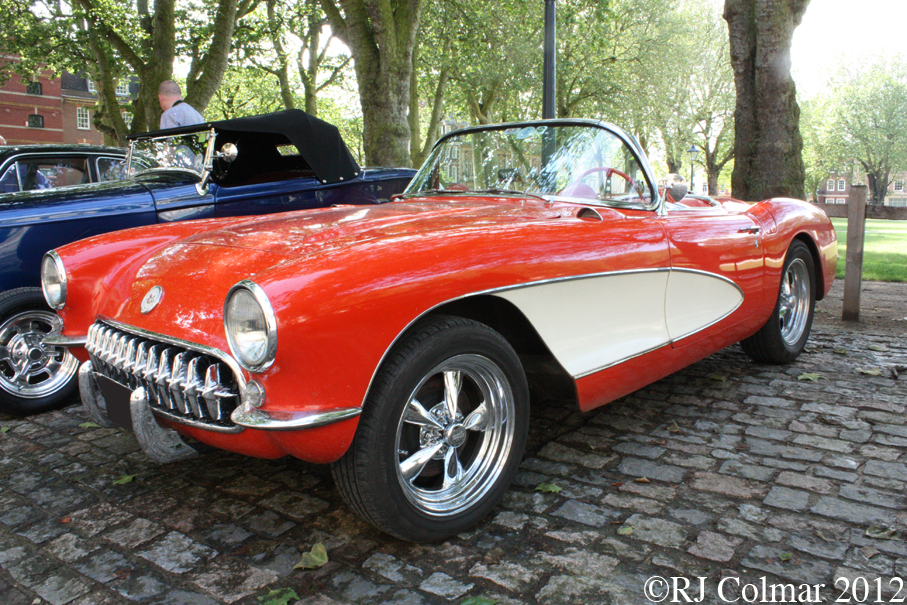
Looking tres cool on it’s non factory alloy wheels was this 1957 Chevrolet Corvette C1, the interior if which was as immaculate as the exterior.

Vauxhall 30/90, Avenue Drivers Club, Bristol

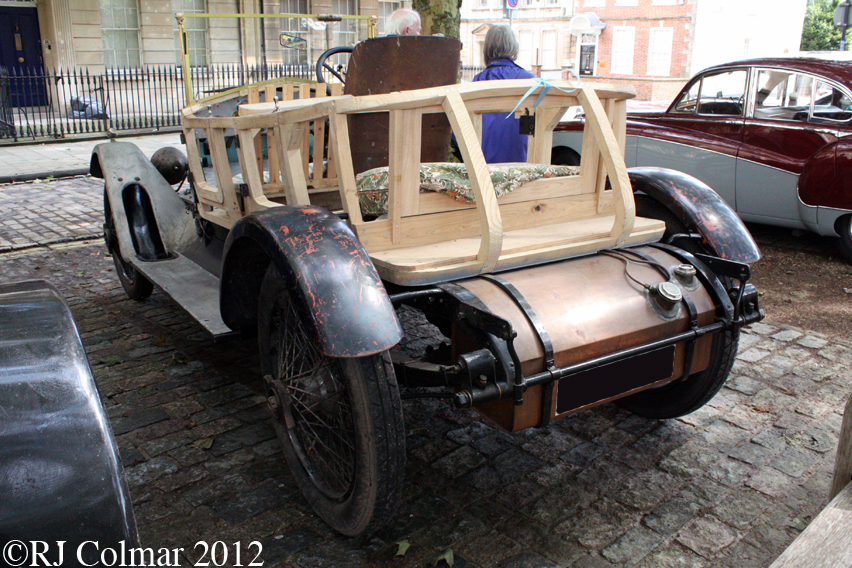
Car of the day for me was this 1922 Vauxhall 30/90 a work in progress that was repatriated from a former British Colony in the 1970’s. Where as in Britain such vehicles exterior panels will have corroded away in the former colony, where this car spent the first fifty years of it’s life, the metal work remained in good shape but the extensive original wooden body frame had been completely munched away by termites !

Trojan 200, Avenue Drivers Club, Bristol

This 1963 Trojan 200 three wheeler complete with single door opening forwards from the front and a soft top was built under licence from the German aircraft manufacturer Heinkel. Trojan went on to become a manufacturer of many racing cars including under licence several Mclarens models powered by Chevrolet V8’s for both Can Am and Formula 5000 and a one off Formula One car.

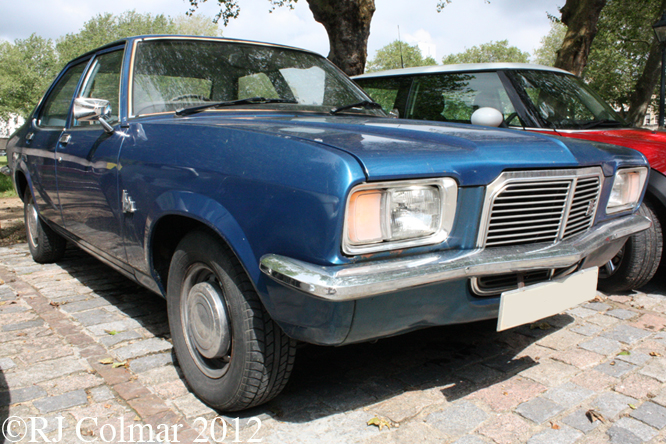
Vauxhall Victor, Avenue Drivers Club, Bristol

The 1974 Vauxhall Victor above was being offered for sale for £1,000 if your interested I have the phone number, usual disclaimers apply.

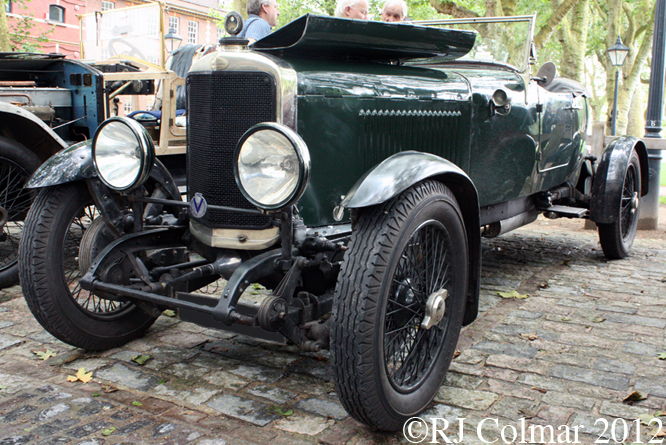
Sunbeam 20/9, Avenue Drivers Club, Bristol

Close second in my favorite cars of the day was this Sunbeam Pick Up which started life as a 1929 Sunbeam 20/9. The vintage cars alone have made my outings to the Avenue Drivers Clubs meetings on the second Sunday of every month more than worth the effort.

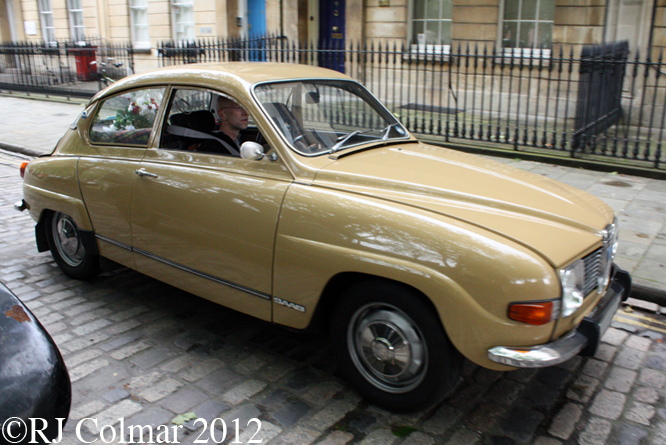
SAAB 96V4, Avenue Drivers Club, Bristol

Gracie above is a 1972 SAAB 96V4 which had less than 10,000 miles on the clock in 2006 due to the original owners putting it in storage two years after they bought after giving up driving. The car was found in a wooden garage 25 years later and underwent a thorough restoration of it’s mechanical parts which had deteriorated through lack of use.

Sunbeam, Avenue Drivers Club, Bristol

Not sure at the time of writing weather the 3 litre / 183 cui twin cam powered 1927 Sunbeam 2 seater is a 20 hp or 35 hp model but it looks and sounds very purposeful with its tail faired in like the hull of a boat.

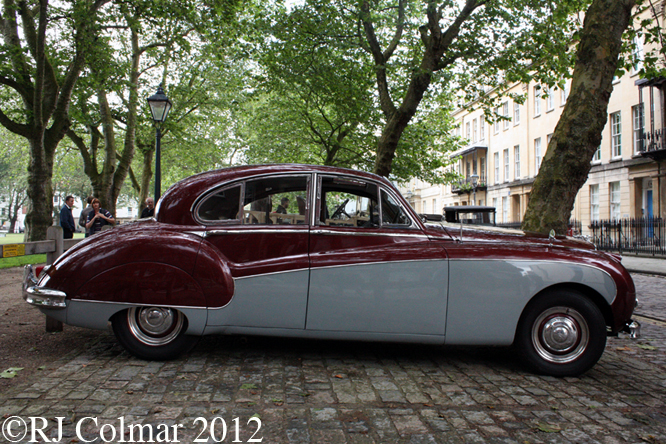
Jaguar MK VIII, Avenue Drivers Club, Bristol

Personifying the gentrification of Bristol’s Queens Square was this elegant 1958 Jaguar MkIII, the car is powered by the same 190 hp motor as used in the Jaguar XK140 launched two years earlier.

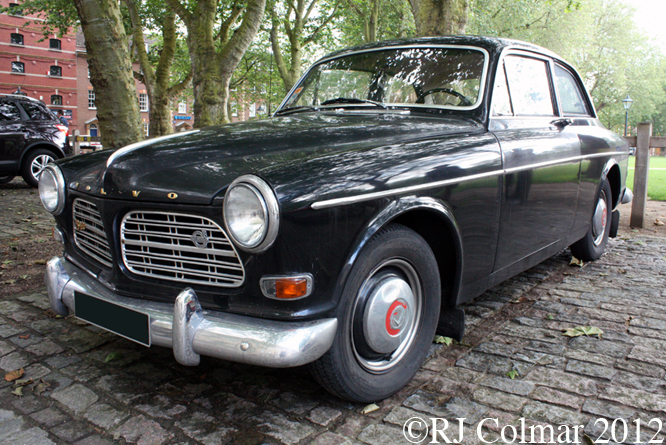
Volvo 121, Avenue Drivers Club, Bristol

Finally I had a long chat with Rich who owns the 1963 Volvo 121 above and his friend Matt, turns out they spotted this left hooker on the internet and then went to Sweden to go and get it. Their journey back through Germany was enlivened by a perished connection between the steering shafts. Rich has all the original documentation for his pride and joy and reckons it has covered over 300,000 kilometers about 240,000 miles.

Thanks for joining me on this “Coffee, Croissant and Cars” edition of “Gettin’ a li’l psycho on tyres”, I hope you will join me again tomorrow. Don’t forget to come back now !
Share

General Belgrano – Toleman Hart TG 181C #06

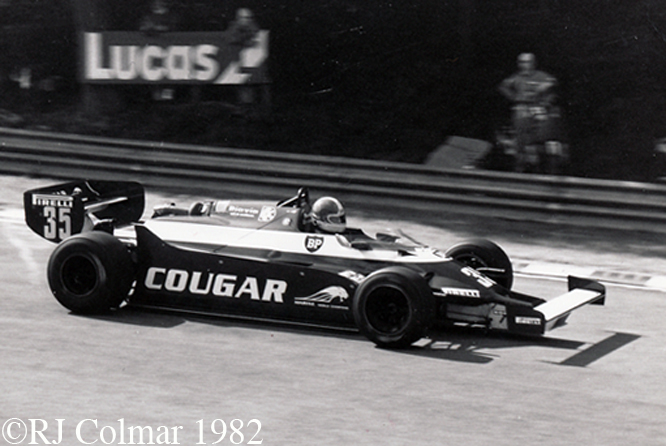
Nearly thirty years ago, July 18th 1982, I had the privilege of taking a couple of day’s off from my summer job, at Golden Arch Foods where I was employed on the production line making 24,000 buns an hour for Ronald McDonald, to visit Brands Hatch for the British Grand Prix.

Toleman Hart TG 181C, British Grand Prix, Brands Hatch

Niki Lauda driving a McLaren starting from 5th on the grid easily won the race from the Ferrari 126 C2’s of Didier Pironi and Patrick Tambay who had both fought hard from their respective 4th and 13th place starts.

One of the best stories of the race however came from the fledgling Toleman Team which was founded in 1981. Their car was designed by a Formula One novice Rory Byrne who had designed many successful open wheel vehicles first with Royale who manufactured many Ford Kent and Pinto powered racers and then with Toleman in the the second tier Formula 2 who’s Hart powered cars dominated the European Formula 2 championship in 1980 with drivers Brian Henton, who was crowned champion, and Derek Warwick came second.

For 1981 Toleman and Brian Hart made the brave move to step up to Formula one with a car designed by Byrne and a turbocharged 1.5 litre / 90.5 cui 415T four cylinder motor which was a development of the Hart 420R 2 litre / 122 cui motor successfully used in Formula 2. The team ran with unfancied Pirelli tyres who were returning to the top tier of the sport after a prolonged absence of 32 years.

During the 1981 season Henton and Warwick each made 12 attempts at pre qualifying for Grand Prix races each missing the cut for qualifying just once at Monaco. However both drivers only qualified once Henton at Monza where he finished 10th and Warwick in the parking lot at Ceasers Palace where he retired.

For the 1982 season Henton opted out and moved to the Tyrrell team while Warwick, who used to be a regular competitor at Aldershot Raceway had won the World Super Stox Championship aged 16 in 1973, was joined by Formula One novice Teo Fabi who had finished third in the 1980 Formula 2 championship.

From 28 attempts to pre qualify in 1982 Warwick and Fabi both failed make the cut once with Warwick qualifying for 11 races and Fabi 7. Warwick managed to finish just two of his 11 starts with a best of tenth place in Germany equalling Henton’s best result at Monza the year before, while Fabi did not finish any of the races he started.

The hight light of the Toleman Teams 1982 season was however the British Grand Prix, having set fastest lap during the previous Dutch Grand Prix, Warwick qualified
16th and proceeded to march through the field with some breath taking maneuver’s during the race. Having worked his way passed Elio de Angelis in a Lotus, Derek Daly in a Williams he next set about attempting to get past the Ferrari of Pironi which proved a little more troublesome as both cars had similar performance thanks to their turbocharged motors however he eventually went past Pironi on the start finish ‘straight’, it’s actually a curve, out braking the Frenchman into the heart stopping paddock bend.

Now in second place Warwick set about catching Niki Lauda who was well ahead however after 40 glorious laps Warwick retired thanks to a broken CV joint in the back of his car, chassis #06, which had acquired the ‘General Belgrano’ nick name from the ancient Argentinian battleship that had been sunk in the 1982 Falklands Conflict. The next week the hitherto back marker and underdog was on the cover of all the magazines and Toleman, Byrne and Warwick began to enjoy some hard earned respectability.

Toleman started scoring points finishes in 1983 and were taken over by Benetton in 1986. Rory Byrne penned many winning cars for them including those driven to championship victories by Micheal Schumacher in 1994 and 1995. Byrne followed Schumacher to Ferrari after a retirement that became a sabbatical for the 1997 season.
Byrnes cars driven by Schumacher dominated the sport from 1999 to 2004 securing 71 victories and six constructors championships and five drivers championships before he retired for good in 2006.

Brian Henton driving his Tyrell got fastest lap at the 1982 British GP and retired from Formula One at the end of the season. Derek Warwick gained a reputation for never being in the right place at the right time in Formula One his best championship finish being 7th in 1984 when he drove for Renault. Derek was crowned World Sports Car Champion in 1992 when he also won the Le Mans 24 hours driving for Peugeot. His 1982 Toleman Team mate Teo Fabi was crowned 1991 World Sports Car Champion in 1991 driving a Tom Walkinshaw Racing (TWR) Jaguar.

Thanks for joining me on this “General Belgrano” edition of “Gettin’ a li’l psycho on tyres”, I hope you will join me again tomorrow. Don’t forget to come back now !
Share

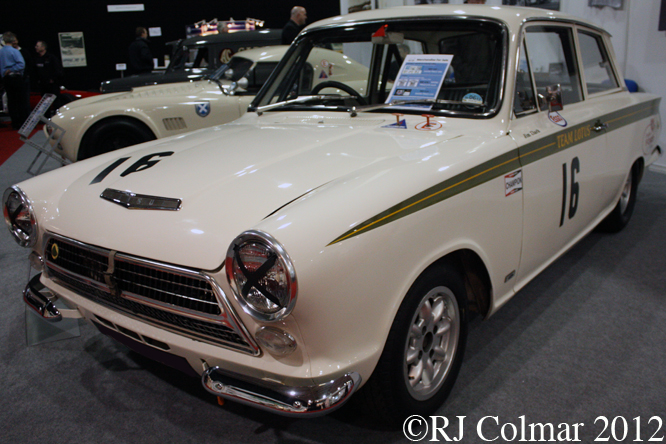
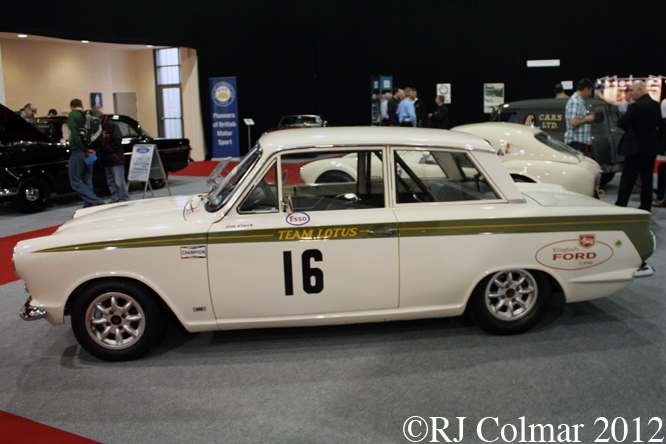
The English Ford Line – Lotus 28 #17

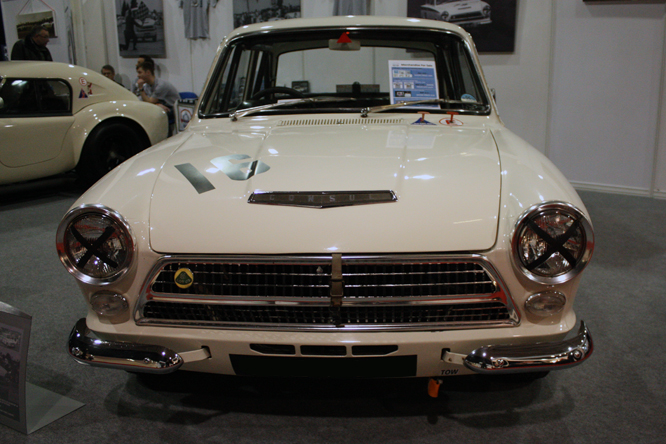
I first featured a Ford Consul Cortina by Lotus, Lotus Type 28, just over a year ago and believe the model is worth a second look today because the car featured here is thought to be the 17th of 1000 that were originally scheduled to be built.

Ford Consul Cortina by Lotus, Race Retro

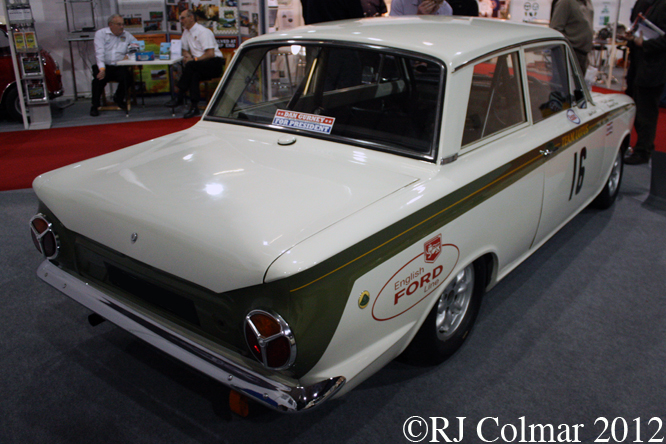
Furthermore this car registered ‘166 RUR’ is the first, of a team of twelve works Team Lotus racers, that was built in 1963.

Ford Consul Cortina by Lotus, Race Retro

“166 RUR’s” racing career started at Oulton Park on the 20th September 1963 with inaugural, 1958, British Saloon Car Champion Jack Sears at the wheel. This ‘Lotus Cortina’ along with an earlier Ford Cortina GT and Ford Galaxie helped Jack become the British Saloon Car Champion for a second time in 1963.

Ford Consul Cortina by Lotus, Race Retro

The week after “166 RUR’s” debut 1963 World Driver Champion Jim Clark took over the wheel at Snetterton, Jim would become the 1964 British Saloon Car Champion driving Works Lotus Cortina’s.

Ford Consul Cortina by Lotus, Race Retro

This cars next appearance was as a part of “The English Ford Line” team entered for the Sebring “250” on the 22nd March 1964 with Dan Gurney at the wheel. Dan came in 16th while Clark in the sister team car came home third behind Augie Pabst, driving a Galaxie, and Walt Hangsen driving a Falcon Sprint.

Ford Consul Cortina by Lotus, Race Retro

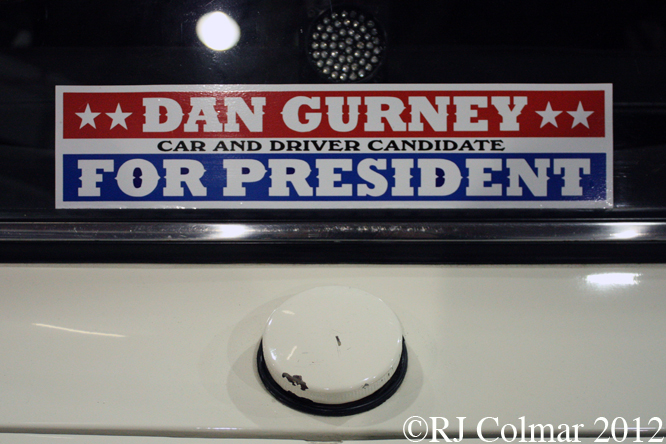
Dan Gurney’s 1964 presidential campaign started by Car and Driver Editor David E. Davis Jr did not get under way until May 1964, just over a month after Dan drove this car.

Ford Consul Cortina by Lotus, Race Retro

A variety of drivers continued to campaign “166 RUR” through 1964 including Sir John Whitmore winner at Pensacola, Grand Prix driver Peter Arundell, 6th at Riverside, abd towards the end of the year future TV pundit David Hobbs shared the car with Dave Clark, no relation to Jim, for a 9th place finish in the Marlboro 12 hours in Virginia.

Thanks for joining me on this “The English Ford Line” edition of “Gettin’ a li’l psycho on tyres” I hope you will join me again tomorrow. Don’t forget to come back now.

Share