Tag Archives: Colmar

Drive With Care – Dodge Coronet Super Bee

The Dodge Coronet Super Bee owe’s its existence to the intra corporate rivalry between Plymouth and Dodge to become parent company Chrysler’s performance brand. Plymouth took the lead in that rivalry when it introduced the Road Runner in 1968 and under the of Dodge General Manager Robert McCurry Dodge responded with the first Super Bee later the same year.
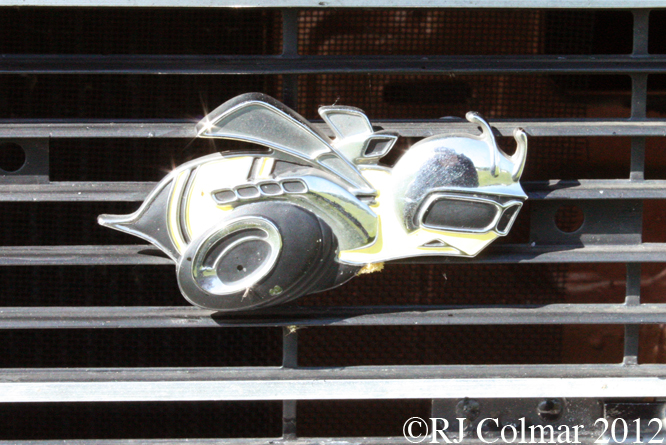
Dodge Coronet Super Bee, Shakespeare County Raceway

Senior Designer Harvey J Winn is credited with coming up with the name and Super Bee logo which was also turned into a diecast medallion which identified Dodge’s performance model.
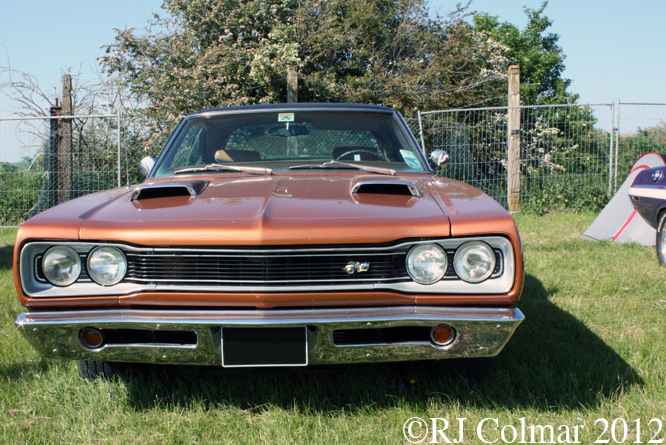
Dodge Coronet Super Bee, Shakespeare County Raceway

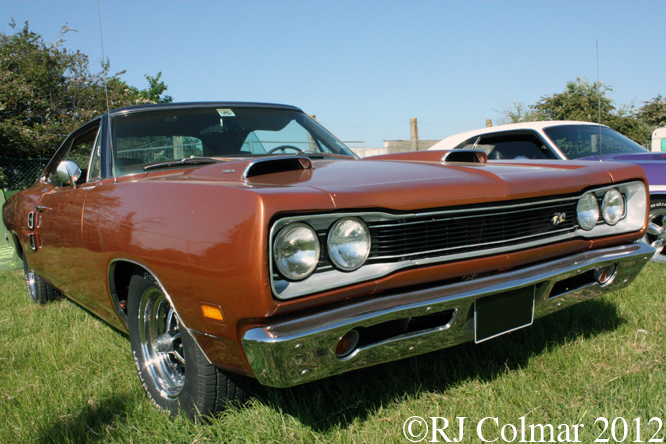
The face lifted 1969 model, seen here at Shakespeare County Raceway, is powered by the standard 335 hp 6276 cc / 383 cui Magnum V8, which was advertised with the “Cool It” strap line, as being fitted with 440 Magnum heads, valve gear, hot cam and manifolds.
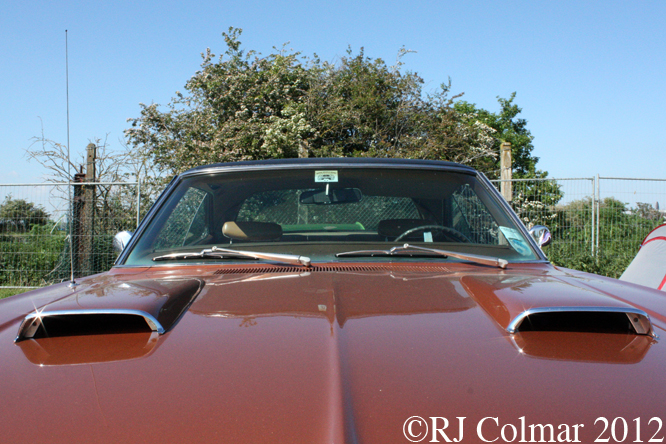
Dodge Coronet Super Bee, Shakespeare County Raceway

Introduced for the 1969 model was this option, coded N-96, twin “Ramcharger” air induction hood that forces air into the carburetors, unlike the scoops on the “Coyote Duster” option hood for the Road Runner which ‘merely’ acted as vents.
Dodge Coronet Super Bee, Shakespeare County Raceway

Back in the day the N-96 hood commanded respect at the light’s today it command a premium over Super Bees not carrying this performance enhancing option.
Dodge Coronet Super Bee, Shakespeare County Raceway

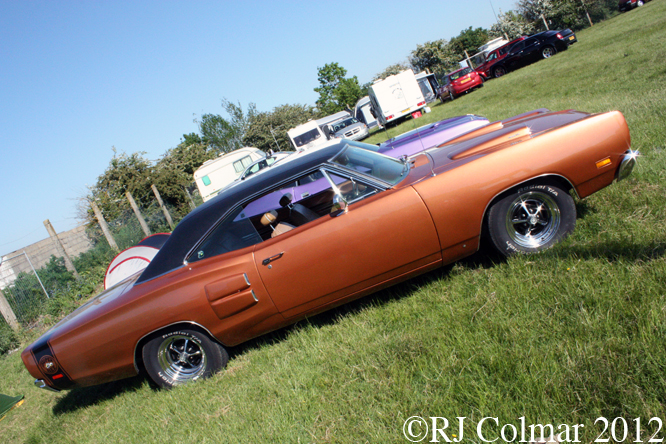
Sitting on a 117 inch wheel base, one inch longer than the Road Runner, the Super Bee was 65 lbs heavier than it’s rival from Plymouth.
Dodge Coronet Super Bee, Shakespeare County Raceway

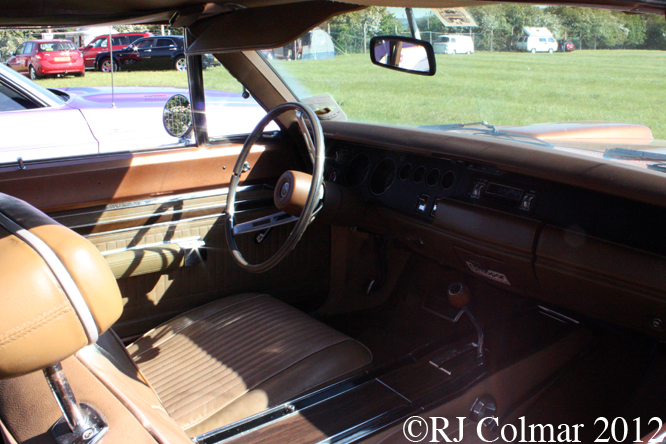
Inside the 1969 Coronet Super Bee featured a Dodge Charger Rallye instrument panel, and manual versions had a Hurst Shifter to operate the four speed transmission.
Dodge Coronet Super Bee, Shakespeare County Raceway

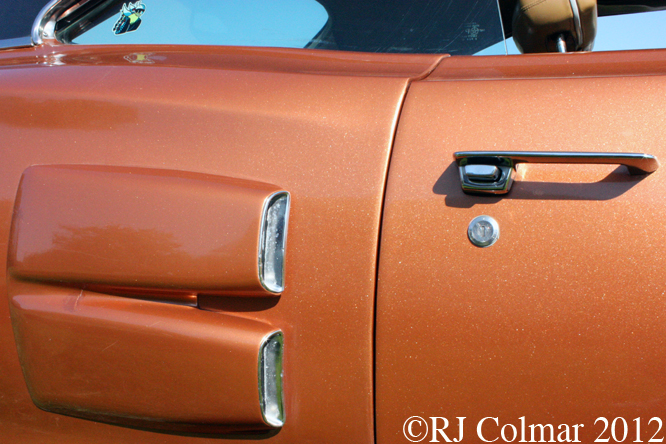
So far as I know the side vents unlike the bonnet vents are purely decorative, as they were on many contemporary vehicles like the Mustang.
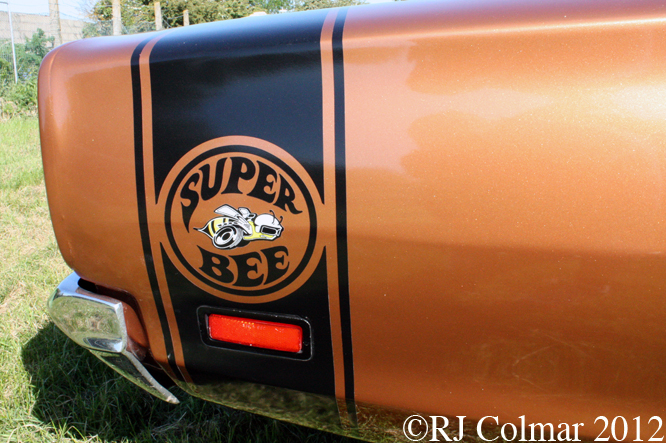
Dodge Coronet Super Bee, Shakespeare County Raceway

Like the Road Runner the tail featured a wrap around strip, unlike the Plymouth, Dodge did not have to pay Warner Brothers a royalty for their logo.
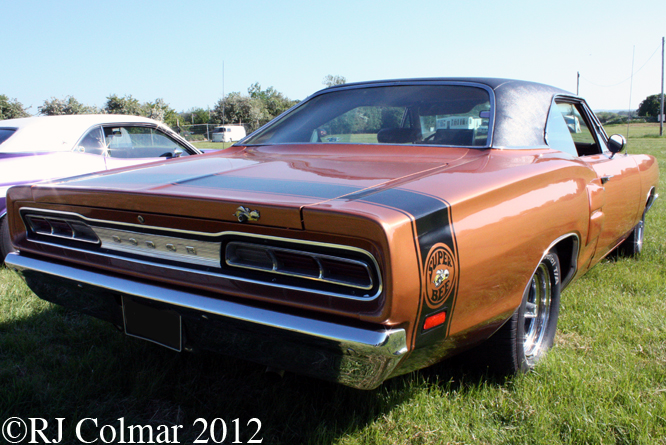
Dodge Coronet Super Bee, Shakespeare County Raceway

Heavy duty features that came standard with the Super Bee included the clutch, suspension, shock absorbers and brakes which ensured that safety was no accident and that owners could drive with care as encouraged in contemporary sales literature.
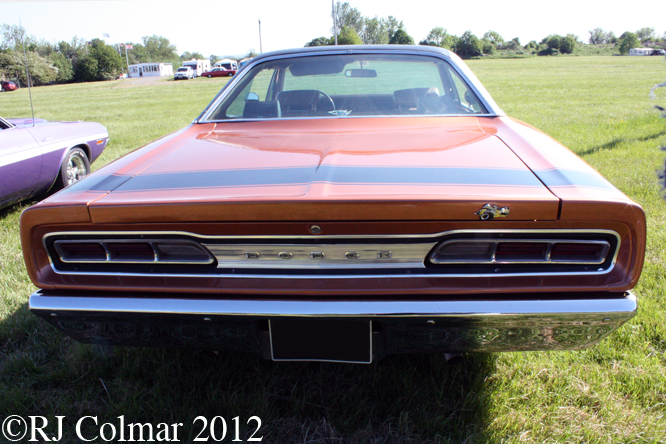
Dodge Coronet Super Bee, Shakespeare County Raceway

1969 was the zenith of Dodge Coronet Super Bee production with 25,727 ‘383’ units produced, an additional 1,907 1969 models were manufactured with the Magnum 440 Six Pack and 162 with the 426 Hemi motor.

Thanks for joining me on this “Drive With Care” edition of “Gettin’ a li’l psycho on tyres” I hope you will join me again tomorrow for Ferrari Friday. Don’t forget to come back now !

Share

Fritz’s Kabinenroller – Messerschmitt KR200

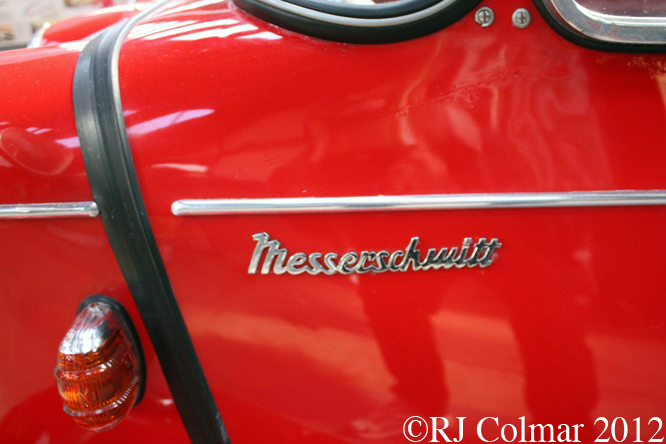
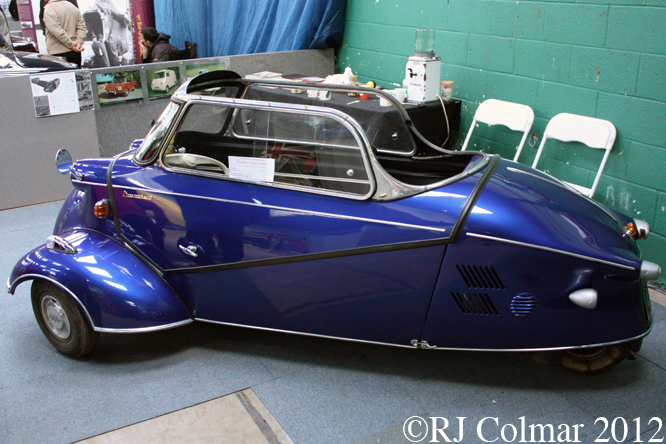
Unlike Bristol Aeroplane Company which chose to prepare for and switch from aircraft production to car production after the ’39-’45 war Messerschmitt was temporarily banned from aircraft production after the cessation of hostilities and had little choice but to switch to automobile manufacture in order to survive.

Messerschmitt KR200, Bristol Classic Car Show

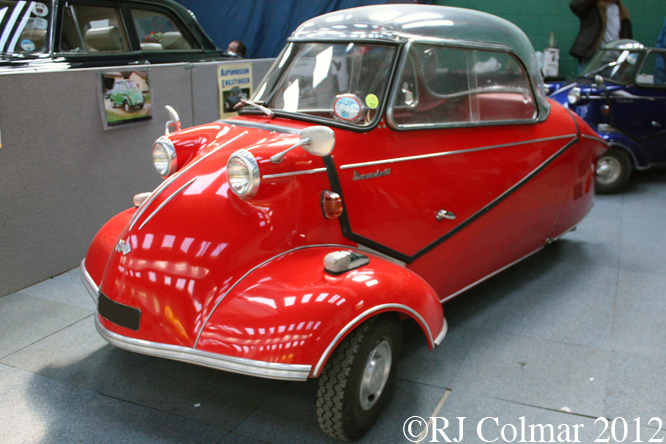
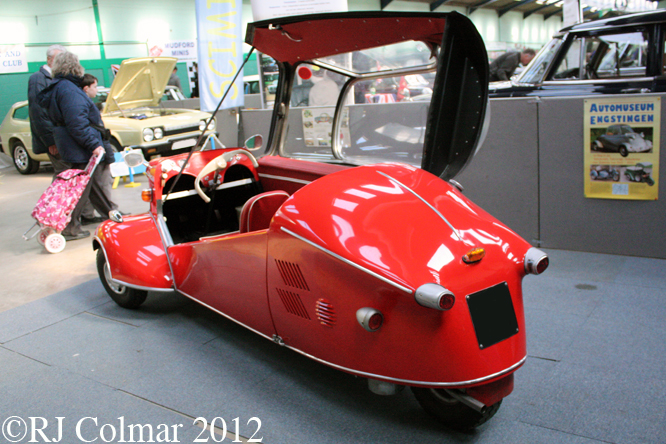
In 1952 Fritz Fend showed Messerschmitt his idea for a three wheeled motor scooter, Kabinenroller, based on the design of an earlier invalid vehicle which found a market among non invalids desperate for cheap transport alike.

Messerschmitt KR200, Bristol Classic Car Show

The KR175 was produced from 1952 to 1955 when it was substantially redesigned around the original frame.

Messerschmitt KR200, Bristol Classic Car Show

The new KR200 as seen here at the Bristol Classic Car Show featured cut outs in the wheel wings / fenders.

Messerschmitt KR200, Bristol Classic Car Show

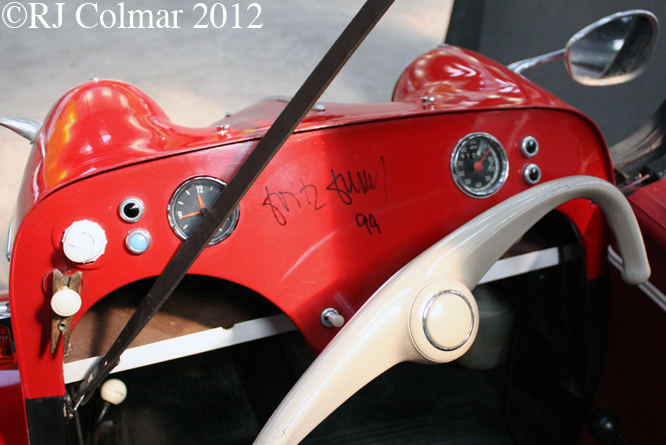
Note this car was driven to Regensburg in 1999 where the designer Fritz Fend signed the dash.

Messerschmitt KR200, Bristol Classic Car Show

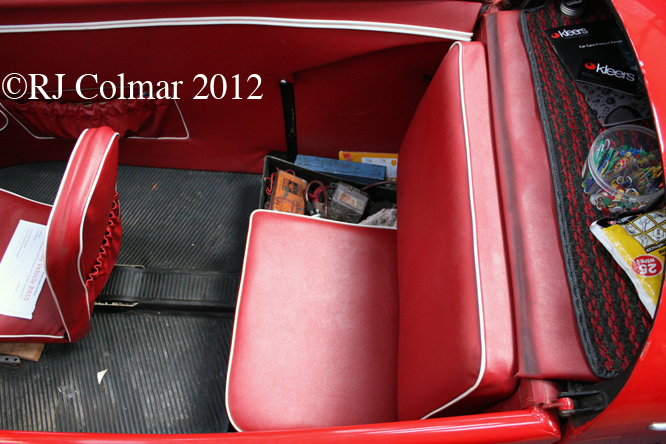
Other improvements on the KR200 included improved canopy design, larger wheels and suspension improvements attributed to the introduction of hydraulic shock absorbers.

Messerschmitt KR200, Bristol Classic Car Show

The larger 10 hp 200 cc / 12.2 cui 2 stroke motor gave the KR200 a top speed of 56 mph and because it was a two stroke it could be reversed by pressing a button which reversed the direction in which the motor spun.

Messerschmitt KR200, Bristol Classic Car Show

To prove the viability of the KR200 a single seat low drag body version was taken to the Hockenheimring in 1955 where it set 22 international class records including an average speed of 64 mph for 24 hours.

Messerschmitt KR200, Bristol Classic Car Show

The KR200 was a huge success such that when Messerschmitt resumed aircraft manufacturing in 1956 Fend was allowed to purchase the assets needed to carry on with car production and carry on using the Messerschmitt brand name.

Messerschmitt KR200, Bristol Classic Car Show

In all 40,000 KR200’s were manufactured up until 1964 including a KR201 roadster. A 4 wheel version was also developed along with a variety of 3 wheel utility vehicles.

Fritz Fend is also credited with inventing the alarm system that goes off when one pulls the key out of the ignition of a vehicle after one forgets to turn the light off.

Thanks for joining me on this “Fritz’s Kaninenroller” edition of “Gettin’ a li’l psycho on tyres” I hope you will join me again tomorrow when I’ll be looking at a Swinger that suffered repeated damage when being parked in the Bay area. Don’t forget to come back now !
Share

Continental Tourer – MG 18/80 Six Saloonette Mk I

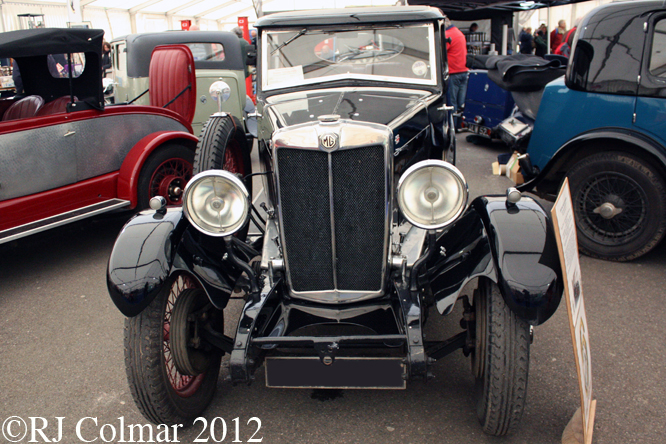
Today’s featured MG 18/80 Six was through University Motors of, the then very fashionable, Park Lane, London W1 in 1931 for £625 painted black and cream.

MG 18/80 Six Salonette MkI, Bristol Classic Car Show

Technically this car is similar to the Tigress bodied 18/80 featured a couple of weeks ago with a 2468cc / 150 cui six cylinder motor that gives an 80 mph potential.

MG 18/80 Six Salonette MkI, Bristol Classic Car Show

The history of this particular car is unknown between its original sale and the 1960’s when it resurfaced several times as it changed ownership. Since it’s restoration in the 1970’s it has been used for touring in the UK and on the Continent.

Thanks for joining me on this “Continental Tourer” edition of “Gettin’ a li’l psycho on tyres”, I hope you will loin me tomorrow when I’ll be looking at a classic Messerschmitt. Don’t forget to get to come back now !

Share

Coffee, Croissant & Cars – Avenue Drivers Club

Last Sunday I had a lie in thanks to the Avenue Drivers Club meeting taking place just a stones throw from GALPOT Towers. As I wended my way down to Queens Square a few throaty exhausts wafted across the relatively still morning air and cranked up my anticipation for what I might find.

Austin Seven, Avenue Drivers Club, Queens Square, Bristol

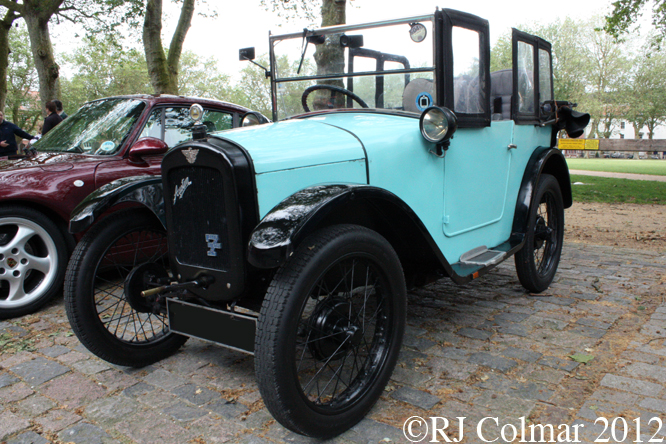
Among the vintage vehicles that turned up was this 1927 Austin Seven complete with child seats for the two young ‘uns that came along.

Dodge Ram 1500 Magnum, Avenue Drivers Club, Queens Square, Bristol

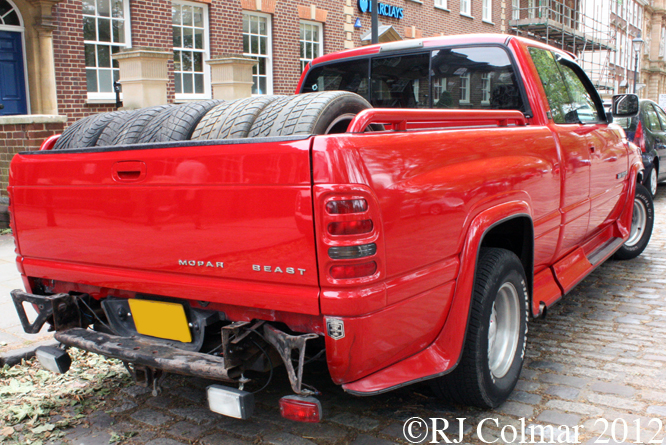
Possibly the largest vehicle present was this Mopar Beast a 1995 Dodge Ram 1500 V8 Magnum, a badge on the side of the cab suggested that it had passed through Regency Conversions of Fort Worth, Texas, exactly what they might have done to it I cannot say.

Alvis TC 108G, Avenue Drivers Club, Queens Square, Bristol

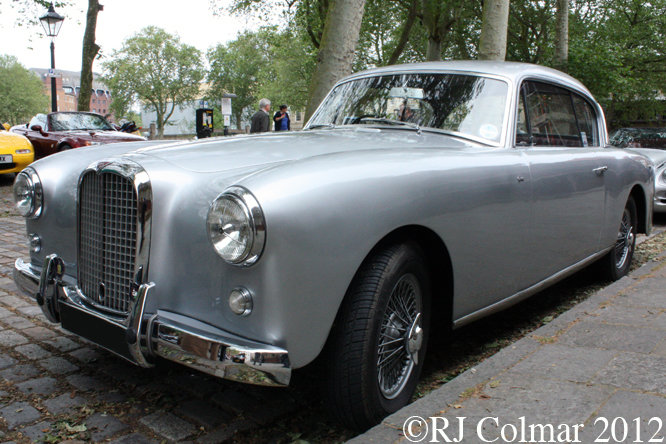
Another of the larger vehicles present was this 1958 Alvis TC 108G one of just 37 with elegant Graber styled bodywork.

AC Ace, Avenue Drivers Club, Queens Square, Bristol

When I first saw the car above, I paid no attention to the number plate and thought it was a 3rd Generation Camaro or even a Firebird. A closer inspection revealed it to be a 1995 AC Ace built in the UK and powered by a 5 litre / 302 cui quad cam Ford V8.

Lotus Elite, Avenue Drivers Club, Queens Square, Bristol

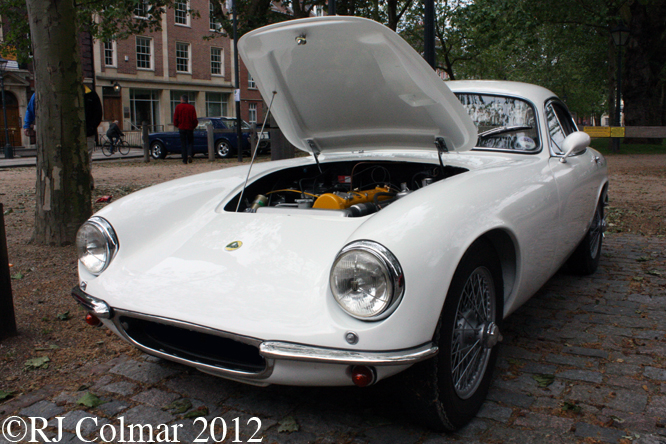
Now in far better condition than it was when it left the factory is this 1962 Lotus Elite, resplendent with the yellow cam cover of it Coventry Climax motor peeking through the bonnet. With a little luck I may be able to get some photo’s of a couple of Lotus models missing from my Saturday Lotus blogs courtesy of the owner of this car.

Ford Mustang, Ferrari 328 GTS, Avenue Drivers Club, Queens Square, Bristol

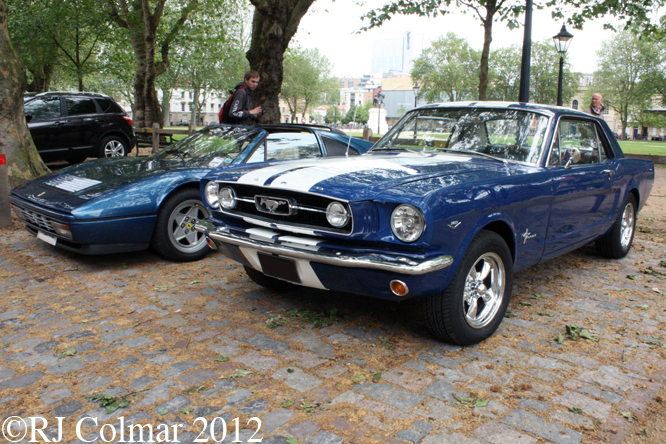
Continuing the theme of contrast this mid sixties 4.7 lire / 289 cui Ford Mustang and 1988 Ferrari 328 GTS present alternative approaches to performance motoring.

Cadillac Deville, Avenue Drivers Club, Queens Square, Bristol

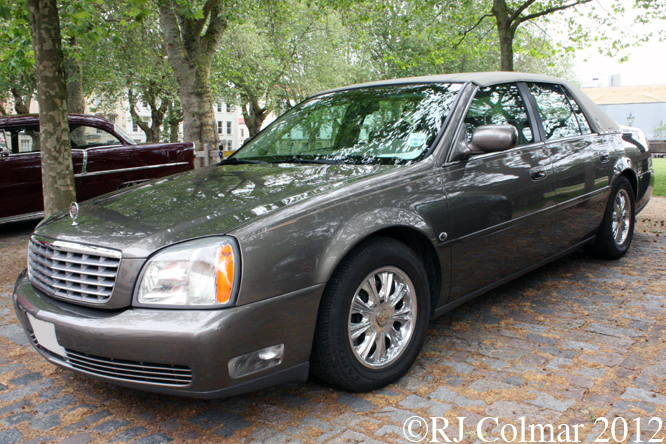
Strangest vehicle of the day award goes to this 2003 Cadillac De Ville, looks like a soft top but is actually a simulated soft top, the logic of which somehow completely escapes me, if you know or can fathom the reasoning for this option please do not hesitate to chime in below.

DAX, Ford Escort 1600i, Avenue Drivers Club, Queens Square, Bristol

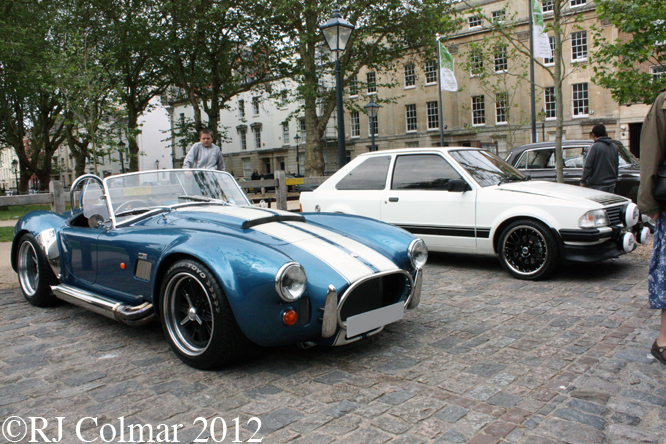
This DAX and 1983 Ford Escort RS 1600i present further contrasting performance options, the DAX is probably the newer of the two vehicles. You could have used some of the chrome/polished steel features in the engine bay of the RS1600i to straighten your hair !

Smart, Ford / Chevrolet, Avenue Drivers Club, Queens Square, Bristol

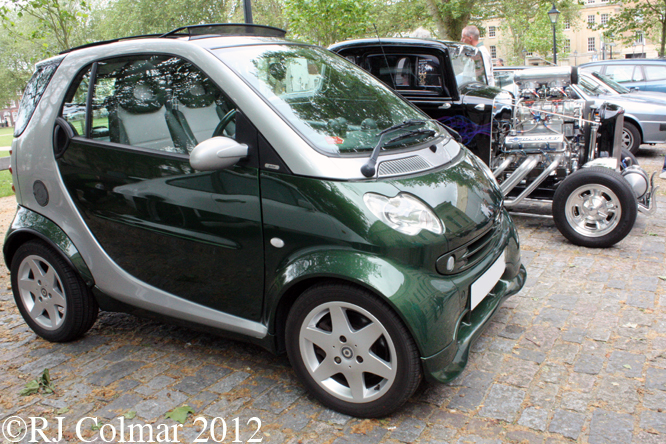
Perhaps the biggest contrast of the day was provided by this 2003 SMART and the Chevrolet aluminium block powered Ford hot rod which with the supercharger boost turned right down easily produces over 600 horsepower making the Chevy powered Ford easily the most powerful car present.

Crossley 10, Mercedes Benz C63 AMG EDITION 125, Avenue Drivers Club, Queens Square, Bristol

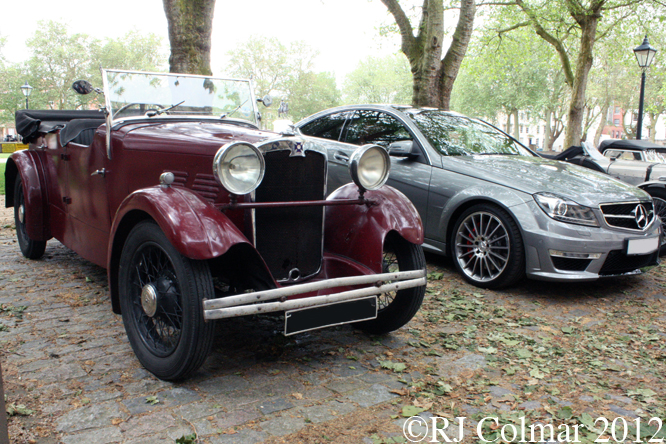
I don’t recall ever seeing a Crossley, not to be confused with Crosley, before nor a Mercedes Benz C63 AMG Edition 125 which is 80 years younger than the 1932 Crossley 10 standing next to it.

Lanchester, Avenue Drivers Club, Queens Square, Bristol

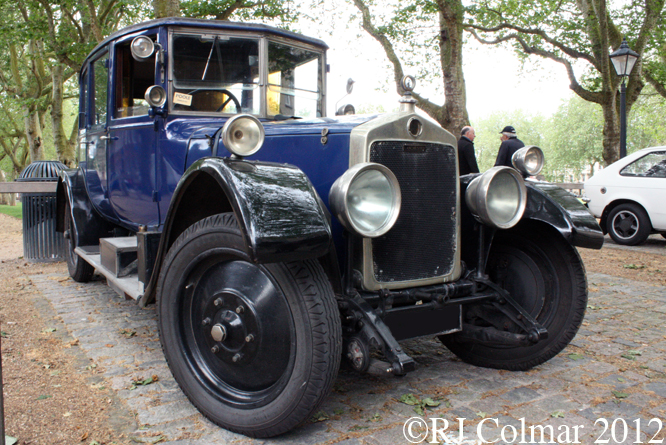
While the Crossley bore some impressive patina my Patina of the Day award went to this 1924 Lanchester 23 a two ton vehicle which was more powerful and cheaper than the equivalent Rolls Royce of it’s day, was and possibly still is capable of 70 mph and has a city friendly 44′ turning circle.

Lambretta, Harley Davidson, Avenue Drivers Club, Queens Square, Bristol

I saw only two two wheeled vehicles and again they could not have been more different a 1959 Vespa and a far more recent, I’ll stop short of saying modern, Harley Davidson with all the trimmings.

Should you find yourself in Bristol on the second Sunday of the month I really cannot recommend a visit to Queens Square around 9 am for Coffee, Croissant and Cars highly enough. As everyone was preparing to leave David Roots kindly offered me a lift home in his Alfa Romeo 4C Special which made the perfect end to a morning of strong contrasts.

Thanks for joining me on this “Coffee, Croissant & Cars” edition of “Gettin’ a li’l psycho on tyres” I hope you will join me again tomorrow. Don’t forget to come back now !

Share

007 @ Beaulieu – Bond In Motion

To celebrate the 60th anniversary of Beaulieu opening as a visitor attraction, 50th anniversary of the Bond franchise and 40th anniversary of the National Motor Museum “Bond in Motion” is an exhibition of 50 vehicles from the James Bond franchise films at Beaulieu National Motor Museum which I visited last month. Here are seven of my favourites from the exhibition.

Aston Martin DB5, Goldfinger, Bond In Motion, Beaulieu

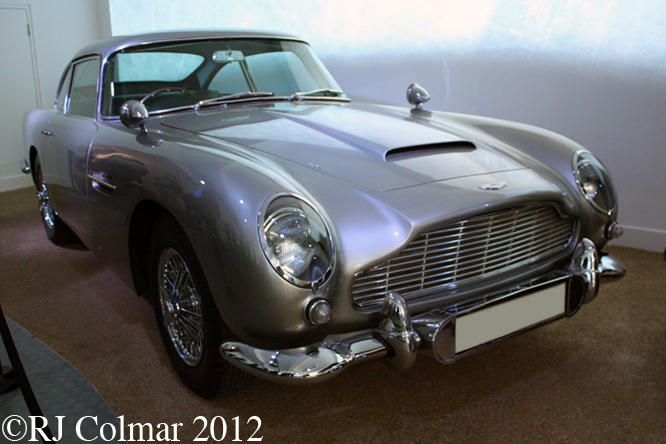
The first Bond car I can remember was the Aston Martin DB5 in Goldfinger which featured swivelling number plates for overseas duty, a passenger ejector seat for unwelcome guests, forward machine guns, rear bulletproof shield, smoke screen and oil slick dispensed from the rear light clusters, evil tyre scythe in the rear hubs for puncturing enemy tyres, radio telephone and a Sony route finder with which to track enemy movements. Despite the usefulness of all these gadgets the car came to a sad end crashing into a wall of a factory belonging to Bond’s foe Mr Goldfinger. The special effects won Goldfinger an Oscar in 1965.

Mercury Cougar XR7, On Her Majesty's Secret Service, Bond In Motion, Beaulieu

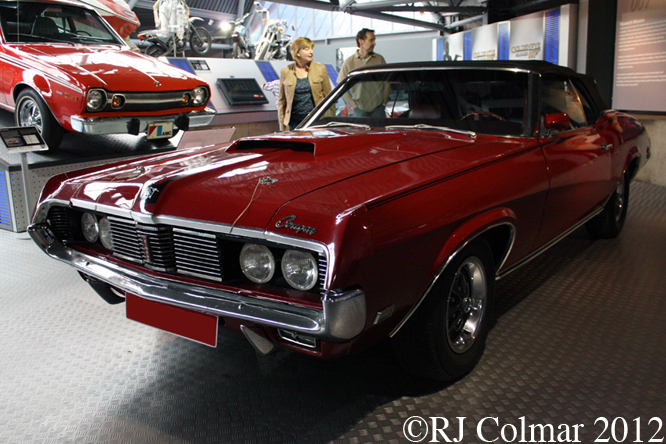
George Lazenby replaced the quintessential Sean Connery in the role of Bond in “On Her Majesties Secret Service” after a ski chase Bond jumps into a car driven by his amour Contessa Teresa “Tracy” di Vicenzo played by Diana Rigg who drives the Mercury XR7 through the gates of an ice racing event in her attempt to get away from Blofeld and his henchmen. This is the film in which James Bond finally get’s hitched, though not without a tragic ending.

AMC Hornet, The Man With The Golden Gun, Bond In Motion, Beaulieu

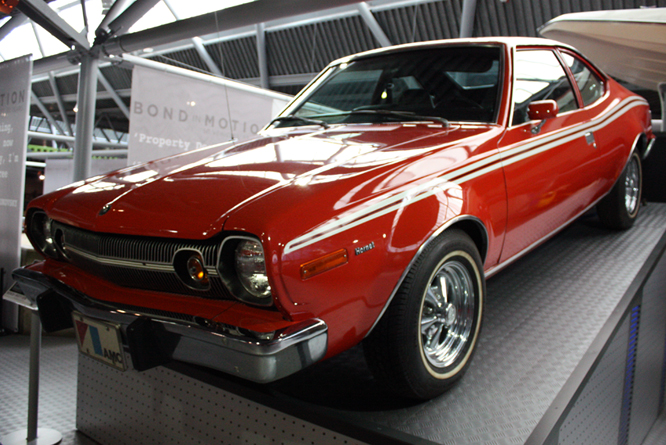
Roger Moore took over the role of Bond after a final reprise by Connery in “Moonraker”. The debonair Moore’s first appearance in the role of Bond was in “Live and Let Die” which featured numerous boat chases. Moore’s second Bond role was in “The Man With The Golden Gun” in which Bond commandeers an AMC Hornet from an AMC showroom in Bankok and with Sherrif J.W.Pepper in the passenger seat the car executes a 360 barrel role over a sunken bridge. This is said to be the first ever stunt to be calculated with the aid of computer modelling and was performed in a single eight camera take by the uncredited stunt man “Bumps” Willard.

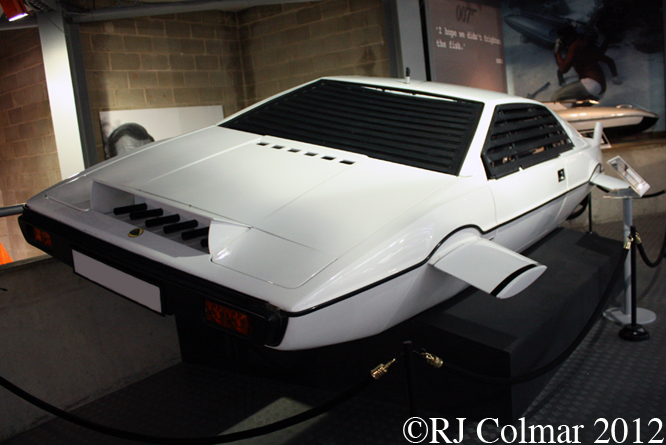
Lotus Esprit, Wet Nellie, The Spy Who Loved Me, Bond In Motion, Beaulieu

Secret Service Quartermaster ‘Q’ issues Commander Bond, still played by Roger Moore, with a Lotus Esprit for the film “The Spy Who Loved Me“. The Esprit, known as ‘Wet Nellie’, is equipped with a surface to air missile, torpedoes, cement sprayer, rear mounted ink jet, mine launcher, periscope and is convertible for submersible amphibious operations.

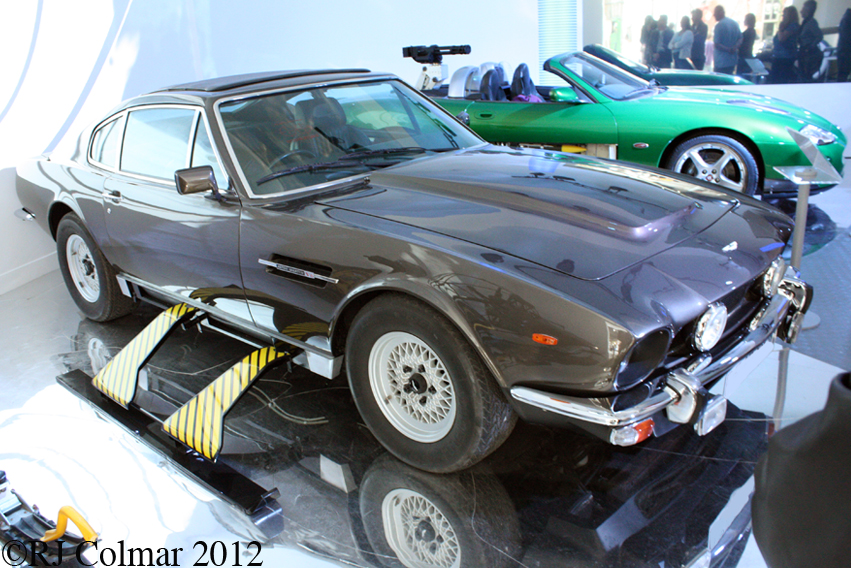
Aston Martin V8 Volante, The Living Daylights, Bond In Motion, Beaulieu

Moving forward a decade to 1987 and the fifteenth Bond film saw Timothy Dalton take over the role of Bond in “The Living Daylights“. His Aston Martin V8 Volante is equipped with optional extra twin heat seeking missiles, jet booster engine, ice tyres and retractable ski’s which come in handy during a getaway sequence in Bratislava.

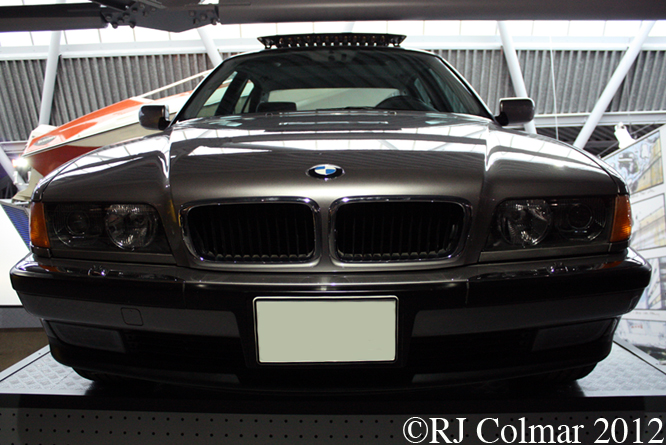
BMW 750iL, Tomorrow Never Dies, Bond In Motion, Beaulieu

Tomorrow Never Dies” released in 1997 saw Pierce Brosnan playing the role of Bond for the second time. By now Bond drives a somewhat unlikely bullet and fire proof BMW 750iL which is armed with high voltage security system, missiles mounted in the sunroof, grenades, wire cutting bonnet badge and conventional, for Bond, smoke and tear gas jets and can be controlled remotely from a cell phone. The car comes to a premature end in an Avis showroom.

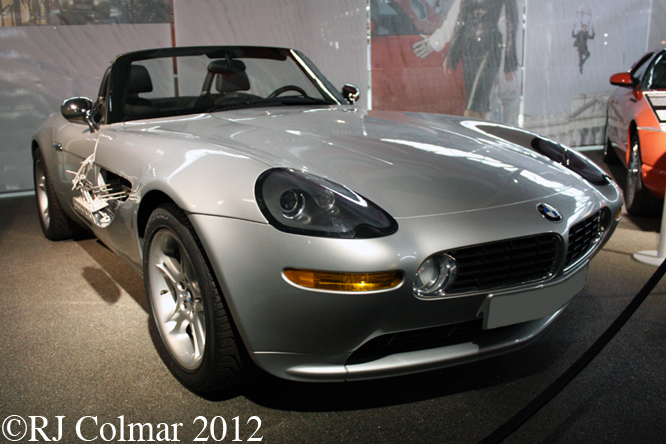
BMW Z8, The World Is Not Enough, Bond In Motion, Beaulieu

Th final car in this brief overview of the Bond in Motion exhibition at Beaulieu National Motor Museum is the BMW Z8 which featured in the 1999 release “The World Is Not Enough“. Pierce Brosnan’s Bond features remote control pads in the ignition key, bullet proof windscreen and radar guided Stinger missiles “AND six beverage cup holders”. The car meets it’s match in the form of a helicopter rotor blade which slices the car in half.

Thanks for joining me on this “007 @ Beaulieu” edition of “Gettin’ a li’l psycho on tyres” I hope you will join me again tomorrow when I’ll be revisiting Queens Square for Coffee & Croissant with the Avenue Drivers Club. Don’t forget to come back now !

Share

Out Of The Ark – Lotus Elan (Ark Racing)

In 1976 one year after production of the Lotus Elan had ceased the 4th generation Group 5 regulations came into effect for “Special Production Cars” for cars that met the criteria for groups 1 to 4 but were allowed almost unlimited bodywork modifications excluding the bonnet, roofline and railpanel combined with unlimited lightening of the chassis.

Porsche dominated the series overall from 1976 to the series demise in 1981 with numerous variations of the 935 model, though it’s ultimate development ‘Moby Dick’ 935/78 ironically only one one race. Lancia was most successful in the smaller under 2 litre / 122 cui division with it’s Lancia Beta Montecarlo winning two championships with BMW and Ford taking the smaller category once each.

Three different Lotus models were entered into selected Group 5 (Silhouette) races three Elan’s like the one featured today, a Europa and a couple of Lotus Esprit’s. Over the next couple of weeks I will be looking at how three of those teams faired.

Lotus Elan, Ark Racing, Silverstone

In 1968 Derek Mathews built the first of several well known and successful racing cars a Sprite for John Banks, which by 1970 became the Ark Sprite powered by Ford Twin Cam engine. After building and running a Group 6 2 seat open sports car with F Lester Ray originally called the (Derek Matthews) DM6 (sixth car) which became the Vogue Derek built a Lotus Elan for John Evans to race in the 1974 in British Modsports races a combination which recorded many class wins in 1974 and 1975 being crowned BRSCC (British Racing Sports Car Club) Modsports Champions in 1975.

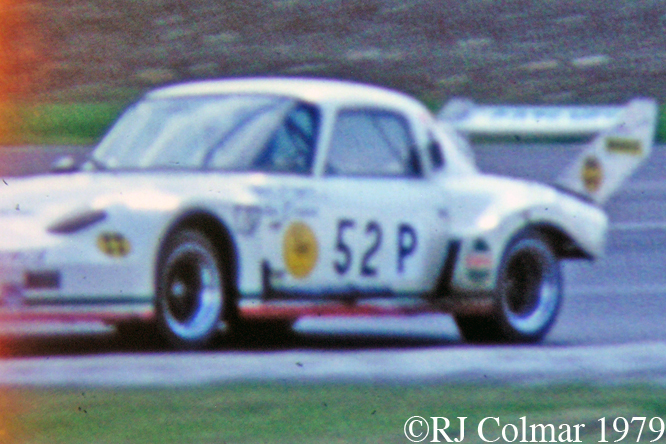
For 1979 Ark Racing built an Elan for Max Payne and John Evans to run in selected World Manufacturers Championship, German DRM, and Belgian events, becoming the third Elan to be used in Group 5. According to ‘The Oracle” and Richard Jenvey the Ark Racing Group 5 Elan, seen above making it’s debut at Silverstone, was built on a Lotus chassis.

At Silverstone the Elan qualified 23rd overall, 3rd last in class and retired with gearbox issues. The car was raced four times in 1979, Max Payne beating a de Tomaso Pantera to win a Benelux race at Zandvoort in The Netherlands.

Lotus Elan, Ark Racing, Silverstone

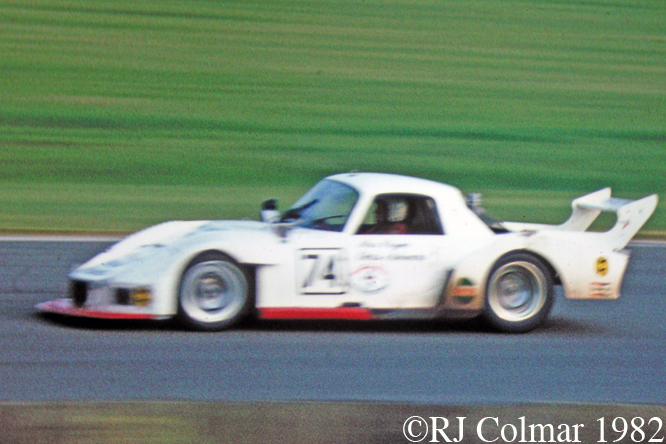
The last time I saw the Ark Racing Elan was in 1982, again at Silverstone above, when Max Payne was sharing the car with Chris Ashmore they qualified 32nd and were disqualified for a push start. The Ark Racing Elan is thought to have been the last one to have raced taken part in an international ‘in period’ race qualifying 25th and finishing 18th at the 1982 Brands Hatch 1000 kms race with Payne and Ashmore at the wheel.

My thanks to The Oracle, his spokesman Pete Taylor and Edward Fitzgerald for their comments at The Nostalgia Forum and to Richard Jenvey for his private comments.
Thanks for joining me on this “Out Of The Ark” edition of “Gettin’ a li’l psycho on tyres”, I hope you will join me again tomorrow. Don’t forget to come back now !
Share

Une voiture et un film – Ferrari 250 LM #5843

The Ferrari 250 LM was a development of the 250 P built for customers to race in 1964, Enzo Ferrari tried to get it classified as a GT car however the authorities denied the request because Ferrari could not prove the required minimum of 100 had been built so the cars were raced as prototypes.

Ferrari 250 LM, Goodwood FoS

Graham Hill and Jo Bonnier driving the Maranello Concesionaires owned chassis #5907 appear to have taken the models first victory at the 1964 Rheims 12 hours finishing ahead of the NART entered 250 LM #5909 driven by John Surtees and Lorenzo Bandini.

Ferrari 250 LM, Goodwood FoS

The 250 LM is known to have won at least 32 races outright, including Ferrari’s last ever outright win at Le Mans. Future World Champion Jochen Rindt and Marsten Gregory shared a 250 LM that after early ignition problems was famously driven flat out in a vane attempt to break the car so the drivers would not miss a nights sleep and ended up winning the race after the faster Ford GT40 Mk II’s had retired and the faster works Ferrari’s required unscheduled pit stops to change their brake discs.

Ferrari 250 LM, Goodwood FoS

Another future World Champion, Jackie Stewart, scored his only victory at the wheel of a Ferrari at Surfers Paradise in the 1966 12 hour race where he shared a Scuderia Veloce 250 LM with Andy Buchanan.

Ferrari 250 LM, Goodwood FoS

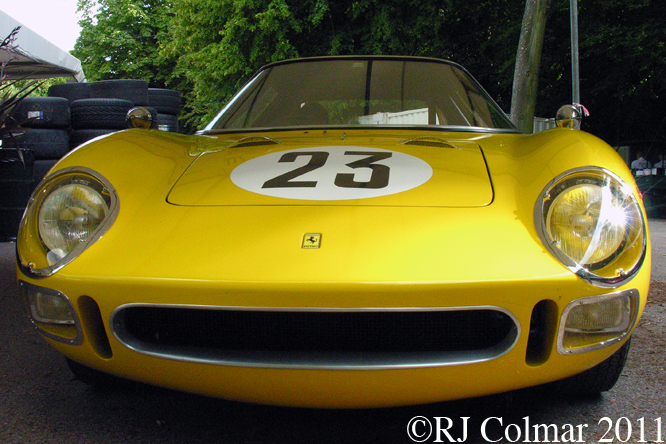
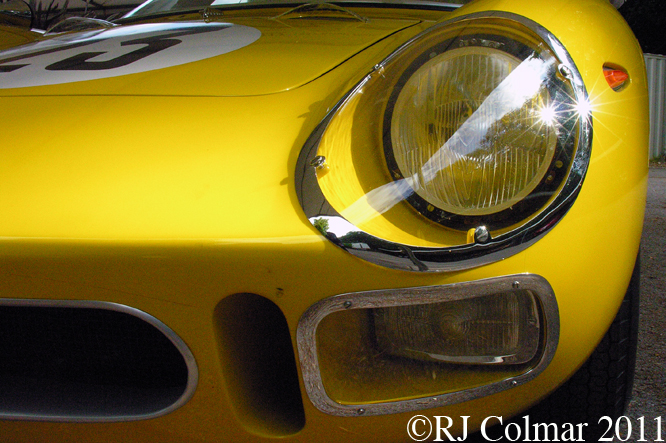
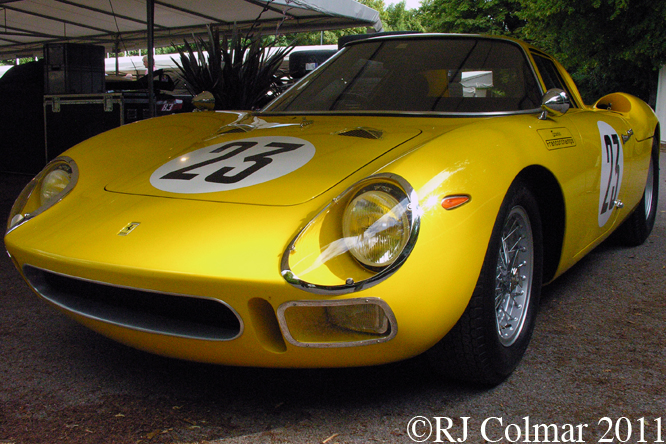
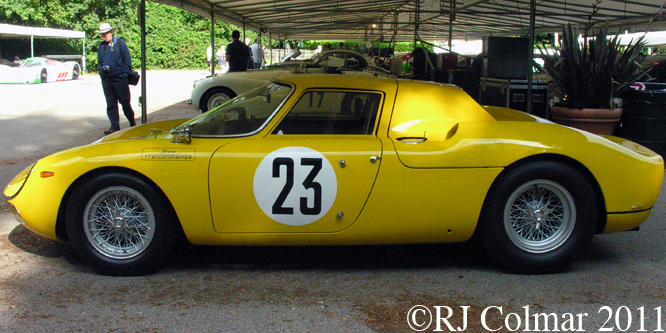
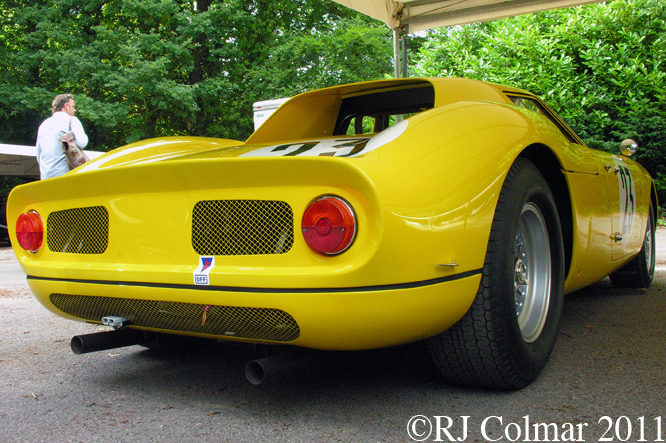
Thanks Cyril Teste at Ferrari Chat I believe the car seen here at Goodwood Festival of Speed last year, which is not mentioned in the programme, is chassis #5843 a car originally supplied to Ecurie Francochamps in May 1964. If the identity is correct this car is known to have won several races and hillclimbs in the hands of Lucien Bianchi, Armand Blaton and “Beurlys”.

Ferrari 250 LM, Goodwood FoS

At Le Mans in 1964 Pierre Dumay and Grégoire Langois Von Ophem shared a 16th place finish, this race was used as a background for the 1966 film “Un Homme et une femme” the red painted #5843 carrying the #23 was captured in the film on pit road and during the race.

Ferrari 250 LM, Goodwood FoS

This car first raced in the Belgian national colour yellow in 1965. I believe the owner of #5843 recently also acquired a 250 GTO for a cool $35 million dollars. Some boys sure have all the fun !

Thanks for joining me on this “Une voiture et un film” edition of “Gettin’ a li’l psycho on tyres” I hope you will join me again tomorrow. Don’t forget to come back now !
Share