Tag Archives: Colmar

“Tender At Heart” – Ford V8 30 Saloon

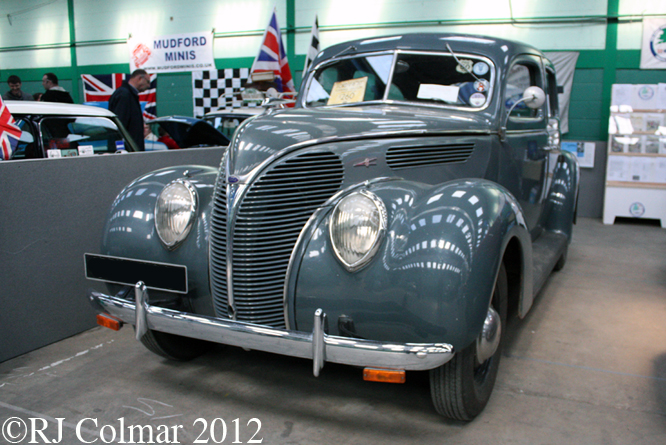
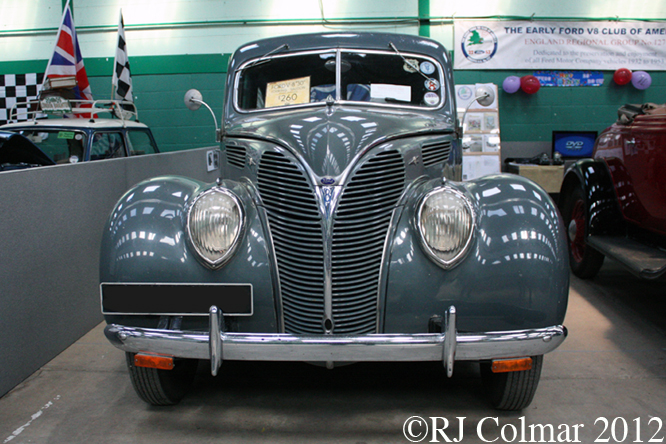
The 1938 Ford V8 30 Saloon appears to be a 1938 Ford de Luxe Sedan built for the British market complete with right hand drive.

Ford V8 30 Saloon, Bristol Classic Car Show

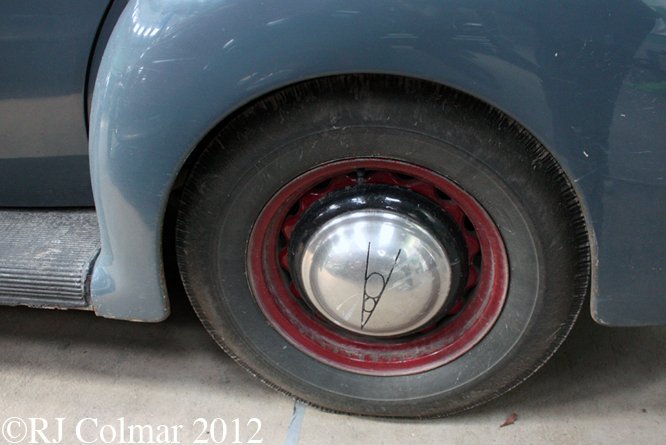
Like the Deluxe the V8 30 was powered by a ‘flathead’ V8 with either 60hp or 85hp options.

Ford V8 30 Saloon, Bristol Classic Car Show

New for 1938 was the distinctive heart shaped grill which is easily distinguished from the V shape grill of the 1937 models.

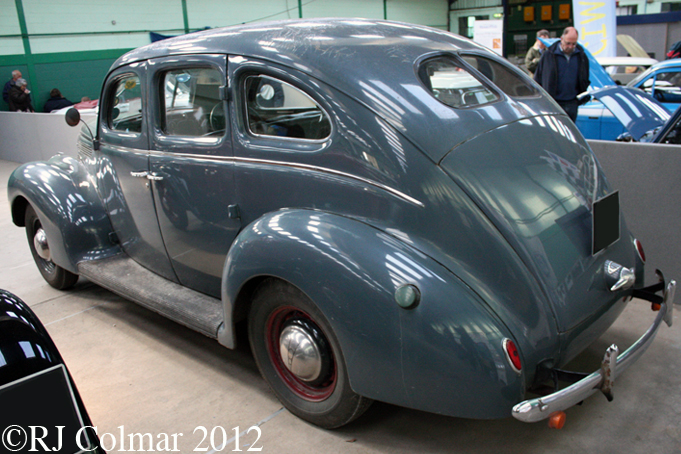
Ford V8 30 Saloon, Bristol Classic Car Show

The remaining panels were identical to the earlier 1937 models, not even a new dash with recessed controls for safety could do much to stimulate sales. After the 1939/45 war the British built Ford V8 30 updated and given a brief new lease of life in the UK, marketed as the Ford Pilot.

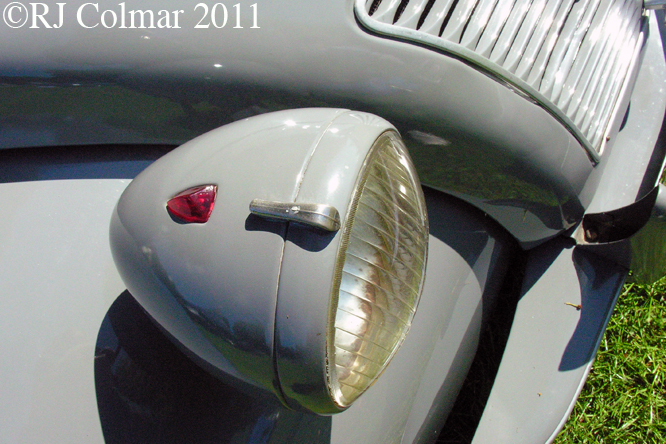
Ford V8 30 Saloon, Bristol Classic Car Show

In September 1939 Lenham, in Kent, Auxiliary Fire Station had a budget of £60 to acquire a Fire Tender and a Mr Hulland managed to acquire a Ford V8 30 hp Saloon for £30 and spent the remainder on having it converted. The depreciation from the new value of the vehicle at £230 in 1938 showing how desperate the times were at the commencement of the 1939/45 war.

Thanks for joining me on this “Tender At Heart” edition of “Gettin’ a li’l psycho on tyres”, I hope you will join me again tomorrow. Don’t forget to come back now !

Share

Minimalist, Cheap & Rugged – Citroën 2CV

My friend Candice, who just became a member of the National Motorsports Press Association, writes a regular Tuesday blog called “Simple Joys”. I know her Simple Joy on wheels would probably be a Morgan three wheeler, mine would definitely be a Citroën 2CV.

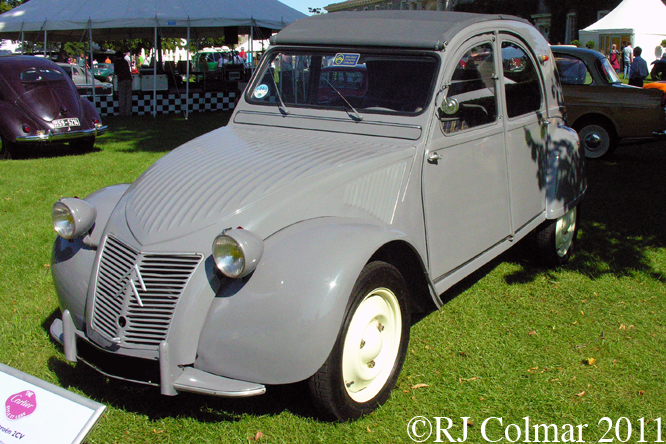
Citroën 2CV, Goodwood Festival of Speed

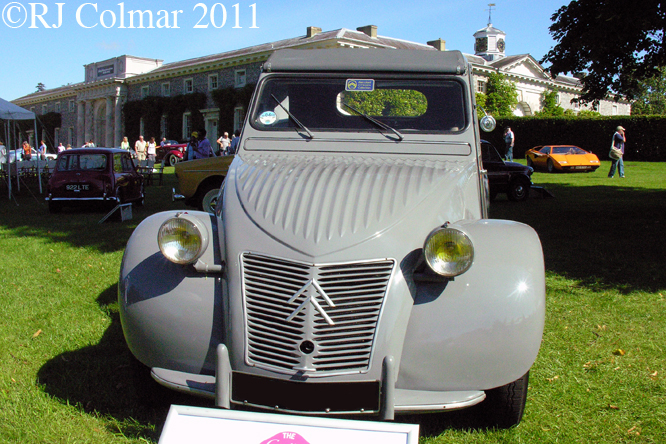
The Citroën 2CV was designed as an uncompromisingly utilitarian vehicle designed to move agricultural France on from dependence on the horse and cart.

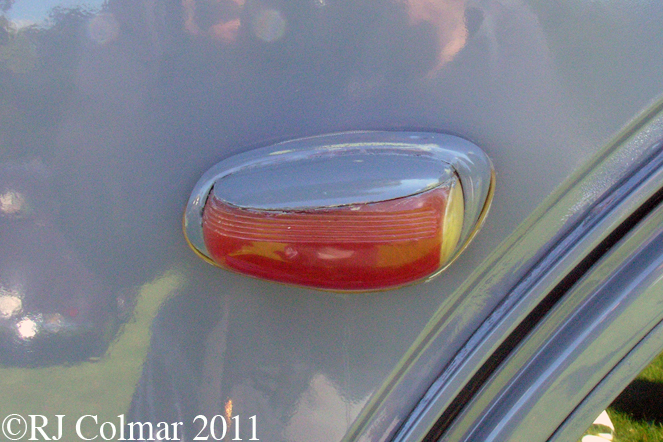
Citroën 2CV, Goodwood Festival of Speed

A market survey of Frances largely agricultural population in the 1930’s revealed that there was a demand for an umbrella on four wheels, that could carry 50 kgs / 110 lbs of farm produce to market at 30 mph and be driven across a ploughed field carrying a basket of eggs without breaking them, all while wearing a pair of clogs.

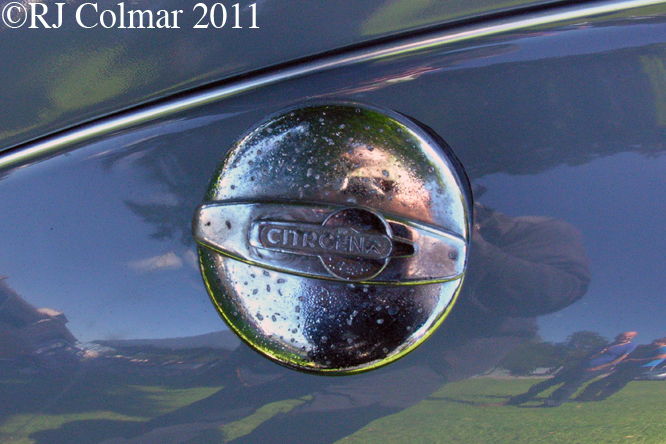
Citroën 2CV, Goodwood Festival of Speed

Pierre-Jules Boulanger set about guiding the same design team that had devised the Citroën Traction Avant to come up with a radical solution to the design criteria for a “Toute Petite Voiture” – very small car.

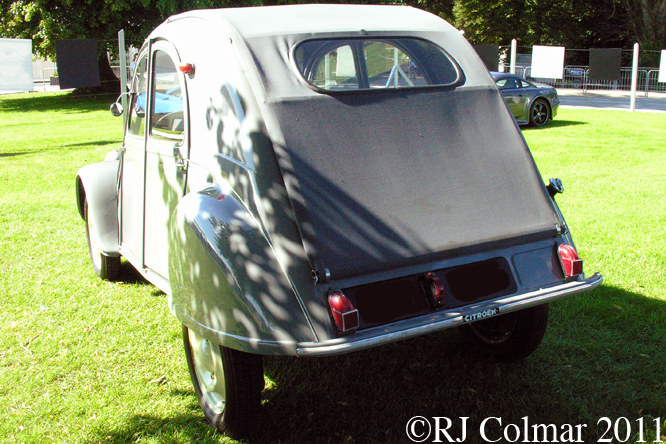
Citroën 2CV, Goodwood Festival of Speed

The original 2CV (2hp) made largely of aluminium was to have had a water cooled 2 cylinder engine and was scheduled for launch in 1939 but these plans were abandoned with the onset of the 1939/45 war. During the war it was realised the the price of aluminium would become prohibitive for post was production so the car was redesigned to make use of steel and the engine redesigned to be air cooled with a four speed gearbox.

Citroën 2CV, Goodwood Festival of Speed

A 2CV was finally launched in 1948 with a pull chord starter that was soon replaced with an electric starter. Despite much humour and scorn in the press Citroën were flooded with orders and the Deux Cheveau became a huge success with a three year waiting list built up in just three months !

Citroën 2CV, Goodwood Festival of Speed

Amazingly Citroën 2CV’s were used in competition events like the Mille Miglia in the early to late 1950’s, though they did not experience any overwhelming success.

Citroën 2CV, Goodwood Festival of Speed

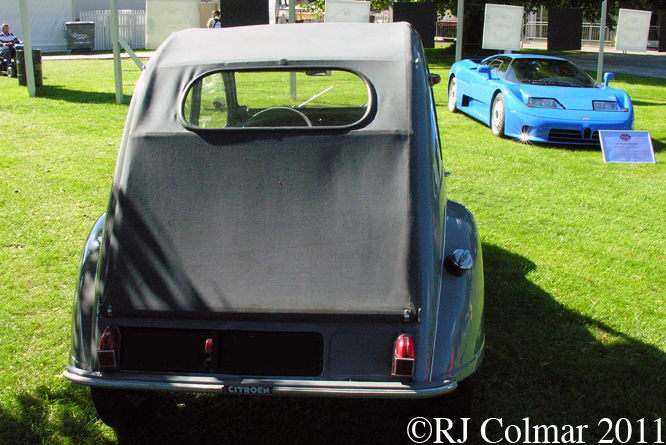
2CV’s were developed into a large number of variants the Fourgonette van pioneered the use of a large rear box section that has seen many passenger vehicles reconfigured to commercial use, there was a pickup and a Sahara off road road version with two engines to provide four wheel drive.

The 2CV remained in production, much modified from this 1954 iteration, seen at the Goodwood Festival of Speed, until 1990. Of all the cars I have owned the half a dozen minimalist cheap and rugged 2CV’s easily gave me the most smiles per mile.

Thanks for joining me on this “Minimalist, Cheap and Rugged” edition of “Gettin’ a li’l psycho on tyres”, I hope you will join me again tomorrow for Americana Thursday. Don’t forget to come back now !

Share

Diamond Jubilee – Austin A40 Somerset Coupé

Welcome to the Diamond Jubilee edition of “Gettin’ a li’l psycho on tyres”.

Austin A40 Somerset, Malta Classic Car Museum

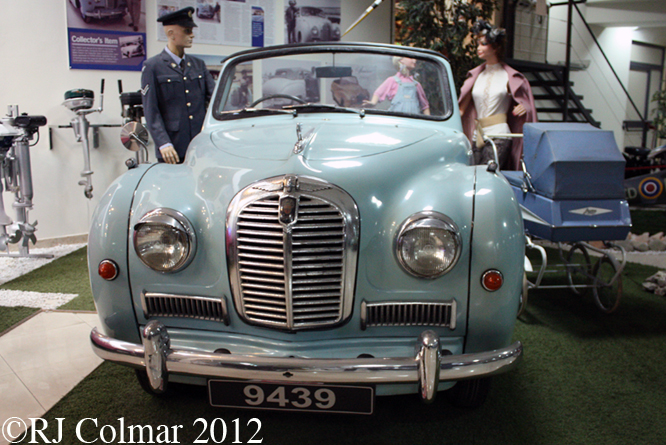
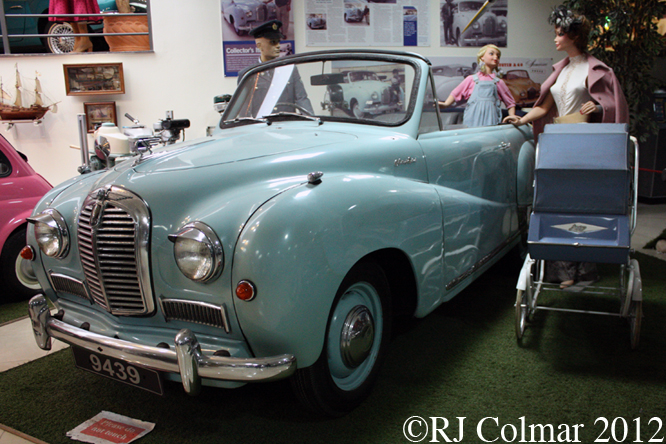
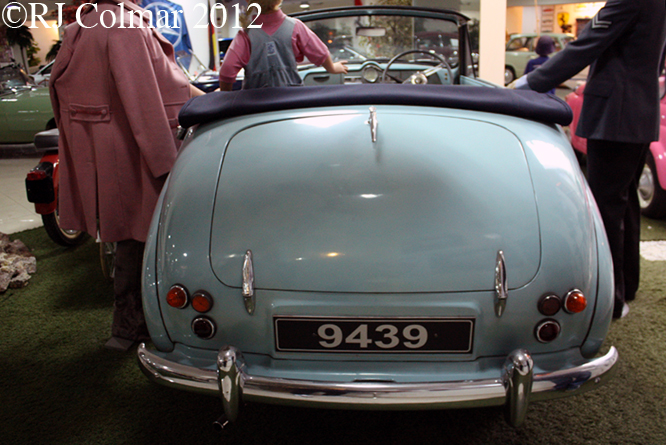
Today’s featured car is an Austin A40 Somerset was launched in 1952 built on a chassis with separate body.

Austin A40 Somerset, Malta Classic Car Museum

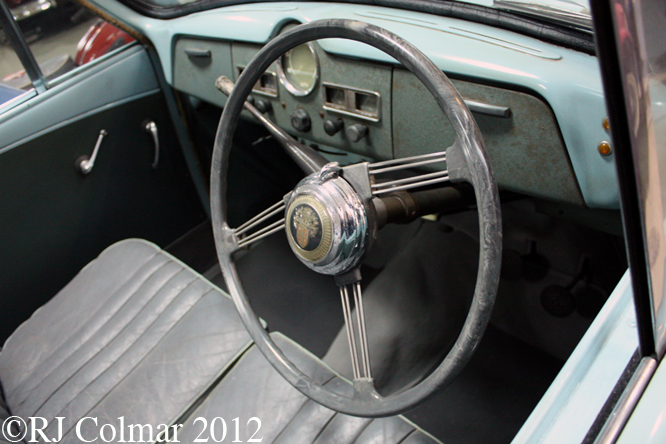
The 42 hp motor was described as providing “a virile performance to excite the young enthusiast and a smooth flexibility that enables it to be handled with confidence” in the sales brochure.

Austin A40 Somerset, Malta Classic Car Museum

Running on the low octane fuel of post war austerity Britain the claimed top speed for the A40 Somerset was 69 mph though a convertible was independently tested in 1953 with a top speed of 74 mph and rest to 60 mph time of 28.6 secs.

Austin A40 Somerset, Malta Classic Car Museum

This particular vehicle, seen at the Malta Classic Car Collection, was delivered to a customer in Malta and legend has it that in 1952 Queen Elizabeth II drove it, though it is unclear if this was during a state tour or a private visit to Prince Phillip and or his friends who had been stationed on the British Protectorate.

Austin A40 Somerset, Malta Classic Car Museum

Since finding out that this model was marketed as a ‘Coupé’ I have been unable to find out why. Somethings are obviously set to remain a mystery.

Thanks for joining me on this “Diamond Jubilee” edition of “Gettin’ a li’l psycho on tyres”, I hope you will join me again tomorrow when I will be looking at one of my favourate models a Citroen 2CV. Don’t forget to come back now !

Share

Silver Jubilee – Middle Barton Garage

The self styled “Italian Shrine” Middle Barton Garage celebrated its Silver Jubilee last weekend and I joined fellow members of the Bristol Pegasus Motor Club at Delamare services on the M4 at 8:30 am last Saturday to join in the fun.

Middle Barton Garage

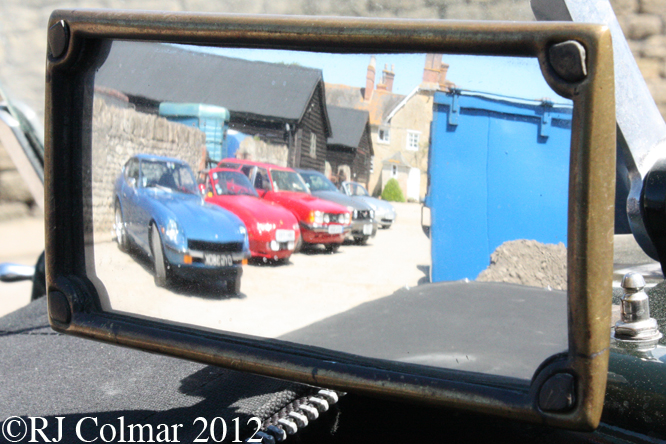
Arthur in his 2006 Mustang GT led a couple of MX5’s a Westfield and yours truly in his humble Golf Mk IV Estate along some beautiful country roads as we took an indirect route with some challenging curves towards the newly relocated Middle Barton Garage which now lies just outside Somerton in Oxfordshire.

Bentley, Middle Barton Garage

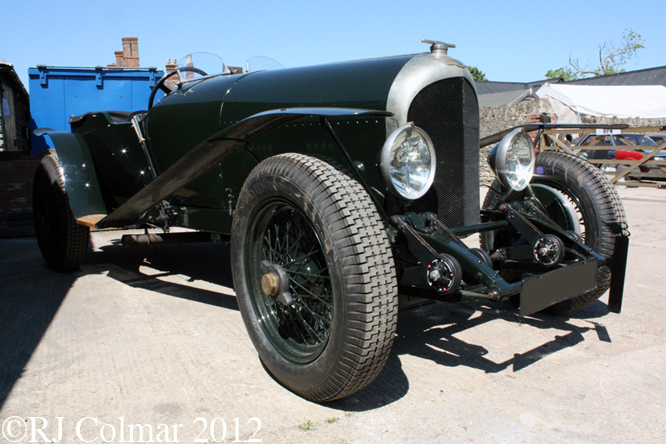
We arrived early to find an eclectic assortment of vehicles accumulating including this 1924 Bentley fitted with a normally aspirated 4398 cc / 268 cui six cylinder motor. If I ever get to drive a vintage car of any sort this would be one I’d choose, it looked all set to go like a steam train with little in the way of refinement or creature comfort.

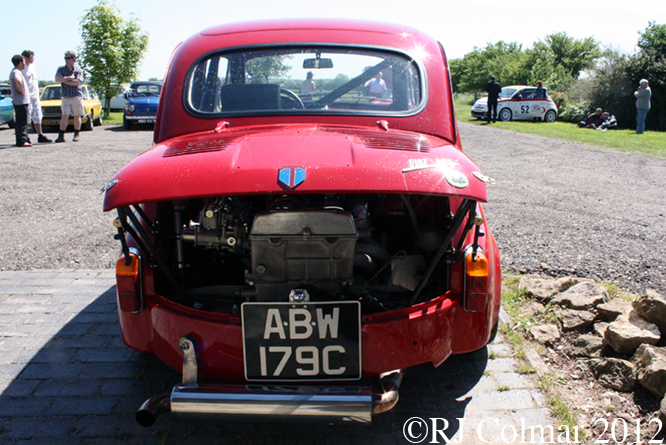
FIAT 124, barchetta, 128 3P, 500, 500 Abarth, Middle Barton Garage

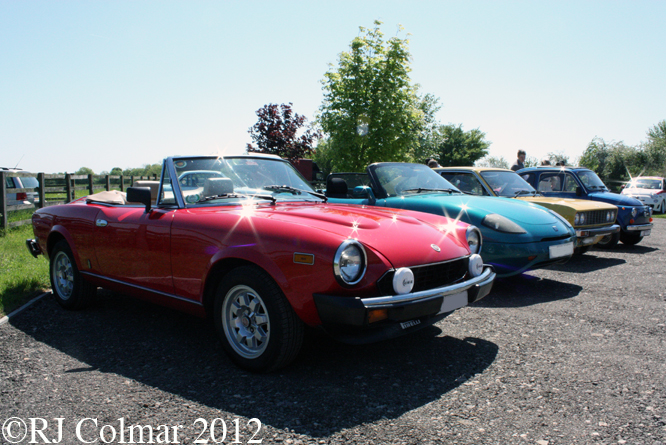
Among the Middle Barton Garage friends and customer cars to turn up was this FIAT 124 Spider, one of at least two I saw on the day, a Barchetta, 128 3P and 500. Being polished in the background is a turbocharged racing Abarth 500.

Osella Abarth PA2, Middle Barton Garage

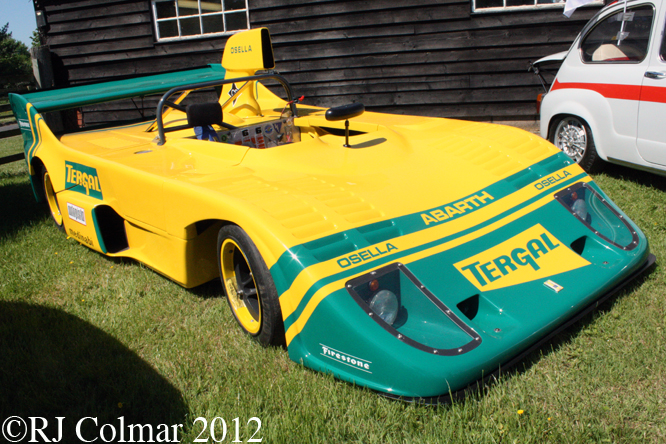
The Abarth Osella PA2 was built for the 1974 European 2 litre / 122 cui sports car championship, there does not seem to be much agreement on exactly how many PA2’s were built a chassis #013 was offered by Bonhams 5 years ago. The Osella PA2s running with four cylinder engines from Abarth, BMW or Ford were outclassed by the works V6 powered Alpine Renaults in 1974 the final year of the championship. This car chassis #011 is painted in the colours used by Georgian Prince in Spanish exile Jorge de Baragation who drove chassis #001 to a victory at Jarama in 1974.

Tornado FIAT 600D GT, Middle Barton Garage

Alongside the production of their Talisman sports cars Tornado Cars of Rickmansworth, not to be confused with Tornado Sports Cars of Kidderminster, offered a FIAT 600 D conversion to a more powerful spec. David Render bought the one of seen here and his friend Colin Chapman suggested and organised fitting an even more powerful Lotus Twin Cam motor to this car, with which David won more than 50 trophies in sprint and hill climb events.

GMC 100, Middle Barton Garage

The 1950 GMC 100 Pickup above is being finished off by one of Middle Barton Garages neighbours.

Ferrari, FIAT, Maserati, Lancia, Middle Barton Garage

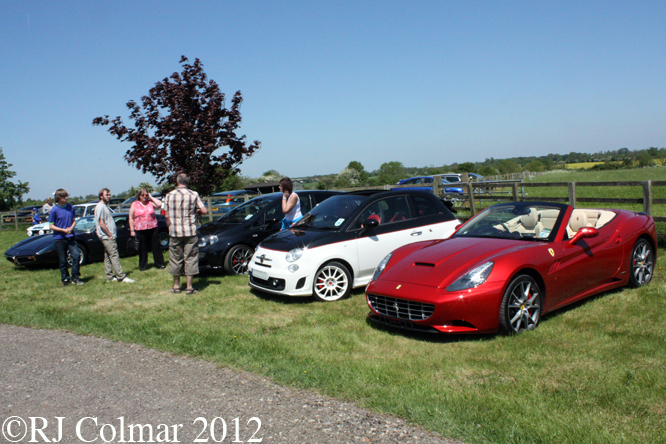
As I left the Silver Jubilee celebration the Ferrari California Convertible and Maserati Bora 4th from right pulled up to join in the fun.

My thanks to Tony Castle-Miller of Middle Barton Garage and Nick of the Bristol Pegasus Motor Club for organising the event.

Thanks for joining me on this “Silver Jubilee” edition of “Gettin’ a li’l psycho on tyres”, I hope you will join me again tomorrow when I’ll be taking a close look at a car driven by Queen Elizabeth II during her coronation year. Don’t forget to come back now !

Share

All Adjectives Used To Define Exquisite – Marin Sanoma Concours d’ Elegance

Among the hand chosen, to require all the “Adjectives Used To Define Exquisite”, participants gathered at Marin Sanoma Concours d’Elegance for the May weekend 18th – 20th was GALPOT’s Geoffrey Horton and his pristine Jaguar XK 140 FHC SE/MC.

Hispano Suiza K6, Mairn Sanoma Concours d'Elegance

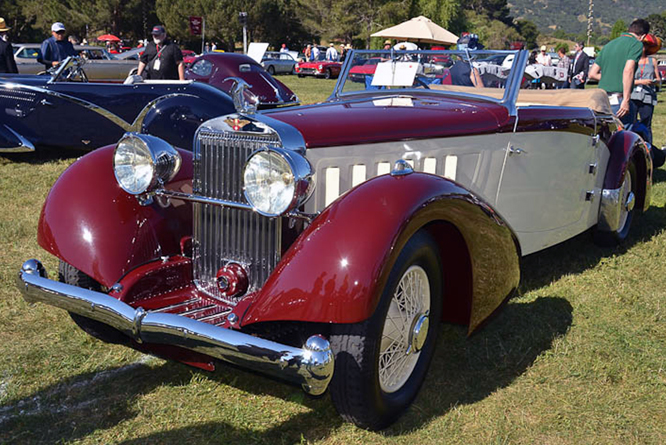
So far as I can tell the vehicle above is a Hispano Suiza K6 built somewhere between 1934 and 1937 with bodywork by Pourtout. 204 K6’s were built in France before hostilities in Spain forced the manufacturer to abandon motor vehicle manufacture focus on the production of aircraft engines.

Talbot Lago T 150 C SS Goutte d'Eau, Marin Sanoma C d'E

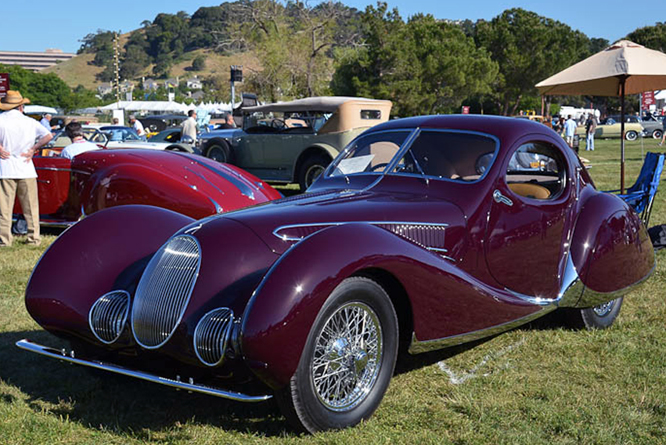
Consecutive three time Le Mans winner, driving Bentleys, Woolf Baranto ordered the Talbot Lago T150C SS with “Goutte d’Eau”, water drop, bodywork by Figoni & Falaschi in 1938. The car belongs to the Mullin Automotive Collection which celebrates the art deco movement at the Mullin Automotive Museum located in Oxnard California.

Delahaye Type 165 Cabriolet, Marin Sanoma C d'E

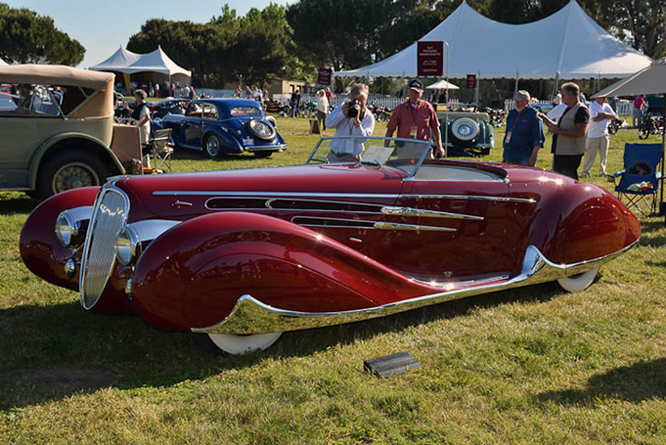
Judged to require all the adjectives to define exquisite at the 2012 Marin Sanoma Concours d’Elegance was the 1939 Delahaye Type 165 Cabriolet again with bodywork by Figoni et Falaschi and belonging to the Mullin Automotive Museum !

Jaguar D-Type, Marin Sanoma C d'E

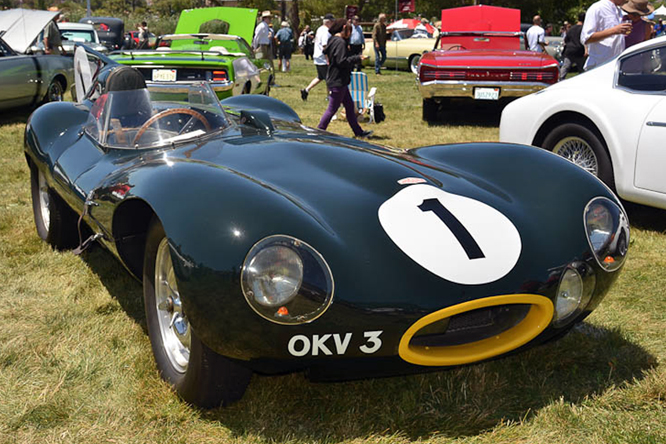
D-Type Jaguar chassis XKC#404 registered OKV 3 was part of a three car works team at Le Mans in 1954 where it retired with gearbox failure, at Rheims Peter Whitehead and Ken Wharton were able to make the car last 12 hours and crossed the line first. The car was acquired by John Love in 1959 and he drove it two victories before Neville Austin bought it drove it to two further victories, giving the car at least four known victories on the African continent.

Jaguar XK 140 FHC SE/MC, Marine Sanoma C d'E

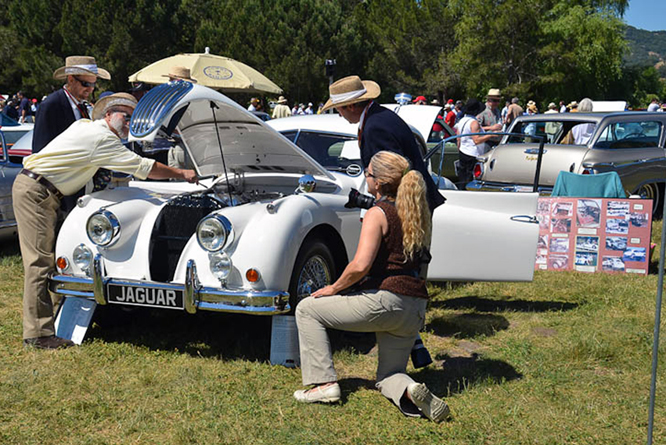
Geoffrey Horton’s 1955 XK140 can be seen getting thoroughly inspected by the Concours d’Elegance judges above, he was awarded second place in the Imports to over $3,500 1946 through 1962 class.

Ferrari 330 GT TR Replica, Marin Sanoma C d'E

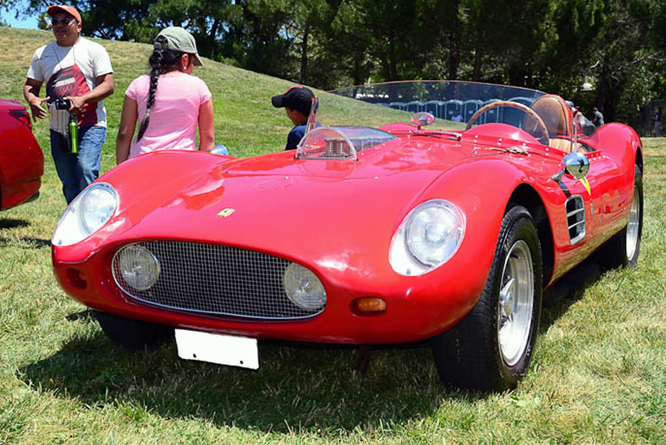
The Ferrari above started life as a silver Ferrari 330 GT which appears to have been sold new to the German importer Auto Becker Gmbh & Co in 1965. Somewhere between 1965 and 2002 the body was replaced with a TR 59/60 replica as seen here.

Porsche 906, Marin Sanoma C d'E

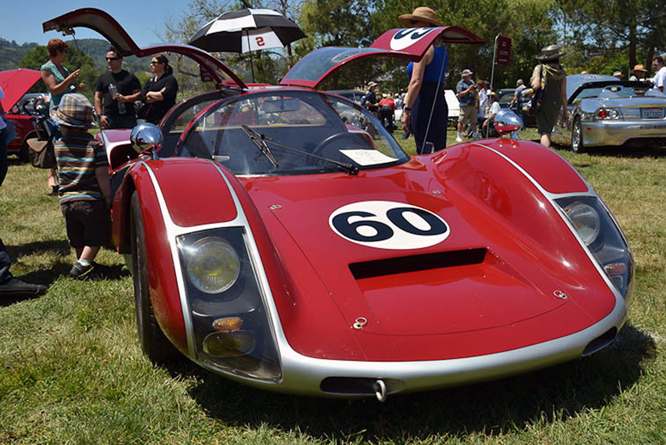
The 1966 Porsche 906 above is credit with numerous class wins from 1966 to 1977 in the hands of drivers 1966 E-modified champion Don Wester, Lew Florence from 1967 – 68, Milt Minter and John Morton in 1970/71 and Harald Kirberg from 1971 to 1977 when the car appeared with a different body in the rejuvinated Can Am series.

Shadow Mk II, Marin Sanoma C d'E

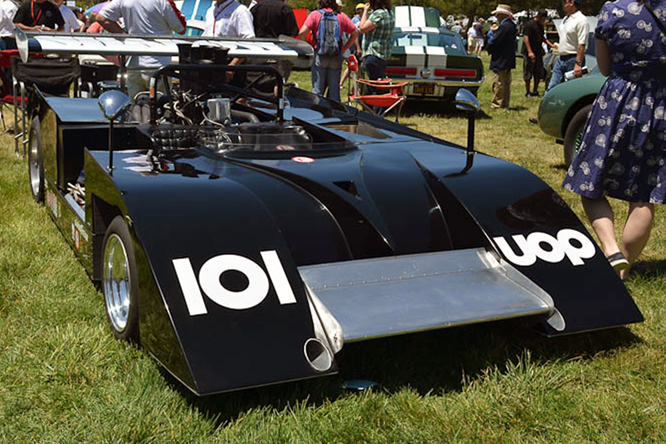
Looking a tad workman like in the company outlined above was the Shadow Mk II above. A one off built for Jackie Oliver to drive in the 1971 Cam Am series. Powered by a 8.1 litre / 494 cui Chaparral prepared Chevrolet V8 Jackie scored a best third place finish at Edmonton when the car appeared painted white with black lettering on all the upward facing surfaces except the rear wing. This car now belonging to Mr Losher won the Closed Wheel Sports Racing Cars class of the Marin Sanoma Concours d’Elegance.

I hope you will join me in congratulating Geoffrey on his second place class award and thanking him for sharing his photographs.

Thanks for joining me on this “All Adjectives Used To Define Exquisite” edition of “Gettin’ a li’l psycho on tyres” and that you will join me again tomorrow when I shall be visiting Middle Barton Garage which is celebrating it’s 25th Anniversary. Don’t forget to come back now !

Share

Original Wing Car – Lotus Ford 78 #78/R2

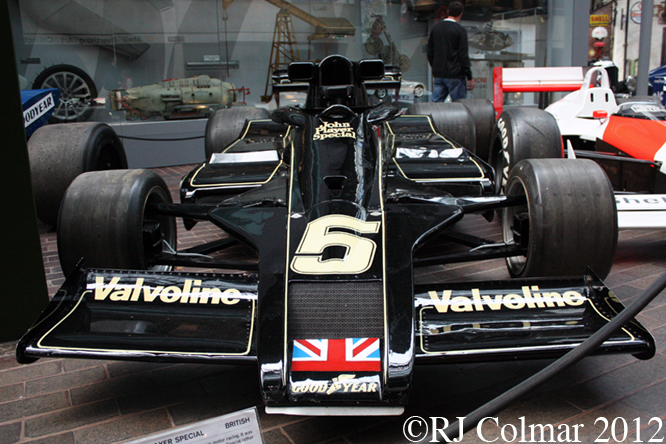
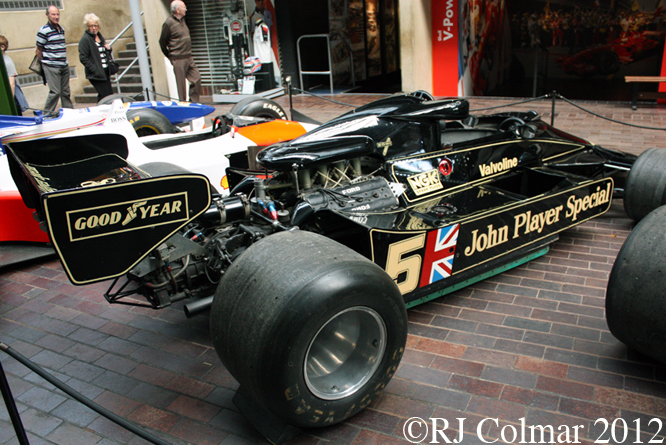
After the mixed fortunes of the Lotus 76 with it’s twin wings and electric clutch and the Lotus 77 with it’s fully adjustable suspension Colin Chapman introduced an aerodynamic innovation for the Lotus 78 featured today.
Lotus Ford 78, National Motor Museum, Beaulieu

Like the ’77 the Lotus 78 was built around a narrow monocoque with an oil radiator in the nose,
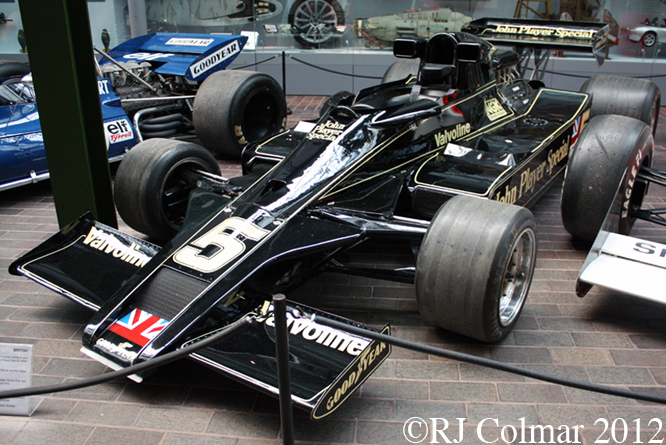
Lotus Ford 78, National Motor Museum, Beaulieu

but with much larger sidepods than any Grand Prix car seen before.
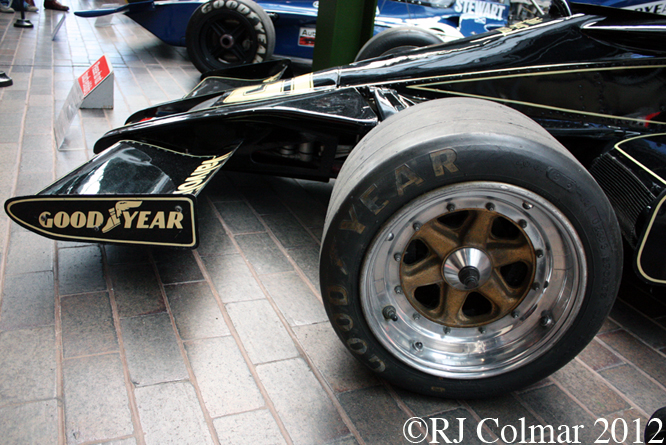
Lotus Ford 78, National Motor Museum, Beaulieu

The front wings were used, in conjunction with the rear wing, to trim the aerodynamic balance of the car.
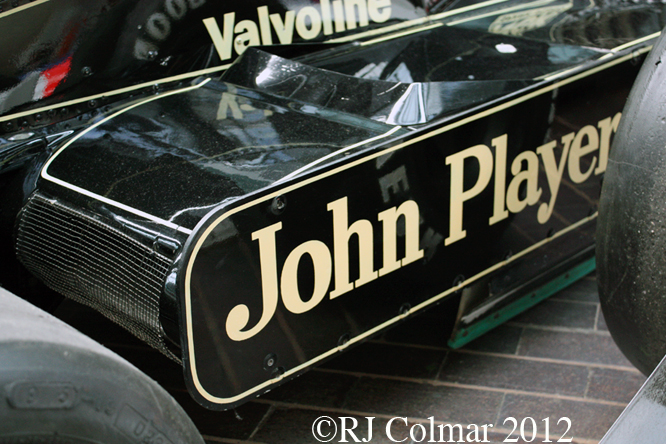
Lotus Ford 78, National Motor Museum, Beaulieu

Using an idea first modeled at BRM by Tony Rudd and Peter Wright the side pods closely resembled the upturned inner wing of a de Havilland Mosquito which Chapman had studied and written a detailed account of.
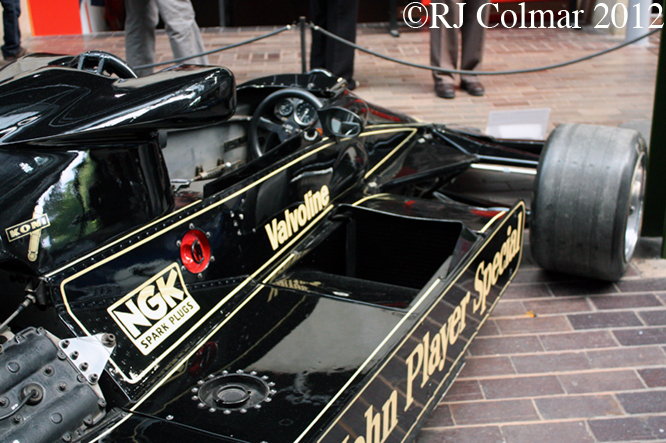
Lotus Ford 78, National Motor Museum, Beaulieu

Tony Rudd and Peter Wright joined Ralph Bellamy and Martin Ogilvie at Lotus to design the car and its side pods which produced prodigious down force to increase the speed at which it could go around corners without loosing grip.

While conducting wind tunnel tests for the Lotus 78 design at Imperial College London Peter Wright found that as predicted by Bernoulli’s principle of fluid dynamics which states that the flow speed of an ideal fluid with no friction will increase simultaneously with a decrease in pressure. Meaning in the case of the Lotus 78 the faster it went the more down force was generated by the side pods and so the better the car stuck to the road.
Lotus Ford 78, National Motor Museum, Beaulieu

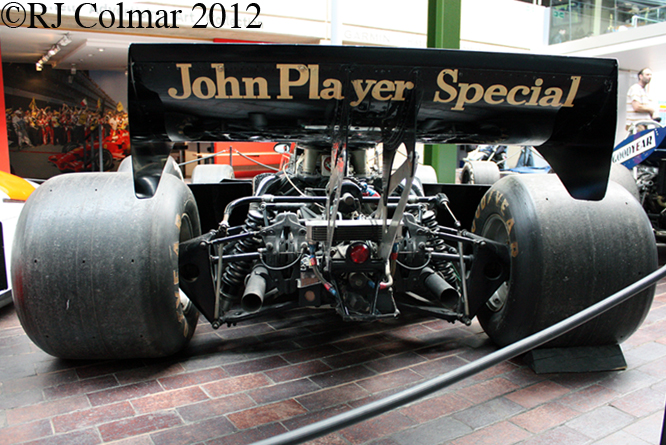
The Lotus 78’s, known as John Player Special III’s by Lotus and their sponsors, were ready to race midway through 1976, but Chapman wisely vetoed their use until 1977 so as not to give rival teams the chance to figure out what Chapman and his team had come up with and copy during the off season.
Lotus Ford 78, National Motor Museum, Beaulieu

Starting the 1977 season Lotus had a huge advantage with the 78’s affording Mario Andretti 5 victories and his team mate Gunnar Nilsson with one more. However the unreliability of the Nicholson McLaren built motors played into the hands of Niki Lauda who, having more or less fully recovered from his near fatal accident in 1976, took only three victories and a string of podium places to claim the championship.

The car seen here at the National Motor Museum, Beaulieu is chassis #78/R2 which Mario Andretti used to start the 1977 season before it was entrusted to Gunnar Nilsson who won the Belgian Grand Prix driving it. In 1978 before the even more radical Lotus 79 was introduced, Lotus returnee, Ronnie Peterson drove the car and snatched a thrilling victory with one lap to go in South Africa.

Mexican Hector Rebaque acquired the car at the end of 1978 season and used it along Lotus 78/R1 which he had been using since the beginning of the 1978 season.

Sadly Ronnie Peterson lost his life after an accident at the start of the 1978 Italian GP where he was driving the back up Lotus #78/R3.

Thanks for joining me on this “Original Wing Car” edition of “Gettin’ a li’l psycho on tyres”, I hope you will join me again tomorrow when, thanks to some photographs from Geoffrey Horton, I’ll be looking at some of the vehicles in attendance at the Marin Samoma Concour’s d’Elegance. Don’t forget to come back now !

Share

Naturally Aspirated Production Engine World Record – Ferrari 458 Italia

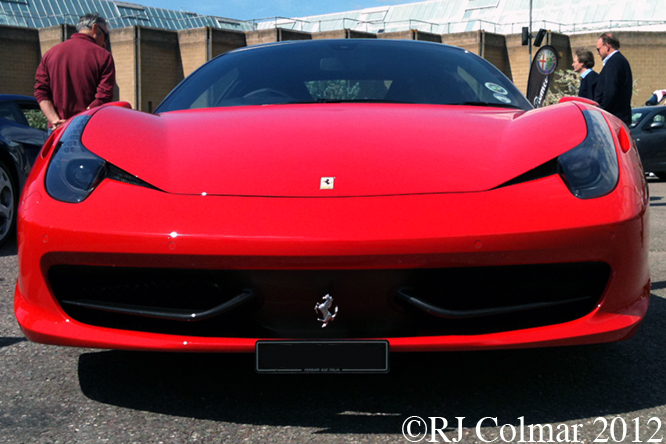
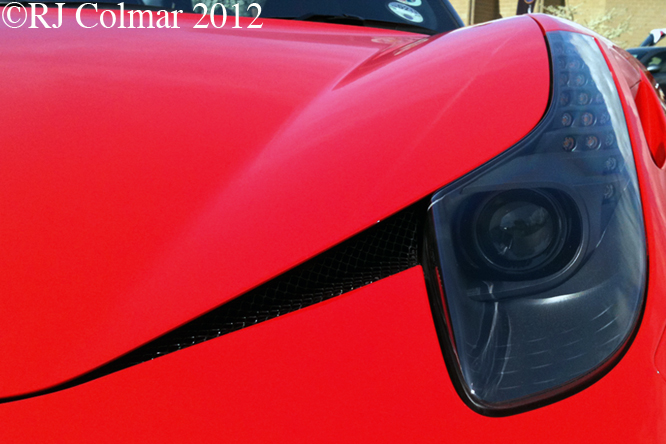
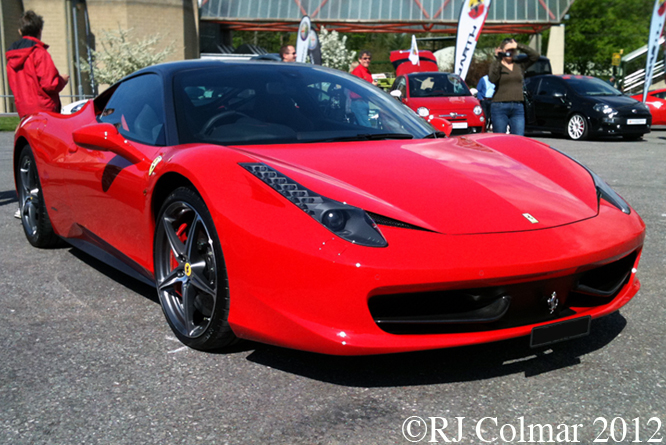
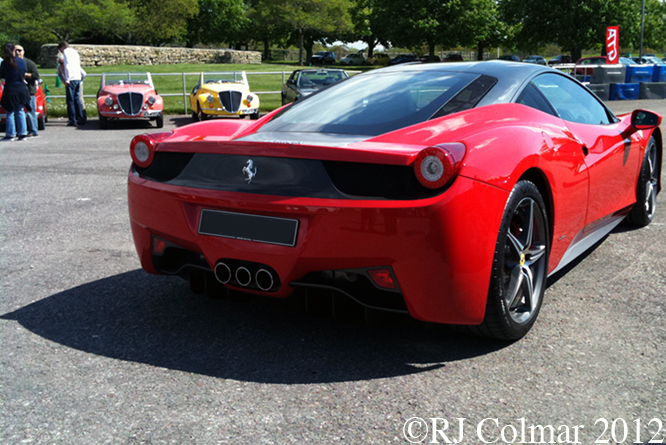
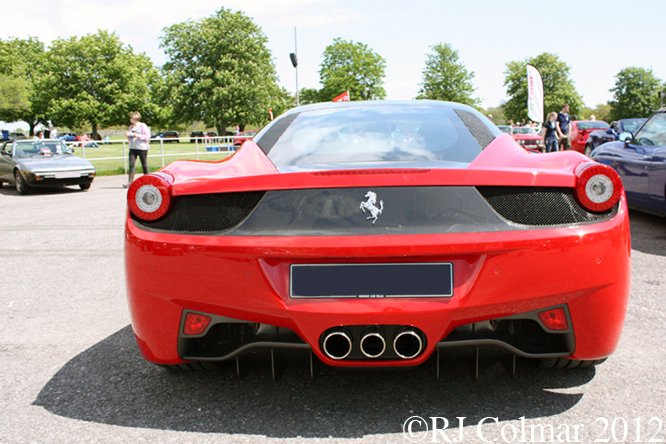
The Ferrari 458 Italia is an entirely new design that replaced the F430 in all of it’s guises, sports car track car and race car.

Ferrari 458 Italia, Simply Italian Beaulieu

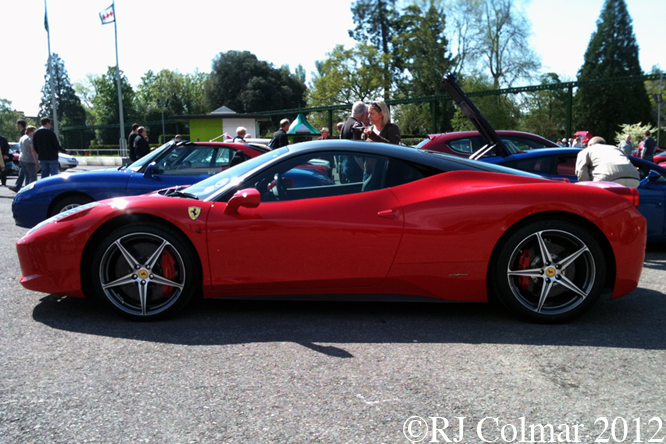
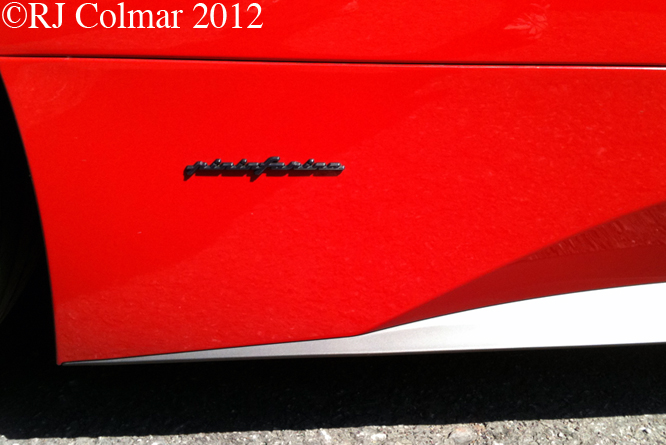
The body, one of the most graceful Ferrari’s ever in my opinion, was designed by Pininfarina, it generates 140 kgs / 308 lbs of down force when traveling at 124 mph.

Ferrari 458 Italia, Simply Italian Beaulieu

Launched in 2009 the 458 Italia features many technologies carried over from recent Ferrari Formula One programmes.

Ferrari 458 Italia, Simply Italian Beaulieu

These include the steering wheel which incorporates a number of controls that are familiar to Formula One drivers.

Ferrari 458 Italia, Simply Italian Beaulieu

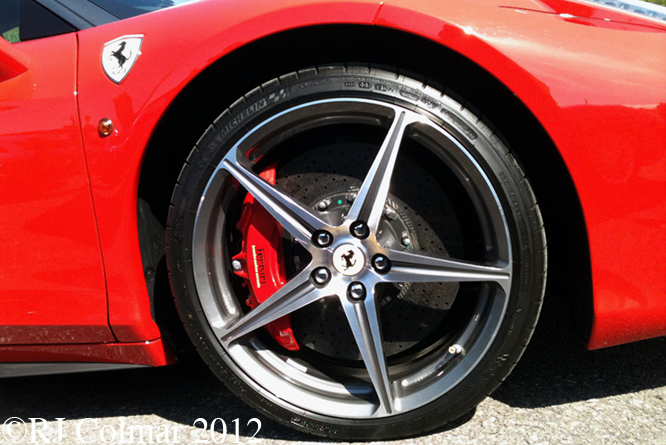
The brake calipers are designed to return the pads into close proximity with the brake discs after lifting off in order to reduce the delay the next time they are used, this has helped reduce breaking distances to 32.5 meters / 35.6 meters when decelerating to rest from 62 mph.

Ferrari 458 Italia, Simply Italian Beaulieu

With 562 hp from its 4.5 litre / 274.6 cui V8 the 458 Italia holds the current world record for power per litre / cui from a naturally aspirated production engine.

Ferrari 458 Italia, Simply Italian Beaulieu

Traditional manual transmission is not an option on the 458 Italia relies on a paddle shift on the steering wheel to operate the dual-clutch and seven speed gearbox, again technology which is derived from current Formula One practice.

Ferrari 458 Italia, Simply Italian Beaulieu

The roll out of the 458 Italia has been interrupted by a poor choice of adhesive used in the rear wheel arch assemblies which proved lacking in heat resistance which caused several wheel arch assemblies to distort and catch fire when coming too close to the exhaust. Ferrari recalled 1,248 458 Italia’s to have the rear wheel arch assemblies replaced with new ones using conventional fasteners. Several owners will also have cars damaged by fire replaced.

Ferrari 458 Italia, Simply Italian Beaulieu

It is claimed, by Ferrari, that from rest a 458 Italia will reach 62mph in 3.4 mph and a top speed of over 202 mph and that it will return 21.2 mpg (imperial) and 17.7 mpg (us).

Thanks for joining me on this “Naturally Aspirated Production Engine World Record” edition of “Gettin’ a li’l psycho on tyres” I hope you will join me again tomorrow when I be looking at an unreliable but still championship contending Lotus. Don’t forget to come back now !
Share