Tag Archives: Colmar

Turbo Erika – Ford Escort RS Turbo

Launched with the strap line “Simple is Efficient” the third generation Ford Escort was code named “Erika” while in development taking the name from Fords Product Planning Dept leader Erick A. Reikert.
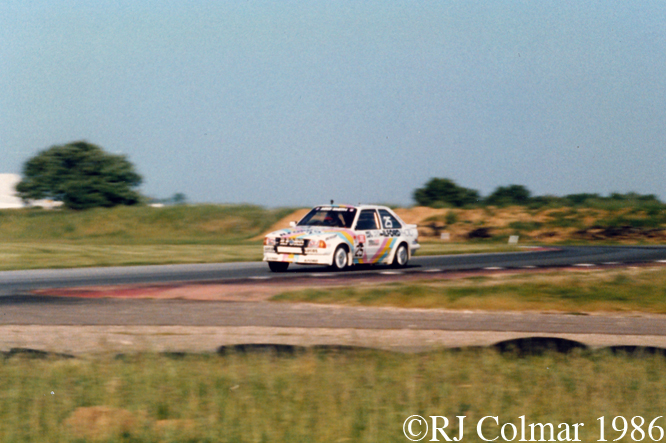
Ford Escort RS Turbo, Snetterton

The Escort MKIII went head to head in the market place with the popular Volkswagen Golf which had turned VW fortunes around after the demise of the ‘Beetle’.

Ford Escort RS Turbo, Snetterton

Like the Golf the 3rd iteration of the Escort employed front wheel drive, unlike the Golf the Escort was a conservative hatchback retaining some vestige of a three box shape bodywork at the rear, although the tailgate included the rear sloping window.
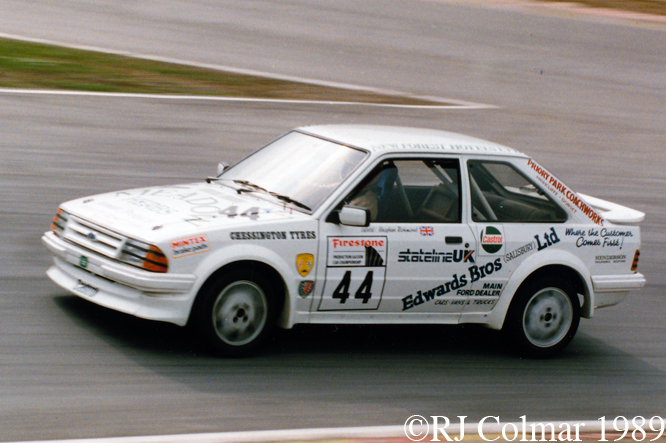
Ford Escort RS Turbo, Brands Hatch

The 132hp RS Turbo version of the Escort was launched in 1984 with the 5 speed transmission driving the front wheels through a viscous coupling differential that was a world first for a front wheel drive car. The RS Turbo proved a strong competitor in production saloon racing where it rendered the hitherto dominant Ford Capri 2.8i obsolete in the space of 12 months.
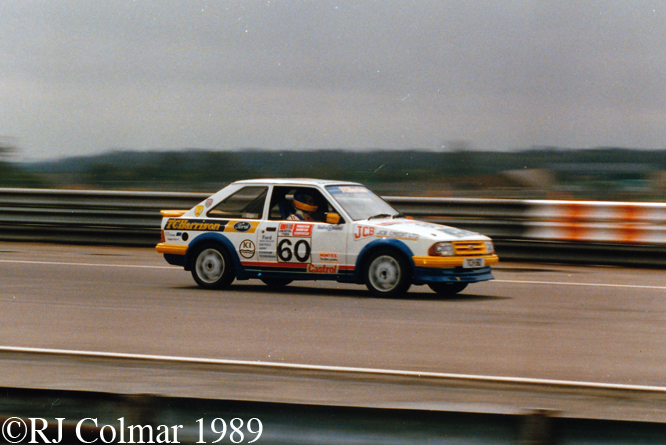
Ford Escort RS Turbo, Silverstone

In the top photo national radio DJ Mike Smith and Lionel Abbot shared the #25 to win the 1986 Willhire 24 hour race at Snetterton at their second attempt becoming the first two driver team to win the race since it’s inception in 1980. The #32 was driven by Karl Jones, Patrick Watts and Chris Creswell in the 1987 Willhire 24 hours qualifying 2nd, to a Ford Sierra RS Cosworth, and finishing sixth, third in class after a late driveshaft failure. By 1989 the Escort RS Turbo’s driven by Vaughan Richmond, #44 seen at Brands Hatch and Jonathon Harrison, #60 seen at Silverstone, were overwhelmed in class B by half a dozen faster BMW M3’s.

My thanks to Tim Murray on The Nostalgia Forum for the race details on the #32 at Snetterton.

Thanks for joining me on this ‘Turbo Erika’ edition of ‘Gettin’ a li’l psycho on tyres’ I hope you will join me again tomorrow for Americana Thursday. Don’t forget to come back now !

Share

Japanese Edition – MG RV8

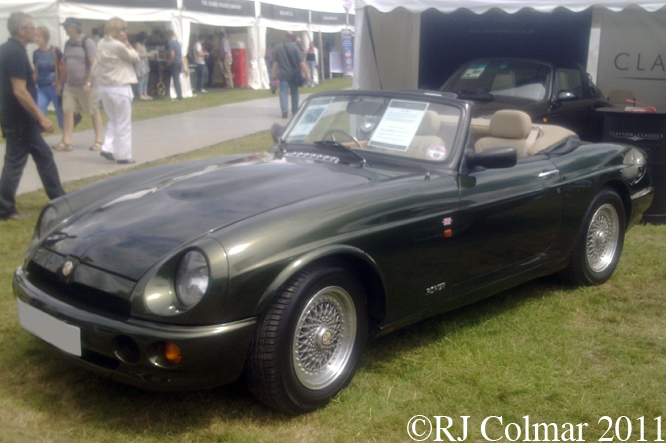
After the success of the Mazda MX5/Miata/Eunos launched in 1989 that all the models sited by Mazda as having been influential on it’s design instantly experienced an increase in demand on the classic market, those cited influences included the Triumph Spitfire, Austin Healey Sprite, MG MGB and Lotus Elan.

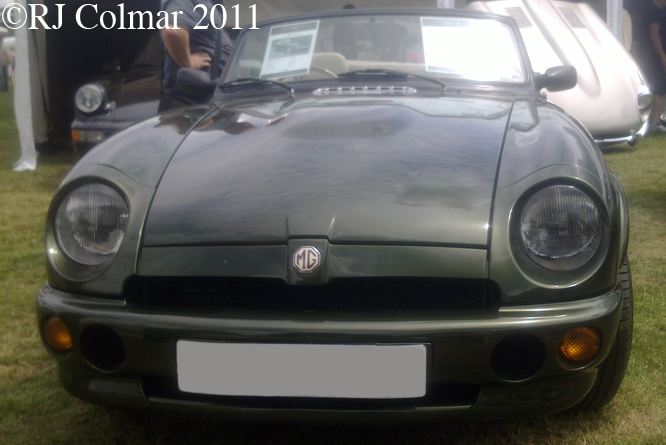
MG RV8, Goodwood, FoS

Such was the demand for all things British in Japan in the early 1990’s that several specialists including Central England Sports Cars and the Frogeye Company on the Isle of White ran thriving businesses exporting renovated Spridgets by the half dozen to Japan. MG also saw the interest in British sports cars created by the MX5 as a opportunity and built a limited edition of 2000 MG RV8’s loosely based around the MG B Roadster.

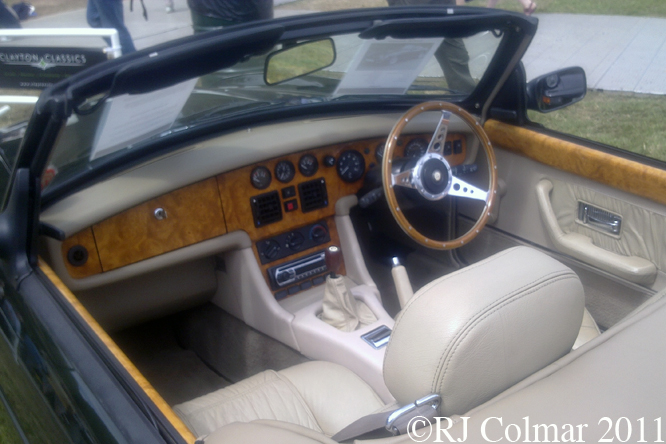
MG RV8, Goodwood, FoS

At the heart of the RV8 roadster was a 3,946 cc / 240 cui V8 based on the aluminium Buick Rover V8 that had become the motor of choice amongst British sports car builders, slightly ironically the original MG B Roadster had never been available the the V8 that was an option for the B GT Coupé bodyshell.

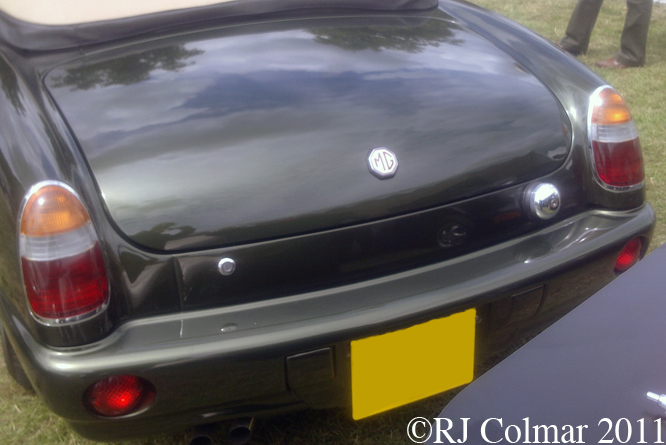
MG RV8, Goodwood, FoS

BBS wheels a good dose of Connolly leather and a splash of veneered Burr Elm completed the look of the reincarnation of the worlds most numerous sports car.The boot / trunk lid and doors are the only panels to carry over from the original MG B all though beneath the skin the rear drum brakes and some suspension components were also carried over from the MG B that was phased out in 1980.

MG RV8, Goodwood, FoS

The RV8 is built for those who travel light the floor of the boot trunk is so high that there is little space for anything beside the full size spare wheel. Between 1993 and 1995 1579 MG RV8’s were exported to Japan leaving just 421 to be distributed through the rest of the world.

Thanks for joining me on this ‘Japanese Edition’ of ‘Gettin’ a li’l psycho on tyres’, I hope you will join me again tomorrow. Don’t forget to come back now !
Share

Pick Up With Pedigree – Reef Engineering Cub

Some times I just cannot believe some of the stories behind some of the cars I feature, today’s nifty li’l Cub designed by Yorkshireman extraordinaire John Crosthwaite, is a case in point.

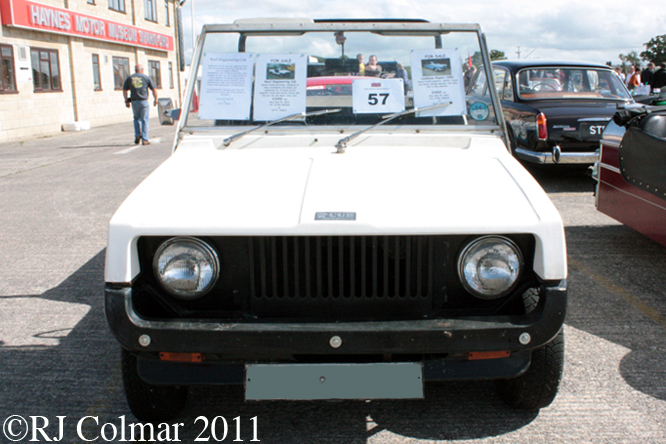
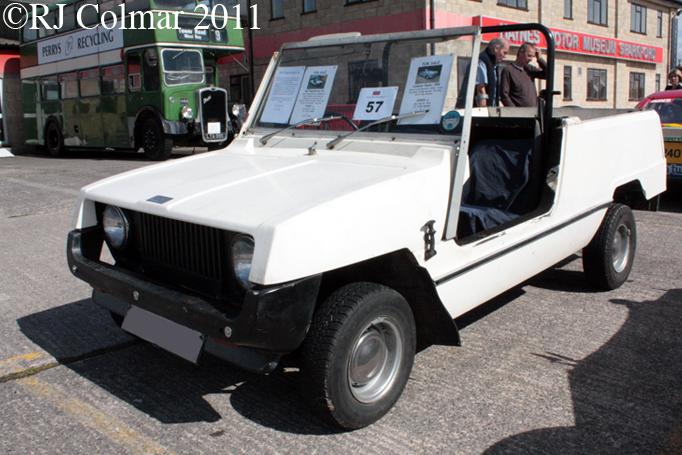
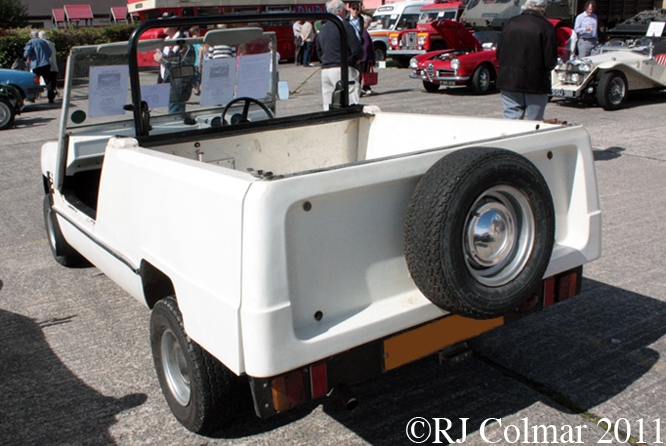
Reef Engineering Cub, Rare Breeds, Haynes IMM

John’s CV included working at Lotus to refine and develop the Lotus XI and 14 Elite models, then spending some time in the States and designing the stock block Thompson Buick Indy 500 challenger Harvey Aluminium Special with which Dan Gurney made his Indy 500 debut.

Reef Engineering Cub, Rare Breeds, Haynes IMM

Following spells at BRM and developing the chassis for the Intermeccanica Italia sports cars John found himself at Reliant where his design legacy included the chassis for the Reliant Scimitar GTE and Reliant Kitten economy car.

Reef Engineering Cub, Rare Breeds, Haynes IMM

Like the Reliant Fox pick up I looked at back in November the Reef Cub is built around a Reliant Kitten chassis.

Reef Engineering Cub, Rare Breeds, Haynes IMM

John’s interest in watersports, including diving, water skiing and wind surfing led him to manufacture the Cub for holiday resorts in the Seychelles and West Indies, though the Cub, with bodywork design accredited to Peter Bailey, appears never to have gone into production.

Reef Engineering Cub, Rare Breeds, Haynes IMM

The car featured is thought to be one, the only one registered in the UK, of four prototypes all of which are / were allegedly different. This car was owned by John Crosthwaite’s daughter for ten years.

Thanks for joining me on this ‘Pick Up Pedigree’ edition of ‘Gettin’ a li’l psycho on tyres’, I hope you will join me again tomorrow. Don’t forget to come back now !
Share

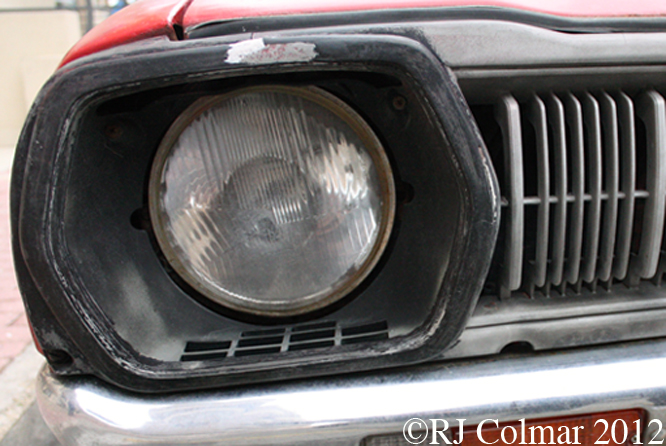
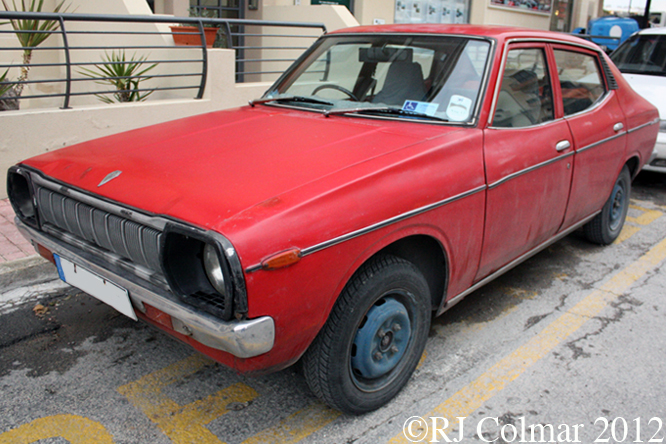
Here Comes The Sun (Slight Reprise) – Datsun 120A F-II

It is hard to believe that it is 30 years since Datsun’s parent company Nissan started to phase out the use of the Datsun brand name from global markets at an estimated cost in the USA alone of some US$500.

Nissan 120A - FII

So it was a surprise to learn that Nissan are to reactivate the brand for base models that will capture markets in India, Russia and Indonesia from 2014 in an effort to win an 8% global market share.

Nissan 120A - FII

The Datsun name is a derivative of the Datson model that was marketed in 1931 by the DAT Jidosha & Co.,Ltd, a name born in 1925 out of three financial backers of the Kaishinsha Motorcar Co (1918) and it earlier incarnation Kaishinsha Motor Car Works (1911) founded by Masujiro Hashimoto called Kenjiro Den, Rokuro Aoyama and Meitaro Takeuchi .

Nissan 120A - FII

At the time the company sold two models the larger DAT and smaller Datson, son translates as son in Japanese. Because son also means ‘disadvantage’ in Japanese the name was later changed to Datsun in 1932. Following a couple of mergers Datsun was taken over in by Nihon, Sangyo Co., Ltd 1934 who changed the corporate name of the manufacturer but continued to use the Datsun brand name particularly in export markets.

Nissan 120A - FII

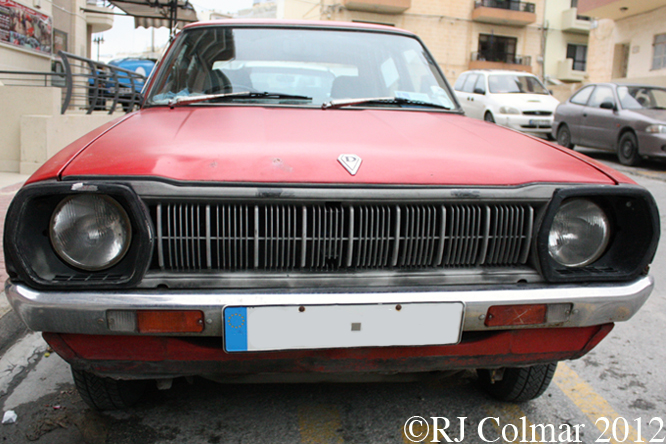
The second generation 120A F-II was known in Japan as the Cherry and marketed through ‘Nissan Cherry Shop’ Dealerships.

Nissan 120A - FII

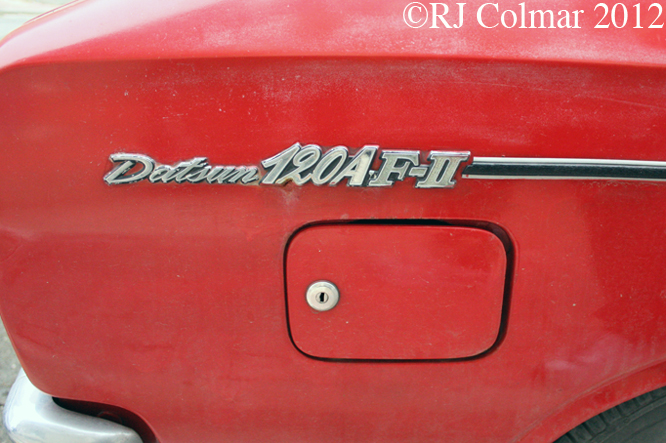
120A F-II refers to the A12 4 cylinder motor with a capacity of 1,171 cc 71 cui, a smaller version 100A was also produced, production of the 100A continued in New Zealand until 1980.

Nissan 120A - FII

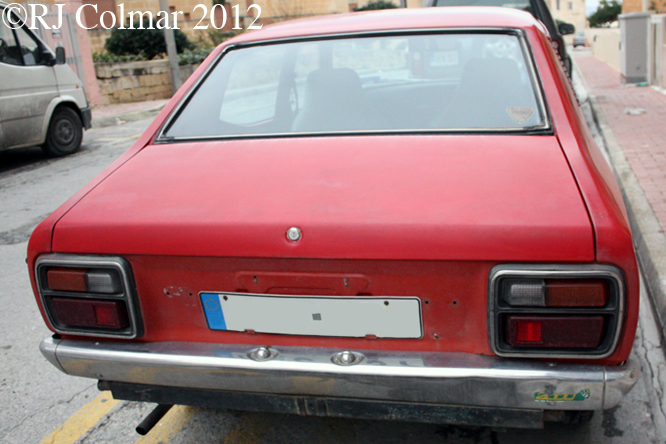
While the styling of the 120A F-II was a tad wayward by contemporary European standards the reliability of the 100A & 120A meant that by the time they hit the scrap yards they usually had much higher mileages than the better looking European models of the time. The 100A and 120A F-II models were in production from 1974 to 1977.

Share

Under Australian Influence – Lotus 41

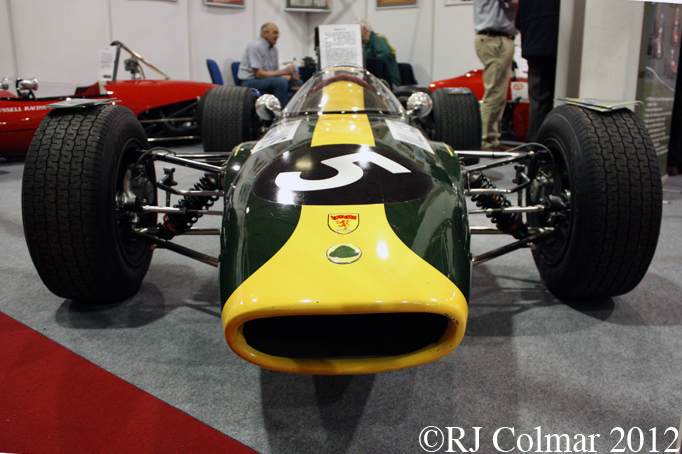
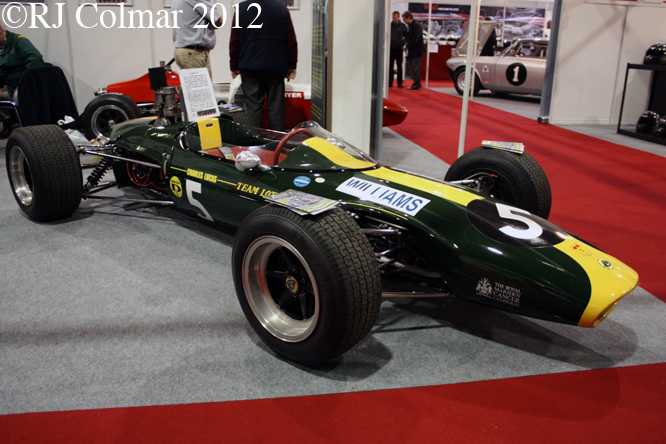
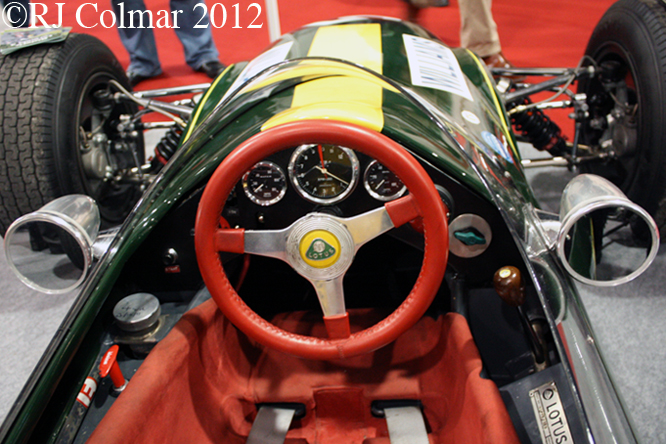
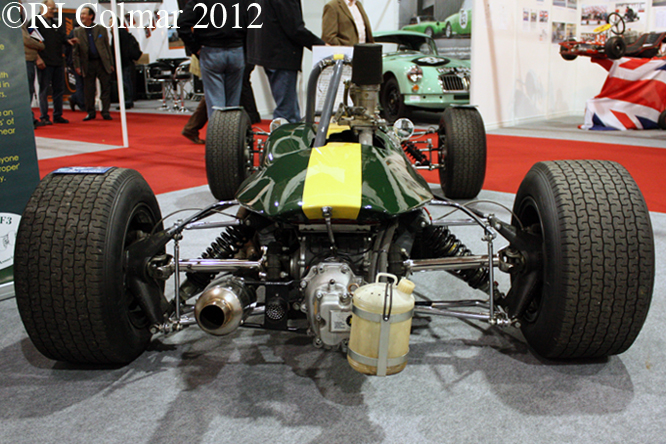
The Lotus 41 was designed and built to meet the second and third tier European open wheel Formula’s 2 and 3 along with the US Formula B regulations for the 1966 to 1968 seasons.

Lotus 41, Race Retro

Designed by Australian John Joyce assisted by Dave Baldwin the Type 41 featured a space frame constructed from welded steel tubes with stressed steel plates around the foot well, instrument panel and rear bulkhead. Steel was chosen in favour of lighter aluminium to ensure the car met the minimum weight limit requirements stipulated by the Formula regulations for which the car was built.

Lotus 41, Race Retro

Brewery heir Piers Courage driving a works backed Lotus 41, for the same Lucas Engineering team that was involved with the Martin V8 powered Lotus 35 I looked at a couple of weeks ago, won the French Craven ‘A’ Formula 3 series.

Lotus 41, Race Retro

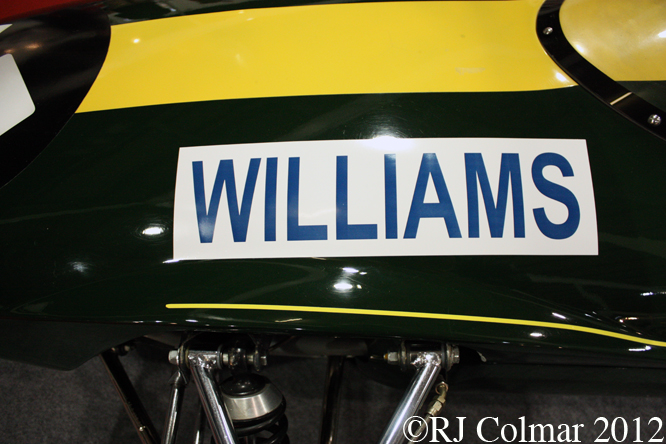
Back in 1966 drivers names were mandated on the sides of open wheel Formula cars to help spectators identify the drivers, the name ‘Williams’ seen here refers not to the Piers Courages team mate and driver of the camera car in Steve McQueens film Le Mans Jonathon Williams, but to Dr Gareth Williams, owner of today’s featured car.

Lotus 41, Race Retro

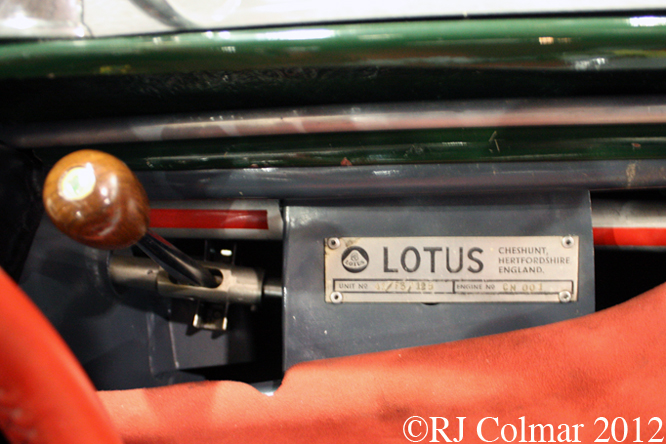
Dr Williams car chassis 41/F3/12b, seen here at Race Retro, is known to have been used competitively by Swiss driver Jean Blanc in 1966 and ’67 and passed through the hands of four further owners before being restored in 1993.

Lotus 41, Race Retro

History records, Courages success in France not with standing, that the Lotus 41 was out classed by the more numerous Brabham 18A designed by another Australian Ron Tauranac. After returning to Australia in 1968 John Joyce founded Bowin Designs Pty where he built a string of successful cars that dominated the 1970’s Australian Formula Ford scene.

Lotus 41, Race Retro

Sixty One Lotus 41’s are thought to have been built some were still running in much modified form in the early 1970’s Formula B regulations complete with additional bodywork and wings like the one seen in the thread on The Nostalgia Forum linked here.

Thanks for joining me on this ‘Under Australian Influence’ edition of ‘Gettin’ a li’l psycho on tyres’, I hope you will join me again tomorrow. Don’t forget to come back now !
Share

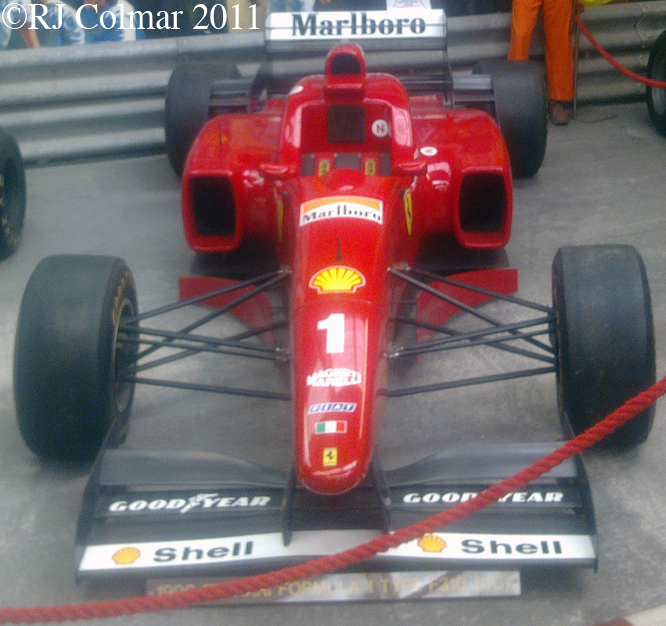
Static Show Car – Ferrari F310

Coming off two championship wins with Benetton in 1994 powered by Ford and 1995 powered by Renault Micheal Schumacher named his price, allegedly of the order of $30 million per year, and joined Ferrari in order to take up the challenge of attempting to become the first driver to win the World Drivers Championship in a Ferrari since Jody Scheckter in 1979.

Ferrari F310, Haynes IMM

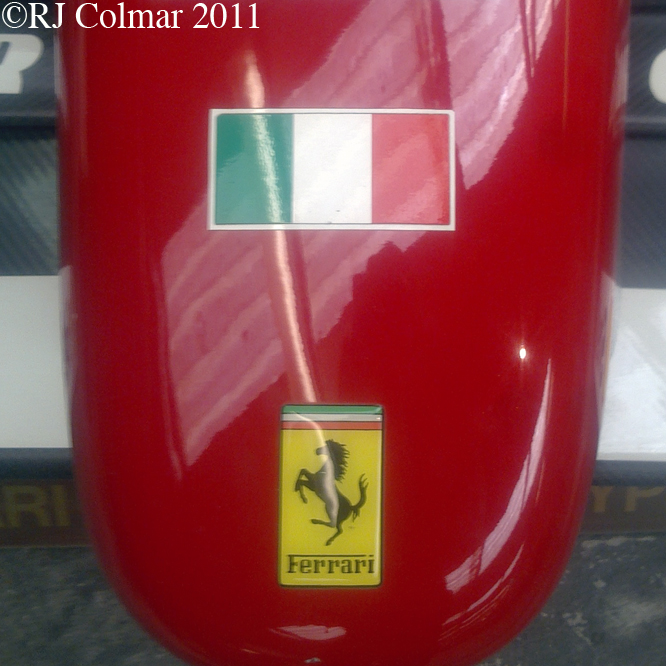
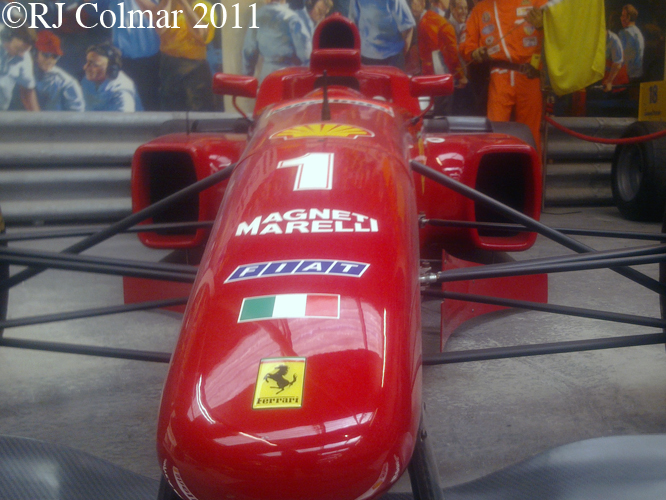
John Barnard who’s designs include the Indy 500 winning Chaparral 2K and Grand Prix Winning McLaren MP4/1 and subsequent championship winning McLarens was responsible of the design of the F310 with which Schumacher was to win races in in 1996 and challenge for the championship in 1997.

Ferrari F310, Haynes IMM

The original version of the F310 featured the only low nose in the field …

Ferrari F310, Haynes IMM

but by the half way mark a high nose as pioneered by Dr Harvey Postlethwaite and Jean-Claude Migeot at Tyrrell in 1990 was permanently adopted by the Ferrari Team in order to maximize the use of airflow beneath the car to the advantage of the cars handling. It is curious that Jean-Claude Migeot did not introduce the feature during his spell at Ferrari in 1992.

Ferrari F310, Haynes IMM

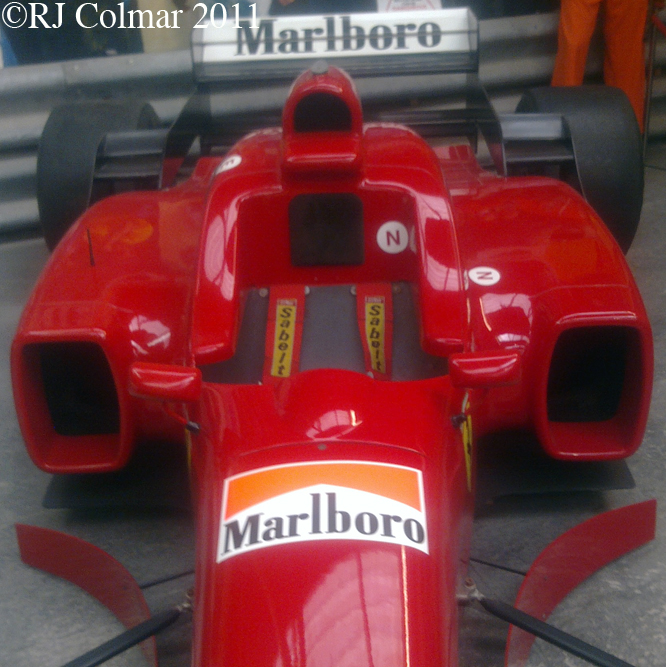
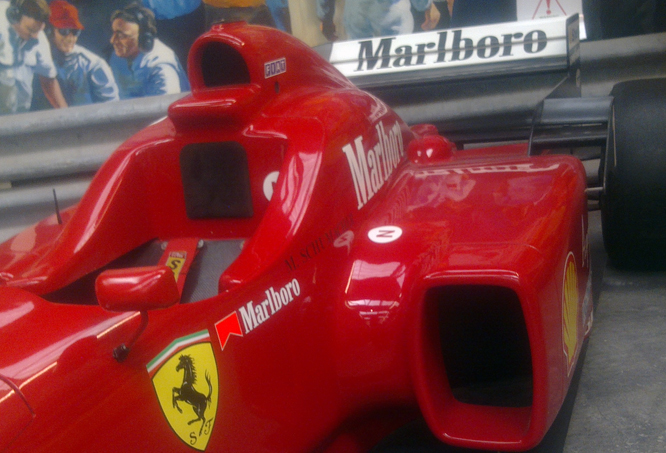
The design if the F310’s side pods with a separate…

Ferrari F310, Haynes IMM

‘floor’ beneath harks back to the Ferrari F92A a design that proved so recalcitrant that it led to designers Jean-Claude Migeot and Steve Nichols replacement by John Barnard !

Ferrari F310, Haynes IMM

The F310 was the first Ferrari to feature a 3 litre / 183 cui V10 motor, although this static show car seen at the Haynes International Motor Museum probably does not even have a mock engine, again following pioneers Renault and Honda who had opted for this unusual yet successful layout in 1989. Reliability was an issue for these V10 motors though that did not stop Micheal winning 3 races in 1996 and challenging, albeit controversially, for the championship with the F310B in 1997.

Thanks for joining me on this ‘Static Show Car’ edition of ‘Gettin’ a li’l psycho on tyres’ I hope you will join me again tomorrow when I’ll be looking at a Lotus 41. Don’t forget to come back now !

Share

Hot Business – Ford Business Coupé

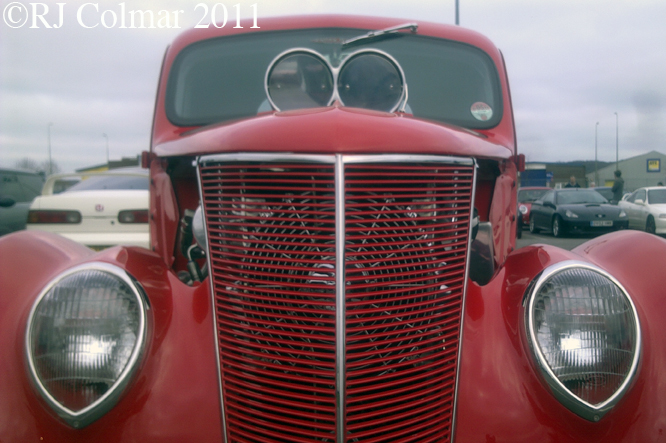
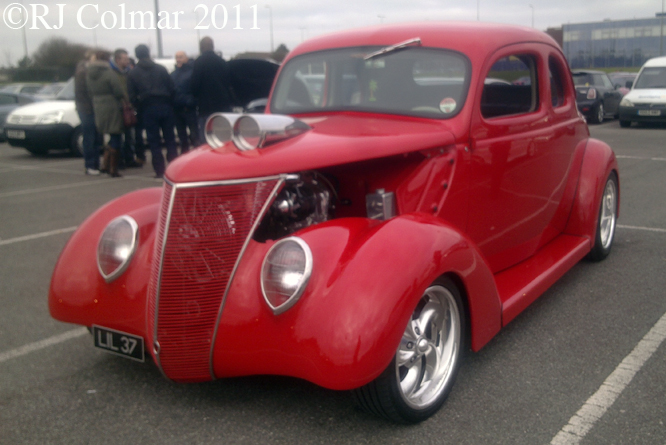
Even after an interest in motoring that goes back over 40 years every once in a while I learn about a Ford model I have never heard of before, such is the case with the 1937 Ford Business featured today which I mistook for a De Luxe.

Ford Business Coupé, BMW Plant

It turns out the Business was a base model range to introduced in 1937 that replaced the Model B and stayed in production only until 1940.

Ford Business Coupé, BMW Plant

Many of the features apart from the V shape grill of the Business were shared with the Standard and De Luxe models.

Ford Business Coupé, BMW Plant

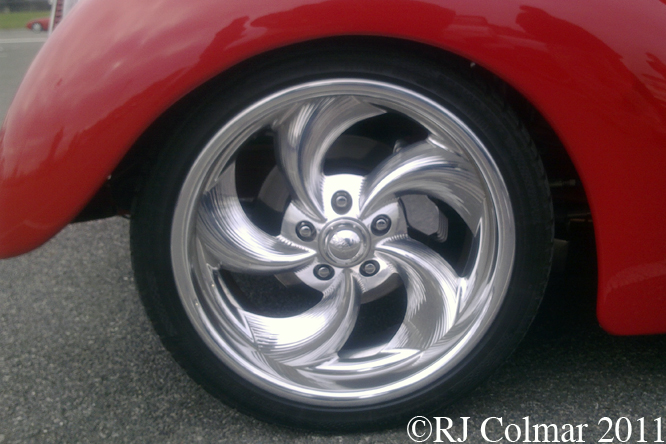
The Business Coupé seen here would have originally been fitted with cable operated drum brakes.

Ford Business Coupé, BMW Plant

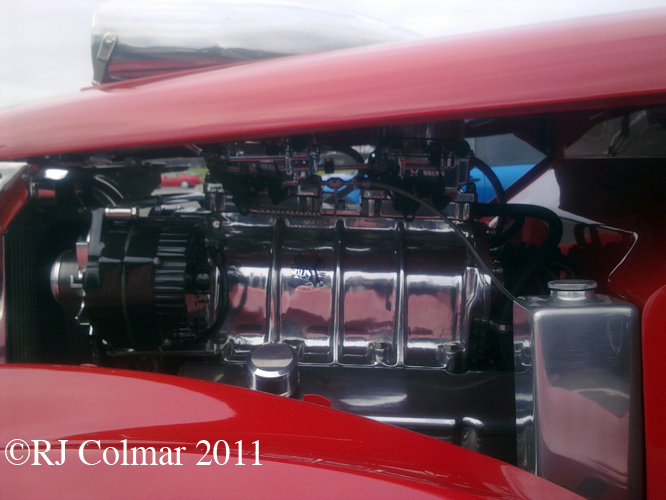
Engine options were either 60 hp 2.2 liter / 136 cui or 80 hp 3.6 liter / 221 cui V8’s, the one seen here is listed as fitted with non standard a 5 liter / 305 cui.

Ford Business Coupé, BMW Plant

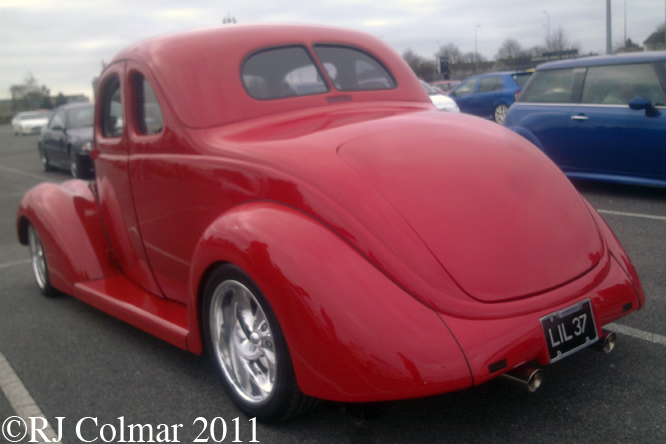
The Business was available in Sedan, 8 seat station wagon, Coupé and Convertible versions.

Thanks for joining me on on this ‘Pleasure Business’ edition of ‘Gettin’ a li’l psycho on tyres’, I hope you will join me for Ferrari Friday tomorrow. Don’t forget to come back now !
Share