Tag Archives: Colmar

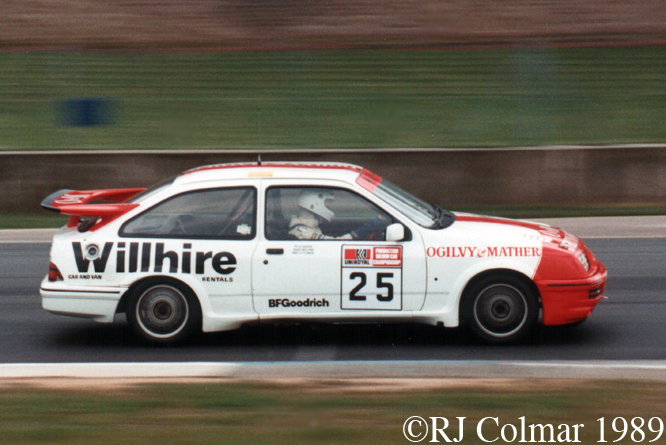
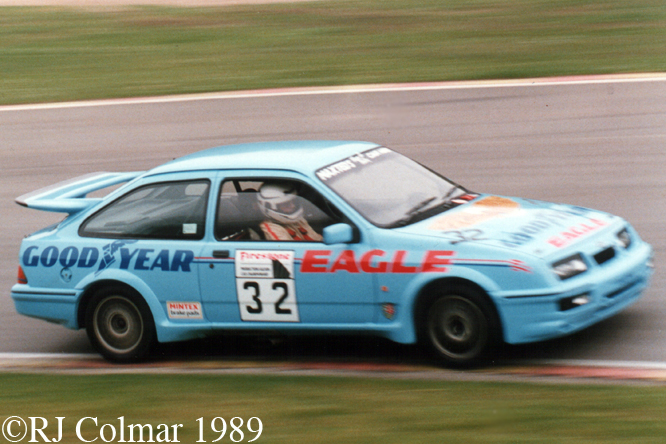
Toni Tickford – Ford Sierra RS500 Cosworth #159

In 1982 a set of regulations was introduced called Group A which required 5000 examples of a model to be certified as having been manufactured in order to qualify for the series. As we saw last week under the guidance of Stuart Turner, head of Ford Motorsport Europe, Ford developed the Ford Sierra RS Cosworth to take part in races for vehicles conforming to these regulations.
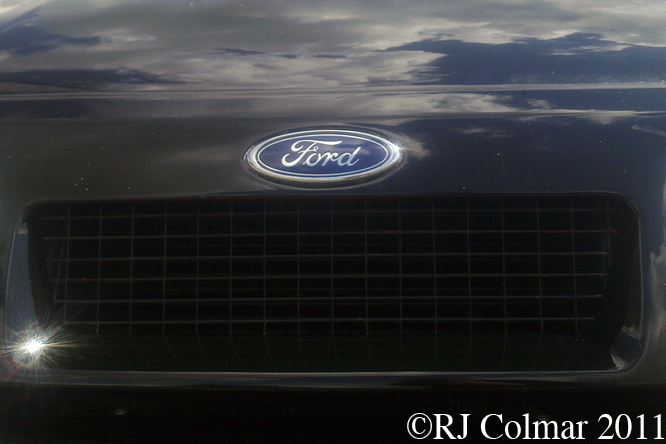
Ford Sierra Cosworth RS500, Castle Combe, C&SCAD

The Group A racing regulations also allowed for an evolution of the 5,000 base RS Cosworth models so long as at least 500 were sold to the public. Mike Moreton was charged with developing the Ford Sierra RS Cosworth into the 224 hp Cosworth YBD powered Ford Sierra RS Cosworth RS500 evolution.
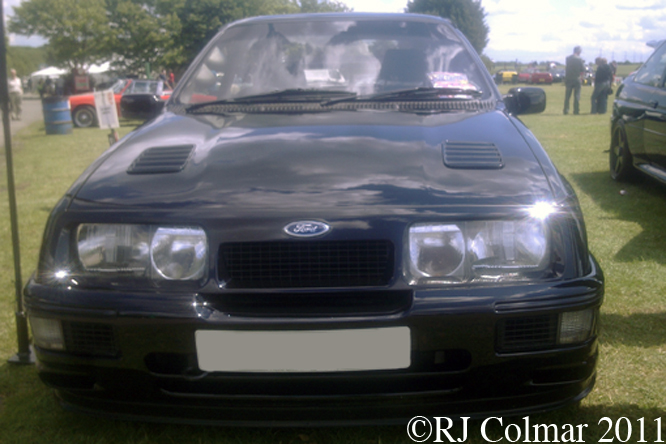
Ford Sierra Cosworth RS500, Castle Combe, C&SCAD

In 1987 Tickfords were given the contract to build them, 392 black like build #159 seen here at Castle Combe, 56 white and 52 Moonstone blue, all of the Sierra RS Cosworth’s and RS500’s were right hand drive models.
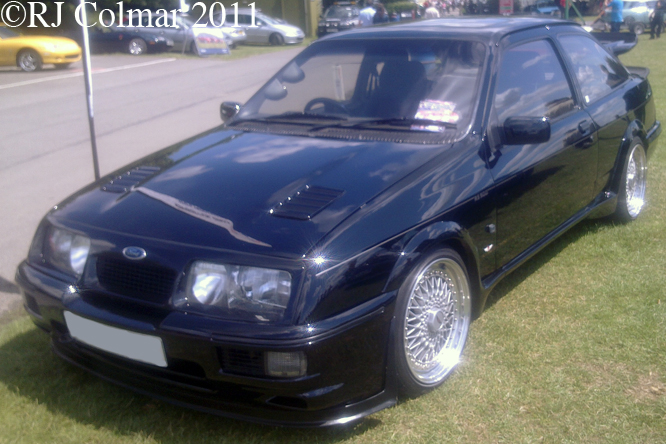
Ford Sierra Cosworth RS500, Castle Combe, C&SCAD

The RS500, with nearly 500 hp in race trim proved to be an amazing success on the race track taking many overall victories and winning the European Touring Car Championship for Ford in 1988, however few Sierra RS500 Cosworth drivers won championships outright because Group A was divided into classes according to engine size and Class A for cars with the biggest motors was always far better subscribed than the classes for smaller vehicles.
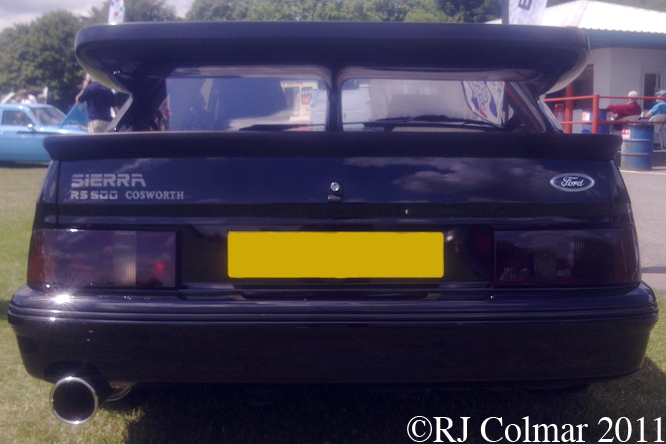
Ford Sierra Cosworth RS500, Castle Combe, C&SCAD

Andy Rouse in the #1 is seen leading Mike Smith in the #20 in a typically close fought round of the British Touring Car Championship in 1989 above, the #20 was a car supplied by Australian Dick Johnson one of the few RS500 drivers to win a championship he won the 1988 and 1989 Australian Touring Car Championships along with the 1989 Bathurst 1000.
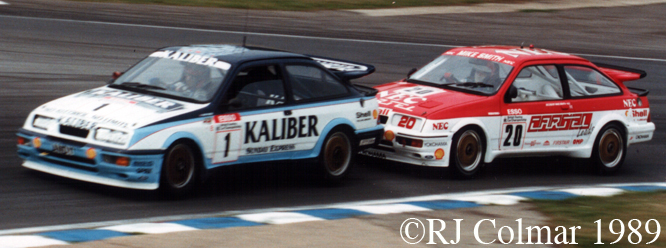
Ford Sierra RS500 Cosworth, Brand Hatch

One of the all time best races I ever saw was at Brands Hatch in 1988 with Andy Rouse and Steve Soper driving an Eggenberger Sierra drove nose to tail for 20 thrilling laps of one of the best tracks in Britain, check it out on this link you will not be disappointed, I was there and have watched the race on youtube many times since.

Thanks for joining me on this ‘Toni Tickford’ edition of ‘Gettin’ a li’l psycho on tyres’, I hope you will join me again tomorrow. Don’t forget to come back now !

Share

Everything Is Fresh – MG-B Roadster

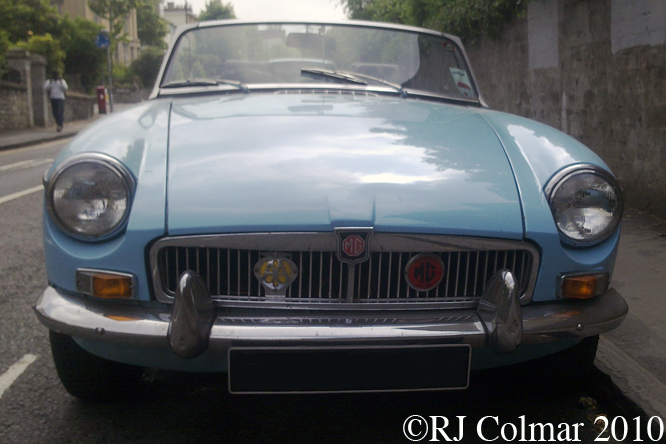
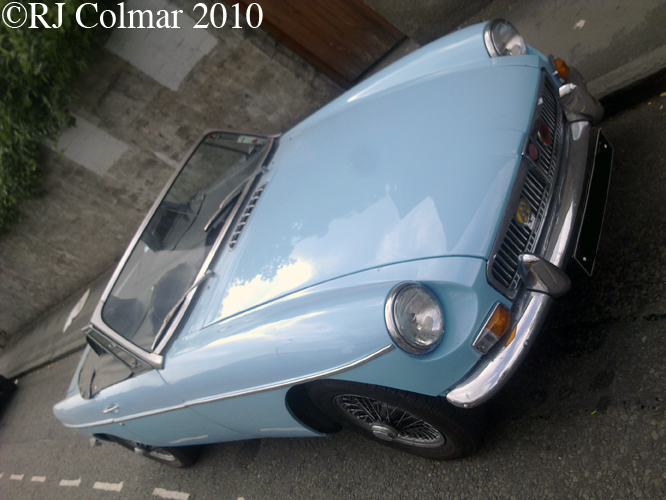
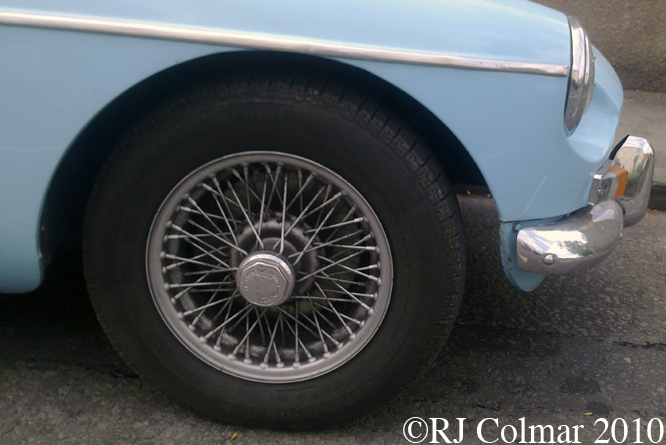
In 1962 MG replaced the MG-A with the MG-B roadster which featured unitary monocoque body construction.

MG-B

Despite being three inches shorter than the A series cars the MG-B had more interior space for the occupants and their luggage.

MG-B

Mk 1 models initially came with a 95 hp motor with a 3 bearing crankshaft which in 1965 was replaced by a 5 bearing crankshaft for improved reliability with no gain in power.

MG-B

The 95 horsepower motor coupled with softer suspension gave the car a higher, 100 mph, top speed and smoother than the MG-A which it replaced. The brakes of early MG-B’s are notoriously heavy to use because servo assistance was not added until 1975.

MG-B

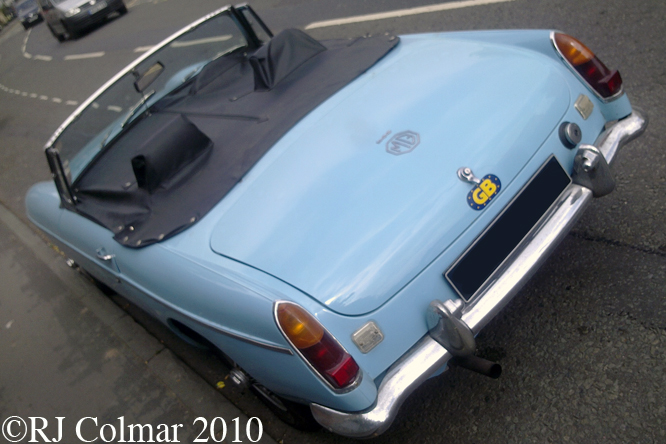
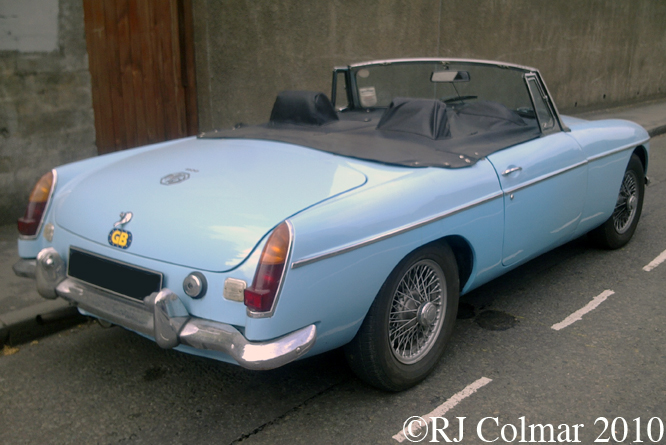
MG-B’s of the ’67 – ’68 period seen here had 12 volt electrics courtesy of a pair of 6 volt batteries wired in series that were to be found behind the seats, making access difficult but aiding the handling. Windows that could be wound up and down was a novelty for the MG-B when it was launched.

MG-B

The only way of telling if this model is a MK1 or MK2 would be too look under the Tonneau to see if it has the flat topped transmission tunnel of the fully synchronized four speed Mk2 gearbox.

Everything was not quite as fresh about the MG-B as the brochure would have had us believe but the MG-B did prove to be another export success and competition success with a class win in the 1965 Monte Carlo Rally, 1966 Targa Florio and Spa 1000 kms and outright wins in the 1965 Guards 1000 miles and at Brands Hatch and 1966 84-hour Marathon de la Route at the Nurburgring.

Thanks for joining me on this ‘Everything Is Fresh’ edition of ‘Gettin’ a li’l psycho on tyres’, I hope you will join me again tomorrow. Don’t forget to come back now !
Share

2012 Ranchero Mirage Desert Classic Concours d’Elegance – Palm Springs

It is a huge pleasure to know that the 2012 Concours d’Elegance season got underway a couple of weeks ago in Palm Springs, not least because thanks to Geoffrey Horton I’ll be able to shore some photo’s of altogether sunnier climbs as Europe struggles to get spring underway.

Benz, Desert Cassic C d'E

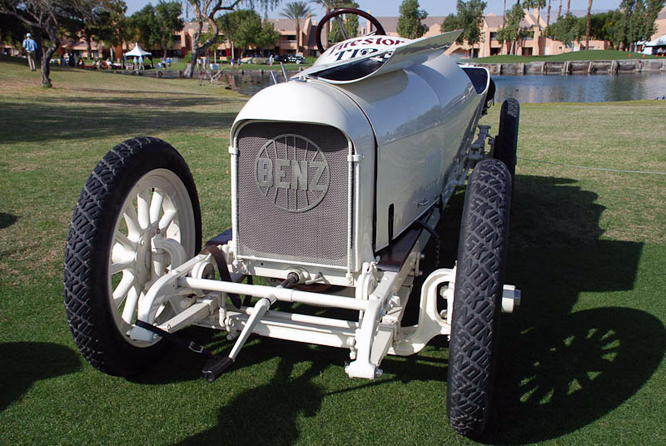
Geoffrey sent me a stack of photo’s of which I have picked a few to give a flavour of the Desert Classic Concours d’Elegance today, starting with Barney Oldfield’s 1909 Benz about which at the moment I know very little, but which in the coming weeks I hope to find out more for a future post.

Delahaye, Desert Cassic C d'E

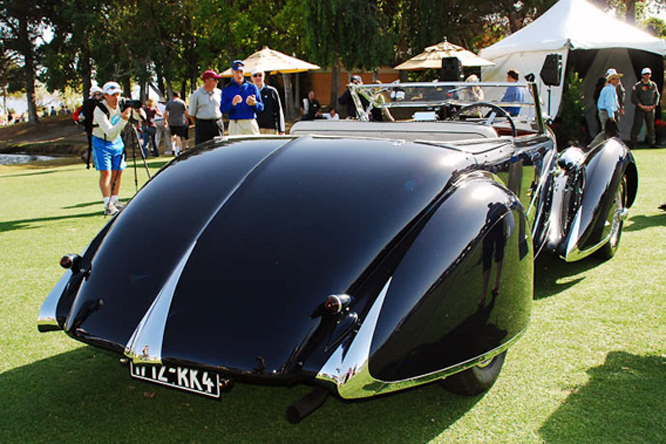
The only thing I know about this 1936 Delahaye 135 Competition is that the exquisite bodywork is by Figoni et Falaschi, likewise I hope to find out more for a future post.

Rancho Mirage Desert Classic C d'E

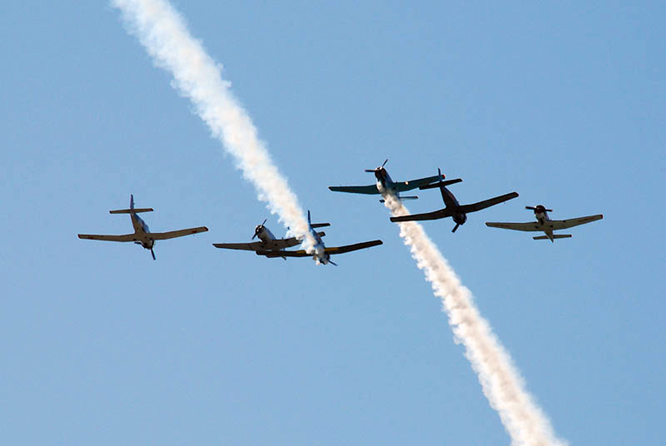
It looks like the air display team was flying Harvard trainers but I can’t be absolutely sure about even that !

Kurtis, Desert Classic C d'E

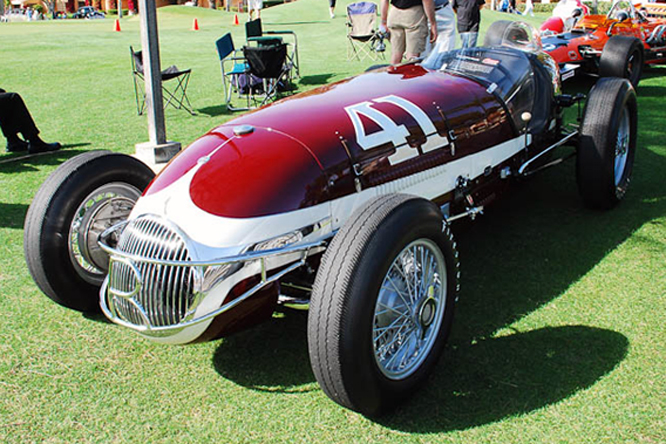
The 1946 Kurtis Millar was one of the few new cars built for the 1946 Indy 500, it was raced without success by Leon Duray in ’46, ’47, ’48, I look forward to sharing a few more of it’s secrets in the week leading up to the Indy 500 in May.

Dyna Flow, Desert Classic C d'E

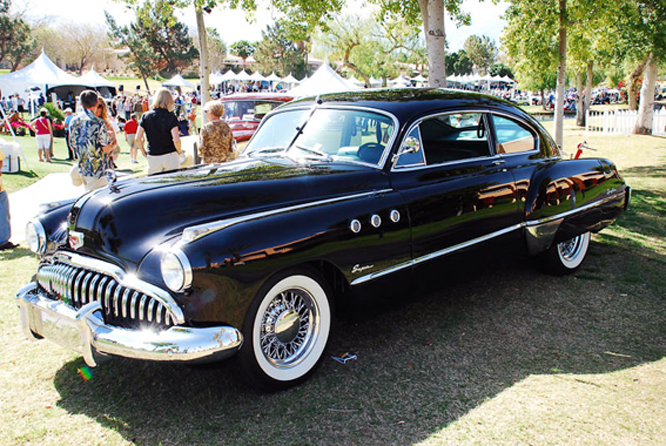
The forth generation Buick Roadmaster is probably best remembered for the introduction of the Dyna Flow automatic transmission that had previously fitted to WW2 ‘Hellcat’ Tanks also manufactured by Buick. Dyna Flow was the earliest automatic transmission on a passenger vehicle to make use of a torque converter for smooth, if inefficient automatic changes of gears.

Kurtis 500M, Desert Classic C d'E

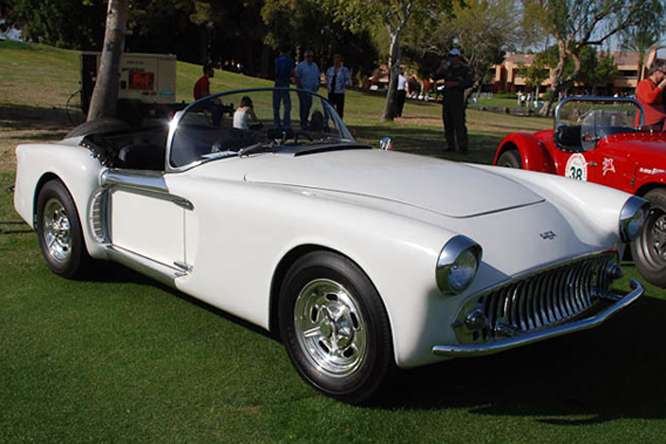
Above is one of around 20 Kurtis Kraft 500M models built between 1954 and 1955 complete with fibre glass body and 135 mph capability.

Gogomobil, Desert Classic C d'E

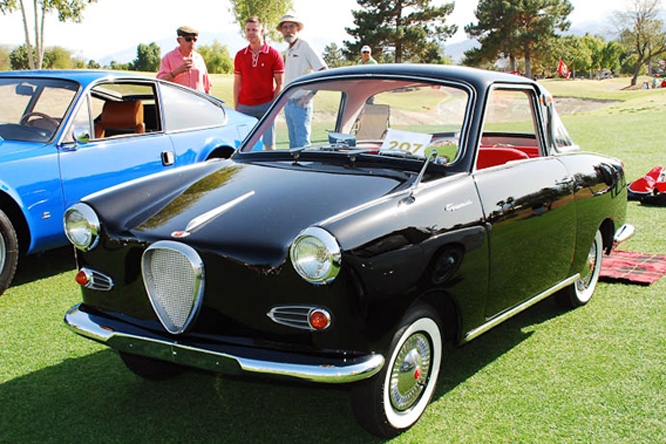
On the 15th October 1957 film maker Peter H. Backhaus and his wife Marlotte set off on a round the world voyage in a two tone red and white Goggomobil Coupé TS 300 similar to the one above. They reached Japan where a technical defect requiring new parts that were refused entry by customs officials meant that Glass GmbH who manufactured the Gogomobil and sponsoring the adventure ended up having to supply Peter and Marlotte with a new car, a later Isar T700 model which meant once they had completed their circumnavigation Peter and Marlotte had to film the entire journey to Japan a second time so that only the second car appeared in the documentary Backhaus made of the journey.

The entire enterprise took some 5 years, but the film “Traumreise zu Dritt – Im Goggomobil um die Welt” “Dream trip threesome – In Goggomobil around the World” was a huge hit when it was released in Germany in 1964.

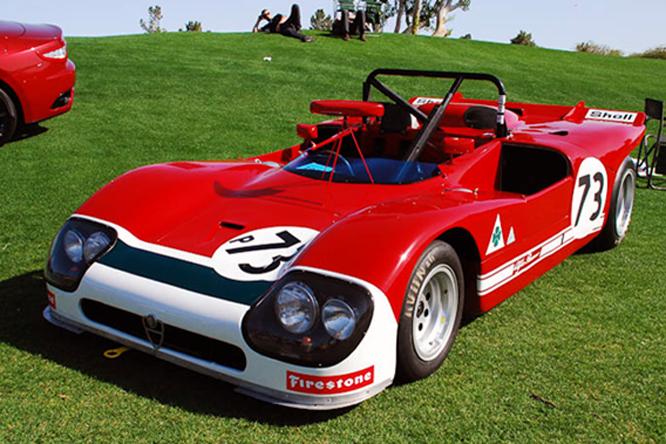
ALFA Romeo T33, Desert Classic C d'E

Among the many racers from the late 60’s early 1970’s was this 3 litre / 183 cui V8 ALFA Romeo T33 sports prototype which appears similar to the 1971 spec 33/3 driven by Henri Pescarolo and Andrea de Adamich which out lasted the Porsche 917’s at Brands Hatch to win the BOAC 1000kms. Similar T33/3’s of Vaccarella / Hezemans and de Adamich / van Lennep survived to take a one two on the Targa Florio in 1971 after all the Porsche 908’s crashed. Despite the best efforts of the Andretti family, where he had been staying, to wear him out, Ronnie Peterson with de Adamich also won the Watkins Glen endurance race in a T33/3.

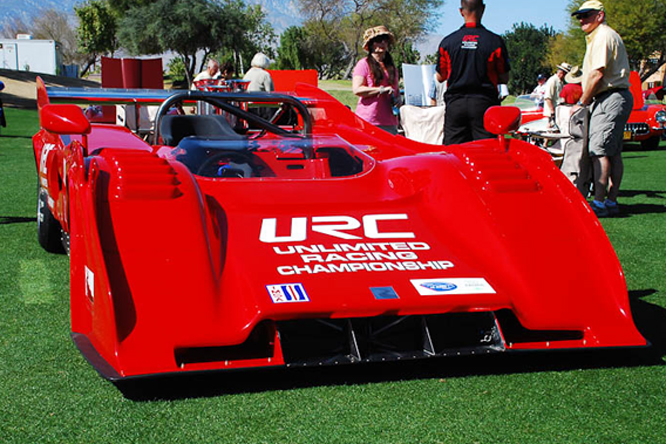
NuArt Can Am, Desert Classic C d'E

Finally anyone with cash burning holes in their pockets might like to consider purchasing a 700 hp NuArt Can Am and taking part in the spec series Unlimited Racing Championship which is scheduled to run with 4 ALMS ‘Heritage’ Series race weekends and eight additional race weekends.

My thanks to Geoffrey Horton for sharing today’s fabulous photographs.

Thanks for joining me on this ‘Desert Classic’ edition of ‘Gettin’ a lil psycho on tyres’ I hope you will join me again tomorrow. Don’t forget to come back now !

Share

£24 Complete Including Packing – Mini Ridgeway Sports Conversion

Soon after starting Gettin’ a li’l psycho on tyres I was pleasantly surprised to learn that the sleepy little town of Farnham in Surrey close to where I went to school once had a budding motor industry, first by finding out about the Abbots of Farnham Coachworks which amongst other things was responsible for a Fraser Nash BMW body, the bodies of several Bristol’s and several Ford’s, then I found out about the cute little 2 cylinder Carden.

Mini's, Farnham

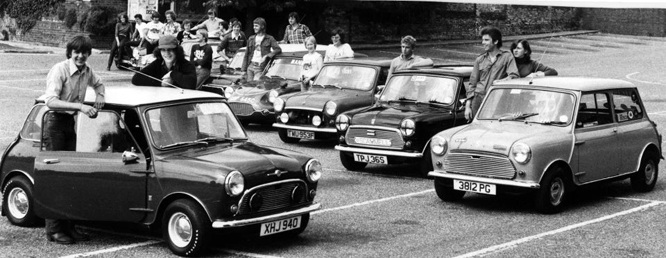
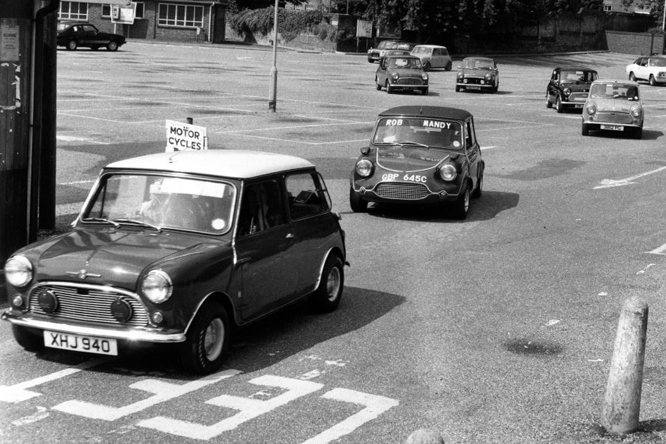
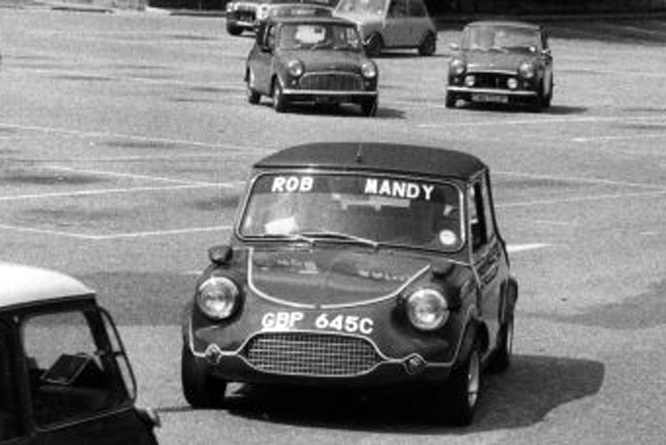
Today’s story began a couple of weeks ago when I was looking at a facebook page called I Love Farnham Surrey where I stumbled across today’s photo’s of a 1979 gathering of Mini’s in Farnham’s central car park posted by Stephen White.

Mini's, Farnham

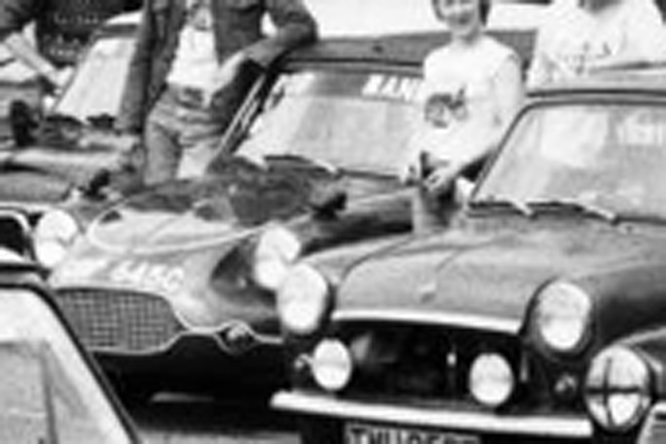
I did not notice anything particularly special about the car park behind the bank where I opened my first bank account until the Mini with the special nose caught my attention. It turns out to be a Ridgeway Sports Conversion a £24 fiber glass kit that was marketed by the Ridgeway Rd, Garage in Farnham.

Mini's, Farnham

The garage was owned by a Mr Lawrence who’s son Richard had such a nose on his own Mini as did his Uncle who raced his Ridgeway converted Mini at Eelmor Plain near the Army Training Grounds just outside Aldershot.

Mini's, Farnham

Stephen tells me the meeting was arranged so that he and his friends could go to Donington Park in convoy to celebrate the 20th Anniversary of the Mini.

I’d like to thank Stephen White for kindly allowing me to use his photo’s and Colin Cole for identifying the Ridgeway Conversion.

Thanks for joining me on this £24 Including Packing edition of ‘Gettin’ a li’l psycho on tyres’, I hope you will join me again tomorrow. Don’t forget to come back now.

Share

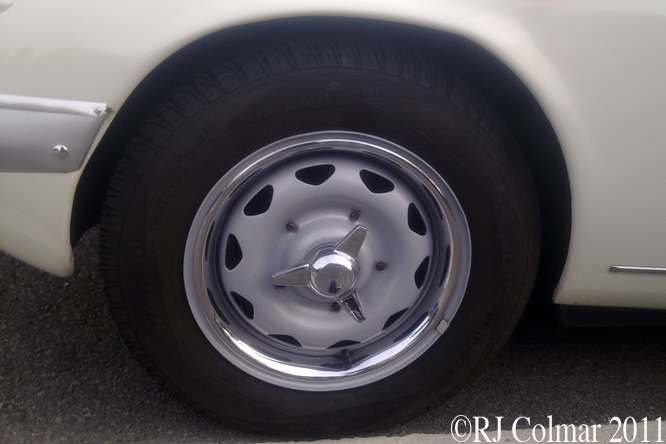
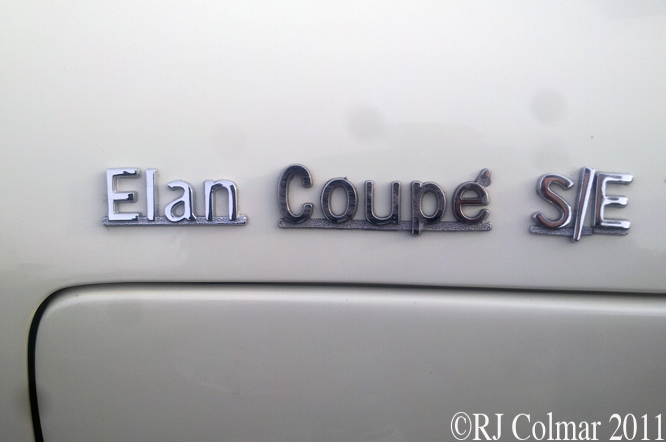
Special Equipment – Lotus Elan Coupé S/E

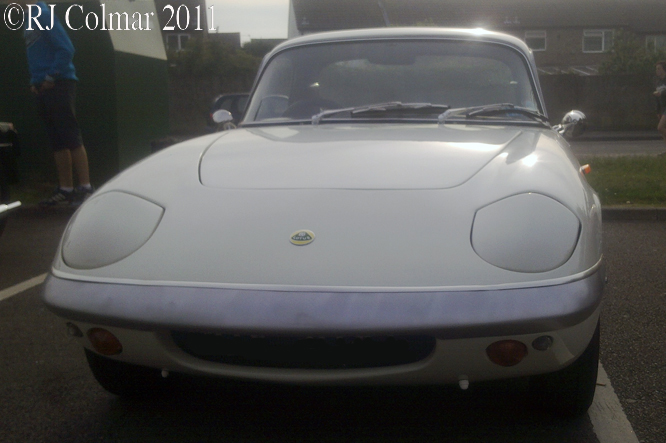
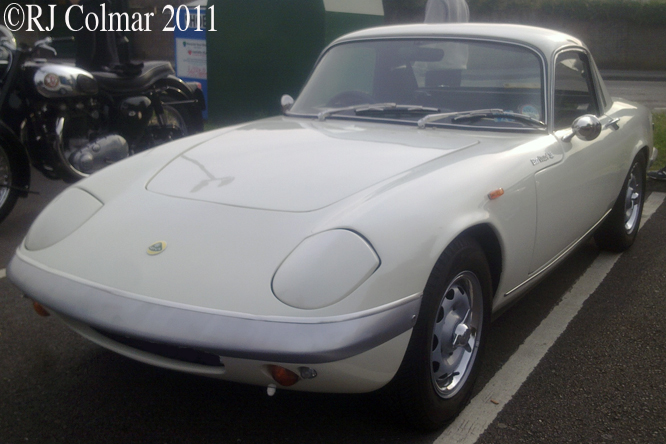
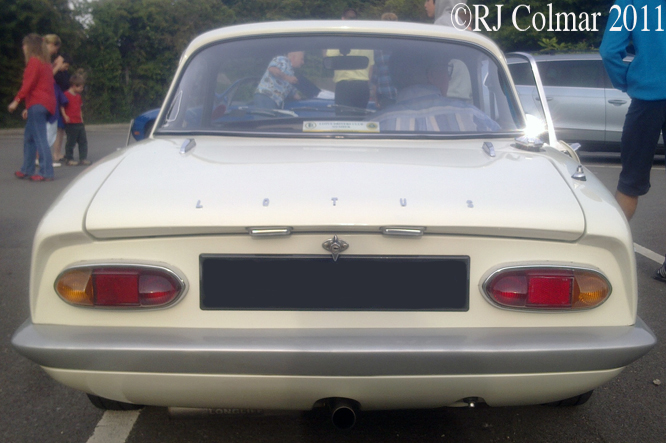
A couple of weeks ago you may remember I attempted my first navigation exercise with Bristol Pegasus Motor Club membership secretary Bob in his ‘daughters’ Mini Cooper. Today I am looking at Bob’s own car his Lotus Elan Coupé S/E otherwise known as an Elan S3 FHC (Type 36).

Lotus Elan Coupé S/E

Like the racing Lotus 26R the Elan Coupé S/E has a fixed hard top unlike the original Lotus 26 Elan’s which were all convertibles.

Lotus Elan Coupé S/E

The first 36 Coupé’s were introduced in September 1965, with a 105 hp version of the Lotus Twin Cam 4 cylinder engine.

Lotus Elan Coupé S/E

An S/E version as seen here became available in July of the following year with a 118hp ‘L Block’ version of the Lotus Twin Cam.

Lotus Elan Coupé S/E

S/E Coupés are distinguished from all earlier Elan models by the repeater lights on the front wings and stainless steel trim on the sides.

Lotus Elan Coupé S/E

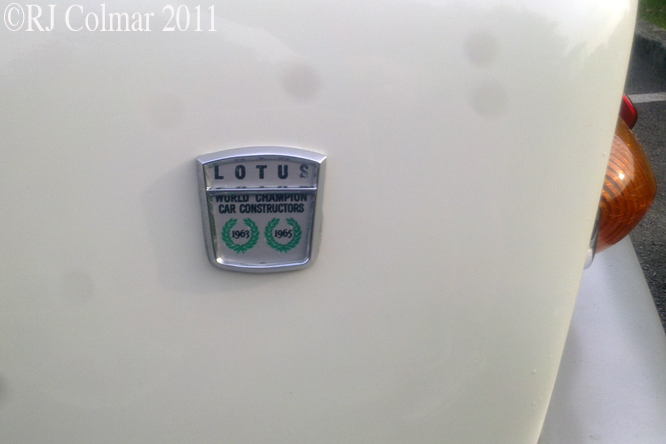
Bob’s car was built in 1967 by which time Lotus had won two of an eventual seven Grand Prix constructors titles with the Lotus 25 and Lotus 33.

Lotus Elan Coupé S/E

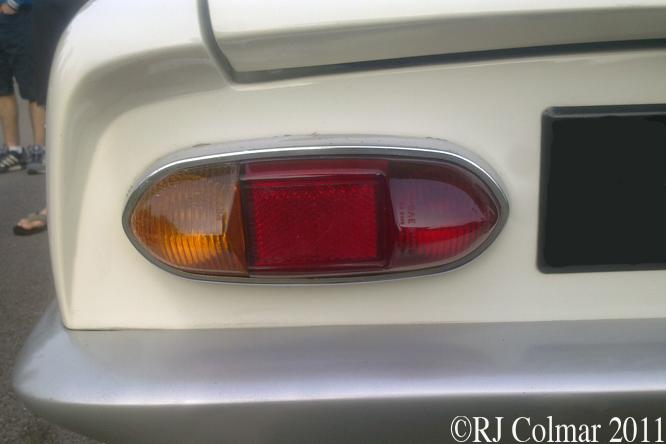
The Elan S3 body was the first Elan to have a boot lid that extended all the way to the tail of the car.

Lotus Elan Coupé S/E

It is estimated that approximately 1,200 Elan S3 FHC’s were built between 1965 and 1968 when the S4.

My thanks to Bob for his help with this blog.

Thanks for joining me on this ‘Special Equipment’ edition of ‘Getting’ a li’l psycho on tyres’ I hope you will join me again tomorrow’. Don’t forget to come back now !

Share

Just What the Doctor Ordered – Ferrari 126 C2 #061 & #060

Ferrari’s first attempt at designing a turbo powered Grand Prix car was described by lead driver Gilles Villeneuve in 1981 as handling like ‘a big red Cadillac‘.

Ferrari 126 C2, Brands Hatch

For the 1982 Ferrari hired Dr Harvey Poslethwaite, who had designed Grand Prix winning cars for both Hesketh and Wolf, to design the 126 C2 which would prove to be the class of the field or as Mario Andretti described it ‘the bomb’.

Ferrari 126 C2, Brands Hatch

Despite a lack luster start to the 1982 season for round 4 the San Remo Grand Prix Ferrari had got their act together and cruised to a comfortable One Two victory except for team leader Gilles Villeneuve there was a problem, he had been out fumbled by his team mate Didier Pironi which so enraged the Canadian he promised never to speak to Pironi again.

Ferrari 126 C2, Brands Hatch

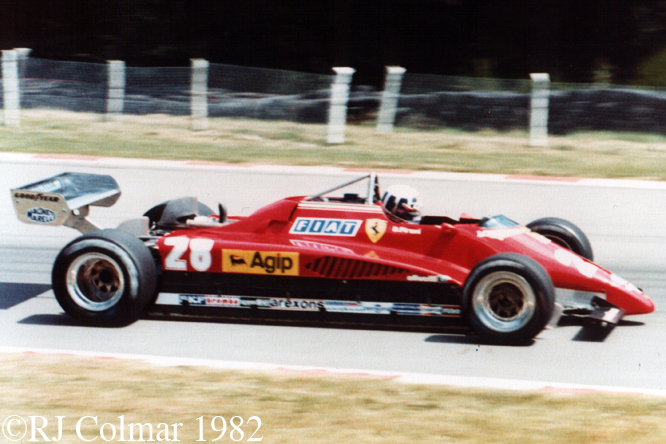
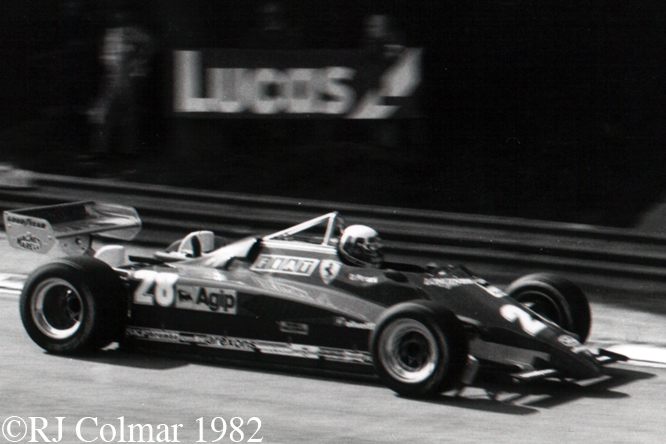
Two weeks later at the Belgium Grand Prix Gilles met his death after a practice accident, seemingly leaving Pironi seen in the #28 chassis #060 at Brands Hatch above, to win the 1982 Championship but then three weeks after these photographs were taken Didier Pironi was seriously injured an accident during practice for the German Grand Prix in chassis #060. Didier although eventually recovering never entered a Grand Prix car again and died in power boat racing accident in 1986.

Ferrari 126 C2, Brands Hatch

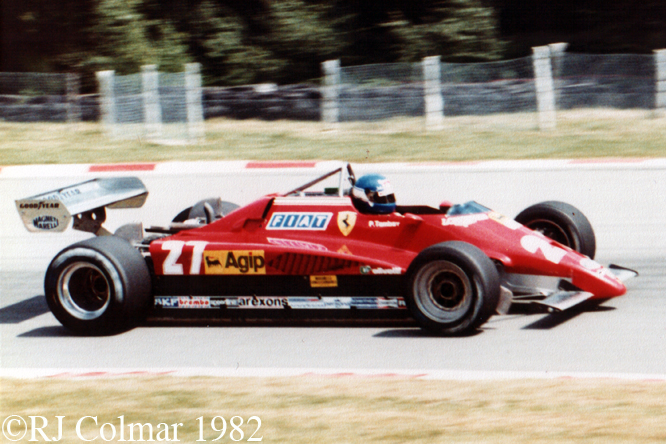
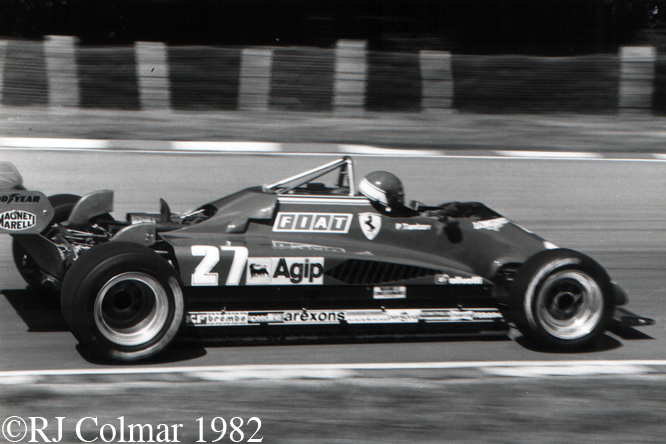
Patrick Tambay, seen in the #27 chassis 061 at Brands Hatch at the top of this post, took the place of Gilles for the remainder of the 1982 season wining the 1982 German Grand Prix. While Mario Andretti replaced Didier Pironi scoring a pole position and and third place first time out at Monza and ended his Grand Prix career at Caesers Palace with a retirement driving the chassis #061 seen in Tambay’s hands above.

Ferrari with three wins won the constructors championship from McLaren who had 4 wins but appalling reliability in between. The World Drivers Championship was won by Keke Rosberg driving a non turbocharged Williams Cosworth against all expectations with just a single win and a string of podium (top three) finishes.

Thanks for joining me on this ‘Just What The Doctor Ordered’ edition of ‘Gettin’ a li’l psycho on tyres’, I hope you will join me again tomorrow. Don’t forget to come back now !
Share

Turbo Toni – Ford Sierra RS Cosworth

On the 22nd September 1982 Ford of Britain launched it’s replacement for the much loved conservative Ford Cortina to an unsuspecting public. Project Toni, designed by Uwe Bahnsen, Robert Lutz and Patrick le Quément, was unveiled as the Ford Sierra to a fair amount of public myrth and ridicule in the absence of much acclaim except in Ireland where the Sierra won the 1983 Semperit Irish Car of the Year award.

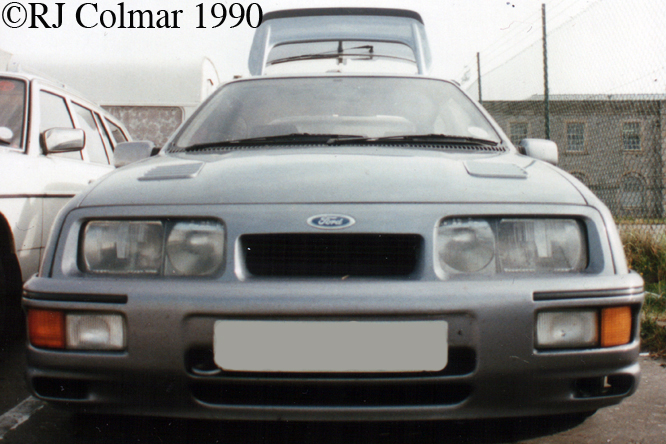
Ford Sierra RS Cosworth, Fishguard, Wales

While there was nothing fundamentally wrong with the mechanical operation of the car much of which was inherited from the final incarnation of the Ford Cortina Mk 5, the styling, which was similar to the well received US Ford Probe, had been pushed a bit too far in the quest for aerodynamic efficiency leading to nick names for the Sierra like ‘the blob’ and ‘Salesmans Spaceship’.

Ford Sierra RS Cosworth, Snetterton

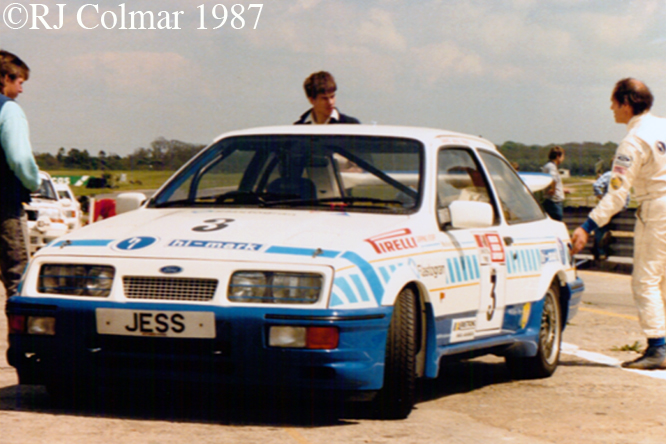
Fortunately it was the salesmans fleet market which saved the model from sinking faster than the Edsel. The #3 above was an early leader in the 1987 Willhire 24 Hour race at Snetterton driven by Graham Scarbrough and David ‘Jess’ Yates who is standing with his back to the camera on the right.

Ford Sierra RS Cosworth, Brands Hatch

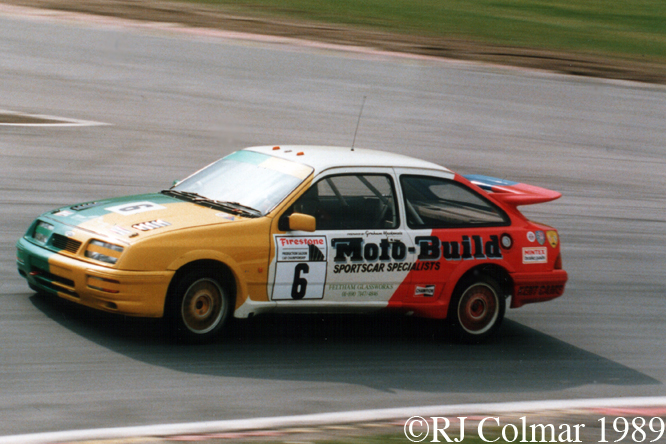
In the spring of 1983 Stuart Turner head of Ford Motorsport Europe devised a plan to put Ford at the top of the new Group A saloon car championships which were run nationally and internationally in Europe. Above the #6 is driven by Graham Davis at Brands Hatch.

Ford Sierra RS Cosworth, Donington

In the spring of 1983 Stuart Turner head of Ford Motorsport Europe devised a plan to put Ford at the top of the new Group A saloon car championships which were run nationally and internationally in Europe. Above the #24 is driven by Peter Sugden at Donington and shared with Roger ‘Willhire’ Williams in the 1989 Willhire 25 hours at Snetterton.

Ford Sierra RS Cosworth, Brands Hatch

Lessons learned from Roush Racing in the USA and Andy Rouse in Britain with XR4Ti racing programmes were incorporated into the suspension while a reworked Sierra 3 door body designed by Lother Pinske was developed which featured a distinctive ‘tea tray’ rear wing deemed necessary to keep the rear wheels on the ground at speeds in excess of 186 mph.

5045 Ford Sierra Cosworths were manufactured in 1986, enough to qualify for International Group A and national Group N racing, in only three colours, all with a grey interior and with the only options being central locking and or electric windows. The racers seen here were all prepared to the lower state of tune Group N spec for the national Uniroyal and Firestone production car championships.

Keith Maxted is thought to be the driver of the #32 Goodyear Sierra RS Cosworth seen at Brands Hatch on April 23rd 1989, if you know different please chime in below.

My thanks to Alan Cox & Gregor Marshall at The Nostalgia Forum for their help identifying the drivers of the four racers.

Thanks for joining me on this ‘Turbo Toni’ edition of ‘Gettin’ a li’l psycho on tyres’, I hope you will join me again tomorrow. Don’t forget to come back now !
Share