Tag Archives: Colmar

Dominating Réunion – Alpine A110 1600S

Jean Rédélé’s rear engined Alpine A110 “Berlinette” launched in 1961 was an evolution of the A108. Distinguishing features include proprietary Renault R8 running gear in place of the Renault Dauphin running gear of the A108 and a larger tail for the fiberglass body to accommodate the larger R8 derived motors.
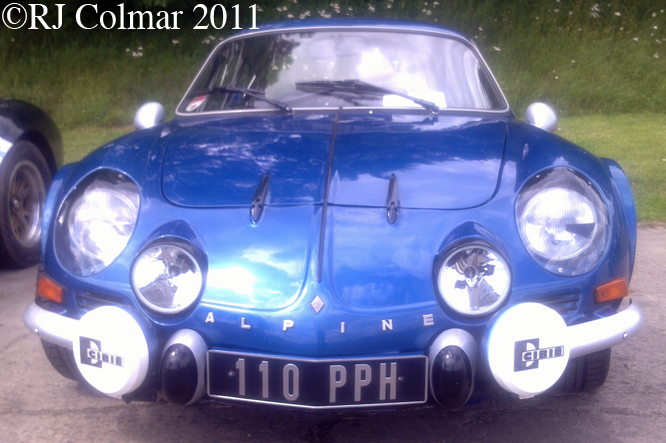
Alpine Renault, A110, 1600S, Castle Combe C&SCAD

The cars were manufactured at the Dieppe factory, which today operates under the the Renault Sport banner, with further cars being assembled in Mexico under the name Dinalpin and perhaps most unlikely of all from 1967 to 1969 in Bulgaria under the name ‘Bulgaralpine‘.
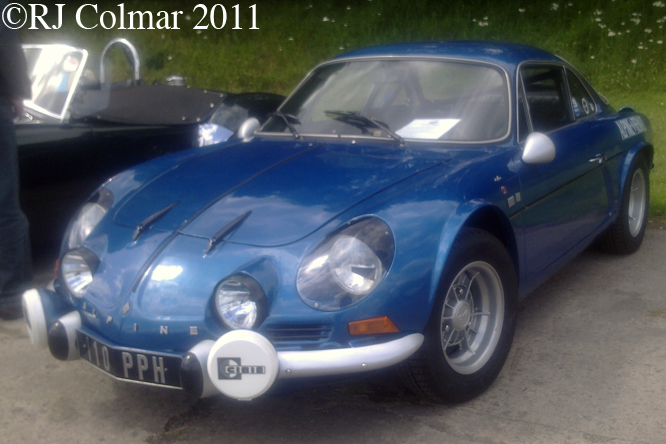
Alpine Renault, A110, 1600S, Castle Combe C&SCAD

Over the years of production up to 1977 the choice of straight 4 cylinder engine sizes ranged from 95 hp 1.1 liters / 67 cui through to 125 hp 1.6 liters / 97 cui, the latter giving the a top speed of 130 mph and zero to 60 mph in 7 seconds.
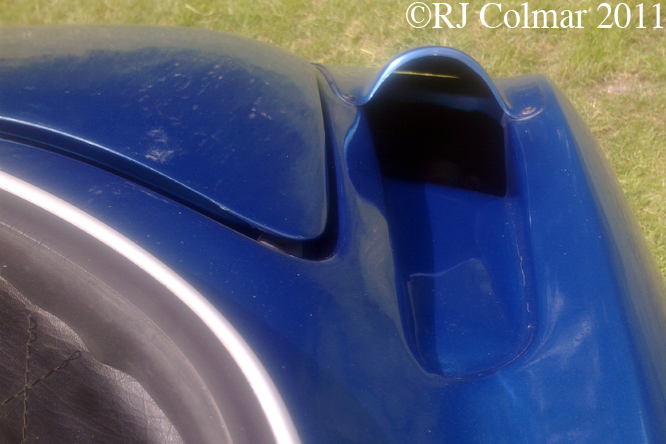
Alpine Renault, A110, 1600S, Castle Combe C&SCAD

With these sorts of performance figures the vehicle was a shoe in for a successful competition career in particular on tarmac rallies, Jean Vinatier won the French National Rally title in 1969 in an A110 and both Ove Anderson (1971) and Jean-Claude Andruet (1973) won the Monte Carlo Rally in A110’s the latter victory contributing to Alpine Renault, rebranded after Renault’s 1970 buy out, winning the first World Rally Championship in 1973.
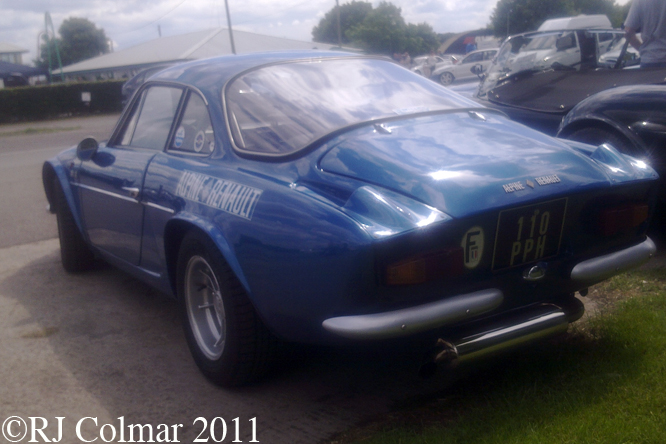
Alpine Renault, A110, 1600S, Castle Combe C&SCAD

The A110 cars also have a successful track racing history in Europe and the United State still winning its class in races as late as 1980.

During the course of finding out about the A110 I have found several inaccuracies one that the A110 was inspired by Colin Chapmans Lotus Elan, this is not true the A110 preceded the announcement of the Elan by 1 year. Also I have seen the A110 mentioned in connection with the Brazilian assembled Willys Interlagos, the Interlagos built from 1962 to 1966 and most successfully raced by Wilson Fittipaldi, brother of twice world champion and Indy 500 winner Emerson, was based on the A110’s predecessor the A108.
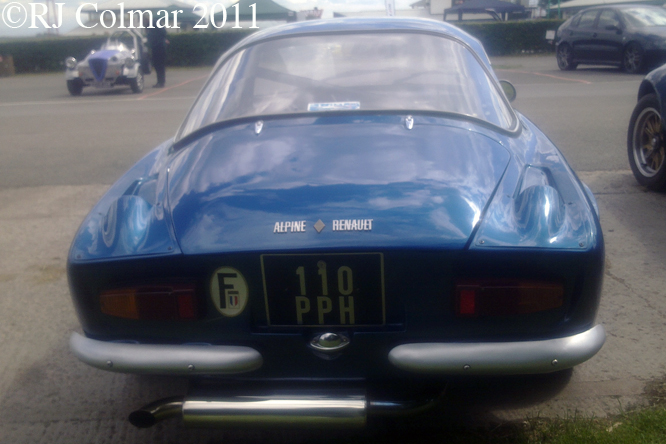
Alpine Renault, A110, 1600S, Castle Combe C&SCAD

This particular vehicle seen at Castle Combe Classic and Sport Car Action Day was originally exported to Renault St Denis, Il de La Réunion out in the Indian Ocean between islands of Madagascar and Mauritius, in 1973. It immediately made an impact sweeping Réunion’s two biggest events the ‘Mille Kilometers‘ and ‘Tour de la Réunion‘ from 1973 to 1975. The car was acquired by it’s current owner in 1991.

Thanks for joining me on this ‘Dominating Réunion’ edition of ‘Gettin’ a li’l psycho on tyres’ I hope you’ll join me again. Don’t forget to come back now !

Share

Too Much Added Lightness – Lotus 27 27-JM-22 & 27-JM-2

The design of the 1963 Lotus 27 Formula Junior car followed the principles of the 1963 Lotus 25 Formula One car featuring a monocoque. Keen to save weight, cost and promote the use of fibre glass which Colin Chapman used extensively in the Lotus Elite and Elan models the 27 monocoque initially differed from the bigger, aluminium skinned, Lotus 25 monocoque by having a fibre glass outer skin.

Former motor cycle racer and film distributor Ron Harris ran the works Lotus Formula Junior team in 1963 for 1962 Formula Junior champion Peter Arundell, Mike Spence and John Fenning. With only one car available for Peter first time out at Oulton Park the team scored a lucky victory after the faster Brabhams including that of Denny Hulme retired with engine problems. The victory was lucky because the monocoque was so weak it badly affected the handling of the Lotus 27.

5 or 6 Lotus 27 chassis are thought to have been constructed with fibre glass outer skins and nearly 4 months past before Peter returned to his winning ways by which time the fibre glass outer skin of his Lotus 27’s monocoque had been replaced by rolled aluminium which stiffened the monocoque and improved the 27’s handling.

With 6 successive late season wins Peter Arundell secured his second successive British Formula Junior title by one point over Denny Hulme.

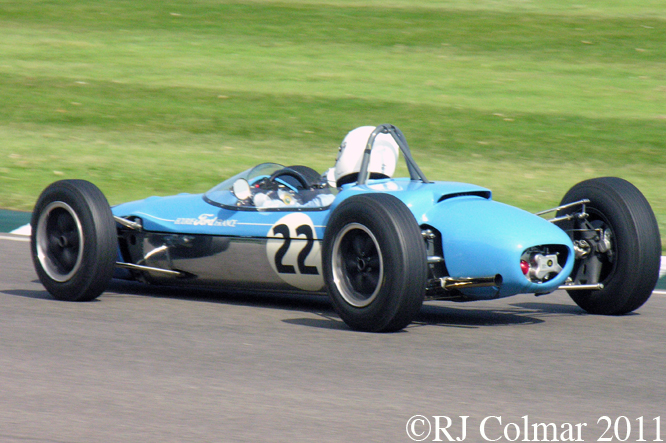
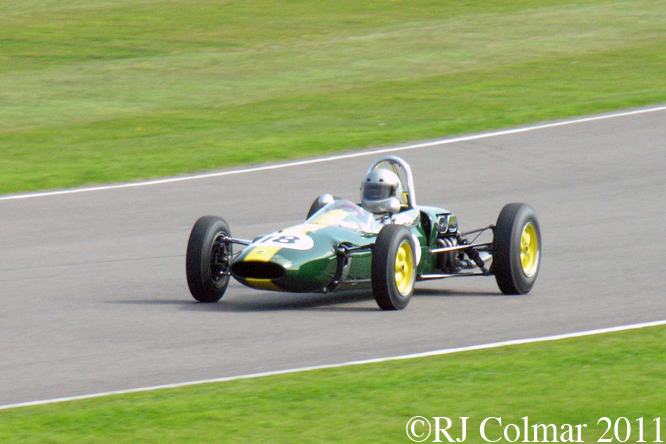
Lotus 27, Goodwood Revival

Chris Locke is seen above at the Goodwood Revival in his Lotus chassis 27-JM-22. This car was sold originally to one C Haas, better known these days as the racing impresario the multi championship winning Newman/Hass/Lanigan Indycar team.

According to San Anselmo CA resident Lotus aficionado Chris Locke’s website, Carl sold the car to General Motors who wanted to study the monocoque engineering and design, some years later General Motors donated the Lotus to the auto shop department of a Detroit high school. Teacher Pat Nelson liberated the car by substituting a more practical vehicle for his students to learn from before the racer had been dismantled.

Pat raced 27-JM-22 from the late 60’s to mid 70’s before Jim Lloyd took over the car in 1977 and raced it some more. Jim was photographed with his 27 – JM – 22 parked next to Mario Andretti’s championship winning Lotus 79 at the US Grand Prix in 1978. Six successive owners owned and raced the car the last of which had a the tub replaced after an accident in 1999. Chris became the owner in 2001 and has the car looked after John Anderson Racing in the States and Historic Team Lotus in Europe.

Lotus 27, Goodwood Revival

The second Lotus 27, 27-JM-2, featured today driven by Nick Fennell above was acquired for Jean Vinatier by Ecurie Ford France on the 28th May 1963, The team were running tragic future Grand Prix driver Jo Schlesser in a rival Brabham BT6 at the same time.

Of the two Jo scored better and consistent results until the August 18th 1963 when Jean recorded fastest lap on his way to two heat wins and win on aggregate in a French Formula Junior Championship at Nogaro. Jean recorded a further 3rd place at Montlhéry near Paris before the seasons end.

Jean went on to become French National Rally Champion in an Alpine Renault in 1969 and represented the same team at Le Mans a track at which he recorded 15 24 hour race starts between 1950 and 1973.

Thanks to Peter, Pete, willga, and Ron at The Nostalgia Forum for their comments on the 27’s construction.

Thanks for joining me on this ‘Too Much Added Lightness’ edition of ‘Gettin’ a li’l psycho on tyres’, I hope you will join me again tomorrow. Don’t forget to come back now !
Share

Debut Winner – Ferrari 312 B2 #005

Last week I looked at the Ferrari 312 B2 with which Clay Regazzoni inadvertently ended Jackie Stewart’s championship run at the German Grand Prix, this week Ferrari Friday features #007’s sister car #005 the first of the 312 B2 chassis built in 1971.

Ferrari 312 B2, British GP, Brands Hatch

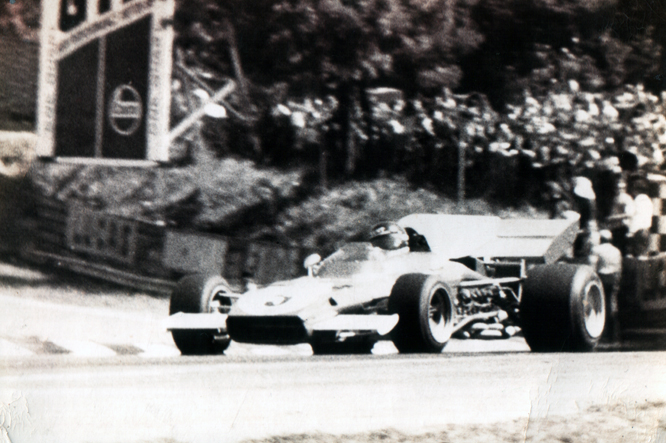
This photo, taken by a school friend, shows Jacky Ickx driving 312 B2 #005 in the 1972 British Grand Prix at Brands Hatch. Ickx qualified on pole position  and stormed away from championship contenders Emerson Fittipaldi and Jackie Stewart in the early going until lap 49 of 76 when the magic flat 12 lost oil pressure as a result of a split oil tank. Fittipaldi  and Stewart then battled over the lead which Fittipaldi won.

Two weeks later Ickx won pole position at the German Grand Prix and this time chassis 005 held together to take a dominant victory on the most challenging Grand Prix track in the championship the Nurburgring.

312 B2 #005 was the first of the B2 chassis, readied for Clay Regazzoni in the 1971 season. Clay scored a debut win with #005 at the non championship 1971 Race of Champions but the rest of his 1971 season did not go so well with a pole position at the British GP and two thirds in Holland and Germany marking Clays only visits to the podium amongst 4 retirements and minor placings .

Clay started the 1972 season again with #005 scoring just one points paying 4th place finish in the season opening Argentine GP. In the month between the 1972 Belgian and French GP’s chassis #005 was assigned to Jacky Ickx who scored a further pole position at the Italian GP in addition to his achievements in Britain and Germany outlined above.

Arturo Mezzario drove #005 for the last time in the 1973 South African Grand Prix where he came home 4th.

If you are the school boy who took this photo, thanks for giving it to me all those years ago and please get in touch !

Thanks for joining me on this ‘Debut Winner’ edition of ‘Gettin’ a li’l psycho on tyres’ I hope you will join me again tomorrow when I’ll be looking at the Formula Junior Lotus 27. Don’t forget to come back now !
Share

Hudson Super Six Special

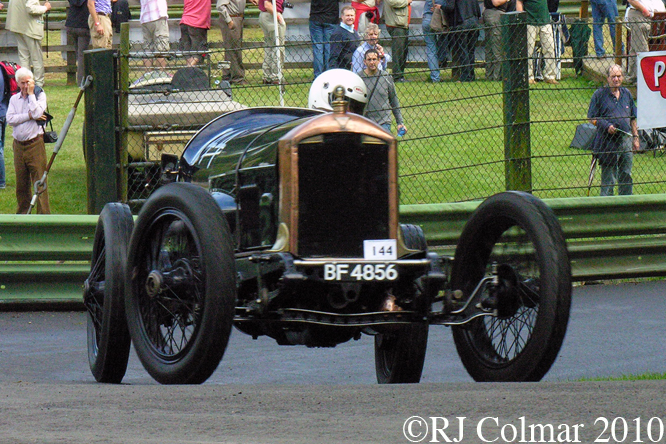
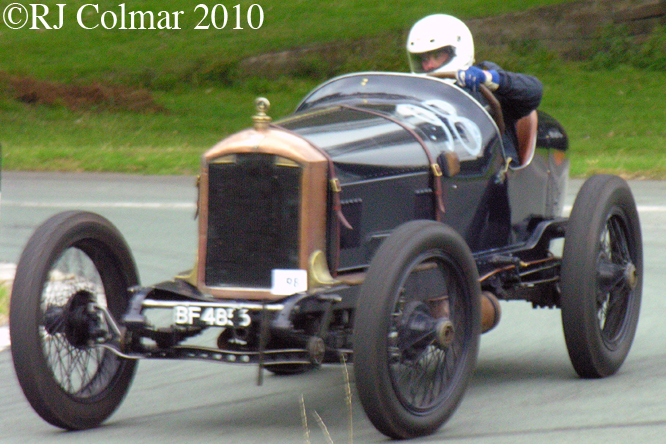
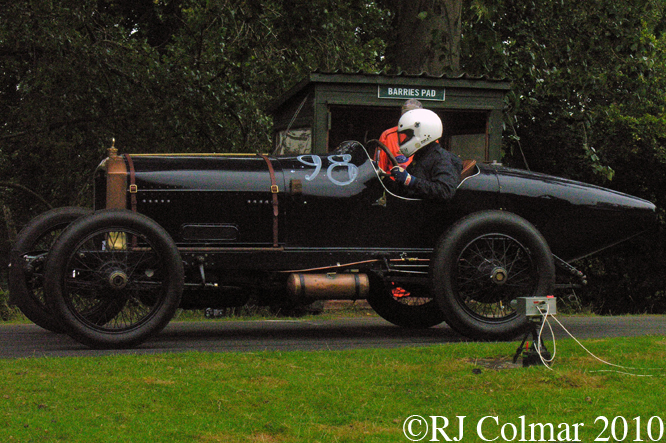
While out watching the vintage racers negotiate Prescott and Loton Park 18 months ago I caught some snaps of this 1917 Hudson Super Six racer being driven by James Collins.

Hudson Super Six, VSCC Prescott

The Hudson Super Six is powered by a 4700 cc / 299 cui straight six fitted with one of the earliest a balanced crwankshafts. James car is fitted with a radiator cowling that is said to have come from a Peugeot.

In 1917 Hudson built four 2100lb racing versions of there Super Six models, called Super Six Specials, these featured stock frames that had been shortened and lightened, blue printed 115 hp motors with larger valves and ports, high lift camshafts and light weight pistons along with a two carb manifold.

Hudson Super Six, VSCC Loton Park

The Super Six Specials were taken by special railway cars that served as rolling workshops to tracks for Ira Vail, Billy Taylor, Ralph Mulford and AH Patterson to drive the cars up to August 1917 when the Great War required resources be used elsewhere.

Major wins were recorded at Omaha, Tacoma and Minneapolis with many placings and wins at minor events during the war shortened season.

In 1919 four of the 1917 Super Six Specials were entered privately for the Indy 500, Canadian Vail and US driver Ora Haibe qualified 10th and 26th respectively finishing the race in the same order 8th and 14th.

Hudson Super Six, VSCC Loton Park

From what I have been able to gather it would appear James car is a tribute to the 1917 Super Six Specials.

My thanks to Hudson Forum members paulrhd29nz for identifying the radiator cowling, and oldhudsons for pointing in the direction of Don Butlers excellent History of Hudson.

Thanks for joining me on this Super Six edition of ‘Gettin’ a li’l psycho on tyres’, I hope you will join me again for Ferrari Friday tomorrow. Don’t forget to come back now !
Share

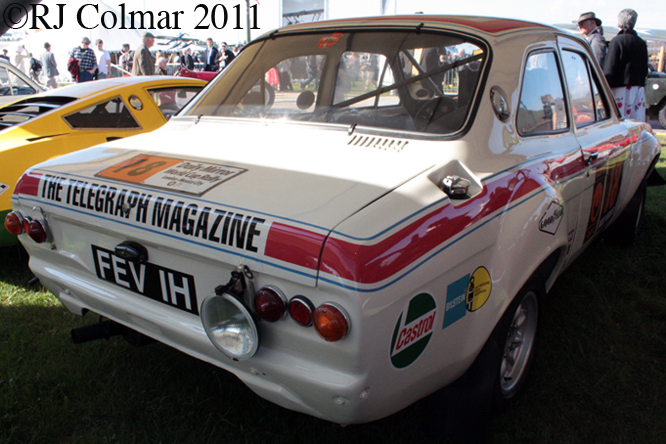
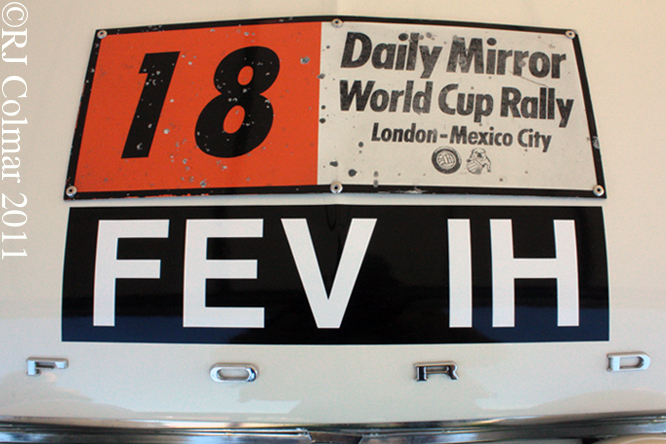
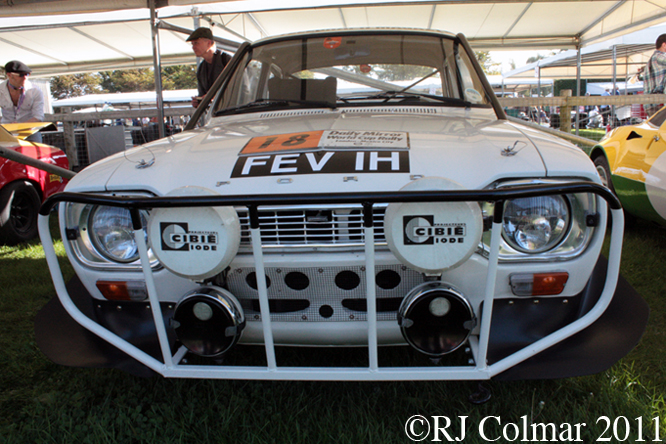
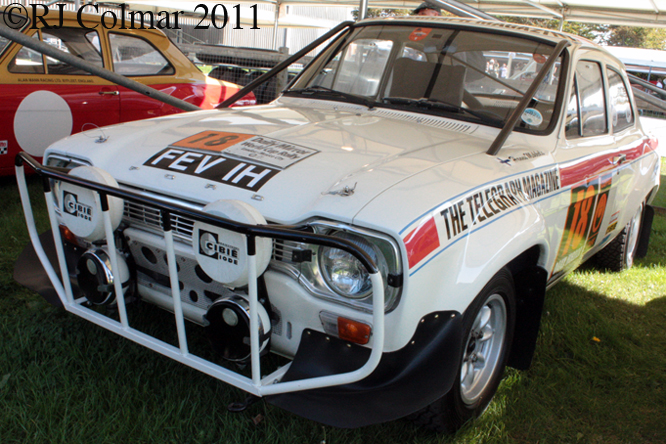
Bombproof Escort – Ford Escort 1850GT FEV 1H

Motorsport owe’s much of it’s history to the publishers of Newspapers keen create events which would resonate and engage their readers, indeed the very first recorded motorsport events emanated from the minds of the editors of ‘Le Vélocipède’, who in 1887 attracted a single car entry for a 1.2 mile race across Paris and ‘Le Petit Journal’, who in 1897 69 entries for a 79 mile ‘race’ from Paris to Rouen. By 1908 individual events took on global challenges such as the 12,000 mile 169 day New York west to Paris race which was co sponsored by The New York Times and Le Martin.

Ford Escort 1850 GT, Goodwood Revival

Possibly inspired by another 10,000 mile ten day event the London to Sydney Rally of 1968, Australian advertising sage Wylton Dickson came up with the idea of organizing a 1970 World Cup Rally to link London which had played host to the 1966 World (Soccer) Cup to Mexico which was to play host to the 1970 World (Soccer) Cup at a party in London over a glass of wine while chatting to Irish Rally Champion Paddy Hopkirk.

Ford Escort 1850 GT, Goodwood Revival

Wylton, who had never so much as seen a rally before approached Stuart Turner Ford competitions manager who gave him the thumbs up and the Daily Mirror who provided the sponsorship for the event. British Rally Champion John Sprinzel was allowed to set up an HQ at the Royal Automobile Clubs Belgrave offices from which to run the whole 16,000 mile event which crossed 26 countries on three continents in 25 days.

Ford Escort 1850 GT, Goodwood Revival

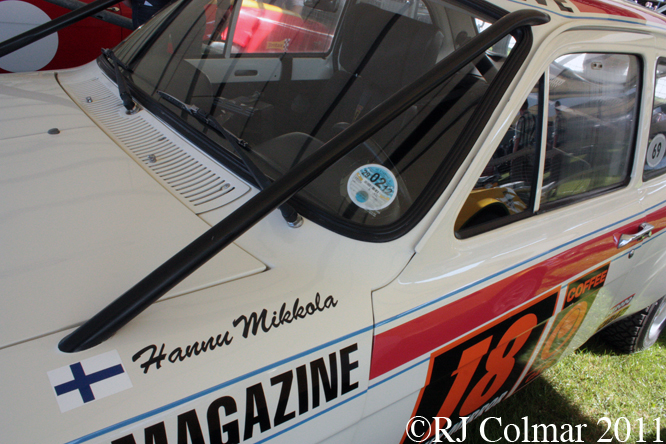
Good to his word when the 1970 World Cup Rally was announced Stuart Turner entered 6 Ford Escorts into the event for Poles Sobieslaw Zasada / Marek Wachowsk, Finns Hannu Mikkola / Gunnar Palm, England soccer star Jimmy Greaves with pro co driver Tony Fall, Monte Carlo Rally winners Raunno Aaltonen / Henry Liddon, British rally stars Roger Clark / Alec Poole and Finish rally legend Timo Makinen co driven by Frenchman Gilbert Staepelaere. Other entries in the 96 car field included a VW Beach Buggy a five car factory Moskivitch team from the USSR and two privately entered Rolls Royce’s a Silver Cloud and a Silver Shadow !

Ford Escort 1850 GT, Goodwood Revival

Ford’s official reason for fitting these bars in front of the windscreen was that they were to protect the drivers from Condors in the Andes mountains of South America, but it has been noted that these bars connect the top of the front suspension towers to the top of the A pillars which coincidentally helps transfer suspension shock to the roof diverting them away from some of the weaker welds in the bodywork.

Ford Escort 1850 GT, Goodwood Revival

It is thought enough parts were produced for just 8 of the 1970 World Cup spec 1850 GT Escorts, which after the disappointment of easily leading the 1968 London to Sydney Marathon only for the Lotus Twin Cam engine in Roger Clark’s Cortina Lotus to fail, meaning these cars were built to be bomb proof against all foreseeable eventualities. Instead of using Lotus Twin Cam motors Ford Kent 1600cc / 97 cui pushrod motors were bored out to 1850cc / 112 cui fitted with a single Weber carburetor and dry sump lubrication which aids ground clearance. These motors were simple, durable and above all easily repairable, they were tuned to run on the low octane fuel that was to be found in the high altitude andean mountains on the South American legs of the route where stages of 500 plus miles were not uncommon and average speeds in excess of 90 mph were expected in order not to attract penalty points.

Ford Escort 1850 GT, Goodwood Revival

Hannu Mikkola had a relatively trouble free run dropping just 9 hours in penalty points over the course of the 25 day marathon, 4 of the other Escorts in the top 6 of the 23 finishers. During the course of the event FEV 1H became one of the most famous of Rally Vehicles of all time and is still among the most loved. As a result of the 1970 World Cup Rally win Ford launched a new sporty version of the Escort called the Ford Mexico with the 1600 / 97 cui Kent pushrod motor fitted to an Advanced Vehicle Operations strengthened “Type 49” body shell.

In 1995 there was a 25th Anniversary re run of the 1970 World Cup Rally, miraculously Ford ‘found’ a new unused Escort shell and built a new car to the same specifications as FEV 1H. Hannu Mikkola came out of retirement with Gunnar Palm to win the rerun as well, the new cars registration is H1 FEV.

Thanks for joining me on this Bombproof Escort edition of ‘Gettin’ a li’l psycho on tyres’, I hope you will join me again tomorrow. Don’t forget to come back now !
Share

Race Winning Body – MG K3 #K3001/K3003

In October 1932 MG launched the K-Type Magnette at the London Motor Show, featuring a 48″ track and either a 94″ or 108″ wheel base the chassis was powered by a 6 cylinder 39 hp 1087cc / 66 cui motor with a cross flow cylinder head that originated from the 1930 Wolseley Hornet.The K1 Magnet was fitted with a saloon body on the 109″ wheel base and in all 181 were manufactured up to 1934 in KA, KB and lastly KD specifications which reflected a series of motor upgrades during the production run.

In 1933 the K2 a two seater on the 94″ chassis was launched, 16 were built with KB spec motors and 4 more with KD motors and pre selector gear boxes.

MG K3 K3001, Prescott

The princely sum of £795 could secure a supercharged K3 racing variant, as seen driven above at Prescott by Brandon Smith – Hillard, at first, as above, fitted with Powerplus superchargers just below the radiator and later with Marshall units. Fitted with pre selector gearboxes three K3’s including #K3001 above were entered into the 1933 where George Eyston and Giovanni Lurani driving chassis #K3003 came in 21st behind Tazio Nuvolari in an ALFA Romeo but took a class victory with Earl Howe and Hugh Hamilton coming in 22nd overall and 2nd in class in #K3001.

Subsequently #K3001 was raced at Brooklands, shared for the Shelsley Walsh by Land Speed Record holder and Mille Miglia class winner George Eyston with MM team mate Giovanni Lurani, raced throughout Europe by Bobby Kolrusche in 1934.

The Mille Miglia chassis #K3003 meantime had been given to the great Tazio Nuvolari to drive in the 1933 Ulster TT which he promptly won outright beating two 8 cylinder ALFA Romeo’s running in the 3 liter 183 cui class.

At some point after 1934 and before the commencement of the 2nd World War the body from the Mille Miglia and Tourist Trophy winning #K3003 replaced that on #K3001 which is how #K3001 appears in the photo above one of just 33 K3’s to have been built from 1933 to 1934.

My thanks to Ed of the Wessex MG Club Newsletter for details about this chassis.

Thanks for joining me on this ‘Race Winning Body’ edition of ‘Gettin’ a li’l psycho on tyres’, I hope you will join me again tomorrow, don’t forget to come back now !
Share

High End Half Ton – Dodge Ram 1500 Laramie

Ever since my Dad took me to see Vanishing Point way back in the day I have always paid attention when the name “Dodge” crops up, today’s vehicle is a tad more practical than the white Challenger driven by the ‘Soul Hero’ being chased by the ‘blue blue meanies on wheels’ on ‘the maximum trip at maximum speed’, though this 2005 pick up does have something in common with the 1970 Challenger beyond the manufacturers name.

Dodge Laramie,

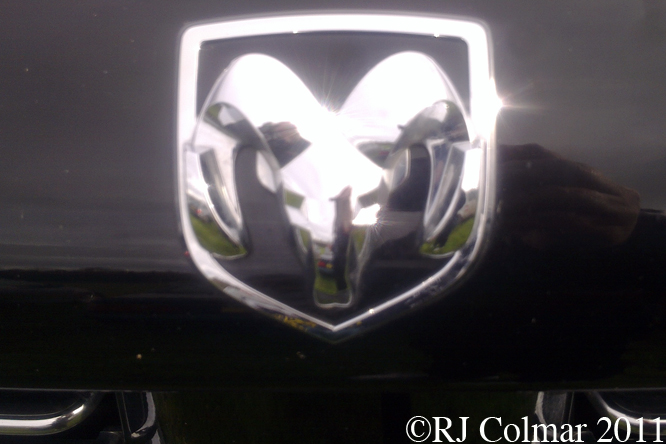
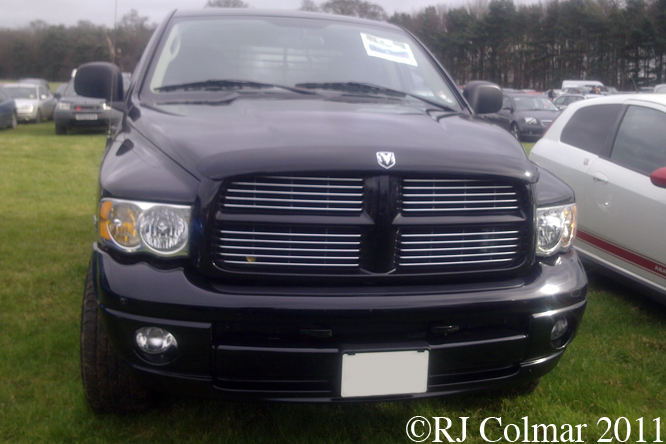
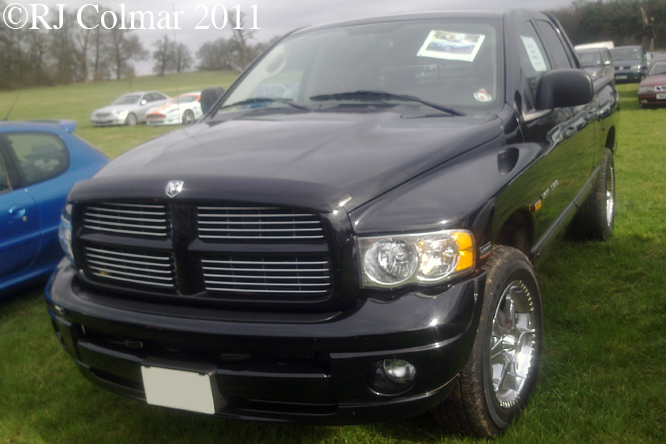
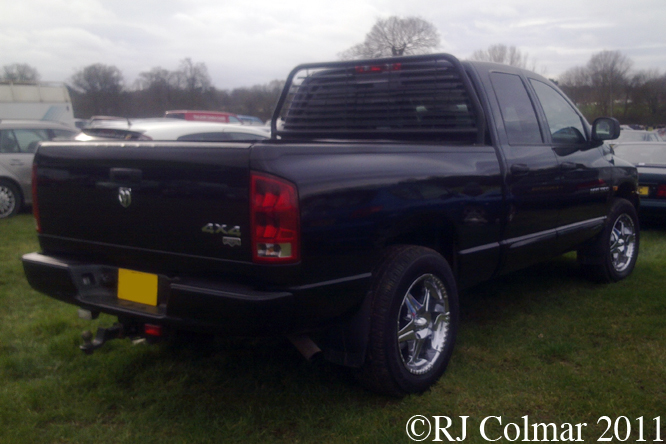
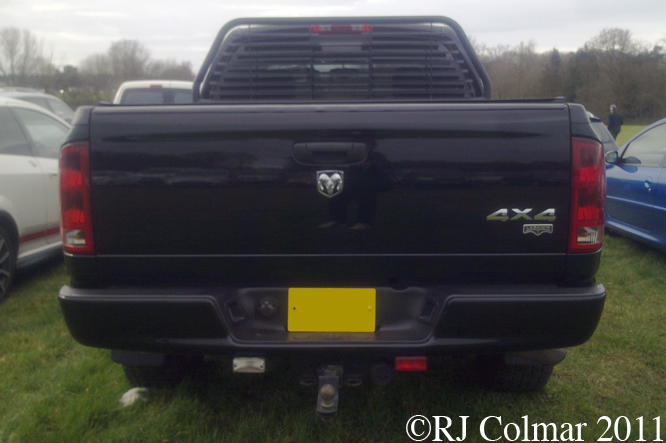
The Dodge Ram name first appeared on a trucks in 1981 with a revamped version of Dodge D Series pickups, since then there have been three further generations of the Ram that appeared in 1994, 2002 and 2009, this is a preface lift 3rd generation Ram 1500 from 2005.

Dodge Laramie,

The built in to the front bumper fog lights are a give away that this might be a ‘fully loaded’…

Dodge Laramie,

… a suspicion underlined by the alloy wheels, not some thing I would expect to find on a four wheel drive work horse …

Dodge Laramie,

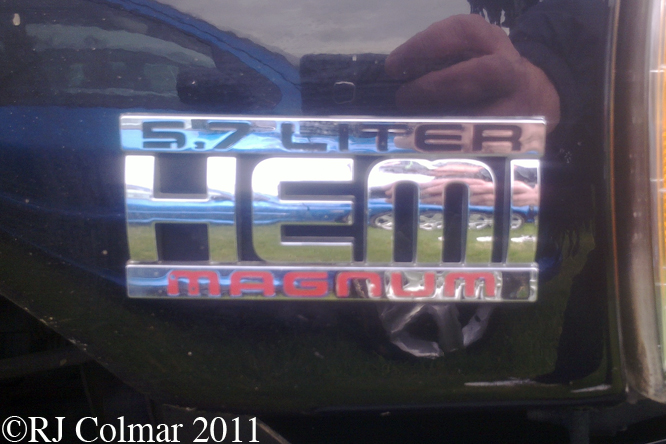
anymore than I would a 345 hp 5.7 liter / 345 cui Hemi V8, a name I’d more commonly associate with the white Challenger in Vanishing Point, in fact today’s HEMI’s are very different from those installed in the 1950’s, 60’s and 70’s the cylinder heads are now less than hemispherical and today’s HEMI’s feature Multi Displacement System technology which allow’s two cylinders on each bank of four cylinders to be switched off under light loads to improve fuel economy.

Dodge Laramie,

The suspension on this half ton pick up is classic independent coil springs at the front and live rear axle mounted on longitudinal leaf springs.

Dodge Laramie,

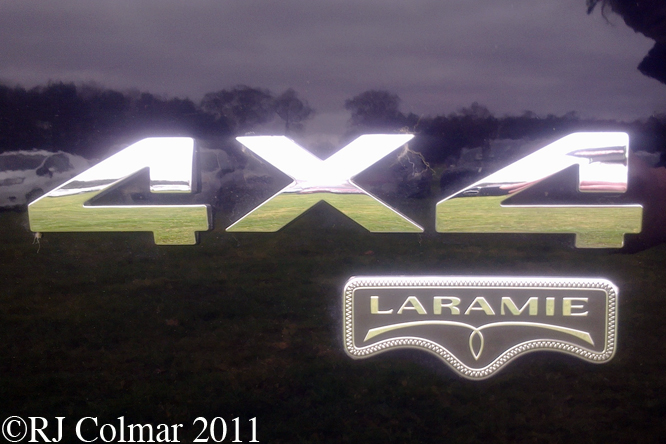
I have to admit that when I saw this truck last year I assumed it had been imported from some where west of Cheyenne Wyoming but it turns out that Larimie is the name given to fully loaded Luxury Spec Doge Ram trucks…

Dodge Laramie,

which are supplied with woodgrain dash and door trim, leather seats, chrome clad wheels, leather seats, autodimming center rear view mirror, Homelink garage door opener, steering wheel mounted audio control and around $5k worth of useful stuff that is not commonly available on the SLT spec Dodge Rams.

My thanks to Dodge Dealership manager James R for his help with today’s blog.

Thanks for joining me on this ‘High End Half Ton’ edition of ‘Gettin’ a li’l psycho on tyres’. I hope you will join me again tomorrow. Don’t forget to come back now !
Share