Tag Archives: Colmar

Monocoque Revolution – Lotus 25 #R4 & #R5

There are some ideas that have to wait until just the right time in order to have an impact, one such case in point is the idea of using a monocoque shell to build a racing car chassis / body rather than the oft used couple of helfty rails or beams welded together or a more intricate space frame built up of small tubes welded together with a body thrown over the top.

The idea of using a monocoque shell made of fabricated sheets of metal to build a racing car can be traced back to 1912 when Howard Blood built a prototype cyclecar called a Cornelian which in 1915 was prepared by the Chevrolet brothers Louis and Albert for an attempt at the Indy 500. The Cornelian reached 12th place before it’s 33hp Sterling motor dropped a valve causing retirement. Around 100 monocoque chassis Cornelian cyclecars are thought to have been built before production came to a halt.

In 1923 aviation pioneer Gabriel Voisin built a team of four extraordinarily underpowered monocoque racing cars to take part in the French Grand Prix at Tours, giving away over 15 mph in top speed just one car survived to finish fifth and last over 1 and a quarter hours behind the winner over the 496 mile race distance.
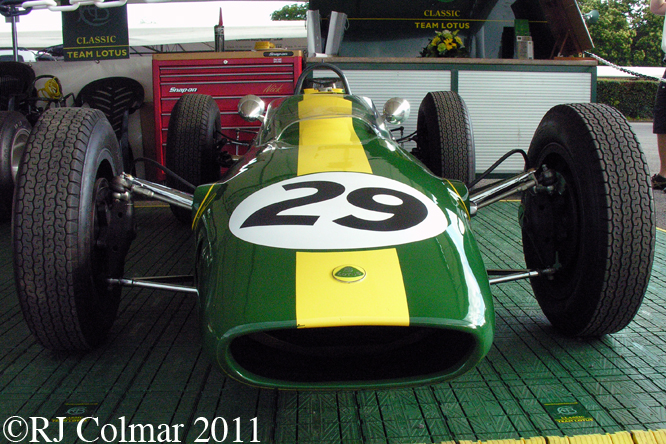
Lotus 25 R5, Goodwood FoS

Despite the success of the D-Type Jaguars at Le Mans in the mid 1950’s which featured a half monocoque design with the engine mounted on a sub frame it was not until 1962 that Colin Chapman revisited the monocoque idea for use in a Grand Prix Car and started to make the advantages of structural rigidity, thanks to the use of innovative steel bulkheads, weight saving and reduced frontal area work in the Lotus 25 design which shares identical suspension and running gear with the 1962 space frame Lotus 24.

The Lotus 25 chassis #R5 was one of seven such vehicles used for Grand Prix Racing from 1962 until models eventual swansong in 1967. The #R5 chassis was completed late in 1962 just in time for Jim Clark to attempt to clinch his first World Drivers title at the South African Grand Prix, unfortunately after starting from pole a tuppenny oil plug came lose and ended Jim’s race twenty laps early allowing Graham Hill to win both the race and the World Championship.

Jim used the car again in 1963 but Trevor Taylor was given #R5 to race at the second event of the season Belgian Grand Prix at Spa Francochamps. During practice for this event #R5’s suspension collapsed and the subsequent damage meant Trevor continued participating in the spare car #R3. Thanks to Roger, Rob of The Nostalgia Forum it has emerged that Trevor retired from the 1963 Belgian GP after 5 laps as the result of a severed thigh muscle.
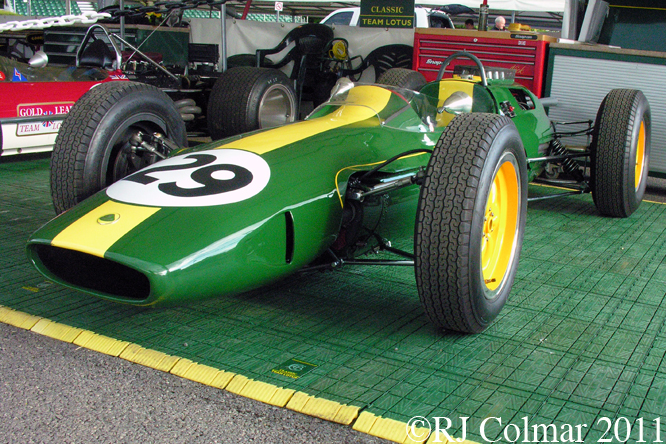
Chassis #R5 was taken back to the Team Lotus Factory and stripped down to the bear monocoque which was put aside awaiting recycling when Lotus mechanic Cedric Selzer was given permission to take the wrecked monocoque, along with some redundant parts, home.

Over the next twenty years Cedric collected enough parts including a correct Coventry Climax V8 engine to ‘recreate’ the written off #R5 in 1984.

With the full knowledge of the story of #R5 being in the public domain this rare vehicle sold for just short of a million US$ at auction in 2007.
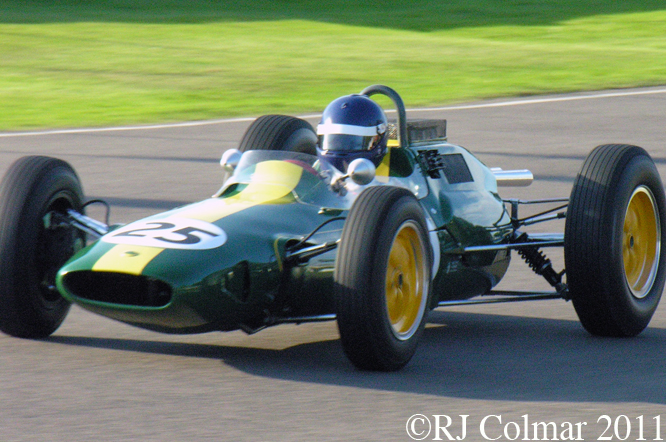
This second Lotus 25, chassis #R4 seen above with Andy Middlehurst at the wheel during the Goodwood Revival meeting has an even more amazing tail to tell, it is the remains of the very car which Jim Clark drove to a, for the period, record setting seven Grand Prix victories on his way to securing the 1963 World Drivers Championship and the World Manufacturers Championship for Lotus.

In 1964 #R4 was driven by Formula Junior sensation Peter Arundell who started his first full season in Grand Prix racing with two third place finishes in the opening two races at Monaco and Zandvoort (Holland) and came home 4th in the French Grand Prix which proved to be his last of the 1964 season thanks to an accident in an open wheel Formula 2 race which effectively ended Peter’s career although he did unsuccessfully return to the wheel in 1965.

#R4 was then sold to Reg Parnell who replaced the Coventry Climax V8 with a BRM V8 and then given first to South African Tony Maggs and then Richard Atwood to drive. Richard crashed the car in the Belgian Grand Prix after which the repaired chassis was given the #R13 chassis number by the Parnnel Team in what might be considered a slight of hand to make the car look like it had a later Lotus 33 type chassis number, the #R13 chasssis number having been passed over by Team Lotus. #R13 also acquired the nickname Percy at this time.

Innes Ireland and Bob Bondurant competed in one further race each with ‘Percy’ towards the end of 1965 and in 1966 Mike Spence took over the driving duties scoring 2 season best 5th place finishes in Percy which was now fitted with a larger BRM P60 V8 motor.

Piers Courage and Chris Irwin both took a championship Grand Prix start each in Percy during 1967 Chris recording a 7th place finish in the cars final Grand Prix in Holland.

Peter Yock became the owner of #R13 in 1968 and he raced the car in the Antipodes passing it on to fellow Kiwi Peter Hughes for 1970, Hughes replaced the by now damaged BRM V8 with a dry sumped V8 sourced from a Daimler and when that proved recalcitrant had a Twin Cam 4 cylinder Ford motor fitted.

#R13 then disappeared until Lotus aficionado John Dawson Damer tracked it down for his Lotus Collection in Australia, when John had the car restored it was discovered that #R13 was not a similar later Lotus 33 spec monocoque at all but that it still had all the identifying monocoque features associated with the Lotus 25 and in particular chassis #R4. Like Cedric John also acquired the correct Coventry Climax V8 type motor to restore #R4 to it’s original splendor and in 1997 #R4 returned to Gooodwood for the first time.

Again with all of the details of this car in the public domain this car sold at an Australian Auction for just short of a million US$ in 2008.

It’s a sobering thought that Jim Clark was entered to drive a Lotus 25 in 30 championship Grand Prix races, he won 14 of them, won one world championship (1963) and but for some cheap engine parts might have won two more (1962 & ’64). One thing was for sure, after the advent of the Lotus 25 the writing on the wall was written large that the days of the space frame racing car particularly in open wheel racing was effectively over.

Finally a well known resource states that Lotus driver Trevor Taylor is credited with ‘inventing’ the yellow stripe that ran the length of some Team Lotus racing cars from May 1963 until the Lotus sponsorship deal with Players Gold Leaf Tobacco came into effect in 1968. There is to the best of my knowledge no evidence to support this myth, it would appear the yellow stripe was first used on Jim Clark’s #92 Lotus 29 Indy Car in May 1963 and next appeared on his, and only his, Lotus 25 at the British Grand Prix in July 1963.

My thanks to Barry, Davids McKinie and Lawson, Vicuna, Roger and Rob at The Nostalgia Forum for their help dispelling the Trevor Taylor myth.

Thanks for joining me on this Monocoque Revolution edition of ‘Gettin’ a li’l psycho on tyres’, I hope you will join me again tomorrow. Don’t forget to come back now !

14/01/12 Amendment it has come to light thanks to Roger Clark that Trevor Taylor had his mishap with #R5 during practice for the Belgian GP at Spa not during the race as originally stated in the text above.

Share

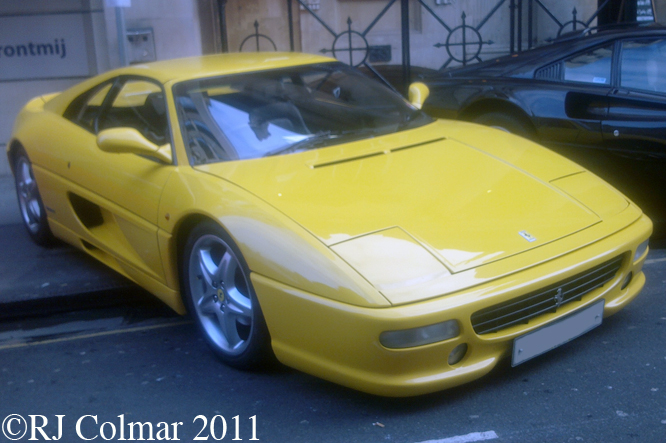
World Class – Ferrari 355 Belinetta & Spyder

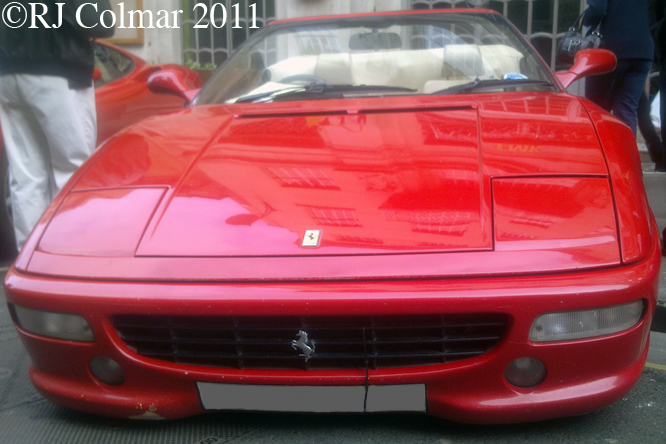
From 1987 to 1991 the engine to have if you wanted to win the World Drivers Championship was a Honda during that period of dominance Honda also built a game changing super car that rendered contemporary Ferrari’s and particularly it’s nearest competitor the Ferrari 348 obsolete in price, reliability and handling.

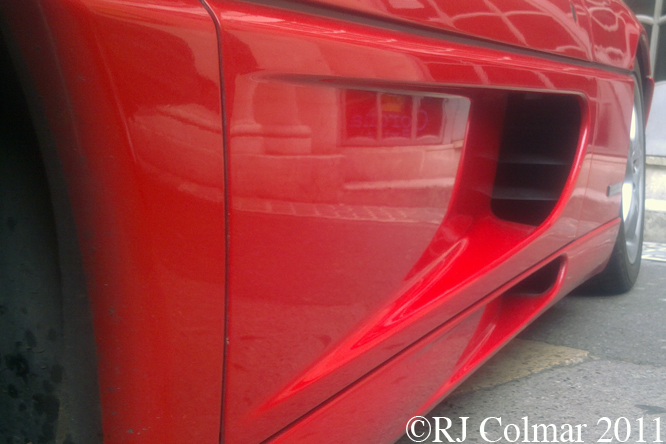
Ferrari F355, BIAMF

Fortunately Ferrari President Luca di Montezemol had his engineers rise to the challenge presented by the Japanese upstart by commissioning the design of the F355 and in the process Ferrari was transformed into a world class manufacturer of automobiles.

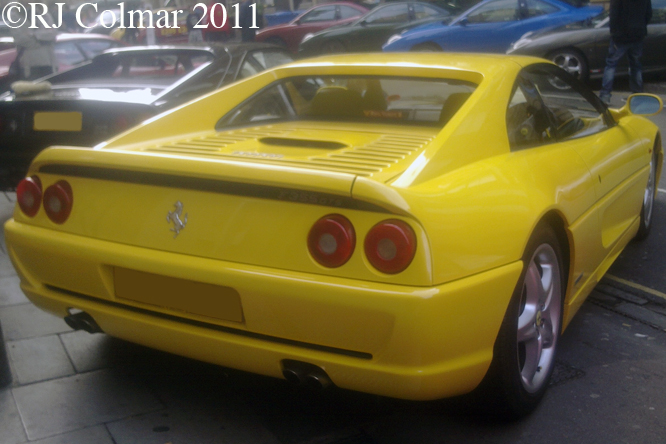
Ferrari F355, BIAMF

The solution to meeting the Japanese challenge was in part by turning to the latest Formula One technology which included building the first road car to be offered with a ‘paddle shift’ electronically controlled gearbox, and selecting the best ancillaries known to man for the engine, including Japanese starter motors and the latest in German electronic engine management systems.

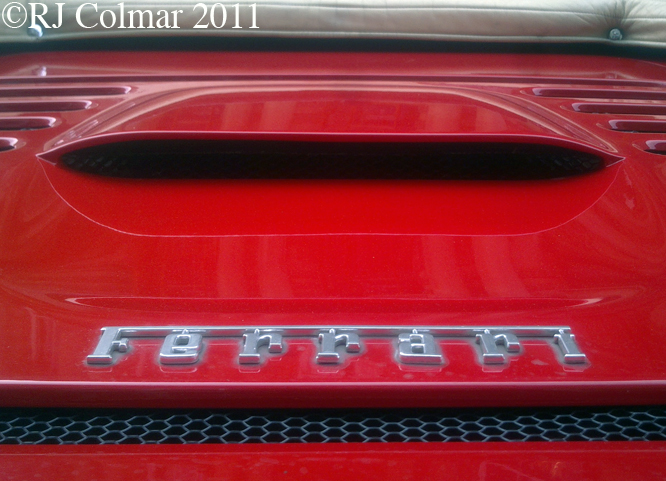
Ferrari F355, BIAMF

Out went Ferrari’s fabled indifferent assembly, industrial leather and off the shelf (FIAT) switchgear and in came carefully controlled build quality with bespoke switch gear and the finest leather interiors.

Ferrari F355, BIAMF

The F355’s motor was taken out from 3.4 to 3.5 liters AND given a pair of five valve per cylinder heads which combined to produce 375 hp which took a whole second off the GMC Syclones 1/4 mile time given by Car & Driver in the famous test between a Syclone Truck and a Ferrari 348ts that saw the GMC product perform surprisingly well.

Ferrari F355, BIAMF

The outcome of Ferrari’s efforts to match Honda’s super car was rewarded with 11,273 sales of the three basic types between 1994 and 1999 making the F355 one of the commonest of Ferrari’s yet seen, though the significance and legacy of the model lay in the foundations for success that the building and development of the F355 provided for all of the Ferrari road models that were to follow.

Thanks for joining me on the ‘World Class’ edition of ‘Gettin a li’l psycho on tyres’ I hope you will join me again tomorrow when I’ll be looking at a very significant Lotus. Don’t forget to come back now !

Share

Racing Dispensation – Mosler MT900 GT3

Warren Mosler has been at the fore front of automotive production technology ever since he launched the curiously proportioned Consulier GTP in 1985 a car that lays claim to being the worlds first carbon fiber and Kevler bodied vehicle to go into production.

Mosler GT3, Strata 21, Paul White, Calum Lockie, Castle Combe

After around 100 Consuliers had been produced Consulier Industries founded by Mosler spun off it’s automotive division and renamed it Mosler Automotive who produced a further Consulier GTP based vehicles up until 2000 when Mosler Automotive turned it’s attentions to the Mosler MT 900 wwich was designed by Rod Trenne who counts work on the Corvette C5 among his credits.

Mosler GT3, Strata 21, Paul White, Calum Lockie, Castle Combe

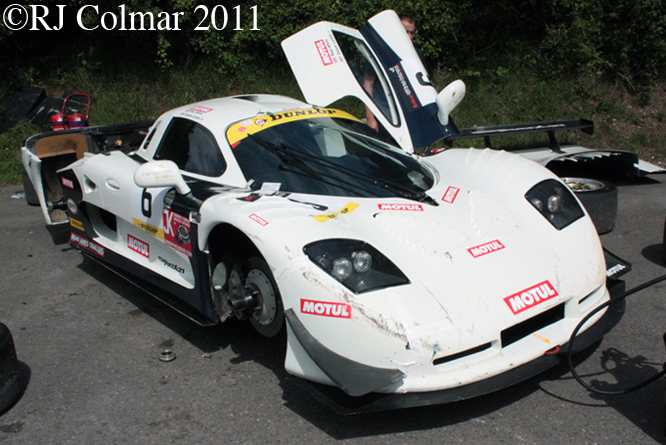
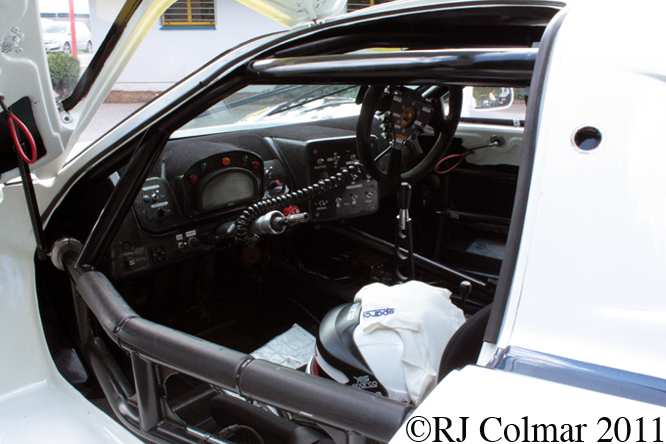
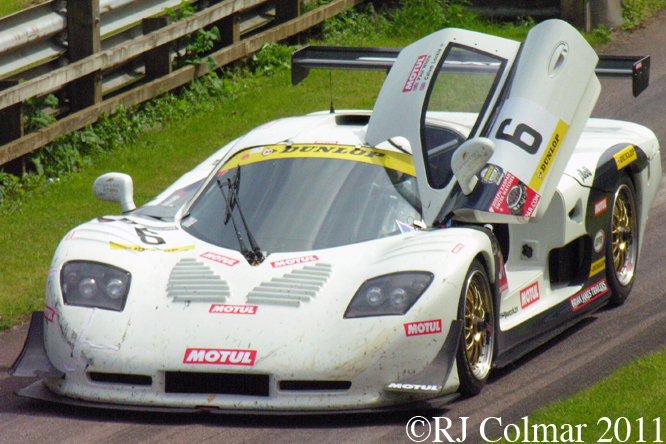
Like the Consulier and low volume Mosler Intruder and Raptor models that followed, the MT900 has a Kevlar body covering a carbon fiber skinned aluminium honeycombe composite monocoque made with bonded laser cut panels.

Mosler GT3, Strata 21, Paul White, Calum Lockie, Castle Combe

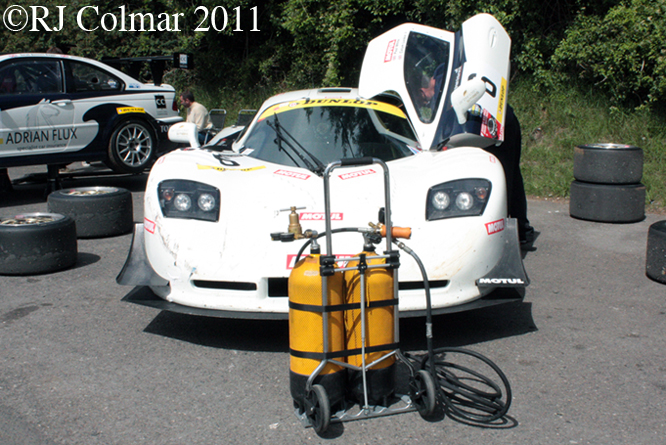
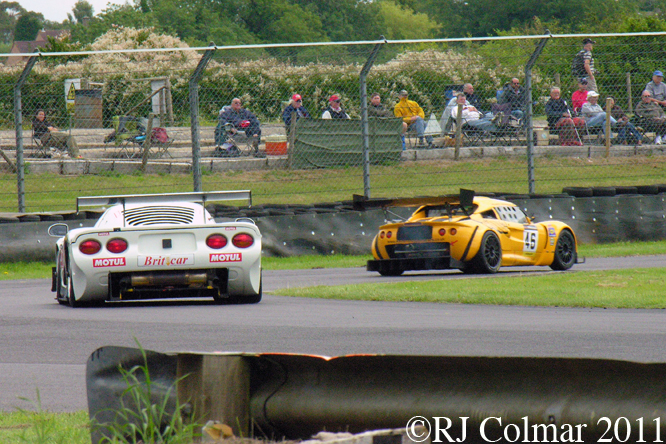
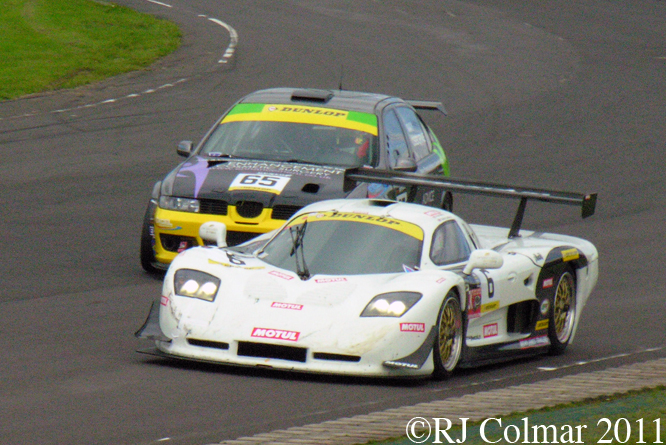
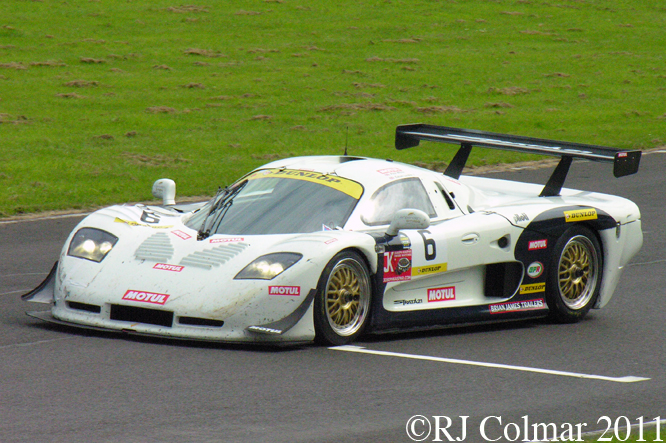
It is thought that only the prototype MT900 road car was ever produced, in 2001, however it is estimated that 11 MT900R versions were produced for GT2 racing with further GT3 versions like the Strata 21 team car seen here at Castle Combe. The only problem is that GT3 requires a certain number of cars to be built to qualify as a production racing car and this number has never been met, so that the car only races with special dispensation in GT3 spec in the UK, Belgium, Spain and Australia.

Mosler GT3, Strata 21, Paul White, Calum Lockie, Castle Combe

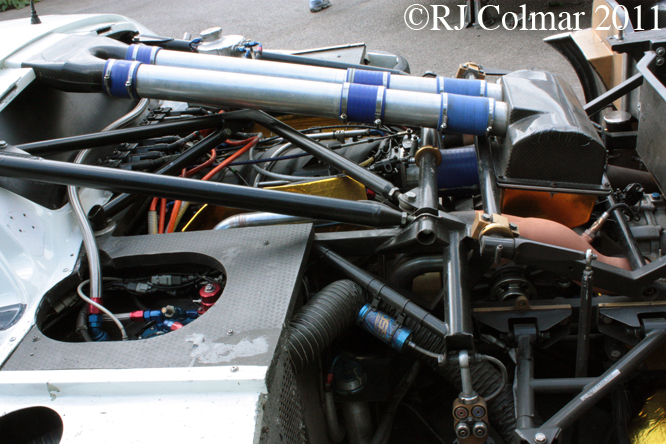
The MT900 GT3 is fitted with a dry sumped all alluminium Corvette LS7 motor with titanium valves and connecting rods tuned to give around 520 hp for events lasting between 2 and 24 hours, though 580 hp is available for short periods at higher less enduring rpm.

Mosler GT3, Strata 21, Paul White, Calum Lockie, Castle Combe

Despite only running with special dispensation of the 52 events the MT900 GT3 version is known to have participated in it had scored 13 wins and 2 class victories between 2007 and 2011.

Mosler GT3, Strata 21, Paul White, Calum Lockie, Castle Combe

Dave Sheard and Steve Scott are responsible for preparing the Strata 21 Mosler MT900 GT 3 for the Britcar Championship with owner Paul White sharing the driving with hired hand Calum Lockie.

Mosler GT3, Strata 21, Paul White, Calum Lockie, Castle Combe

After an unspecified mishap during qualifying at Castle Combe Calum Lockie started the 2 hour Britcar race from the back of the grid and with Paul White taking over for the second half of the race the #6 came in 4th overall.

Mosler GT3, Strata 21, Paul White, Calum Lockie, Castle Combe

By the seasons end White and Lockie were crowned Britcar Class 1 Champions having beaten Spanish rivals Javier Morcillo and Manuel Cintrano in the older Azteca Motorsport MT900 GT3.

Hope you have enjoyed this Racing Dispensation edition of ‘Gettin’ a li’l psycho on tyres’ and that you will join me again tomorrow for Ferrari Friday. Don’t forget to come back now !

Share

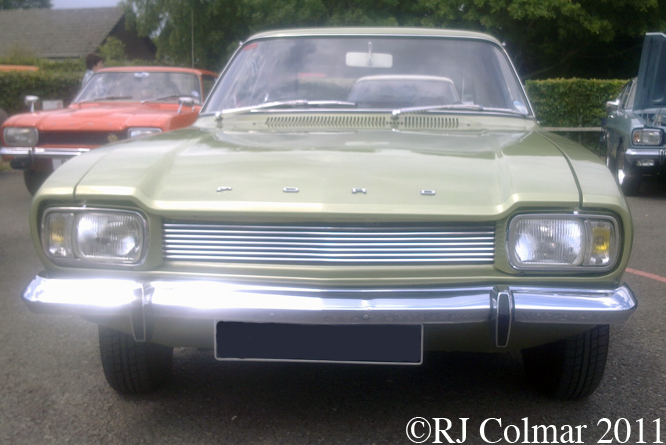
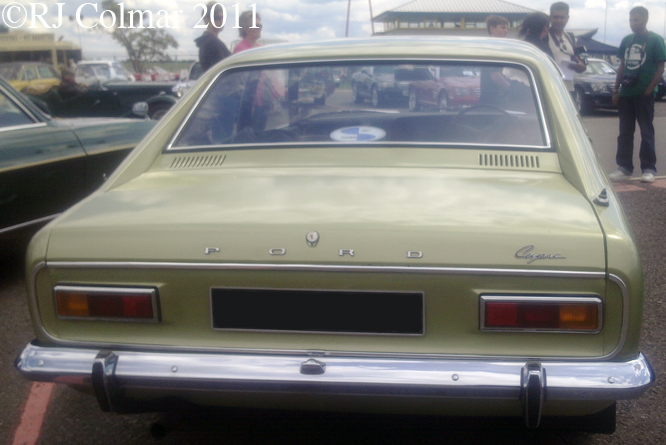
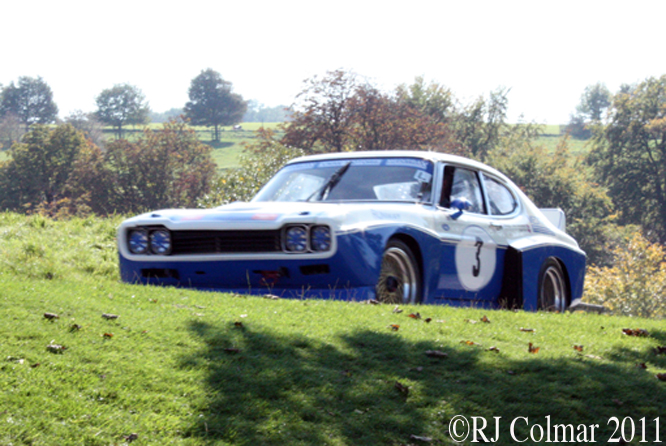
The Car You Always Promised Yourself – Ford Capri 1600 L

The concept of the ‘pony car’ is generally agreed to have been formulated by Ford when it popped a sports car body onto saloon / sedan running gear of the Ford Falcon and called the result the Ford Mustang.

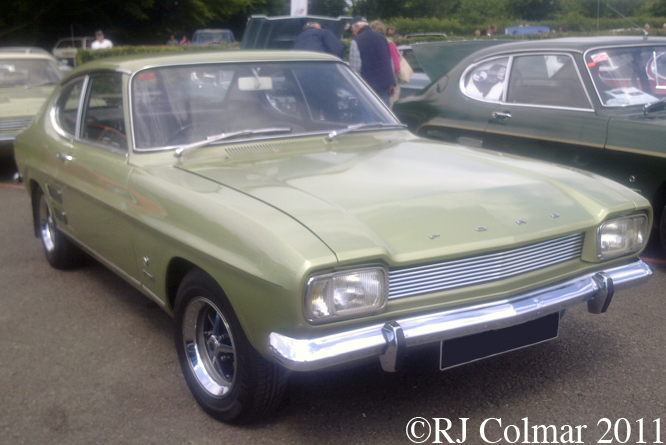
Ford Capri 1600 L, C&SC Action Day Castle Combe

By 1969 Ford in Europe emulated their US cousins by plonking a cool coupé body on the running gear of the evergreen Ford Cortina Mk2 Saloon / Sedan and marketing it as the “Car You Always Promised Yourself“.

Ford Capri 1600 L, C&SC Action Day Castle Combe

And for many people it really was over 1 million of the Mk1 versions were sold between 1969 and 1974 with a range of engines from 1.3 litres / 79 cui to eventually 3.1 litres 189 cui with an extremely limited edition homologation racing special having a 24 valve 3.4 litre / 207 cui motor fitted.

Ford Capri 1600 L, C&SC Action Day Castle Combe

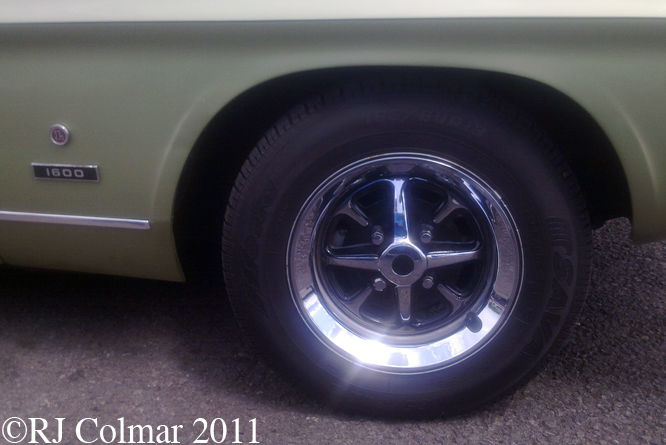
The Rostyle steel wheels on this example were identical to those found on the Cortina 1600E and usually fitted to the XL Capri variants, this 1969 1600 L fitted with 4 cylinder ‘Kent’ motor normally would have far more utilitarian steel wheels fitted with hub caps when it left the factory.

Ford Capri 1600 L, C&SC Action Day Castle Combe

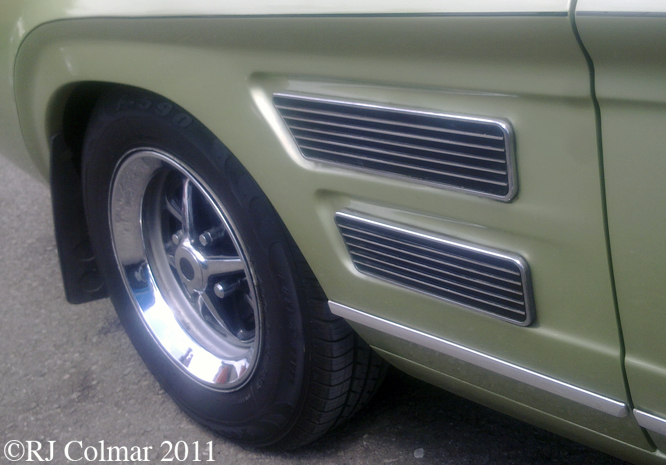
The intakes ahead of the rear wheels are dummies, just like those on the original 1964 Ford Mustang which inspired much of the design philosophy of the Capri.

Ford Capri 1600 L, C&SC Action Day Castle Combe

The Capri Mk 1 was sold without the Ford Badges in the United States by Lincoln – Mercury Dealers and was marketed as the ‘Sexy European‘ perhaps reflecting the popularity of this model among the stereo typical hedonist ‘Medallian Men’ of Europe.

Thanks for joining me on this ‘Sexy European’ edition of ‘Gettin’ a li’l psycho on tyres’, I hope you’ll join me again tomorrow when I will be looking at a rare contemporary American GT racing car. Don’t forget to come back now

Share

Irish Grand Prix Winner – 8/33 MG Midget

Cecil Kimber’s Morris Garages blossomed into the car manufacturer when it began producing sports versions of the 4 seat Morris Oxford in 1924. After building around 1100 such vehicles by 1929 the MG Car Company found a new market niche for small engined two seat performance sports cars.

MG M-Type, Prescott

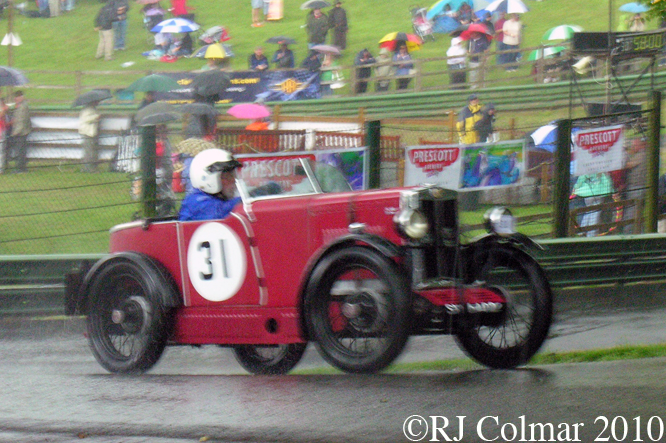
The first such car was the M-Type similar to Alex Peacops 1930/31 example seen at Prescott above which was marketed as the 8/33 M.G. Midget which was based on the Morris Minor chassis featuring lowered suspension with a wheel base of 78″ / 1980 mm and track of 42″ / 1067 mm.

MG M-Type, Prescott

The power for the Midget was provided by a 20 hp overhead cam 4 cylinder motor derived from the Morris Minor and Wolseley 10 cars. In 1930 the Midget design, like all those featured today, was upgraded with the Morris rod braking system replaced with a cable operated system and the 20 hp motor being replaced by a 27 hp version. Roger Glister is seen at Prescott driving his 1931 Midget above.
MG M-Type, Loton Park

Competition success with Midgets in 1930 included a Gold Star on the Lands Ends Trial, class victories in the Double 12 (hour) race at Brooklands, and Irish Grand Prix, success which were unashamedly used in subsequent advertising campaigns for the MG Midget.

MG M-Type, Loton Park

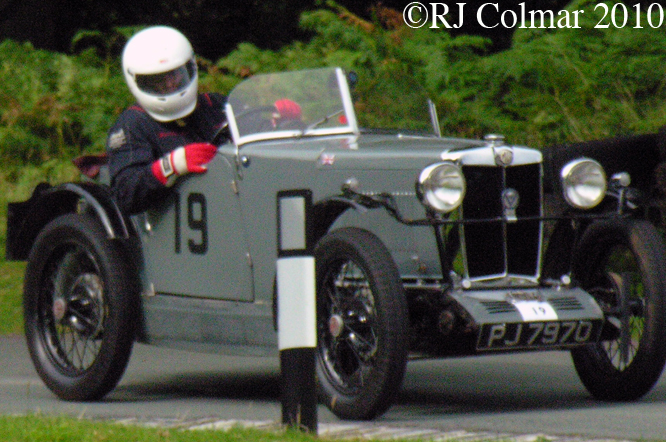
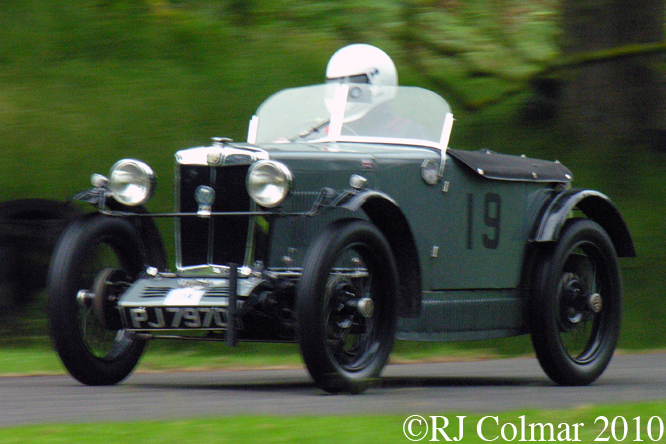
In standard form, like the 1932 #19 above driven by David Rushton at Loton Park, the Midget was capable of 65 mph and 40 mpg. The popularity of the Midget significantly boosted MG production numbers, by 1932, when production ceased, 3,235 Midgets had been produced which included coupé, supercharged and a one off service van variant.

Thanks for joining me on this M-Type edition of ‘Gettin’ a li’l psycho on tyres’, I hope you will join me again for a look at “The Car You Always Promised Yourself”. Don’t forget to come back now !

Share

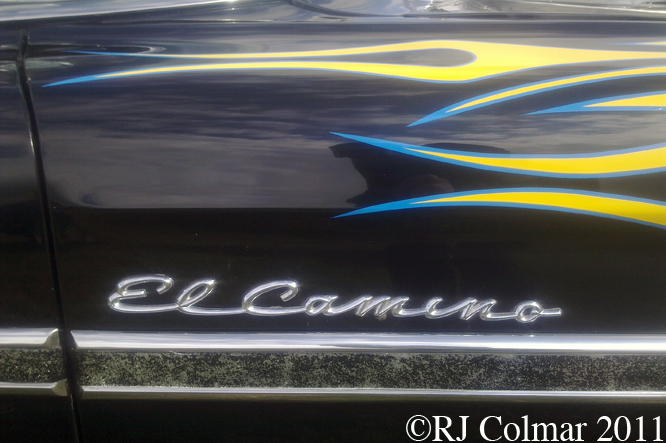
Hauling Marbles & Lego – Chevrolet El Camino

Some of my readers who have been reading my blogs since I started writing blogs at Rowdy.com may remember I once posted a video of myself singing a Joe Diffie song ‘Pick Up Man‘.

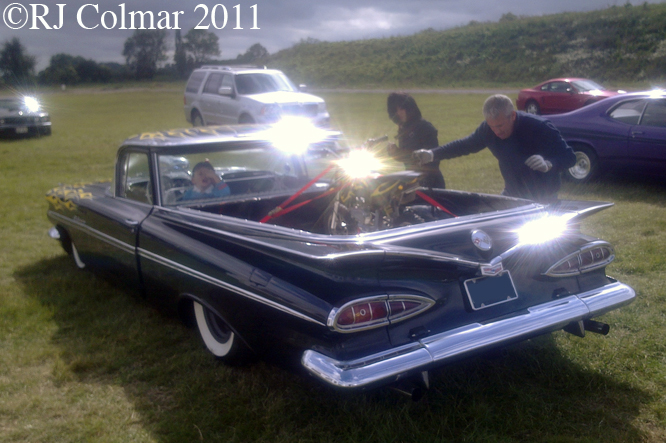
Chevrolet El Camino, Shakespeare County Raceway

The words have always resonated with me in part because when I was a kid, way before I went to school I had a ‘Dinky’ 1/32nd scale two tone bright green and white Chevrolet El Camino pick up truck which I used to delight in filling with marbles and lego and drove at least 100,000 miles on my knees.

Chevrolet El Camino, Shakespeare County Raceway

I don’t remember that it was big enough to carry a Barbie Doll bed but I am sure I carried plenty of smaller dolls house accessories, for the girl next door.

Chevrolet El Camino, Shakespeare County Raceway

Last time I recall seeing that Chevy it looked something like this, which might be considered a shame because one in good as new tip top condition is worth about £120 on e-bay but then y’all never met the girl next door !

Chevrolet El Camino, Shakespeare County Raceway

The concept of using a coupé as the basis for a utility pick up truck came at the suggestion of a farmers wife in Victoria, Australia who wrote to Ford Australia asking for “a vehicle to go to church in on a Sunday and which can carry our pigs to market on Mondays”.

Chevrolet El Camino, Shakespeare County Raceway

Lew Brandt at Ford Australia is credited with designing the first such vehicle in 1934 and General Motors Australian division Holden produced a similar vehicle in 1935.

Chevrolet El Camino, Shakespeare County Raceway

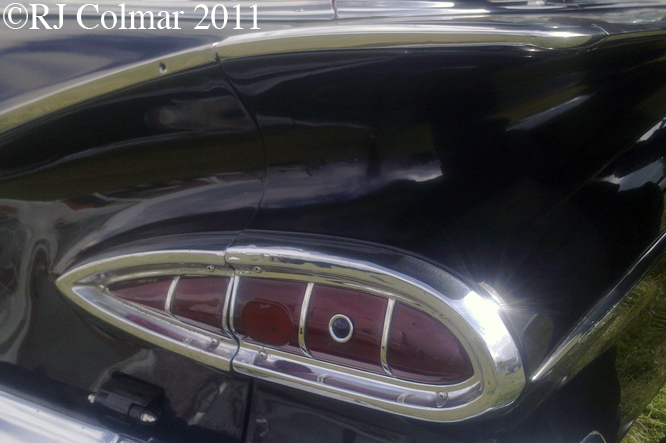
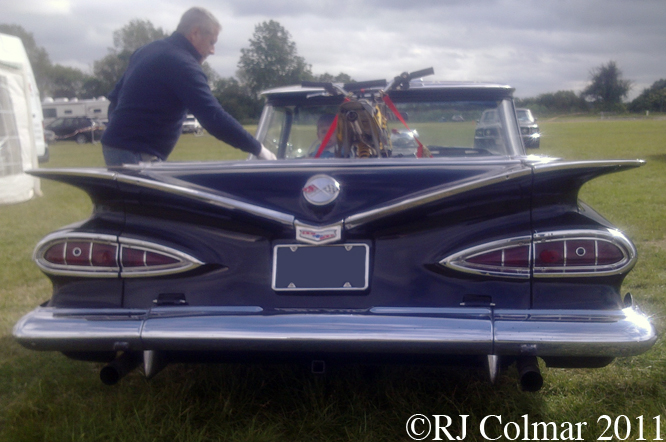
Surprisingly the coupé utility vehicle idea did not transfer across the Pacific Ocean until 1957 when Ford launched the Ranchero, based on the two door Ford Custom/Ranch Wagon/Courier platform and in 1959 Chevrolet followed suit with the El Camino based on the Brookwood platform complete with tail fins.

Chevrolet El Camino, Shakespeare County Raceway

When Hot Rod magazine conducted a test between the Ranchero and El Comino in 1959 they found the El Camino fitted with the top of the range 5.7 litre / 348 cui motor was capable of accelerating from rest to 60 mph in around 7 seconds and estimated the top speed at an astonishing 130 mph.

Chevrolet El Camino, Shakespeare County Raceway

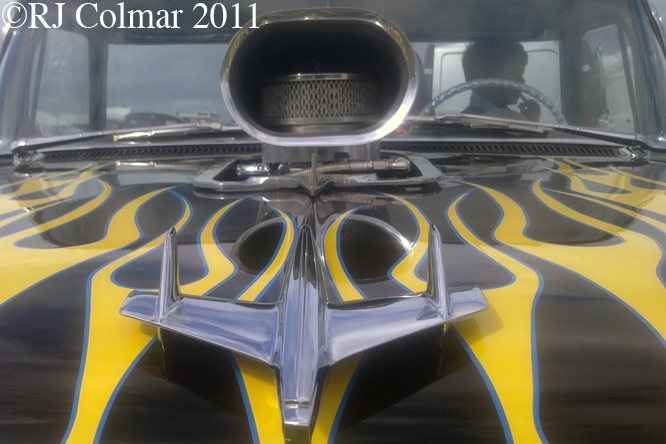
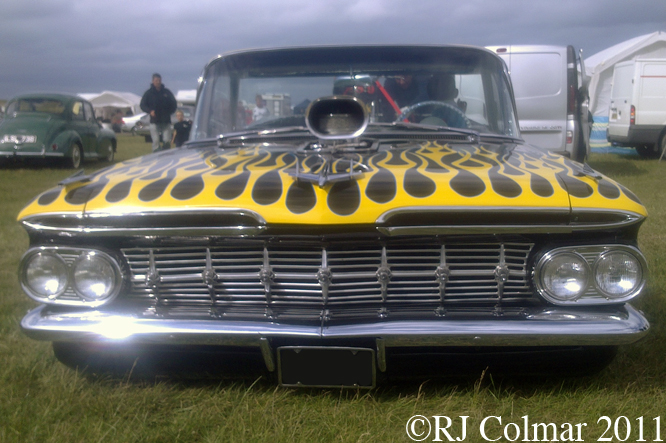
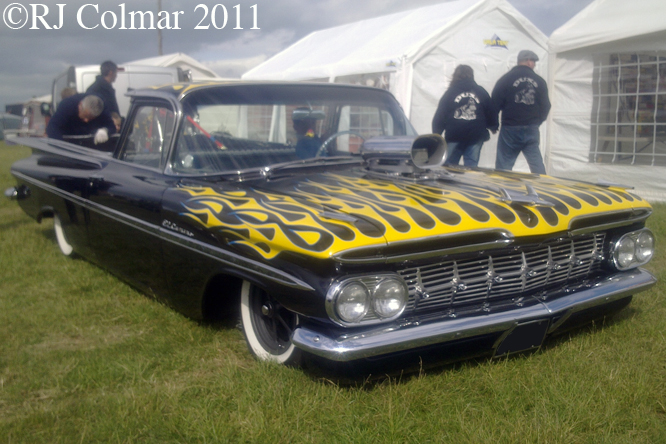
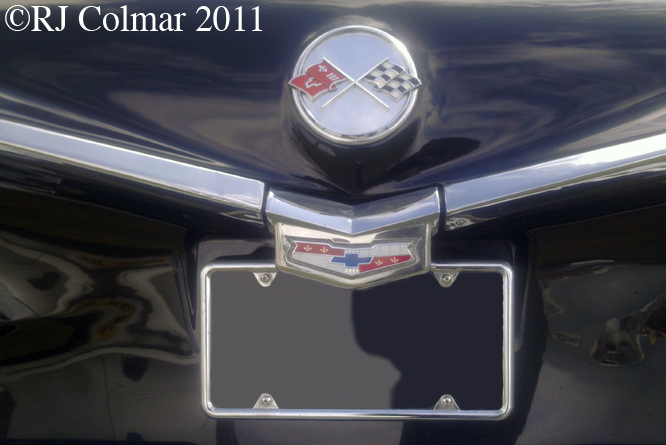
The first generation El Camino, like this ’59 model seen at Shakespeare County Raceway, outsold the Ranchero in the first year of production but when sales plummeted in 1960 the model was promptly discontinued, after around 36,409 examples had been built until 1964.

Thanks for joining me on this marbles and lego edition of ‘Gettin’ a li’l psycho on tyres’, I hope you will join me again tomorrow. Don’t forget to come back now !

Share

Racing on Ice – Allard J2 #J2123

Seasons greetings.

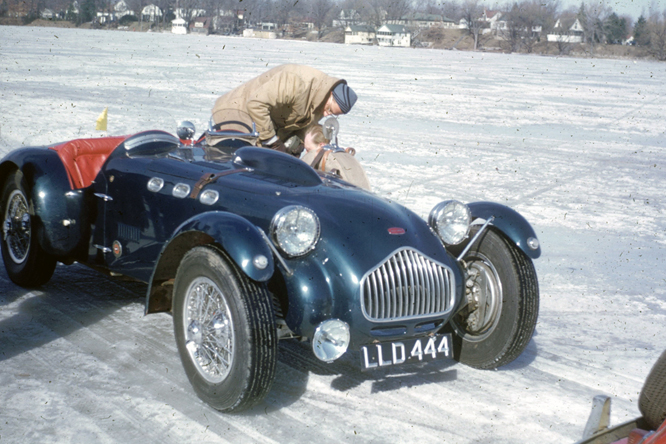
Allard J2, Lake Orion

Today’s photograph comes courtesy of Eric Davison an acquaintance of Del Lee, the owner of the Allard J2 seen above.

Del Lee “was a car salesman and at one point he owned a used sports car dealership on Detroit’s Livernois Avenue”.

His Allard is seen, probably in 1952, being readied for an event which Eric describes as being run as a time trial with a Le Mans start and no spiked tyres allowed.

My efforts to find a result for the event have been unsuccessful but Bob Martin of the event organising club Detroit SCCA did send me a copy Open Exhaust April 1969, the club magazine, in which Dels car is mentioned by author Les Rutlidge inconnection with an event at Bridgehampton in May ’52.

Les also tells us that in June ’52 Del “blew two pistons while practicing for the Camp Dearborn Road Race” and that replacements of the correct size “could only be found in a Wisconsin built lawn mower !” Lee is reported to have purchased two such units removed their pistons and fitted them to the Cadillac motor which #J2123 was running at the time.

J2 #J2123 currently belongs to GALPOT contributor and todays GALPOT Birthday Boy John Aibel, I hope you will join me in wishing John a Happy Birthday.

My thanks to Eric Davison for his recollections and today’s photograph and to Bob Martin for the copy of the April 1969 Open Exhaust.

Thanks for joining me on this ice racing edition of ‘Gettin’ a li’l psycho on tyres’ I hope you will join me tomorrow when the eight day Automobiliart / GALPOT Seasonal Quiz get’s under way.

Don’t forget to come back now !


Automobiliart GALPOT Seasonal Quiz

Automobiliart, Paul Chenard

December 26th – January 2nd

Win a set of Paul Chenard Greetings Cards

Sports-GT cars set, Paul Chenard

Set 1 Sports & GT Cars

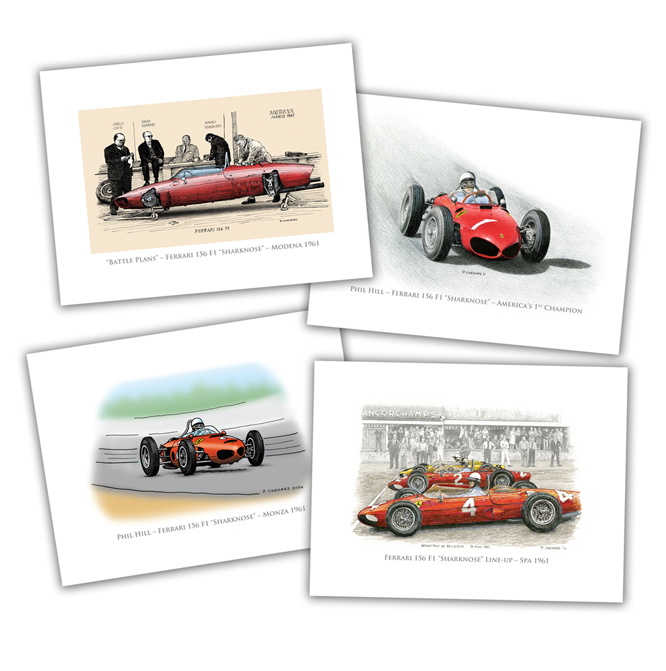
Phil Hill, Sharknose Ferrari Set, Paul Chenard

Set 2 Phil Hill World Drivers Championship 50th Anniversary Edition

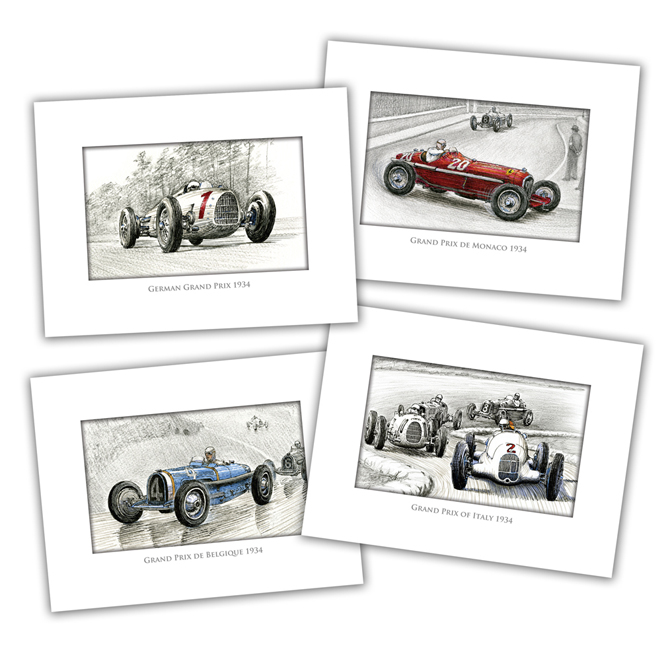
1934 GP Season Card set, Paul Chenard

Set 3 1934 Season

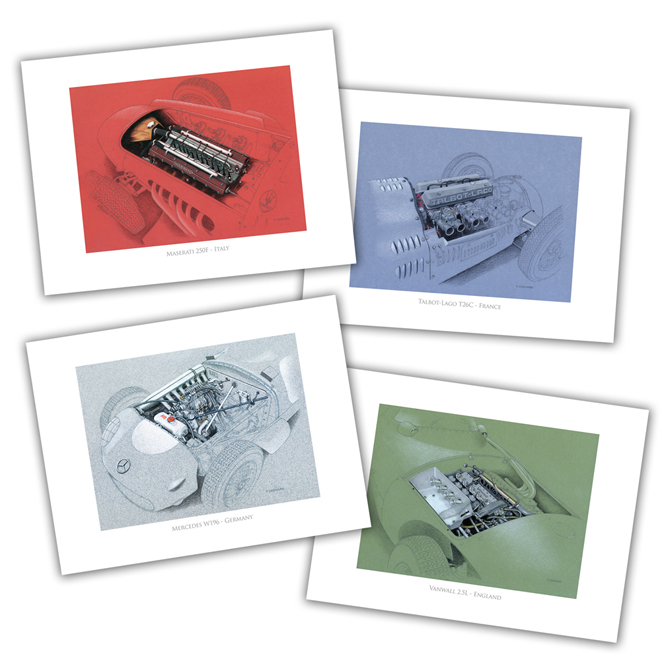
1950s Grand Prix Engines

Set 4 Grand Prix Engines of the 1950’s

or

Mike Hawtorns racecars Card set, Paul Chenard

Set 5 Mike Hawthorn’s Race Cars

The Automobiliart GALPOT Seasonal Quiz will comprise 8 categories.

Overall winner chooses one set of Paul Chenard Greetings Cards from the five sets shown above.
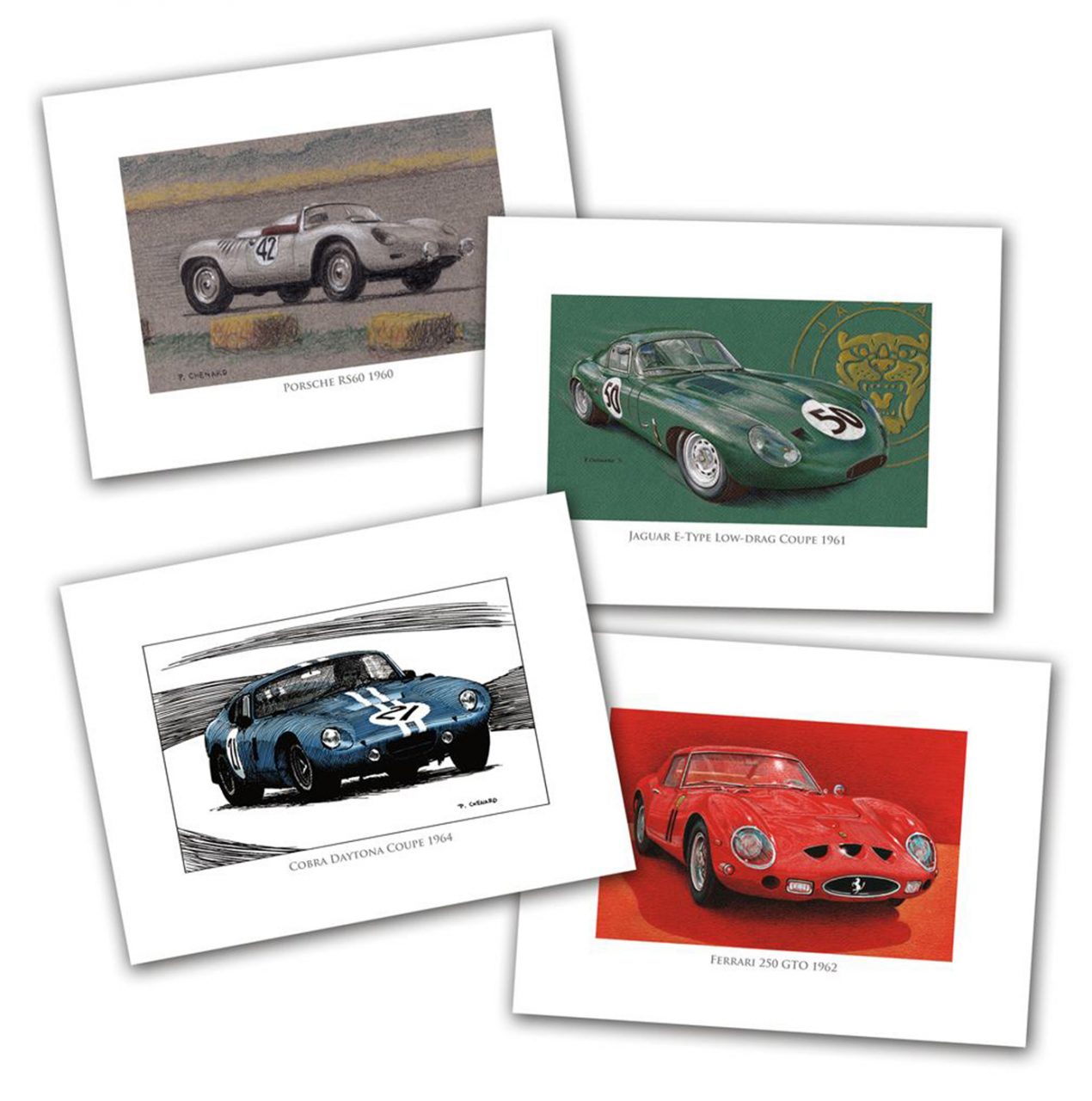
The cards measure 15.24cm x 11.43cm, come in packs of 12 with 3 copies of 4 designs in each set, plus A6 envelopes.
Which set will you choose ?

The free to enter Automobiliart GALPOT Seasonal Quiz will run from December 26th – January 2nd Entries close January 8th 2012, Winner announced January 16th 2012.

Full details on December 26th at GALPOT.

Looking for Automotive Seasonal Gift Idea’s? Visit Automobiliart Now !

Share