Tag Archives: Colmar

Major Reliability Leap – Hispano Amilcar Special

The motor powering Robin Baker’s 2 speed, chain drive 1930 Hispano Amilcar Special is a 1916 Hispano Suiza V8 aircraft engine.
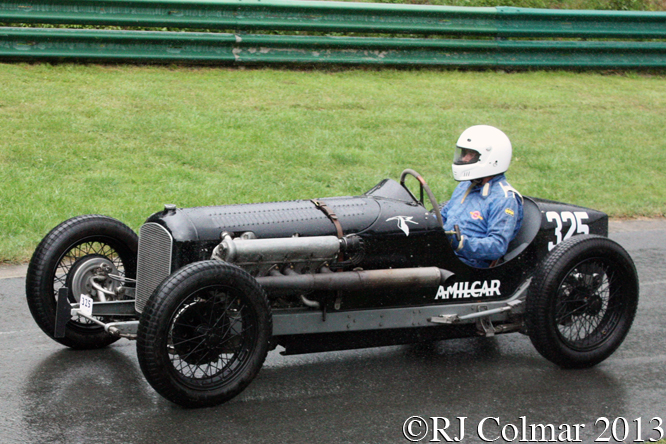
Hispano Amilcar Special, Robin Baker, VSCC Prescott

Marc Birkigt’s HS8 design with a swept volume of 11,760 cc / 717 cui originally produced 140hp and was only accepted for use by the French Military after it had passed a 50 hour full speed test, more than three times longer than any comparable test held hitherto.
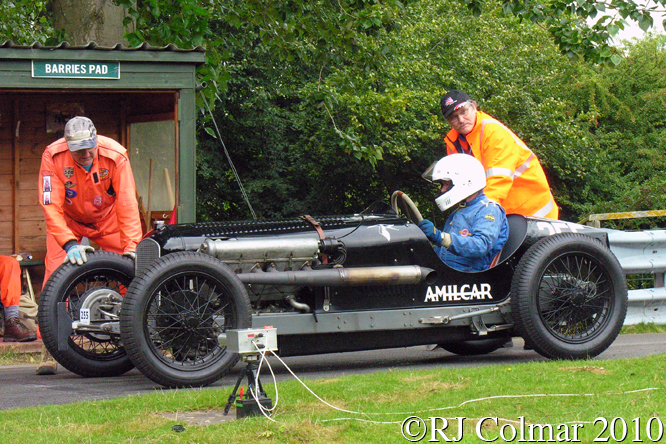
Hispano Amilcar Special, Robin Baker, VSCC Loton Park,

After demonstrating it’s major leap in reliability a new SPAD S.VII fighter was quickly designed around the new motor which helped the Entente, British, French and Russian, air forces regain air superiority during the 1914-18 war.
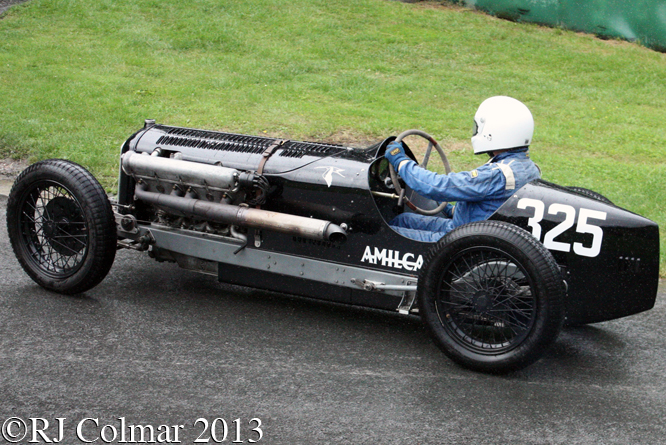
Hispano Amilcar Special, Robin Baker, VSCC Prescott

By the time production of HS8 motors ceased in the mid 1920’s they were producing 300hp and they had been built under licence in 21 different factories under licence in Spain, France, Britain, Italy, and in the United States where they were recognised as superior to the Curtiss OX5 V8.
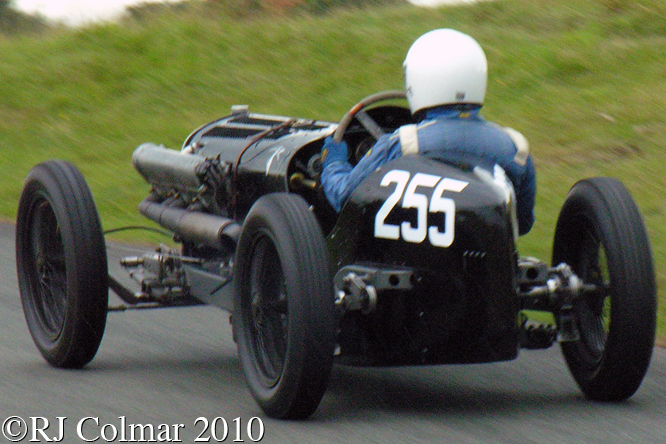
Hispano Amilcar Special, Robin Baker, VSCC Loton Park

By 1930 I believe the only Amilcar chassis being built large and substantial enough to carry a 185 kg / 407 lbs HS8 would probably have been a C8 which would have originally been fitted with a 2 liter / 122 cui or 2.3 litre / 140 cui straight 8.

Thanks for joining me on this “Major Reliability Leap” edition of “Gettin’ a li’l psycho on tyres” I hope you will join me again tomorrow when I’ll be visiting the Avenue Drivers Club. Don’t forget to come back now !

Share

Shafer 8 – Rigling Buick

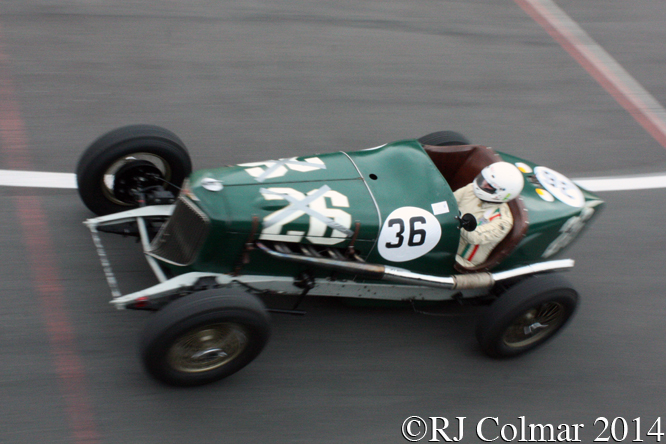
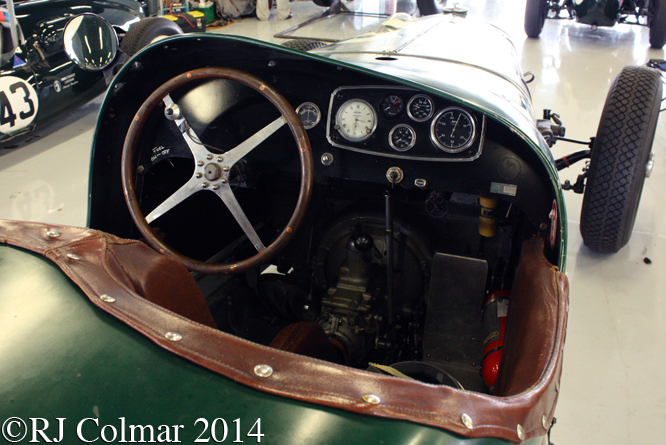
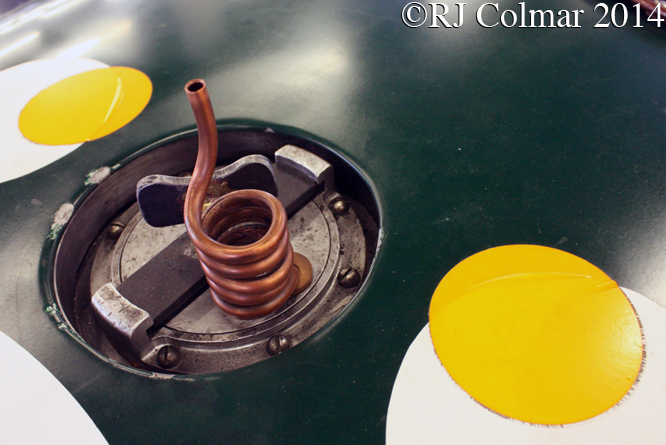
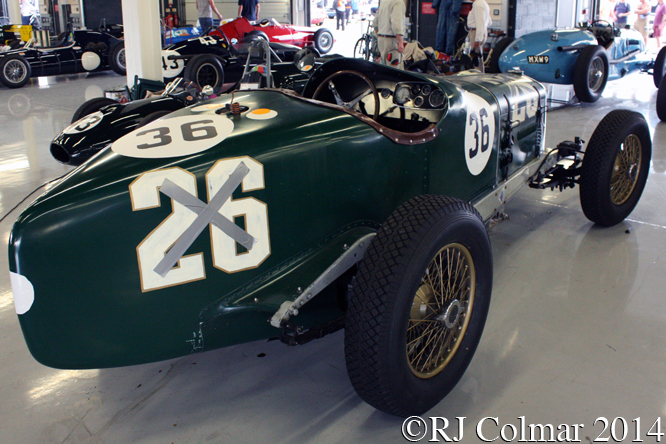
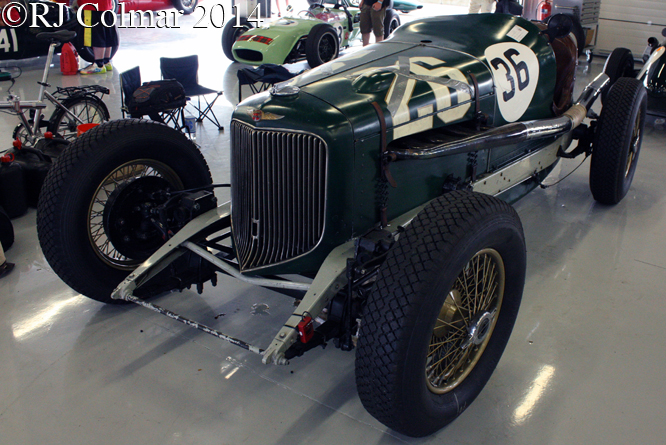
Like the Wonder Bread Special I looked at last year today’s featured chassis is credited as being the handy work of Herman Rigling who is said to have built no fewer than 8 of the 40 chassis that started the 1931 Indy 500.

Rigling Buick, Silverstone Classic,

Foremost of the 8 entries that Herman had a hand in building was the Buick powered #12 example driven Phil Schafer known as the Schafer 8 which started 23rd and finished 12th.

Rigling Buick, Heinz Bachmann, Silverstone Classic,

The following season Phil returned to Indy to drive the #33 Shafer 8 Rigling Buick from 26th on the grid through to an 11th place finish.

Rigling Buick, Silverstone Classic,

In 1933 Phil was absent from the Indy 500 grid having failed to qualify the #7 Abels Fink Auto Special in an officially sanctioned qualifying session, he did qualify on the morning of the race, but officials realised they had overstepped their jurisdiction by allowing the running of a qualifying session on race day morning !

However the #8 Abels Fink Auto Special, Phil’s Shafer 8 dating back to 1931 , was driven by H W Stubblefield from 10th on the grid to a fifth place finish.

Rigling Buick, Silverstone Classic,

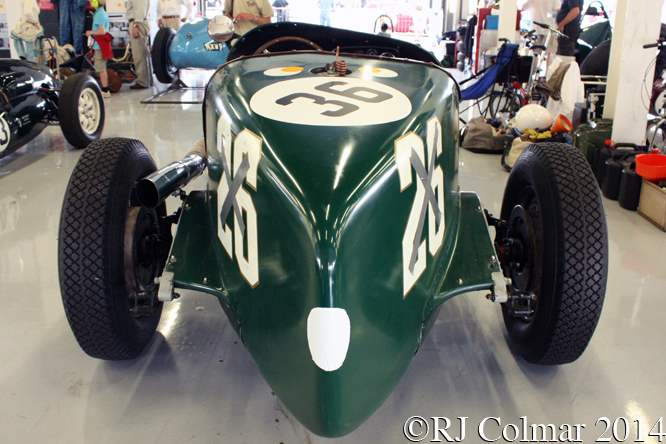
Phil entered two Shafer 8’s for the 1934 Indy 500, it would appear his original Rigling Buick was entered as the #36 for Al Miller and his mechanician Pinky Donaldson while Phil and mechanician Earle Frost drove the #26 Shafer 8.

Rigling Buick, Silverstone Classic,

Al drove to a 6th place finish from 8th on the grid while Phil starting from an Indy 500 career high 6th on the grid recorded his only Indy 500 retirement with a broken cam shaft drive after completing 130 laps to be classified 16th in his last drive at the Brickyard.

Rigling Buick, Silverstone Classic,

Phil continued competing in the AAA championship until 1936 and continued to participate in the Pikes Peak Hillclimb until 1952.

Heinz Bachmann is seen at the wheel of a Rigling Buick above that is believed to be the Shafer 8 that Phil Shafer failed to qualify at Indy in 1933 but with which Paul won the AAA non Championship race at Elgin Illinois, as described at the end of the post by John Glenn Printz, and raced in his final Indy start in 1934.

My thanks to Vitesse2 and Michael Ferner at the Nostalgia Forum for their help with some of the details in today’s story, I highly recommend reading Michael’s retelling of the 1933 Indy 500 qualification saga part 1 of which appears linked here and part 2 linked here with the race report linked here.

Thanks for joining me on this “Shafer 8” edition of “Gettin’ a li’l psycho on tyres” I hope you will join me again tomorrow when I’ll be looking at a DIY Backie. Don’t forget to come back now !
Share

Brynfan Tyddyn Winner – Kieft CK52

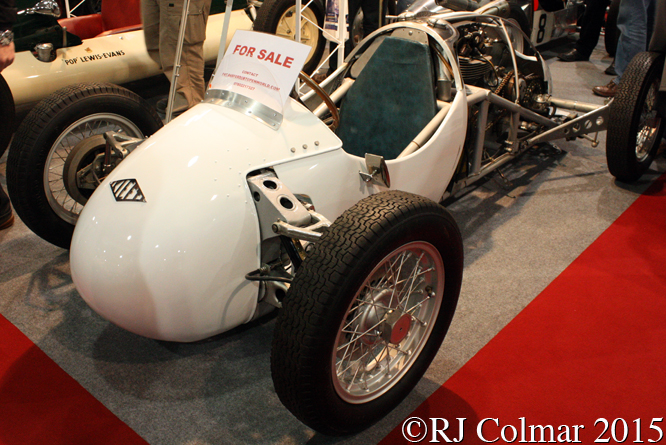
After a brief and unsuccessful attempt at hillclimbing in a Marwyn 500 Swansea born Cyril Kieft ended up buying the Marwyn company when it folded.

8 or 9 Kieft Mk 1’s incorporating Marwyn parts and ideas were manufactured for the 1950 season with the works teams greatest achievement being the capture of 13 records in the 350cc and 500 cc class at Monterey using Norton Engines and with Stirling Moss, Ken Gregory (Moss’ manager) and Jack Neill doing the driving.

Stirling and Ken had plans to build their own 500 Formula 3 car to beat the predominant Coopers for 1951, but were short of finance.

Kieft CK52, Race Retro, Stoneleigh

When they approached Cyril with the idea of employing Ray Martin to design and build a car to Stirling’s specifications Cyril agreed and with Stirling aged just 21 and Ken as co directors Kieft Car Construction Ltd, a new entity, was founded in Wolverhampton.

The CK51 with a Norton engine was an immediate success with Moss scoring a debut win, 27 seconds ahead of Alan Brown’s Cooper Mk V at Goodwood in May 1951, unfortunately Stirling’s growing list of commitments elsewhere meant the main beneficiary of the new Kieft would be Don Parker.

After testing Stirling’s prototype Kieft Don bought a Kieft CK51 and incorporated many of his own idea’s into it. With his personalised Kieft Don won the 1952 Autosport Formula 3 Championship, Light Car Challenge and Veterans Trophy and the national title again in 1953 missing out on a hatrick by just one point to Les Leston in 1954.

Kieft CK52, Race Retro, Stoneleigh,

Ironically while Don Parker was clocking up 30 wins during the 1953 season Stirling concluded that the Cooper Mark IV was a better bet than the Kieft CK52, like the one seen in these photographs, and he resigned as director of Kieft as a result.

This particular car was sold to Dick Irish of Cleveland Ohio who raced it to numerous victories the most notable of which was the Brynfan Tyddyn Challenge Cup run over a road course north of Wilkes-Barre, Pennsylvania.

Kieft moved on to building Formula 2 cars in 1953 and aborted Formula One project intended for the 1954 season.

Kieft CK52, Race Retro, Stoneleigh,

Don Parker kept faith with Kieft until 1956 when he too inevitably bought a Cooper.

Today’s featured car returned to the UK in 2005 and after it was restored was raced by Nigel Ashman who drove it to the 500cc Owners Association Club Championship title in 2010.

Thanks for joining me on this “Brynfan Tyddyn Winner” edition of “Gettin’ a li’l psycho on tyres”, I hope you will join me again tomorrow. Don’t forget to come back now !
Share

100 Grannies Knitting – FIAT 2300S Coupé

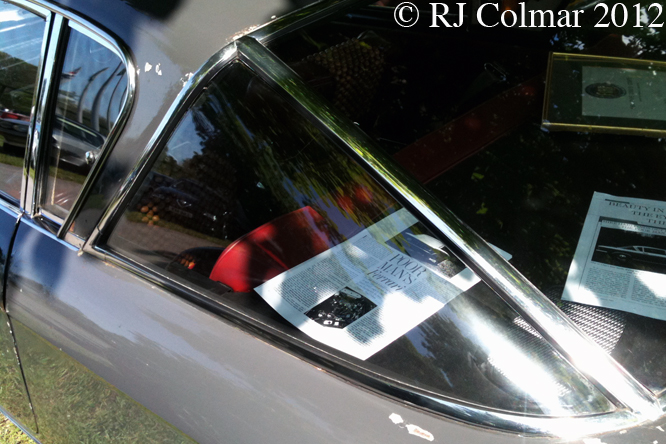
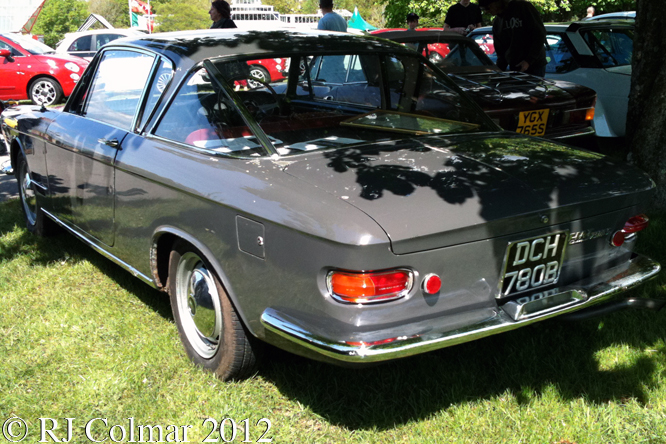
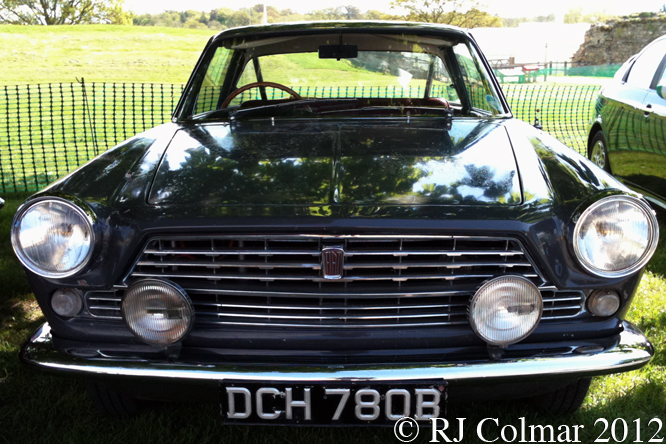
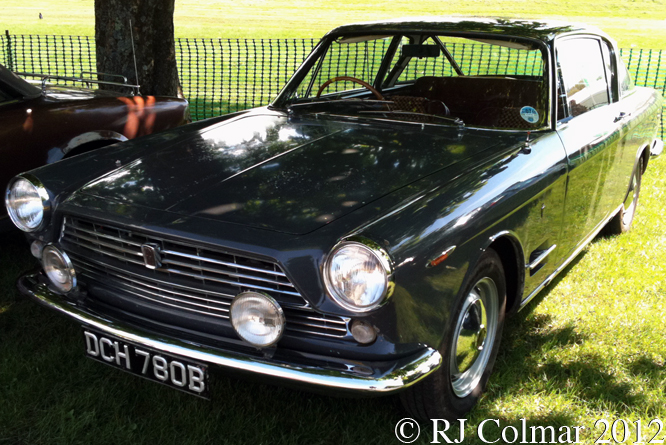
At the 1960 Turin Motor Show FIAT showed off a new Coupé based on the soon to be manufactured FIAT 2300 saloon chassis and running gear and with a body styled by Sergio Sartorelli at Ghia, who with hind site produced a 4 seat vehicle not unlike the contemporary Sergio Pininfarina styled Ferrari 250 GT/E.

FIAT 2300S Coupé, Simply Italian,

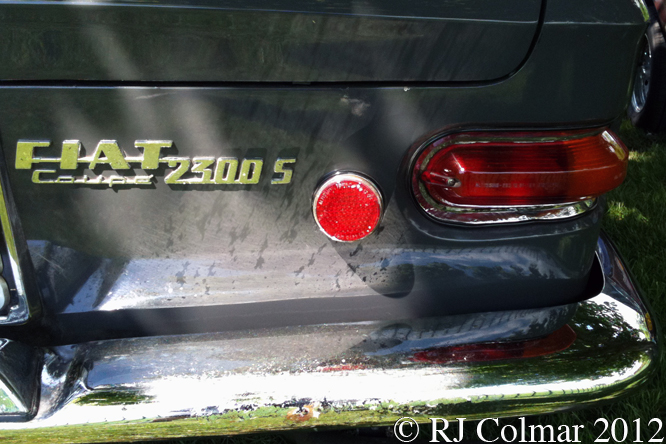
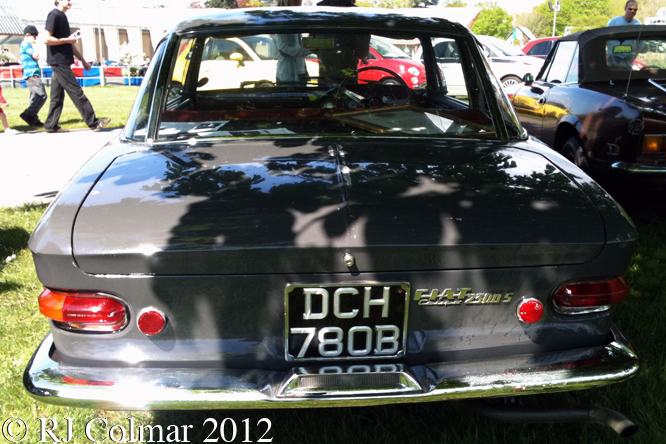
The 2300 Coupé was offered with either a 105hp twin carburetor straight six or the S version, as seen in these photo’s taken at Simply Italian, Beaulieu National Motor Museum a couple of years ago, with 136 hp.

FIAT 2300S Coupé, Simply Italian,

Since Ghia did not have the capacity to build the Coupé bodies the job was contracted out to Officine Stampaggi Industriali known as OSI which was founded in 1960 as a coachbuilding company based in Turin by former Ghia president Luigi Segre and Arrigo Olivetti.

FIAT 2300S Coupé, Simply Italian,

Luxury fittings including power windows pushed the price of a 2300S Coupé up to nearly double the cost of an E-Type Jaguar so it is hardly surprising that only 220 of the 7,194 2300S Coupés built between 1961 and 1967 were Right Hand Drive examples imported into the UK.

FIAT 2300S Coupé, Simply Italian,

This particular car was dry stored from 1971 to 2000 with just over 37,000 miles on the clock, it was subsequently recommissioned with a minimum of work required to pass it’s Ministry Of Transport (MOT) test, required to make it roadworthy.

FIAT 2300S Coupé, Simply Italian,

The owner of this 1964 car, which appears in these photographs with it’s original paint, chrome and interior, and his son own six 2300S Coupe’s in various states of repair between them.

FIAT 2300S Coupé, Simply Italian,

The motor on this vehicle has been Abarth tuned to produce 150 hp which is good for pushing this car up to a maximum 118 mph, a contemporary report in Autocar noted that the valve tappets “sound like 100 grannies knitting”.

Thanks for joining me on this “100 Grannies Knitting” edition of “Gettin’ a li’l psychoontyres” I hope you will join me again tomorrow when I’ll be looking at an open wheeler raced by an American called Irish. Don’t forget to come back now !
Share

Code C,A or K – Ford Mustang GT

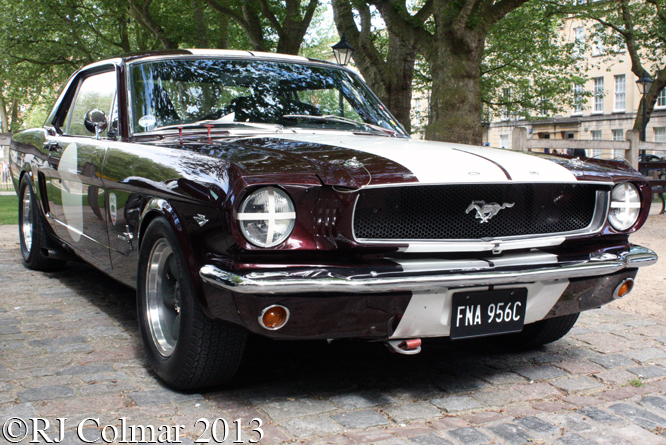
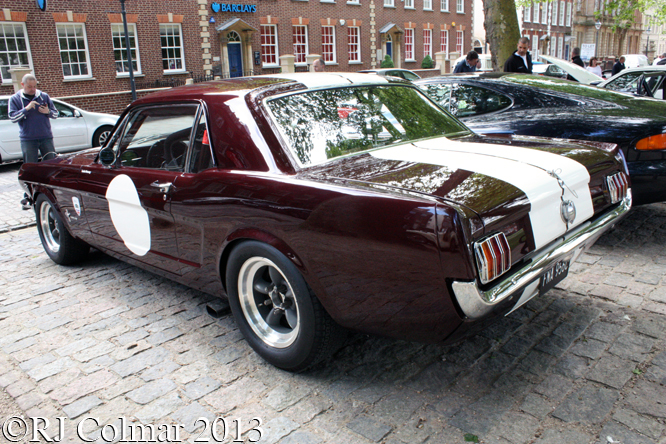
After retooling in August 1964 Ford offered it’s sensational Mustang with a GT equipment package that included a V8 motor, grille-mounted fog lamps, rocker panel stripes, and disc brakes, an instrument panel with a speedometer, fuel gauge and unnumbered temperature, oil pressure and ammeter gauges in five round dials.

Ford Mustang GT, Avenue Drivers Club, Queen Square, Bristol

Today’s featured car is registered as a “Mustang GT” and carries a 289 / 4.7 litre V8 though it is unclear if today’s featured car has a 200hp C Code 289 with a two barrel carburetor or perhaps one of the four barrel carburetor options either 225hp A Code 289 or 271hp “Hi Po” K Code 289.

Ford Mustang GT, Avenue Drivers Club, Queen Square, Bristol

As can be seen this particular vehicle has been prepared to racing spec with bonnet / hood pins and roll cage and it appears to have been raced by Louis Bracey in HSCC events in recent years.

Thanks for joining me on this “Code C,A or K” edition of “Gettin’ a li’l psycho on tyres” I hope you’ll join me again tomorrow when I’ll be looking at a poor mans 250 GTE. Don’t forget to come back now !
Share

Promotion To Track Control – Bristol Llandow Sprint

On Saturday I picked up Bristol Pegasus Motor Club Secretary Tim Murray and headed across the the the Severn to Llandow where we joined other club members and those from Bristol Motor Club for the Bristol Llandow Sprint.

I earned a promotion from marshaling at the second corner to the control tower where I was responsible for safely releasing the cars onto the track roughly three at a time, below are an arbitrary selection of competitors vehicles I saw in the paddock during the lunch brake.

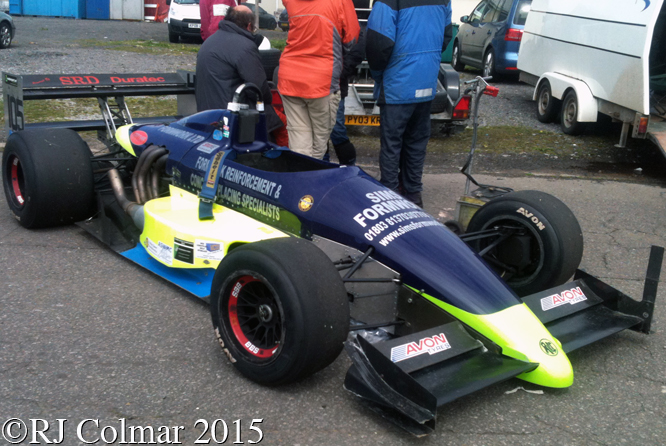
Ralt RT 33/34, Bristol Llandow Sprint

Above the #105/805 Sims Formwork 1990 Ralt RT33/34 SRD Formula 3 car shared by David, who took Fastest Time of the Day honours and Roy Sims who took the top class up to 2 litre / 122 cui class award.

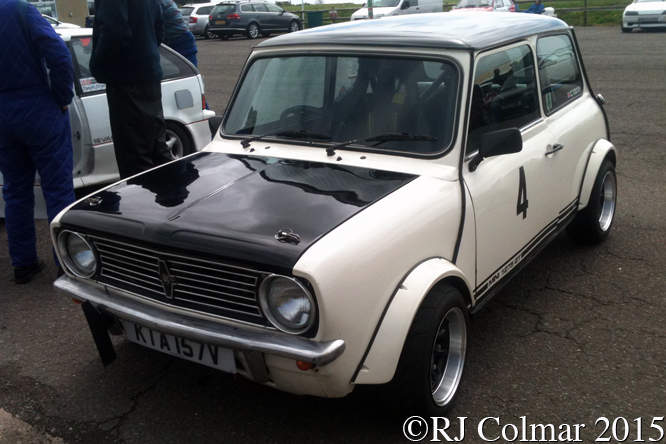
Austin Mini 1275 GT, Bristol Llandow Sprint

While her Dad Mark was busy with Chief Marshall Duties and her mum Zoe was working busy with Race Administration duties Claire Tooth was busy pedaling her nicely prepared #4 1979 Austin Mini 1275 GT who finished 4th in the Road going series production up to 1400 cc / 85 cui class.

Megapin Mk3, Bristol Llandow Sprint

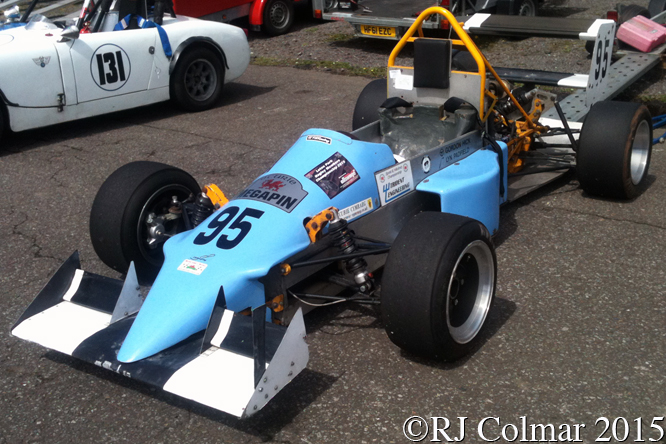
The late Ian Scott built a series of motorcycle engine powered Megapin’s in the garage behind his house in Carlisle Cumbria, Gordon Hick’s #95 Megapin Mk3 is powered by a 600cc / 36 cui motor but still came 5th in the Racing Cars up to 1100 cc / 67 cui class.

Austin Healey Sprite, Bristol Llandow Sprint

David Tandy left his Austin 7 at home and brought along his much modified Mk 1 Austin Healey Sprite to compete in the MG Car Clubs Championship and finished 13th in class.

Austin 7 Special, Bristol Llandow Sprint

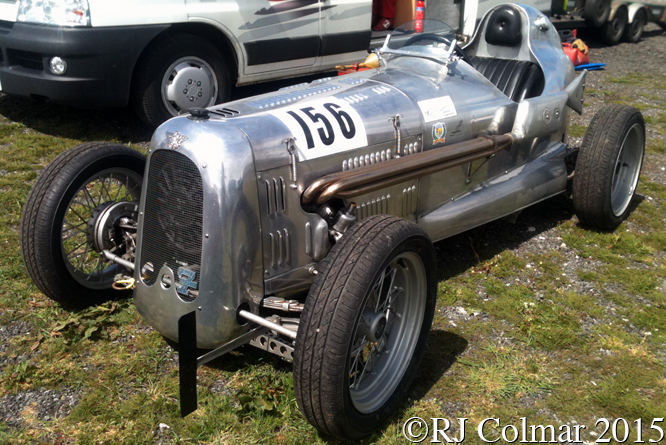
Even more highly modified is Terry Griffin’s single seater Austin Seven Special, complete with ‘Brooklands’ exhaust box, which won the Austin 7 championship for track cars class.

Ford Escort 1600GT, Bristol Llandow Sprint

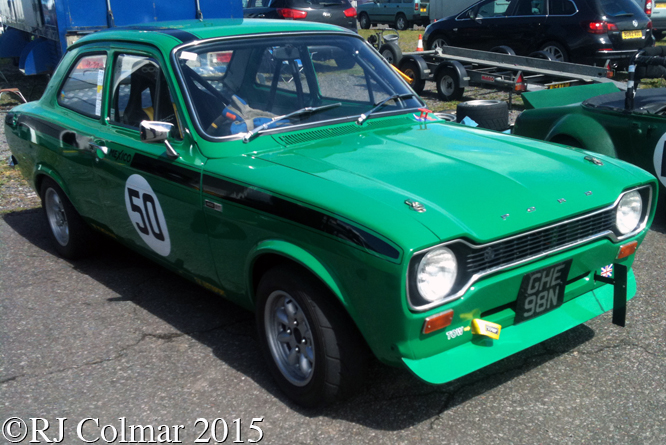
Finally before returning to my control tower duties I snapped Richard Hearnden’s modified #50 1975 Ford Escort 1600GT which finished second in the modified series production class up to 1800 cc / 109 cui, that started life as a rather more pedestrian Escort 1100L.

Bristol Pegasus Motor Clubs next Sprint will be The Hullavington Wessex Sprint on May 25th and entries and marshals are still being sort, for further information see the BPMC website linked here.

Thanks for joining me on this “Promotion To Track Control” edition of “Gettin’ a li’l psycho on tyres” I hope you will join me again tomorrow when I’ll be looking at another Pony. Don’t forget to come back now !
Share

LWB Aero Engine Special – Peugeot Type 148 Hall Scott Special

In 1913 Peugeot introduced the Types 145, 146 and 148 passenger cars which all shared the same 4,536 cc / 276 cui 35 hp 4 cylinder motors but had chassis with 3.3m / 10.8 ft, 3.48m / 11.4 ft and 3.61m / 11.8 ft wheelbases respectively.

Peugeot 148 , Clive Press, VSCC Loton Park

Today’s featured car is built on one the longer 1913 Type 148 chassis, one of just 83 built, but somewhere around 2001 appears to have been fitted with a 100hp 10 litre / 610 cui 4 cylinder Hall Scott A7 Aero engine, of the same type as fitted to William Hildyardís 1910 Th Schneider I looked at last week and Stewart Wilkies Fafnir I looked at some years ago.

Peugeot 148 , Clive Press, VSCC Prescott

The bodywork on Clive Press’s Peugeot seen in these photographs at Loton Park and Prescott respectively is styled on the 1913/14 era Peugeot EX3 racers that won the French Grand Prix and 1913 Indy 500.

Thanks for joining me on this “LWB Aero Engine Special” edition of “Gettin’ a li’l psycho on tyres” I hope you will join me again tomorrow when I’ll be visiting Llandow. Don’t forget to come back now !
Share