Tag Archives: Cosworth

Still Born Beauty – Lotus Cosworth 96T

Trained as a criminologist Roy Winklemann found employment as an investigator for the US Airforce before being employed by ‘the company’, assummed to be the CIA. During this time Roy had occasional outings as a driver in sportscars before setting up a team to run Dan Collins in a Chevrolet Corvette in Europe.

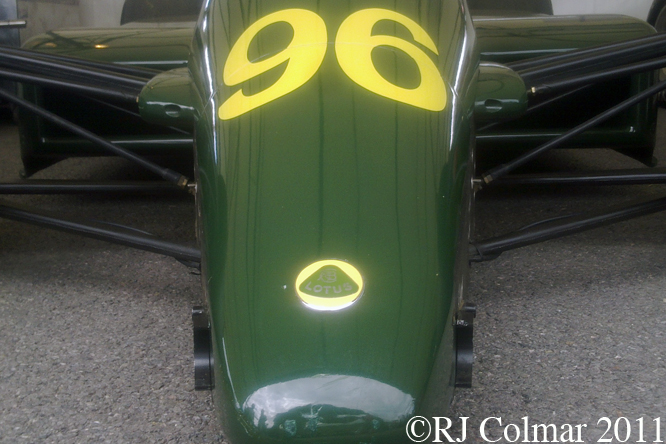
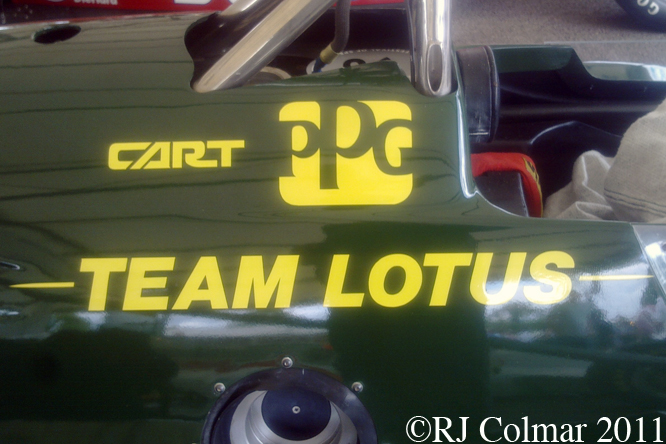
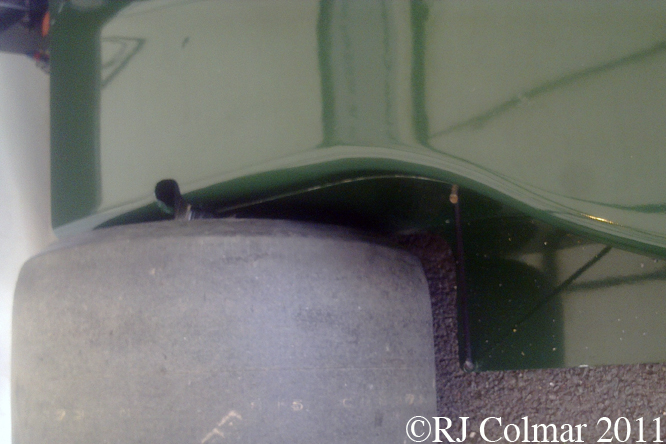
Lotus Cosworth 96T, Goodwood FoS

While founding a number of security related businesses Roy went on to run a variety of vehicles in Europe’s lower open wheel formula which culminated in him entering Jochen Rindt in a Formula 2 Brabham a combination which over 20 races dominating the formula in 1967 and 1968.

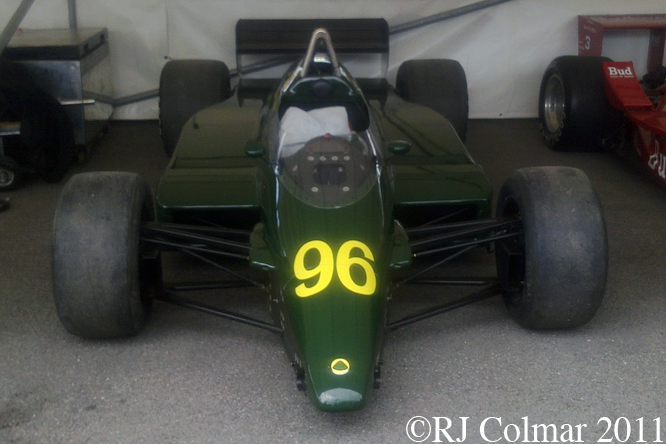
Lotus Cosworth 96T, Goodwood FoS

After his success with Jochen Rindt Roy Winkelmann disappeared from the racing scene through the 1970’s while he built up his diverse security empire, only to reappear in the US with a proposed Indy Car programme in the mid 1980’s. The plan was to compete with the unfair advantages of a works car and works motor rather than the customer route taken by almost all the teams except Penske, who made their cars available to customers.

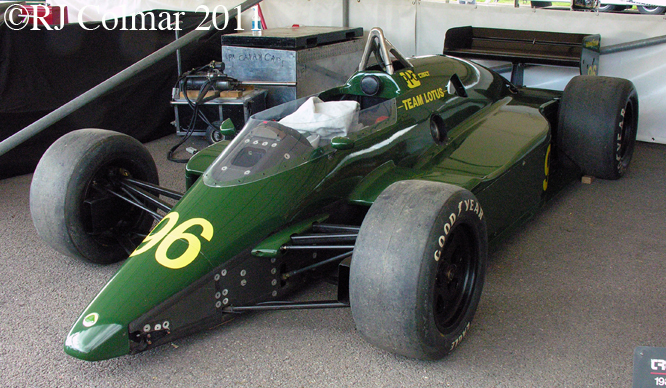
Lotus Cosworth 96T, Goodwood FoS

Roy chose to hook up with his erstwhile partner Lotus and received assurances from Cosworth for a supply of works backed motors. The new car the 96T was built using current Formula One technology in the form of a carbon fiber monocoque, something that had yet to make an appearance at Indy, and rising star Al Unser Jr was signed up to drive the car for the 1985 season.

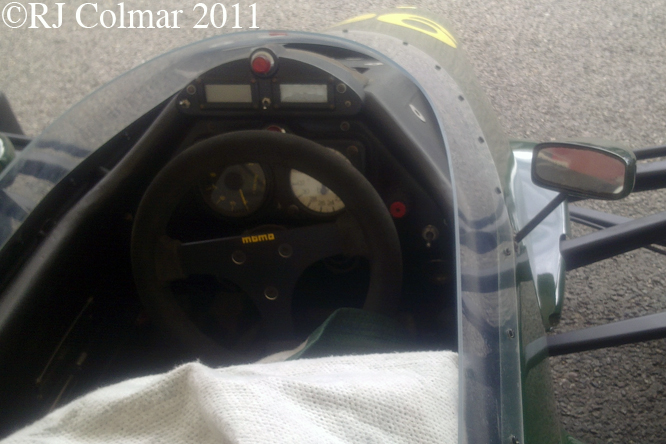
Lotus Cosworth 96T, Goodwood FoS

Under the direction of Gérard Ducarouge, Gene Varnier and Martin Ogilvy designed the Lotus 96T along similar lines to the Formula One Lotus Renault 97 T with which Ayrton Senna would win his first two Grand Prix in 1985.

Lotus Cosworth 96T, Goodwood FoS

However that is pretty much where the story ends because following the announcement, fearful of how a carbon fiber chassis would react to a secondary impact, USAC, organisers of Indy 500 moved to have carbon fiber banned from competition.

Lotus Cosworth 96T, Goodwood FoS

With rumours of the possible ban sponsors became impossible to sign up and the project came to a standstill without so much as the motor being fired up in the workshop.

Al Unser Jnr signed up late to join Doug Shierson for the 1985 and no more was heard from Winkelmann or the Lotus Cosworth 96T. The car, along with the Ferrari 637 among the most beautiful cars never to have been raced is seen here at last years Goodwood Festival of Speed.

Thanks for joining me on this “Still Born Beauty” edition of “Gettin’ a li’l psycho on tyres” I hope you will join me again tomorrow for a feature on the 1962 Indianapolis 500. Don’t forget to come back now !

Share

Choice Of Champions – Lotus 49B #R10 & #R12

The story of the Lotus 49 in all of it’s guises is inextricably linked to the one component that was a decade ahead of it’s time the Ford DFV motor, which did not win it’s last race until 1983 and was still being used in 1985 running against turbocharged powered cars.
Lotus 49B, Goodwood, FoS

The Lotus 49 was originally built to compete in the 1967 Formula One season for drivers Jim Clark and Graham Hill. Colin Chapman had arranged for Ford to finance the building of the 3 litre / 183 cui Ford Cosworth V8 engine which like the BRM H16 Colin had used in 1966 was to be used as an integral component of the chassis, ie, if you take the motor out of the car the rear wheels would no longer be connected to the rest of the car sufficiently to be able to even push it.
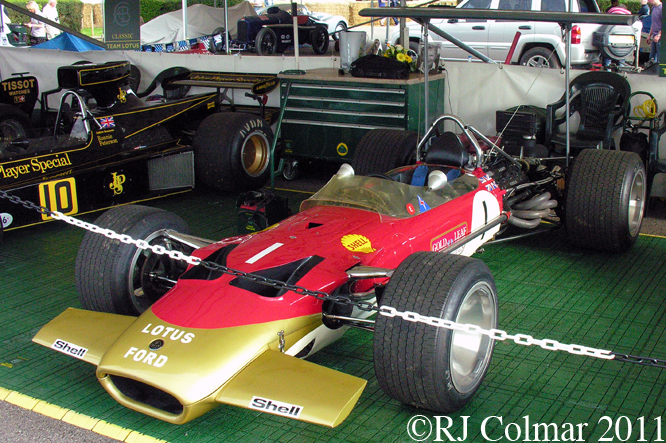
Lotus 49B, Goodwood, FoS

The Lotus 49 design, credited to Maurice Phillipe, was based on the 1965 Indy winning Lotus 38 which Len Terry is credited with being responsible for. Jim Clark drove the Lotus 49 to a debut win in the 1967 Dutch Grand Prix. The Type 49 in all it’s guises won 12 Grand Prix in total the last a lucky last lap win at the 1970 Monaco Grand Prix with Jochen Rindt at the wheel.
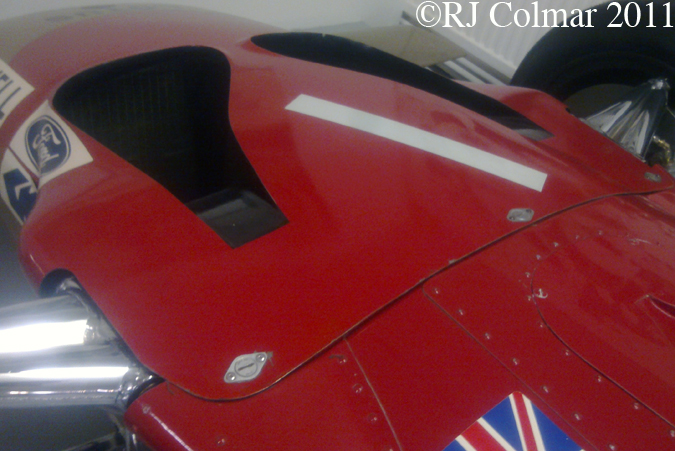
Lotus 49B, Donington Park Museum

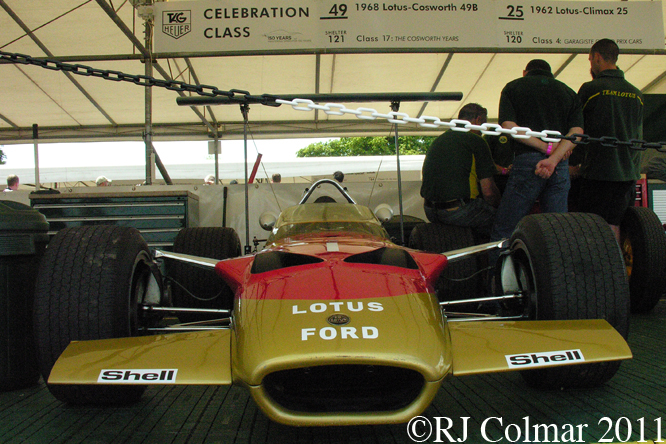
These air ducts, introduced on the 49B in 1969, allowed air to pass through the radiator and escape over the top of the car, where as on the original car the air had passed through the nose cone and out the sides of the car ahead of the front suspension units.
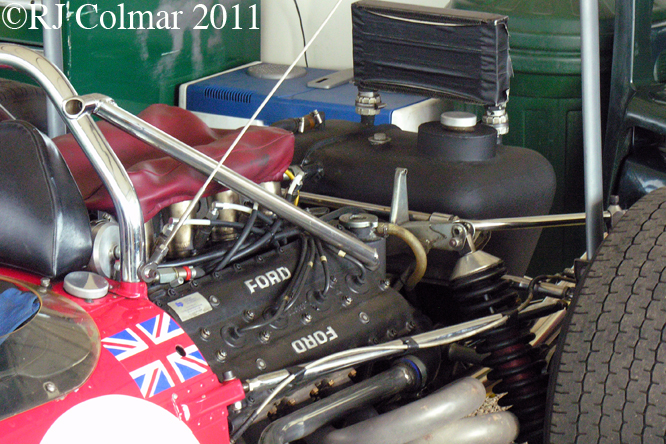
Lotus 49B, Goodwood, FoS

Producing around 400 hp when it first became available, Colin Chapman had an advantage over every other car in the field with the light and reliable Cosworth DFV which had years of development ahead of it that would see it’s output reach just short of 500 hp in 1985. Unfortunately, for Colin Chapman, realising that they needed to be seen running against other competitive teams Ford renegade on it’s exclusive deal with Lotus at the end of 1967 and allowed Ken Tyrrells Matra team to use Ford engines as well in 1968. By the mid 1970’s only Ferrari and BRM were the only regular runners not using Cosworth DFV’s.
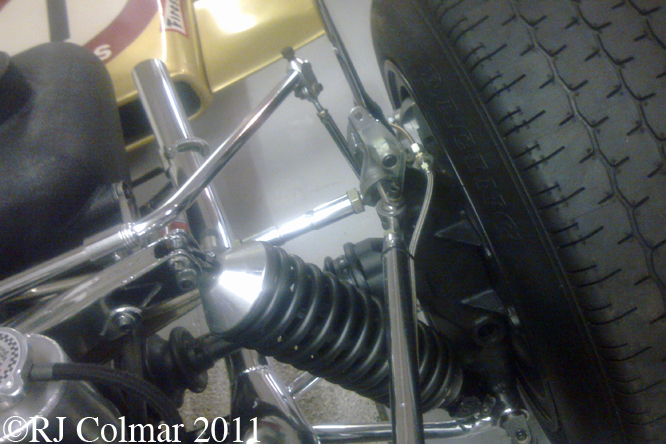
Lotus 49B, Donington Park Museum

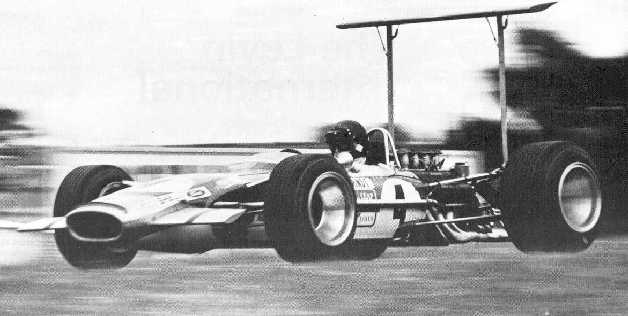
In 1968 Brabham and Ferrari copied the high aerofoil concept first seen on the Chaparral 2E Can Am car in 1966 and on the 1967 Chaparral 2F in the World Prototype championship, a month later the Lotus 49B with new rear hubs to carry the 400 lbs of downforce generated by the rear wing appeared at the French Grand Prix.
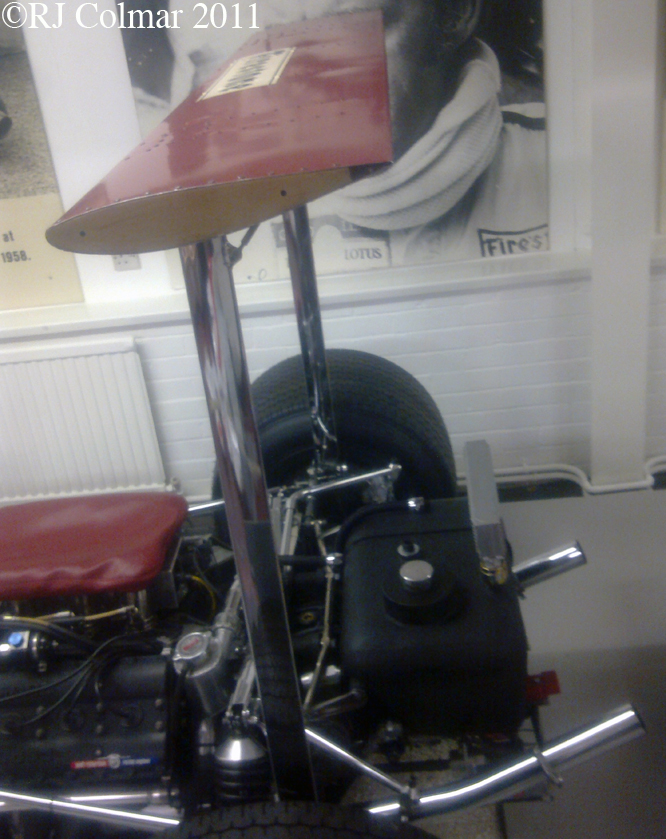
Lotus 49B, Donington Park Museum

This photo shows clearly how big an issue rear grip was back in 1968 not only is their a rear wing but the Hewland gearbox is surrounded by a large oil tank in an effort to distribute as much weight to the rear of the car as possible to improve road holding.
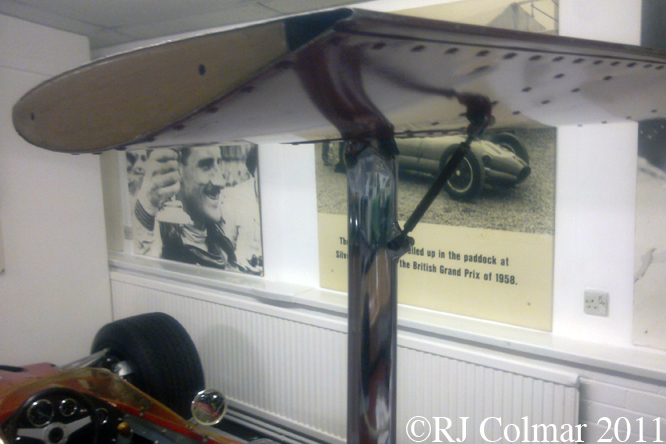
Lotus 49B, Donington Park Museum

The inverted aeroplane wing shape and light construction of the rear wing can be seen here, in 1969 similar wings were attached to the front hubs as well, but two bad accidents caused by collapsing wings for Lotus Team mates Graham Hill and Jochen Rindt led to these devices being strictly controlled from the 1969 Monaco Grand Prix on.
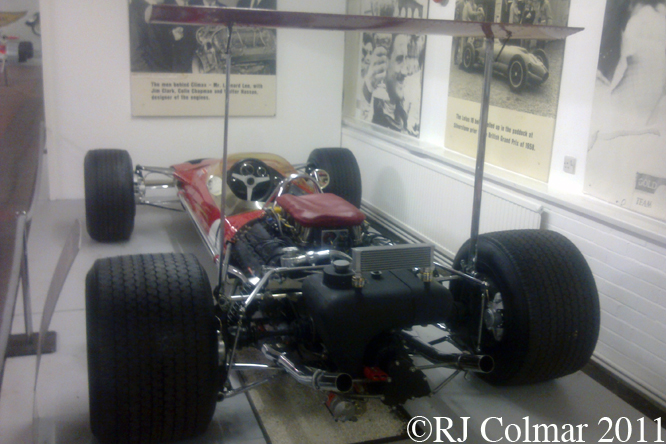
Lotus 49B, Donington Park Museum

So far as I can tell the chassis seen here, in the first, second and forth photo’s, at Goodwood is #R10. Chassis R10 was probably the original 49 #R5 which for reasons that are not clear was renumbered.

While carrying the #R5 chassis plate the car was raced in his second world championship winning year by Graham Hill to win the 1968 Monaco Grand Prix, #R10 was subsequently used by 1978 World Champion Mario Andretti to win pole for his first Grand Prix start in the 1968 US Grand Prix at Watkins Glen.

Future 1970 champion Jochen Rindt was the first to use running with a 2.5 litre / 152.6 cui version of the Ford Cosworth DFV. Jochen won two Tasman Championship races in #R10.

Reigning 1968 World Champion Graham next used #R10 to win the 1969 Monaco Grand Prix. The following season Graham was driving the Lotus 49 #R7 for the privateer Rob Walker team which he crashed beyond immediate repair during practice at Monaco. Fortunately Lotus number 2 driver John Miles had failed to qualify for the race in #R10 and so it was hastily repainted in Rob Walkers colours the night before the race for Graham to drive. He finished 5th despite having broken his legs in the 1969 season ending US Grand Prix driving the same chassis just 7 months earlier !

1972 & 1974 double world champion Emerson Fittipaldi made his Grand Prix debut in Lotus Ford 49 #R10, at the British Grand Prix in 1970.

Finally the first race I ever recall seeing on TV was the 1968 British Grand Prix which was led by first Graham Hill, then his team mate Jackie Oliver before being won by Jo Siffert all three were driving Lotus 49 B’s Jo’s being the odd one out being entered by Rob Walker, who GALPOT regulars may recall had a lot of success running Stirling Moss in his Lotus 18 during the early 1960’s. Jo’s victory was the last to be recorded by a private entrant in a ‘customer’ non works customer car.

Thanks for joining me on this ‘Choice Of Champions’ edition of ‘Gettin’ a li’l psycho on tyres. I hope you will join me again tomorrow. Don’t forget to come back now !

24 04 12 PS Tim Murray has kindly pointed out that I originally incorrectly attributed the design of the Lotus 49 to Len Terry when it should have been Maurice Phillipe, apologies for any confusion. If you see an error of fact anywhere in GALPOT blogs please do not hesitate to inform me in the comments box. Thanks to Tim for the correction.

03 08 12 Serious Errata further reading of Micheal Olivers “Lotus 49 the story of a Legend” has shown that the car which is seen in the 3rd, 5th, 6th and 7th photo’s above at the Donington Collection is actually chassis #R12 and not chassis #R10 as seen in the 1st, 2nd 4th photo’s above, there are several distinguishing features which should have made this obvious at the time I originally posted this blog including the black ‘Lotus Ford’ lettering on the nose various decals and the chrome exhaust at the rear !

Chassis R12 was built up as a show car, for the Ford Motor Company, using the floor from the Lotus 49B R6/1 which was crashed by Jackie Oliver at the 1968 French Grand Prix. Built as a non runner chassis #R12 is consequently the only Lotus 49 which has never been raced, it was donated to Tom Wheatcroft’s Donington Collection when Ford no longer had a use for it.

Sincerest apologies for this error.
Share

Genk Cosworth Part 2 – Ford Sierra RS Cosworth 4×4

The forth and final incarnation of the Sierra Cosworth was built to overcome the short comings of 2wd in Rally competition which since the introduction of the Audi Quattro in 1980 had became dominated by four wheel drive machines. 12,250 of the Sierra RS Cosworth 4×4’s were built in Genk, Belgium.

Sierra RS Cosworth 4×4

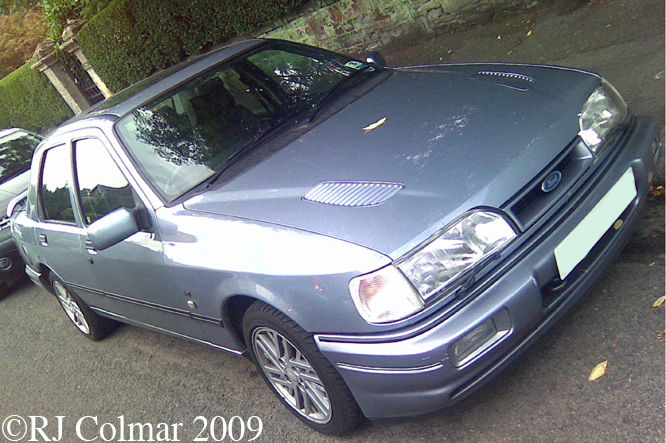
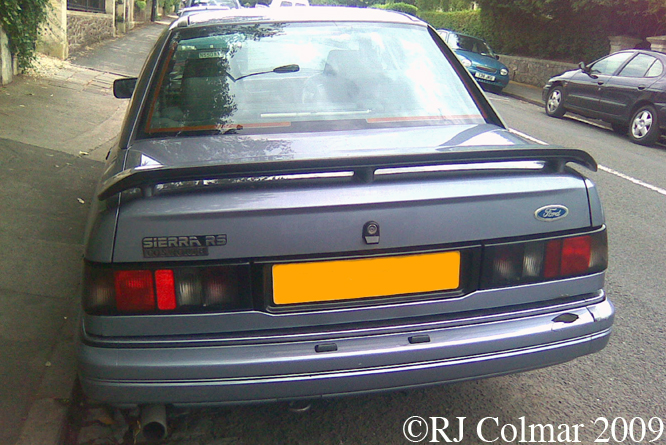
The Cosworth 4×4 was timed to coincide with a minor facelift to the Sierra range in 1990, powered by either 224 hp Cosworth YBG with catalytic converter or YBJ motors, without the converter, coupled to a Ferguson patented all wheel drive transmission. The road going variant is distinguished by the return of the bonnet louvre’s seen on the first two RS Cosworth variants and discreet 4×4 badges on the front wings. Note also the return of the Sierra RS Cosworth name to the boot / trunk lid as on the original 3 door version.

Sierra RS Cosworth 4×4

Unfortunately due to it’s size compared to the competition which included the pint size Lancia Delta & Mazda 323 hatchbacks and Toyota Celica Coupé, all with four wheel drive, none of the four Sierra RS Cosworth variations ever won a World Championship Rally, though Francois Delecour managed a couple of 3rds in Monte Carlo and Spain driving the Cosworth 4×4 in 1991..

Thanks for joining me on this ‘Genk Cosworth Part 2’ edition of ‘Gettin’ a li’l psycho on tyres’, I hope you will join me again tomorrow. Don’t forget to come back now !

Share

Genk Cosworth Part 1 – Sierra Sapphire RS Cosworth

The second generation Ford Sierra Cosworths were all built in Genk, Belgium, with new 4 door bodies that were introduced with the 1987 Ford Sierra facelift, in Britain the 4 door Sierra was known as the Sierra Sapphire.

Ford Sierra Sapphire Cosworth RS, Brands Hatch

The Sierra Saphire RS Cosworth was positioned at the top of the Sierra performance tree, powered by the original 204 hp version of the Cosworth YBB motor, though with suspension set to favour comfort over over performance handling as in the original 3 door Sierra RS Cosworth.

Ford Sierra Sapphire Cosworth RS, Donington

Despite losing the wild appeal of the original Sierra RS Cosworth the latter Sapphire’s performance did not really suffer with the road going version being independently timed by Autocar rest to 60 mph 5.8 seconds, 1/4 mile in 14.4 seconds up, to 100 mph in 15.8 seconds and with a top speed of 143 mph.

Ford Sierra Sapphire Cosworth RS, Brands Hatch

Unlike the earlier Sierra RS Cosworth and RS 500 evolution the Sierra Saphire RS Cosworth was built for Right Hand Drive and Left Hand Drive markets. Confusingly the LHD variant of the 4 door Cosworth was simply known as the Sierra RS Cosworth as had the original 3 door RHD version. From 1988 to 1989 around 13140 examples for both markets were manufactured.

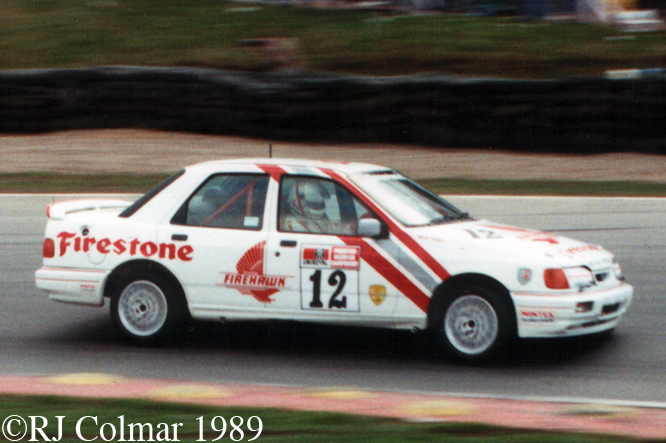
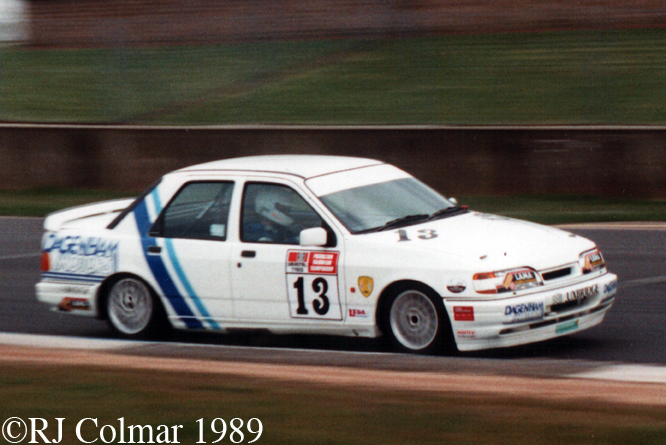
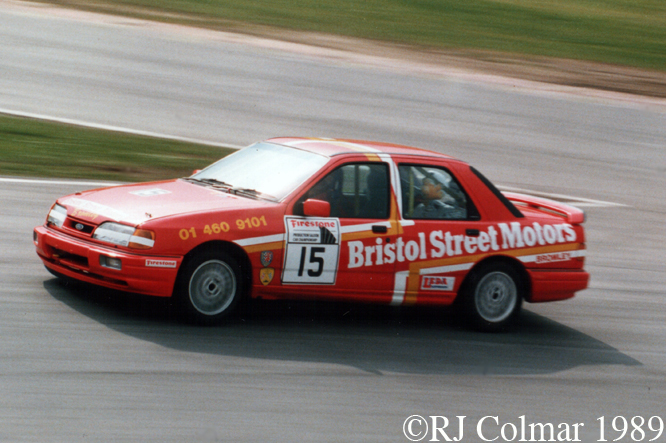
Mark Hales is seen driving the #12 at Brands Hatch, Mark shared this car with ABBA drummer and sometime Grand Prix Driver and Truck racer Slim Borgudd to victory in the Willhire 25 hour race at Snetterton in 1989. Steve Monk is driving the #13 at Donington to a fourth place finish in a race won by Mark Hales while David Shead drives the #15 Bristol Street Motors Sierra Sapphire Cosworth RS at Brands Hatch.

Thanks for joining me on this ‘Genk Cosworth Part 1’ edition of ‘Gettin’ a li’l psycho on tyres’, I hope you will join me again tomorrow. Don’t forget to come back now !

Share

Toni Tickford – Ford Sierra RS500 Cosworth #159

In 1982 a set of regulations was introduced called Group A which required 5000 examples of a model to be certified as having been manufactured in order to qualify for the series. As we saw last week under the guidance of Stuart Turner, head of Ford Motorsport Europe, Ford developed the Ford Sierra RS Cosworth to take part in races for vehicles conforming to these regulations.

Ford Sierra Cosworth RS500, Castle Combe, C&SCAD

The Group A racing regulations also allowed for an evolution of the 5,000 base RS Cosworth models so long as at least 500 were sold to the public. Mike Moreton was charged with developing the Ford Sierra RS Cosworth into the 224 hp Cosworth YBD powered Ford Sierra RS Cosworth RS500 evolution.

Ford Sierra Cosworth RS500, Castle Combe, C&SCAD

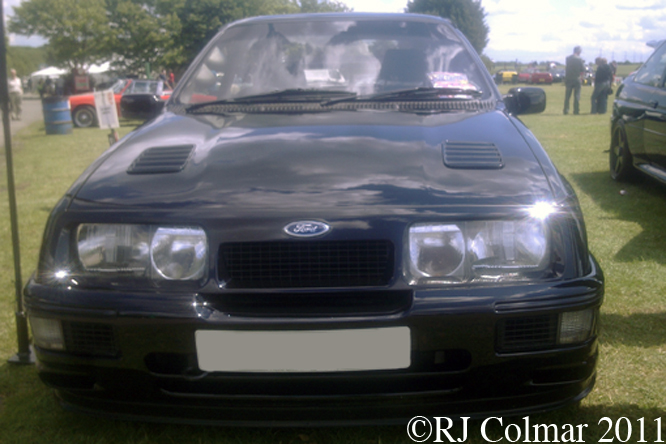
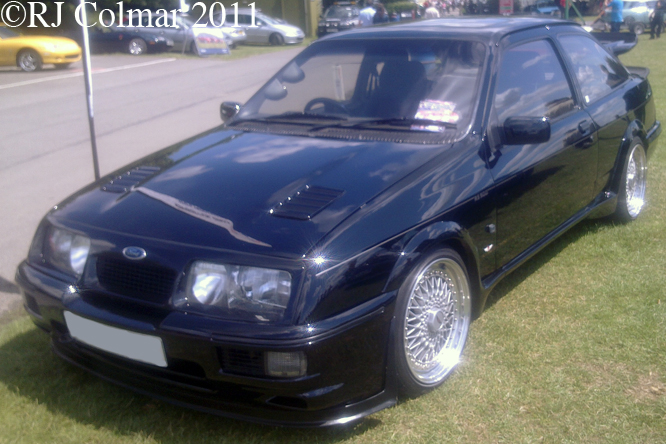
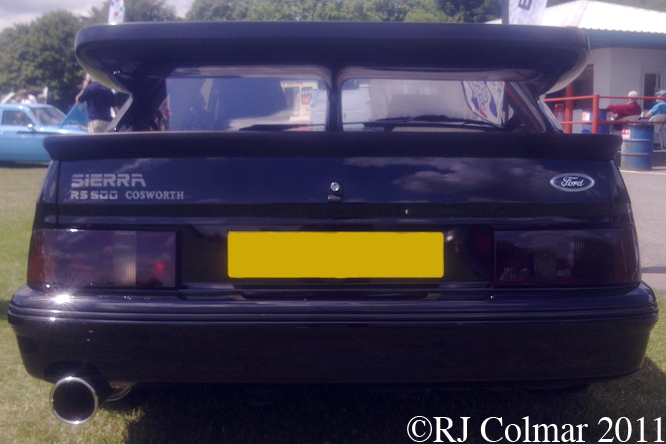
In 1987 Tickfords were given the contract to build them, 392 black like build #159 seen here at Castle Combe, 56 white and 52 Moonstone blue, all of the Sierra RS Cosworth’s and RS500’s were right hand drive models.

Ford Sierra Cosworth RS500, Castle Combe, C&SCAD

The RS500, with nearly 500 hp in race trim proved to be an amazing success on the race track taking many overall victories and winning the European Touring Car Championship for Ford in 1988, however few Sierra RS500 Cosworth drivers won championships outright because Group A was divided into classes according to engine size and Class A for cars with the biggest motors was always far better subscribed than the classes for smaller vehicles.

Ford Sierra Cosworth RS500, Castle Combe, C&SCAD

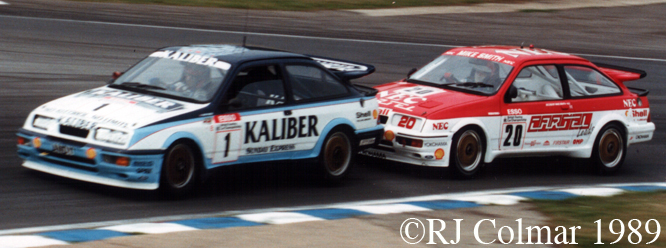
Andy Rouse in the #1 is seen leading Mike Smith in the #20 in a typically close fought round of the British Touring Car Championship in 1989 above, the #20 was a car supplied by Australian Dick Johnson one of the few RS500 drivers to win a championship he won the 1988 and 1989 Australian Touring Car Championships along with the 1989 Bathurst 1000.

Ford Sierra RS500 Cosworth, Brand Hatch

One of the all time best races I ever saw was at Brands Hatch in 1988 with Andy Rouse and Steve Soper driving an Eggenberger Sierra drove nose to tail for 20 thrilling laps of one of the best tracks in Britain, check it out on this link you will not be disappointed, I was there and have watched the race on youtube many times since.

Thanks for joining me on this ‘Toni Tickford’ edition of ‘Gettin’ a li’l psycho on tyres’, I hope you will join me again tomorrow. Don’t forget to come back now !

Share

Turbo Toni – Ford Sierra RS Cosworth

On the 22nd September 1982 Ford of Britain launched it’s replacement for the much loved conservative Ford Cortina to an unsuspecting public. Project Toni, designed by Uwe Bahnsen, Robert Lutz and Patrick le Quément, was unveiled as the Ford Sierra to a fair amount of public myrth and ridicule in the absence of much acclaim except in Ireland where the Sierra won the 1983 Semperit Irish Car of the Year award.

Ford Sierra RS Cosworth, Fishguard, Wales

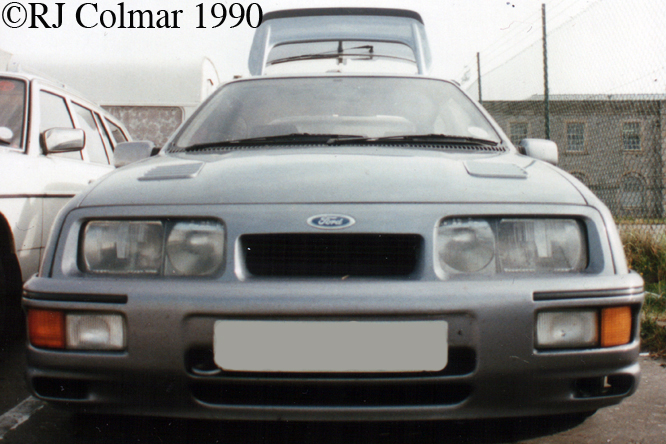
While there was nothing fundamentally wrong with the mechanical operation of the car much of which was inherited from the final incarnation of the Ford Cortina Mk 5, the styling, which was similar to the well received US Ford Probe, had been pushed a bit too far in the quest for aerodynamic efficiency leading to nick names for the Sierra like ‘the blob’ and ‘Salesmans Spaceship’.

Ford Sierra RS Cosworth, Snetterton

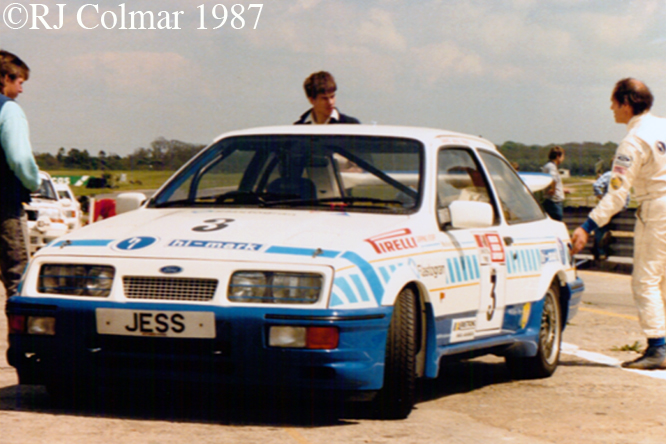
Fortunately it was the salesmans fleet market which saved the model from sinking faster than the Edsel. The #3 above was an early leader in the 1987 Willhire 24 Hour race at Snetterton driven by Graham Scarbrough and David ‘Jess’ Yates who is standing with his back to the camera on the right.

Ford Sierra RS Cosworth, Brands Hatch

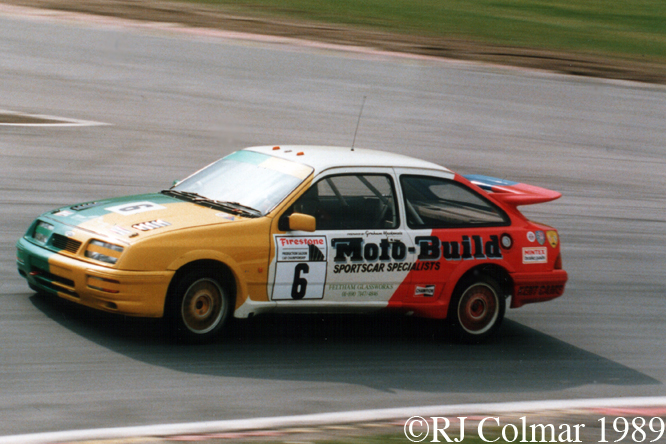
In the spring of 1983 Stuart Turner head of Ford Motorsport Europe devised a plan to put Ford at the top of the new Group A saloon car championships which were run nationally and internationally in Europe. Above the #6 is driven by Graham Davis at Brands Hatch.

Ford Sierra RS Cosworth, Donington

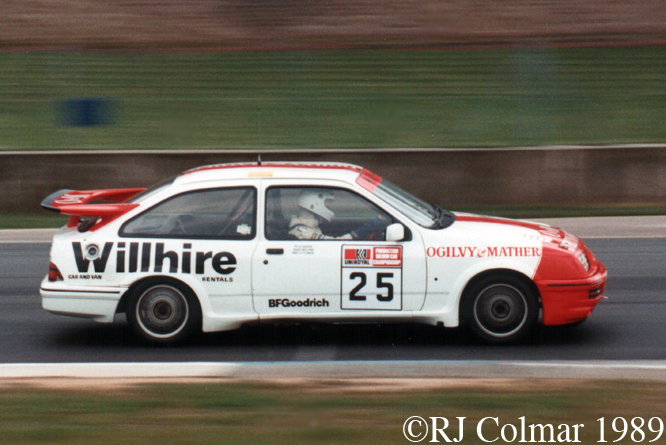
In the spring of 1983 Stuart Turner head of Ford Motorsport Europe devised a plan to put Ford at the top of the new Group A saloon car championships which were run nationally and internationally in Europe. Above the #24 is driven by Peter Sugden at Donington and shared with Roger ‘Willhire’ Williams in the 1989 Willhire 25 hours at Snetterton.

Ford Sierra RS Cosworth, Brands Hatch

Lessons learned from Roush Racing in the USA and Andy Rouse in Britain with XR4Ti racing programmes were incorporated into the suspension while a reworked Sierra 3 door body designed by Lother Pinske was developed which featured a distinctive ‘tea tray’ rear wing deemed necessary to keep the rear wheels on the ground at speeds in excess of 186 mph.

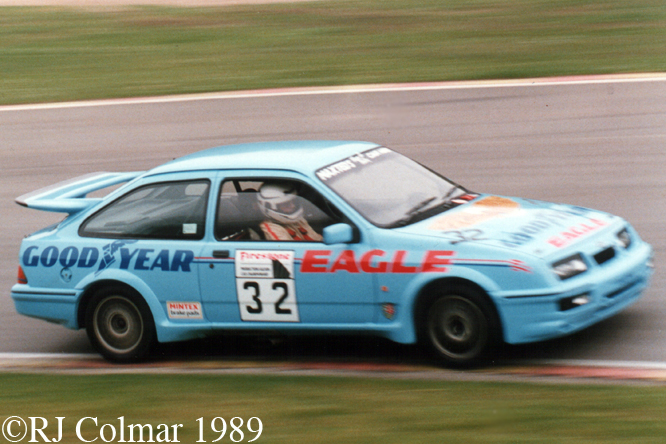
5045 Ford Sierra Cosworths were manufactured in 1986, enough to qualify for International Group A and national Group N racing, in only three colours, all with a grey interior and with the only options being central locking and or electric windows. The racers seen here were all prepared to the lower state of tune Group N spec for the national Uniroyal and Firestone production car championships.

Keith Maxted is thought to be the driver of the #32 Goodyear Sierra RS Cosworth seen at Brands Hatch on April 23rd 1989, if you know different please chime in below.

My thanks to Alan Cox & Gregor Marshall at The Nostalgia Forum for their help identifying the drivers of the four racers.

Thanks for joining me on this ‘Turbo Toni’ edition of ‘Gettin’ a li’l psycho on tyres’, I hope you will join me again tomorrow. Don’t forget to come back now !

Share

Niki’s Ford – Ford Capri RS 3100

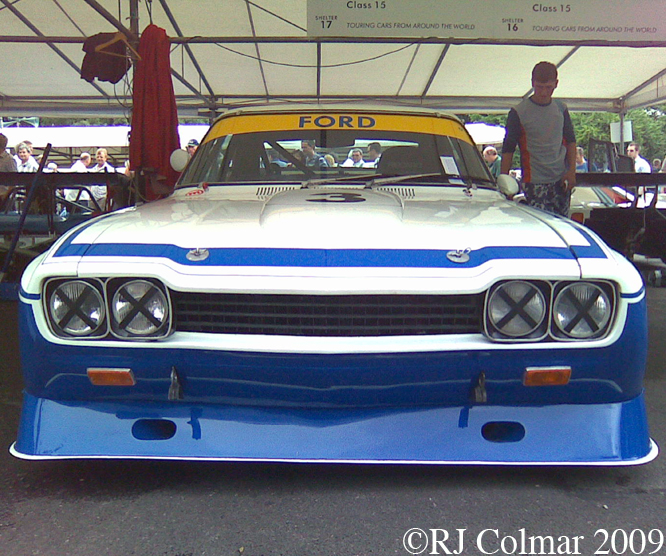
With apologies to my Rowdy friends who will have read much of this before, I hope you will agree that there is good reason for reposting this blog today. The Ford Capri RS 3100 was the final 1974 racing evolution of the Mk1 Ford Capri that was launched in 1969. It is thought that four RS3100’s were built by the Ford Competitions department in Cologne, Germany.

Ford Capri RS3100, Goodwood FoS

The racing debut of the RS3100 appears to have been by the Harry Theodoracopoulos team in the the 1974 Atlanta Six Hours where Harry and team mate Horst Kwech qualified 32nd but are not recorded as finishing the race.

A week later Ford’s Cologne factory team entered two RS3100’s at the Nurburgring Eifelrennen in Germany, where one time German NASCAR racer, ‘dega 1971, Rolf Stommelen & Toine Hezemans scored a one, two in the German Touring car championship.

Ford Capri RS3100, Goodwood FoS

Power comes from a 440 hp Cosworth developed GAA quad cam 24 valve V6 motor, a similar type was also used in European Formula 5000 races with some success. To improve engine bat aerodynamics and weight distribution the radiators were mounted ahead of the rear wheels.

Despite it’s high state of tune the RS3100 was generally outclassed by the BMW CSL ‘Batmobiles’ much as it’s predecessors the Capri RS 2600 and Capri RS had been in 1973.

Ford Capri RS3100, Goodwood FoS

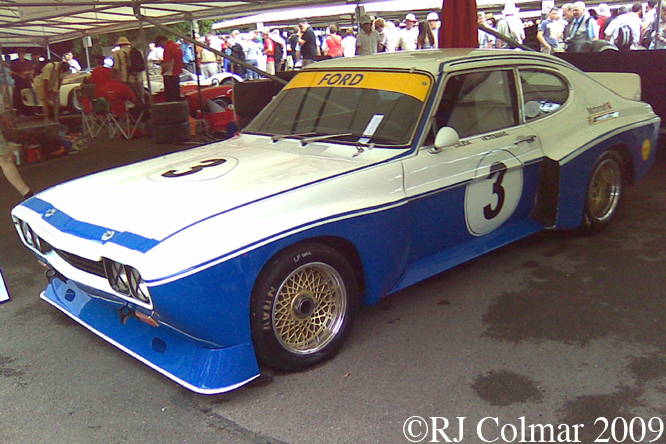
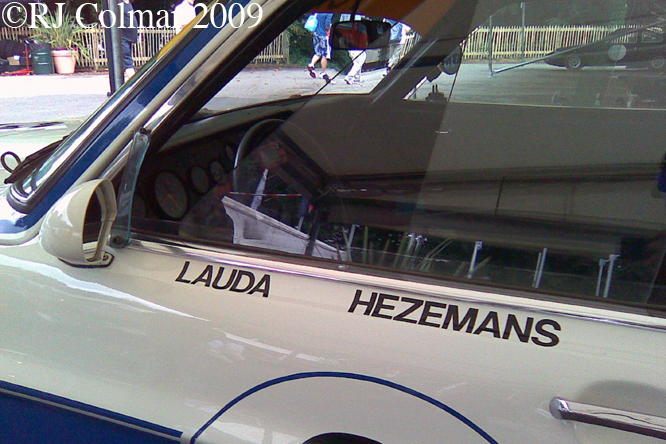
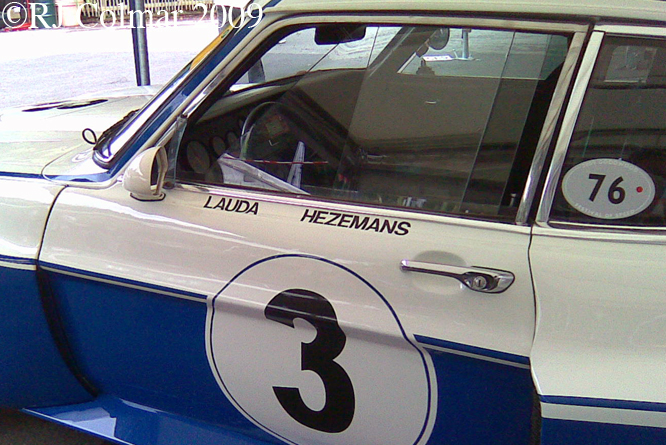
This vehicle appear’s painted up at Goodwood as the #3 Niki Lauda used at the two Norisring races on the 15th of September 1974 where he finished 6th and 20th.

Toine Hezemans was Lauda’s team mate that day in the #4 entry who in a symmetrical reversal of fortunes came in 16th in the first race and 2nd in the second race.

Ford Capri RS3100, Goodwood FoS

Not sure how Niki Lauda who was in the first year of a Ferrari contract was allowed to race for the work’s Ford team given that just a decade earlier Enzo Ferrari and Ford had spectacularly fallen out over a deal in which Ferrari was supposed to sell out to Ford. These days it is extremely rare for a contracted Formula One driver to be allowed to race in any other category.

Ford Capri RS3100, Goodwood FoS

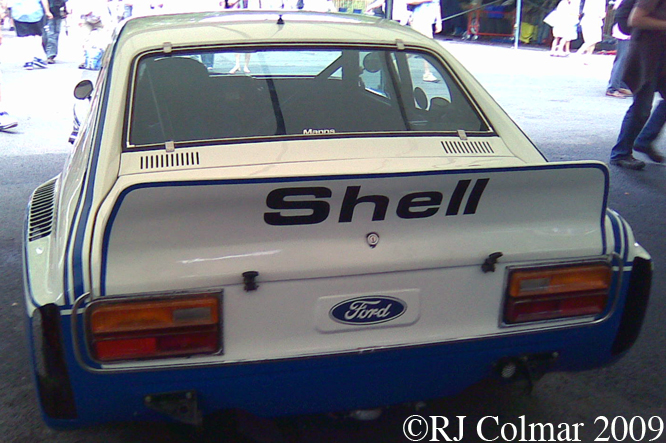
The RS 3100 differed visibly from it smaller engined Capri RS 2600 and Capri RS brethren with the addition of this large Gurney flap on the back.

I hope you will join me in wishing one of my all time hero’s Niki Lauda a very Happy Birthday.

Thanks for joining me on the Birthday Boy edition of ‘Gettin’ a li’l psycho on tyres’, I hope you will join me again tomorrow don’t forget to come back now !

Share