Tag Archives: Festival of Speed

4th Of Four – Bentley 4 1/2 Litre #TX3246

Just as May is the month motorsport turns it’s attentions to the Indianapolis 500 and Monaco Grand Prix June is traditionally the sports interest focuses on the Le Mans 24 Hours. This month I have lined up 29 vehicles that either competed in the event, are of a type that competed in the event and or were designed to compete in the event but for one reason or another did not compete on the fastest roundabout in the world.

Humphrey Wyndham Cook is listed on the peerage.com as being born in 1893 to Wyndham Francis Cook and Frederica Evelyn Stillwell Freeland he attending Harrow on the Hill School and Christ Church, Oxford University.
Bentley 4 1/2 Litre, Goodwood Festival of Speed

Described as quiet and enthusiastic Humphrey started racing in 1914 and continued after The Great 1914/18 war racing Vauxhall’s and Bugatti’s mostly at Brooklands.

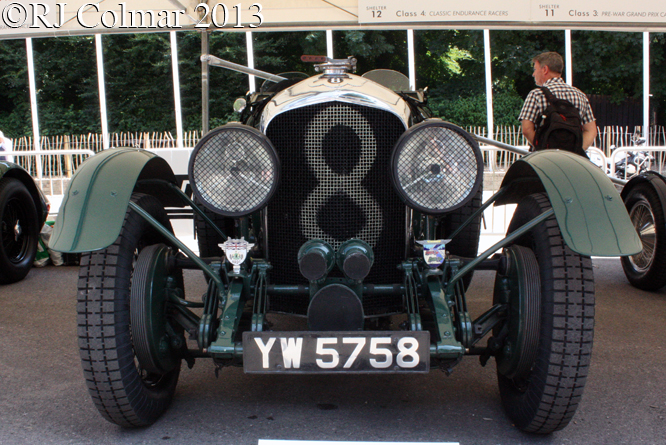
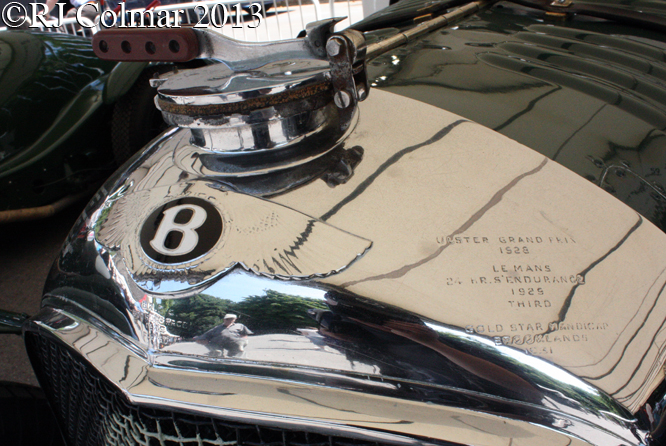
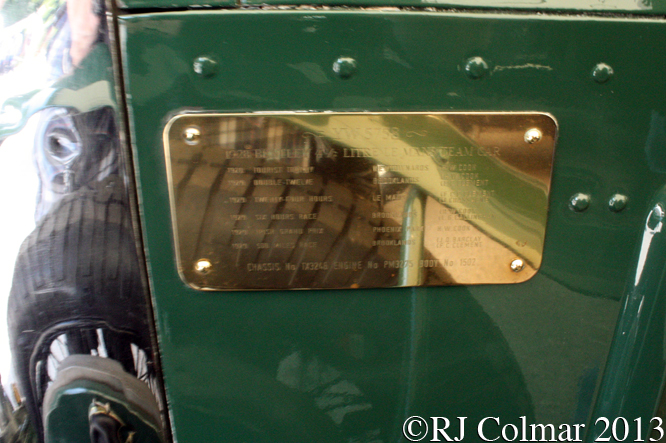
In 1928 he entered today’s featured car an unsupercharged 4 1/2 litre Bentley, chassis #TX3246 in the 1928 Tourist Trophy at Ards where he finished 7th.
Bentley 4 1/2 Litre, Goodwood Festival of Speed

The car next appears to have been entered by W.O. Bentley in to the Double Twelve at Brooklands, two 12 hour races being run in daylight on the same weekend, so as not to disturb the neighbors at night, in May 1929 where Humphrey and Frank Clement retired with a big end failure.

A month later and with the big end repaired #TX3246 powered by it’s original motor #PM3275 was entered into the Le Mans 24 Hour race by Bentley Motors Ltd for Frank Clement and Jean Chassagne to drive. Carrying the #8 They finished 4th completing a 1st to 4th place sweep for the Marque behind the Woolf Barnato and Henry Birkin driving the #1 Speed Six and the #9 and #10 4 1/2 litre cars driven by Jack Dunfee and Glen Kidston with Dr. Dudley Benjafield and André d’Erlanger in the latter.
Bentley 4 1/2 Litre, Goodwood Festival of Speed

Humphrey Cook and Leslie Callingham drove #TX3246 to a third place finish in the Brooklands 6 hour race at the end of June 1929 where a Bentley 1,2 finish interupted by an ALFA Romeo running in the 2 litre / 122cui class.

Two weeks later in the Irish GP Eireann Cup run at Phoenix Park Humphrey finished 5th before #TX3246 returned to Brooklands where Jack Barclay and Frank Clement drove her to victory lane in the Brooklands 500, the first race ever organised by the British Racing Drivers Club, BRDC, in October 1929.
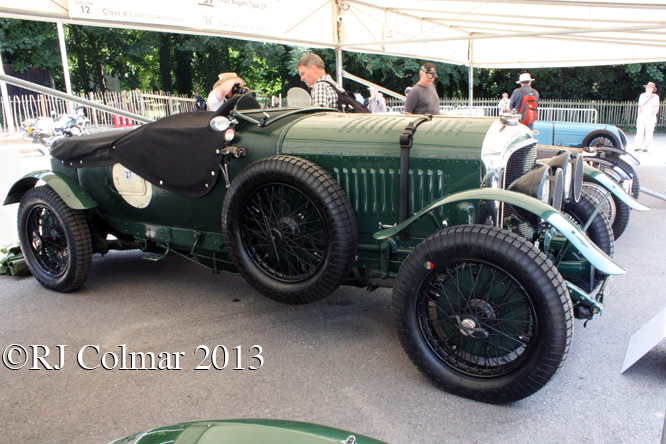
Bentley 4 1/2 Litre, Goodwood Festival of Speed

Humphrey Cook went on to fund and race Raymond Mays and Peter Berthon’s English Racing Automobiles, ERA, project.

While Jack Barclay is still best known in London for his Rolls Royce and Bentley Dealerships in Mayfair.
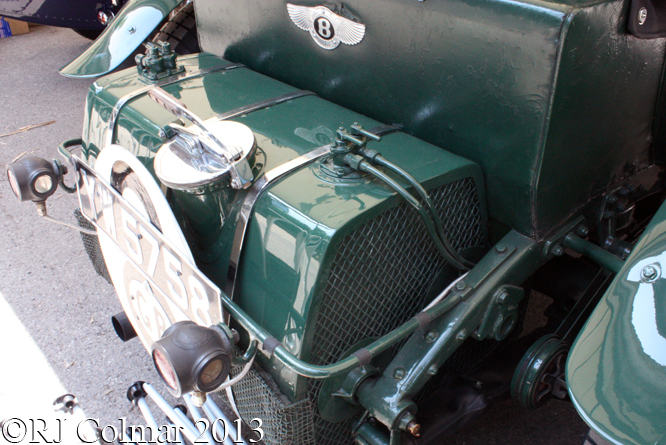
Bentley 4 1/2 Litre, Goodwood Festival of Speed

#TX3246 powered by the 4 1/2 litre motor number #PM3275 is seen in these photographs at Goodwood Festival of Speed last year.

Thanks for joining me on this “4th Of Four” edition of “Getting A Little Psycho On Tyres” I hope you will join me again tomorrow. Don’t forget to come back now !

Share

AJ Watson RIP – Racing Associates Watson Roadster

Today’s post is dedicated to the memory or AJ Watson who passed four days past his 90th birthday on May 12th. AJ designed and built 23 Watson Roadster Indy Cars after redesigning John Zinks 1955 Indy 500 winning Kurtis KK500C driven by Bob Sweikert.

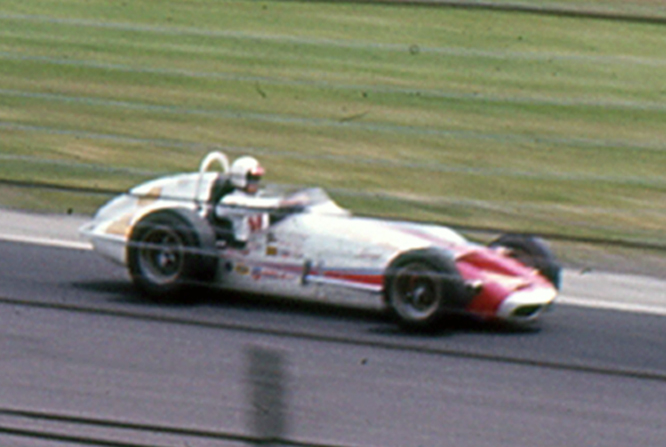
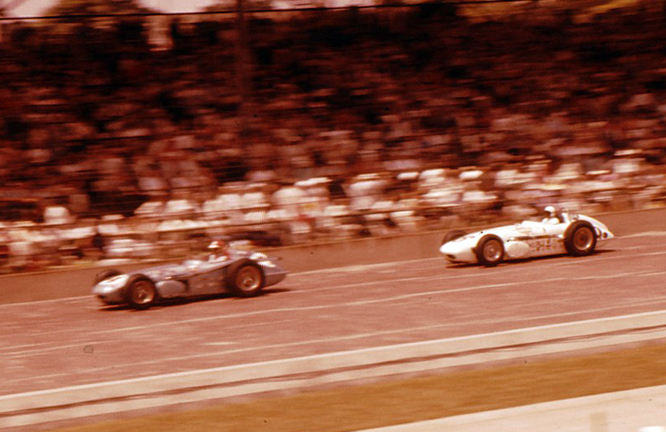
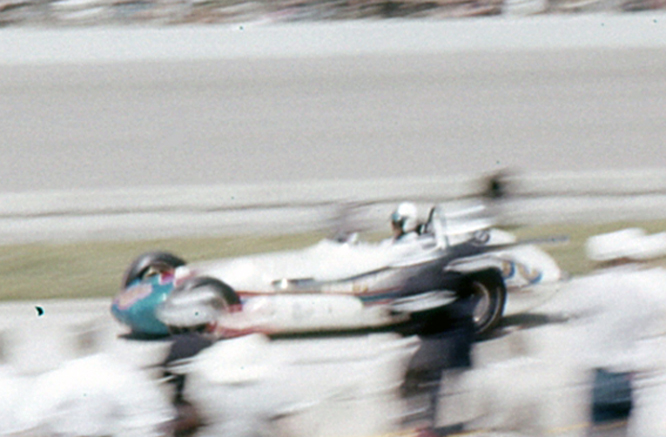
Rathman Watson, Sachs Ewing, 1960 Indianapolis 500

AJ’s own designs won the Indy 500 in ’56 with Pat Flaherty driving John Zinks car followed by Rodger Ward in the ’59 Leader Card Watson and Jim Rathman in the 1960 Ken – Paul Watson seen above being chased Eddie Sachs in the Van Dean Lines Ewing.

1962 Indianapolis 500

Rodger Ward won again in the Leader Card Watson in ’62, seen in the middle of the front row above, followed by Parnelli Jones in JC Agajanian example in ’63 seen below.

Jones, Agajanian , Watson, 1963 Indy 500

Finally AJ Foyt, seen above drove the Ansted-Thompson Racing Watson to victory in ’64 which would become the last Indy 500 victory for a front engined Roadster.

Foyt, Ansted-Thompson Racing Watson, 1964, Indianapolis 500

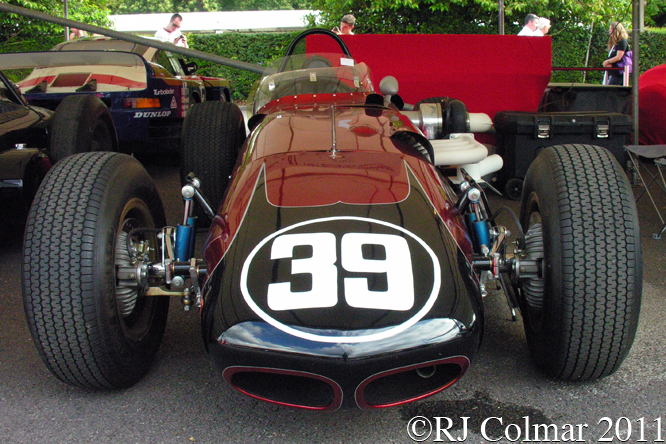
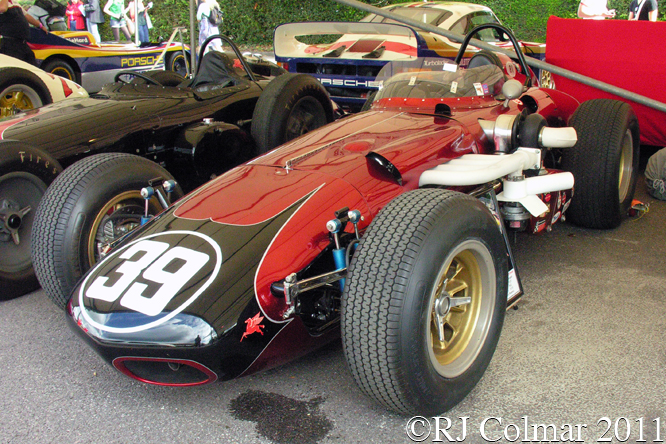
Today’s featured car is perhaps the ultimate development of the Watson line, it was built in 1963 for Racing Associates who entered Ebb Rose. Ebb got bumped off the grid, but the following year the car was entered for Johnny Rutherford who qualified 15th and was classified 27th.

Racing Associates Watson, Goodwood Festival of Speed

For 1965 Bobby Grim was entered in the Racing Associates Watson and failed to qualify the 252 cui Offy powered machine.

Racing Associates Watson, Goodwood Festival of Speed

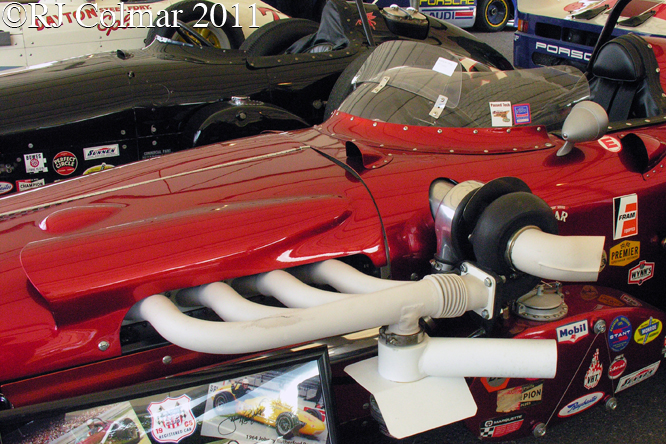
In 1966 Racing Associates has a 168 cui Offy fitted which gave an additional 50 hp thanks to the white pipes and turbocharger fitted to the exhaust. This time Bobby Grim just qualified 31st and was classified 31st after being involved in the start line pile up, on what would be the last appearance of a Watson in the Indy 500.

Racing Associates Watson, Goodwood Festival of Speed

This was also the beginning of a new and final chapter in the story of the famous Offy motor which in turbocharged form would power Bobby Unser to victory in 1968; Mark Donohue ’72, Gordon Johncock ’73, Johnny Rutherford in ’74 and ’76 interupted by Bobby Unser in ’75 and would continue to be used until 1983 when the two Offenhauser Volstedts failed to qualify.

My thanks to Steve Arnaudin for sharing his late Dad Ed Arnaudin’s photo’s of the Watson Roadster’s in their heyday.

I hope you will join me in wishing AJ Watson’s family and friends including GALPOT contributor my sincerest condolences.

Thanks for joining me on this “AJ Watson RIP” edition of “Gettin’ a li’l psycho on tyres” I hope you will join me again tomorrow. Don’t forget to come back now !
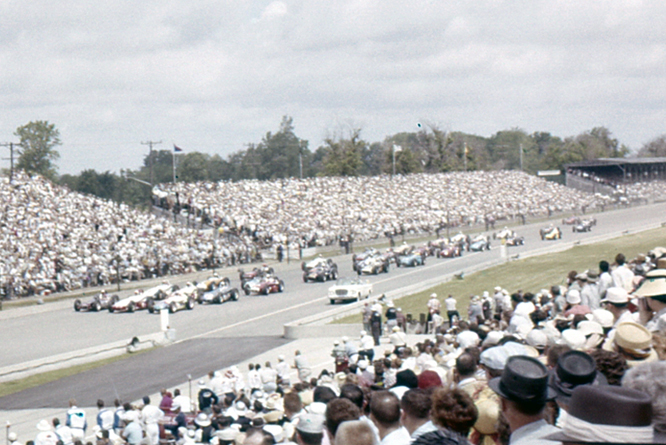
Share

Dan’s 29’s – Lotus 29/2 & 29/1

A couple of years ago I wrote about the Lotus 29, #29/3, that Jim Clark drove in his first appearance in the Indy 500 in 1963. That car was wrecked at Phoenix at the end of 1964 in an accident that would claim the life of Bob Marshman.

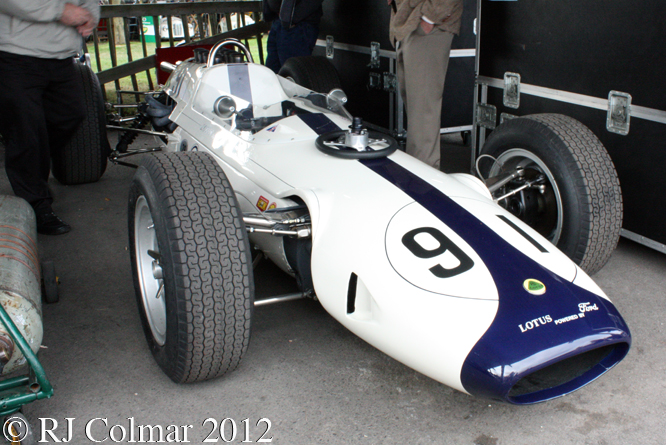
Lotus Ford 29, Goodwood Revival

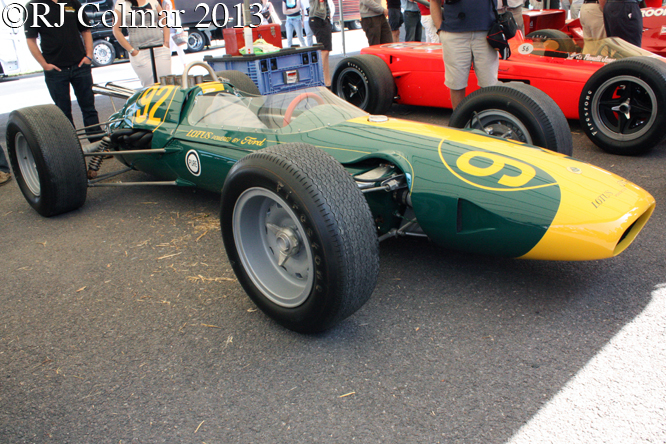
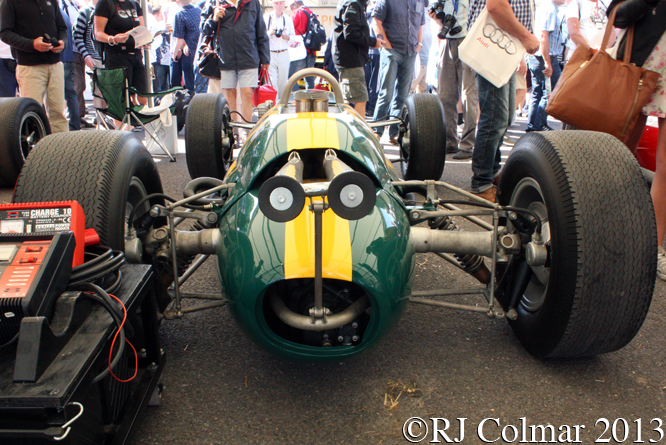
Today’s post features the other two Lotus 29’s #29/2 in white above and #29/1 in green below, which were both driven by Dan Gurney the driver who personally paid for Colin to visit the Indy 500 for the first time in 1962.

Lotus Ford 29, Goodwood Festival of Speed

Dan attempted to qualify the car painted white and seen carrying the #91 Indy 500 start number, but crashed it on Pole Day.

Lotus Ford 29, Goodwood Festival of Speed

Instead of repairing the car, chassis 29/2, the team put Dan in the original green #93 Lotus 29, chassis 29/1, which he qualified 12th. By race day the #93 29/1 was repainted white and Dan drove it to a 7th place finish.

Lotus Ford 29, Goodwood Festival of Speed

After the disappointment of loosing the ’63 Indy 500 on their debut Jim and Dan returned to take on the USAC Champ Car establishment at Milwaukee, with Jim in 29/3 and it would appear Dan drove 29/1 if one accepts that the race number #93 stayed with the chassis. Jim easily won the race from AJ Foyt whom he cleverly avoided lapping with Dan coming home third despite his car being fitted with over size carburetors.

Lotus Ford 29, Goodwood Festival of Speed

So far as I have been able to determine Bob Marshman was orginally given chassis 29/2, Gurney’s intended ’63 Indy 500 #91 race car, to drive in 1964 and it is this car which Bob qualified 2nd next to Jim Clark’s Lotus 34 at for the 1964 Indy 500.

Lotus Ford 29, Goodwood Festival of Speed

Bob appears to have crashed #29/2 at Milwaukee in ’64 and his owner Lindsey Hopkins bought #29/3 as a replacement apart from qualifying 2nd and 3rd at Indy and Trenton Bob had little luck in racing either of the Lotus 29’s never finishing in the top ten in either of them despite finishing 2nd three times in the Lindsey Hopkins Kuzma Offy that he was obliged to drive in the USAC Champ Car dirt track events.

These days the white #29/2 belongs to Skip Barber and when it is not on loan is to be found at his Barber Museum in Birmingham Alabama.

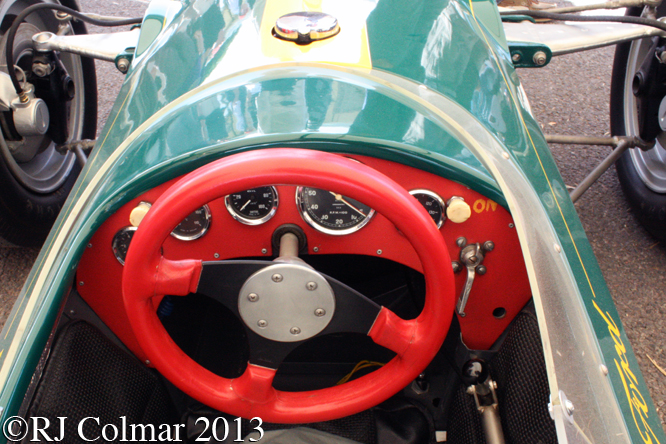
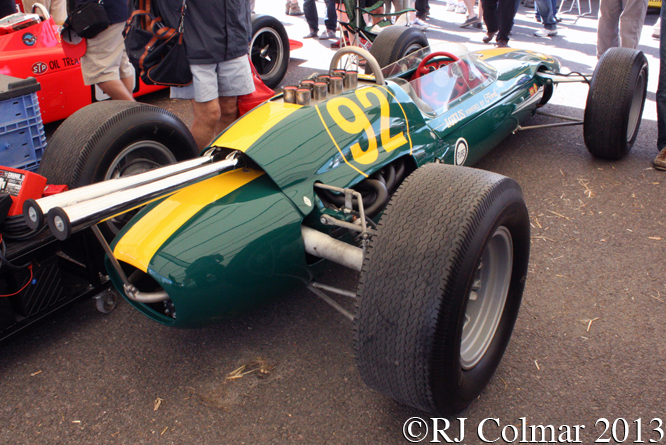
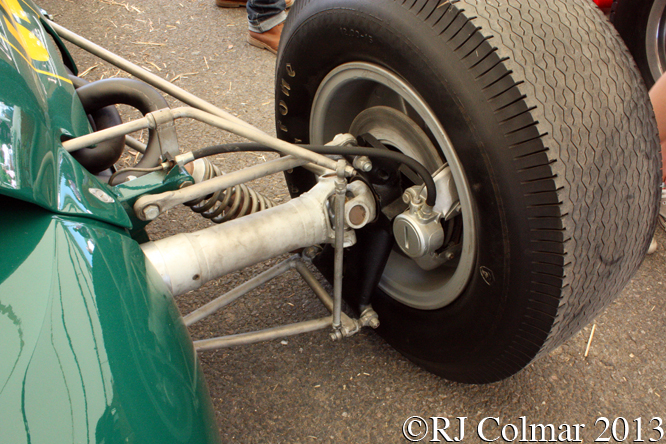
Lotus 29/1 with Jim Clark’s #92 on it belongs to the IMS Hall of Fame Museum and has often been confused with the car Jimmy drove at Indy and Milwaukee in ’63 that was crashed by Bob Marshman in ’64.

Thanks for joining me on this “Dan’s 29’s” edition of “Gettin’ a li’l psychoontyres” I hope you will join me again tomorrow for “Maserati Monday”. Don’t forget to come back now !

Share

Up Prescott 2000 Times – Bugatti Type 57S Corsica Roadster #57375

Charles Henry Stammers, Joseph and Robert Lee, and Albert Wood founded the Corsica Coachworks in Corsica St, Kings Cross London soon after the 1914/18 war. They made bespoke coachwork to clients needs without the aid of a designer meaning that each body they made was unique.

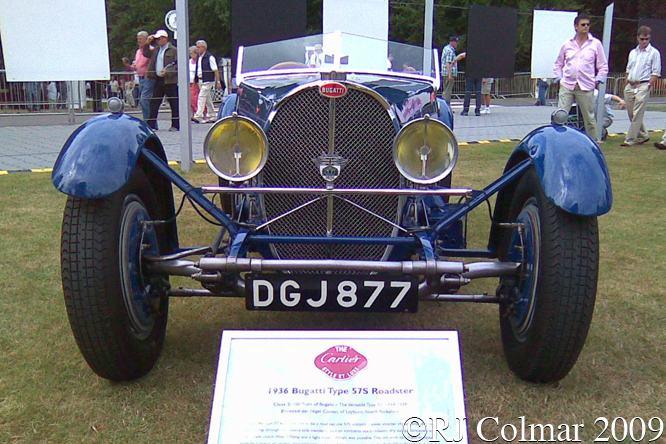
Corsica were responsible for building bodies for eight Bugatti Type 57S chassis, two coupes, two 4-seater tourers and four open 2-seaters of which all but one of the Coupe’s have survived.

Bugatti Type 57S, Goodwood Festival of Speed

Chassis #57375 was built in 1936 and delivered to Nicholas Embericos on September 1st. Mr Embericos drove the car in the 1936 Tourist Trophy at Ards and retired from the race and the sport after a collision with the Delahaye driven by Marcel Mongin.

The #57375 was sold to a Mr Ramponi and then Ronnie Symondson who kept the car for 40 years and is said to have taken the #57375 up Prescott hill climb nearly 2000 times.

Bugatti Type 57S, Goodwood Festival of Speed

When Mr Symmondson’s health began to fail he sold the car to one of Britain’s most respected restorers and racers Neil Corner.

The first of the two Type 57S Corsica Roadsters is seen here at Goodwood Festival of Speed several years ago.

Thanks for joining me on this “Up Prescott 2000 Times” edition of “Gettin’ a li’l psycho on tyres” I hope you will join me tomorrow when I’ll be looking at a rare Japanese car used for sprinting. Don’t forget to come back now !

Share

Handing Over To Jean – Bugatti Type 57 Sports Saloon #57142

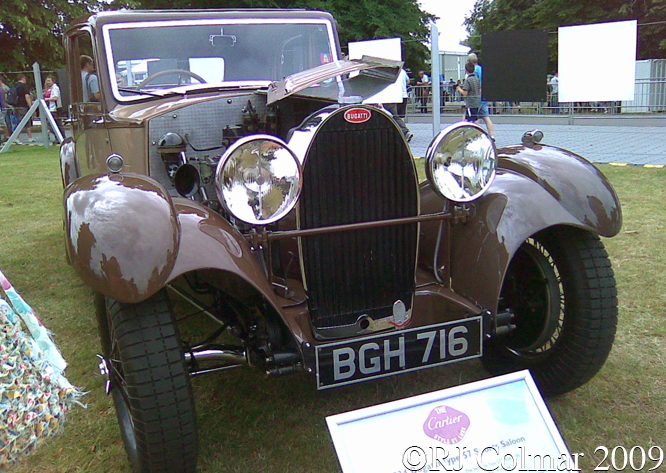
Jean Bugatti was just 25 years old when the Bugatti Type 57 which he designed went into production in 1934.

Bugatti T57 Sports Saloon, Goodwood Festival of Speed

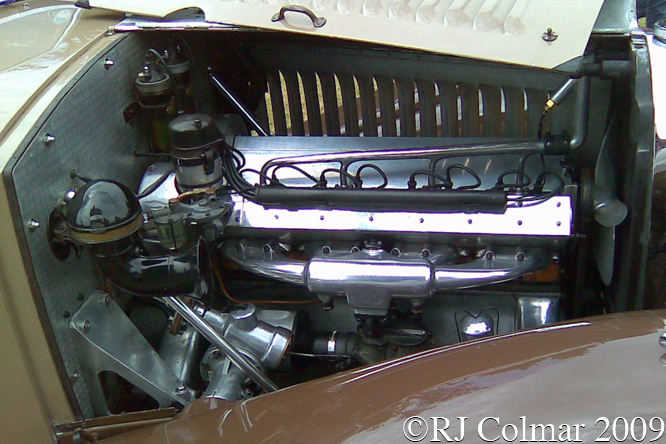
Powered by a 135hp 3,257 cc / 198.8 cui straight 8 double over head cam motor was modified from previous Bugatti designs featuring gear driven cam shafts in place of the chains used hitherto.

Bugatti T57 Sports Saloon, Goodwood Festival of Speed

Although the original sports saloon body was somewhat dated by 1934 the car was capable of 95 mph and 630 examples were built up until 1940.

From 1938 despite Ettores protests the Type 57 was fitted with hydraulic brakes.

Chassis #57142 was built in 1934 and first registered in the UK on July 16th 1934.

Thanks for joining me on this “Handing Over To Jean” edition of “Gettin’ a li’l psycho on tyres” I hope you will join me again tomorrow. Don’t forget to come back now !
Share

It’s Not Simplex – Mercedes Simplex

On the 1st of March 1902 the; former organiser of steam train races on the Morovian railway, diplomat, tobacco trader, insurance inspector and entrepreneur who sat on the board of the Daimler Motoren Gesellschaft (DMG), Emil Jellinek took delivery of the very first Mercedes Simplex in Nice, France, a month ahead of the Nice – La Turbie Hillclmb into which it was entered for E.T.Stead. A second Simplex was entered in the same event to be driven by Albert Lemaître, official winner of ‘the world’s first competitive motoring event’ from Paris to Rouen in 1897.

Mercedes Simplex, Exeter Trial,

As the 35hp Mercedes, driven by Wilhelm Werner, of 1901 had done the new Simplex model swept to a 1-2 victory with Stead leading Lemaítre home. After Werner had won the Frankfurt circuit race later in the same year he and Otto Hieronimus returned to Nice in 1903 and claimed another 1-2 for the Simplex model with Otto beating Werner.

Mercedes Simplex, VSCC Prescott

In his pursuit of a “mechanical greyhound” Jellink father of daughter Mercedes who’s name Jellink insisted on selling DMG’s products under, had encouraged Wilhelm Maybach and Gottlieb Daimler’s son Paul to pursue lightweight designs against all contemporary mechanical wisdom. That wisdom had been largely based on experience with steam locomotives which as a general rule of thumb could be reckoned to be faster the bigger they were.

Mercedes Simplex, Exeter Trial,

While the Simplex was not outwardly revolutionary, it followed the Panard Systém with the engine at the front and rear wheel drive it was the detail improvements which made it such a good performer. In particular the transmission featured 4 forward speeds that were engaged by the worlds first foot operated (Simplex) spring pressure clutch which made changing gears a good deal easier and faster.

Mercedes Simplex, Goodwood Festival of Speed

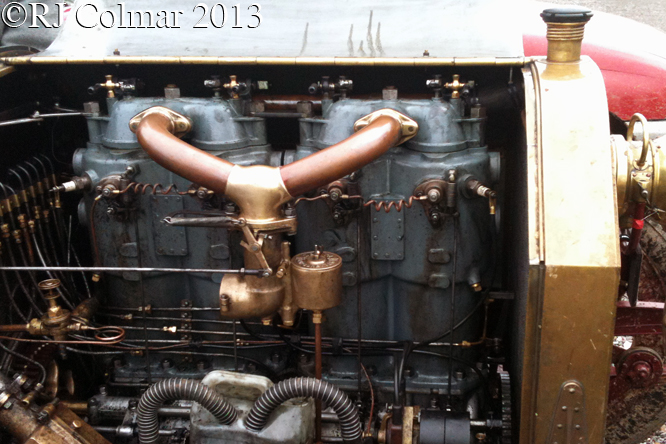
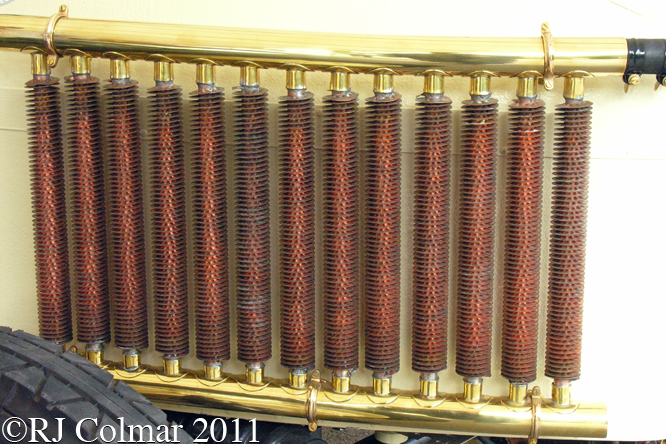
By enclosing the motor from above and below the Simplex relied on the draft of air through the worlds first honeycomb radiator to cool the motor which was not fitted with a cooling fan, but instead relied for a draft on the air vanes built into the 60 cm / 23 5/8ths inch flywheel. This improved cooling system allowed a 2 litre saving in water coolant over the previous model, now only 7 litres 1.5 gallons of water were required to cool the four cylinder motor.

Mercedes Simplex, Exeter Trial,

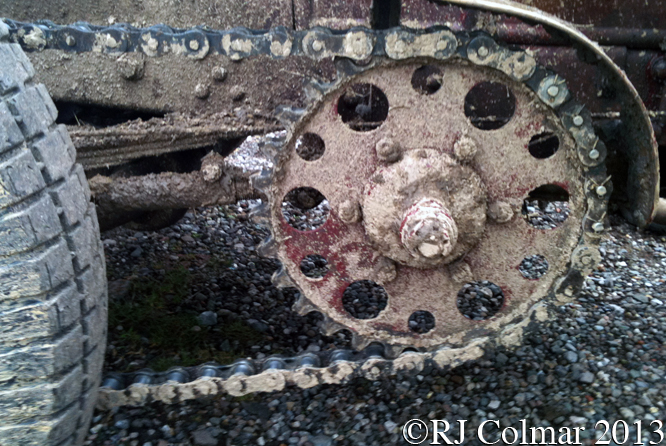
Interestingly the vehicle was not only fitted with regular rear wheel brakes as were most vehicles of the time but it was also fitted with a band brake acting on a shaft connecting the gearbox to the sprocket shaft which was also actuated by a foot pedal. When ever the brakes were applied water dripped from a reservoir onto the friction surfaces to keep them cool.

Mercedes Simplex, Goodwood Festival of Speed

At the Berlin Motor Show in 1903 when the Simplex was presented to Emperor Wilhelm II he is alleged to have shared some Imperial Prussian humour with Wilhelm Maybach, saying “A truly beautiful engine you have here! But it’s not as simplex as that, you know.” Polish Count Zborowski crashed his Simplex out of the 1903 Nice – La Turbine hillclimb but Mercedes honour was salvaged later in the week when Hermann Braun won the Nice Mile race on the Promenade des Anglais.

Mercedes Simplex, Exeter Trial,

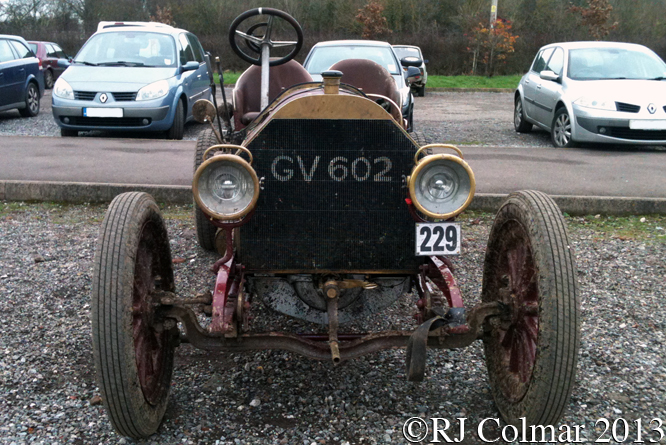
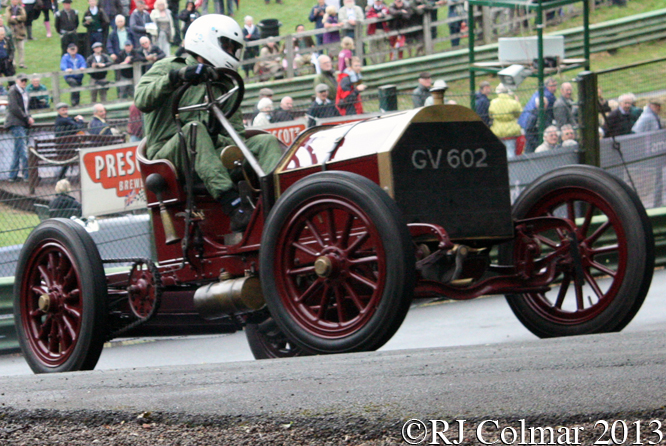
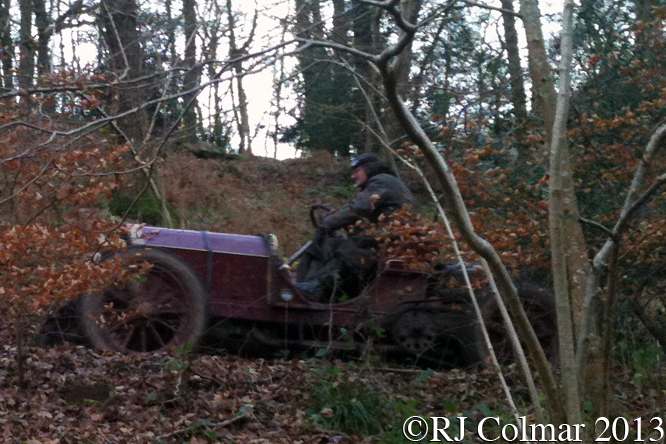
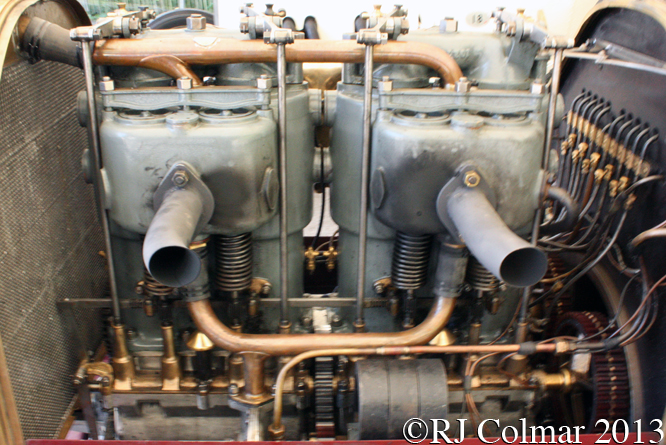
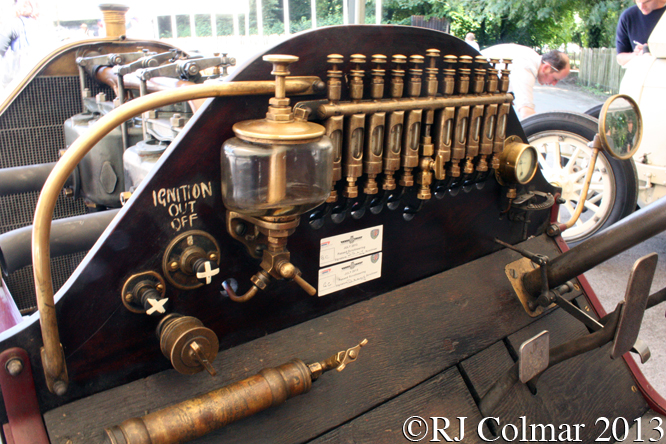
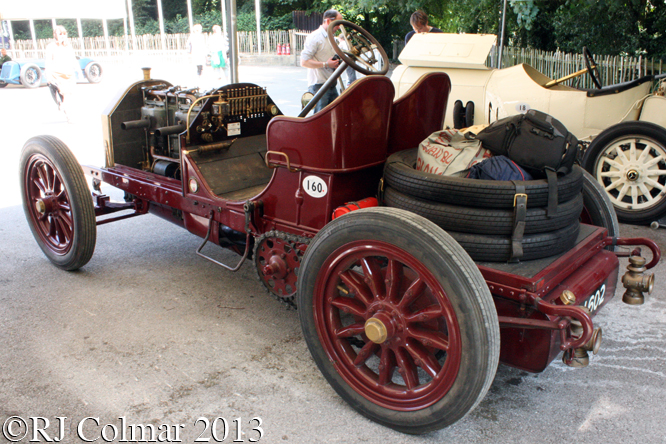
Originally fitted with a 6,786 cc / 411 cui 40 hp motor later models, like today’s featured 1903 example driven by Ben Collings in the Exeter Trial with his father in the passenger seat and at Prescott, were fitted with a 9,236 cc / 563 cui producing 60hp at under 1500 rpm. A further race victory was achieved by Belgian Camille ‘Red Devil’ Jenatzy in the 1903 Gordon Bennett Cup run over a 40 mile closed figure of eight road course marshalled by over 2,000 police officers. This victory was only achieved after Mercedes lost their intended three 12.7 litre / 775 cui 90 hp machines, along with 87 further vehicles, in a fire at DMG’s Cannstatt plant and the factory had borrowed three 60hp Simplex vehicles from their customers to enter the race, the winning #4 car was lent by US millionaire Clarence Clay Dinsmore.

Mercedes Simplex, Goodwood Festival of Speed

On March 14th 1902 Billionaire William K. Vanderbilt Jr took delivery of the fifth 40 hp Simplex to be built from the Cannstadt factory and drove it 600 kms to Paris where he arrived the following day, this was the first of several Simplex models Vanderbilt would own and this car is thought to be not only the oldest surviving Simplex, but the oldest surviving Mercedes in the world. In January 1904 Vanderbilt briefly held claim to the land speed record when he recorded a speed of over 92 mph at the wheel of a 90hp Simplex at Daytona Beach.

Mercedes Simplex, Exeter Trial,

Louis Rigolly raised the record to 95.705 mph driving a Gobron-Brillie in Nice 2 months later. Pierre de Caters driving a 90 hp Simplex at Ostend in Belgium raised the bar to just over 97mph in May 1904 before Louis Rigolly became the first man to exceed 100 mph when he was timed at 103 mph driving his Gobron-Brillie Ostend in July 1904.

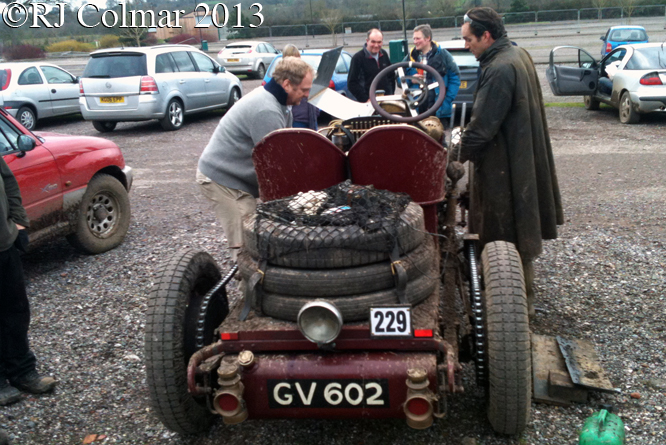
Manufactured from 1902 to 1909 there are thought to be just 13 Simplex cars still in existence, GV 602 has been in the Collings family for many decades.

Thanks for joining me on this “It’s not Simplex” edition of “Gettin’ a li’l psycho on tyres”, I hope you will join me again tomorrow when I’ll be looking at a how the Red Bull young guns team got on in the 2013 Formula One Championship. Don’t forget to come back now !
Share

Ever Living Boneshaker – Lohner Porsche Semper Vivus

Ferdinand Porsche was born to German speaking parents in Maffersdorf now in the Czech Republic in 1875 and showed a strong interest in and aptitude for technology at an early age. Before he left home for Vienna at 18 Ferdinand had installed his parents house with the first electric light system in Maffersdorf.

Lohner Porsche Semper Vivus, Goodwood Revival

In Vienna Porsche worked for Bella Egger & Co., a company specialising in electrical products which is better known to day as Brown Boveri. After only a couple years Porsche had been promoted to a management position before joining the newly created Electric Car Department at Hofwagenfabrik Jacob Lohner & Co., a Vienna-based company part of the Austro-Hungarian military industrial complex.

Lohner Porsche Semper Vivus, Goodwood Revival

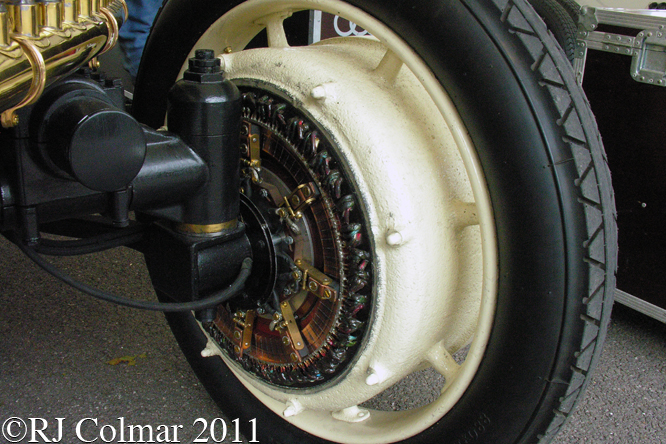
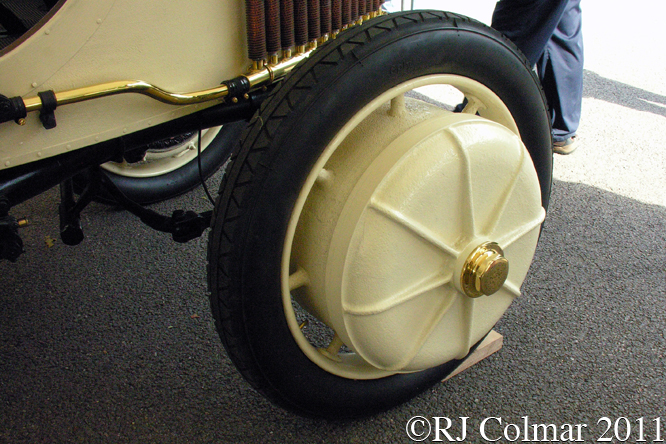
While at Lohner Porsche took up a ten year old idea by American inventor Wellington Adams to develop electric hub motor’s for a prototype all wheel drive electric Lohner buses.

Lohner Porsche Semper Vivus, Goodwood Revival

His Lohner Porsche System was received with great acclaim in 1898 and a modified vehicle was ordered by British coach builder EW Hart which was to incorporate a petrol motor to act as a generator for the electric motors to extend the vehicles range.

Lohner Porsche Semper Vivus, Goodwood Revival

The completed vehicle weighing in at some 4 tons was delivered on time in 1900 and was used to compete in an electric vehicle endurance trial from which the driver Ferdinand Porsche had to retire with a severe cold brought on by the extreme wet weather.

Lohner Porsche Semper Vivus, Goodwood Revival

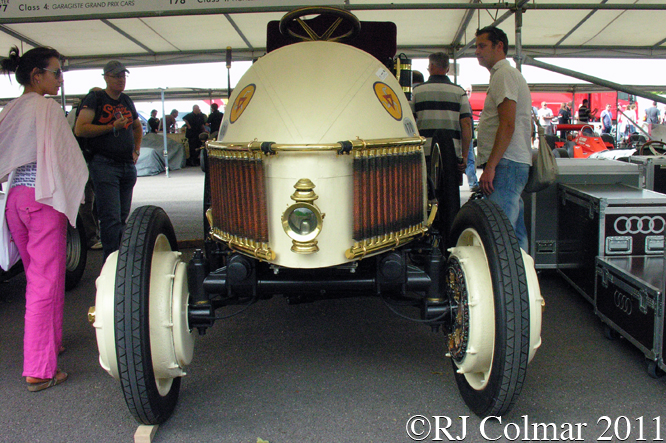
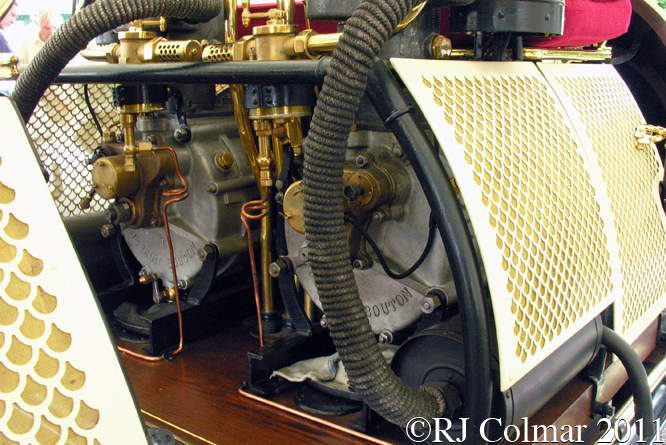
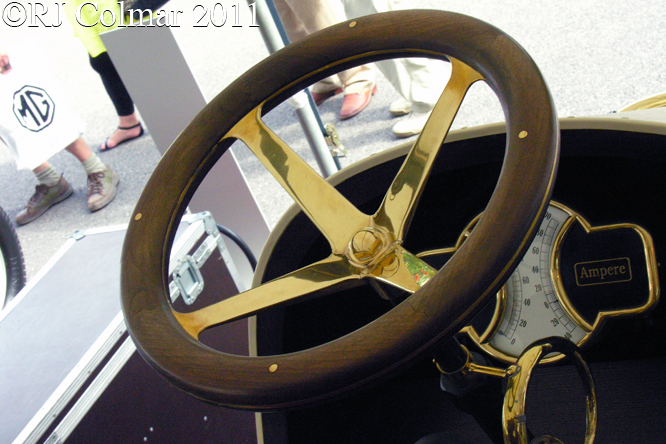
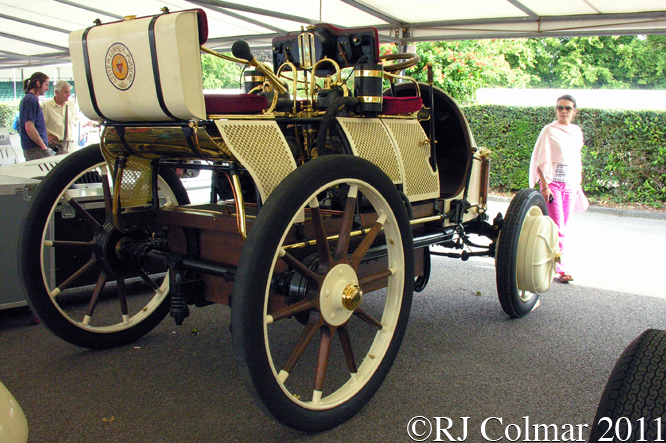
The 1900 Lohner-Porsche “Semper Vivus” (Ever Living) model employed two front electric hub motors each giving over 25 hp that are powered by batteries and two de Dion Boulton petrol motors each connected to generators which can be used to power the electric hub motors direct and charge the batteries, making the three ton “Semper Vivus” one of the earliest examples of a duel fuel vehicle.

Lohner Porsche Semper Vivus, Goodwood Revival

Sitting 6 feet off the ground the driver has an excellent view off the road, however steering a Semper Vivus, with those heavy hub motors, will not impress anybody on a school run,

Lohner Porsche Semper Vivus, Goodwood Revival

neither will the unsprung rear axle and so the Semper Vivus never went into production and so did not quite live up to it’s “Ever Living” moniker.

The recreation seen here at Goodwood Festival of Speed was built 111 years after the original in a collaboration between The Porsche Museum and Hubert Drescher it took four years to complete and is said to have the same performance as the original.

Thanks for joining me on this “Ever Living Boneshaker” edition of “Gettin’ a li’l psycho on tyres” I hope you will join me again tomorrow when I’ll be looking at Williams 2013 Formula One challenger.

Brighton Speed Trials Under Threat of Permanent Cancellation !

In their infinite wisdom, Brighton & Hove City Council are seeking to ban the Brighton Speed Trials from 2014.

If you care about speed and or motorsport history, please sign this linked petition to save Brighton Speed Trials in 2014 and beyond.

It’s a faf to Register before signing, but relatively painless compared to loosing the event which has been run with few interruptions since 1905.

You do not need to be resident in Brighton or even the UK to sign.

Share