Tag Archives: Festival of Speed

Fragrant Debut Pole – McLaren Cosworth M23 #M23/1

At the 1973 South African Grand Prix 1967 World Champion New Zealander Denny Hulme qualified on pole for the first and only time in his entire formula one career which lasted from 1965 until 1974. Remarkably he was driving a brand new Ford Cosworth powered McLaren M23, #M23/1 featured today, that was designed by Gordon Coppuck and which was to replace the Ralph Bellamy designed McLaren M19C.
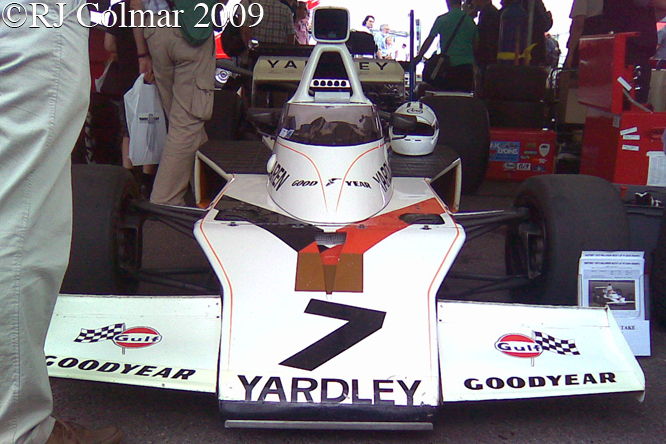
McLaren Cosworth M23, Goodwood Festival Of Speed

The design of the M23 was broadly similar to the design of the 1972 turbo Offy powered McLaren M16 which Mark Donohue drive to victory in the 1972 Indy 500, except in the DFV motor of the M23 was bolted into the chassis rather to a sub frame and the side radiators of the M23 were surrounded by a deformable structure to protect the fuel tanks in the side of the chassis.

Denny Hulme came fifth in the 1973 South African Grand Prix which was won by Jackie Stewart driving a Tyrrell 006. At the 1973 Swedish Grand Prix Denny Hulme took the first of the M23’s 16 World Championship race victories, two races later Peter Revson scored the models 2nd victory at the British Grand Prix a feat Peter would repeat at the Canadian Grand Prix towards the end of the season. Despite scoring two more wins than in the previous season McLaren again finished third in the 1973 World Constructors championship as they had in 1972.
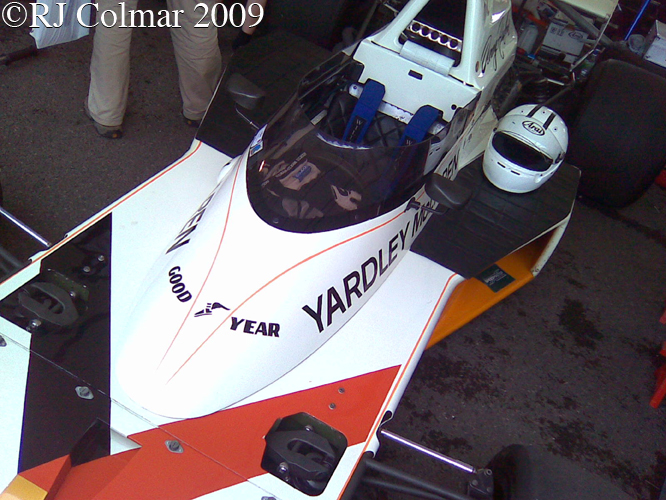
McLaren Cosworth M23, Goodwood Festival Of Speed

For 1974 McLaren again attracted BRM’s sponsor Philip Morris and the Marlboro brand, Yardley having sponsored BRM in 1970 and 1971 prior to joining McLaren for 1972. Peter Revson moved to join the UOP Shadow outfit and was replaced at McLaren by 1972 World Champion Emerson Fittipaldi from Lotus.

Emerson won three world championship races in 1974 on his way to his second World Drivers Championship and McLaren’s first World Constructors Championship, backed up by Denny Hulme who won the first race of the 1974 World Championship season in Aregetina which would be his last prior to retiring from the sport at the end of the season. Chassis #M23/1 was used in the early 1974 season by a third Yardley backed factory entry for Mike Hailwood who joined McLaren from Surtees. Mike ‘the Bikes’ best result was third in the South African Grand Prix which would become his career high world championship result. An accident in Germany at the wheel of another M23 prematurely terminated Mikes driving career, though he would return to motor cycling at which he was a seven time world champion and add two Isle of Man TT trophies in 1978 and 1979 to bring his total to fourteen.

In 1975 Emerson claimed two more championship victories on his way to second in the title behind Niki Lauda in the superior Ferrari 312T which had a more powerful motor and superior handling thanks to a transversely mounted gearbox and the testing skills of it’s driver. Another Surtees refugee Jochen Mass who had teken over Mike Hailwoods Yardley McLaren drive in 1974 replaced Denny Hulme and scored his only Grand Prix victory at the ill feted 1975 Spanish Grand Prix.

James Hunt replaced Emerson Fittipaldi for 1976 and McLaren ended up using the M23 for a forth straight season as they were locked in an epic battle with Niki Lauda for the 1976 title that has been immortalised by Ron Howard in the film “Rush” released earlier this year. On his way to the 1976 World Drivers Championship James won 6 races to become the M23 model’s most successful driver.

By 1977 the M23 was pressed into a fifth season of competition as a works racer before a much modified McLaren M26 was finally brought up to speed mid way through the season, non works McLaren’s were used sporadically in World Championship events until 1978 when rising star Nelson Piquet recorded a 9th place finish in the Canadian Grand Prix on what was to be the M23’s final World Championship appearance.

Tony Trimmer won the British Formula One Championship driving a Melchester Racing McLaren M23 in 1978.

Thanks for joining me on this “Fragrant Debut Pole” edition of “Gettin’ a li’l psycho on tyres” I hope you will join me again tomorrow. Don’t forget to come back now !

Share

The Water Coooled Mid Engined One – Porsche 911 GT1-98 Straßenversion

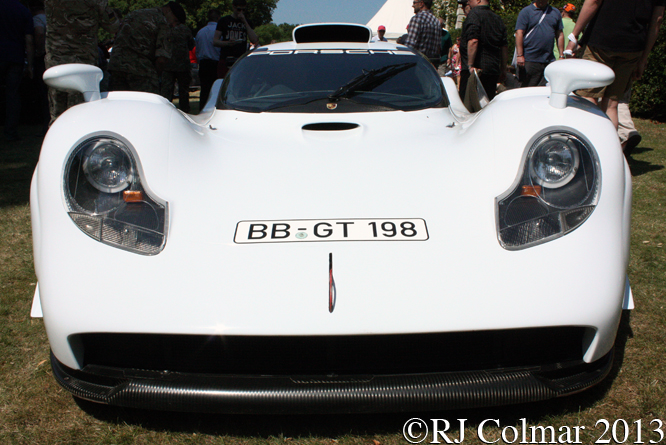
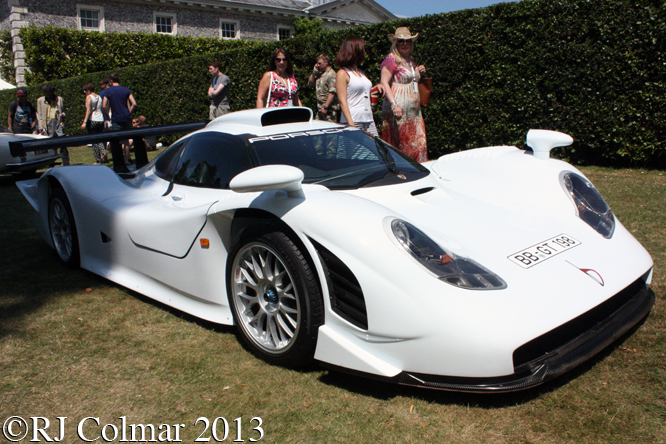
For 1998 the GT1 regulations for endurance regulations only required one example of a model to be built for road use in order for the model to be legible to compete under the GT1 regulations. In 1996 and 1997 manufacturers had been required to produce 25 copies of a model in order to compete in GT1 endurance racing which had led to many compromises being made in order to keep the cost of production on the right side of the million dollar mark.

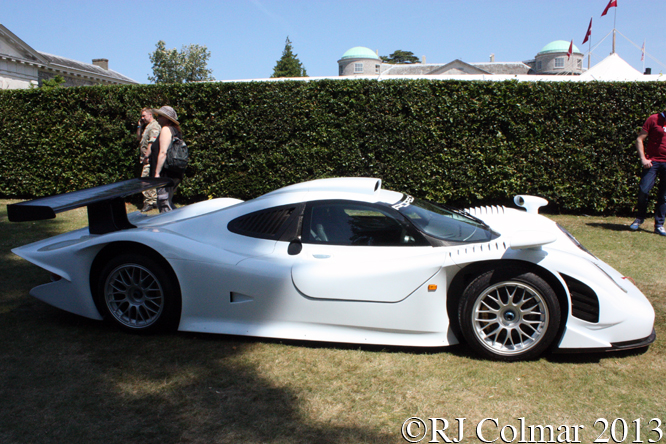
Porsche 911 GT1 98 Strassenversion, Goodwood Festival of Speed

With only one example being required to meet the 1998 GT 1 regulations Porsche effectively built their 911 GT1-98 for racing first and converted one for road use, today’s featured car, which passed all the mandatory tests to gain type approval in Germany.

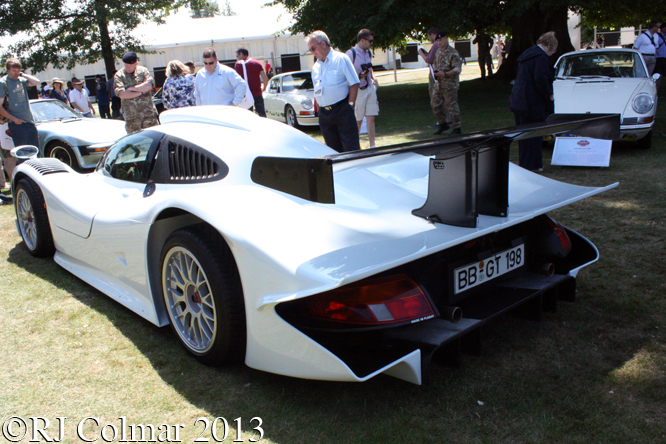
Porsche 911 GT1 98 Strassenversion, Goodwood Festival of Speed

To meet the stringent emission laws the 650 hp twin turbocharged motor, as used in the all conquering Group C Porsche 962’s of the mid 1980’s had to be detuned to 537 hp, enough to propel today’s featured car from rest to 62 mph in 3.9 seconds and on to a top speed of 191 mph.

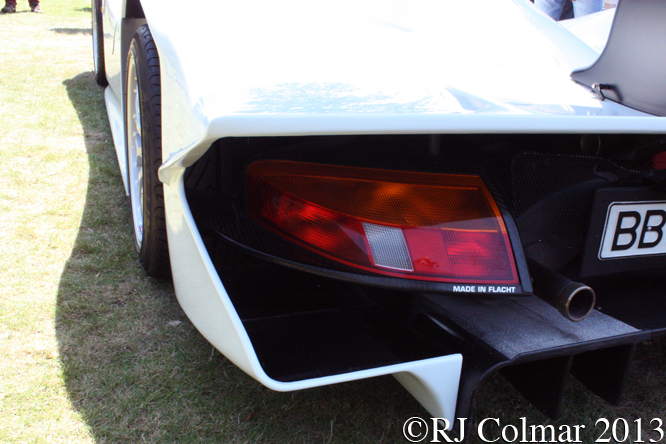
Porsche 911 GT1 98 Strassenversion, Goodwood Festival of Speed

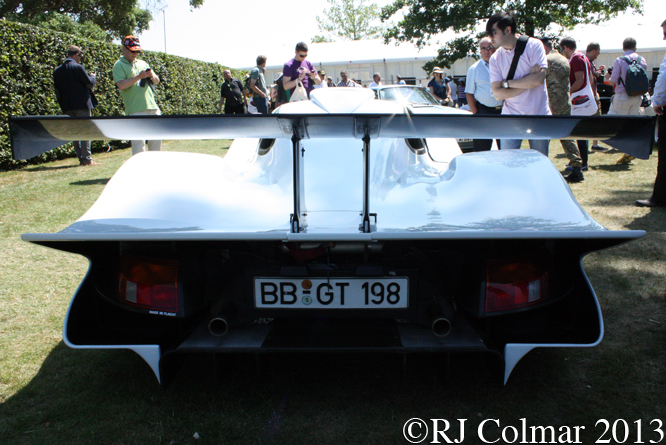
The big improvement of the 911 GT1-98 over the previous models was the location of the engine form the standard 911 behind the rear axle line location to a more beneficial ahead of the rear axle, this benefited the handling by reducing the polar momentum, the force of weight outside the front and rear axle lines and by allowing venturi to be built into the rear body work which helped suck the car to the ground as it traveled with out sacrificing too much by way of top speed.

Porsche 911 GT1 98 Strassenversion, Goodwood Festival of Speed

The full carbon fiber monocoque for the 911 GT1-98 Porsche’s very first which made exclusive use of the exotic material.

Porsche 911 GT1 98 Strassenversion, Goodwood Festival of Speed

After the racing versions of the 911 GT1-98 had secured an unlikely one-two finish at Le Mans in 1998, where they were by no means the fastest cars, Porsche retired from official participation in the 24 hour classic with a record 16 victories that stands to this day.

Porsche 911 GT1 98 Strassenversion, Goodwood Festival of Speed

This year Porsche returned to Le Mans in the GT Class where they recorded their 99th class win, in anticipation for a full scale attack on overall victory with an LMP car to driven by Mark Weber next year.

Thanks for joining me on this “The Water Cooled Mid Engined One” edition of “Gettin’ a li’l psycho on tyres” I hope you will join me for a look at the final evolution of Porsche’s 997 the GT3 RS 4.0. Don’t forget to come back now !

Share

Group B Race Car – Porsche 961#WP0ZZZ93ZFS010016

One afternoon soon after taking over as CEO of Porsche AG American Peter Schultz noticed a chart on the wall of the office of his Chief Engineer Dr Helmut Bott which outlined the developement schedules for Porsche’s three models the 924, 928 and 911, the first two extended far into the future while that for the 911 came to a stop in 1981.

Porsche 961, Le Mans 24 Hours

Schultz took a marker pen and walked over to the chart and drew a line extending the 911’s development clear off the chart, much to the relief of Dr Bott who set about initiating the design of a new concept car which would become a flagship for the future development of the 911 called the Porsche Gruppe B.

Porsche 961, Le Mans 24 Hours

The Gruppe B, which was first seen at the Frankfurt Motor Show in October 1983 was designed with new GT regulations for race and rally cars in mind and made use of emergent all wheel drive technology and a version of the Bi Turbo 750 hp 3.2 litre 195 cui flat 6 with 4 valves per cylinder in water cooled cylinder heads that had been developed for the 1978 Porsche 935/78 known as Mody Dick.

Porsche 961, Le Mans 24 Hours

The Gruppe B was developed into a rally raid version called the 959 which won the Paris Dakar Rally at it’s second attempt with René Metge and Dominique Lemoyne in the cockpit in 1986. A US$ 225,000 road version of the 959 appeared in 1985 of which 300 examples were built up until 1987.

Porsche 961, Le Mans 24 Hours

Porsche also developed a single road racing version of the Gruppe B, today’s featured car, known as the 961. It had been anticipated that several manufacturers would build Group B race cars but in the end only the Ferrari 288 GTO saw the light of day and then only as a street car.

Porsche 961, Le Mans 24 Hours

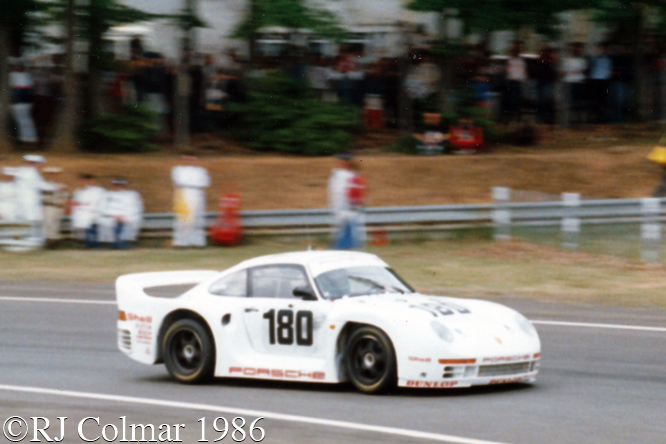
The Porsche 961 made it’s competition debut at the 1986 Le Mans test weekend with twice Paris Dakar winner René Metge sharing the wheel with Claude Ballot-Léna, because there was only one 961 in existence instead of the mandated 20 required for Group B the 961 was entered in the even more relaxed IMSA GTX class. Metge set 10th fastest time in the official Le Mans Test Session but the car retired from the first of two sprints with transmission failure.

Porsche 961, Goodwood Festival of Speed

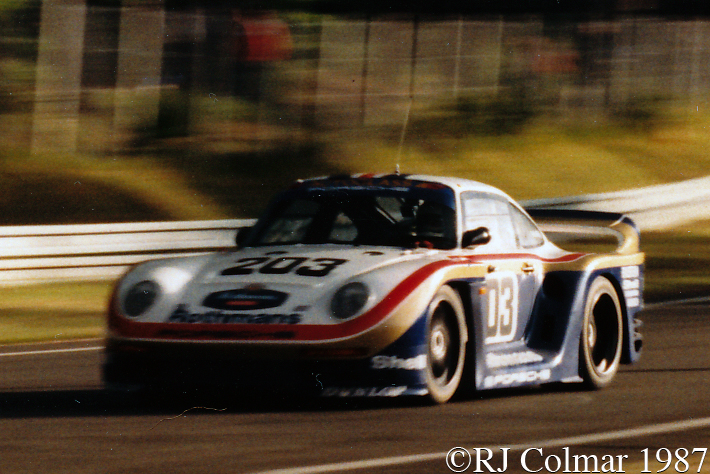
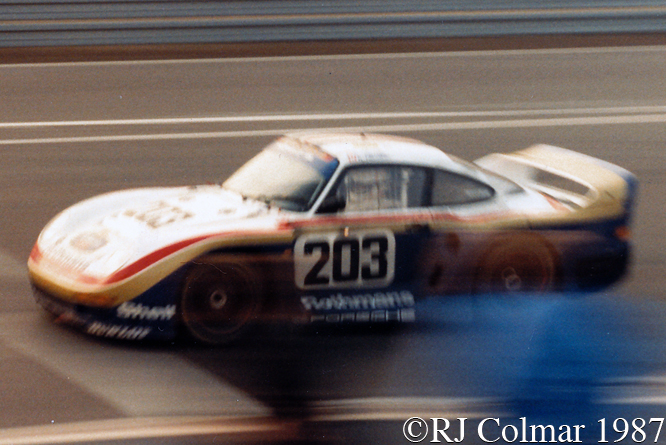
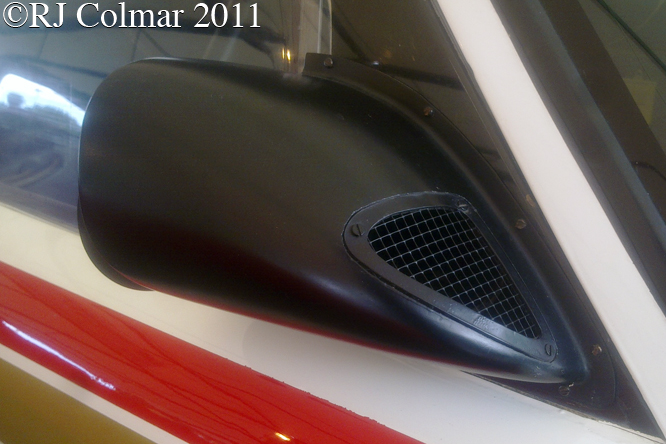
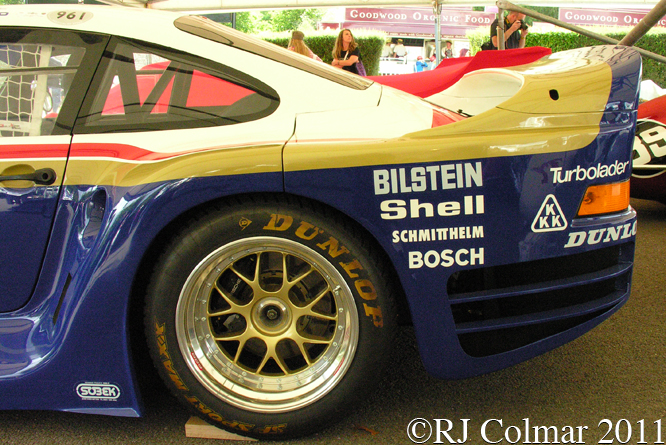
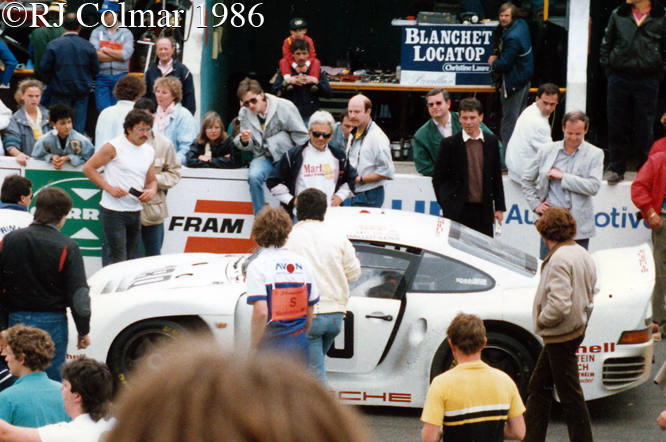
The 961 still running in the GTX class, then appeared at the 1986 Le Mans 24 hours, as seen in the top two photographs, for which it qualified 26th and came home a respectable 7th. The only Group B runner in this race was a venerable BMW M1 a design dating back to the 1970’s which crossed the finish line with it’s hazard lights on to a huge cheers from the crowd but 60 laps behind the 961 and unclassified due to running it’s last lap too slow.

Porsche 961, Goodwood Festival of Speed

In October 1986 Günter Steckkönig and Canadian Kees Nierop drove the 961, now entered as a GTP Prtotype in the Daytona 3 Hour endurance race for which they qualified 29th and came home 24th after experiencing multiple tyre failures on the banked section of the track.

Porsche 961, Goodwood Festival of Speed

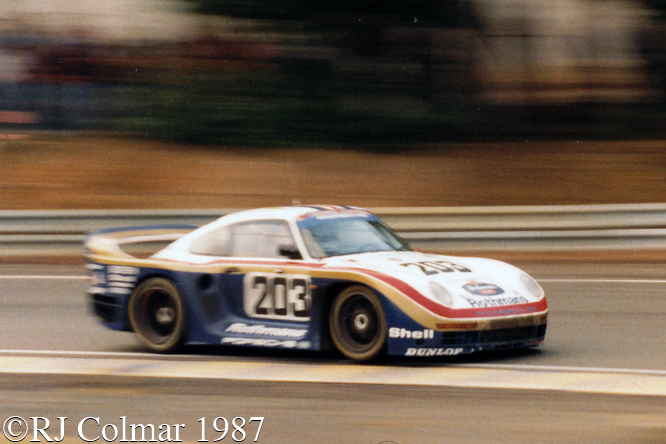
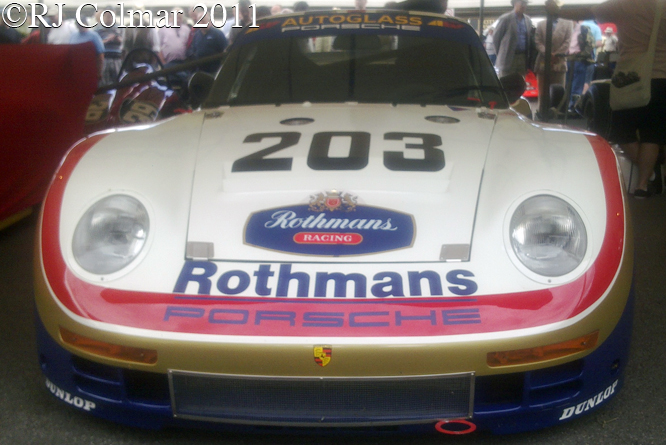
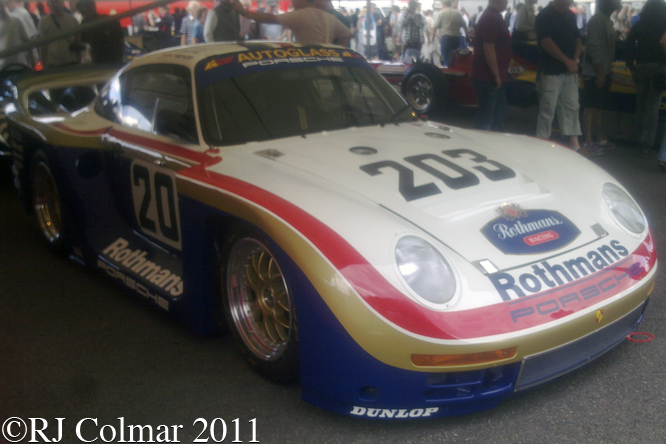
For 1987 the 961 carried the Rothmans livery like it’s sister Group C 962C’s and was driven at the Le Mans Test day by Steckkönig and Claude Haldi who set 16th fastest time with the car now entered in the rationalised IMSA class.

Porsche 961, Goodwood Festival of Speed

A month later Haldi was teamed with Metge for the Le Mans 24 hour race and after the Porsche team ran out of 962C’s Nierop was added to the 961’s driving strength in place of Steckkönig too.

The #203 961 qualified 31st on the grid and was running as high as 11th when around 2/3rds distance Nierop crashed at Indianapolis corner after experiencing a gearbox problem. While trying to return to the pits the 961 caught fire and eventually came to a stop and retirement.

With no sign of any Group B competition on the race track Porsche abandoned the 961 with just one example built and never having actually entered the car in the class it was designed to compete in. The 961 was subsequently rebuilt for the Porsche Museum and demonstrations, it is seen in the last four photo’s at Goodwood Festival of Speed running on out of period pattern BBS wheels.

Thanks for joining me on this “Group B Race Car” edition of “Gettin’ a li’l psycho on tyres” I hope you will join me for a look at some Porsche Automobillia tomorrow. Don’t forget to come back now !
Share

The Striped One – Porsche 911 SC Safari

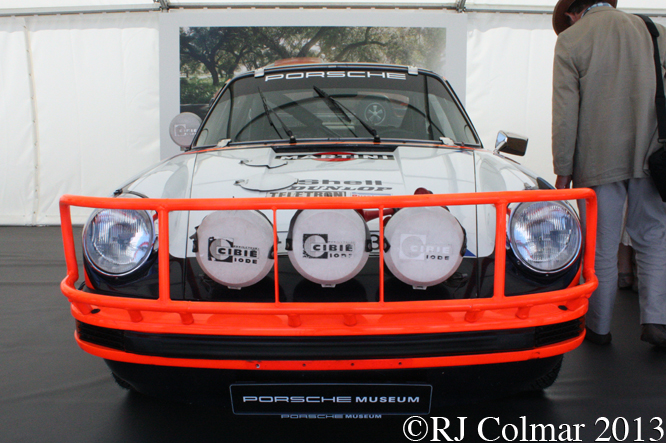
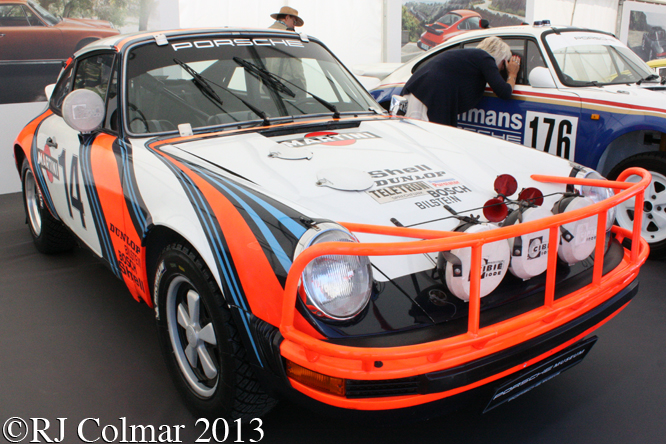
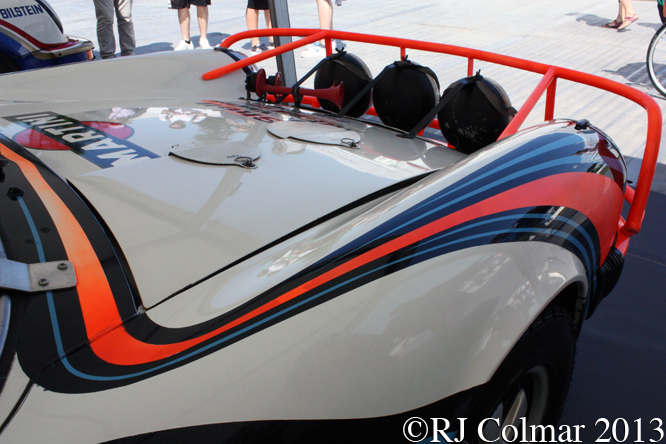
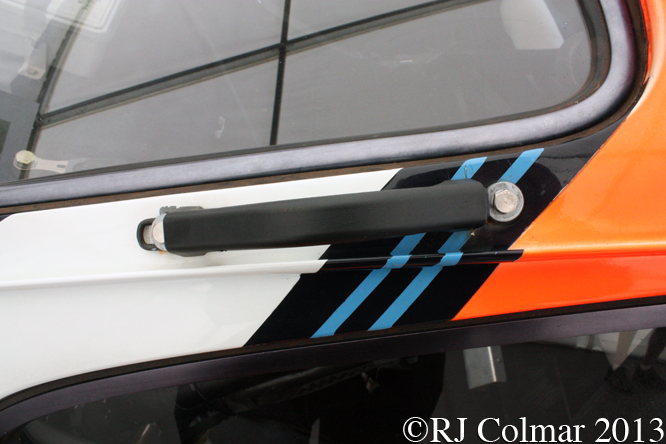
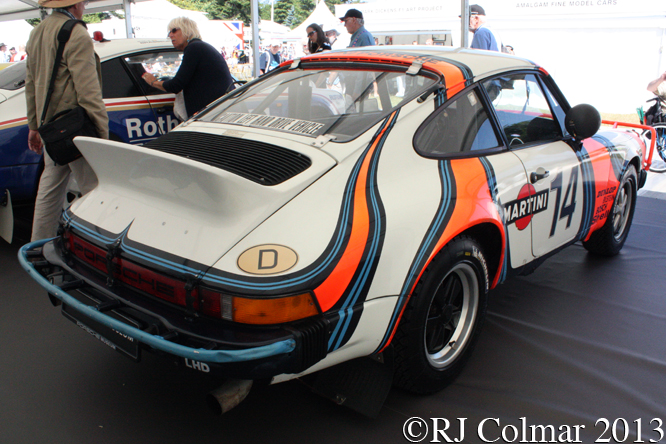
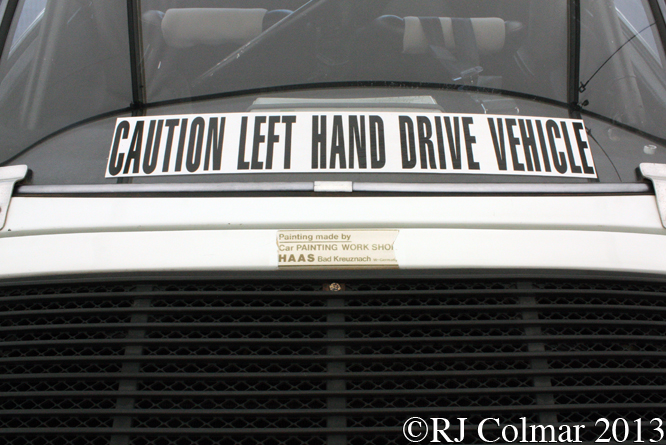
In 1978 the Martini sponsored works Porsche team produced two variants of the 911 to take outright victories in events which the model had not won, the first was the 750hp Porsche 935 78 known as Moby Dick which was designed to win the Le Mans 24 hours, it finished fourth, and the second was the 300hp Porsche 911 SC Safari, featured today, which was designed to win the Safari Rally in Kenya. The 911 SC Safari that stands nearly one foot off the ground is without question one of my favourite rally cars, it’s the one car in which James Bond’s Martini is guaranteed to arrive well shaken but not stirred.

Porsche 911 SC Safari, Goodwood Festival Of Speed

As we saw on Saturday by 1970 the 911 had proved itself in the snowy conditions of Sweden and the tarmac conditions of a dry Monte Carlo rally with Bjorn Waldegård at the wheel, it’s smaller 912 sibling had won the European Rally Championship with Sobiesław Zasada at the wheel, the only thing missing from the 911’s curriculum vitae was a win a respected ‘loose surface’ rally like the Safari Rally. This absence was not for lack of trying a 911 covered in ‘kanga’roo bars was driven by Sobiesław Zasada in the 1968 London to Sydney Marathon and sensationally worked it’s way up from 13th to 4th position on the final Australian leg of the 7000 mile rally.

Porsche 911 SC Safari, Goodwood Festival Of Speed

In 1971 Waldegård driving a works 911 looked set for a win on the East African Safari Rally until he was blinded by dust from his team mate Zasada while trying to over take him on the road and ended up crashing out while Zsada survived to finish 5th. In 1974 Bjorn came home second in the East African Safari driving a 911 RS and it was not until 1978 that Porsche returned to East Africa with a two car team that included today’s featured #14 car driven by Vic Preston Jnr. Team mate Waldegård, who won the 1977 edition of the Safari driving a Ford, returned to Zuffenhasen to drive the similar #5 911 SC.

Porsche 911 SC Safari, Goodwood Festival Of Speed

The roads used on the Safari in 1978 were mostly graded tracks, tarmac is rarely used because the population is sparsely distributed and the intense daily short bursts of rain in the rainy season would likely as not wash tarmac away in abrasive currents of subsequent surface water drainage. The ’78 Safari was run in wet conditions but the competition between the Porsche, Datsun now Nissan, and Peugeot teams remained close. Waldegård and H Thorszelius led the first leg but then a rock damaged the suspension and they could only recover a 4th place finish.

Porsche 911 SC Safari, Goodwood Festival Of Speed

Vic Preston Jnr and J Lyall finished second in today’s featured car behind the Peugeot 504 V6 of Jean Pierre Nicolas and Jean Todt J-C Lefebvre. The winners finished the timed sections with the fastest times overall only to crash in to an unexpectedly U turning vehicle on the untimed road section back to the ceremonial finish line in Niarobi. The Peugeot was badly damaged but the occupants unharmed. After repairs Nicolas managed to drive to the finish with a holed radiator.

Porsche 911 SC Safari, Goodwood Festival Of Speed

Ironically Jean Pierre Nicholas with Vincent Laverne win in the 1978 Monte Carlo Rally driving a superceded Porsche 911 Carrera RSR meant that Porsche maintained their lead in the World Rally Championship. By the seasons end a privately entered Porsche in San Remo had scored one additional podium finish for the Zuffenhausen marque in the World Rally Championship as the works team involvement was aimed solely at winning the prestigious Safari. The 4th place final championship placing was edged by 1978 champions FIAT, Ford, for whom Bjorn also drove in 1978 and Opel, each of these teams had elected pass on the extreme endurance test of the Safari in Kenya.

Porsche 911 SC Safari, Goodwood Festival Of Speed

The 1978 Safari was the last World Championship Rally the works team entered although some years later the Porsche name would return with Prodrive prepared cars. With no prospect of rallying regulations turning to favor a Porsche entry it would appear the marque which has dominated so many other area’s of the sport is destined to never win the Safari Rally. In 2011 Waldegård driving a 1972 Porsche 911 2.4 prepared by Francis Tuthill did win the classic version of the Safari Rally, a small consolation for the man and the marque.

The following season Martini shifted the main focus of it’s motorsports sponsorship to the Lotus formula one team.

Thanks for joining me on this “The Striped One” edition of “Gettin’ a li’l psycho on tyres” I hope you will join me again tomorrow when I’ll be looking at some Formula One Automobillia. Don’t forget to come back now !
Share

Monte Hat-trick – Porsche 911S

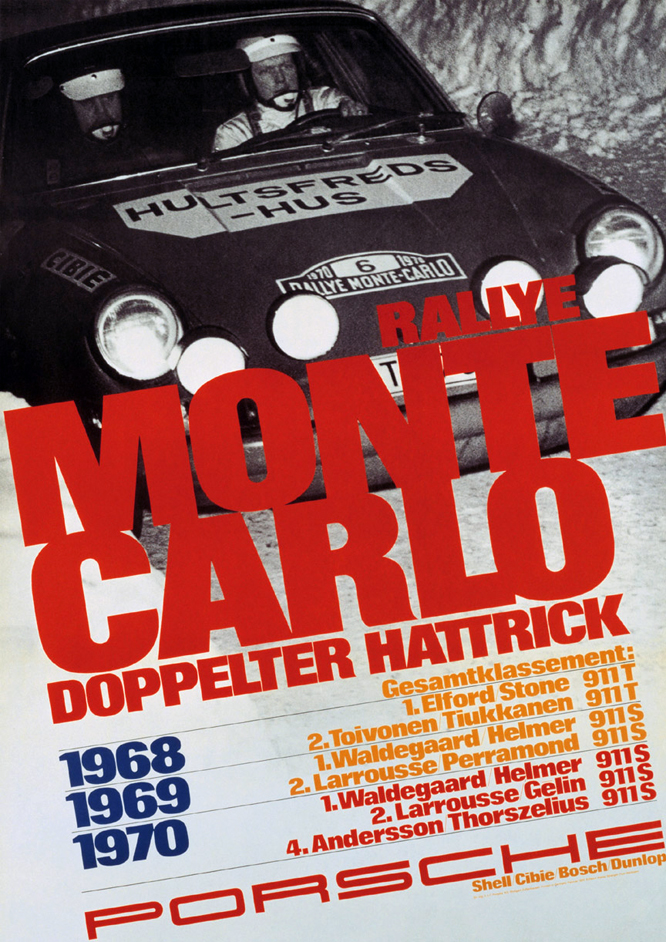
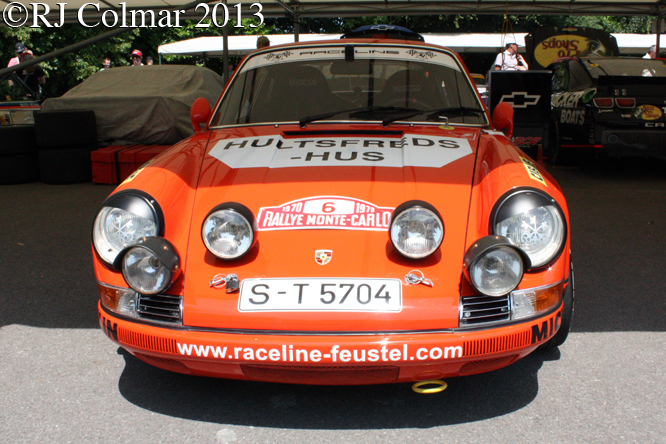
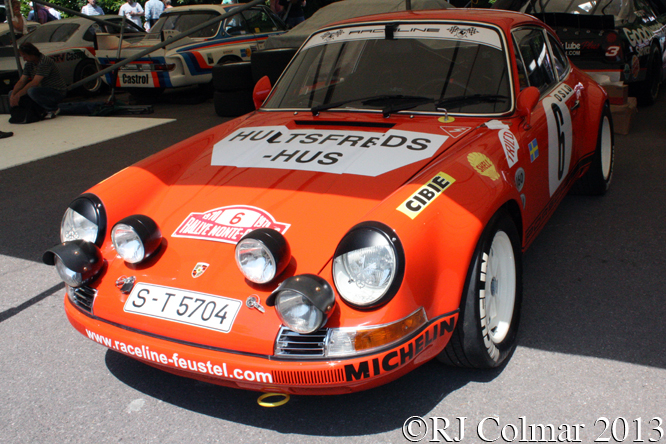
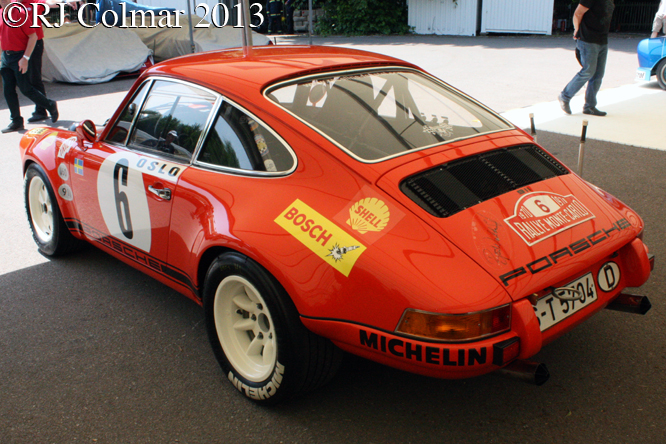
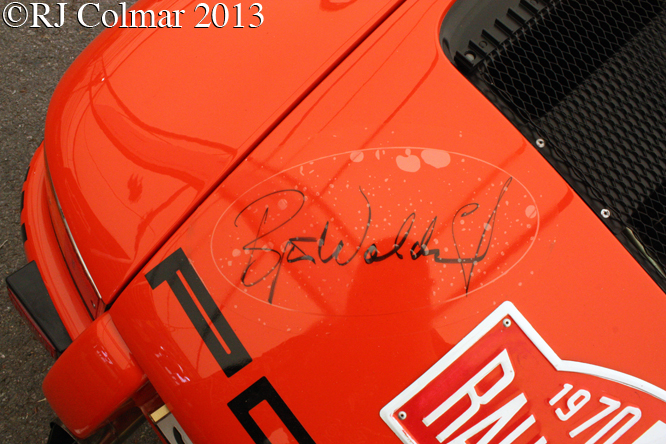
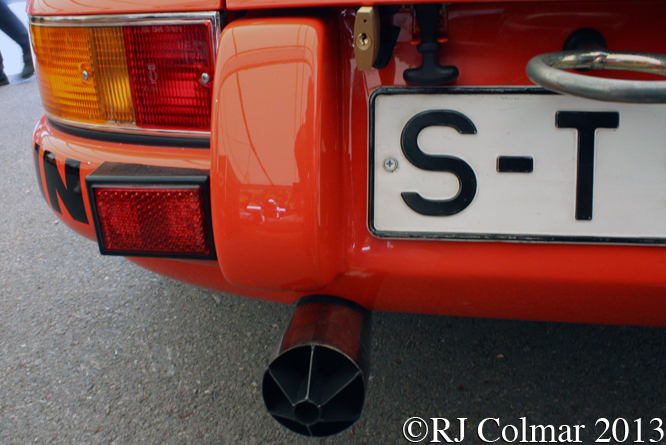
From 1968 to 1970 Porsche scored three 1-2 victories on the fabled Monte Carlo Rally. In 1968 Vic Elford and David Stone driving a Porsche 911T won the event ahead of the 911S driven by Pauli Toivonen and M Tiukkanen, the following year Bjorn Waldegård and Lars Helmer driving a 911S finished ahead of the similar car driven by Gerárd Larrousse and JC Perramond. In 1970 the Porsche hat-trick of wins came when Waaldegård and Helmer drove today’s featured car to victory over Larrousse and M Gélin in another 911S.

Porsche, 911, Advertisement

The 1970 Monte Carlo had featured a concentration run to the Principality starting from eight European cities and was run in mild conditions. Porsche, Ford Alpine Renault and Lancia all entered significant works teams expected to challenge for top honours. British press interest in the, once, prestigious event was so low that Motor Sport correspondent GP, Geraint “Gerry” Phillips, opined, in March 1970, that what the Monte Carlo Rally needed to reengage Fleet Street was “… a bunch of hippies to entrench themselves on the Turini (rally stage) and spray the spectators with LSD.” !

Porsche 911S, Goodwood, Festival of Speed

Having won on the dry Monte Carlo Waldegård and Lars Helmer proved the versatility of the 911 by winning the Swedish Rally run on snow by 23 mins, after having a clutch replaced that required the engine to be removed in a freezing lay-by.

Porsche 911S, Goodwood, Festival of Speed

The second 911S model introduced in 1969 features a 2 1/4″ longer wheel base than the original, to improve the handling, though there was no increase in the overall length of the car.

Porsche 911S, Goodwood, Festival of Speed

The motor for the 911S was increased in size from 2 litres / 122 cui to 2.3 litres / 134 cui and with fuel injection this competition car produced 230hp, 50 more than the fuel injected road going version of the 911S.

Porsche 911S, Goodwood, Festival of Speed

Swede Bjorn Waldergård was a front line rally driver from 1962 to 1992, the World Rally Championship (WRC) started in 1973 and he won 16 of the 95 WRC events in which he started. His wins included the three toughest events on the WRC Circuit, the Safari, Acroplolis and RAC rallies in 1977 when he was driving for Ford. In 1979 Bjorn won the World Rally Drivers Championship driving for the works Ford and Mercedes Benz rally teams. Winning the Safari Rally for the third time in 1990, with Fred Gallagher, driving a Toyota Bjorn became the oldest person to ever win a World Championship Rally a record he holds to this day.

Porsche 911S, Goodwood, Festival of Speed

In his report on the road going Porsche 911S for Motor Sport in February 1970 Dennis ‘DSJ’ Jenkinson observed that a 911 cost twice as much as the 4.2 E-Type Jaguar he bought in 1966, to replace his Porsche 356, and that by 1970 the 911S had risen in price to become half the cost of a Lamborghini Miura, he concluded “It is all a question of keeping a sense of proportion.”

Thanks for joining me on this “Monte Hat-trick” edition of “Gettin a li’l psycho on tyres”, I hope you will join me again tomorrow when I’ll be looking at a slightly more outrageously flared Porsche 911. Don’t forget to come back now !
Share

500lb Competition Diet – Porsche 911 R Replica

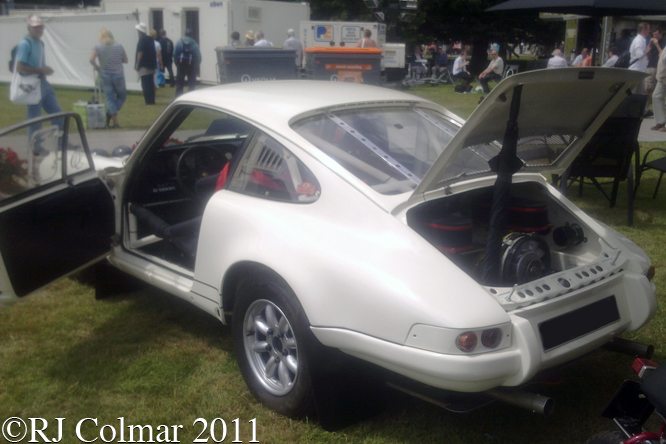
In 1967 Porsche put it’s 911 model on a competition diet to bring the weight down by 230 kgs / 500 lbs to 810 kgs / 1786 lbs to produce a new model the 911 R.

Porsche 911 R, Goodwood, Festival of Speed

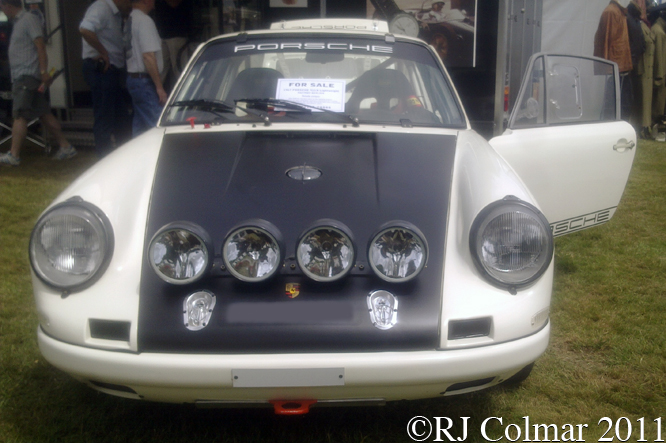
A limited run of 4 factory cars and 19 customer 911 Rs were built by Baur at their body shop in Stuttgart with fibreglass paneled doors, bonnet / hood and boot / trunk lid. Additional weight saving was achieved by using plastic door hinges and bumpers.

Porsche 911 R, Goodwood, Festival of Speed

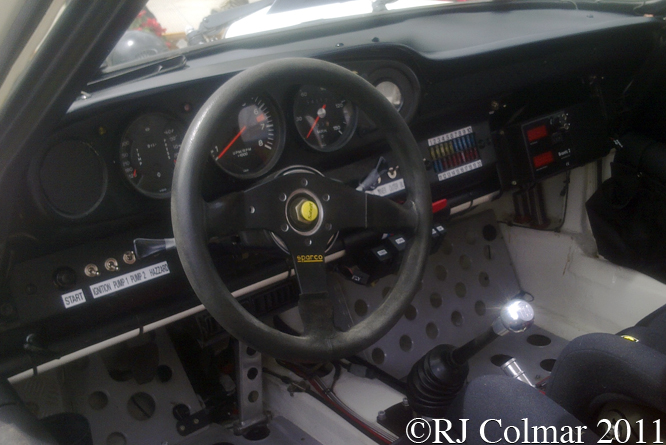
The standard interior was completely deleted in favour of the bare essentials needed for racing or rallying competition, the lightweight side windows were louvred at the rear.

Porsche 911 R, Goodwood, Festival of Speed

Power from the flat six motor was raised from the original type 901 130hp to 210 hp using the type 901/22 motor from the 906 Carrera or 230 hp from the four cam type 901/21 motor.

Porsche 911 R, Goodwood, Festival of Speed

Homologation for the GT class required a minimum of 500 identical vehicles to be built, so with only 24 cars completed the 911 R was forced to run in the prototype class against the likes of mighty Ford Mark IV’s and Ferrari P4s which both had motors more than double the size of the 911 R’s 2 litre / 122 cui flat 6.

As a consequence notable results were hard to come by although the 911 R did score two outright wins the first in the 1967 when Hans Hermann, Jochen Neerspach and Vic Elford shared chassis #3, fitted with a 4 cam motor and Sportmatic transmission, to win the 84 hour Marathon de la Route at the Nurburgring.

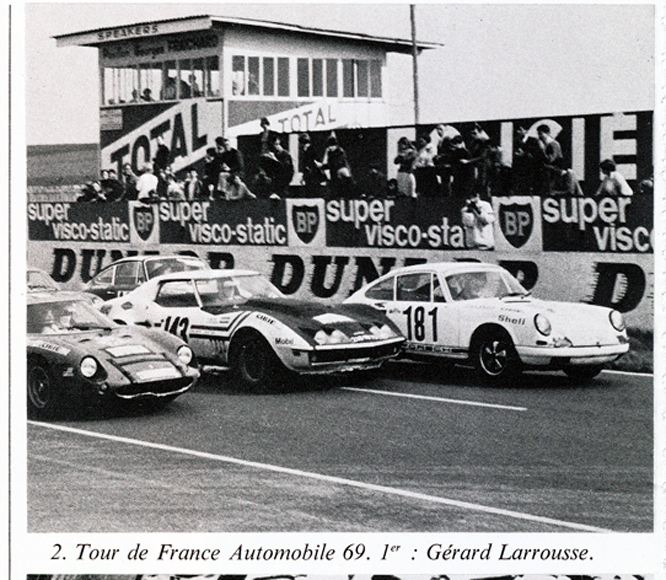
Tour de France, Dunlop SP Sport, Advertisement, Connaissance des arts

The second significant 911 R victory came in 1969 when Gérard Larrousse & Maurice Gélin won the 1969 Tour de France beating the Chevrolet Corvette driven by Henri Greder and André Vigneron as seen in the black and white photo seen above in a 1970 advertisement for Dunlop tyres.

Today’s featured car seen at the 2011 Goodwood Festival of Speed is a replica 911 R that started life as a far more humble 1967 4 cylinder Porsche 912, according to the blurb in the windscreen this car took over 1200 hours to complete.

Thanks for joining me on this “500lb Competition Diet” edition of “Gettin’ a li’l psycho on tyres” I hope you will join me again tomorrow when I’ll be looking at a couple of Porsche 912s.

Share

It’s Not A Peugeot – Porsche 901

From Saturdays to Mondays this month I’ll be celebrating the 50th Anniversary of the Porsche 911, a model which was originally called the 901.

In 1959 a prototype 4 seat two door Porsche, sketched out by Ferdinand “Butzi” Porsche, was built known variously as the 695, T7 and 754, the front and extreme rear of which bears a resemblance to today’s featured Porsche 901 and later Porsche 911, but it had a more upright rear window than the coupé 2+2 of the later models.

Porsche 901, Goodwood Festival of Speed

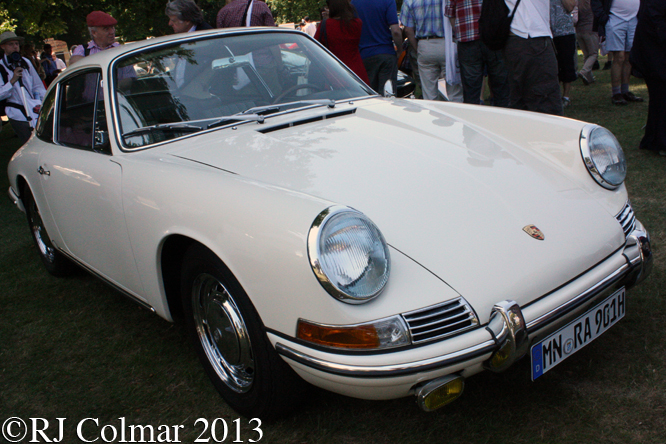
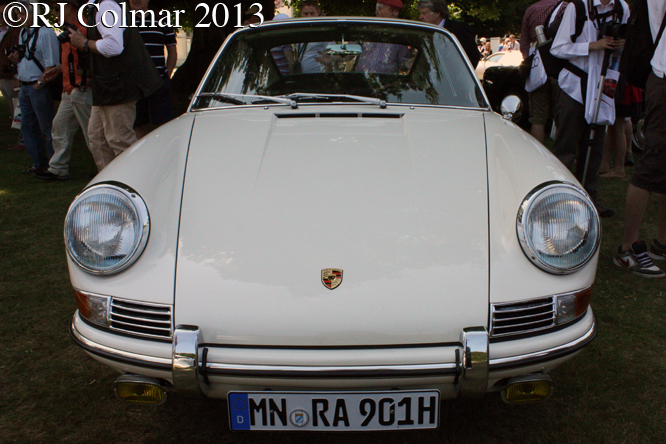
The first public appearance of the Porsche 901 with a mock up 128hp, 2 litre, flat 6 motor was at the 1963 Frankfurt Motor Show. When the 901 was presented at the 1964 Paris Auto Salon Peugeot took exception to the 901 moniker as they were globally known for their model names featuring three digits with a ‘0’ in the middle. Porsche, after a legal dispute which Peugeot won, changed the name of their new model to 911, however not before 82 901’s had been completed as prototypes and show cars.

Porsche 901, Goodwood Festival of Speed

Of the 82 901 models built a few made it into private hands, one of which today’s featured car #27 is said to have been sold off the 1964 Earls Court Motor Show stand to an aeronautical engineer called Mr Sorjo Ranta. Mr Ranta kept the car until selling it to Ruf family, known for their Porsche tuning and restyling business.

Note some open sources say the RUF owned 901 is #37, if you happen to definitively know which number is correct please chime in below with references if possible, the #27 was quoted from the Cartier Style et Luxe Concours d”Elegance information board at the Goodwood Festival of Speed.

Thanks for joining me on this “It’s not a Peugeot” edition of “Gettin’ a li’l psycho on tyres” I hope you will join me for a look at a 1967 Porsche 911R Replica. Don’t forget to come back now !
Share