Tag Archives: Festival of Speed

Shimmying Past Scrutineers – Ford Mark IV #J5

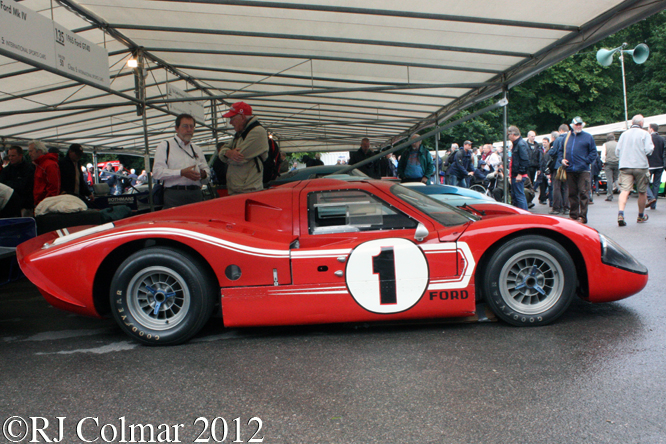
The Ford Mark IV was the culmination of Ford’s determination to crush Ferrari on it’s own turf, after Enzo had bailed out of selling his eponymous company to the men from Dearborn at the last minute in 1963.
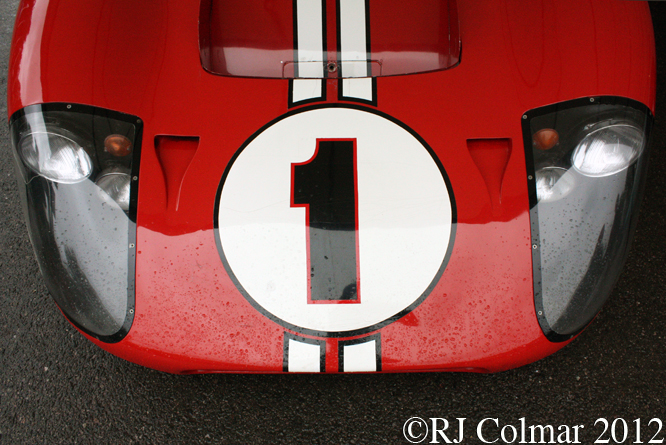
Ford Mark IV, Goodwood Festival of Speed

What started out as an Eric Broadley designed Lola GT powered by a Ford Indy spec V8 in 1963 had been developed into the Ford GT40 with input from Ford’s designers led by Roy Lunn. The GT40 was the subject of two humiliating failures at Le Mans in ’64 and ’65 but then blossomed into the Shelby developed 7 litre / 427 cui Ford GT40 Mark II that swept to a 1,2,3 victory at Le Mans in 1966.
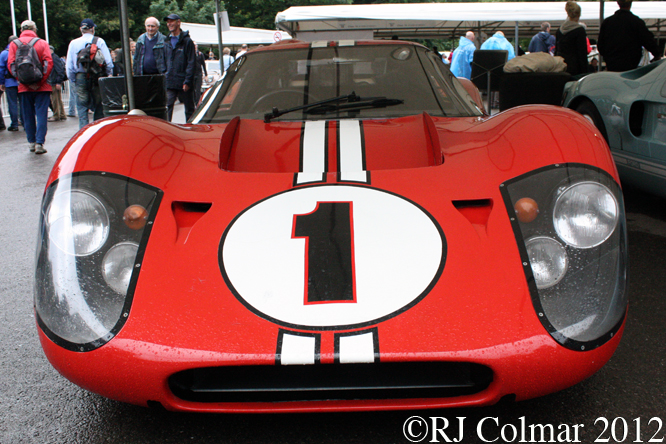
Ford Mark IV, Goodwood Festival of Speed

Unable to convince Ford that they needed to build the GT40 with an aluminium frame to save weight Eric Broadley left the GT40 project in 1965 and returned to Lola while Ford and Shelby got to grips with producing a steel framed car that was both powerful enough and strong enough to last 24 hours at a race winning pace.
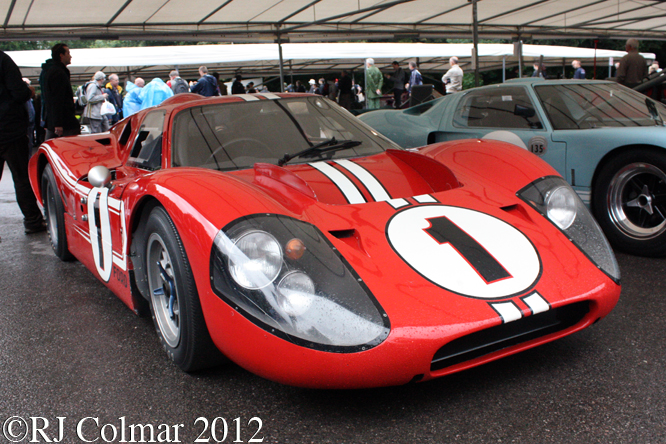
Ford Mark IV, Goodwood Festival of Speed

Ford soon realised that Eric was right about the extra weight carried by the steel framed cars and before the steel framed GT40 Mk II’s romped to victory, in ’66, they set about building an aluminium framed version of the GT40 with the same drive train and suspension components known as the J-Car featuring an innovative aluminium honeycomb monocoque manufactured by Brunswick Aerospace.
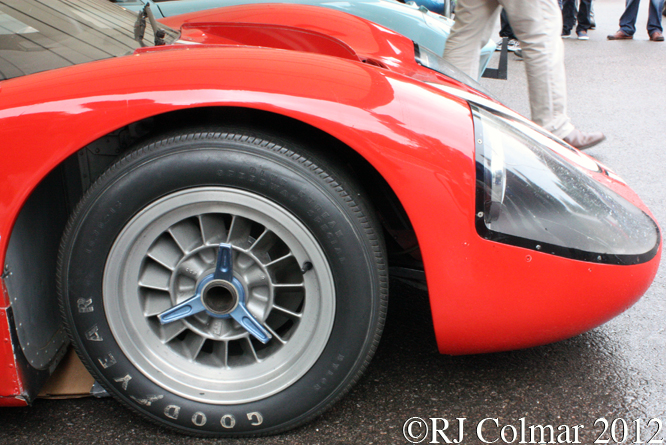
Ford Mark IV, Goodwood Festival of Speed

The J-Car was subject to much experimentation with body shapes and even crash testing after Ken Miles had been killed in a freak accident testing a J-Car. By 1967 Ford had four of the new Mark IV’s ready for the Le Mans 24 hours powered by 7 litre / 427 cui motors.
Ford Mark IV, Goodwood Festival of Speed

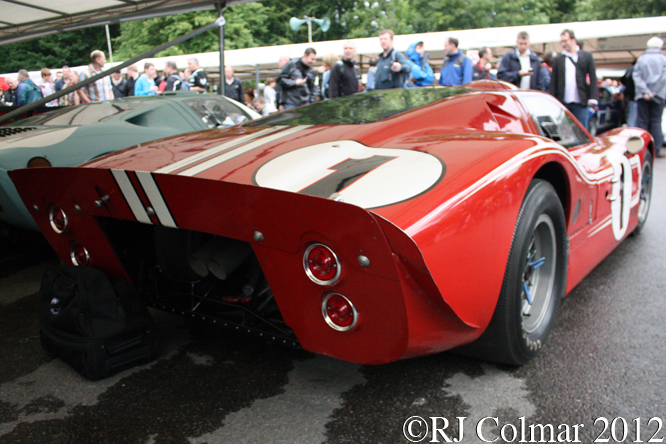
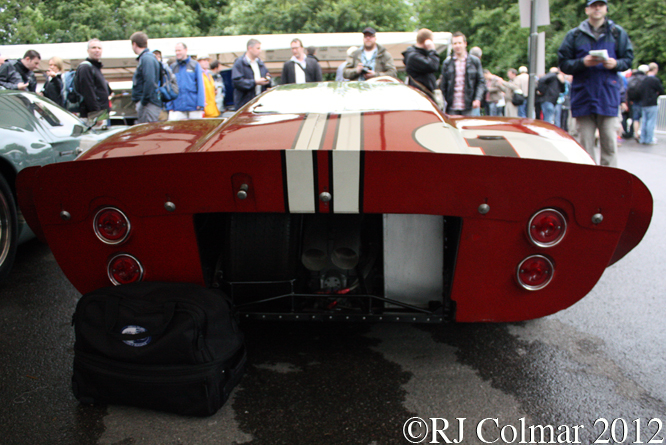
According to Dan Gurney the Mark IV’s were fitted with suspension shims to ensure they passed the scrutineers / tech inspectors minimum ride height test held in the middle of town, these shims then “fell off” on the way back to the race track to ensure the Fords had some aerodynamic stability when they hit 200 plus mph on the 4 mile Mulsanne straight.
Ford Mark IV, Goodwood Festival of Speed

Dan Gurney set the winning car up then he and Le Mans rookie AJ Foyt then set about winning the race, during the middle of the night Dan over slept forcing AJ to do a double stint behind the wheel but other than that their car had no problems on it’s way to a four lap victory over the Ferrari P4 of Ludovico Scarfiotti and Mike Parkes. The sister Shelby run Goodyear shod car of Bruce McLaren and Mark Donohue came forth behind another Ferrari P4 after loosing time with a tale piece that was ripped off.
Ford Mark IV, Goodwood Festival of Speed

On the podium Dan Gurney started a tradition of shaking up the winners bottle and spraying champagne all over the gathered revelers which has been repeated by race winners around the world countless times since. The day after the race the Mark IV’s were effectively banned from racing in 1968 and Ford withdrew from any further factory participation on the spot.

Ferrari ended up winning the World Sports Car Championship in 1967 but it hardly mattered since everyone remembers who won the signature event of the series the Le Mans 24 hour race.

The car driven by Gurney was different from the three other Mark IV’s in the race because to accommodate Dan’s 6’3″ frame a blister was built into the roof and the seat was lowered. After the race all four Mark IV’s, the two Firestone shod cars run by Holman Moody had crashed out, returned to the States were overhauled and all four painted to look like the winner complete with a blister in the roof.

The winning car chassis #J5 has been kept at the Ford Museum however I am led to believe this is the same car that appeared at Goodwood last year, but I maintain an open mind since Ford sold chassis #J6 to New York collector James Glickenhaus believing they had sold him the 1967 winning car until closer inspection revealed otherwise.

Thanks for joining me on this “Shimmying Past Scrutineers” edition of “Gettin’ a li’l psycho on tyres” I hope you will join me again tomorrow. Don’t forget to come back now !

PS Don’t miss my Canadian Grand Prix opinions at Motorsports Unplugged.

Share

Comeback Kid – Porsche 936 #001

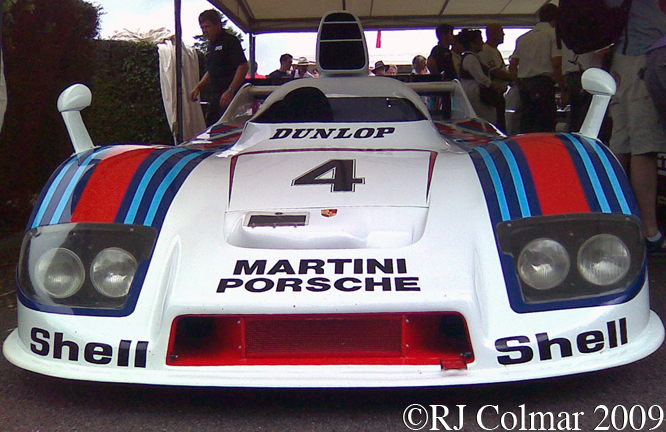
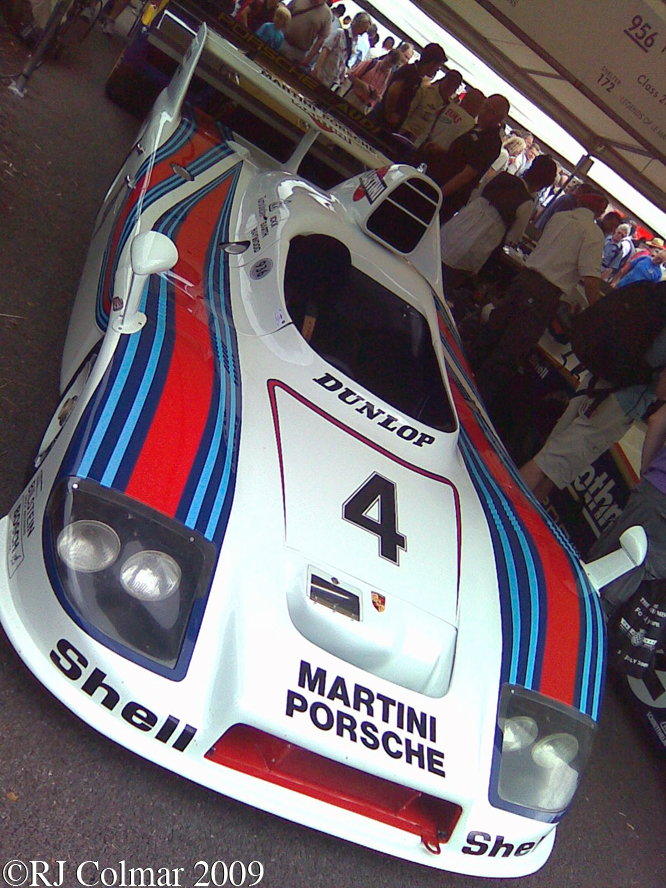
The Porsche 936 was the successor to the 908 and 917 models, it was used to win the World Sports Car Championsip in 1976. Three chassis based on many parts from the Porsche 917 parts bin were made.

All three chassis won the Le Mans 24 hour race; chassis #002 in 1976, #001 in 1977, both with a 540 hp 2140 cc / 130 cui turbocharged flat 6 motors and #003 in 1981 with a 600 hp 2649 cc / 161 cui turbocharged flat 6, a design that had started out as the alcohol burning engine used by Danny Ongias in the unraced Interscope Parnelli Indy Car. Remarkably Jacky Ickx co drove each of these 936’s to Victory Lane at Le Mans.

Porsche 936, Goodwood Festival Of Speed,

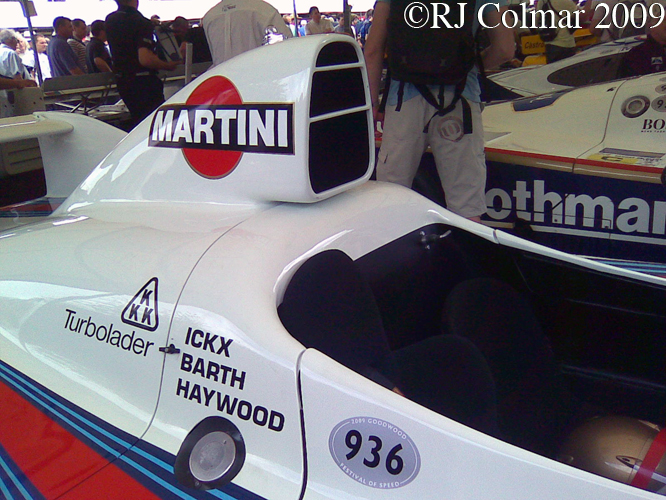
This car represents chassis #001 which was slated to be driven by Juergen Barth and Le Mans rookie Hurley Haywood in the 1977 Le Mans 24 hours, a fuel pump replacement in the 3rd hour dropped #001 down to 42nd place. Around this time Henri Pescarolo’s engine had expired in the sister #002 chassis and Pescarolo’s team mate, Jacky Ickx, was drafted in to join Barth and Haywood.

By his own admission Jacky drove the race of his life through the night and after 19 hours the #001 was in the lead of the race, the three works Renault Alpines dropped out while dominating the race in the Porsche’s absence with engine failures. With 45 mins to go the engine in #001 developed a second misfire, the mechanics shut down the problematic cylinder by taking out the spark plug and blanking the fuel injector.

Porsche 936, Goodwood Festival Of Speed,

Ten mins before the end of the race Juergen Barth was then sent out with a stop watch taped to the steering wheel and instructed to complete the last two laps, within the necessary percentage of each other, to seal an unlikely victory by 11 laps over the Renault powered Mirage GR8 of Vern Schuppan and Jean Pierre Jarrier.

During the race a wheel balance weight tore off the right front wheel ripped through the wheel arch, and both stalk mounted mirrors were lost. The large air box was primarily used to cool the turbocharged air running through the intercoolers.

Porsche 936, Goodwood Festival Of Speed,

The following year Bob Wollek joined Juergen Barth in #001 and when the sister #003 car retired after an accident Jacky Ickx joined Bob and Juergen too however this time they could only finish 2nd to the Alpine Renault of Didier Pironi and Jean-Pierre Jaussaud.

#001’s next two appearances were at the Silverstone 6 hours and Le Mans 24 hours in 1979 it qualified on pole for both of these events, but was classified 10th at Silverstone after an accident which caused Jochen Mass and Brian Redmans retirement from the lead at Silverstone. Bob Wollek and Hurley Haywood retired with engine failure at Le Mans in 1981 as has Jurgen Barth and Reinhold Joest driving #001 at Le Mans in 1976. The cars final appearance as a works car was at the 1981 Le Mans 24 hours where despite starting from 2nd on the grid Jochen Mass, Vern Schuppan and Hurley Haywood could only finish 12th.

Porsche 936, Goodwood Festival Of Speed,

The following linked films document the 1977 Le Mans race; the first shows fabulous in car footage of a lap of Le Mans the second show’s the start and continues into the evening and the third the finish, I afraid most of the commentary is in German except a couple of interviews with Jacky Ickx and Hurley Haywood.

Thanks for joining me on this “Comeback Kid” edition of “Gettin’ a li’l psycho on tyres” I hope you will join me again tomorrow for the 1000th edition of “Gettin’ a li’l psycho on tyres”. Don’t forget to come back now !

Share

One Shift Short Of A Hero – Talbot Lago T26 GS #11056

In 1947 Anthony F. Lago and Carlo Marchetti designed the Talbot T26C Grand Prix open wheeler which featured a 4.5 litre / 274 cui straight six cylinder motor with triple carburetors which made it’s racing debut at Monaco in 1948. Despite requiring less fuel and fewer tyres during the course of races than the more powerful supercharged cars built by Maserati, Alfa Romeo and Ferrari the T26C was considered out dated but they did win two Grand Prix races in 1949.

In 1950 3 Talbot Lago Grand Prix cars, fitted with crude 2 seat bodies, cycle wings over the wheels and the necessary lighting for night driving, were entered in the Le Mans 24 hour race. The #5 driven for 23 and a quarter hours by Louis Rosier and the remainder by his son Jean-Louis came home first one lap ahead of the similar #7 driven by Pierre Meyrat and Guy Mairesse.

Six Talbot Lago’s were privately entered, as they had been in 1950, at Le Mans for 1952 but this time the French cars were comprehensively beaten by the Peter Walker entered Jaguar XK 129 C, C-Type, driven by Walker and Peter Whitehead who finished 9 laps ahead of Pierre Meyrat and Guy Mairesse who’s Talbot Lago completed three laps more than the previous year with the same overall result.

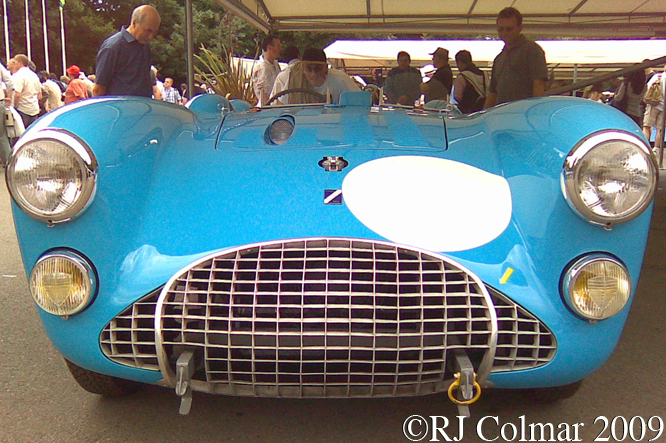
Talbot Lago T26 GS, Goodwood Festival Of Speed

All six Talbot Lago’s were rebodied as a result of a change in body work regulations which effectively outlawed cycle winged cars at Le Mans in 1952. Pierre “Levegh” Eugène Alfred Bouillon took it upon himself to stay in his car chassis #11056 that he was supposed to be sharing with René Marchand for over 22 hours. While leading the pursuing Mercedes Benz cars by 4 laps “Levegh” missed a gear selecting 2nd instead of 4th with terminal consequences for his engine that caused his retirement, with just over an hour to go, handing an unpopular 1-2 victory to the Mercedes Benz team.

So far as I have been able to ascertain today’s featured car seen at Goodwood in 2009 is chassis #11056 raced in 1951 at Le Mans by the Argentinians Froilan Gonzales and Onofre Marimon who retired before half distance with a broken radiator.”Pierre Levegh” acquired the car in 1952 and body work by Charles Deutsch was fitted to comply with the new regulations effectively outlawing cycle wings over the wheels.

Talbot Lago T26 GS, Goodwood Festival Of Speed

In 1953 “Levegh”, racing under the name of his uncle a racer who died at the wheel of a racing car in 1904, returned to Le Mans for a second time with #11056 now sharing the car with Charles Pozzi to finish a distant 8th 400 kms behind the winning C type Jaguar of Tony Rolt and Duncan Hamilton. Lino Fayen joined Levegh in 1954 but this time #11056 retired after just 33 laps.

Pierre Levegh raced this car in at least a dozen other events between 1952 and April 1955 winning two of them in 1952 and 1954 at Montlhéry. On the 11th of June 1955 Pierre Levegh was invited to join the returning works Mercedes Benz team at Le Mans, on lap 34 he was involved with a collision with a slower car that saw him and his blazing 300SLR fatally land on barriers while parts of his car were hurled into the crowd and killing 82 spectators and injuring 100 more.

During the 1970’s the Deutsch body work was abandoned and the car was refitted with cycle wing bodywork as used by Gonzalez and Marimon in 1951. In 2006 11056 appeared at Pebble Beach with a likeness of the Deutsch bodywork as used by Pierre Levegh but there are significant differences not least the wider radiator grill than seen in 1952 and the curious addition of a NACA submerged duct in the spare wheel cover on the right side of the vehicle. So far as I know such ducts did not appear on Talbot Lago’s until 1953 on chassis #11055 and certainly not on chassis #11056.

If this outline is at variance with your understanding of today’s featured car please do not hesitate to chime in below.

Thanks for joining me on this “One Shift Short Of A Hero” edition of “Gettin’ a li’l psycho on tyres” I hope you will join me again tomorrow. Don’t for get to come back now !

Share

Ultimate Cars Ultimate Race – Porsche 917K #053

If there is one race I’d love to be able to turn the clock back for in order to attend it would be the 1971 Le Mans 24 hours which for my money was the ultimate road race with the ultimate cars.

Porsche 917K, Goodwood Festival Of Speed

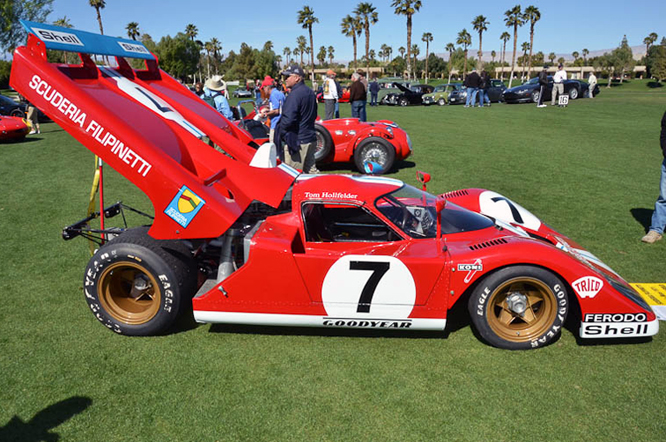
Lined up on the grid were seven Porsche 917’s with a variety of body configurations against 9 Ferrari 512s in both closed M spec, earlier open S Spec and two unique 512’s one from the Penske team which had a large rear wing and the F spec car of Scuderia Filipinetti that had a narrow cockpit built around a Porsche 917 windscreen.

Porsche 917K, Goodwood Festival Of Speed

The race was an uneven contest between the Porsches as the Ferraris suffered from inferior reliability and top speeds were down on the Porsche’s 230 mph plus capabilities. However it was the fastest to be run at the circuit until 2010.

Porsche 917K, Goodwood Festival Of Speed

The winning car chassis #056 seen here at Goodwood Festival of Speed featured a special lightweight magnesium chassis built only for the works supported Porsche Salzburg team much to the annoyance of Porsche’s other works supported team run by John Wyer who’s employees had developed the Porsche body work in short (K Kurz) and long (LH Lang heck) tail forms and shared them freely with all the other teams running 917’s.

Porsche 917K, Goodwood Festival Of Speed

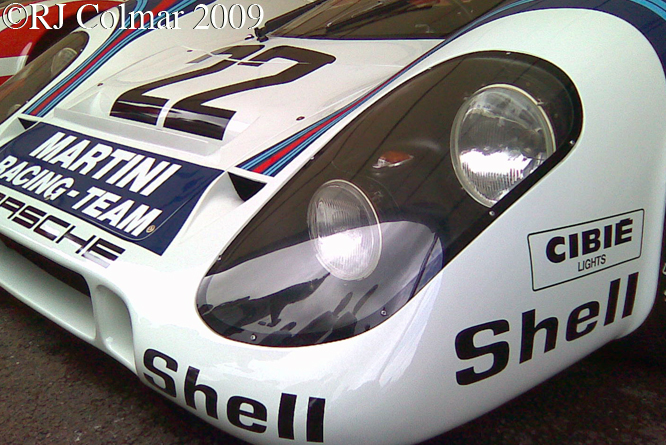
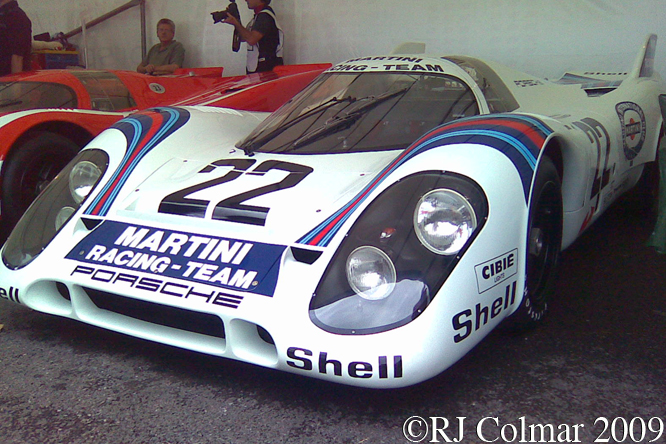
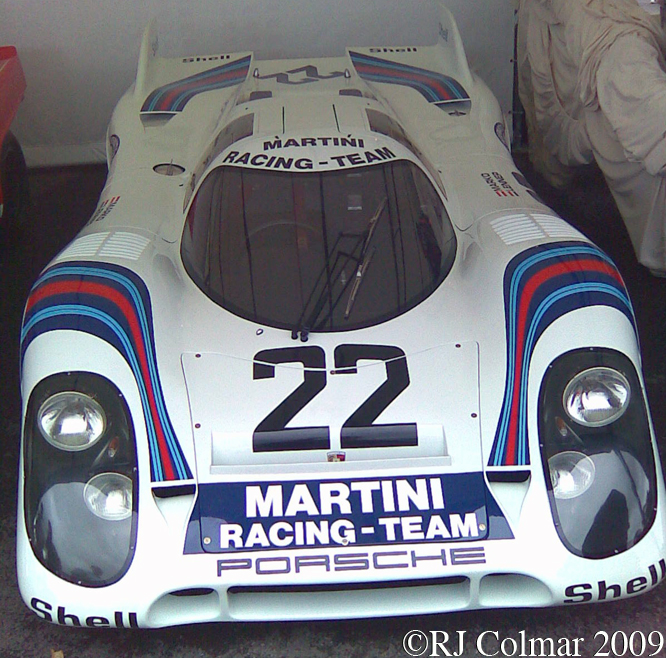
Gils van Lennep and Helmut Marko shared the winning 600 hp 4.9 litre 299 cui aircooled flat 12 powered #22 car which traveled 3,107.7 miles in 24 hours covering 397 laps at an average speed of 138.6 mph the equivalent to five consecutive Coke 600’s !

They beat the next car driven by Richard Attwood, Herbert Muller and Brian Redman in a Gulf Porsche 917 by two laps, 16 miles, and the third finisher the Ferrari of Sam Posey and Tony Adamowicz by 31 laps.

After the race chassis #053 was immediately retired and so has a 100% winning record.

Thanks for joining me on this “Ultimate Cars Ultimate Race” edition of “Gettin’ a li’l psycho on tyres”, I hope you will join me again tomorrow when I’ll be looking at a 1925 3 litre / 183 cui Bentley. Don’t forget to come back now !

Share

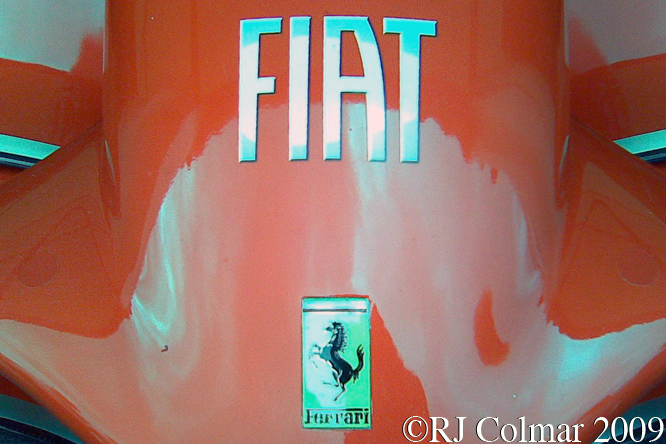
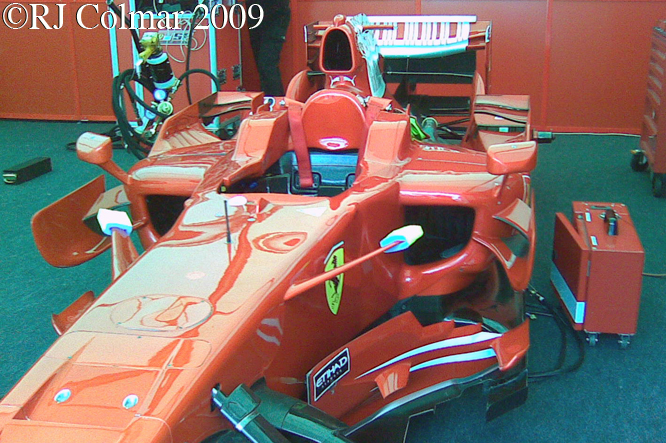
38.907 sec Champion – Ferrari F2008

After an acrimonious 2007 season in which a Ferrari employee had been caught passing sensitive Ferrari documents to a McLaren employee after the McLaren Employees wife was dobbed in by a photocopy shop the 2008 season was relatively calm. The big story of 2008 being the on track battle between sophomore sensation Lewis Hamilton driving for McLaren and Ferrari’s de facto number two driver Felipe Massa who unexpectedly stepped up to the plate while his team mate reigning Champion Kimi Räikönnen experienced a post championship slump that saw him get bought out of a very expensive contract by the seasons end.

Ferrari F2008, Goodwood Festival Of Speed

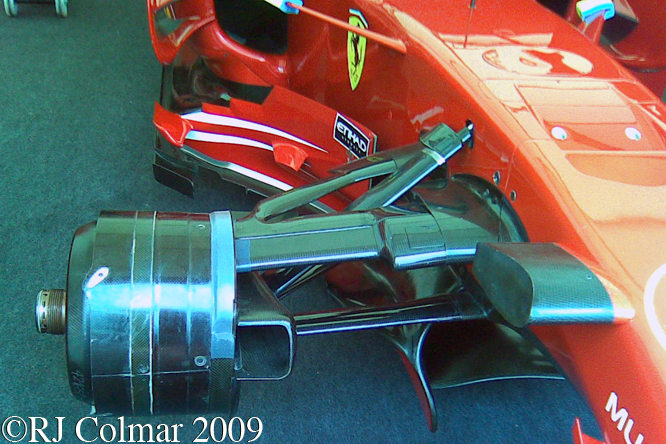
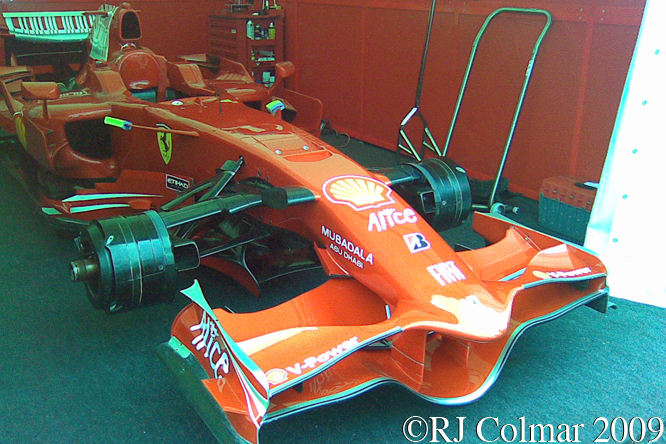
Designed by an international team that included Italians Mario Almondo and Aldo Costa, Frenchman Giles Simon and Greek Nicolas Tombazis the F2008 ran with a 2.4 litre 146 cui V8 motor that was restricted, by a newly mandated McLaren Electronic Control Unit (ECU), to a maximum of 19,000 revolutions per minute (rpm).

Ferrari F2008, Goodwood Festival Of Speed

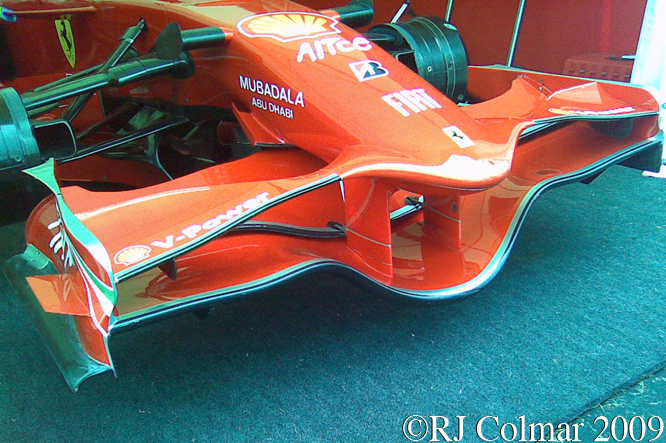
The curious front wing shape was partly a result of regulations demanding certain parts of the wing needing to be a minimum of 5 inches of the ground.

Ferrari F2008, Goodwood Festival Of Speed

This was the last season for which grooved tyres which had been mandated since 1998 to keep cornering speeds in check had been mandated. At the time Ferrari and one or two other well funded teams were running multiple wind tunnels simultaneously 24/7 to seek out the tiniest of aerodynamic advantages.

Ferrari F2008, Goodwood Festival Of Speed

Going into the Brazilian Grand Prix, last race of the season, Lewis Hamilton had five wins and led the championship with 94 points, while Felipe Massa had also scored 5 wins but only had 87 points due to his inferior placings, so there were multiple possibilities for Lewis to claim the championship but Felipe had to win with Hamilton finishing sixth or lower to claim the championship. Felipe started well by claiming his sixth pole position of the year, to Hamilton’s seven pole starts, and led the race which was delayed by rain and run in slippery conditions to cross the line first.

Ferrari F2008, Goodwood Festival Of Speed

Hamilton meanwhile had started from third on the grid was involved in a battle for 4th position with the Ferrari powered Torro Rosso of Sebastion Vettel going into the final pitstops, during which the dry shod Toyota of Timo Glock overtook the pair of them. Lewis and Sebastian both opted for intermediate tyres. Vettel was the first to catch and pass Glock to reclaim 4th place for good. Hamilton meanwhile only managed to pass Glock who’s dry tyres were struggling for grip on the damp track going into the very last corner of the very last lap to claim the necessary fifth spot crossing the finish line 38.907 secs behind Felipe Lewis relived the Ferrari driver of the World Drivers Championship title. Ferrai did however have the consolation of winning the Constructors World Championship for a record 16th time.

Thanks for joining me on this “38.907 sec Champion” edition of “Gettin’ a li’l psycho on tyres” I hope you will join me again tomorrow. Don’t forget to come back now !

Share

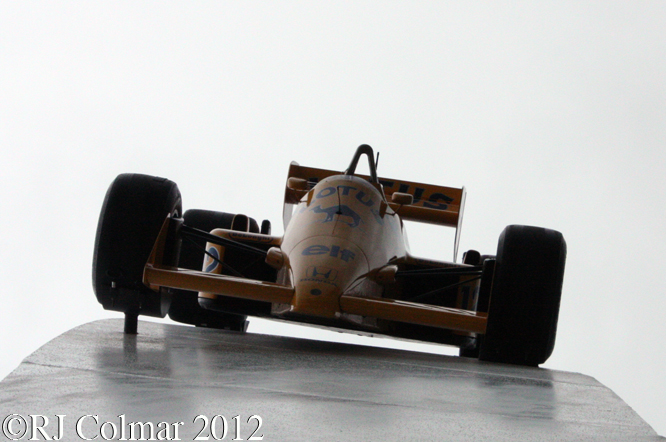
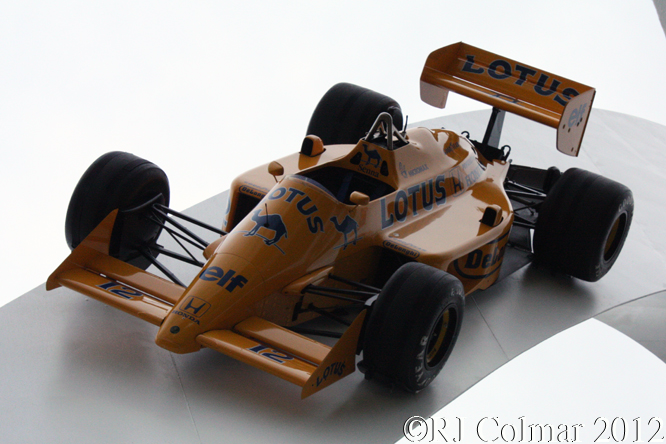
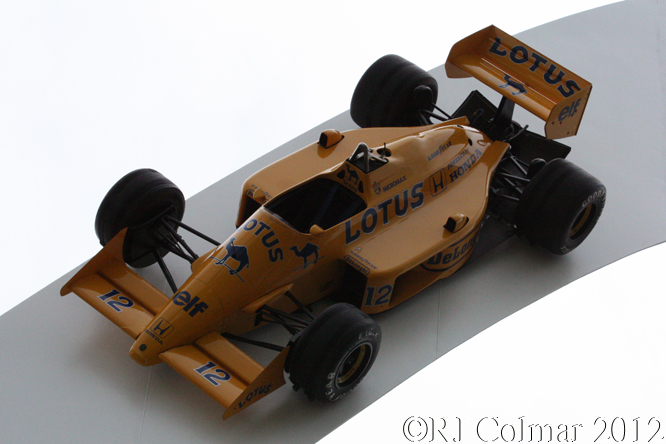
F687/S – Lotus Honda 99T

1987 brought about several changes for the Lotus team firstly their hitherto sponsor John Player Special withdrew from the sport and secondly their hitherto engine supplier Renault followed suit.

Fortunately for Lotus Williams, who had an exclusive contract with Honda for the supply of motors in 1986, let the 1986 World Drivers Championship slip away by allowing their drivers Nelson Piquet and Nigel Mansell to take points off one another by refusing to issue team orders or nominate one over the other as preferred winner. This did not go down well with Honda or their preferred driver Nelson Piquet.

Lotus Honda 99T, Goodwood Festival of Speed

As a consequence Honda came to an arrangement with Lotus to supply year old 1986 motors to Lotus for 1987 and at the same time did a deal with McLaren to supply top spec motors for the 1988 season with Ayrton Senna as their preferred driver. Meanwhile Senna was partnered by Saturo Nakajima in the Lotus team at the behest of Honda whom Honda had tried unsuccessfully to place at Williams in place of Mansell in 1986.

Furthermore Lotus managed to secure sponsorship from the new big spenders on the Formula One block Camel.

Lotus Honda 99T, Goodwood Festival of Speed

Despite being already down on power on the Williams team thanks to the year old motors being used, Gerard Ducarouge took the brave decision to use active suspension on the 99T which although offering advantages to consistent ride height, pitch and roll added 25kgs/55lbs in weight an required 5% of the motors power to keep it working.

Lotus Honda 99T, Goodwood Festival of Speed

By the end of 1987 Senna had won two races, just as he had in ’85 and ’86, both on street circuits at Monaco and Detroit. The Detroit race would prove to be the last victory for a car built by the Lotus team founded by Colin Chapman. With 57 points, two more than in ’86 Senna finished 3rd in the World Championship in 1987 while Nakajima’s additional 7 points helped Lotus secure third in the Constructors championship.

The 1987 season marked a high point for Team Lotus since the death of Colin Champman in 1982 and from there until 1994 when the team founded by Chapman made it’s final appearance in the sport.

Players in Japan and the United States of the Gran Turismo 3 game will be familiar with the Lotus Honda 99T which was given the alias “F687/S”.

Thanks for joining me on this “F687/S” edition of “Gettin’ a li’l psycho on tyres” I hope you will join me again tomorrow. Don’t forget to came back now !

Share

Built In Arden NC – Buick Regal Short Track Cup Car

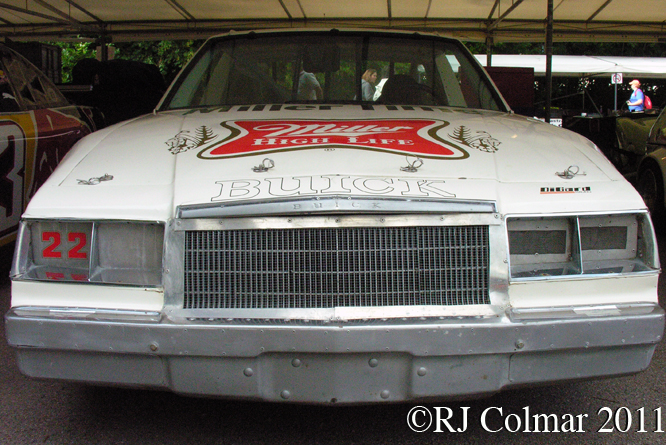
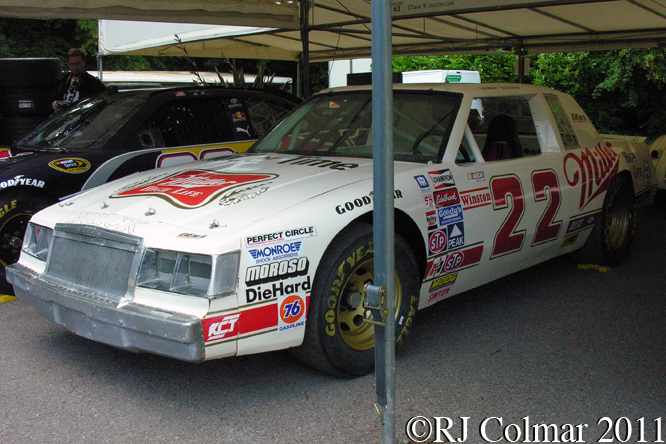
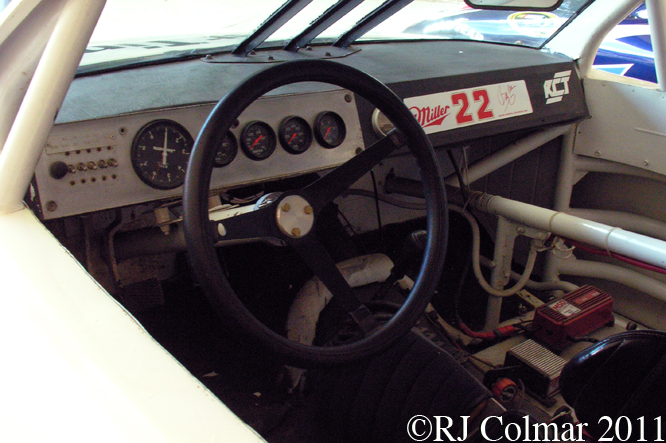
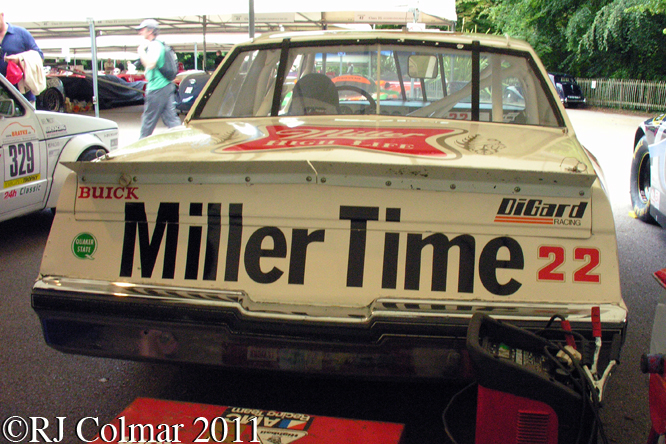
Last week on Americana Thursday I looked at a ’62 Buick Electra 225 that was supplied new by Deal in Asheville NC this weeks 1983 Buick Regal Short Track Cup car was built in the Asheville suburb of Arden NC by legendary stock car builder Edwin Keith “Banjo” Mathews.

Buick Regal, Goodwood Festival of Speed

Banjo Matthews originally from Akron Ohio turned building stock cars into an artform so successfully that from 1974 through 1985 cars built at his Banjo’s Performance Center won 262 to out 362 Winston Cup races a staggering 72 % success record which included sweeping the entire 30 race 1978 season.

Buick Regal, Goodwood Festival of Speed

As an owner Banjo Matthews won 9 races from a 160 starts which included three Firecracker 400 victories at Daytona with Fireball Roberts, AJ Foyt and Donny Allison but his forte was building successful cars he is quoted as saying “I get my kicks, and so do my employees, from how well cars that we have built perform and the satisfaction they bring to the customers. That’s all the recognition I care about.”

Buick Regal, Goodwood Festival of Speed

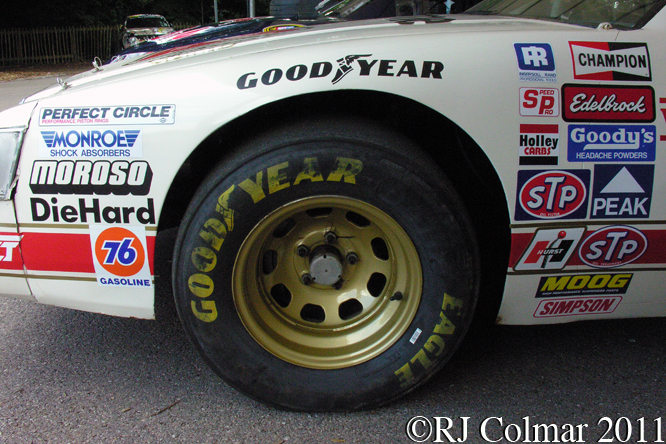
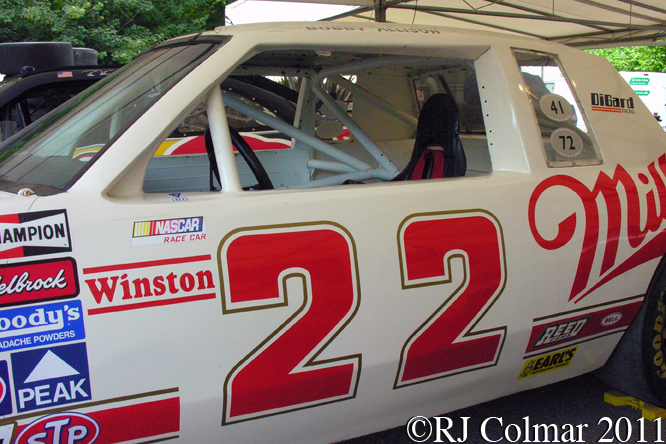
After establishing his business in 1970 Cale Yarbrough drove cars built by Banjo to three consecutive Cup Championships. The car seen today is a short track spec Cup car that Bobby Allison drove in his 1983 Championship winning season.

Buick Regal, Goodwood Festival of Speed

Bobby scored six wins that season including sweeping the Cup races at Richmond, and Dover along with a single win at Darlington and a long track win at Pocono on his way to beating Darrell Waltrip to the 1988 championship by 47 points.

Buick Regal, Goodwood Festival of Speed

Bobby Allison ran 718 Cup races from 1961 to 1988 when his career was cut short after a near fatal accident Pocono. Bobby Officially won 84 Cup race, two further wins unofficially remain disputed, placing him 4th equal in the all time winners list with Darrel Waltrip. Bobby had two sons Clifford who died while practicing for a Busch race at Michigan in 1992 and Davey who died in a helicopter crash at Talladega the following year. Sadly Bobby now aged 75, has no memory of beating his son Davey for his last Cup victory in the 1988 Daytona 500.

Buick Regal, Goodwood Festival of Speed

Banjo Matthews, who was himself an accomplished wheel man having raced flat head Fords without headers in order to get ten more horsepower and scored a career best 2nd at Atlanta from 50 Cup starts, is reckoned to have built over 750 race cars and looked after hundreds more which were raced in Cup, Limited Sportsman, Modified and IROC stock cars. His friend Smokey Yunnick referred to Banjo as the Henry Ford of racing cars and placed him in the top 25 influential founding fathers of the sport for his largely selfless contribution to the success of so many others.

Banjo succumbed to illness, possibly as a result of fume inhalation from those headerless flat head Fords, aged just 64 in October 1996, Banjo’s Performance Centre is now run by his son.

Thanks for joining me of this “Built In Arden NC” edition of “Gettin’ a li’l psycho on tyres” I hope you will join me again tomorrow. Don’t forget to come back now !

Share