Tag Archives: Festival of Speed

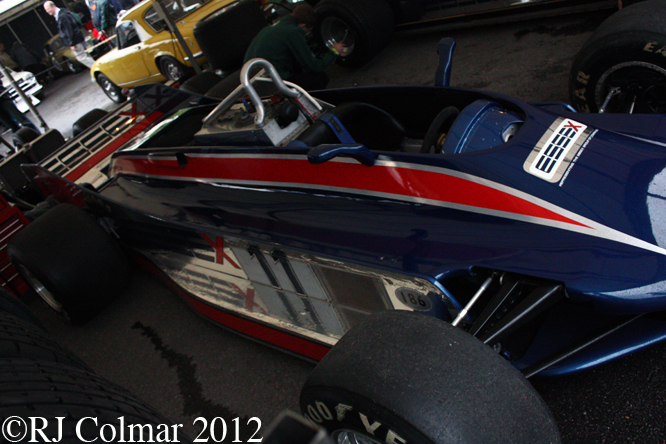
Active Suspension – Lotus Ford T92 92/5

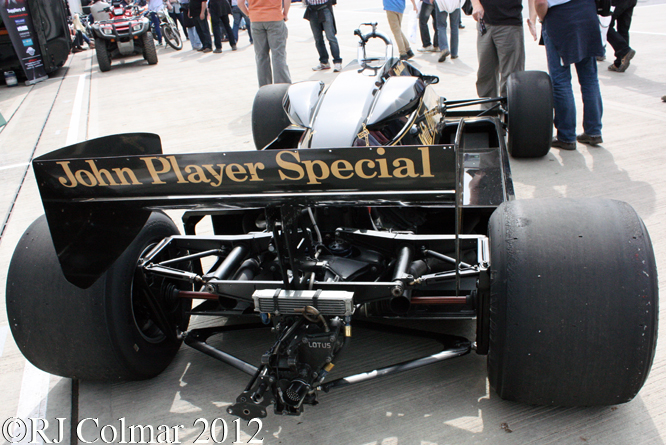
For 1983 the Formula One regulations changed mandating flat bottoms between the front and rear axles, the intention was to outlaw ground effects which Lotus had successfully pioneered with it’s Lotus 79 and less successfully with it’s Lotus 80, 86 and 88 models, all the other teams on the Grand Prix grid had followed the Lotus teams lead with the result that cars were driving around corners so fast they were making the tracks they were driven on obsolete in terms of safety.
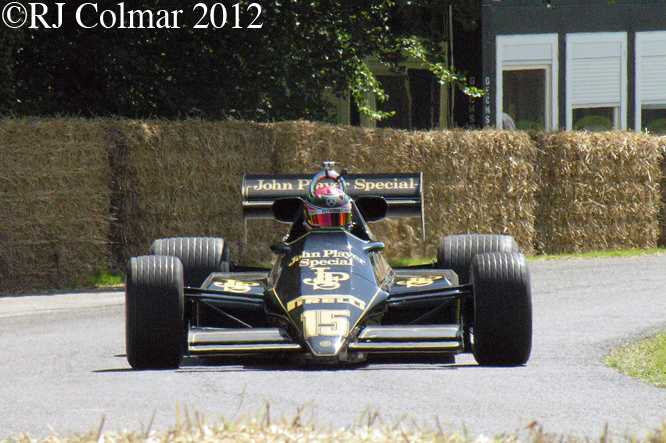
Lotus Ford 92, Goodwood FoS

Lotus managed to secure a supply of Renault Tubocharged V6 engines, for 1983, to replace the Ford Cosworth V8’s that the team had been using since the 1967 Dutch Grand Prix. These Renault motors were more powerful but also more fragile than the Cosworth’s, they were also in extremely short supply with Renault being able to supply only enough to keep Elio de Angelis on the grid for the first half of the 1983 season in a Lotus Renault Type 93T. Team mate Nigel Mansell had to make do with an interim the Ford Cosworth powered Lotus 92 featured today for the first half of 1983.
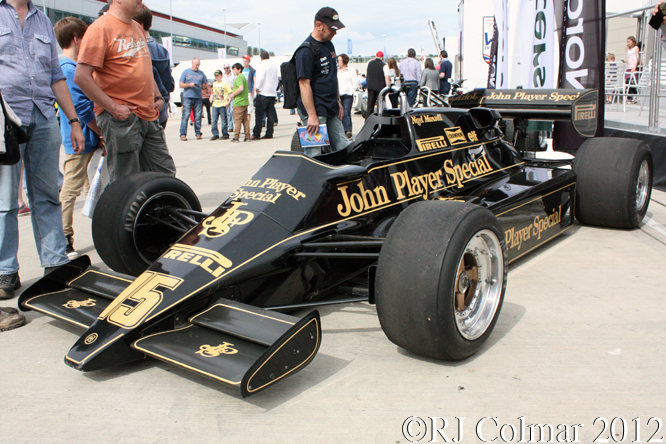
Lotus Ford 92, Silverstone Classic

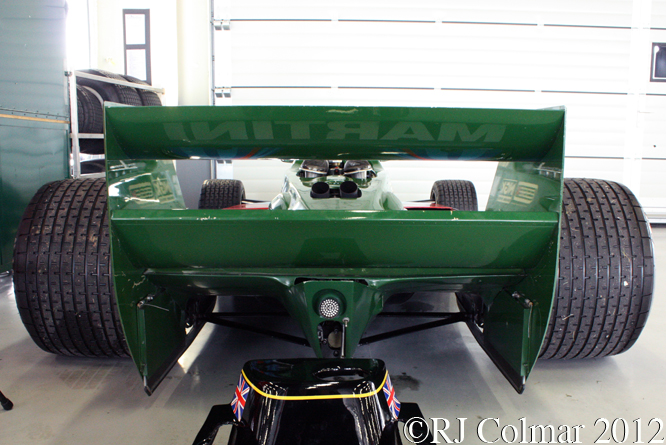
The Lotus Renault 92 was devised by Colin Chapman and Martin Ogilvie, however Colin Chapman died in December 1982 and so never saw the car completed, 2 Type 92’s were built using the chassis tubs of the previous Lotus Type 91 featured last week. As well as being the last Ford Cosworth DFV powered Lotus design the Lotus 92 was also the first Formula One car to be fitted with computer managed hydraulic ‘active’ suspension. Nigel Mansell tested the system but did not like it so the idea was shelved pending further development. In 1992 Nigel won his only world championship with Williams in an actively suspended car.
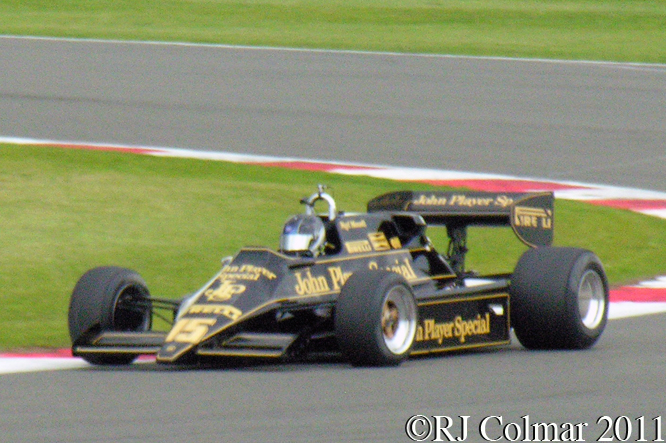
Lotus Ford 92, Silverstone Classic

Perhaps unsurprisingly without their energetic leader Lotus floundered in 1983 the Renault powered Lotus 93T recorded a best 9th place with Elio at the wheel and Nigel managed a best 6th place finish at the 1983 Detroit Grand Prix in the Cosworth powered Lotus 92. A decision was taken in June 1983 to employ the recently sacked ALFA Romeo designer Gerard Ducarouge to design a third all new car for 1983.
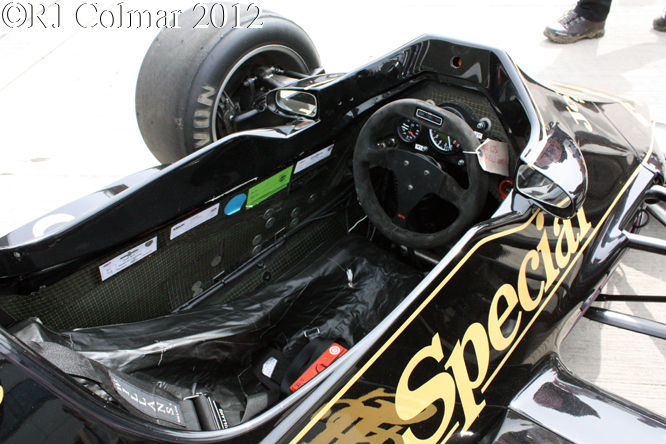
Lotus Ford 92, Silverstone Classic

In six weeks Ducarouge managed to design and deliver two new Lotus Renault T94’s and set in motion a return to winning ways for Team Lotus. The Lotus T92 recorded just 9 starts one for de Angelis in Brazil at the beginning of the season where he was disqualified for starting the race in the Cosworth powered car in which he had not set a qualifying time, after his Renault powered 93T broke down on the warm up lap and 8 starts for Mansell who along side his 6th place finish in Detroit recorded three 12th place finishes and four retirements, which was three more finishes than the Lotus Renault 93 T managed.
Lotus Ford 92, Silverstone Classic

The first photo show’s Mercedes Benz GP reserve driver Brendon Hartley at last years Goodwood Festival of Speed and the third show’s 92/5’s previous owner Kiwi Roger Wills at the wheel during the 2011 Silverstone Classic meeting.

My thanks to Roger for clarifying Brendon Hartley’s identity.

Thanks for joining me on this “Active Suspension” edition of “Gettin’ a li’l psycho on tyres”, I hope you will join me again tomorrow. Don’t forget to come back now !

Share

Pedro y Ricardo – Ferrari 250GT SWB Berlinetta Compitizione #3005GT

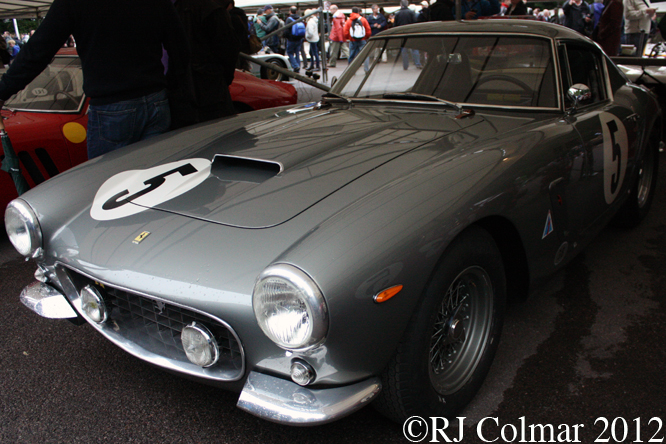
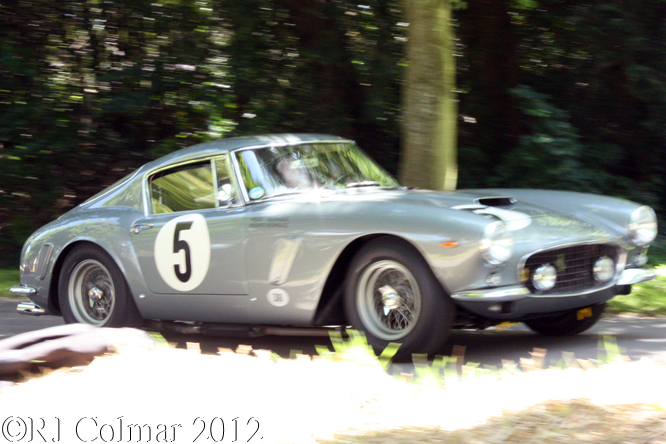
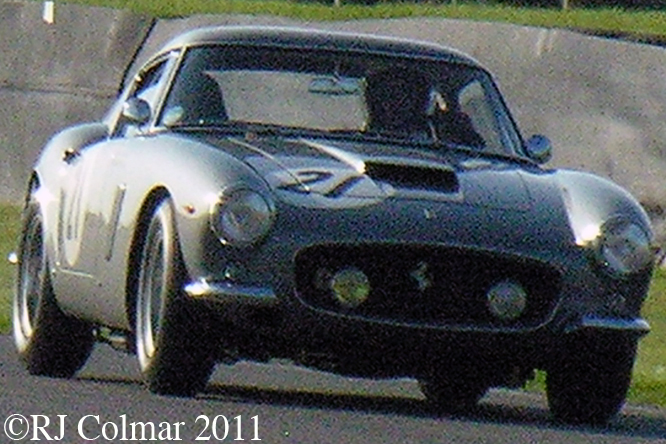
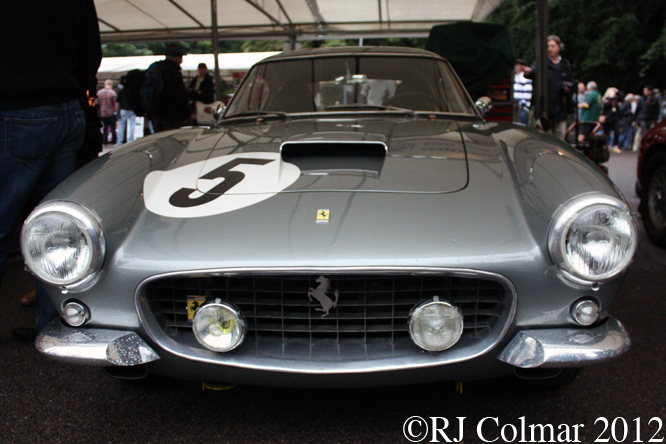
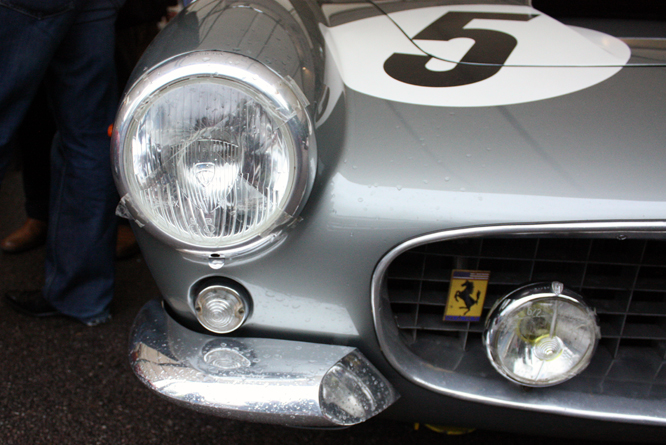
In 1961 Luigi Chinetti ordered today’s Ferrari 250GT SWB Berlinetta Compitizione chassis #3005GT and entered it in the Paris 1000kms race held at Montlhéry for the Mexican brothers Pedro and Ricardo Rodriguez to drive.

Ferrari 250 GT SWB Berlinetta Competizione, Goodwood Revival

The results of qualifying are not known however the result was an emphatic win for the Mexican’s by thirty seconds over the 250 GT SWB of Willy Mairesse and Lucien Bianchi, infact the first five cars to finish the race were all 250 GT SWB’s including chassis #2729GT driven by Pierre Dumas and Jo Schlesser which featured last weeks Ferrari Friday blog.

Ferrari 250 GT SWB Berlinetta Competizione, Goodwood Festival of Speed

Ricardo Rodriguez was also credited with fastest lap at Montlhéry, having impressed Enzo Ferrari a couple of weeks earlier at Monza with a front row qualifying spot Ricardo was given a works contract for 1962 and continued to impress despite being just 20 years old with a string of good results including a win in the 1962 Targa Florio sports car race where he co drove a Ferrari 246SP with Olivier Gendebien and Willy Mairesse. Tragically Ricardo was killed in practice of the 1962 non Championship Mexican Grand Prix driving a Lotus for Rob Walker after Ferrari had declined to enter the race.

Ferrari 250 GT SWB Berlinetta Competizione, Goodwood Festival of Speed

Older brother Pedro was equally talented particularly in the rain and behind the wheel of big sports cars like the Gulf Porsche 917, Pedro won two Grand Prix first in the 1967 South African GP where he drove a Cooper Maserati and the 1970 Belgian Grand Prix where he drove a BRM P153, recording a record average speed for any Grand Prix at the time of 149 mph. Like his brother Ricardo Pedro died at the wheel in 1971 at the Norisring where he drove a Ferrari 512M chassis #1008 that burst into flames after an accident.

Ferrari 250 GT SWB Berlinetta Competizione, Goodwood Festival of Speed

Today’s featured car meanwhile was sold to Doug Thiem for the 1962 season and he is known to have driven it in at least 14 further US sports car races winning outright at Erkhart Lake / Road America in September 1962.

Ferrari 250 GT SWB Berlinetta Competizione, Goodwood Festival of Speed

#3005 stayed in the US until 1980 when Italian Pietro Brigato acquired the car and entered it into classic events in Italy and Germany. In 2011 Lukas Hueni, acquired the car and can be seen at the wheel in the top photo at the 2011 Goodwood Revival and in the bottom photo at the 2012 Goodwood Festival of Speed.

Thanks for joining me on this “Pedro y Ricardo ” edition of “Gettin’ a li’l psycho on tyres” I hope you will join me again tomorrow. Don’t forget to come back now !

Share

Torrey Canyon – Lotus Ford T86

On March 18th 1967 Shipmaster Pastrengo Rugiati elected to take his charge the 974 ft Torrey Canyon carrying 120,000 tons of crude oil on a disastrous short cut between the Scilly Isles and the Cornish mainland on his way to Milford Haven and ended up causing the worlds largest ship wreck when the boat grounded on the Seven Stones Reef. As the consequent environmental disaster unfolded the ship was bombed sending it 98ft below and the oil spill was repeatedly bombed in a vain effort to keep the oil off the beached of England, France and surrounding islands.

In 1969 Peter Wright was working on the ground breaking BRM P142 which would have introduced aerodynamically induced ground effects to racing car design when John Surtees joined BRM and insisted on opting for a conservative approach and developing the existing BRM P138 and P139 chassis with which Big John scored a season best 3rd place driving the P 139 at the 1969 US Grand Prix before quitting BRM to start his own team.

Peter left BRM and some years later started work for Technocraft to develop a vacuum assisted resin injection composite process which was to be used for the manufacture of body shells for the Lotus Elite, Eclat and Esprit road cars and Colin Chapman’s boat companies.

After the failure of the Lotus 76 in 1975 Colin Chapman asked another ex BRM employee Tony Rudd, now group engineering director at Lotus, to re-think how a Formula One car might be made to make proper use of the front tyres.

Rudd drafted his former colleague Peter Wright in to run the wind tunnel “in his spare time” after his commitments at Technocraft. The fruit of this collaboration was the successful Lotus 78 and world championship winning Lotus 79.

Lotus Ford 86, Goodwood Festival of Speed

The team were not so lucky with the Lotus 80, from which they took a step back with the Lotus 81 before regrouping with their next innovation the twin chassis Lotus 86 seen here.

What Peter had found out was that the Lotus 80 and to a lesser extent the Lotus 81 were suffering from aero flutter causing the cars to porpoise as a result of having springs that were too soft for the aerodynamic loads being put through the wheels and suspension.

By having a twin chassis Peter hoped to use a conventional monocoque chassis in which the driver sat and a separate independently sprung ground effect chassis attached to the first at the outboard ends of the lower suspension. The suspension for the outer ground effect chassis was much stiffer than for the inner monocoque chassis and as a result in theory should not be quite so sensitive to flutter or likely to porpoise.

In order for the car to work not only would the science have to be proven but the rule book scrutinised to ensure the car remained legal. By having the outer ground effect chassis suspended from the bottom suspension links using very stiff rubber bump stops the criteria for having all parts of the car with an aerodynamic influence entirely sprung, was met.

To check the science the team took a 1980 Lotus 81 added a spacer between the engine and the fuel tank through which the central cross member of the outer chassis would pass, made provision for the front cross member of the outer chassis to pass under the driver legs and had had the third rear cross member of the outer chassis pass over the gearbox.

The weight of the outer chassis was kept low using the in house developed carbon fibre process that Peter had been developing for the Lotus road cars and Champman’s boats.

Lotus Ford 86, Goodwood Festival of Speed

Amid much secrecy the Lotus 86 was built and then taken to Jarama for a private test, thanks to the motors heavily revised oil pumps, that were required by the second chassis, a lot of oil was spilled, hence the Torrey Canyon nick name for the car.

Once the leaks had been fixed the Lotus 86 proved that the aerodynamic outer chassis worked providing plenty of down force while the inner monocoque chassis, in which the driver sat, remained free of the porpoising effect that made the car difficult to control.

Upon completion of the test the Lotus 86 which was never subsequently raced was put aside and work started on the Lotus 88 using the same principles.

Thanks for joining me on this “Torry Canyon” edition of “Gettin’ a li’l psycho on tyres” I hope you will join me again tomorrow for a look at an old Rolls Royce. Don’t forget to come back now !

Share

Hydro-pneumatic Independent Suspension – Hispano Suiza H6C Xenia

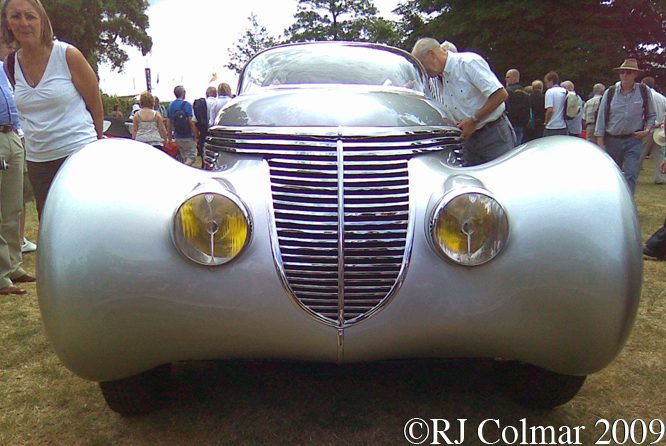
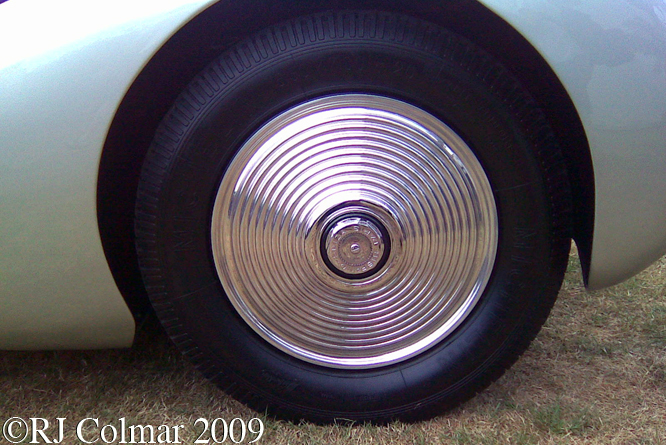
This unique 1938 Hispano-Suiza H6C Xenia is powered by a six cylinder 8 litre / 488 cui 160 hp engine.

Hispano Suiza H6C Xenia, Goodwood Festival of Speed

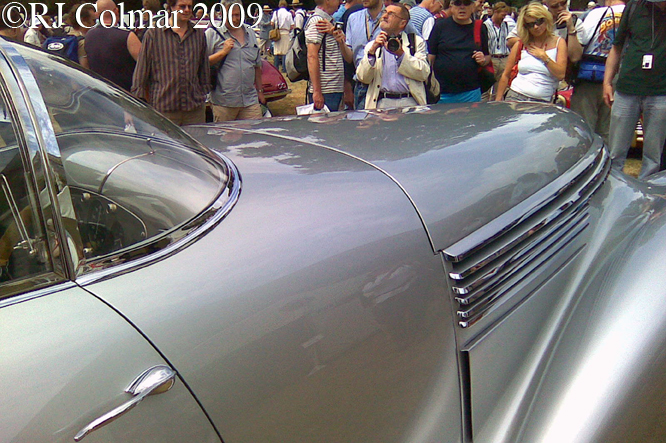
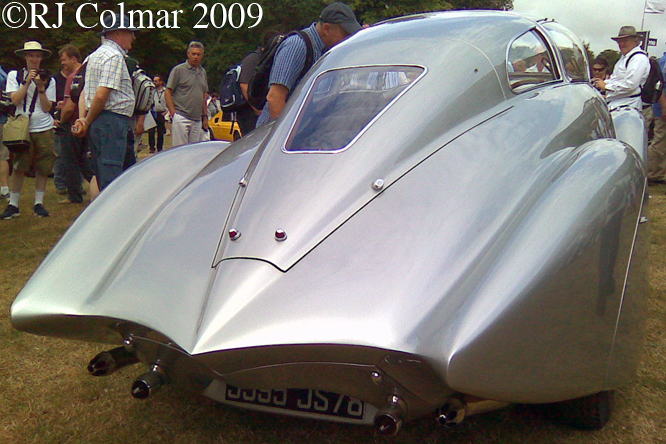
Styling was by aerodynamicist Jean Andreau and crafted by Saoutchick on a modified Hispano – Suiza H6B chassis.

Hispano Suiza H6C Xenia, Goodwood Festival of Speed

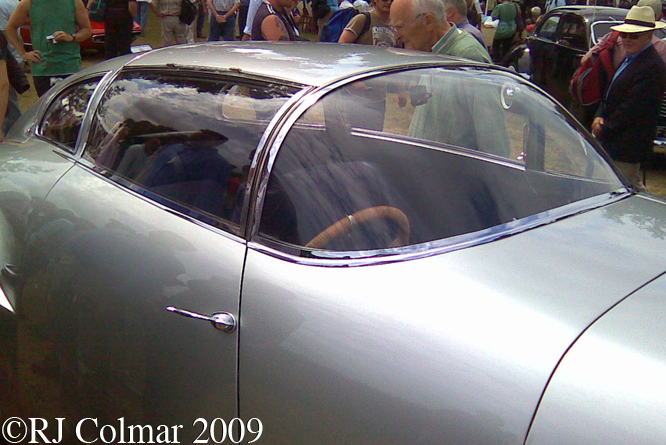
The doors open in parallel with the coachwork in much the same way as the rear side door of a VW Microbus.

Hispano Suiza H6C Xenia, Goodwood Festival of Speed

Xenia was commissioned by Andre Dubonnet to showcase his company’s latest patent hydro-pneumatic independent suspension which was subsequently used under license by General Motors, Alfa Romeo and Fiat amongst others.

Hispano Suiza H6C Xenia, Goodwood Festival of Speed

The vehicle features a Hispano – Suiza power assisted brake system which was one of several patented Hispano – Suiza features used under license by Rolls Royce.

Hispano Suiza H6C Xenia, Goodwood Festival of Speed

This car was named after Andre Dubonnet’s wife Xenia, allegedley the was kept hidden for the duration of WW2 in the Saint Cloud road tunnel.

Thanks for joining me on this “Hydro-pneumatic Independent Suspension” of ‘Gettin’ a li’l psycho on tyres”, I hope you will join me again tomorrow. Don’t forget to come back now !
Share

Definetly Not The Right One – Lotus Ford 80 #R1

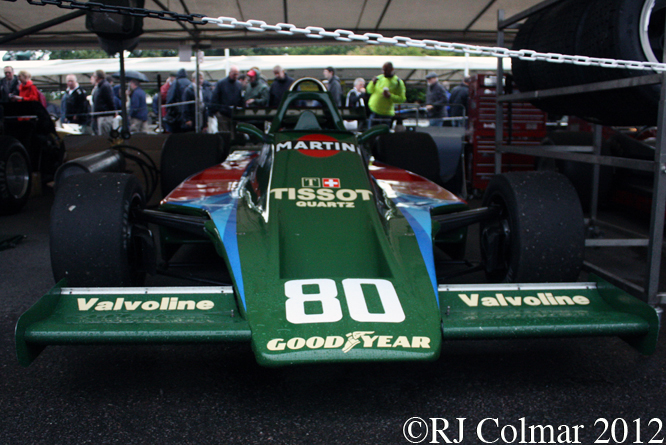
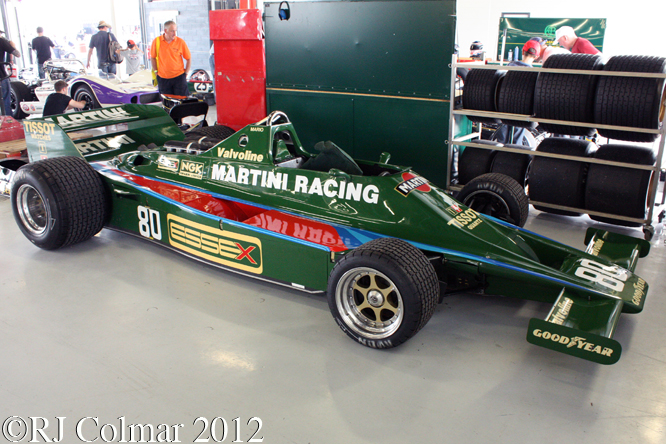
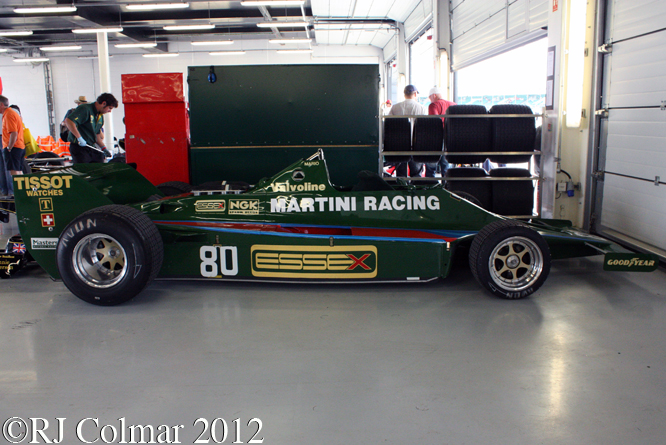
Colin Chapman described the Lotus Ford 80 at it’s launch in the Kentagon at Brands Hatch in 1979 as the best looking Lotus he had ever built. Reigning World Champion Mario Andretti said it would make the Lotus Ford 79 with which he won the 1978 World Championship look like a London Bus.

Lotus Ford 80, Goodwood Festival of Speed

Unfortunately the car with the revolutionary venturi under the nose and a second under the rest of the body and with out the usual wings front and rear proved to be a bit of a handful with unpredictable handling once it started running on the track and it was only a matter of time before Colin Chapman and his engineers were removing the skirts that sealed the airflow beneath the nose and fitting conventional front wings to aid the aerodynamic poise and balance of the car.

Lotus Ford 80, Silverstone Classic

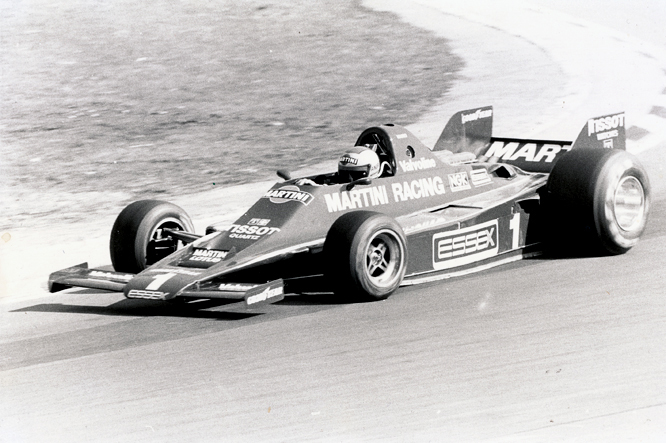
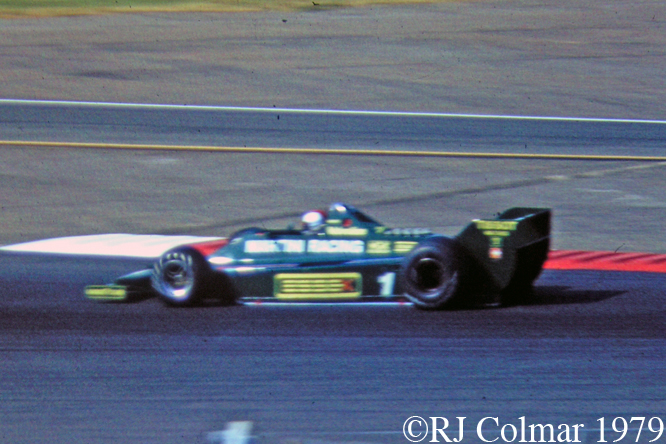
The whole point of the design was to make the Lotus 80 faster down the straights than the Lotus 79 by not having any wings fitted at all. However all was not lost at Brands Hatch, as seen in Sven Platts photo below, the car was only used as a spare, but in the next race the Spanish Grand Prix Mario Andretti qualified a respectable forth behind the two hitherto dominant Ligiers that were the most effective copies of the previous seasons Lotus 79 and the more powerful Ferrari 312 T4 of Gilles Villeneuve.

Lotus Ford 80, Race of Chapions, Brands Hatch

Patrick Depaillier won the Spanish Grand Prix in his Ligier from Carlos Reutemann, in the Lotus Teams older Lotus 79, who finished ahead of Mario in the Lotus 80. The Spanish Grand Prix turned out to be the highlight of the Lotus 80’s short life, at Monaco Mario could only qualify 13th and at the French GP where a heavily revised second Lotus 80 was tested Mario qualified 12th but he retired with suspension and brake issues from each of these races respectively.

Lotus Ford 80, Silverstone Classic

The final appearance of the Lotus 80 was at the British Grand Prix at Silvestone where I took the photograph below. Mario practised in the car but decided he was better off with his year old Lotus 79 which by now was swamped by new designs which emulated it and the more powerful, ultimately 1979 championship winning, Ferrari T4s.

Lotus Ford 80, British Grand Prix, Silverstone

I believe these photographs all show the same chassis namely Lotus Ford 80 R1 which today appears to be owned by Manfredo Rossi a member of the Martini Rossi family that sponsored team Lotus in 1979.

Lotus Ford 80, Silverstone Classic

Thanks for joining me on this “Definitely Not The Right One” edition of ‘Gettin’ a li’l psycho on tyres’ I hope you will join me again tomorrow. Don’t forget to come back now !

Share

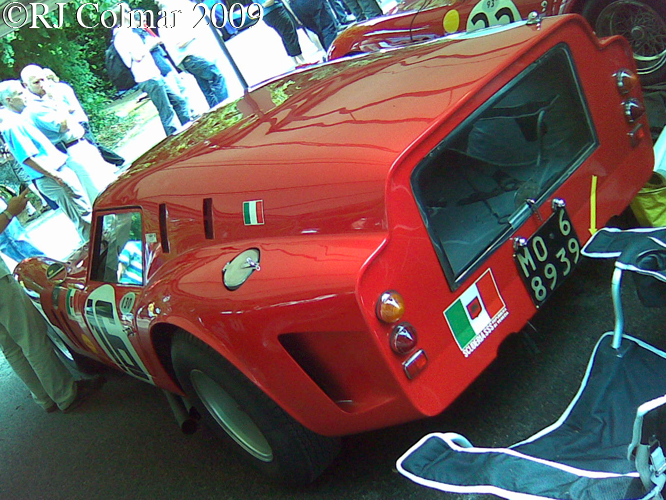
The Breadvan – Ferrari 250 GT SWB #2819

Today’s unique vehicle came to be built after Count Giovanni Volpi di Misurata fell out with Enzo Ferrari for financing a rival Formula One team ATS which employed ex Ferrari personnel Carlo Chiti, Giotto Bizzarrini and World Champion driver the American Phil Hill.

#2819 started life as a regular Ferrari 250 GT SWB and was entered in the 1961 Tour de France by Ecurie Francochamps for Olivier Gendebien and Lucien Bianchi who finished 2nd. The car was then acquired by Count Giovanni Volpi di Misurata who’s Scuderia Serenissima di Venezia entered the 1961 Paris 1000 kms for Maurice Trintignant and Nino Vaccarella who finished 3rd.

Ferrari 250 GT SWB, Goodwood Festival Of Speed

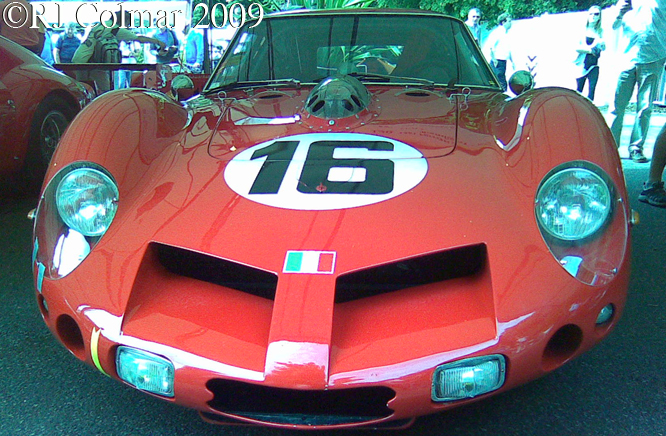
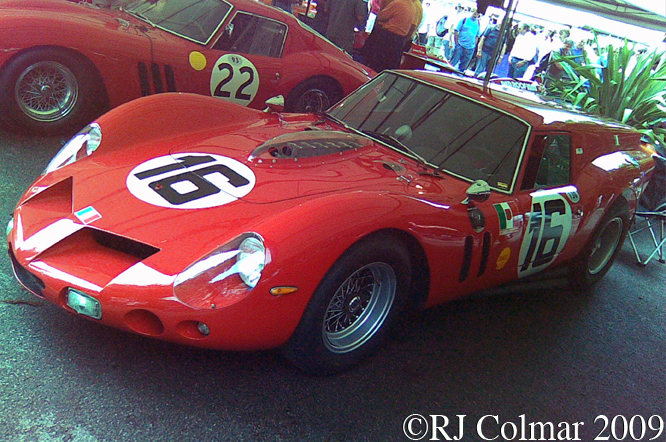
Wanting a third vehicle to enter in his Le Mans team which included one 250 GTO, #3445 and a Ferrari TR/61, #0792TR which won at Sebring, but unable to secure a second 250 GTO from Ferrari, Count Volpi di Misurata had his 1961 250 GT SWB upgraded to 250 GTO spec by the very man responsible for conceiving the original 250 GT SWB and 250 GTO series Giotto Bizzarrini.

Allegedly in just 14 days Giotto Bizzarrini & Piero Drogo modified Count di Misurata’s 250 GT SWB by moving the dry sumped engine back 5 inches behind the front axle so that it could be mounted lower in the chassis. Piero Drogo came up with a staggeringly beautiful body with a cut off ‘Kamm’ tail which led to the name Breadvan. The finished car was 143 lbs lighter than the 250 GTO and 7 mph faster on the 4 mile Mulsanne straight at Le Mans.

Ferrari 250 GT SWB, Goodwood Festival Of Speed

The body of the 250 GT SWB Breadvan is so low that a plastic bubble was devised for the hood to cover the six Webber carburettors. The 276 horse power 2953 cc / 180 cui V12 engine weighed nearly half that of the contemporary XK straight six used by Jaguar in it’s D & E Type racers.

#2819 driven by Carlo Maria Abate and Colin Davis was leading the works 250 GTO’s in the 1962 Le Mans 24 Hours when it retired after four hours with drive shaft failure. After a 4th place finish at Brands Hatch for Abate, and 3rd place in Paris for Ludovico Scarfiotti and Davis the ‘Breadvan’ was used by Count di Misurata as a road car.

Ferrari 250 GT SWB, Goodwood Festival Of Speed

The original SWB body from #2819 was fitted to chassis #2439 by Scaglietti in 1962 after Gunnar Anderson had a couple of accidents at Falkenberg and Västkustloppet in Scandinavia.

Apparently Count Volpi di Misurata lent The Breadvan to Gianni Agnelli, then head of FIAT, who had the vehicle painted black by his butler because it reminded him of a hearse, it is not noted if this had anything to do with then delicate state of Ferrari finances at the time, the Ferrari road car division was eventually absorbed by FIAT in 1969.

Thanks for joining me on this “The Breadvan Edition” of “Gettin’ a li’l psycho on tyres” I hope you will join me again tomorrow when I’ll be looking at Colin Chapmans 1968 turbo charged all wheel drive Indy challenger. Don’t forget to come back now !

Share

Class But No Championships – Ferrari 312P #0872

For 1968 a new championship was announced for 3 litre / 183 cui prototype sports cars called Championnat Internationale des Marques. A lack of entries for the series led to a late change in the rules which extended the life of the Ford GT40 and Lola T70 for four years and inadvertently gave Ferrari and Porsche a window in which to build the 512S and 917 models respectively.

Ferrari 312P, Goodwood Festival of Speed

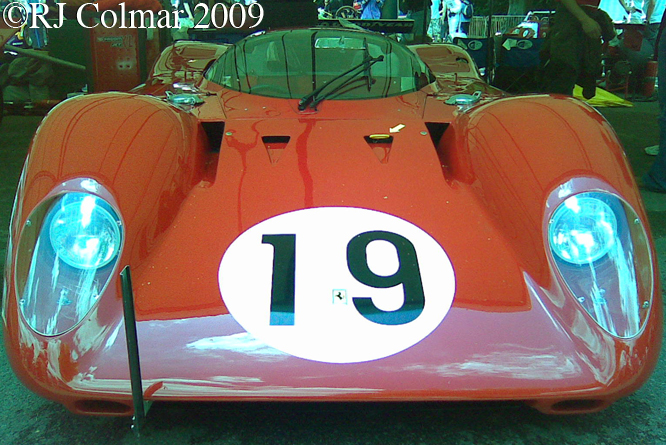
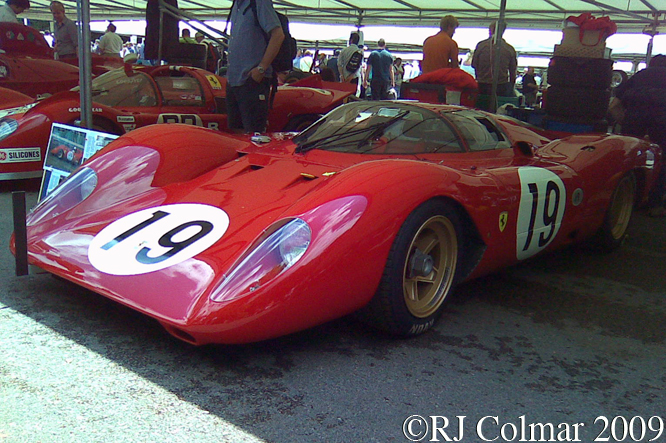
For 1969 Ferrari built it’s first 3 litre / 183 cui prototypes using detuned V12 engines from it’s Formula One programme. In all three 312P’s were built by the factory two open top Spyders and the closed top Berlinetta chassis #0872 featured today.

Although the 312P’s are not remembered as being a match for the Porsche 908’s that ran in the same class they did take several class wins when they finished. #0872 won it’s class at Daytona in 1970, 4th overall, driven by Mike Parkes and Sam Posey, and again at Sebring driven by Parkes and Chuck Parsons who replaced Posey.

In 1971 #0872 appeared with Spyder bodywork and Luigi Chinetti and Garcia Veiga took another class victory at Daytona in the 24 hour marathon.

Ferrari 312P, Goodwood Festival of Speed

When #0872 was first raced by Chris Amon and Peter Schetty at Le Mans in 1969 carrying the #19 the car was a last minuet substitute for chassis #0868, which had crashed a couple of weeks earlier at Monza, and was raced with the #0868 identity due to the difficulty in getting the correct international travel documents for #0872 ready in time.

Chris Amon hit a fuel tank from the fatally disintegrated Porsche 917 of John Woolfe on the opening lap, causing #0872 to catch fire and it’s subsequent retirement without injury to the New Zealander.

Ferrari 312P, Goodwood Festival of Speed

In the spring of 1971 #0872 was dismantled, the engine, transmission, suspension and steering were subsequently fitted to a brand new chassis known as the Chinetti Special / Flying Shingle, a car which did not finish at Daytona in 1972 and manged 9th overall 6th in class at Le Mans in 1974 driven by Jean-Claude Andruet and Teodoro Zeccoli.

In 1980/81 all the parts of #0872 were reunited along with it’s original Berlinetta body, and the Flying Shingle has been reconstructed without any of the original parts from #0872.

Thanks for joining me on this “Class But No Championships” edition of “Gettin’ a li’l psycho on tyres”, I hope you will join me again tomorrow. Don’t forget to come back now !
Share