Tag Archives: GALPOT

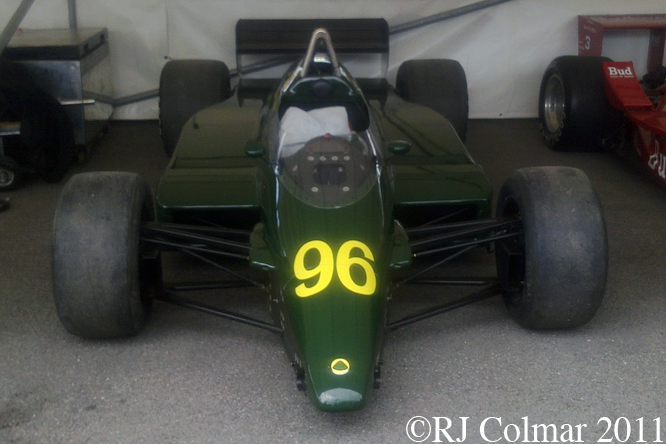
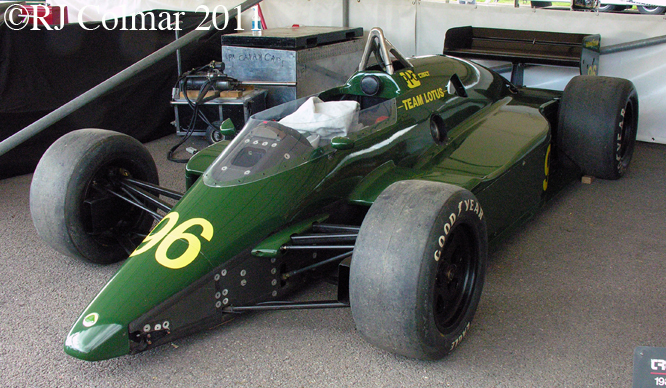
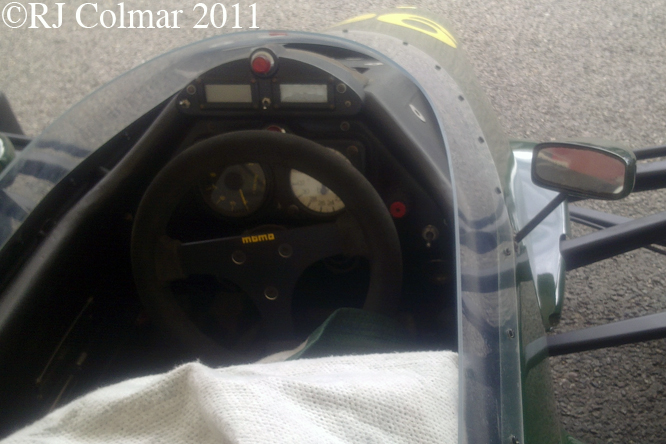
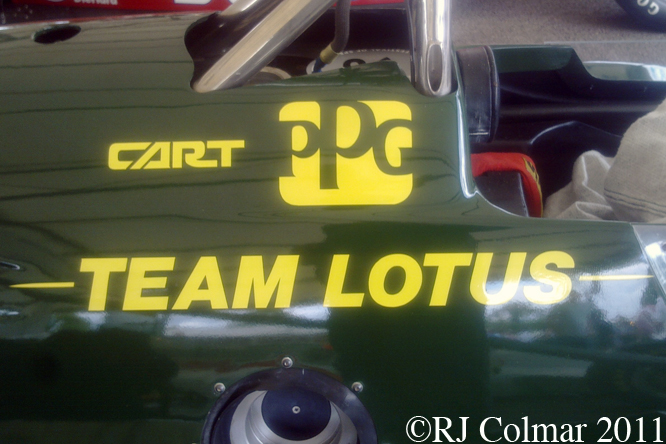
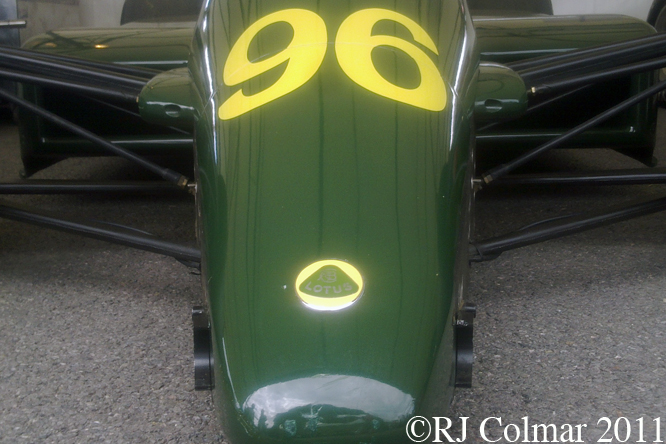
Still Born Beauty – Lotus Cosworth 96T

Trained as a criminologist Roy Winklemann found employment as an investigator for the US Airforce before being employed by ‘the company’, assummed to be the CIA. During this time Roy had occasional outings as a driver in sportscars before setting up a team to run Dan Collins in a Chevrolet Corvette in Europe.

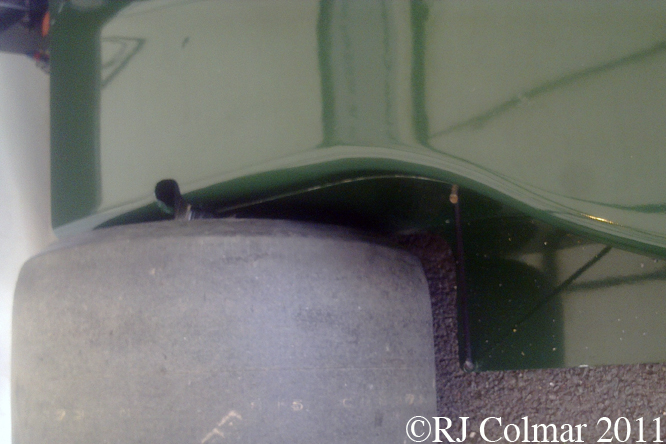
Lotus Cosworth 96T, Goodwood FoS

While founding a number of security related businesses Roy went on to run a variety of vehicles in Europe’s lower open wheel formula which culminated in him entering Jochen Rindt in a Formula 2 Brabham a combination which over 20 races dominating the formula in 1967 and 1968.

Lotus Cosworth 96T, Goodwood FoS

After his success with Jochen Rindt Roy Winkelmann disappeared from the racing scene through the 1970’s while he built up his diverse security empire, only to reappear in the US with a proposed Indy Car programme in the mid 1980’s. The plan was to compete with the unfair advantages of a works car and works motor rather than the customer route taken by almost all the teams except Penske, who made their cars available to customers.

Lotus Cosworth 96T, Goodwood FoS

Roy chose to hook up with his erstwhile partner Lotus and received assurances from Cosworth for a supply of works backed motors. The new car the 96T was built using current Formula One technology in the form of a carbon fiber monocoque, something that had yet to make an appearance at Indy, and rising star Al Unser Jr was signed up to drive the car for the 1985 season.

Lotus Cosworth 96T, Goodwood FoS

Under the direction of Gérard Ducarouge, Gene Varnier and Martin Ogilvy designed the Lotus 96T along similar lines to the Formula One Lotus Renault 97 T with which Ayrton Senna would win his first two Grand Prix in 1985.

Lotus Cosworth 96T, Goodwood FoS

However that is pretty much where the story ends because following the announcement, fearful of how a carbon fiber chassis would react to a secondary impact, USAC, organisers of Indy 500 moved to have carbon fiber banned from competition.

Lotus Cosworth 96T, Goodwood FoS

With rumours of the possible ban sponsors became impossible to sign up and the project came to a standstill without so much as the motor being fired up in the workshop.

Al Unser Jnr signed up late to join Doug Shierson for the 1985 and no more was heard from Winkelmann or the Lotus Cosworth 96T. The car, along with the Ferrari 637 among the most beautiful cars never to have been raced is seen here at last years Goodwood Festival of Speed.

Thanks for joining me on this “Still Born Beauty” edition of “Gettin’ a li’l psycho on tyres” I hope you will join me again tomorrow for a feature on the 1962 Indianapolis 500. Don’t forget to come back now !

Share

Early Doors – Ferrari 250 GT SWB Berlinetta #2025GT

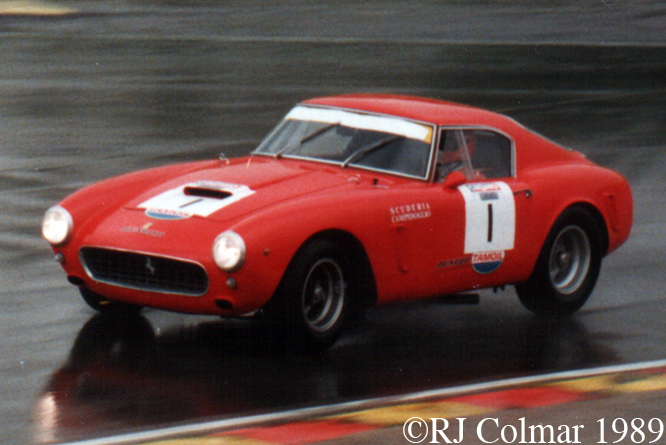
I’m not sure exactly how many dozens of race meetings I attended between 1985 and 1992, certainly dozens, but curiously I only took one photograph of a Ferrari on track, of the 250 GT SWB Berlinetta coming round Surtees bend at Brands Hatchs seen below.

Ferrari 250 GT SWB Berlinetta, Brands Hatch

The prototype 250 GT SWB Berlinetta was first show to the public at the 1959 Paris Auto Show, sans front wing/fender cooling ducts, vents, indicators and recessed number plate holder on the boot / trunk.

Sergio Pininfarina is said to have referred to the 250 GT SWB Berlinetta as “the first of out three quantum leaps in design with Ferrari.” The bodies were manufactured by Scaglietti where like true craftsmen employees typically worked without drawings.

Power was provided by the latest 250 – 280 hp 168B Colombo 60º V12 which can be identified by additional cylinder head studs. The 250 GT SWB Berlinetta was the first Ferrari model to be offered with disc brakes.

167 Ferrari 250 GT SWB Berlintta’s were built between 1959 and 1963 originally with aluminium bodies “Competizione” bodies and later with steel “Lusso” bodies, some steel shelled cars are also known to have been delivered with Competizione features just to keep things interesting for historians.

Stirling Moss is credited with scoring the SWB’s first significant overall win driving Rob Walkers distinctive blue car with a white nose band in the non Championship 1960 Tourist Trophy. The following year the GT SWB Berlinetta won the GT Class of the Constructors Championship for Ferrari.

Identifying the #1 car above has proved to be another fascinating adventure, At The Nostalgia Forum Peter Stenning recognised this as a Scuderia Campidoglio vehicle driven by Fabrizio Violati and Tim Murray came up with the 1989 FIA GT Championship as the event held at Brands Hatch.

It was suggested at FerrariChat that the #1 was chassis #2021GT, but that car is credited as having been driven to victory, in the same race as seen here, as the #2 with Lindsay Owen-Jones at the wheel.

The #1 and #2 cars looked more or less identical in the race, however during practice the #1 carried a white band across the yellow sunstrip and more importantly the #1 features the original door type with a bent top rail that was straightened on some of the later cars. This eliminated #2021 and another 250 GT SWB #2443GT which had also passed through Fabrizio Violati’s hands.

Finally I managed to pin down the identity of the early door 250 GT SWB Berlinetta in my photograph as most likely to be #2025

#2025 was originally purchased by Edoerdo Lualdi in 1960 who won several class victories on the Italian Hillclimbing circuit in 1960 and 1961, in mid 1961 Luciano Conti acquired the car and continued its successful career on the Italian Hills until the end of 1961.

The following year turned up badly wrecked in Sicily and it’s motor was removed and sold to some one in the USA to be replaced by a motor from a 250 GT Lusso.

Fabrizio Violati acquired the #2025 in 1976 and so far as I know the car is in the Maranello Rosso Museum, founded like Ferrari Club Italia by Violati with the cooperation of Enzo Ferrari.

Violati came to prominence after being photographed jumping 12 barrels with a Vespa Scooter aged 16. After a racing car accident put him in hospital for six months, Fabrizio’s family put a stop to his racing exploits in 1959. He purchased a Ferrari 250 GTO while on honeymoon in Monaco in 1965. Fabrizio has the record for continuous ownership of a 250 GTO.

While mounting an unsuccessful attempt on the 1975 Admirals Cup yacht race Fabrizio started collecting cars including three different 250 GT SWB Berlinetta’s and eventually started competing in historic events with them.

In 1984 he was summoned by Enzo Ferrari to start Ferrari Club Italia and given permission to use the Maranello Rosso name for his collection of cars in San Marino.

Fabrizio who was crowned 1985 European FIA Historic Champion, passed away aged 74 in 2010.

My thanks to Peter Stenning, Tim Murray, Terra and Daytonasme for their help in tracking the identity of today’s featured car.

Thanks for joining me on this ‘Early Doors’ edition of “Gettin’ a li’l psycho on tyres’ I hope you will join me again tomorrow when I’ll be featuring the still born Lotus Indy Car. Don’t forget to come back now !

PS subsequent to my original post the story behind the fate of the original #2025GT motor with photographic evidence has come to light at FerrariChat, turns out the original motor for the car featured today now sits in another 250GT SWB Berlinetta Competizione chassis #1953, for more details see this link.

Share

Aerodramatically Different – Avanti by Studebaker

Thirty seven days after becoming President of Studebaker Sherwood Egbert stepped of a flight from Chicago with some doodles, drawn in flight, for a vehicle that was to be marketed as America’s most advanced automobile and handed them to Raymond Lowery and his team and sent them to Palm Springs for 40 days where they were to turn the doodles into a design featuring a fiberglass body mounted on a 109″ Studebaker Lark Convertible chassis.

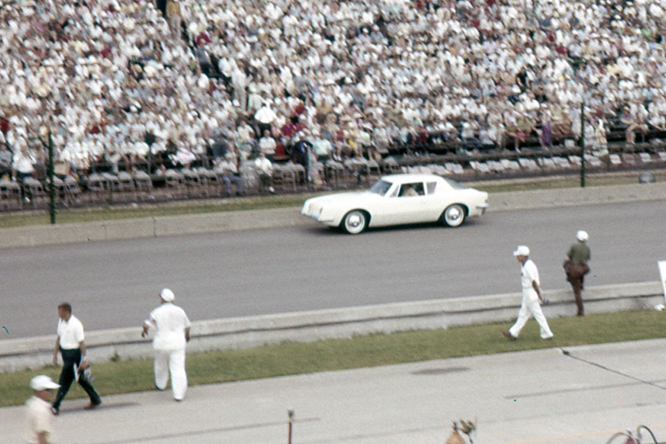
The finalised design was launched in New York on the 28th of April 1962 and one would be sent to the Indy 500 the following month to act as Honorary Pace Car alongside a fleet of Studebaker Sky Lark Convertible Official Pace Cars.

Studebaker Avanti, Indianapolis

According to the period Avanti promotional film linked here, the “Aerodramatically Different” automobile feature a Jet Thrust V8 engine, available with a Paxton supercharger, coupled to a Power Shift automatic transmission that put ‘traction at the point of action’ and for the first time on an American production model front disc brakes to bring this symbol of elegance to a safe rest.

The Avanti was in fact powered by an uprated 240 hp 4.7 litre / 289 cui Hawk V8, production of the elegant fiberglass body was outsourced to Molded Fibreglass Body Co who had been responsible for manufacturing the first Chevrolet Corvette bodies in 1953.

Studebaker Avanti, Indianapolis

Sherwood Egbert hoped to manufacture and sell 20,000 Avanti’s in the first year however despite plenty of interest in the new car Molded Fibreglass Body Co had problems manufacturing the bodies and only 1,200 Avanti’s were built causing orders to be cancelled.

Studebaker closed down completely in December 1963 with around 1,600 Avanti’s sold and 2500 in the dealer supply chain. The story of the Avanti did not end there. A succession of entrepreneurs managed to build further models up until 2006, using initially the original stock of parts, then switching to first GM and then Ford floor pans and running gear. For a while a short while 4 door model was in production but the very last, built in Mexico, was a one off powered by a Roush Racing V6.

Ed Arnaudin’s photo’s show the Avanti being driven around Indy on race day, top, and during one of the qualifying days bottom, this car was part of race winner Roger Wards prize package making him the first person to become a private owner of an Avanti.

My thanks to Ed’s son Steve for scanning and sending his Dad’s photo’s.

Thanks for joining me on this ‘Aerodramatically Different’ edition of “Gettin’ a li’l psycho on tyres’ I hope you will join me again tomorrow for Ferrari Friday. Don’t forget to come back now !

Share

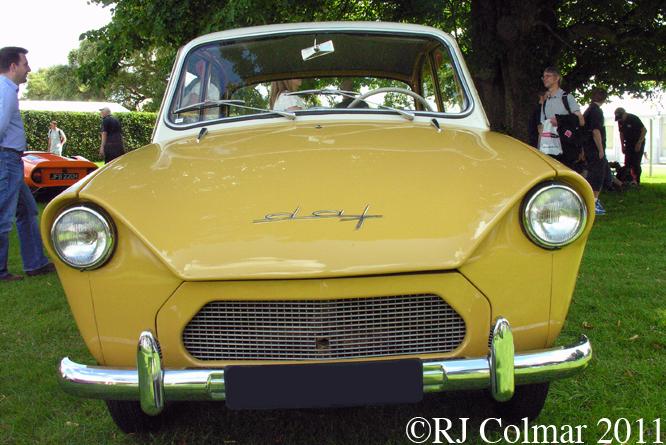
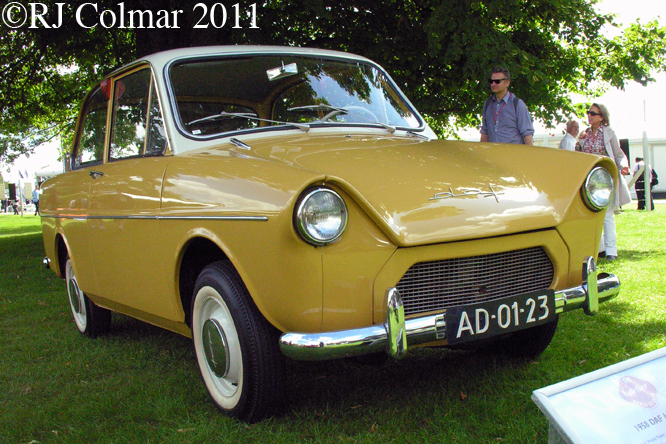
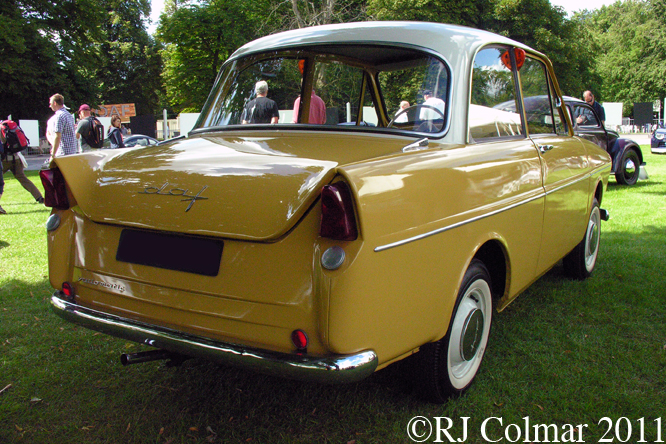
Goat Nimble Variomatic – DAF 600 Luxe

Despite innovations like the worlds first four wheel drive car, a 60 hp Spyker, with a single engine the Dutch motor industry failed to really take off prior to the Second World War.

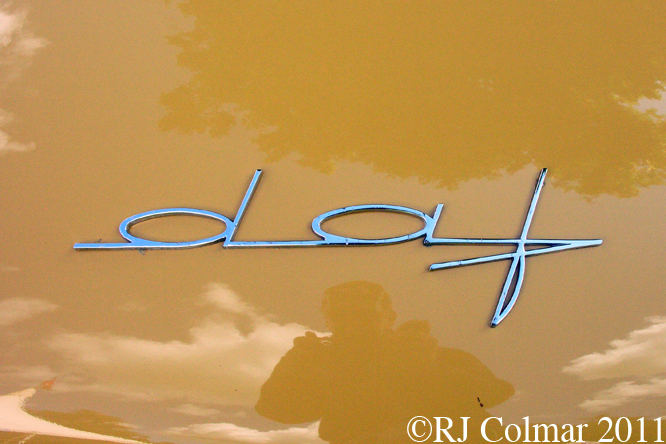
DAF 600 Luxe, Goodwood FoS

Prior to the war Hubert Van Doorne founded a trailer manufacturing business with finance from a brewery in 1932 Van Doorne’s Aanhangen Fabriek that was abbreviated to DAF.

DAF 600 Luxe, Goodwood FoS

In the early 1950’s after the reestablishment of DAF, now as a manufacturer of military and commercial vehicles and trailers the company became Van Doorne’s Autombiel Fabriek and Hub van Doorne set about designing a passenger vehicle.

DAF 600 Luxe, Goodwood FoS

Allegedly impressed by the Dyna Flow automatic transmission in his Buick Roadmaster, but unimpressed with it’s inefficiency Hub developed his own belt driven vacuum controlled continuously variable transmission CVT operating with centrifugal clutch, getting inspiration from the belt driven machines operating in his factory.

DAF 600 Luxe, Goodwood FoS

In 1958 the 22 hp DAF 600 with variomatic transmission was demonstrated and became the second commercially available motor car CVT, after the British Clyno system which was available from 1923 to 1927.

DAF 600 Luxe, Goodwood FoS

With additional design work attributed to Johan van der Brugghen the DAF 600 was manufactured from 1959 to 1963. Harry Walton in the December 1959 edition of Popular Science applauded the DAF 600 for it’s fully automatic drive, and positive differential action, which meant the car was unlikely to get stuck in mud, sand or snow because if one wheel slipped additional drive would automatically be transferred to the other wheel.

Harry also noted that the 600 although standing on only 12 inch wheels it had seven inches of ground clearance making it as “goat nimble on rough roads as the mourned Model T”. One thing Harry did not notice, or try as I once inadvertently did on a far more recent CVT equipped vehicle, is that it will go as fast backwards as it does forwards, all of 57 mph in the case of the DAF 600 Luxe.

Thanks for joining me on this “Goat Nimble Variomatic” edition of “Gettin’ a li’l psycho on tyres” I hope you will join me again tomorrow when I’ll be looking at a 1965 Studebaker which made an early appearance at Indianapolis. Don’t forget to come back now.

Share

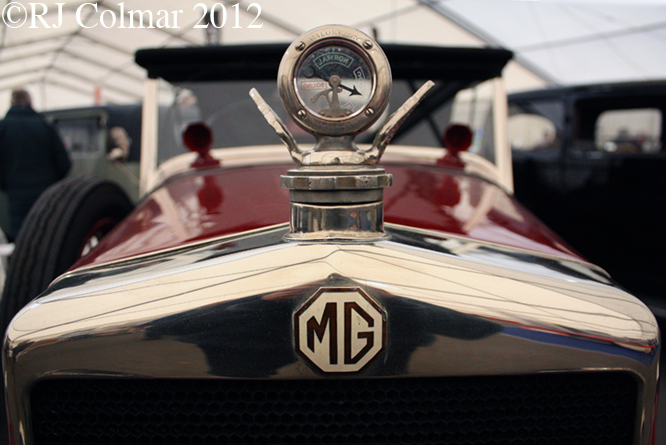
Buried And Covered In Concrete – MG 14/40 MK IV Sports

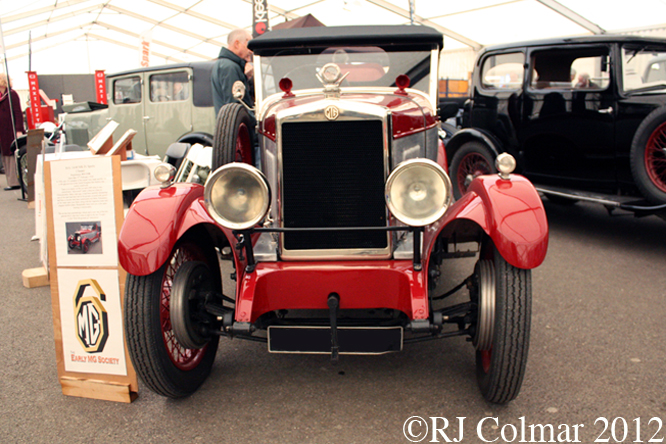
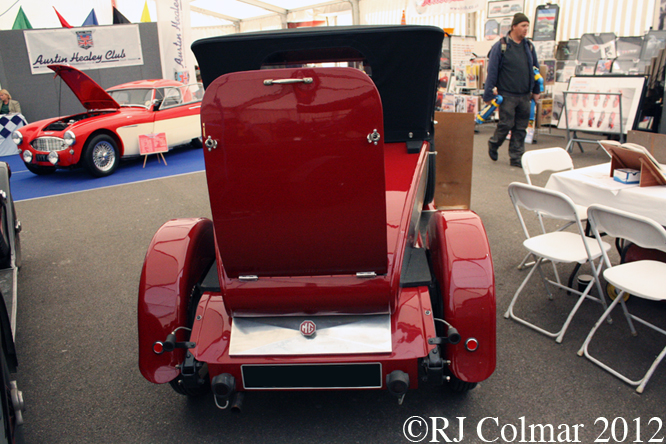
Towards 1927 production of MG’s moved to a new factory in Edmund Road, Oxford and production of the MG 14/40 MK IV commenced, with MG Car Company becoming a legal entity in 1928.

MG 14/40 Mk IV Sports, Bristol Classic Car Show

14/40’s were built around bare Morris Oxford chassis, unlike earlier MG’s that were built from completed frames that were striped and rebuilt to MG specifications, as the MG 14/28 had been but were now given MG chassis numbers, MG badges and motors, optimistically, estimated to produce 40hp.

MG 14/40 Mk IV Sports, Bristol Classic Car Show

MG publicity at the 1928, London, Motor Show mentions Land Speed Record Breaker Malcolm Campbell as an owner of a 14/40, a model which was struggling to sell at the time in part due to the age of the Oxford chassis and side valve motor underpinning the car.

MG 14/40 Mk IV Sports, Bristol Classic Car Show

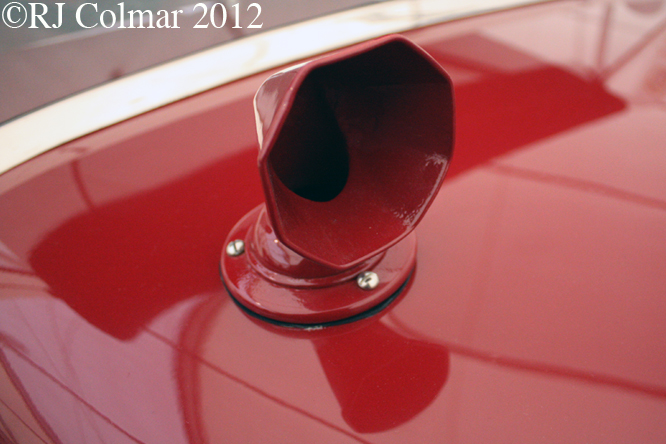
MG founder Cecil Kimber went to great lengths to differentiate his cars from their Morris inheritance before fitting MG bodies, his alleged obsession with octagons is said to have been frequently overdone.

MG 14/40 Mk IV Sports, Bristol Classic Car Show

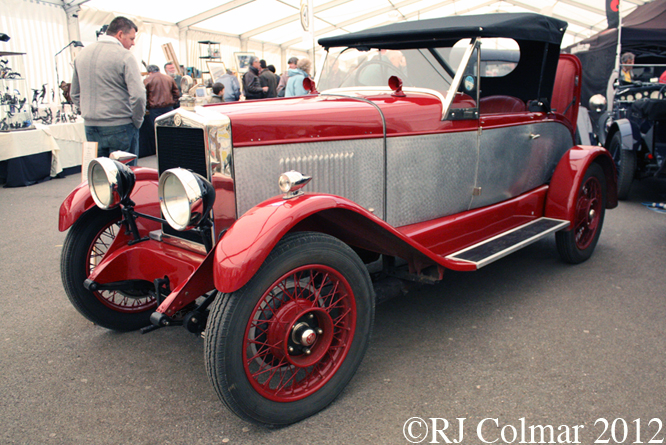
This Mk IV Sports is one of 135 such vehicles built in 1928 and the only survivor in the UK of a total of just four that are known to exist.

MG 14/40 Mk IV Sports, Bristol Classic Car Show

The winner of Best Vintage Car award at the Bristol Classic Car Show, where it is seen in these photo’s, has no history prior to 1999 when it was found beneath a ripped up concrete base of a shed in Gloucestershire.

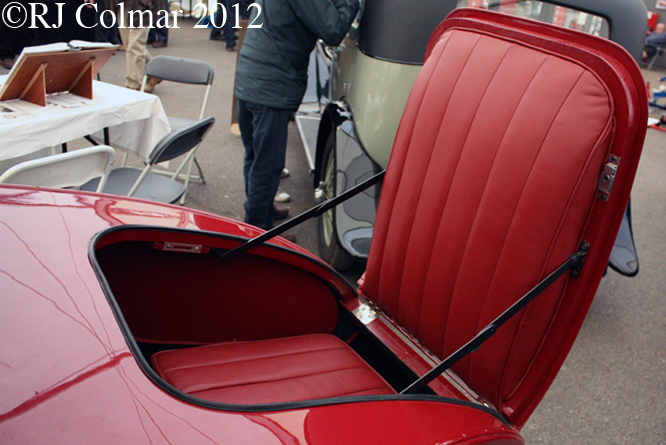
MG 14/40 Mk IV Sports, Bristol Classic Car Show

The disassembled car was found carefully preserved beneath a further layer of gravel complete with it’s guarantee plate and original number plates apparently ready for it’s ground up restoration.

Thanks for joining me in this ‘Buried And Covered In Concrete’ edition of “Gettin’ a li’l psycho on tyres’ I hope you will join me again tomorrow when I’ll be going Dutch with a Daf. Don’t forget to come back now !

Share

Choices Choices – Simply Italian National Motor Museum Beaulieu

In the interests of keeping my regular Friday readers happy I needed little convincing by GALPOT regular David Roots to forgoe the delights of the Avenue Drivers Club monthly meeting at Queens Square, in order to take a trip to the National Motor Museum at Beaulieu for the third Simply Italian parade on Sunday.

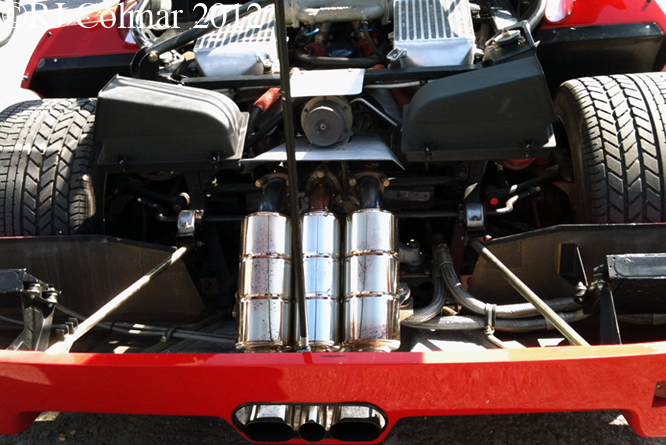
Ferrari F40, Simply Italian, NMM Beaulieu

On the way down I passed at several cars making their way to Queens Square, a magnificent Alvis and several other vintage cars taking part in a Vintage Rally, and a number of classic sports cars taking part in a Classic Rally before stumbling accross this F40 as it slowly made it’s way through the achingly picturesque village of Beaulieu, pronounced ‘Bewley’.

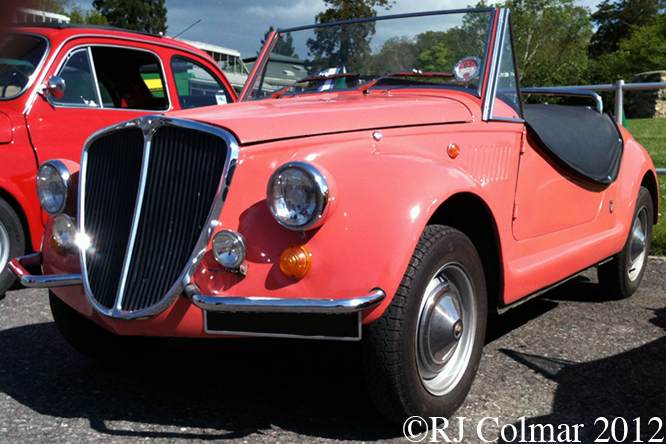
Vignale Gamine, Simply Italian, NMM Beaulieu

In the never seen one before category was the Vignale Gamine, one of just 300 vehicles, based on a FIAT 500 platform with a 21 hp 2 cylinder motor. This slow selling Alfredo Vignale pet project led to Carrozeria Vignale going out of business and the production facility being acquired by de Tomaso for their Pantera models.

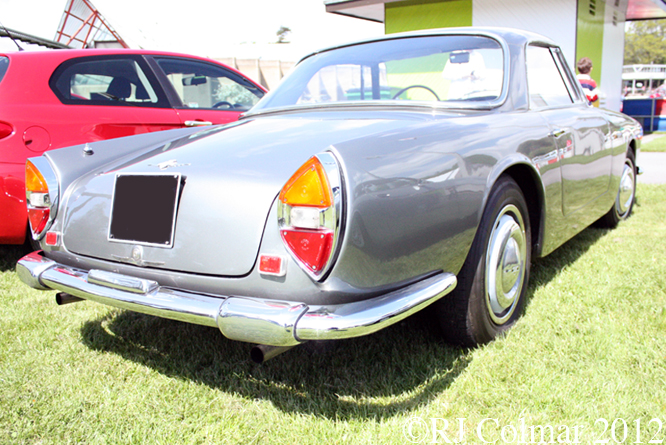
Lancia Flamina, Simply Italian, NMM Beaulieu

One of my favourite toys when I was not yet six was a Lancia Flamina similar to the 1962 Coupé seen here which had yellow jeweled headlights.

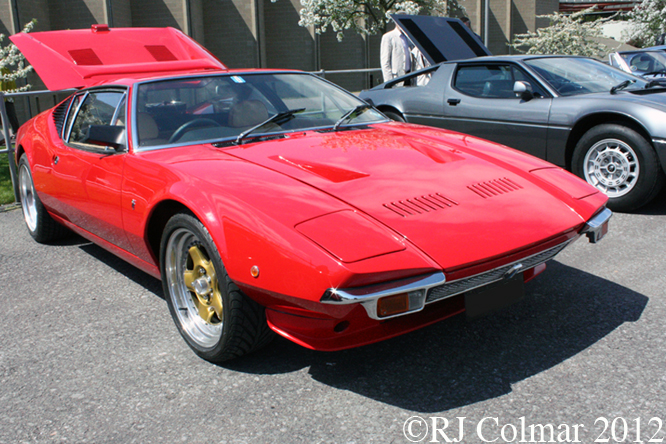
De Tomaso Pantera, Simply Italian, NMM Beaulieu

Appropriately on the other side of the car park to the Vignale Gamine was this de Tomaso Pantera which with it’s Ford motor and running gear has to be one of the most practical and affordable ways of running a genuine Italian super car.

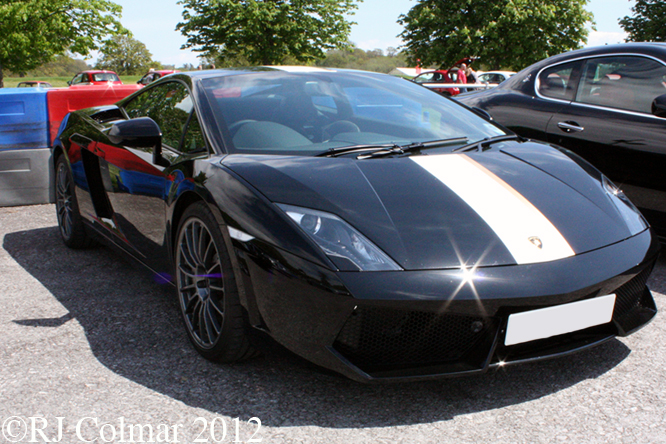
Lamborghini Gallardo LP 550-2 Balboni, Simply Italian, NMM Beaulieu

Speaking of practical this 2010 Lamborghini Gallardo LP 550-2 Baldoni, one of just 250 550 hp 200 mph 2 wheel drive super cars with a distinctive white and gold stripe was carrying a child seat on the passenger side. The owner told me he has had the car just nine weeks and in that time has driven it 5000 miles at 25 mpg on the road and as little as 5 mpg on track days. He has also had to replace a set of tyres !

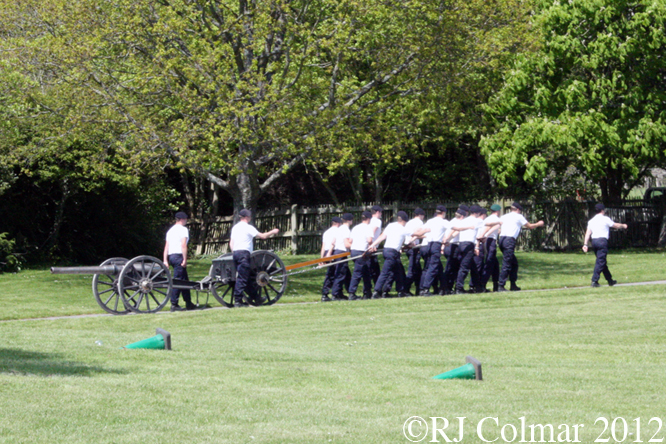
HMS Sultan Field Gun, Simply Italian, NMM Beaulieu

Around lunch time the grounds of the National Motor Museum echoed to the sound of LEFT ! RIGHT ! LEFT ! RIGHT ! LEFT ! RIGHT ! LEFT ! as a squad of 13 field gunners from HMS Sultan ended a 56 mile weekend yomp with a limber and 12 pounder field gun, of the type used during the Boer War, in tow. The gun and breach alone weighs some 400 kgs, nearly 900 lbs ! All of this was to honour the men of 40 Commando in the Falklands Conflict who covered the same distance in 1982 to retake Port Stanley and to raise funds the Royal Navy & Royal Marines Charity, follow this link to find out more and make a donation.

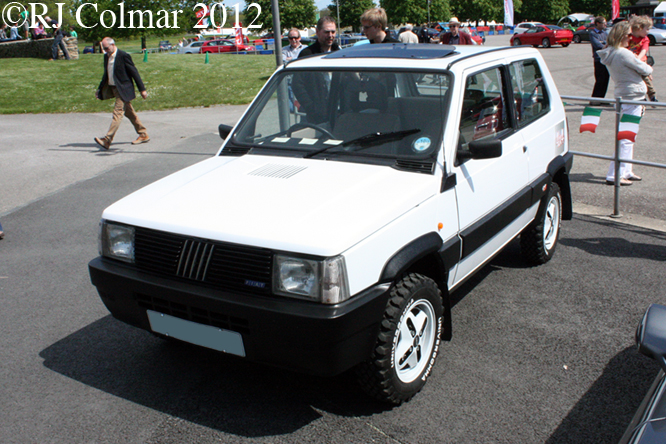
FIAT Panda 4x4, Simply Italian, NMM Beaulieu

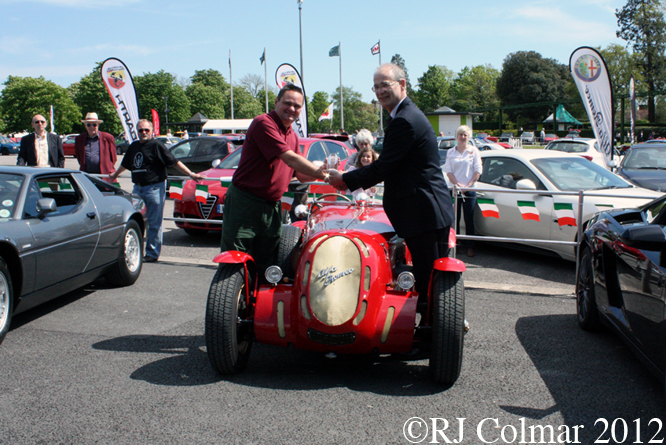
After lunch the results of a public vote for the most popular vehicle present was announced, the 1988 FIAT Panda 4×4 above, which came complete with a fitted tent was awarded a bottle of Beaulieu Bubbly, a local sparkling wine.

Lenham Healey ALFA Romeo Special, Simply Italian, NMM Beaulieu

A well deserved second went to GALPOT regular David Roots and his Lenham based ALFA Romeo 4C Special,

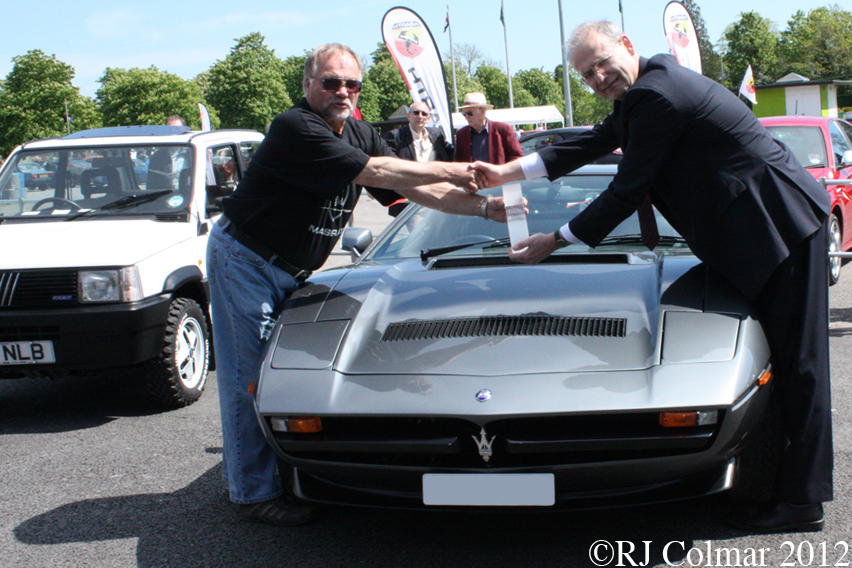
Maserati Merak, Simply Italian, NMM Beaulieu

while most visitors votes went to this Maserati Merak.

My thanks and congratulations to David for telling me about this fabulous event which was interspersed with visits into the National Motor Museum which I shall cover in greater detail on Sunday.

Thanks for joining me on this ‘Choices Choices’ edition of “Gettin’ a li’l psycho on tyres”, I hope you will join me again tomorrow. Don’t forget to come back now !

Share

Thirty Years Ago #2 – Group C

On May the 16th 1982 I awoke excitied to catch my first glimpse of a new endurance sports car series at Silverstone. The Group C series was born out of the GT Prototype class which had hitherto run only at Le Mans for closed cockpit 2 seat cars with just safety features, some overall limits on dimensions and a limited amount of fuel for rules. Here is a summary of a few Group C cars I saw that day.
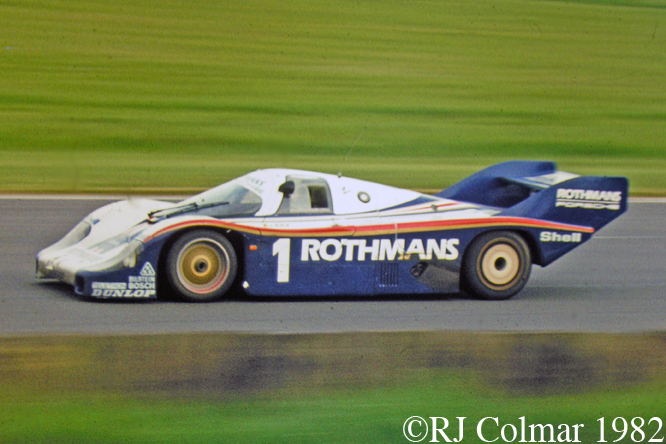
Porsche 956, Silverstone

It took three years for the series to really take off with support from three manufacturers but for that first year in 1982 Porsche were prepared in particularly overkill fashion with the Porsche 956 which used a 650 hp twin turbo charged 2.65 litre / 156 cui flat 6 motor that had originally been conceived for the banned 1980 Interscope Porsche Indy Car.

The motor was successfully tested in preparation for Group C in the back of two Porsche 936’s at Le Mans in 1981, Ickx and Bell scoring an emphatic win by 14 laps. Featuring an aluminium monocoque the 956 was designed to take full advantage of ‘ground effect’ aerodynamic technology that had been developing in Formula One since 1976.

Uniquely among the first generation of Group C cars the 956 had been tested in exactly the same way as all Porsche road car designs meaning it alone among it’s competitors could negotiate potted and cobbled streets with out any noticeable detriment to the integrity of the chassis or performance of the motor. Like the Porsche 935 and 936 models it replaced the 956 was utterly dominant in the first 3 years of Group C, sweeping aside a puny effort from Lancia who competed with the Ferrari powered Lancia LC 2 from 1983 to 1985, not having any real competition until the arrival of Jaguar in 1985. Quite simply the 956 nearly killed the series as in 1983 the first of 28 customer 956’s started to fill out the grid.

However Porsche did not have it quite their own way, in 1982, as Lancia sort to wrest the World Sports Car Drivers Championship from Porsche drivers by entering a couple of cars built to the old open top regulations, which had one year left to run, these open Group 6 cars did not need to adhere to the fuel consumption regulations of Group C. Lancia won three races outright including the Porsche 956’s debut race at Silverstone. However Lancia driver Ricardo Patrese was eight points short of winning the title which went to Jacky Ickx who shared the #1 956 seen at Silverstone above with Derek Bell. At Le Mans in 1982 the works Porsche team led by Ickx and Bell took 1,2,3 victory.

Chassis #001 driven here by Icks and Bell easily qualified on pole but constrained by the fuel allowance in the race meant they finished 3 laps behind the race winning Group 6 Lancia LC1. #001 was used on two further occasions, as a test car at Le Mans and in the 200 mile Norisring German Racing Championship (DRM) race which it won with Jochen Mass at the wheel, before it was retired.

In 1983 Ickx retained his World Endurance Drivers title, before handing it over to team mate Stefan Bellof in in 1984. Ickx retired from racing in 1986 after a fatal accident involving Bellof now driving for the private Brun Team at Spa in 1986.

Derek Bell shared the World Endurance Drivers title in 1986 and 1987 driving Porsche 962’s with team mate Hans-Joachim Stuck on both occasions.
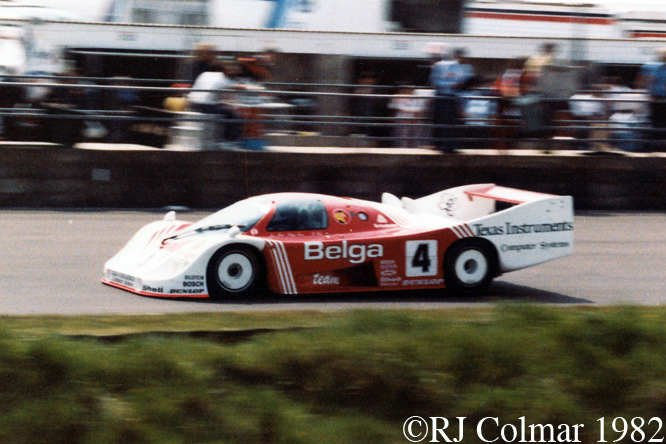
Porsche 936C, Silverstone

While Porsche customer teams like Joest and Kremer had to wait until 1983 before being able to purchase customer Porsche 956’s with which to compete in the new series, neither sat idle in 1982 both teams building Group C cars of their own devising using Porsche engines.

Of the two the Joest team car was the first to compete, built around a Joest built Porsche 936 chassis #JR005 with a smaller 2.1 litre / 128 cui twin turbo flat 6 motor. The 936C driven by Frenchman Bob Wollek, and the Belgian Martin brothers, Jean-Michell and Philippe, finished third on it’s debut at Silverstone and continued to be a top ten finisher in Group C events until the end of 1986 when it was effectively outlawed by new footwell regulations.

Joest would become the Porsche factories team of choice whenever the works team was not present at the track. Joest cars won Le Mans in the absence of the factory team in 1984 and 1985 with the same 956B chassis #117, one of the few chassis to win the 24 hour marathon twice. Joest repeated the feat in 1996/1997 winning with Le Mans with the same TWR/Porsche. Joest Racing then became with the über successful Audi and Bentley campaigns that have dominated Le Mans since the turn of the century.

Bob Wollek never won the Le Mans 24 hour race but he did win the Daytona 24 hour race four times. Three of them driving the 956 successor Porsche 962’s.
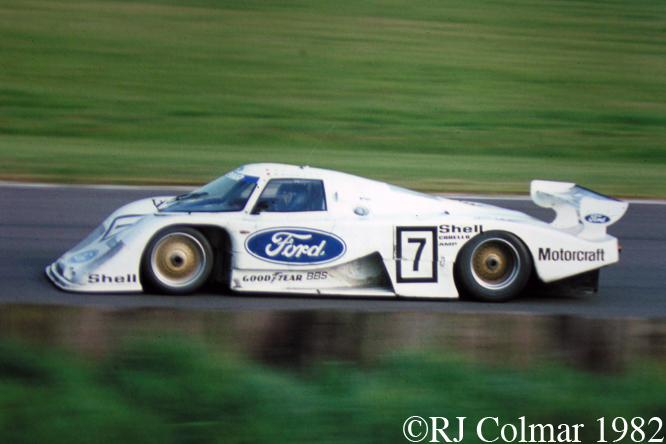
Ford C100, Silverstone

Fords involvement in the series proved a little half hearted despite the involvement of Len Terry in the design and a Cosworth V8 DFL motor based on the 3 litre / 183 cui DFV but now stretched to 4 litres / 244 cui. The larger motors sounded frankly awful and suffered from excessive vibrations that hindered reliability.

Manfred Winklehock and Klaus Ludwig, who is seen at the wheel here, qualified 4th but could only finish eighth in the race. The C100’s only wins were recorded by Klaus Ludwig in the German DRM championship and by the end of 1982 Ford called a halt to it’s Group C programme.

Peer Motorsport acquired the two time DRM winning C100 chassis #04 for 1983, it was mostly raced in the British Thundersport Series where it recorded one further victory in the hands of Irishman David Kennedy and Scotsman Jim Crawford at Donington Park.

Klaus Ludwig would go on to join the Joest Team and won the 1984 and 1985 Le Mans driving the 956B chassis 117 sharing the driving with Henri Pescarolo in 1984 and Paolo Barilla and ‘John Winter’ in 1985.

WM P82, Silverstone

WM was founded by two Peugeot design studio employees in 1969 Gerard Welter and Michel Meunier in 1969 who in their spare time built two cool coupe’s the first WM P69 was based on a Peugeot 204 Cabriolet platform and the second WM P70 was a mid engined design.

Their next effort the WM P76 was built to the Le Mans GTP regulations first announced in 1976 was powered by a Peugeot/Renault/Volvo (PRV) V6 stock block. Over the next 13 years they built 7 distinct models adding twin turbo’s the PRV motors in 1977. In 1980 they scored a best 4th place and first in GTP at Le Mans.

The WM P82 took part in 5 Group C races, Roger Dorchy, Jean Daniel Raulet and Michel Pignard driven car is seen above on the WM teams second ever outing abroad, it qualified 39th and finished 11th. The WM teams best 1982 result was on it’s first trip abroad to Monza where it qualified 11th and came in 6th. The teams natural reliance on the PRV block was probably it’s down fall for all though eventually tuned to give over 900 hp in 1988 it was actually designed to initially produce 150 to 200 hp.

Sensing that a win at Le Mans was not in their grasp by 1987 WM focused on becoming the first team to reach 400 km/h on the legendary 3.1 mile Mulsanne straight during the 24 hour race. With the engine producing 950 hp and all the cooling blanked off and special Michelin tyres the WM P88 of Roger Dorchy was timed at 405 km/h / 253 mph at 9pm in the evening of the 1988 race. This record will probably stand for all time given that in 1990 2 chicanes were added to the straight to slow the cars down. Rogers car unsurprisingly retired from the race with overheating issues.

WM made way for for an official Peugeot Works team in 1990, in 199O Gerard Welter took over the team completelu renaming it WR (Welter Racing), which scored a class win at Le Mans in 1993 and sensationally locked out the front row of the grid at Le Mans in 1995.
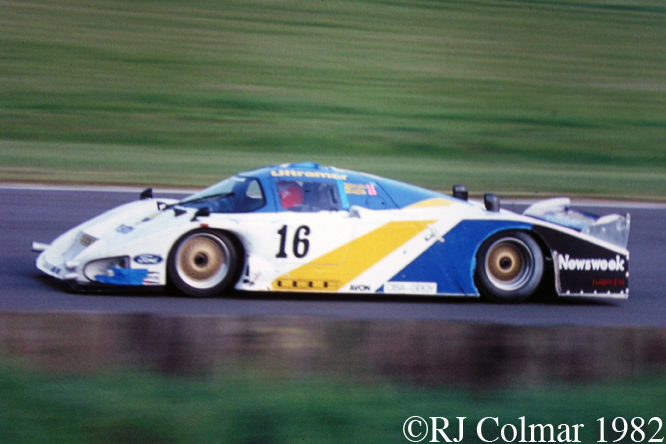
Lola T610, Silverstone

Lola’s involvement with Le Mans dates back to a contract with Ford to develop the fabled GT40, racing under it’s own name it has never won Le Mans. The T610 was powered by the same 4 litre / 244 cui Ford Cosworth DFL as the Ford C100, but proved even more unreliable, despite qualifying 8th at Silverstone, Guy Edwards and Rupert Keegan who is seen in the car here could manage only a 16th place finish.

The T610’s best result of the season was a 7th place finish at Brands Hatch. Lola would hook up with Nissan to produce several Group C Le Mans challengers at the end of the 1980’s including the outright qualifying lap record holding Nissan R90CK which held the record at 3m 27 secs from 1990 until 2008.

Guy Edwards would become a mover and shaker in Group C when he lent his considerable sponsorship finding talents towards the Jaguar Group C project run by Tom Walkinshaw Racing.
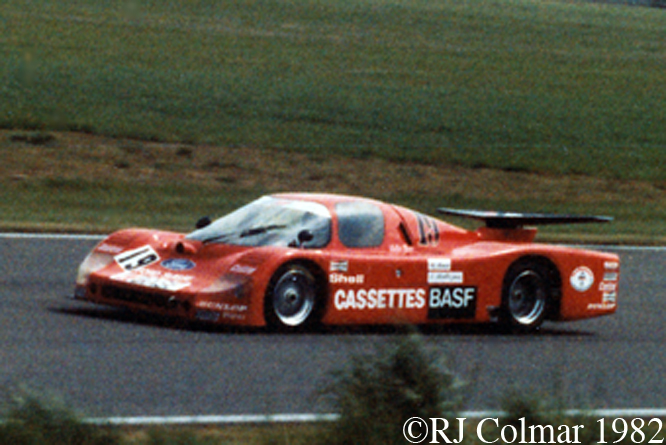
Sauber SHS C6, Silverstone

The Sauber SHS C6 was another Ford powered Group C contender and predictably unreliable Walter Brun and Seigfried Muller Jr qualified 12th and finished 13th after loosing the rear wing. The teams best result, a 4th place finish came during a DRM race at Hockenheim. The an SHS6 running in the privateer C2 class appeared in the Group series until 1986.

Peter Sauber hooked up with Mercedes Benz unofficially in 1986 and by 1987 started getting works support leading to a victory at Le Mans and the World Sportscar Championship in 1989. Sauber went on to become a Mercedes Powered Formula One constructor returning the famous manufacturer to the top tier of the sport in 1993 after a 38 year break.

In 1983 Walter Brun ended up taking over the GS Sport Company that had been operating in partnership with Sauber in 1982. His operation eventually became a Porsche customer team running 956’s and then the replacement 962’s with which Brun Motorsport won the 1986 World Sports Prototype Championship. By 1992 the team folded after a dabbling in the disastrous EuroBrun Formula One project and attempting to build his own Judd powered Le Mans challenger.
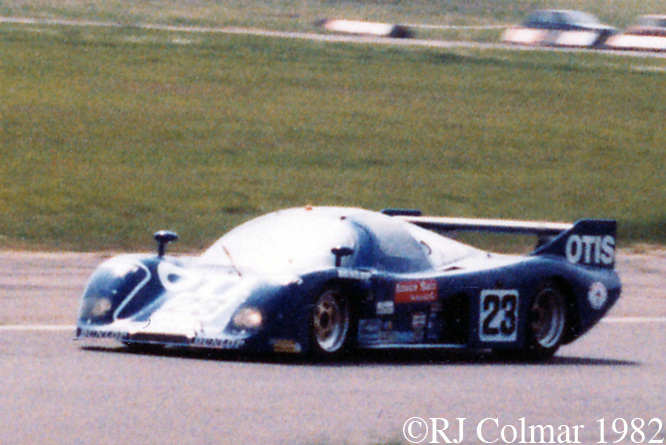
Rondeau M382, Silverstone

Le Mans based Group C team Rondeau like WM started out competing at the 24 hour classic in the GTP class in 1976 winning the GTP class in both 1976 and 1977 under the Inaltera name.

In 1978 the team which always used 3 litre 183 cui Ford Cosworth V8 motors now raced under the founder, Jean, Rondeau’s own name. Jean Rondeau with Bernard Darniche and Jacky Haran scored his second Le Mans GTP class victory with an M378 and in 1979 the team won the unlimited sports prototype class at Le Mans going one better in 1980 with and overall Le Mans victory for Jean Rondeau and Jean-Pierre Jaussaud.

Another Le Mans GTP class victory, 2nd overall, followed in 1981 for Haran, Phillipe Streif and Jean Louis Schlesser

Like Ford, Lola and Sauber, Rondeau plumped for the Cosworth DFL but somehow found some reliability where others had failed Pescarolo and Gorgio Francia indeed won the first ever Group C race, at Monza, with a Rondeau M382. Pescarolo and Gordon Spice seen above at Silverstone qualified 9th and finished 5th.

This same car won it’s class, 2nd overall, at the Nurburgring with Pescarolo and Rolf Stommelen at the wheel.
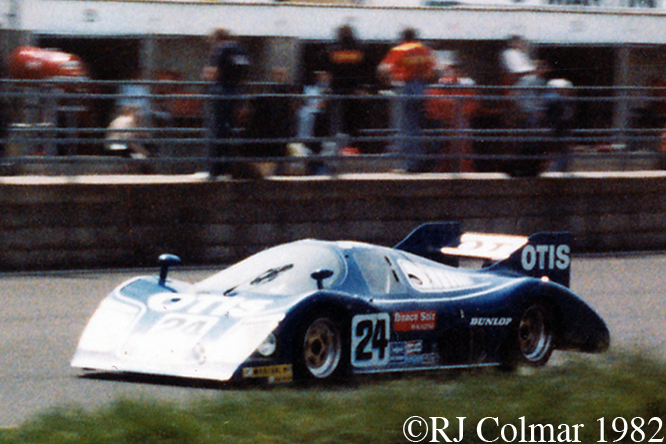
Rondeau M482, Silverstone

While the #23 M382 Rondeau was based on a design that could trace it’s origins back to the 1976 Inaltera the Rondeau team fielded a second design which should have taken advantage of the prevailing ground effect technology of the period unfortunately on it’s debut at Silverstone Jean Rondeau and Francois Migault could only qualify 27th and failded to finish after bodywork and suspension breakages. The car failed to appear at Le Mans and when it appeared in 1983 it was with heavily revised bodywork.

The Rondeau scored more points in Group C than any other team in 1982 but Porsche were allowed to have points accumulated by a car running in a lower GT class added to their points tally and were declared 1982 World Endurance Champions, Rondeau’s sponsor OTIS announced it’s immediate withdrawal from the team in disgust.

With no significant sponsorship Rondeau concentrated all of it’s efforts on Le Mans for 1983 all three DFL powered revised M482’s retired with motor related issues an only the Christian Bussi teams car recorded a finish, a lack luster 19th.

Rondeau’s team folded at the end of 1983 and Jean was killed by a train in a bizarre accident while following police car over a level crossing in 1985. Rondeau cars continued to appear in Group C races at Le Mans and elsewhere until 1987.
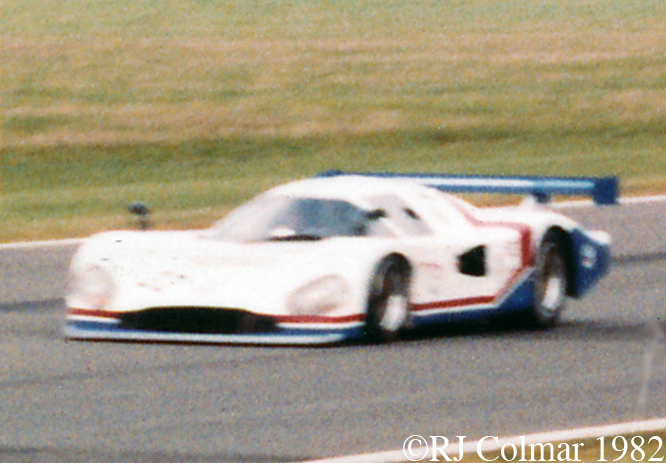
Nimrod NRA/C2, Silverstone

Finally while certainly not the last of the Group C cars that appeared at Silverstone in May 1982 the Nimrod NRA/C2 is notable because it featured an Aston Martin Tickford V8 motor, from the Vantage V8 model, which sounded fantastic in comparison with the Cosworth DFL V8 and the flat 6 Porsche. The private #32 Viscount Downe entry seen here driven by Ray Mallock and Mike Salamon qualified three places better than the works entry in 11th and finished 6th while the works car retired.

Through out 1982 the Viscount Downe entry out qualified the works entry usually by three places and manged a finish which the works entry never did. The Aston Martin Owners Club president Viscount Downe Team finishes secured a third place finish for Nimrod Aston Martin in the 1982 World Endurance Championship behind Porsche and Rondeau, with the more successful Lancia running in the old Group 6 class it was ineligible to score points in the manufacturers championship.

Both Nimrod teams continued into 1984 with the works team running AJ Foyt, Darrel Waltrip and Guillermo Maldonado in a Pepsi Challenger liveried example in the Daytona 24 Hours. However with ever more Porsche 956’s filling the grid and a distinct lack of reliability the works team folded in 1983 and the Viscount Downe team in 1984.

Ray Mallock would eventually run the Ecurie Ecosse team in the lower Group C2 class taking the class title in 1986 before overseeing the return, to Group C, of a fully works backed Aston Martin project in 1989. For 1990 Ray was involved with the Nissan R90CK project. His team has won numerous touring car titles with Vauxhall, Nissan and Chevrolet for whom he currently runs the successful works World Touring Car Championships cars.

Due to a concerted attempt to become an adult and various unavoidable associated commitments, weddings, graduation and such like it would be three years before I attended another Group C race, when I came back Group C was really taking off with Jaguar entering the fray and efforts from other teams like Toyota and Mercedes (Sauber) beginning to gather momentum. By the end of 1992 I had attended more than a dozen Group C races and seen some fantastic battles all of which will have to wait for future editions of GALPOT.

Thanks for joining me on this “Thirty Years Ago #2” edition of ‘Gettin’ a li’l psycho on tyres’ I hope you will join me again tomorrow when I’ll be looking at the Simply Italian parade at the National Museum as originally promised yesterday. Don’t forget to come back now !
Share