Tag Archives: GALPOT

Big Bertha Power – Hupmobile Speedster

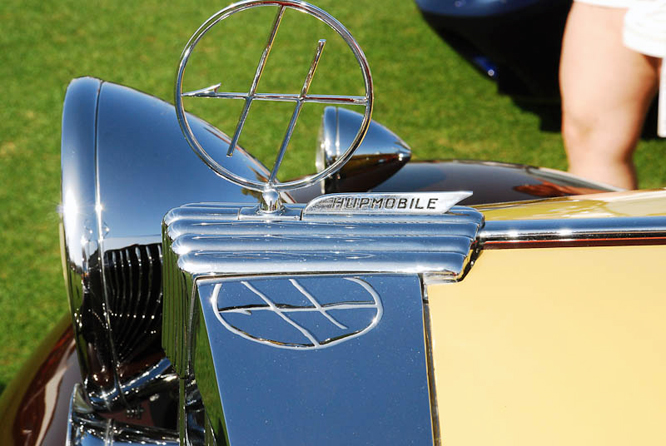
Hupmobile, founded by former Ford and Oldsmobile employee Robert Craig Hupp and his brother Louis Gorham Hupp was a Detroit automobile manufacturer from 1908 to 1940 which built it’s reputation on solid some say stodgy 4 cylinder automobiles.

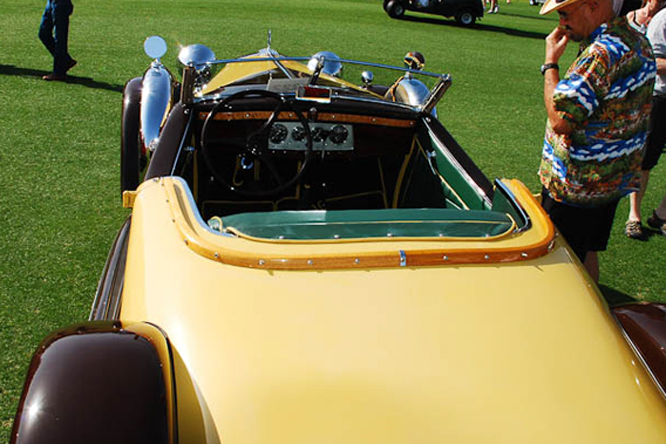
Hupmobile Speedster, Desert Classic, C d'E

In 1925 Hupmobile introduced it’s first 8 cylinder model abandoning it’s traditional customer base with the onset of the depression as in pursuit lucrative top end markets.

Hupmobile Speedster, Desert Classic, C d'E

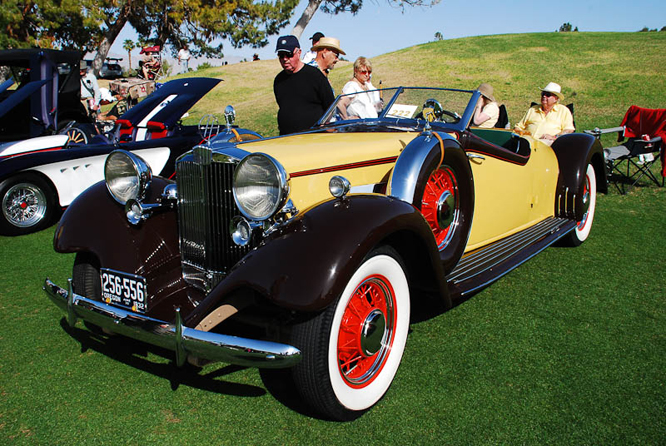
Raymond Loewy is credited with the design of this 1932 Speedster powered by a 103 hp straight eight motor, referred to in advertising for an earlier model as giving ‘Big Bertha’ power.

Hupmobile Speedster, Desert Classic, C d'E

The car featured, in these photo’s by Geoffrey Horton taken at the Desert Classic Concours d’Elegance, is thought to be the only survivor of three built that were aimed squarely at the market segment occupied by Packard and Auburn.

My thanks to Geoffrey Horton for sending me the photographs.

Thanks for joining me on today’s Big Bertha Power edition of ‘Gettin’ a li’l psycho on tyres’, I hope you will join me again tomorrow. Don’t forget to come back now !

Share

Genk Cosworth Part 1 – Sierra Sapphire RS Cosworth

The second generation Ford Sierra Cosworths were all built in Genk, Belgium, with new 4 door bodies that were introduced with the 1987 Ford Sierra facelift, in Britain the 4 door Sierra was known as the Sierra Sapphire.

Ford Sierra Sapphire Cosworth RS, Brands Hatch

The Sierra Saphire RS Cosworth was positioned at the top of the Sierra performance tree, powered by the original 204 hp version of the Cosworth YBB motor, though with suspension set to favour comfort over over performance handling as in the original 3 door Sierra RS Cosworth.

Ford Sierra Sapphire Cosworth RS, Donington

Despite losing the wild appeal of the original Sierra RS Cosworth the latter Sapphire’s performance did not really suffer with the road going version being independently timed by Autocar rest to 60 mph 5.8 seconds, 1/4 mile in 14.4 seconds up, to 100 mph in 15.8 seconds and with a top speed of 143 mph.

Ford Sierra Sapphire Cosworth RS, Brands Hatch

Unlike the earlier Sierra RS Cosworth and RS 500 evolution the Sierra Saphire RS Cosworth was built for Right Hand Drive and Left Hand Drive markets. Confusingly the LHD variant of the 4 door Cosworth was simply known as the Sierra RS Cosworth as had the original 3 door RHD version. From 1988 to 1989 around 13140 examples for both markets were manufactured.

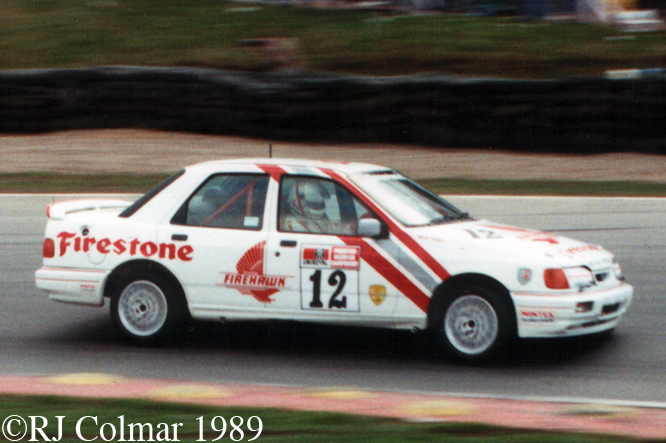
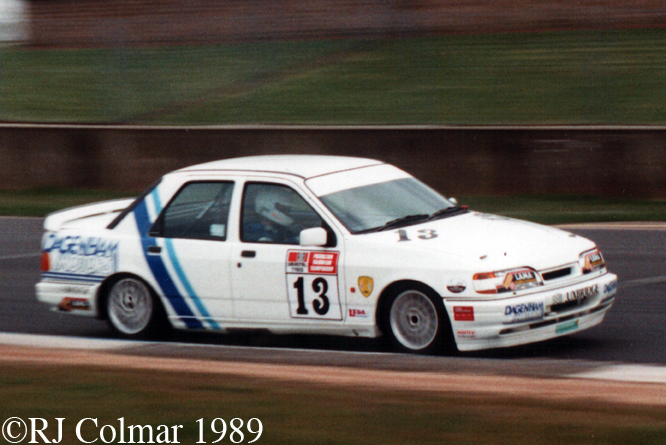
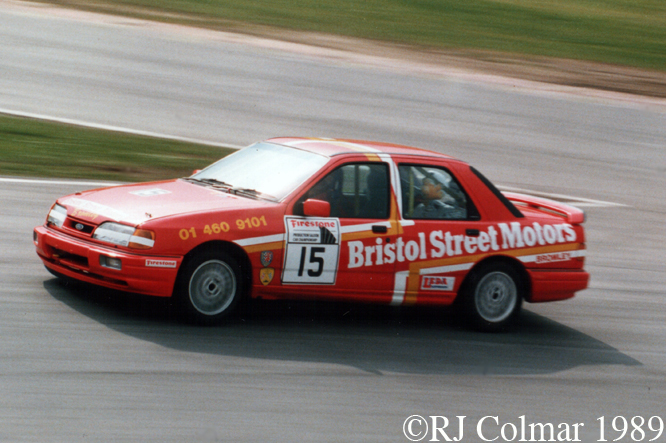
Mark Hales is seen driving the #12 at Brands Hatch, Mark shared this car with ABBA drummer and sometime Grand Prix Driver and Truck racer Slim Borgudd to victory in the Willhire 25 hour race at Snetterton in 1989. Steve Monk is driving the #13 at Donington to a fourth place finish in a race won by Mark Hales while David Shead drives the #15 Bristol Street Motors Sierra Sapphire Cosworth RS at Brands Hatch.

Thanks for joining me on this ‘Genk Cosworth Part 1’ edition of ‘Gettin’ a li’l psycho on tyres’, I hope you will join me again tomorrow. Don’t forget to come back now !

Share

Escape The Option Trap – MG B GT

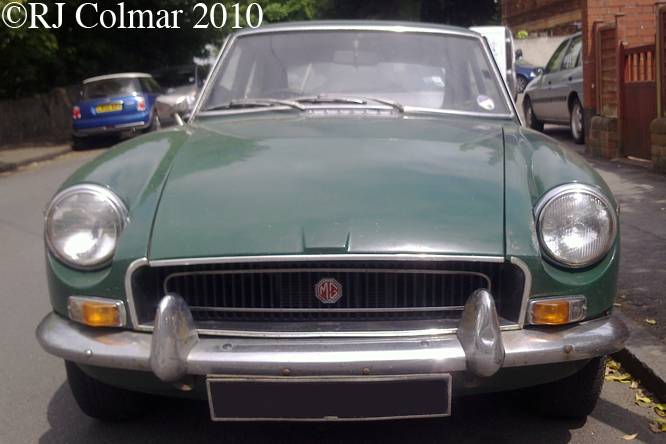
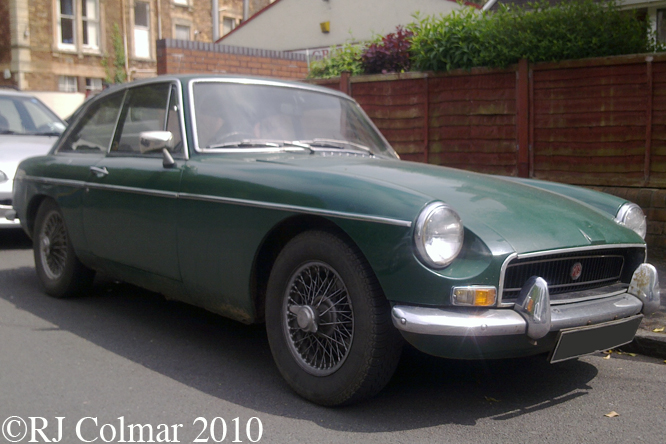
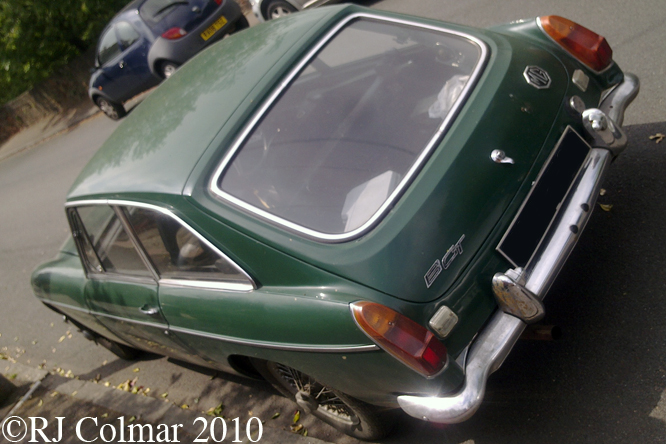
The MGB GT was launched in 1965 with a ground breaking Pininfarina inspired hatchback and the latest 5 bearing 95hp 1798 cc / 109.7 cui 4 cylinder motor as used in the the MGB Roadster.

MGB GT

In 1970 a version of the GT was launched complete with a black grill as seen above replacing the previous chrome item, reclining seats added to the 4 speed synchromesh gearbox which became available in 1967.

MGB GT

The MGB GT was recognised as an aspirational car by the likes of Playboy which featured an MGB GT in one of it’s advertisements linked here, notice how in the ad the MG owner attracts the females rather more than the Mercury Cougar standing next to it !

MGB GT

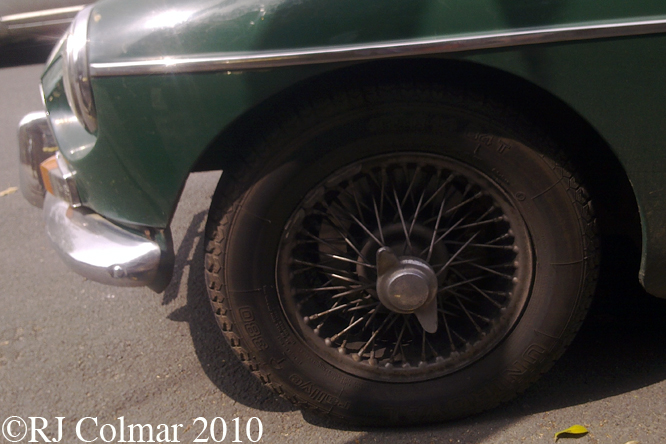
MG’s own advertising for the B GT focused on the fact that it’s fully loaded specs allowed owners to escape the option trap as seen in the link here. The 50 spoke wire wheels were standard in some markets though they would eventually be replaced with Rostyle steels wheels.

MGB GT

The extra weight of the roof over the MGB Roadster hindered the B GT’s acceleration though it increased the top speed from 100 to 105 mph. The last MG B GT’s to imported into the USA officially were 1974 though production of the GT continued for other markets until 1980.

Thanks for joining me on this “Escape The Option Trap” edition of ‘Gettin’ a li’l psycho on tyres.
I hope you will join me again tomorrow. Don’t forget to come back now !

Share

Cars, Buses and Aeroplanes – Brooklands Museum

Late last year my appetite was whetted by the William Boddy Tribute Day at Brooklands for a second visit to the museum.
Brooklands

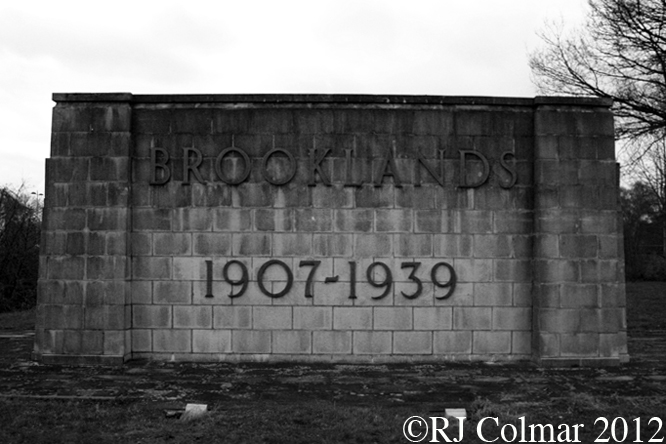
Brooklands lays claim to being the Worlds first purpose built motor circuit, it was the built, along with one of the Englands first purpose built airfields by Hugh Locke King on 330 acres of his estate at Weybridge in Surrey.

Halford, Brooklands

Among the many innovative exhibits is the Halford Special built on an Aston Martin chassis with a Halford 6 cylinder motor designed and built by Major Frank B Halford with a turbo charger in 1925. The turbocharger did not prove to be successful and was eventually replaced by a super charger with which the Halford Special recorded at least three wins at Brooklands. Halford was responsible for designing the air cooled de Havilland Gypsy and working on the Napier Sabre piston aircraft engines and the de Havilland Goblin ‘Gas Turbine’ jet engine.
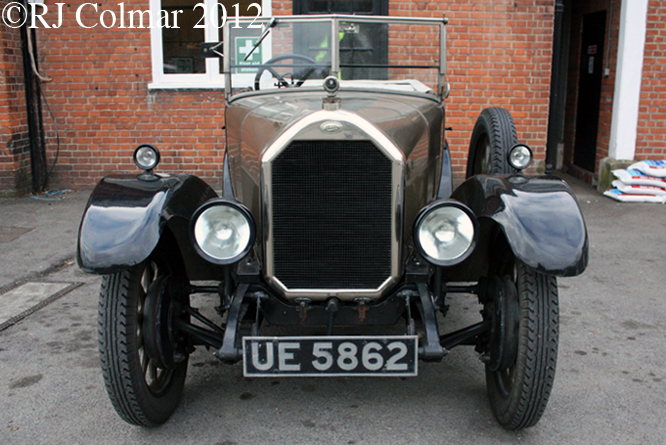
Humber 14/40, Brooklands

I’m not sure if this late 1920’s Humber 14/40 is an exhibit or someones daily driver, it was one of numerous vehicles that are obviously still in regular use dotted around the museum.
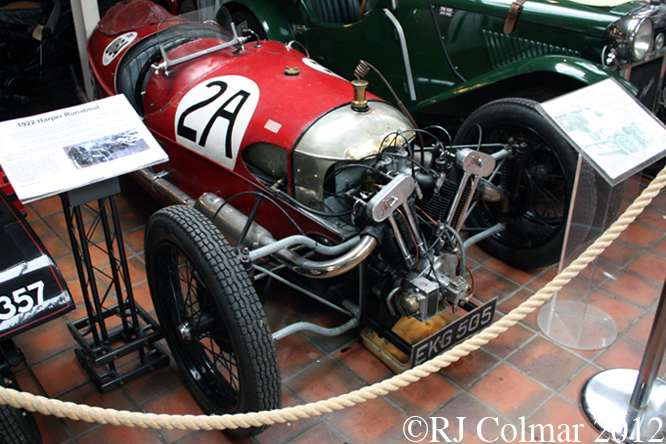
Morgan, Brooklands

Above The Clive Lones Morgan was used by Clive at Brooklands from 1929 to 1935 winning 37 world records during that time, it was the first ‘Light Car’ to lap Brooklands Outer Circuit at an average speed of 100 mph in 1930. This car was also used in an experiment to test the viability of pits to driver radio contact, the loudspeakers eventually proved unequal to the task of competing with the noise from the JAP motor.
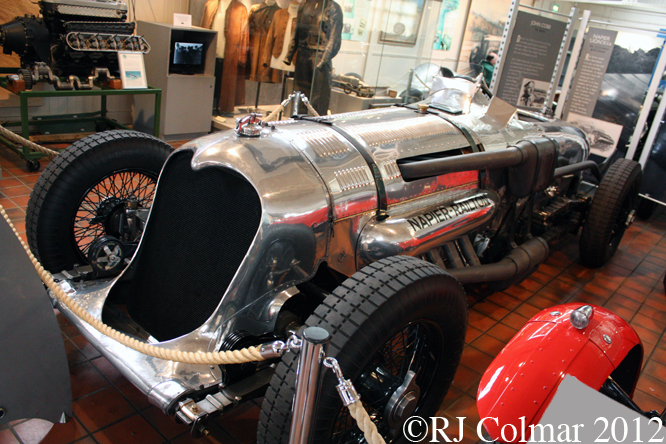
Napier Railton, Brooklands

The Napier Railton was comissioned by John Cobb in 1933, designed by Reid Railton with a 24 litre / 1461 cui 500 hp W12 Napier Lion motor the car was driven to the all time lap record at Brooklands in 1935 of 143 mph. It broke 47 World Records at Brooklands, Montlhéry and Bonneville Salt Flats. Capable of 168 mph the Napier Railton, which is regularly driven at Brooklands and Goodwood events, has rear wheel brakes only !
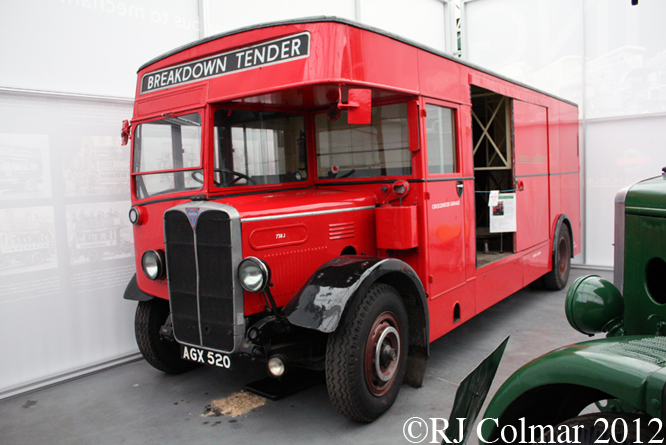
AEC Regent One, Brooklands

Brooklands is also home to the London Bus Museum which houses a splendid collection of public transport vehicles that have graced the streets of London for over 100 years. Above an early double deck 1933 AEC Regent 1 that was converted into a single deck use for attending break downs from 1949 until 1971. Apparently in double deck form it was hit by a flying bomb in 1944 and rebuilt as a double decker only to be rebuilt as a single decker.
Wellington, Brooklands

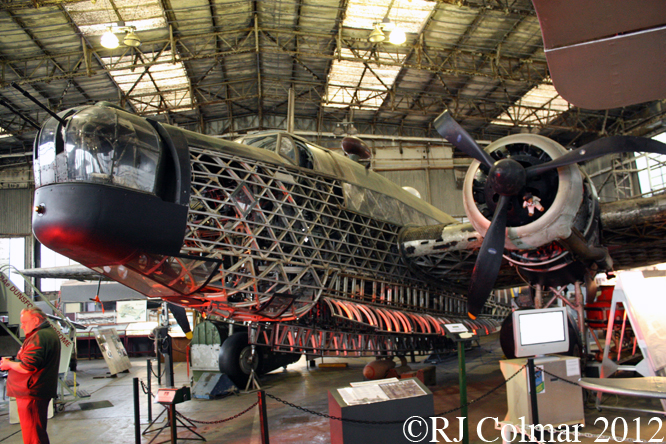
Flying has been apart of Brooklands history since 1907, AV Roe started trials with his first planes at Brooklands in 1908 during the Great War the Sopwith Pup and Camel were developed at Brooklands and during the Second World War Hawker Hurricane fighters and Vickers Wellington Bombers like the one above were built at Brooklands. Apparently my Grand Mother was involved in pre assembling parts for Wellington’s often bringing home parts which my Dad and Uncle helped put together after school. This is the only surviving Wellington built at Brooklands, it was recovered from Loch Ness in the 1980’s after some Loch Ness Monster hunters found her.
AEC Militant Mk 1, Brooklands

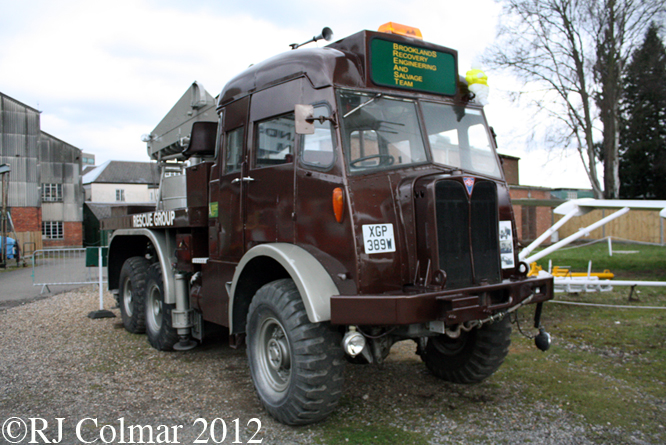
Miss Milly Tant is a six wheel drive AEC Militant built for the British Army in 1954, she spent most of her time in storage and was sold off as surplus to London Transport in 1966. Converted with to a Master Breakdown Tender with a ten ton lifting capability by Boughton’s of Amersham she was used by London Transport until 1980. In 1983 she was acquired by the National Rescue Group and based at Brooklands and regularly used to attend incidents on the A3 and M25 and has been on loan to Brooklands since the 1990’s.
Vickers VC10, Brooklands

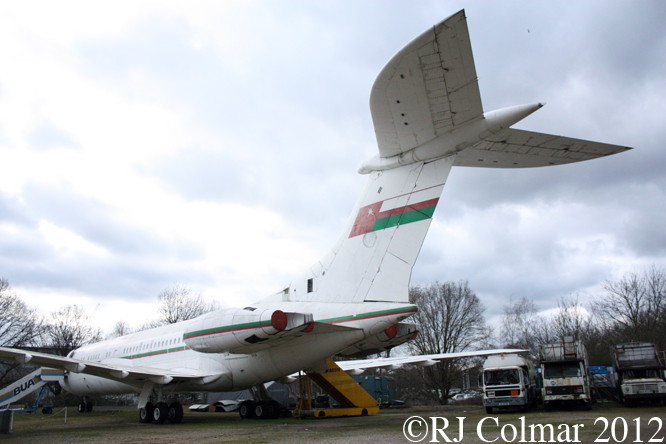
From 1962 to 1970 Vickers manufactured 54 VC10 passenger aircraft at Brooklands. Capable of take off and landing from much shorter airfields than the rival Boeing 707 the VC10 was ideal for flying to Britain’s former colonies in Africa, indeed from 1970 to 1977 I clocked up well over 200,000 miles as a VC10 passenger with BOAC / BA and BUA / British Caledonian flying from London to Lusaka in Zambia. The VC10 was particularly quiet as a result of it’s 4 Rolls Royce Conway engines being mounted beneath the tail plane. The VC10 still holds the subsonic speed airliner record for a London to New York Atlantic crossing with only Concorde being faster.
Meteor, Brooklands

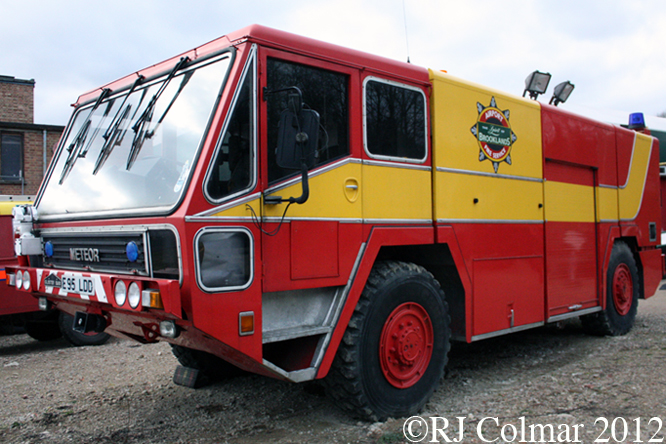
The 4 x 4 1987 Gloster Saro Meteor airport fire engine, above, is powered by a 12 litre / 732 cui motor and served at Heathrow Airport. The Meteor can carry a crew of 4 along with 600 gallons of water 50 gallons of foam concentrate amongst several tons of additional kit required to deal with airport fires.

I look forward to returning to Brooklands and exploring the collections of cars, commercial vehicles and aircraft in greater detail.

Thanks for joining me on this Cars, Buses and Aeroplanes edition of ‘Gettin’ a li’l psycho on tyres’, I hope you will join me again tomorrow. Don’t forget to come back now !
Share

Not So Lightweight – BMW 3.0 CSL

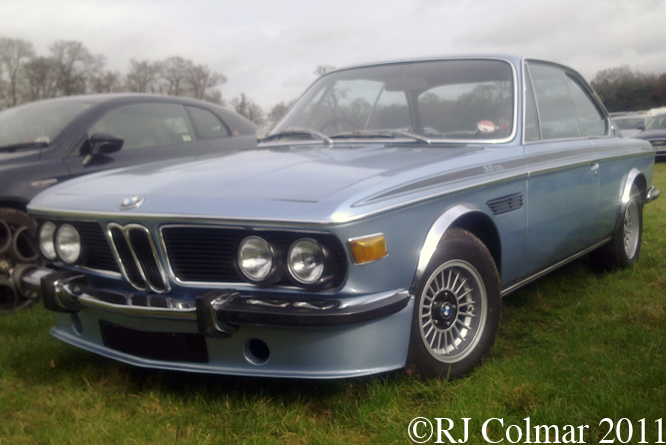
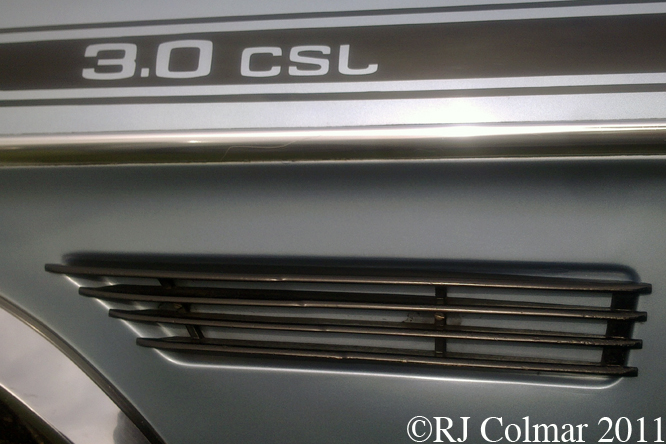
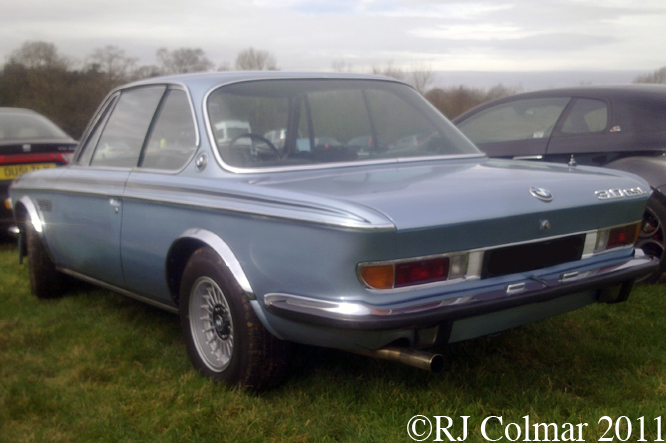
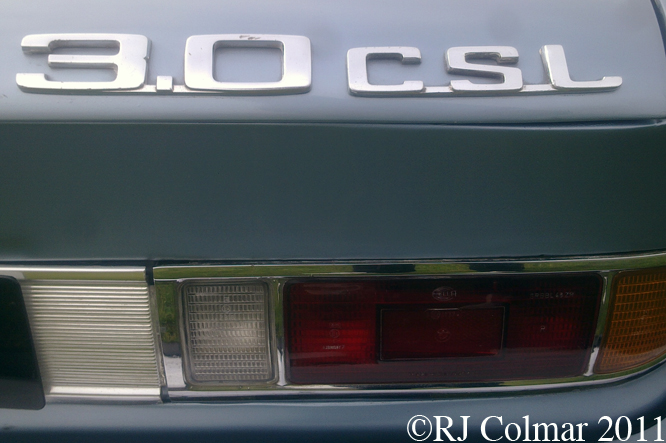
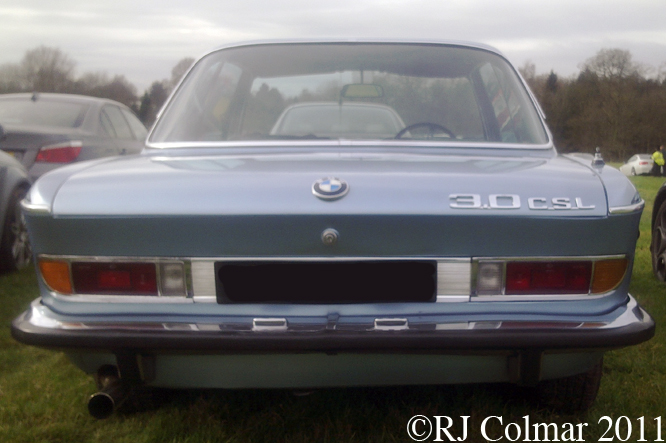
In May 1972 BMW launched the lightweight variant of the CS model based on the E9 platform known as the BMW 3.0 CSL with the L denoting ‘light’ = leicht in German.

BMW 3.0 CSL, Race Retro

The the CSL was a homologation special the purpose of which was to allow a higher specification racing cars to be built. It would appear the car shown here is one of the earliest CSL’s built fitted same 200 hp 2,986 cc / 182.2 cui motor as the CSi model. Over time the CSL was fitted with larger motors to be eligible for the over 3 litre / 183 cui class.

BMW 3.0 CSL, Race Retro

Light weight features included thinner steel body, deleting trim and sound proofing, using aluminium alloy doors, bonnet / hood, boot / trunk lid and perspex side window’s.

BMW 3.0 CSL, Race Retro

BMW’s UK importer however insisted that the 500 CSL’s imported to the UK retain the soundproofing, electric windows and bumpers from the stock CSi meaning UK CSL’s are a higher specification than all other CSL’s and also no quite so light weight.

BMW 3.0 CSL, Race Retro

The final version of the CSL from July 1973 featured a 3,153 cc / 192.4 cui six cylinder motor and a variety of aerodynamic aids both front and rear which led to the model being nicknamed the Batmobile.

BMW 3.0 CSL, Race Retro

In 1973 Dutchman Tonie Hezemans driving a BMW CSL was crowned European Touring Car Champion securing the manufacturers title for BMW. 3.0 CSL’s would continue winning European Touring car races every year all the way through to 1979 with eight drivers sharing championship spoils between 1975 and 1979 securing a further 5 European Touring Car Manufacturers Championships for BMW.

Thanks for joining me on this ‘Not So Lightweight’ edition of ‘Gettin’ a li’l psycho on tyres. I hope you will join me again tomorrow. Don’t forget to come back now !

Share

Two Tone Paint Standard – Lotus 36 Elan Sprint

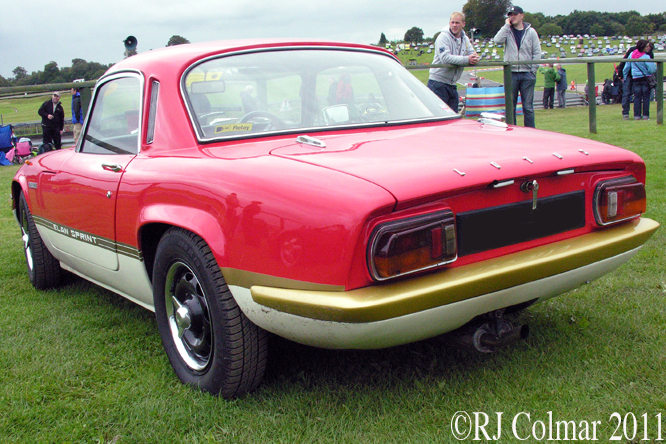
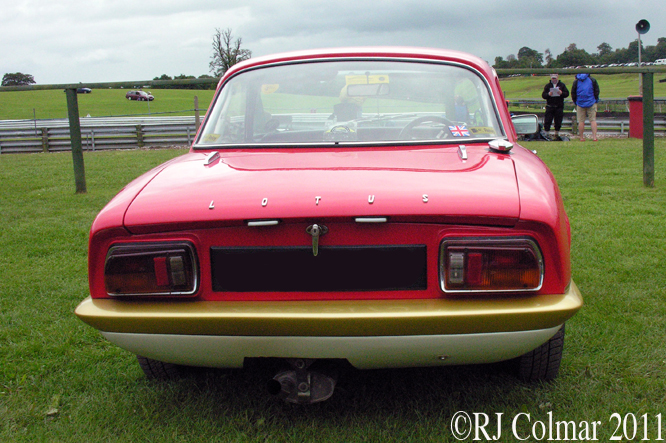
It is well known in the motor trade that you know a model is coming to the end of it’s life when the limited editions and special paint jobs start appearing.

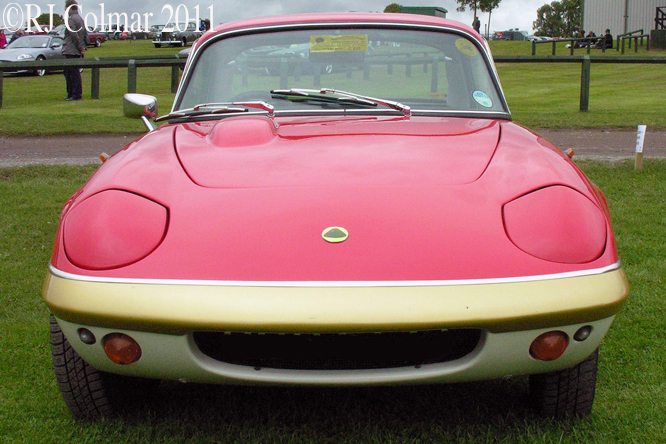
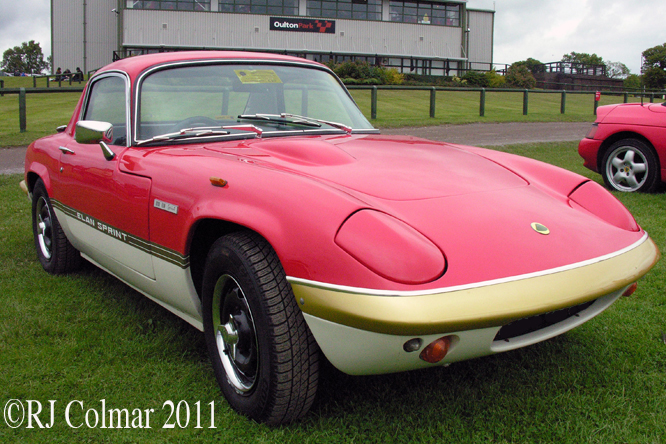
Lotus Elan Sprint, Oulton Park

Falling Elan S4 sales and the suggestion that the Elan was falling behind the competition in a group test may have led Lotus Sales Director Graham Arnold suggesting that a revamped Elan be launched with a paint job derived from the Gold Leaf Team Lotus Grand Prix cars which were about to seal the teams forth World Constructors Championship in 1970.

Lotus Elan Sprint, Oulton Park

The Elan Sprint was also given a new big valve head that is said to have been developed in just 10 days which boosted power from 115 to 125 hp. The Webber carburetors of Elan Sprint motor did not need the power bulge, required by the earlier S4 model Stromberg carburetors, in the bonnet / hood though early examples like the one seen here at Oulton Park are thought to have been fitted with bonnets from the previous S4 series to use up the surplus stock.

Lotus Elan Sprint, Oulton Park

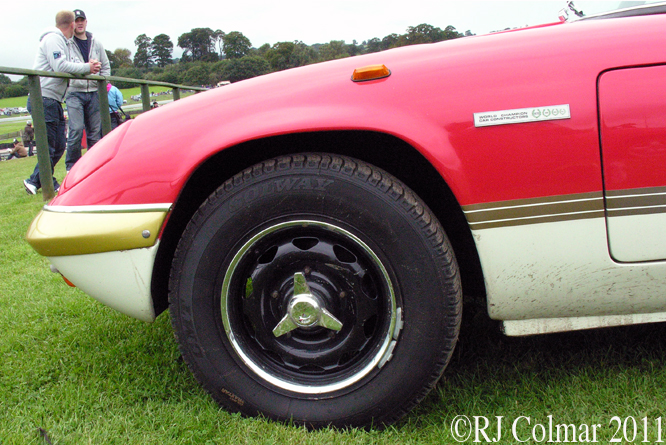
The badge on the wing celebrates World Constructors Championship victories in 1963, ’65, ’68 and ’70, this badge on the last Sprint models produced between November 1972 and May ’73 included a fifth 1972 championship victory.

Lotus Elan Sprint, Oulton Park

It is suggested in some circles that the gold stripes between the two tone paintwork were applied to cover quality issues where the two colours meet, however the Gold Leaf Grand Prix cars on which the Elan Sprint paint scheme is based also featured a gold stripe twixt the red and white colours. Sprints could be ordered in single colours, at additional cost.

Lotus Elan Sprint, Oulton Park

When Autocar tested the Elan Sprint in 1971 they liked the refinement, speed and handling but were not so keen on the ride, cramped cockpit or heating and ventilation.

Lotus Elan Sprint, Oulton Park

It is thought 1353 Elan Sprints were built between January 1971 and March 1973 when Elan production ceased because the model did not meet new regulation requirements introduced for 1974 in US and European Markets.

Thanks for joining me on this ‘Two Tone Paint Standard’ edition of ‘Gettin’ a li’l psycho on tyres’, I hope you will join me again tomorrow. Don’t forget to come back now !
Share

Losing Momentum – Ferrari 126C3 #066

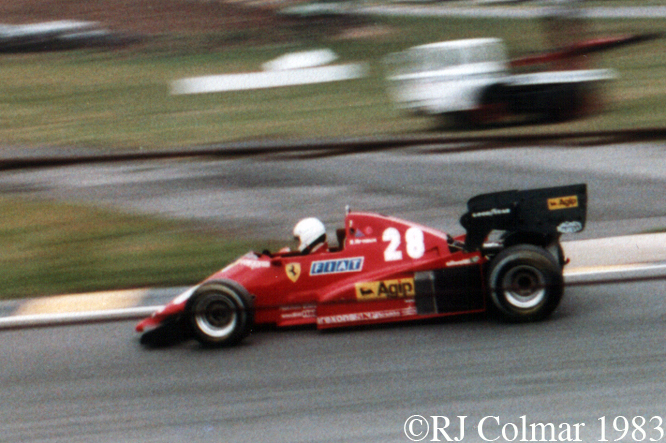
Entering the final two races of the 1983 World Championshp season Alain Prost driving for Renault had 51 points, René Arnoux seen here in the #28 Ferrari had 49 points and Nelson Piquet driving for Brabham had 47 points. Of the three René had all the momentum with him coming off a four race streak which included 2 wins in Germany and Holland driving chassis #066 seen here and 2nd places in Austria and Italy.

Ferrari 126 C3, European Grand Prix, Brands Hatch

At the European Grand Prix held at Brands Hatch Piquet qualified 4th, Arnoux, seen during qualifying above and below, 5th and Prost 8th. The race was won by Piquet now with 56 points, Prost came home 2nd bringing his total to 57 points while René failed to score with a 9th place finish. At the final race of the season Piquet secured his second championship with a third place finish while Prost and Arnoux both lost all momentum and recorded retirements.

Ferrari 126 C3, European Grand Prix, Brands Hatch

Ferrari easily won the constructors championship thanks largely to the woe full finishing record the 2nd drivers employed by Renault and Brabham who both scored more retirements than finishes through the course of the season while Ferrari’s nominal number 1 driver Patrick Tambay managed to win one race and secure 8 points paying finishes.

My memory of this event was that I started the week sunning myself by the Tyrrhenian Sea south of Naples in Italy and hitched hiked back to the UK via Wolfsburg in Northern Germany. I caught a train for the last part of the journey to Belgium which broke down meaning I missed my pre booked ferry and had to borrow the ferry fare from an incredibly cute girl from Nottingham. The ferry we caught was then trapped in a storm and instead of crossing the English channel it anchored off the Belgium coast until the storm blew itself out.

I made it back to the UK just in time to catch a nights rest before spending 6 hours in a 20 mile traffic jam trying to get into Brands Hatch, missing morning practice completely but just catching the last half hour of the final practice session when I took today’s photographs.

Thanks for joining me on this ‘Losing Momentum

Share