Tag Archives: GALPOT

World Class – Ferrari 355 Belinetta & Spyder

From 1987 to 1991 the engine to have if you wanted to win the World Drivers Championship was a Honda during that period of dominance Honda also built a game changing super car that rendered contemporary Ferrari’s and particularly it’s nearest competitor the Ferrari 348 obsolete in price, reliability and handling.
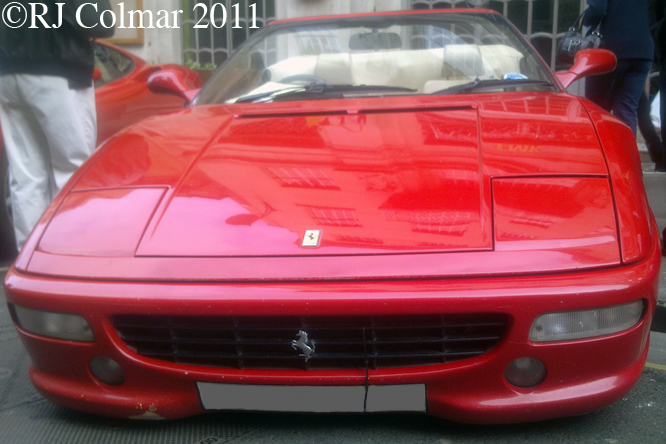
Ferrari F355, BIAMF

Fortunately Ferrari President Luca di Montezemol had his engineers rise to the challenge presented by the Japanese upstart by commissioning the design of the F355 and in the process Ferrari was transformed into a world class manufacturer of automobiles.
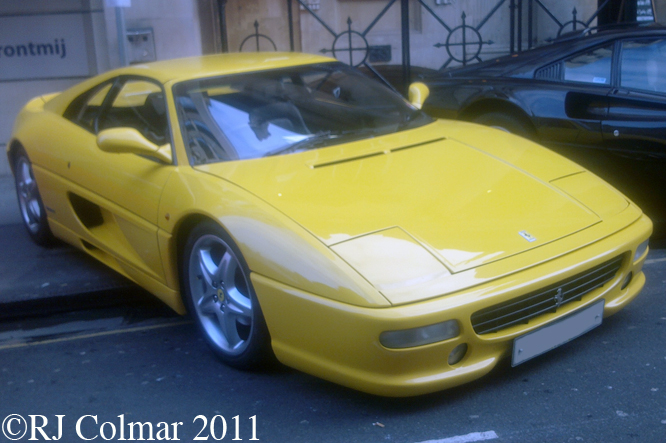
Ferrari F355, BIAMF

The solution to meeting the Japanese challenge was in part by turning to the latest Formula One technology which included building the first road car to be offered with a ‘paddle shift’ electronically controlled gearbox, and selecting the best ancillaries known to man for the engine, including Japanese starter motors and the latest in German electronic engine management systems.
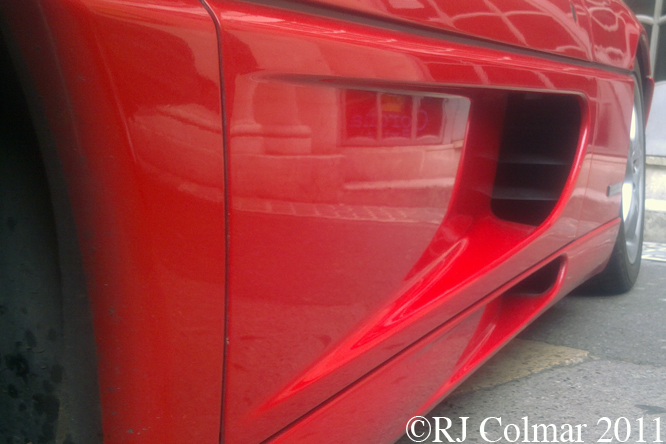
Ferrari F355, BIAMF

Out went Ferrari’s fabled indifferent assembly, industrial leather and off the shelf (FIAT) switchgear and in came carefully controlled build quality with bespoke switch gear and the finest leather interiors.
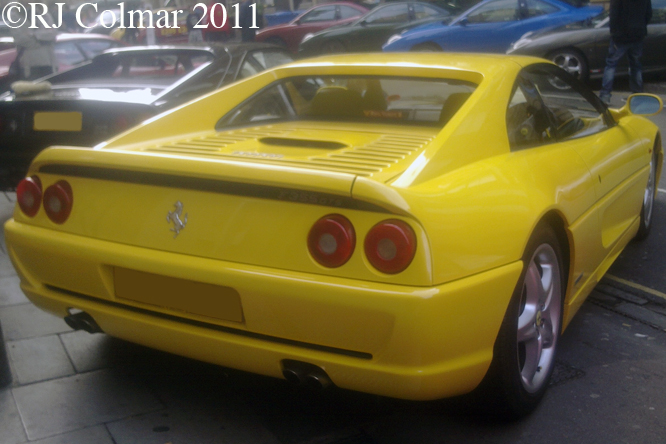
Ferrari F355, BIAMF

The F355’s motor was taken out from 3.4 to 3.5 liters AND given a pair of five valve per cylinder heads which combined to produce 375 hp which took a whole second off the GMC Syclones 1/4 mile time given by Car & Driver in the famous test between a Syclone Truck and a Ferrari 348ts that saw the GMC product perform surprisingly well.
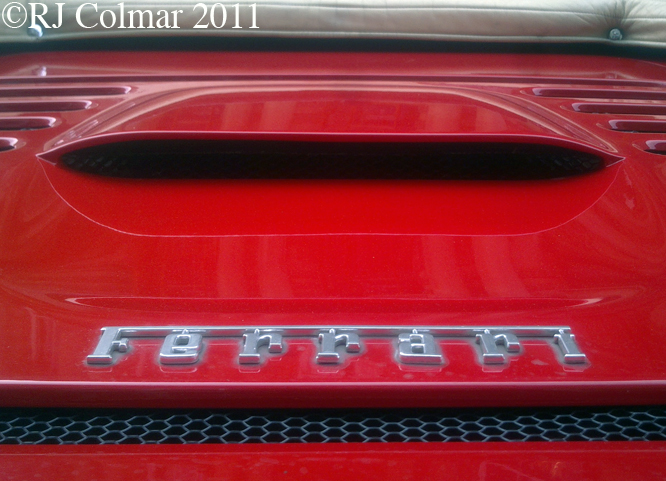
Ferrari F355, BIAMF

The outcome of Ferrari’s efforts to match Honda’s super car was rewarded with 11,273 sales of the three basic types between 1994 and 1999 making the F355 one of the commonest of Ferrari’s yet seen, though the significance and legacy of the model lay in the foundations for success that the building and development of the F355 provided for all of the Ferrari road models that were to follow.

Thanks for joining me on the ‘World Class’ edition of ‘Gettin a li’l psycho on tyres’ I hope you will join me again tomorrow when I’ll be looking at a very significant Lotus. Don’t forget to come back now !

Share

Racing Dispensation – Mosler MT900 GT3

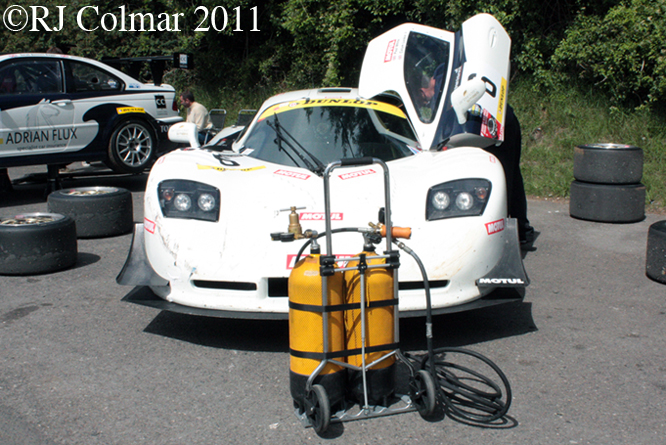
Warren Mosler has been at the fore front of automotive production technology ever since he launched the curiously proportioned Consulier GTP in 1985 a car that lays claim to being the worlds first carbon fiber and Kevler bodied vehicle to go into production.

Mosler GT3, Strata 21, Paul White, Calum Lockie, Castle Combe

After around 100 Consuliers had been produced Consulier Industries founded by Mosler spun off it’s automotive division and renamed it Mosler Automotive who produced a further Consulier GTP based vehicles up until 2000 when Mosler Automotive turned it’s attentions to the Mosler MT 900 wwich was designed by Rod Trenne who counts work on the Corvette C5 among his credits.

Mosler GT3, Strata 21, Paul White, Calum Lockie, Castle Combe

Like the Consulier and low volume Mosler Intruder and Raptor models that followed, the MT900 has a Kevlar body covering a carbon fiber skinned aluminium honeycombe composite monocoque made with bonded laser cut panels.

Mosler GT3, Strata 21, Paul White, Calum Lockie, Castle Combe

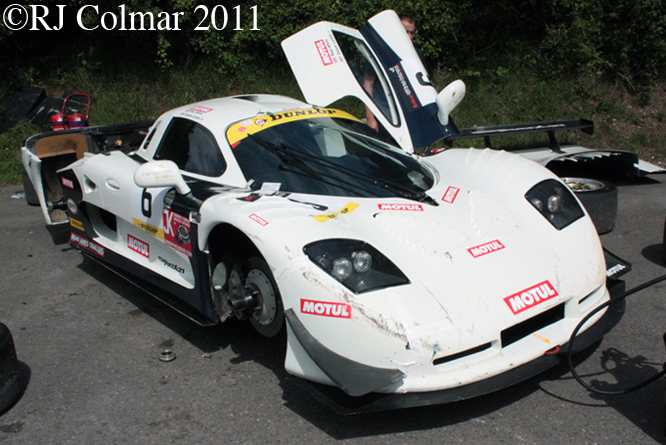
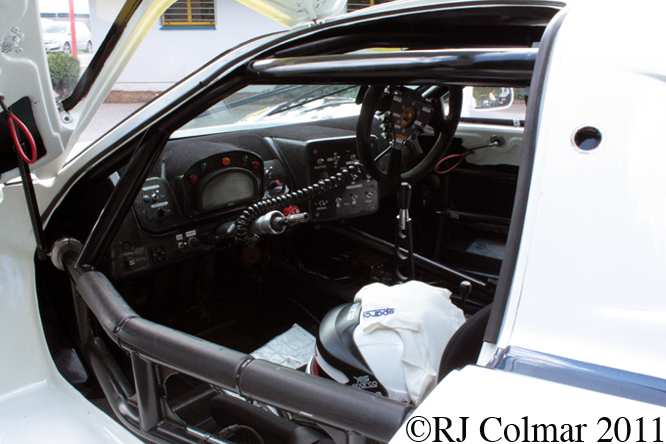
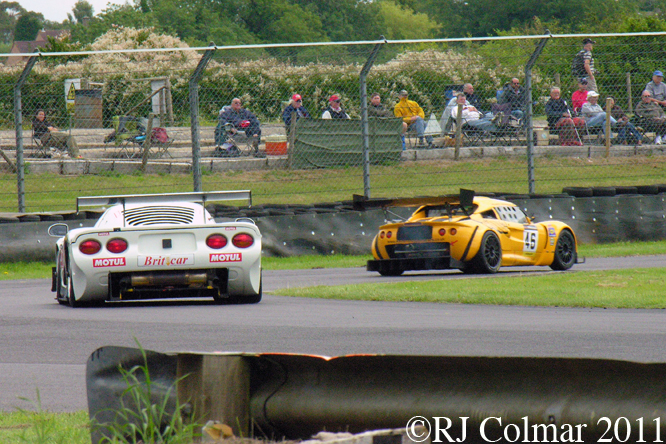
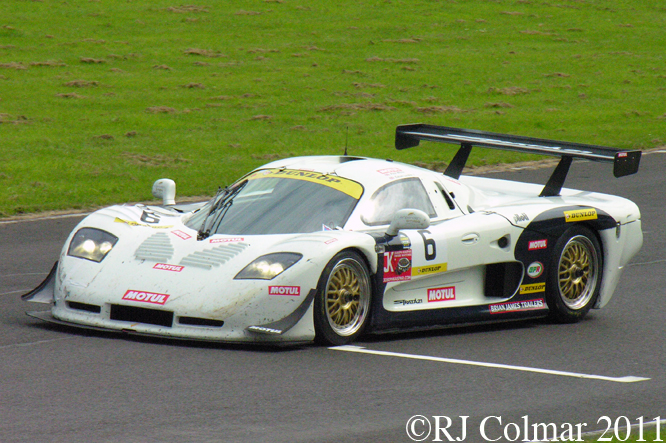
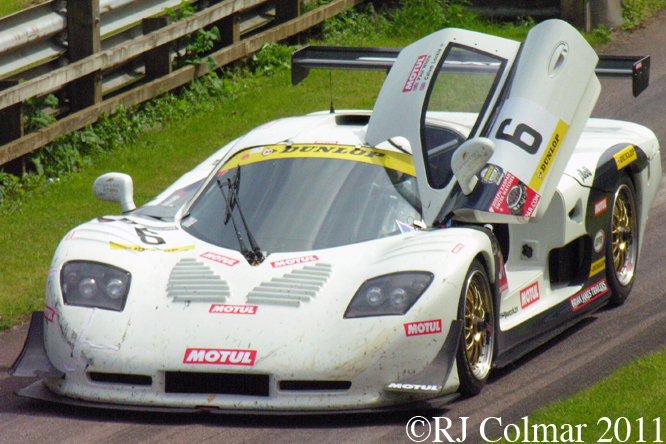
It is thought that only the prototype MT900 road car was ever produced, in 2001, however it is estimated that 11 MT900R versions were produced for GT2 racing with further GT3 versions like the Strata 21 team car seen here at Castle Combe. The only problem is that GT3 requires a certain number of cars to be built to qualify as a production racing car and this number has never been met, so that the car only races with special dispensation in GT3 spec in the UK, Belgium, Spain and Australia.

Mosler GT3, Strata 21, Paul White, Calum Lockie, Castle Combe

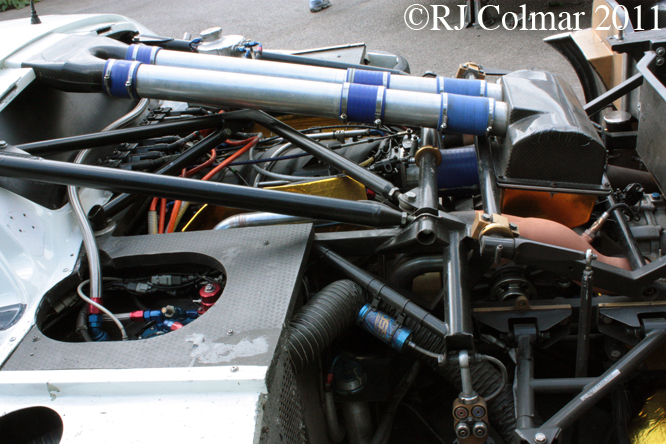
The MT900 GT3 is fitted with a dry sumped all alluminium Corvette LS7 motor with titanium valves and connecting rods tuned to give around 520 hp for events lasting between 2 and 24 hours, though 580 hp is available for short periods at higher less enduring rpm.

Mosler GT3, Strata 21, Paul White, Calum Lockie, Castle Combe

Despite only running with special dispensation of the 52 events the MT900 GT3 version is known to have participated in it had scored 13 wins and 2 class victories between 2007 and 2011.

Mosler GT3, Strata 21, Paul White, Calum Lockie, Castle Combe

Dave Sheard and Steve Scott are responsible for preparing the Strata 21 Mosler MT900 GT 3 for the Britcar Championship with owner Paul White sharing the driving with hired hand Calum Lockie.

Mosler GT3, Strata 21, Paul White, Calum Lockie, Castle Combe

After an unspecified mishap during qualifying at Castle Combe Calum Lockie started the 2 hour Britcar race from the back of the grid and with Paul White taking over for the second half of the race the #6 came in 4th overall.

Mosler GT3, Strata 21, Paul White, Calum Lockie, Castle Combe

By the seasons end White and Lockie were crowned Britcar Class 1 Champions having beaten Spanish rivals Javier Morcillo and Manuel Cintrano in the older Azteca Motorsport MT900 GT3.

Hope you have enjoyed this Racing Dispensation edition of ‘Gettin’ a li’l psycho on tyres’ and that you will join me again tomorrow for Ferrari Friday. Don’t forget to come back now !

Share

The Car You Always Promised Yourself – Ford Capri 1600 L

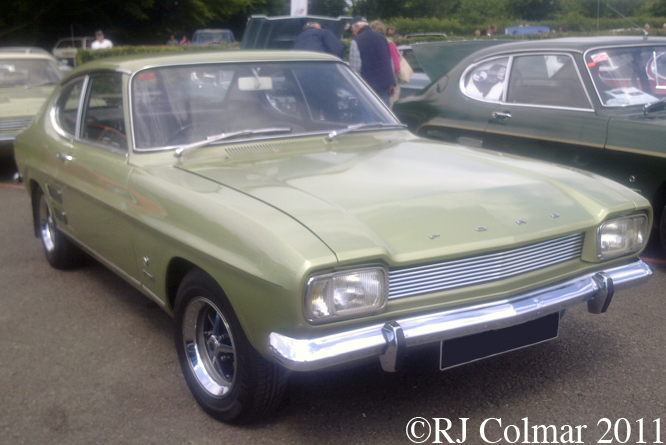
The concept of the ‘pony car’ is generally agreed to have been formulated by Ford when it popped a sports car body onto saloon / sedan running gear of the Ford Falcon and called the result the Ford Mustang.

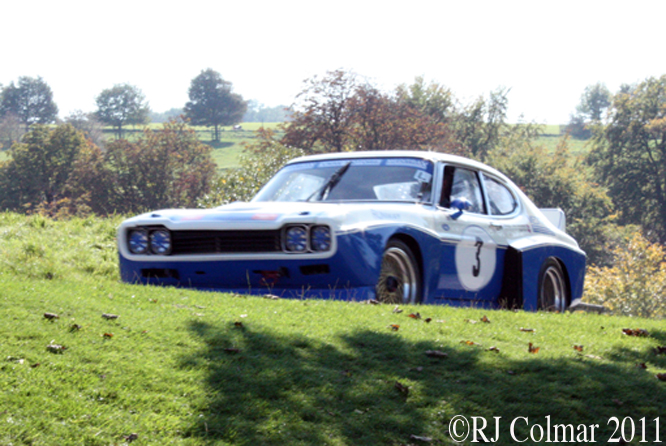
Ford Capri 1600 L, C&SC Action Day Castle Combe

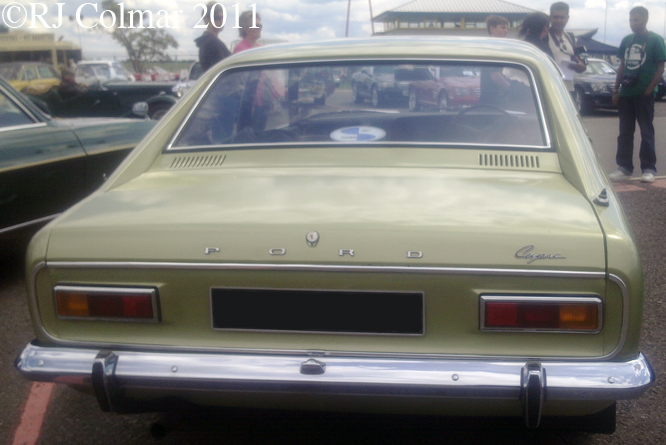
By 1969 Ford in Europe emulated their US cousins by plonking a cool coupé body on the running gear of the evergreen Ford Cortina Mk2 Saloon / Sedan and marketing it as the “Car You Always Promised Yourself“.

Ford Capri 1600 L, C&SC Action Day Castle Combe

And for many people it really was over 1 million of the Mk1 versions were sold between 1969 and 1974 with a range of engines from 1.3 litres / 79 cui to eventually 3.1 litres 189 cui with an extremely limited edition homologation racing special having a 24 valve 3.4 litre / 207 cui motor fitted.

Ford Capri 1600 L, C&SC Action Day Castle Combe

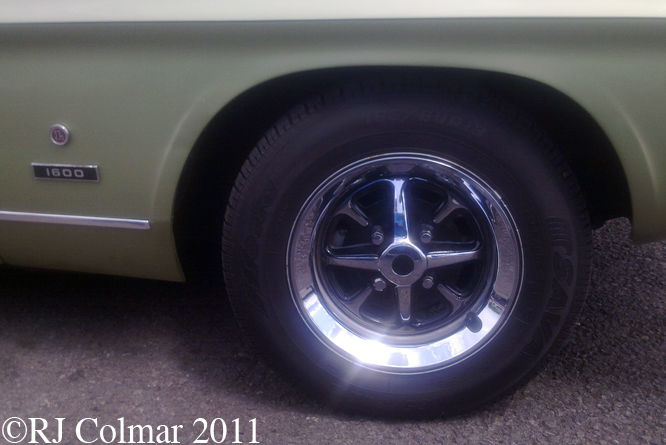
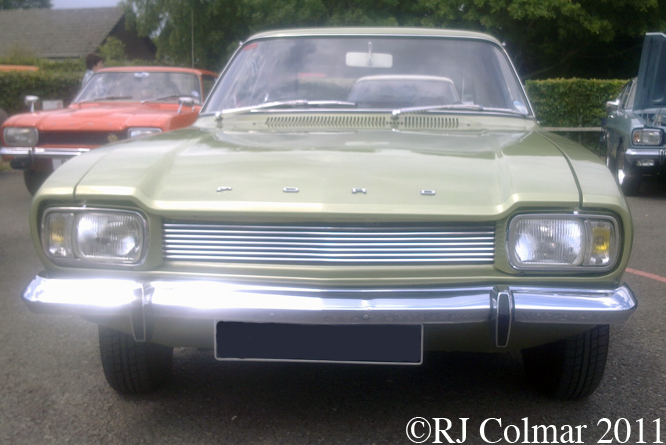
The Rostyle steel wheels on this example were identical to those found on the Cortina 1600E and usually fitted to the XL Capri variants, this 1969 1600 L fitted with 4 cylinder ‘Kent’ motor normally would have far more utilitarian steel wheels fitted with hub caps when it left the factory.

Ford Capri 1600 L, C&SC Action Day Castle Combe

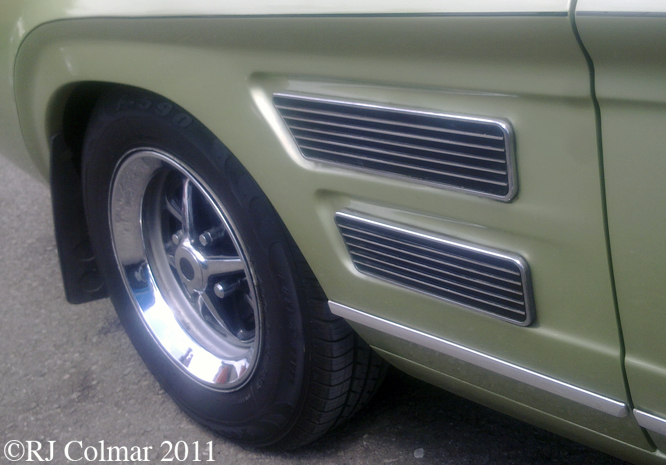
The intakes ahead of the rear wheels are dummies, just like those on the original 1964 Ford Mustang which inspired much of the design philosophy of the Capri.

Ford Capri 1600 L, C&SC Action Day Castle Combe

The Capri Mk 1 was sold without the Ford Badges in the United States by Lincoln – Mercury Dealers and was marketed as the ‘Sexy European‘ perhaps reflecting the popularity of this model among the stereo typical hedonist ‘Medallian Men’ of Europe.

Thanks for joining me on this ‘Sexy European’ edition of ‘Gettin’ a li’l psycho on tyres’, I hope you’ll join me again tomorrow when I will be looking at a rare contemporary American GT racing car. Don’t forget to come back now

Share

Irish Grand Prix Winner – 8/33 MG Midget

Cecil Kimber’s Morris Garages blossomed into the car manufacturer when it began producing sports versions of the 4 seat Morris Oxford in 1924. After building around 1100 such vehicles by 1929 the MG Car Company found a new market niche for small engined two seat performance sports cars.

MG M-Type, Prescott

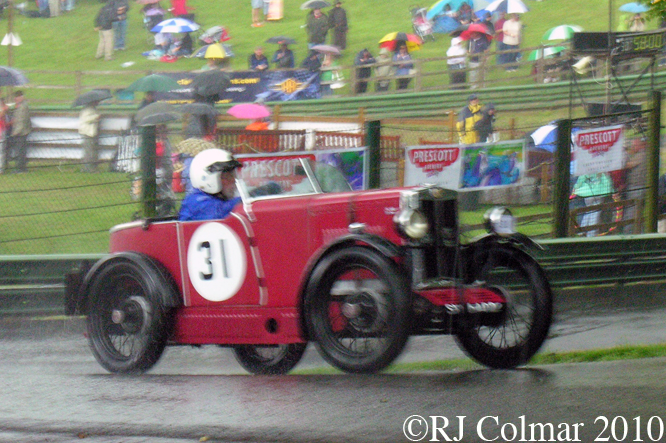
The first such car was the M-Type similar to Alex Peacops 1930/31 example seen at Prescott above which was marketed as the 8/33 M.G. Midget which was based on the Morris Minor chassis featuring lowered suspension with a wheel base of 78″ / 1980 mm and track of 42″ / 1067 mm.

MG M-Type, Prescott

The power for the Midget was provided by a 20 hp overhead cam 4 cylinder motor derived from the Morris Minor and Wolseley 10 cars. In 1930 the Midget design, like all those featured today, was upgraded with the Morris rod braking system replaced with a cable operated system and the 20 hp motor being replaced by a 27 hp version. Roger Glister is seen at Prescott driving his 1931 Midget above.

MG M-Type, Loton Park

Competition success with Midgets in 1930 included a Gold Star on the Lands Ends Trial, class victories in the Double 12 (hour) race at Brooklands, and Irish Grand Prix, success which were unashamedly used in subsequent advertising campaigns for the MG Midget.

MG M-Type, Loton Park

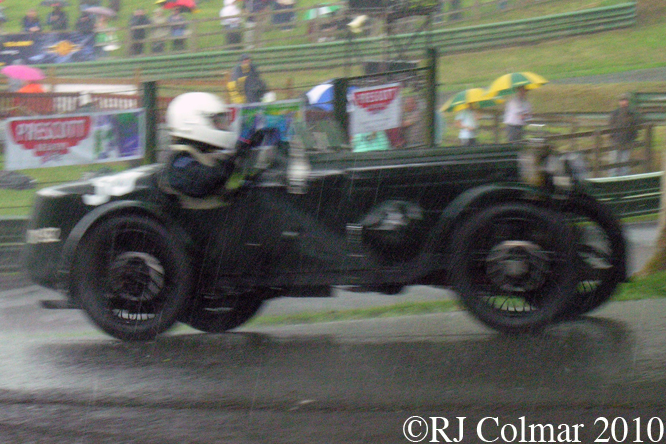
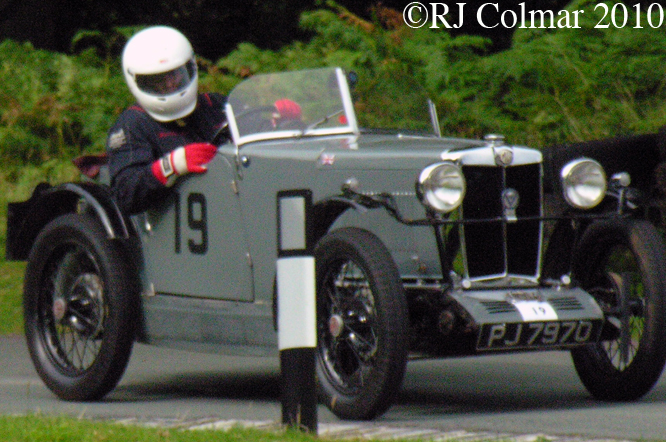
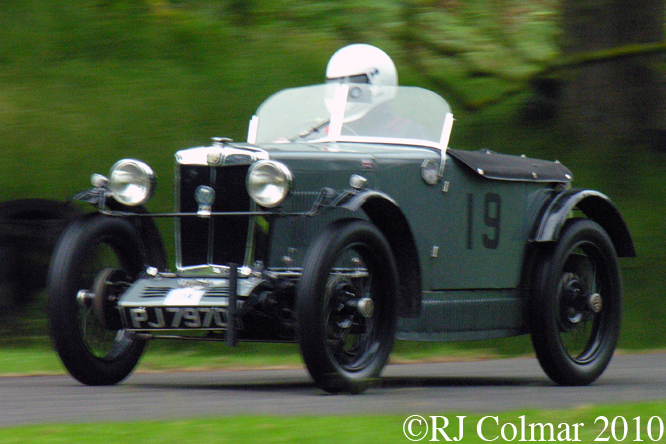
In standard form, like the 1932 #19 above driven by David Rushton at Loton Park, the Midget was capable of 65 mph and 40 mpg. The popularity of the Midget significantly boosted MG production numbers, by 1932, when production ceased, 3,235 Midgets had been produced which included coupé, supercharged and a one off service van variant.

Thanks for joining me on this M-Type edition of ‘Gettin’ a li’l psycho on tyres’, I hope you will join me again for a look at “The Car You Always Promised Yourself”. Don’t forget to come back now !
Share

Hauling Marbles & Lego – Chevrolet El Camino

Some of my readers who have been reading my blogs since I started writing blogs at Rowdy.com may remember I once posted a video of myself singing a Joe Diffie song ‘Pick Up Man‘.

Chevrolet El Camino, Shakespeare County Raceway

The words have always resonated with me in part because when I was a kid, way before I went to school I had a ‘Dinky’ 1/32nd scale two tone bright green and white Chevrolet El Camino pick up truck which I used to delight in filling with marbles and lego and drove at least 100,000 miles on my knees.

Chevrolet El Camino, Shakespeare County Raceway

I don’t remember that it was big enough to carry a Barbie Doll bed but I am sure I carried plenty of smaller dolls house accessories, for the girl next door.

Chevrolet El Camino, Shakespeare County Raceway

Last time I recall seeing that Chevy it looked something like this, which might be considered a shame because one in good as new tip top condition is worth about £120 on e-bay but then y’all never met the girl next door !

Chevrolet El Camino, Shakespeare County Raceway

The concept of using a coupé as the basis for a utility pick up truck came at the suggestion of a farmers wife in Victoria, Australia who wrote to Ford Australia asking for “a vehicle to go to church in on a Sunday and which can carry our pigs to market on Mondays”.

Chevrolet El Camino, Shakespeare County Raceway

Lew Brandt at Ford Australia is credited with designing the first such vehicle in 1934 and General Motors Australian division Holden produced a similar vehicle in 1935.

Chevrolet El Camino, Shakespeare County Raceway

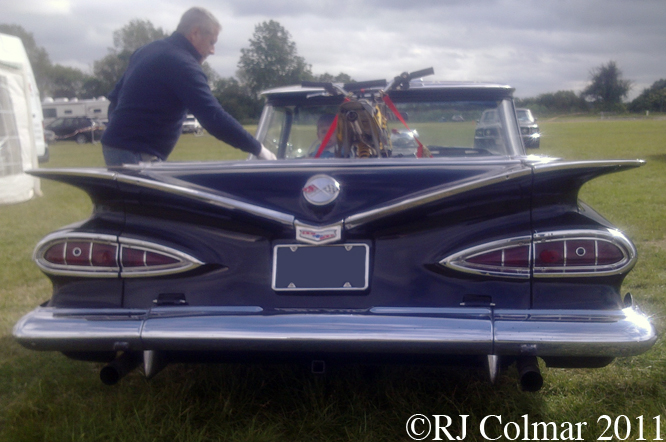
Surprisingly the coupé utility vehicle idea did not transfer across the Pacific Ocean until 1957 when Ford launched the Ranchero, based on the two door Ford Custom/Ranch Wagon/Courier platform and in 1959 Chevrolet followed suit with the El Camino based on the Brookwood platform complete with tail fins.

Chevrolet El Camino, Shakespeare County Raceway

When Hot Rod magazine conducted a test between the Ranchero and El Comino in 1959 they found the El Camino fitted with the top of the range 5.7 litre / 348 cui motor was capable of accelerating from rest to 60 mph in around 7 seconds and estimated the top speed at an astonishing 130 mph.

Chevrolet El Camino, Shakespeare County Raceway

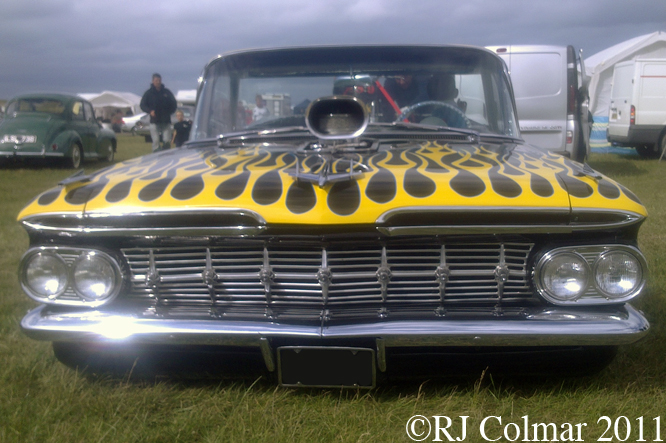
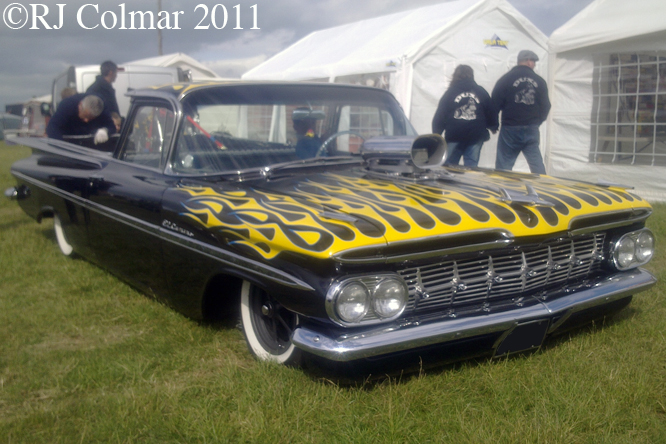
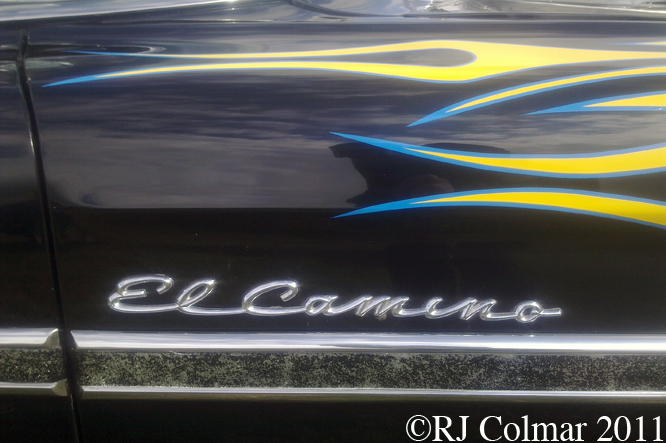
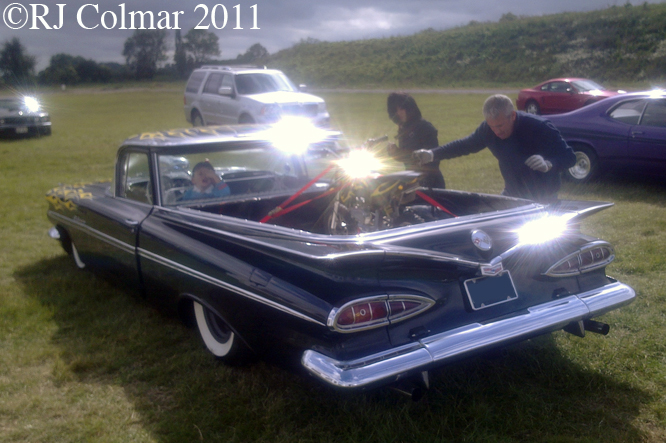
The first generation El Camino, like this ’59 model seen at Shakespeare County Raceway, outsold the Ranchero in the first year of production but when sales plummeted in 1960 the model was promptly discontinued, after around 36,409 examples had been built until 1964.

Thanks for joining me on this marbles and lego edition of ‘Gettin’ a li’l psycho on tyres’, I hope you will join me again tomorrow. Don’t forget to come back now !
Share

Elvis Investigations – The Triumph Detective

A couple of weeks ago I received a enquiry from Hazen Wardle about reviewing a couple of his self published books the first of which is “The Triumph Detective” a Reche Plimpton Novel, in the spirit of nothing ventured nothing gained I agreed, I must confess life at GALPOT towers rarely leaves me time for engaging in pure fiction, there is enough of it when I am looking into the myths that surround some of the vehicles I blog about.

The Triumph Detective - A Reche Plimpton Novel

The Triumph Detective tells the tale of how plaid attired investigator ‘Reche Plimpton’ takes on a case to investigate a temporary abduction by aliens of the ‘up there’ kind of Sarge a German shepherd dog.

In solving the mystery Reche the proprietor of ‘Elvis Investigations’ follows up a number of clues that start with an alleged alien message, alternately using either his own Triumph GT6 which his assistant Laura is not so keen on, or Laura’s Hummer as transportation on the road to solving the mystery.

The story is peppered with entertaining characters such as those from the UFO Church of His illuminated Universe and a ne’er do well neighbour of his client.

Resche Plimpton - Guitar Thief

The second book ‘Resche Plimpton : Guitar Thief’, which not entirely coincidentally is launched today, carries on nicely from the first and is undoubtedly a more complete volume which sees our plaid dressed hero get framed for the theft of a broken guitar and then employed to find the guitar when it gets stolen a second time.

If I ever had any doubts about Hazen being a first time lucky writer they were completely dispelled by ‘Guitar Thief’ to the point where I am wondering if I can blag a copy of the third Resche Plimpton novel ‘Bigfoot: Triumph Enthusiast’ as and when it appears.

Without wishing to give the plot away I heartily recommend the first two Resche Plimpton Triumph Detective novels ‘The Triumph Detective‘ and ‘Guitar Thief‘ as amusing light reads available in handy e-book formats.

Triumph GT6

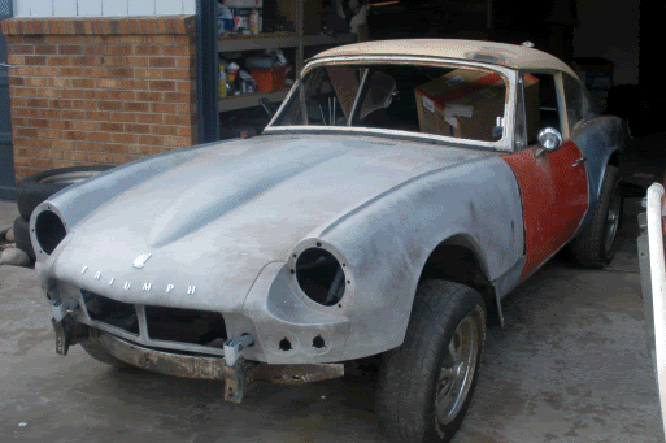
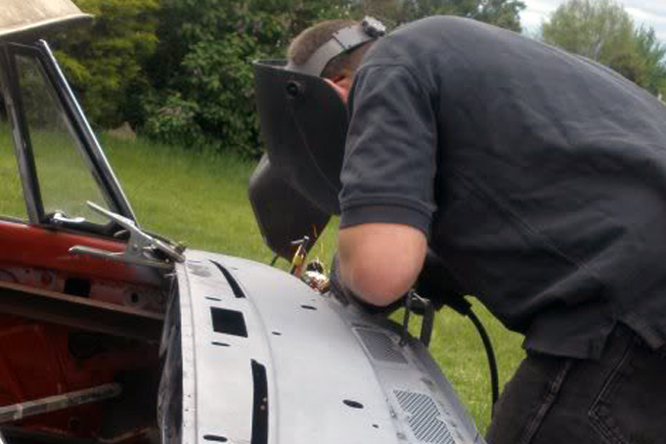
Alongside his writing Hazen describes himself as being ‘in over my head’ rebuilding a Triumph GT6 Coupé using the rear end panels from a Triumph Spitfire convertible.

The process of cleaning repairing and refabracation has given Hazen the opportunity to become familiar with every panel, rivet, nut and bolt of his vehicle.

Hazen Wardle

Hazen has been working on his GT6 project since 1997, since when he has moved 6 times ! Hazen’s dedication to Triumph sheetmetal is faithfully documented on his blog linked here.

I hope you have enjoyed this Elvis Investigations edition of ‘Getting’ a li’l psycho on tyres’ and that you will join me again tomorrow. Don’t forget to come back now !
PS Don’t forget … CLOSING DATE MIDNIGHT GMT TODAY !

Automobiliart GALPOT Seasonal Quiz

Automobiliart, Paul Chenard

December 26th – January 2nd

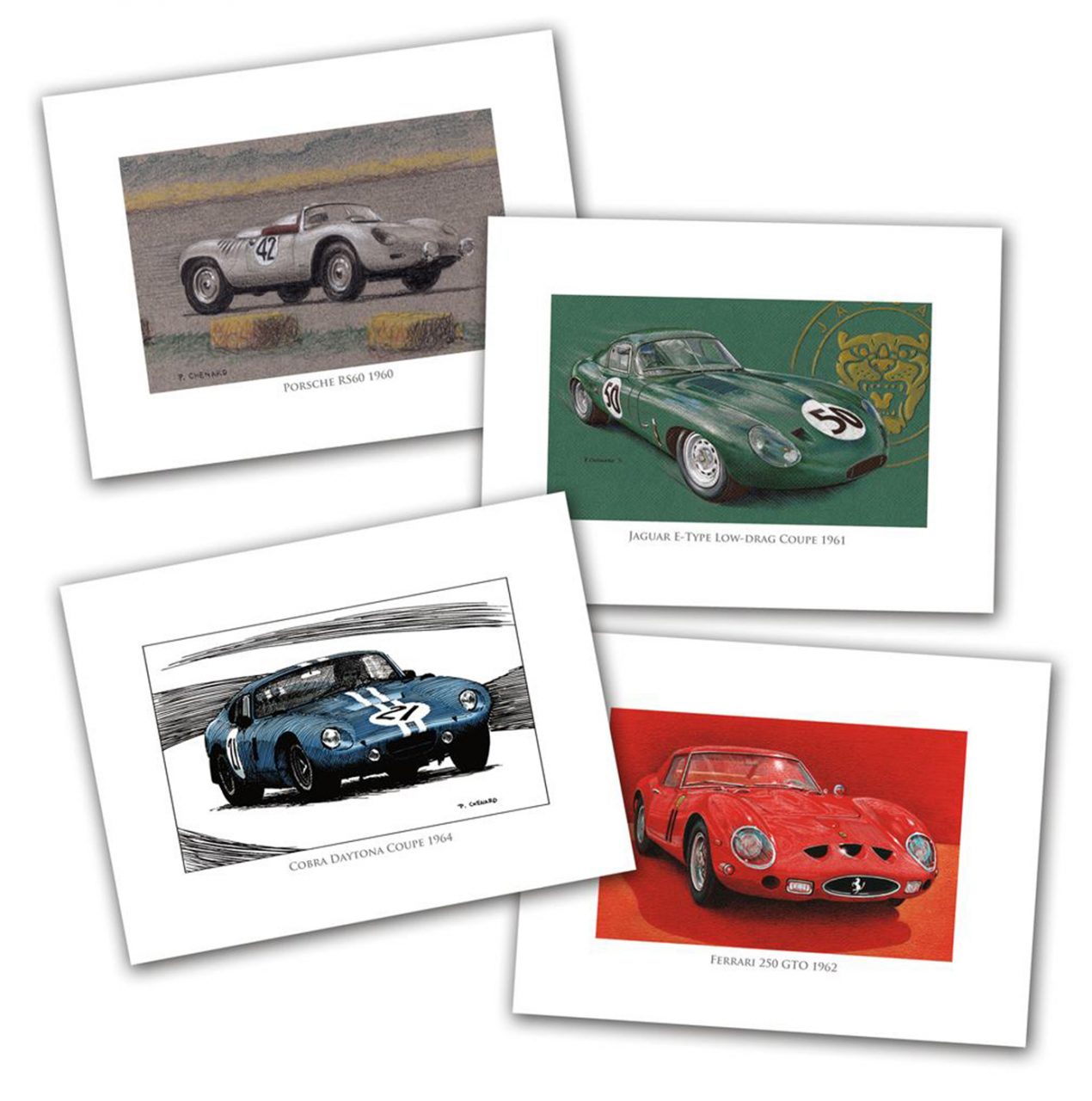
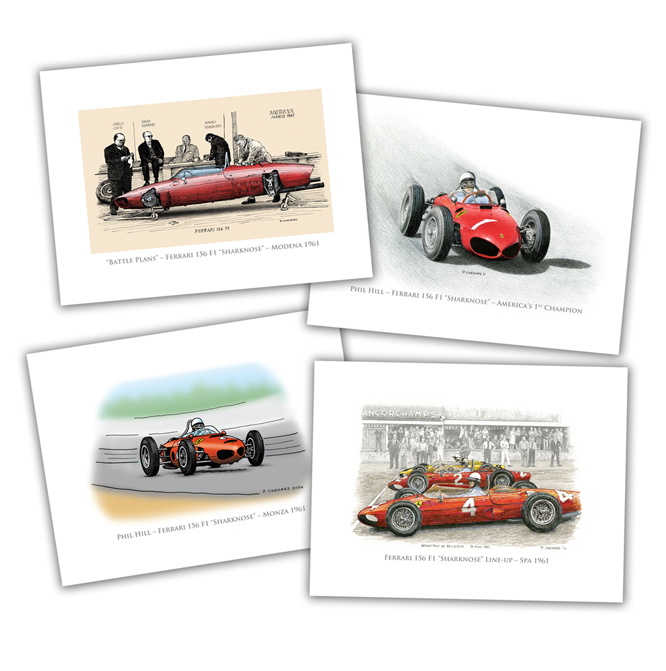
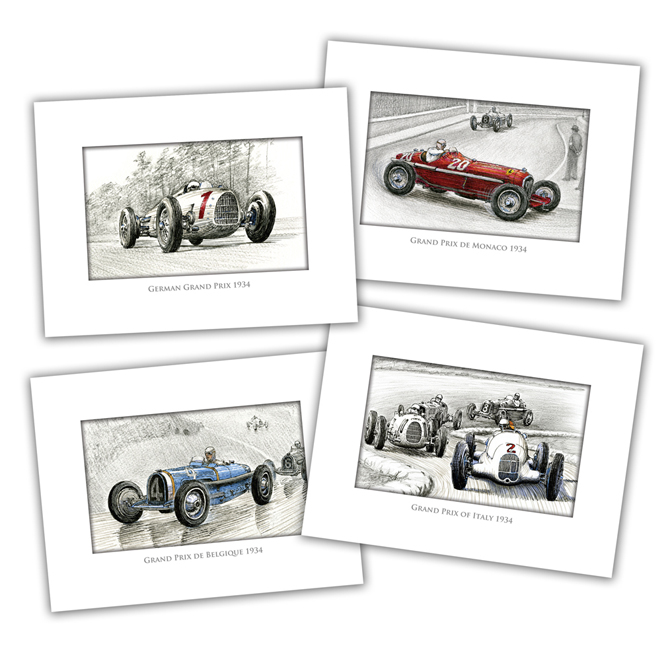
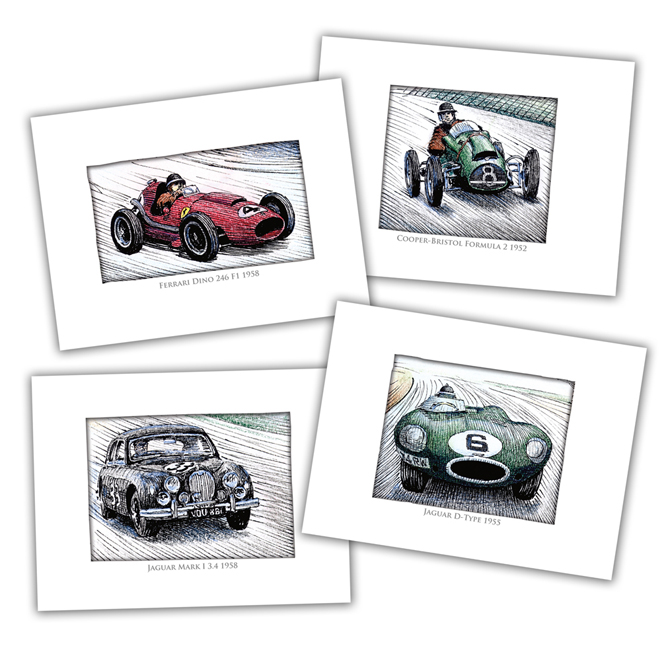
Win a set of Paul Chenard Greetings Cards

Sports-GT cars set, Paul Chenard

Set 1 Sports & GT Cars

Phil Hill, Sharknose Ferrari Set, Paul Chenard

Set 2 Phil Hill World Drivers Championship 50th Anniversary Edition

1934 GP Season Card set, Paul Chenard

Set 3 1934 Season

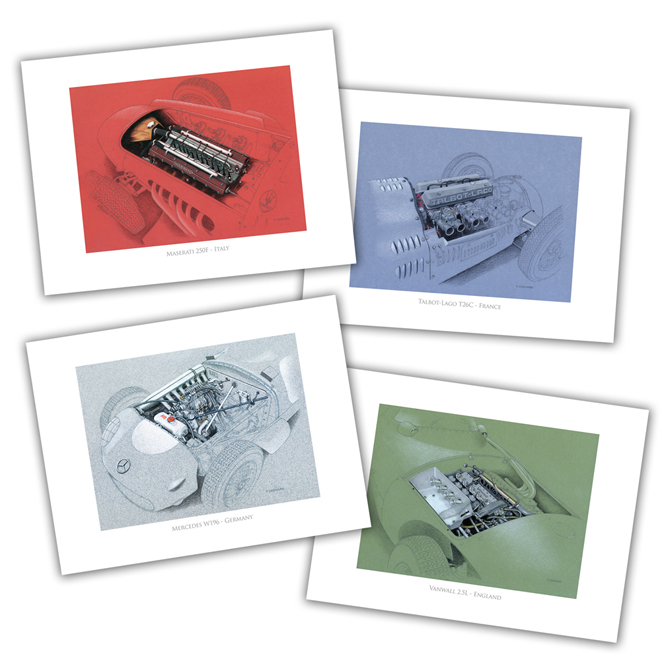
1950s Grand Prix Engines

Set 4 Grand Prix Engines of the 1950’s

or

Mike Hawtorns racecars Card set, Paul Chenard

Set 5 Mike Hawthorn’s Race Cars

The Automobiliart GALPOT Seasonal Quiz will comprise 8 categories.

Overall winner chooses one set of Paul Chenard Greetings Cards from the five sets shown above.

The cards measure 15.24cm x 11.43cm, come in packs of 12 with 3 copies of 4 designs in each set, plus A6 envelopes.

Which set will you choose ?

The free to enter Automobiliart GALPOT Seasonal Quiz will run from December 26th – January 2nd Entries close January 8th 2012, Winner announced January 16th 2012.

Full details on December 26th at GALPOT.

Share

Rosso Kev – Ferrari 250 GTO #3527

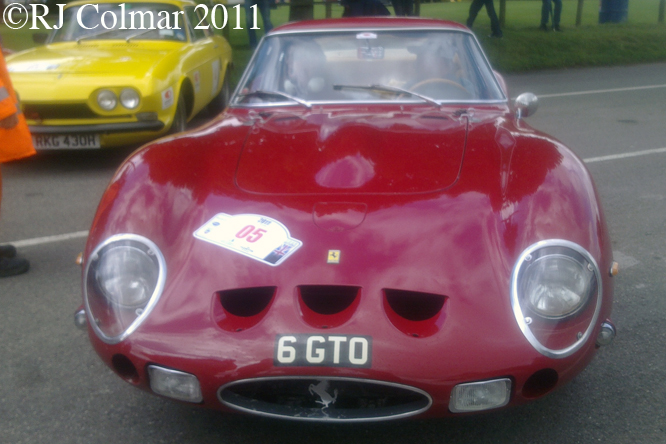
Todays car is the 7th of the original batch of 33 Ferrari 250 GTO’s built in 1962 and quelle surprise it does not belong to the well known drummer of the rock combo Pink Floyd.

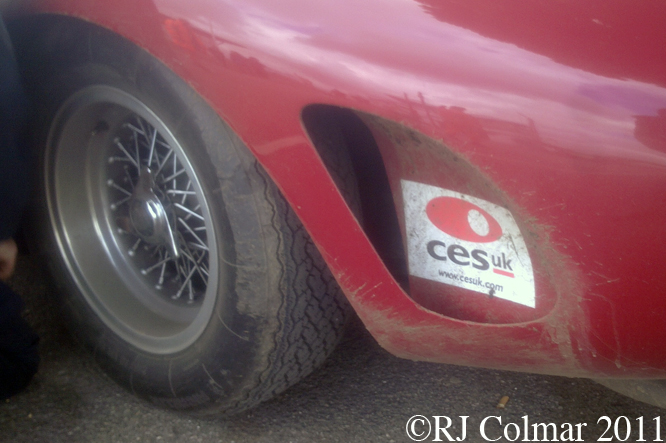
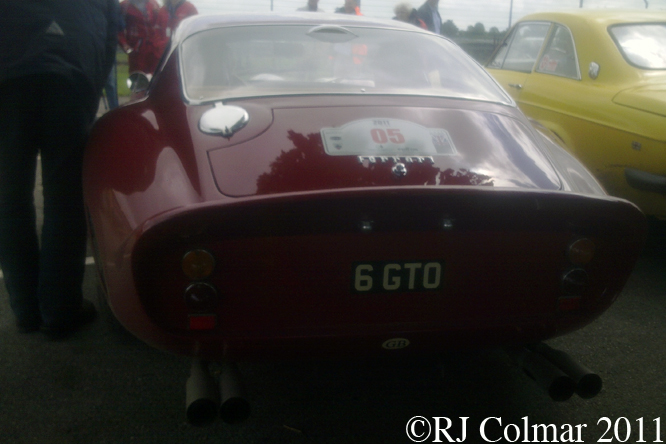
Ferrari 250 GTO, Tour Britania 2011

Chassis #3527 painted Russo Cina, a colour usually associated with FIAT, was purchased by Austrian Gottfried Koechert in May 1962 who entered it into the 1000 kms at the Nurburgring the same month for himself and Umberto Maglioli. The car retired from its first race with ignition failure and soon after was sold to Ecurie Francorchamps.

Ferrari 250 GTO, Tour Britania 2011

Belgian Lucien Bianchi drove the Ecurie Francorchamps #3527 on three occasions in 1962 nearly winning the Tour d’France until he collided with a milk truck necessitating the removal of the nose so that the car could finish the event in 7th place. Bianchi’s final appearance in the car was in the 1962 Angola GP which he won.

The car was then sold to Scuderia Filipinetti in Switzerland before finding it’s way shortly afterwards during 1963 into the hands of Swiss banker Armand Boller who drove the car to 6 class victories in hill climb events up to the end of 1964.

Ferrari 250 GTO, Tour Britania 2011

After withdrawing #3527 from the 1000 kms at Monza in 1965 Boller had the car converted into a road friendly spec with wind up windows, leather interior and VW rear lights by the Swiss Garber coach works.

#3527 was sold to building plant magnate Anthony Bamford in 1966 and was sold on in 1973 and again in 1984 to Steve Pilkington who had the Garber modifications removed.

Ferrari 250 GTO, Tour Britania 2011

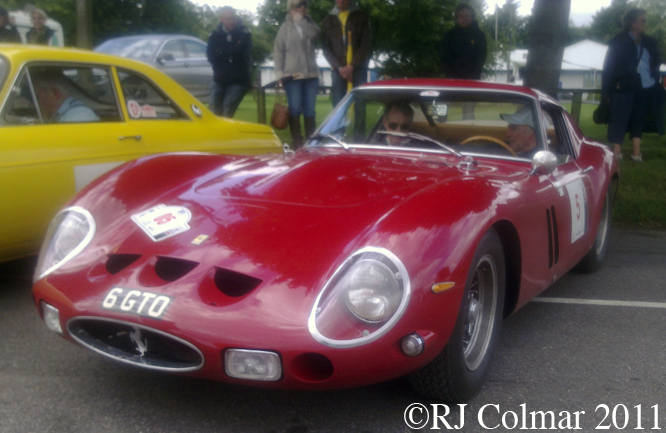
Current owner international conference magnate Baron Laidlaw bought #3527 in 2005 and has recently had the car restored and painted in fetching Rosso Kev as seen here during last years Tour Britannia event as it passed through Castle Combe.

Thanks for joining me on this Rosso Kev edition of ‘Gettin a li’l psycho on tyres’ I hope you will join me again tomorrow. Don’t forget to come back now !
PS Don’t forget …

Automobiliart GALPOT Seasonal Quiz

Automobiliart, Paul Chenard

December 26th – January 2nd

Win a set of Paul Chenard Greetings Cards

Sports-GT cars set, Paul Chenard

Set 1 Sports & GT Cars

Phil Hill, Sharknose Ferrari Set, Paul Chenard

Set 2 Phil Hill World Drivers Championship 50th Anniversary Edition

1934 GP Season Card set, Paul Chenard

Set 3 1934 Season

1950s Grand Prix Engines

Set 4 Grand Prix Engines of the 1950’s

or

Mike Hawtorns racecars Card set, Paul Chenard

Set 5 Mike Hawthorn’s Race Cars

The Automobiliart GALPOT Seasonal Quiz will comprise 8 categories.

Overall winner chooses one set of Paul Chenard Greetings Cards from the five sets shown above.

The cards measure 15.24cm x 11.43cm, come in packs of 12 with 3 copies of 4 designs in each set, plus A6 envelopes.

Which set will you choose ?

The free to enter Automobiliart GALPOT Seasonal Quiz will run from December 26th – January 2nd Entries close January 8th 2012, Winner announced January 16th 2012.

Full details on December 26th at GALPOT.

Share