Tag Archives: Geoffrey Horton

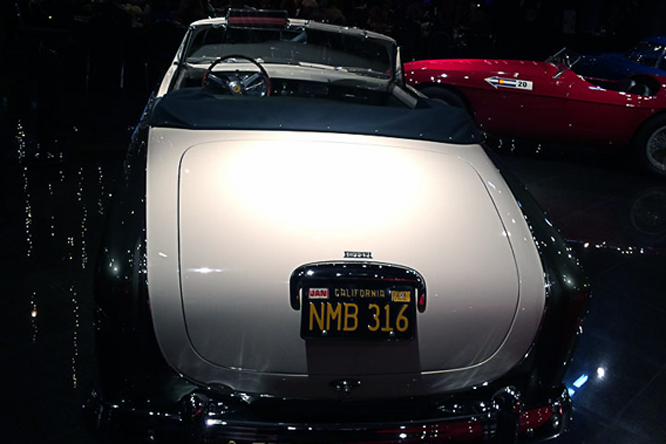
Aerodynamic Jewel – Ferrari 400 Superamerica Aerodynamico Coupé S1 #3221SA

After weeks of being adrift thanks to a few server issues it feels great to be finally back up to speed with to speed with today’s Ferrari Friday blog. My thanks to everyone for their patience and understanding during this challenging time for GALPOT.
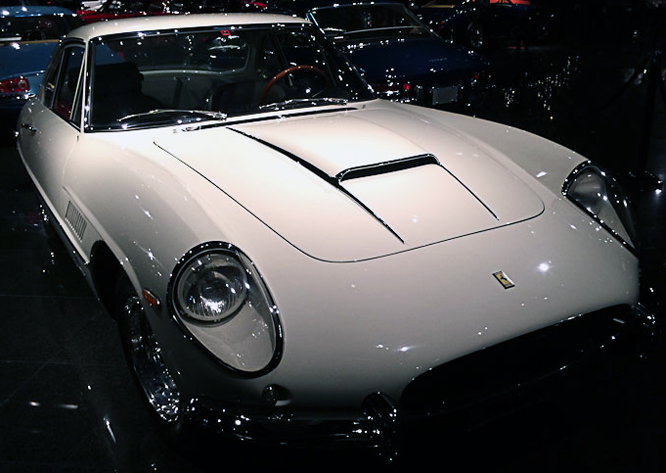
Ferrari 400 Superamerica, Blackhawk, Museum

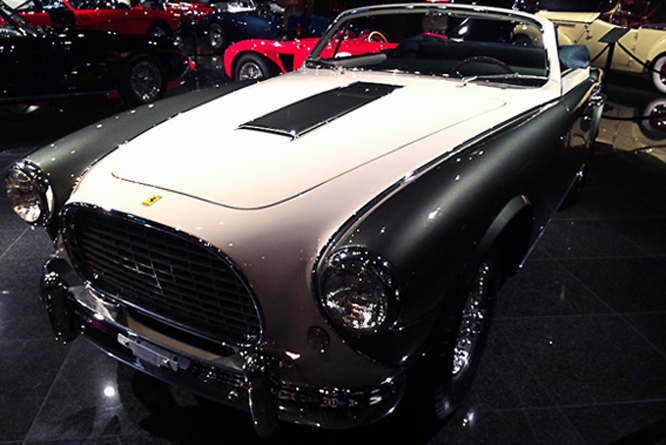
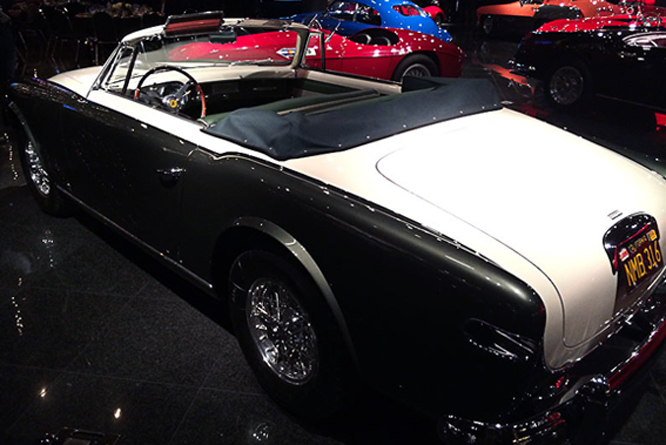
The Ferrari 400 Superamerica was launched in 1959 with a 340hp 4 litre / 244 cui Columbo V12 which replaced the Lampredi V12 that had been the mainstay of the America series Ferrari’s going all the way back to 1950.
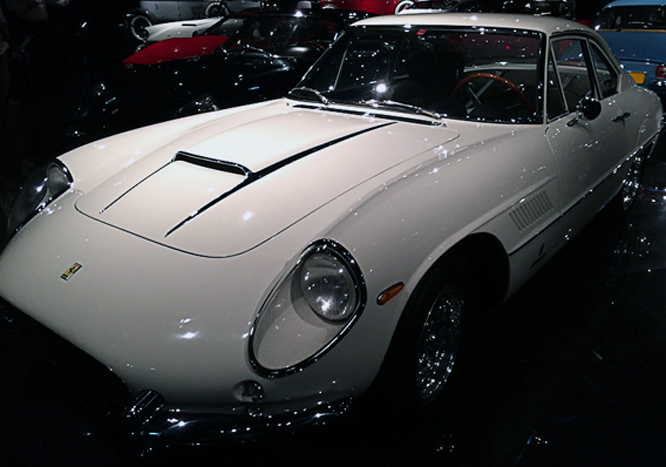
Ferrari 400 Superamerica, Blackhawk, Museum

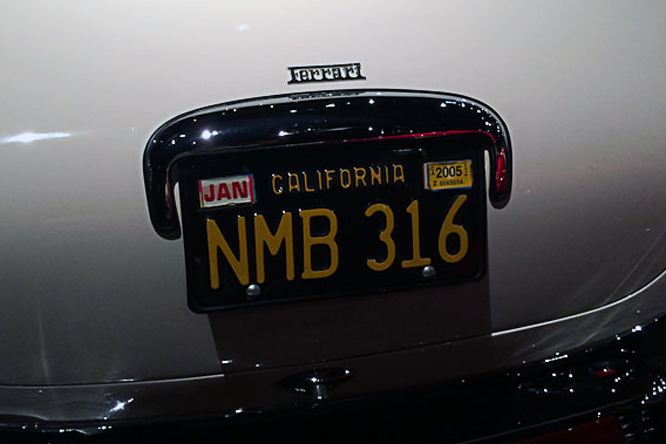
Chassis #3221SA the 18th of 25 such cars built was delivered to a French customer in 1962 and for a while belonged to the Marquis de St. Didier and later, in the 1980’s, to the President of Cartier Alain Dominique Perin.
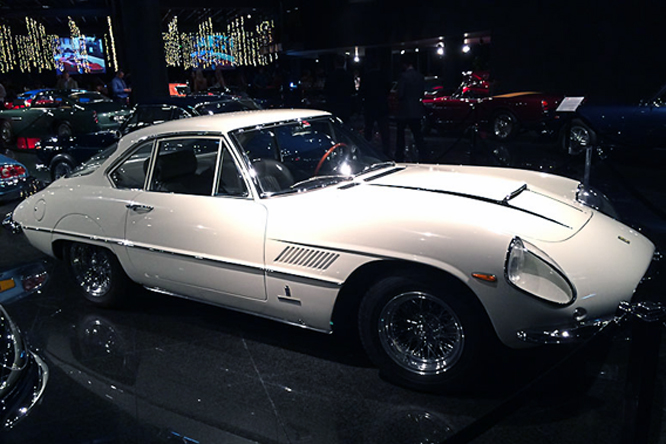
Ferrari 400 Superamerica, Blackhawk, Museum

Pininfarina offered Coupé, Cabriolet and Spider bodies for the 400 Superamerica Series 1 which was produced until 1962 when it was replaced by Series 2 of which 22 were built up until 1964.

My thanks to Geoffrey Horton for sharing his photographs taken at the Blackhawk Museum.

Thanks for joining me on this “Aerodynamic Jewel” edition of “Gettin’ a li’l psycho on tyres”, I hope you will join me again tomorrow when I’ll be looking at a Formula 5000 car that unexpectedly beat a top drawer Formula One field. Don’t forget to come back now !

Share

Hold The Rocker Panel Stripes – Ford GT40 Mk 1 #GT40 P/1034

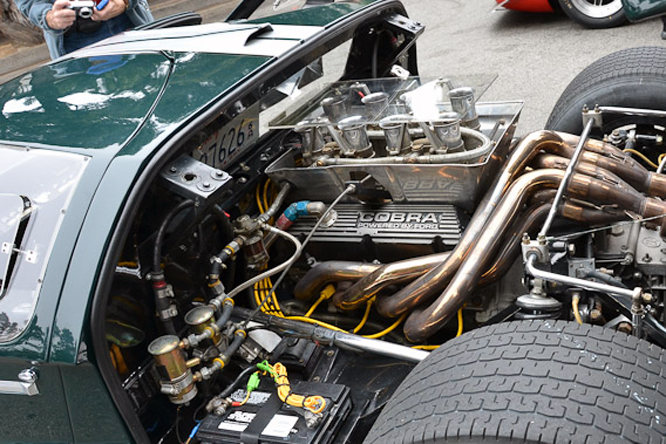
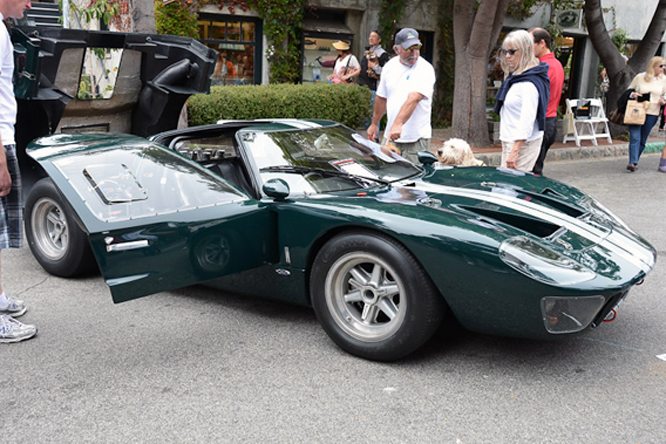
In order for Ford to meet the mandatory minimum 50 production number for it to be able to race, Ford sold at least four of it’s Mk1 GT40’s for road use with a minimum of primarily luxury modifications which included, interior carpeting, non-perforated leather seats, and leather door pouches, additionally today’s featured car #GT40 P/1034 was also fitted with wing mirrors, a heated rear screen and reversing light’s. Beyond that the car was equipped with a race tuned 380 hp, 289 cu. in. V-8 engine with four Weber 48IDA carburetors, five-speed ZF manual transmission, four-wheel independent suspension, and four-wheel disc brakes just like the racers alongside which it was built at Ford Advanced Vehicles in Slough, England.

Ford GT40, Carmel by the Sea, Concours on the Avenue

This particular car, seen in these photographs by Geoffrey Horton at Carmel by the Sea Concours on the Avenue last year, was ordered by James Fielding, of Gloucester, England painted Pine Green with no stripes on the rocker panels. Fielding was Chairman of Heenan & Froude, the company that manufactured the dynamometers on which the GT40s were tested and P/1034 was the first GT40 to be delivered to a UK customer in March 1966. Fielding used it exclusively as a road car.

Ford GT40, Carmel by the Sea, Concours on the Avenue

Subsequent owners including Paul Weldon and Australian George Parlby raced the car in classic events, Parlby even had the car painted in the colours of the Gulf Oil Company during a rebuild.GT40 specialist and enthusiast Harley E. Cluxton III, of Scottsdale, Arizona acquired #P/1034 at one point and later it went to Germany where Peter Roessler drove it to victory in the Grand Prix of Stuttgart held at the Hockenheimring.

David Bowden, of Queensland, Australia acquired P/1034 in 1999 where it was again frequently successfully raced by the likes of Kevin Bartlett. In 2001 David had the car repainted it’s original Pine Green with a pair of non original silver stripes.

The current owner returned P/1034 to the USA and earlier this year turned down a high bid of $2,150,000 at RM Auctions for this sublime vehicle.

My thanks to Geoffrey Horton for sharing his photograph’s of today’s featured Ford GT40.

Thanks for joining me on this “Hold The Rocker Panel Stripes” edition of “Gettin’ a li’l psycho on tyres” I hope you will join me again tomorrow. Don’t forget to come back now !
Share

Series 2 Pagoda – ISO Rivolta ISO Grifo CAN Am

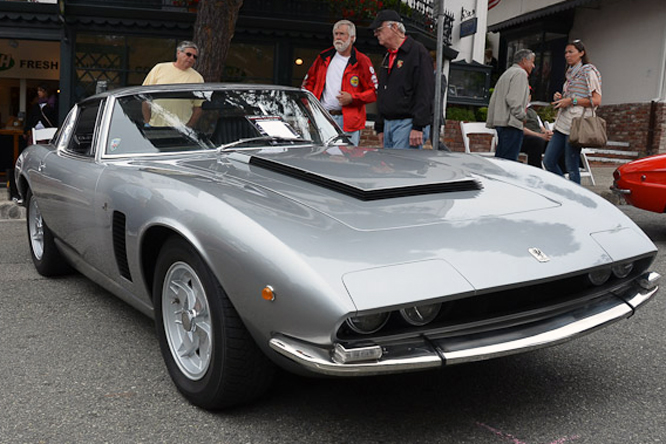
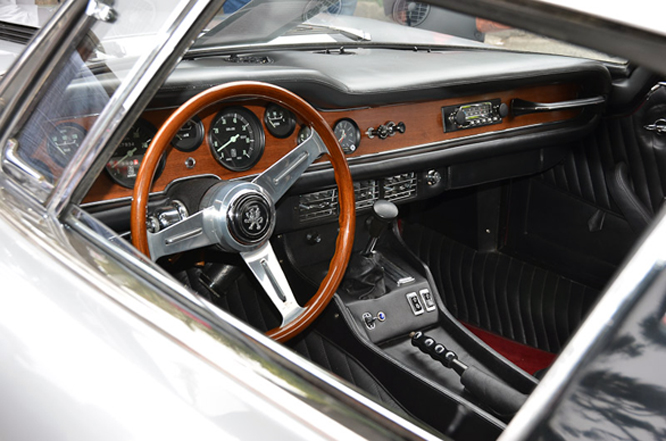
In 1970 ISO Rivolta carried out a face lift of it’s ISO Grifo model, the most noticeable external difference between the Series II, seen in these photographs by Geoffrey Horton taken at last years Carmel by the Sea Concours on the Avenue, and the Series I being the pop up half cover over the headlights.

ISO Rivolta, Iso Grifo Can Am, Carmel Concours by the Sea

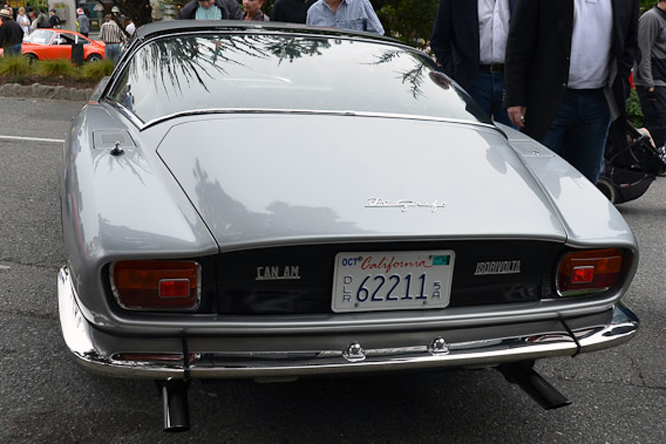
The face lift also saw the end of the 435 hp Super 7 Litri / 427 cui model which was replaced by the new CAN Am model powered by the 395 hp 7.4 litre / 454 cui Chevrolet big block.

ISO Rivolta, Iso Grifo Can Am, Carmel Concours by the Sea

Despite the increased aerodynamic efficiency the increased weight of the less powerful, yet larger, motor meant that the CAN Am’s top speed was ‘only’ 168 mph as against the 186 mph claimed for the Series 1 Super 7 Litri.

ISO Rivolta, Iso Grifo Can Am, Carmel Concours by the Sea

I believe today’s featured 1971 CAN Am is one of just 24 ISO Rivolta Iso Grifo CAN Am’s built between 1970 and 1972. Their beauty and connection with Bizzarini, designer of the fabled Ferrari 250 GTO, means that these cars are not going to leave a new owner with much by way of change from $400,000 dollars, indeed last year a partially restored example of a CAN Am was offered on e-bay for an eye watering buy it now price of $322,000 ! It is not known at the time of writing if the item sold.

My thanks to Geoffrey Horton for sharing today’s photographs.

Thanks for joining me on this “Series 2 Pagoda” edition of “Gettin’ a li’l psycho on tyres” I hope you will join me again tomorrow when I’ll be looking at a 1953 Standard Pickup. Don’t forget to come back now !
Share

Formula One Cabriolet – Ferrari 342 America, Vignale Cabriolet, #0232AL

Between late 1952 and early 1953 Ferrari built six 342 America chassis powered by a 200hp 4.1 litre / 341 cui version of Ferrari’s latest atmospheric induction V12 designed by Aurelio Lampredi and raced with success in the Ferrari 375 Formula One cars.

Ferrari 342 America Vignale, Blackhawk Museum

Five of the 342 chassis went to Pininfarina where 3 were fitted with coupé bodies and two with cabriolet bodies, the first chassis #0232AL, featured in today’s photographs by Geoffrey Horton taken at the Blackhawk Museum, was sent to Vignale where it was fitted with a cabriolet body.

Ferrari 342 America Vignale, Blackhawk Museum

Upon completion Herr Otto Wild of Muri in Switzerland. Before the end of the 1950’s were out the car is thought to have made it’s way to the USA, from 1971 until at least 2000 the car was kept in single ownership.

Ferrari 342 America Vignale, Blackhawk Museum

The 342 America was said to be capable of 115 mph, not quite on a par with the contemporary Jaguar XK120 in it’s original aluminium bodied form.

Ferrari 342 America Vignale, Blackhawk Museum

The Lampredi V12 motor would continue in production until the 1960’s powering Ferrari’s large engine America series cars up to and including the 500 Superfast of which the last was built in 1966.

Thanks for joining me on this “Formula One Cabriolet” edition of “Gettin’ a li’l psycho on tyres” I hope you will join me again tomorrow when I’ll be loocking at the first of this months big banger Formula 5000/A open wheel racing cars.. Don’t forget to come back now.

Share

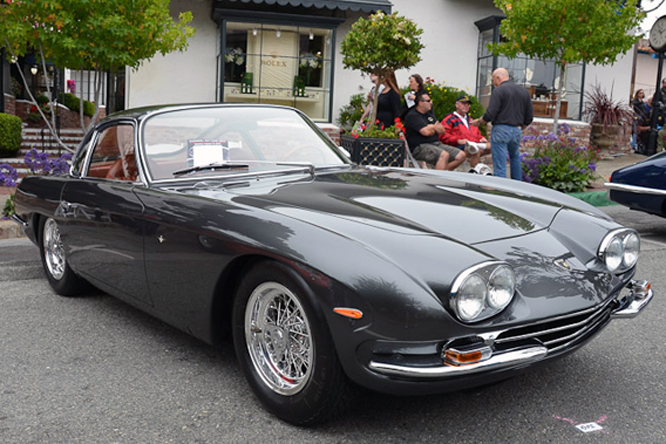
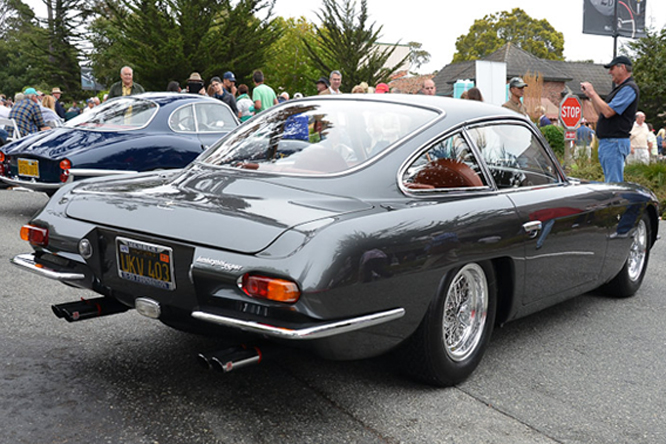
Out Of Disagreement – Lamborghini 350GT

With his back against the wall and desperate for cash to keep Ferrari afloat in 1962 Enzo Ferrari fell out with many who crossed his path including potential saviours Ford, which led directly to Ford initiating it’s GT40 competition program, Count Giovanni Volpi di Misurata who promptly employed Ferrari’s recently departed designer Giotto Bizzarrini to develop and build the legendary Ferrari 250 Breadvan, and agricultural machinery magnate Ferruccio Lamborghini, the latter who allegedly fell out over the shade of red his car was to be painted.

Lamborghini 350GT, Carmel Concours By The Sea

Ferruccio Lamborghini, undertook to build a GT car to compete with the best Ferrari could build and employed Giotto Bizzarrini to design the motor and chassis.

Bizzarrini moved on to ISO Rivolta before the design was ready for production and Gian Paolo Dallara working with Paolo Stanzani and Bob Wallace were employed to complete the task.

The first Lamborghini, GTV, appeared at the Turin Motor show in October 1963 and went into production the following year by which time the substantially redesigned for the road model was known as the 350 GT powered by the Bizzarrini inspired 4 cam V12 which could easily be tuned to give 400hp.

Lamborghini 350GT, Carmel Concours By The Sea

With just 270hp the 350 GT was capable of nearly 160 mph. The bodies were built by Touring of Turin, the chassis by Marchesi and the motors in Lamborghini’s own factory in Sant’Agata, Bolognese.

It is thought 135 350 GT’s, like the one seen here at Carmel Conours by The Sea, were built of which 85 are believed to have survived.

This particular car was found in France by the current owner and is in preserved original condition having only been serviced and cleaned.

I believe the 350GT would originally have been fitted with oblong headlights which may have been changed to the current quad round set up to meet US regulations.

My thanks to Geoffrey Horton for sharing his photographs of today’s featured car.

Thanks for joining me on this ‘Out Of Disagreement’ edition of “Gettin’ a li’l psycho on tyres” I hope you will join me again tomorrow when I’ll be looking at an extraordinary special built by the equally extraordinary John Bolster. Don’t forget to come back now !
Share

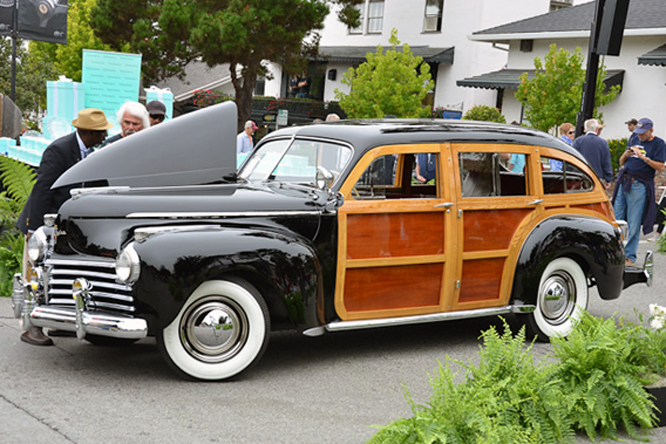
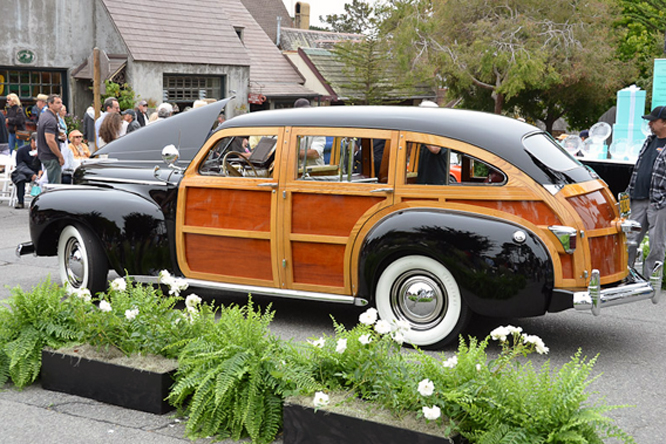
Mopar Presidents Station Wagon – Chrysler Town & Country Barrel Back

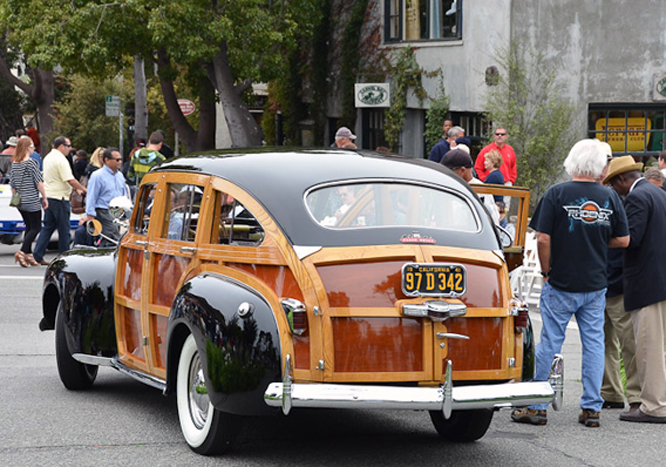
This month’s Americana Thursdays will feature 4 station wagons. First up is this 1941 Chrysler Town & Country Barrel Back seen by Geoffrey Horton at last years Carmel by the Sea Concours d’Elegance.

Chrysler Town & Country Barrel Back, Carmel by the sea Concours

The Chrysler Town & Country was powered by a 108 hp Spitfire L-Head straight six motor fitted with a Fluid Drive semi automatic transmission.

Chrysler Town & Country Barrel Back, Carmel by the sea Concours

The woody part of the otherwise steel body comprises an Ash frame with Mahogany veneer panels, it is said to have been designed by Chrysler’s President David A. Wallace.

Chrysler Town & Country Barrel Back,Carmel by the sea Concours

Only 496 of these six passenger station wagons were built before the 1939-45 war intervened and prematurely terminated production in 1941. It is thought that just 5 of these cars remain, making them amongst the most sort after station wagons.

My thanks to Geoffrey Horton for sharing his photographs of this difficult to identify vehicle.

Thanks for joining me on this “Mopar Presidents Station Wagon” edition of “Gettin’ a li’l psycho on tyres” I hope you will join me for Ferrari Friday tomorrow. Don’t forget to come back now !
Share

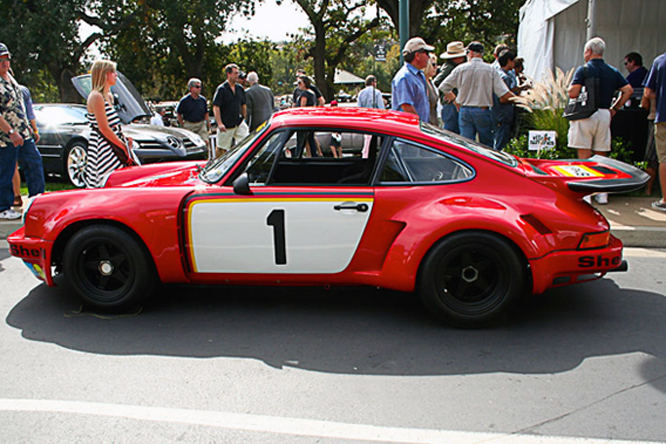
911’s 50th Anniversary – Niello Serrano Concours d’Elegance

I’d like to welcome a new contributor to Gettin’ a li’l psycho on tyres thanks to Geoffrey Horton who kindly asked Karl Krause to take the photo’s at Niello Serrano Concours d’Elegance which appear in today’s blog.

Karl sent around 200 images and since I’ve been celebrating the 50th Anniversary of the Porsche 911 through October I thought I’d give the model one more look in today’s blog.

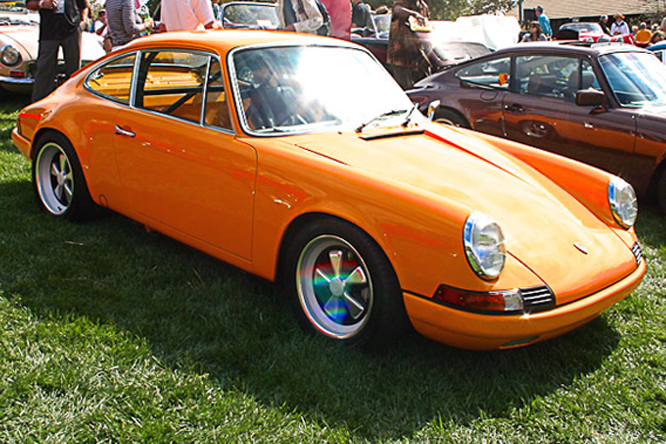
Porsche 911S , Nielllo Serrano Concours d'Elegance

I can’t be sure of the age of the 911 above but given that the distinctive 5 spoke Fuchs alloy wheels first became an option on the 911S in 1966 I’ll hazard a guess the car above in a 1966 or later 911S.

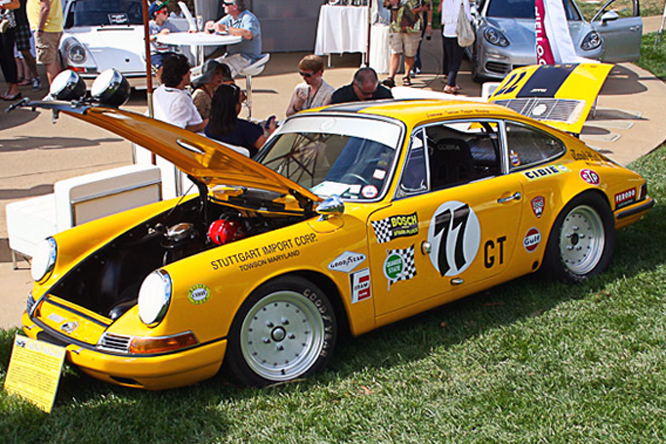
Porsche 911T , Nielllo Serrano Concours d'Elegance

There is a good chance that any Porsche carrying the distinctive #77 was once driven by Bruce Jennings who clocked up at least 30 victories mostly in Porsche’s between 1952 and 1981. The 911T with the distinctive solid alloy wheels appears to be the car Bruce shared with Bob Tullis in the 1970 Sebring 12 Hours. The pair started 46th and failed to finish.

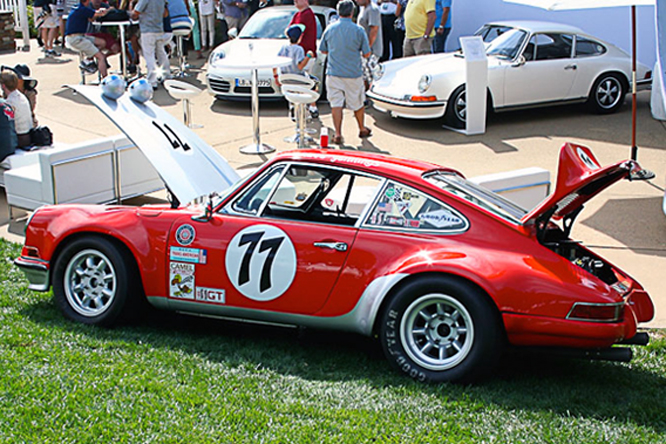
Porsche 911S, Nielllo Serrano Concours d'Elegance

The #77 Carrera RS bodied Porsche 911S above appears to be the car Bruce shared with Bob Beasley and Bill Bean in the 1979 Six Hour race at Watkins Glen, despite a spin the trio started 40th and finished 18th.

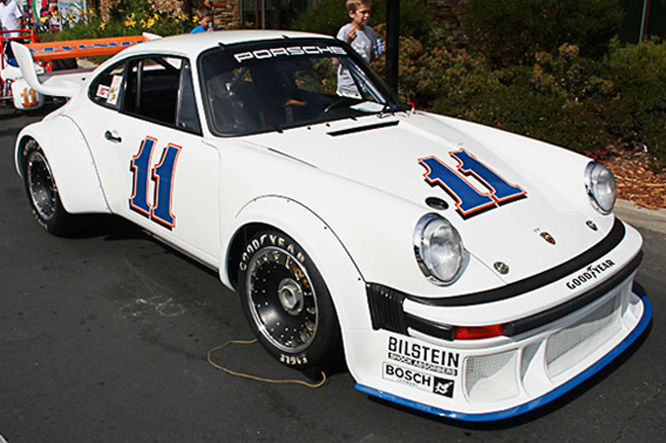
Porsche 911 Carrera RSR, Nielllo Serrano Concours d'Elegance

Above is a 1974 era Carrera RSR bodied Porsche 911, it appears in the colours of the Gelo Racing Team though if it is one of the Gelo team cars I have yet to workout which one. If you know please do not hesitate to chime in below.

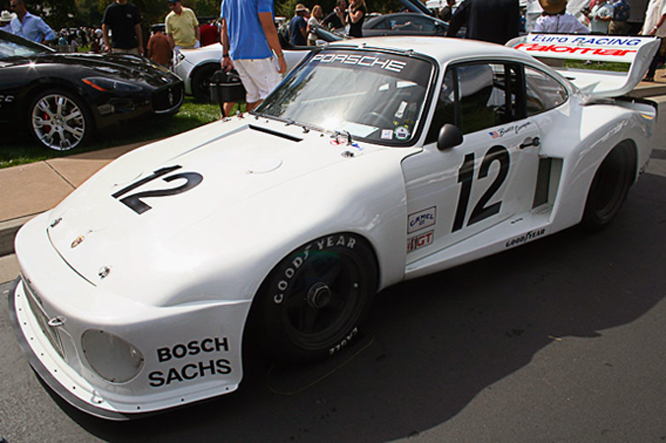
Porsche 934, Nielllo Serrano Concours d'Elegance

Bruce Canepa of Canepa Design raced several Porsche’s back early 80’s I believe the single turbo 934 bodied example above was one of them that was originally raced by George Dyer through 1977 prior to Bruce acquiring the car and fitting a 935 flat nose more usually seen on the twin turbo 935 models raced primarily in Europe. If this is the same car then Bruce Canepa, Rick Mears and Monte Sheldon appear to have driven it to a third place finish from 19th on the grid in the 1979 Daytona 24 hours.

Porsche 934/5, Nielllo Serrano Concours d'Elegance

Bruce drove several other 935 bodied Porsche’s notably with Gianpiero Moretti in the Momo team, at the time of writing I am not at all sure what the history of the flat nosed 935 bodied Porsche is, again if you know please chime in below.

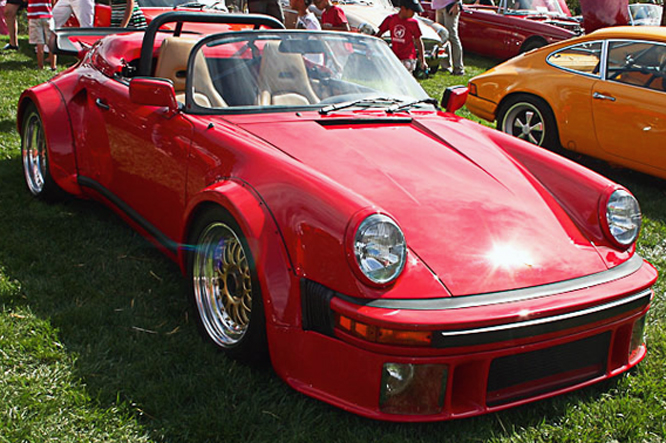
Canepa Porsche Speedster 962 Twin Turbo, Nielllo Serrano Concours d'Elegance

Finally filed under outrageous road car is this twin turbocharged Canepa Design built Porsche Speedster which confirms Bruce Canepa’s addiction to fast cars.

My thanks to Karl Krause for sharing today’s photographs and to Geoffrey Horton for his help in procuring them.

Thanks for joining me on this “911’s 50th Anniversary” edition of “Gettin’ a li’l psycho on tyres” I hope you will join me again tomorrow for a look at the final incarnation, to date, of the Ford Thunderbird this one driven by none other than Halle Berry. Don’t forget to come back now.

Share