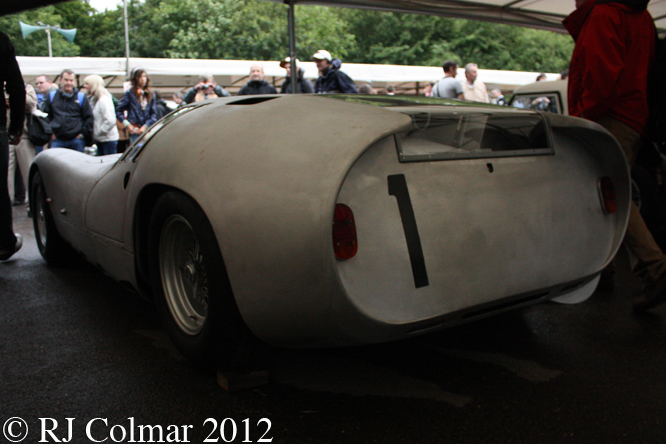
Tag Archives: Goodwood

Friday At Goodwood – Ferrari

Welcome to another Ferrari Friday coming to you from last weeks Goodwood Festival of Speed where the Ferrari highlights included …
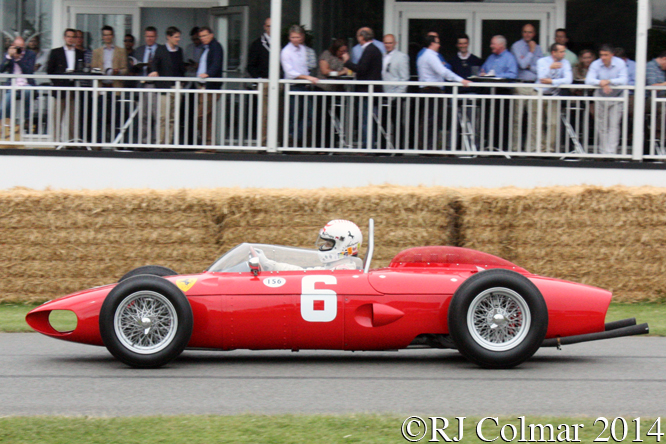
Ferrari 156R, Merzario, Goodwood Festival of Speed

… a Ferrari 156 replica driven by Art Merzario, which when it last appeared on these pages was painted yellow.
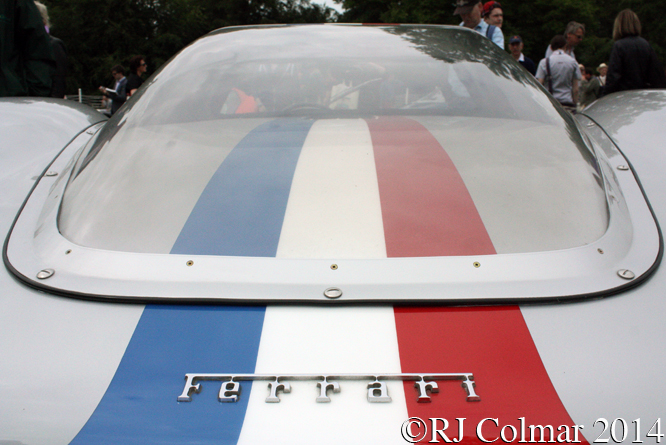
Ferrari 250LM, Goodwood Festival of Speed

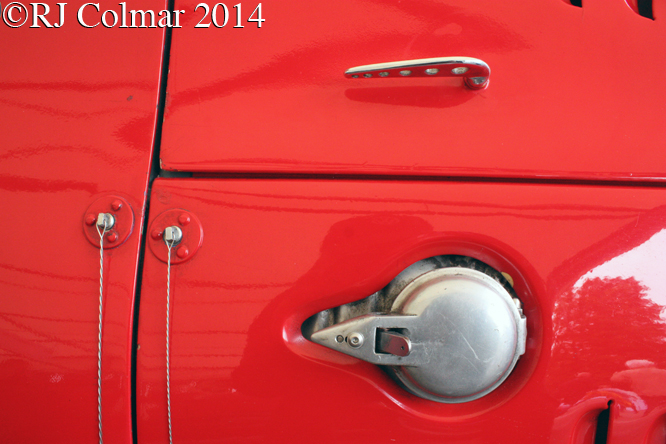
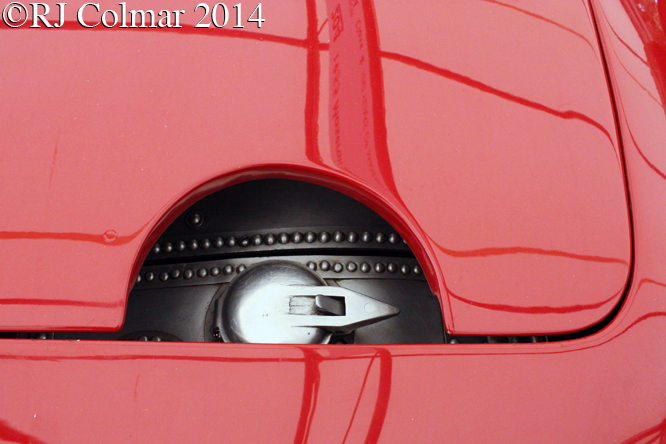
Unlike the 250 LM, #6045, sold originally as a daily driver, which I looked at recently, this 250 LM, chassis # 5995, was raced first by a private entrant and then converted for road use later by the Ferrari factory who fitted the perspex engine cover seen above.

Ferrari 158, Surtees, Goodwood Festival of Speed

John Surtees had two 1964 Ferrari 158’s to play with at Goodwood to celebrate the 50th Anniversary of his World Championship victory. This car was built out of period from remaining parts and is painted in the colours of the North American Racing Team that John’s car wore at the 1964 US and Mexican Grand Prix, he finished both races in 2nd place.
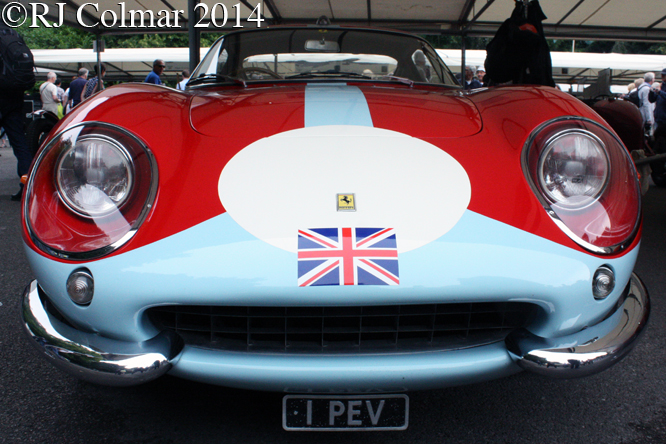
Ferrari 275 GTB/C,  Goodwood Festival of Speed

The 275 GTB/C above was first entered into the 1966 Le Mans 24 Hours by British importer Maranello Concessionaires and driven to an 8th place overall finish, first in class by Piers Courage and Roy Pike. It was subsequently bought and raced by Paul Vesty who is still the cars owner and drove it at Goodwood last Friday.

Ferrari 512S Coda Lunga, Meiners,  Goodwood Festival of Speed

For the 1970 Le Mans 24 Hours Ferrari had long (coda lunga) tails fitted to it’s 5 litre / 302 cui V12 512 S models. Franco Meiners is seen at the wheel of the 512S above, as also made familiar in the Le Mans film directed by Steve McQueen.

Ferrari 333SP, Pescatori,  Goodwood Festival of Speed

Finally the Ferrari 333SP was launched for the 1994 season at the behest of privateer Giampiero Moretti. Of the 144 races in which at least one of these cars contested the model won 56. I believe this particular second generation chassis, driven above by Christian Pescatori, is the one used by Vincenzo Sospiri and Emmanuel Collard to secure the 1998 International Sports Racing Series.

Thanks for joining me on this “Friday At Goodwood” edition of “Gettin’ a li’l psycho on tyres” I hope you will join me again tomorrow. Don’t forget to come back now !

Share

Driving The Change – Renault

Founded in 1899 Renault were not celebrating anything in particular at this years festival of speed but still had a potpurri presence that spanned their competition history as shown by today’s collection of photographs.

Renault Type K, Goodwood Festival of Speed

In 1902 Marcel Renault drove a Type K similar to Renault built replica above to victory in the 990 km / 615 mile Paris-Vienna covering the distance in 15 hours 47 mins to average 38.95 bone shaking miles per hour.

Renault 40CV Montlhéry Coupé, Goodwood Festival of Speed

By 1925 Renault’s top model was the 40CV one of which one the 1925 Monte Carlo Rally. The following year built this aerodynamic Coupé version for a crack at the 24 hour distance record which it won by averaging 107 mph on the banked Montlhéry Circuit outside Paris.

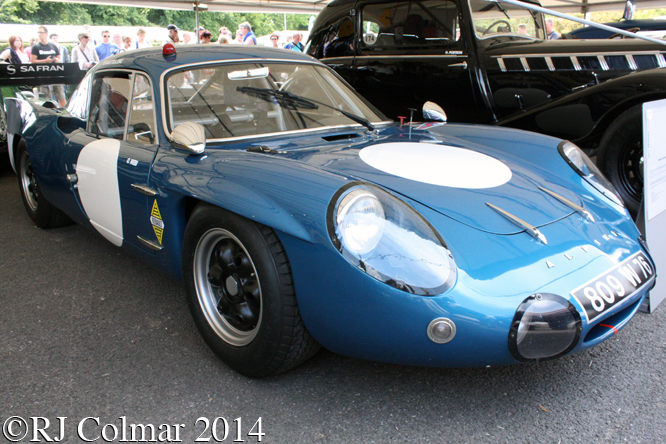
Alpine M65, Goodwood Festival of Speed

After the ’39-’45 War Dieppe garage proprietor Jean Rédélé started racing Renault 4’s with considerable and founded Alpine to capitalise on it in 1954. For 1965 Alpine built the M65 model with a 1.3 litre / 79 cui tuned Renault motor powerful enough for the M65 to be timed at 266 kph / 165 mph at Le Mans.

Alpine A310, Goodwood Festival of Speed

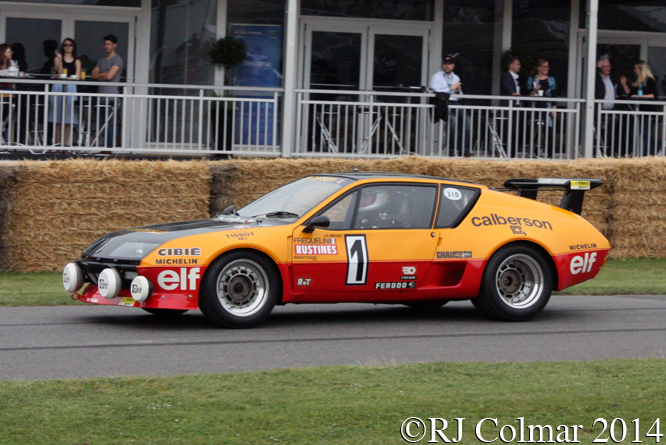
Fast forward 12 years and the now Renault owned Alpine were not only returning to Le Mans which they won out right in 1978, but they were building the mid engine Peugeot Renault Volvo V6 powered Alpine A310 sports car. A successor to the Alpine A110, Guy Fréquelin drove an A310 like the one above to win the 1977 French Rally Championship.

Renault RE 40, Goodwood Festival of Speed

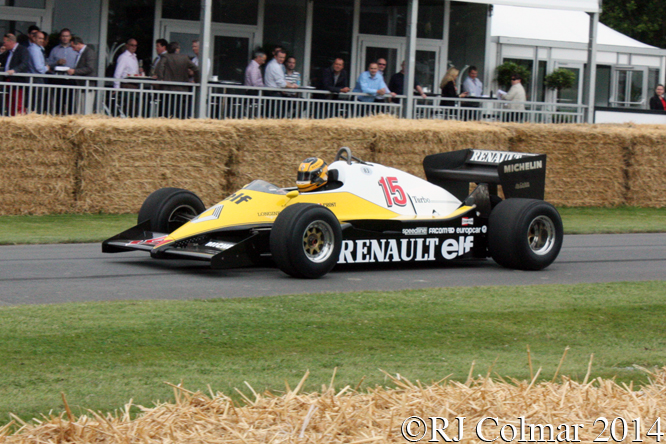
Alpines success at Le Mans gave them a spring board from which to launch their Formula One team in 1977. Translating the theoretical advantages of turbo charging on to the track in the sports top table proved time consuming and costly but by 1979 Formula One victories started to be achieved. However the unreliability of their ground breaking adventure kept Renault from ever winning a world championship with their turbo charged V6. The 1982 RE 40, driven by Michele Leclere above, came closest, with Alain Prost and Eddie Cheever helping the marque finish second in the Constructors Championship to Ferrari and Alain 2nd in the drivers championship with 4 victories to Nelson Piquet driving a turbo BMW powered Brabham.

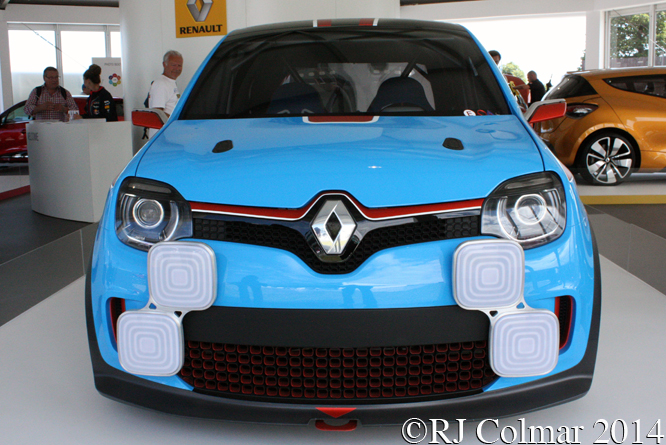
Renault Twin Run, Goodwood Festival of Speed

At Goodwood Renault showed us a view of their future in the form of the fully working 2013 concept car the Twin Run which like the Renault 5 Turbo Maxi and Clio V6 has a mid mounted motor boasting 320 hp. No plans have been announced for the vehicle to go into production in this configuration… yet.

Thanks for joining me on this “Driving The Change” edition of “Gettin’ a li’l psycho on tyres” I hope you will join me again tomorrow. Don’t forget to come back now !
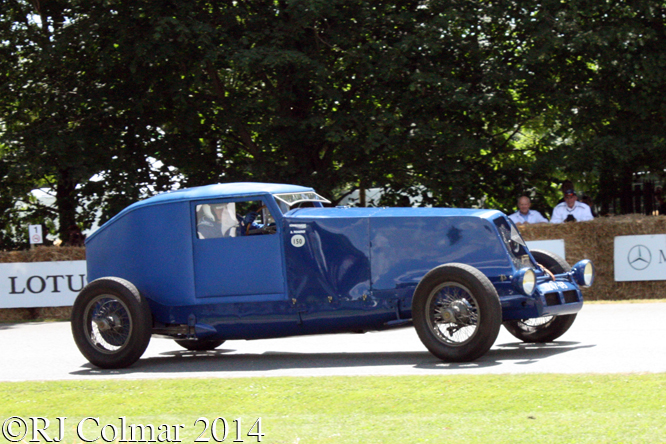
01/07/14 Errata Tim Murray has kindly pointed out that I incorrectly identified the Renault Type K as a type AK 90CV, when this post first went out, apologies for any confusion.

Share

Goodwood Festival Details – Maserati Centenary

For this weeks Maserati Monday, I am taking a look at details of some of the Maserati’s present at the weekends Festival of Speed that will feature in forth coming editions of “Gettin’ a li’l psycho on tyres”.

Maserati V8RI, Goodwood Festival of Speed

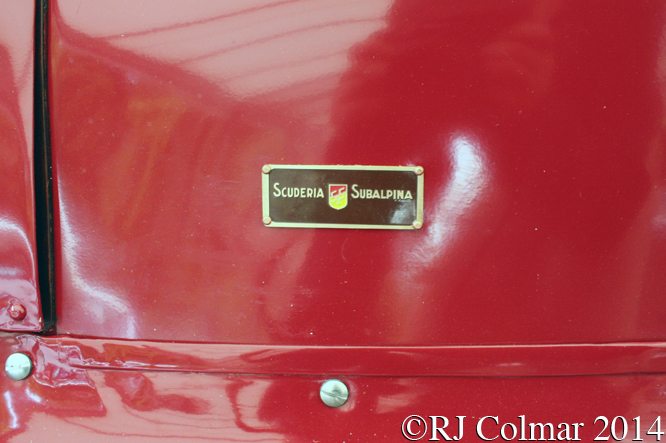
Scuderia Subalpina was founded by Count Luigi del la Chiesa, in December 1934, with backing from industrialists Giorgio Ambrosini (owner of Siata) and Giorgio Giusti, and the wealthy racing driver Gino Rovere who became Maserati president. The Scuderia’s badge is seen here on the side of the first 1935 Maserati V8RI to be built.

Maserati 8CTF, Goodwood Festival of Speed

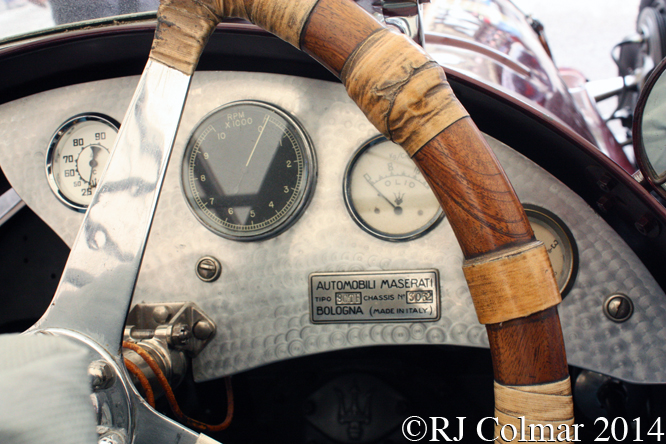
The Maserati 8CTF was built for challenging the mighty German Silver Arrows of Mercedes Benz and Auto Union, but it’s most notable success came at Indianapolis where chassis #3032 seen here was driven by Wilbur Shaw in 1939, ’40 and ’41 in the Indy 500 and was en route to a trifecta of back to back victories when a tyre damaged in an accident let him down.

Maserati 4CLT, Goodwood Festival of Speed

For some reason this Maserati 4 CLT does not appear to be listed in the programme and I look forward to identifying it and finding out it’s story.

Maserati A6 GCS, Goodwood Festival of Speed

Likewise I look forward to teasing out the identity and details behind this 1955 Maserati A6 GCS.

Maserati 300S, Goodwood Festival of Speed

The Festival of Speed programme notes give a useful to tip in to help determine the identity of this 1957 Maserati 300S, it was once driven by 1959 Le Mans winner and later Ford USA competition guru Carroll Shelby.

Maserati 250 F V12, Goodwood Festival of Speed

Tracing the ID of this particular Maserati 250F V12 should not prove too tricky as their is at least one good book on the complicatd story of the Maserati 250F model.

Thanks for joining me on this “Goodwood Festival Details – Maserati Centenary” edition of “Gettin’ a li’l psycho on tyres” I hope you will join me again when I’ll be looking at some of the French cars at Goodwood. Don’t forget to come back now !

Share

Wrecked Prototype Reincanated – Nimrod Aston Martin NRAC/1 #001

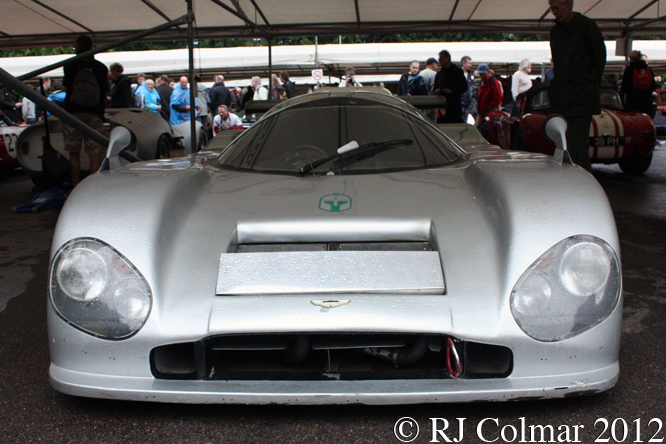
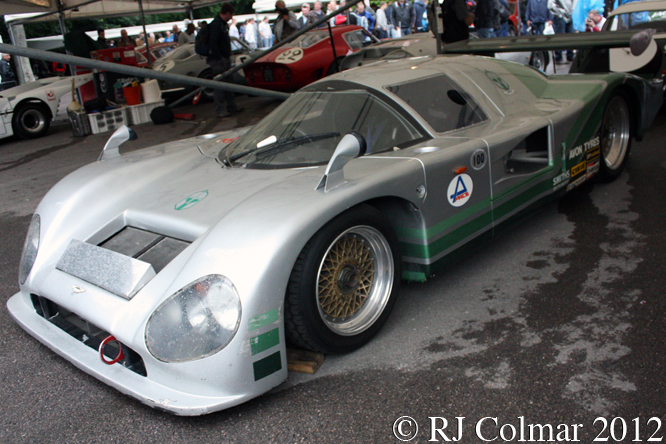
With a world caravan speed record in his pocket set with his twin turbocharged Aston Martin ‘Muncher’ Robin Hamilton came to an agreement with Aston Martin Chairman Victor Gauntlet to enter a partnership to form Nimrod in 1981 which set out to build Aston Martin powered prototype Group C and GTP racing cars.

Nimrod Aston Martin NRA/C2, Goodwood Festival of Speed

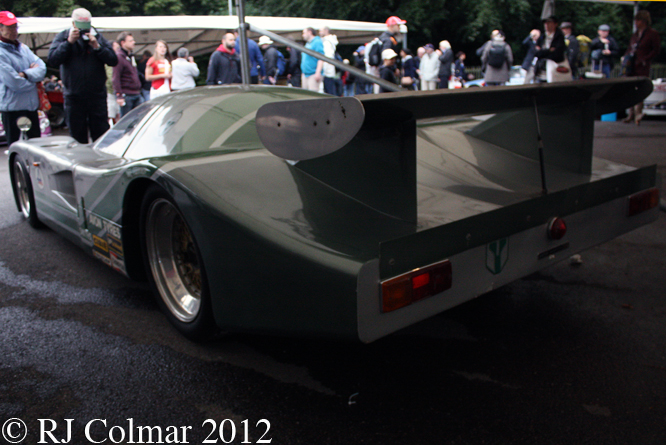
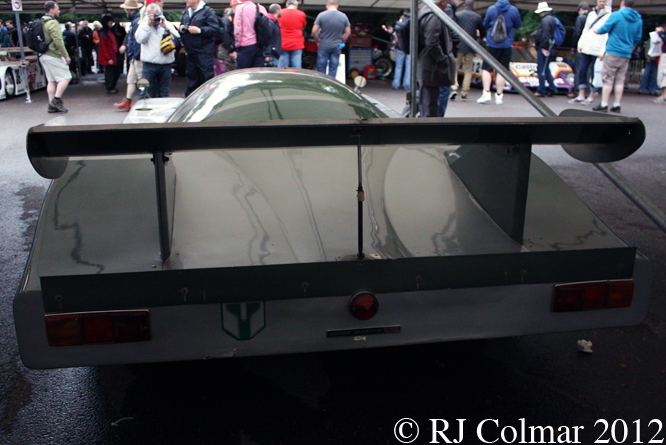
The design of the cars was credited to Eric Broadley, though I have always had my doubts about the extent of his involvement because the design does not feature ground effect aerodynamics that were de rigeur in Formula One and becoming rampant in prototype sports cars such as Eric’s contemporary Lola T600 Group C / IMSA GTP design shows.

Nimrod Aston Martin NRA/C2, Goodwood Festival of Speed

The Nimrod chassis tubs were certainly built by Lola, they were known in the Lola factory as T385’s and the cars do appear to bear a familial resemblance to the smaller open Lola T380 of the type Alan de Cadanet purchased in 1975. The heavily modified Aston Martin V8’s were prepared initially by Aston Martin Tickford and later by Aston Martin Lagonda.

Nimrod Aston Martin NRA/C2, Goodwood Festival of Speed

It is believed that the 1981 car, seen here at the Goodwood Festival of Speed, belonging to the Louwman Museum is the rebuilt wreck of the prototype that crashed before ever turning a wheel in open competition, that was never raced subsequently either.

Nimrod Aston Martin NRA/C2, Goodwood Festival of Speed

The Nimrods turned out to be underfunded and inevitably disappointed, the works cars best result, in second generation NRAC/2 guise that appeared in 1982, was a 5th place finish in the IMSA GTP series which fell to Reggie Smith, Lyn St. James and Drake Olson in the 1983 Sebring 12 Hours. At the end of the season Nimrod Racing folded.

The best Nimrod finish in the World Sports Car Group C series fell to Ray Mallock and Mike Salmon on the Nimrods debut at the 1982 Silverstone 6 Hours. This private entry by Viscount Downe was independently developed by Ray Mallock until 1984 and proved quicker and more reliable than the works entries scoring the marques only Le Mans finish in 1983 when Ray and Mike were joined by Simon Philips and finished 7th from 23rd on the grid.

In 1983 for the Daytona 24 Hours Nimrod manged to team up both 4 time Indy 500 winner and one time Daytona 500 Winner AJ Foyt up with fellow Daytona 500 winner and three time NASCAR Cup winner Darrell ‘Jaws’ Waltrip and an unknown Argentinian Guillermo Maldonado with Darrell’s sponsor Pepsi in their lead #11 car.

They qualified 13th, but retired with engine failure to be classified 54th. AJ who had not driven the car in the race moved over to join Preston Henn in the Henn’s Swap Shop Porsche 935 and shared a victory with Preston, “Brilliant” Bob Wollek and Claude Ballot-Lena.

Thanks for joining me on this “Wrecked Prototype Revived” edition of “Gettin’ a li’l psychoontyres” I hope you will join me again for Maserati Monday tomorrow. Don’t forget to come back now !

Share

New Rules Same Result – Audi R18 TDI #106

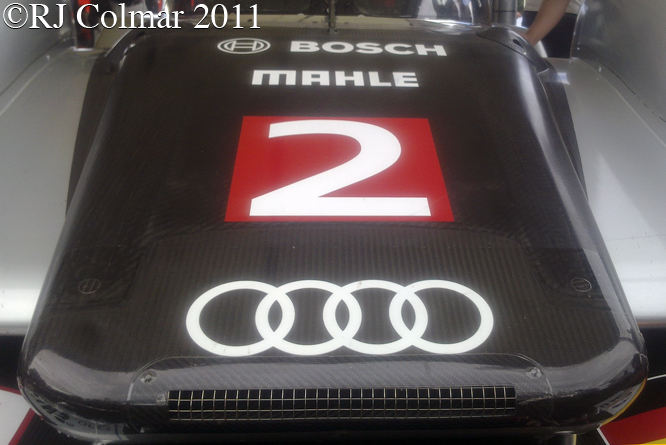
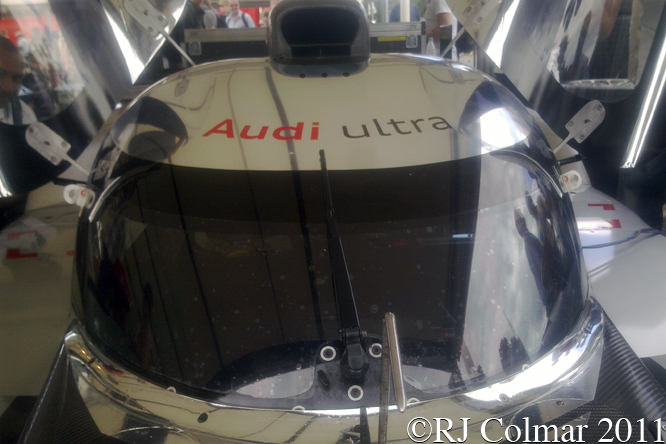
New regulations, mandating a smaller motor and smaller fuel cell presented Audi with a new challenge for it’s 2011 Le Mans Challenge.

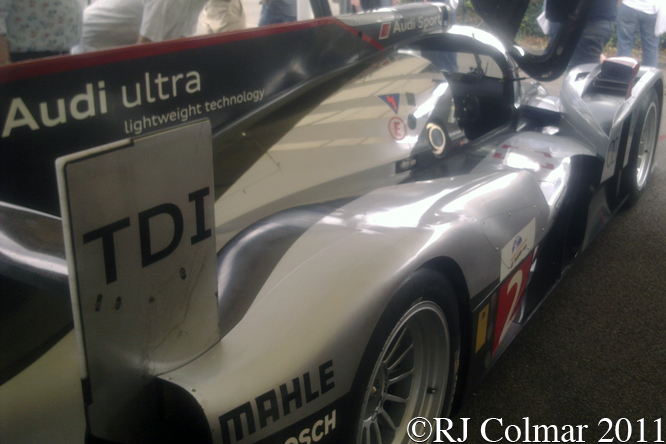
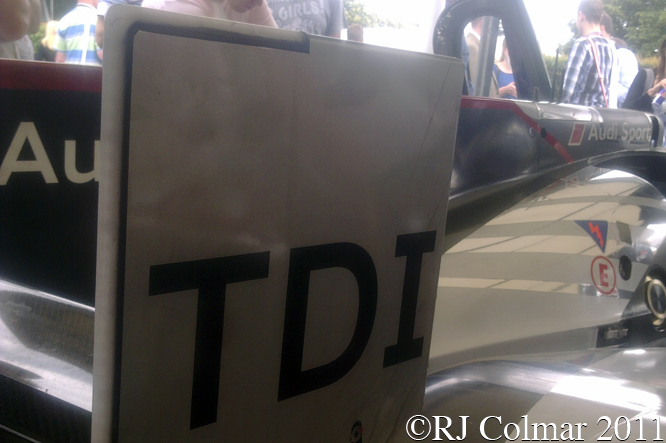
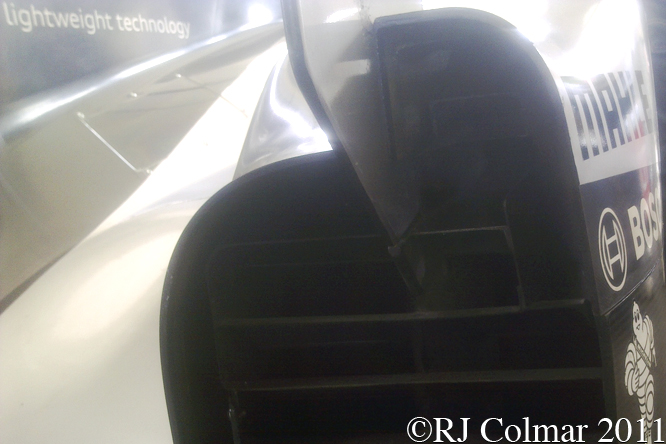
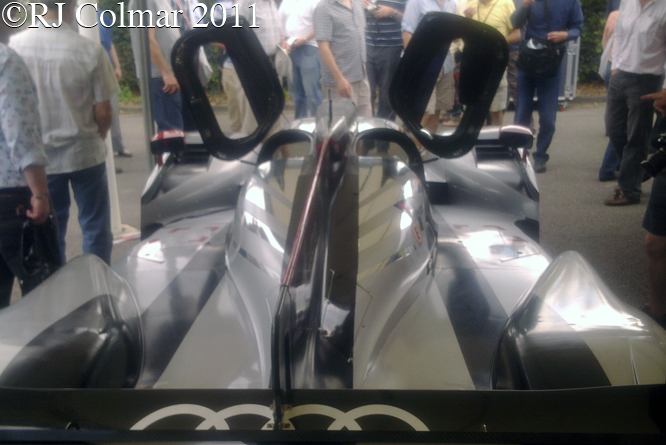
Audi R18 TDI, Goodwood Festival of Speed

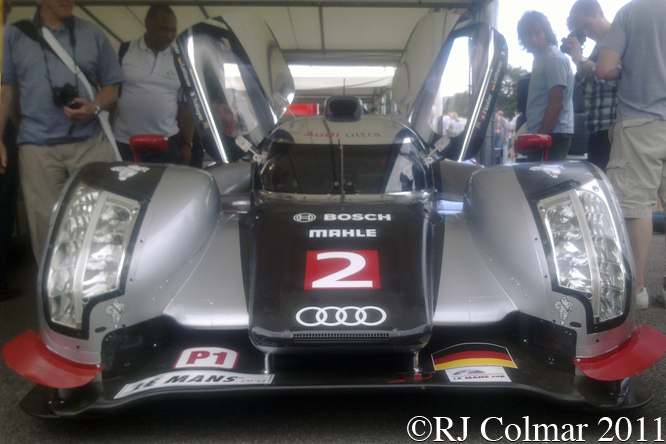
Ulrich Baretzky was responsible for designing R18 TDI to meet the new challenge and elected for a Coupé body,

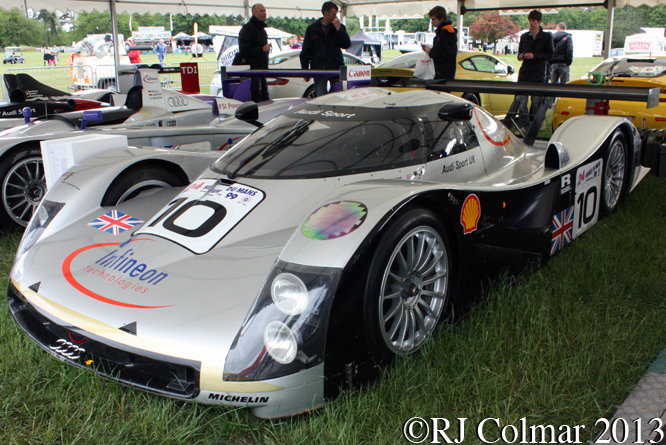
Audi R8C, Goodwood Festival Of Speed

a body type not seen on an Audi Le Mans challenger since the Peter Elleray designed Audi R8C, seen above, built in 1999.

Audi R18 TDI, Goodwood Festival of Speed

The single piece carbon-fiber composite aluminum honeycomb monocoque was manufactured by Dallara in Italy.

Audi R18 TDI, Goodwood Festival of Speed

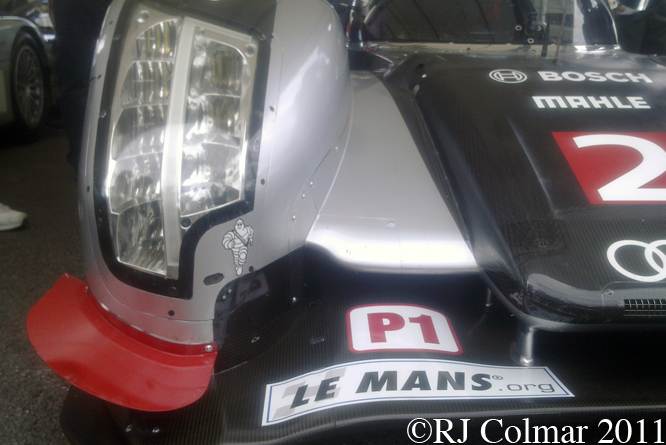
To improve the handling the R18 TDI is fitted with taller and wider front tyres, by effectively moving the mass of the car forwards the balance of the the car is better optimised for to create better front tyre temperatures which improve mechanical grip.

Audi R18 TDI, Goodwood Festival of Speed

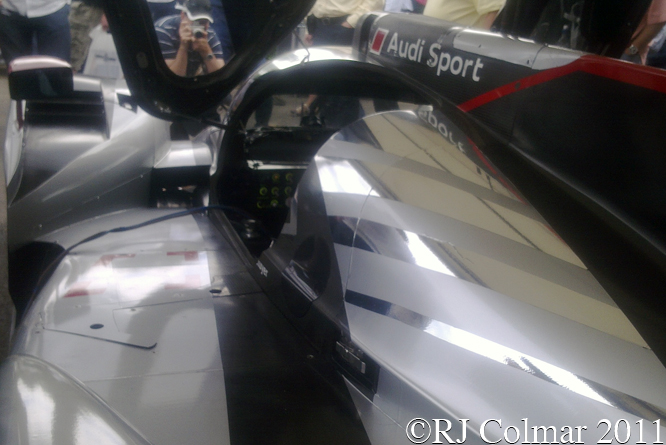
The L shaped tube in front of the cockpit is a Pitot tube for measuring airflow, this could be useful information for determining the aerodynamic balance of the car or more likely to help the engineers determine the engine settings for the motor which is fed air by the duct above the cockpit.

Audi R18 TDI, Goodwood Festival of Speed

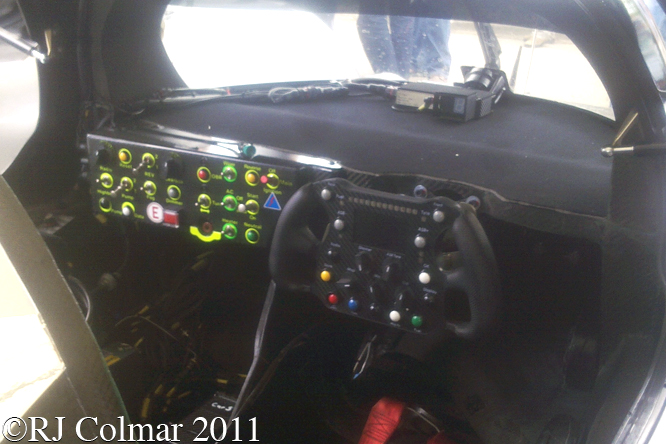
Unlike the previous R15 TDI Le Mans challengers fitted with a pneumatic gear selection system the R18 TDI six speed gearbox was fitted with an electronic gear change system, the main benefit of which was to save weight.

Audi R18 TDI, Goodwood Festival of Speed

The fuel tank situated behind the cockpit was restricted to 65 litres / 14 imperial gallons comparable to that found in a large, European, daily driver.

Audi R18 TDI, Goodwood Festival of Speed

The motor was restricted in size to just 3.7 litres / 225 cui for turbocharged diesel powered motors and so a single turbocharged V6 replaced the twin turbocharged 5.5 litre / 335 cui V10 used to power the Audi R15 TDI.

Audi R18 TDI, Goodwood Festival of Speed

With only 532 hp, adown from 590 hp on the previous years V10 the R18 TDI chassis #106 seen here at Goodwood, driven by Benoit Tréluyer, Marcel Fässler, Andre Lotterer was three seconds a lap slower than the 2010 R15 TDI Plus, but still qualified on pole for the 2011 Le Mans 24 hour race.

Audi R18 TDI, Goodwood Festival of Speed

The 2011 Le Mans 24 hours proved to be a game of cat and mouse between the Audi and Peugeot teams. Audi had the advantage of outright speed, good tyre durability – capable of going 44 laps on a set of slicks, but poor fuel economy – only going 11 laps on a tank of diesel.

Audi R18 TDI, Goodwood Festival of Speed

Peugeot meanwhile could run 12 laps on a tank of diesel, but only 36 laps on a set of tyres.

Audi R18 TDI, Goodwood Festival of Speed

Audi’s cause was not helped when Allan McNish crashed the #3 entry out of the race in the first hour after tangling with a back marker in an incident from which everyone miraculously managed to walk away.

Seven hours later the #1 Audi driven by Mike Rockenfeller was involved in a similar incident from which he also walked away.
After the a 2 hour safety car period during which the track safety barriers were repaired the #1 Audi was left to fend off a three car onslaught from the diesel V8 powered Peugeot’s which did not suffer their first serious set back until the #7 Peugeot driven by Alexander Wurz hit the barriers and lost 3 laps.

The #1 Audi driven by Benoit, Marcel and Andre manged to pit for the final time without losing the lead and held on to cross the line, just 13 seconds ahead of the fastest Peugeot after 24 hours of racing.

#106 seen here a couple of weeks after the victory appears to have been retired from active competition thereafter. Apart from the Le Mans test weekend in April 2011 where Marco Bonanomi joined the cars regular squad of three drivers to set 4th fastest time the cars only other appearance was in the Spa 1000kms where Benoit, Marcel and Andre finished 5th from 2nd on the grid.

Thanks for joining me on this “New Rules Same Result” edition of “Gettin’ a li’l psycho on tyres” I hope you will join me again tomorrow when I’ll be looking at a British Group C Le Mans Challenger. Don’t forget to come back now !

Share

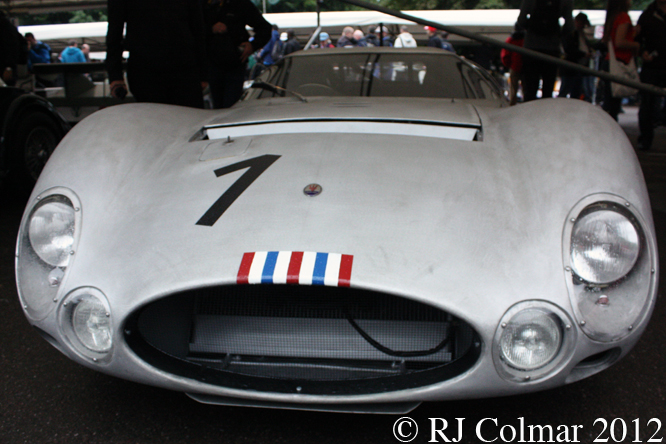
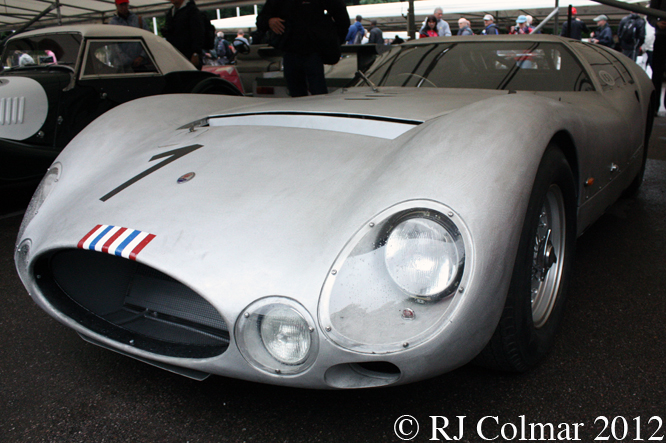
Racing Van – Maserati 151/3 Recreation

Parts of today’s featured car started life as the Maserati France entered Maserati 151 chassis #151.002 which raced at Le Mans in 1962 alongside Briggs Cunningham’s chassis #151.004 and #151.006, the latter which I looked at last Monday.

Maserati 151/4, Goodwood Festival of Speed

#151.002 was driven by Maurice Trintignant and Lucien Bianchi in the 1962 Le Mans 24 Hours qualifying 7th, slowest of the three Maserati 151 models and retiring after completing 152 laps with suspension issues.

Maserati 151/4, Goodwood Festival of Speed

In April 1963 #151.002 reappeared at the Le Mans Test with a 5 litre / 302 cui V8 motor replacing the original 4 litre / 244 cui unit. André Simon and Lloyd Casner drove the car to the 4th fastest time and returned in June to qualify 5th for the 24 Hour race but retired after 40 laps with gearbox issues.

Maserati 151/4, Baxter / Mass, Goodwood Revival

#151.002, also known at the time as 151/2, appeared in three more events in 1963 scoring a best 8th place finish in the Trophée d’Auvergne at Clermond Ferrant (F) with Lucien Bianchi at the wheel.

Maserati 151/4, Baxter / Mass, Goodwood Revival

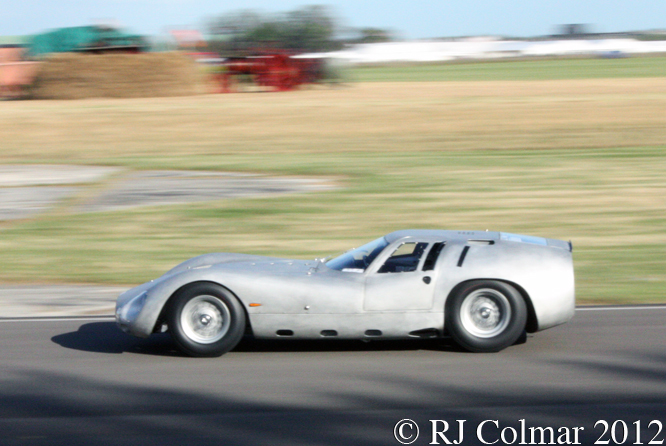
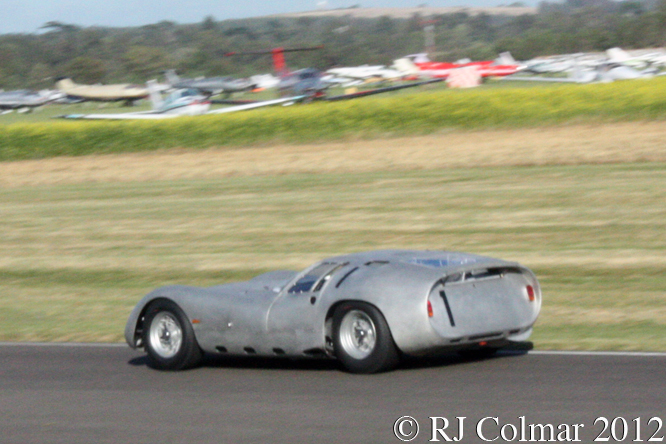
For 1964 #151.002 was further upgraded with a dry sump motor mounted lower in the chassis which was also altered to accommodate wire tires and wheels. Finally the car also had a new Piero Drogo penned unpainted aluminium body fitted just in time for the 1964 Le Mans test, the new body quickly earned the “Racing Van” sorbriquet.

Maserati 151/4, Goodwood Festival of Speed

Maurice Trintignant and France’s Maserati importer André Simon set 4th fastest time in the reworked Maserati and found it capable of 196 mph on the Mulsane straight. For the ’64 Le Mans race the Maurice and André qualified #151.002 15th, but retired after 99 laps with electrical issues. The same drivers were entered to drive #151.002 in two more events but retired with ignition issues from the Reims 12 Hours and after an accident from the Paris 1000 kms at Circuit de Linas-Montlhéry.

For 1965 the final incarnation of #151.002 also known as 151/4 included fitting a slightly larger 5055cc / 308 cui V8 which produced 450 hp. The car was again taken to the Le Mans Test weekend where Lloyd “Lucky” Casner of Camoradi Racing Team fame met his untimely demise in #151.002 at the kink on the Mulsanne Straight being fatally thrown from the car which was effectively destroyed in the accident.

During the 1980’s Herr Kaus of the Bianco Museum owned one of the 151/3 spec motors from the crashed #151.002, as he did the uncrashed #151.006 car, and was supplied by Maserati with drawings to build a new 151/3 spec chassis and the original 151/3 body buck so that Sig Allegretti, who built the original body, could build another !

Herr Kaus never got the project finished, but more recently Barrie Baxter, seen sharing the car with Jochen Mass at Goodwood Revival, has.

My thanks to Doug Nye and driverider at The Nostalgia Forum for their comments.

Thanks for joining me on this “Racing Van” edition of “Gettin’ a li’l psycho on tyres” I hope you will join me again tomorrow. Don’t forget to come back now !
Share

13 Unlucky For Some – Jaguar XJ13

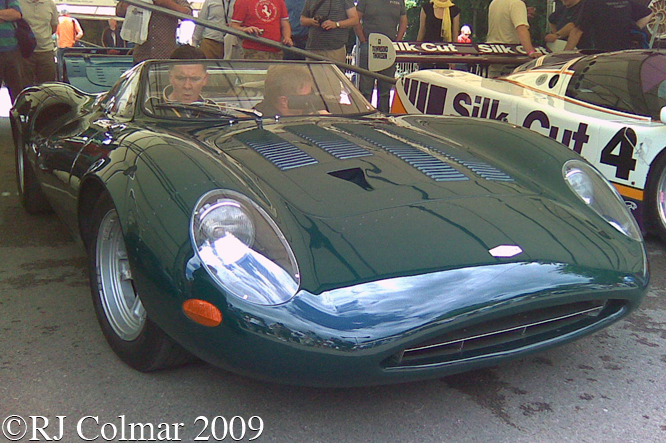
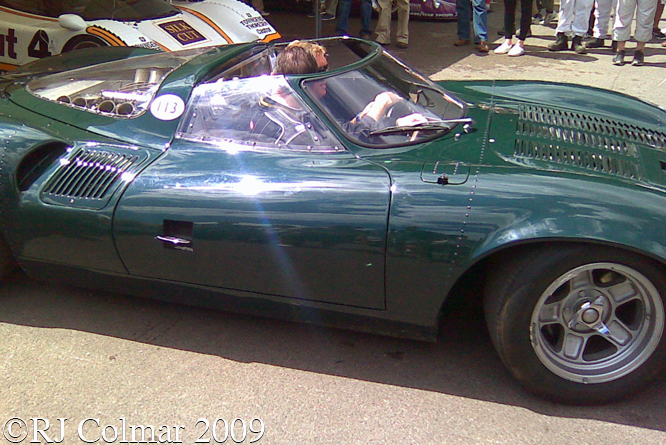
Using techniques learned at Bristol Aeroplane Company, Malcom Slayer, who designed the C-Type, D-Type, and E-Type Jaguars, was also responsible for XJ 13 prototype Le Mans racer in 1965.

 Jaguar XJ13, Goodwood Festival of Speed

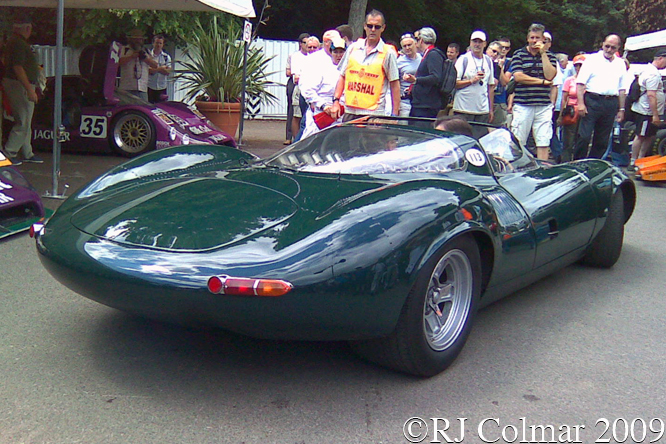
Unfortunately as Jaguar were in financial difficulties at the time of it’s conception, late in 1966 Jaguar merged with BMC which eventually came under government control in 1975, putting racing ever further down the list of priorities. As a consequence the XJ 13 project never received the attention required to develop it into a vehicle capable of contending with either the brutally functional Ford GT 40 or the gorgeous Ferrari 275LM’s and P2’s.

 Jaguar XJ13, Goodwood Festival of Speed

The XJ 13 was powered by an all aluminium 5 litre / 305 cui V12, essentially two XK straight sixes using a common crankshaft, with double over head cams and this unique car was both the first mid engined Jaguar, the next was not to appear until the XJR6 race car in 1985, and the first V12, the next being the Series 3 E Type V12 of 1971.

 Jaguar XJ13, Goodwood Festival of Speed

On the 21st January 1971 while filming, for publicity of the Series 3 E – Type V12, this vehicle was nearly destroyed, with out harm to the driver Norman Dewis, when a magnesium wheel disintegrated on the banked MIRA test circuit in England.

 Jaguar XJ13, Goodwood Festival of Speed

The car was rebuilt at a cost of £1000 / $ 1600 in 1973 with much wider wheels and tyres than the original specification and officially shown to a surprised public for the first time later the same year.

Thanks for joining me on this “13 Unlucky For Some” edition of “Gettin’ a li’l psycho on tyres” I hope you will join me again tomorrow for a look at another Jaguar with a Le Mans story to tell. Don’t forget to come back now !
Share