Tag Archives: Goodwood

Group B Race Car – Porsche 961#WP0ZZZ93ZFS010016

One afternoon soon after taking over as CEO of Porsche AG American Peter Schultz noticed a chart on the wall of the office of his Chief Engineer Dr Helmut Bott which outlined the developement schedules for Porsche’s three models the 924, 928 and 911, the first two extended far into the future while that for the 911 came to a stop in 1981.
Porsche 961, Le Mans 24 Hours

Schultz took a marker pen and walked over to the chart and drew a line extending the 911’s development clear off the chart, much to the relief of Dr Bott who set about initiating the design of a new concept car which would become a flagship for the future development of the 911 called the Porsche Gruppe B.
Porsche 961, Le Mans 24 Hours

The Gruppe B, which was first seen at the Frankfurt Motor Show in October 1983 was designed with new GT regulations for race and rally cars in mind and made use of emergent all wheel drive technology and a version of the Bi Turbo 750 hp 3.2 litre 195 cui flat 6 with 4 valves per cylinder in water cooled cylinder heads that had been developed for the 1978 Porsche 935/78 known as Mody Dick.
Porsche 961, Le Mans 24 Hours

The Gruppe B was developed into a rally raid version called the 959 which won the Paris Dakar Rally at it’s second attempt with René Metge and Dominique Lemoyne in the cockpit in 1986. A US$ 225,000 road version of the 959 appeared in 1985 of which 300 examples were built up until 1987.
Porsche 961, Le Mans 24 Hours

Porsche also developed a single road racing version of the Gruppe B, today’s featured car, known as the 961. It had been anticipated that several manufacturers would build Group B race cars but in the end only the Ferrari 288 GTO saw the light of day and then only as a street car.
Porsche 961, Le Mans 24 Hours

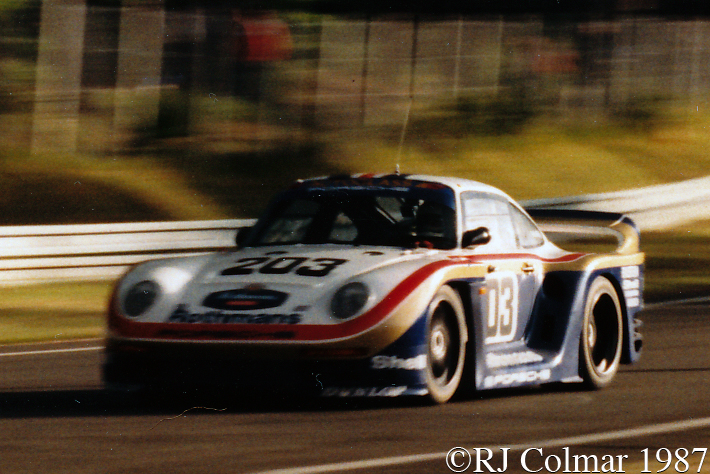
The Porsche 961 made it’s competition debut at the 1986 Le Mans test weekend with twice Paris Dakar winner René Metge sharing the wheel with Claude Ballot-Léna, because there was only one 961 in existence instead of the mandated 20 required for Group B the 961 was entered in the even more relaxed IMSA GTX class. Metge set 10th fastest time in the official Le Mans Test Session but the car retired from the first of two sprints with transmission failure.
Porsche 961, Goodwood Festival of Speed

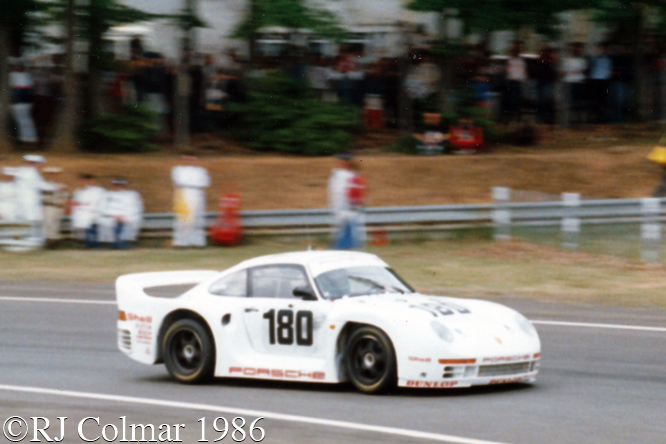
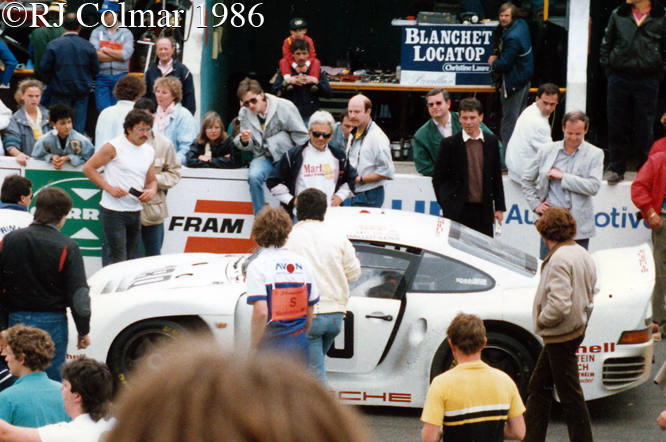
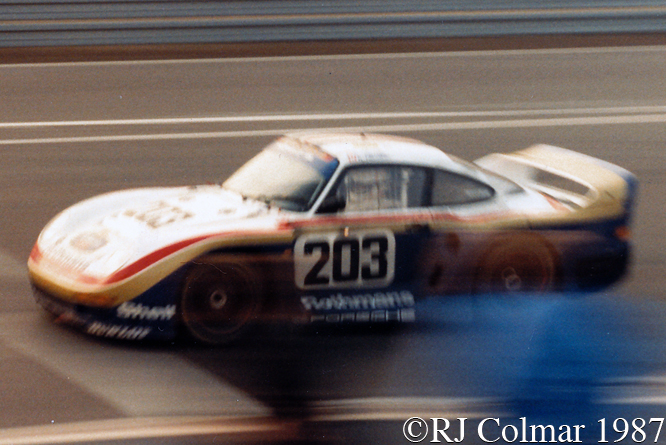
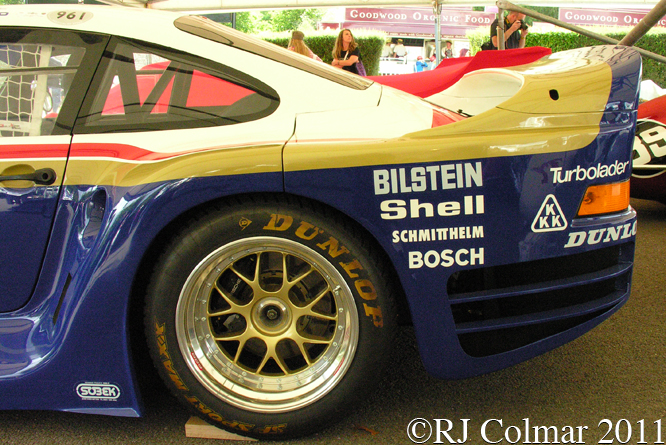
The 961 still running in the GTX class, then appeared at the 1986 Le Mans 24 hours, as seen in the top two photographs, for which it qualified 26th and came home a respectable 7th. The only Group B runner in this race was a venerable BMW M1 a design dating back to the 1970’s which crossed the finish line with it’s hazard lights on to a huge cheers from the crowd but 60 laps behind the 961 and unclassified due to running it’s last lap too slow.
Porsche 961, Goodwood Festival of Speed

In October 1986 Günter Steckkönig and Canadian Kees Nierop drove the 961, now entered as a GTP Prtotype in the Daytona 3 Hour endurance race for which they qualified 29th and came home 24th after experiencing multiple tyre failures on the banked section of the track.
Porsche 961, Goodwood Festival of Speed

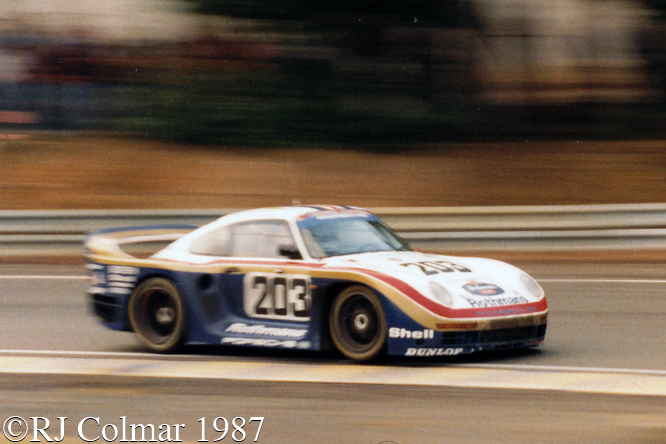
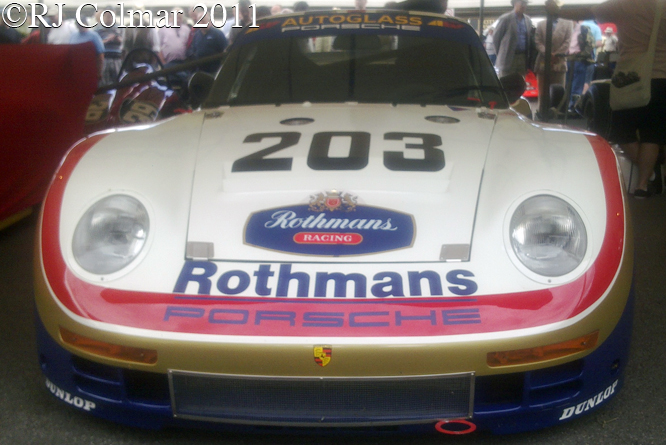
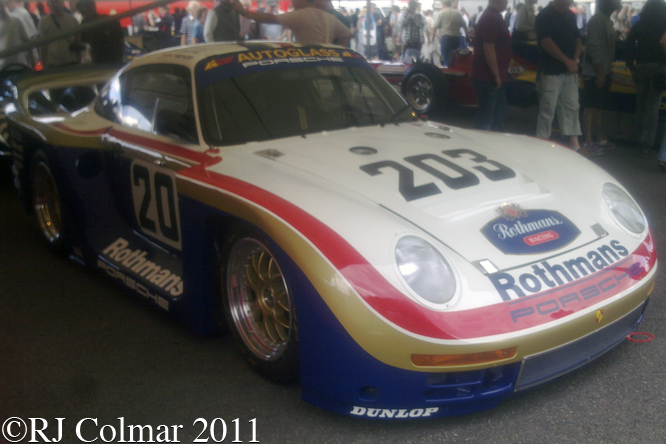
For 1987 the 961 carried the Rothmans livery like it’s sister Group C 962C’s and was driven at the Le Mans Test day by Steckkönig and Claude Haldi who set 16th fastest time with the car now entered in the rationalised IMSA class.
Porsche 961, Goodwood Festival of Speed

A month later Haldi was teamed with Metge for the Le Mans 24 hour race and after the Porsche team ran out of 962C’s Nierop was added to the 961’s driving strength in place of Steckkönig too.

The #203 961 qualified 31st on the grid and was running as high as 11th when around 2/3rds distance Nierop crashed at Indianapolis corner after experiencing a gearbox problem. While trying to return to the pits the 961 caught fire and eventually came to a stop and retirement.

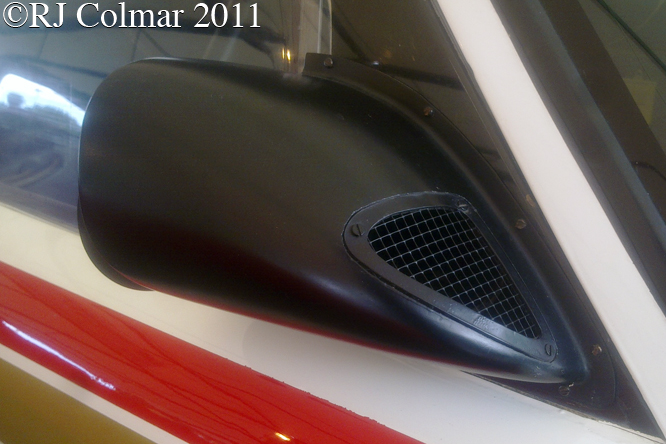
With no sign of any Group B competition on the race track Porsche abandoned the 961 with just one example built and never having actually entered the car in the class it was designed to compete in. The 961 was subsequently rebuilt for the Porsche Museum and demonstrations, it is seen in the last four photo’s at Goodwood Festival of Speed running on out of period pattern BBS wheels.

Thanks for joining me on this “Group B Race Car” edition of “Gettin’ a li’l psycho on tyres” I hope you will join me for a look at some Porsche Automobillia tomorrow. Don’t forget to come back now !

Share

The Striped One – Porsche 911 SC Safari

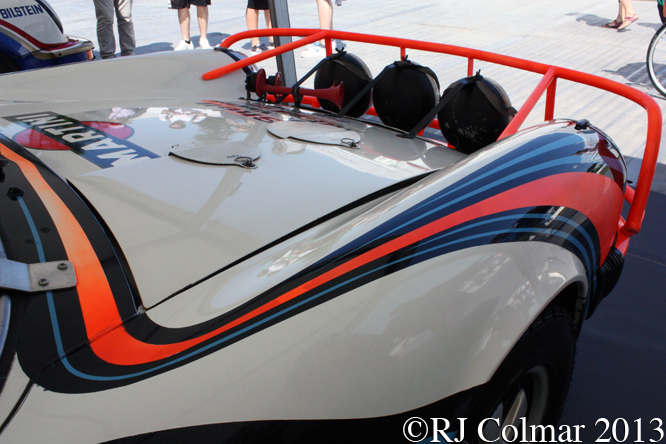
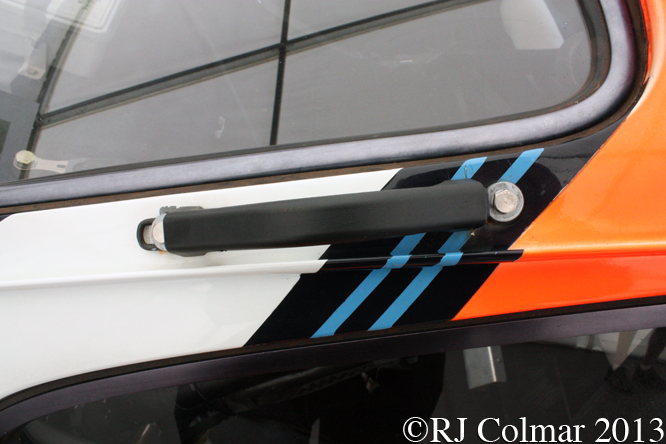
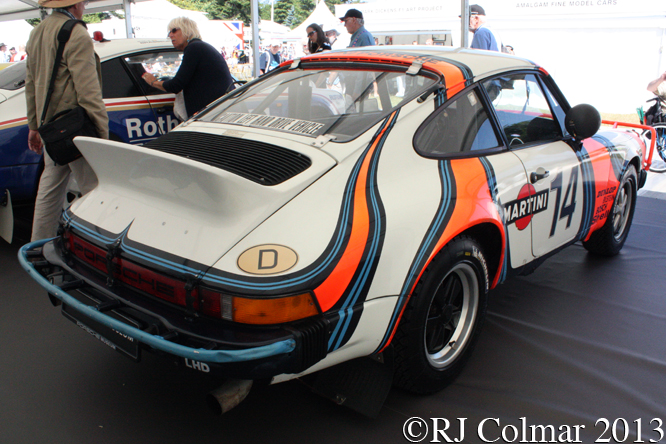
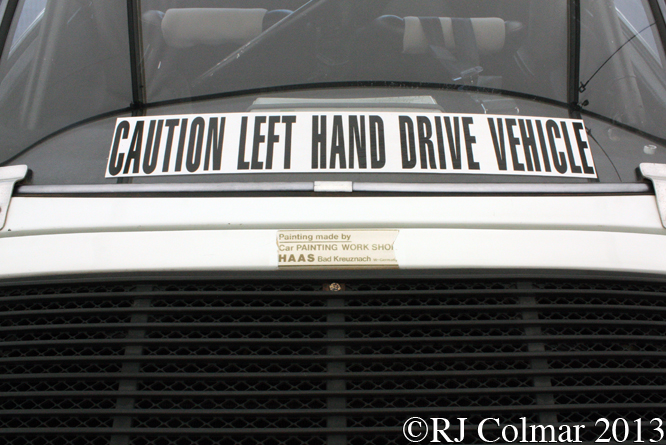
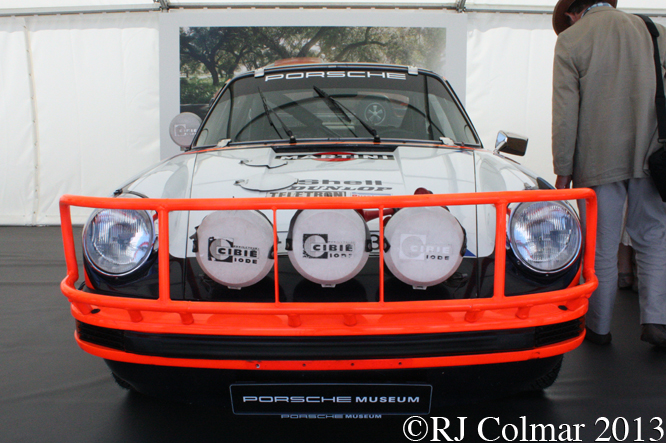
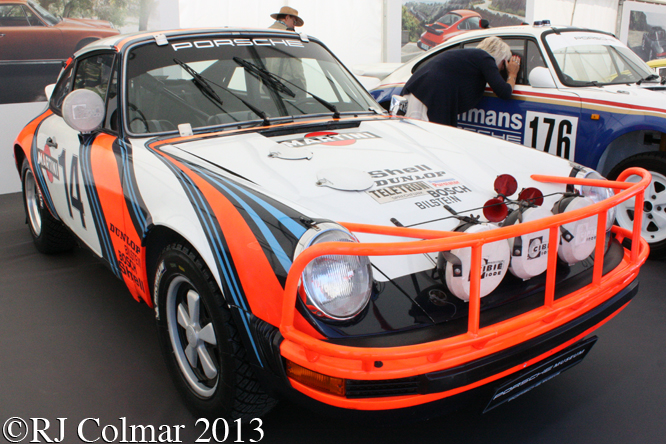
In 1978 the Martini sponsored works Porsche team produced two variants of the 911 to take outright victories in events which the model had not won, the first was the 750hp Porsche 935 78 known as Moby Dick which was designed to win the Le Mans 24 hours, it finished fourth, and the second was the 300hp Porsche 911 SC Safari, featured today, which was designed to win the Safari Rally in Kenya. The 911 SC Safari that stands nearly one foot off the ground is without question one of my favourite rally cars, it’s the one car in which James Bond’s Martini is guaranteed to arrive well shaken but not stirred.

Porsche 911 SC Safari, Goodwood Festival Of Speed

As we saw on Saturday by 1970 the 911 had proved itself in the snowy conditions of Sweden and the tarmac conditions of a dry Monte Carlo rally with Bjorn Waldegård at the wheel, it’s smaller 912 sibling had won the European Rally Championship with Sobiesław Zasada at the wheel, the only thing missing from the 911’s curriculum vitae was a win a respected ‘loose surface’ rally like the Safari Rally. This absence was not for lack of trying a 911 covered in ‘kanga’roo bars was driven by Sobiesław Zasada in the 1968 London to Sydney Marathon and sensationally worked it’s way up from 13th to 4th position on the final Australian leg of the 7000 mile rally.

Porsche 911 SC Safari, Goodwood Festival Of Speed

In 1971 Waldegård driving a works 911 looked set for a win on the East African Safari Rally until he was blinded by dust from his team mate Zasada while trying to over take him on the road and ended up crashing out while Zsada survived to finish 5th. In 1974 Bjorn came home second in the East African Safari driving a 911 RS and it was not until 1978 that Porsche returned to East Africa with a two car team that included today’s featured #14 car driven by Vic Preston Jnr. Team mate Waldegård, who won the 1977 edition of the Safari driving a Ford, returned to Zuffenhasen to drive the similar #5 911 SC.

Porsche 911 SC Safari, Goodwood Festival Of Speed

The roads used on the Safari in 1978 were mostly graded tracks, tarmac is rarely used because the population is sparsely distributed and the intense daily short bursts of rain in the rainy season would likely as not wash tarmac away in abrasive currents of subsequent surface water drainage. The ’78 Safari was run in wet conditions but the competition between the Porsche, Datsun now Nissan, and Peugeot teams remained close. Waldegård and H Thorszelius led the first leg but then a rock damaged the suspension and they could only recover a 4th place finish.

Porsche 911 SC Safari, Goodwood Festival Of Speed

Vic Preston Jnr and J Lyall finished second in today’s featured car behind the Peugeot 504 V6 of Jean Pierre Nicolas and Jean Todt J-C Lefebvre. The winners finished the timed sections with the fastest times overall only to crash in to an unexpectedly U turning vehicle on the untimed road section back to the ceremonial finish line in Niarobi. The Peugeot was badly damaged but the occupants unharmed. After repairs Nicolas managed to drive to the finish with a holed radiator.

Porsche 911 SC Safari, Goodwood Festival Of Speed

Ironically Jean Pierre Nicholas with Vincent Laverne win in the 1978 Monte Carlo Rally driving a superceded Porsche 911 Carrera RSR meant that Porsche maintained their lead in the World Rally Championship. By the seasons end a privately entered Porsche in San Remo had scored one additional podium finish for the Zuffenhausen marque in the World Rally Championship as the works team involvement was aimed solely at winning the prestigious Safari. The 4th place final championship placing was edged by 1978 champions FIAT, Ford, for whom Bjorn also drove in 1978 and Opel, each of these teams had elected pass on the extreme endurance test of the Safari in Kenya.

Porsche 911 SC Safari, Goodwood Festival Of Speed

The 1978 Safari was the last World Championship Rally the works team entered although some years later the Porsche name would return with Prodrive prepared cars. With no prospect of rallying regulations turning to favor a Porsche entry it would appear the marque which has dominated so many other area’s of the sport is destined to never win the Safari Rally. In 2011 Waldegård driving a 1972 Porsche 911 2.4 prepared by Francis Tuthill did win the classic version of the Safari Rally, a small consolation for the man and the marque.

The following season Martini shifted the main focus of it’s motorsports sponsorship to the Lotus formula one team.

Thanks for joining me on this “The Striped One” edition of “Gettin’ a li’l psycho on tyres” I hope you will join me again tomorrow when I’ll be looking at some Formula One Automobillia. Don’t forget to come back now !

Share

Monte Hat-trick – Porsche 911S

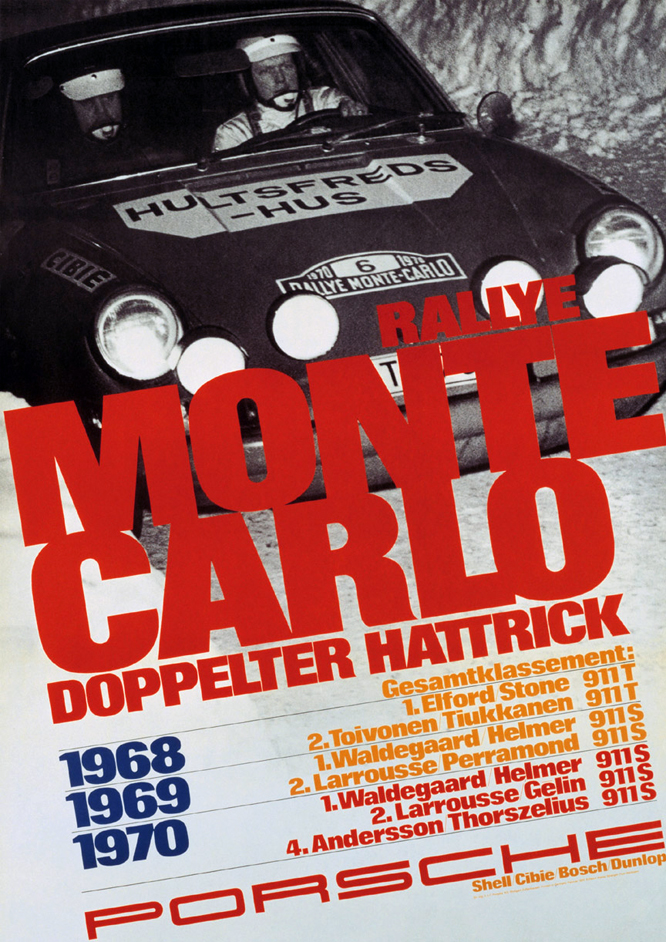
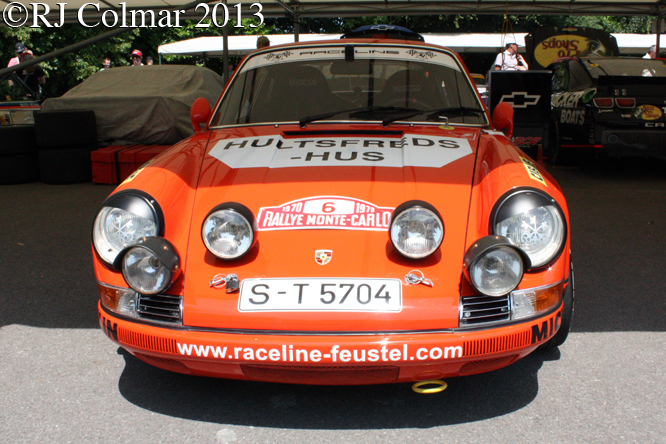
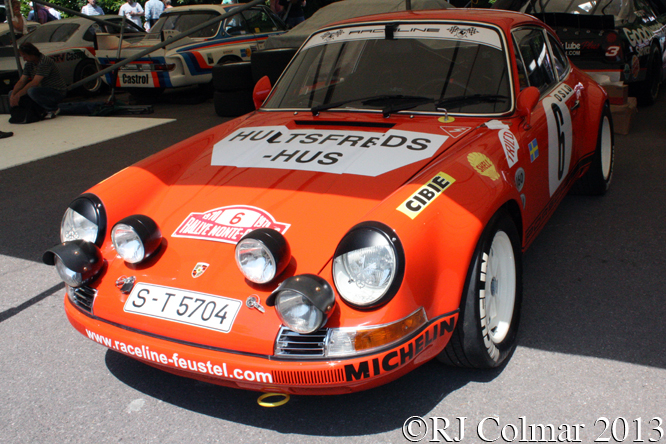
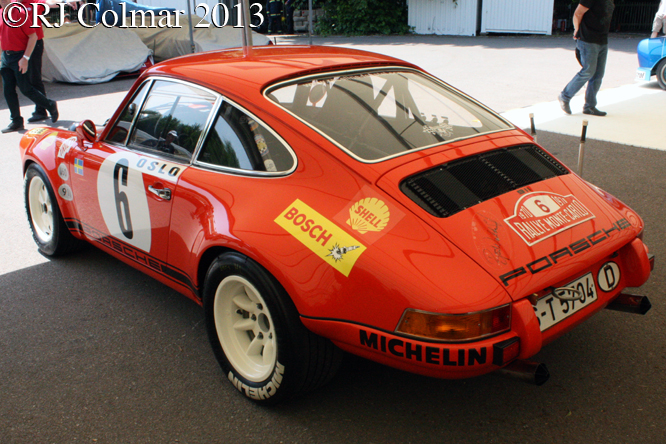
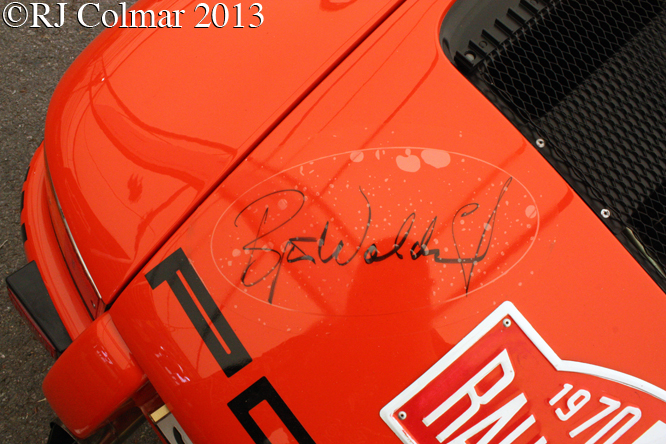
From 1968 to 1970 Porsche scored three 1-2 victories on the fabled Monte Carlo Rally. In 1968 Vic Elford and David Stone driving a Porsche 911T won the event ahead of the 911S driven by Pauli Toivonen and M Tiukkanen, the following year Bjorn Waldegård and Lars Helmer driving a 911S finished ahead of the similar car driven by Gerárd Larrousse and JC Perramond. In 1970 the Porsche hat-trick of wins came when Waaldegård and Helmer drove today’s featured car to victory over Larrousse and M Gélin in another 911S.

Porsche, 911, Advertisement

The 1970 Monte Carlo had featured a concentration run to the Principality starting from eight European cities and was run in mild conditions. Porsche, Ford Alpine Renault and Lancia all entered significant works teams expected to challenge for top honours. British press interest in the, once, prestigious event was so low that Motor Sport correspondent GP, Geraint “Gerry” Phillips, opined, in March 1970, that what the Monte Carlo Rally needed to reengage Fleet Street was “… a bunch of hippies to entrench themselves on the Turini (rally stage) and spray the spectators with LSD.” !

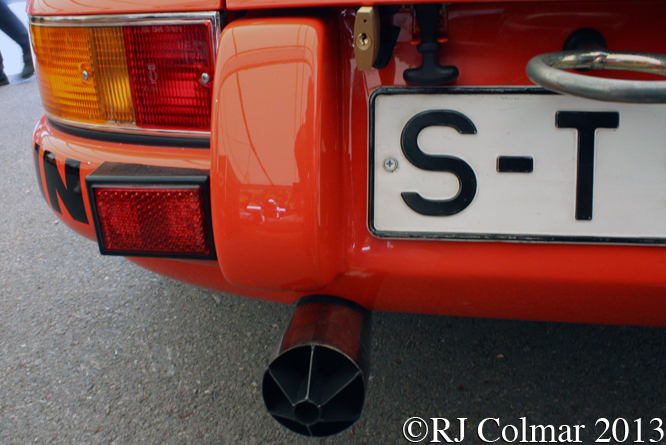
Porsche 911S, Goodwood, Festival of Speed

Having won on the dry Monte Carlo Waldegård and Lars Helmer proved the versatility of the 911 by winning the Swedish Rally run on snow by 23 mins, after having a clutch replaced that required the engine to be removed in a freezing lay-by.

Porsche 911S, Goodwood, Festival of Speed

The second 911S model introduced in 1969 features a 2 1/4″ longer wheel base than the original, to improve the handling, though there was no increase in the overall length of the car.

Porsche 911S, Goodwood, Festival of Speed

The motor for the 911S was increased in size from 2 litres / 122 cui to 2.3 litres / 134 cui and with fuel injection this competition car produced 230hp, 50 more than the fuel injected road going version of the 911S.

Porsche 911S, Goodwood, Festival of Speed

Swede Bjorn Waldergård was a front line rally driver from 1962 to 1992, the World Rally Championship (WRC) started in 1973 and he won 16 of the 95 WRC events in which he started. His wins included the three toughest events on the WRC Circuit, the Safari, Acroplolis and RAC rallies in 1977 when he was driving for Ford. In 1979 Bjorn won the World Rally Drivers Championship driving for the works Ford and Mercedes Benz rally teams. Winning the Safari Rally for the third time in 1990, with Fred Gallagher, driving a Toyota Bjorn became the oldest person to ever win a World Championship Rally a record he holds to this day.

Porsche 911S, Goodwood, Festival of Speed

In his report on the road going Porsche 911S for Motor Sport in February 1970 Dennis ‘DSJ’ Jenkinson observed that a 911 cost twice as much as the 4.2 E-Type Jaguar he bought in 1966, to replace his Porsche 356, and that by 1970 the 911S had risen in price to become half the cost of a Lamborghini Miura, he concluded “It is all a question of keeping a sense of proportion.”

Thanks for joining me on this “Monte Hat-trick” edition of “Gettin a li’l psycho on tyres”, I hope you will join me again tomorrow when I’ll be looking at a slightly more outrageously flared Porsche 911. Don’t forget to come back now !

Share

500lb Competition Diet – Porsche 911 R Replica

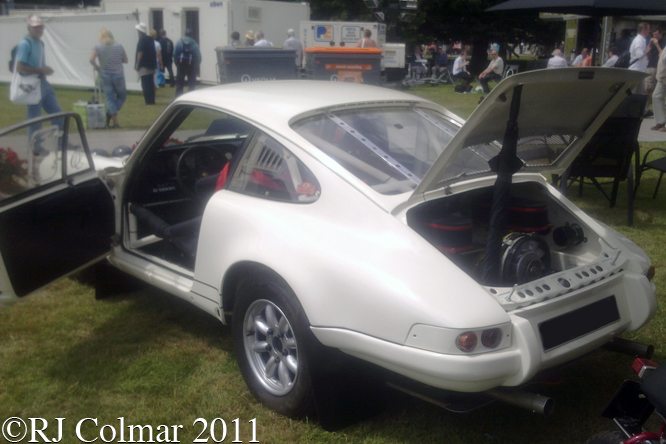
In 1967 Porsche put it’s 911 model on a competition diet to bring the weight down by 230 kgs / 500 lbs to 810 kgs / 1786 lbs to produce a new model the 911 R.

Porsche 911 R, Goodwood, Festival of Speed

A limited run of 4 factory cars and 19 customer 911 Rs were built by Baur at their body shop in Stuttgart with fibreglass paneled doors, bonnet / hood and boot / trunk lid. Additional weight saving was achieved by using plastic door hinges and bumpers.

Porsche 911 R, Goodwood, Festival of Speed

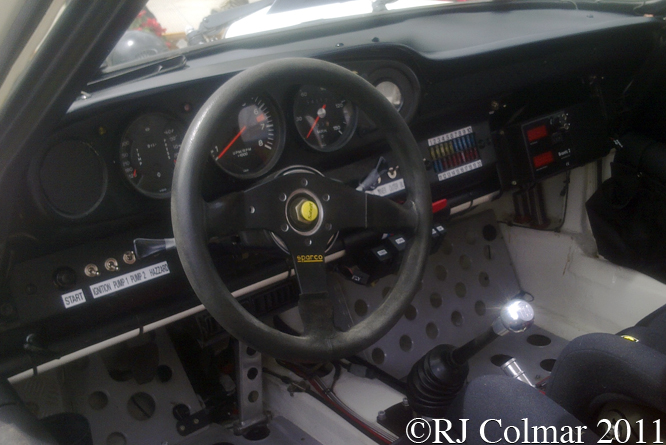
The standard interior was completely deleted in favour of the bare essentials needed for racing or rallying competition, the lightweight side windows were louvred at the rear.

Porsche 911 R, Goodwood, Festival of Speed

Power from the flat six motor was raised from the original type 901 130hp to 210 hp using the type 901/22 motor from the 906 Carrera or 230 hp from the four cam type 901/21 motor.

Porsche 911 R, Goodwood, Festival of Speed

Homologation for the GT class required a minimum of 500 identical vehicles to be built, so with only 24 cars completed the 911 R was forced to run in the prototype class against the likes of mighty Ford Mark IV’s and Ferrari P4s which both had motors more than double the size of the 911 R’s 2 litre / 122 cui flat 6.

As a consequence notable results were hard to come by although the 911 R did score two outright wins the first in the 1967 when Hans Hermann, Jochen Neerspach and Vic Elford shared chassis #3, fitted with a 4 cam motor and Sportmatic transmission, to win the 84 hour Marathon de la Route at the Nurburgring.

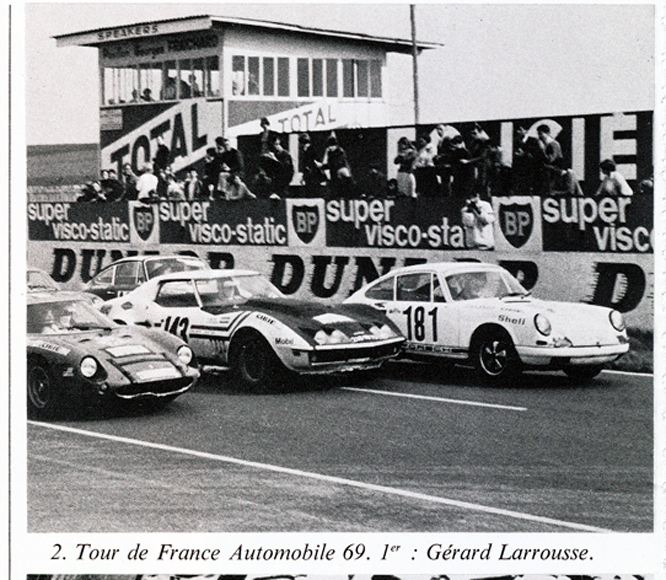
Tour de France, Dunlop SP Sport, Advertisement, Connaissance des arts

The second significant 911 R victory came in 1969 when Gérard Larrousse & Maurice Gélin won the 1969 Tour de France beating the Chevrolet Corvette driven by Henri Greder and André Vigneron as seen in the black and white photo seen above in a 1970 advertisement for Dunlop tyres.

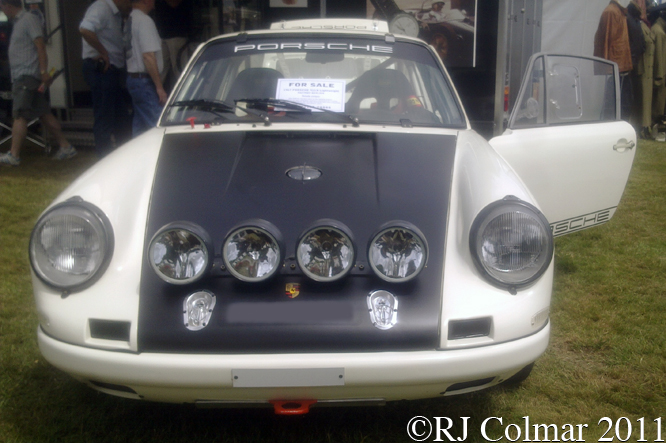
Today’s featured car seen at the 2011 Goodwood Festival of Speed is a replica 911 R that started life as a far more humble 1967 4 cylinder Porsche 912, according to the blurb in the windscreen this car took over 1200 hours to complete.

Thanks for joining me on this “500lb Competition Diet” edition of “Gettin’ a li’l psycho on tyres” I hope you will join me again tomorrow when I’ll be looking at a couple of Porsche 912s.

Share

It’s Not A Peugeot – Porsche 901

From Saturdays to Mondays this month I’ll be celebrating the 50th Anniversary of the Porsche 911, a model which was originally called the 901.

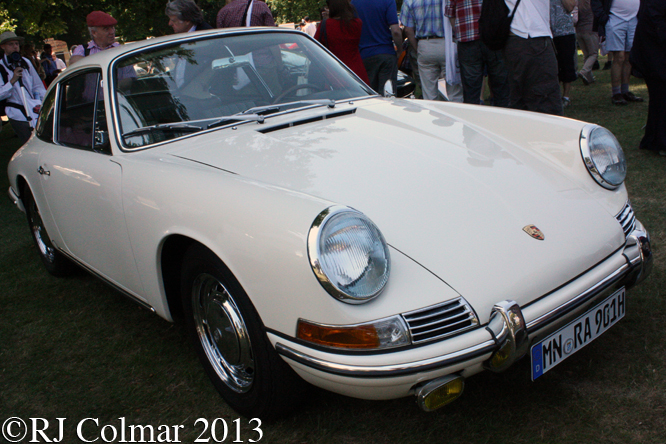
In 1959 a prototype 4 seat two door Porsche, sketched out by Ferdinand “Butzi” Porsche, was built known variously as the 695, T7 and 754, the front and extreme rear of which bears a resemblance to today’s featured Porsche 901 and later Porsche 911, but it had a more upright rear window than the coupé 2+2 of the later models.

Porsche 901, Goodwood Festival of Speed

The first public appearance of the Porsche 901 with a mock up 128hp, 2 litre, flat 6 motor was at the 1963 Frankfurt Motor Show. When the 901 was presented at the 1964 Paris Auto Salon Peugeot took exception to the 901 moniker as they were globally known for their model names featuring three digits with a ‘0’ in the middle. Porsche, after a legal dispute which Peugeot won, changed the name of their new model to 911, however not before 82 901’s had been completed as prototypes and show cars.

Porsche 901, Goodwood Festival of Speed

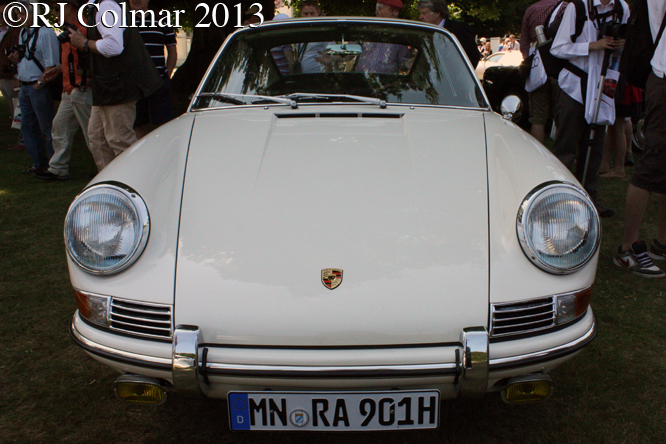
Of the 82 901 models built a few made it into private hands, one of which today’s featured car #27 is said to have been sold off the 1964 Earls Court Motor Show stand to an aeronautical engineer called Mr Sorjo Ranta. Mr Ranta kept the car until selling it to Ruf family, known for their Porsche tuning and restyling business.

Note some open sources say the RUF owned 901 is #37, if you happen to definitively know which number is correct please chime in below with references if possible, the #27 was quoted from the Cartier Style et Luxe Concours d”Elegance information board at the Goodwood Festival of Speed.

Thanks for joining me on this “It’s not a Peugeot” edition of “Gettin’ a li’l psycho on tyres” I hope you will join me for a look at a 1967 Porsche 911R Replica. Don’t forget to come back now !

Share

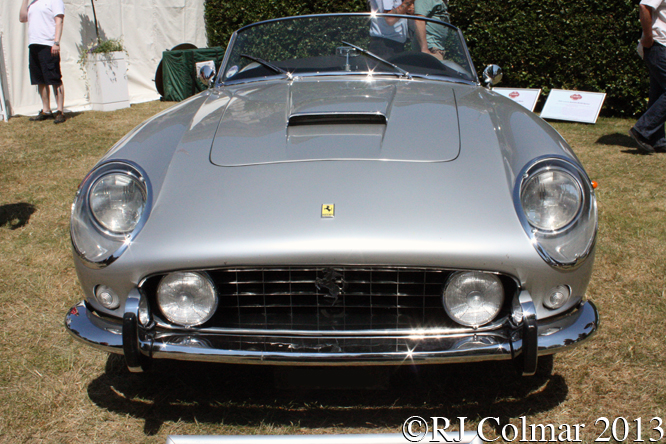
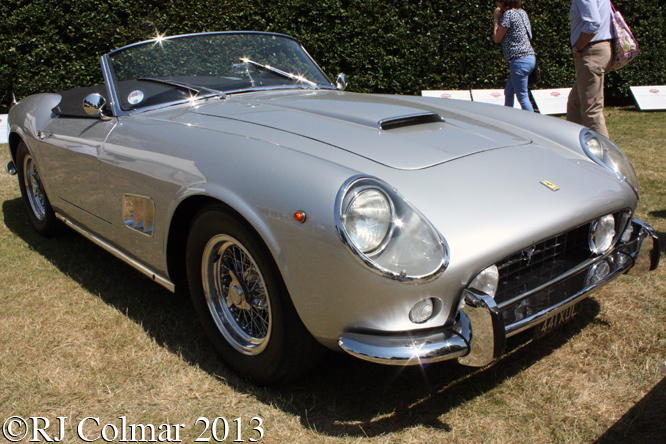
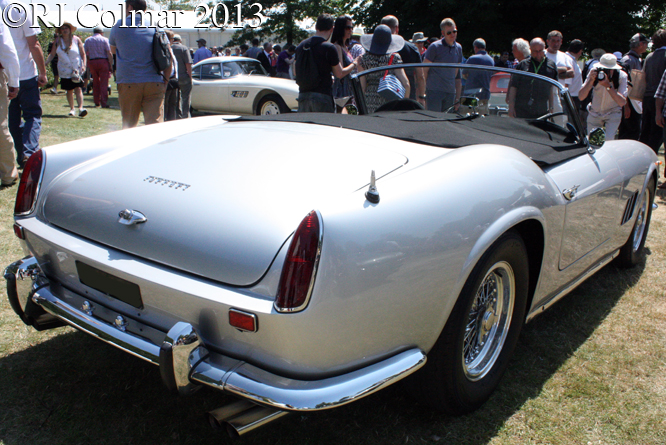
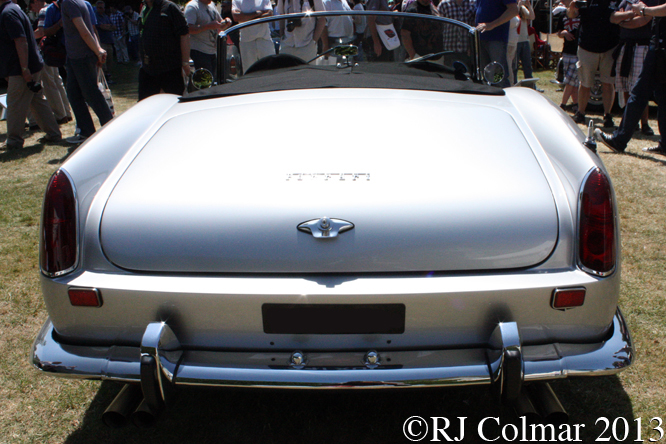
8 Inches Shorter – Ferrari 250 GT California Spyder SWB #2891 GT

Sharing the same chassis as the Ferrari 250 GT Berlinetta SWB, the short wheel base (SWB) Ferrari 250 California Spyder was a fraction under 8 inches shorter than the original Long Wheel Base Ferrari 250 GT California Spyder of which 49 examples had been built 1957 and 1960.

Ferrari 250 GT California Spyder SWB, Goodwood, Festival of Speed

Of the 55 SWB California Spyder bodies designed by Pininfarina and built by Scaglietti 37 had faired in headlights.

Ferrari 250 GT California Spyder SWB, Goodwood, Festival of Speed

First seen at Geneva Motor Show in 1960 the California Spyder was powered by a 276hp version of the 3 litre / 183 cui V12 motor designed by Gioacchino Colombo.

Ferrari 250 GT California Spyder SWB, Goodwood, Festival of Speed

Along with the additional power the SWB California was fitted with hydraulic disc brakes in place of the drum brakes of originally fitted to the older long wheel base model.

Ferrari 250 GT California Spyder SWB, Goodwood, Festival of Speed

At the time of writing it is not known who first purchased chassis #2891 in 1961, but it’s three known subsequent owners all lived in Europe, so this car appears to have never seen the California sunshine for which it was built.

Thanks for joining me on this “8 Inches Shorter” edition of “Gettin a li’l psycho on tyres” I hope you will join me again tomorrow when I’ll for the start of GALPOT’S 50th Anniversary of the Porsche 911 celebration. Don’t forget to come back now !

Share

“LMS Series Winner” – Lola Aston Martin DBR 1-2

With the announcement of the discontinuation of Group C, from 1991 on, at the end of 1989 Aston Martin decided to withdraw it’s AMR1 V8 Prototype from the top line Sports Car series with immediate effect as they had no engine to with which to compete under the proposed new rules mandating 3.5 litre / 213 cui motors.

Lola Aston Martin  DBR 1-2, Goodwood Festival Of Speed

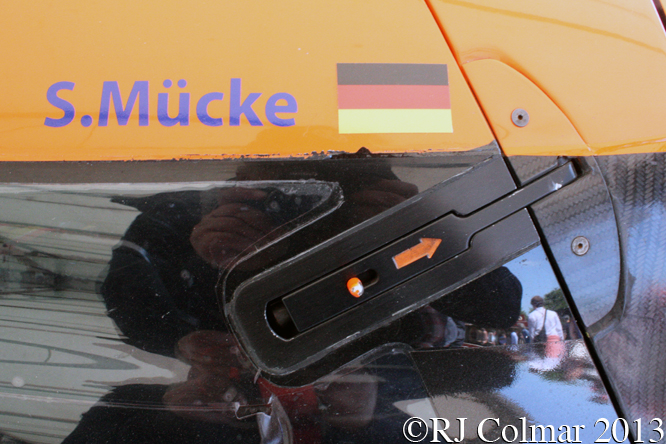
In 2008 the Aston Martin name appeared in the top Le Mans Prototype category with a pair of Lola B08/60’s powered by the 6 litre / 366 cui Aston Martin V12 that had been used in Aston Martin’s class winning DBR9 GT programme. The Lola Aston Martins were run in a collaboration between Prodrive and the Czech Charouz Racing System with Jan Charouz, Tomas Enge and Stefan Mücke sharing the driving of a single entry per race.

Lola Aston Martin  DBR 1-2, Goodwood Festival Of Speed

Charouz and Mücke finished season high 2nd in the Silverstone 1000kms. The following year one car chassis HU01 was sold to Speedy Racing who continue to race the car now under the Rebellion banner having used a motors from Aston Martin, Rebelion V10 and most recently Toyota.

Lola Aston Martin  DBR 1-2, Goodwood Festival Of Speed

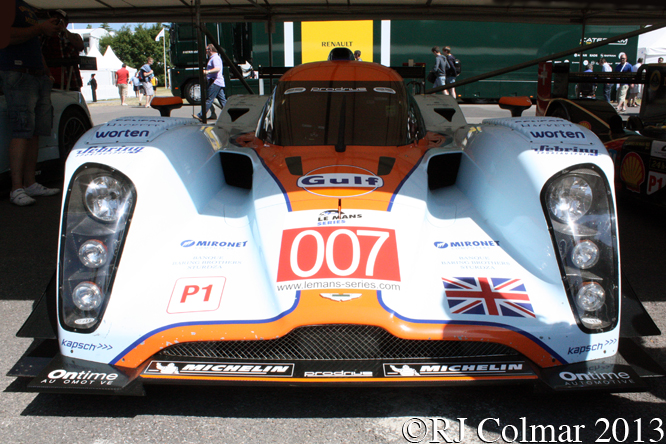
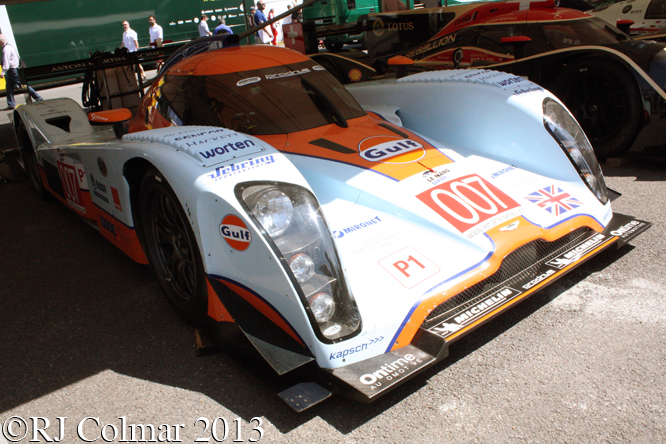
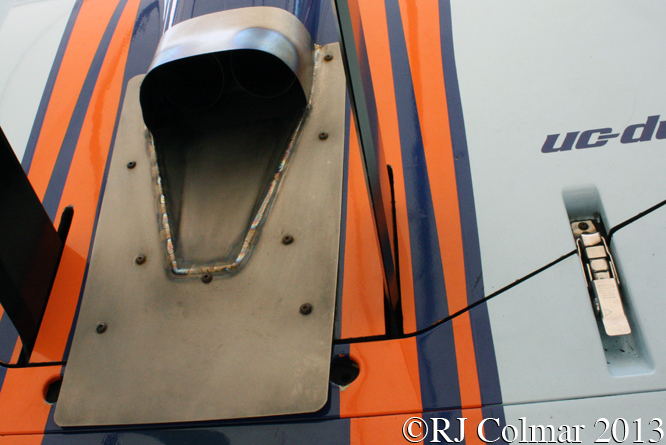
For 2009 Aston Martin increased their involvement in the Le Mans Prototype (LMP) class using Lola chassis again both the second Charouz Racing B08/60 HU02 and newer B09/60 types all fitted with updated body work. Gulf Oil sponsored, two cars entered by Aston Martin Racing, and an occasional single AMR Eastern Europe entry. All three cars are known as Lola Aston Martin DBR1-2’s and are again powered by DBR9 V12 variants producing around 650hp.

Lola Aston Martin DBR 1-2, Goodwood Festival Of Speed

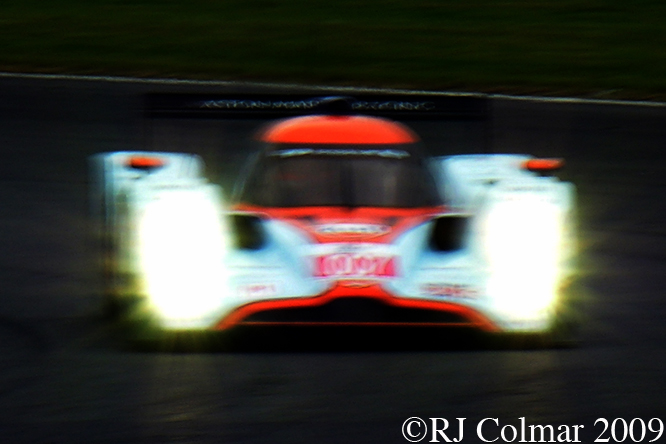
Jan Charouz, Tomáš Enge and Stefan Mücke driving the #007 got the 2009 Le Mans Series off to a fine start with a win in the Catalunya 1000 kms, though the #009 of Harold Primat, Miguel Ramos and Darren Turner retired. At Spa the team finished 3rd and 5th in numerical order, while at Le Mans the team were out classed by the works diesel powered Peugeots and Audi’s, which did not take part in the rest of the Le Mans series races.

Lola Aston Martin  DBR 1-2, Silverstone 1000kms

The #007 salvaged a 4th place while the #008 driven by Turner, Anthony Davidson and Jos Verstappen finished 13th and the #009 driven by Primat, Stuart Hall and Peter Kox crashed out while lying 3rd. For some reason the Le Mans 24 Hours was not however part of the Series to which it lent it’s name.

Lola Aston Martin DBR 1-2, Goodwood Festival Of Speed

#007 and #009 next competed at Algarve where the original driver line ups finished 3rd and 5th in numerical order, at the Nurburgring #007 won a 1-2-3 finish followed by the #009 and #008 driven by Stuart Hall, Chris Buncombe and Miguel Ramos the latter had been scheduled to drive the #009.

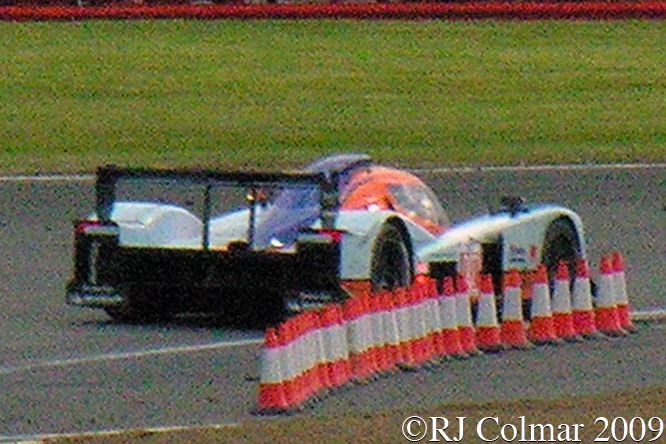
Lola Aston Martin  DBR 1-2, Silverstone 1000kms

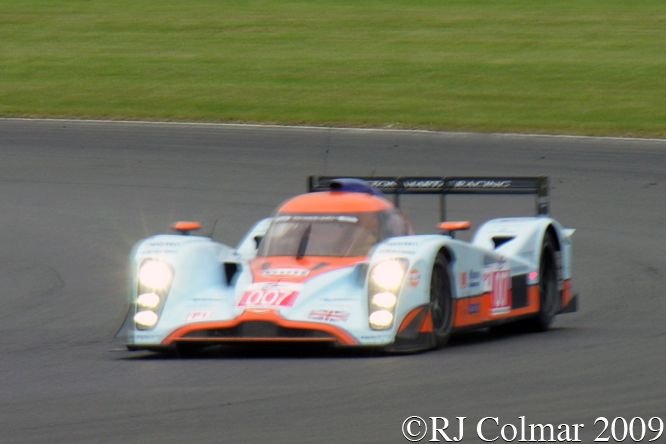
Three cars were again entered at Silverstone, where today’s on track photo’s were taken, and third place for the #007 was enough to clinch the LMS drivers championship for Jan Charouz, Tomáš Enge and Stefan Mücke, the #009 in 4th helped seal the Teams championship for Aston Martin Racing and the Manufacturers Championship for Aston Martin.

Lola Aston Martin  DBR 1-2, Goodwood Festival Of Speed

Over the following two years Aston Martin Racing sent cars to events on an apparently as hoc basis to events in Asia and Europe often joined by a chassis that had been acquired by Signature Racing. No more wins were recorded in 2010, but in 2011 the Aston Martin Racing team now sponsored by Muscle Milk driven by Klaus Graf and Lucas Luhr won at Mosport while a Gulf sponsored AMR 1-2 won at Laguna Seca driven by Harold Primat, Stefan Mücke and Adrian Fernandez.

Lola Aston Martin DBR 1-2, Silverstone 1000kms

At the end of the 2011 seasons the DBR 1-2’s were retired and scheduled to be replaced by the ill feted AMR-One.

Thanks for joining me on the “LMS winner” edition of “Gettin’ a li’l psycho on tyres” I hope you will join me again tomorrow. Don’t forget to come back now !
Share