Tag Archives: Goodwood

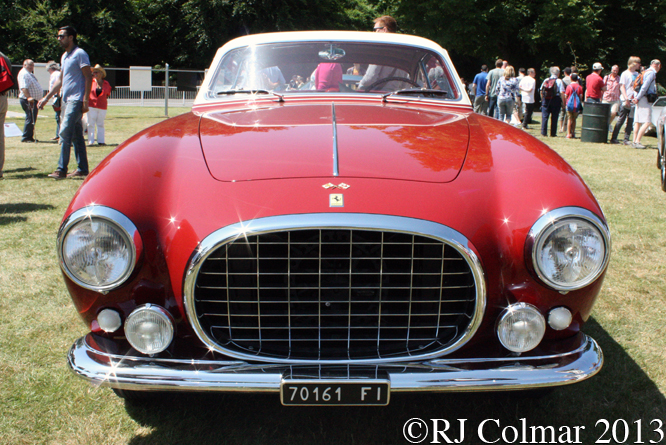
Burgandy & Cream – Ferrari 250 Europa Coupé Pininfarina #0305EU

After a meeting between Batista Farina, in 1961 to become Batista Pininfarina, and Enzo Ferrari at a restaurant in Tortona, a small town halfway between Turin and Modena, Batista drove home an told his son Sergio “From now on you’ll be looking after Ferrari, from A to Z. Design, engineering, technology, construction—the lot!”. Sergia says he was over the moon with happiness and one of the fruits of that conversation is today’s featured Ferrari 250 Europa Coupé chassis #0305EU delivered in late September 1953.

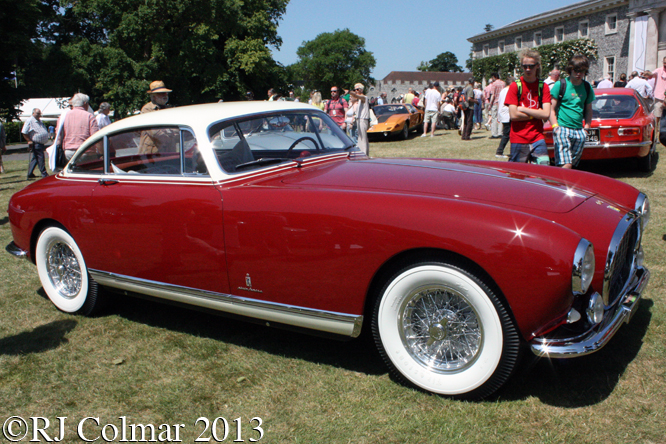
Ferrari 250 PF Europa Coupé, Goodwood Festival Of Speed

According to the blurb about this car seen at Goodwood, #0305EU was originally commissioned by a friend of Batista Farina called Latino Magnolfi, given the PF job number 12531 chassis #0305EU features unique to the 250 Europa Coupé model 3/4 windows a shorter windscreen and larger grill than the other 250 Europa’s. Magnolfi used to enter the car in Concours d’Elegance events before he sold the car.

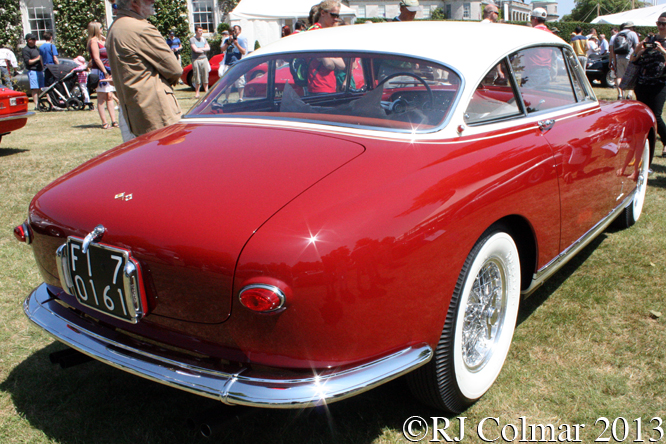
Ferrari 250 PF Europa Coupé, Goodwood Festival Of Speed

The exact history of the #0305EU after the sale is not known to me but it ended up in the USA and after the repair of the 3 litre / 183 cui V12 motor became uneconomic the motor and gearbox was swapped for a Chevrolet V8 and and associated transmission.

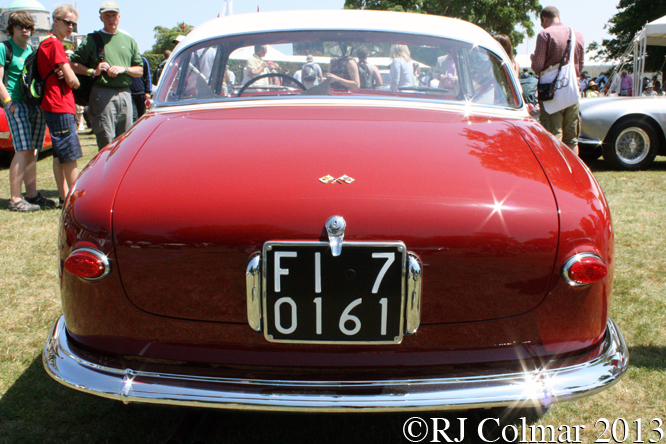
Ferrari 250 PF Europa Coupé, Goodwood Festival Of Speed

In 2006 current owner Jan de Reu acquired the car which has been fully restored to its white wall tyre two tone Burgundy and Cream splendor, with a correct Colombo designed Ferrari V12 motor, by Ferrari Classiche.

Ferrari 250 PF Europa Coupé, Goodwood Festival Of Speed

As some of my regular readers may remember the Ferrari 250 Europa is closely related to the Ferrari 375 America, the later of which is powered by a larger 4.5 litre 274 cui Aurelio Lambredi designed long block V12.

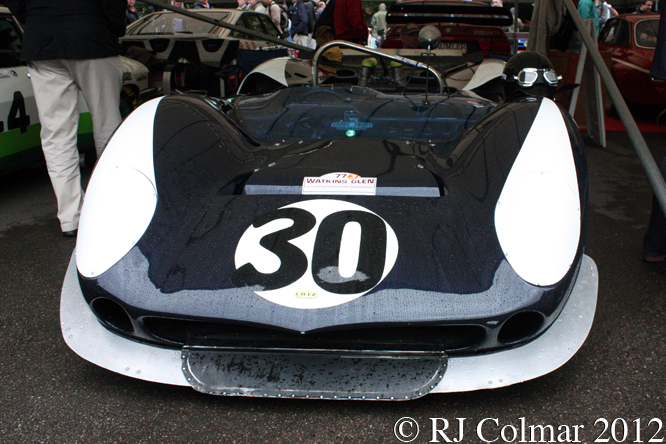
Thanks for joining me on this “Burgandy & Cream” edition of “Gettin’ a li’l psycho on tyres” I hope you will join me again tomorrow when I be looking at Dan Gurney’s Can Am McLeagle. Don’t forget to come back now !

Share

Three Engineers From Detroit – Wolverine LD65 #LD65/1

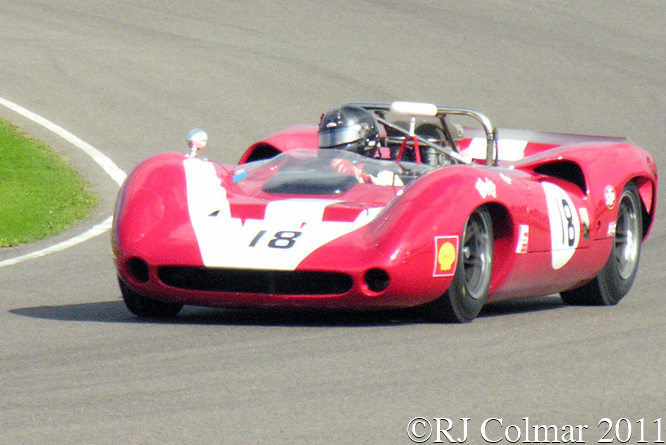
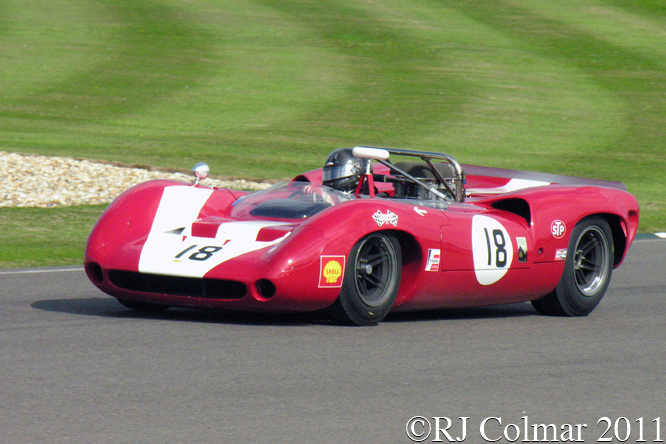
The story of the Wolverine Chevrlolet LD65 according to one of it’s former owners, began at a race where Jerry Hansen was driving his successful McKee Chevette and was blown into the weeds by a front engined car. When Jerry approached the team in the pits after the race and asked who they were they responded “three engineers from Detroit”. One of the engineers was Lee Dykstra who would make a name for himself with the Jaguar XJR5 IMSA car and a number of Indy Cars.

When Jerry asked why the three engineers did not build a rear engined car they replied they did not have the money so Jerry wrote them a cheque and asked the three engineers from Detroit to build him one.

The Wolverine designed by Lee Dykstra and George Anderson first appeared in a national SCCA race at Greenwood which Jerry Hansen won, Jerry then recorded a did not finish at Mid-Ohio before appearing at the inaugural Can Am Challenge at St Jovite in September 1966. Jerry qualified 25th and finished 20th.
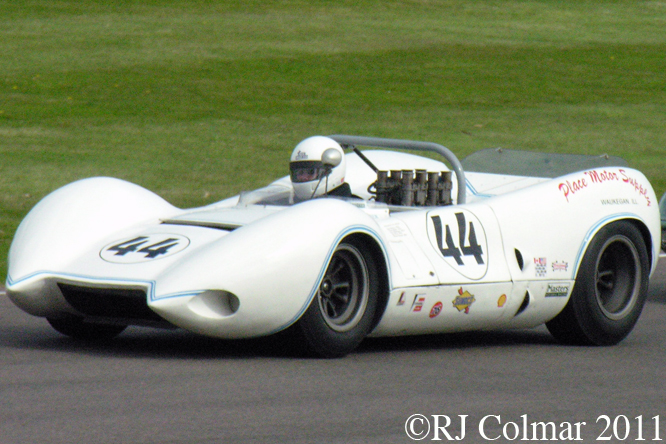
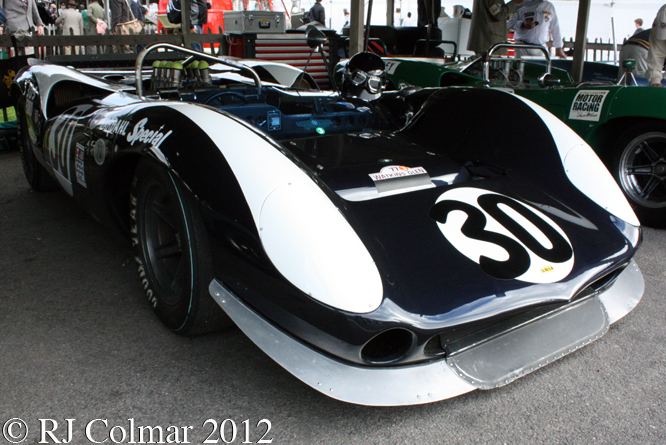
Wolverine LD65, Goodwood Revival

Jerry never raced the Wolverine again, it would appear that the week before St Jovite Jerry was due to share a McLaren Elva Mk II with Charlie Hays in the Road America 500. However, after his friend and fellow Minneapolis/St Paul, Minn., resident Don Skogmo was killed driving a Lola T70 Mk II, in an accident during practice for the same race, Jerry withdrew from the event handing his ride in the Hayes McLaren to Earl Jones.

It is thought Jerry raced the Wolverine at St Jovite before sitting out the remainder of the year due to pressure from his family to retire from driving. The following year Jerry returned to racing and did not retire permanently until 1986, by which time he had clocked up a record 27 National Sports Car Club of America titles. Today the Hansen name is still connected to racing through his daughter Courtney an actress, author and presenter of motoring related television shows including Powerblock.

Jerry sold the Wolverine to Owen Rutherford who bought the car for Frank Opalka. In 1968 Frank recorded a DNF in the Road America 500 miles with Bob Lyon, and by Franks account scored many more DNF’s before the bugs were sorted out in “SCCA and USRRC” events. Frank relates how once the car was reliable he would be congratulated for finishing.
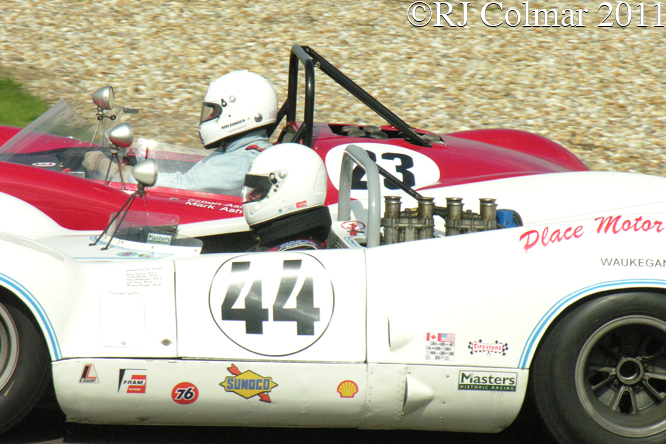
Wolverine LD65, Goodwood Revival

Frank also tells a good tale about a sponsor “Miami Serpenterium” who required that the car be painted all over with snakes. At Road America Owen turned up with a “station wagon loaded with poisonous snakes” one of which, a cobra, escaped and bit sponsor Bud Severens who required Buds hospitalisation, a story which made the local news. Apparently Bud never did work out how the cobra came to be in Wisconsin.

Jim Place became the next owner of the car and it is in the colours that Jim painted the car that it appears today. Jim is known to have been on the entry list for at least two Can Am events he is recorded as not arriving at the race at Michigan International in September 1969. Jim qualified 24th at Road America in August 1970 but did not start the race which is the last of the Wolverines appearances known to me.

The car is now raced by Morgen Christensen who is seen at the wheel above at Goodwood a couple of years ago. The red car alongside Morgens is the Rolls Royce powered Marina driven by Mark Ashworth.

My thanks to all those including Frank Opalka who commented on the Wolverine thread at The Nostalgia Forum, and especially Tom “RA Hisotrian” Schultz who revealed why Jerry Hansen’s career with the Wolverine was so short lived.

Thanks for joining me on this “Three Engineers From Detroit” edition of “Gettin’ a li’l psycho on tyres” I hope you will join me again tomorrow when I’ll be having a French sojourn. Don’t forget to come back now !
Share

The Surtees Hill Lola – Lola Chevrolet T70 Mk II Spyder SL71/43

Team Surtees started running Lola T70’s in sports car races in 1965, for 1966 the teams proprietor, 1964 World Champion, John Surtees ran a Chevrolet Mk II spyder variant, chassis #SL71/17, in the Canadian American (Can Am) Challenge winning the inaugural Can Am race at St Jovite from pole with the car.

Surtees retired from the next couple of Can Am races with a broken oil pipe and then after a start line accident at Bridgehampton and Mosport respectively. At Laguna Seca the team had a new chassis #SL71/43, today’s featured car, which he qualified 7th but retired for a third time after 92 laps with suspension damage.

Knapfield, Lola T70, Goodwood Revival

John Surtees returned to chassis #SL71/17 at Riverside where he qualified second and won, 1962 World Champion and 1966 Indy 500 Winner Graham Hill was drafted into chassis #SL71/43 and came home third from 5th on the grid in the cars final appearance for Team Surtees.

Knapfield, Lola T70, Goodwood Revival

Surtees went into the final round of the 1966 Can Am Challenge at Stardust International Raceway in Las Vegas sharing the series lead with 1961 World Champion Phil Hill who was driving a Chaparral 2E.

Despite qualifying 4th behind Jim Hall on pole with his Chaparral team mate Phil Hill beside him and Chris Amon in a McLaren Elva in third, John Surtees forced his way through to the lead on the opening lap. John did not relinquish that lead for the entire 70 lap race and so secured the inaugural Can Am Championship.

Chassis SL71/43 was acquired by George Ralph for 1968 his best results with the car were two 11th place finishes one in the USRRC Championnat Nord-Americain race held at Mont-Tremblant from 17th on the grid and the other in the Road America Can Am race from 21st on the grid.

Current owner Paul Knapfield is seen driving the car at the 2011 Goodwood revival in these photo’s.

My thanks to Tom RA Announcer Schultz for kindly visiting his den to dig out the chassis details of today’s featured car from his copy of Lola T70 – The Design, Development & Racing History Hardcover – December 1, 2012 by John Starkey and Franco Varani.

Thanks for joining me on this “The Surtees Hill Lola” edition of “Gettin’ a li’l psycho on tyres” I hope you will join me again tomorrow. Don’t for get to come back now !

Share

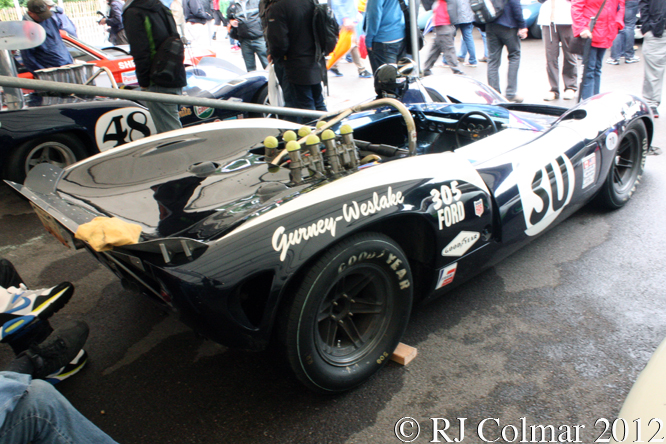
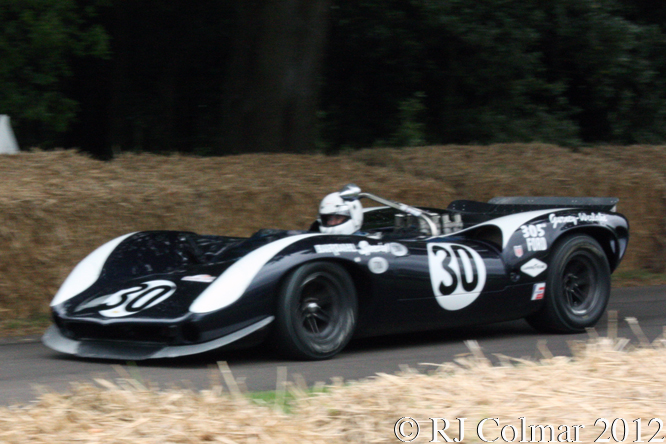
Ford’s Only CanAm Race Winner – Lola Ford T70 Mk II #SL71/34

For the up coming inaugural 1966 Canadian American Challenge All American Racers took delivery of a new Lola T70 Mk II chassis #SL71/34 for which was powered by a 5 litre / 305 cui Ford Westlake V8 motor. The car was driven by Dan Gurney alongside the team’s 1965 Lola T70 Mk I chassis #SL70/10 which was run for Jerry Grant.

Lola Ford T70 Mk II, Goodwood Revival

After qualifying 9th for the inaugural Can Am race at St.Jovite Dan’s challenge got off to a poor start, because he did not start due to engine problems which manifested themselves during practice.

Lola Ford T70 Mk II, Goodwood Revival

At the next round held at Bridgehampton things improved with a start from pole position which Dan translated into, what turned out to be, the only win for a Ford powered car in the entire history of Can Am. Extraordinary given Ford’s persistence in tackling and winning Indy, Le Mans and an eventual decade and a half of dominance in Formula One.

Lola Ford T70 Mk II, Goodwood Festival of Speed

Dan started the following race at Mosport from pole but retired with ignition problems, at Laguna Seca Dan started 4th but retired with a cracked engine block. Dan’s bad luck continued at Riverside where he qualified 6th but retired with a clutch issue. At the Challenge finale held at Stardust international Raceway in Las Vegas Dan qualified 9th and retired with a broken fuel tank.

Lola Ford T70 Mk II, Goodwood Festival of Speed

It is probably just as well Dan did not follow Jerry Grant’s lead by emptying the contents of a revolver into the car at the seasons end.

Thanks for joining me on this “Ford’s Only CanAm Race Winner” edition of “Gettin’ a li’l psycho on tyres”, I hope you will join me again tomorrow when I’ll be looking at a US built vehicle that took part in the 1966 Can Am Challenge. Don’t forget to come back now !
Share

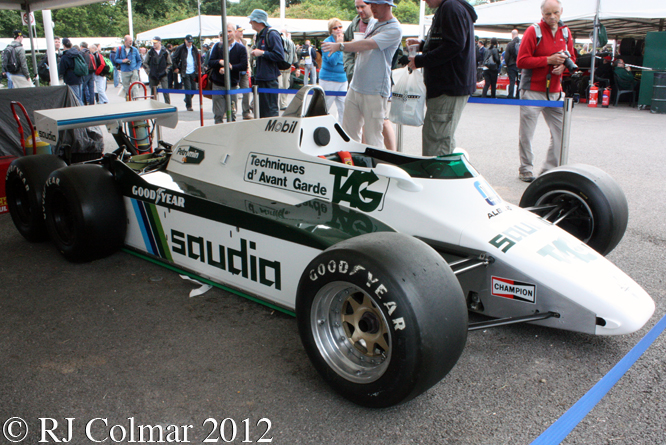
6 Wheel 4WD Final Call – Williams FW08B

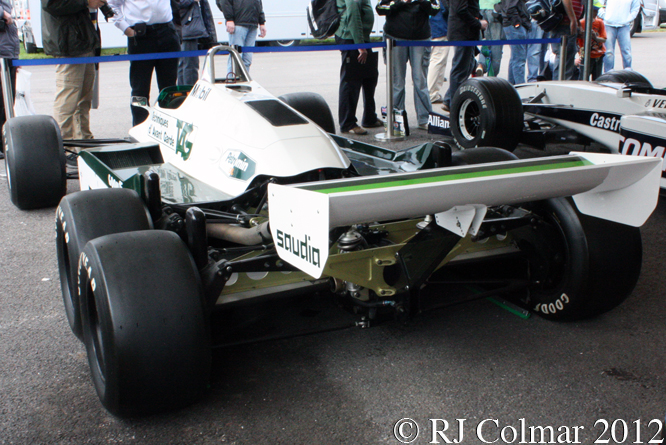
Going into the 1982 season Williams had won not only a drivers Championship with Alan Jones in 1980, but two consecutive constructors Championships on which the team openly has always prided it’s self on more than any drivers championship.

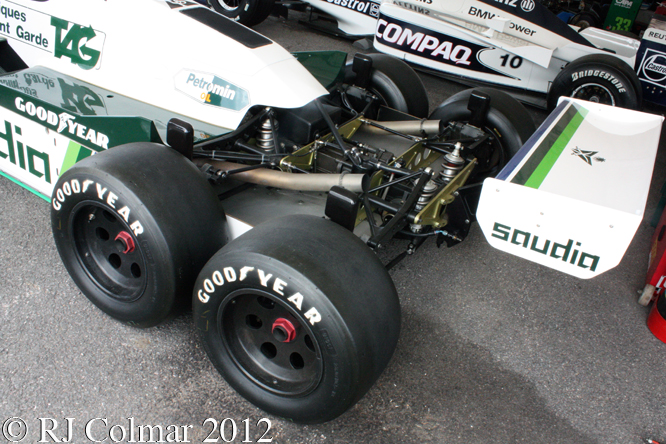
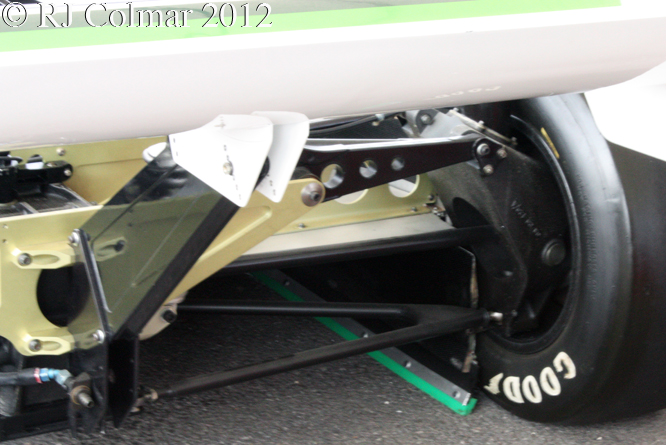
At the end of 1981 Williams designer Patrick Head and aerodynamicist Frank Dernie revisited the idea of running a six wheel formula one car with four driven wheels as Robin Herd at March had done during the winter of 1976/77 with the March 2-4-0.

Williams, Cosworth, FW08B, Goodwood Festival of Speed

Unlike March the Williams team were not interested in the publicity from the concept but, already having sufficient financial backing to see the concept through, they were interested in the results and specifically a third consecutive constructors championship which the concept might be able to deliver.

Williams, Cosworth, FW08B, Goodwood Festival of Speed

The rear 4 wheel drive transmission was tried out first on a 1981 FW07C chassis #FW07C/11 which became D spec with the additional driving wheels. Alan Jones tested the car before heading off into ‘temporary’ retirement in Australia.

Williams, Cosworth, FW08B, Goodwood Festival of Speed

With Jones team mate Carlos Reutemann also considering retirement after blowing an opportunity to win the 1981 World Drivers Championship at the last race in 1981, Fittipaldi refugee, Keke Rosberg was taken on to test both the FW07D, the new two wheel drive FW08 and four wheel drive FW08B as seen in these photographs.

Williams, Cosworth, FW08B, Goodwood Festival of Speed

In January 1982 it was reported in Motor Sport that “Patrick Head is pressing on with his experimental six wheeled Williams….”, by February 1982 Motor Sport reported that “Williams will not be racing the six wheeler…” without any further reasons being given leading one to conclude the 4 wheel 2 wheel drive FW08 had proved sufficiently superior not to proceed with the FW08B.

Although Patrick Head has said that at a meeting of the Formula One teams others were horrified at the increased expense of the system and prospect of the chaos that would ensue during pitstops. The FIA eventually also put a restriction on the number of wheels for a Formula One car limited to just 4 of which 2 maybe driven.

Despite being reliant on the venerable, but reasonably reliable Cosworth DFV motor when all around them the turbo charged motors were showing ever more horsepower Keke Rosberg managed to win the 1982 drivers championship with the FW08, winning just one race in the sixteen race series but scoring enough points from his remaining placings to beat his turbocharged competitors.

The constructors championship was won by Ferrari and had not Gilles Villeneuve been killed and Didier Pironi injured during the season a Ferrari driver might well have won the 1982 championship.

Thanks for joining me on this “6 Wheel 4WD Final Call” edition of “Gettin’ a li’l psycho on tyres”, I hope you will join me again tomorrow. Don’t forget to come back now.

Share

Forward With Fragrance – McLaren Cosworth M19C

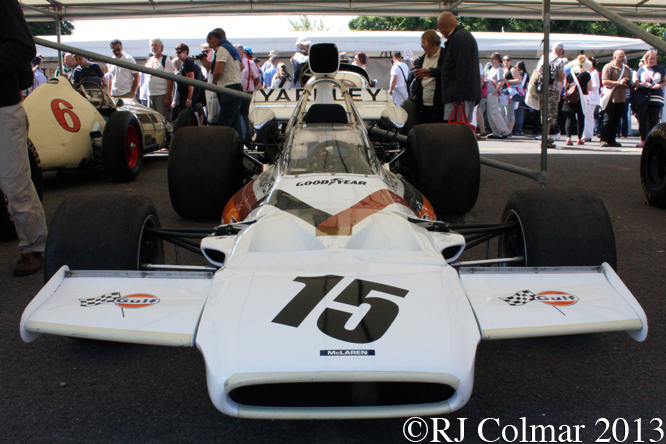
Mimicing the general out line of the 1969 Championship Matra MS80, as did many others including the Tyrrell’s 001-004, the McLaren M19A was designed by Ralph Bellamy for the 1971 season. It’s original rising rate suspension was soon abandoned in favour of the conventional McLaren M14A suspension.

After coming within a few laps of winning the 1971 South African Grand Prix with Denny Hulme at the wheel the cars best championship result came at the 1971 Canadian Grand Prix where Mark Donohue finished third in a privately entered example entered by Roger Penske.

McLaren Cosworth M19C, Goodwood Festival Of Speed

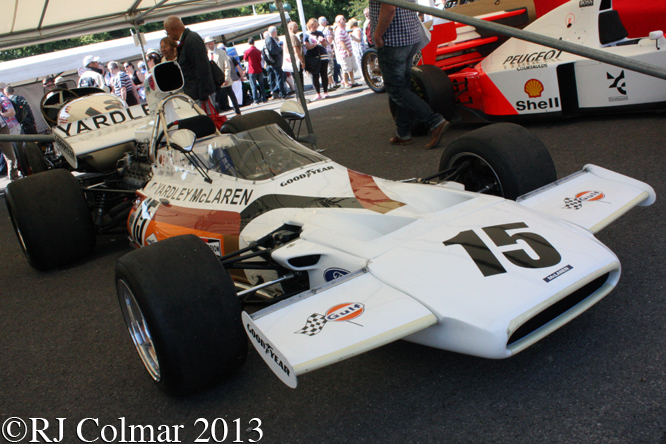
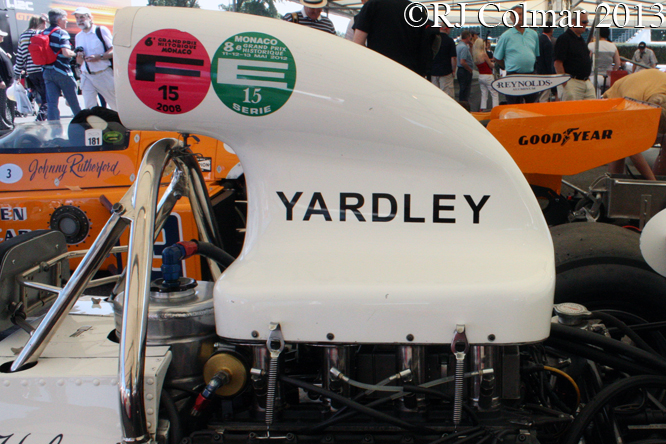
For 1972 McLaren found sponsorship from Yardley cosmetics who were less than impressed with the way BRM, whom they sponsored in 1970 and 1971, went about their business. On only their second world championship appearance in 1972 Denny Hulme won the South African Grand prix from 5th on the grid.

The M19 was given a diet in time for the 1972 Monaco Grand Prix where one car appeared in C spec with lightened front chassis bulkhead fabrication and numerous other weight saving modifications.

McLaren Cosworth M19C, Goodwood Festival Of Speed

Denny Hulme finished second in the 1972 Austrian Grand Prix ahead of team mate Peter Revson both driving M19C’s a seasons best for the ‘C’ spec cars that was matched at the 1972 Canadian Grand Prix where Revson finished ahead of Denny.

McLaren Cosworth M19C, Goodwood Festival Of Speed

In early 1973 Peter Revson finished second in the South African Grand Prix driving a Ford Cosworth DFV powered M19C on the models last championship appearance.

McLaren Cosworth M19C, Goodwood Festival Of Speed

The M19C’s were replaced by the McLaren M23 model, one of which Denny drove on it’s debut in the 1973 South African recording pole position and a fifth place finish.

Thanks for joining me on this “Forward With Fragrance” edition of “Gettin’ a li’l psycho on tyres”, I hope you will join me again tomorrow. Don’t forget to come back now !
PS My thanks to Tim Murray for pointing out Denny’s 1972 South African Grand Prix victory which I omitted from the original text.

Share

Wrong Footed By Safety Car – Ferrari F10

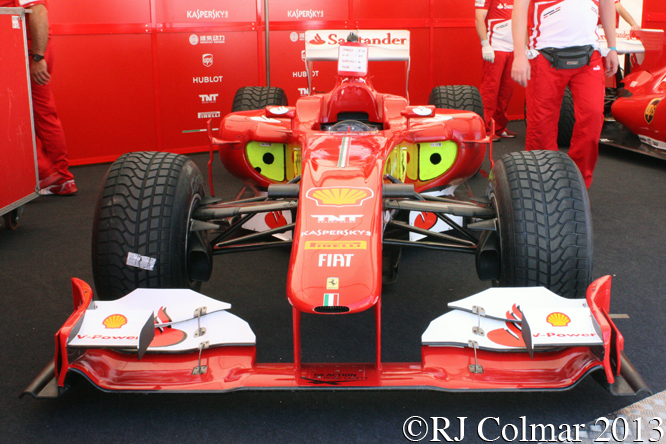
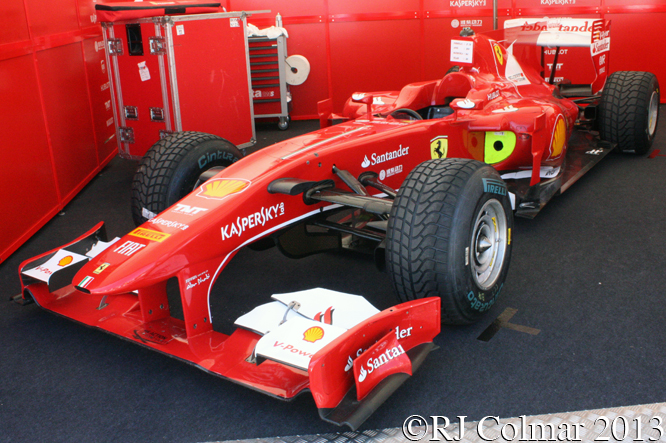
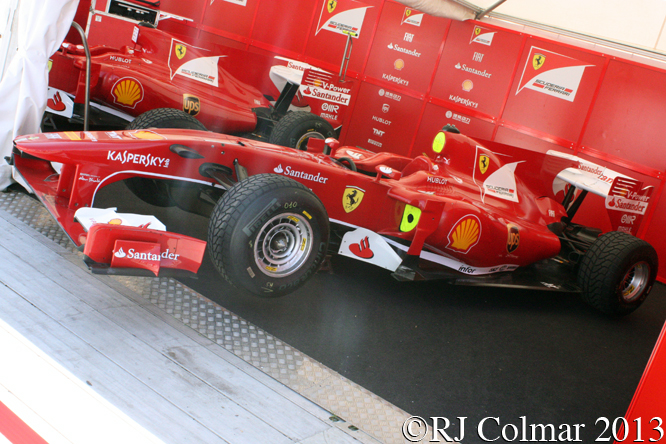
For 2010 Ferrari produced it’s 56th World Championship challenger the Ferrari F10, seen here earlier this month at the Goodwood Festival of Speed, that was driven by incumbent number two Felipe Massa and Kimi Räikkönen’s replacement Fernando Alonso in the de facto number one Ferrari seat.

Ferrari F10, Goodwood Festival Of Speed

The credits for the design of the Ferrari F10 are attributed to Technical Director Aldo Costa, Engine and Electronics Director Luca Marmoni, Chief Designer Nicholas Tombazis …

Ferrari F10, Goodwood Festival Of Speed

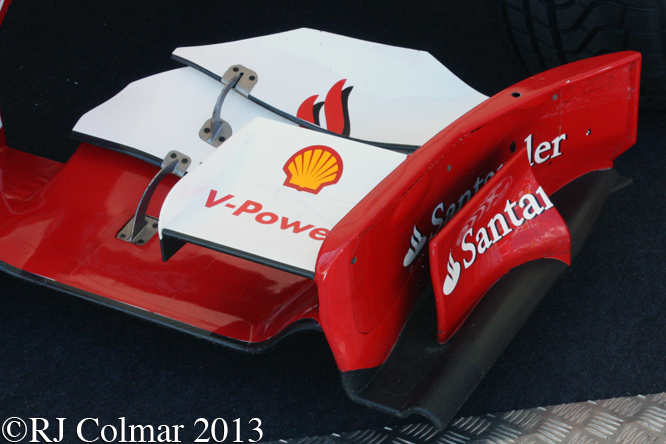
and Chief Aerodynamicist Marco de Luca. A team of several dozen will have worked on constantly improving the design and performance of the front wing alone.

Ferrari F10, Goodwood Festival Of Speed

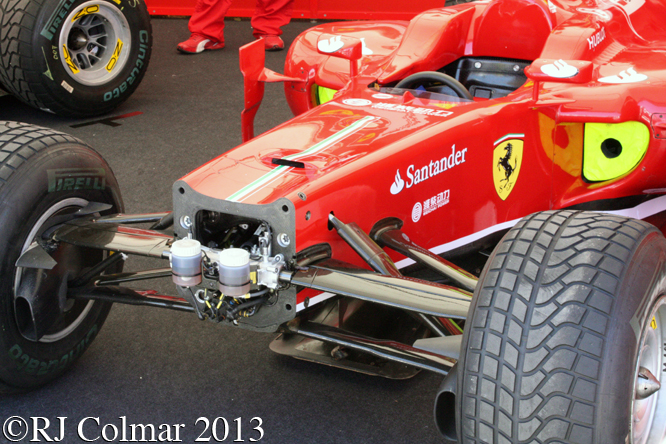
The independent front torsion bar suspension is activated by the diagonal elements that rise from the bottom of the wheel hubs to a position within the chassis above the wishbones. The semi-automatic, electronically controlled sequential gearbox has seven forward speeds plus a mandatory reverse.

Ferrari F10, Goodwood Festival Of Speed

800 hp is claimed from the 2.4 litre / 146 cui V8 which is restricted to 18,000 rpm. The motor is mounted at 3.5° to horizontal to improve the airflow under the car that generates much of the cars downforce.

Ferrari F10, Goodwood Festival Of Speed

The 2010 season proved a success for Ferrari, team leader Fernando Alonso won
5 races in Bahrain, Germany, Italy, Singapore and Korea. Going into the last race of the 2010 season Alonso only had to finish 4th to claim the championship.

An unforced team error when the team failed to call Fernando in during a safety car period meant that Fernando was on the wrong tyres at the wrong time unable to challenge Vitaly Petrov for fourth place while rival Sebastian Vettel won the race and the championship driving a Red Bull.

Felipe Massa finished 6th in the championship having been robbed of his only opportunity to win the German Grand Prix by team orders directing him to let Fernando Alonso through to win the race. The one-two result stood despite a US$100,000 fine which Ferrari attracted for the team order call which were expressly forbidden at the time.

Ferrari finished third in the manufacturers championship behind Red Bull and McLaren.

Thanks for joining me on this “Wrong Footed By Safety Car” edition of ‘Getting a li’l psycho on tyres”, I hope you will join me again tomorrow. Don’t forget to come back now !
Share