Tag Archives: Goodwood

Spirit Of ’76 – Chevrolet Corvette Greenwood #007

John and Burt Greenwood were the children of a WW2 fighter pilot who worked at the GM Tech Center. As a teenager John was working paper rounds so that he could build a Briggs Stratton powered kart. From there the Greenwood’s moved into street racing, preparing a car, racing it and then selling it to so that they could build up another.

Around 1968 the Greenwoods set up Auto Research Engineering to build engines and tune suspension and the following year started racing. John won back to back SCCA championships in 1970 and 1971. Over the following two years the Greenwood Corvettes had made trips to the Le Mans 24 hours where they had failed to finish having a best 16th place on the grid in ’72 to show for their efforts.

Chevrolet Corvette, Goodwood Festival of Speed

In 1976 John Greenwood was invited to return to Le Mans and this time he brought a wide bodied car to share with Bernard Darniche. Featuring a body that was developed the the aid of ‘Farther of the Corvette’ Zora Arkus-Duntov and aerodynamicist Randy Wittine that covered a 700 hp fuel injected 7 litre / 427 cui motor.

Chassis #007 had been built up for Rick Mancuso a racer from Illinois who entered the car in the ’76 Sebring 12 hours but crashed it in practice so that it did not start, #007 is not to be confused with John Greenwoods “Spirit of Sebring ’76” which started from pole in the same race, but retired after 36 laps with clutch failure.
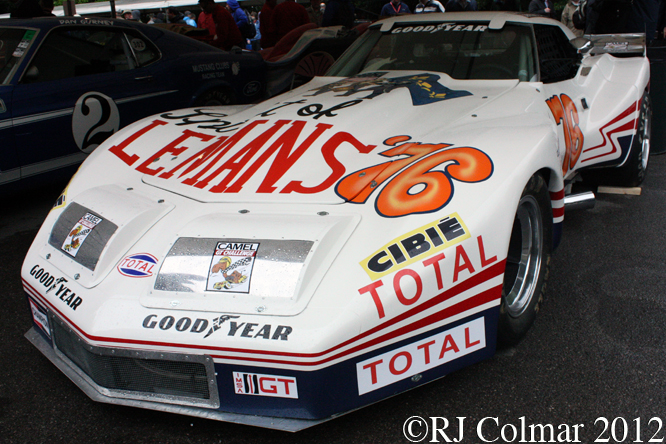
Chevrolet Corvette, Goodwood Festival of Speed

At his third attempt John’s Corvette, which was timed at over 215 mph on Mulsanne straight, qualified 9th behind a the turbocharged BMW CSl driven by Brian Redman and Peter Gregg and was one of just 12 cars to get below 4 mins in qualifying beating his own previous best time by a clear 20 seconds.

Unfortunately it was not third time lucky in the race as the car was retired with a split fuel cell during the early hours bringing to an end John’s hugely popular presence at the La Sarthe circuit.

Thanks for joining me on this “Spirit of ’76” edition of “Gettin’ a li’l psycho on tyres” I hope you will join me again tomorrow for “Ferrari Friday”. Don’t forget to come back now !

Share

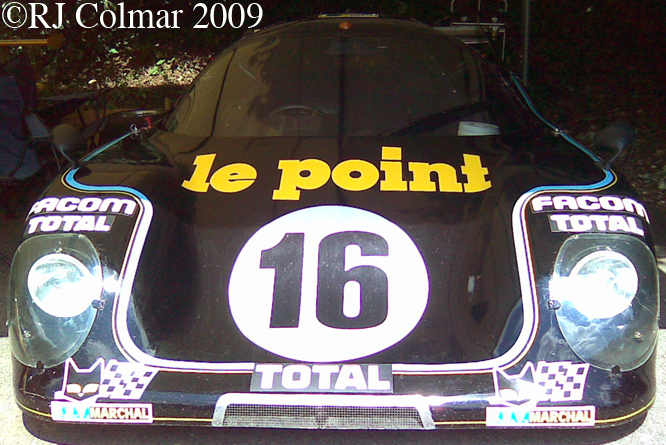
Le Point – Rondeau M379 B/C #003

Le Mans born Jean Rondeau had four cracks at the Le Mans 24 hours with a Chevron, Porsche (twice) and a Mazda RX3 when he decided to build his own 3 litre / 183 cui Ford Cosworth powered cars for the GTP category of the race. In 1976 and 1977 these cars known as Inatera’s the name of his wall paper manufacturing sponsor won the GTP class at Le Mans on both occasions the ’77 class win also netting drivers Rondeau and Jean Ragnotti a 4th place overall finish.

Rondeau 379B, Goodwood Festival of Speed

For 1978 Jean returned to the Le Mans circuit with a car bearing his own name for the first time and sharing his M378 with Bernard Darniche and Jacky Haran scored a third consecutive GTP class win as a manufacturer and his second as a driver coming home 9th overall from 40th on the grid.

Rondeau 379B, Goodwood Festival of Speed

Jean appeared at the 1979 race with updated M379 cars while the GTP entry he shared with Jacky Haran retired at two thirds distance with accident damage. A second car entered in the over 2 litre / 122 chi sportscar class came fifth overall and first in class piloted by well known French Rally drivers Ragnotti and Darniche. Today’s featured chassis M379 #003 came home tenth with Henri Pescarolo and Jean-Pierre Beltoise at the wheel.

Rondeau 379B, Goodwood Festival of Speed

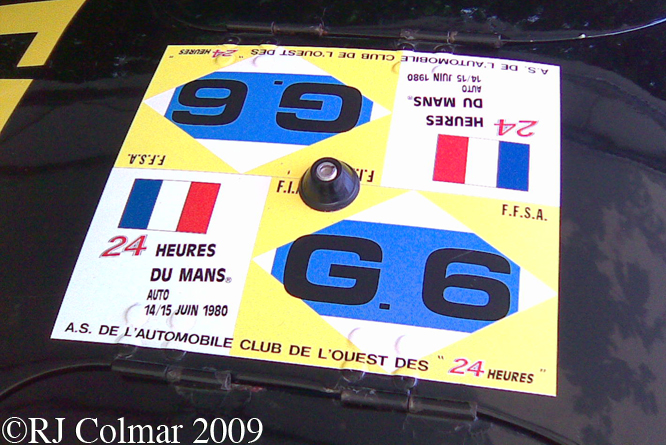
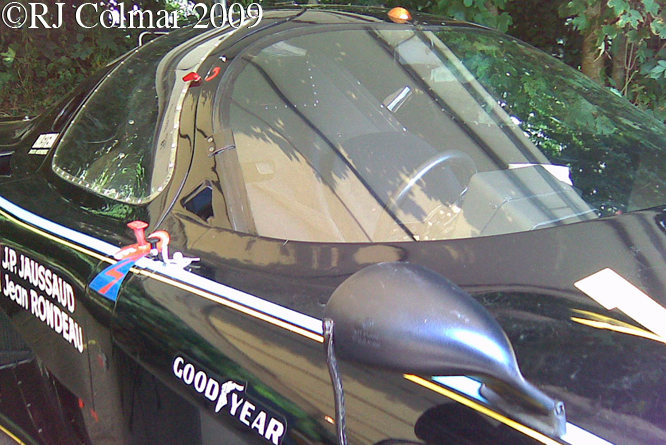
Going into the 1980 Le Mans 24 hours on a roll of four consecutive class wins for his cars Jean upgraded the M379 to b spec and teamed up with 1978 Le Mans winner Jean Pierre Jaussaud.

Starting from fifth on a very wet grid the Le Point newspaper sponsored Rondeau maintained a steady pace through out the race while the highly fancied privately entered Porsche 908/80 driven by Jacky Ickx and Reinhold Joest was delayed by an inability to see in the rain from the open cockpit car. When the rain eased the Porsche made up time and hit the front but was then delayed for quarter of an hour when Jacky had to replace the fuel injection pump belt out on the circuit. Jacky and Reinhold had regained the lead for a second time when 18 hours into the race the Porsche required a gearbox rebuild just as the winning Porsche 936 had required in 1977.

This time when the repairs were completed the Porsche had fallen too far behind the leading Rondeau and still had a two lap deficit when the clock turned 4 pm. On the last lap on a wet circuit Jaussaud had a spin while on slicks but managed to avoid hitting anything and crossed the line first in M379 #003 to make Jean Rondeau the only man to win the Le Mans 24 hours in a car he designed and bearing his own name.

Rondeau 379C, Goodwood Festival of Speed

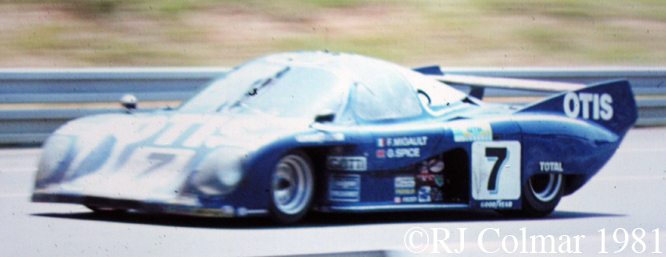
M379 #003 was prepared to C spec, seen above for Francoise Migault and Gordon Spice to race at Le Mans in 1981 they finished 3rd behind the GTP class winning Rondeau M379C #002 driven by Jacky Haran and Philippe Streiff and Jean-Louis Schlesser. M379C #002 had been driven to 3rd overall and 1st in GTP the previous rear by Gordon Spice and the Belgian Martin brother Jean Michele and Philippe.

Todays featured car ran at Le Mans for a fourth and final time in 1982 as a private entry for Pierre Yver, Bruno Sotty and Lucien Guitteny who started 35th and finished 10th.

Thanks for joining me on this “Le Point” edition of “Gettin’ a li’l psycho on tyres” I hope you will join me again tomorrow. Don’t forget to come back now !
Share

Endurance Survivor – Porsche 911 GT1-98 #003

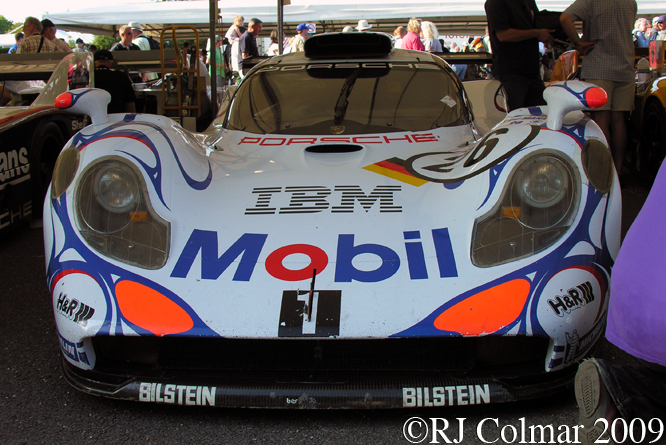
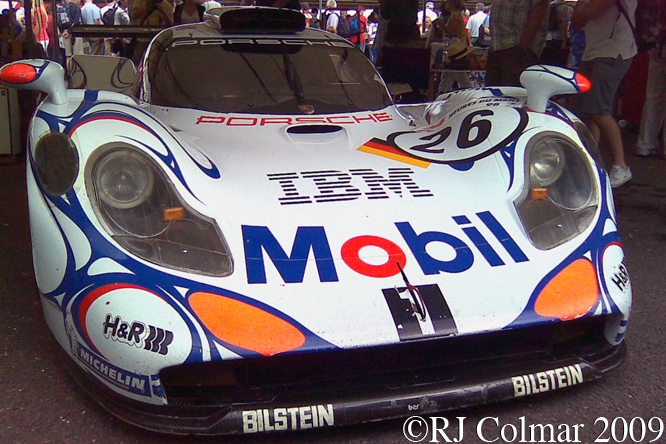
The Porsche 911 GT1-98 was the second evolution GT1 racer that Porsche contested the 1998 FIA GT1 championship with.

Porsche 911 GT1-98, Goodwood Festival of Speed

While the front of the new car bears a passing resemblance to the Generation 2 996 version of the Porsche 911 the rest of the car was essentially a prototype fitted with a 600hp twin turbo Group C type 24 valve twin cam water cooled flat 6 of the same type as used by the Porsche 962C with the addition of a sequential gearbox.

Porsche 911 GT1-98, Goodwood Festival of Speed

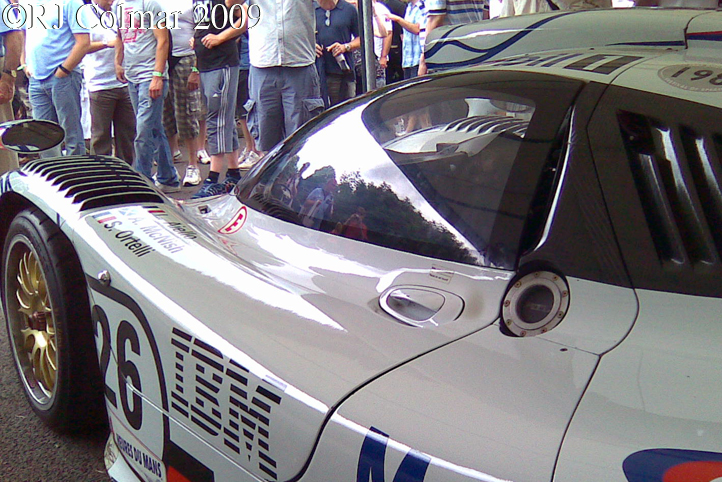
The 911 GT-98 was built around a tube frame and with carbon fibre bodywork. One road going example of the GT1-98 was built to meet the GT1 regulations.

Porsche 911 GT1-98, Goodwood Festival of Speed

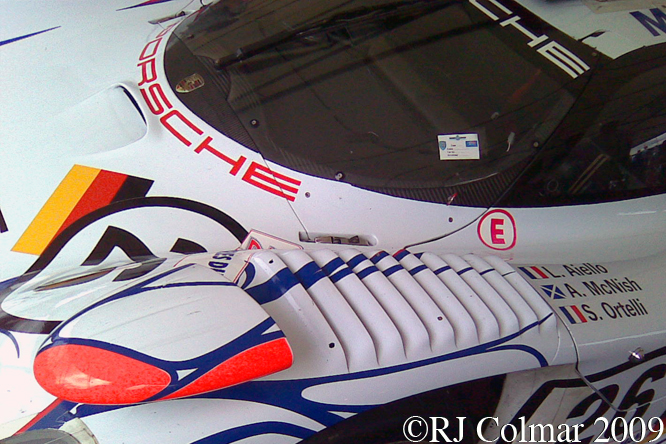
Going into the 1998 Le Mans 24 Hours race two normally aspirated 6 litre / 370 cui V8 Mercedes Benz CLK LM’s prepared especially for the endurance classic qualified 1st and 3rd. The fastest of three turbocharged Toyota GT-One qualified second with the Porsche 911 GT1’s 4th and 5th, the later car being chassis #003 driven by Allan McNish, Stéphane Ortelli and Laurent Aiello.

Porsche 911 GT1-98, Goodwood Festival of Speed

During the race the specially prepared Mercedes Benz CLK LM’s both retired by lap 31 with engine failures while the fastest of the Toyota GT-One’s retired after half distance after an accident which left the two works Porsches at the head of the field.

Porsche 911 GT1-98, Goodwood Festival of Speed

The #26 shared by NcNish, Ortelli and Aiello crossed the line a lap ahead of the sister car driven by Jörg Müller, Uwe Alzen and Brilliant Bob Wollek.

As had occured many times in the past the Le Mans winners did not win the championship which was dominated by Mercedes Benz who clocked up six 1-2 finishes, but it is Porsche who is best remembered from the GT1 championship for surviving to win an unlikely 1-2 at Le Mans.

Thanks for joining me on this “Endurance Survivor” edition of “Gettin’ a li’l psycho on tyres” I hope you will join me again tomorrow when I’ll be looking at a car that is ‘not a green Audi’. Don’t forget to come back now !
Share

Do Not Lean On This Car – Ferrari 275 GTB/C #9079

In 1965 and 1966 Ferrari built a number of competition versions of the highly praised 275 GTB road car all using motors of the same type as found in the Ferrari 250 LM sports racer.

The last run of twelve competition 275’s known at the 275 GTB/C was built in 1966 and featuring aluminium bodies made of such a thin gauge it was reinforced with glass fiber, if you lean on this car you will almost certainly put a permanent dent in the body work.

Due to what appears to be a clerical error by someone at Ferrari the 275 GTB/C was mandated to run with only three carburetors, because someone at Maranello forgot to tell the FIA that a six carburetor option of the standard 275 GTB was available. This happened before the introduction of the 275 GTB/4 which featured six carburetors as standard.

Ferrari 275 GTB/C, Goodwood Revival

Even with this oversight a 275 GTB/C entered by Maranello Concessionaires and driven by Piers Courage and Roy Pike won its class at Le Mans in 1966 covering 310 laps and coming home 8th overall behind the three all conquering Ford GT40 Mk II’s and a fleet of four Porsche 906’s.

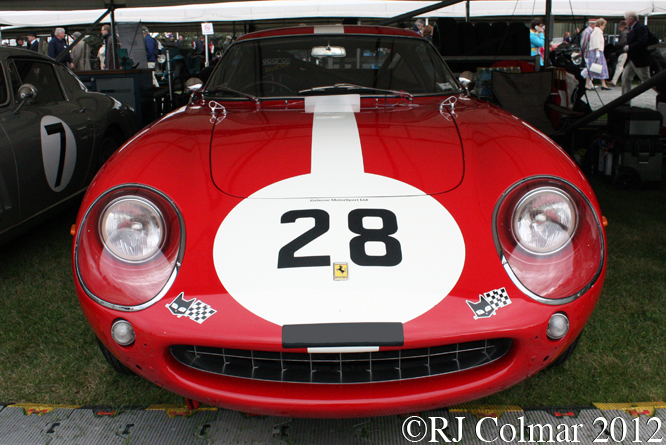
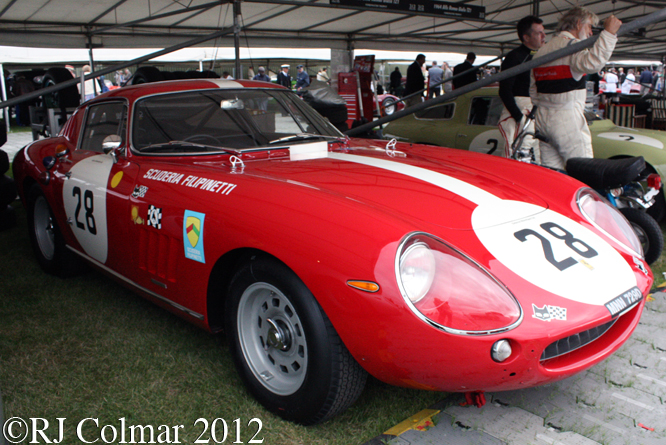
Today’s featured car chassis #9079 was the penultimate of the 12 GTB/C’s built in 1966 and it made it’s public debut at Le Mans in 1967 where it was entered for Swiss drivers Dieter Spoerry and Rico Steinemann by Scuderia Filipinetti. Dieter and Rico came in 11th and first in class covering 317 laps, 71 less than the overall winning Ford Mark IV.

Scuderia Filipinetti entered #9079 for Jaques Rey and Claude Haldi to drive at Le Mans in 1968 but the car retired after completing 78 laps as the consequence of an accident.

Ferrari 275 GTB/C, Goodwood Revival

The following year Jacques shared the car twice with Edgar Berney they came home 14th overall in the Spa 1000kms, 1st class. At Le Mans, where #9079 became the only 275GTB/C to start the race three times, the engine needed an oil top up after 39 laps which was against the regulations and so the car was disqualified.

By the end of 1969 #9079 went to the USA where it remained up until the 1980’s. In 1985 the fragile body, but not the tyres, melted in a workshop fire while in Los Angeles. By 1988 the car had been restored in Italy and sold on to Japan. Current owner Ross Warburton has owned this chassis since 2000.

Thanks for joining me on today’s “Do Not Lean On This Car” edition of “Gettin’ a li’l psycho on tyres” I hope you will join me again tomorrow for a look at an brutally noisy Aston Martin. Don’t forget to come back now !
Share

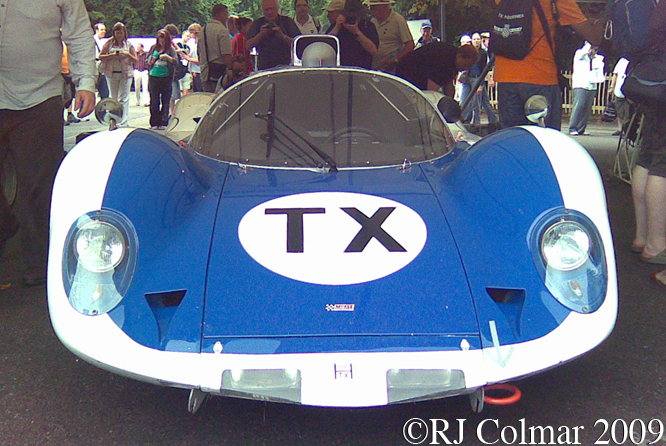
Rolling Into Records – Howmet TX #2

In 1967 Philadelphian sports car racer Ray Heppenstall persuaded his friend Tom Fleming that a conventional sports car with an aircraft gas turbine engine might make a competitive racing car. Fleming, sales vice-president of Howmet a major suppliers of precision castings to the aircraft gas turbine industry, and Heppenstall in turn convinced the board of Howmet that such a program would be a great way to promote their business.

Two spaceframe chassis based on a Can Am design were built and fitted with Continental TS325-1 turboshaft motors that were donated from a batch of ten motors Continental had developed for a failed observation helicopter contract. The motors produced 330 hp and were given a 3 litre / 183 cui equivalency rating by the regulation governing FIA. In order to comply with the reverse gear regulations a separate electric motor drive was employed.

Howmet TX, Goodwood Festival Of Speed

Today’s featured car chassis #2 is the second of the two Howmet’s built with a slightly longer wheel base. The week after Ray had recorded the teams first victory and the first ever for a gas turbine powered car at Huntsville, Dick Thompson repeated the feat driving #2 at Marlboro winning the SCCA Preliminary then sharing the car with Ray to win the 300 mile feature race.

In July ’68 Ray and Dick shared chassis #2 again to come home third overall and first in class at the Watkins Glen 6 hour race behind a pair of 4.7 litre / 286 cui Ford GT40’s.

Howmet TX, Goodwood Festival Of Speed

Ray recorded a third place finish driving chassis #2 at Donnybrook in August ’68 before both Howmet’s were shipped to Europe for the Le Mans 24 Hours, which had been delayed until September from it’s usual June date by civil unrest and strikes involving 11,000,000 French workers.

#2 was the faster of the two Howmets in qualifying for the 24 hour endurance classic Dick and Ray qualifying 20th two seconds faster and four spots ahead of the sister machine driven by Hugh Dibley and Bob Tullis. In the race the cars were hampered on the corners because the single gear was designed to optimise performance on the 4 mile Mulsanne straight.

Dibley / Tullis were disqualified after a three hour pit stop to change a rear hub bearing for covering insufficient distance after seven hours, while #GTP2 had a faulty fuel control which restricted the cars top speed to just 100 mph. During the evening Dick lost control and rolled the car at the slightly banked Indianapolis corner.

Howmet TX, Goodwood Festival Of Speed

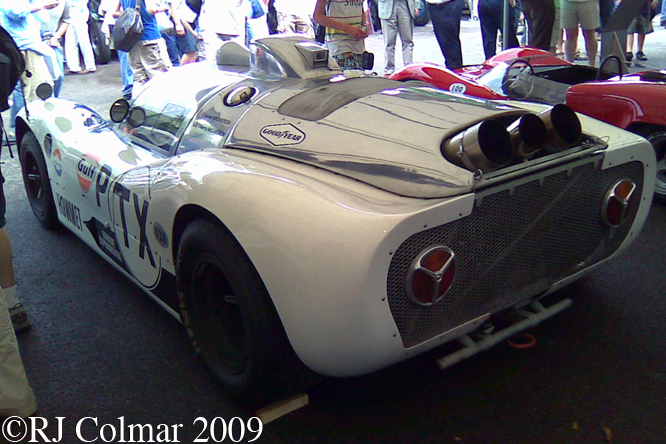
Note the rear lights sourced from the original iteration of the Ford Cortina, according to Bob Mckee other proprietary parts used to finish the Howmet included front indicators from a Ferrari, Porsche wipers, modified Triumph steering and Mustang door latches.

Howmet withdrew their support for the project after Le Mans having determined the disadvantages of throttle lag, running the car with a single gear, absence of engine braking and high fuel consumption were insurmountable issues for competitive entries in the long run.

Ray Heppenstall rebuilt #GTP2 with open spyder bodywork and in 1970 timed by IMSA officials recorded six World Records for standing starts over 1/4 mile, 1/2 km and 1 km distances in two weight divisions for vehicles upto and over 1000 kgs. Ray’s fastest speed of 167.97 mph was recorded in the lighter division over 1 km all set on a stretch of open road adjacent to Talladega Super Speedway !

With the motors returned to Continental Ray bought the worlds only gas turbine powered race winning cars for a nominal dollar from Howmet in 1971. Chuck Haynes had Bob McKee restore #2 back into Coupé form in 1996, it is now fitted with an Allison 250C18 turboshaft helicopter motor which is lighter but with a similar power output to the original.

My thanks to Pete Stowe for additional in formation on the Hownet’s regarding the records chassis numbers and a quote from Bob Mckee on the proprietary parts used.

Thanks for joining me on this “Rolling Into Records” edition of “Gettin’ a li’l psycho on tyres” I hope you will join me again tomorrow. Don’t forget to come back now !
PS Push to Pass Latest Formula One news and opinion today at Motorsports Unplugged

Share

Fiberglass Body – Ferrari 250 LM #8165

This November sees the 50th anniversary of the unveiling of the Ferrari 250 LM which to date was the last Ferrari to cross the finishing line first at Le Mans in 1965.

Today’s featured car chassis #8165, the last 250 LM to be built, was sold new to Scuderia Filipentti and entered by them in the 1966 1000kms race at the Nurburgring for Willy Mairesse and Herbert Mueller who finished 9th.

Ferrari 250LM, Goodwood Revival

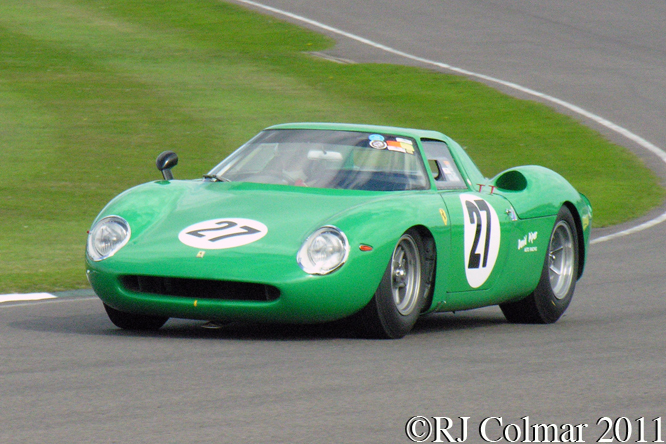
The car was then sold to David Piper and in June 1966 David fitted fiber glass body panels front and rear and painted #8165 BP Green. Subsequently David is known to have driven the car to victories at Brands Hatch, Oulton Park and the 1000kms Paris at Monthlery in 1966 sharing the car with Mike Parkes in the latter.

In 1967 David won at Silverstone and entered the #8165 for Hugh Dibley and Roy Pierpoint for the 1000kms at Brands Hatch where they finished 10th overall and first in class. At Monthlery Richard Attwood and Brian Redman came 6th overall and first in class.

Ferrari 250LM, Goodwood Revival

In 1968 Pedro Rodriguez joined Roy Pierpoint in #8165 for the 1000 kms at Brands Hatch where they finished 5th but only 3rd in class. #8165’s last ‘in period’ appearance was in the 1968 Le Mans 24 hours where Piper and Attwood qualified 28th and came through to a seventh place finish.

David Piper is seen driving #8165 in these photo’s in practice for the Whitsun Trophy at the Goodwood Revival a couple of years ago. David finished the race in 27th place.

My thanks to Athanase and Miurasv for clarifying the early ownership of this car over at FerrariChat.com.

Thanks for joining me on this “Fiberglass Body” edition of “Gettin’ a li’l psycho on tyres” I hope you will join me again tomorrow. Don’t forget to come back now !
Share

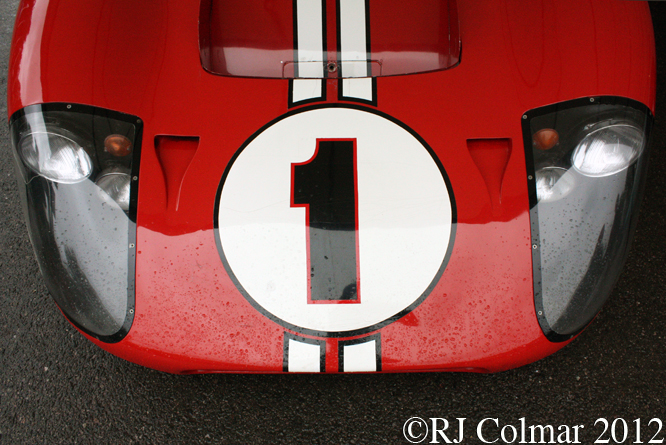
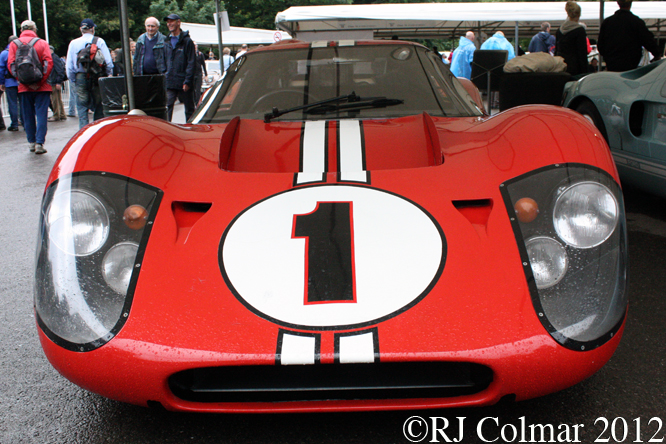
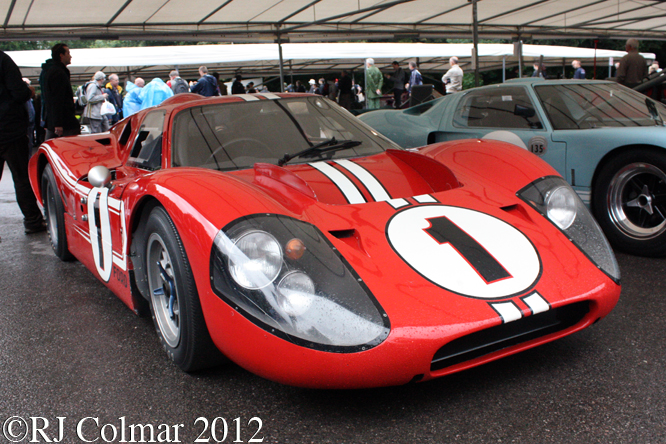
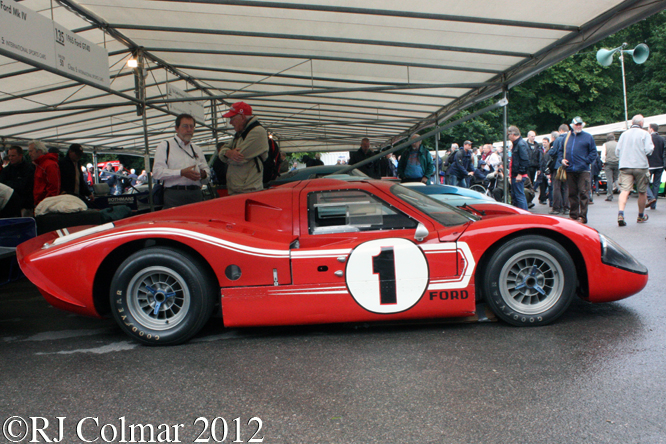
Shimmying Past Scrutineers – Ford Mark IV #J5

The Ford Mark IV was the culmination of Ford’s determination to crush Ferrari on it’s own turf, after Enzo had bailed out of selling his eponymous company to the men from Dearborn at the last minute in 1963.

Ford Mark IV, Goodwood Festival of Speed

What started out as an Eric Broadley designed Lola GT powered by a Ford Indy spec V8 in 1963 had been developed into the Ford GT40 with input from Ford’s designers led by Roy Lunn. The GT40 was the subject of two humiliating failures at Le Mans in ’64 and ’65 but then blossomed into the Shelby developed 7 litre / 427 cui Ford GT40 Mark II that swept to a 1,2,3 victory at Le Mans in 1966.

Ford Mark IV, Goodwood Festival of Speed

Unable to convince Ford that they needed to build the GT40 with an aluminium frame to save weight Eric Broadley left the GT40 project in 1965 and returned to Lola while Ford and Shelby got to grips with producing a steel framed car that was both powerful enough and strong enough to last 24 hours at a race winning pace.

Ford Mark IV, Goodwood Festival of Speed

Ford soon realised that Eric was right about the extra weight carried by the steel framed cars and before the steel framed GT40 Mk II’s romped to victory, in ’66, they set about building an aluminium framed version of the GT40 with the same drive train and suspension components known as the J-Car featuring an innovative aluminium honeycomb monocoque manufactured by Brunswick Aerospace.

Ford Mark IV, Goodwood Festival of Speed

The J-Car was subject to much experimentation with body shapes and even crash testing after Ken Miles had been killed in a freak accident testing a J-Car. By 1967 Ford had four of the new Mark IV’s ready for the Le Mans 24 hours powered by 7 litre / 427 cui motors.

Ford Mark IV, Goodwood Festival of Speed

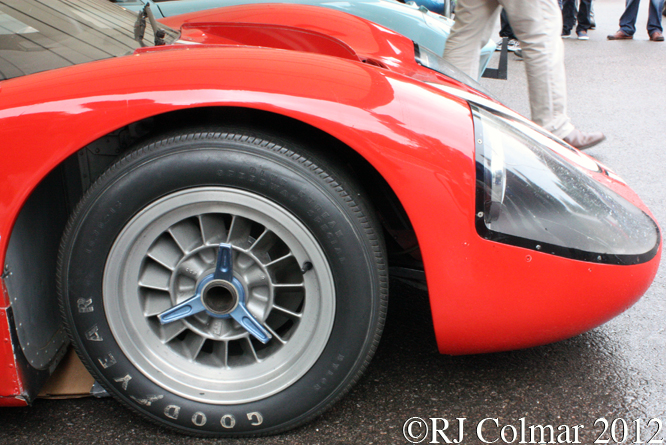
According to Dan Gurney the Mark IV’s were fitted with suspension shims to ensure they passed the scrutineers / tech inspectors minimum ride height test held in the middle of town, these shims then “fell off” on the way back to the race track to ensure the Fords had some aerodynamic stability when they hit 200 plus mph on the 4 mile Mulsanne straight.

Ford Mark IV, Goodwood Festival of Speed

Dan Gurney set the winning car up then he and Le Mans rookie AJ Foyt then set about winning the race, during the middle of the night Dan over slept forcing AJ to do a double stint behind the wheel but other than that their car had no problems on it’s way to a four lap victory over the Ferrari P4 of Ludovico Scarfiotti and Mike Parkes. The sister Shelby run Goodyear shod car of Bruce McLaren and Mark Donohue came forth behind another Ferrari P4 after loosing time with a tale piece that was ripped off.

Ford Mark IV, Goodwood Festival of Speed

On the podium Dan Gurney started a tradition of shaking up the winners bottle and spraying champagne all over the gathered revelers which has been repeated by race winners around the world countless times since. The day after the race the Mark IV’s were effectively banned from racing in 1968 and Ford withdrew from any further factory participation on the spot.

Ferrari ended up winning the World Sports Car Championship in 1967 but it hardly mattered since everyone remembers who won the signature event of the series the Le Mans 24 hour race.

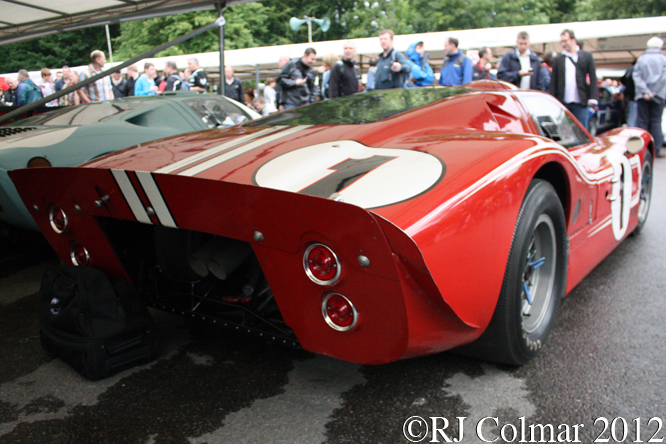
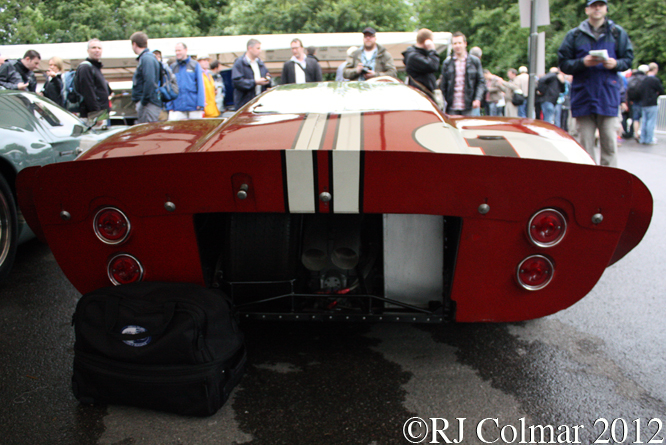
The car driven by Gurney was different from the three other Mark IV’s in the race because to accommodate Dan’s 6’3″ frame a blister was built into the roof and the seat was lowered. After the race all four Mark IV’s, the two Firestone shod cars run by Holman Moody had crashed out, returned to the States were overhauled and all four painted to look like the winner complete with a blister in the roof.

The winning car chassis #J5 has been kept at the Ford Museum however I am led to believe this is the same car that appeared at Goodwood last year, but I maintain an open mind since Ford sold chassis #J6 to New York collector James Glickenhaus believing they had sold him the 1967 winning car until closer inspection revealed otherwise.

Thanks for joining me on this “Shimmying Past Scrutineers” edition of “Gettin’ a li’l psycho on tyres” I hope you will join me again tomorrow. Don’t forget to come back now !
PS Don’t miss my Canadian Grand Prix opinions at Motorsports Unplugged.

Share